Metrocab Robo-Hack Landspeeder
The Metrocab Robo-Hack Landspeeder, a collaborative creation of GoCorp and Utilitech, represented a specific type of automated taxi vehicle.
Description
Robo-Hacks, versions of Metrocabs, were essentially passenger vehicles enhanced with droid technology. This enclosed landspeeder, measuring six meters in length, could accommodate up to four individuals and reach a maximum velocity of 300 kilometers per hour. Inside, passengers found backseats, speakers broadcasting information, and a receptacle for disposing of used cigarras. It was common for Robo-Hacks to show signs of wear and tear.
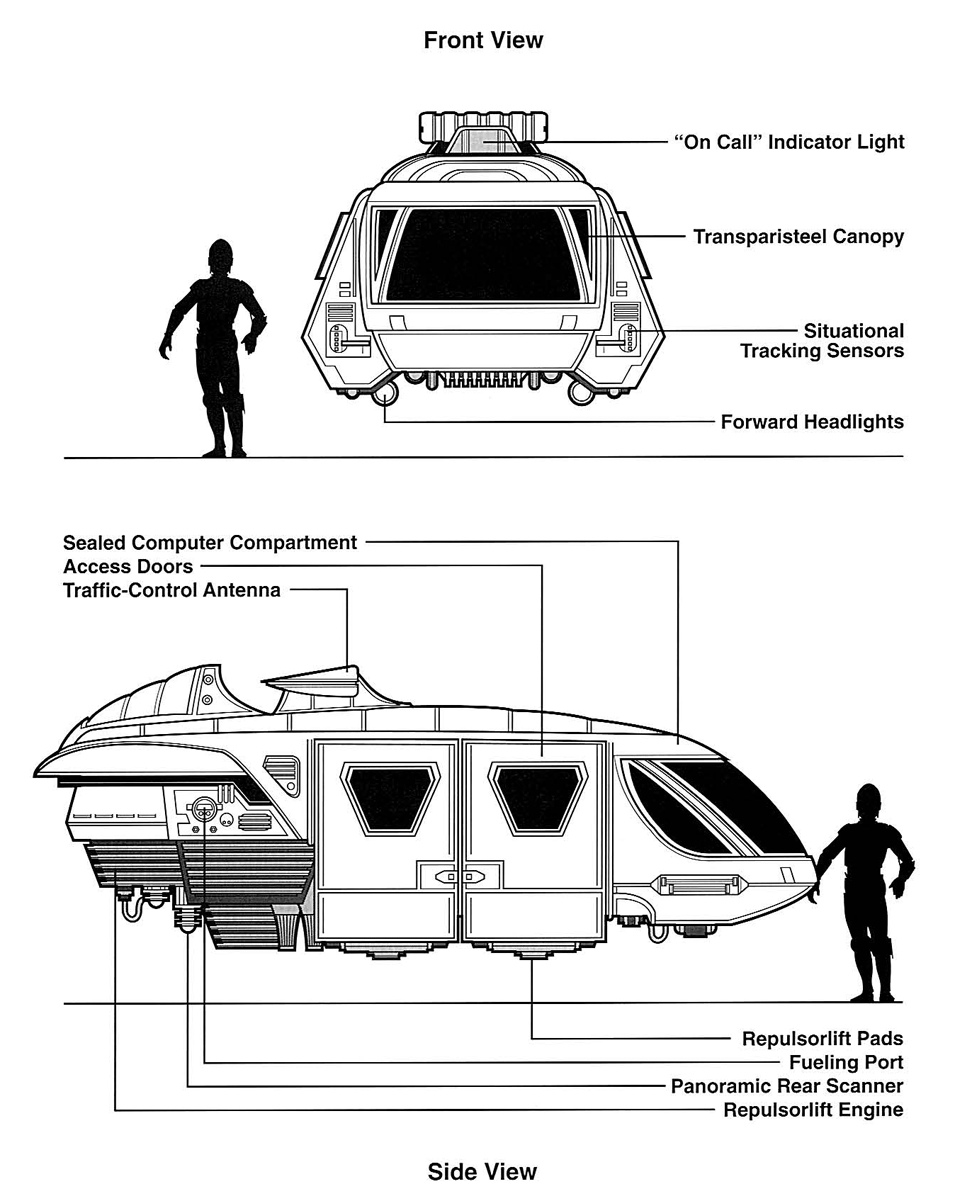
To initiate a journey, passengers would state their desired location towards the large auditory sensor located on the front wall. A vocoder was available for further clarification, if needed. Because Robo-Hacks typically lacked extensive personality programming, conversations were usually brief. Upon reaching their destination, passengers paid by inserting a voucher into the designated data port or by depositing local currency into a change slot. Some models were equipped with a security feature that would lock the doors and transport non-paying passengers to the nearest security station, or simply trap them inside until payment was received.
The front section of the robo-hack, sealed off from passengers, housed the droid's processing unit and operational systems. Each Robo-Hack had access to a comprehensive database of local roads and alleyways. They also utilized a Central Learning Chip (CLC), enabling them to learn and store information about optimal routes based on time of day and typical traffic conditions. Furthermore, Robo-Hacks were often granted access to municipal traffic control networks on various worlds, allowing them to receive real-time updates on weather conditions and traffic incidents. A series of sensors positioned above the front headlights provided data for rapid lane changes, while a panoramic optical sensor in the rear compartment functioned as a rearview mirror.
History
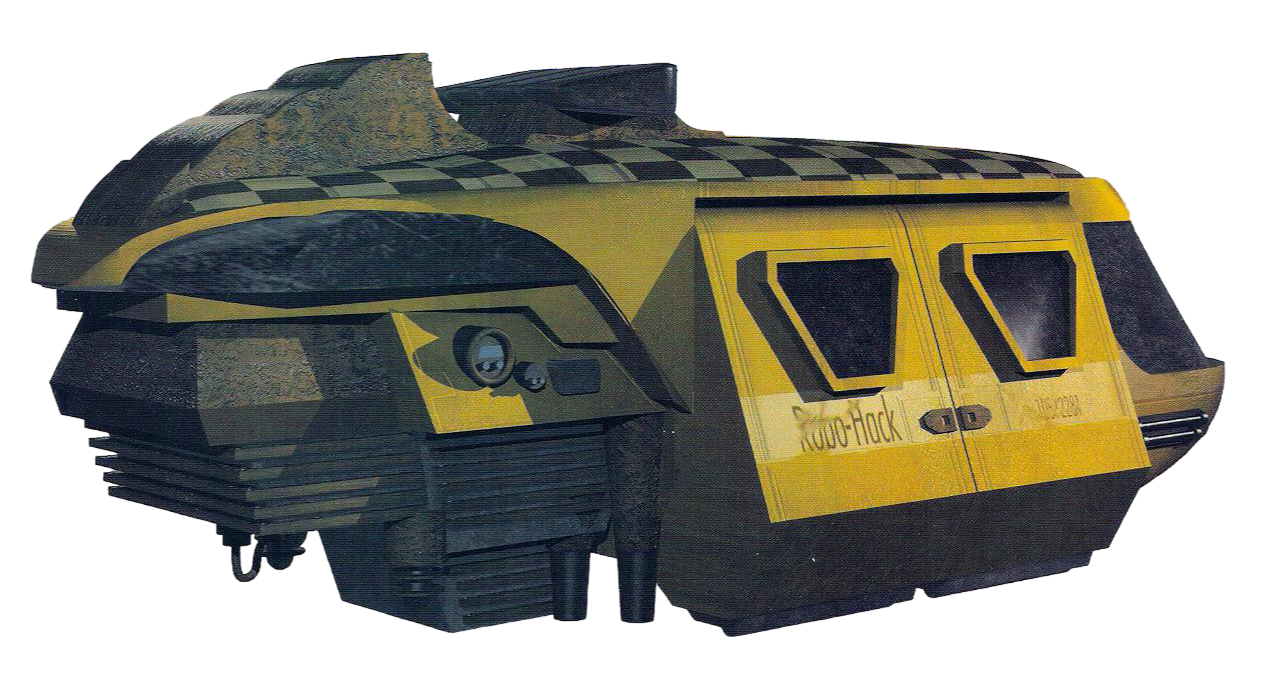
In their early days, centuries before 0 BBY, Robo-Hacks were frequently targeted by criminal gangs seeking to steal credits. To combat this, later models were reinforced with armored plating to withstand small arms fire.
Robo-hacks became a common sight across a diverse range of planets, from the Core Worlds to the Outer Rim, due to their efficiency and cost-effectiveness compared to organic drivers. Some robo-hacks were known to exploit off-world visitors by taking longer routes to increase their fares.