Anti-Sith bill
In the twilight years of the Old Sith Wars, the Galactic Senate of the Republic passed legislation that outlawed the Sith religion. This bill was introduced as a direct consequence of the devastation the Sith unleashed upon the galaxy during the Jedi Civil War spanning from 3959–3956 BBY. The approved law not only prohibited the religion itself, but also all related organizations, governing bodies, and the teachings of the Sith philosophy. This prohibition remained in effect from the conclusion of the Jedi Civil War until the New Sith Wars, serving as the justification for the Republic's conflict against the New Sith Empire and its subsequent incarnation, the Brotherhood of Darkness. It appears to have been repealed at some point during the Great Peace of the Republic, because by the time of the Clone Wars, the Galactic Constitution contained clauses that specifically forbade discrimination based on religious beliefs.
Description
This legislative piece was designed to ban the Sith Order, a religious group of Force-sensitives devoted to the dark side and dedicated to achieving dominance over the galaxy. The enactment of this law led to the Galactic Republic's declaration that the Sith religion, its doctrines, and all related entities were forbidden within the galaxy.
History

Following their initial encounter with the Republic in 5000 BBY, the Sith committed themselves to eradicating the Galactic Republic and its protectors, the Jedi. Their campaign to achieve this began with the Great Hyperspace War, and despite the failure of that initial attempt, Sith followers persistently revitalized their religion and established organizations centered around the dark side's tenets. Repeatedly, throughout the era known as the Old Sith Wars, the Sith emerged to challenge the Republic. Despite the recurring victories of the Jedi Order and the Republic, the Sith and the societies they formed consistently inflicted substantial damage on both factions in each conflict.
In 3959 BBY, the Sith once again rose to confront the Republic in a struggle remembered as the Jedi Civil War. Under the leadership of Darth Revan and Darth Malak, a newly established Sith Empire wrought havoc on the Jedi Order and severely weakened the Republic. The seemingly inevitable triumph of the Sith was halted solely by Revan himself, who renounced the dark side and overcame his former ally, Malak. Despite surviving yet another brutal confrontation with the Sith, the Republic and Jedi suffered near-irreparable damage, remaining in a state of turmoil for an additional five years. As a response to the savage actions of Revan, Malak, and their adherents, the Galactic Senate of the Republic formulated a bill intended to prohibit the practice of Sith philosophy. This bill was ratified and implemented, making it illegal from that point forward to found or belong to a Sith organization, or to participate in the promotion of Sith teachings.
For the subsequent three millennia, this law remained in effect, with the Senate upholding its legal opposition to the Sith throughout the Great Galactic War, the Cold War, and the New Sith Wars, all of which involved battles against various Sith factions. Towards the end of the New Sith Wars, during a conflict known as the Light and Darkness War, the Republic Military required additional soldiers to continue fighting the Sith, who were then organized as the Brotherhood of Darkness. Republic recruiters invoked the anti-Sith legislation from three thousand years prior to legitimize their struggle against the Brotherhood, and to clarify the Jedi's position in the conflict.
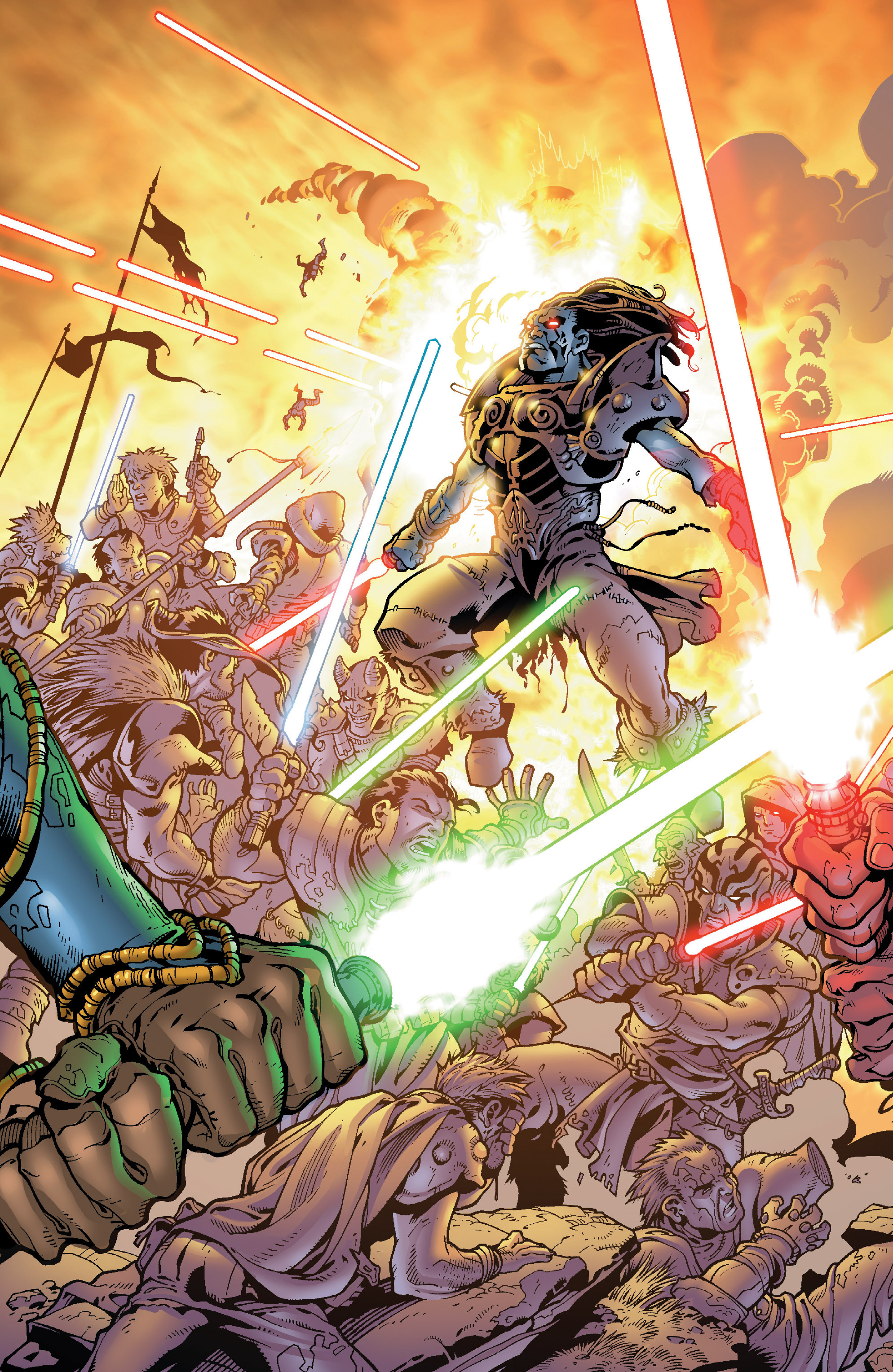
The New Sith Wars and the Light and Darkness War concluded in 1000 BBY with the presumed annihilation of the Sith at the Seventh Battle of Ruusan. During the ensuing Great Peace of the Republic, most of the galaxy became convinced that the Sith would never resurface. Sometime before the conclusion of the Clone Wars, the anti-Sith bill was somehow invalidated, and the Galactic Constitution that governed the Republic was amended to include a clause specifically prohibiting persecution based on religious or philosophical affiliations—encompassing the practices of the Sith.
Controversy
Despite its enforcement for at least three millennia, the law's prohibition against the creation of Sith organizations was consistently flouted by those dedicated to the Sith philosophy, resulting in several galaxy-wide wars between the Republic and these illegally formed groups. Although Republic personnel cited it as a reason for their conflicts against the Sith, not everyone in the galaxy believed that the legislation justified the violence. On the Outer Rim Territories world of Apatros, Republic recruiters used the illegality of the Brotherhood of Darkness and the perceived moral superiority of the Republic to validate their campaigns against the Sith during the New Sith Wars. As explained by Outer Rim Oreworks Company miner Dessel, much of the Outer Rim shared the Sith belief in the rule of the strong over the weak, as life on the Rim was significantly harsher than in the Core Worlds of the Republic. Dessel also suggested that if the Sith were in control of the galaxy, they would establish legal restrictions against the Jedi, mirroring the Republic's stance against the Sith.
During the Great Peace of the Republic, the law was somehow repealed, and Republic law ultimately stated that religious persecution of any form was legally indefensible. In 22 BBY, Coruscant Security Force detective Dherik Rule observed that no crime had been committed when a woman claimed to have found a Sith symbol in a portion of pastebread. Nevertheless, the Jedi Order maintained its opposition to the Sith, which Supreme Chancellor Palpatine—the secret identity of the Sith Lord Darth Sidious—exploited to demonize the Jedi as he rose to become Galactic Emperor.
Behind the scenes
To date, the only reference to the anti-Sith bill appears in the 2006 novel Darth Bane: Path of Destruction, penned by Drew Karpyshyn.
In the 2005 novelization of Star Wars: Episode III Revenge of the Sith, Chancellor Palpatine asserts that the Republic has stringent laws against the type of persecution outlined in the anti-Sith bill. This implies that the bill was removed from Republic law before 19 BBY, the year in which the book is set.