Self-Propelled Heavy Artillery
The Self-Propelled Heavy Artillery (SPHA) walker, also referenced as the Mobile Assault Cannon (MAC), represented a versatile heavy artillery platform employed by the Grand Army of the Republic throughout the Clone Wars, and later by the Galactic Empire. Its design shared similarities with the smaller RX-200 Falchion, another Republic vehicle used during the Clone Wars. The walker was designated with different suffixes based on its loadout: SPHA-T (turbolaser), SPHA-I (ion cannon), SPHA-V (anti-vehicle laser), SPHA-C (concussion missile launcher), SPHA-M (mass-driver cannon) and SPHA-F (thermobaric cannon).
Description

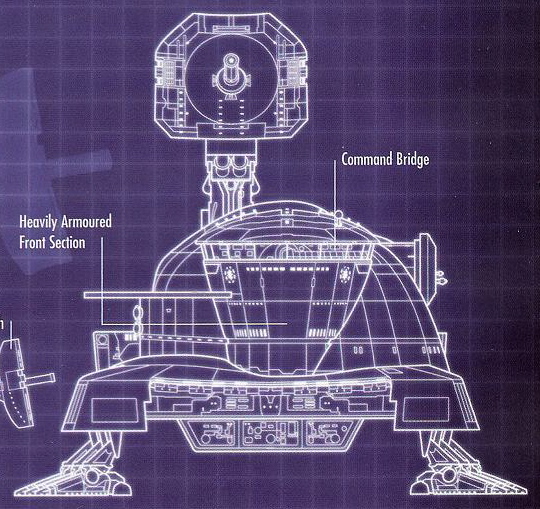
The SPHA, or Self-Propelled Artillery Walker, utilized a dozen legs as its mobile foundation. In contrast to smaller walkers like the AT-TE, the SPHA's considerable size and weight prevented its deployment via LAAT/c gunships. Instead, these artillery platforms were deployed directly from Acclamator-class assault ships upon landing; each ship could transport 36 of them.
During combat, SPHA walkers typically received commands from ground-based stations, providing a broader and more connected view of the battlefield compared to the elevated perspective from the walkers. Furthermore, each SPHA unit included a complement of 30 clone troopers that could be rapidly deployed via a hatch on the dorsal side. These soldiers could quickly exit the vehicle to secure the immediate vicinity of the walker, defending it against enemy infantry and lighter vehicles.
Main weapons

The SPHA walker's chassis served as a base for several distinct weapon systems, with the turbolaser (SPHA-T) version being the most documented. The SPHA-T's primary armament was a heavy turbolaser cannon, capable of inflicting significant direct damage on large or slow-moving targets. This turbolaser had a substantial range and could penetrate deflector shields.
The main drawback of this potent weapon was its inability to provide indirect fire support to targets outside of direct line of sight, an issue addressed in other SPHA variants. Another limitation was the weapon's charge capacity; after firing a fully charged shot, it required replacement with pre-charged guns from the rear.
Other SPHA variants deployed during the Clone Wars included the ion cannon (SPHA-I), anti-vehicle laser (SPHA-V), concussion missile (SPHA-C), thermobaric burst (SPHA-F), and mass-driver (SPHA-M). Some of these versions incorporated 12 retractable antipersonnel blasters, requiring an additional 10 gunners to supplement the standard crew of 15.
History
Development
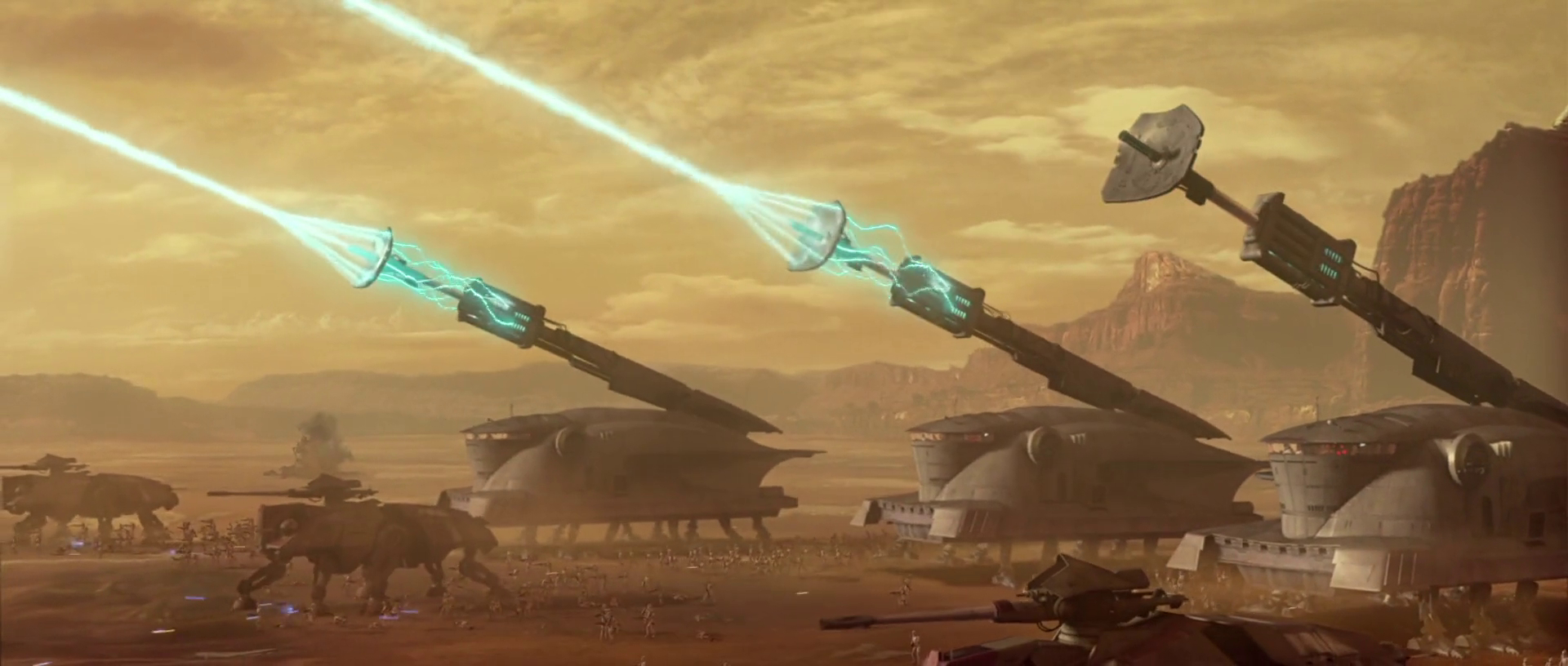
Rothana Heavy Engineering was responsible for the development of the SPHA walker.
The immense power demands of the turbolaser cannon on the SPHA-T model heavily influenced the design of the vehicle's other systems.
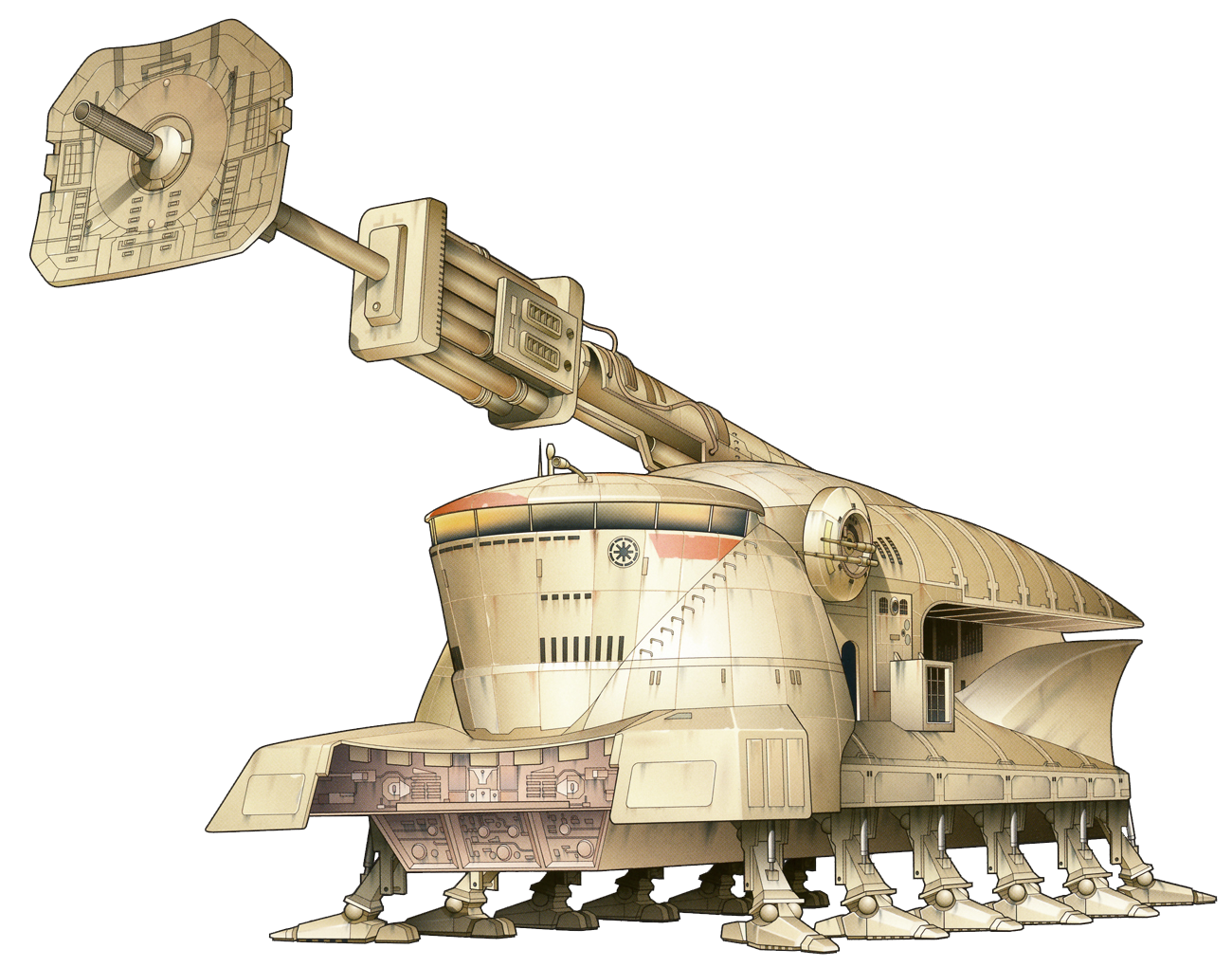
Instead of a complex turret, designers opted for the entire walker to reposition itself to adjust firing angles. Similar to other walkers, the articulated legs of the SPHA made it resistant to anti-repulsorlift weaponry, but at the expense of some maneuverability.
The Galactic Empire subsequently created a more compact variant, the SPMA, which was more agile and smaller due to advancements in weight-reduction technology.
Usage
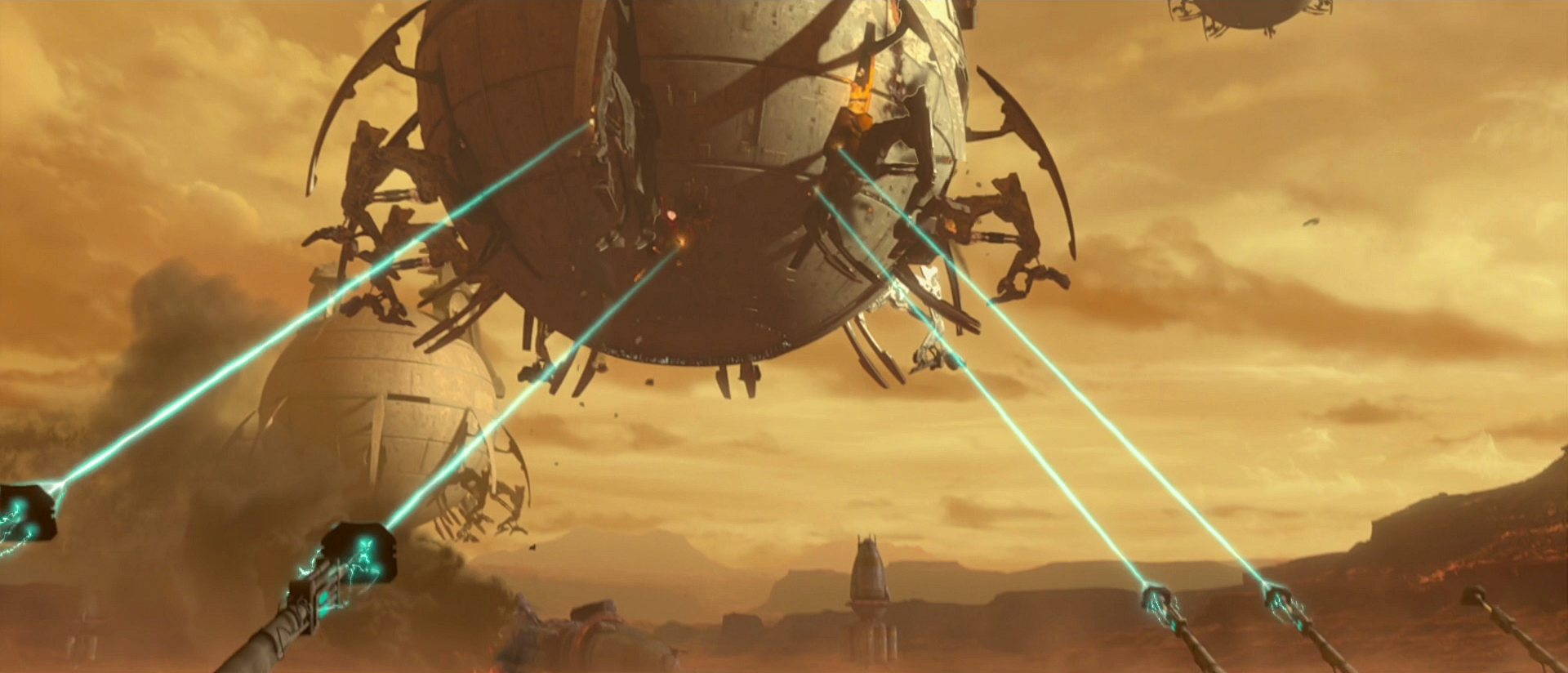
The SPHA, notably the SPHA-T, made its debut during the First Battle of Geonosis, playing a crucial role in destroying several Lucrehulk-class core ships and Hardcell-class interstellar transports.
SPHA units saw widespread use throughout the Clone Wars, participating in ground engagements like the Battle of Cato Neimoidia, the Battle of Muunilinst—where many were lost to the fast IG lancer combat droids—, the Battle of Rhen Var, and the Second Battle of Tatooine.
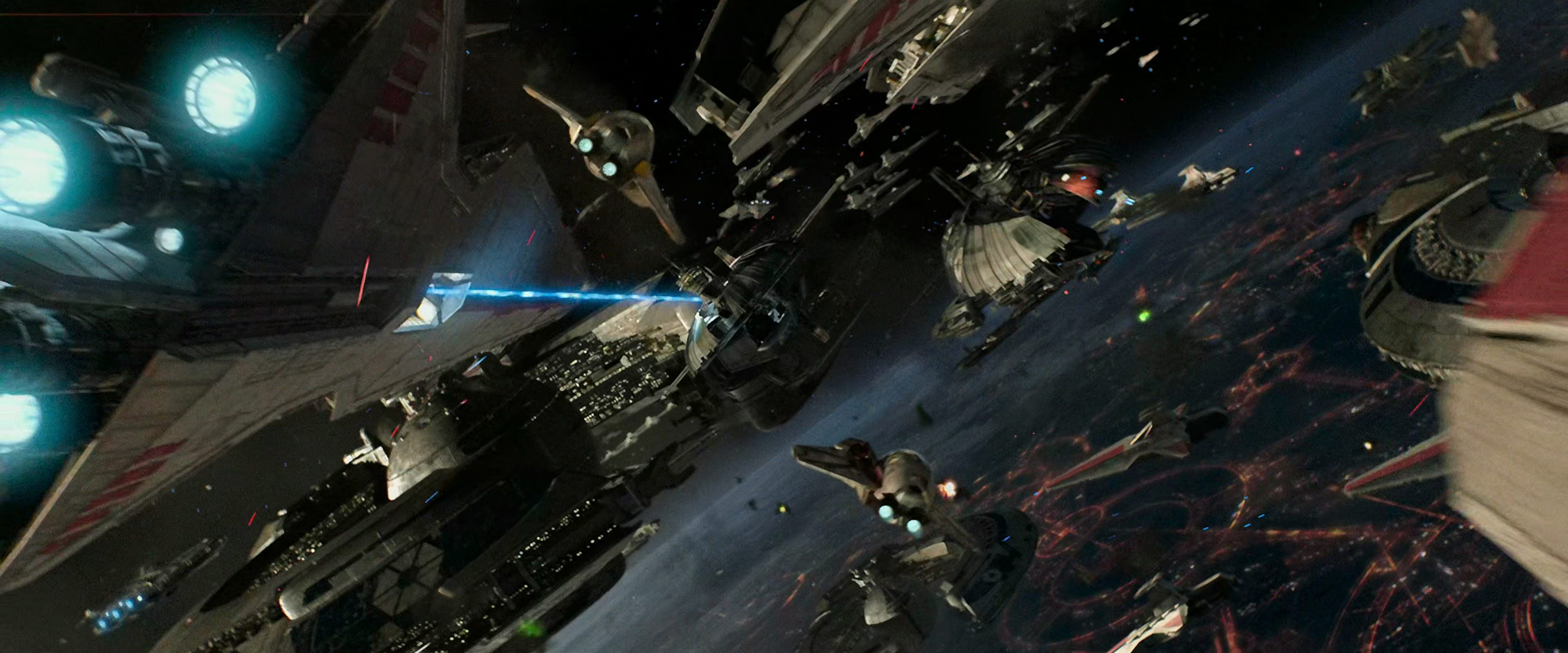
Following a suggestion by Anakin Skywalker, numerous Venator-class Star Destroyers within the Open Circle Fleet had SPHA-T turbolaser cannons installed in their ventral hangar bays. These proved effective during the Battle of Coruscant, especially against enemy Munificent-class star frigates.
The SPHA series of walkers remained in service during the initial years of the Galactic Empire, until the development of the SPMA line, which offered superior speed and maneuverability compared to the cumbersome SPHA-Ts.
Behind the scenes
Concept Design Supervisor Erik Tiemens created the concept art for the SPHA-T. He originally envisioned a tracked vehicle, but George Lucas altered it to a walker design. The SPHA was initially codenamed "Clone Tank A".
Both Star Wars: Attack of the Clones: The Visual Dictionary and Star Wars: The Complete Visual Dictionary incorrectly identify the SPHA-T's turbolaser as a troop hatch. Furthermore, The New Essential Guide to Vehicles and Vessels erroneously states that the SPHA-T is propelled by multiple treads. In reality, it is a walker that moves on twelve legs.
The vehicle's size remains inconsistent, as the 140-meter length cited in The Official Star Wars Fact File 71 does not align with its appearance in Star Wars: Episode II Attack of the Clones, nor with the dimensions provided in The New Essential Guide to Vehicles and Vessels.