Separatist Senate
The Separatist Senate, which was also referred to as the Separatist Parliament or the Separatist Congress, functioned as the legislative body for the Confederacy of Independent Systems during the Clone Wars, representing numerous worlds within the Confederacy. Upon the founding of the Confederacy by the influential Count Dooku in 24 BBY, the sectors and star systems that seceded from the Galactic Republic established their own legislative assembly to govern the Separatist alliance. Many of the appointed delegates, who had previously served in the Republic Senate, continued to represent their respective constituencies within the Confederacy. Operating under a bill of rights called the Bylaws of Independent Systems, the Parliament was led by Dooku, the Confederate Head of State, and Bec Lawise, the Separatist Congress Leader. Its headquarters were located in the Separatist Senate Building on Raxus Secundus, the Separatist capital, where its sessions took place.
Despite the Parliament's role in state affairs, its effectiveness was often diminished by other elements within the Separatist structure. The corporate entities represented on the Separatist Council also participated in governmental decision-making, and Dooku, secretly the Dark Lord of the Sith Darth Tyranus, manipulated events to prolong the pan-galactic conflict for the purposes of the Sith. At times, actions by other groups seeking profit from the war nullified legislation passed by the Parliament, leading some to view its members as mere puppets of Dooku. Furthermore, both the senators of the Parliament and the citizens of the Confederacy were frequently kept uninformed about the brutal campaigns led by commanders of the Separatist Droid Army such as General Grievous. Consequently, the Confederacy was more often perceived as a movement rather than a fully centralized government, even with the Parliament's involvement in public matters.
The Parliament encompassed a diverse range of opinions, resulting in differing stances on the continuation of the war against the Republic. In 21 BBY, after the year-long Clone Wars had already begun, Senator Mina Bonteri of Onderon, in collaboration with Republic Senator Padmé Amidala, introduced a bill aimed at initiating peace talks with the Republic. This bill secured a majority vote in the Parliament, and the proposal for peace was conveyed to the Republic Senate. However, Dooku, in league with war profiteers, ensured the Republic's rejection of the offer, ultimately orchestrating Bonteri's murder and the subsequent withdrawal of the proposal. Later, a delegation represented the Parliament at an unprecedented peace conference with Republic delegates on Mandalore, but these discussions also proved unsuccessful. The Confederacy was dissolved in 19 BBY following Dooku's death and the execution of the Separatist Council, thereby bringing the Clone Wars to an end.
Description
Organization
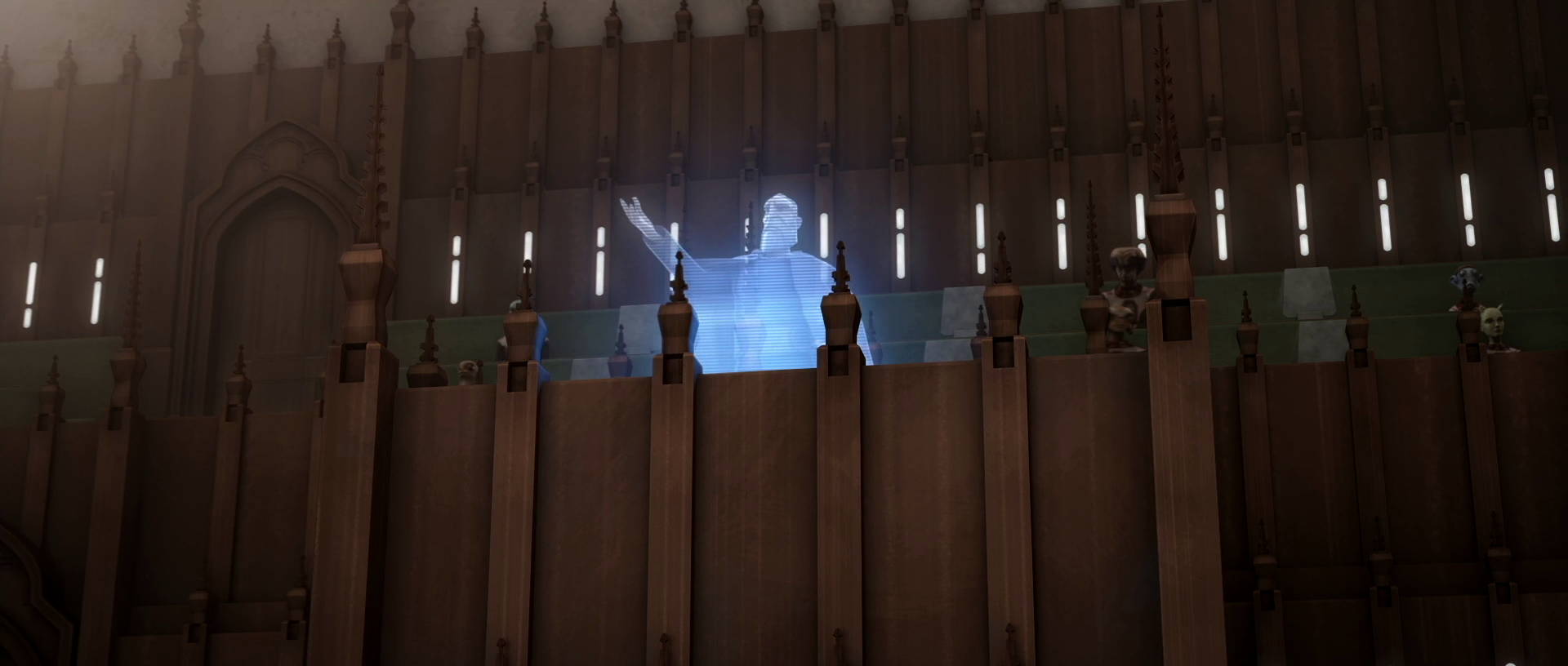
The Separatist Parliament, alternatively known as either the Separatist Senate or the Separatist Congress, was established as a governing body to oversee the affairs of the Confederacy of Independent Systems. It was comprised of delegates who spoke for the numerous worlds that were member states of the Confederacy. The Parliament was presided over by a designated Separatist Congress Leader, whose role was to act as the speaker for the entire body. The Confederate Head of State, who also served as the leader of the Senate, was permitted to officiate at its sessions. In addition to the representation of member worlds, corporations such as the Corporate Alliance were also granted representation, thus becoming a part of the legislature's decision-making processes. During sessions, individual congresspeople had the ability to propose legislation, which then required a majority vote in order to be enacted into law. The operational procedures for the Parliament were dictated by a bill of rights known as the Bylaws of Independent Systems. For instance, a voice vote was required for matters such as initiating peace negotiations with the Galactic Republic.
The Parliament was primarily regarded as the civilian political branch of the Confederacy's government, distinguishing it from another Confederate ruling body, the Separatist Council. The Council, which consisted solely of corporate leaders who provided funding for the Separatist war effort, also made governmental decisions for the Confederacy, in addition to their responsibilities in managing the war effort and overseeing the distribution of assets to the various member worlds.
The Separatist hierarchy
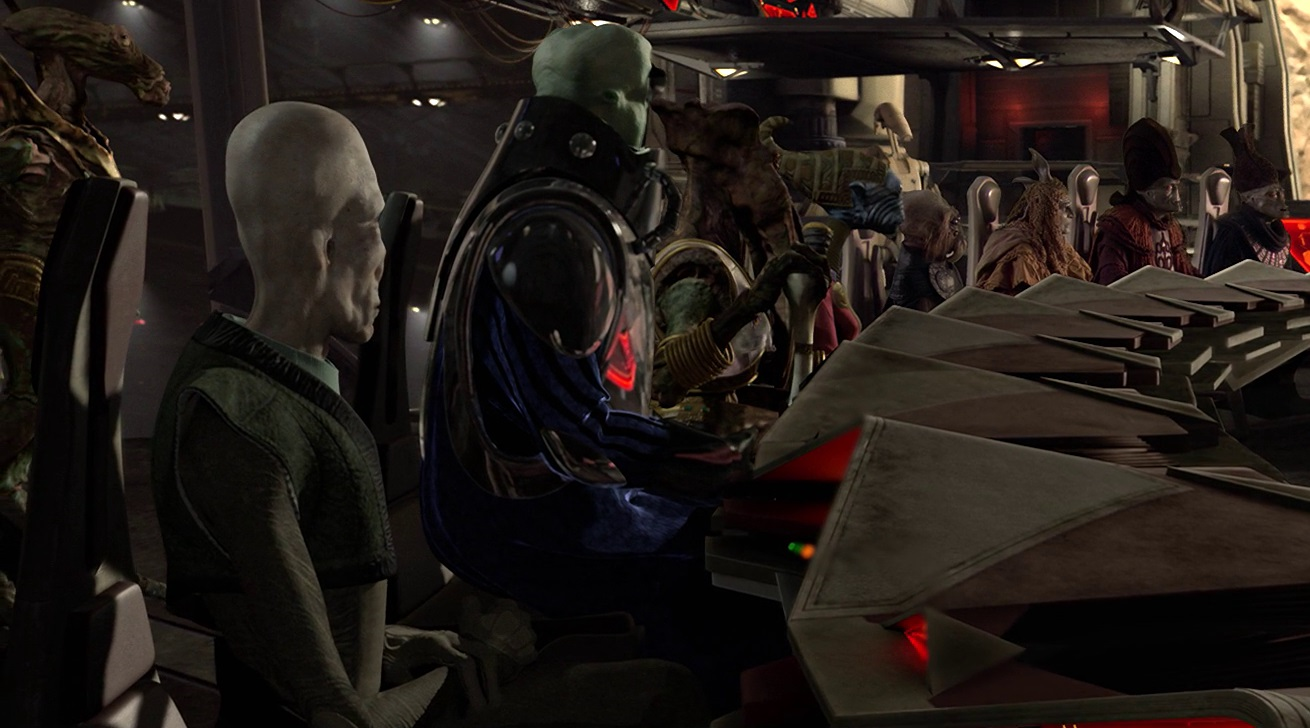
The effectiveness of the Separatist Parliament was a subject of controversy during the time of the Clone Wars, when the Confederacy was engaged in a full-scale war with the Galactic Republic. As a separatist government, the Confederacy was made up of sectors and star systems that had seceded from the Republic, as well as megacorporations and trade cartels such as the Corporate Alliance, Trade Federation, InterGalactic Banking Clan, and Commerce Guild, among others. These conglomerates were represented on the Separatist Council, which coexisted alongside the civilian-based Parliament. With a wide range of philosophies, some politically motivated and others driven by corporate interests, the Separatists operated more as a hierarchy than as a formal, centralized government. This framework of the Confederacy sometimes resulted in the Parliament's decrees being ignored, manipulated, or rendered ineffective. Count Dooku himself, who was the Head of State of the Confederacy, played a role in invalidating Parliament legislation as part of schemes concocted by the Order of the Sith Lords. Senator Lux Bonteri held the belief that Dooku would betray the members of the Parliament if his machinations required it.
Separatist delegates who were affiliated with companies like the Corporate Alliance faced criticism for promoting corporate voices in political affairs, mirroring the situation in the Republic Senate. However, these same galactic enterprises were essential to the Confederacy, as their security forces formed the Confederacy military, especially the Separatist Droid Army. Furthermore, Parliament members and Separatist citizens were consistently kept uninformed about the actions and attacks of ruthless military commanders like General Grievous. This practice led to an incomplete understanding of the Separatists' role in the galactic war, creating additional challenges for the Parliament. Some individuals within the Republic viewed the Separatist senators as puppets of Dooku, while the Parliament itself was widely considered unsuccessful due to the hierarchical structure of the Separatist government.
History
Formation

The Confederacy of Independent Systems was established in the year 24 BBY when the charismatic Count Dooku, formerly a Jedi Master, delivered passionate speeches criticizing the Republic Senate for its corruption and accusing the Jedi Order of supporting a regime that was beyond redemption. His speech, known as the Raxus Address, established the Confederacy as a state separate from the Republic. Thousands of sectors and star systems began issuing Articles of Secession to the Republic, joining the Confederacy alongside megacorporations such as the Trade Federation, InterGalactic Banking Clan, Corporate Alliance, Techno Union, and others who sought Dooku's promise of free trade. In reality, the Confederacy was secretly created to serve the Grand Plan of the Sith Lords, to which Dooku belonged under the alias of Darth Tyranus. While Tyranus led the Confederacy into war with the Republic, the Dark Lord of the Sith Darth Sidious, disguised as Supreme Chancellor Palpatine of the Republic, aimed to destabilize the Republic so that the Sith could eventually seize absolute power over the galaxy. Thus, the Confederacy was a deception, the result of Sith plotting against the Republic.
Over six thousand worlds joined the Confederacy during the period of tension known as the Separatist Crisis, which lasted from 24 BBY to 22 BBY. The InterGalactic Banking Clan, Trade Federation, and other companies loyal to the Separatists officially joined the cause in 22 BBY, pledging their financial support and their standing security forces to the Confederate military. When the First Battle of Geonosis broke out that year, the corporations' various battle droid security forces, which were eventually organized as the Separatist Droid Army, were deployed against the newly formed Grand Army of the Republic. This pan-galactic conflict, which followed the Battle of Geonosis, became known as the Clone Wars.
While the Separatist Council was formed from the corporate leaders overseeing the war effort, another ruling body was established from the civilian population. The Separatist Parliament, as it became known, was composed of representatives from thousands of Separatist member worlds, similar to the structure of the Republic Senate. In fact, several senators appointed to the Parliament were former members of the Republic Senate, such as Mina Bonteri, who continued to represent her homeworld of Onderon in the Confederacy. Senator Bec Lawise became the Separatist Congress Leader, presiding over Parliament sessions alongside Confederate Head of State Dooku. The assembly was headquartered on the Separatist capital world of Raxus Secundus, which was blockaded by a substantial fleet from the Confederate Navy. The Separatist Senate Building was located at the center of a large city on Raxus Secundus, featuring an upper viewing gallery for observers.
The Parliament encountered numerous challenges during the Clone Wars, including the need to justify the Confederacy's existence. Despite several attempts to negotiate with the Separatists, the Republic Senate refused to acknowledge the legitimacy of the Separatist state, even passing a law that prohibited Republic senators from communicating with Separatist officials. The Confederacy's appointed Supreme Commander of the Droid Armies, General Grievous, committed numerous atrocities on the front lines, but the politicians and citizens of the Confederacy were kept in the dark about his crimes and other atrocities committed in their name against the Republic. Dooku and Darth Sidious were central to perpetuating the conflict between the Republic and the Confederacy in order to advance the Sith Grand Plan to rule the galaxy.
A failed peace
As the Separatist Droid Army gained ground on battlefronts throughout the galaxy, some Parliament senators advocated for escalating the war effort against the Republic. However, most delegates struggled to decide whether to support further expansion of their armed forces. Similar conditions in the Republic Senate reached a critical point in 21 BBY, during the second year of the war, leading Republic Senator Padmé Amidala of Naboo to travel to Raxus Secundus, violating the Republic's non-contact statute. As a vocal proponent of diplomacy amidst the increasing discord in the Republic Senate, Amidala was concerned about a rising bill in her own Senate that would deregulate the galactic banks, opening new lines of credit to expand the Republic Military and thus intensify the fighting. She journeyed to Raxus Secundus with Jedi Padawan Ahsoka Tano to meet with Mina Bonteri of Onderon, who had mentored her in politics early in her career, hoping to end the war through diplomatic negotiations. In discussions with her former colleague, Amidala convinced Bonteri that if the Separatist Parliament extended an offer of peace, there might be a sufficiently sympathetic response in the Republic Senate to initiate formal intergovernmental dialogue. Bonteri agreed and promised to propose a motion for peace to the Parliament.
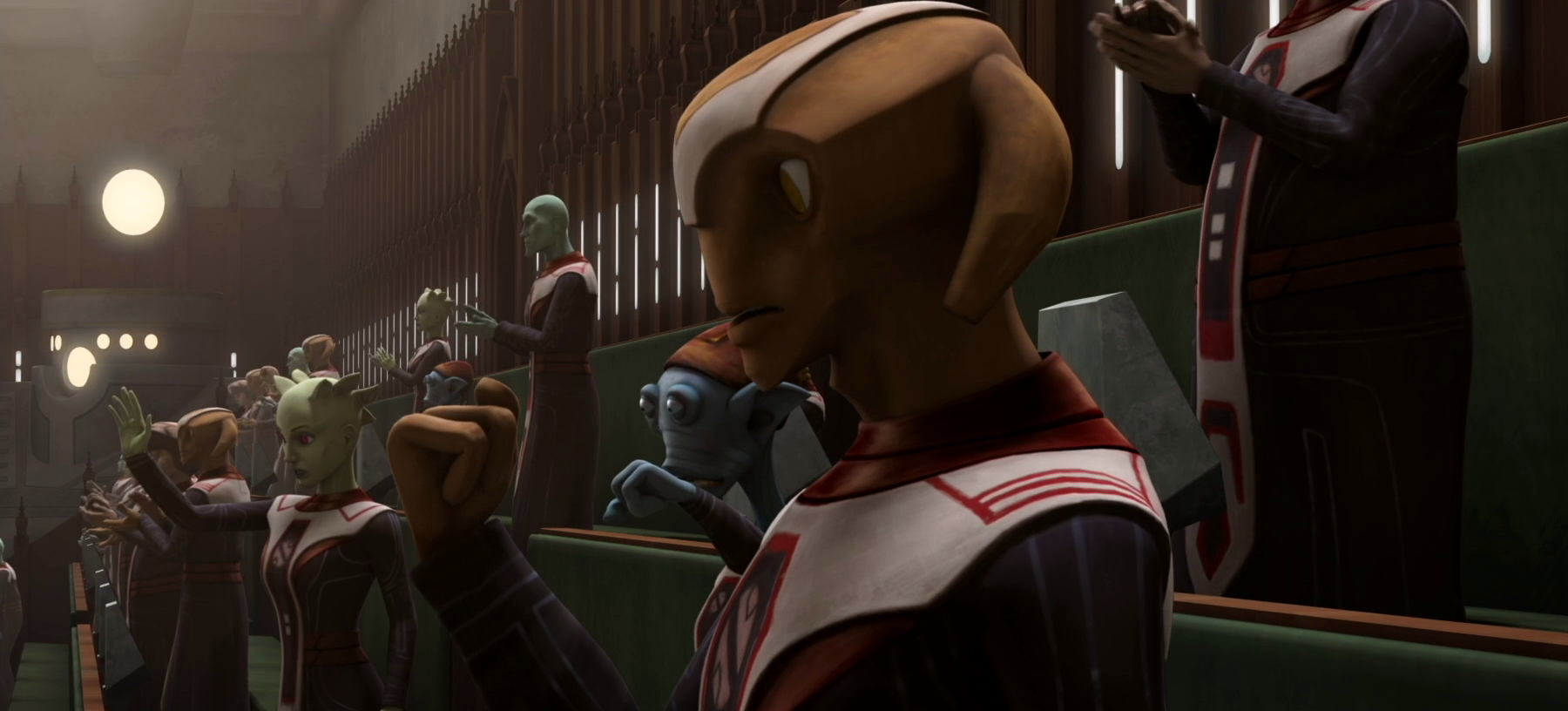
Bonteri drafted her bill, which would immediately authorize an offer for peace negotiations to Supreme Chancellor Palpatine and the Republic, and presented it at a subsequent Parliament session. She introduced her proposal, amidst cries of support and rejection from all corners of the Separatist Senate Building, by denouncing the futility of the war's casualties and calling for peaceful coexistence between Confederate and Republic worlds. After she concluded, numerous senators rose to applaud her words, while other delegates disagreed. Among the dissenters was Senator Voe Atell, an affiliate of the Corporate Alliance, who asserted that the commerce guild would never permit the passage of such a proposal. Senator Kerch Kushi disputed her claims, citing the Parliament's democratic system and its lack of corporate governance. Amidst the widespread debate that erupted after Kushi's statements, Count Dooku called for order so that Bonteri's bill could be brought to a vote. In accordance with the Bylaws of Independent Systems, Dooku held a voice vote, with Senators Bonteri, Kushi, By Bluss, and Amita Fonti among the supporters. Atell, Punn Rimbaud, and others voted against it, but they were ultimately outvoted.
Following the enactment of Bonteri's bill, Amidala returned with Tano to the Republic capital of Coruscant. Palpatine was skeptical of the Separatists' offer for peace, given their past refusals to negotiate, but Amidala privately assured him of its sincerity because it originated with Bonteri, allowing the vote to be brought to the Senate floor. No group was more alarmed by the Parliament's offer than the coalition pushing for Republic banking deregulation, which included Trade Federation Senator Lott Dod, InterGalactic Banking Clan lobbyist Nix Card, and Senator Gume Saam, the latter of whom was receiving payoffs from the Techno Union. All three profited from the war through their corporate affiliations and had already arranged, through their secret ties to Dooku, for an attack on Coruscant to panic the Senate into passing the deregulation legislation. On Dooku's orders, without Parliament authorization, Grievous had a team of Infiltrator/Demolition droids sabotage the Coruscant power network. The assault coincided with the Republic Senate's vote on the bank reform bill, achieving its intended effect. Reported as an act of Separatist terrorism, the bombing of the power generator portrayed the Parliament's offer for peace as insincere, and much to Amidala's dismay, prompted the Senate to overwhelmingly vote in favor of banking deregulation. The Senate later rejected the Parliament's motion in light of the attack on Coruscant.
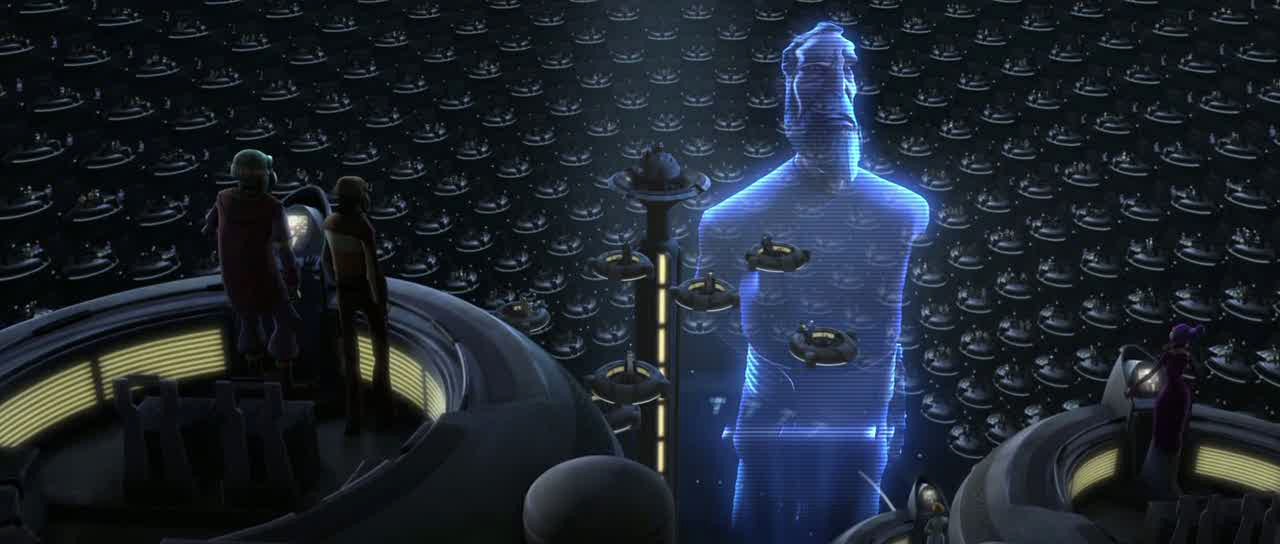
With negotiations with the Republic thwarted, Dooku swiftly orchestrated a secret attack on Confederate territory, in which Sith assassins murdered Bonteri, and then publicly claimed that she had been killed in a Republic assault that targeted the people of the Confederacy. Consumed by fear of attack, the Parliament withdrew Bonteri's peace proposal, with Dooku relaying this decision in a direct transmission to the Republic Senate. Although Republic spies uncovered evidence of Bonteri's assassination, many Parliament members did not believe that their Head of State had executed their highly esteemed colleague or that he was even capable of such an act. In any case, Dooku's actions ensured the collapse of Confederate–Republic diplomatic negotiations.
Following the Republic Senate's deregulation of the banks, the Separatists took out a loan from the InterGalactic Banking Clan to finance the manufacture of three million additional battle droids for the Separatist Droid Army, despite an interest rate hike from ten to twenty-five percent. The Republic Senate soon responded by approving an order for five million new clone troopers for its Grand Army, guaranteeing that the Clone Wars would continue across the galaxy. Mina Bonteri's Parliament seat for Onderon was filled by her son, Lux Bonteri.
Conference on Mandalore
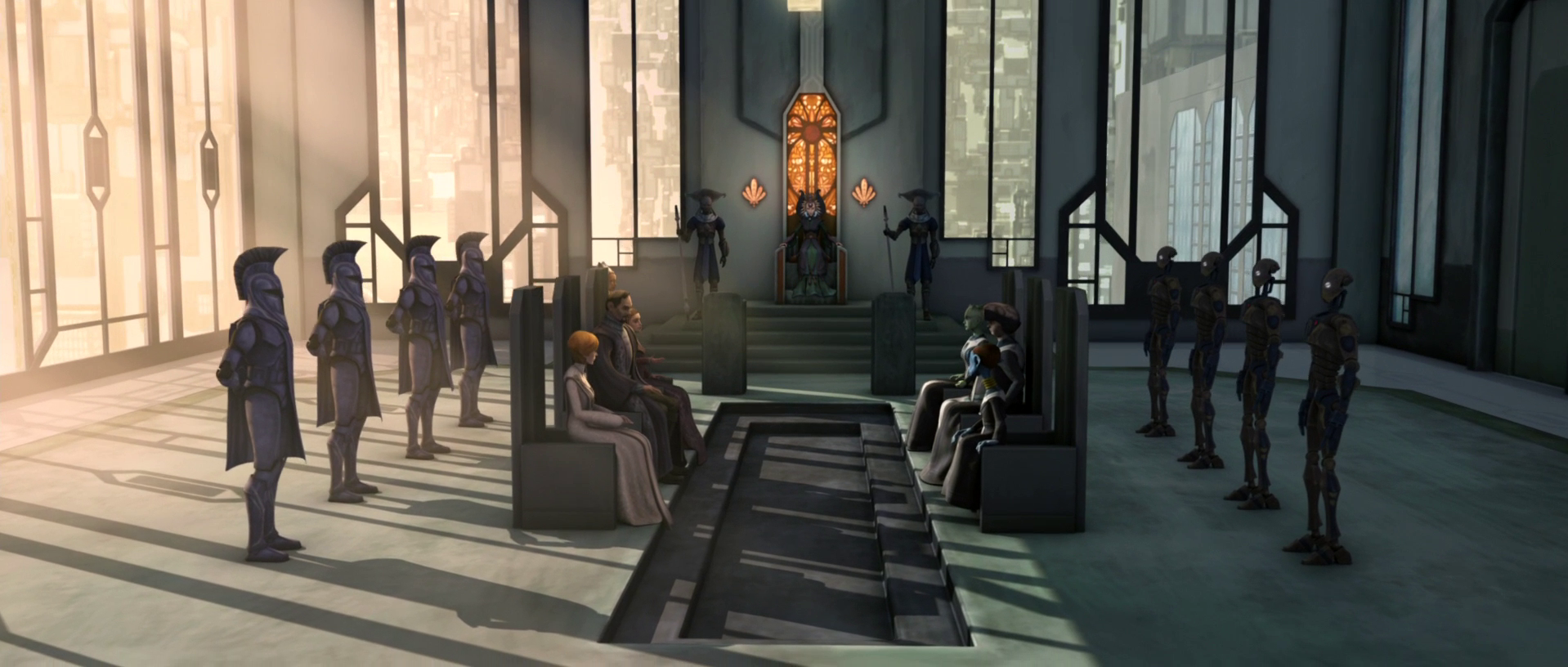
The legislative body later consented to dispatch a group of senators to engage with Republic officials in an unprecedented peace conference between the two warring factions. The neutral territory of Mandalore was designated as the location for this assembly, with Duchess Satine Kryze of the New Mandalorians acting as the host. Senators Voe Atell, Amita Fonti, and Separatist Congress Leader Bec Lawise agreed to represent the legislative body, convening in the royal palace situated in the capital city of Sundari. They met with Republic Senators Padmé Amidala, Bail Prestor Organa from Alderaan, and Mon Mothma representing Chandrila, all of whom shared the aspiration of achieving a tranquil resolution to the ongoing conflict. In compliance with Mandalorian regulations, both groups were mandated to remain unarmed, although the legislative body's senators' BX-series droid commandos possessed blasters functioning as security droids. Immediately after Amidala, who was leading the Republic representatives, initiated the conference, the primary objective of the Separatist delegation was to tackle a longstanding concern for the Confederacy: the validity of the Separatist state. Speaking on behalf of her fellow delegates, Atell insisted that the Republic officially acknowledge the Confederacy, a request that Amidala and her associates hesitated to fulfill.
Subsequently, the discussions faced disruption from Lux Bonteri, who had recently stepped down from the legislative body and publicly disavowed his Separatist affiliations. Bonteri's uninvited presence irritated the legislative body's senators, especially when he mounted the platform and openly accused Dooku of being involved in his mother's murder. Lawise instructed his security droids to apprehend Bonteri and escort him out of the royal palace. Despite Kryze's objections to the droids' handling of Bonteri, Atell declared the matter an internal affair, preventing external intervention. Lawise offered an apology on behalf of the Separatists for the disruption and permitted the talks to proceed, although they ultimately failed to produce any positive outcomes. The negotiations collapsed because of concealed agendas on both sides, leaving the Senate and legislative body delegations unable to negotiate an end to the war. Adding to the rising tensions was the revelation that Bonteri had managed to escape from confinement aboard the Separatists' C-9979 landing craft at the Sundari docks, aided by an old ally, Ahsoka Tano, who was serving as Amidala's bodyguard. After pursuing Tano and Bonteri to the Republic transports, the legislative body's squad of security droids engaged in a firefight with the Republic's Senate Guards, but they were unsuccessful in preventing Bonteri and Tano from fleeing off-world.
In 19.1 BBY, during the war's final month, the Confederate government formally recognized Rush Clovis as the new leader of the InterGalactic Banking Clan. A Separatist delegation, led by Bec Lawise, received permission to attend the transfer of authority at the Banking Clan's headquarters on Scipio. Dooku directly interfered with the proceedings, orchestrating a scheme to seize control of the banks after facilitating Clovis's ascent to power. Representing the Confederacy, Dooku declined to pay the interest owed on their loans from the Banking Clan, instead manipulating Clovis into increasing the Republic's interest rates. Dooku then deployed a Confederate Navy flotilla to Scipio, decimating the Republic's security garrison stationed there, with the intention of implicating Clovis in a biased alliance with the Separatists. After Dooku apprehended Padmé Amidala, the leader of the Republic delegation, Lawise voiced his disapproval of the plan, believing that the legislative body would not condone such a blatant action. Dooku responded by utilizing the Force to telekinetically position Amidala to fatally shoot Lawise. Subsequently, he withdrew his naval fleet from Scipio, leaving the Banking Clan in disarray and ultimately prompting the Republic Senate to transfer complete control of the banks to Supreme Chancellor Palpatine.
The End of the War and Its Lasting Impact
Following three years of armed conflict, the Confederacy met its defeat in 19 BBY with the demise of Count Dooku during the Battle of Coruscant and the subsequent execution of the Separatist Council on Mustafar. The Sith Grand Plan ultimately reached its intended outcome: Palpatine reestablished the Republic, transforming it into the first Galactic Empire, with himself assuming the role of Galactic Emperor for the remainder of his life. Lacking its corporate leadership, the Confederacy surrendered, and a mass signal was sent from Mustafar to deactivate the Separatist Droid Army. Nevertheless, the new Empire required several years to conquer and subdue holdout factions comprised of unyielding Separatists.
The legislative body was remembered for its ultimate lack of effectiveness within the Separatist structure. When Senator Mon Mothma of the Imperial Senate became the Chief of State of the Alliance to Restore the Republic after its founding in 2 BBY, she contemplated the representative legislative body while organizing the Rebel Alliance. Considering the legislative body's inutility, Mothma believed that treating the Rebellion as a Republic-in-exile would inevitably remind the galaxy of the Confederacy. Moreover, a Republic-in-exile, acting as a separate government, would lend credence to the Empire as a legitimate state rather than a corruption of the Republic, which was not the intended message. During the ensuing Galactic Civil War, the Rebel Alliance successfully overthrew the Empire, ultimately installing the New Republic as the dominant governing body in the galaxy.
Prominent Figures
Count Dooku
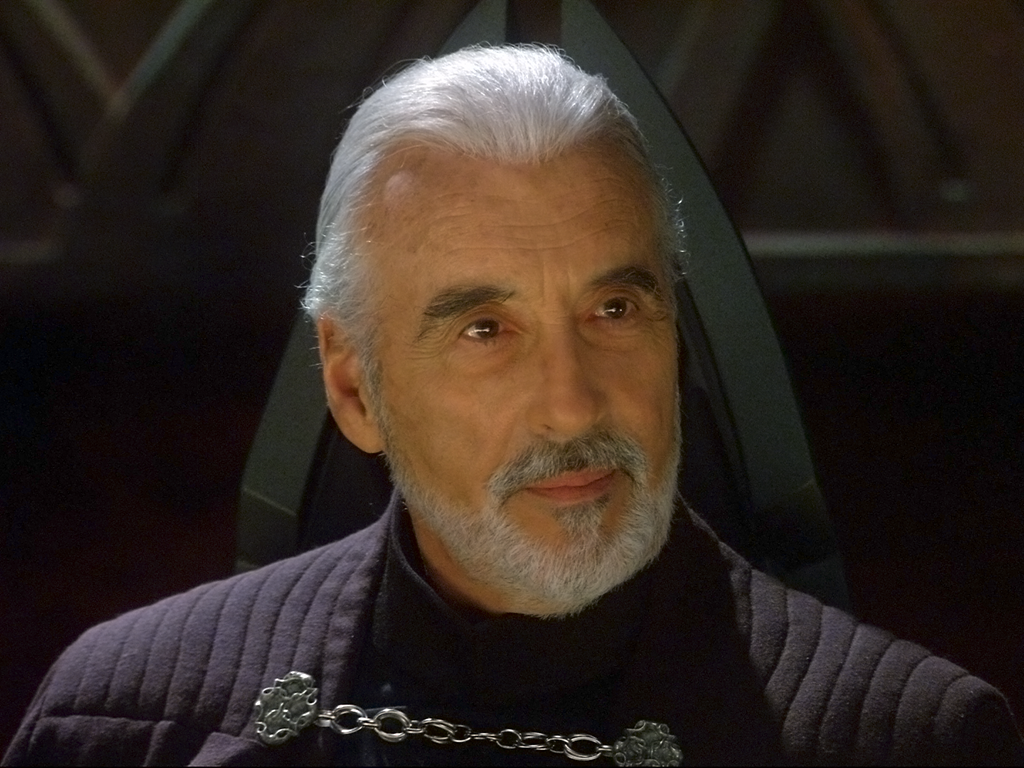
As the Head of State of the Confederacy, Dooku presided over both the Separatist legislative body and the Separatist Council throughout the Clone Wars. Initially a Jedi Master, Dooku relinquished his position within the Jedi Order in 32 BBY, challenging its role within a corrupt Republic. While reclaiming his title as Count of Serenno, he secretly became the apprentice of Darth Sidious, the Dark Lord of the Sith, assuming the identity of the Sith Lord Darth Tyranus. His responsibilities within the legislative body included presiding over sessions and overseeing votes, often communicating via hologram due to his frequent involvement in prosecuting the war from afar.
Despite projecting the image of a charismatic and reasonable politician to many within the legislative body, Dooku willingly disregarded the assembly's decisions without their awareness, including Mina Bonteri's proposal for peace. He sought to prolong the war to fulfill the Sith Grand Plan, aiming to deplete the Republic to the point where the Sith could seize control. Consequently, he manipulated the Confederacy and its legislative body on numerous occasions, even orchestrating the deaths of legislative body members such as Mina Bonteri and Bec Lawise as he deemed necessary. He also enlisted ruthless enforcers like General Grievous and the Dark Acolytes to execute his agenda of deception and manipulation.
Mina Bonteri

Mina Bonteri, a distinguished senator within the Separatist legislative body, represented her homeworld of Onderon. Initially a member of the Republic Senate, Bonteri came to disagree with the Republic's course and withdrew alongside her homeworld, which Onderonian King Sanjay Rash allied with the Confederacy at the war's onset. In departing the Senate, she relinquished numerous connections and close friendships. However, unlike more aggressive Separatists, Bonteri had no desire for conquest or warfare, instead advocating for resolving the war through diplomatic means. She admired Count Dooku as a political leader, although she, like many other Separatist citizens, remained unaware of the atrocities committed in their name on the battlefield.
As a respected embodiment of Separatist idealism, she championed coexistence between Republic and Confederate worlds as a solution to the conflict. When an old friend, Padmé Amidala, arrived on Raxus Secundus to pursue a peaceful resolution, Bonteri collaborated with her former colleague to initiate negotiations with the Republic, proposing a bill to the legislative body calling for an immediate cessation of hostilities. While the majority of her associates voted in her favor, Dooku had her assassinated to thwart the peace effort and advance his own wartime agenda. Her position in the legislative body was assumed by her son, Lux Bonteri, who uncovered Dooku's involvement in her death and sought to avenge her.
Bec Lawise

Senator Bec Lawise held the position of Separatist Congress Leader, presiding over legislative body sessions alongside the Head of State. As the speaker of the legislative body, he staunchly supported Count Dooku, refusing to believe any allegations of Dooku's misdeeds without question. Lawise was among several congresspeople who appealed to the Republic to recognize the Confederacy as a legitimate government, a request that the Republic delegation hesitated to grant during the peace conference on Mandalore. He was displeased by Lux Bonteri's uninvited appearance at the negotiations and swiftly labeled him a Separatist traitor for his accusations against Dooku. He promptly responded to Bonteri's words with force, readily ordering the young man's detention despite the clear possibility of Dooku having him executed for his accusations. Nevertheless, Lawise ultimately proved expendable to Dooku, who orchestrated Lawise's death when the senator raised objections to his arrest of Padmé Amidala on Scipio, as part of a scheme to seize control of the banks from the InterGalactic Banking Clan.
Voe Atell

Voe Atell, a senator associated with the Corporate Alliance, occasionally represented the commerce guild within the Separatist legislative body. During the debate over Mina Bonteri's bill to initiate diplomatic negotiations with the Republic, Atell opposed her pro-peace colleague, even declaring that the Corporate Alliance would never permit a legislative body decision to end the war. Some of her fellow delegates took offense at her remarks, with Kerch Kushi drawing parallels between her Corporate Alliance ties and the seats held by such megacorporations in the Republic Senate. Atell voted against the bill for peace, although she found herself in the minority. Despite opposing negotiations with the Republic on that occasion, she later accepted a position on the three-member legislative body delegation at the Mandalore peace conference, where she advocated for recognition of the Confederacy's legitimacy. Padmé Amidala was reluctant to meet her demands, and the discussions subsequently collapsed.
Lux Bonteri

Lux Bonteri, the son of Mina Bonteri, succeeded his mother in representing Onderon within the Separatist legislative body following her death. Having grown up as a Separatist, Bonteri was idealistic from a young age, sharing some of his mother's views regarding the futility of war. He was eventually orphaned by the Clone Wars: his father, a military officer, was killed in the line of duty, while his mother died for her ideals, as Count Dooku orchestrated. Although Bonteri considered himself a patriot and loyal Separatist, he renounced his Confederate affiliations and resigned his legislative body seat after uncovering Dooku's actions. He cautioned other senators about Dooku, believing that he would eventually betray them just as he had betrayed Mina. Bonteri resolved to bring Dooku to justice, withdrawing to support the Mandalorian Death Watch, a splinter group of terrorists, in its pursuit of Dooku. As part of his plan, he disrupted the peace conference on Mandalore to publicly accuse Dooku of murder, intending to confront the count and pinpoint his precise location for the Death Watch.
Bonteri later joined a resistance movement on Onderon and assisted in liberating his homeworld from Separatist control, after which he was reappointed as the senator of Onderon given his brief tenure in the legislative body. He determined that Onderon's best course of action would be realignment with the Republic, intending to follow in his mother's footsteps by joining the Republic Senate.
Behind the Scenes
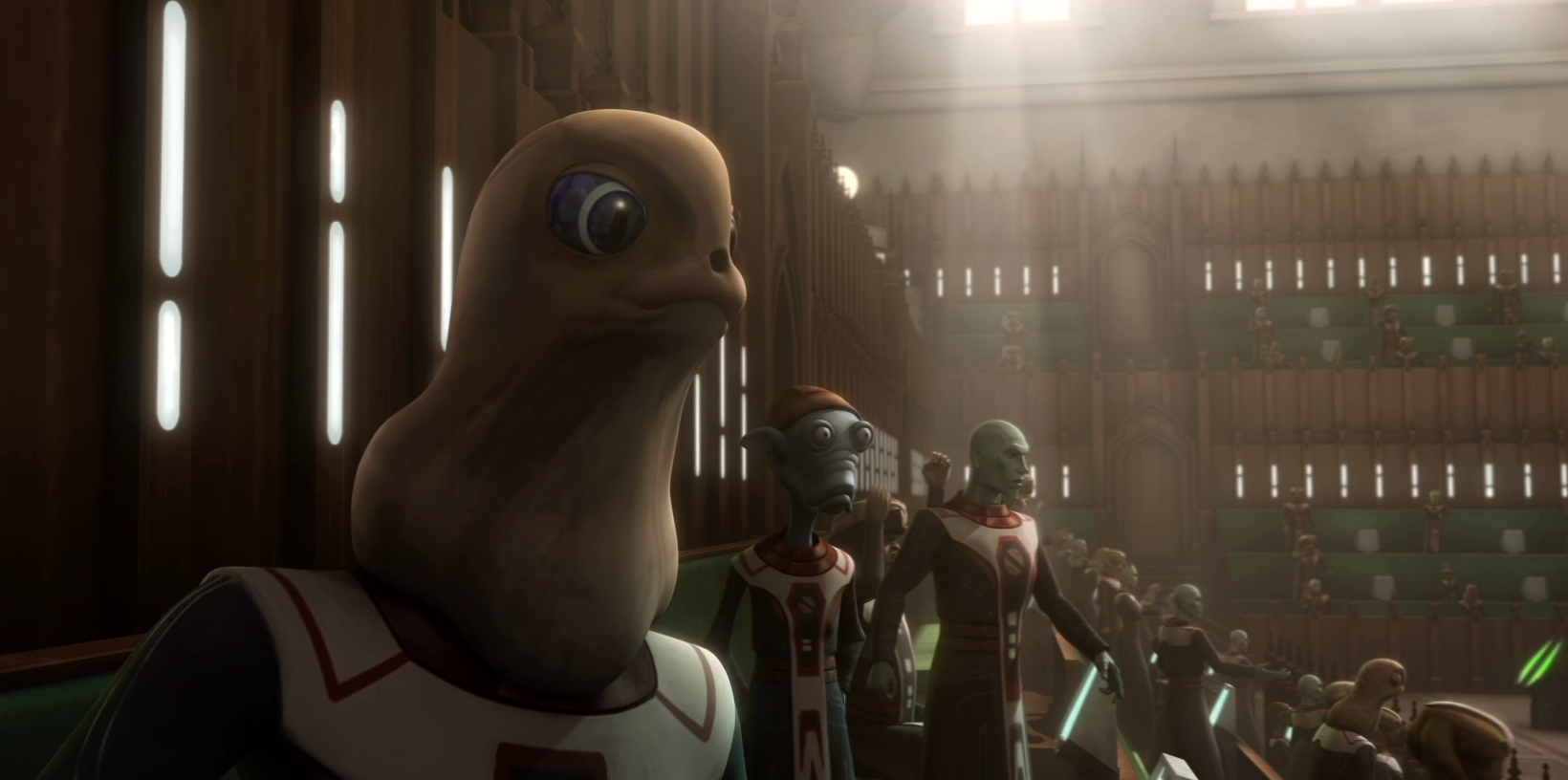
The Separatist legislative body was conceived for the Star Wars: The Clone Wars television series as the civilian government of the Confederacy of Independent Systems. First hinted at during Celebration V in August 2010 by Series Supervising Director Dave Filoni, it was mentioned in the third season episode "Supply Lines" in September 2010, with the episode's accompanying guide on StarWars.com identifying it as a civilian-based segment of the Confederate government. The legislative body was formally introduced in "Heroes on Both Sides," which premiered on November 19, 2010. In addition to the prominently featured Mina Bonteri, several other senators were identified in the episode's online guide. The legislative body also played a role in the fourth season episode "A Friend in Need," which depicted a delegation from the legislative body participating in an unprecedented peace conference with the Republic. The episode was broadcast on January 13, 2012.
The legislative body represented a retcon to Star Wars canon concerning the Confederacy's governing structure, which had previously consisted solely of the corporate-based Separatist Council. The precise relationship between the legislative body and the Council remains undefined, although the television series had previously alluded to the Council's existence in the first season. According to Filoni, Series Producer George Lucas observed that the Expanded Universe had erroneously portrayed the Separatist Council as the Confederacy's government, as well as the Trade Federation's purportedly clear Separatist affiliations. Lucas stipulated that megacorporations such as the Trade Federation, Commerce Guild, and others on the Separatist Council were more of a neutral party during the events of The Clone Wars series, with the legislative body serving as the Confederacy's true civilian government. The legislative body's ineffectiveness, implied through Count Dooku's machinations in "Heroes on Both Sides," was acknowledged in the April 2012 The Essential Guide to Warfare, which also linked it to the formation of the Rebel Alliance. Jason Fry, one of the book's co-authors, noted that he made it a point to compare the Rebels to the earlier Separatists, incorporating the legislative body whenever the opportunity arose.
According to Series Writer Brent Friedman, the legislative body would have been featured in a future story arc of the television series, but those episodes were never produced after the series was discontinued from broadcast in March 2013.