Synthetic lightsaber crystal
A Synthetic lightsaber crystal, often called a Synth-crystal, represented a category of lightsaber crystal that was produced artificially, instead of being created naturally through geological activity. The processes employed in their manufacture often resulted in a red color, although any color could be achieved by carefully adjusting the creation process or by manipulating the crystal itself, frequently using the Force. An example of this is the green synth-crystal that powered Luke Skywalker's second lightsaber.
Specifications
Description
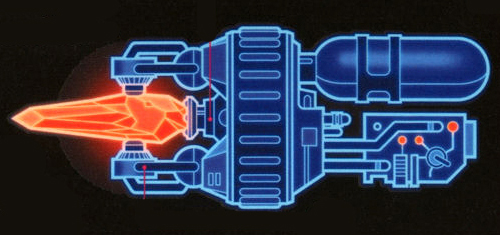
Although synthetic crystals were generally unsuitable for use in lightsabers, the Sith discovered a method to create energized, magnetized, and modified synth-crystals using the power of the dark side of the Force in specialized furnaces, causing the crystal to resonate with harmonic vibration. Because they were artificially made, synthetic crystals generated more potent lightsaber blades and were easier to modify. Furthermore, their widespread use by Sith and other Darksiders after this discovery solidified them as a common element among these groups, while their use by Jedi was strongly discouraged.
The majority of synthetic crystals were red, which resulted from the forging process and the intentional actions of the user, as most individuals who used them were Darksiders. Lightsaber blades with a red hue generated by these crystals were frequently known as "bloodshine blades." The crystal's capacity to adapt to the creator's intentions fostered a stronger connection between the resulting lightsaber and its user. Nevertheless, synth-crystals could be produced in any color, requiring only minor alterations to the creation process and precise manipulations through the Force during the forging.
Creation
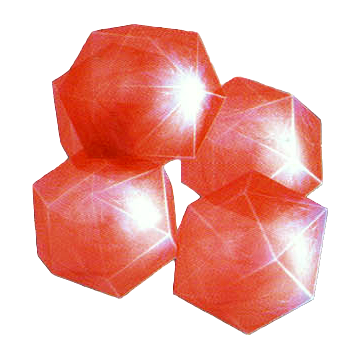
Synthetic lightsaber crystals were fabricated inside a device known as a geological compressor. The compressor was originally designed to simulate geological conditions from distant worlds in a laboratory setting, and it could be easily repurposed for creating synth-crystals by replicating the natural geological processes involved in crystal formation. The raw materials used to make the crystal were readily available, consisting of minerals with a high carbon concentration. These minerals were placed inside the machine and left to "bake" for a period ranging from twenty-four hours to four days. During this time, the individual creating the crystal would meditate on it with the Force, guiding its formation and enhancing its power. This level of control over the formation process allowed them to create crystals tailored to their specific needs.
Variants
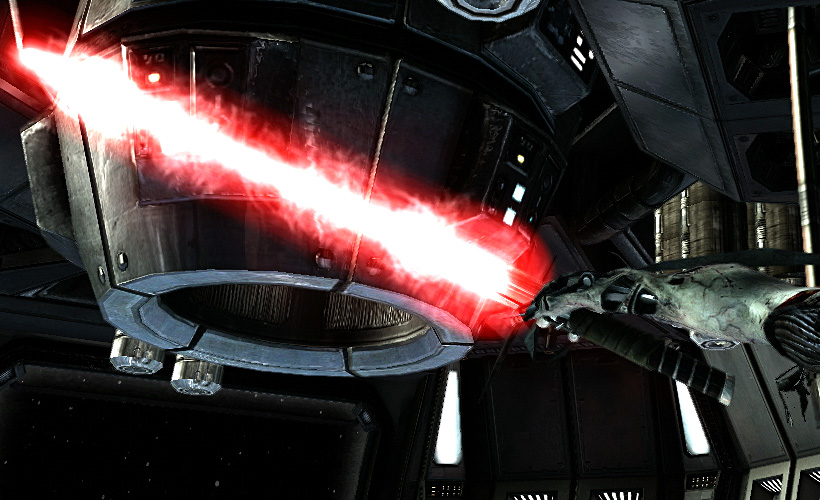
Beyond the various colors in which synthetic crystals could be made, there were also differences in the crystals themselves that had an impact on how they focused lightsaber blades.
Standard
A standard synthetic crystal was produced by successfully replicating the geological structure of natural crystals. Standard crystals set the benchmark for synthetic crystals. They generated a more powerful lightsaber blade compared to natural crystals and often exhibited a red color, although this could be easily controlled. In fact, synth-crystal blades were so powerful that they had the rare potential to "break the blade" of a standard lightsaber by overloading the energy matrix and causing it to burn out instantly. While this was an extremely rare occurrence, it was a known and frightening possibility in combat.
However, lightsaber blades created by synth-crystals were generally less maneuverable than those created by natural crystals and tended to be more unstable.
Compressed
Compressed synth-crystals were the result of failing to accurately replicate the natural geological process of crystal formation. This resulted in a crystal that was significantly more compressed than natural crystals, leading to a considerably thinner blade. However, this thinner blade allowed for greater precision and control. In addition to a thinner blade, the other visual indicators for a blade generated by a compressed synth-crystal were oscillations of energy that rapidly traveled along the blade's length at regular intervals.
Unstable
Similar to compressed crystals, unstable crystals were created when the individual failed to accurately replicate the natural formation processes of crystals. The blades produced by unstable crystals were noticeably more unstable than usual, causing them to crackle with energy at erratic intervals, sometimes producing sparks or streaks of electrical energy along the blade. Due to the energy sparking from the blade, unstable synth-crystals inflicted more damage than normal when striking enemies. However, they were also more susceptible to shorting out, causing the lightsaber to temporarily deactivate.
History
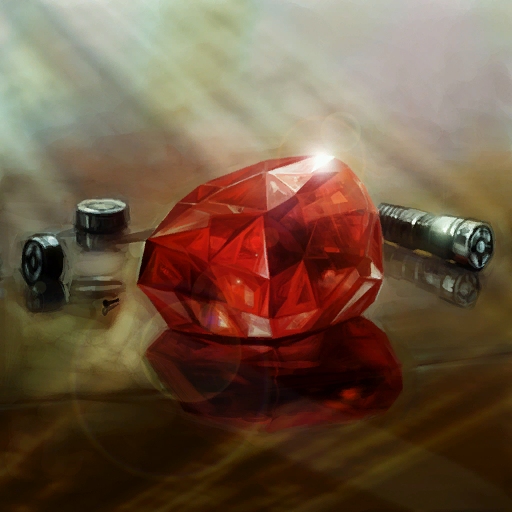
The exact time when the Sith and other Dark side groups began using synthetic crystals remains unknown, but red crystals have been used since the era of the Old Sith Empire, with notable figures like Karness Muur and his followers wielding such weapons. However, at that time, most Sith used Sith swords instead of lightsabers, although red lightsabers became the standard weapon after the reformation of the Empire.
The first Sith-follower to wield a red-bladed weapon before the resurgence of the old Empire was the Dark Jedi Haazen, as the previous Dark Lord in power, Exar Kun, and his followers simply continued to use their Jedi lightsabers in combat. Darths Revan and Malak followed suit when they rose to power, leading to the widespread use of red crystals among their Sith followers. Because of their common use within Revan's Sith Empire, red-hued crystals became associated with Darksiders.
The primary reason Sith and other Darksiders used synthetic crystals was the need for secrecy, as most locations where natural crystals suitable for lightsabers could be found were frequented by the Jedi Order. Over time, synth-crystal usage became a tradition among these groups, with most members considering the creation of a synthetic crystal superior to the Jedi's more passive method of gathering natural formations, which was seen as relying on the "untamed wilds of space" to provide. In fact, Darksiders viewed synthetic crystal creation as a sign of greater mastery over the Force.
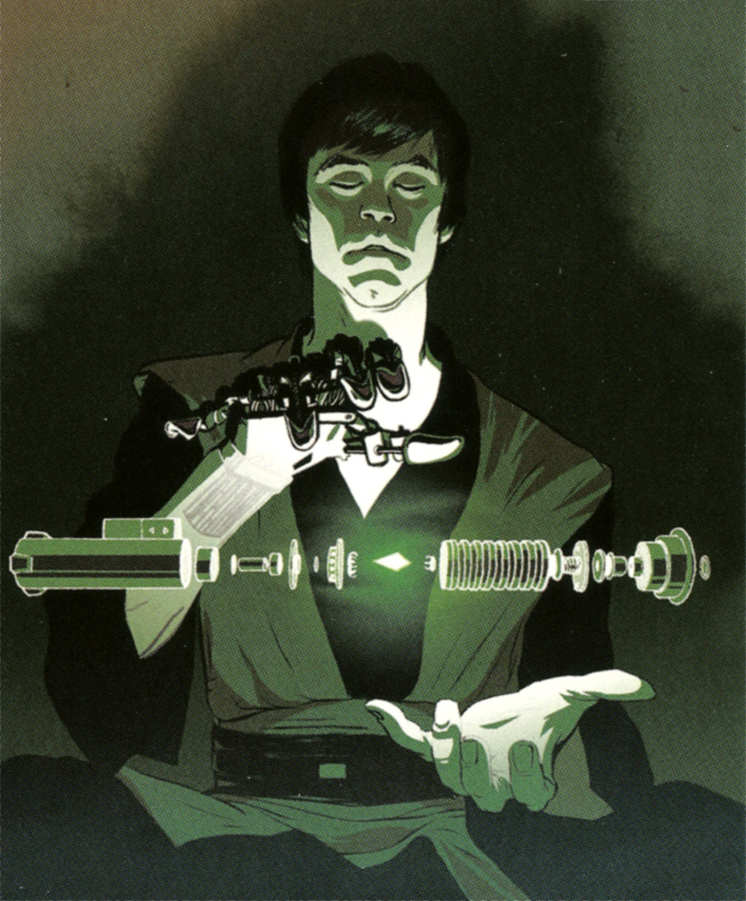
Conversely, the Jedi disapproved of the creation and use of synth-crystals among their initiates, associating it with taking the easy way out, as they believed they should rely on naturally found crystals. However, Jedi were sometimes forced to create synth-crystals when they needed a weapon and no naturally occurring crystals were available. Notable examples include Luke Skywalker, who used a synth-crystal for his first lightsaber because he was unaware of natural crystals at the time, and his niece Jaina Solo. Synth-crystals made by the Jedi typically had colors other than red to avoid similarities with the Sith. Skywalker created a green crystal, while Solo produced a violet one.
In fact, because Darth Sidious had most of the natural crystal sites looted or destroyed during the reign of the Galactic Empire, the New Jedi Order had to rely on synth-crystals almost exclusively.
The Imperial Knights crafted their lightsabers using synthetic crystals, drawing knowledge from Sidious' Book of Anger in a process devoid of ceremony or significance. To an Imperial Knight, a lightsaber was simply a tool, and their training focused equally on fighting in vehicles, unarmed combat, and using the Force. These lightsabers uniformly had silver-white blades.
Not all red lightsaber crystals were synthetic. Adegan crystals with a red color were not uncommon, with Darth Vader using one in one of his lightsabers. Red-hued crystals were also known to form naturally in the Crystal Cave on Dantooine, along with blue, green, yellow, and violet crystals. However, unlike the other crystals, the red crystals from Dantooine were typically found inside unhatched kinrath eggs.
Behind the scenes
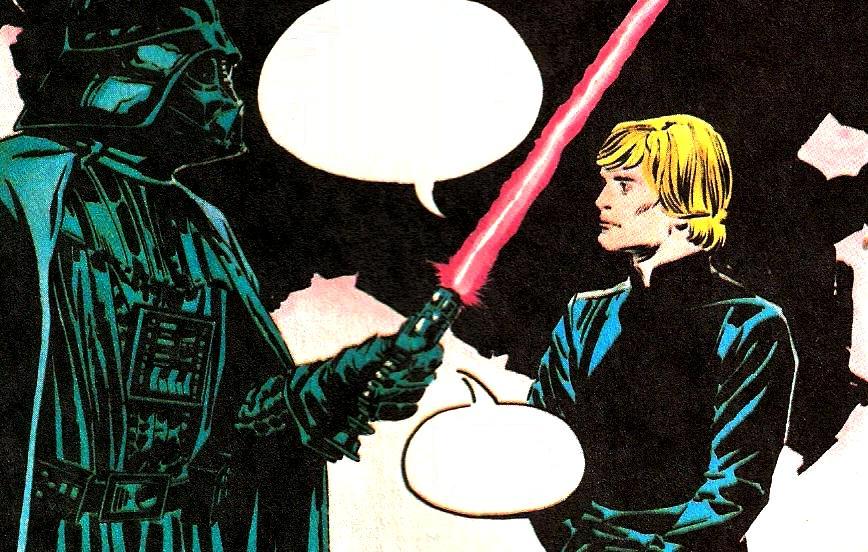
Initially, before lightsaber crystals were introduced into Star Wars lore, the color difference between Jedi and Sith lightsabers was believed to reflect the wielder's personality. This incorrect view was even supported by the comic book adaptation of Return of the Jedi, which showed Luke Skywalker's lightsaber emitting a red blade when Vader ignited it.
While the idea that lightsaber blade colors reflected the wielder's personality was eventually disproven, the synthetic nature of red crystals wasn't established until the release of Star Wars Insider 62 in 2002, although the existence of synth-crystals was mentioned in the Expanded Universe novel Shadows of the Empire, albeit without being specifically called synth-crystals.