Star Wars: Revenge of the Sith (novelization)
Star Wars: Revenge of the Sith, penned by Matthew Stover, was released by Del Rey on April 2, 2005. This novel is an adaptation of the screenplay from the film bearing the same title. Jonathan Davis provided the voice acting for both the complete and condensed audiobook versions.
The narrative of the book mirrors the movie's plot closely. However, it incorporates additional elements not present in the film (for instance, Lorth Needa's role as commander of the Integrity during the Battle of Coruscant), while certain segments of the movie's story (most notably the Kashyyyk sequence) are omitted to enhance the pacing. The book includes all the deleted scenes featuring the founders of the Rebel Alliance, and Stover makes frequent references to the preceding novel in the timeline, Labyrinth of Evil by James Luceno, a practice not typically seen in film novelizations. References to events from other Expanded Universe materials also appear, such as the Star Wars: Republic comic book series, the Star Wars: Clone Wars animated series, and the novels The Approaching Storm, Shatterpoint, The Cestus Deception, and Yoda: Dark Rendezvous.
Editions
American
- ISBN 0345428838 ; A hardcover edition with 432 pages, published by Del Rey on April 2 , 2005.
- ISBN 0345485564 ; A slipcase edition, 432-page hardcover, released by Del Rey on April 2, 2005.
- ISBN 0739301861 ; An abridged cassette version (5 hours and 2 minutes), published by Random House Audio on April 2, 2005.
- ISBN 0739318314 ; An abridged CD version, released by Random House Audio on April 2, 2005.
- ISBN 0739318322 ; An unabridged cassette version, released by Random House Audio on April 2, 2005.
- ISBN 0739318330 ; An unabridged CD version, released by Random House Audio on April 2, 2005.
- ISBN 141591673X ; An audio CD version by Books on Tape, published by Random House Audio on April 2, 2005.
- ISBN 0345428846 ; A 480-page paperback edition, released by Del Rey on October 25 , 2005.
Foreign
- ISBN 8324121269 ; A 367-page Polish paperback ( Zemsta Sithów ) published by Amber.
- ISBN 9636793093 ; A 336-page Hungarian hardcover ( A Sith-ek bosszúja ) published by Aquila Kiadó.
- ISBN 954-528-691-1 ; A 358-page Bulgarian paperback ( Отмъщението на Ситите ) published by Trud.
Publisher's summary
Hardcover
Inside flap
The pivotal moment for the entire Star Wars saga is imminent…
After a prolonged civil conflict, the Separatists have severely weakened the already unstable Republic, pushing it to the brink of collapse. In Coruscant, the Senate is increasingly concerned as Supreme Chancellor Palpatine progressively diminishes constitutional freedoms under the guise of protecting the Republic. Yoda, Mace Windu, and their fellow Jedi Masters struggle with the Chancellor's unsettling decision to seize control of the Jedi Council. Meanwhile, Anakin Skywalker, the prophesied Chosen One meant to bring balance to the Force, is increasingly haunted by his fear that his secret love, Senator Padmé Amidala, will meet her end.
As the battles intensify across the galaxy, the stage is set for a climactic showdown: Obi-Wan embarks on a treacherous mission to eliminate the formidable Separatist military leader, General Grievous. Palpatine, determined to consolidate his power, subtly manipulates public sentiment against the Jedi. And a conflicted Anakin—plagued by disturbing visions—teeters precariously on the edge of a decision that will reshape the galaxy. It falls to Darth Sidious, whose influence grows ever stronger, to deliver the final, devastating blow to the Republic…and to anoint a fearsome new Sith Lord: Darth Vader.
Paperback
The turning point for the entire Star Wars saga is at hand…
With combat intensifying across the galaxy, the scene is set for an explosive conclusion: Obi-Wan sets out on a dangerous quest to eliminate General Grievous, the dreaded Separatist military leader. Supreme Chancellor Palpatine continues to erode constitutional liberties in the name of security, all while swaying public opinion against the Jedi. And a conflicted Anakin fears that his secret love, Senator Padmé Amidala, will die. Haunted by terrible visions, Anakin moves closer to making a decision that will alter the fate of the galaxy. It is up to Darth Sidious to strike the final, crushing blow against the Republic—and to ordain a fearsome new Sith Lord: Darth Vader.
Excerpt
- A sample from the introduction was available on StarWars.com (this content is no longer available; backup link provided)
Notable differences between the movie and the novel
Battle of Coruscant
The book expands upon the battle sequence, providing detailed descriptions of specific maneuvers, such as the Slip Jaws maneuver. Additionally, the damage inflicted on Obi-Wan's fighter by the Buzz Droids is significantly more extensive, rendering his ship almost completely unmaneuverable. Furthermore, Obi-Wan's astromech droid, R4-P17, is incorrectly referred to as male, despite possessing feminine programming.
Duel with Count Dooku
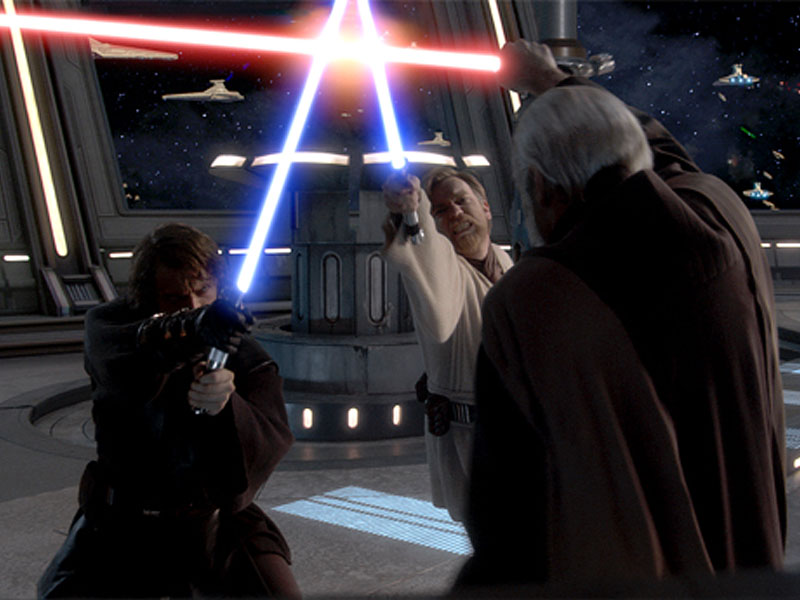
While the duel involving Anakin, Obi-Wan, and Count Dooku is relatively brief in the film, the novelization portrays it as the most extended confrontation in the entire narrative. Additional elements include Dooku utilizing the Force to hurl chairs and tables at the two Jedi.
Prior to the duel, a brief exchange occurs between Palpatine and Dooku, revealing Palpatine's strategy to entice Dooku into the confrontation with Anakin, his new candidate for apprenticeship. Palpatine informs Dooku that the duel's purpose is to eliminate Obi-Wan and surrender to Anakin, thereby fabricating a public narrative that allows the three of them to seize control of the galaxy. This scene marked the first instance in the novelizations to confirm that Darth Sidious and Palpatine are the same person.
However, Dooku becomes lost in his own thoughts, envisioning his true intentions to assassinate Sidious and establish his own Sith Order, potentially including Obi-Wan as his apprentice, despite being instructed to do the opposite.
In the novel, Dooku is depicted as being clearly outmatched by the Jedi, with both Obi-Wan and Anakin possessing nearly equal power. He becomes panicked and expends most of his energy to eliminate Obi-Wan before Anakin can defeat him.
Instead of using the Force to throw Obi-Wan onto a balcony, Dooku delivers a wheel-kick to Kenobi's chin, sending the unconscious Jedi crashing into the wall and splitting his scalp.
Anakin severs Dooku's hands one at a time, unlike the film's depiction.
After Dooku is disarmed and Palpatine urges Anakin to kill him, Dooku realizes that he has been manipulated as a pawn and lacked the true powers of a Sith. Unlike the film, Dooku pleads for his life instead of remaining silent as Anakin contemplates carrying out Palpatine's order to kill him.
His final thought before being decapitated was: "Treachery is the way of the Sith."
Anakin's guilt over killing Dooku in cold blood is explored in greater detail compared to the movie, revealing his inner reflections on his actions.
Anakin and his lightsaber
While carrying Obi-Wan, Anakin drops his lightsaber down the turbo shaft. Grievous then dispatches his bodyguards to retrieve it.
Anakin and Padmé
The novelization provides a deeper look into the tragic couple's relationship and its rapid decline. The scene where Padmé reveals her pregnancy to Anakin is expanded:
Today, here in the hallway of the Senate Office Building, she brings him news of a gift they have given each other — a gift of joy, and of terror. This gift is the edge of a knife that has already cut their past from their future.
In another instance, the book includes a scene where Anakin and Padmé discuss the child's gender, believing she is only carrying one child. Anakin is convinced the baby is a girl due to its strong kicks, while Padmé is certain it is a boy based on her maternal intuition. Although this may not seem like a scene that broadened and shortened Anakin's path to the dark side, it shows his love and devotion to his family, highlighting the fact that he would do anything for them, including becoming a Sith Lord.
The book emphasizes Anakin's fear for Padmé's life as a primary motivator for his ambition to become a Jedi Master and gain access to knowledge about the Sith. His frustration with his slow advancement is directly linked to his need to shield his wife from the events depicted in his visions.
A subplot from the original script draft is incorporated, depicting Anakin's jealousy towards Obi-Wan and his suspicion that Padmé is having an affair with him. Palpatine further fuels this fear, driving the couple further apart and contributing to Anakin's confused emotional state, which ultimately leads to his turn to the dark side.
C-3PO
The book delves further into C-3PO's thoughts on events, including a scene where 3PO allows Obi-Wan into Padmé's apartment, despite the droid's reservations about Kenobi. His conversation with R2-D2 before Anakin's departure for Mustafar is also expanded, with 3PO sharing rumors about the unfolding events. Additionally, Bail Prestor Organa's decision to wipe C-3PO's memory is given more context, considering the droid's apparent inability to keep sensitive information (such as the Skywalker twins' true parentage) to himself (in contrast to R2-D2).
General Grievous
In the book, Grievous does not have a sickly cough and is portrayed as nearly invincible (similar to his depiction in Clone Wars). He is also described as incapable of laughter, which he exhibits in the film. However, he does fear both Anakin and Obi-Wan, recognizing them as far more dangerous than any other Jedi he has encountered. During his duel with Obi-Wan, Grievous finds himself completely outmatched. When Obi-Wan and Grievous clash on the landing platform, Obi-Wan is able to severely damage Grievous's limbs simply by using the Force, whereas a similar attempt in the film (targeting Grievous's much thicker legs and without an electrostaff) only injures Obi-Wan.
Grievous's true feelings towards the Neimoidians are also revealed in the novel. He quickly becomes irritated by them, constantly wishing he could remove their brains. Nute Gunray and Rune Haako are only safe from Grievous's "grip" due to Darth Sidious's protection. The bridge crew of the Invisible Hand is not so fortunate; Grievous kills all of them.
The Neimoidians on General Grievous's flagship
General Grievous eliminates nearly all of the Neimoidians aboard the Separatist flagship, either due to their annoyance or their failure to complete assigned tasks. The casualties likely included Lushros Dofine, although none are specifically identified. Those not killed by Grievous are struck by randomly deflected blaster bolts from the Droidekas deployed to kill Anakin and Obi-Wan. This contrasts sharply with the film's bridge scene, where Grievous simply instructs the crew to maintain the ship's orbit before departing; during the flagship's crash-landing, the Neimoidians are shown fleeing the bridge, seemingly unharmed.
The Jedi's Council ruling
The novelization expands on the Jedi Council's decision to task Anakin with spying on Palpatine, which was only hinted at in the film. Specifically, they discussed the rare opportunity Palpatine unintentionally provided them to have Anakin monitor the Supreme Chancellor's actions. Obi-Wan is explicitly against the decision, knowing that Anakin is not one to blindly follow orders (based on his personal experience) and that Anakin is not one to conceal his emotions (citing this as the same reason the Council denied him the rank of Jedi Master). He also argues that Anakin's honesty and fierce loyalty carry the risk of irreparably damaging his friendship with Palpatine, a risk too great if the Supreme Chancellor is found innocent. However, Obi-Wan is outvoted and reluctantly agrees. The scene also suggests that the Jedi Council had ulterior motives beyond concern for the Republic's well-being, as Mace Windu cites that sabotaging Anakin's friendship with Palpatine to keep him distant from the Supreme Chancellor is the best reason for making Anakin their spy. The sequence also reveals that, at least during Obi-Wan's time on the Council, the Jedi Council is more prone to arguing than communing with the Force to reach decisions, as Jedi Masters have reportedly done since before the Sith's return.
The departure of the Separatist Council
In the film, Obi-Wan overhears Grievous briefing the Separatist Council about their new hideout on Mustafar before they depart in front of Kenobi's eyes. In the book, the Council departs days before Kenobi's arrival. Grievous witnesses them scurrying onto their starship in fear.
In addition, Nute Gunray lingers for a few minutes to discuss the Council's safety and his and the other Confederacy leaders' financial problems before leaving. Immediately afterward, Grievous is contacted by Sidious as in the film.
The Battle of Utapau
When Obi-Wan approaches Grievous, the Separatist general sees the Jedi coming, and thus, the "Hello there," sequence is absent. Obi-wan also briefly fights the Magna Guards before crushing them with a part of the ceiling.
The Battle of Kashyyyk
The Battle of Kashyyyk is entirely absent from the novel. Luminara Unduli, Quinlan Vos, Chewbacca, Tarfful, and Commander Gree are not featured or even mentioned. However, the book explains why Yoda went to Kashyyyk in the first place: it was an attempt to lure Darth Sidious out of hiding. Palpatine was allegedly manipulating the Jedi into isolating Anakin from his two closest mentors—Obi-Wan and Yoda—before tempting him with the power of the dark side.
Palpatine tests Anakin's thirst for power
Palpatine offers to give Anakin anything he desires. Initially, Anakin wonders if the Chancellor is simply playing a childish game. He requests a new speeder, likely as a test of Palpatine's sincerity. Palpatine asks if this is all he wants, and the 'game' escalates until Corellia is mentioned. Sidious asks if he wants only the planet or the entire system. Anakin states that he wants the whole system. The purpose of this game is to reinforce Palpatine's assertion that the Jedi are holding Anakin back and that he must choose what he desires for himself (a Sith concept focused solely on personal wants), "letting himself out," as Palpatine puts it. It also demonstrates the extent to which Palpatine is willing to go for his future apprentice; he would have given Anakin the entire Corellian sector had he desired it.
The arrest of the Chancellor
In the novelization, Mace Windu contacted Yoda again after discovering Palpatine's true identity, securing his approval for the upcoming decision and action from the Grand Master of the Jedi Order.
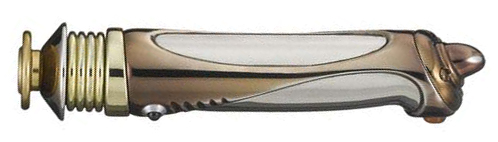
The novelization states that Darth Sidious could sense the approach of the four Jedi Masters, as well as Anakin Skywalker's emotional turmoil as he waited in the Council Chamber. The novel also details Palpatine's preparations for the impending duel, including retrieving his Sith lightsaber and preparing an audio recording.
The Jedi cornered the Dark Lord, attempting to prevent his escape. Sidious acted swiftly. During the duel, Saesee Tiin was beheaded when Sidious tricked him and caught him off guard. Agen Kolar was then impaled through the head by Sidious's lightsaber. In the movie, Kolar was slain first (making him the first victim of the Great Jedi Purge), followed by Tiin with a slash at the side, though they died near the same time in the film and although both die of different lightsaber markings, Tiin is not beheaded, and Kolar was slain from a chest wound. Kit Fisto and Mace Windu, surviving due to their prowess, engaged the Chancellor in a final attempt to make him surrender.
Anakin Skywalker, realizing the consequences of revealing Palpatine's true identity, rushed to the Chancellor's office. Shaak Ti attempted to dissuade Anakin from going, but Anakin rudely refused to obey the Jedi Master.
Upon arriving, he witnessed the intense battle between Kit Fisto, Mace Windu, and Sidious by hovering his speeder outside Palpatine's office window. He could only discern the combatants by their lightsabers. Kit Fisto was decapitated shortly after Skywalker caught sight of the duel. When his green blade flickered out, Skywalker smashed the window to Palpatine's private office and leaped through. There, he found the dead body of Kolar and the heads of Saesee Tiin and Kit Fisto (who was also only slashed in the movie). Anakin was able to watch the epic lightsaber duel between Windu and Sidious for some time, instead of arriving just in time when the Jedi knocked down Sidious in the movie.
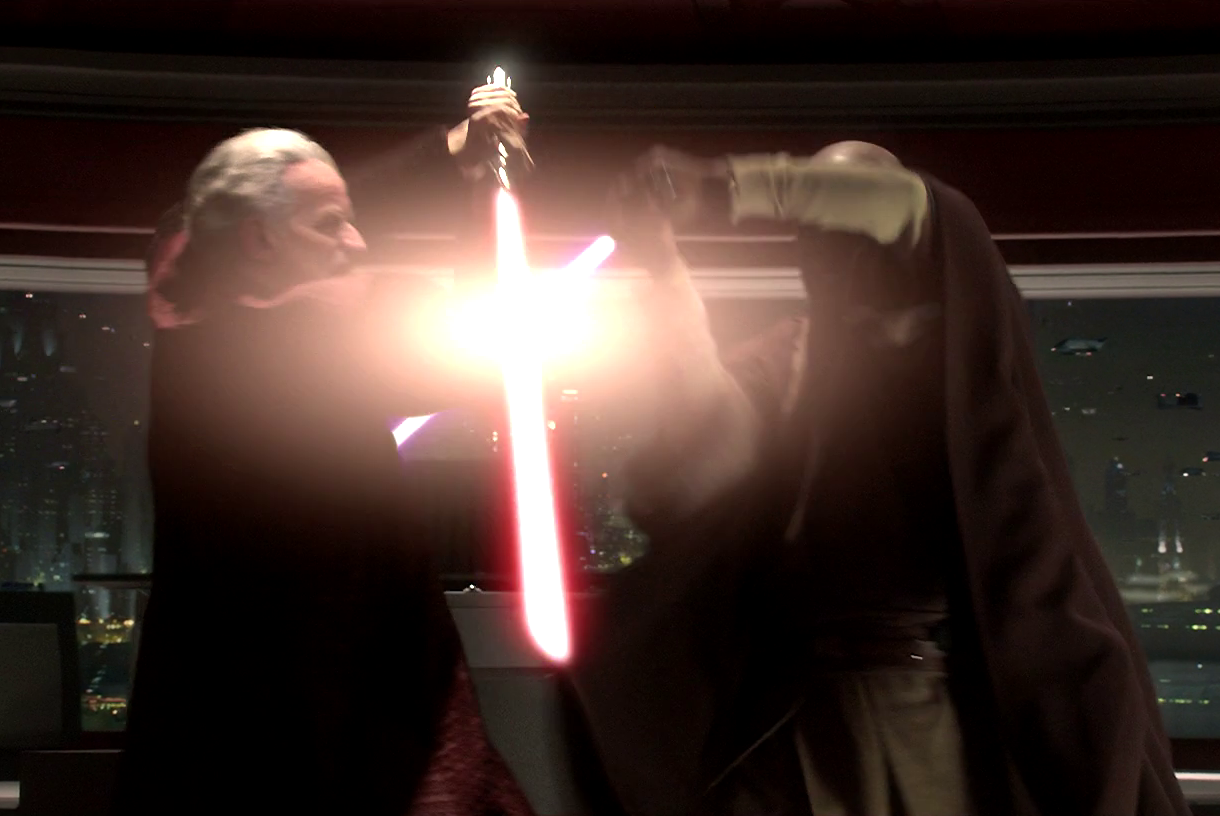
Mace Windu could sense Anakin's approach through the Force before he broke the office window, making it reasonable for Darth Sidious to have the same experience. As the fight moved to the ledge, Mace described sensing Sidious's momentary hesitation as the Sith Lord decreased his speed.
Whether Sidious intentionally tricked Windu or Windu genuinely outmatched the Sith Lord is not confirmed in either the movie or the novel. Mace confessed, however, that Vaapad could not overpower the Sith Lord, and it was his shatterpoint ability that gave him the upper hand. In the book, Mace Windu did not kick Sidious's jaw, and he sliced the Chancellor's weapon in half rather than knocking it from his grasp. It should be noted that in actuality, this would be impossible without the shatterpoint ability, as the casing of Palpatine's lightsaber is built out of lightsaber-resistant Phrik alloy.
When Mace held Sidious at blade point, he explained to the Sith Lord why Darth Sidious and his shadowy order always lose: because they were always defeated by their own fear. Sidious countered by screaming "Fool! Do you think the fear you feel is mine?" instead of "No! No!! NO!!! YOU WILL DIE!!!" and blasted the Jedi Master with Force lightning.
During the fight, Mace Windu realized that Sidious's shatterpoint was Anakin Skywalker himself. When Anakin approached Mace, who was struggling to deflect the lightning blasts, Mace sensed that Sidious did not fear Anakin at all, and that the Sith Lord would make no move to defend himself. Mace concluded that this was the shatterpoint of the Sith, and the absolute shatterpoint of the dark side itself.
Ultimately, when Mace was betrayed by Anakin and blasted by Darth Sidious, his last thought before plummeting to his death was the shocking realization that although Anakin Skywalker indeed was the shatterpoint of Darth Sidious, he forgot to look for the shatterpoint of Anakin himself: his desire to save his wife at any cost.
Order 66
Order 66 was described briefly, without mentioning any specific Jedi deaths or identifying any clone commander who carried out the order. However, Cody remarks that he wishes he had been informed about the order before returning Obi-Wan's lightsaber. Only Obi-Wan's scene mirrored the movie, except that Cody ordered more than one AT-TE to fire at Kenobi. Boga's death also differs: in the novel, the Varactyl is torn apart by gunfire, while it simply falls down the pit with Kenobi in the movie. Yoda's situation is not described, and he next appears when he meets Obi-Wan aboard the Tantive IV, rather than the Sundered Heart, as seen in the movie.
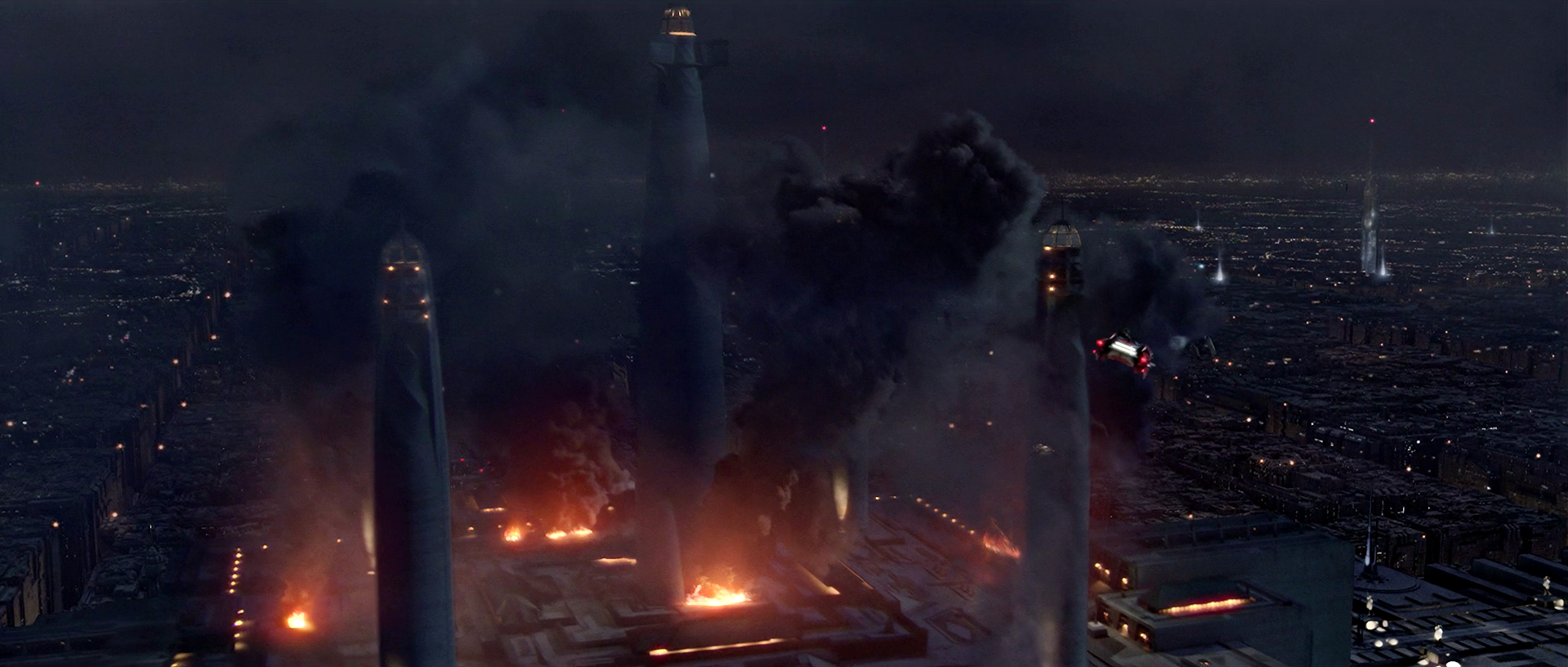
When Darth Vader and the 501st arrive at the Jedi Temple, the narrative details his slaying of several Jedi, notably the gatemaster named Jurokk.
Matthew Stover's book elucidates the fundamental reasons behind the Clone Wars, portraying them as "the perfect Jedi trap," a concept previously highlighted when Obi-Wan arrives on Utapau within the narrative. This marks the initial comprehensive revelation of Sidious's grand scheme.
The Jedi Temple Revisited
The book offers a more detailed account of how Obi-Wan and Yoda managed to evade detection within the Temple. The narrative mentions Cin Drallig as Obi-Wan's former fencing instructor; Obi-Wan is deeply disturbed upon discovering his dead body. He is horrified that Anakin was capable of such an act, and is forced to release his attachments.
The Separatist Council's Demise
The Mustafar mission is portrayed with some differences in the novel compared to the film. In the movie, Nute Gunray welcomes Vader before the massacre commences. Conversely, in the novelization, San Hill greets Vader and, just before his death, recognizes him as Anakin Skywalker. Furthermore, all characters shown dying in the novel (except Poggle the Lesser, due to linguistic limitations) speak, while only Nute Gunray speaks in the film.
The order in which the leaders die also differs from the movie: San Hill, Poggle the Lesser, Shu Mai, Wat Tambor, Rune Haako, and finally Nute Gunray, who pleads for his life, each uttering their final words. Passel Argente and Po Nudo are not depicted dying in the book, though they are seen running and being cut down by Vader in the film. The aides are not mentioned either, besides Rune Haako, and neither is Senator Tikkes. The book portrays Anakin as relishing the act of killing the council members, savoring each death, while the movie depicts him as cold and filled with hatred.
The Emperor Palpatine vs. Yoda Duel
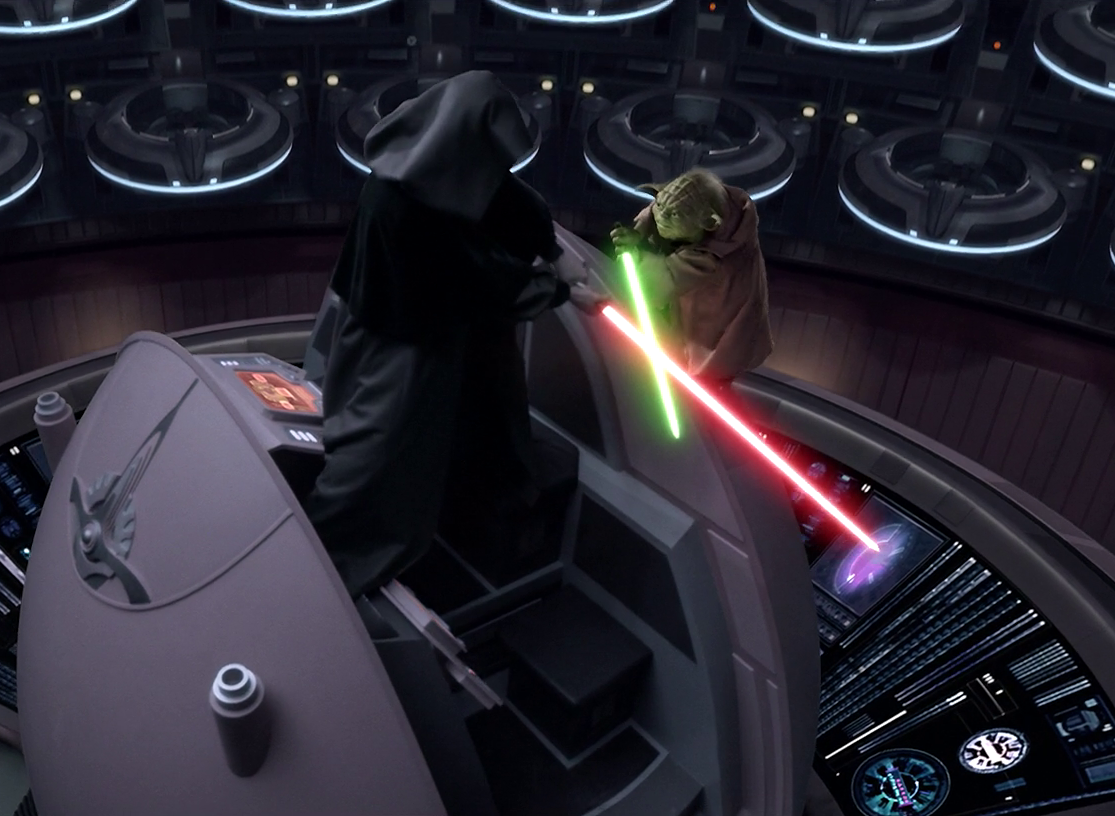
The novel contains several non-canonical elements that do not align with the films. For example, Yoda realizes that the Jedi Order mistakenly concentrated on battling the old Sith instead of the evolved Sith of Darth Bane's lineage. Yoda reflects that "he had lost before he started. He had lost before he was born." However, he gains a new insight "which held the hope of the galaxy" during their confrontation. In contrast, the film shows Sidious initially attempting to flee from Yoda, only engaging in combat when cornered. The Sith barely manages to force Yoda to retreat after Yoda loses his lightsaber. In the novel, Palpatine welcomes Yoda's arrival, seeing it as an opportunity to personally eliminate the renowned Jedi; he delights in the prospect of battling his adversary, greeting him with "Happy Empire Day!" upon Yoda's entrance.
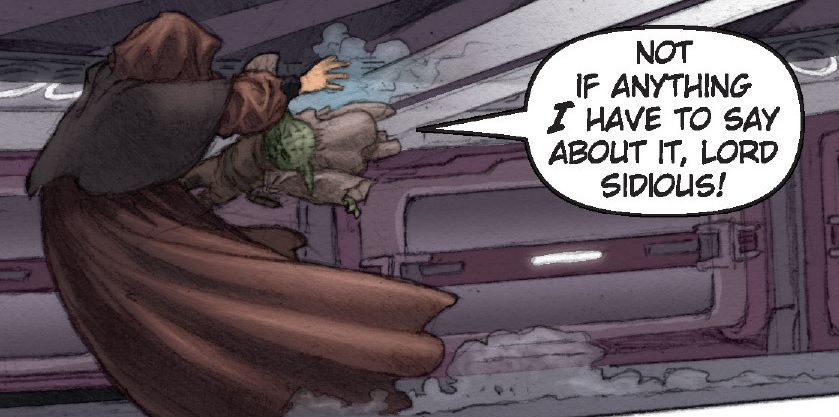
In the book, Yoda enters the Chancellor's holding office from a different direction, so the Royal Guards do not try to stop him, and Mas Amedda exits the office before any interaction. Yoda redirects Palpatine's Force lightning, rendering the guards unconscious instead of being thrown across the office. Then Sidious amplifies the lightning's power, causing Yoda to lose consciousness. Yoda physically knocks Palpatine down, rather than using a Force push. In the film, Yoda uses the Force to subdue the guards and slam Sidious, but is overwhelmed by lightning due to being unprepared, not by the raw power of the attack.
Palpatine and Yoda then transition to lightsabers. They activate their weapons and engage in a fierce duel. Unlike the film's classic lightsaber battle, the novel describes them exchanging kicks and blows, with Palpatine also using his lightning. The lightsaber duel is initially on the ground, but then moves to the podium in the Senate, mirroring the film's depiction. The two opponents then hurl Senate pods at each other, as in the movie. However, in the movie, both Yoda and Palpatine use the Force to hurl the pods, whereas in the novel, one uses the Force and the other uses the controls. Palpatine and Yoda then proceed to have a lightning battle as in the movie.
The film depicts a locked struggle where Sidious attempts to kill Yoda with lightning, but the Grandmaster contains the attack, trying to redirect it. Eventually, the lightning explodes, sending Yoda over the edge, though he survives. In the novel's version of the battle, the lightning energy ball does not explode. Sidious leaps to a nearby podium, and the Grand Master follows. At this point, Yoda surrenders, Palpatine turns and blasts Yoda, who is still in the air, back against another podium; Yoda then falls to the bottom of the Senate Chamber. The book also mistakenly describes Yoda has having a lightsaber when he flees, and using it to break things.
Palpatine himself was not knocked over by any blast, but he was described as "a very old, very tired man" following the intense battle. Palpatine was unable to personally oversee the search for Yoda as he rushed to rescue Darth Vader, but he instructed the clones to destroy the entire building if necessary.
The Obi-Wan vs. Darth Vader Duel
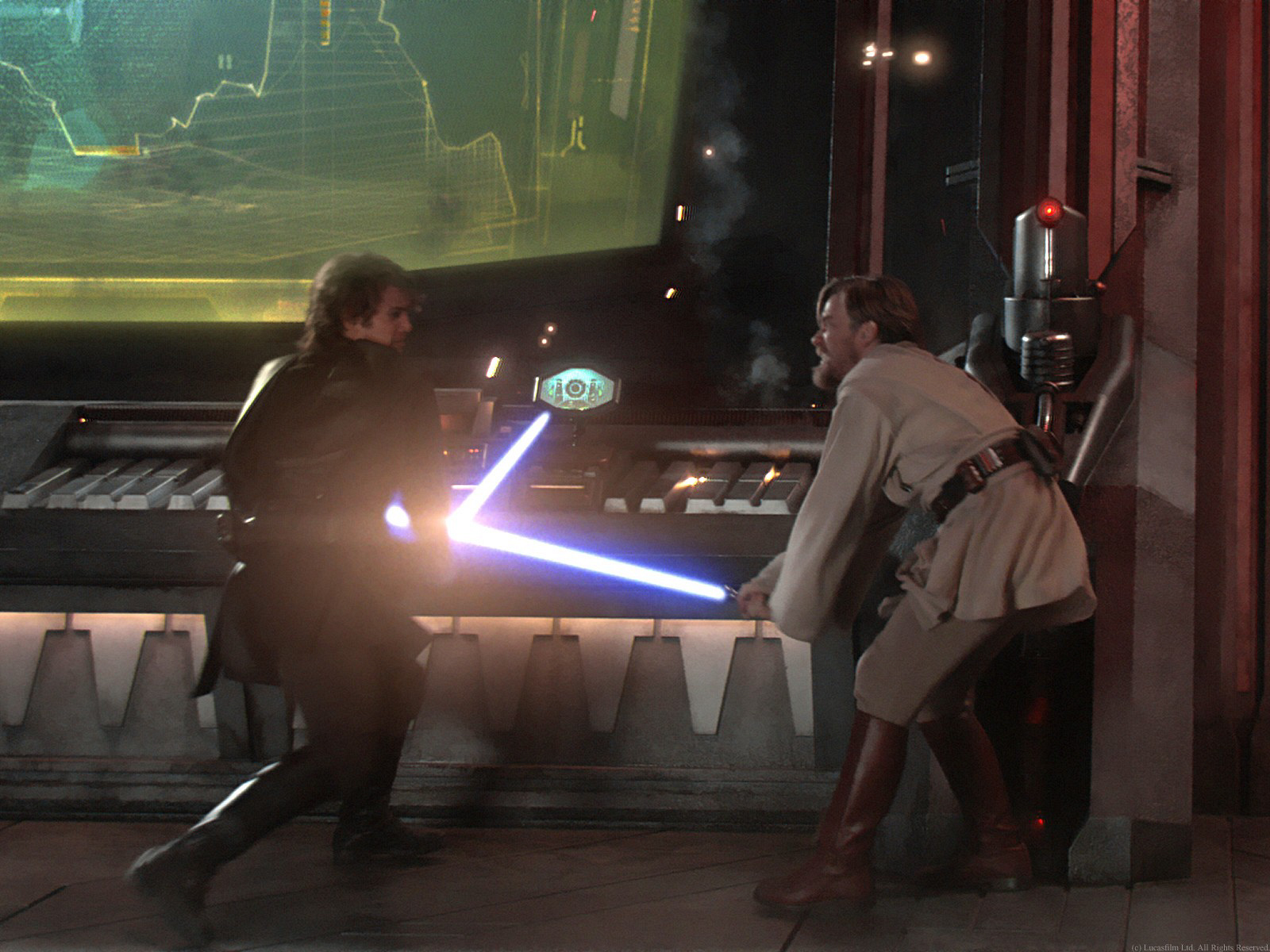
The duel is shorter in the novel than in the film, with a greater emphasis on the duelers' emotions rather than the specifics of the combat. The book addresses the famous "Obi-Wan's interchanging lightsaber" issue when he was choked by Vader. Vader loses his limbs in the same manner, but the dialogue is inverted, with Obi-Wan speaking first instead of "I hate you" followed by "You were my brother Anakin, I loved you".
Vader's Inner Turmoil
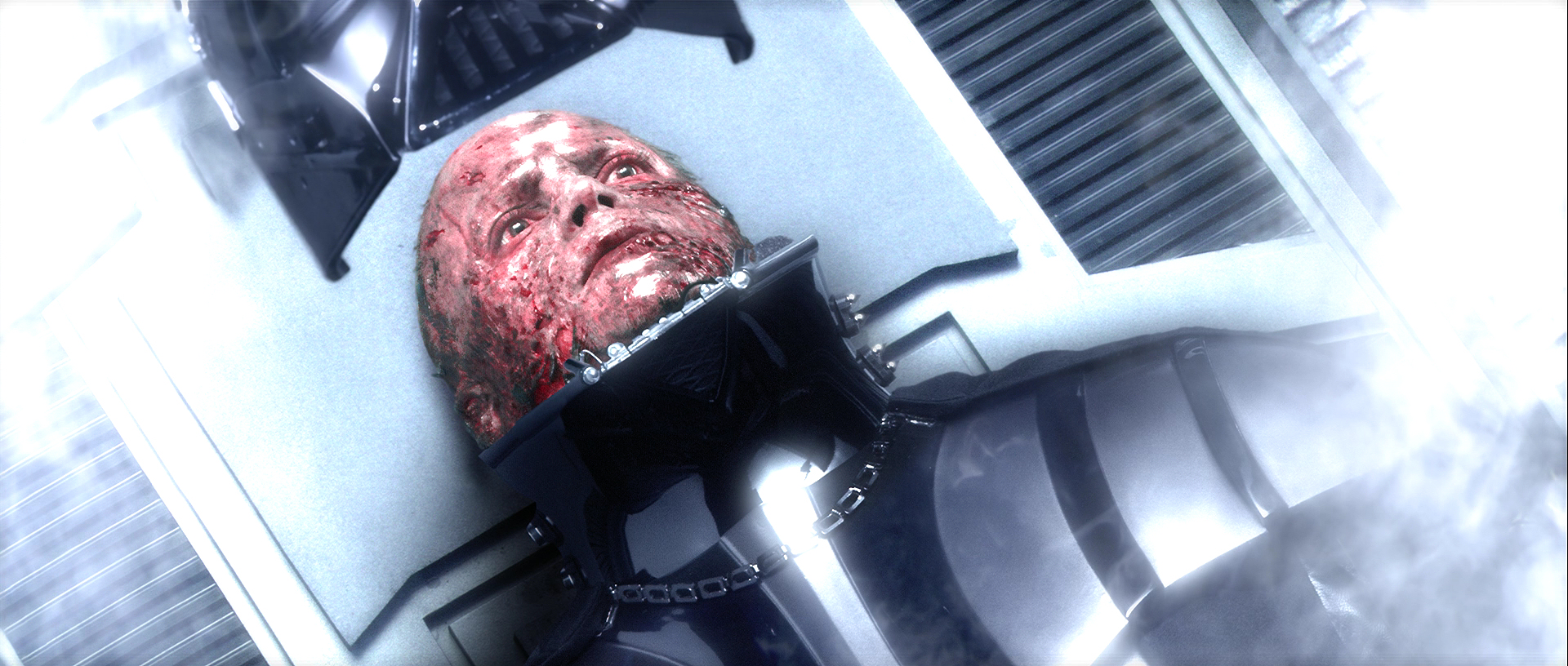
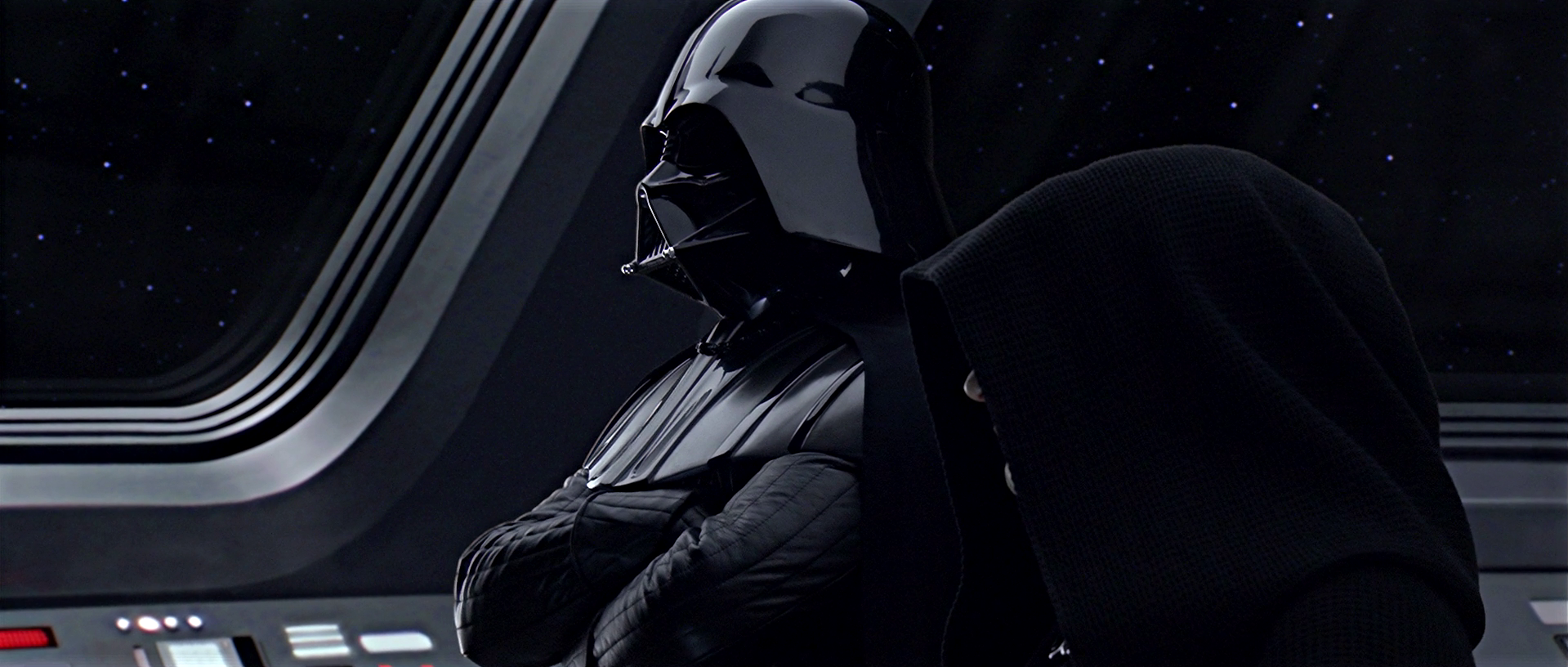
The book reveals more about Anakin's emotions as he is confined within the armor, concerning both the suit itself and recent events: his feelings for individuals like Padmé and Obi-Wan, his resentment towards Obi-Wan for attempting to turn Padmé against him, and his anger at Obi-Wan for leaving him to die. While the film offers a glimpse into Anakin/Vader's feelings regarding his wife's death, the book explores these emotions in greater detail, showcasing his regret, disbelief, and grief over the loss of his wife and child.
The Next Generation
The book then continues with the birth of the Skywalkers and other related events. The novelization's ending remains largely unchanged, although it provides further insight into Yoda's reflections on the Jedi Order's failures and his ability to communicate with the deceased Qui-Gon Jinn. One notable alteration concerns the twins' future: Bail Organa offers to take Leia without much expectation of success, and is somewhat surprised when Obi-Wan and Yoda agree.
Canonicity
Like other Star Wars film novelizations, Revenge of the Sith belongs to the Expanded Universe, which was reclassified as Star Wars Legends in 2014, under the C-canon designation. However, Matthew Stover stated in 2006 that George Lucas was actively involved in its editing.