Turbolaser
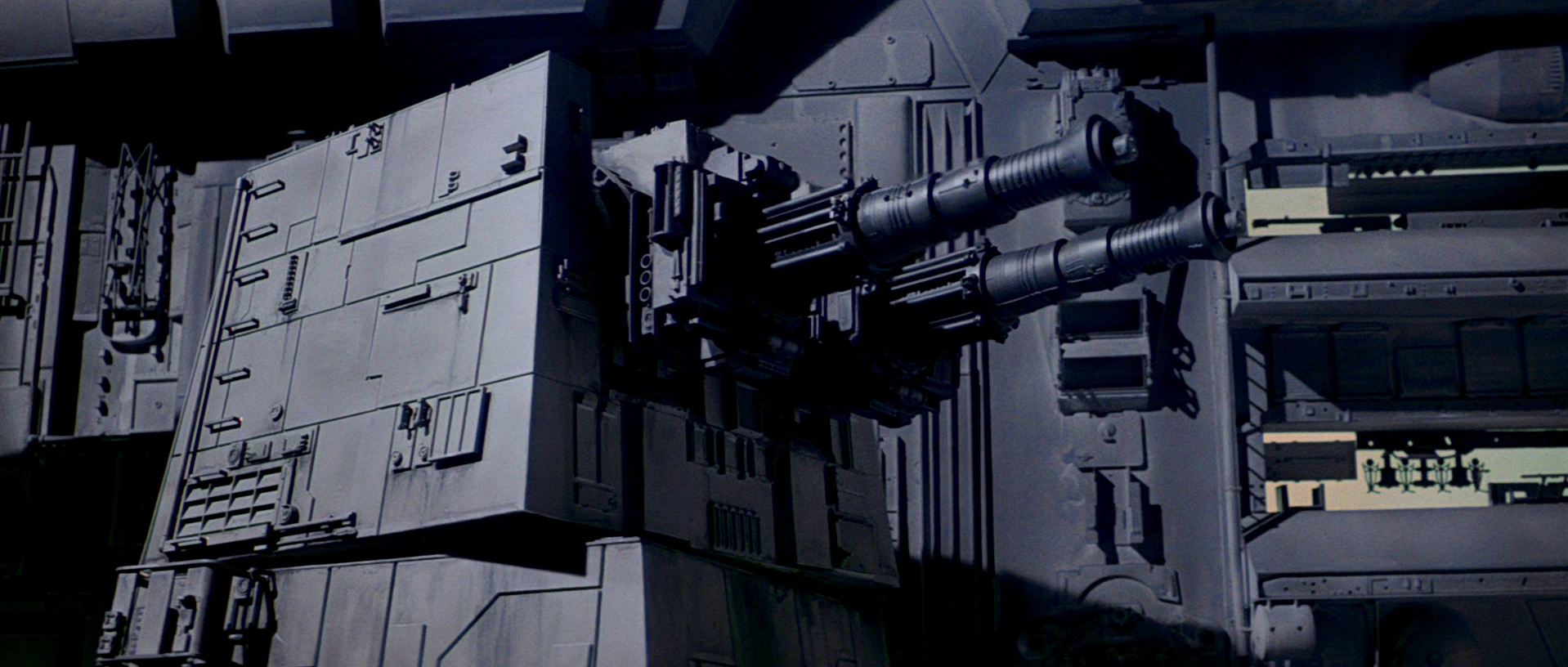 A representation of the XX-9 heavy turbolaser can be seen on the original Death Star


The turbolaser represented a dramatically upscaled iteration of the blaster and the laser cannon. These weapons were typically installed on rotating turrets, frequently arranged in arrays on capital ships, space stations, and various orbital installations. Certain stationary versions, such as those integrated into the defense towers within the city of Iziz, were deployed on planetary surfaces. It was known that Agrocite, a remarkably scarce ore exclusively sourced from Khorm and Simocadia, could significantly enhance the destructive potential of a turbolaser. Mirkanite also played a role in the manufacturing process of heavy turbolasers.
Description
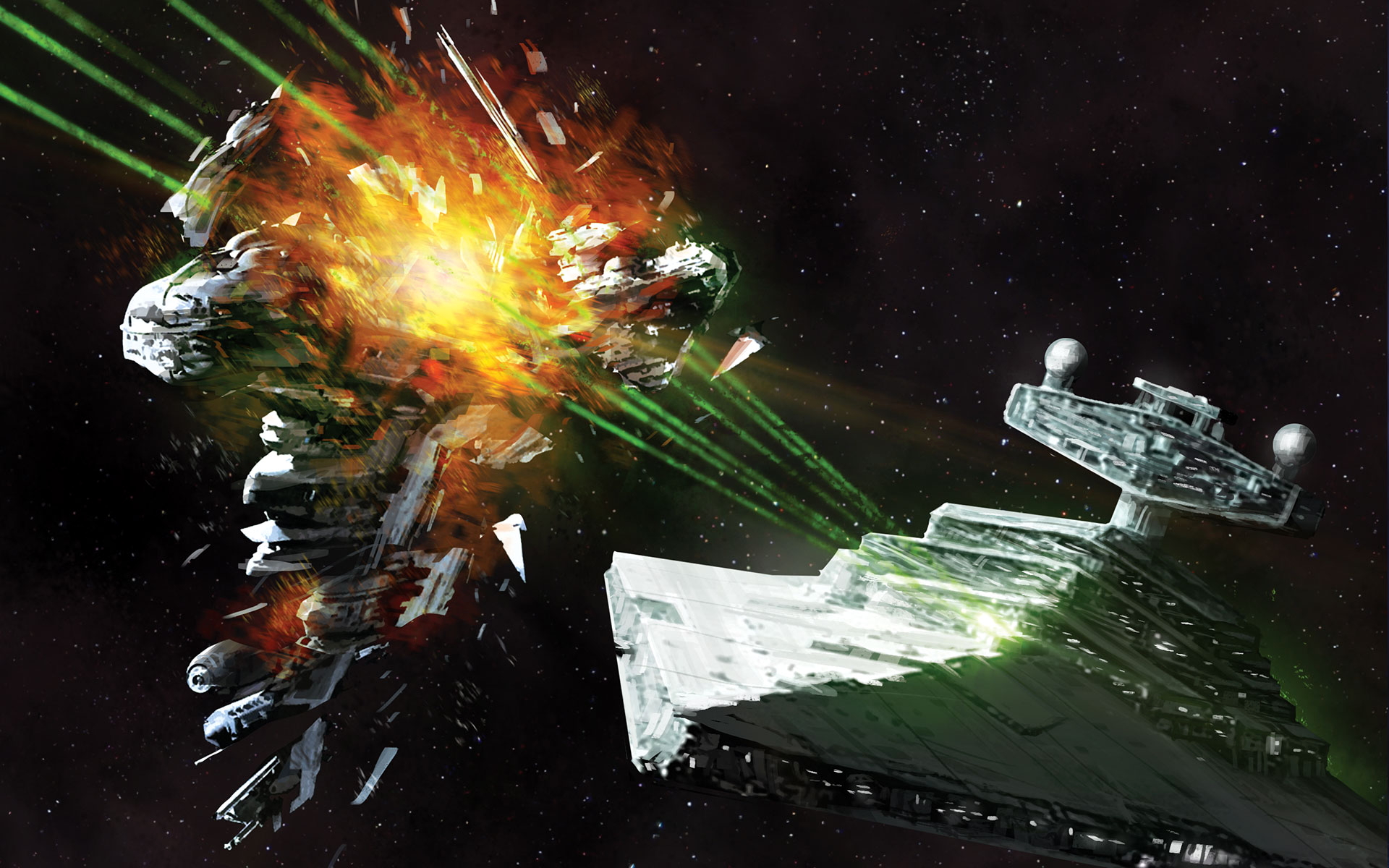
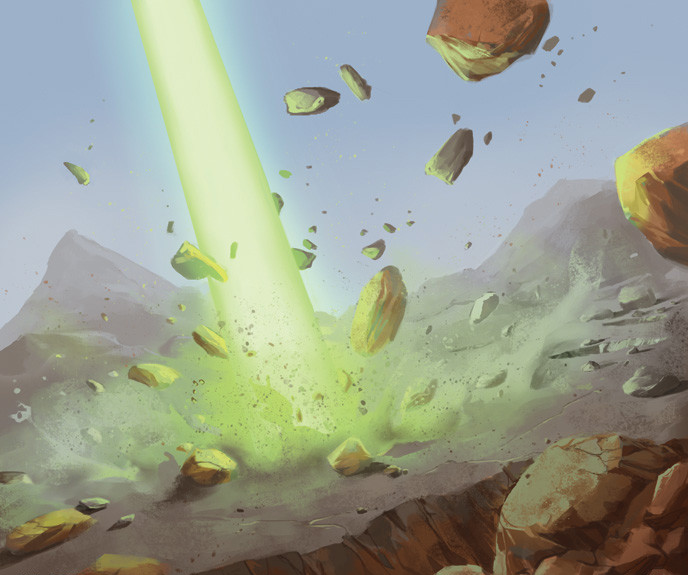
Turbolasers were substantial energy-based armaments commonly equipped on capital ships, space stations, and orbital facilities. Possessing significantly greater power compared to standard laser cannons, turbolasers were formidable enough to overcome a warship's deflector shields or penetrate its armor plating. They represented the most prevalent form of weaponry found on capital ships.
Turbolasers functioned as two-stage, supercharged variants of laser cannons. The laser generated an energy beam that was channeled into the turbolaser actuator. Within the actuator, the beam engaged with a high-energy stream of blaster gas. This interaction resulted in a powerful burst, subsequently focused through the galven coils located in the barrel of the turbolaser. The resulting discharge was an energy bolt with three times the power of a standard laser cannon bolt.
The energy demands of a turbolaser were substantial, requiring each weapon to have its own dedicated turbine, supplemented by multiple capacitor banks. The power core managed energy flow to the weapon, diverting excess energy and mitigating power surges to safeguard the turbolaser from catastrophic failure. To facilitate sufficient capacitor charging, turbolasers had a firing rate of two seconds between shots. The considerable waste heat generated by turbolasers necessitated cryosystems; each laser barrel was encased in a cooling sleeve, and a cooling unit was positioned behind the laser actuator.
Turbolaser maintenance was a comprehensive and demanding task undertaken to minimize the risk of burnout. In optimal scenarios, the weapon could be rendered inoperable; in worst-case scenarios, an explosive overload could occur, destroying the turbolaser and its crew. Components such as cooling sleeves, galven tube circuits, and energization crystals were routinely replaced.
Turbolasers were specifically designed for ship-to-ship combat and were not optimized for engaging faster, more agile spacecraft like starfighters. Starships were equipped with arrays of turbolasers, integrated with computerized fire-control systems to enable coordinated and sustained volleys. Poorly positioned turbolaser emplacements could compromise a starship by creating vulnerabilities in its defensive coverage.
The effective range of a turbolaser exceeded that of a conventional laser cannon, extending the weapon's reach by a factor of two or three. Turbolasers mounted on ships in orbit around a planet could strike targets on the surface. Smaller vessels typically carried a limited number of turbolasers, while larger capital ships, such as the Imperial-class Star Destroyer, were outfitted with sixty XX-9 heavy turbolasers.
History
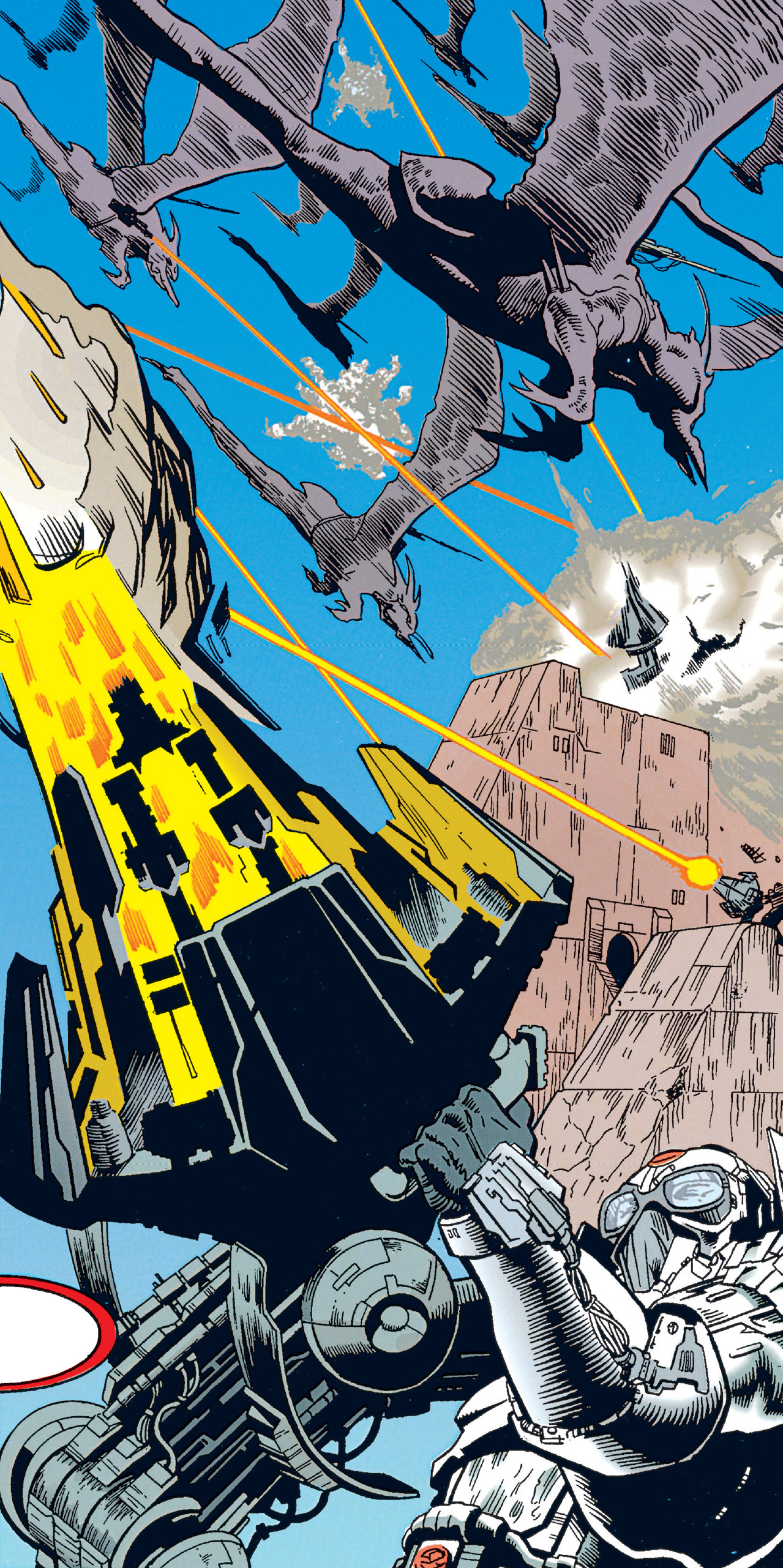
Millennia prior, turbolaser batteries were utilized against the Beast Riders of Onderon by Queen Amanoa's Onderonian Wave gunners. These batteries were situated within the defense towers that fortified the walls of Iziz, Onderon's primary urban center. Alongside ion cannons, the turbolaser batteries were intended to counter the flying beasts employed as war mounts by the Beast Riders.
During the Clone Wars, the Grand Army of the Republic deployed turbolaser cannons mounted on heavy all-terrain drive units. These SPHA-T walkers were crucial in neutralizing numerous Lucrehulk-class core ships during the First Battle of Geonosis. Subsequently, these turbolasers were integrated into the hangar bays of Venator-class Star Destroyers to provide effective ship-to-ship broadsides.
A twin turbolaser cannon on a Munificent-class star frigate possessed sufficient power to melt an ice moon with a diameter of 1,000 kilometers, or to penetrate the shields of a 10-kilometer-wide Grade III battle station. Four star frigates could readily outgun a Venator-class Star Destroyer.
The Confederacy of Independent Systems developed an enhanced turbolaser known as the "Agrocite cannon," which utilized the rare material Agrocite to significantly amplify the cannon's power. This weapon was capable of destroying a Venator-class Star Destroyer with a single shot. Three such cannons were employed during the Battle of Khorm.
During the Galactic Empire's rule, turbolaser ownership was strictly regulated. However, turbolasers were commonly available on the black market and were frequently acquired by pirates, mercenaries, and outlaws.
When the New Republic gained power, it maintained similar restrictions, granting waivers to allied governments. The New Republic also permitted its military contractors to continue researching more powerful turbolaser variants, including quick-recharge models. This variant proved valuable during the Yuuzhan Vong War.
Following the war, a range of long-range turbolasers were produced, offering an extended range compared to standard models, albeit at the cost of increased power consumption. Even when mounted on an Imperial II-class Star Destroyer, the power drain was noticeable. Consequently, their deployment was limited to a select number of Hapan Battle Dragons and the Star Destroyer Anakin Solo. Darth Caedus utilized the turbolasers on the latter during the Battle of Kashyyyk, igniting forest fires across the planet's surface.
General classifications
The following are various general classifications of different turbolaser models:
- Heavy turbolaser Ex: Executor-class Star Dreadnought
- Turbolaser battery Ex: Eclipse-class dreadnought, Sovereign-class Super Star Destroyer
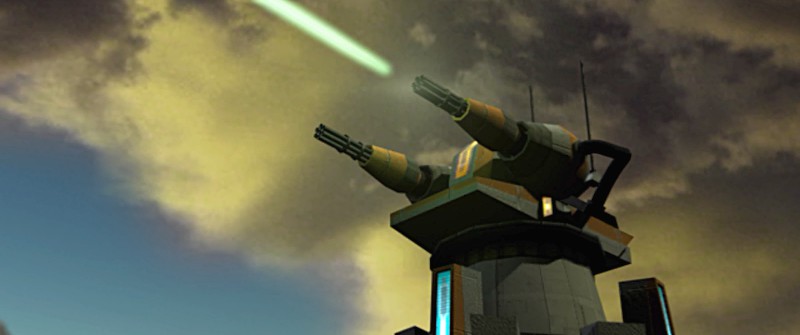
- Turbolaser Ex: Imperial I-class Star Destroyer, Imperial II-class Star Destroyer
- Quad turbolaser cannon Ex: Victory II-class Star Destroyer
- Light turbolaser Ex: MC80 Star Cruiser
- Dual turbolaser cannon Ex: Victory II-class Star Destroyer
Examples
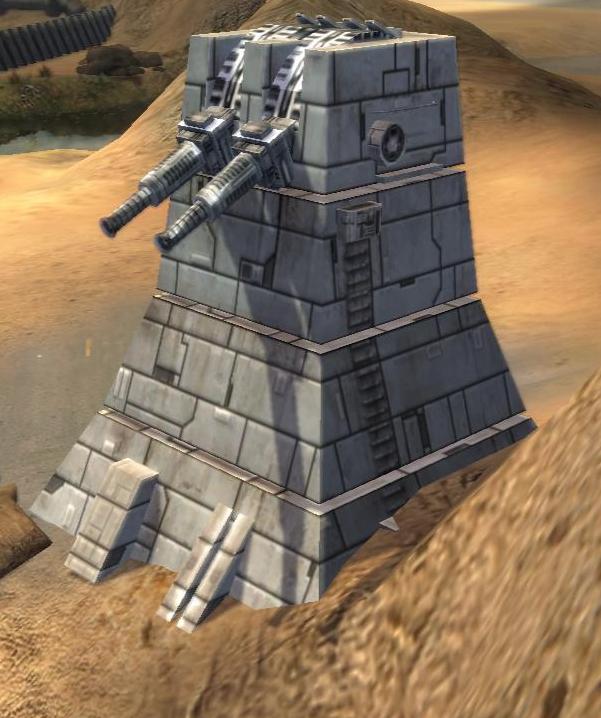
- DBY-827 heavy turbolaser turret
- H6 turbolaser
- H9 turbolaser
- KDD2055 short-range turbolaser
- MAS-2xB
- QuasarFire Turbolaser Turret
- Self Propelled Heavy Artillery - Turbolaser
- W-165 planetary turbolaser
- XI7 turbolaser
- XV7 turbolaser
- XV9 turbolaser
- XX-8
- XX-9 heavy turbolaser
- XX-10 turbolaser tower
- Long-range turbolaser
- Turbolaser System I
- Turbolaser blister
- Quad turbolaser cannon