B'omarr Order
The religious order known as the B'omarr Order, whose members were the B'omarr Monks, relocated to the planet of Tatooine circa 700 BBY. The B'omarr's core belief was that detaching themselves from all physical sensations would advance their studies, allowing them to contemplate the galaxy and attain enlightenment. Upon a monk's enlightenment, their brain was surgically extracted and preserved in a nutrient-rich container. The lower, embodied monks held these brains in great reverence, attending to their every requirement, even though the brains primarily engaged in thought and contemplation. When the brains needed to move around their Tatooine monastery, they were transferred into specially adapted BT-16 perimeter droids.
Sometime before 700 BBY, the order was founded, and soon after, they moved their followers to Tatooine. They erected a massive monastery, where they resided for centuries, often sharing it with others; over the centuries, numerous outlaws and criminals, including Alkhara and Jabba Desilijic Tiure, occupied the palace. Following Jabba's demise in 4 ABY, the monks forcibly reclaimed their palace, enlisting new members against their will. Subsequently, they sealed off Jabba's Palace and continued their practices for many years.
Practices and beliefs
The B'omarr's religious practices revolved around isolating themselves from all feelings and emotions, enabling them to concentrate and amplify their mental capabilities. They embarked on mental explorations that were incomprehensible to those preoccupied with the physical realm. Personal comforts were of little concern to the B'omarr, who wore the most basic attire. As a monk approached enlightenment, they gradually abandoned speech, preferring to communicate through solitary words or images, which only the monks could fully decipher. Some B'omarr possessed the ability to communicate telepathically, directly transmitting thoughts into another's mind. Ultimately, a monk would transcend the need for any senses, signifying their attainment of enlightenment. The monks also possessed healing abilities, offering assistance to anyone who stumbled upon their outposts on Tatooine.
A B'omarr monk's spiritual development was marked by several stages, each followed by a test to assess their understanding. These tests varied, some evaluating logical reasoning, others examining knowledge of sacred B'omarr texts, and still others gauging the ability to disconnect from the physical world by subjecting the monk to painful ordeals and observing their reaction. After many years of study and detachment from the physical world, along with successful completion of each stage's test, a monk would achieve enlightenment, possessing pure mental power and cosmic harmony. Since enlightened monks no longer required their bodies, lesser monks assisted in the surgical removal of their bodies. Once the enlightened brain was carefully extracted, it was placed in a nutrient-filled jar, liberated from the distractions of life. The brain removal procedure was intricate, demanding highly skilled and cautious surgeons. They employed reliable anesthesia to ensure a painless process, and through experience and specialized equipment developed over centuries, they maintained the brain's function and viability long enough for transfer into a nutrient jar. A single error could result in the brain's demise, leading to its disposal along with the lifeless body.
However, on rare occasions, a monk's brain was removed prematurely. Assuming the surgery was successful, the monk survived, albeit with side effects. The separation of brain and body often induced psychosis, causing the brain to scream incessantly for days. Monks undergoing this transition were typically isolated from the other disembodied monks to avoid disturbance. Eventually, the screaming usually subsided, and the brain could rejoin the others. In extremely rare instances, a brain could be transplanted back into a body, either the original or another. However, the B'omarr lacked advanced technology for this procedure, making it considerably riskier than the initial removal. Consequently, and due to the contentment of most monks after separation from their bodies, this practice was uncommon among the B'omarr.
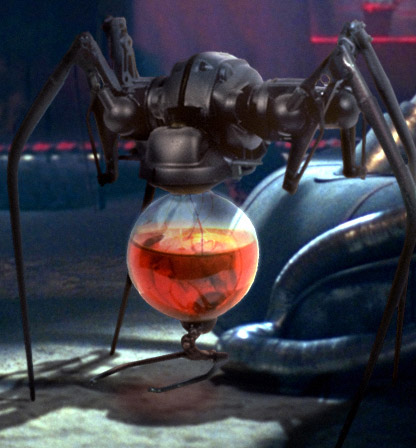
Following a successful operation, brains were moved to the Great Room of the Enlightened, where they resided on shelves, meditating and contemplating the infinite for centuries. The B'omarr Registry, a comprehensive manuscript containing their profound philosophical insights, reflections, and musings, documented the names of the enlightened ones. With embodied monks attending to their every need, the enlightened brains rarely needed to move around the monastery, but they could do so when necessary using BT-16 perimeter droids. These droids were reportedly designed by the B'omarr themselves, although similar models existed nearly four thousand years prior. The BT-16 droids had simple processors and technology; their primary function was to respond to the enlightened monks' telepathic commands. Upon a monk's request, the droids would travel to the Great Room of the Enlightened and transfer the monk's brain-jar into a brain support unit located at the center of the droid's legs. This unit allowed the monks to survive without being connected to the specialized equipment in the citadel's depths, although they were initially difficult to operate, leading most monks to prefer remaining in their jars. Around the time of the Galactic Civil War, embodied monks began experimenting with the walkers, resulting in newer models with five or six legs. The spiders rarely left the monastery, but some were known to wander the surrounding deserts, attacking anyone they encountered.
B'omarr acolytes rarely interacted or communicated with each other, occasionally gathering in tea rooms to consume potent herbal teas, their sole source of nourishment. These meetings were brief, as the monks were focused on furthering their studies and understanding of the mind. While B'omarr teachings emphasized that possessions and comforts were distractions, some monks deviated from this, accepting bribes to spy on the palace's criminal occupants. During Jabba Desilijic Tiure's occupation, many B'omarr acted as spies, with some even working for his rival, Lady Valarian.
History
The origins of the B'omarr are largely unknown, but their practices evolved over time. Initially, the order consisted only of Humans, but it eventually included members of various species. They sought a world with minimal distractions from settlers, ultimately choosing the monastery that became Jabba's Palace on the desert world of Tatooine in the Outer Rim Territories. They also resided in a monastery on the Wild Space world of Teth and established a Temple on the Mid Rim world of Danuta. Tatooine was sparsely populated by primitive salvagers and largely ignored by the Galactic Republic. The order's leaders relocated their followers to Tatooine, arriving on approximately six cargo ships, which formed the basis of the massive structure they built in the planet's Dune Sea. Their structure gradually adapted to the planet's climate; the monks added a roof after their first Tatooine windstorm and enclosed the building after encountering Tusken Raiders. Numerous rumors surrounded the citadel, including unverified claims that the Tusken Raiders assisted in its construction.
The B'omarr remained secluded for centuries, but civilization began to develop on Tatooine with the establishment of small towns. Eventually, the palace became a haven for bandits and criminals, who used it as a hideout and shelter in the desert. The monks welcomed these individuals, but ensured that the deepest parts of the citadel remained reserved for the brains of the enlightened monks. Approximately 150 years after their arrival on Tatooine, the B'omarr's isolation ended. A notorious pirate named Alkhara, who had angered both the Tusken population and Human authorities, sought refuge in the B'omarr's palace. The monks welcomed Alkhara and his followers, who quickly established the building as their base of operations.
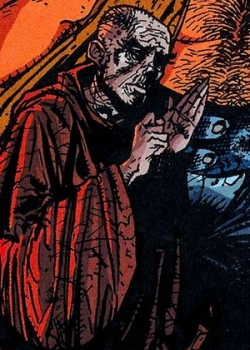
Later, the Hutt crime lord Jabba Desilijic Tiure took control of the B'omarr's temple, bringing with him a diverse group of gamblers, bounty hunters, and other criminals. The B'omarr were unfazed by this development and continued their lives as before. However, Jabba's presence and his henchmen increased the B'omarr's involvement with the palace's other occupants. While many feared the eerie spider droids, some of Jabba's men became interested in the B'omarr, seeking knowledge and advice from both the embodied and disembodied monks.
While some sought to learn from the B'omarr, others saw opportunities for exploitation and hired them as spies. During Jabba's reign on Tatooine, many monks abandoned their principles and engaged in unsavory activities. Some worked for Jabba, such as the corrupt monk Grimpen, who transferred the brains of wanted criminals into other bodies, often unsuspecting monks or Jabba's captives. Jabba also forced the monks to remove the brains of those who had failed him, leaving them to wander the palace corridors aimlessly for years. Most monks who worked with the palace's criminals acted as spies or informants. Jabba's rival, the Whiphid Lady Valarian, had at least one B'omarr spy in the palace. This monk was later killed by another of Valarian's spies, J'Quille, due to a misunderstanding. Although a Gamorrean guard discovered the body, J'Quille convinced him that the monk had entered a trance. Others acted as informants for Ephant Mon and Bib Fortuna, two prominent members of Jabba's court.
Much of the information about the B'omarr available to the galaxy was compiled by Shi'ido Senior Anthropologist Mammon Hoole during Jabba's occupation of the B'omarr's domain. During his first visit, Hoole interacted with the monks, learning about their beliefs and customs. However, Hoole left when the monks offered to guide him to enlightenment. On his second visit, Hoole brought his surrogate children, Tash and Zak Arranda. Jabba wanted Hoole to translate an ancient book he had taken from the B'omarr, but the visit proved more eventful. A corrupt monk swapped Tash Arranda's brain with a criminal's, but it was eventually restored, and Hoole escaped with the children.
Occasionally, Jabba interacted with the monks, granting them access to prisoners they deemed "interesting." One such instance occurred when Han Solo was imprisoned after his release from carbonite, and he agreed to share his story with a young monk.
In 4 ABY, Princess Leia Organa killed Jabba Desilijic Tiure aboard his sail barge above the Great Pit of Carkoon, and most of his henchmen perished in the destruction of the Khetanna. Many of Jabba's former allies competed to claim the remnants of his criminal empire, and the B'omarr seized this opportunity to emerge from their monastery, forcibly recruiting new members and killing those who resisted. Among the new "initiates" was Bib Fortuna, Jabba's former majordomo. The B'omarr remained in the palace, and despite attempts to utilize the building, they largely remained in solitude for many years.
For over two decades after Jabba's death, thieves, including agents of Jabba's old rival Lady Valarian, arrived at the B'omarr monastery seeking to plunder Jabba's remaining wealth. The B'omarr were too numerous to fight off, and their ranks grew as thieves were enlightened and their brains placed in jars. To attract more robbers and acquire more subjects for induction, the monks allowed some to leave the Palace unharmed, carrying Jabba's valuables. These stories attracted more visitors, but none escaped.
Locations
The Tatooine Monastery
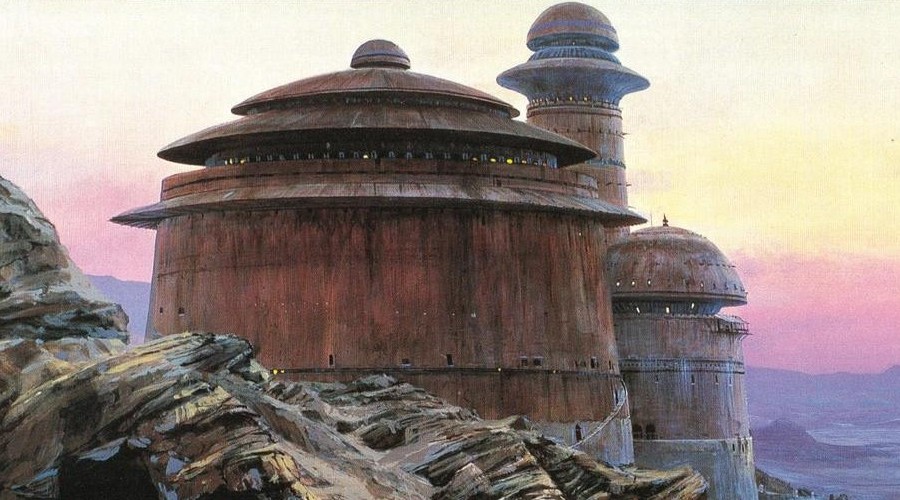
The palace later known as Jabba's Palace was constructed by the B'omarr approximately seven centuries before the Battle of Yavin. Located in the Dune Sea, the palace was initially a simple structure built from the chassis of several freighters, but after attacks by local natives, the monks decided to build a more secure place for their studies. They constructed a large, round palace that stood for centuries, occupied by various criminals and bandits, but the B'omarr always remained, hidden in the citadel's deepest, darkest areas. Each new group of mercenaries added to the complex, constructing an observation tower, sewer systems, and subterranean tunnels. Eventually, Jabba the Hutt acquired the palace and had his main architect modify it to suit his needs.
Jabba's architect, Derren Flet, made numerous adjustments, but Jabba was dissatisfied with the lack of prison space and had Flet killed. The Hutt built a vast hangar and garage for his pleasure yachts and sail barges beside the original palace, as well as stables for his pets, including the rancor. Jabba also installed a security system capable of detecting visitors from up to ten kilometers away. The palace's hub during Jabba's reign was his massive throne room, which housed his accountants, assassins, bounty hunters, and other unsavory individuals.
After Jabba's death, the palace became the Tatooine Retirement Home for Aged Aliens, but a shortage of government funds allowed the B'omarr to reclaim it. Jabba's father, Zorba, then became the owner.
The Teth Monastery
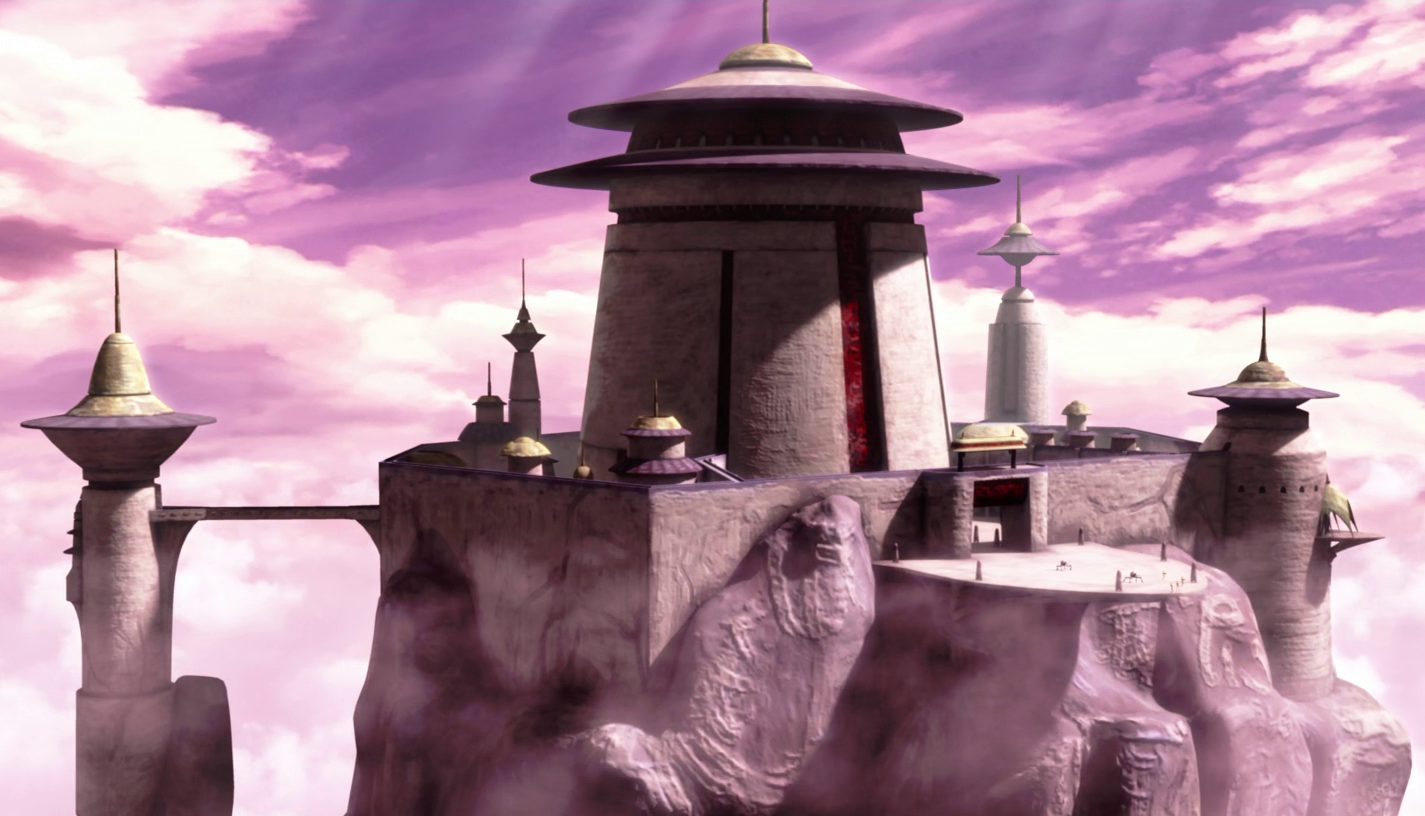
The Order also constructed and inhabited a monastery on the jungle world of Teth, atop a large mesa. It shared design elements with the Tatooine monastery and featured a throne room. It also contained a room housing a jungle rancor.
By the time of the Clone Wars, the monastery had been abandoned. During the conflict, the Confederacy of Independent Systems took the captured Huttlet Rotta to the monastery. The Galactic Republic dispatched a group of clone troopers, along with Jedi Knight Anakin Skywalker and his Padawan Ahsoka Tano, to rescue the baby Hutt, leading to the Battle of Teth in and around the monastery.
The Danuta Temple
At some point, the Order also established a temple in the city of Trid on Danuta, which was primarily populated by Hutts during the Old Republic but later came under the control of the Galactic Empire. Like other religions within the Empire, the monks were tolerated as long as they remained apolitical. In addition to embodied and disembodied monks, some supporters lived in Trid and visited the Temple for ceremonies and prayers. One such visitor was Meck Odom, an Imperial officer who had to keep his religious beliefs secret.
Other locations
The B'omarr had other places of worship on Tatooine, but none were as well-known as Jabba's Palace. The B'omarr outpost was near Jabba's Palace and was home to the Most Perfect Order of K'vin. Another location was the Citadel of B'omarr, which was similar in design to the B'omarr Monastery and housed both embodied and enlightened monks. The citadel also served as an outpost for medical care, with embodied B'omarr healers treating all patients, regardless of their injuries' origins. Although the connection is unknown, the B'omarr Flats were a large expanse of land near the Great Mesra Plateau. The Great Pit of Carkoon was located in the flats.
Notable members
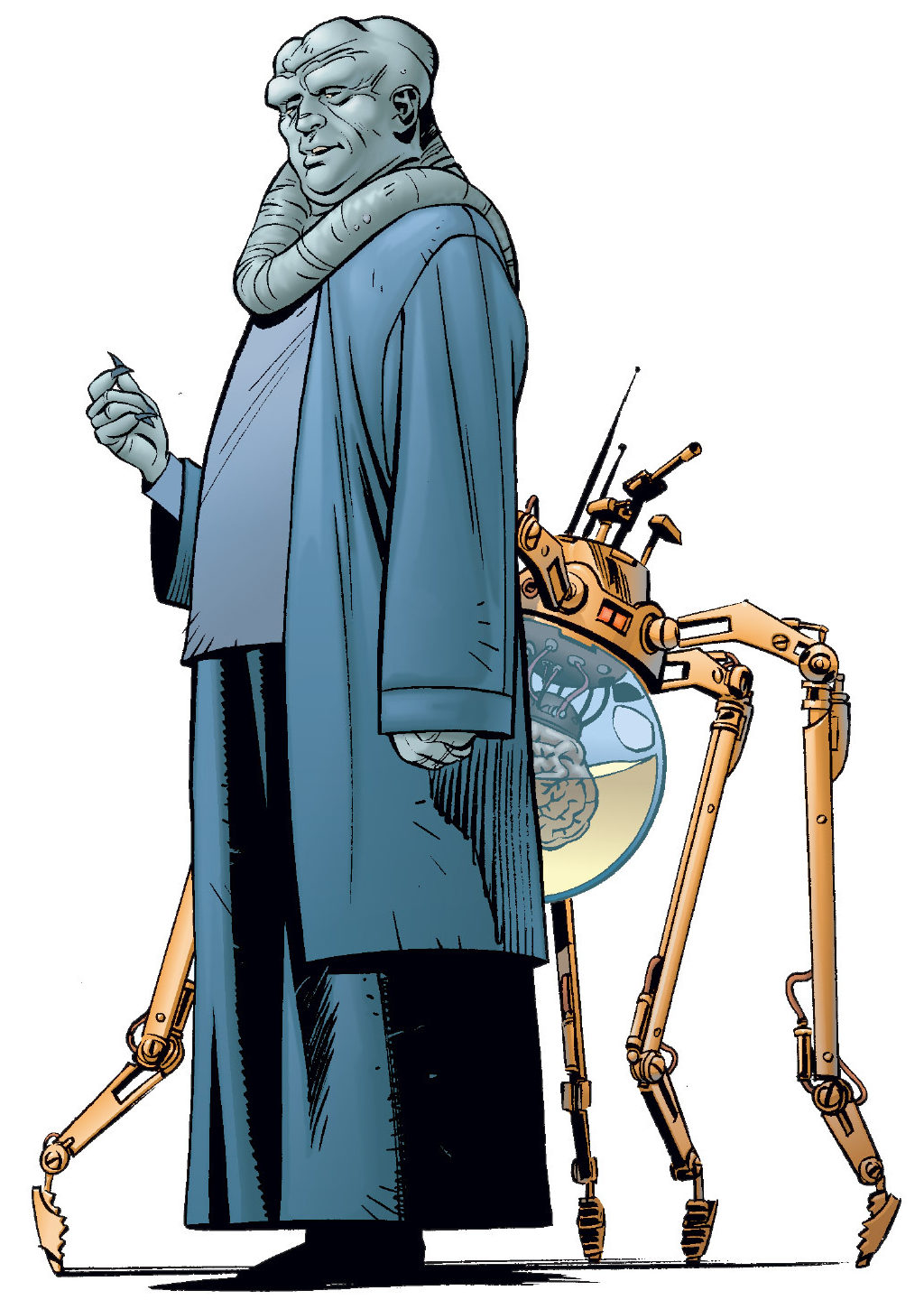
Evilo Nailati was a B'omarr monk who had his brain removed before or during the reign of the Galactic Empire. Unlike most B'omarr, he did not seek "truth" or "enlightenment," but rather, he sought to accumulate knowledge. Realizing his efforts would be limited in his original body, he joined the monks and was eventually deemed "enlightened." He then took a frog-dog named Buboicullaar as an underling, teaching him about the galaxy. Despite their brutish reputation, Bubo's species were capable of extraordinary intellect, which they concealed. Bubo had been a spy and assassin for years before arriving on Tatooine and was involved in a plot against Jabba's life. He became interested in the B'omarr and, after Jabba's death, allowed them to transfer his brain into a jar.
Sai'da was a B'omarr historian with a keen interest in information from the outside world, which isolated him from other monks who believed he should focus on contemplating the infinite. Nevertheless, he continued his historical studies and became knowledgeable about the Galactic Civil War. When Han Solo, a prominent figure in the war, was imprisoned in Jabba's dungeon, Sai'da could not resist speaking with him. Sai'da gained access to Solo's cell and, in exchange for Solo's life story, promised to ensure the safety of Solo's companion, Leia Organa. He agreed and left the meeting contemplating concepts like companionship, bravery, and humor, which he had previously given little thought.
A disembodied brain calling himself K'vin led the Most Perfect Order of K'vin, claiming that the B'omarr Order was a splinter sect. In reality, he had left the order to start his own. K'vin lived on Tatooine at the B'omarr outpost, and like the B'omarr, his order had their brains removed to contemplate the infinite. However, K'vin desired more. When a bounty hunter entered his temple searching for Han Solo, K'vin pleaded with the bounty hunter to shoot his vat, which would free him and expand his knowledge of the universe. Despite the other monks' efforts, the bounty hunter complied, and K'vin's brain died soon after.
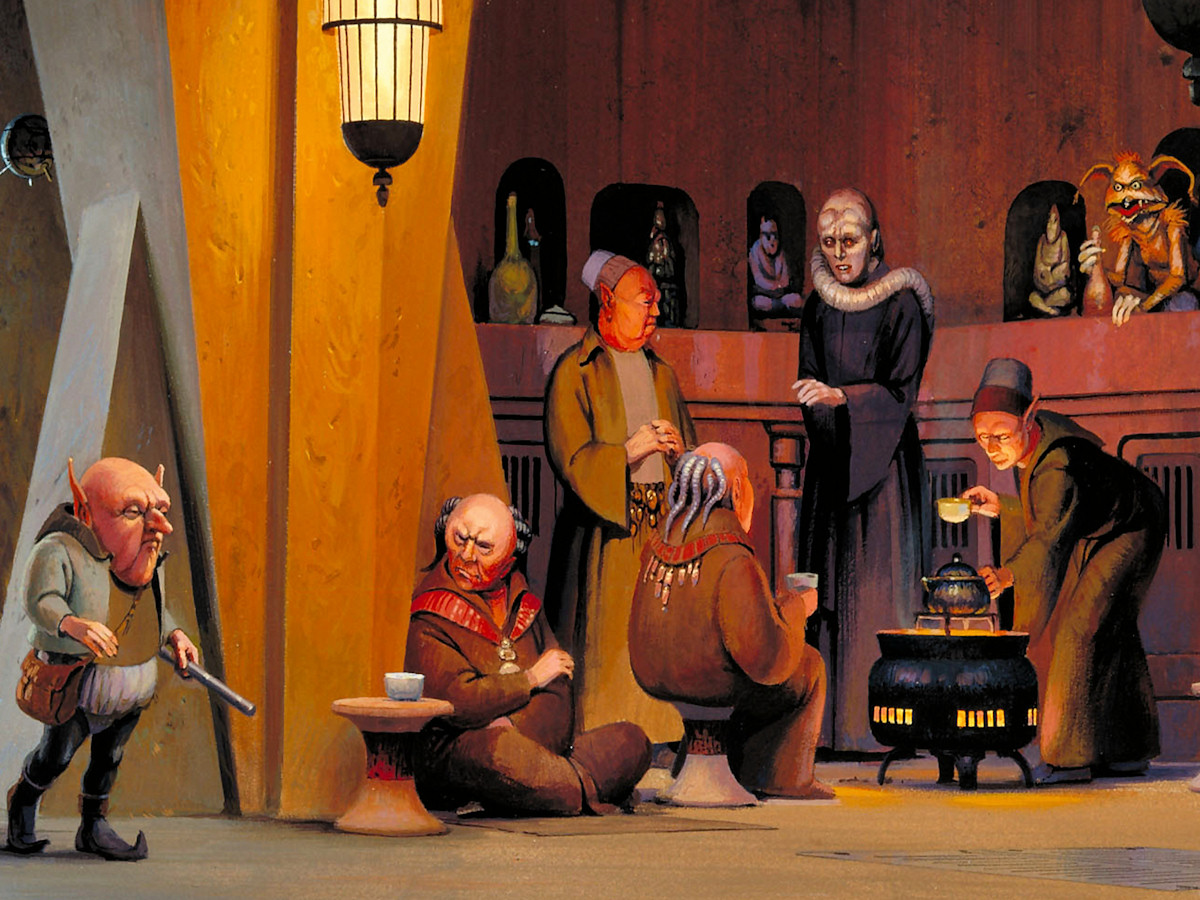
After being labeled a "sensualist," Hedon Istee departed from the order, absconding with a sacred B'omarr scroll. The monks, displeased by this, dispatched a less-than-reputable individual from Jabba's Palace to retrieve the scroll from Istee. Fearing for his well-being, Istee engaged a spacer to overcome the Gamorrean sent after him. The spacer was successful, receiving 3,000 credits as compensation. The B'omarr then escalated their efforts, employing a bounty hunter to locate Istee, but the spacer once again prevailed. Eventually, succumbing to the pressure, Istee arranged for the spacer to return the scroll to the B'omarr citadel.
Even during his time as a Cadet at the Academy of Carida, Meck Odom harbored an interest in the B'omarr Order, though his allegiance to the Galactic Empire necessitated keeping his beliefs concealed. Following his graduation, he was stationed at the Trid research facility on Danuta, where he secretly visited the local B'omarr Temple and participated in their rituals. Shortly before the Battle of Yavin, his close friend and former roommate Kyle Katarn was dispatched by the Alliance to Restore the Republic on a mission to procure a partial set of the Death Star plans from the research facility. Leveraging his knowledge of Odom's beliefs, Katarn, with the assistance of the B'omarr Monks, contacted Odom and persuaded him to aid in the theft of the battle station schematics.
Bib Fortuna always had a fascination with the B'omarr, and he utilized them as sources of information while serving in Jabba's Palace. Despite not wanting his brain removed after his master's demise, the B'omarr monks proceeded with the procedure regardless. Fortuna's brain endured days of torment before eventually adapting. Fortuna yearned for escape, a sentiment shared by his friend and fellow B'omarr, Nat Secura. Nat had been condemned to death by Jabba the Hutt; in a desperate attempt to save his friend, Bib arranged for the B'omarr to extract Nat's brain. Ultimately, Fortuna had his own brain transplanted into the body of Firith Olan, allowing him to flee the monastery.
Jabba's Quarren accountant, Tessek, had no desire to become a B'omarr member, but he was compelled to join when they reclaimed their palace. Tessek was transferred into a brain walker, where he discovered that he possessed considerably more freedom in this new existence. J'Quille, another of Jabba's subordinates, joined the order willingly. Once a paramour of Lady Valarian, J'Quille had been dispatched to Jabba's Palace to assassinate the Hutt; however, he soon found himself lacking the means to carry out the task. Following Jabba's death, Valarian was enraged with J'Quille, threatening to place a bounty on his head if he ever left Tatooine. Trapped in a miserable existence under Tatooine's scorching suns, J'Quille chose to join the B'omarr, knowing that he would not survive long if he attempted to escape Tatooine.
Behind the scenes
The initial appearance of the B'omarr was in Return of the Jedi, where they were depicted as brains connected to spider droids. The droids were inspired by sketches created by Ralph McQuarrie, which were later featured in The Illustrated Star Wars Universe. Although Return of the Jedi marked their debut, the B'omarr had a limited presence, appearing solely as brain spiders without being identified by name. The Illustrated Star Wars Universe was the first Star Wars publication to name them, and it also provided a substantial amount of information about the order.
In Who's Who in Jabba's Palace, an article published in Star Wars Insider 60, the B'omarr were categorized as being among "The Bad." In general, the B'omarr have been portrayed as neither villains nor heroes, although they assume a more malevolent role in Galaxy of Fear: The Brain Spiders.
Brains housed in devices similar to those used by the B'omarr Monks have been seen in various other sources, including Wanted by Cracken (as seen here), "Shadows and Light," and Star Wars: Empire: Idiot's Array; however, these instances have not been officially linked to the order.

A dialogue option that references the B'omarr (misspelled as Bomarr) is present in Star Wars: Knights of the Old Republic, during a conversation with Carth Onasi. This suggests that the Order was established during or before 3956 BBY. However, given that the line is exclusively available to female characters, the player character is canonically male, and the line is optional, it is not considered Canon.
In the non-canon video games LEGO Star Wars II: The Original Trilogy and LEGO Star Wars: The Complete Saga, B'omarr spider droids roam Jabba's Palace and can be ridden as mounts.