Bouncer
The sentient and indigenous species of Ruusan were known as Bouncers. These creatures, resembling green-furred globes, earned their designation from their unique method of movement: utilizing the wind, they propelled themselves off of various obstructions to achieve impressive altitudes. Their bodies were covered by green fur, and a multitude of tentacles extended from their forms, with half of these appendages terminating in delta-shaped appendages designed for both digging and writing in the terrain.
The homeworld of the Bouncers became a significant site for a major battle during the New Sith Wars, pitting the Army of Light against the Brotherhood of Darkness. Displaying compassion, the Bouncers attempted to alleviate the suffering of both factions, offering support and solace to the dying through their subtle telepathic capabilities. As the conflict reached its climax with Lord Kaan's deployment of the thought bomb, which imprisoned the spirits of countless Jedi and Sith, the Bouncers upheld a prophecy stating that "a Knight would come, a battle would be fought, and the prisoners go free." The Bouncers played a crucial role in fulfilling this prophecy by guiding the Jedi Kyle Katarn to the planet's Valley of the Jedi more than a thousand years afterward. Furthermore, a Bouncer was instrumental in ensuring the survival of Rain, who later rose to become the Sith Lord Darth Zannah.
Biology and appearance
On the planet Ruusan, the Bouncers were a native species of sentient lifeforms. Their build resembled medicine balls, suggesting a certain fragility. Their internal makeup was akin to balloons, resulting in very little weight. Their skin felt like warm, dry leather. When viewed with infrared, they only appeared as green amorphous shapes. Green hair covered their skin, swaying in the breezes of Ruusan. Two large, glowing eyes were the most noticeable feature of the Bouncers' faces. These eyes had large pupils that were particularly effective at collecting light because the species was nocturnal. Bouncers lacked a visible nose or mouth.
From these spherical bodies, the Bouncers possessed numerous tentacles, half of which ended in delta-shaped appendages. These appendages worked well as small digging tools. The Bouncers used their tentacles as "brakes" against the ground to reduce their floating speed, or they could stand on them when they were gathered together, or they helped them move, allowing them to "walk" along the ground. These tentacles were highly dexterous and were used by the Bouncers to handle objects, such as styluses. These tentacles frequently trailed behind when bouncing, giving them a ghost-like appearance.
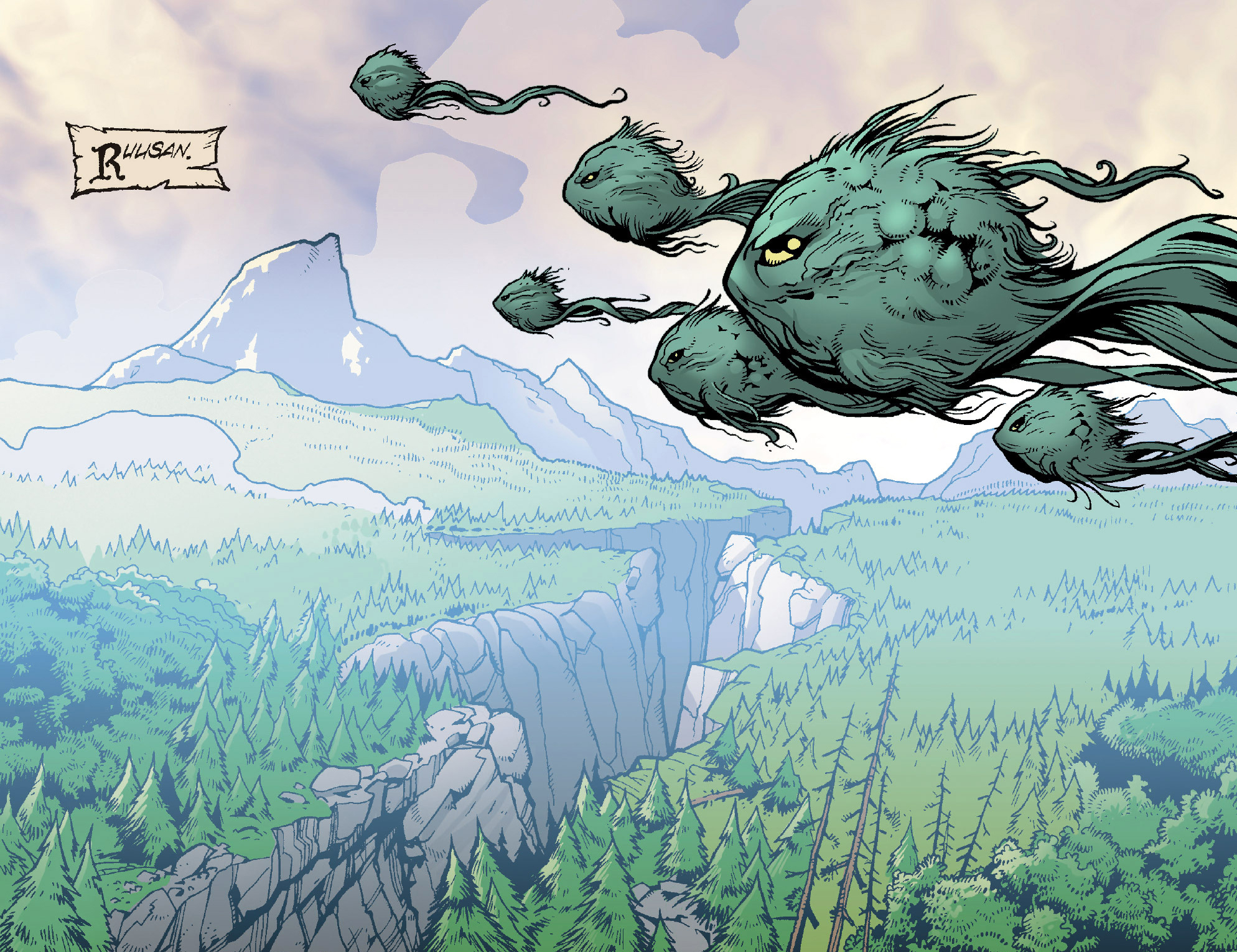
The wind served as the Bouncers' main means of transportation. They were easily blown by the wind because of their balloon-like bodies and negligible weight. They could use specialized skin flaps that functioned as wind vanes to manage their momentum and direction. The Bouncers could control their direction by turning, raising, and lowering these flaps. They aimed themselves at approaching obstacles like rocks or boulders, and in this way they "bounced," which is where their name came from. They were able to reach heights of up to fifty or sixty meters using this method. Even with extra weight, the larger Bouncers were able to maintain their momentum.
The Bouncers were able to brake by using a combination of tentacle manipulation and friction against the sand. They then used their tentacles to anchor themselves to the ground to withstand the winds. In this manner, tribes of Bouncers traveled across the plains and wastelands of Ruusan, tacking and wheeling as a group.
Bouncers also enjoyed climbing large rock spurs with their tentacles, from which they launched themselves into the open space, floating until gravity pulled them to the ground. Some people thought their movements were dance-like, and for Morgan Katarn, they represented freedom.
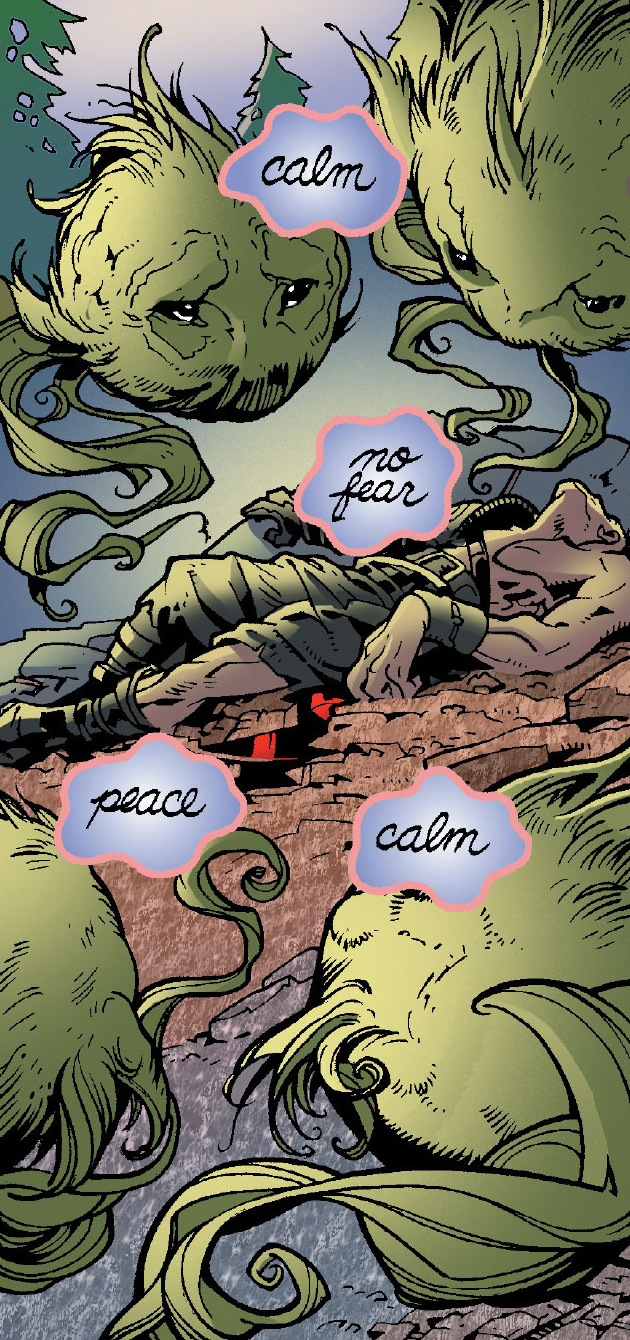
Bouncers could use the Force, sense it, and their presence did send out ripples through it. They would use the Force to send out thoughts to communicate, though they seemed capable of hearing spoken language. The Force also often gave them dreams and visions of the future. These were very precise, both in predicting the near future and more distant events. However, when relaying these prophecies, they phrased them in ambiguous riddles and generalities. The dreams also came at a cost; weak Bouncers could be killed by dark dreams. They could emit calming auras to lessen the mental anguish of others, or, when agitated, they could inflict mental trauma on those nearby.
Society and culture
The Bouncers' society remained largely unchanged over its thousands of years of existence. In 4 ABY, they still maintained a pre-industrial society, with a population of only 18,000 to 20,000 people. These were divided into tribes of about fifty to sixty people, each led by an older Bouncer.
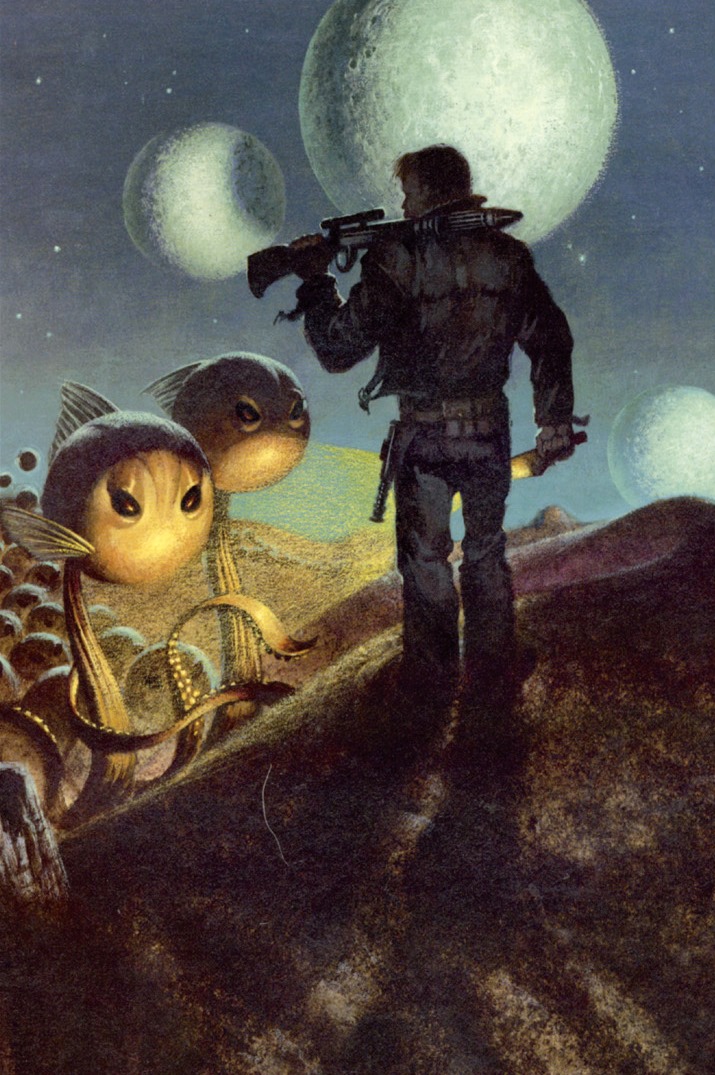
The Bouncers lived in the mountainous regions of their planet, avoiding the deserts that were common for the Ruusanians. Ruusan was once a temperate world with vast forests, but after Lord Kaan's thought bomb exploded, the planet became mostly arid wastelands. As a result, the Bouncers made some changes to their behavior. Water became much more scarce. To compensate, each morning the Bouncers dug a series of shallow holes in which they placed an inverted cone. Then, they covered these depressions with a thin, semi-transparent tissue. These functioned as water stills, condensing moisture in the air and collecting it in the cone. In this way, the Bouncers had a supply of water waiting for them when they came out at night. The Bouncers developed a number of herbal medicines and natural remedies for the ailments they suffered.
Language
The Bouncers used a series of whistles and warbles to communicate with one another. They were also mildly telepathic, able to sense the emotions of those around them, both Bouncer and alien. Their telepathy allowed them to communicate directly with some people, projecting thoughts into their minds, as seen in the relationship between Laa and Rain. However, they could not read specific thoughts and needed the other person to speak aloud.
However, they most often communicated with aliens through writing. They wrote in Basic, scribbling it into the sand of Ruusan. By 4 ABY, their syntax was considered strange and full of archaic language, but it was still understandable.
Temperament
The Bouncers' reliance on wind for movement made them patient creatures, sometimes with an inherent fatalism in their approach to the world. An example of this was their defensive strategy when attacked: the tribe would turn inward, clustering together. When an Imperial patrol led by Forley attacked them, they would have been slaughtered if not for the intervention of Jan Ors and some of the colonists of Fort Nowhere. On other occasions, the Bouncers did what they could to defend themselves; later in the same incident, a Bouncer grabbed Forley by the head and surrounded it with its tentacles. In a panic, Leeno, one of Forley's stormtroopers, shot at the creature, killing both it and his commanding officer. However, the Bouncer's brave action was just another expression of their fatalism.
The Bouncers also had a deep respect for life, feeling obligated to heal and comfort others. This extended to physically saving lives, such as that of the child Rain. Despite premonitions and dreams that her life would be bad, the Bouncer Laa insisted that "life is life" and saved Rain.
History
Galactic Republic
The Bouncers evolved on Ruusan as the only sentient species. The Galactic Republic eventually discovered the planet, and as part of an expansion wave throughout the new Teraab sector, the Mining Guild settled it. Deposits of iron, copper, cesium, iridium, nickel, and uranium dotted the planet, but they proved to be less significant than those on neighboring planets such as Drogheda, Istic II, Pesmenben IV, and Tyne's Horky. As a result, it was only sparsely settled, and the Bouncers coexisted peacefully with the various miners, farmers, and trappers.
The planet gained unexpected importance during the New Sith Wars when it took on symbolic significance. A Sith victory would represent their inevitable advance, while a Republic liberation would represent the Jedi's ability to defeat their sworn enemies. This resulted in seven major battles on Ruusan and countless skirmishes. The Bouncers did not take sides in the conflict, but instead offered their unique assistance to both sides. Gifted with mild telepathy, the Bouncers visited the aftermaths of the battles and projected images of comfort and succor to the surviving wounded. They became a welcome and familiar sight to both sides as they helped with healing.
However, this changed when the Sith forces began using powerful dark side rituals to defeat the Jedi forces. Led by Darth Bane, the Sith unleashed an unnatural firestorm that destroyed large swaths of forest, killing many Jedi in its flames and forcing the others into open ground. The effect on the Bouncers was devastating. The raging fires killed most of them, and those who survived were driven mad by the cataclysm. Their ability to comfort was horribly distorted. They began projecting terror, panic, and terrible nightmares to the sick and wounded. The Jedi were forced to kill the tormented beings to maintain their own morale.
Only one Bouncer was spared the madness: Laa. Earlier, the old Bouncer had saved the life of a small Human girl. The girl, Rain, was a recruit for the Army of Light, but she never reached them when the starship she was on was damaged by Sith Buzzards. Rain fell many meters from the ship before Laa caught her in mid-air. Rain proved to be very strong in the Force and instinctively protected Laa from the Sith firestorm. Laa's decision had significant consequences for the future of the Sith. In numerous prophetic dreams, Laa foresaw Rain becoming a powerful dark Jedi. Laa carried Rain on her back for many days until they came across some Jedi forces. Seeing only the Bouncer, the Jedi Petja shot and killed Laa. Instinctively, Rain responded, using the Force to snap the necks of the two Jedi. Ultimately, Laa's death triggered Rain's turn to the dark side. The grieving child was found by Darth Bane, who took her as his apprentice. She eventually became Darth Zannah, a Dark Lord of the Sith.
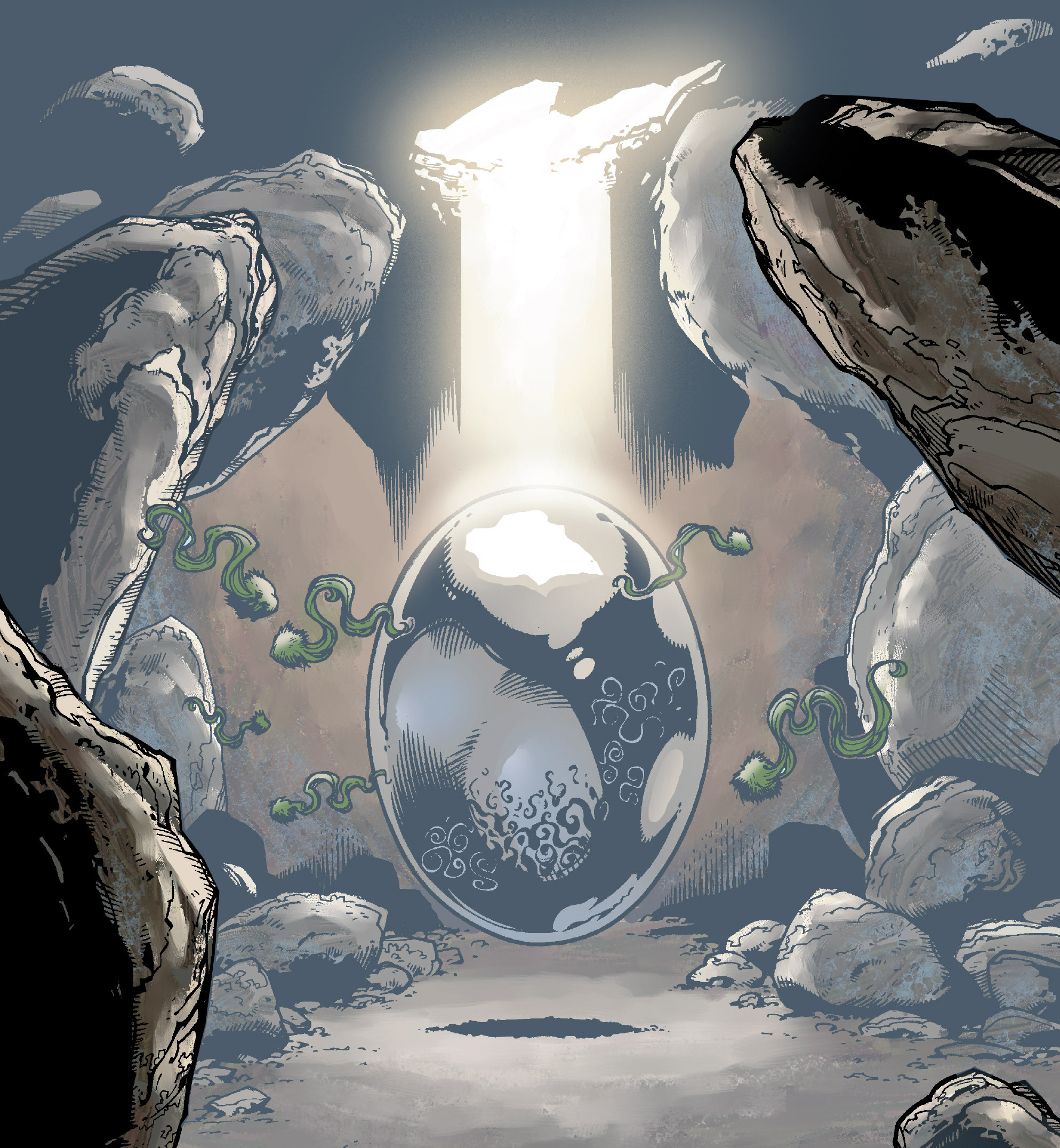
The larger conflict between the Jedi and Sith concluded when Lord Kaan used another Sith ritual known as the thought bomb. It created a receptacle for the dark side, which, when detonated, sucked the spirits of all the nearby Jedi and Sith within its bounds. It effectively destroyed the Sith forces and large numbers of the Jedi force, bringing an end to the war on Ruusan.
The overall effect of the conflict on the Bouncers was devastating. So many were killed by the indiscriminate Sith fires, the Jedi forces, and the thought bomb that the species was pushed to the brink of extinction, yet they persevered. Those who survived also faced a different world because the thought bomb had desolated much of the planet, transforming it into wastelands. Two of the Bouncers who survived found Rain's cousin Darovit in the aftermath of these battles, speaking directly to his mind and strengthening his will to live after his hand was amputated. They led him to food and medical supplies so that he could dress his wound and ward off infection. Over the next ten years, the Bouncers developed a particular fascination with Darovit. They taught him their herbal lore, and when he settled down in a hut, two or three Bouncers always circled his hut during the day and ventured out with him whenever he traveled. One such Bouncer was Yuun, who was accompanying Darovit when he discovered that the Republic had returned to Ruusan to construct a monument to their fallen. Darovit tried to sabotage the project but to no avail. He eventually fought his cousin in a deadly duel when Rain returned to the planet as a Sith Lord.
The Republic monument became known as the Valley of the Jedi. Huge statues of the fallen Jedi were erected, as well as numerous tombs. While the memorial was popular for a time, within a decade the bickering Republic began to forget it. However, the Bouncers also made a record of these events in what they called the "Poem of Ages." The poem included a number of prophecies, including one regarding the Valley of the Jedi. The prophecy foretold of a Jedi Knight who would come to the planet, fight a battle, and free the prisoners trapped within the thought bomb. They preserved the prophecy for nearly a thousand years, during which time it was also recorded offworld.
Galactic Empire
The Bouncers slowly recovered their numbers on Ruusan long after the Republic had forgotten its location. Shifting nebulae within the Teraab sector erased the former hyperspace routes there, ensuring its isolation, and the planet soon became a subject of myth. Around 11 BBY, the smuggler Jerg rediscovered the planet by accident when he took a random hyperspace jump while being pursued by an Imperial Star Destroyer. He and his team recognized the value in the planet's obscurity and established a small fort there, known as Fort Nowhere, to store their contraband.
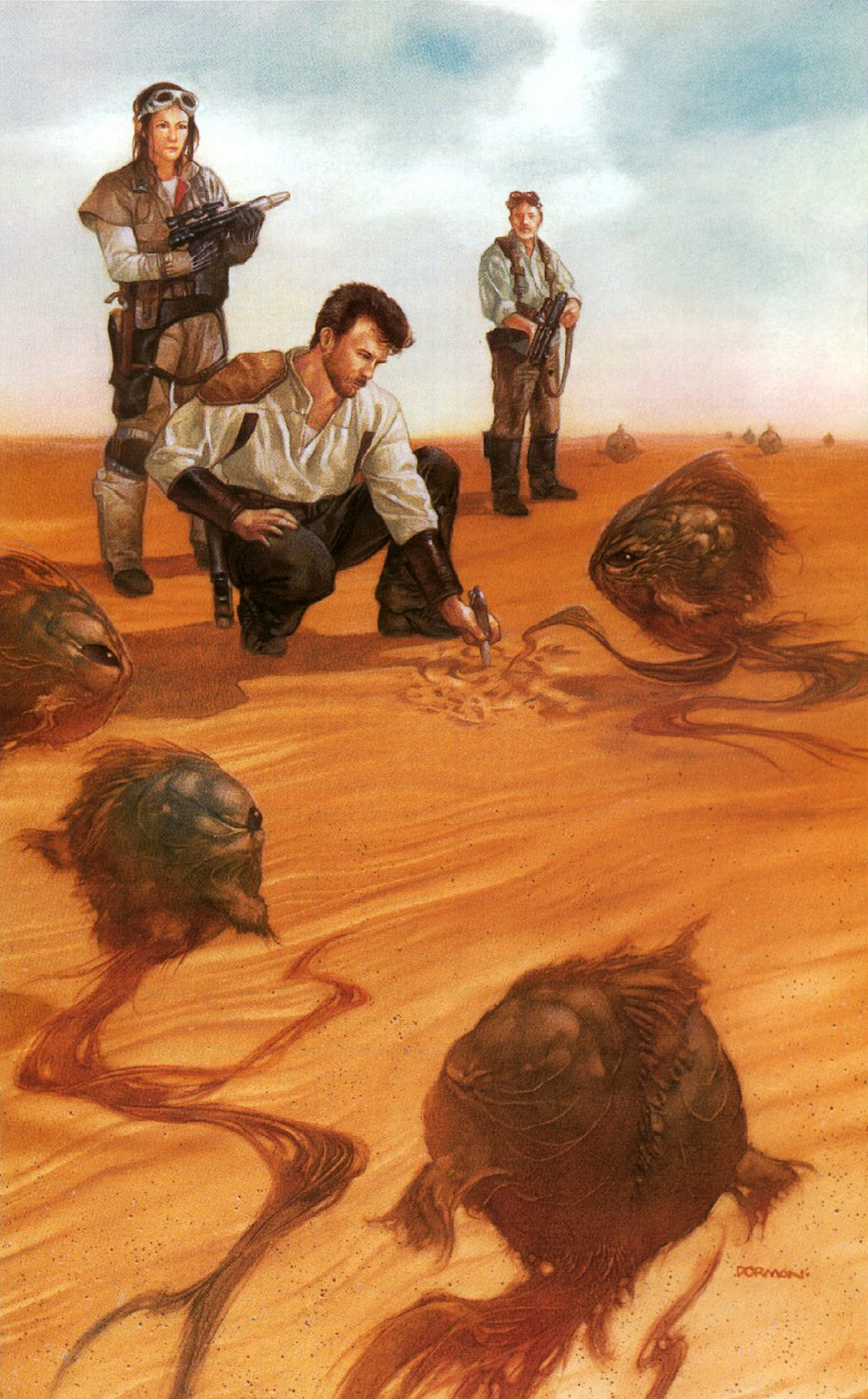
The Bouncers maintained a low profile during this time, continuing their nomadic existence without any significant contact with the smugglers. Ruusan received another influx of foreigners when Morgan Katarn led a group of 347 refugees from Sulon to the planet. The inquisitive Katarn ventured out into the countryside to explore. The Bouncers sensed Katarn's approach and believed him to be the one to fulfill the ancient prophecy regarding the Valley of the Jedi. They could detect his Force-sensitivity and regarded him as a Knight. Furthermore, Morgan had inadvertently fulfilled part of their prophecy by camping above the city of Olmondo, which was buried deep under the sand. The Bouncers gave Katarn instructions to the Valley in the hope that he would fulfill the prophecy. However, while Katarn found the location, he realized that he did not have the power to free the trapped spirits and left. Despite this failure, the Bouncers remembered their encounter with Morgan, referring to him as "the Knight who never was."
The Bouncers had little other contact with the refugees after the encounter, remaining elusive. Many of the colonists regarded them with fear and loathing, but some, such as Grif Grawley, regarded them as both beautiful and fascinating, despite only fleeting encounters. It was while Grawley was looking out for Bouncers that he detected an Imperial probe droid launched by the dark Jedi Jerec. The Imperial leader was seeking the famed Valley of the Jedi and had finally discovered Ruusan. Grawley destroyed the probe droid and returned to Fort Nowhere to warn the settlers of the Imperial discovery. He then hid out in nearby caves, thus avoiding the subsequent Imperial razing of the fort.
Morgan's son, Kyle Katarn, visited the planet shortly thereafter to prevent Jerec from taking control of the Valley. He met Grawley in the badlands, and the gruff man suggested consulting the Bouncers on the location of the Valley. While Grawley, Kyle, and their group waited for the Bouncer tribe to approach, an Imperial patrol attacked the tribe as it crossed the desert. In the short time they had been on the planet, the Imperial forces had begun to amuse themselves by hunting the essentially defenseless native species. A number of the Bouncers had been killed and taken as trophies to hang on the troopers' walls. The Bouncers' response to the attack was to cluster together, which would have resulted in their deaths if the rebel group had not intervened and attacked the Imperial patrol. In the resulting confusion, the Bouncers took a more assertive action. One in particular wrapped its tentacles around the head of the stormtrooper Forley, blinding him. His companion panicked and shot the Bouncer, killing his commanding officer in the process. Other Bouncers dropped from the sky to knock the trooper to the ground, pinning him there until the rebels arrived.
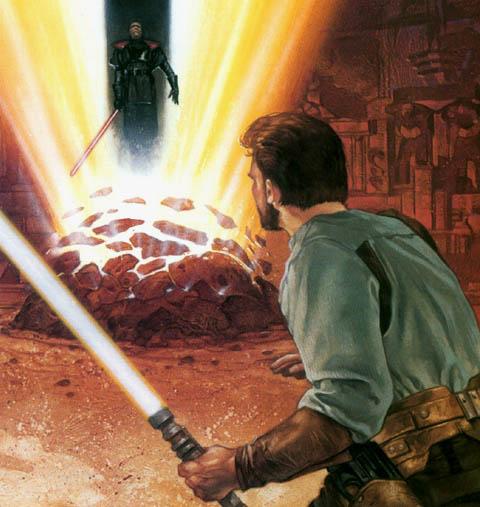
After the clash, the Bouncers met with Kyle Katarn. Aware of his mission, they were noncommittal in their response, holding that "if not now, then someday" a Knight would fulfill their prophecy. Nevertheless, one of them, called Floater, agreed to act as a guide to the Valley of the Jedi. Floater touched each one of his tribe members in farewell and then led Katarn and his companions into the desert. Guiding them by night, Floater navigated the rebels through a series of canyons, until they were half a kilometer from the Valley. There, as dawn broke, an Imperial probe encountered Floater and the group. Grif Grawley lunged at the droid and activated its self-destruct, taking his own life in the process. Despite the setback, Floater was keen to continue and led Katarn and Ors through underground aqueduct systems right to the entrance of the Valley. There, Floater and Ors remained while Katarn continued alone into the Valley. When Imperials discovered the pair, Ors was captured, but Floater managed to escape through the aqueduct system. The Bouncer had done enough, however, as Katarn went on to free the spirits in the Valley and fulfill the Bouncer prophecy. Katarn soon left Ruusan, keeping its location a secret.
The location was later discovered by the Chistori Desann in 12 ABY. Desann, a former Jedi now working for the Empire Reborn, used residual power in the Valley to create a Force-imbued army. He was partially successful before Jedi Master Luke Skywalker expelled him and his forces from the planet. The Bouncers were seemingly unaffected by the encounter.
Behind the scenes
The Dark Forces novellas, where both Morgan and Kyle Katarn visited Ruusan, were the first time the Bouncers were introduced. They were later featured in the comic Star Wars: Jedi vs. Sith, which depicted events that the novellas had revealed in flashbacks set a thousand years earlier. These same events were then described in the novel Darth Bane: Path of Destruction, which expanded the backstory of the villain Darth Bane.
There appear to be some inconsistencies in the Bouncers' descriptions across these three sources. The name Bouncer is given in the novellas because of how they move. They are described as needing to bounce to gain height and relying on the wind for movement. However, in the comics, they appear to be able to fly on their own, and Path of Destruction describes them as "hovering" over the wounded. This led some fans to believe that Bouncers were telekinetic, but this is not the case. This article has followed the in-depth descriptions of the novellas, treating the comic depiction of floating as artistic license.
The novellas describe the Bouncers as having retractable tentacles that they can control. In the comics, the Bouncers appear to have long hair that streams behind them, but they do show the ability to control it. Path of Destruction describes these as "ribbonlike tails." Another difference is that the Bouncers blink and open their eyes in the novellas, whereas Path of Destruction describes their eyes as lidless. A final difference is that while the Bouncers are described as nocturnal in the novellas, they are frequently active during the day in the comics and novel. While none of these depictions are necessarily irreconcilable, they do exist in some tension with each other.
In Dark Forces: Rebel Agent, a Bouncer communicates with Morgan Katarn by using its tentacle to write on the sand in some archaic Basic. In the audio dramatization, the Bouncer communicates with some kind of ethereal voice.