Form III
The third form of lightsaber combat developed by the Jedi Order was Form III, also referred to as Soresu (pronounced sor-EE-soo), the Way of the Mynock, or The Resilience Form. Its primary emphasis was on defense, rather than aggressive maneuvers.
Depa Billaba, a Jedi Master known for her proficiency, instructed her pupils, including Caleb Dume, in the application of Form III for close-quarters engagements. Jarrus later employed Form III against the Grand Inquisitor; however, the Inquisitor recognized it as a hallmark of Billaba's teachings and successfully countered Jarrus' attempts. Obi-Wan Kenobi also became a master of the defensive Soresu style.
Description

Soresu, or Form III, came about because of the growing use of blasters across the galaxy. Because Shii-Cho techniques, which originated from melee combat, were not effective against blaster fire, a new form was required. Makashi also lacked suitable techniques. A crucial element of Soresu was the ability of a lightsaber to deflect blaster fire, and with enough training, even redirect it back to the shooter. This ability to redirect blaster fire was a major advancement in lightsaber combat during the blaster era, and a key way to harm enemies while using Form III. However, deflecting blaster bolts was only one aspect of Soresu's defensive capabilities. Practitioners also trained to block lightsaber attacks, defend against multiple opponents, and maintain a calm focus to react defensively to any threat.
In essence, Form III prioritized defense against blaster bolts, lightsaber strikes, and other melee attacks. Unlike Form I's sweeping movements, Form III emphasized precise, controlled motions and efficient action in all combat scenarios. This was crucial for Soresu's complete defense, as even the smallest extra movement could create an opening for a blaster bolt, vibroblade, or lightsaber. This carefulness applied to both lightsaber movements and the fighter's entire body. Soresu stances minimized the target area, limiting attack options and reducing the area that needed to be defended with lightsaber blocks and parries.

This strategy showed Soresu's thoughtful and intellectual approach to combat. While agility and speed were important, mental focus was more crucial. The form's emphasis on efficient and controlled movements reduced the physical demands. Furthermore, the form focused on both immediate tactics and broader strategic thinking. Form III users took a wider view of battle, adapting to attacks as needed. Soresu practitioners carefully analyzed each attack and the overall pattern, creating a purely defensive strategy that worked against any number of enemies.
Originally designed to counter blaster fire, Form III became a comprehensive defensive form against all types of attacks. Form I's focus on offense meant that the defensive uses of the lightsaber needed more development, while Form II's protective techniques were less effective against numerous enemies, especially those with blasters. Although Soresu started as a response to blasters, its extensive focus on defensive techniques for all situations made it a valuable and worthwhile focus for Jedi, even after deflection techniques were added to later forms.
Soresu in practice

Soresu's title as the Resilience Form was well-deserved, as its effectiveness depended on outlasting opponents. To use the form properly, practitioners had to focus entirely on defense, dedicating all mental energy to analyzing the enemy's movements. This allowed Soresu masters to exploit the enemy's vulnerabilities, which often resulted from exhaustion or frustration. The efficient movements of Form III helped practitioners avoid fatigue before their opponents.
Similarly, Soresu valued calm and tranquility, minimizing mental and emotional fluctuations as precisely as physical movements. As opponents became frustrated by their inability to break through the Form III fighter's defenses, the Soresu practitioner calmly waited for the perfect moment to strike. This emphasis on emotional control, which aligned with the broader Jedi philosophy, likely contributed to Form III's lasting popularity even after newer forms emerged.
History
During her duel with Count Dooku in The Works of Coruscant in 32 BBY, Jedi Master Yaddle briefly adopted a Form III stance when holding her ground against the former Jedi.
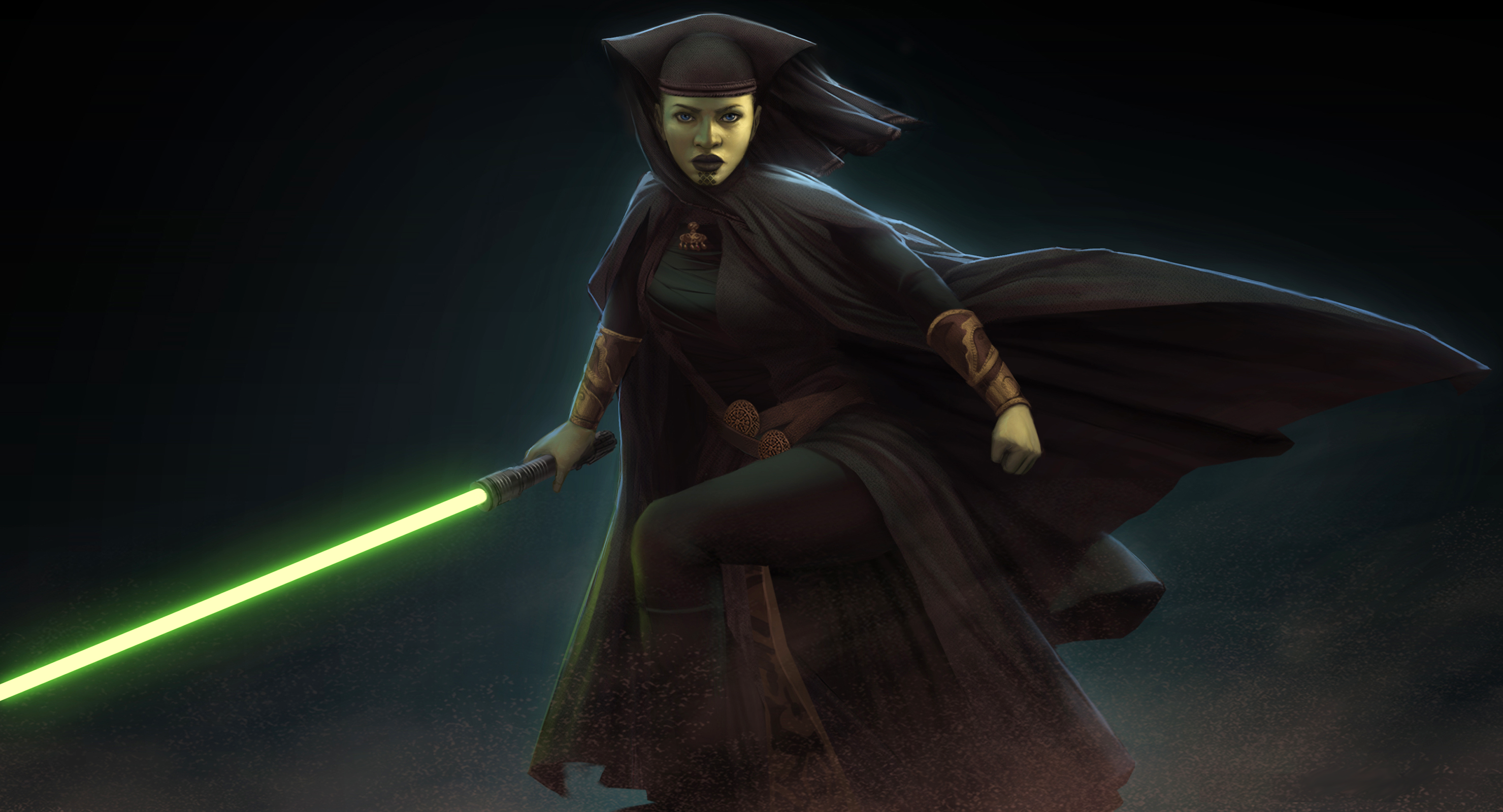
Luminara Unduli, a Jedi Master, was most comfortable using Form III, and was well-known for her use of this defensive style. However, in some duels, Unduli would use a Makashi stance. Although Form II left Unduli slightly more vulnerable than Soresu, its aggressive nature was ideal for fighting the Sith. Unduli taught many Soresu techniques to her Padawan, Barriss Offee. As a Padawan, Offee was naturally not as skilled in lightsaber combat as her master, but her lightsaber style was fluid and focused on repositioning. Offee's version of Form III differed from her mentor's more experienced application. As the Clone Wars progressed, Offee fell to the dark side of the Force and became more aggressive, even stealing the red lightsabers of former Sith assassin Asajj Ventress because she felt they suited her new persona.
Behind the scenes
Form III was featured in the 2002 film Star Wars: Episode II Attack of the Clones. It was first identified as such in a Acme Archives Direct Character Key called "Kanan Jarrus" which was released at San Diego Comic-Con 2014.