Vulture-class starfighter
The Vulture-class starfighter, alternatively known as the Variable Geometry Self-Propelled Battle Droid, Mark I or more simply, the vulture droid, functioned as a droid starfighter for the Trade Federation. Subsequently, the Confederacy of Independent Systems made extensive use of it, deploying it in much larger numbers. This craft played a significant role in the Clone Wars, participating in key engagements such as the Battles of Kamino and the Battle of Coruscant.
In a manner consistent with the majority of the Trade Federation's military assets, this starfighter did not require a living pilot. Instead, it operated via a droid brain linked to a central control computer, which was frequently located on a Lucrehulk-class Droid Control Ship. Approximately 1,500 of these droid starfighters were carried by each Trade Federation battleship.
Haor Chall Engineering, an organization established by the zealous Xi Char—a religious order devoted to precision manufacturing—engineered the Vulture-class. Consequently, the starfighter embodied quintessential Xi Charrian design principles: an insect-like aesthetic, numerous weapon hardpoints, and a streamlined body that presented a minimal target profile to opposing fighters.
Characteristics

The vulture droid was equipped with four blaster cannons and a pair of energy torpedo launchers. It could achieve speeds of up to 1200 kilo-meters per hour within a planet's atmosphere. When not actively engaged in flight, the craft had the ability to transform into a bipedal weapons platform, which was utilized for ground patrols and supporting troop movements. While in this configuration, the droid starfighter could also attach itself to surfaces in zero gravity environments, enabling launches directly from the exterior hull of a capital ship. The class also incorporated thrust dampers; disabling these would compel the starfighters to transition to their walker mode for continued operation. When docked within a hangar, the droids would frequently cycle their components as a form of self-maintenance. Vulture droids were programmed to self-destruct should their connection to their host control ship be severed. A Central Control Computer located on Lucrehulk-class Droid Control Ships managed the ships.
Although a droid starfighter could execute maneuvers that would prove fatal to an organic pilot, it lacked the adaptability and ingenuity of living pilots, even though their reaction times were much faster. Vulture droids utilized an unconventional fuel system, which depended on solid-fuel concentrate slugs that ignited to provide propulsion. However, they could only operate for 35 minutes before requiring refueling. To address this limitation, the Trade Federation deployed vulture droids in timed, rotating waves. Despite their superior reaction speeds, they struggled to respond appropriately when friendly fire was directed at them, a vulnerability that Mace Windu exploited on Haruun Kal and during the Battle of Coruscant.
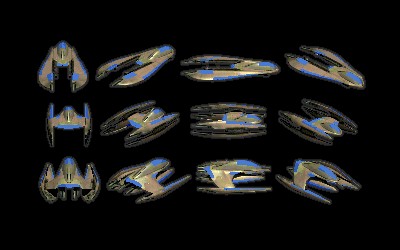
As demonstrated during the Jedi's visit to the Saak'ak, Nute Gunray's flagship, Vulture-class droids possessed the ability to communicate with other battle droids.
Vulture droid starfighters were typically identified by a six-digit designation, which consisted of the prefix DFS- followed by a three-digit alphanumeric combination, as exemplified by the fighters DFS-1VR and DFS-4CT.

Vulture-class fighters were deployed in overwhelming numbers and proved effective in both atmospheric and space combat scenarios. The vulture droid's arsenal comprised four blaster cannons, with two mounted on each wing. In standard flight configuration, the drone's wings remained folded, concealing the blaster cannons. During combat, the wings would unfold to expose these cannons. Additionally, the droid was equipped with two energy torpedo launchers, which were used to weaken enemy targets before the starfighter unleashed a barrage of blaster fire. In walker mode, the Vulture-class could only utilize its two torpedo launchers because its cannons were positioned on the legs and pointed downward. During the Clone Wars, vulture droids underwent modifications to carry six blaster cannons and four buzz droid discord missiles instead of energy torpedoes; however, it is likely they were capable of carrying other types of missiles. The Vulture droid design served as the basis for the Hyena-class bomber, another type of automated droid starfighter employed by the Separatist Alliance. By the time of the Battle of Coruscant, the Vulture-class fighters had also developed at least some capacity for speech, as several were heard making statements in Neimoidian before executing various maneuvers.
Operational history
Pre–Clone Wars
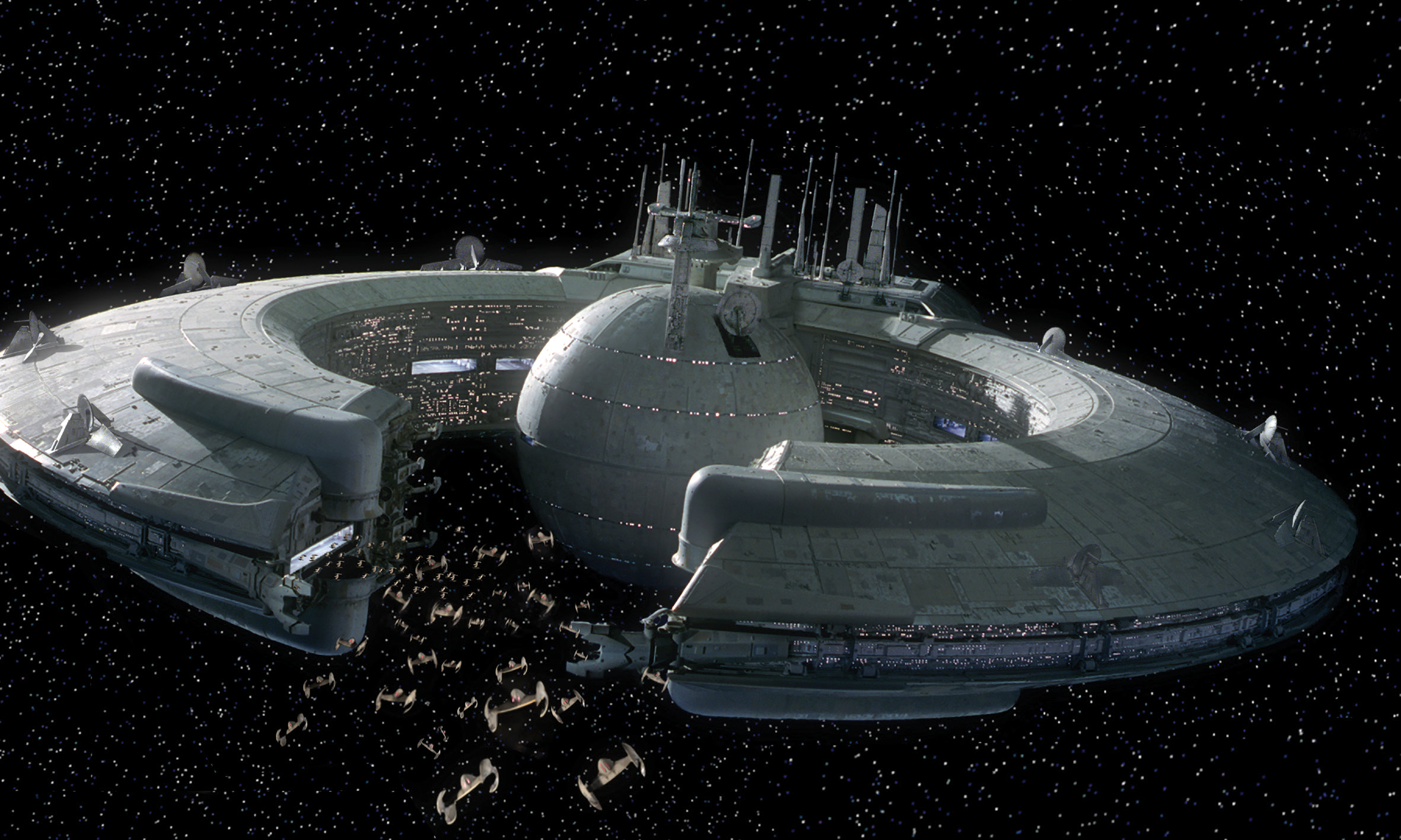
Prior to their deployment in the Trade Federation Invasion of Naboo in 32 BBY, the droid starfighters underwent extensive testing.
Just months before Darth Sidious ordered the blockade of Naboo, he manipulated the Trade Federation to commission Trinkatta Starships of Esseles in the Darpa sector to equip 50 Vulture-class droid starfighters with hyperdrives—a technology that the Republic had prohibited for use in such small fighters. The Sith Lord intended to use these starfighters to seize control of the planet Brentaal, which would have enabled the Trade Federation to control two major galactic trade routes without interference: the Perlemian and the Hydian Way. This pre–Clone Wars scheme was thwarted when the Jedi High Council, without informing the Republic Senate (some of whose members may have been complicit), dispatched a team led by Qui-Gon Jinn to investigate the party or parties responsible for placing the illegal order.
Droid starfighters were also deployed during skirmishes with Degan pirates in the Elrood sector and played a key role in defeating Nym's forces on Lok. The Naboo encountered these drones for the first time when Echo Flight pilots, under the command of Essara Till, engaged them during an assault on Station TFP-9, shortly before the invasion of Naboo.
The droid starfighter then saw action in the Invasion of Naboo, where they initially established air superiority. Later, during the Battle of Naboo, swarms of these fighters engaged Naboo N-1 starfighters in the battle above the planet. Ultimately, the vultures were neutralized when Anakin Skywalker disabled the Lucrehulk-class Droid Control Ship. Subsequent reports suggested that the droid starfighters performed suboptimally during the battle due to the Central Control Computer being overwhelmed, as it also had to manage a large number of ground troops.
Following the battle, droid starfighters commanded by Raith Sienar participated as part of the Trade Federation Defense Fleet alongside Republic forces during the attack on the living world Zonama Sekot. They were also part of the Trade Federation force dispatched to destroy Outbound Flight, but were neutralized by Chiss Commander Thrawn, who exploited their reliance on the droid-control signal by jamming its entire spectrum, effectively disabling the entire force. The captured trader Jorj Car'das later reflected on the incident, referencing reports he had read regarding the starfighters' performance during the Battle of Naboo. They also saw action during the Trade Federation's occupation of the Karthakk system.
Clone Wars
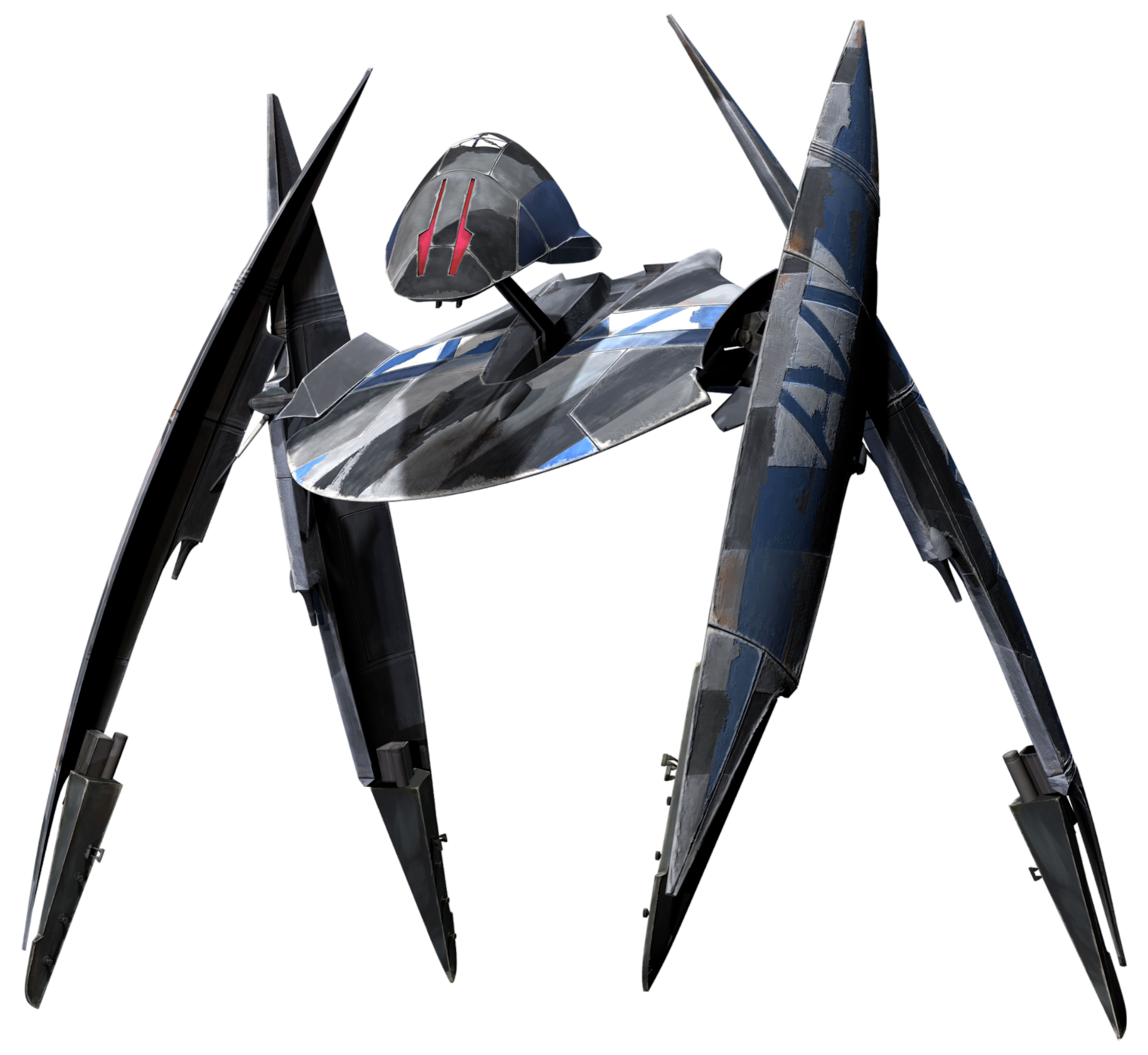
During the Clone Wars, numerous Vulture-class droids were painted with the blue and white hexagonal insignia of the Confederacy of Independent Systems, although many were seen in the early and middle stages of the war with Trade Federation brown coloring, and were upgraded with buzz droid missile launchers, which they opened their wings to launch. Other manufacturers, most notably Baktoid Armor Workshop, began producing the Vulture, which had originally been built solely by its Xi Char developers.
The Confederacy deployed Vulture droids against the Republic in a multitude of battles and conflicts, including the First Battle of Geonosis and the Battle of Coruscant. However, the Confederacy also utilized other fighters extensively, such as the Nantex-class territorial defense starfighter. Nevertheless, they did not represent a significant challenge for Jedi aces like Anakin Skywalker, as evidenced during the Battle of Terra Sool.
In addition to being launched from capital ships, vulture droids were also deployed from satellite pods to defend areas from potentially hostile approaching vessels.

At some point during the conflict, the Separatists entered into a trade agreement with the House of Vane from the planet Valahari. The inhabitants of this world were famous for being excellent starship engineers. After the formation of this pact, which was formed between Count Dooku and his old friend Harko Vane, who believed in neutrality but that the exchange of Valahari technology would benefit his world's economy. Thus, despite aiding the Separatists, the Valahari claimed to be neutral in the Clone Wars. This alliance led to Valahari fighter components being added to advanced Vulture droid models, increasing their speed and destructive power. These improved droid fighters were dispatched against the Republic, where they destroyed a battle group led by Jedi Master Toluz Cheq in the Rial Kroon system. Before he was killed, he managed to upload a transmission and a scan of the droid fighters to Coruscant, thus informing them of this new threat. This led the Jedi Council to dispatch Obi-Wan Kenobi and Anakin Skywalker to Valahari to negotiate an end to the Confederacy-Valahari alliance.
When Anakin Skywalker and Obi-Wan Kenobi arrived on Iego looking for the antidote to the deadly Blue Shadow Virus, a young Human boy named Jaybo Hood had a reprogrammed army of droids left over from the Separatists, which included several vulture droids.

During the Battle of Coruscant, Mace Windu rode a vulture by tugging on its cranial wires. General Grievous often utilized them for suicide attacks intended to create chaos, by ordering them to perform kamikaze attacks on civilian targets. An advanced model was deployed prior to and during the Clone Wars. Late in the war, _Vulture_s were augmented by droid tri-fighters, which were more durable but less common.
Galactic Civil War
Despite the deactivation of the droid armies, it appears that Vulture-class units were still in use by certain parties by 18 BBY. Moreover, during the Reconquest of the Rim, several Vulture-class starfighters were modified by Separatist holdouts to accommodate organic pilots; the 77th Air Wing encountered these modified fighters on Kelrodo-Ai in 17 BBY during the Western Reaches Operation.
Between 1 BBY and 0 BBY, an unknown faction deployed several vulture droids to Naboo from Lucrehulk-class battleships, which resulted in a battle over Naboo's atmosphere involving a Rebel Alliance cell on Naboo.
A few years after the Clone Wars, Gizor Dellso employed Vulture-class starfighters to defend his facility on Mustafar. However, the Galactic Empire discovered his plan, and stormtroopers from the 501st Legion invaded the planet, destroying the orbiting defense ships and decimating the facility. Even after these events, _Vulture_s continued to be used by various groups, including smugglers. Additionally, groups of independent, sentient Vulture droids were observed in remote areas of some star systems, such as the Detritus Satellites and the Scintilla Scavengers.
Behind the scenes

The Vulture droid made its initial appearance in the novelization of Star Wars Episode I: The Phantom Menace. Early plans for The Phantom Menace envisioned the Trade Federation utilizing more conventional starfighters piloted by B1-Series battle droids, similar to those seen in the Battlefront games. An early concept sketch depicted a fighter with a cockpit that closely resembled those of the TIE Series. It was subsequently decided that the fighters themselves should be droids.
In the Clone Wars animated series, _Vulture_s are shown with brown coloring during the attack on Coruscant, despite being depicted as blue in the film. This can be considered an artistic inconsistency in the cartoon, although the cartoon itself was released before the movie. In the games Star Wars: Battlefront and Star Wars: Battlefront II, Vulture droids (as well as other droid starships, such as the Droid Tri-fighter) are depicted as requiring a pilot. This can be attributed to game mechanics. During the movie The Clone Wars, Vulture droids fire their blaster cannons from their energy-torpedo ports rather than from between their wings. This is possibly due to artistic license; however, it's established that Vulture droids can fire blaster bolts from their torpedo emitters but primarily only when they are in walker mode. This may have also been done to make animating and tracking the shots easier for the animators.
There is a size variation of the Vulture droid (despite being much larger than the average droid). The difference is visible on the Star Wars: The Clone Wars TV series and Revenge of the Sith. Until now, the figures of the vulture droid that have been made by Hasbro and listed in Star Wars: Episode I Incredible Cross-Sections match exactly with the established size of 3.5 meters, as can be seen in Cartoon Network's animated mini-series. In 2009, Hasbro stipulated that the new larger model of the droid starfighter will be released as an action figure.
Five variations of the Vulture Droid Starfighter were released by the LEGO Company, in 1999, 2005, 2007, and, for Star Wars: The Clone Wars, 2009 and 2014.