Law enforcement agency
 The presence of uniformed officers symbolized law enforcement.
A law enforcement agency was essentially a government-authorized body tasked with upholding the law. These entities were often known as either a police force or a security force.
The presence of uniformed officers symbolized law enforcement.
A law enforcement agency was essentially a government-authorized body tasked with upholding the law. These entities were often known as either a police force or a security force.


Throughout galactic history, law enforcement agencies have been known by various names and fulfilled diverse roles. Certain groups, like the Jedi Order, also functioned as both soldiers and diplomats. Conversely, organizations such as the Imperial Security Bureau used deceit and fear to enforce the state's agenda.
Typically, law enforcement organizations were structured into three types of jurisdictional divisions, though sometimes an agency could encompass all three. These divisions included agencies with galactic jurisdiction, those with planetary and local jurisdiction, and those that provided services such as counter-terrorism and political enforcement.
Police officers held different ranks and were generally organized with a command structure that mirrored most military organizations.
History
Galactic Republic

Established on Tython around 25,783 BBY, the Jedi Order became one of the oldest groups in the galaxy, acting as both law enforcers and peacekeepers. While the Jedi served the Galactic Republic in many capacities, they consistently maintained a presence in galactic peacekeeping through roles such as the Jedi Peacekeeper and the Jedi investigator. In the Republic's early years, law enforcement was primarily handled by local militias, working alongside the Judicial Department and the Jedi Order. Planetary militias often shifted their focus from military defense to policing, depending on the population size, except during times of war. Among the earliest known planetary police forces were the Coruscant Security Force. Other early police forces included the Telos Security Force and the Taris Civil Authority.
The Ruusan Reformation brought significant changes to the Republic's approach to policing its space, placing greater emphasis on peacekeeping and law enforcement than on military action. The remaining units of the Republic Military were reorganized into the Judicial Forces. These forces, along with the Jedi Order, were placed under the authority of the Judicial Department, which saw its role in law enforcement and legal matters expand. The Republic Security Force was created as the primary civilian patrol force for the Judicial Department. In addition, the Republic Office of Criminal Investigations was established as the Republic's main investigative service, although other branches of the Judicial Department also conducted investigations.
The role of the Senate Guard was also broadened from simple diplomatic security to serving as a secondary police force on Coruscant. By the end of the Republic era, other agencies had been established with specific responsibilities, including the Sector Rangers, who acted as police at the sector and system levels to assist local and planetary agencies with cases that spanned multiple jurisdictions. Additionally, Republic Domestic Security was formed during the later years of the Clone Wars to safeguard government secrets, including financial information.
Galactic Empire
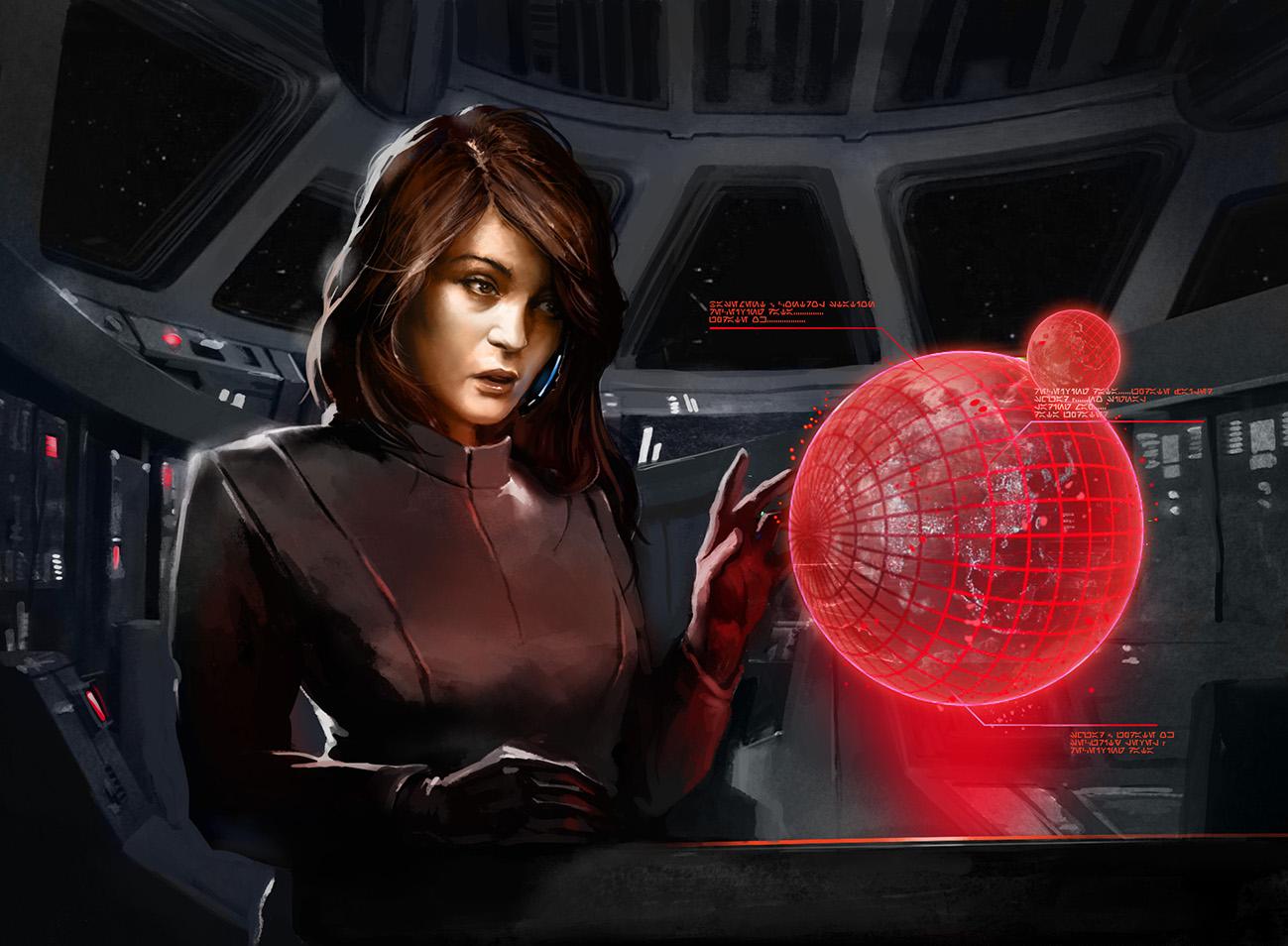
The transformation of galactic law enforcement from the Old Republic to the Galactic Empire resulted in a mix of efficiency and oppression. Most of the Republic's law enforcement agencies were consolidated under the Commission for the Preservation of the New Order. The Sector Rangers were renamed the Imperial Sector Rangers and reported to the Imperial Office of Criminal Investigations, but they remained largely uninvolved in the political objectives of the New Order.
While these organizations dealt with routine crime, the true power in enforcing Imperial law rested with the Stormtrooper Corps and the Imperial Security Bureau. As a secret police force, the ISB built an extensive network of spies, agents, and officers to ensure loyalty to the Empire and, ultimately, to Emperor Palpatine. The Imperial Stormtroopers were the most visible symbol of Imperial power. They were deployed to suppress rebellions, ensure the loyalty of local governments, and, in some instances, act as or augment local police forces, as exemplified by the Coruscant Guard.
New Republic
In contrast to the Empire, the New Republic reduced or decentralized its involvement in galactic law enforcement. The Imperial Sector Rangers were disbanded, marking the end of one of the last vestiges of the Old Republic's peacekeeping efforts. The New Republic Security Force was established in its place. The NRSF continued some of the law enforcement functions of the Sector Rangers, but its primary focus was combating the Palpatine Counter-Insurgency Front.
Due to the decentralized approach to galactic law enforcement, the New Republic Defense Fleet largely took on the responsibility of patrolling New Republic space against smugglers, pirates, and other criminal activities. They received assistance from the New Jedi Order, some of whose members exploited the Order's decentralized structure and its mandate as a peacekeeping force to exert significant influence in galactic law enforcement.
Galactic Alliance
The Yuuzhan Vong War, which spanned from 25 ABY to 29 ABY, devastated planets with war and Vongforming. The newly formed Galactic Federation of Free Alliances faced the dual challenge of rebuilding the galaxy and protecting it. During the reconstruction, as the Galactic Alliance government established itself on Denon and later Coruscant, it operated the Reconstruction Authority Space Patrol under the Reconstruction Authority. This patrol was responsible for overseeing reconstruction funds and enforcing law and order, including patrolling Alliance space for smugglers and pirates.
As tensions rose in 40 ABY between Corellia and the Galactic Alliance over issues of government control, terrorism by Corellians became an increasing threat on Coruscant. To address this, the Galactic Alliance created the Galactic Alliance Guard under the command of then Jedi Knight Jacen Solo. Although the GAG was initially conceived as a counter-terrorism force composed of police and intelligence officers, it quickly evolved into a brutal military force staffed by undesirable soldiers. With the conclusion of the Second Galactic Civil War and the death of Chief of State Darth Caedus, formerly known as Jacen Solo, the GAG was disbanded.
Following the end of the Second Galactic Civil War in 41 ABY, Galactic Alliance Security was established as the Alliance's primary law enforcement and security agency. The Galactic Alliance also maintained a second law enforcement organization called the Alliance Marshals. The new Chief of State Natasi Daala acted swiftly against the New Jedi Order for both political and public safety reasons. After several Jedi began experiencing Force psychosis, GA Security was tasked with arresting and imprisoning them, though their methods later sparked significant controversy. Despite the Jedi Order, under the leadership of Luke Skywalker, continuing to serve as a peacekeeping and law enforcement organization for the Galactic Alliance, Daala sought to bring the Order under stricter government control and curb what she saw as the Jedi's disregard for local or Alliance law in criminal investigations.
Types and jurisdictions
Galactic
Galactic law enforcement agencies usually derived their authority from the current galactic government. Their physical jurisdiction typically encompassed everything under the galactic government's control, as seen with Galactic Alliance Security. However, some agencies had very specific jurisdictional boundaries related to particular tasks and crimes. For example, Republic Domestic Security had complete authority over incidents involving high government and financial secrets of the Republic.
Planetary
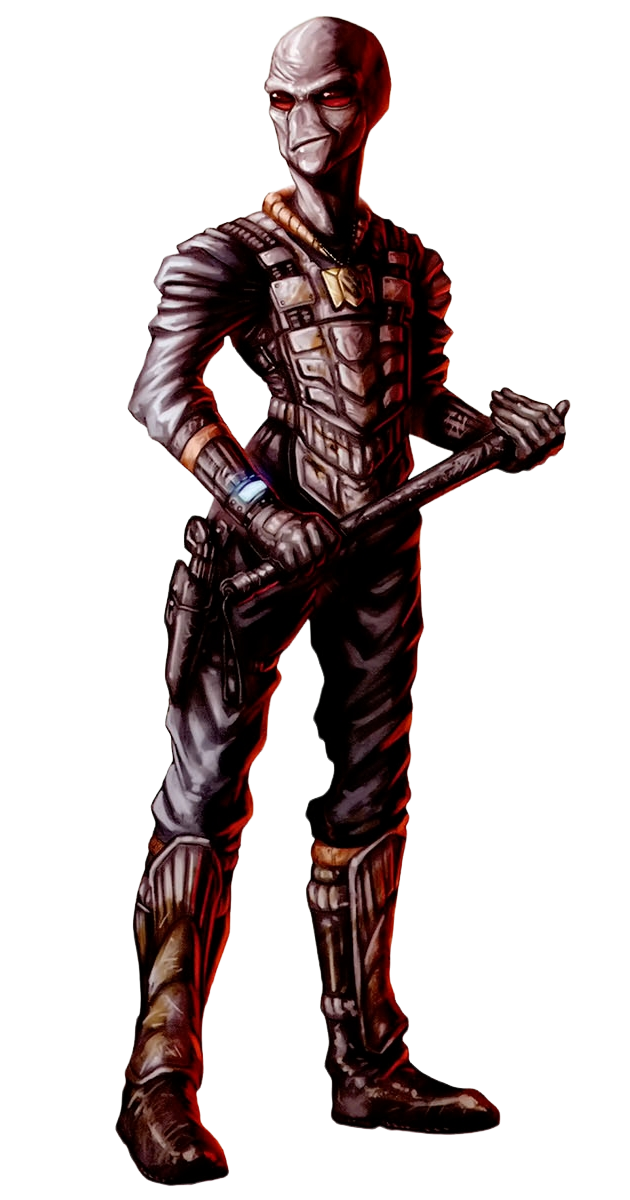
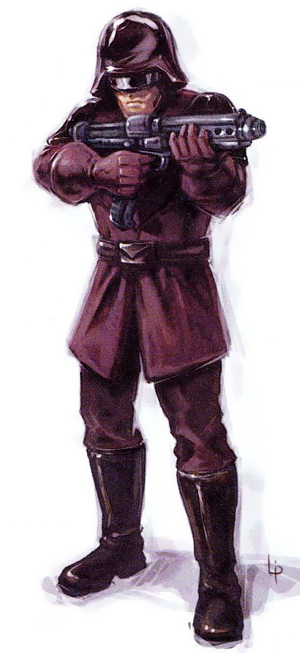
Planetary security forces varied significantly based on the level of development of the planet's society. Many planetary police forces served dual roles as militia and military defense forces, such as the Royal Naboo Security Forces. However, in these instances, the security forces primarily dealt with smugglers and criminals, not full-scale warfare. The Invasion of Naboo underscored this, as the Naboo Security Forces were unable to prevent the planet's occupation. Other planetary police forces existed as city police, though in many cases, these forces were either corrupt, controlled by corporations, or ineffective. Planets with highly developed societies, such as Coruscant and Corellia, had the most well-known and effectively organized police forces.
The Coruscant Security Force produced numerous members who later joined the Rebel Alliance as military commanders or intelligence operatives, thanks to their experience as CorSec agents and police officers. Due to the complexity of Coruscant's infrastructure and society, the CSF was one of the most advanced police forces in the galaxy. CSF police officers were known as some of the toughest cops in the galaxy. The CSF database provided information to police agencies throughout the galaxy, including the Jedi Order. Uniquely, the CSF had the authority to investigate crimes that occurred outside of Coruscant if the case was related to an investigation on Coruscant. The CSF also provided protection for the Galactic Alliance Chief of State.
Other
Other law enforcement agencies functioned as secret police or intelligence services. They typically operated in a legal gray area and were often above the law. They were either involved in activities that advanced a political agenda or performed actions that regular police were unable to undertake due to legal or political constraints. This could include arresting and imprisoning individuals without trial, assassinations and abductions, burglary, and intercepting private communications. The most well-known agencies that engaged in these activities were the Imperial Security Bureau and the Galactic Alliance Guard.