Tri-Wing S-91x Pegasus Starfighter
The Tri-Wing S-91x Pegasus Starfighter, often shortened to just Tri-wing, represents a starship model. This vessel was originally produced by Incom Corporation and was later reclassified as a New Republic Light Assault Starship. Its operational history includes the Imperial Era, with a notable sighting by Princess Leia Organa on Alderaan in 9 BBY. The Tri-wing's service continued through the New Republic Era.
Characteristics
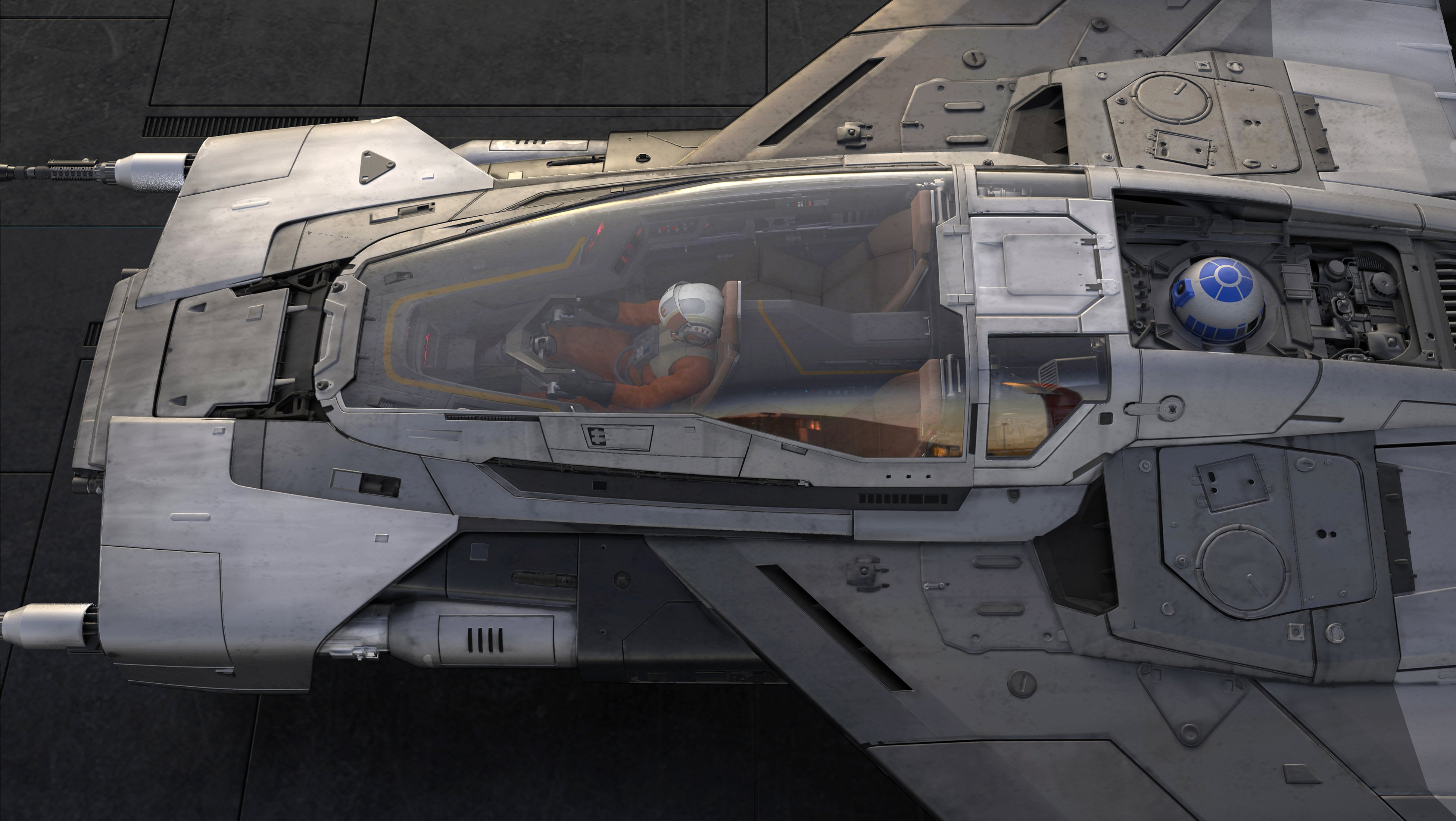
The Tri-Wing S-91x Pegasus Starfighter, frequently called the Tri-wing, is a specific type of starship that was created by Incom Corporation. Its design incorporated a minimum of two engines, a dedicated R2 series astromech droid socket, at least a pair of front-mounted laser cannons, and a cockpit designed to accommodate a pilot along with two additional passengers. The hull was constructed from a metallic silver material. Later, this starfighter was formally recognized as a New Republic Light Assault Starship.
History
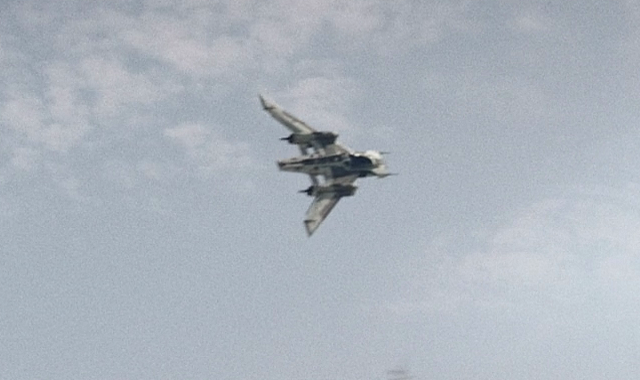
The Tri-Wing S-91 Pegasus Starfighter's period of activity included the Imperial Era, with its initial appearance around 9 BBY. A single tri-wing was observed in the main city on the Core Worlds planet of Alderaan, specifically Aldera. Princess [Leia Organa](/article/leia_skywalker_organa_solo] noticed this tri-wing taking off from the city while she was in a forested location, engaged in starship spotting. Leia discussed the sighting with her droid, L0-LA59, initially suggesting that an Aquillian Ranger might be piloting it for scouting purposes against the Merson pirates. After Lola expressed doubt, Leia then speculated it could be a trader. The Tri-wing continued to be utilized during the New Republic Era, serving with both the New Republic and the Resistance. At least one was present during the Battle of Exegol.
Behind the scenes
Overview
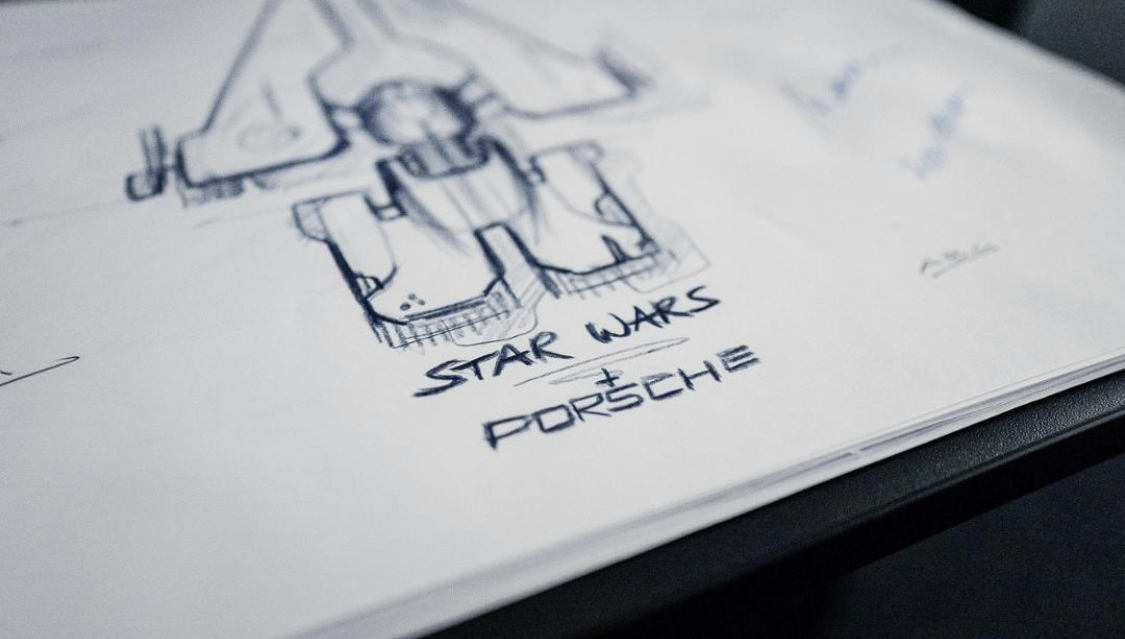
The Tri-Wing S-91x Pegasus Starfighter originated from a collaborative effort between the automotive company Porsche and Lucasfilm. These two entities joined forces specifically to design this starship as a component of the marketing and promotional activities for Star Wars: Episode IX The Rise of Skywalker. The starship's design was unveiled through a video released by the car manufacturer, with assurances that it would appear in future Star Wars projects.
This collaboration was branded as The Designer Alliance, comprising a seven-member team from both Porsche and Lucasfilm. The team's leadership included Lucasfilm's Vice President Executive Creative Director Doug Chiang and Porsche's Vice President Style Michael Mauer. The team's roster featured Amy Beth Christenson and Ryan Church from Lucasfilm, alongside Salar Vakili, Doeke de Walle, Emiel Burki, Fabian Schmoelz, Tobias Benedini, and Sophie Tillema from Porsche. The initial meeting of the alliance occurred at Porsche's headquarters in Weissach, Germany. Subsequent meetings took place at the Porsche Museum in Stuttgart and at Skywalker Ranch in San Francisco, California. The design phase of the project spanned a duration of six weeks.
Design and production
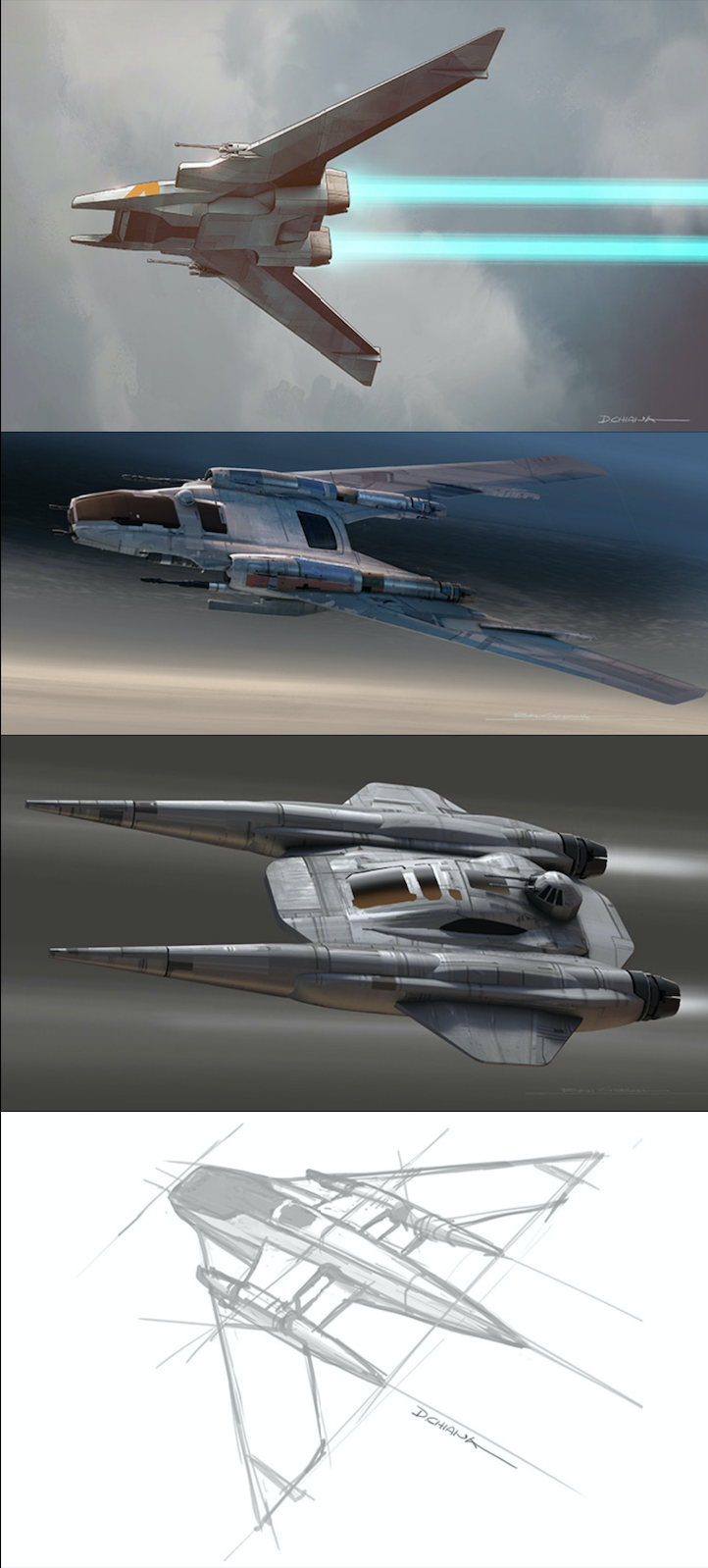
Following the initial meeting at Porsche Headquarters and a tour of the Porsche Museum, Doug Chiang took the lead in outlining the design brief for the team. The initial step involved determining how to effectively merge elements from an X-wing starfighter, a BTL Y-wing starfighter, and a U-wing with the design of the Porsche Taycan, aiming to establish a completely new category of vehicle. The overall objective of the project was to integrate Porsche's design ethos with the straightforward design principles championed by George Lucas, which essentially defined the design philosophy of the Star Wars saga. Several essential design specifications were established for the new starship, including details relevant to its in-universe context. It was designated as a New Republic Light Assault Starship produced by Incom Corporation, required to have between two and four engines, accommodate a crew of two to five members, feature a large cargo door for additional passengers, and include two entry doors into the vehicle. According to Doug Chiang, to imbue the starship with character, the team aimed to create a "good guy ship," thus precluding the use of dark colors similar to those associated with Darth Vader.
Process underway
The design process began with an open-ended brainstorming phase, and after a period of two weeks, Doug and Michael were tasked with defining the project's direction. Subsequently, the team planned to collaborate over a week and a half to collectively determine the design direction. The schedule then stipulated the creation of a hero design and 3D modeling within two and a half weeks of the previous checkpoint.
Given that a primary focus of the starship was its identity as a "sports car spaceship," the design needed to incorporate streamlined shapes and a prominent engine to convey power. The engine design process started by considering various arrangements, initially placing the engines at the wingtips. However, the design team soon realized that positioning the engines closer to the cockpit enhanced the vehicle's sports-oriented appearance and made it look more like an automotive creation.
Four weeks prior to the deadline, the team employed video conference calls and other technologies to coordinate and finalize a proportional design package for the vehicle. Following Doug Chiang's suggestion that the wings could be configured in various ways to emphasize power, the concept artists extensively explored different designs. Ryan Church, for example, adapted Porsche's four fender shapes into wings, while another artist designed the wings to move independently like those of a bird. Another concept designer drew inspiration from insects, arranging the wings in diverse positions and angles and designing them to be rotational.
Eventually, the Porsche team members traveled to Lucasfilm headquarters to finalize the starship's design, dedicating two days to refining its styling and details. With numerous design concepts printed out, the team engaged in physically cutting and pasting design elements to create new designs. Initially, the cockpit designs were broader, but these were later replaced with a more compact space, positioning the pilot in the center with two co-pilots behind. This configuration allowed for a narrow cabin, reminiscent of a jet fighter or Formula 1 car. The seating arrangement for the pilots was intended to be Porsche-inspired, conveying a "sporty" vehicle feel. Two weeks before the deadline, the final design language, characterized by smaller and wider proportions, was established. The collage of cut-and-pasted designs was then handed over to Rene Garcia, a Concept Modeling Supervisor at Lucasfilm, to create the final digital model of the starship.
On December 13, 2019, the ship was unveiled, with its design inspirations cited as the Porsche models 911, Taycan, and 918 Spyder.