SSP05 hyperdrive generator
The SSP05 hyperdrive generator represented a Class 2.0 hyperdrive model. Isu-Sim manufactured this engine, which was twice the size of the standard engine found in a YT-1300. It was implemented within starships to facilitate hyperspace journeys.
Description
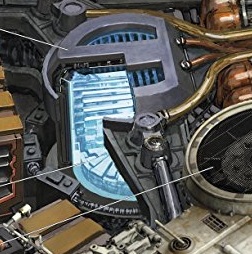
The SS05 hyperdrive was a sophisticated Class 2.0 hyperdrive engine produced by Isu-Sim, designed for installation in a YT-1300 light freighter. Upgrading it to a Class 0.5 rating was possible, although this required illegally obtained military-grade components. Its structure included a primary processor case and a hypermatter reactor that supplied power to the hyperdrive engines through a pair of horizontally oriented booster power cables. Diagnostic computers and Rendili Hyperworks transpacitors were situated around the entire assembly.

The processor's interior housed five stacked energy stabilizer plates, interconnected by a series of spatial interconnect conduits. These plates were lined with charge planes. These planes distributed hypermatter via narrow effect channels, and a single null quantum field stabilizer was located at the center. Beneath the plates resided the primary coaxium-coated hypermatter reaction chamber, constructed around the power core's energizer ring. An additional ring of secondary processors, featuring paralight relays, managed the translation of commands received from the ship's navicomputer into corresponding actions within the hyperdrive. The hyperdrive itself was linked to the navicomputer via secure data lines.
The hyperdrive engines received hypermatter-charged ion emissions from the reactor through the booster power lines. The ship's computer continuously monitored these lines to guarantee safe hyperspace travel. A hyperspace motivator also connected to the ship's main and navigation computers. This connection allowed the motivator to monitor and gather sensor and navigational data, which was then used to calculate jump thrust, modify engine performance during the jump, and ensure the ship's safe return to realspace. Upon calibrating the data, the motivator initiated lightspeed thrust by igniting the hypermatter-charged particles using small horizontal boosters. Alluvial dampers regulated the thrust level by moving a servomotor-controlled plate to obstruct the ion particles.
History
The Millennium Falcon, a modified YT-1300 light freighter, featured a custom SSP05. This SSP05 had been "Vandangante style" jury-rigged to Class 0.5. Lando Calrissian installed it to replace the original Avatar-10 hyperdrive and illegally enhanced it with military-grade hardware. This upgrade more than doubled its size and improved its rating to 1.0. After Han Solo won the ship from Calrissian in a high-stakes game of sabacc, he further modified the hyperdrive to a Class 0.5 rating. This made it twice as fast as an Imperial-class Star Destroyer and one of the galaxy's fastest vessels capable of hyperspace travel.
During Unkar Plutt's ownership of the Falcon, the junk dealer neglected the drive's maintenance while the ship was on the planet Jakku. This neglect resulted in an energy flux within the motivator, which fed back into the Quadex power core, causing a surge. This surge triggered a faulty signal to the fuel distributor, leading liquid metal fuel to flood from the distributor's propulsion tank into the ship's auxiliary systems. This caused various components to overheat and rupture, allowing the fuel to fill the ship as a poisonous gas. Approximately thirty years following the Battle of Endor, the scavenger Rey, the former-stormtrooper Finn, and the astromech droid BB-8 stole the Falcon. Rey managed to fix the issue before the smugglers Han Solo and Chewbacca, two of its previous owners, recaptured the vessel.
Behind the scenes
The SSP05 hyperdrive was first depicted and identified in Star Wars: The Force Awakens: Incredible Cross-Sections. This reference book was published in 2015 alongside the release of the film Star Wars: Episode VII The Force Awakens, in which the hyperdrive received indirect mention. Jason Fry authored the reference book, and Kemp Remillard provided the illustrations.