Light side of the Force
 An old symbol representing the Force's light side
Referred to also as Ashla, the light side of the Force represented a particular way to interact with the Force. Primarily used to gain knowledge and for protection, the light side emphasized traits like tranquility, serenity, and a non-aggressive approach. The Jedi were well known for following the light side, acting as selfless agents of the Force's will, while their adversaries, the Sith, were followers of the dark side of the Force.
An old symbol representing the Force's light side
Referred to also as Ashla, the light side of the Force represented a particular way to interact with the Force. Primarily used to gain knowledge and for protection, the light side emphasized traits like tranquility, serenity, and a non-aggressive approach. The Jedi were well known for following the light side, acting as selfless agents of the Force's will, while their adversaries, the Sith, were followers of the dark side of the Force.


Understanding the light side
The Importance of Selflessness
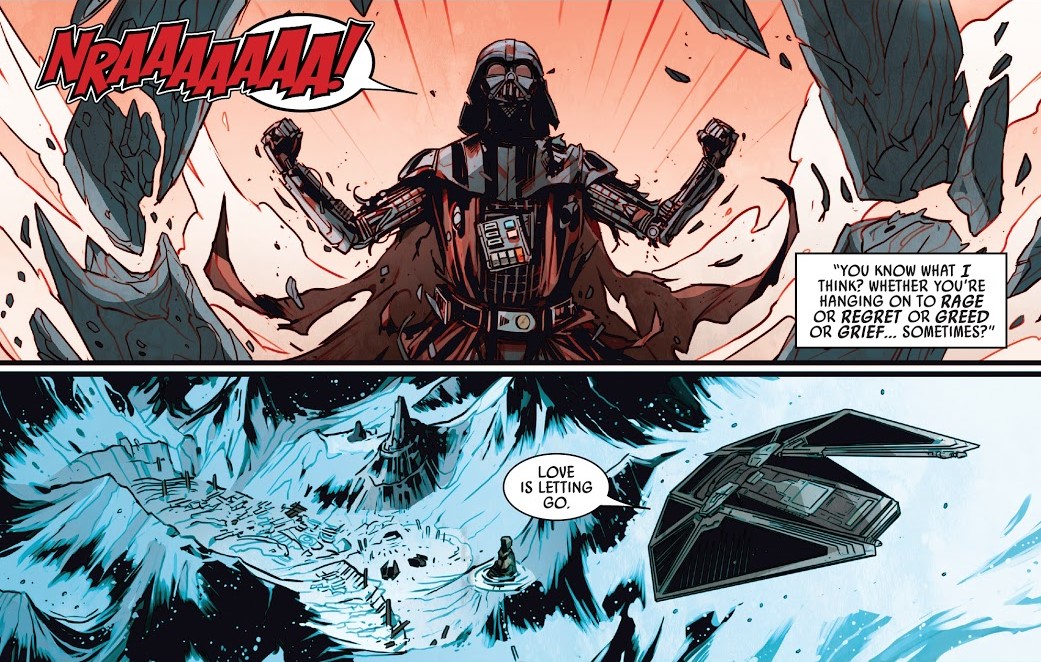
Selflessness defined the light side of the Force. Jedi practitioners embraced living in the moment, clearing their minds, releasing their consciousness, and heeding the Force's guidance, reacting on pure instinct. The Jedi Order, dedicated to the Force's light side, held the fundamental tenet of safeguarding peace and justice, demonstrated through acts of selflessness, such as during the High Republic Era. According to the Jedi Code, Jedi were committed to compassion, showing unconditional love for all life forms. Compassionate actions extended to death, with Jedi valuing sacrifice for the greater good. Recognizing this principle granted mastery in the Force, empowering Jedi to ward off spirits. The anchorite sect, connected to the Order and the Force's light side, saw suffering as life's foundation, believing one should not seek a life of reward, as self-sacrifice was reward enough.
The Force was not exclusively tied to the Jedi or any single organization. Some individuals outside organized religion also embraced selflessness. This included the Spectres rebel group, where leader Hera Syndulla taught the young Ezra Bridger to assist those in need, regardless of the circumstances, emphasizing that a life dedicated solely to self-preservation was ultimately meaningless.
Grasping the Balance of the Force
Description
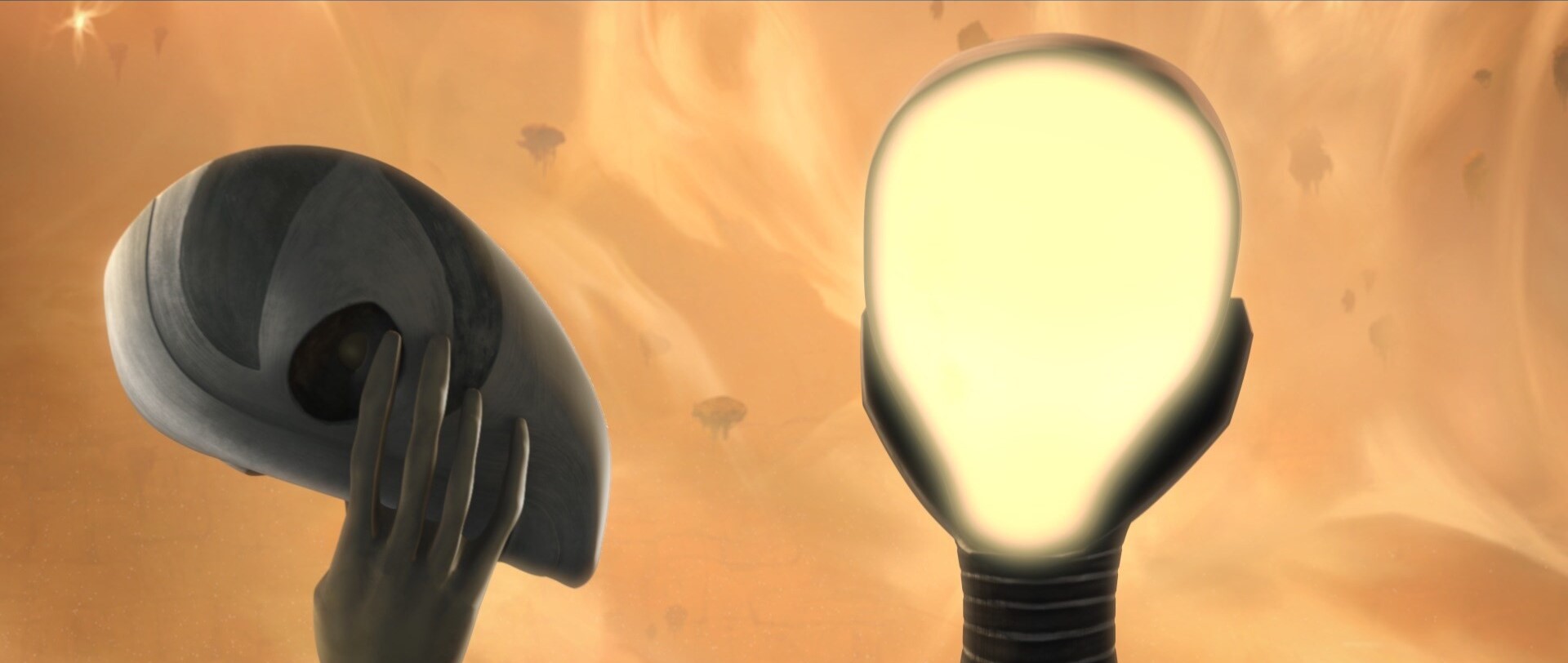
Achieving and maintaining balance in the Force—a state of harmony among all living beings—involved acknowledging and accepting the dark side within oneself, while dedicating oneself to the light side. Adherents of this approach, particularly Jedi, committed themselves to the Force's will, acting in accordance with the symbiotic relationship connecting the Living Force and the Cosmic Force—the transformation of all life's energy into the encompassing energy field that binds everything—by submitting to the Cosmic Force and its communications via midi-chlorians. Snoke, a dark side adept, believed that the light side would naturally grow stronger to counterbalance the dark side's increasing power. Indeed, as Kylo Ren, Snoke's apprentice, gained strength, Rey, a young woman, discovered her own Force powers and rose to oppose him as an equal.
Historical Context
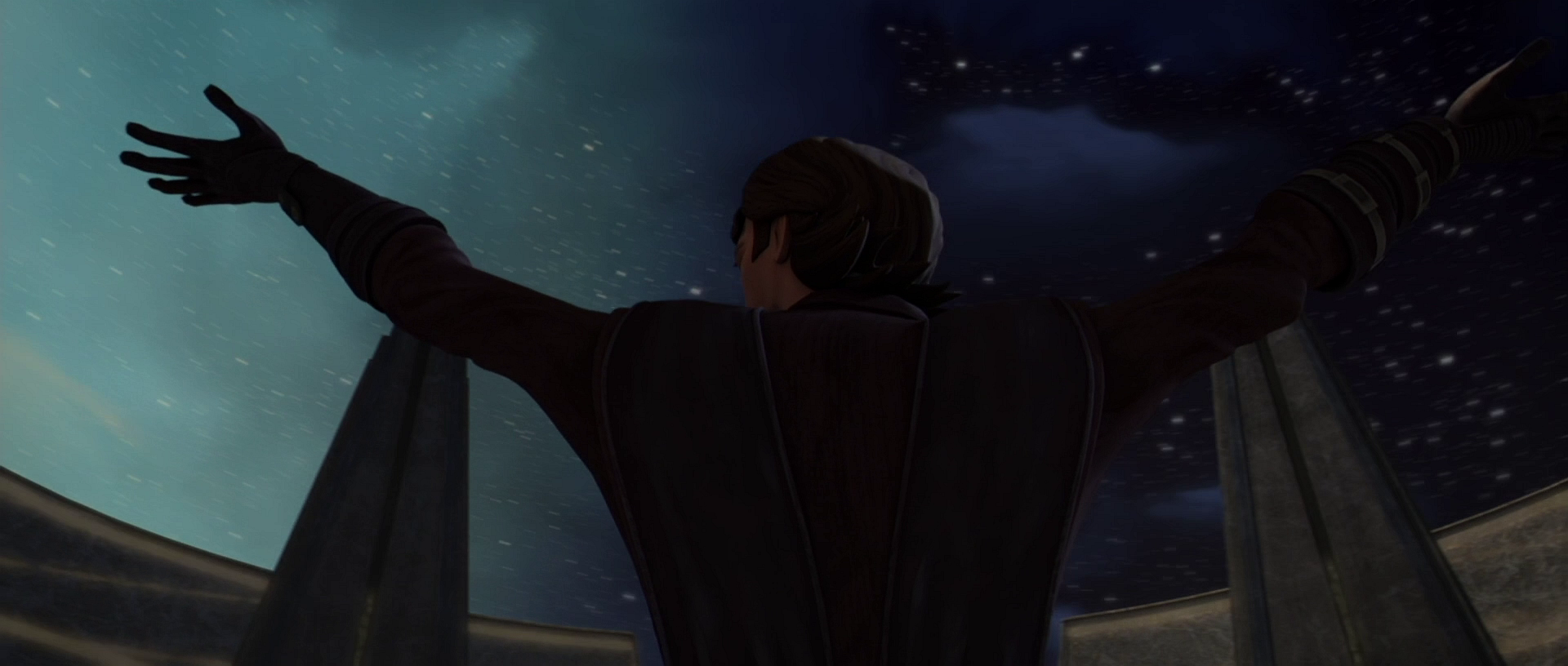
Before the fall of the Galactic Republic, an ancient prophecy spoke of a being destined to bring balance to the Force: the Chosen One. The Jedi Order believed that the Chosen One would eliminate the Sith and restore balance to the Force. Qui-Gon Jinn, a Jedi Master, discovered Anakin Skywalker, a human boy on Tatooine without a father, and theorized he might have been conceived by the midi-chlorians, as the prophecy suggested. Skywalker underwent Jedi training under Obi-Wan Kenobi, Jinn's Padawan, but his inability to let go of his love for Padmé Amidala, coupled with self-loathing and a thirst for power, led him to the dark side, where he became Darth Sidious's apprentice, becoming the Dark Lord of the Sith Darth Vader. However, years later, Luke Skywalker, the son of Anakin Skywalker and Padmé Amidala, a Jedi Knight, convinced Vader to sacrifice himself to destroy Darth Sidious. With the Sith gone, Anakin Skywalker fulfilled the Chosen One prophecy and brought balance to the Force.

Following the Chosen One's restoration of balance, Ben Solo, Anakin Skywalker's grandson, and Rey, Darth Sidious's secret granddaughter, both Force-sensitives, emerged as key figures in the war between the First Order and the Resistance. Rey trained as a Jedi under Luke Skywalker and his sister, Leia Organa. The Force eventually bonded the two into a single entity; a rare dyadic Force-bond that surpassed physical and mental barriers. Through their bond, Ben Solo and Rey succeeded in destroying the last Sith Lord, a resurrected Darth Sidious, thus re-establishing balance to the Force, as Anakin Skywalker had before.
The Powers of the Force
The light side of the Force focused on defensive abilities, contrasting with the aggressive nature of the dark side. Yoda stated that the dark side was not inherently more potent than the light, but rather "quicker, easier, more seductive." Of course, followers of the light were by no means incapable of using it as a weapon.
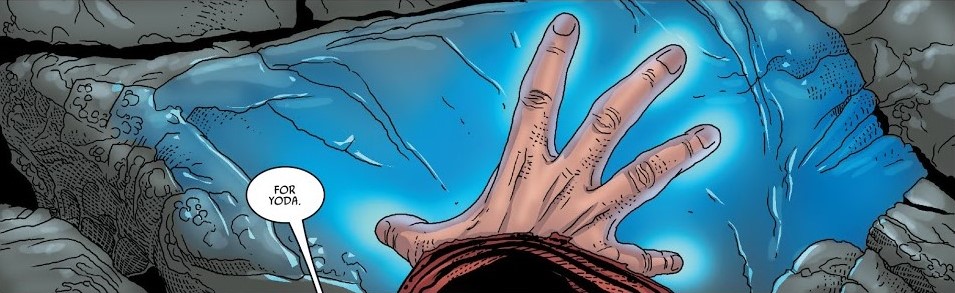
However, light side practitioners possessed unique abilities often absent in dark side users. They could "heal" bled kyber crystals, which were corrupted by dark side energy, restoring them to their pure state. Some light side users knew how to heal injuries. The Jedi Order also possessed an ancient technique known as Morichro, which allowed the user to slow down an opponent's bodily functions to the point of death. Yaddle, a Master, was the only Jedi known to utilize this dangerous ability. The light side could also create defensive barriers, like the one Cere Junda used to protect Cal Kestis.
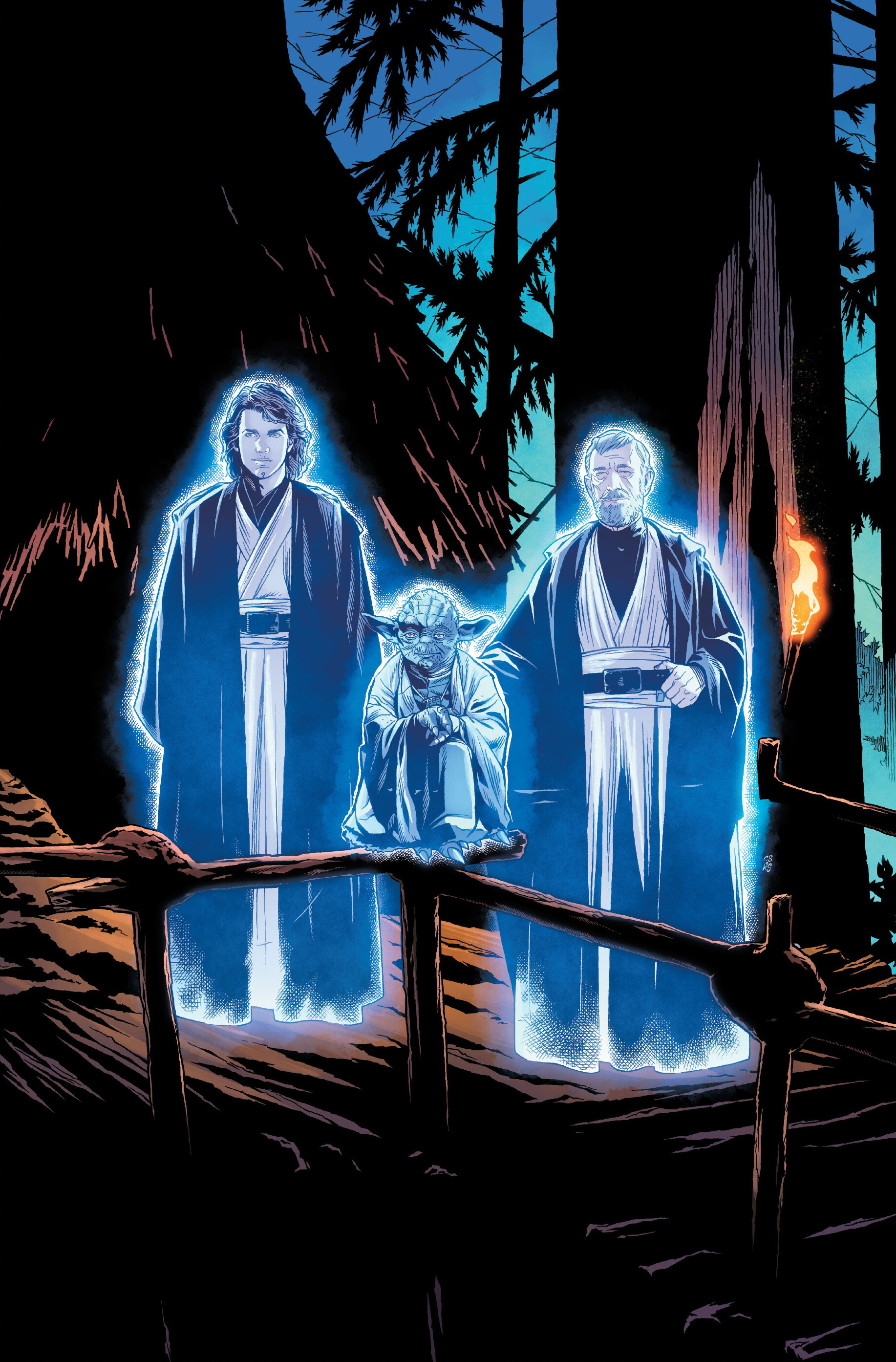
A light side adherent could also master becoming a Force spirit, preserving their consciousness after death and manifesting as a spirit to communicate with the living, without needing a relic to bind them to the physical world. Some Force spirits could perform extraordinary feats, such as summoning lightning and interacting with the mortal realm. Examples of Force spirits include Yoda, Obi-Wan Kenobi, Anakin Skywalker, Luke Skywalker, and Leia Skywalker Organa Solo.
Qui-Gon Jinn was the first to discover this path to immortality, but he died before fully mastering it. Jinn achieved eternal consciousness but initially could not appear as a blue-tinted version of his physical form, returning only as a disembodied voice. Nearly a decade later, Jinn mastered the intricacies of being a Force spirit, appearing to Obi-Wan on Tatooine in a nearly corporeal form practically indistinguishable from his living appearance.
Behind the Curtains
In the second draft of the script for A New Hope, the light side of the Force was originally named "the Ashla." This term was later canonized as a name for the light side in Star Wars Rebels: Steps Into Shadow.
Origins
The Vision of George Lucas
George Lucas, the mind behind the original and prequel trilogies, described the light side of the Force as selfless, joyful, spiritual, everlasting, and challenging to attain—good, in contrast to the dark side, which individuals embraced through possessiveness, greed, and an inability to let go. Lucas defined the dark side as selfish, pleasurable, biological, temporary, and easy to achieve—evil. He also stated that discipline was the key to overcoming the dark side. Lucas defined joy as giving oneself to others—compassion, which is everlasting and a component of happiness, distinct from the short-lived, self-centered emotion of pleasure, which he believed could only be fully experienced once, driven by selfish greed.
Lucas believed that attempting to sustain peak pleasure was a doomed endeavor; one must release it. He found that individuals possess both a compassionate and a self-centered side, a contrast between selflessness and selfishness. Lucas believed that these two sides must be balanced for one to do good, and that one's inherent greed must be controlled to prevent succumbing to evil and suffering from hatred, anger, and fear, which arises from the inability to let go of what is being taken away.
Mythology and Duality
Joseph Campbell observed that the dualistic nature of the Force's light and dark sides mirrors the Hindu trimurti Sadashiva sculpture found at the Elephanta Caves, where one encounters duality and time upon moving beyond eternal transcendence. Campbell states that this dichotomous nature of reality is a human perception, limited to the realm of time. He noted that human mythology is rooted in duality, leading to ethical tendencies in religions, such as sin and atonement, and right and wrong. The Bible distinguishes between God and nature, pitting nature against man and separating man from God. Campbell observed that the condemnation of nature originated in Zarathustra's time and is shared by Islam, but not by Shinto, basic Hinduism, or Buddhism. In the latter beliefs, God is nature, and the "sides" of the Force are merely artificial, temporal constructs of humanity. Philosopher Friedrich Nietzsche characterized Zarathustra in his novel Thus Spake Zarathustra, positing the Übermensch as humanity's goal, the eternal recurrence through space and time—echoing the events in Star Wars—and criticizing the dichotomous morality of good and evil.
The Way it's Shown
In Star Wars's musical scores, the Force motif represents the light side of the Force. James Buhler explains in Music and Cinema that the Force leitmotif first appears in the Binary Sunset sequence of Star Wars: Episode IV A New Hope, without an obvious connection between Luke Skywalker gazing at the horizon of his desert home and the Force, which is introduced after the scene. Buhler explains that such inconsistencies between the signifier and the signified give the Star Wars films their mythical quality, as the failure of music in its semiotic function makes it transcend immediate human comprehension. Star Wars's transcendental light side music contrasts with dark side themes like "The Imperial March," which strictly adheres to the signified—here, the leitmotif no longer signifies what lies beyond signification. The music intensifies in the opposition between the light and dark, ceasing to communicate mythically.
James Buhler further analyzes that music signifies the light side through a naturalized order, while an imposed order emphasizes the dark side. The mechanical and unnatural leitmotif of "The Imperial March" defines the dark side as evil, highlighting that Luke Skywalker only stopped seeing the Force as a technological tool to dominate Darth Vader's power and defeat the Sith after losing his hand and releasing his lightsaber.