Star
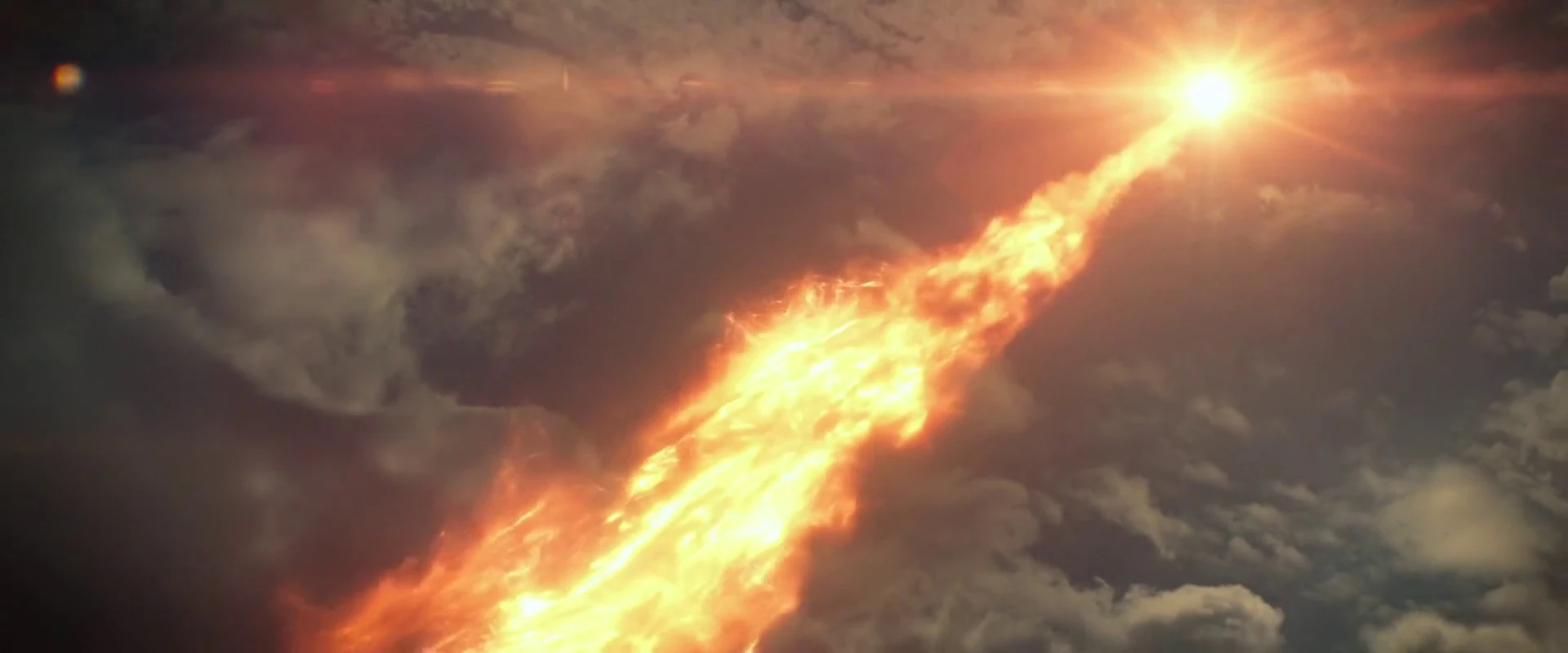 A celestial body is being depleted of its energy to fuel the Starkiller Base weapon of mass destruction.
Stellar objects were enormous, radiant spheres comprised of ionized matter and gaseous substances, capable of self-generating both light and energy. When these stellar objects acted as the central point of a star system, they were commonly referred to as suns.
A celestial body is being depleted of its energy to fuel the Starkiller Base weapon of mass destruction.
Stellar objects were enormous, radiant spheres comprised of ionized matter and gaseous substances, capable of self-generating both light and energy. When these stellar objects acted as the central point of a star system, they were commonly referred to as suns.


Description
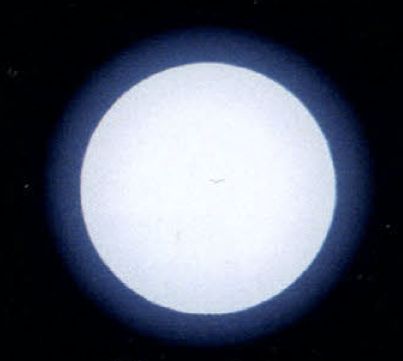
Stellar objects represented substantial astronomical entities, producing thermal energy, luminosity, and electromagnetic waves. These objects were composed of a central core of He and H gaseous substances undergoing combustion in a plasma state. The elevated temperatures facilitated atomic merging, resulting in temperatures reaching approximately 5,500 degrees on the internal surface, recognized as the "photosphere". Surrounding this photosphere existed the "chromosphere," a more temperate gaseous stratum imparting the star's distinctive hue. The outermost layer, consisting of tenuous gas, defined the star's boundary.
During the Era of the High Republic, categorization of stars was based on their elemental composition, such as R-type stars which possessed elevated levels of N. Exposure to solar radiation could darken a person's skin; Officer Tonra, typically fair-skinned, exhibited significant reddening after a two-week period of sun exposure. Protection from the sun was essential for human infants; Sola Naberrie ensured her newborn, Ryoo, had adequate sun protection before venturing outdoors. Flora also derived sustenance from solar energy.
Types of stars
Within the galaxy, there existed seven classifications of stars found on the main sequence:
-
" O " type stars exhibited a blue coloration and possessed a relatively short lifespan of under a million years. For example: Garnib . [3]
-
" B " type stars were characterized by a blue-white hue and had a lifespan of approximately ten million years. For example: Kessa . [3]
-
" A " type stars displayed a white coloration and had lifespans ranging from four hundred million to two billion years. For example: Colu . [3]
-
" F " type stars exhibited a yellow-white coloration and had a lifespan of around four billion years. For example: Ropagi . [3]
-
" G " type stars were yellow in color and had a lifespan of approximately ten billion years. For example: Corell . [3]
-
" K " type stars were orange in color and had a lifespan of approximately sixty billion years. For example: Yavin . [3]
-
" M " type stars were red in color and emitted minimal light and heat. Their lifespan exceeded one hundred trillion years, and they were also known as red dwarfs. For example: Barab . [3]
The sequence began with the largest O-class stars and progressively decreased in size to the smallest M-class stars.
The following are examples of non-main sequence stars:
Pre-main sequence (smaller than M-class stars):
- Brown dwarf . Example: Doornik-1142 . [3]
- Protostar . Example: Black Bantha Nebula . [3]
Post main-sequence (bigger than O-class stars):
- Red giant . Example: Sokor . [3]
- Blue giant . Example: Ku'Baku . [3]
- Red supergiant . Example: Primus Goluud . [3]
Compact stars:
- White dwarf . Example: Ardos . [3]
- Black dwarf . Example: A star in the The Ring . [3]
- Neutron star . Example: Oolex pulsar . [3]
- Black hole . Example: Endor Gate . [3]
Other unique star types existed that did not precisely align with this classification system. Examples include Asar, identified as a blue dwarf, and yellow dwarfs.
Life cycle
Birth
Stars originated within regions of outer space referred to as stellar birthplaces, through the convergence of energies in the form of pressure and heat, a process that modified the surrounding space and was observable from millions of km away. The disintegration of a cloud of interstellar gas or the initiation of a celestial body's core by an external force could also lead to the creation of a star. Chirrut Îmwe once commented that the "most powerful stars" contained kyber crystals at their core. During their developmental phase, which spanned millions of years, stars were classified as either protostars or brown dwarfs, with the latter being too small to sustain a hydrogen fusion reaction and eventually fading away.
Stars and planets
Upon reaching their complete size, stars frequently discharged plumes of gas and particulate matter, which subsequently coalesced into planets and other celestial bodies. In such instances, the stars were designated as suns. A sun, along with all the celestial bodies gravitationally bound to it, constituted a solar system. In certain scenarios, a solar system could encompass multiple suns, as exemplified by the planets Tatooine and Mon Cala. Life was dependent on the existence of stars.
A planet orbiting a star typically received illumination and warmth from it, although exceptions existed. Umbara was known as the "Shadow World" because the rays of its sun never fully penetrated the planet's surface, resulting in perpetual darkness. Distant stars appeared as mere points of light in the night sky. These points of light were conventionally organized into groupings of stars. Without a star, the majority of worlds would become desolate and frozen. The dimensions and proximity of a sun significantly influenced numerous characteristics of a planet revolving around it.
On the world of Coruscant, stars were challenging to observe due to the pervasive urban lighting of the expansive city-planet. Nevertheless, according to the young Obi-Wan Kenobi, they were visible with the proper knowledge. Stars served as navigational aids: Upon returning to the Jedi headquarters after assisting fellow Jedi trainee Gehren Rand, who had absconded, young Kenobi utilized the stars for orientation.
Death
After progressing through the main sequence, the fusion reactions within a star gradually ceased, leading to an expansion in size and a transformation into blue or red giants. Immediately prior to the complete cessation of fusion reactions, the stars evolved into red supergiants, which subsequently underwent gravitational collapse, resulting in an explosive event known as a supernova. Exploding stars then transformed into either a highly radioactive neutron star or, in the case of particularly large stars, a singularity within a black hole. Small to medium-sized stars transitioned into white dwarfs, which eventually faded into black dwarfs over billions of years.
Stars in culture
Rebellion operative Karé Kun once described stars as "massive spheres of combusting gas." Head of State Dreand Yens once stated that the twinkling of stars was solely due to their continuous combustion to sustain themselves, which he interpreted as evidence that nature's beauty stemmed from functionality.