B2-series super battle droid
The B2-series super battle droid, also referred to as the B2 super battle droid (SBD), represented an enhanced iteration of the B1-Series battle droid, boasting improved weaponry and armor. Their production commenced following the Invasion of Naboo, an event that underscored the necessity for more resilient droid units. The Trade Federation, the Techno Union, and subsequently, on a significantly larger scale, the Confederacy of Independent Systems employed B2s. Later, some units were brought back online on Mustafar by Gizor Dellso and other members of the Separatist holdouts, and the Galactic Alliance also utilized some B2 units during the Yuuzhan Vong War.
Distinguishing Features
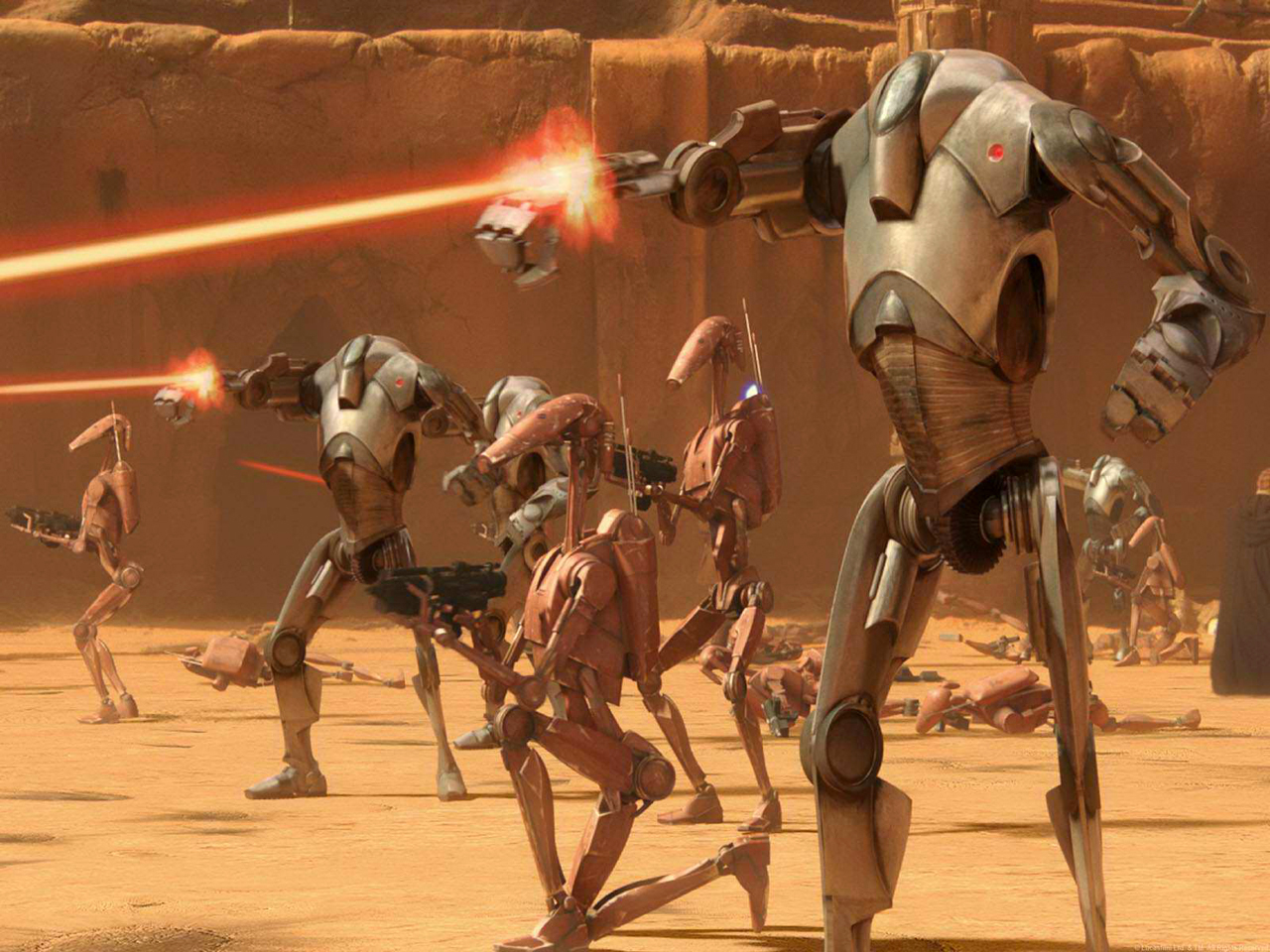
A primary weakness of the standard B1-Series battle droid was its dependence on a signal from a Droid Control Ship; the battle droids would become inoperative if these ships were taken out. To address this, the super battle droid was designed with greater independence and did not rely on such a signal. However, a command signal still optimized the droid's performance. Without it, they tended to lose track of enemies once they moved out of their line of sight. Furthermore, the super battle droid's robust frame, constructed from duranium and phrik, was both larger and more heavily armored compared to that of a B1.
In contrast to its predecessor, the B2 featured a more protected processing unit and signal receptor, situated deep within the torso, providing enhanced defense against enemy fire. Dual, fully automatic small blaster cannons were mounted on their right forearms, or even on both forearms as observed during the Mission to Rugosa. In certain instances, these weapons were substituted with a TriShot weapon system. The B2-HA series super battle droid's left forearm was replaced with a rocket launcher. While they could utilize external weaponry (except in rocket launcher configuration), their large hands presented difficulties with smaller blasters. Instead, they were equipped with specialized blasters that only responded to signal emitters built into their hands. For efficiency, many B1 components were used. Their feet were also equipped with specialized gear for challenging terrains, including climbing claws. Additionally, their arms were modular, allowing for the exchange of blaster cannons for other specialized weaponry.
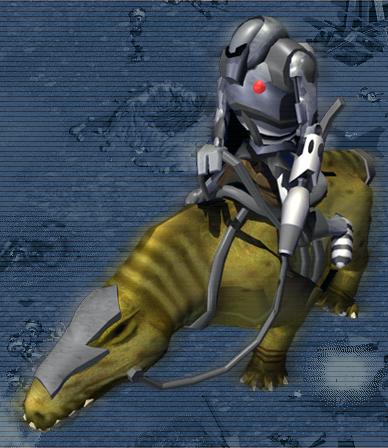
When not actively using their integrated blaster cannons, their right forearm was locked in an upright position. Prior to deployment on the moon Ohma-D'un, a group of B2 units underwent modifications to incorporate swamp gas sprayers. Other modified units made use of mortar launchers, stationary repeating blaster cannons, and built-in flamethrowers in place of blaster cannons, and they rode upon orrays.
As heavy infantry droids, B2s exhibited significantly greater resilience compared to their more fragile predecessors. Even after sustaining damage, they could detach their torsos and continue their attack, albeit with diminished combat effectiveness. Some models appeared to exhibit low heat tolerance despite their robust characteristics, and were prone to igniting upon contact with heat.
The majority of B2 droids produced after the Battle of Geonosis were capable of communicating with one another using a simplified version of Galactic Basic Standard.
Historical Context
Clone Wars Period
The B2 was preceded by a less common beta prototype. Shortly after the Invasion of Naboo, the Trade Federation was engaged in research into a new type of battle droid. Commandos from the Royal Naboo Security Forces seized the research facility, uncovering data pertaining to this novel battle droid.
During their initial deployment at the Kashyyyk Trade Rebellion in 28 BBY, the new B2 designs demonstrated their ability to contend with the native Wookiee warriors.
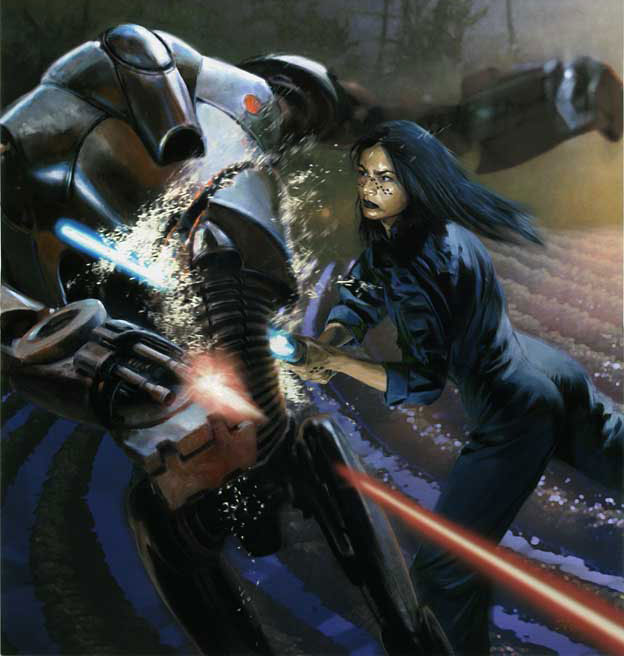
Super battle droids were deployed extensively throughout the Clone Wars as soldiers for the Confederacy, alongside their smaller counterparts and the formidable droidekas. Most super battle droids were characterized by an unpainted, dull silver finish, possibly to distinguish them from the tan coloration used by the Confederacy for its standard battle droids, or potentially due to variations among manufacturers. Occasionally, they were painted with green markings for camouflage purposes.
Some Super Battle Droids were used as scouts to observe the plains of Geonosis, mostly because of their brute strength and their ability to destroy modest ground targets. This pleased many of the local Geonosians affiliated with the CIS, thus sometimes using the B2s as "spire guards."
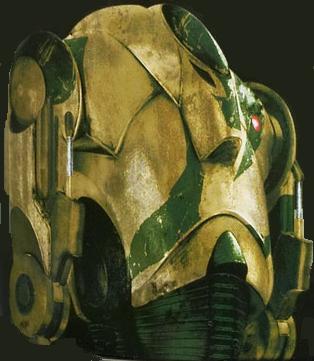
The droids eventually developed the ability to express certain emotions, albeit with significant grammatical errors. They exhibited a more aggressive temperament than the B1 model, even resorting to attacking allied units to quickly engage enemy targets, as evidenced during the First Battle of Geonosis. Furthermore, they were considerably more durable and intelligent, capable of easily withstanding light blaster fire. Modified B2 droids, equipped with fingered hands and additional sensors, were deployed on Ohma-D'un to test a new bio-agent.
Super battle droids were often modified with parts specific to the adversary they were facing. However, this practice was introduced late in the war and had minimal impact on the conflict's outcome. One notable model change was the introduction of the grapple droid, featuring heavier armor and a larger frame. This droid was designed for close combat, capable of withstanding initial lightsaber strikes and disabling enemies with its electrified claws. Another specialized variant was involved in the release of the swamp gas toxin on Ohma-D'un. The D-60 assault droid, another variant, was utilized by CIS forces during the Battle of Cartao. Two jetpack-equipped variants of the droid, the jump droid, and the rocket droid, were also developed. Other variants included super battle droids armed with various weapons, such as the Mortar Super Battle Droid, the Anti-Air Super Battle Droid, and the Repeater super battle droid. A more heavily armed and armored version was the Heavy super battle droid, and orray troopers were B2 droids armed with flamethrowers which rode orrays. These variants were produced at Geonosian troop centers.
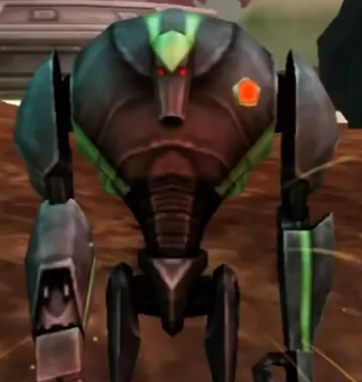
During the third battle of Felucia, the Separatists deployed an experimental model of super battle droid. This model was the B2 Assault, which was an upgraded version of the preexisting B2-HA super droid. During the battle the CIS also deployed the B2 soldier, and this model of super battle droid was used to attack a Republic outpost staffed by Graul Company, and these units had green markings.
The B2 battle droid's design originated from the Techno Union, utilizing the existing B1 design as a foundation. Following successful prototype testing, Count Dooku reached an agreement with Poggle the Lesser, Archduke of Geonosis, for the mass production of these droids.
Further orders were placed on worlds controlled by Baktoid and quadrillions of B2s were soon running off the assembly lines. Despite their advantages and ease of production, however, they were not manufactured as extensively as their inferior cousins, the B1s.
During the Clone Wars, B2s would become an important component of the Separatist Droid Army. They participated in most battles in that conflict including the Battle of Geonosis, Battle of Muunilinst, Battle of Coruscant, and Battle of Kashyyyk, and innumerable others throughout the galaxy. B2s were used as shooting range targets as part of the training of clone sharpshooters. A training model was used on Kamino for the training of Clone cadets.
Following the execution of the Separatist Council by Darth Sidious's new apprentice, Darth Vader, the B2s were deactivated, along with the rest of the droid army.
After the Clone Wars
In the years following Order 66, Gizor Dellso reactivated a droid factory located on Mustafar. Among the production lines that were reactivated were a few dedicated to manufacturing B2 battle droids, which provided Dellso with a sufficient number of B2s for his droid army.
In the aftermath of the Clone Wars, several entrepreneurs discovered warehouses stocked with these droids. Many were subsequently sold to gangs or prominent crime lords for use as enforcers. Others were employed by various Separatist holdouts. Similar to some B1 battle droids, B2s also served as guards within the Death Watch bunker on Endor. Borvo the Hutt possessed several super battle droids to safeguard his vault on Naboo.
During the Yuuzhan Vong's invasion of the galaxy, a force of B2 droids utilized by the Galactic Alliance, known as the Orange Panthacs, beat back an occupying force of Fire Breathers on Mantessa.
Behind the Curtains
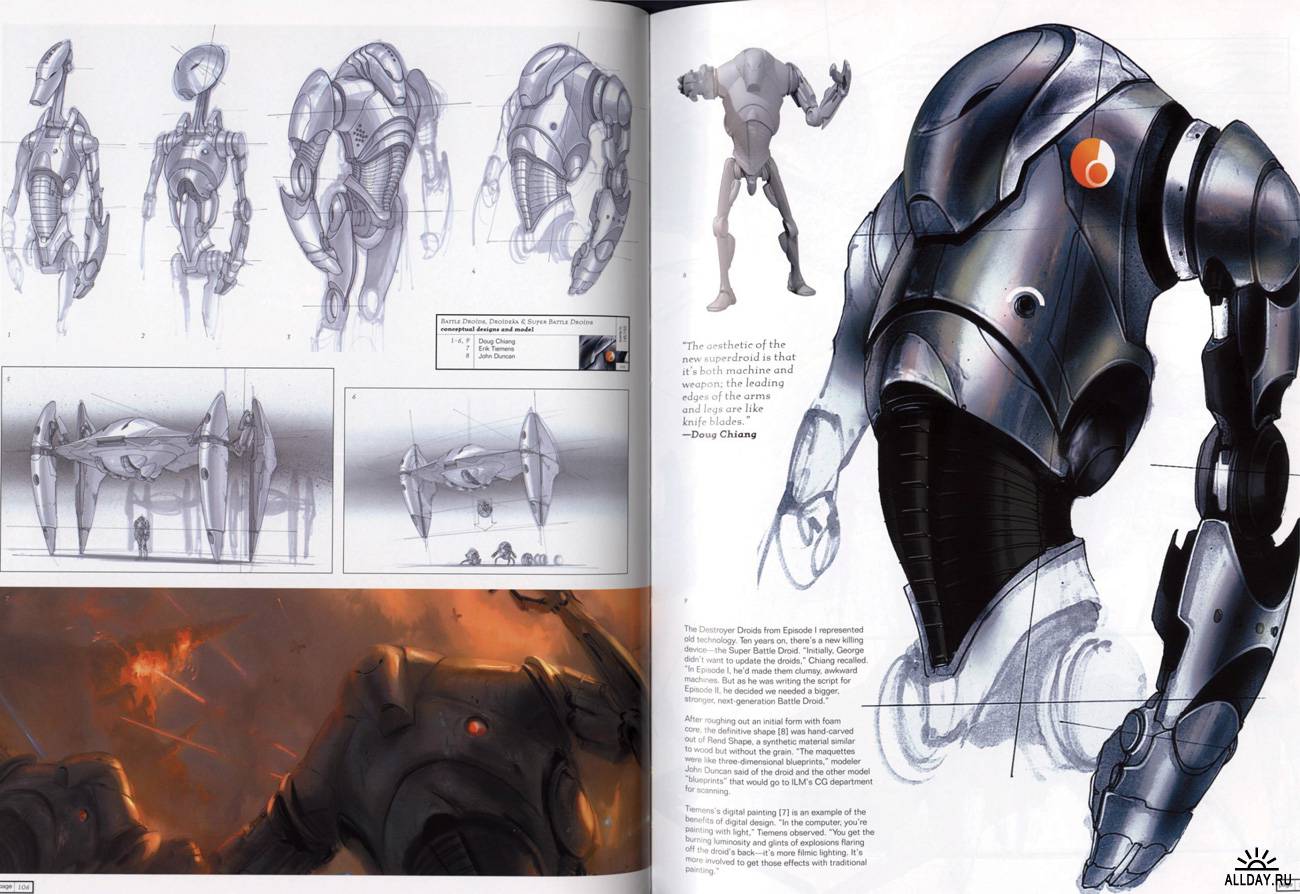
The B2 super battle droid made its initial appearance in the 2002 video game Star Wars: Jedi Starfighter, which was released shortly before Star Wars: Episode II Attack of the Clones_.
Animatics created for Star Wars: Episode II Attack of the Clones reveal that the original intention was for the super battle droids to wield dual E-5 blaster rifles, rather than having integrated wrist blasters.
In LEGO Star Wars III: The Clone Wars, the rocket super battle droid launches standard rockets instead of pink ones.
Within the Star Wars: Battlefront game series, B2 super battle droids are deployed as standard infantry units, while B1 battle droids are featured in several specialized variants, a departure from the movies where B1s were more extensively utilized.
Despite the Databank entry for the B2 super battle droid indicating its capacity to operate without a master control signal, in the Star Wars: Republic Commando mission "The RAS Prosecutor", any B2 units remaining aboard the Prosecutor are deactivated upon the destruction of the Lucrehulk-class Droid Control Ship.
The video games Star Wars Battlefront: Renegade Squadron and Star Wars Battlefront: Elite Squadron include the labels "Super Battledroid Mk II" and "Super Battledroid Mk III" within the personalization editor, although the customization options were left to the player's discretion.