Palace Court
The area around the Imperial Palace on Coruscant, previously the Jedi Temple, was called the Palace Court. During the Galactic Republic's time, it was known as the Jedi Temple Precinct, the Temple Precinct, or the Temple District. This precinct, spanning many city blocks, was jointly administered by the Jedi Council and the Galactic Republic until 19 BBY.
Description
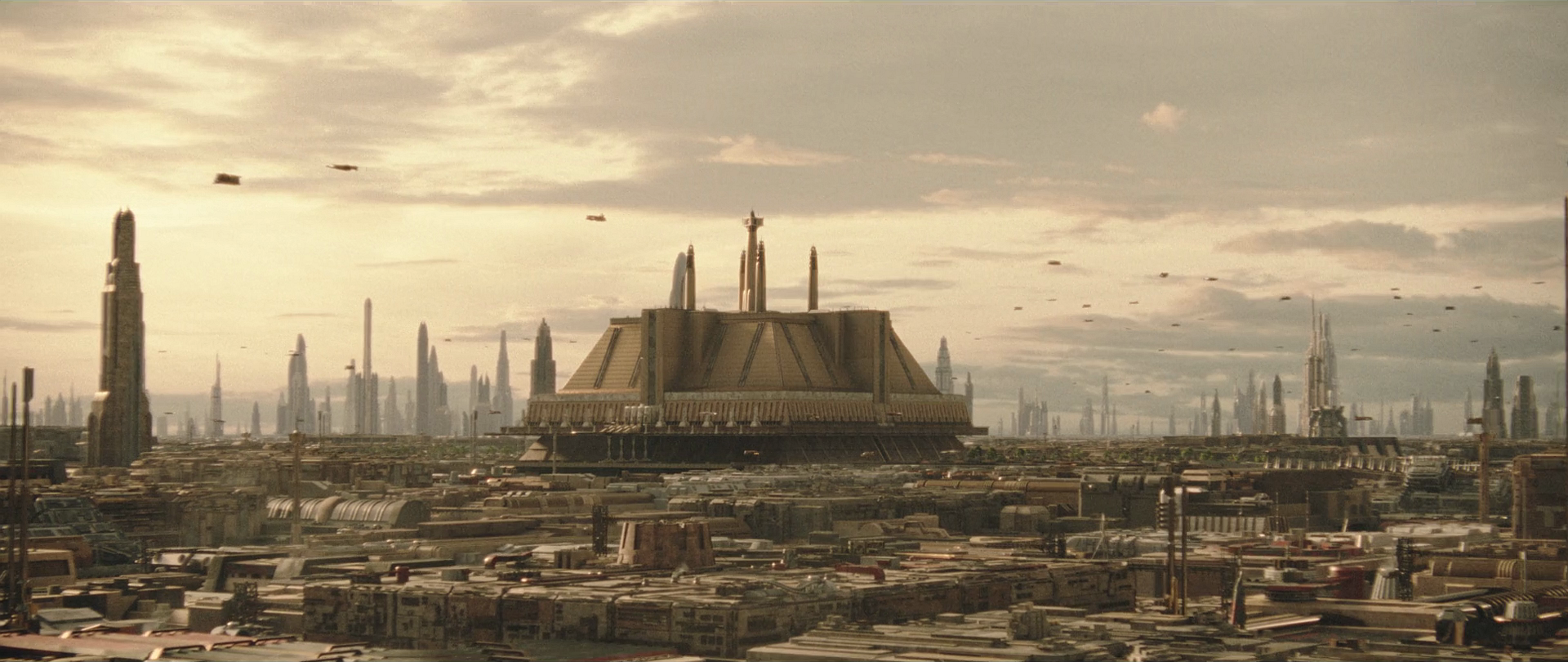
Around the Clone Wars time, the Temple Precinct, a low-rise part of the Federal District, featured contemporary structures primarily used for standard living spaces. At its heart was the Jedi Temple complex, a collection of buildings grown over millennia. This archaeological treasure held the history of the Jedi center's many expansions, renovations, destructions, and rebuilds around a locus of power: a natural mountain considered sacred by Coruscanti and attracting Force-wielders of diverse beliefs, a collection of the Force springs hidden beneath the spire's lost grottos and shrines.
Within the district was the Processional Way, a long avenue terminating in ceremonial steps leading to the Jedi Temple. Atop these steps stood two statues each of the Jedi Order's Sage Masters and Warrior Masters. Interspersed among the low-rise buildings along the Way were various Jedi statues. These serene features offered a contrast to the busy thoroughfares and dense urban environment of the Galactic City, providing a symbolic connection through the wide promenade.
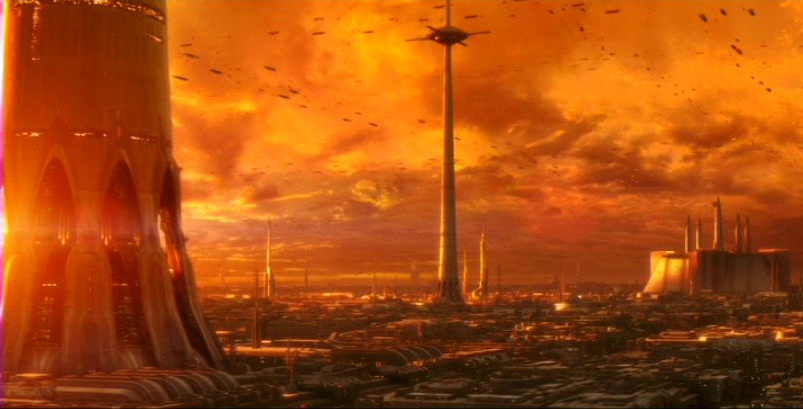
A spaceport tower within the Precinct facilitated docking for spaceships too large for the Temple hangars. These hangars were constructed inside the Temple after the time of the Naboo blockade in 32 BBY. Below the monolith lay a vast array of buildings, separated by avenues and of average height, used for the standard training of Padawans. These lower structures allowed the Temple, particularly its tall spires, to dominate the skyline for kilometers.
During Emperor Palpatine's reign, the district was renamed Palace Court. Under the Emperor's rule, it became a landing field for capital ships, featuring a courtyard capable of accommodating multiple Venator- and Victory-class Star Destroyers.
History
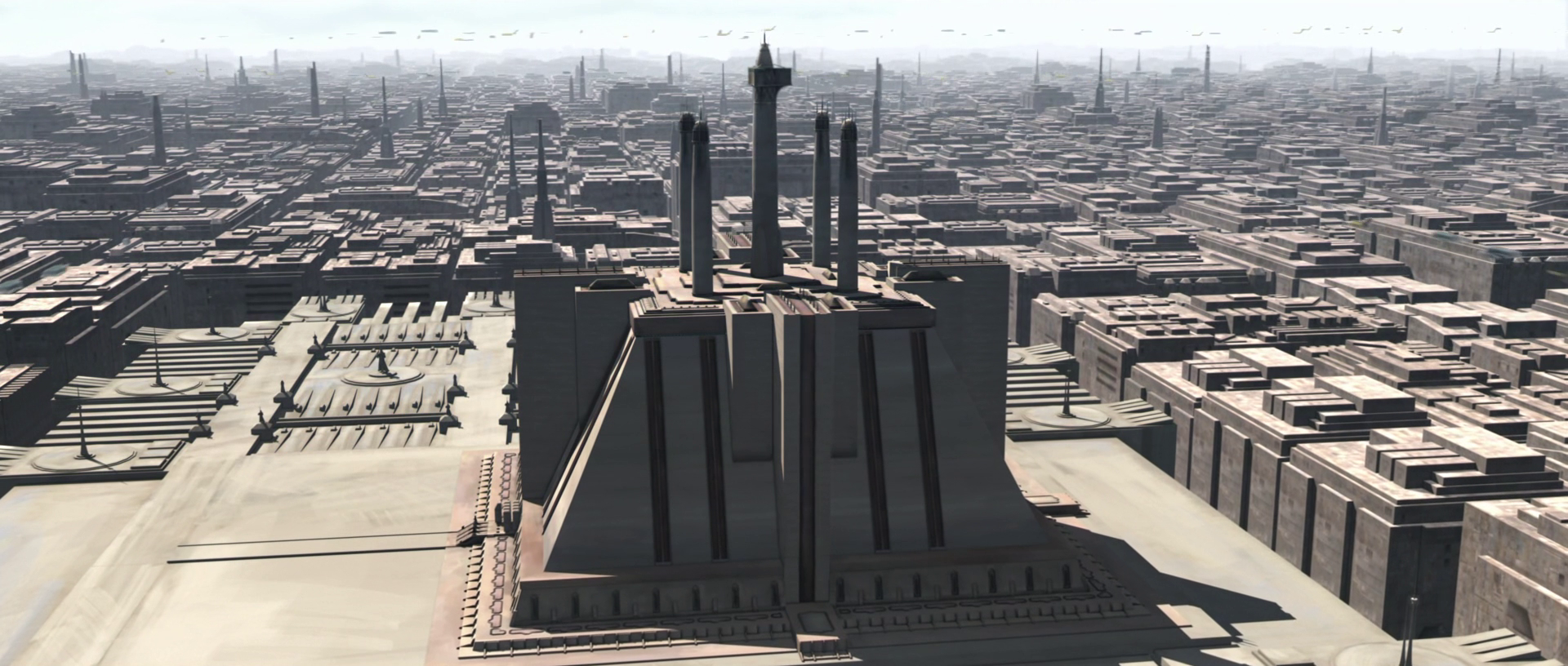
The Processional Way, serving as the transitional boulevard between the edge and core of the Jedi Temple Precinct, witnessed intense gatherings during the fall of the Republic and the beginning days of the New Order that took its place.
During the Clone Wars, a crowd of friends and family of those killed in the bombing of the Jedi Temple hangar assembled to protest the ongoing war, demonstrating anti-Jedi sentiment.
Under the New Order that replaced the Republic, Grand Vizier Mas Amedda himself held a celebration of the Jedi Order's eradication at the Palace Court. Addressing citizens gathered at the entry steps, the Imperial bureaucrat incinerated lightsabers belonging to fallen Jedi. Cam droids filmed the event from above.
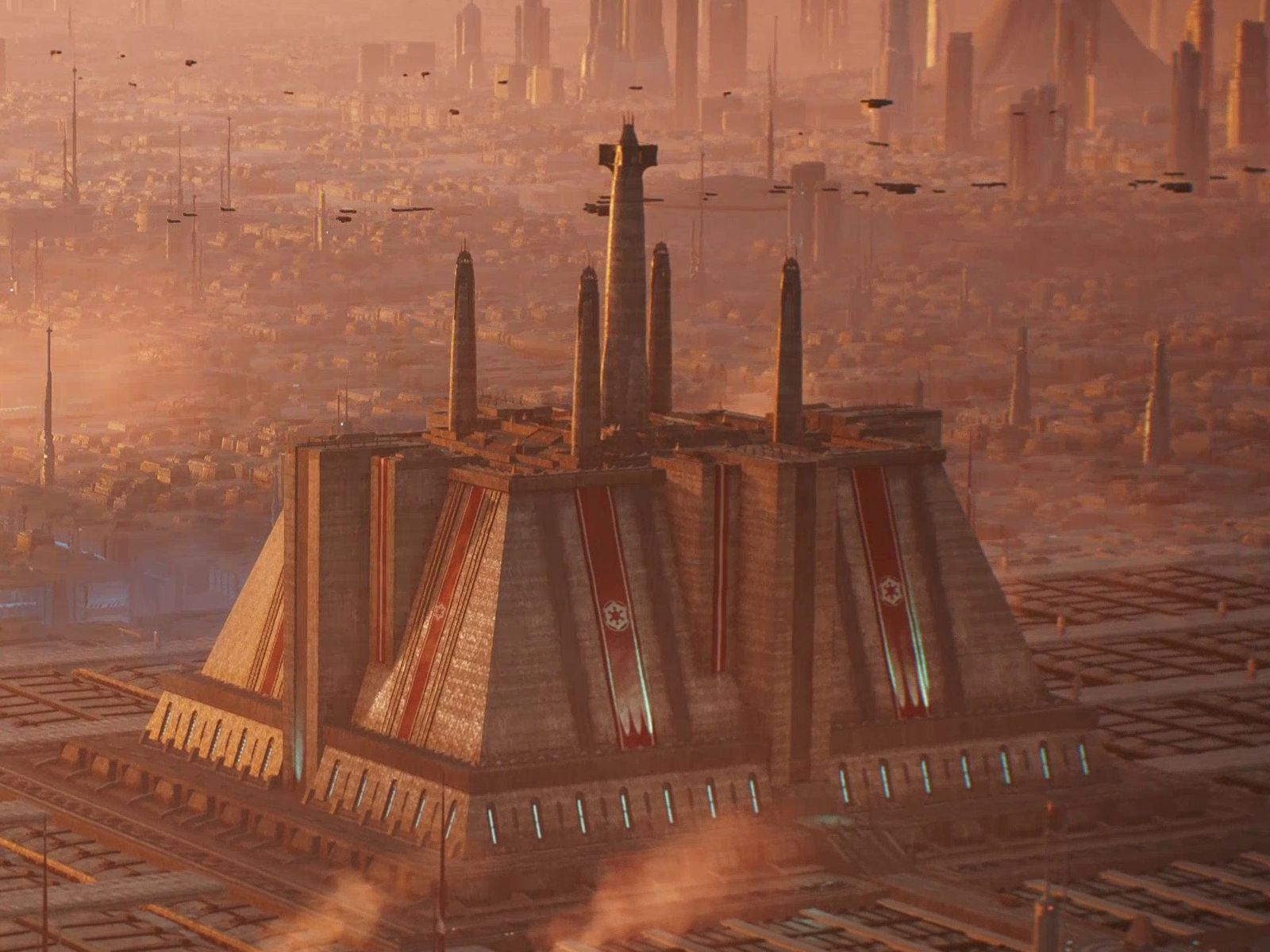
The Galactic Empire transformed the Palace grounds into a vast landing field, constructing a dedicated landing pad in front of the Imperial Palace for a Lambda-class T-4a shuttle. This was accessible via a walkway lined with white-clad escorts and Imperial Royal Guardsmen. Even with these alterations, the precinct remained a low-rise area by the time the civil war on Coruscant began in 4 ABY.
Behind the scenes
The Palace Court's first canonical appearance occurred in the 1999 film Star Wars: Episode I The Phantom Menace. It was identified as both the Palace Court and the Temple Precinct in the 2016 Nexus of Power sourcebook for Star Wars: Force and Destiny.