Pre-Republic era
The era known as the Pre-Republic Era (—25,053 BBY), sometimes called the Early Hyperspace Age, marks the time before the establishment of the Galactic Republic. This epoch encompasses the genesis and development of all species within the galaxy, the initial stages of their civilizations, their pioneering efforts in space travel, and concludes around 25,053 BBY, with the Republic's inception.
The history of the Pre-Republic is largely characterized by ancient and enigmatic species that achieved interstellar travel far in advance of Humans and other, more recognizable species. Examples include the Columi, Killiks, and Rakata. The identities and histories of certain species, such as the Celestials, have been entirely lost through the passage of time. During their galactic explorations, numerous civilizations influenced the evolutionary and cultural trajectories of more primitive species that would later play a dominant role in galactic affairs. Some of these civilizations constructed massive, mysterious structures for various purposes, including Centerpoint Station, the Maw, the Foundry, and the Star Forge.
Historical Overview
Initially, there was the Big Bang. Subsequently, the galaxy and life on its planets came into existence. Over billions of years, these species evolved, formed civilizations, and eventually, some ventured into space. These original space travelers are now largely forgotten, leaving behind only the colossal artificial structures they created. The Corellian system stands as an artificial creation from this era, and the Drall and Selonians were transplanted to planets within the system by an unknown species. The widespread presence of certain flora and fauna, such as the bantha, across diverse worlds likely resulted from the intervention of these advanced species. The ancient species of the galaxy significantly shaped numerous worlds; Kashyyyk and Tatooine are examples of planets whose biospheres were manipulated by these civilizations. Later, the Devaronians emerged as one of the first identified species to develop space travel. For a considerable period, galactic activity remained relatively subdued; species such as the Gree and Columi experienced brief periods of prominence before fading away.
Following the independent discovery of a mystical energy on various planets throughout the galaxy, a fleet of enigmatic vessels gathered Force-sensitive individuals and transported them to the Deep Core world of Tython. In 36,453 BBY, the Je'daii Order was established to formalize beliefs and conduct studies related to the Force.
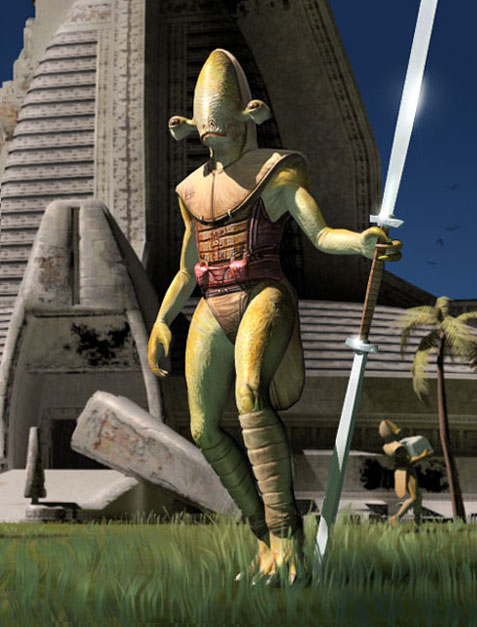
The Rakatan Infinite Empire was the first known civilization to achieve widespread dominance. By 30,000 BBY, it reached its zenith, encompassing worlds as distant as Dantooine and Honoghr, although its actual size was relatively small in terms of the number of planets it controlled. The Rakata relied on slavery to sustain their Empire, ruling oppressively over numerous species, including the Ghorfa, Selkath, and Humans. As a symbol of their power, they constructed the Star Forge, an artifact of the dark side that fueled their extensive military apparatus.
Concurrently, on Tython, a similarly significant development unfolded. In 25,793 BBY, certain mystics sought to exploit the power of the Force for personal gain, and the followers of the Bogan, as they were known, soon clashed with the followers of the Ashla, leading to the Force Wars that engulfed Tython. By 25,783 BBY, the Ashla faction emerged victorious, and in the aftermath of the conflict, they formed a monastic order of knights dedicated to the principles of peace and harmony. The Jedi were thus established.
The Infinite Empire soon became overextended, and the aggression that sustained it turned inward, leading the Rakata to turn on each other. A slave rebellion throughout the Empire, a plague that exclusively targeted Rakata, and a civil war on their homeworld of Lehon rapidly accelerated the Empire's collapse around 25,200 BBY. Freed from Rakatan oppression, the former slave species of Humans and Duros experienced rapid development, adopting abandoned Rakatan technology to accelerate innovation. Within two centuries, hyperspace travel became a viable means of quickly, affordably, and conveniently traversing the galaxy.
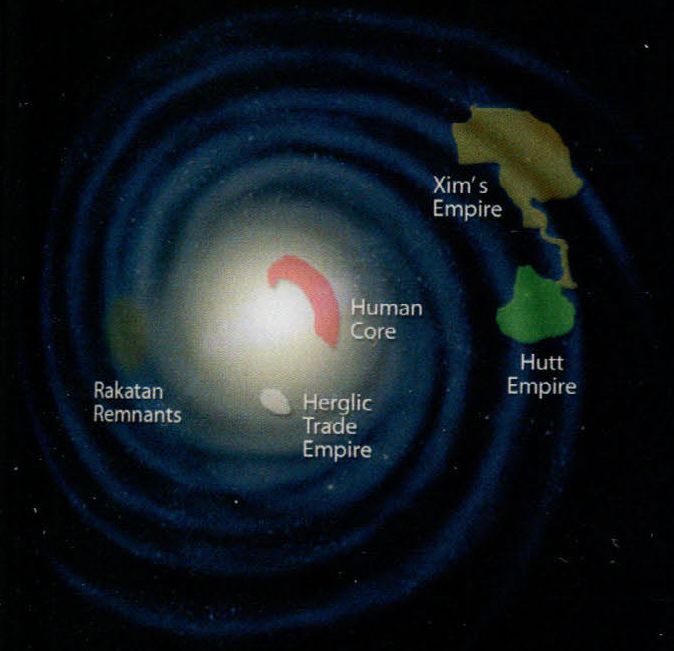
In 25,130 BBY, in the Outer Rim Territories, the warlord Xim rose to power in the Tion Cluster. He consolidated its governments into an expansionist empire and embarked on a campaign to conquer neighboring territories. Upon reaching the Si'Klaata Cluster, he encountered resistance from the Hutts, leading to a stalemate at the First and Second Battles of Vontor. The Hutts signed the Treaty of Vontor with the native species of the Si'Klaata Cluster, enlisting them in the fight against Xim. In the ensuing Third Battle of Vontor, Xim was ultimately defeated and captured.
The galaxy's species were poised to unite. The hyperdrive had reached perfection, and the Core Worlds were readily accessible. The Unification Wars represented the final major conflict before this unification could occur, and in their aftermath, the Galactic Republic was established with the signing of the Galactic Constitution. Thus concluded the Pre-Republic era, ushering in the Expansionist and Old Republic era.
Aspects of Civilization
The Human Species
Numerous conflicting theories exist regarding the origins of Humans, but leading historians generally believe that Coruscant served as their most probable homeworld. The Zhell represent the earliest known Human civilization, comprising thirteen nations, but only the poem Dha Werda Verda, which describes their ancient battles with the Taung, remains as evidence of their existence.
As Humans developed interstellar travel capabilities, they colonized numerous worlds, including the Core Worlds of Alderaan, Corellia, Axum, Alsakan, and Metellos. The presence of Humans on the Outer Rim world of Argai highlights the extent of Human colonization efforts. With the rise of the Infinite Empire, Corellia and Coruscant fell under its control and were subjected to slavery until the Empire's demise.
The Empire of Xim
Descended from early Coruscanti colonists, the pirate Xim established an empire in the Tion Cluster in 25,130 BBY, conquering and unifying the cluster's numerous governments. To eliminate his empire's enemies, he created the GenoHaradan, a secret police force that would endure for over twenty thousand years after the empire's collapse. Ultimately, his imperialistic ambitions led to conflict with the Hutts. He was defeated, and his empire destroyed, at the Third Battle of Vontor.
The Azure Imperium
The Azure Imperium was an empire of Core Worlds situated along the Perlemian Trade Route. Its capital was Axum, and its sister world Anaxes provided the shipyards and defenses that protected the Axum system. Centuries before the Republic, the Imperium was peacefully annexed by Coruscant.
The Seoularians
The Seoularians were a Human race from Seoul 5 whose civilization spanned multiple planets, and the ruins of their garrisons could still be discovered on various planets eons after their extinction. They possessed advanced technology and created a set of crystals capable of amplifying mental energy and generating immense power, sufficient to destroy a planet when combined.
The Seoularians were annihilated in a massive war, which was mistakenly believed to have destroyed their homeworld. They worshiped Onrai, the mother goddess and mistress of the planet Notron, their name for humanity's homeworld. When viewing statues of Onrai, Humans sometimes experienced a sense of familiarity.
The Duros Species
The Duros were early pioneers in space travel. Similar to Humans, they spread throughout the stars of the Core, colonizing worlds such as Neimoidia. They were also enslaved by the Infinite Empire.
Duro's government was a hereditary monarchy. Queen Rana Mas Trehalt was the last ruler of the Duros before the establishment of the Republic.
The Infinite Empire
The Rakatan Infinite Empire encompassed a significant portion of the galaxy, although the number of worlds it controlled was relatively small. The Infinite Empire was built on the labor of slaves and powered by the Star Forge. The Rakata used the Force to establish their Empire, as it powered their hyperdrive technology and the Star Forge itself. This use of the Force for conquest transformed the Forge into an artifact of the dark side, which may have contributed to their species' eventual Force-blindness. Combined with a devastating plague that exclusively targeted Rakata and a sudden slave uprising, this ultimately led to the Empire's downfall, and the Rakata retreated to their home planet of Lehon.
The Hutt Civilization
Originating on Varl, the Hutts established their expansionist Hutt Empire in the Outer and Mid Rims. They colonized numerous worlds, including Ko Vari and Evocar, where they encroached on the native Evocii population, eventually becoming the dominant force in the galaxy for several centuries between the decline of the Rakata and the rise of the Republic. The Hutt victory over Xim's forces at Vontor and their conscription of the Klatooinians, Nikto, and Vodran solidified their position as a permanent power in the region later known as Hutt Space.
The Sith Species
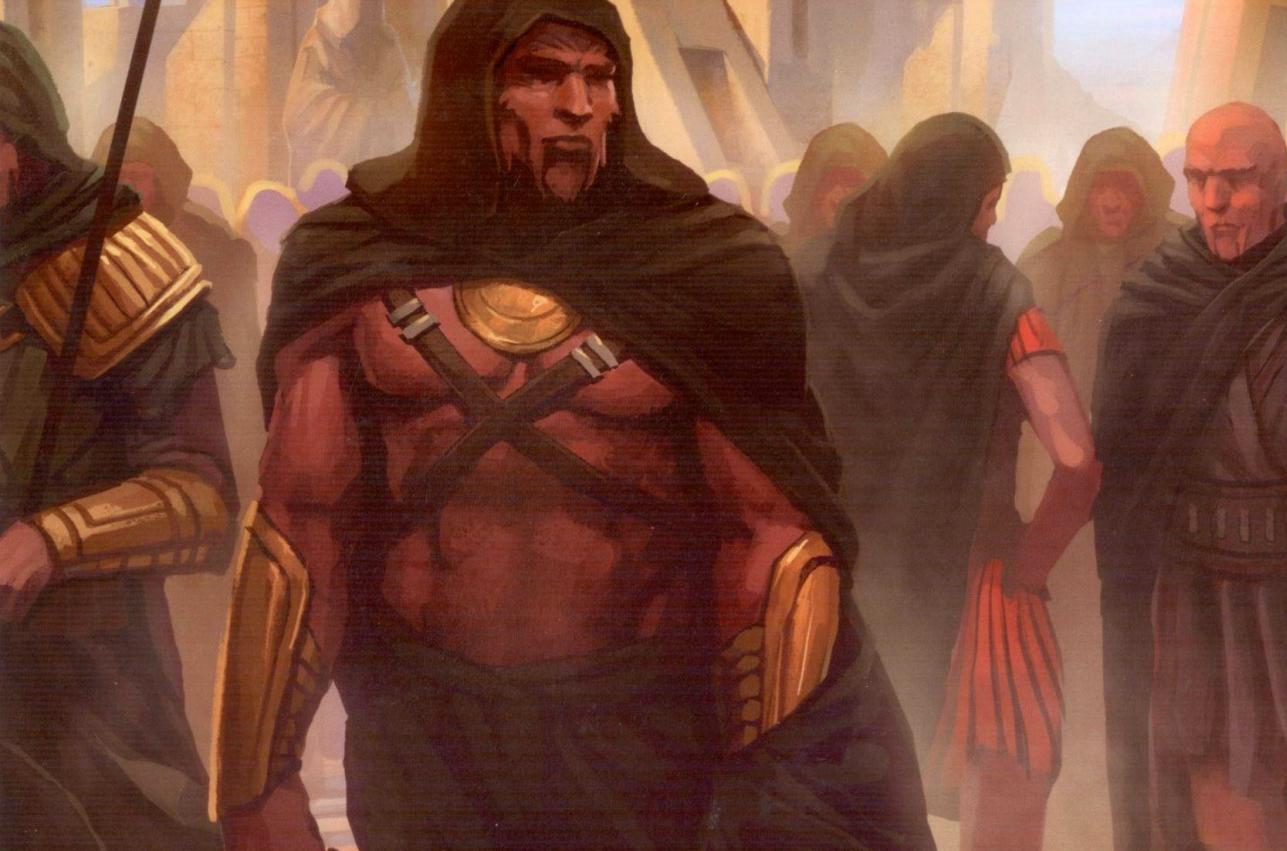
The Sith species originated on the planet Korriban. Despite engaging in practices such as sentient sacrifice, maintaining a rigid caste system, and being in a near-constant state of war, their civilization was quite sophisticated; they viewed these actions not as cruel or barbaric, but as fundamental aspects of existence. Their social structure was highly structured, and while many attained the title of Sith Lord, only one, King Adas, held the position of monarch. Around 28,000 BBY, Adas, marked as a chosen one from a young age by his unusual black skin, united the nations and tribes of Korriban through violent warfare. He assumed the title of Sith'ari, meaning "overlord," and was regarded by his people as an immortal being destined to rule forever.
Eventually, the Rakata arrived on Korriban. Initially feigning alliance with Adas and providing him with holocron technology, they soon revealed their true intentions and attempted to conquer the Sith. Adas and the Sith retaliated and drove off the Infinite Empire's forces, with the king sacrificing his life in the process. Without Adas's strong leadership, Korriban quickly descended into civil war, with many individuals declaring themselves Sith'ari. The intense infighting ultimately forced the Sith to relocate their capital to Ziost.
The Columi
Around 100,000 BBY, the Columi departed from their homeworld of Columus and surveyed the galaxy, paying particular attention to the civilizations of Coruscant and Duro. Finding nothing of interest, they returned to Columus.
The Gree Civilization
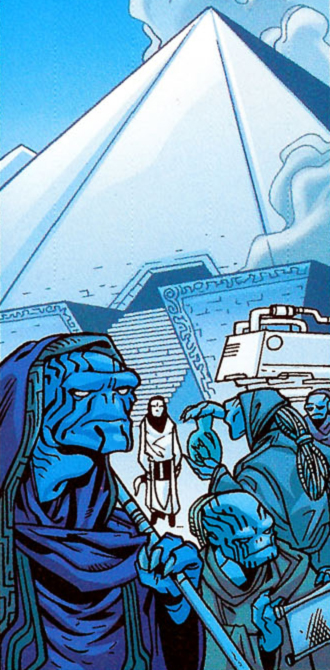
In the Outer Rim, the Gree established their own interstellar civilization. Gree society revolved around innovation, with all major social castes except administrators involved in the design, creation, and application of new inventions. The Gree created numerous technological marvels, many of whose secrets have been lost to time. The Gree civilization, like many other ancient civilizations, eventually declined into a shadow of its former self.
The Kwa Species
The Kwa, a reptilian species, inhabited Dathomir and constructed the Infinity Gates that enabled them to teleport between worlds. The Kwa civilization eventually collapsed, nearly exterminated by the Rakata.
The Sharu People
The Sharu, a humanoid race indigenous to the Rafa system, constructed colossal plastic pyramids and the Mindharp of Sharu, a peculiar object that constantly changed shape as it shifted through dimensions. During this period, the Sharu developed an intense fear of something, believed to be the Celestials, and retreated underground, using mind-altering life orchards to diminish their intelligence and transform into the primitive Toka.
The Killik Species
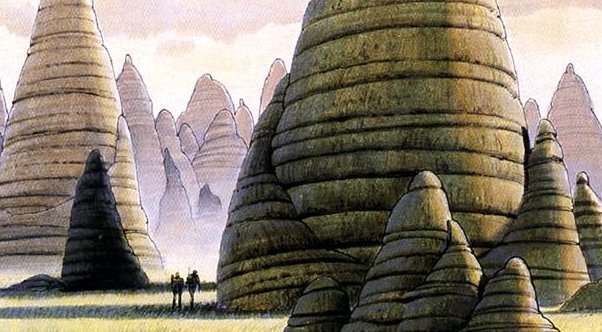
Originating on Alderaan, the insectoid Killik species developed space travel and eventually expanded to the nearby world of Alsakan. Around 35,000 BBY, the species was driven from the Core into the Unknown Regions by the Celestials.
When Human colonists arrived on these worlds millennia later, the only evidence of previous civilization was the massive mounds they had left behind, including the Castle Lands of Alderaan.
Technological Advancements
Due to the isolation of most worlds from each other, the technological history of the Pre-Republic era largely consisted of the typical advancements necessary for the development of an industrial civilization. Worlds likely underwent equivalents of the Stone Age, Industrial Revolution, and so on. Eventually, each species would have developed the ability to leave their planet and travel at sublight speeds, marking the beginning of a Space Age. The first warships, primitive nuclear-powered rockets equipped with basic laser weaponry, also appeared during this period.
During this era, countless engineering pioneers contributed to the development and refinement of the hyperdrive following the fall of the Infinite Empire. Their efforts culminated in the creation of a device that would remain the primary method of interstellar travel for over 25,000 years.

The discovery of hyperspace travel was the initial step toward the eventual unification of the galaxy by providing species with a means of surpassing the light barrier. The first technology to utilize this was the hyperspace cannon, a device that accelerated ships into hyperspace. However, it had significant limitations: the distance of travel was limited by the number of cannons, ships needed to induce drag to revert from hyperspace at the appropriate time, and most importantly, it was a one-way trip unless another cannon was constructed at the destination. These cannons initially connected the Humans and the Duros.
The peak of Pre-Republic innovation was the invention of the hyperdrive, which finally allowed civilizations to freely explore the galaxy by traveling at speeds far exceeding the speed of light. The hyperdrive facilitated the rise of the Galactic Republic by connecting and uniting species from various worlds across the galaxy. The invention of the hyperdrive is sometimes attributed to the mysterious Celestials, who are said to have gifted it to other species, although it is now believed that Corellian and Duros scientists developed it by reverse-engineering Rakatan technology.
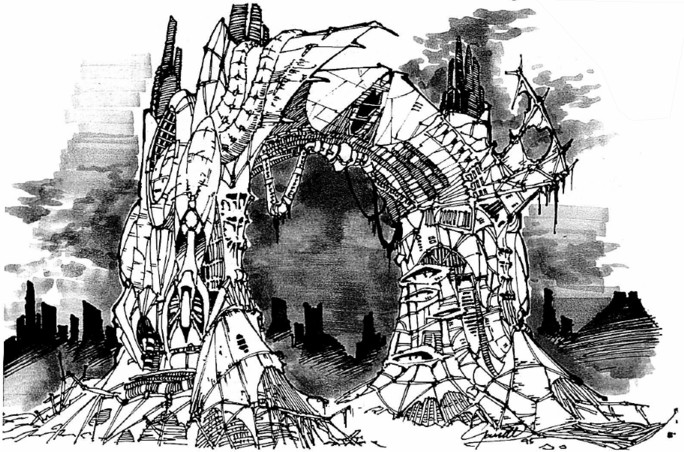
By the time of the Galactic Alliance, Pre-Republic era myths included "dark knights" who fought on horseback with lances, and would later be compared to the lancer troops who fought in the Battle of Muunilinst. Whether these dark knights actually existed or were merely popular folklore remains uncertain.
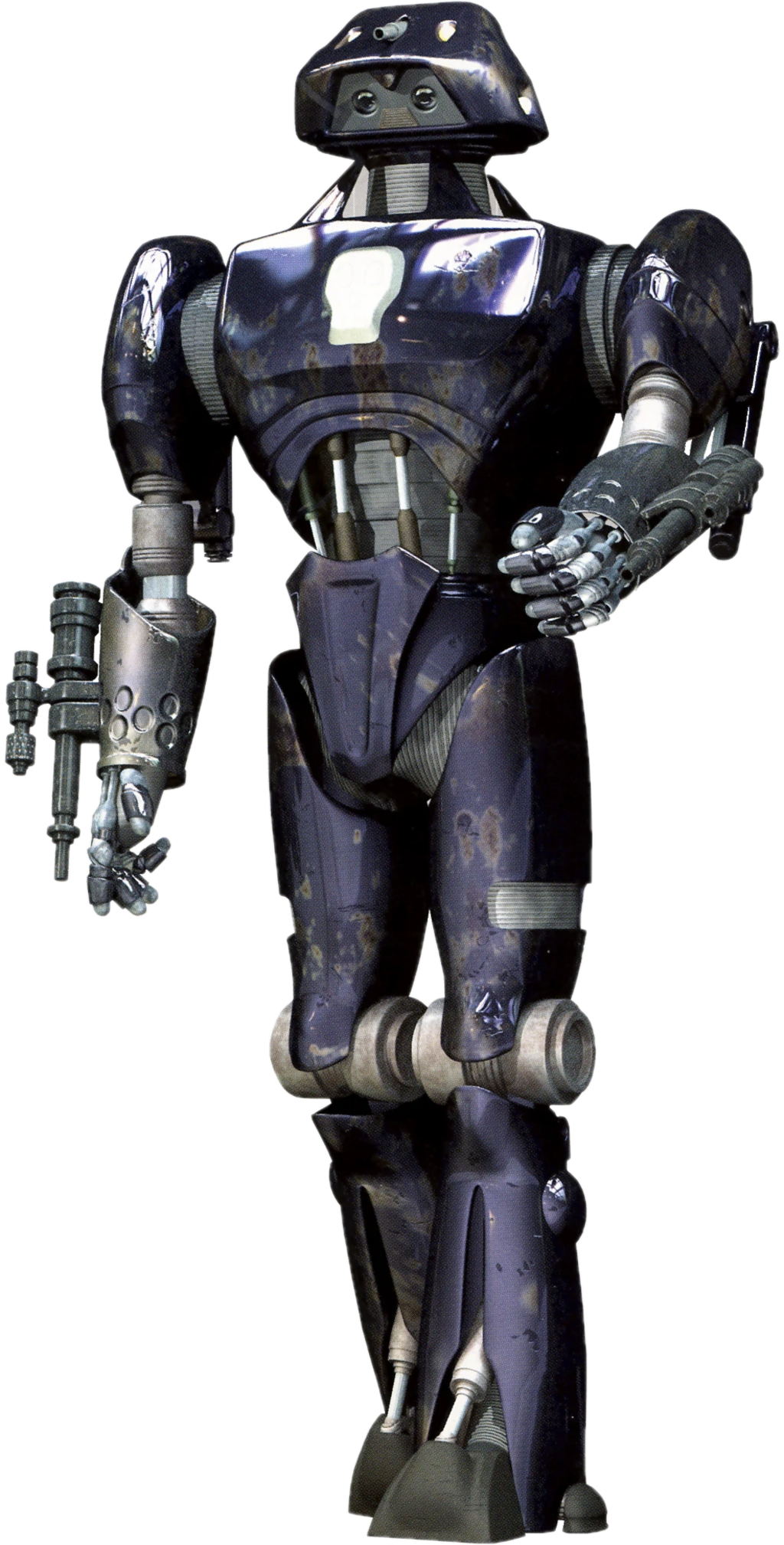
One of the most significant developments of this period, in terms of its long-term impact on galactic society, was the creation of artificial intelligence and the invention of droids. Droids had existed in advanced civilizations for countless millennia, but they were first developed in what would become Republic space around 30,000 BBY. Some expressed doubts about this technology's ability to replicate natural sentience, and their concerns were echoed by prominent philosophers such as Plaristes.
Significant Achievements
The Corellian System
Through precise manipulation of gravitational fields, the Celestials altered the orbits of the planets in the Corellian system, resulting in the unique situation of five planets within the same system capable of supporting life. To facilitate the system's construction, enormous planetary repulsors were installed beneath the surface of the five inhabited planets.
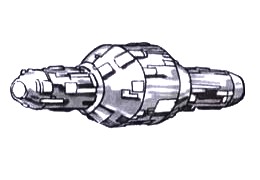
The remarkable feats achieved in the construction of the Corellian system were made possible by the massive space station known as Centerpoint, which was positioned at the L1 point between Talus and Tralus. Centerpoint's capabilities stemmed from its powerful tractor-beam installation, which could even move objects through hyperspace. In later years, the Killiks would claim to have built Centerpoint; however, no evidence supports this claim. It has been speculated that the Killiks were used as manual laborers by the Celestials to construct the station, and that its purpose was to imprison the being known as Abeloth.
The Maw Cluster
Similar to the Corellian system, the cluster of black holes known as the Maw was arranged with such precision that it was likely the creation of an ancient civilization. Gravitational technology was undoubtedly employed to manipulate the star-like masses of the black holes that constituted the Maw. The Killiks also claimed to have created the Maw, but as with Centerpoint, there is no evidence to support their claim. Some theorize that the Maw served as a prison for Abeloth.
The Star Forge
The Star Forge was the pride of the Rakatan Infinite Empire, a massive space station and factory that converted the raw plasma of Lehon's sun into ships and weapons. Fueled by their aggression and conquest, the Star Forge became an artifact of the dark side, further corrupting the Rakatan people. With the collapse of the Infinite Empire, the Star Forge was abandoned, its secrets locked within the Temple of the Ancients. Throughout the galaxy, Rakatan temples housed their Star Maps, built as testaments to the power of the Infinite Empire.
Star Temples
The Star Temples were artifacts of the Kwa, constructed to safeguard the power of the Infinity Gates. The Gates themselves primarily served as a means of transportation between different worlds, although as a last resort, they could be activated as weapons that destroyed everything in their vicinity. The Star Temples protected the power of the Gates from being exploited by outsiders.
Terminology
The term Pre-Republic was sometimes used by individuals such as Jedi Master Odan-Urr to refer only to the brief period between the discovery of the hyperdrive and the founding of the Republic. The end of the Pre-Republic era was known as the Expansionist Era.
Behind the Scenes
Concepts associated with this era often utilize standard Earth terminology, such as Kossak and Condottiere. The word "robot" and the suffix "-bot" are preferred over "droid" when referring to Pre-Republic machines. Sleeper ships are also common in science-fiction works dealing with potential future Earth technology.
Alien Exodus was a planned novel set in the Pre-Republic era, but its cancellation means that the story developments intended for it remain non-canon.