Palace Court
The Palace Court, referred to as the Jedi Temple Precinct, the Temple Precinct, or the Temple District during the Galactic Republic's time, was a zone surrounding the Imperial Palace on Coruscant, which was formerly the Jedi Temple. This precinct, spanning numerous city blocks, was jointly administered by the Jedi Council and the Galactic Republic until the year 19 BBY.
Description
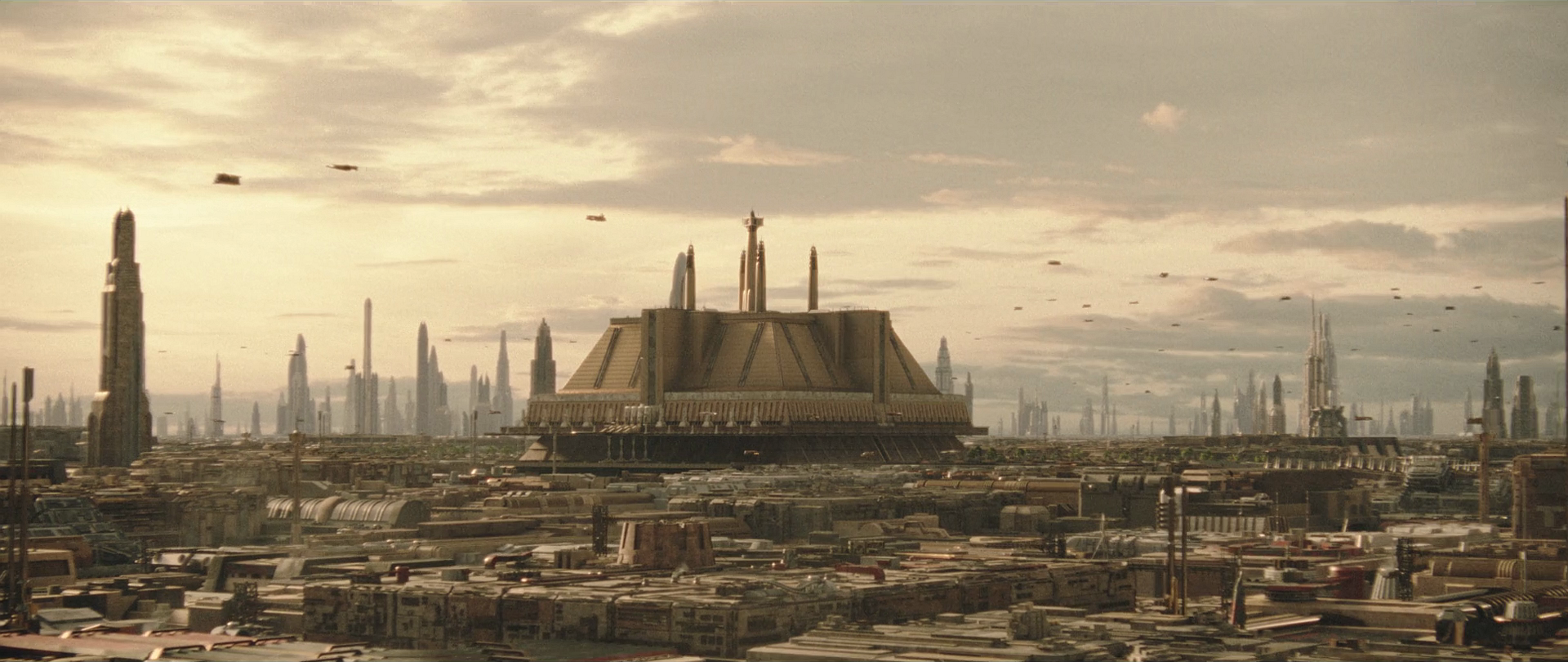
Around the time of the Clone Wars, the Temple Precinct, a low-rise section of the Federal District, featured modern buildings primarily offering standard accommodations. At the heart of the Precinct stood the Jedi Temple complex, a collection of structures erected over millennia. This archaeological treasure held the history of the Jedi center's countless expansions, renovations, destructions, and rebuilds, all centered around a locus of power: a natural mountain considered sacred by the Coruscanti and attracting Force-wielders of diverse beliefs; a convergence of numerous Force wellsprings concealed beneath the spire's many forgotten grottos and shrines.
Within the district was the Processional Way, a lengthy path concluding with ceremonial steps leading to the Jedi Temple, topped by two statues each of the Jedi Order's Sage Masters and Warrior Masters. Interspersed among the low-lying buildings, several sparsely placed Jedi statues dotted the Precinct's Way. These tranquil elements distinguished a Jedi serenity apart from the otherwise dense urban constructions intersected by the bustling roads of the Galactic City, with the wide promenade acting as a symbolic connector.
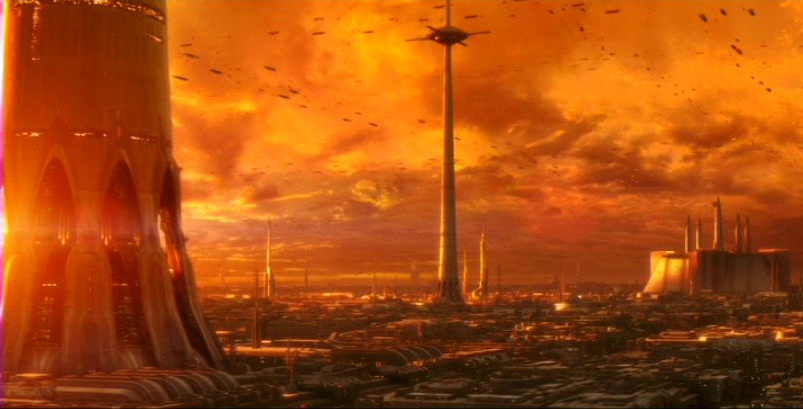
A spaceport tower rising from within the Precinct facilitated the docking of spaceships too large to fit within the Temple hangars. These hangars were built within the Temple following the time of the Naboo blockade in 32 BBY. Below the monolith was a sprawling collection of buildings, divided by avenues and of moderate height, that accommodated the standard training of Padawans. Such low-rising structures allowed the Temple, particularly its grand spires, to dominate the skyline for kilometers around.
During the reign of Emperor Palpatine, the district was renamed Palace Court. Under the Emperor, the precinct functioned as a landing field for capital ships, featuring a courtyard capable of accommodating numerous Venator- and Victory-class Star Destroyers.
History
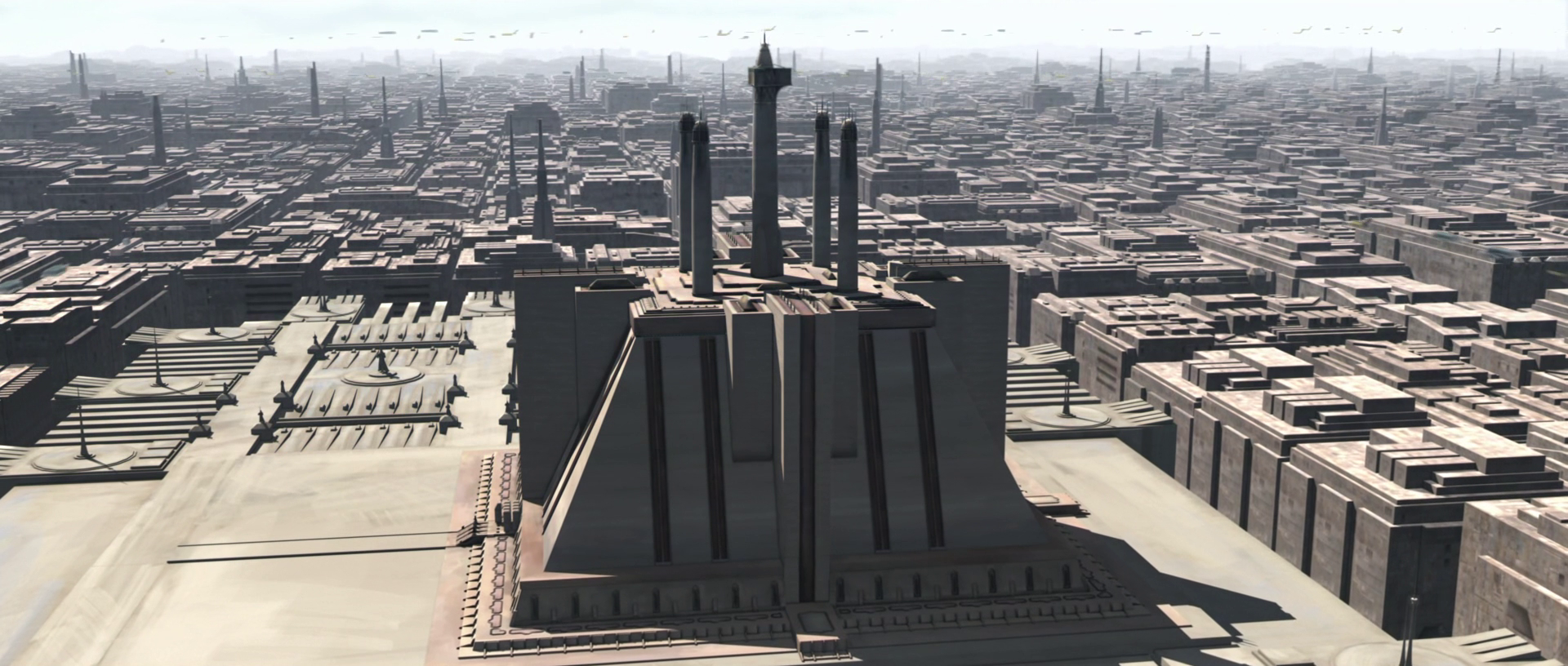
The Processional Way, the transitional boulevard connecting the edge and core of the Jedi Temple Precinct, witnessed intense gatherings during the fall of the Republic and the early days of the New Order that took its place.
During the Clone Wars, a group of friends and relatives of those killed in the bombing of the Jedi Temple hangar assembled to protest the ongoing war, demonstrating anti-Jedi sentiment.
Under the New Order replacing the Republic, Grand Vizier Mas Amedda personally oversaw a celebration of the Jedi Order's eradication at the Palace Court. Addressing crowds gathered before the entry steps, the Imperial bureaucrat incinerated the lightsabers of fallen Jedi. Cam droids filmed the event from above the assembled crowd.
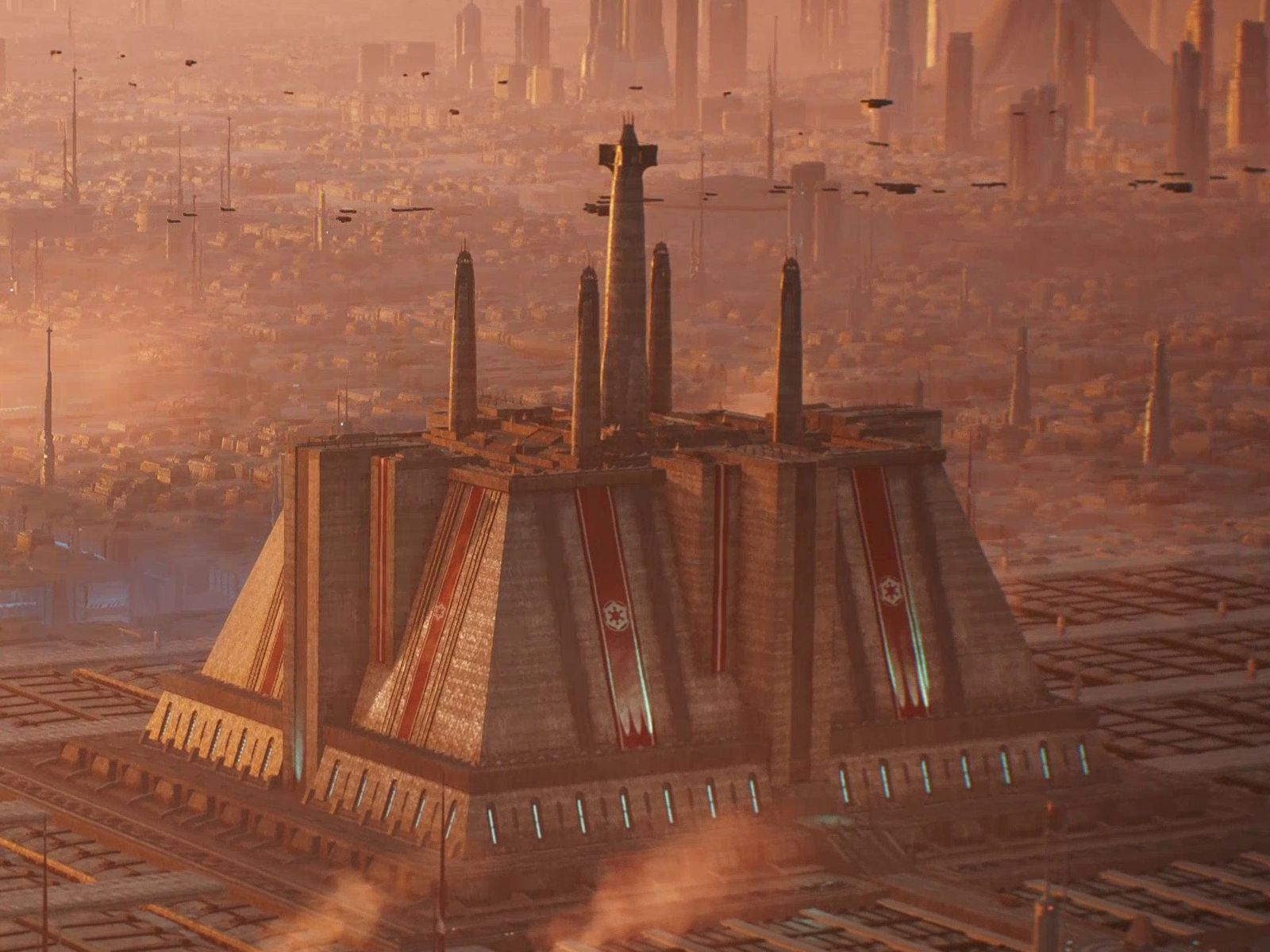
The Galactic Empire transformed the Palace grounds into a vast landing field, featuring a dedicated landing pad in front of the Imperial Palace's entrance for a Lambda-class T-4a shuttle. A walkway provided access, lined with rows of white-clad escorts and Imperial Royal Guardsmen. Despite these modifications, the precinct remained a low-rise area by the time the civil war on Coruscant began in 4 ABY.
Behind the scenes
The Palace Court's initial canonical appearance occurred in the 1999 film Star Wars: Episode I The Phantom Menace. The 2016 Star Wars: Force and Destiny sourcebook Nexus of Power identified it as both the Palace Court and the Temple Precinct.