Jedi High Council (New Jedi Order)
The Jedi High Council, previously known as the Masters' Council, served as the supreme authority within the New Jedi Order established by Luke Skywalker. Around 35 ABY, the Masters' Council emerged as an informal group tasked with leading the Order. However, after the Swarm War, Grand Master Skywalker transformed this loose assembly of Jedi Masters into a formal High Council, mirroring the structure of the Jedi Order during the era of the Galactic Republic. Both iterations, the Masters' Council and its official successor, were composed of the twelve most insightful and powerful Masters within the Order.
A Look at the High Council's Past
The Masters' Council
In the initial period of the reformed Jedi Order, Master Luke Skywalker deliberately avoided establishing a High Council or centering their operations on Coruscant. Aware of past corruption, Skywalker aimed to prevent the creation of a body susceptible to manipulation by the galactic government. Nonetheless, the Dark Nest Crisis triggered a divide that threatened to tear the nascent Order apart. Internal conflicts hindered decision-making, and unruly Knights began engaging in actions that negatively impacted the Order's public image.
Compelled to intervene, Skywalker proclaimed himself Grand Master during a conclave held at the Ossus Academy. He demanded that any Jedi unable to prioritize the Order's interests should resign. To aid him in his leadership role, Skywalker established a twelve-member council, reminiscent of its predecessor from the Old Republic. However, unlike the old Council, this body was less formal and did not immediately exert absolute control over the Order. Meeting in chambers on Ossus and within the Temple on Coruscant, the Council engaged with the two Joiner Knights dispatched by UnuThul to persuade the Masters' Council to support the Killiks in a border dispute with the Chiss Ascendancy.
Upon discovering the existence of the Dark Nest, Gorog, which was secretly manipulating the conflict without the knowledge of UnuThul and the rest of the Colony, the Council dispatched Grand Master Skywalker, along with Masters Mara Skywalker and Saba Sebatyne, to eliminate Gorog. Assisted by Knight Leia Solo and several other Jedi, the Masters successfully brought the conflict to an end.
The Formal Jedi High Council
In the aftermath of the Swarm War and the issues caused by rogue Knights, Grand Master Skywalker determined that a more authoritative High Council was essential. Establishing the formal Council chamber on Coruscant as the group's permanent meeting place, the Masters' Council was officially transformed into the High Council. It subsequently developed close ties with the Office of the Chief of State.
With the Council making decisions on behalf of the Order, the number of Knights flourished, growing to levels comparable to those before the Great Jedi Purge. By recovering lost information and texts, the Council improved the academy's curriculum by drawing upon the teachings of the old Order. In 40 ABY, following the recovery of the Telos Holocron, many Jedi expressed concerns about potential theft attempts. When a vote was called, nearly half the Council advocated for its destruction, but the motion was defeated, and the artifact was secured within the Temple vaults.
The Tumultuous Second Galactic Civil War
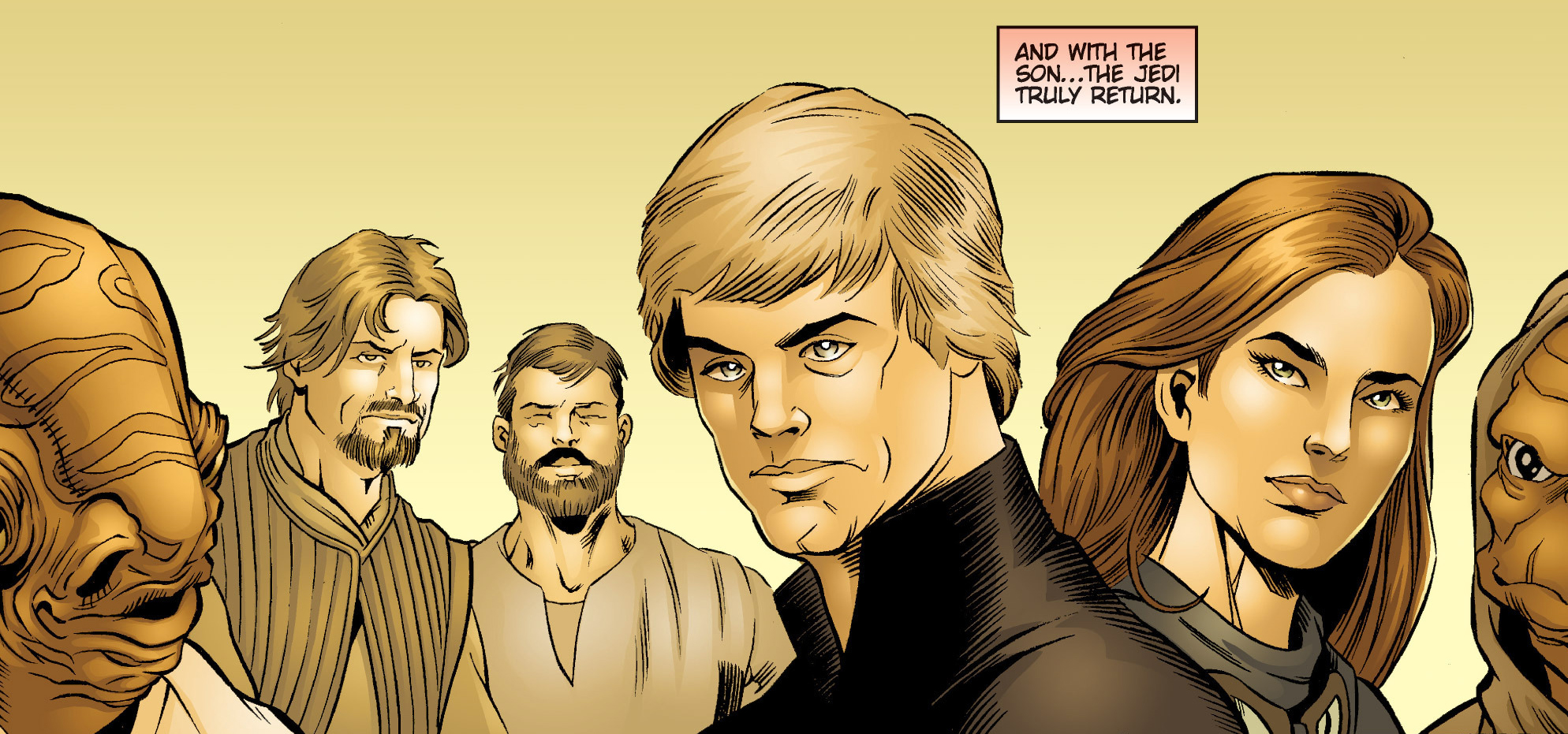
During the Second Galactic Civil War, the High Council proved largely ineffective, failing to prevent Jacen Solo's descent to the dark side. Due to Grand Master Skywalker's influence, the Council was frequently paralyzed by conflicts with Chief Cal Omas and internal disagreements. With Dark Lady Lumiya manipulating events, Dark Jedi [Alema Rar](/article/alema_rar] at large, and a divided membership, the Council was unable to prevent the deaths of numerous Alliance personnel, citizens, and two of their own: Masters Tresina Lobi and Mara Skywalker. Following the death of the Grand Master's wife and the corruption of his son by Colonel Solo, the Council failed to act when Galactic Alliance Guard members infiltrated the Temple itself to arrest Knight Leia Solo and her husband Han. After Chief Omas was assassinated and replaced by Colonel Solo, the Alliance government consistently harassed the Order, attacking the Ossus Academy, which nearly resulted in the deaths of Council members Kam and Tionne Solusar. When Colonel Solo began to burn Kashyyyk, the Council finally withdrew from the Alliance and sought refuge on the Sanctuary Moon of Endor. With the assistance of Alliance personnel under Admiral Cha Niathal's command and the fleets of Imperial Grand Admiral Gilad Pellaeon, the newly formed Coalition ultimately ended Solo's regime and reclaimed the Alliance.
The Aftermath of the Second Galactic Civil War
After the conflict, the Order played a role in installing former Admiral Natasi Daala as Chief of the Alliance and Captain Jagged Fel as Head of State of the Galactic Empire. During Chief Daala's leadership, she ordered the arrest of Grand Master Skywalker on the grounds of dereliction of duty for failing to prevent Colonel Solo's rampage. Instead of facing imprisonment, Skywalker negotiated a deal with Daala: he would go into exile, severing all ties with the Order until he could determine the cause of Solo's madness. In his absence, Council member Kenth Hamner would assume the role of Grand Master and lead the Order until Skywalker's return. Daala accepted these terms, but her appeasement was short-lived as several Knights began to succumb to an enigmatic psychosis. Deeming them a threat to civilization, Daala ordered their arrest and launched a campaign against the Jedi to apprehend the supposedly insane Knights. Freezing Council member Corran Horn's two Jedi children in carbonite, Daala continued her actions unopposed by the Council, as Grand Master Hamner advocated for patience. When Daala instigated a Mandalorian siege on the Temple, resulting in the cold-blooded murder of Jedi Kani Asari, the High Council grew increasingly frustrated with Hamner's inaction.
When Hamner secretly agreed with Admiral Nek Bwua'tu to end the siege, the Bothan was attacked and fell into a coma. While awaiting his recovery, the Knights under medical observation recovered, and a slave revolt erupted in the Outer Rim. Overwhelmed by these events, Hamner's secret agreement with Bwua'tu, which had confined them to the Temple, was discovered by the High Council. They dismissed him as Grand Master and confined him to his chambers. Overcome with hysteria, Hamner attacked his guards with the dark side and hid among the catwalks of the Operations Hangar, preparing to strike down his opponents on the Council. Attacking Master Saba Sebatyne, Hamner engaged in a fierce duel, ultimately impaling the Barabel with his lightsaber. Unable to awe into submission the other Jedi in the hangar, who were preparing to launch their StealthXs to aid the imperiled Master Skywalker, Hamner attempted to destroy the hangar doors. However, Sebatyne stopped him, defeating the former Grand Master by using the Force to blast him off a catwalk. As she telekinetically tried to prevent his lightsaber strike on the hangar doors, Sebatyne was forced to release her Force grip on Hamner, who then plummeted to his death several meters below. Following Hamner's death, Sebatyne reluctantly became the Order's acting Grand Master.
The Sith-Imperial War and the Second Imperial Civil War
Nearly a century later, the High Council continued to oversee the Order's affairs, led by Grand Master Skywalker's descendant, Kol Skywalker. However, the Imperial victory in the Sith–Imperial War and the subsequent Massacre at Ossus decimated the Jedi Order, scattering the High Council. Fleeing extermination, three Masters reconvened the esteemed body within the halls of the Hidden Temple of Taivas. Composed of three Masters, T'ra Saa, Tili Qua and K'Kruhk, the Council dedicated itself to rebuilding the Order. When an Imperial delegation from the Fel Empire discovered the Temple's location, the Council welcomed them to discuss a potential alliance.
During the same meeting, the Council listened to Cade Skywalker's plans to assassinate the Emperor and Sith Lord Darth Krayt. After considering the consequences of allying with Roan Fel and eliminating the Sith leadership, the Council concluded that the former option was the best course of action. Arguing that killing Krayt would only lead to the emergence of more dangerous factions, the Council decided to wait patiently until the Order was strong enough to confront the Sith.
Following Darth Krayt's apparent death, the Jedi Council felt it was time to re-engage in the struggle against the Sith. To that end, they dispatched Te Corso, Sayar Dun'La, Asaak Dan, and Drok to meet with Admiral Gar Stazi and forge an alliance with him.
Structure and Politics
Unlike the Council of the Old Order, Grand Master Skywalker initially intended it to serve as an advisory board, assisting in directing Knights to their appropriate destinations. However, this structure proved inadequate when wayward Knights nearly plunged the Order and the Alliance into a full-scale war with the Chiss Ascendancy on behalf of the Killik Nests. After reforms, the High Council became the undisputed leader of the Order, assigning missions and expecting subsequent reports. Like its predecessor, this body collaborated closely with the executive branch of the galactic government, advising and assisting the Chief of State of the Alliance on critical diplomatic matters. Membership on this distinguished body was limited to twelve Masters at a time, with each member appointed by a unanimous vote of the current members. It was not uncommon for seats to remain vacant for extended periods; following the deaths of Mara Jade Skywalker and Tresina Lobi, their seats remained unfilled for years. With the death of Kenth Hamner in 44 ABY, the Council had only nine sitting members.
The Masters convened in the austere High Council Chamber within the Coruscant Temple, electing one of their own to serve as secretary in the years following the Swarm War. The High Council would frequently request the presence of any available Master, providing additional seating to accommodate those in attendance.
The relationship between the High Council and the Alliance government was often strained, sparking contention within the Council. Some Masters, such as Corran Horn and Kenth Hamner, believed the Order's primary responsibility was to serve the Alliance's needs, as the Alliance funded the Order, including the Temple's reconstruction after the Yuuzhan Vong War. Others, including Mara Skywalker and Kyp Durron, argued that prioritizing the Alliance's interests transformed the Jedi into mere mercenaries, and that the Jedi should maintain peace without favoritism, even if it meant sacrificing the Alliance's interests. Despite their official stance, the Galactic Alliance bureaucracy came to regard the Jedi as their personal diplomatic corps and police force. Both sides firmly believed in their position, with some arguments nearly escalating to lightsaber duels. Only Master Skywalker's moral authority prevented the Council from fracturing violently. After his exile, even this was insufficient, as Kenth Hamner, deposed by his peers for his deception and support of the Galactic Alliance, rebelled against the New Jedi Order. He subdued his minders and the StealthX guards through deceit, physical combat, and Force lightning. Hamner then sought to assassinate Saba Sebatyne in a duel and reclaim his power, before shifting his goals to leaving the Jedi stranded and exposed to the Galactic Alliance's forces. The latter was obliged to kill him in order to prevent him from stopping the launch of the ships to aid Luke Skywalker.