Jedi
A Jedi was an adherent of the Jedi Order, dedicated to the study, service, and application of the Force's mystical energies—typically embracing the light side of the Force. Their emblematic weapon was the lightsaber, a blade of pure energy. In the Galactic Republic, Jedi championed peace and justice, often opposing their arch-enemies, the Sith and Dark Jedi, who were devoted to the dark side of the Force. Despite nearly facing annihilation on four separate occasions, including once by the Sith Empire of Darth Revan, by the Sith Triumvirate under Darth Nihilus during the First Jedi Purge shortly after, 4,000 years after that by the Great Jedi Purge of Darth Sidious, and a century and a half afterwards by Darth Krayt's Galactic Empire and its Third Jedi Purge, the Jedi Order persevered, thanks in no small part to the Skywalker family, who consistently played pivotal roles in the Jedi's history.
History of the Jedi

The Jedi, who began as a philosophical society on Tython, evolved into revered protectors of peace and justice throughout the galaxy. Their mastery of the Force and their iconic lightsabers inspired awe among galactic citizens. The Jedi's composed and thoughtful nature made them ideal mediators in conflicts. However, despite their strength and diversity, the Jedi were few in number. They frequently faced adversity and uncertainty, with malevolent forces constantly challenging their order and the establishment they served, most notably the Sith. These dark warriors, the Jedi's sworn adversaries, plunged the galaxy into war on multiple occasions. The Sith could even exploit the dark side of the Force to weaken the Jedi's powers and obscure their ability to foresee the future.
The Jedi's path became synonymous with wisdom and patience, complemented by swift and decisive action when necessary. Nevertheless, the Jedi Council sometimes appeared indecisive, as evidenced during the Mandalorian Wars, favoring a long-term approach to events and patterns. Their inaction fueled Revan's rebellion, ultimately leading to the Jedi Civil War. During this conflict, the distinction between Jedi and Sith became blurred to the rest of the galaxy, with both sides bearing blame for the devastation inflicted on worlds such as Katarr, Telos IV, and Taris.
Through intricate machinations and remarkable adaptability, one Sith Master (Senator Palpatine of Naboo, secretly the Sith Lord Darth Sidious) ascended to the position of Supreme Chancellor of the Galactic Republic, orchestrated the Clone Wars, and undermined the Jedi until he could, with a single, masterful stroke, annihilate the Jedi Order and seize control of the galaxy as Galactic Emperor of the newly formed Galactic Empire. Yet, even this cataclysm failed to completely extinguish the Jedi, and within a generation, they resurfaced to once again safeguard and guide the galaxy with their wisdom in the form of the New Jedi Order. The Jedi continued to protect and serve the galaxy through the horrors of the Yuuzhan Vong War and the collapse of the New Republic, leading to the establishment of the Galactic Federation of Free Alliances.
Path of the Jedi
The journey to becoming a Jedi demanded unwavering dedication and a sharp intellect; the life of a Jedi was characterized by selflessness. To prevent wrongdoing, individuals displaying Force sensitivity were often taken at birth (or shortly thereafter) to train at the Jedi Temple headquarters on Coruscant or at smaller Jedi Enclaves as Padawans. From the outset of their training, Jedi were expected to adhere to a strict Code that emphasized principles such as logical reasoning, patience, and compassion. Destructive emotions like hatred, anger, and fear were believed to lead to the dark side of the Force, so Jedi were taught to be mindful of such feelings.
Training
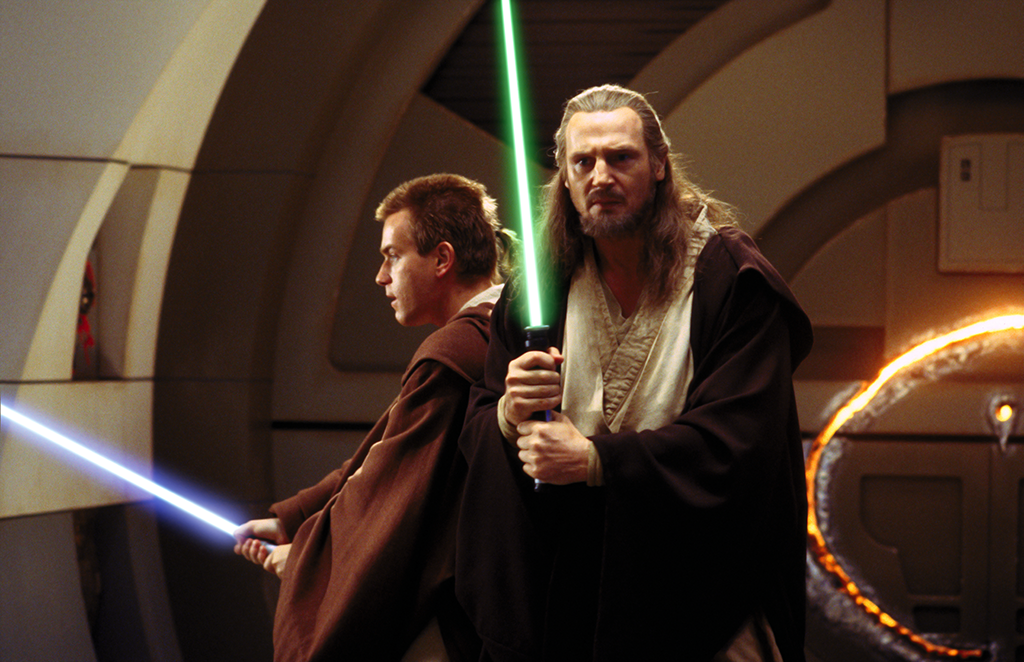
Younglings undergoing Jedi training were instructed in "clans" by a respected and experienced Jedi Master, learning the Jedi ways and the powers of the Force. Following Ruusan, it became standard practice for Jedi trainees to be children. Once Yavin 4 was established as the Jedi headquarters, Jedi initiates who were no longer children, initially trained under the guidance of Jedi Master Luke Skywalker, and later under other Masters in groups. With the advent of the New Jedi Order, younglings were once again trained in clans from childhood.
When a student demonstrated sufficient understanding of the Jedi path, they were typically taken under the wing of another Jedi member for individual instruction to complete their training. Masters commonly included their Padawans on missions and later assigned them independent missions to gain practical experience.
Not all students advanced to direct study as Padawan learners under a Jedi Master. During the Old Republic era, it was customary for younglings not selected as Padawans by age 13 to be reassigned to divisions within the public service organization known as the Jedi Service Corps. This was nearly the fate of young Obi-Wan Kenobi until the events on [Bandomeer](/article/bandomeer-legends] prompted Qui-Gon Jinn to accept Obi-Wan as his Padawan.
Way of life
Adhering to the Code, Jedi behavior was strictly governed to promote self-discipline, responsibility, and public service. Jedi suppressed emotions and materialism, honoring life, the law, the Order, and the master-student relationship. They offered aid to support and defend the vulnerable, and compassion was encouraged. Rules of engagement included understanding the balance of dark and light, perceiving accurately, recognizing the unseen, and exercising caution even in minor matters. Above all, Jedi upheld their duty to the Republic and embraced the Force. Jedi before the Ruusan Reformation generally had greater latitude in their actions, as the Order was less structured and individual Knights and Masters had more personal freedom. After the Reformation, the High Council exerted more centralized control over the Order.

Early Jedi employed shields and armor for protection in battle and used blaster pistols alongside lightsabers. Later, as the lightsaber evolved into a more self-contained weapon without an external power pack, Jedi chose to carry it as their primary tool for both defense and offense. The lightsaber was viewed more as a tool than a weapon, fulfilling both a symbolic and practical function for the Jedi: it identified the wielder, made a powerful visual statement, and, given the availability of cybernetic limbs, may have been considered a "cleaner" weapon than the blaster, which Obi-Wan deemed "uncivilized," "clumsy," and "random."
Jedi of the pre-Reformation era (Old Jedi Order) also did not appear to have a formal dress code, dressing more or less as they pleased, although traditional robes were favored by most Masters. These included a tunic, cloak, and sometimes a tabard—typically in varying shades of white and brown, although gray was also common for the overtunic. The left side of the dress was always turned on the right part of the torso. After the Reformation, these robes became the standard Jedi apparel, even in battle. Jedi also wore trousers, an obi, a leather utility belt for carrying specialized field gear, and leather boots. The Jedi colors, symbolizing harmony with the Force, stood in stark contrast to the Sith, who primarily wore black.
In accordance with their philosophy of non-attachment, clothing was considered disposable. Indeed, possession itself was discouraged as another form of attachment, and most Jedi lived lives of material simplicity, although the Order's infrastructure and the Republic's support ensured they had adequate food, housing, and clothing.
Sometime before the Great Sith War, Jedi were forbidden from forming attachments, as these were believed to lead to the dark side. Consequently, Jedi were not permitted to marry. Reess Kairn violated this rule, and after discovering his lover with another man, he killed them both in anger, leading him to the dark side. Anakin Skywalker would become a testament to such Jedi caution, as his fear of losing his secret wife, Padmé Amidala, ultimately caused his fall to darkness, but his connection to his son, Luke Skywalker, would later redeem him. Although chastity was not explicitly required, many Jedi were abstinent or celibate, viewing sex as self-indulgent and unnecessary. One exception was Ki-Adi-Mundi, who, due to low Cerean birth rates, was allowed to have a polygamous marriage and fathered seven daughters. Ranik Solusar was disciplined by the Council for his marriage and child but was not expelled from the Order.
Despite this restriction, Jedi were known to engage in clandestine relationships, both with non-Jedi—such as the marriages of Anakin Skywalker and Padmé Amidala, Quinlan Vos and Khaleen Hentz, Nejaa Halcyon and Scerra Halcyon, and Etain Tur-Mukan and Clone commando Darman Skirata—and within the Jedi Order—such as the relationships of Kit Fisto and Aayla Secura, Qui-Gon Jinn and Tahl, Obi-Wan Kenobi and Siri Tachi, and Tholme and T'ra Saa. Some developed even as Padawans, such as Mak Lotor and Kass Tod, who died together, with Tod stating there was the Force, death and love. Many of these relationships did not lead to mishap. Further, Revan shared a romantic affection with Bastila Shan, who was redeemed by him after her fall.
Others openly defied the High Council on this issue, leading to conflict with Jolee Bindo and his wife, Nayama Bindo, during the Great Sith War. Bindo trained his wife in the Force, but she fell to the dark side. He was not expelled but was to be promoted to Jedi Knight. He then lost faith in the Council's wisdom and left the Order.

Up to the Great Sith War, some Jedi married and had families, with entire Jedi families like that of Andur Sunrider. Children of Jedi families were often Force-sensitive. Later in the Order, such families existed, though the continuation of the line was through non-Jedi family members. Famous Jedi families of the late Republic included the Koon family and the Diath family.
However, some Jedi may have been granted the right to marry as a norm, not an exception. Several Corellian Jedi (Keiran Halcyon during the Old Republic, and Corran Horn in the New Republic era) were permitted to marry and raise children without consequence. Whether this was due to an agreement between the Jedi and the Corellian government—Corellia was known for its family-centric culture—or personal choices made against the Jedi Code is unknown, except in Nejaa Halcyon's case, who married secretly without Council approval. Corellian Jedi often differed from traditional Jedi in clothing and reluctance to take missions outside their home system.
By the time of the New Jedi Order, the practice of forbidding or discouraging marriage was abandoned, and many members had spouses and children, including the Grand Master himself, whose wife was another Jedi Master.
The Jedi path was a lifelong commitment, and Jedi typically remained in the Order for life, learning about the Order and the Force and following the Jedi Council's will. Until the Clone Wars, only twenty Jedi (of Master rank or higher) were said to have ever left the Order (though this was debated), the most prominent being Count Dooku and Master Phanius. These were known as the Lost Twenty, or simply The Lost.
The Force
The Jedi were united by their study of the Force, an "energy field" permeating all living things. The Force was channeled by microscopic organisms in the bloodstream, midi-chlorians, present in every living being and communicating with the Force. The Jedi sought to understand the Force to protect and aid those they served. They believed the Force could be harnessed through study and contemplation for the benefit of the user and the universe. Studying the light side of the Force, the Jedi encouraged its use only for healing and defense, never in anger or fear. However, some Jedi throughout history disagreed, believing darker uses of the Force offered a quicker path to power, while contemplating the light side required patience and effort. This disagreement led to the rise of the Sith, the Jedi's constant enemy.

The Jedi focused on understanding and strengthening their connection to the Force to manipulate it as an extension of themselves. This connection was enhanced by training and meditation to achieve mental, physical, emotional, and spiritual harmony, a state of inner peace.
The dark side of the Force presented a great temptation for many Jedi, seeming a quicker and easier path. However, pursuing the dark side was self-destructive, and many who tasted dark powers found it difficult to turn away. Though some Jedi could be redeemed, many fell and became Dark Jedi, some joining the Sith Order. The dark side could also diminish Jedi ability, clouding their insights. For these reasons, dark Force powers were often, but not always, forbidden by the Jedi Council.
The Jedi tried to save those fallen to the dark side, viewing killing as a last resort. This quality was both a strength and a weakness of the Order.
The lightsaber

The lightsaber was the Jedi's traditional weapon, deadly in the hands of a skilled wielder, even against ranged weapons. Achieving this skill required focus and training. Students practiced lightsaber combat with a remote, and children used training lightsabers. They also dueled fellow Jedi to test their skills.

Due to the hilt's weight, the lightsaber was difficult to handle. Jedi needed heightened awareness to use it well, which honed their connection to the Force. Since binding the lightsaber's intricate parts and charging the power cell required Force knowledge, Padawans constructed their own lightsaber as part of their training, using a unique crystal (like those on Ilum) to focus the power cell's energy and create the blade.
During the Jedi Civil War, many Cerean Jedi used specially forged Kasha lightsaber crystals as a meditative tool, clearing the wielder's mind during combat. Finding lightsaber components was a task in itself. Meditation in a crystal cave on Ilum or Dantooine would often reveal an image of the lightsaber to be built. The construction of a lightsaber was a symbolic milestone on the path to Jedi Knighthood.
During the Old Republic, Jedi Masters often gifted their personal lightsaber to their most accomplished student. Jedi apprentice Nomi Sunrider received such a lightsaber from Master Thon, recognizing her potential. While grateful, the Master would stress the importance of knowing how to build one, requiring the apprentice to eventually construct their own unique lightsaber.
The Three Pillars of the Jedi
The Jedi Code and Order rested on the core tenets of Force, Knowledge, and Self-Discipline, integrated into Jedi life. The Coruscant Jedi Temple's entrance statuary illustrated these pillars.
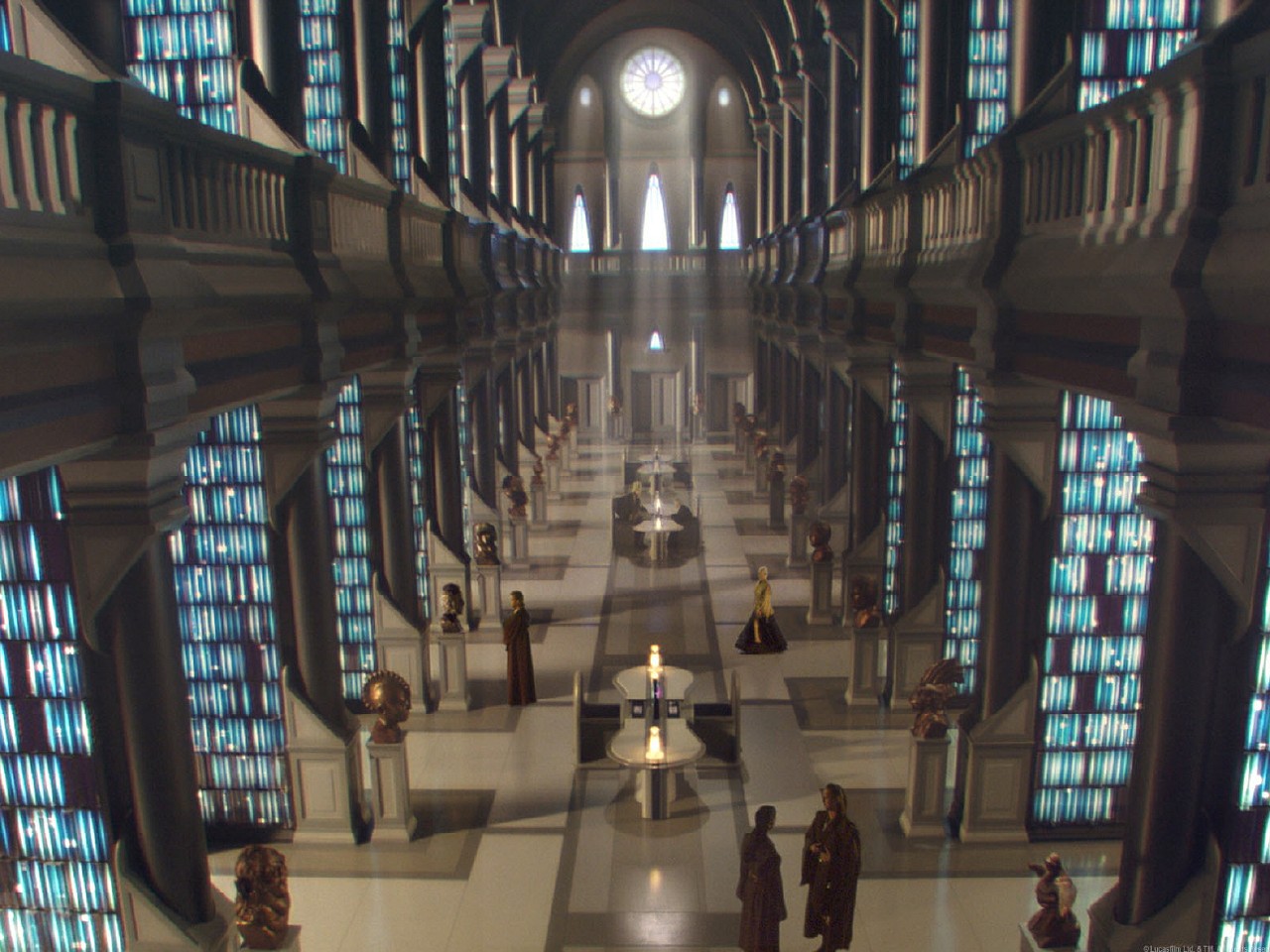
The first pillar was the Force, the constant between all things. Master Sabla-Mandibu described Jedi as "swimming in the Force in our every moment—breathing it, tasting it, riding its currents to our unique destines." A symbiosis of midi-chlorians and sentient beings was key to touching the Force, but this biological necessity was not a main focus. Instead, Jedi contemplated the will of the Force and the differences between its two aspects: the Unifying and Living Force.
The Pillar of Knowledge maintained that a Jedi's role in the galaxy required intense study and wisdom. The Temple had the Jedi Archives, a deep well of knowledge, as well as vaults housing the Order's holocrons. The Chief Librarian would argue that while one could never learn everything, it wouldn't hurt to try.
Lastly, the Pillar of Self-Discipline was the Third Pillar. Combat and physical training were not given until mastery of the first two tenets was gained. Students were often disappointed to learn that they would not begin lightsaber training, but would be encouraged to take on more stringent forms of meditation. Only after mastering oneself could an Initiate proceed to take up a lightsaber for the first time.
Jedi ranks
As the Jedi taught their members the Jedi Code and the Force, each member progressed through four basic levels of rank.

Hierarchy
- Jedi Initiate (or "Youngling" or "Jedi Hopeful") – The youngest members of the Order, these Force-sensitive children were given the rank of Initiate when they began their communal training in clans. Recruited from worlds throughout the galaxy where blood testing was required upon birth, Initiates were removed from their families and brought to a Jedi academy for formal training. [10]

- Jedi Padawan (also known as "Jedi Apprentice") – Initiates who demonstrated promise were selected for personalized instruction under either a Jedi Knight or a Jedi Master, at which point they were granted the title of Padawan. A student became eligible for this rank after successfully passing the Initiate Trials . Padawans were typically chosen during their adolescent years and underwent their training outside the confines of the academy. According to tradition, Padawans from species with hair growth would sport a lengthy braid behind their ear; Padawans without hair were encouraged to adorn themselves with jewelry, tattoos, or other forms of body modification. A Jedi Knight or Jedi Master could only mentor a single apprentice concurrently, and the Padawan had to achieve the rank of Jedi Knight before another apprentice could be selected. This practice was officially established after the Great Sith War . However, this policy could be waived if the Order experienced a decline in its numbers, compelling a single master to train multiple students out of necessity. If a student failed the Initiate Trials multiple times or was not chosen by a Master, the Council of Reconciliation would assign them to the Jedi Service Corps. Depending on the student's aptitudes, this assignment could be to the Agricultural Corps , the Medical Corps , the Educational Corps or the Exploration Corps . A student could also choose to leave the Order entirely if they were not satisfied with this role. [10]
- Jedi Knight – A Padawan who demonstrated discipline and completed nearly a decade of individual training with a master could attempt the Jedi Trials . If the Padawan successfully completed all the tests, the High Council would sever their braid, marking the beginning of their life as a Knight. Knights were no longer bound to a master and were able to accept missions from the Council, pursue specialized training in one of the three Knighthood branches, or take on their own Padawan. [10]
- Jedi Master – The High Council could elevate an experienced Knight who displayed exceptional wisdom and understanding of the Force to the rank of Master. Self-proclamation of the title was rare and frowned upon in the Order's later years, but it was more common during wartime or periods of disestablishment. Among the Order's Masters, only a select few were appointed to one of the Jedi Councils. The Councils of the Order consisted exclusively of wise, seasoned Masters and had varying levels of membership to ensure that diverse perspectives were considered as new events unfolded. The High Council comprised 12 masters, with five holding lifetime appointments, four holding long-term appointments, and three holding short-term appointments. The elected leader of the Council was known as the Master of the Order and was typically the acting Grand Master, who was the recognized leader of the entire Order. [10]
Specialization
Upon becoming a Knight, a Padawan could choose to specialize in one of three branches of Jedi training. Based on their preferences, talents, and skills, all who passed the Jedi Trials had the opportunity to join the ranks of the Jedi Guardian, Jedi Consular, or Jedi Sentinel . In addition to their specialization, the High Council could require members of the Order to assume military ranks in order to defend the Republic.
Jedi Guardian

Knights who preferred to actively confront the dark side of the Force and other threats to the Republic pursued the title of Guardian. Guardians wielded their lightsabers with pride and focused their training on perfecting their sparring, athletic skills, and unarmed combat techniques. The Force skills that Guardians studied were typically those that could quickly disable an opponent and enhance agility and stamina. The most accomplished masters of this specialization were known as Warrior Master.
- Jedi Ace – Aces, who were members of the Jedi Starfighter Corps , specialized in using a starfighter as an extension of themselves, combining piloting skills with mastery of the Force. [10]
- Lightsaber instructors – These battle-hardened Masters were stationed at the Jedi academy and were dedicated to imparting their experience to the Order's young students. The High Council bestowed the title of Battlemaster upon the highest-ranking instructor within the academy, who was responsible for selecting and recommending future instructors. [10]
- Jedi Peacekeeper – Jedi who wished to pursue a peacekeeping role were stationed within planetary or sectoral government security agencies, where they served as special police officers. The Temple Security Force , which helped to quell riots and capture terrorists, was made up of Peacekeepers. Within its ranks, Jedi could be trained as Gate Masters, Snipers, or Brutes. [10]
- Jedi Weapon Master – A Jedi Master who mastered the art of wielding an exotic weapon was called a Weapons Specialist, or Weapon Master. The Weapon Master was among the Order's most skilled physical fighters. [10]
Jedi Consular

Jedi Knights who became Consulars focused on mastering the Force and honing their mental skills rather than physical force. They worked closely with the Republic Diplomatic Corps and medical facilities. Consulars, who were overseen by the Council of Reconciliation, served as healers, prophets, and researchers, and only used their lightsabers for self-defense. The most studied masters of this specialization were known as Sage Master.
- Jedi Ambassador – Ambassadors represented the Republic to newly discovered worlds and collaborated with bureaucrats to greet unaligned governments and help them join the Republic. Some Ambassadors were appointed as advisers to certain Senators or even the Supreme Chancellor upon request. [10]
- Jedi Diplomat – Jedi Diplomats were authorized to negotiate compromises or treaties during tense situations, with the full support of the Senate and Jedi Order. They were often called upon to serve as impartial diplomats, possibly because of the Order's tradition of detachment from secular society and the phenomenon of Force-guided intuition. They served as moderators and negotiators during disputes, and their judgments were recognized as just and binding. When acting as diplomats, Jedi were careful to be impartial and fair-minded. The legacy of this impartiality endured even after the Great Jedi Purge and Palpatine's false accusations of Jedi Order corruption. Some species, such as the Barabel , respected the Jedi and maintained a tradition of seeking a Jedi's impartial judgment even for minor interpersonal disputes. [10]
- Jedi healer – Certain Jedi concentrated on the Force's more compassionate aspects, using the Living Force to practice healing . Healers, who were led by the Circle of Jedi Healers and headquartered in the Coruscant Temple's Halls of Healing , were also deployed to serve on MedStar frigates and, on occasion, in Republic mobile surgical units , or Rimsoos . [10]
- Jedi Lore Keeper – Jedi who wished to contribute to the Jedi Archives' growth became Lore Keepers, a group directed by the Librarian's Assembly . Each group, which included historians, archivists, and librarians, worked to disseminate knowledge and preserve the past. [10]
- Jedi Researcher – Researchers solved theoretical problems and updated the Order's Archives, specializing in fields such as archaeology, geology, biology, mathematics, and astronomy. [10]
- Jedi Seer – Jedi who were particularly inclined to receive visions through the Force were known as Seers, and they maintained and updated the Order's holocrons. The most perceptive of these Jedi were known as Prophets, and they foretold the galaxy's future. [10]
Jedi Sentinel
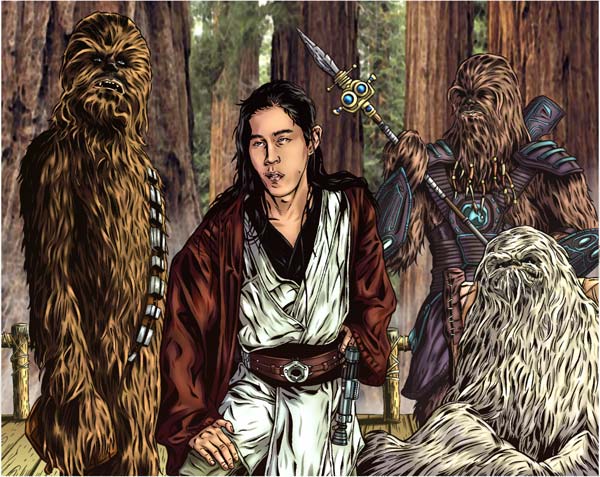
Knights who sought a balance between the Jedi Guardians' intense combat training and the Jedi Consulars' broader philosophical views and teaching responsibilities. These Jedi exposed deceit and injustice, bringing them to light. They were typically assigned to scouting missions and were proficient in security, computers, stealth techniques, and diplomacy.
- Jedi Investigator – Jedi who were specially appointed by the High Council to uncover hidden threats to the galaxy, such as powerful criminal syndicates, corruption and conspiracy against the Republic, and other sinister menaces. Jedi investigators often worked alone and undercover to infiltrate suspicious organizations or investigate criminal acts. [10]
- Jedi Recruiters – Recruiters, who were members of the Order's Acquisition Division, honed the skills they learned from Jedi Investigators to track down and identify Force-sensitives in order to determine whether they belonged in the Jedi Order. Republic law mandated that all newborns undergo testing, with the names of potential candidates being recorded in the Division's prized Kyber memory crystal. After the child had aged a few months, the Order would send a recruiter to test the child and determine whether they met the requirements to begin training on the Jedi Path.
- Jedi Shadow – The Order's secret police, Shadows, worked under the supervision of the First Knowledge Council and were dispatched to eliminate all agents of the dark side. Shadows were heavily employed after the New Sith Wars and were responsible for erasing the word "Sith" from the minds of most galactic citizens. [10]
- Jedi Temple Guard – Anonymous sentinels who served as the security force and reported to Jedi Master Cin Drallig , who oversaw the Temple's security detail. They wore formal robes and masks that concealed their identities, representing the ultimate expression of emotional detachment required to serve a higher calling. Temple Guards carried imposing lightsaber pikes, which were thick, double-bladed weapons that produced a rare and distinctive yellow blade.
- Jedi Watchman – A watchman, who was responsible for overseeing a specific system or sector, served as a liaison officer between the system or sector and the High Council, as well as the Republic in general. Jedi Watchmen were typically highly skilled in diplomacy and knowledgeable about the culture of the system or sector they oversaw, often having lived among its people for many years. [10]
Military and warfare
Throughout their extensive history, the Jedi Order's most skilled warriors have willingly fought alongside the Republic's armed forces, securing numerous victories against tyranny and oppression. The Republic's military leaders accept Jedi involvement on the condition that the chain of command is respected. Military commanders often grant Jedi authority to lead troops or allocate resources, and soldiers generally defer to a Jedi's judgment and expertise.
During times of war, particularly when Sith forces were involved, Jedi would sometimes assume military ranks and command armies of Republic military units, as demonstrated in the Mandalorian Wars, the Jedi Civil War, the New Sith Wars, and the Clone Wars. Thus, Jedi became soldiers as well as keepers of the peace. During the New Sith Wars, the Order established the Army of Light, a massive military branch that comprised the majority of active Jedi. They resumed this duty during the Clone Wars. Dark siders sometimes considered female Jedi to be inferior Jedi, but they were actually brave and excellent warriors who tended to defeat those who underestimated them in war.
- Jedi Commander – A Padawan serving as a Commander in the Grand Army of the Republic was assigned to a Jedi General until they were knighted. Once they became a full Jedi, the Padawan was then referred to as General.
- Jedi General – Jedi Knights or Masters who were placed in command of a Republic army were given the title of General. Jedi Masters could become Senior Jedi General , leading one of the twenty Sector Armies . Some of the twelve High Council members became High Jedi Generals, commanding their own Systems Army and supervising all other ranking Jedi.
- Jedi Lord – A Jedi who served as a commander in the Army of Light during the New Sith Wars. The Jedi Lord primarily assumed this title due to the Republic's political needs. The rank was abolished after the war. [17]
The Chosen One

The prophecy of the Chosen One was an ancient Jedi legend that predicted the arrival of a being who would "bring balance to the Force." Qui-Gon and other Jedi interpreted this prophecy to mean that the Chosen One would destroy the Sith. Qui-Gon Jinn believed that a young Anakin Skywalker was that person when he discovered him in 32 BBY, because of Anakin's extraordinarily high midi-chlorian count and unusual birth.
Initially, many Jedi believed Anakin to be the Chosen One because of his seemingly unparalleled power. However, it later appeared that he was not the Chosen One, as he fell to the dark side and, as Darth Vader, played a key role in the Jedi Order's destruction. Nevertheless, in 4 ABY , he redeemed himself by choosing to oppose Emperor and Sith Lord Palpatine, sacrificing himself to save his son, Luke, and ultimately destroying the Sith Order in the process. This action ultimately proved Qui-Gon and others correct, as he was indeed the Chosen One. The deaths of Palpatine and Vader brought the Force into a certain "balance."
In later years, however, the Jedi largely rejected the idea that Anakin was the Chosen One.
Behind the scenes
"Failed Jedi," "Minor Jedi," and "Quixotic Jedi" were three of the original twenty-four character templates used in the Star Wars: The Roleplaying Game, which was first published in the first edition rulebook.