Imperial Ruling Council
The Imperial Ruling Council, also referred to as the Emperor's Inner Circle, functioned as the primary leadership of the Galactic Empire. This body of advisors was overseen by Grand Vizier Sate Pestage. While Palpatine held the title of Emperor, the Council was responsible for the Empire's day-to-day operations and executing the Emperor's directives.
After the death of the Emperor during the Battle of Endor, Pestage claimed the throne as regent. Simultaneously, a rival faction of Councilors formed a separate body known as the Emperor's Ruling Circle, or Cabal, in opposition. This group governed the Empire following the downfall of Pestage and his successor, Director of Imperial Intelligence Ysanne Isard. A conspiracy led to the final death of a reborn Palpatine, after which a group of conspirators seized power as the Imperial Interim Ruling Council. However, this council succumbed to internal strife and attacks from Imperial loyalists.
History
Development Leading up to the Battle of Endor
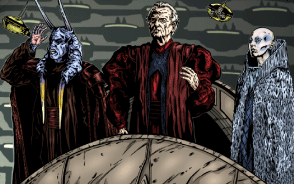
In 19 BBY, Supreme Chancellor Palpatine of the Galactic Republic transformed the Republic into the Galactic Empire. Early in his tenure as Galactic Emperor, Palpatine's closest advisors, including Mas Amedda and Sly Moore, convened with him to receive reports from Imperial military officials. These individuals had served him as Emperor, just as they had during his time as Chancellor. Shortly after the Empire's establishment, this inner circle founded the Imperial Security Bureau, an intelligence agency designed to rival the newly restructured Imperial Intelligence.
With the advent of the New Order within the Galactic Empire, the Imperial Ruling Council was established. Its members included former allies of Palpatine, such as Janus Greejatus, the ousted senator from the Chommell sector, and Sarcev Quest, a covert Emperor's Hand. Quest was the first of many of Palpatine's subordinates steeped in the dark side of the Force to be inducted into the Council. Grand Vizier Sate Pestage, the Council's leader, had assumed control of numerous day-to-day operations of the Empire prior to the Battle of Hoth in 3 ABY.
By 4 ABY, coinciding with the Battle of Endor, the ministers and governors closest to the Emperor became known as the Emperor's Inner Circle. This group of Imperial Advisors encompassed Pestage, Greejatus, Sim Aloo, Kren Blista-Vanee, and Ars Dangor, a long-time ally of Palpatine dating back to his senatorial days as a senator.
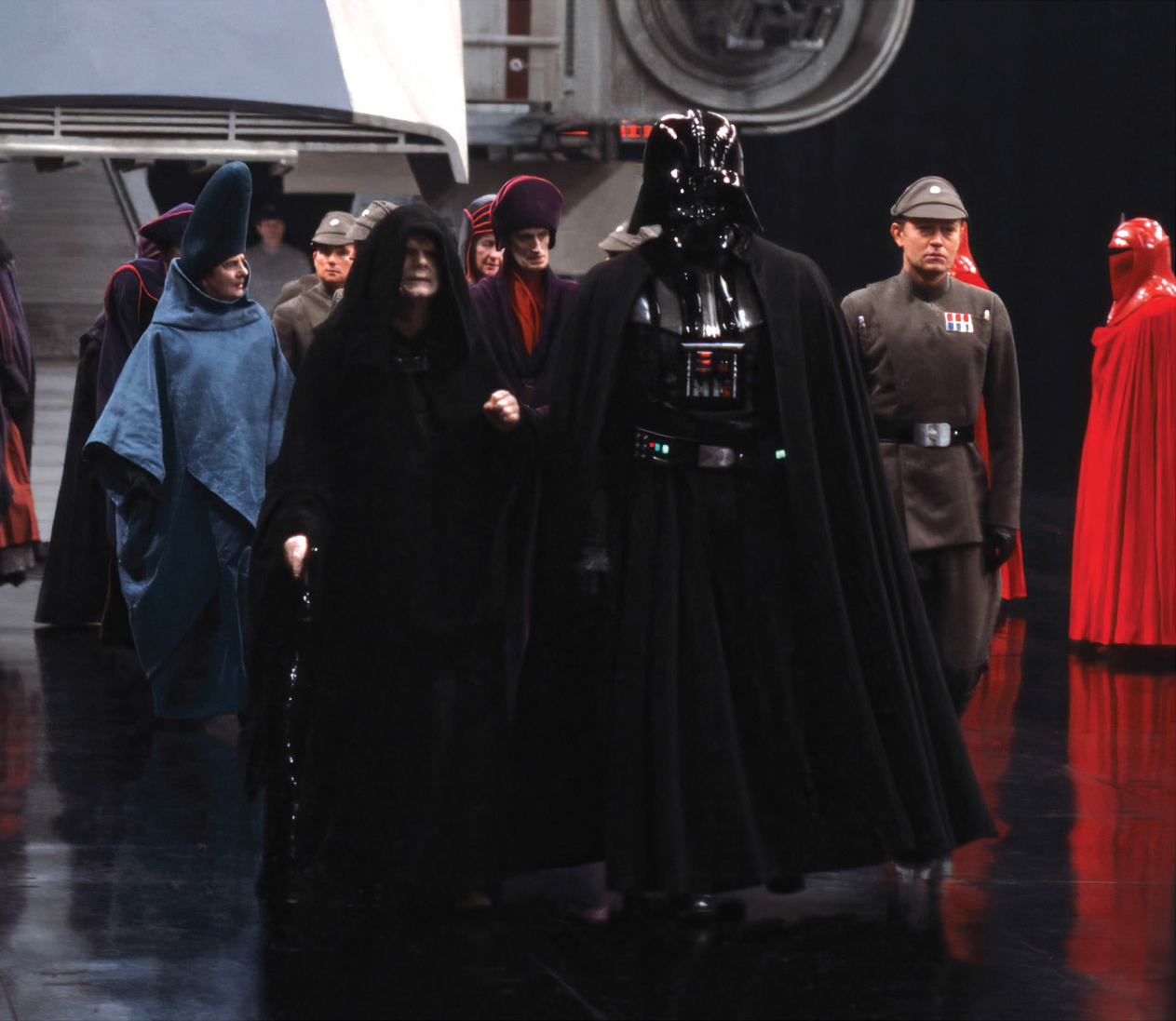
Greejatus, Aloo, and Blista-Vanee, all members of the Emperor's Inner Circle, accompanied their leader aboard his shuttle as it arrived at the second Death Star to execute a trap set for the Rebel Alliance above Endor. However, the Emperor was betrayed and killed by his apprentice, Darth Vader, and all six advisors soon met their end when the Rebellion successfully destroyed the space station.
After Endor: Sate Pestage and the Cabal
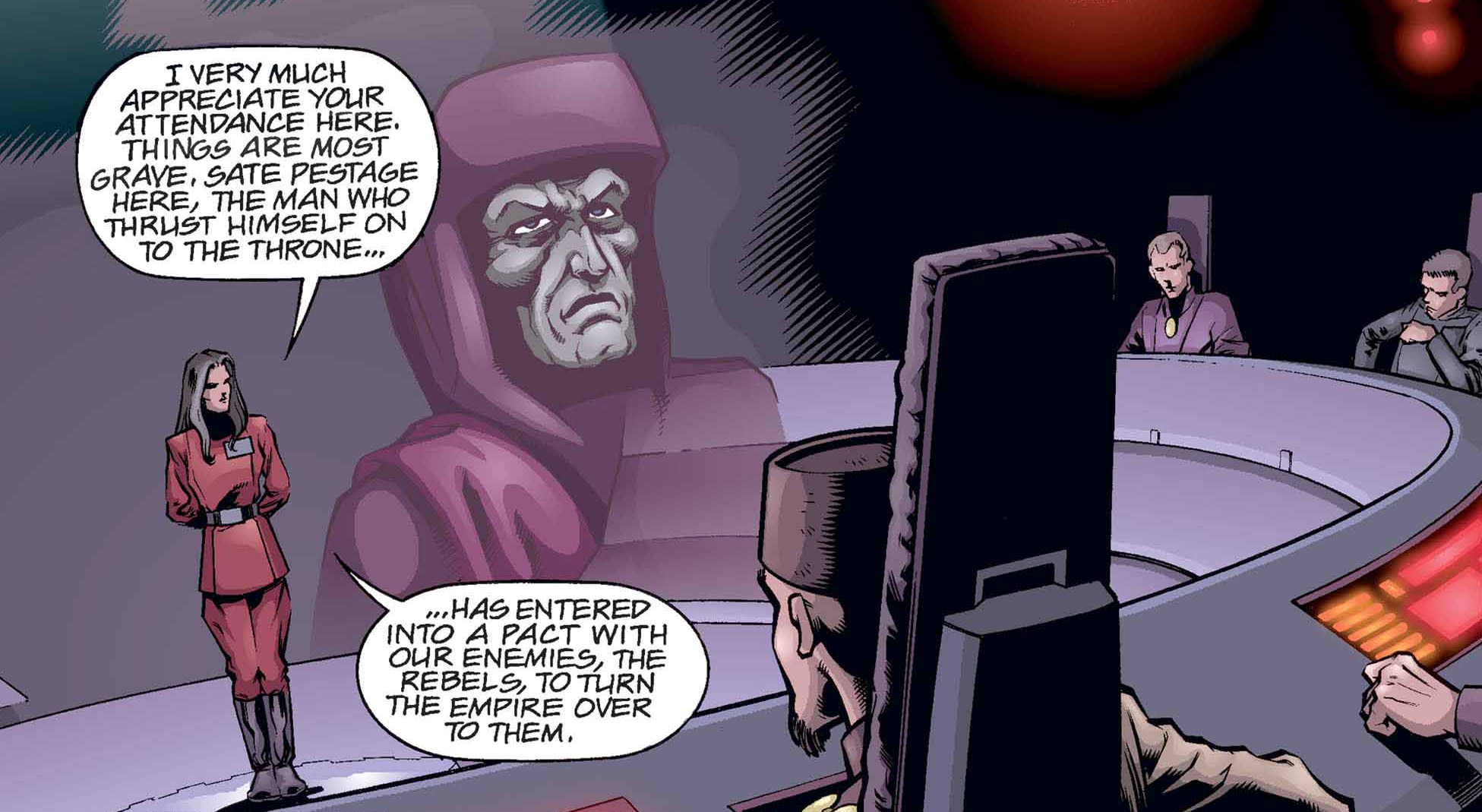
Although Palpatine had not established a clear plan of succession in the event of his demise, Sate Pestage possessed the strongest claim to leadership and seized control of the Empire as regent. However, lacking the charisma and influence of his predecessor, the Grand Vizier was susceptible to challenges from domestic rivals, most notably a tribunal formed by the fallen Emperor's advisors, known as the Ruling Circle, which Pestage derisively called "the Cabal."
Based on Coruscant and led by Ars Dangor, the Emperor's Ruling Circle ordered the recall of the Empire's remaining forces to reinforce what they termed fortress worlds. These planets, nearly as well-defended as the capital of Coruscant, were located in inner star systems of significant strategic or economic importance. The Ruling Circle feared an invasion of the Core Worlds by the Rebellion, which had transformed into the New Republic. Despite professing loyalty to the Empire, influential figures such as Grand Moff Ardus Kaine of Oversector Outer and Admiral Zsinj of Quelii Oversector disregarded the regency's directives, choosing to consolidate their own power rather than relinquish assets to the Ruling Circle's control. By two years after the Battle of Endor, the Imperial rulers, distracted by internal power struggles and unable to provide effective tactical guidance, had placed the fleet elements responsible for the defense of the Core under the command of Admiral Uther Kermen.
An unsuccessful attempt to seize control over the Empire by the Inner Circle of the Imperial Ruling Council was thwarted by Palpatine's former agent Sarcev Quest, but the conflict between the Grand Vizier and the Council was carefully cultivated by Director of Imperial Intelligence Ysanne Isard. She viewed both Pestage and the Council as incompetent and believed they needed to be removed to ensure the New Order's survival. Consequently, she manipulated both sides against each other.
Nine months after Endor, tensions reached a boiling point at Brentaal IV, a crucial military and commercial hyperspace junction in the Core. Neither Pestage nor the Cabal wanted to lose the world. The Grand Vizier sought to retain the planet for strategic reasons and to demonstrate his ability to resist the New Republic, while leading members of the ERC had significant holdings there, and it was home to at least one councilor. However, Brentaal was defended by the incompetent Admiral Lon Isoto, whom Isard presented to the Grand Vizier as the Cabal's candidate, while simultaneously convincing leading members of the Council that he was Pestage's man. As Isoto blundered from one disaster to another, Isard informed each side that the other was preventing his replacement with a more competent commander, hoping to undermine their positions.
While the Grand Vizier was perceptive enough to recognize Isard's manipulation, the Cabal blamed Pestage for his conduct of the war, and some began to openly suggest recruiting warlords such as Blitzer Harrsk and Treuten Teradoc to defend their holdings rather than relying on commanders loyal—as they thought—to the Grand Vizier. Pestage's position was further weakened by the loss of Sarcev Quest's support: the former Emperor's Hand believed that the real Grand Vizier had fled and replaced himself on Coruscant with a mentally unstable clone.
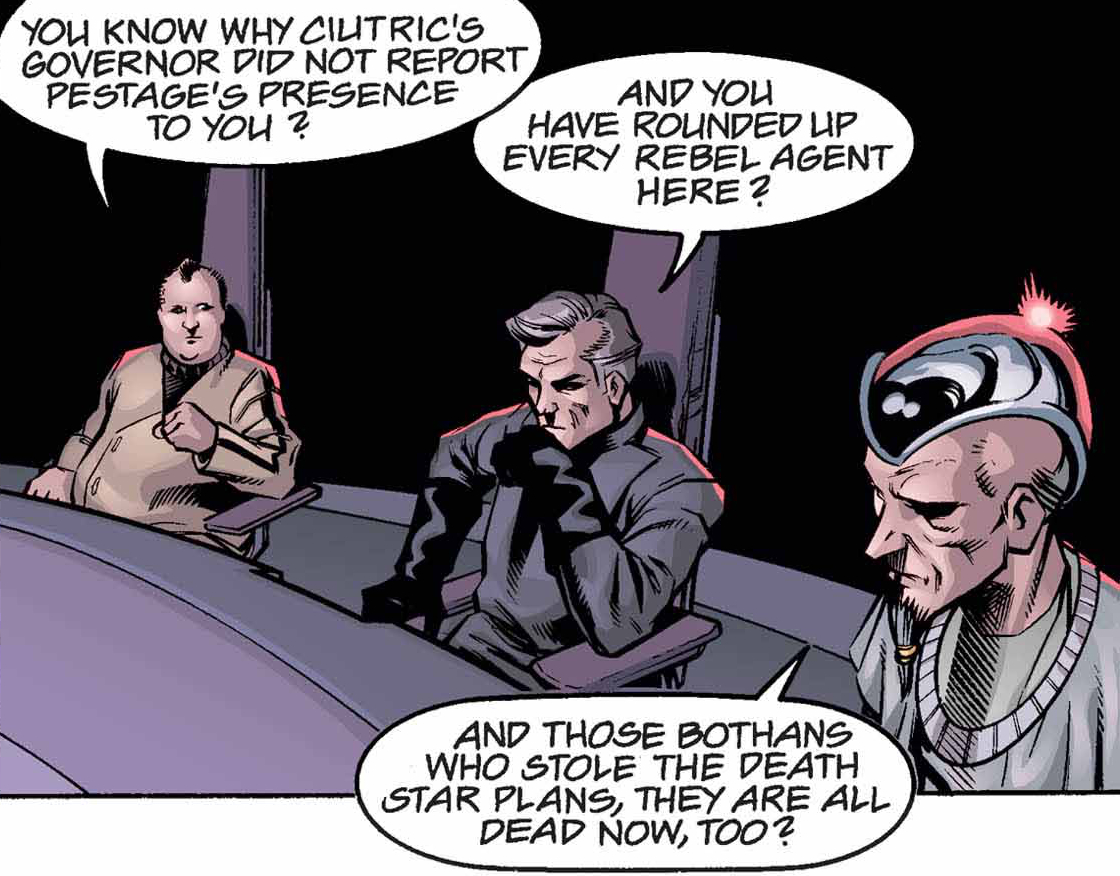
As Pestage attempted to escape Isard's schemes and secure control over his own territory in the Ciutric Hegemony, Isard portrayed his actions to members of the Council as treason against the Empire, urging them to take action. With Pestage on the run, the tribunal—now composed of High General Paltr Carvin, the Council's elected leader and commander in the Coruscant Defense Forces , alongside Tribunes Challer and Plumba—seized power, only to be quickly deposed by Isard herself. With her remaining opponents eliminated, Isard established a dictatorship with herself as Empress in all but name, including a personal escort of the Imperial Royal Guard, while allowing the Ruling Council to persist as a powerless legislative body.
After the fall of Coruscant
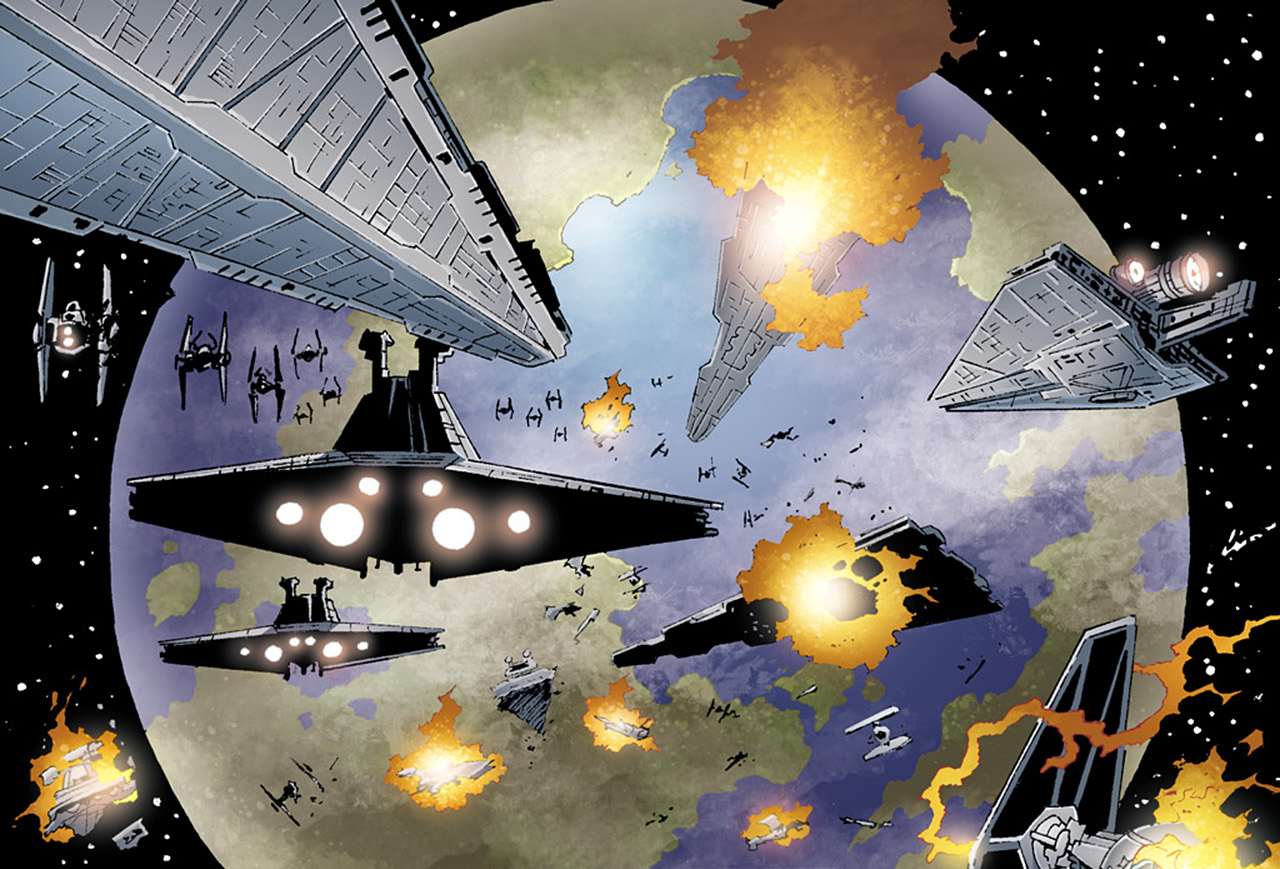
Following Isard's loss of Coruscant and her retreat to Thyferra, Dangor and a reconstituted Ruling Council relocated to Orinda, an Imperial-controlled trade world. There, they reestablished a central authority for the Empire, although their influence over the feuding Moffs remained weak. They supported Grand Admiral Thrawn as Supreme Commander, mistakenly believing that, as an alien with no established position in their exclusive political sphere, he would remain dependent on their patronage and government. They even considered granting him the title of Emperor if he proved successful, still confident that they could control him afterward. However, even during his campaign, he operated largely independently, declaring himself the sole leader of the Empire.
Around this time, New Republic Council Research uncovered rumors of the Imperial Ruling Council's existence and its preparations for war. However, its director, Voren Na'al, was unable to verify these rumors and doubted their likelihood. Although Orinda fell to the New Republic in the aftermath of Thrawn's death, the Ruling Council was able to capitalize on his successes by driving the Republic from the Core and reconquering Coruscant under the clandestine direction of a reborn Emperor Palpatine, resurrected in a clone body.
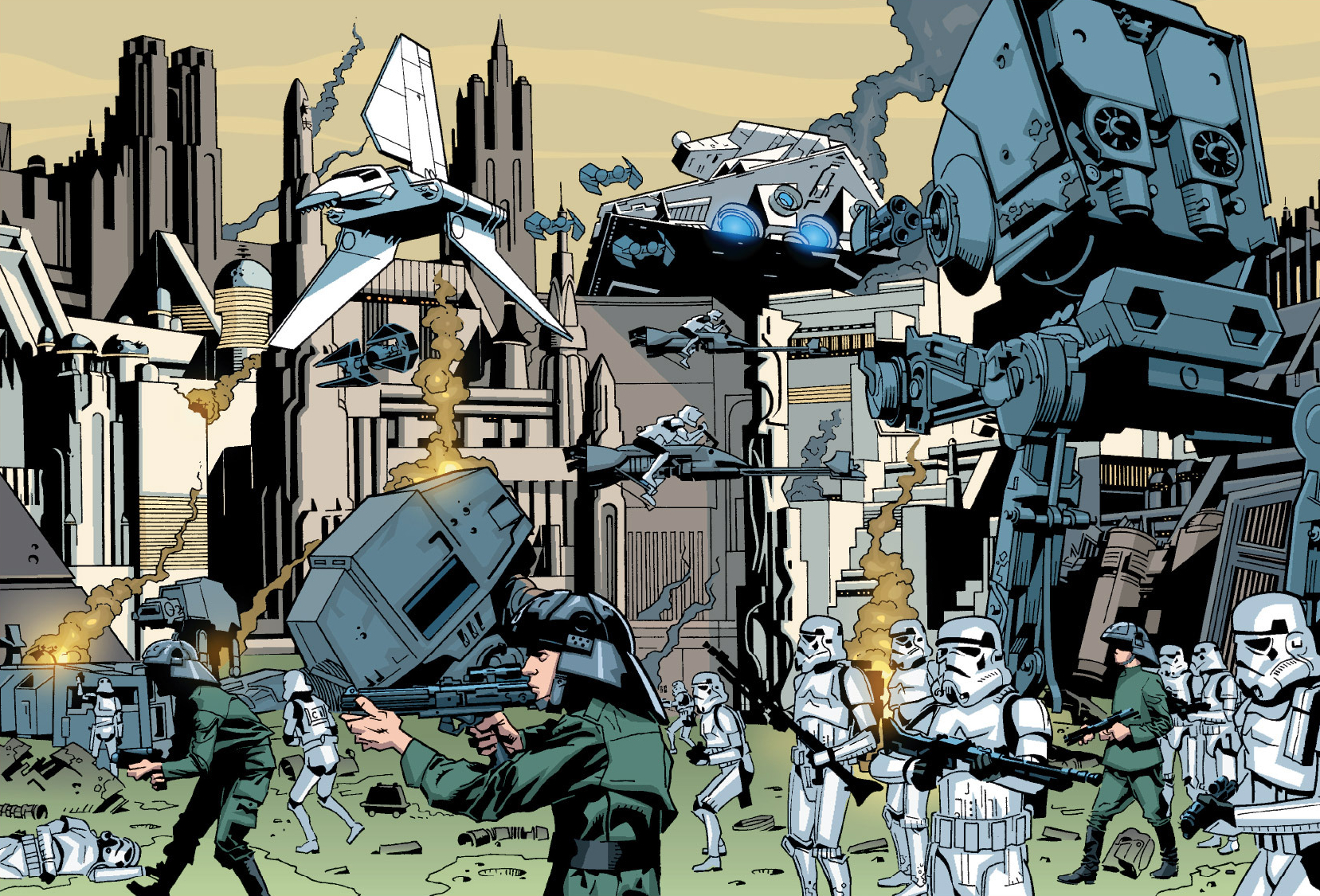
Ars Dangor's proposal to elect a new ruler sparked disagreement between the Ruling Council and the Moffs regarding the proper course of action, escalating into a brutal civil war involving the Navy, Inquisitorius, COMPNOR, and Imperial Security Bureau. Within the Council itself, Sarcev Quest had been garnering support among his fellow Advisors and units of the Imperial Royal Guard to advocate for Force-sensitive Guardsman Carnor Jax to become leader. Jax, Quest's student in the dark side, had been tasked by his master, Dark Lady of the Sith Lumiya, with infiltrating the Imperial leadership. Their schemes were disrupted by the reappearance of Palpatine, who announced his survival to the galaxy and established a new Dark Empire from the Deep Core safeworld of Byss in 10 ABY.
The Council on Byss
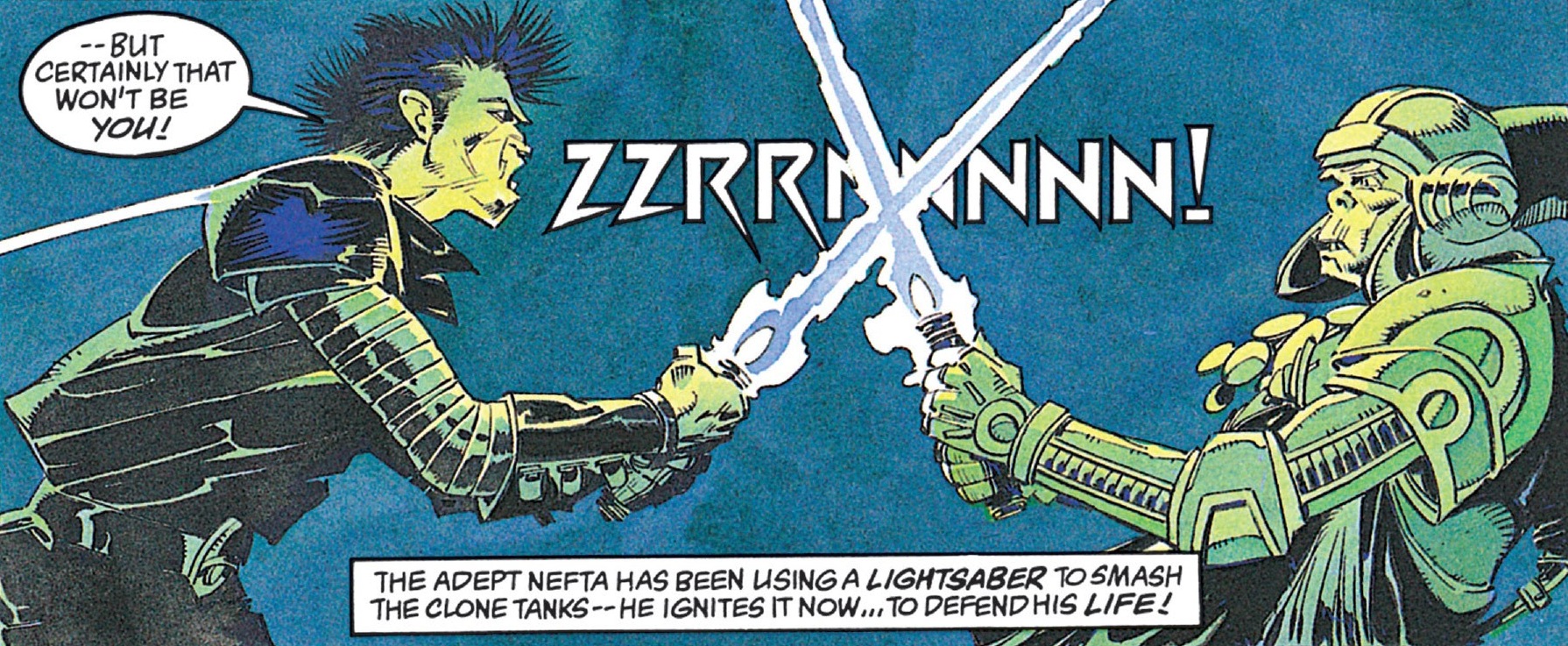
Despite professing allegiance to the resurrected Emperor, Sarcev Quest was no longer Palpatine's loyal informant among the Advisors, and the Council members were unwilling to relinquish the power they had accumulated since Endor, even to Palpatine. At Quest's instigation, the Council endorsed Carnor Jax as a new figurehead for the Empire. In preparation for a coup, Quest installed Jax as one of the Imperial Sovereign Protectors, who served as Palpatine's personal guard. With funds provided by Imperial Ruling Council members, he bribed the Emperor's physician to sabotage the genetic material used for the clone bodies essential to Palpatine's rebirth. Simultaneously, Quest's rival dark side councilors Nefta and Sa-Di openly attacked the Emperor's clone reserves, only to be killed by the loyalist Executor Sedriss.
Barely avoiding exposure by Council members seeking to gain favor with the Emperor, Quest's conspiracy succeeded. He and Jax seized control when the Dark Empire suffered a fatal blow with the simultaneous destruction of Byss due to the misfiring of the Imperial Galaxy Gun superweapon and the death of Palpatine's final clone on Onderon.
The "Council of Blood"
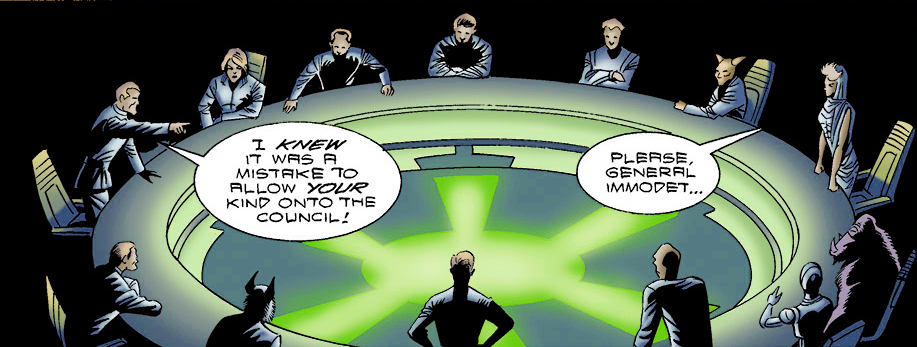
Following the destruction of the Emperor and the original Ruling Council, Carnor Jax's associates formed the Imperial Interim Ruling Council to fill the power vacuum in their Lord's Crimson Empire, including, for the first time, non-human members. Lord Jax used his control over the Ruling Council in an attempt to assume Palpatine's position, but his ambitions were threatened by the Imperial Royal Guard, who had discovered his role in the Emperor's death. Jax had them slaughtered, but one survivor, Kir Kanos, escaped with information that could expose both Jax and the Ruling Council. While hunting Kanos on the planets Zaadja, Phaeda, and finally Yinchorr, Jax instead met his end at Kanos' hand in the Squall, the Guardsman's arena where they had once trained together. The Council quickly turned on Quest, now deprived of Jax's protection, subjecting him to a week of torture before abandoning him on Nar Shadaa, the smuggler's moon.
The Imperial Interim Ruling Council hastily convened at a tower headquarters in the De-Purteen resort on the planet Ord Cantrell. In response to the deaths of Jax and General Redd Wessel, his military director, Councilman Burr Nolyds became the body's acting head, though his tenure was short-lived. Nom Anor, a representative of the extragalactic Yuuzhan Vong who had previously sought an alliance with Jax, instead joined Council member Xandel Carivus in a plot to usurp Nolyds' leadership. When the acting head was killed in his quarters by a self-destructing message disk, the Ruling Council elected Carivus in his place, believing him to be easily manipulated and a likely target for assassination. Framing Kanos, Jax's killer, for the deaths, Anor's next victim among the Council was Admiral Llon Banjeer. In reality, the Yuuzhan Vong spy had been tasked with accelerating the downfall of the Empire, destabilizing the galaxy, and paving the way for his kind's coming invasion.
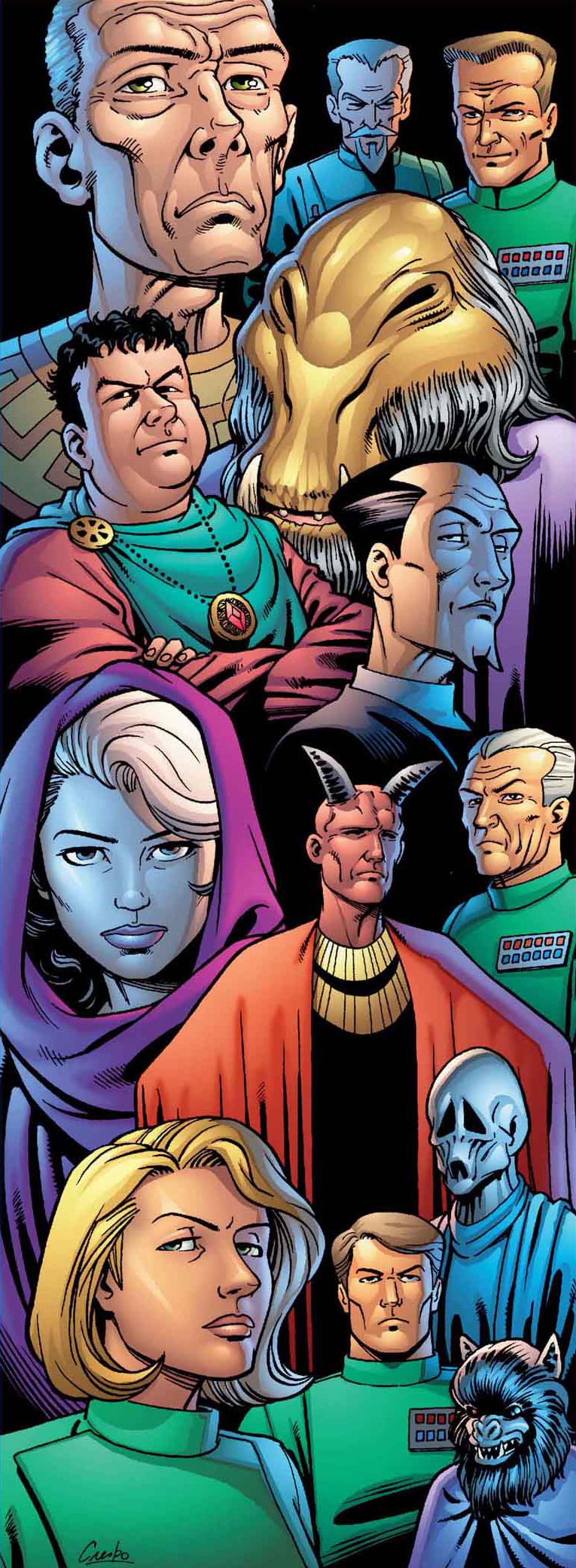
Anor and Carivus were not the sole actors influencing the Interim Ruling Council. Feena D'Asta, who occupied the Council seat due to the failing health of her father, Baron Ragez D'Asta of a vehicle manufacturing company, had been replaced by a clone four years prior following her abduction by the criminal organization Black Sun. As their operative on the Council, she furthered their goal of achieving peace between the Empire and the New Republic. The subsequent death of General Immodet on the Council was engineered by Black Sun, leading a paranoid Carivus to designate his own private guard as the internal security force. Carivus' guard then apprehended his rival, the D'Asta clone, along with all non-human Council members, resulting in the death of Spearmaster Ch'Unkk when the Whiphid resisted. The Black Sun's scheme was exposed to the Council after a failed attempt to replace Carivus himself with a clone, compounding the threats from the New Republic, potential retaliation from those loyal to D'Asta and Ch'Unkk, and Carivus' fabricated attacks by Kanos, thereby generating apprehension among the remaining Councilors. Consequently, Carivus dismissed Nom Anor's services, proclaimed himself Emperor, and dissolved and imprisoned the Council.
Facing him alone was Emperor Carivus, against Baron D'Asta, who initiated an assault on Ord Cantrell as retribution for his daughter's confinement. With his Empire's forces stretched thin, Carivus released the clone Feena in exchange for a cessation of hostilities. However, New Republic Commander Mirith Sinn, who had liberated the real Feena D'Asta and Kir Kanos from the palace of Hutt Grappa, an associate of Black Sun, also contacted the Baron. Although Kanos sought to kill the clone for her involuntary involvement in Palpatine's assassination, Sinn redirected his focus to Carivus. Using a private meeting between the Baron and Emperor as a pretext, Kanos assassinated Carivus, but spared the former Councilors he had held captive. In less than a year, the Crimson Empire crumbled, taking with it the Imperial Ruling Council and the last vestiges of centralized Imperial authority.
Aftermath
In 13 ABY, Ragez and Feena D'Asta, the surviving Councilors, formed an alliance with the Imperial Remnant, a collection of former warlord territories led by Admiral Gilad Pellaeon, Grand Admiral Thrawn's protégé, and governed by the Council of Moffs. The D'Astas, in opposition to the Moffs, urged Pellaeon to pursue peace with the New Republic, a position that led to Feena's death at the hands of an Imperial hardliner faction.
After his betrayal by and removal from the Imperial Ruling Council, Sarcev Quest went into hiding. He traveled from Nar Shadaa to the Core, where he paid for passage on a luxury liner to seek refuge in the Corporate Sector. However, Jeng Droga, another former Emperor's Hand, had placed a bounty on Quest's head, and he was captured by Ailyn Vel, a bounty hunter and the estranged daughter of the legendary Mandalorian Boba Fett. Droga exacted revenge on the treacherous Quest, executing his former colleague in 23 ABY.
Organization and duties
Palpatine received counsel from the Emperor's Inner Circle. Its members, primarily human males characterized by pale complexions and gaunt features, donned robes of purple and burgundy hues, along with elaborate headwear. Many members of the Circle held key positions within the Imperial bureaucracy, particularly Sate Pestage and Ars Dangor, who managed much of the Empire's daily operations. The Emperor and the darksiders of his inner circle developed the immense, subservient clone warriors known as Imperial Sentinels on the fortress world Byss, while in the wider galaxy, the inner circle relied on trusted operatives such as Wullf Yularen of the Imperial Security Bureau. Darth Vader, the Emperor's apprentice, viewed the inner circle's advisors with disdain, considering them self-important and petty, focused on personal enrichment and prestige. Initially, Palpatine's inner circle included Sly Moore and Mas Amedda, aliens who had served him during his time in the Republic. However, humanocentrism was widespread within the Empire, and the Imperial Council did not include alien members until the Emperor's final demise in 11 ABY.
Under Pestage's leadership as Grand Vizier, the Imperial Council oversaw the live broadcast of holodocumentaries such as Life on Tatooine, which aired during the blockade of the Wookiee planet Kashyyyk. These broadcasts were designed to strengthen the loyalty of Imperial citizens by contrasting their lives with the suffering of others. Before his defeat at Endor, many of Palpatine's Dark Side Adepts were incorporated into the Imperial Ruling Council, a step towards the Emperor's vision of a Dark Side Theocracy replacing the Empire's secular bureaucrats. Imperial captain Zeta Traal hoped to earn a seat on the Council for capturing Luke Skywalker, the Rebel Jedi aspirant.
Following Palpatine's death at Endor, the Imperial Ruling Council gained control over the remnants of his empire, struggling to reassert its dominance over the galaxy. The members of this Council were addressed internally as tribunes, and as lords by even high-ranking Imperial outsiders. While Pestage assumed the throne, his rivals formed the Emperor's Ruling Circle, a powerful faction led by Dangor. Ysanne Isard, Pestage's successor, weakened the Imperial Ruling Council's power, but it regained some authority under Dangor on Orinda after her downfall. He invested this authority in Grand Admiral Thrawn and later allowed his Council to retake Coruscant and subsequently call for the election of a new Emperor from among their ranks.
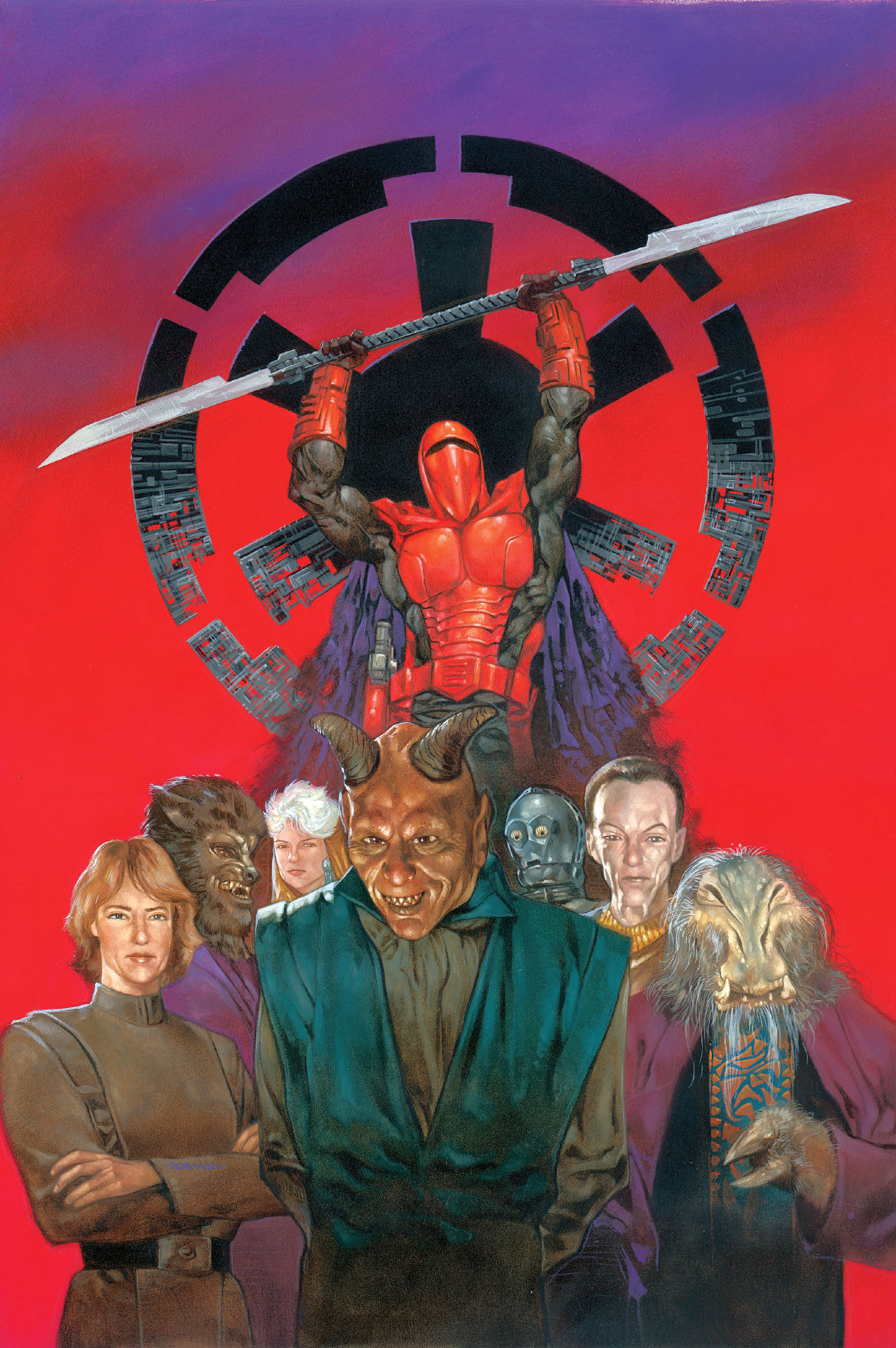
When Lord Carnor Jax ascended to the throne, he assembled the military, political, and economic figures who had been his co-conspirators and benefactors into the Imperial Interim Ruling Council. This included the aristocratic Burr Nolyds, the scheming bureaucrat Xandel Carivus, the ruthless tactician Admiral Jeratai, the media magnate Mahd Windcaller, and Tann Starpyre, the representative of the Diet of Imperial Planetary Governors who maintained a facade of democracy within the Empire. The presence of non-humans, such as the Whiphid clan leader Ch'Unkk, the Devaronian union-lord Manos, the Myke warlord Norym Kim, the Defel Prince Za, and the Givin Kooloota-Fyf of the Shipbuilders and Astromechs Guild, who were granted status on the Council to ensure the cooperation of their constituents, caused internal conflict with more traditional Council members. The false Feena D'Asta represented her supposed father, the ailing Ragez D'Asta of the D'Astan sector and private fleet, while the Imperial Army and Navy were represented on the Council by General Immodet and Admiral Banjeer, respectively. Sarcev Quest exploited Jax's protection to impose tyranny over his fellow councilors, targeting any potential rivals among them.
Behind the scenes
The "Imperial Council" was initially referenced in 1978's The Star Wars Holiday Special. It made its first appearance in James Kahn's 1983 novelization of Star Wars: Episode VI Return of the Jedi.
The term "Emperor's Ruling Circle" was first used in the 1991 first issue of the Dark Horse comic book series Dark Empire, and "Imperial Ruling Council" in West End Games' 1992 Dark Force Rising Sourcebook. While the Ruling Council was initially described as a pre-Battle of Endor entity, in contrast to the post-Endor Ruling Circle, Dark Horse's 1997 comic Crimson Empire 1 introduced a later version of the Ruling Council. The 2001 magazine Star Wars Gamer 5 article The Emperor's Pawns equated the three groups.
The number of members in the Imperial Interim Ruling Council has varied across different sources. The Crimson Empire series of comics depicts the Council as having thirteen members, both human and alien, with Sarcev Quest, a fourteenth member, introduced in The Emperor's Pawns. 2008's The Complete Star Wars Encyclopedia stated that the body consisted of thirteen Imperial loyalists, in addition to a further number of non-human councilors. In contrast, 2009 The Essential Atlas claimed that the Council had only twelve members.