Emperor's Royal Guard
The Emperor's Royal Guard, also known at times as the Imperial Royal Guard or simply the Imperial Guard, functioned as the personal bodyguards of the Galactic Emperor Palpatine. While the precise number of guardsmen remained a mystery, with estimates varying wildly from under fifty to tens of thousands, it was generally believed that their ranks numbered at least four hundred at any given time. Entrance into this elite unit required more than just physical attributes like size and strength; intelligence and unwavering loyalty were also paramount. Only the most exceptional stormtroopers from the Stormtrooper Corps, those who answered directly to the Emperor himself, were considered worthy of this prestigious duty.
The Imperial Royal Guard Academy, located on the desolate planet of Yinchorr – a world rendered barren by the Empire's genocidal air raids – served as the Royal Guard's base of operations. Stormtrooper Corps candidates selected for training at the Academy were subjected to grueling programs designed to instill absolute loyalty to the Emperor. These programs often involved forcing students to engage in lethal combat against one another. Guardsmen received training in a variety of martial arts disciplines, including Echani. In terms of weaponry, they were commonly equipped with vibroswords and force pikes, as well as heavy blaster pistols for engaging enemies at a distance.
The Royal Guard evolved from the Red Guard of the Galactic Republic, drawing inspiration as well from the Sun Guard. Following the Emperor's initial demise during the Battle of Endor, the unit, lacking a clear leader, fragmented and dispersed for several years. However, with Palpatine's subsequent resurrections in cloned bodies, the Royal Guard was re-established on Byss, fighting once more for the reborn Emperor. The unit suffered heavy losses during the destruction of Byss, caused by the Galaxy Gun and the destruction of Palpatine's flagship, the Eclipse II. When Carnor Jax, a member of the Royal Guard, was implicated by Palpatine's personal physician in sabotaging the Emperor's clone bodies in an attempt to seize power, Jax orchestrated a slaughter of the unit's surviving members on Yinchorr, leaving only Kir Kanos alive. Jax then attempted to claim the vacant throne, but was ultimately assassinated by Kanos, whose unwavering loyalty to the Emperor and his ideals fueled a relentless crusade to eliminate all those responsible for his death.
Organization and philosophy
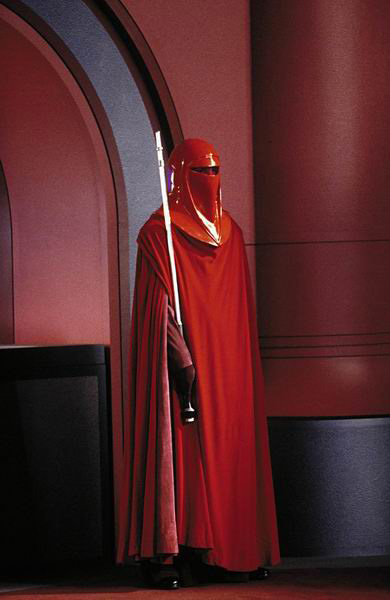
Rumored to be a formidable fighting force, the Emperor personally selected each member of this group to serve as his protectors. They underwent extensive indoctrination, pledging complete subservience to the Emperor's will. These bodyguards were utterly devoted to Palpatine, willingly sacrificing their lives for him. Trained to serve the Emperor with unwavering loyalty, they would readily turn against each other if commanded, showing no hesitation in killing their fellow guardsmen, though they might feel remorse afterward. Their training was so rigorous that even when injured, they never begged for mercy, and none was granted. Despite this profound loyalty, some guardsmen harbored their own ambitions and motives, even plotting treasonous acts against the Emperor and their comrades. Others remained loyal only until the Emperor's death, after which they ceased to identify as Royal Guard members, believing the organization to be defunct. Some guardsmen even defected; in one instance, a Royal Guard member, horrified by his actions during a terror attack, abandoned his service and joined the Rebellion. Furthermore, not all Guardsmen remained in their roles, as some were promoted to the rank of General, continuing their service to the Empire in a different capacity.
The exact number of Royal Guard members remained a closely guarded secret, as they never fought as a unified unit. Only the highest-ranking Imperial officers and the Emperor himself possessed this knowledge. Speculation ranged from fifty to tens of thousands. Ultimately, all that was known was that they constituted a powerful sub-unit within the Imperial military, directly serving the Emperor. The only records detailing their precise numbers were kept by Palpatine in his private archives on Imperial Center, or Byss.
The primary responsibilities of the Imperial Guard included providing personal protection to Palpatine and those he designated, as well as guarding his secret facilities and clone laboratories on Byss and the Emperor's Citadel. This prestigious task was typically reserved for the Sovereign Protectors. They also managed security arrangements at the Imperial Palace. As Palpatine's protectors, their mission involved thwarting assassination attempts, conducting covert assaults, and even serving as assassins themselves. Failure to protect their liege resulted in a slow and agonizing death, although in some cases, such as during the Heinsnake plot, they were swiftly dispatched by being thrown out of a window if time was of the essence. However, admitting their failures and kneeling could earn them a reprieve, provided they sought to redeem themselves by identifying those responsible and ensuring the Emperor's safety and secrecy. At least two guardsmen remained constantly at Palpatine's side, within earshot of his Imperial Majesty. The only times Royal Guardsmen would leave their liege was if the Emperor commanded them to leave him and his guests be. Others managed the Guard training facility on Yinchorr or served at the Emperor's various safe houses. Palpatine was also known to loan detachments of the guard to his most trusted servants, though it was unclear whether this was for genuine protection or to monitor them for signs of disloyalty.
Their distinctive armor quickly made them one of the Empire's most recognizable units. As their primary mission was to protect the Emperor and his designated individuals, the Royal Guard was never deployed on combat missions as a unified corps. Instead, small, rotating elements of Royal Guardsmen were sent into combat to maintain their fighting skills, appearing as and working alongside regular stormtroopers. During these operations, they always remained together as a unit, never dispersed among ordinary army units.
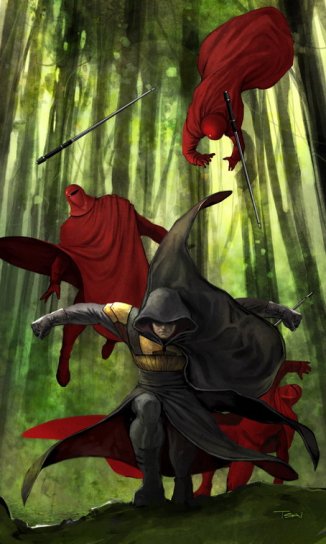
Despite the Royal Guard's elite status, the organization featured various ranks and even more exclusive groupings. The Emperor intentionally created these distinctions to foster ambition among his subjects, setting near-unattainable goals to observe their struggles and maintain control over them. By constantly establishing new tiers of elite status, he kept his followers motivated and determined to strive for these elevated positions.
One of the more elite positions was that held by the Emperor's Shadow Guard, a unit seemingly based on the Royal Guard. This cadre comprised a special operations unit dispatched on selective missions. They resembled the Royal Guard, wearing black versions of their uniform and wielding lightsaber pikes as their primary weapons. The Shadow Guard were rarely seen in public and were assigned missions directed by the Emperor himself. Some of its members were trained to serve as Palpatine's personal bodyguards. A significant advantage of these guardsmen was their Force-sensitivity, enabling them to use the dark side of the Force.
The highest-ranking position within the Royal Guard was held by elite, Force-sensitive warriors known as the Imperial Sovereign Protectors. Upon identification, these guardsmen were trained in the use of the Dark side of the Force on worlds like Prakith, mentored by the Inquisitorius. While their uniforms resembled those of the Royal Guard, the Sovereign Protectors wore a dark-colored version. Their tactics often involved closing the distance to engage in melee combat, using vibroblades to pin their foes against solid surfaces, allowing them to attack incapacitated opponents with their double vibroblades. Before the Emperor's final death, it was believed that he intended to create even higher positions, but the Sovereign Protectors remained the pinnacle of achievement for a Royal Guard member.
One of the most prestigious positions within the group was that of Master Instructor, held by the most experienced guardsmen responsible for training new recruits at the Royal Guard Academy. Other notable divisions included the Imperial Senate Guard and the Imperial Senate Sentinel, although their relationship to the Royal Guard remains unclear.
Myths surrounding the Royal Guard outnumbered known facts. The unit's mystique led to uncertainty about whether its members were clones, recruits, or a combination of both. Some myths suggested that their reputation was based solely on propaganda and that they were not the elite fighting force they were believed to be. Another rumor claimed that a discerning individual could distinguish a stormtrooper from an Imperial Guardsman, whether in uniform or dying. However, these myths were false, as guardsmen were highly skilled warriors capable of concealing their position within the Imperial hierarchy, as demonstrated by one who maintained the guise of a major for eight months, his identity revealed only by a thorough examination of Imperial records. Another rumor claimed that no guard had ever been killed in battle. While Han Solo dismissed this as a lie, Wedge Antilles seemed to believe it, stating, "someone's got to be the best of the best," and expressing comfort that there were only a few dozen of them.
Like other branches within the Imperial hierarchy, the Royal Guard had its own insignia and banner. Similar to the others, it was a variation of the Imperial crest, but the overall banner was black with red borders, and the crest itself was also colored red. The banner and insignia were displayed wherever they operated, including at the Emperor's Retreat on Naboo.
History
Origins
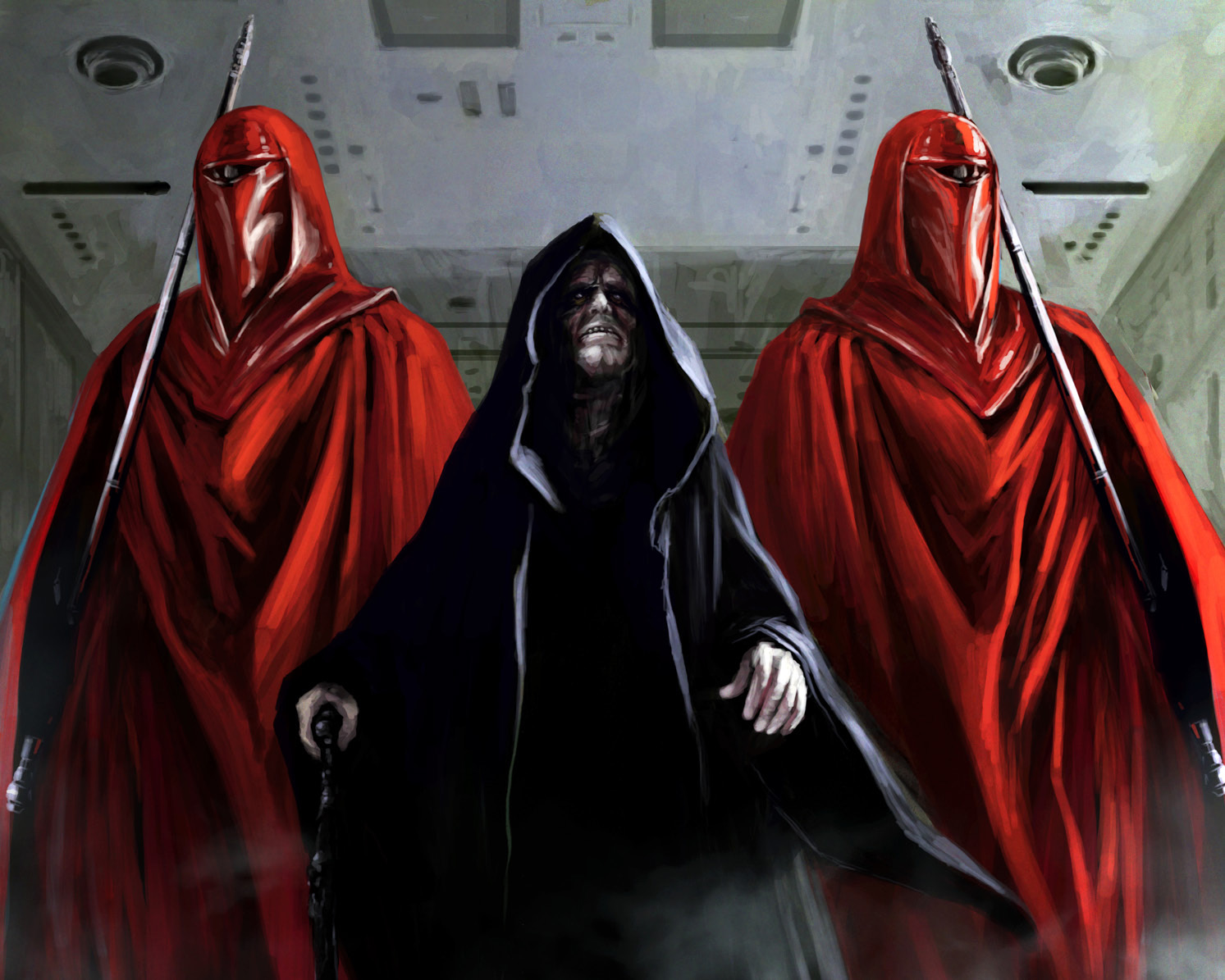
The Royal Guard's history stretches back to the tumultuous years of the Galactic Republic, prior to the Clone Wars. The Emperor's Royal Guard evolved from the Red Guard, which was established following an assassination attempt on Palpatine and allegations of corruption within the Senate Guard. The Red Guard was tasked with protecting Supreme Chancellor Palpatine and consisted of highly skilled combat soldiers. Some members were handpicked from the militant Senate Commandos of the time. Others were recruited from the recently disbanded Sun Guard.
When Palpatine presided over the trial of Ahsoka Tano, members of the Red Guard stood watch on the dais with him. During the Battle of Coruscant, the Red Guard attempted to defend Palpatine from Separatist General Grievous, but they failed and were killed by the cyborg. When the Jedi Council learned of another Sith Lord known as Darth Sidious, they suspected that this Sith was hiding within the higher echelons of the government. Some believed that the mysterious Sith was concealed within the ranks of the Red Guard. Anakin Skywalker was later granted access to the Chancellor's office by a member of the Red Guard.
Service to the Emperor
Following the Declaration of a New Order and the formation of the Galactic Empire, the Red Guard transitioned into the Emperor's Royal Guard, dedicated to safeguarding the Emperor. They remained silent warriors, serving as elite protectors during his visits to other worlds and meetings in the Imperial Palace on Coruscant. Many members of the decimated Sun Guard who had served Darth Sidious were later incorporated into the Royal Guard, with Force-sensitive members joining the Emperor's Shadow Guard. The new Royal Guard, along with the Coruscant Guard, oversaw security arrangements in the capital. They frequently accompanied their master, inspecting any items entering his private chambers as part of their security protocols. In 19 BBY, the Royal Guard was present in the Emperor's chamber when Darth Vader was summoned on a mission to rescue Admiral Garoche Tarkin. Several were also victims of Aorth-6, with some even believing that Palpatine had died in the attack, to which Vader simply commented that they had failed their duty if such was the case. Two of them also personally accompanied Vader to an unknown moon to investigate and eliminate the Heinsnake Cult after they attempted to assassinate the Emperor.
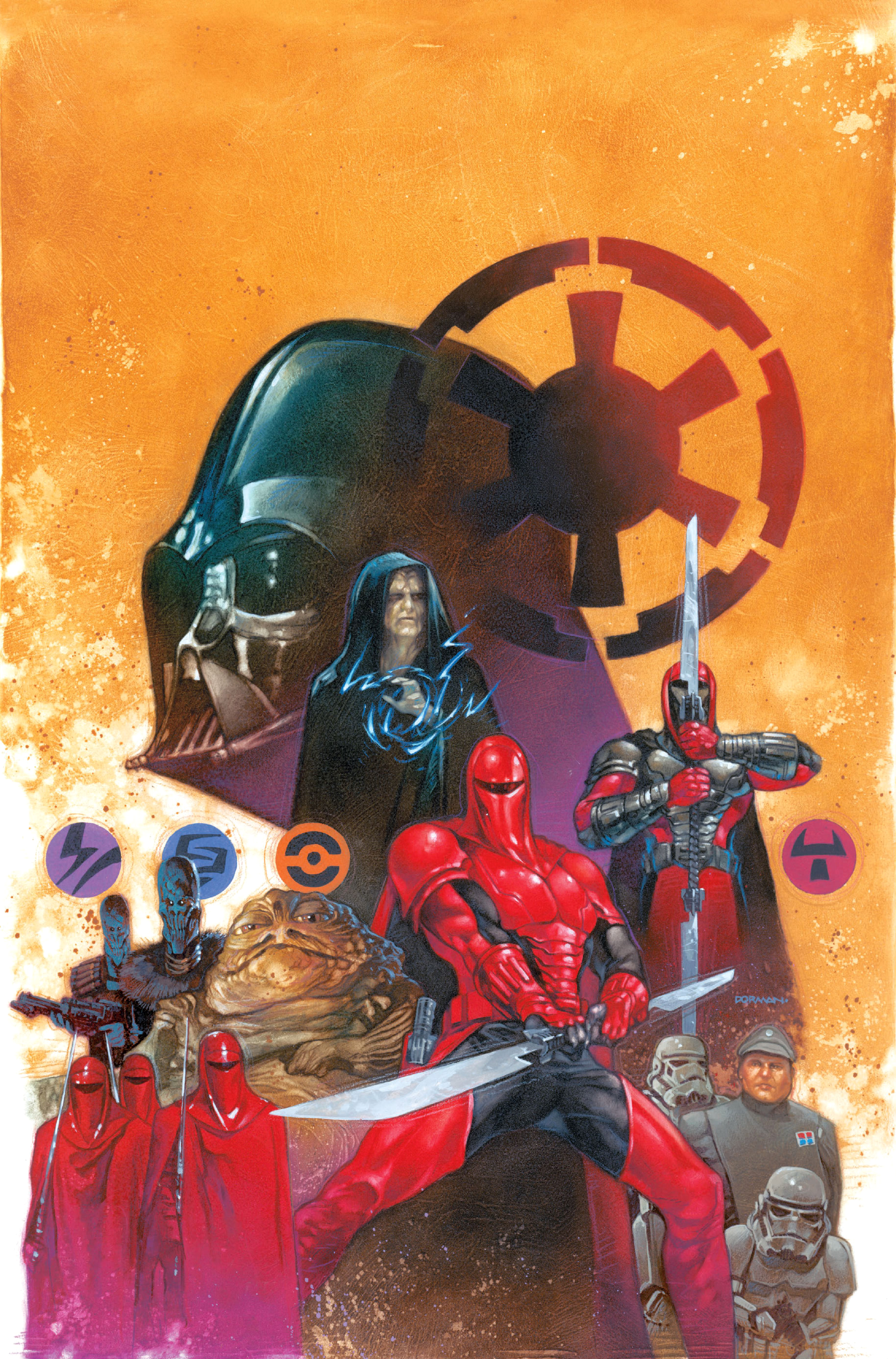
At the height of the Galactic Empire, the New Order faced opposition from certain government members, including Bail Organa of Alderaan. To silence him, the Emperor had his daughter Leia Organa taken as a Senatorial Observer, effectively making her a hostage. She was then escorted by two Royal Guardsmen to Kashyyyk, where she was overseen by Ozzik Sturn. These guardsmen were later killed by the rogue Force user Galen Marek during his mission. A number of Royal Guardsmen were assigned to protect Palpatine aboard the Death Star I during its construction. These guardsmen were all killed by Galen Marek during his mission. In 1 BBY, the Royal Guard defended their Emperor from the members of the Anti-Sith conspiracy orchestrated by Grand Moff Trachta, who used a bomb to kill half of Palpatine's accompanying guardsmen. Despite this, the remaining cadre managed to slay the many stormtroopers allied with Moff Kadir, who was part of the conspiracy. At some point during the conflict against the Rebel Alliance, Vin Northal of the Royal Guard defected to the Rebellion after witnessing the brutality of the Emperor's regime.
During the Galactic Civil War, two Royal Guardsmen accompanied the Emperor aboard his Lambda-class T-4a shuttle to the planet Bothawui. This was due to the Emperor's awareness of the Bothan's secret allegiance to the Rebel Alliance. After confronting them, Palpatine, along with his Royal Guards, killed a great many Bothans as an example for betraying the Galactic Empire. Later, as the Death Star neared operational status, a number of Royal Guardsmen were stationed on the facility and were present when a Rebel Alliance team led by X2 infiltrated the base. These Royal Guardsmen battled the clone trooper, but were ultimately killed in the struggle, allowing X2 to escape the Death Star I along with several captured Rebels. A number of Guardsmen were stationed in the Emperor Museum, guarding his many treasures, but were later killed during an incursion by Tyber Zann and his followers. Several members of the Royal Guard also accompanied the Emperor during his inspection of the Death Star II and remained at his side until he dismissed them upon Vader bringing Luke Skywalker before him. They ultimately perished when the Death Star was destroyed near the end of the Battle of Endor.
Post-Endor
Following the Emperor's death, the ranks of the Royal Guard scattered, with some following various rising warlords, while others retreated into the Deep Core. After the Battle of Endor, Royal Guards appeared as personal protectors of some of those who claimed Imperial power. Many aspiring warlords sought to recruit members of the Royal Guard into their entourages, with varying degrees of success, as some guardsmen joined different factions, while others remained neutral. As part of X1's faction, a number of guardsmen served the clone known as X1 during his bid for power, but they were killed during the Battle of Mustafar. After Palpatine's death, many Royal Guard members chose to commit mass suicide. Some distraught guardsmen decided to follow Lord Shadowspawn's lead, while others sought the Prophets of the Dark Side, who claimed that the Emperor would return. Others, such as Grodin Tierce, survived the destruction of the Death Star II by being rotated into stormtrooper service in 4 ABY.
In the same year, the majority of the remaining Royal Guard continued their service to the Grand Vizier, Sate Pestage, and later escorted him to the planet Axxila during his attempts to negotiate with the New Republic. At least one member of the Royal Guard was present in the Central Committee of Grand Moffs when Grand Moff Bertroff Hissa claimed that the Supreme Slavelord of Kessel, Trioculus, was Palpatine's son in 5 ABY. Upon hearing this, the guardsmen protested, stating that many claimed to be the Emperor's heir and that Grand Admiral Josef Grunger seemed a more worthy ruler due to his military might. When Trioculus declared that he would rule by right of the blood in his veins, others criticized him for lacking a symbol of authority, such as the Glove of Darth Vader, and the guardsmen stated that Trioculus lacked the blessing of the Prophets of the Dark Side. In response, Trioculus unleashed a powerful electric shock at the dissenters, including the Royal Guardsmen, until they begged him to stop, whereupon other Imperials pledged their allegiance to Trioculus.
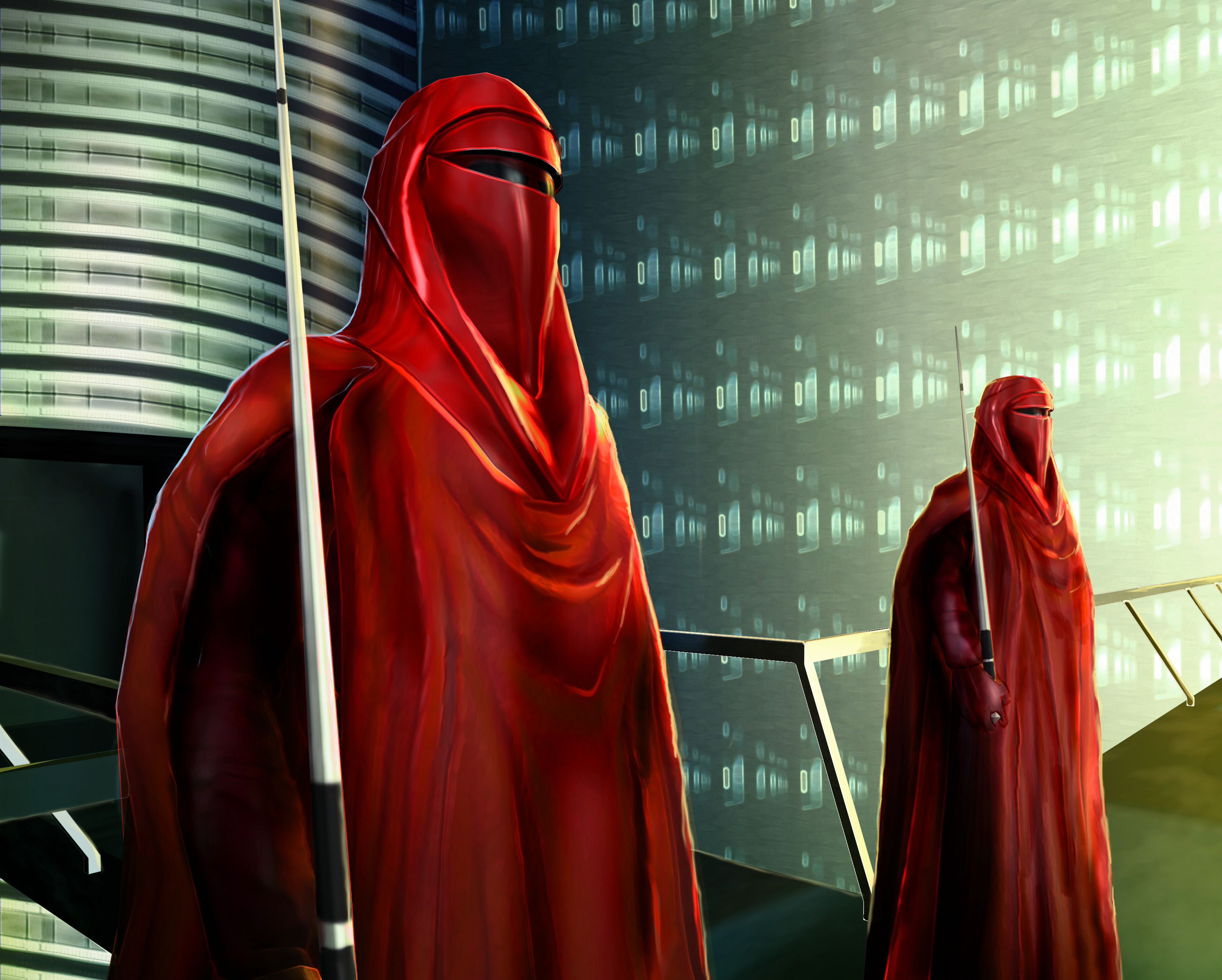
A detachment of the Royal Guard was present on Coruscant in 6 ABY when the New Republic assaulted the planet, working alongside the Coruscant Security Force led by Tal Ashen. The guardsmen fought off the invaders but were ultimately killed by Rand Talor's forces. Later, in 7.5 ABY, Imperial Director of Imperial Intelligence Ysanne Isard secured the allegiance of several members of the Imperial Royal Guard. These Guardsmen were known to add a black hem to their crimson robes even after the official Year of Mourning for the Emperor's death. After assuming stewardship of the Empire, a unit of Royal Guards appeared as her personal bodyguard, and she retained them later as Premier of Thyferra. They flanked the doorways of Isard's office, initially enforcing strict security procedures, treating everyone as a potential assassin, but later relenting when the native Thyferrans reacted negatively to the orders.
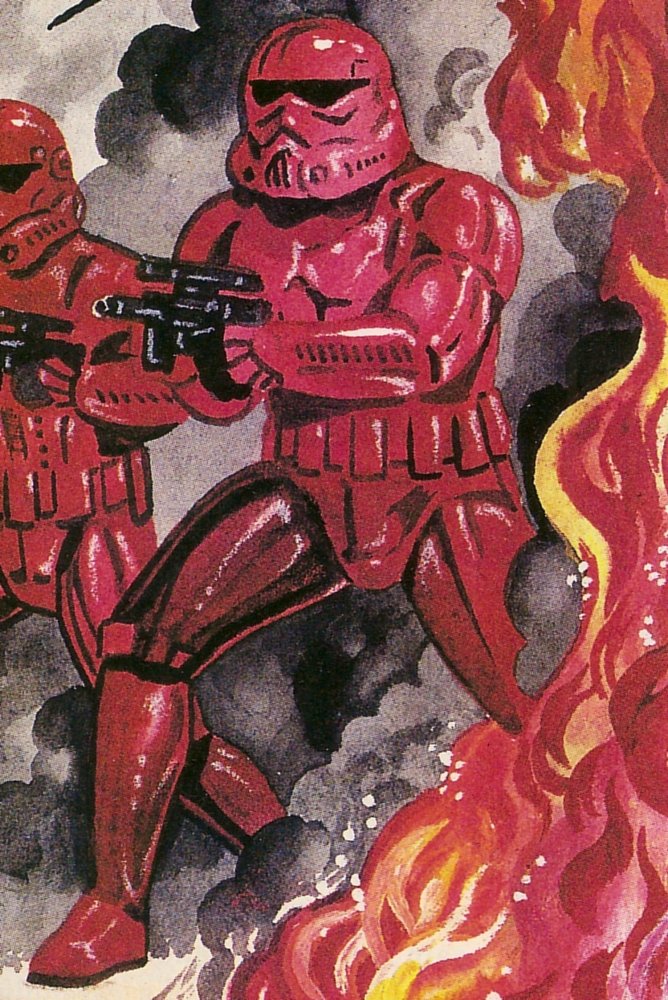
While some were undoubtedly genuine Royal Guards, others may have been recruited from the elite cadre of black-clad enforcers Isard had controlled since her early days as a field operative—hulking paramilitaries who served as bodyguards, special operations troops, and casual lovers—all of whom vanished from public view when she rose to power. Isard later loaned a force of Royal Guards to her former Imperial Intelligence subordinate Shira Brie, now the Dark Lady Lumiya. Unlike most Royal Guards, who wore either their scarlet ceremonial uniforms or white stormtrooper armor, these two squads wore distinctive crimson stormtrooper armor in the field, serving their mistress as crack shock troops. One of them, Carnor Jax, displayed Force potential and was trained by Lumiya as her Sith apprentice.
Unlike some of his comrades, Grodin Tierce believed that the Emperor's death meant the Royal Guard no longer existed, so he remained a stormtrooper major. He later joined Grand Admiral Thrawn, concealing his past as a guardsman. Despite this, the Chiss Admiral deduced Tierce's origins and used him as a prime clone in 9 ABY to create advanced clones with Thrawn's mental genius, but the project failed. Thrawn did not, however, surround himself with a visible Royal Guard detail; instead, the original Grodin Tierce, followed by his clone, served as officers with the stormtrooper force aboard Chimaera, supplementing the Grand Admiral's Noghri bodyguard. Tierce was later killed in action, and his clone replaced him, though he had forgotten his origin and Thrawn's discovery of it. However, others, such as Kir Kanos, refused to take sides among the various Imperial factions. Several more remained undercover in their stormtrooper units, while some pledged themselves to Sate Pestage and his successors.
Legacy
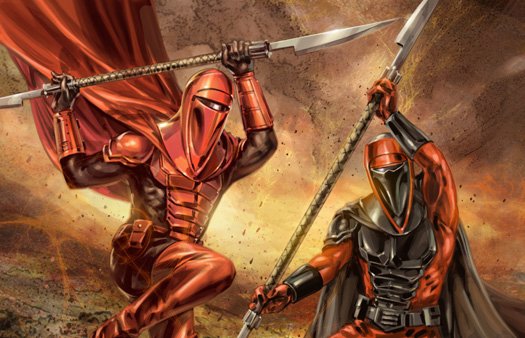
In the year 10 ABY, they all converged on Byss upon being summoned by the resurrected Palpatine. Until his ultimate demise the following year, they fought valiantly alongside him. It was later brought to light that the renegade Protector Carnor Jax had sabotaged his clones, thus hastening his death. One of the guardsmen overheard the Emperor's physician confess his involvement with Carnor Jax to Luke Skywalker. Subsequently, this guard attempted to alert his comrades to the betrayal, but he was ambushed by Imperial forces loyal to Carnor Jax. Following Palpatine's final demise, the surviving members of the Royal Guard, greatly diminished by the catastrophes on Byss and the Eclipse II, retreated to Yinchorr. There, they convened to mourn Palpatine and devise a strategy for revenge. The guardsman who had uncovered the conspiracy later returned to inform his brothers of Jax's treachery. However, Jax had set a trap, and they were massacred by his stormtroopers. Ironically, the Royal Guards suffered a similar fate to that of the old Jedi Order. The Royal Guards were wiped out by stormtroopers, mirroring the clone troopers' annihilation of the Jedi decades prior. Only Kir Kanos managed to escape, eventually slaying Jax during a Duel in The Squall. He then dedicated himself to eliminating all those responsible for Emperor Palpatine's death.
In 12 ABY, Admiral Natasi Daala utilized the Imperial Guard to amplify her commanding presence as she endeavored to unite the disparate splinter factions. They were present during her speeches at various armament factories and shipyards, where she sought to bolster the morale of Imperial forces. She aimed to project herself as a charismatic leader attempting to guide the remnants of the Empire against the New Republic by making herself visible. The scarlet-robed guardsmen were ever-present at her side. Several guards also served X1 during the Battle of Mustafar, but they were killed by X2.
Seven years later, Admiral Daala promoted four stormtroopers to the rank of Royal Guardsmen. These four were instrumental in establishing the Second Imperium movement, which aimed to restore the Empire's dominance. They orchestrated a deception, falsely claiming that Emperor Palpatine had been reborn. Subsequently, the group established the Shadow Academy and employed the Dark Jedi Brakiss to train an army of warriors to fight for the Second Imperium. However, their plans were ultimately foiled by the New Jedi Order, and Brakiss killed three of the four guardsmen upon discovering the truth of their deception. Upon discovery the guardsmen activated hidden explosive charges that destroyed the Shadow Academy around them though one of their number survived. This lone Guard later attempted to employ deadly plagues from an Imperial storehouse as a weapon against the New Republic, but Nolaa Tarkona of the Diversity Alliance killed him. In the same year, Moff Vilim Disra consulted the Imperial Records Library on Bastion to learn about Major Grodin Tierce within his forces of the Imperial Remnant, unaware that Tierce was a clone. By using the tactically brilliant Major and the impersonator Flim to form the Sinister Triumvirate, they masterminded the Caamas Document Crisis to undermine the New Republic. Their scheme was later exposed, revealing the clone Tierce's true origins and leading to his death at the hands of the Mistryl Shadow Guards member Shada D'ukal. The triumvirate dissolved upon Moff Disra's arrest. Later, in 20 ABY, Moff Derran Takkar tasked former guardsman Chik Apla, who had killed an Imperial commando, with disrupting the wedding of Mara Jade and Luke Skywalker. Despite the surprise attack, Jedi Knight Mara Jade easily defeated Apla.
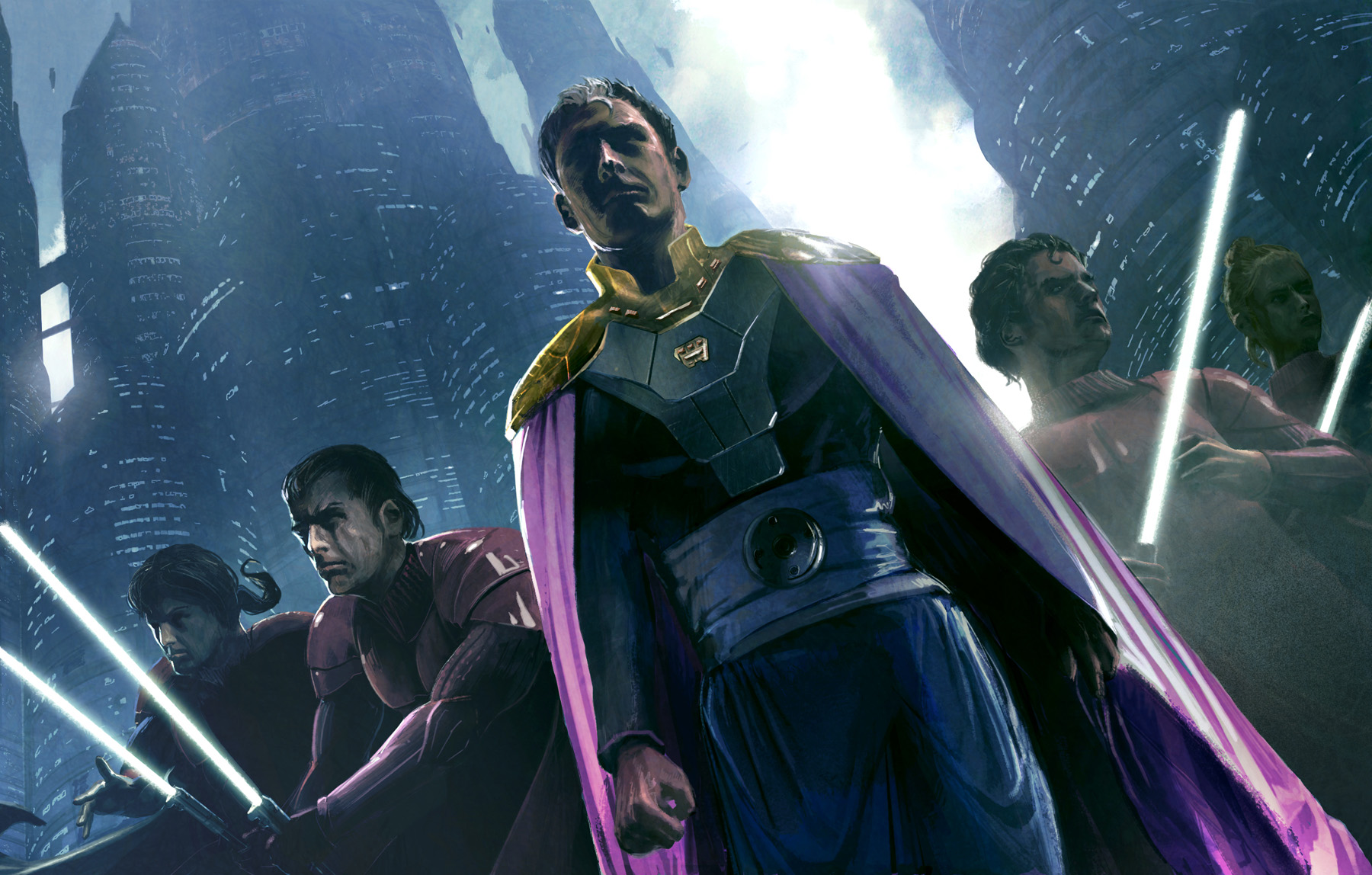
During the Fel dynasty, the newly established Imperial Knights assumed the responsibilities of the Royal Guard. Like their predecessors, they donned distinctive red armor and served as the Emperor's bodyguards during the reign of the revived Galactic Empire.
Equipment and training

Royal Guards wore matching scarlet robes, battle armor (underneath a loose fitting tunic, as it was not visible under the robe), and helmets. The armor bore design influences from the uniforms of the Death Watch of the Mandalore system, the Sun Guards of the Thyrsus system, and the Senate Guards of the old Galactic Republic, with the Sun Guards' armor in particular being the direct basis. The mere sight of a guardsmen tended to invoke fear in even the most trained of warriors, because their armor resembled these other groups. The Royal Guard wore fully functional battle armor which was obscured by loose fitting ceremonial robes and provided superior protection to that of normal Imperial armor. Though ceremonial, the red armor did not hamper movement or fighting. When rotated into Imperial service, the guardsmen discarded their uniforms and instead wore the armor of stormtroopers making their true position in the Imperial hierarchy indecipherable. Though this was the case, it was known that they also possessed another set of combat uniform that resembled stormtrooper armor but was colored red.
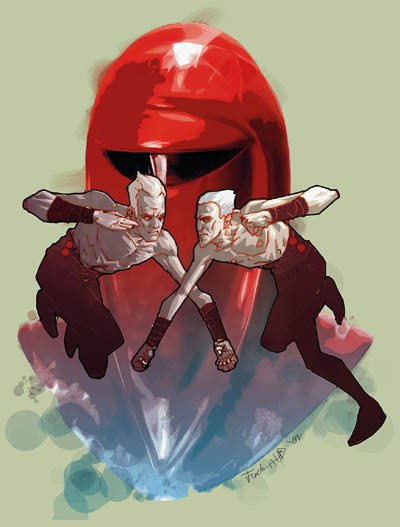
During the Galactic Republic's transformation into the Galactic Empire, the newly formed Imperial Royal Guard stood out as the sole unit within the nascent Stormtrooper Corps that excluded clones. Instead, Palpatine personally and meticulously selected potential recruits from existing non-clone military units. Potential candidates for the Royal Guard were hand-picked from the various branches of the Imperial Academy system, and more specifically from within the ranks of the Stormtrooper Corps. They were then dispatched to the Imperial Royal Guard Academy on Yinchorr, where they underwent rigorous training in diverse combat techniques, including the unarmed combat art of Echani, practicing against each other within the Squall arena. Their final assessment before acceptance into the ranks was a battle to the death, personally observed by the Emperor. Upon acceptance, they received exhaustive training in numerous combat forms. Their preferred weapon was the meter-long force pike, originally employed by the Umbaran Shadow Assassins of the Brotherhood of Darkness. Despite its modest appearance, this weapon proved deadly in the hands of these highly trained soldiers. These pikes were primarily for ceremonial reasons but were capable of being used for crowd control, self-defense and even as tools for torture. Their training was such that their use of the force pikes was even capable of inflicting very precise and lethal wounds in a lightning-fast speed, and their preference to it over a blaster owed to their extensive training in the deadly arts. In some cases, their pikes were also either scraped against the ground or otherwise tapped on it enough to generate a shockwave as a means of knocking their opponent off their feet. Furthermore, they were trained in the use of a wide array of common and exotic weapons and martial arts, such as Echani art, or a double vibroblade. Guardsmen also carried concealed heavy blaster pistols for ranged combat. They were also known at times to make use of ARC casters as a ranged weapon against foes. In rare cases, they also utilized lightsaber pikes of a similar make to those utilized by the Imperial Senate Guard and the Emperor's Shadow Guard. Royal Guardsmen were furthermore taught a special "combat language" that only they understood, and part of the training included removal of fingerprints. In addition, they flew specialized red variants of the TIE/IN interceptor. Finally, a lesser known aspect of their training involved being taught techniques designed to sustain the Emperor until help arrived though there was no known case where this feat was performed.
The most elite stormtroopers were hand-picked to become members of the Royal Guard. Each recruit underwent rigorous scrutiny to ensure they met specific criteria for size, strength, intelligence, and loyalty, as well as potential Force sensitivity. Recruits strong but not too strong in the Force were noted and pulled aside to test into a special class of Royal Guards known as Sovereign Protectors. Those who passed these even more demanding tests received training from Dark Jedi in the use of the Force. The names of the Royal Guardsmen were never uttered by anyone outside the Guard, including Palpatine. The exact number of Royal Guard was never accounted for on official records which meant that the true strength of the organization was unknown. However, the Rebel pilot Wedge Antilles estimated there were at least a few dozen in existence.
The Imperial Royal Guard Academy on Yinchorr provided them with lavish equipment and training. Classes consisted of forty students per course who attended a brutal training regime. Usually, by the end, there were only a handful of candidates left to become guardsmen and it was not uncommon for there to be only a single survivor. Students would train fencing and fighting in an arena called the Squall. Classes consisted of approximately forty students each, and trainees were partnered up into doubles. Recruits honed their combat skills through continuous sparring during a year-long training program. Departing from the squad-based stormtrooper training on Carida, recruits learned to rely on themselves or a teammate to achieve victory by working both independently and in pairs. Training primarily focused on Echani hand-to-hand combat, and failure often resulted in death. Casualty rates were very high; out of Kir Kanos's class of forty-two, only two reached full Guardsman status—all others were killed in training. During their final test, trainees fought each other to the death before Palpatine himself. Only a handful would survive this final test in a display of their loyalty and skill. Kir Kanos regretted killing his sparring partner and upon looking up from his fallen comrade, he saw Vader swinging his lightsaber extremely close to Kir Kanos's face, leaving a scar. Vader told the young man that he was never allowed to question or regret an order given to him by the Emperor.
During training, the Guards were inculcated with the belief that Palpatine, and his every order, were beyond fault or question.
Personal weapons, common
- Force pike (mid-range)
- Heavy blaster pistol (long range)
- " Homing shot " missile launcher (long range)
- Light repeating blaster (long range)
- Vibrosword (short range)
- ARC caster (long range)
Variants
There were a few specialized variants of the Royal Guards, each serving special, sometimes clandestine, roles and were notable for being made up of Force-sensitives. These groups include:
- Imperial Sovereign Protector (several were Force-sensitives)
- Emperor's Shadow Guard
- Saber Guard
- Imperial Senate Guard Imperial Senate Sentinel
Behind the scenes
According to Randy Stradley, when writing Star Wars: Crimson Empire, they operated under the assumption that all Royal Guards were clones. The shot of the unmasked Jax was intended to illustrate that he and Kanos originated from the same prime clone. However, the establishment of Jax's father, and the fact that other Royal Guardsmen have been developed, seem to have vanquished that concept (unless they are all oblivious GeNode clones). Also, Star Wars: The Complete Visual Dictionary states that guards were chosen from non-clone military units.
Nilo Rodis-Jamero's early concept art of the Sentinels served as the basis for the Emperor's royal guards' appearance. These drawings of the guards ranged from centurion-like warriors to monk-like priests, but ultimately all of the concept art the royal guards were given a crimson hue. One of Rodis-Jamero's concept drawings later evolved into two characters within the Expanded Universe: the Imperial Sentinel from Star Wars: Dark Empire and Atha Prime by Kenner Products.
The design of the Royal Guard bears a resemblance to the uniforms worn by the Imperial Guard of the Sith Empire, which operated during the Great Galactic War, as depicted in the timeline video for Star Wars: The Old Republic.
In Star Wars: The Ultimate Visual Guide, they are referred to as the Red Guard.