Hyperspace route
Hyperspace routes, which are also known by various names such as hyperspace lanes, hyperlanes, space routes, hyperroutes, trade routes, spacelanes, and runs, were essentially pre-determined pathways through hyperspace. These paths connected significant worlds within the galaxy, functioning in a similar manner to how roads link major cities on inhabited planets. These routes were considered secure, enabling starships to navigate without the danger of colliding with any celestial object in realspace. Runs were formed by sequences of crucial star systems, serving as essential navigational channels for both trade and transportation, frequently spanning across multiple sectors.
A star system could feature multiple entry/exit points to hyperlanes, or only one. This made it possible to defend and fortify these points, as well as monitor and regulate access. Hyperspace beacons played a role in directing starships towards star systems, refueling facilities, and ports. Furthermore, a series of beacons could provide guidance through hazardous or less frequently traveled regions of the galaxy. The destruction of these beacons could impede travel to a given system.
Major trade routes
Among the primary hyperspace trade routes were the Corellian Run, the Corellian Trade Spine, the Hydian Way, the Perlemian Trade Route, and the Rimma Trade Route.
Minor routes
There existed numerous minor routes, potentially numbering in the dozens or even hundreds, which were generally smaller in scale and experienced less traffic. These routes were often preferred by smugglers and outlaws due to the reduced patrol presence and the potential for higher speeds. The Ison Trade Corridor serves as an example of a minor hyperspace route. Many of the "true" trade routes bridged major routes or traversed regions previously isolated. The Biox Detour represented one such route in the Western Reaches and Mid Rim, weaving between the Rimma Trade Route and the Corellian Trade Spine. Similarly, the Incisor Sidestep also connected these major lanes, but within the Outer Rim Territories. Burke's Trailing was a unique route that skirted the edges of the Unknown Regions. Mumble's Turnaround provided a connection between Roon and various other Outer Rim ports, including Tatooine and Ryloth. This route also intersected the Corellian Run twice and was a significant component of the Spice Triangle. Kessel, the notorious planet associated with Spice, was linked to the Oseon system via the Sanity Skip. The Corporate Sector utilized the Bubble Wink to establish a connection with the Hydian Way.
History
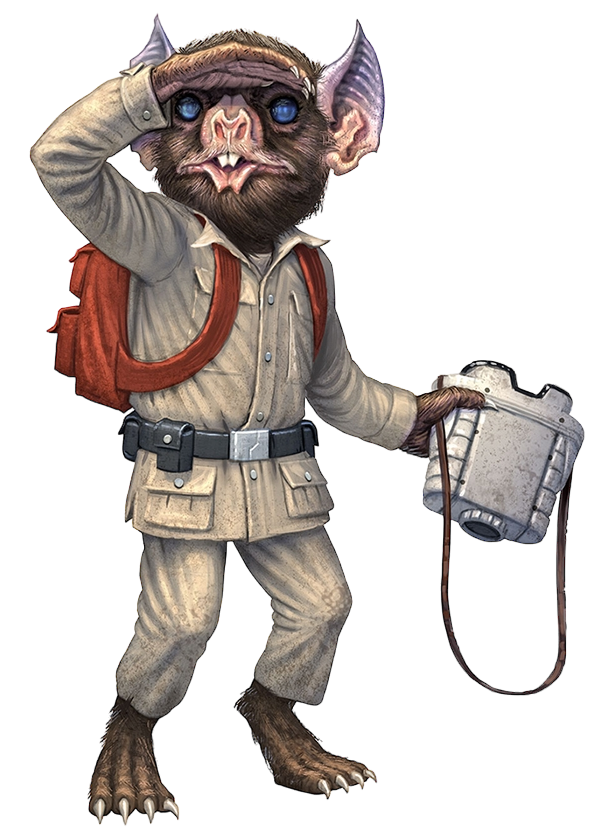
The Old Republic dispatched pioneering teams of surveyors to explore and map out fresh hyperspace lanes, accompanied by navigational beacons. The Tertiary Usaita system stands as one example of a system that underwent exploration by the Old Republic. As citizens of the Core expanded outwards, star systems competed to have hyperspace lanes charted through their territories, as this brought trade, prosperity, and prestige. Over time, the demanding process of navigating via hyperspace beacons, which necessitated frequent returns to realspace, was superseded by newer hyperlanes, such as the Hydian Way. As the galaxy became increasingly mapped, more direct hyperspace routes were discovered. These novel routes rendered older, circuitous paths, like those connecting to Jedha, obsolete.
During the High Republic Era, the period known as the Great Hyperspace Rush was characterized by the Republic's rapid expansion, which necessitated the discovery of new hyperspace routes. These routes, which already existed but were simply undiscovered, were found either by private organizations seeking to profit from claiming them, or by Republic Outer Rim Exploration Teams operating on behalf of the government. Members of the Jedi Order often collaborated with Republic Pathfinders. The San Tekka clan's secret to discovering hyperlanes lay with the young Force-sensitive Mari San Tekka, whose inherent ability to locate hyperspace routes was exploited by the Nihil after her capture by the Ro family. The Ros and the Nihil referred to these routes as Paths.
Following the First Battle of Geonosis, which marked the beginning of the Clone Wars, the Confederacy of Independent Systems swiftly seized control of crucial hyperspace lanes. This action effectively severed the territories of the Galactic Republic from the majority of its Grand Army. A treaty negotiated with the Hutt Clan granted the Republic access to their supply routes located in the Outer Rim Territories.
The enigmatic Grysk employed their sophisticated technology to displace four of Mokivj's moons from their orbit, positioning them directly within the paths of several major hyperlanes. In the months succeeding the Battle of Hoth, the Rebel Alliance utilized the Sanctuary Pipeline hyperspace route to relocate their fleet from Sullust to the forest moon of Endor. The Galactic Empire had constructed this route using S-thread boosters.
Around 9 ABY, an Imperial warlord leading his own Imperial remnant force initiated a series of hit-and-run attacks on hyperspace lanes, hoping to amass a fortune through stolen goods. These attacks attracted unwanted attention, jeopardizing the broader Imperial Remnant effort to restore the fallen Galactic Empire. Consequently, they were strongly criticized by Captain [Gilad Pellaeon](/article/gilad_pellaeon], who, along with the attacking remnant's commander, was a member of the secret Shadow Council. Pellaeon argued that excessive attention could lead the New Republic to discover the coordinated efforts of multiple Imperial Remnants, potentially extinguishing the Imperial movement.