Cold War (Galactic Republic–Sith Empire)
The astropolitical tension during the Cold War, a period lasting eleven years, was incredibly high between the Galactic Republic and the Sith Empire along with their respective allies following 3653 BBY. This galaxy-level conflict was initiated by the Treaty of Coruscant, which concluded the Great Galactic War and resulted in the Sith Empire's partial triumph, leading to their annexation of nearly two-thirds of the galaxy. Although peace was established, the Empire's increasing seizure of planets within the Core Worlds kept tensions with the Republic elevated. The galaxy was gripped by fear and uncertainty in the decade after the war. The fragile truce between the Empire and Republic was threatened by border skirmishes and proxy wars, which ultimately collapsed in 3641 BBY.
The Cold War's eleven-year duration is considered a pivotal era in galactic history, especially for the Sith. The Sith's power during this time was so great that it is often regarded as their zenith.
History
The Treaty of Coruscant's harsh terms mandated an immediate cessation of hostilities and the removal of all Republic and Jedi forces from battle zones across the galaxy. Once the Treaty was enacted, worlds previously allied with the Republic were left vulnerable and swiftly absorbed by the Empire. Other planets, feeling betrayed by the Senate's acceptance of the treaty, chose to secede from the Republic.
When the Jedi returned to their devastated temple on Coruscant, they faced the wrath of the Senate, who blamed the Jedi Order for the war. Due to the shift in public opinion against them, the Jedi were forced to leave Coruscant and relocate to their original homeworld, Tython.
Despite his Empire being at its strongest, the Sith Emperor seemed to lose interest in complete domination. He delegated control of the Empire to the Dark Council, a group of twelve Sith Lords responsible for managing the Empire's daily affairs. The Dark Lord then pursued his own enigmatic objectives as the Sith consolidated their authority.
As the uneasy truce teetered on the brink of collapse, border skirmishes and proxy wars broke out between the Empire and Republic. These conflicts included minor engagements in the Outer Rim and proxy battles, such as the Separatist War on Ord Mantell, a civil war between the corrupt planetary government loyal to the Republic and a secessionist guerrilla force.
During the Cold War, Kel Dor Jedi Master Gnost-Dural documented the events surrounding the treaty at the request of the Jedi Council on Tython.
New heroes emerge
Towards the Cold War's end, the Republic and Empire each saw the rise of four new, influential heroes. On Tython, two exceptionally skilled apprentices, a Consular and a Knight, arrived and underwent training, becoming prominent figures in the war and significantly contributing to the Republic's efforts.
The Consular commenced their journey by preventing the destruction of the Tythonian Forge at the hands of Nalen Raloch, successfully acquiring three of four holocrons, and discovering the Fount of Rajivari, which held the contents of the fourth holocron, and more. The Consular then safeguarded the Jedi Order from internal decay by mastering an ancient shielding technique when several Jedi Masters were infected by an ancient, dark plague. Having learned the technique, the Consular healed the affected masters and tracked the plaguemaster to a lone flagship. The plaguemaster, Lord Vivicar was defeated, and the spirit of Terrak Morrhage was expelled from his body. Consequently, the Consular was named the third Barsen'thor in the history of the Jedi Order.
The Knight began aiding the Jedi Order by defeating the Flesh Raiders and two Dark Jedi, Callef and Bengel Morr, who had been controlling the Flesh Raiders during the Flesh Raider uprising. The Jedi Knight continued their victories against the Sith, pursuing enemies across the galaxy, like Tarnis, a Sith Lord disguised as a doctor. After Tarnis's death, his father, Darth Angral, harbored a personal vendetta against the Knight during the ensuing Desolator crisis. When Angral decided to unleash a powerful superweapon on Tython to destroy it, the Knight was responsible for defeating Angral, destroying the Desolator and protecting Tython. As a result, the Knight was given the title "Hero of Tython."
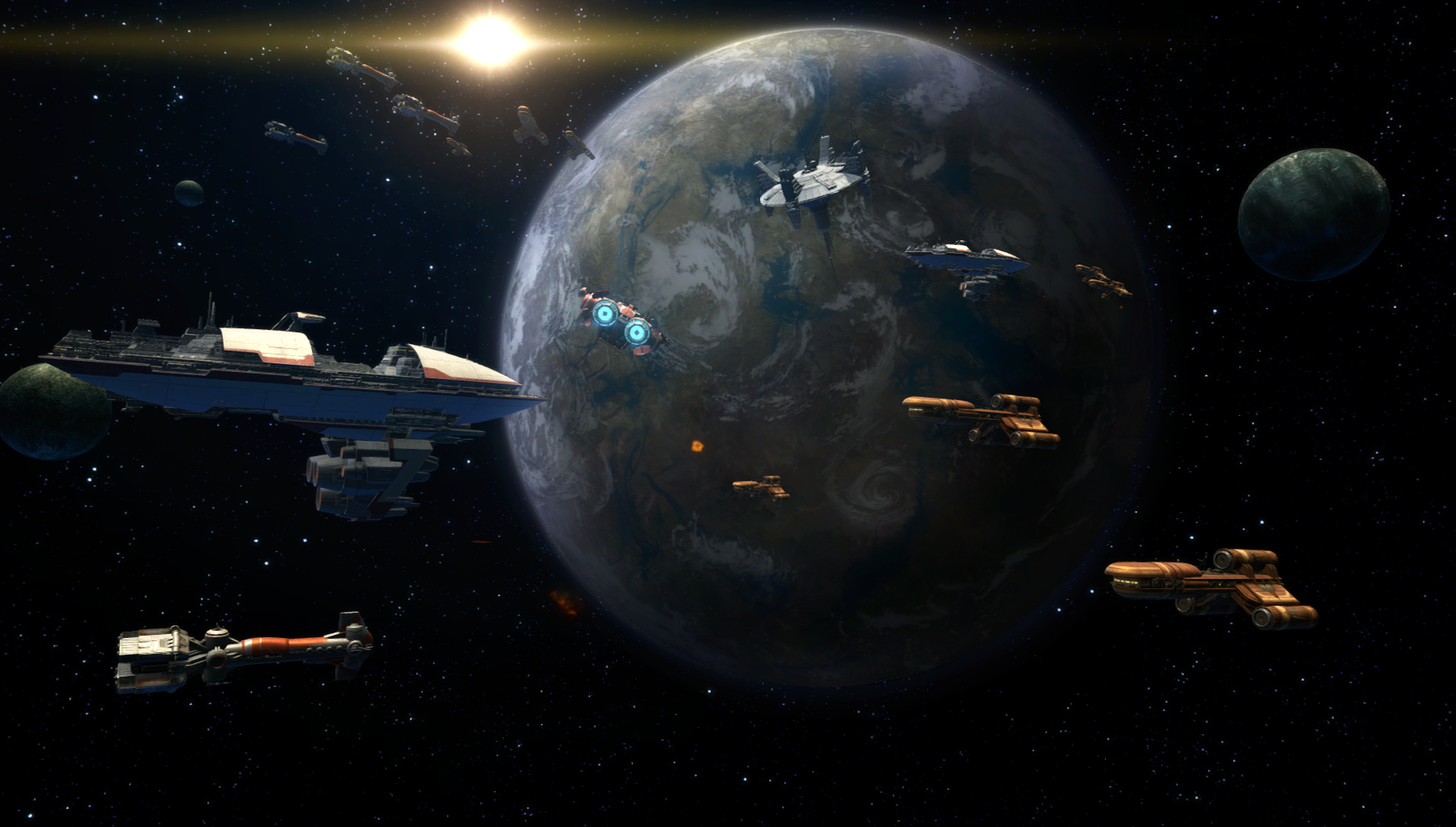
Concurrently, a trooper was assigned to Havoc Squad on Ord Mantell. Havoc Squad's commander, Harron Tavus, betrayed the Republic and defected with the rest of Havoc Squad, except for the new trooper. As the sole remaining member of Havoc Squad, this trooper became the new commander and was tasked with tracking down the traitors while the squad was rebuilt.
A smuggler also arrived on Ord Mantell, delivering a shipment of weapons. The smuggler was immediately betrayed by Skavak and was accidentally involved in the hunt for the lost treasure of Nok Drayen, the legendary pirate and thief. The smuggler eventually claimed Nok's reliquary for themselves and, with Risha Drayen, went on to become a legend in the criminal underworld. Working as a privateer for the Republic, the smuggler eventually exposed Imperial agents in the Senate and defeated the Imperial admiral known as the Voidwolf. By accomplishing that, they gained the name "Voidhound" and claimed a massive pirate fleet and criminal empire, continuing to support the Republic.
Champions of the Empire
Simultaneously, four other exceptional individuals aligned with the Empire came to light at the same time the heroes of the Republic came to light. Two of them, one a former slave and another a Sith Acolyte, were sent to Korriban and taken under the wings of Darth Zash and Darth Baras, respectively.
The slave was sent into the dark pits of the tombs on Korriban to prove themselves worthy of being Sith. All the while, they dodged several attempts on their life by their overseer, Harkun. After gaining their apprenticeship, they went on to become a powerful Sith Inquisitor and recovered the ancient relics of Tulak Hord. At the same time, they fought many battles for the Empire across the galaxy. After defeating their master, Zash, they were named a Lord of the Sith. They were given the name Lord Kallig, and established their own power base within the Sith Order and Imperial society.
Meanwhile, the other became a potent Sith Warrior. They served their master in combating his nemesis, Jedi Master Nomen Karr, and tracking down his padawan. They traveled across the Empire and saved their master's network of spies across Republic and Hutt Space. They succeeded in bringing down many Republic allies and Jedi in their mission. After defeating Nomen Kaar, they were rewarded with the title of Sith Lord and went on to serve their master against the Republic and Jedi.
The other two, the Imperial agent Cipher Nine and an unidentified bounty hunter, appeared on Nal Hutta, the former working on a mission to secure Hutt support for the Empire, and the latter to gain sponsorship in the Great Hunt. Cipher Nine gained the title of Cipher after performing successful missions for Imperial Intelligence. After they departed Dromund Kaas, they spent the Cold War tracking down and eliminating terrorists in the Empire. After defeating all the terrorist cells and their leader, they secured the Empire against further internal attacks and gained prestige. Meanwhile, the bounty hunter became engaged in a bitter contest across the galaxy. All the while, they battled the attempts by a dishonorable Mandalorian named Tarro Blood to sabotage them. After killing Tarro and the Jedi Kellian Jarro, they were named the Grand Champion of the Great Hunt and were welcomed into the Mandalorians by Mandalore himself.
Collapse of peace
Settling old scores
The conclusion of several conflicts, unresolved from the previous war between the Empire and Republic, preceded the outbreak of a new war. These conflicts acted as proxy clashes, signaling the end of the tenuous peace.
Although the Empire declared victory in their long struggle for control of the industrial world Balmorra at the end of the last war, their celebration was premature. Elements within the Republic Army defied the Treaty of Coruscant by remaining on Balmorra and forming a resistance movement with the planet's natives. After over a decade of guerrilla warfare, a Jedi Consular rallied the resistance and drove the Empire from the planet, securing Republic interests.
In the Outer Rim, the Empire achieved their own victory. The Republic had attempted to transform the ruined world Taris into a symbol of hope by rebuilding it following its devastation by the Sith three centuries prior, during the Jedi Civil War. However, Darth Gravus sabotaged the project by eliminating key personnel, causing it to collapse and ending the Republic's restoration efforts. Thus, even while being driven from Balmorra, the Empire secured a victory on Taris.
Shadows of the past
Amidst the strain on the fragile peace, Republic Navy Fleet Admiral and Jedi Master Oteg was contacted by the spirit of Meetra Surik, a Jedi Master who had vanished from Republic space three centuries earlier. Surik had died in a failed attempt to kill the Sith Emperor alongside her old friend and leader, the legendary Jedi Master Revan. Revan had been captured by the Emperor and held in stasis for centuries. As the conflict between the Republic and Empire intensified, Surik knew it was time to free Revan.
After an intelligence-gathering assault on the Imperial fortress at Taral V, Oteg led his fleet into The Maelstrom to attack the Imperial prison facility within. A fierce battle ensued, marking one of the first engagements of the impending war, resulting in heavy casualties on both sides. Ultimately, Oteg's fleet prevailed, successfully rescuing Revan before retreating. Oteg believed that Revan's freedom provided the Republic with the means to finally defeat the Empire.
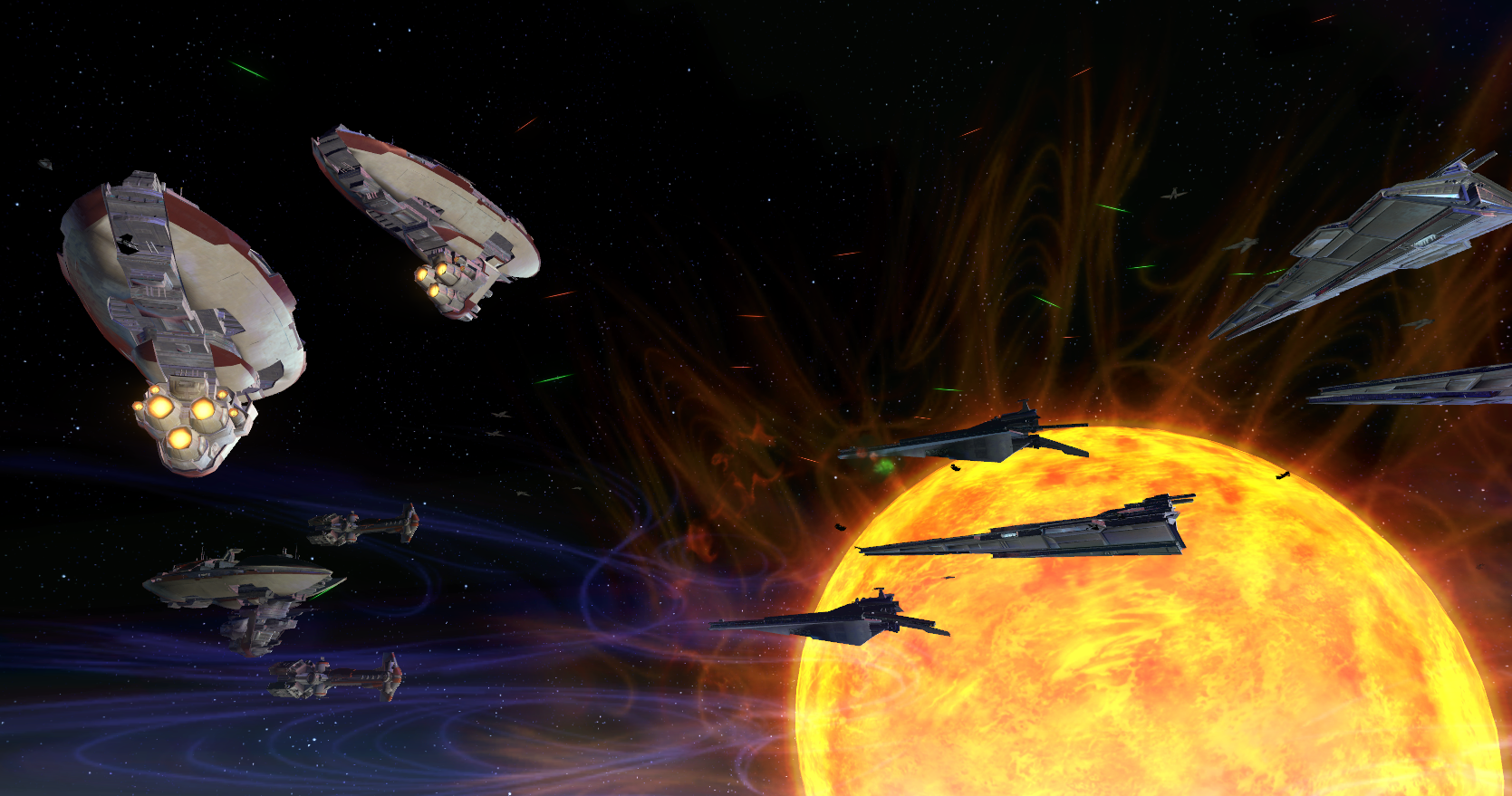
Revan's respite in Republic space was short-lived. Realizing the galaxy's dire situation, he sought to destroy the Empire using ancient Rakata technology, specifically the Foundry, an automated space station capable of mass-producing extermination droids. These droids were designed with bioscanners to detect Sith genetic material and eliminate any life containing it, potentially leading to the genocide of most of the Imperial population.
The Empire had anticipated this scenario. Darth Malgus, who had long opposed peace with the Republic, revealed to his strike team that Revan's rescue was part of his plan. He intended for Revan to lead the Empire to the Foundry, so they could use it against the Republic in the coming war. The Imperial strike team successfully attacked the Foundry, destroying the few active extermination droids and defeating Revan. However, Revan vanished in a burst of light and energy instead of dying, leaving his fate unknown. After eliminating the remaining Republic starships, the Empire claimed victory and ownership of the Foundry.
Hunt for the Sith Emperor
Elsewhere, Jedi Master Tol Braga initiated a plan to prevent the impending war by capturing and redeeming the Sith Emperor to the light side of the Force.
Braga enlisted the help of a rising Jedi star known as the Hero of Tython for their role in saving Tython at the battle of the Oppressor. The Hero traveled the galaxy, seeking clues to the Emperor's highly secretive space station's location and technical specifications, investigating Balmorra, Quesh, and Hoth. The attack on the Emperor failed—the entire force was captured, and most of the Jedi were easily subdued by the Emperor's mastery of the dark side of the Force.