ST-series military strategic analysis and tactics droid
The ST-series military strategic analysis and tactics droid, often referred to as super tactical droids, represented an evolution of the tactical droid design and served as an enhanced version of the T-series military strategic analysis and tactics droid. During the second year of the Clone Wars, Baktoid Combat Automata manufactured the ST-series super tactical droid for the Confederacy of Independent Systems and its military branch to address the shortcomings of the T-series model, which was perceived as rigid and predictable. These droids possessed advanced strategic processing and intelligence capabilities, along with improved tactical analysis skills, enabling them to anticipate and respond effectively to organic commanders. Consequently, the Separatists employed super tactical droids as adept battlefield commanders, frequently assigning them roles such as commander or general. Notable examples include Commanders Aut-O and Kraken, as well as Generals Kalani and Linwodo, with the former directly reporting to Separatist Head of State Count Dooku. While super tactical droids were widely deployed throughout the Separatist military, the Confederacy continued to utilize the T-series model for commanding smaller fleet groups on less critical missions, reserving prime objectives and operations for super tactical droids.
Standing a single centimeter taller than the T-series models, ST-series units featured improved armor plating and were equipped with enhanced systems. These included superior heat ventilation, magnatomic grip panels that facilitated the use of organic equipment, and a third photoreceptor. Furthermore, super tactical droids were granted a degree of individuality by their superiors within the Separatist military. This individuality allowed the droid model to personalize their physical appearance with custom color schemes for identification purposes. Some ST-series units even developed distinct personalities, with individuals like Kalani rejecting their assigned identification numbers and adopting unique names.
Description
Design
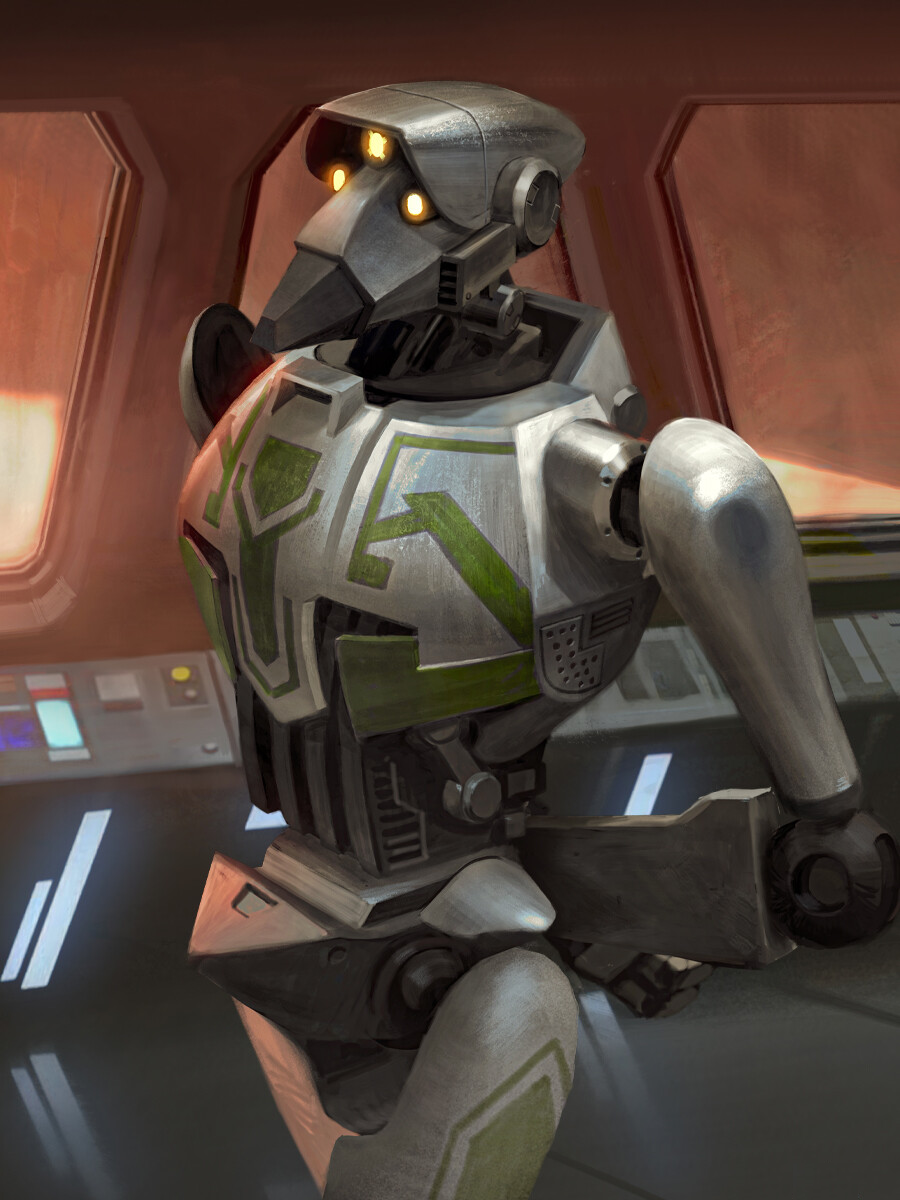
As a response to the perceived inflexibility of the T-series tactical droid, the secessionist Confederacy of Independent Systems tasked Baktoid Combat Automata, a manufacturer of battle droids, with the creation of the ST-series super tactical droid. These droids were intended for deployment within its military forces during the galaxy-spanning Clone Wars against the Galactic Republic. These upgraded tactical droids overcame the limitations of their predecessors, demonstrating improved capabilities in predicting the responses of organic commanders. They also incorporated a status indicator for their central processing hubs. Equipped with three photoreceptors, super tactical droids possessed a broader visual range across the light spectrum.
The ST-series stood at a height of 1.94 meters, equivalent to 6 feet and 4 inches. Despite being only one centimeter taller than the T-series, they projected an imposing presence, exuding an air of arrogance and confidence that the more boxy T-series lacked. Construction of ST-series units involved the use of enhanced armor plating compared to the T-series, particularly on the limbs. The palms and inner surfaces of their improved hands incorporated magnatomic grip panels, enabling them to handle and utilize most weapons, tools, and equipment designed for organic beings without slippage. Beyond the enhanced armor and neck joints, ST-series droids also featured improved heat ventilation compared to their predecessors. While retaining heat sinks in their abdomen, super tactical droids incorporated additional ventilation holes in their armor along the sides of their chest units, located just below the shoulder joints. This was necessary to manage the increased heat generated by their more complex computers and enhanced processing power.
The ST-series exhibited superior construction compared to the T-series, and their vocoders produced a more menacing robotic voice. Furthermore, super tactical droids developed individual personalities. Certain units, such as General Kalani, adopted names instead of numbers. They also frequently selected personalized color schemes and decorations for their armored bodies, with Kalani opting for ornate gold trims and Kraken choosing a swirling gold pattern on his green armor.
Super tactical droids were programmed to function as generals and admirals within the Separatist war machine. While they were ruthless and calculating leaders, they retained the arrogance and overconfidence characteristic of earlier tactical droid models. They were also prone to argumentation and operated without empathy or ethical considerations, employing ruthless strategies.
Compared to the T-series, super tactical droids possessed more advanced processors, enabling them to calculate tactics and countermoves with greater effectiveness against their Republic adversaries. They also exhibited faster reaction times to unforeseen events. Overall, they presented a significantly greater threat than the T-series, rivaling the military acumen of even seasoned CIS generals.
Despite these differences, super tactical droids, like their counterparts in the Separatist Droid Army, were analytical and calculating. Designed to assess battlefield situations and devise optimal solutions with defined execution timelines, they were feared by Republic soldiers and regarded as highly dangerous by veteran officers.
Performance

As masterful commanders of the Droid Army, the super tactical droid boasted high intelligence and strategic prowess, posing a significant challenge to both the Jedi Order and the Republic Military.
Given the autonomy to act, super tactical droids could independently manage Confederacy military operations without direct supervision. Programmed with Separatist ideals, they employed fear and undermined the courage and hope of their adversaries to achieve victory, fighting for what they believed was "freedom from the Republic's tyranny." Prioritizing Confederate success, super tactical droids readily resorted to threats and torture during interrogations. The super tactical droids were themselves resistant to interrogation. They also featured enhanced strategic programming compared to their predecessors, and their motion programming was more fluid than that of the T-series.
While the T-series considered themselves superior to battle droids, super tactical droids held unwavering confidence in their own capabilities, even believing themselves to be superior to most organic beings they served. This stemmed, in part, from their experience commanding less intelligent battle droids. This confidence provided the super tactical droids with the resolve to make sacrifices to ensure victory, even if it meant the loss of allied organic troops and commanders. However, it also led to argumentative behavior. The droids remained completely loyal to the CIS leadership and Separatist values. This, combined with their arrogance, often created unforeseen problems. While the T-series' processor limitations made them predictable, super tactical droids were so convinced of their own correctness that they disregarded data and tactical options that contradicted their choices. Despite this flaw, super tactical droids remained a formidable threat to the Republic.
Although not designed for direct combat, super tactical droids were capable of self-defense and were equipped with the standard Droid Army E-5 blaster rifle or a melee weapon. They possessed advanced combat programming and were less likely to retreat from confrontations than the T-series. They were even willing to engage in hand-to-hand combat, even against Jedi in certain situations.
History
Clone Wars
While at least one super tactical droid saw action early in the Clone Wars, the model's prevalence increased as the conflict progressed due to the T-series' shortcomings. By the war's second year, the T-series tactical droids were gradually replaced by their successors. The T-series continued to be used, primarily for commanding small fleets and other less important missions. Super tactical droids, on the other hand, took over the most critical missions requiring a tactical droid.
In 20 BBY, Separatist leader Count Dooku deployed General Kalani to assist King Sanjay Rash's forces in addressing the rebels of Onderon. During this assignment, he collaborated with General Akenathen Tandin, commander of the Royal Militia, in their efforts to capture the rebels in Iziz, including overseeing the brutal torture of a rebel leader. However, Tandin and his forces later defected, aiding the rebels in freeing Ramsis Dendup as they fled to the highlands. After the rebels defeated the droid gunships, Kalani was ordered to withdraw his forces to Agamar despite Rash's protests. Kalani then executed Rash.
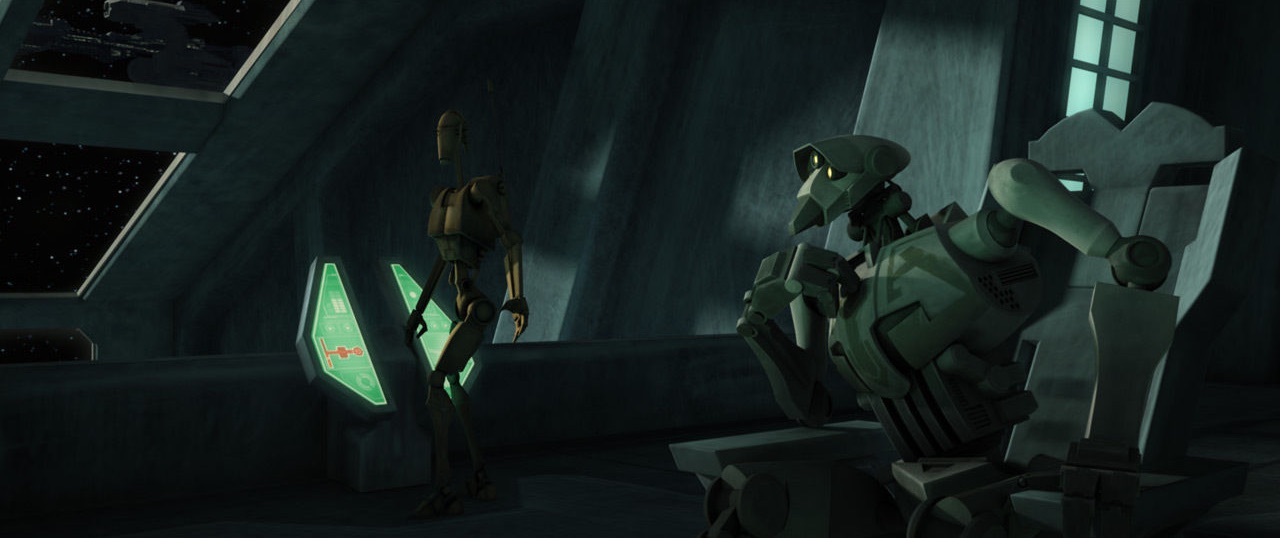
Another super tactical droid, Aut-O, was stationed aboard a Providence-class Dreadnought. However, he was destroyed by R2-D2. Yet another was placed in command of a captured Venator-class Star Destroyer, tasked with destroying the Republic strategy conference on Valor station within the Carida system. However, when the buzz droids failed to stop D-Squad, the super tactical droid and its crew were destroyed before completing their mission.
Kraken, another super tactical droid, served as Admiral Trench's second-in-command. Kraken attempted to deliver a captured clone trooper, CT-5385, to Count Dooku, but was intercepted by General Skywalker and two members of his 501st Legion: Clone Captain Rex and ARC trooper Fives. The trio quickly eliminated Kraken's droid guard. After Kraken declared his programming prevented him from being intimidated, Skywalker decapitated him for refusing to answer questions. However, Kraken was later rebuilt and commanded Separatist forces during the invasion of Scipio alongside Dooku. Kraken continued to serve under Dooku on his command ship, even when his master, Lord Sidious, requested his presence.
A super tactical droid also accompanied General Grievous to Utapau aboard a Separatist supply ship to secure a shipment of a massive kyber crystal. However, it was destroyed when high-ranking Jedi intervened.
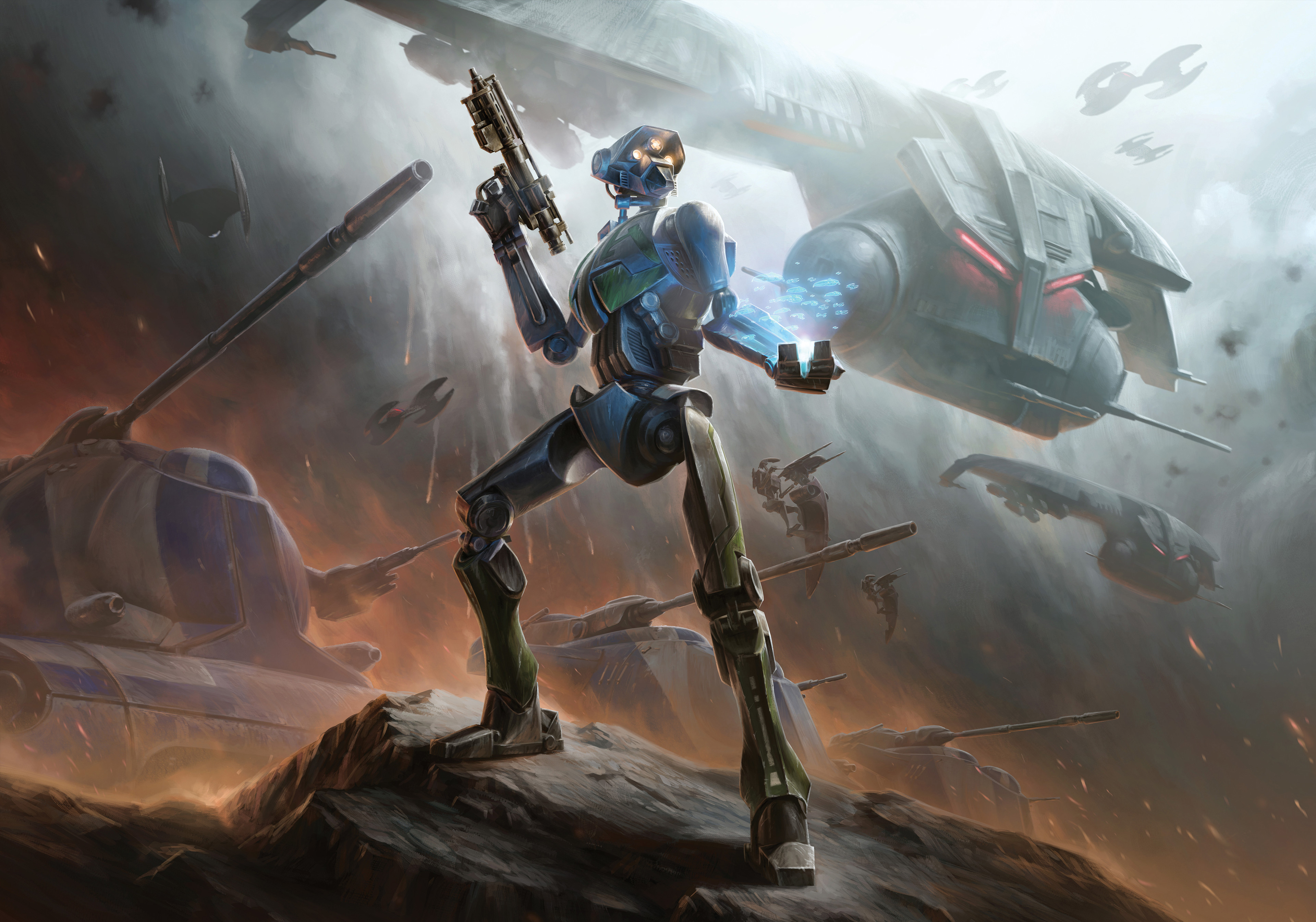
Another super tactical droid served Admiral Trench during the Battle of Anaxes. The droid was stationed on the bridge of Trench's dreadnought, where they and the Admiral oversaw the attack on Anaxes's Assembly Complex. The droid was destroyed when Anakin Skywalker stormed the bridge of the ship to get the last sequence from Admiral Trench for a bomb hidden in the plant's fusion reactor.
Age of the Empire
Following the Clone Wars, the Galactic Republic transitioned into the Galactic Empire, and Darth Vader assassinated the Separatist Council. Vader then used the Council's equipment to transmit a shutdown signal to the droid army. However, Kalani, stationed on Agamar aboard a Separatist supply ship with a battle droid garrison, dismissed the shutdown command as a Republic deception and chose not to relay it to the droids under his command.
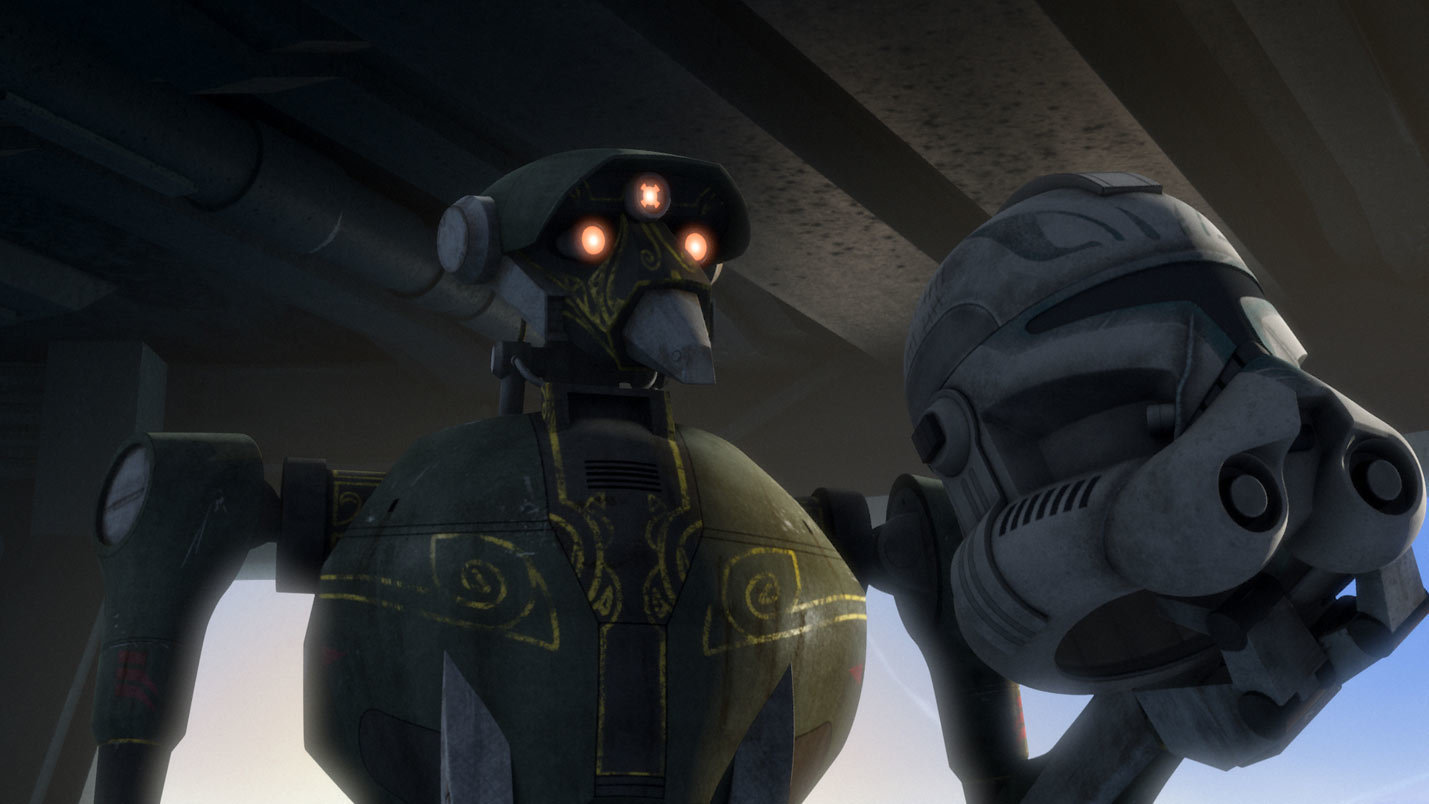
Years later, Captain Rex, Lasat Garazeb Orrelios, Jedi Kanan Jarrus, and his Padawan Ezra Bridger arrived on Agamar, seeking weapons and explosives to aid the rebellion. Kalani had his forces capture them and brought them to him so that he could play a little "war game," saying that he could finally "end" the Clone Wars his way. Kalani held Zeb hostage while Rex, Kanan, and Ezra fought through his troops. After defeating waves of battle droids and making their way to the command center, Rex, Kanan, and Ezra ordered Kalani to surrender. Kalani refused, but Ezra convinced him that neither the Republic nor the Separatists won the war and the Republic became the Empire. When the Empire arrived on Agamar, Kalani agreed to help the rebels escape. While the droids and Zeb attacked the stormtroopers and AT-DP's, Kalani had five droids fired at Ezra and Kanan, who redirected their shots at proton bombs underneath the AT-AT's, destroying one of them in the process. The droids and the rebels made their escape in three Sheathipede-class transport shuttles, one being destroyed in the process. Kalani bid farewell to the rebels but refused to join them, believing that they had less than a 1% chance of successfully overthrowing the Empire.
Legacy
During the New Republic Era, R0-GR, a B1-series battle droid who had been part of the Separatist Army and was currently serving in the Resistance, authored a book titled droidography, compiling information on various droid models. His aim was to educate people about droids, and he included coverage of both the T-series and super tactical droids. After detailing his grievances with the T-series, R0-GR noted that the super tactical droids were introduced to address their predecessors' lack of adaptability. He pointed out that, despite these upgraded commanders' belief in their superiority, they ultimately failed to win the Clone Wars. R0-GR also mentioned hearing reports of super tactical droids who refused to accept defeat and continued running battle simulations for years, leading him to consider them "sore losers."