Dark side of the Force
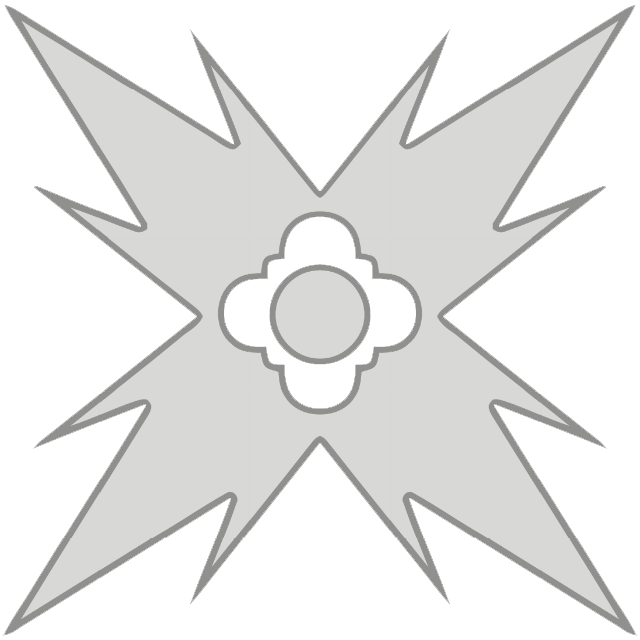 An old symbol represents the dark side of the Force
One method of channeling the Force was the dark side of the Force, also referred to by the name Bogan. The Sorcerers of Tund considered it to be the dark side of the Unity, while the Knights of Ren simply called it the shadow. Harnessing the dark side's power involved giving way to base emotions such as passion, rage, revenge, and animosity. The dark side represented avarice, a reluctance to embrace change, and an inability to release one's grip on things. Attachment to possessions and ideas fostered anger and hatred, ultimately resulting in anguish. Individuals who failed to overcome their inner darkness risked being consumed by it. The Sith, known as Force-sensitives who pledged themselves to the dark side, stood as the sworn adversaries of the Jedi, who were dedicated to the light side of the Force.
An old symbol represents the dark side of the Force
One method of channeling the Force was the dark side of the Force, also referred to by the name Bogan. The Sorcerers of Tund considered it to be the dark side of the Unity, while the Knights of Ren simply called it the shadow. Harnessing the dark side's power involved giving way to base emotions such as passion, rage, revenge, and animosity. The dark side represented avarice, a reluctance to embrace change, and an inability to release one's grip on things. Attachment to possessions and ideas fostered anger and hatred, ultimately resulting in anguish. Individuals who failed to overcome their inner darkness risked being consumed by it. The Sith, known as Force-sensitives who pledged themselves to the dark side, stood as the sworn adversaries of the Jedi, who were dedicated to the light side of the Force.


The night was often linked to the dark side. Similar to the light side, it was an essential component of all life. As the shadow of the soul, sentients had to constantly conquer the dark side to remain on the path of light; giving in to the dark side resulted in instability. The dark side was not inherently stronger than the light; rather, it was a simpler, though destructive, route. Succumbing to the allure of darkness allowed the dark side to seize control of one's destiny, although redemption was always a possibility that remained open.
Due to his unwillingness to relinquish his attachments, Anakin Skywalker, who was gifted in the Force, yielded to the dark side's enticements. Skywalker's deep affection for his mother and his wife, along with the possibility of their deaths, drove him to defy the natural order of life and the Force itself. He sought power out of fear of losing his loved ones, which transformed him into a hateful, disfigured cyborg and a tool of malevolence.
Defining the Dark Side
The dark side frequently gained followers because it tempted potential users; even the Son, a Force wielder who embodied the dark side, found himself unable to resist its allure. Kaeden Larte, a farmer who had previously witnessed her friend Ahsoka Tano employing the light side of the Force, perceived the dark side as unnatural and immoral upon observing the Sixth Brother utilizing the Force choke ability.
The Force's dark side was characterized by anger, fear, aggression, and a thirst for dominance. It was said that the Sith called the dark side "dark" because of its secretive nature. They kept their knowledge and identities concealed, believing it would facilitate their imposition of order.
The Dark Side's Core
General Overview
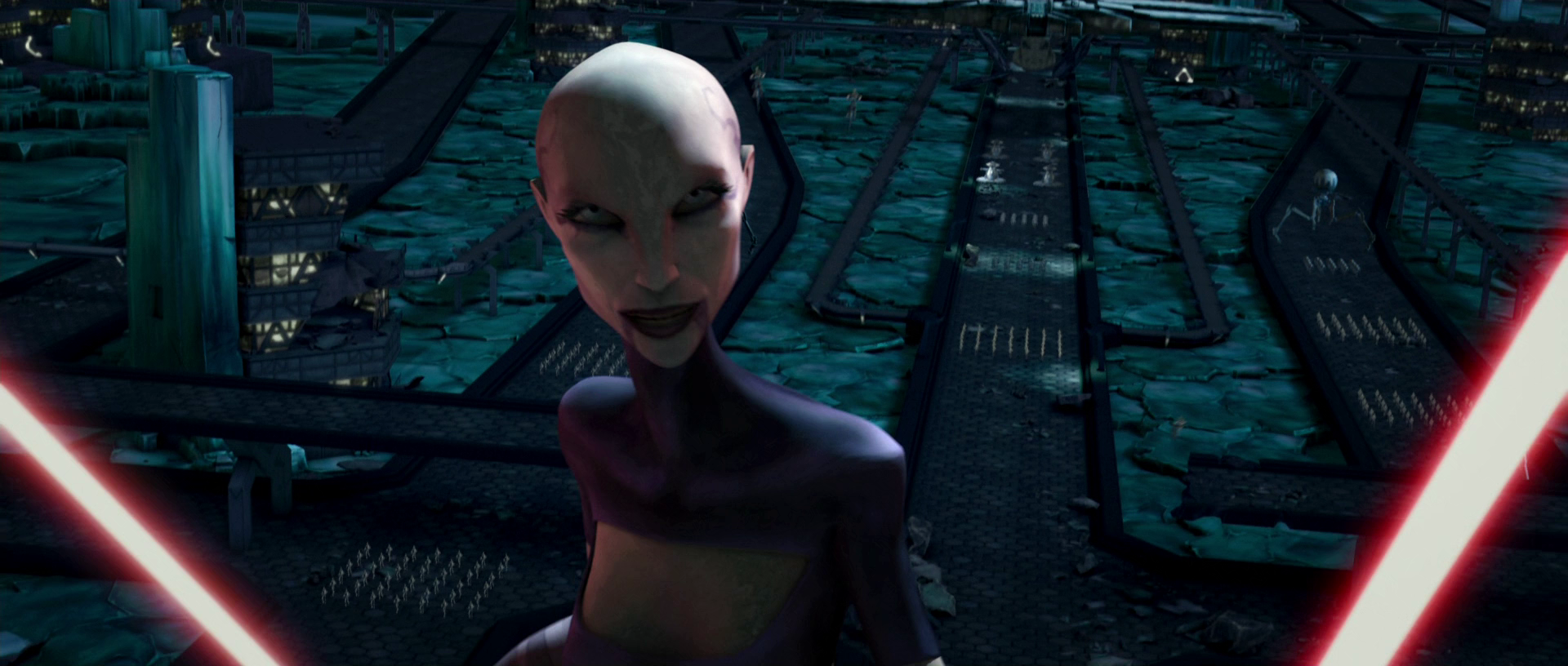
The dark side was a manifestation of selfishness and possessiveness, intertwined with a fear of loss that fueled anger and hatred, inflicting suffering on both those who unleashed its power and those who embraced it. Asajj Ventress, a former Dark Acolyte, observed that individuals who embraced the dark side were perpetually unsatisfied, constantly yearning for more than they possessed. Indeed, Grand Master Yoda asserted that succumbing to fear, anger, and hatred paved the way to the dark side. He further stated that suffering was an inevitable consequence for those who had given in to the dark side after reaching the point of hate. Yoda believed that once someone embarked on the dark path, it would forever dictate their destiny due to its addictive nature. Nevertheless, a return to the light side was always within reach. An example of living in line with the dark was hating the Jedi and hoping for them to fail or die.
Dark side adepts, such as the Sith Master Darth Sidious and his Sith apprentice Darth Vader, maintained that hatred was the cornerstone of their strength. Despite Yoda's warning that succumbing to hate would only lead to suffering, the fallen Jedi Count Dooku, also known as the Sith Lord Darth Tyrannus, declared that he had endured and transcended suffering to attain ultimate power. Conversely, Sidious asserted that power could be found in hatred, with suffering being merely an alternative outcome if one failed to transform their hate into power. Vader shared this belief, even though loneliness, pain, and sadness stemming from his past lingered beneath the Sith Lord's facade. Vader was someone who tried to overcome that past time and time again. Vader also once demanded Sabé, who was not Force-sensitive but had the chance to serve him as his lieutenant, chose between suffering or power. She, however, rejected his question altogether by deciding not to hate.

Sidious possessed such immense power in the dark side that he thrived on the hatred of others. During the Scourge of Coruscant, when Vader attempted to test his master with his enhanced Force abilities fueled by hate, Sidious revealed that he drew strength from the animosity directed at him by Vader and others. Consequently, Vader's efforts to amplify his powers through hatred of his master only served to fortify Sidious. Indeed, the Scourge informed Vader that his fear and hatred merely transformed him into a more potent weapon for Sidious, preventing him from living on his own terms. Vader ultimately defeated Sidious by renouncing the dark side and embracing his identity as the Jedi Knight Anakin Skywalker. Rather than seeking to overthrow the Sith Master for personal gain, Skywalker acted out of love for his son, Luke Skywalker, and returned to the light side he had once rejected.
The Jedi Elan once observed that the dark side presented itself as a solution to one's needs, effectively blinding them to their greater purpose by offering a short-term fix. Advising his disciple Tensu Run against succumbing to anger and warning him that such a loss of control would lead to the dark side, Elan encouraged Run to carry his pain and frustrations with him, which Run interpreted as a call to cleanse himself of such emotions rather than unleashing them upon the world. Supreme Leader Snoke posited that as the power of the dark side increased, the light side would naturally grow in strength to counter it. He believed that as his apprentice Kylo Ren's power in the dark side grew, an equal from the light side would emerge to challenge him. After the human Rey's powers awakened and her existence was revealed to Snoke, he heralded her as the individual whose rise he had warned Ren of.
Arrogance
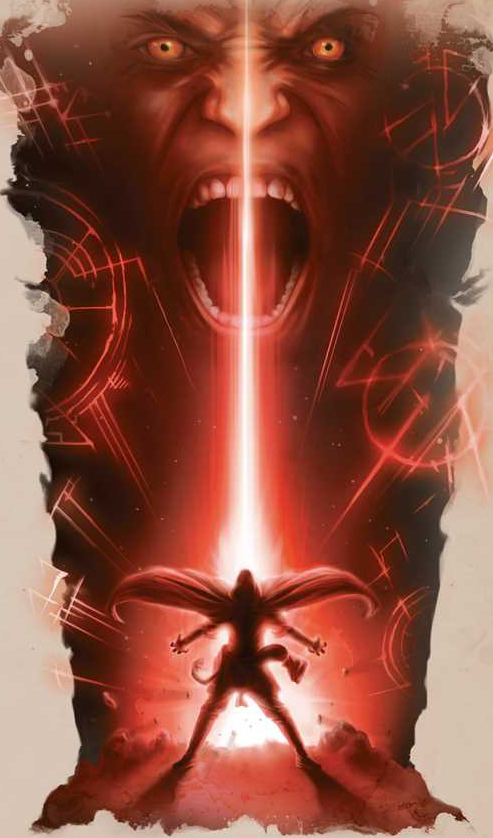
The dark side was a manifestation of selfishness, fear, and aggressive emotions present in all living beings. However, individuals often succumbed to the temptation of denying and attempting to escape this reality, perceiving the dark side as an external entity, separate from themselves, and something they could eliminate. Such arrogance was easy to fall into—even Grand Master Yoda, who dedicated centuries to mastering his inner darkness, initially refused to acknowledge his own dark reflection. However, by denying this truth, he only strengthened the dark side. Once he acknowledged his darkness, he subdued his dark reflection and incinerated it with the Force, banishing it from his being.
In 19 BBY, Jedi Master Obi-Wan Kenobi confronted his former Padawan, the fallen Jedi Knight Anakin Skywalker, on the volcanic planet of Mustafar. Skywalker had embraced the dark side, adopting the persona of the Sith Lord Darth Vader, and believed himself capable of overthrowing his Sith Master Darth Sidious. The duel between Kenobi and Vader resulted in a stalemate, although Vader refused to concede despite his former master gaining the high ground. The dark side filled his senses with rage and hubris, causing Vader to disregard Kenobi's warning as he attempted another attack. Vader was consequently disarmed by Kenobi's counterattack, losing the Skywalker lightsaber and his organic limbs in the process. As a result, he nearly burned to death on the banks of the lava river.
Dependence
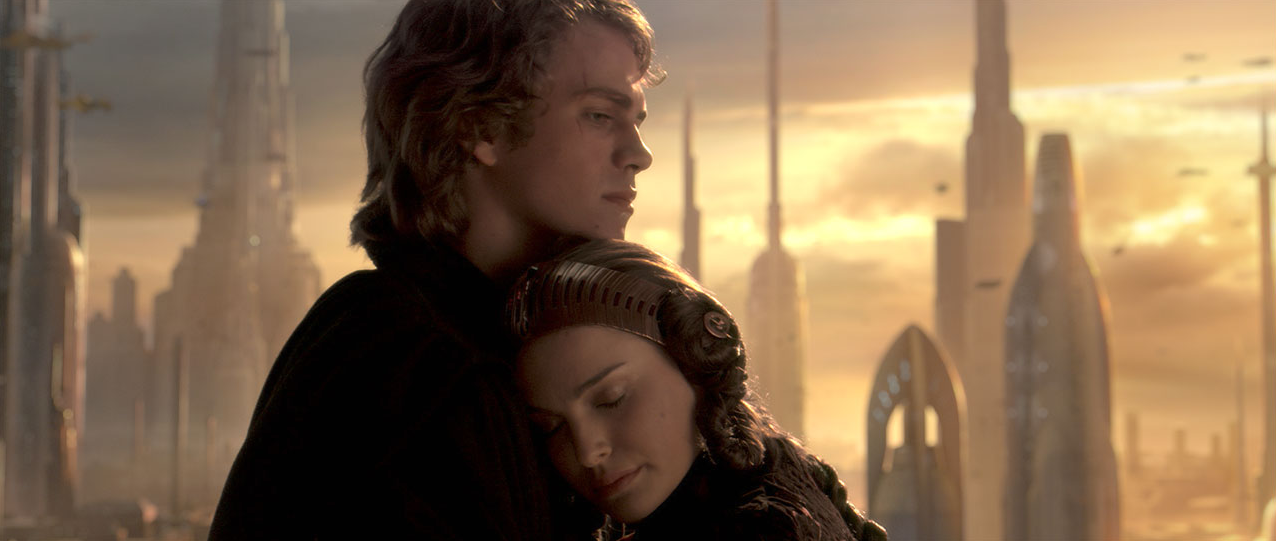
Living beings often confused attachment with love, while attachment was essentially possession and, like all aspects of the dark side, rooted in selfishness. As a form of possession, it fueled the fear of loss, which was another manifestation of greed. When attachment encroached upon love, it transformed into pain, as Anakin Skywalker described it: love became haunted by the fear of loss and the pain it would inflict—thus, it was not love, but a prison, where both the lover and the loved one were held captive. Attachment bred jealousy and was invariably followed by fear, which ultimately led to hatred.
Anakin Skywalker struggled to reconcile his life as a Jedi with the personal attachments he forged, particularly with Padmé Amidala, whom he married in defiance of the Jedi Code. Throughout the Clone Wars, Skywalker faithfully served the Jedi Order and the Galactic Republic. Ultimately, however, he was willing to sacrifice the galaxy rather than lose Amidala. Alternatively, the young Jedi Ezra Bridger fully embraced the light side by rejecting Maul's offer of apprenticeship and, later, was forced to accept his mentor Kanan Jarrus's demise at Ahsoka Tano's urging in the World Between Worlds despite thinking he had a chance to change Jarrus's fate. Later, Bridger's attachment to his family was exploited by Sidious, who used Bridger's longing and love for his parents to try and convince him into opening a new gateway into the World Between Worlds during the Liberation of Lothal, but he instead destroyed the portal to stop the Sith Lord's plans.
Insatiable Hunger for Domination
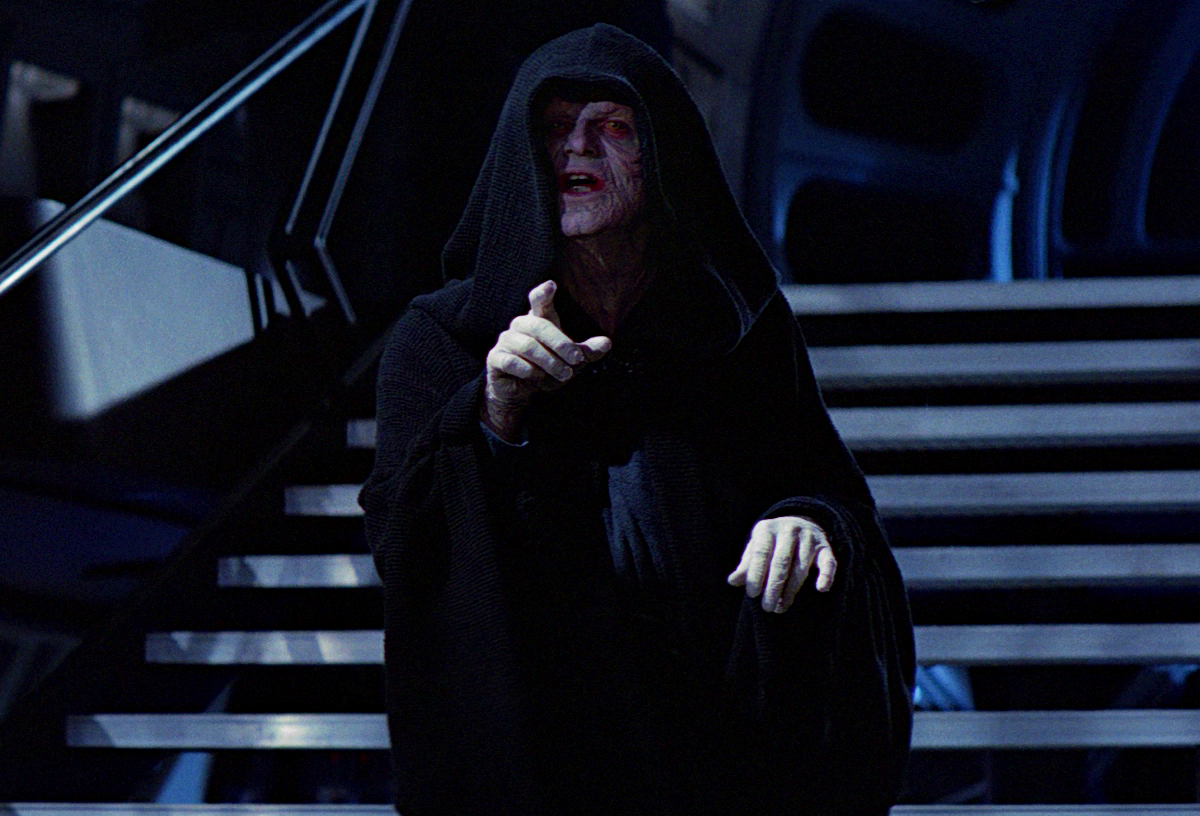
The allure of the dark side lay in the fact that whatever selfish gains one achieved through it were never sufficient. The Sith engaged in internecine conflict, falling victim to their own greed, which ultimately led to their defeat and near annihilation during their wars against the Jedi. Darth Sidious's ultimate ambition was to harness the powers of the dark side to alter the universe itself. Anakin Skywalker, initially seeking only the power to conquer death out of attachment to his wife, eventually developed a desire to rule the galaxy and mold it according to his will.
Although Jedi were trained to follow the light side of the Force, the dark side exerted a seductive influence, and one had to be at calm, at peace, to be passive in order to have a clear mind and thus, a clear judgment, to be mindful of thoughts and feelings. Thus, they could avoid falling to the dark side. Even a Jedi raised in the traditions of the Jedi Order for years could be corrupted by the lure of the dark side in certain situations. Despite this, while the Jedi often described the dark side as a "quick and easy path."
There were some dark side users who used it for benevolent motives, not just selfishness and greed. Darth Plagueis used it to immortalize the beings he loved, Dooku wanted to use it to destroy the corrupt Republic and bring a just new galactic order, the Son deceived himself saying he wanted the best for the galaxy, and Anakin Skywalker before becoming Darth Vader wanted to save his wife by studying Plagueis.
Dark Side Capabilities
Abilities
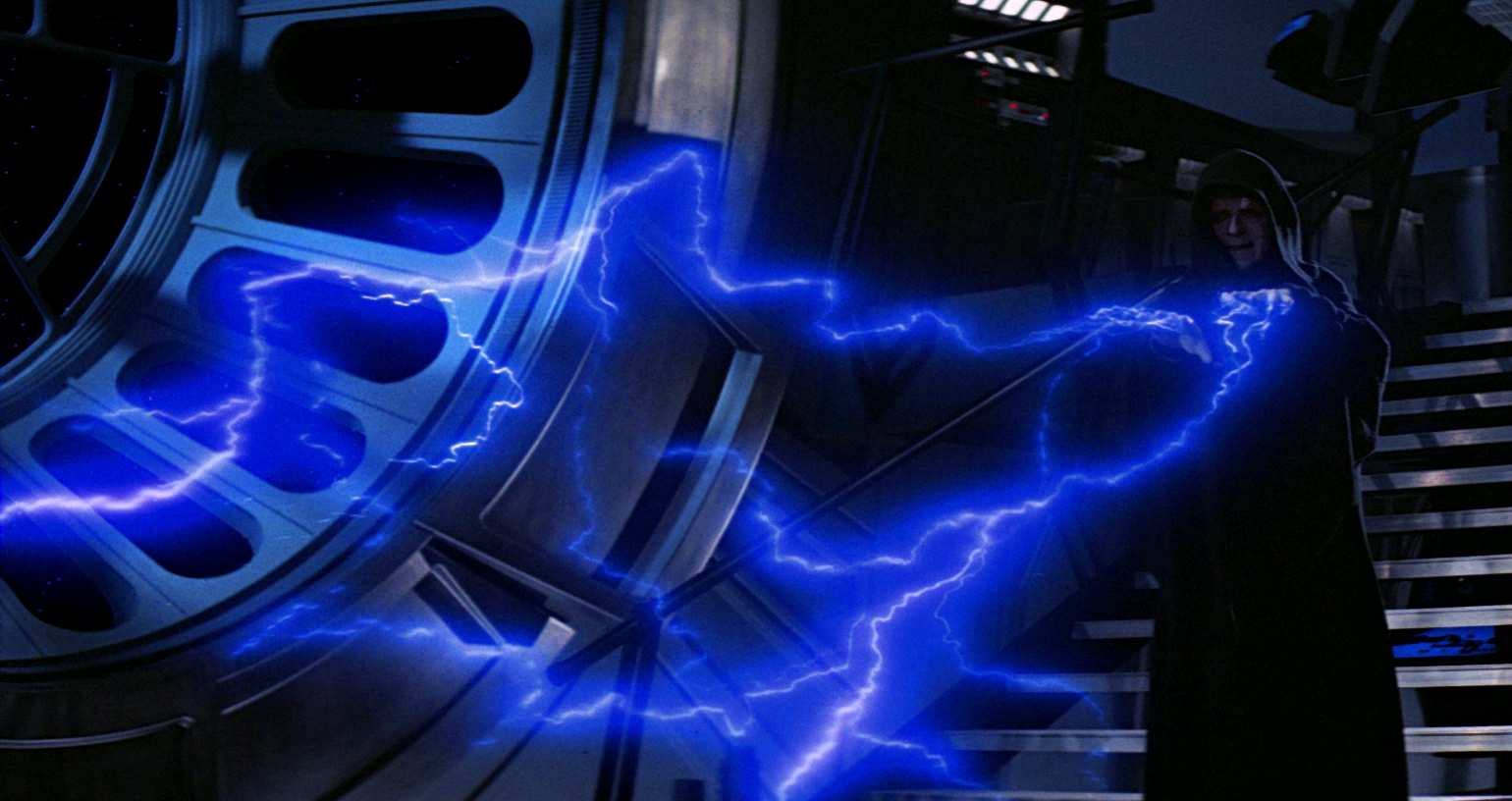
Drawing upon anger, fear, hatred, and bitterness, the dark side of the Force granted certain abilities that wielders of the light side could not access, such as possession and the ability to manipulate Force visions. To embrace the dark side meant allowing anger and hatred to consume one entirely, filling the individual with a desire to inflict pain, suffering, and dominate others.
Most dark side powers were primarily offensive in nature, such as Force lightning. Dark side power could also be used to manipulate life and, according to legend, could be used to manipulate midi-chlorians to create life or prevent death. The dark-side historian and Sith cultist Yupe Tashu told Wedge Antilles on Akiva that some Sith Lords were able to siphon the Force from their captives in order to extend their own lives for centuries beyond their natural expiration. Dark side abilities were considered by some to be "unnatural."
Intent and Application
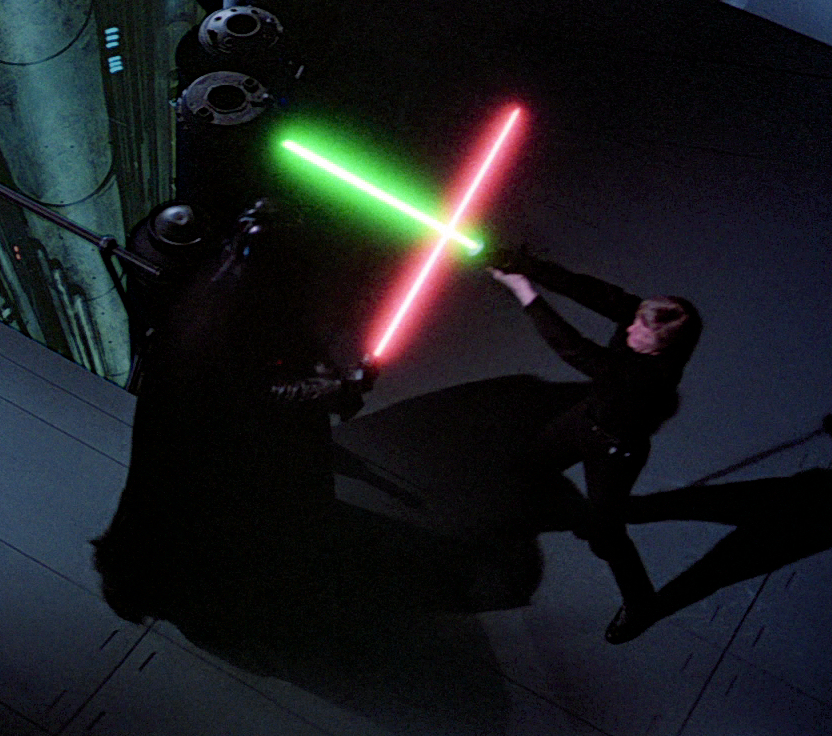
Luke Skywalker was tempted by the dark side when he attacked his father in fear of losing his sister just like Anakin Skywalker pledged loyalty to Darth Sidious in fear of losing his love. Ezra Bridger, a Jedi Padawan, tapped into his fear, anger, and hatred to summon a massive fyrnock to attack the Grand Inquisitor out of fear of losing his friends.
A dark side adept's devotion to pain could stem from specific motivations. After Anakin Skywalker transformed into the Sith Lord Darth Vader, he became a tormented individual who sought solace in inflicting more pain. This misguided remedy involved attempting to harm not only himself but also others, yet it proved ineffective. In fact, even after harboring years of hatred for his former master Obi-Wan Kenobi, his death only intensified the loneliness he felt.
Dark Presence
The power of the dark side was pervasive and insidious. The Jedi Temple was constructed atop an ancient Sith shrine, and unbeknownst to the Jedi, the dark side's power seeped upwards through the Temple from the shrine, gradually weakening the Jedi over a millennium.
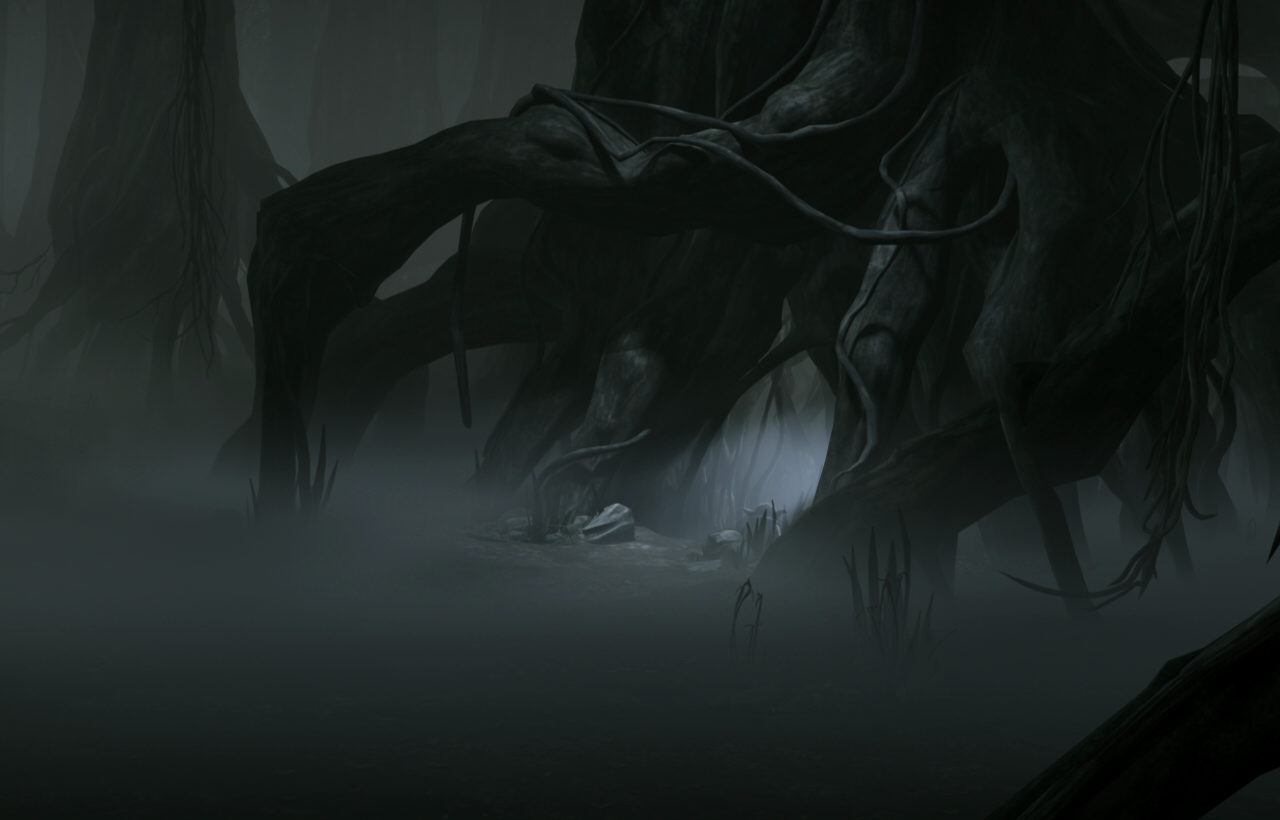
When the presence of the dark side was exceptionally potent, nearby Force-sensitives often experienced a sensation of cold. This occurred on multiple occasions to Ezra Bridger and Kanan Jarrus in the presence of Darth Vader, and also when Luke sensed the dark energy emanating from the Cave of Evil on Dagobah. Prolonged use of the dark side could corrupt an entire planet with its energy. Dathomir was one such place that was heavily steeped in the dark side. This could also resonate through physical objects physically associated with individuals with a strong dark side presence, such as that of Darth Momin and his mask. Momin's mask corrupted nearby beings and turned them into mindless killers.
Perspective
Jedi Viewpoint
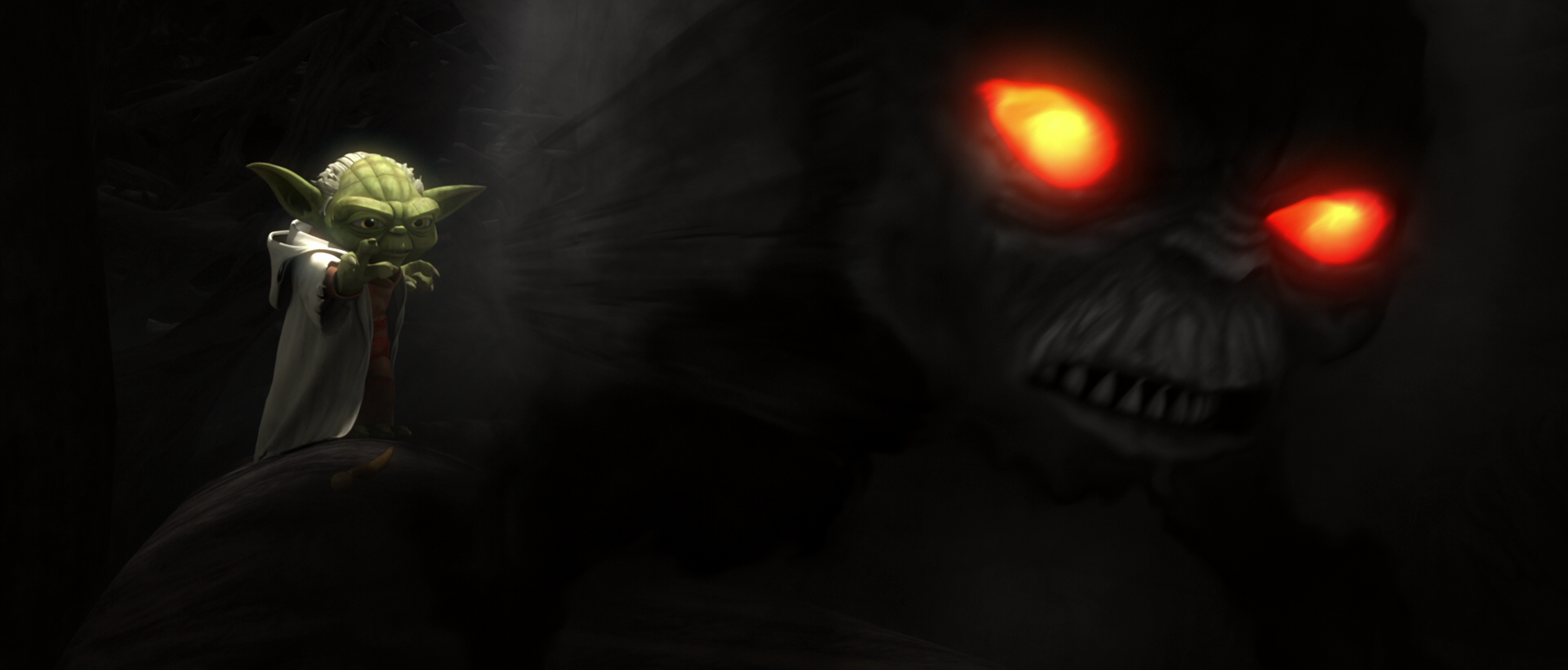
The dark side of the Force was profoundly corrupting. According to Grand Master Yoda, the destiny of one who embraced the dark side would be forever dominated by it, but redemption was never impossible; choices and actions, both selfless and selfish, were what paved one's path to follow through life. The Jedi understood that the dark side was rooted in fear, which led to anger, which in turn led to hatred, and ultimately to suffering—primarily for the one who embraced the dark side. The Jedi conquered their dark side through patience, training, and discipline, thereby preventing it from gaining power over them.
When the Jedi Order's attempt to infiltrate the Nihil marauders failed in the skirmish on Xais, Jedi Master Avar Kriss, even though she had supported the plan, took it as proof that the Jedi and others who deemed themselves servants of the light side could not afford to hide within shadows. She deemed that to be the territory of their enemies and something the Jedi needed to rise above. As such, their next attack, the Battle for No-Space, was a direct assault against the Nihil.
Sith Viewpoint
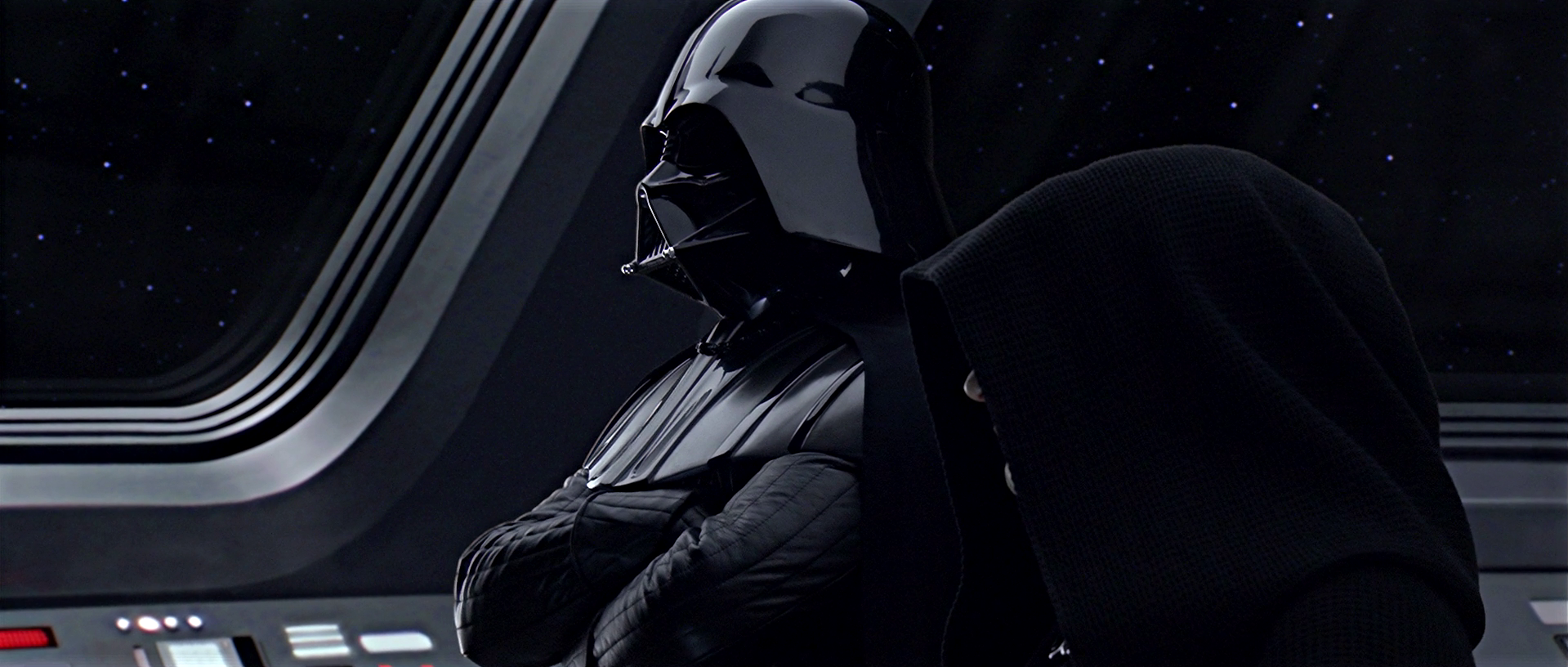
In contrast to the Jedi, who adhered to the principles of the light side, the Sith were devoted followers of the dark side of the Force. Driven by a desire for power at any cost, the Sith practiced the ways of hatred, deception, and ambition in order to harness the energies of the dark side.
Darth Sidious declared that his power emanated from his own hatred and the hatred directed at him by others, which he thrived upon. In effect, the hate one held towards Sidious only made him stronger. However, according to Yupe Tashu, Sidious also believed that the source of his dark side power came from the universe beyond the edges of the known galaxy. Darth Vader viewed the dark side as a source of strength and believed he embodied its power.
Lord Momin regarded the dark side of the Force as a supreme power. Specifically, Momin believed in the creation of art that glorified the dark side, which, in his view, could grant the artist eternal life. Such extremist views led to both Jedi and Sith holocron chroniclers' neglect of Momin. When Momin's spirit restored his body and dueled Vader, he decried the modern Sith by claiming they had failed the dark side to focus on destroying the Jedi, but Momin himself was then killed by Vader.
Knights of Ren Viewpoint
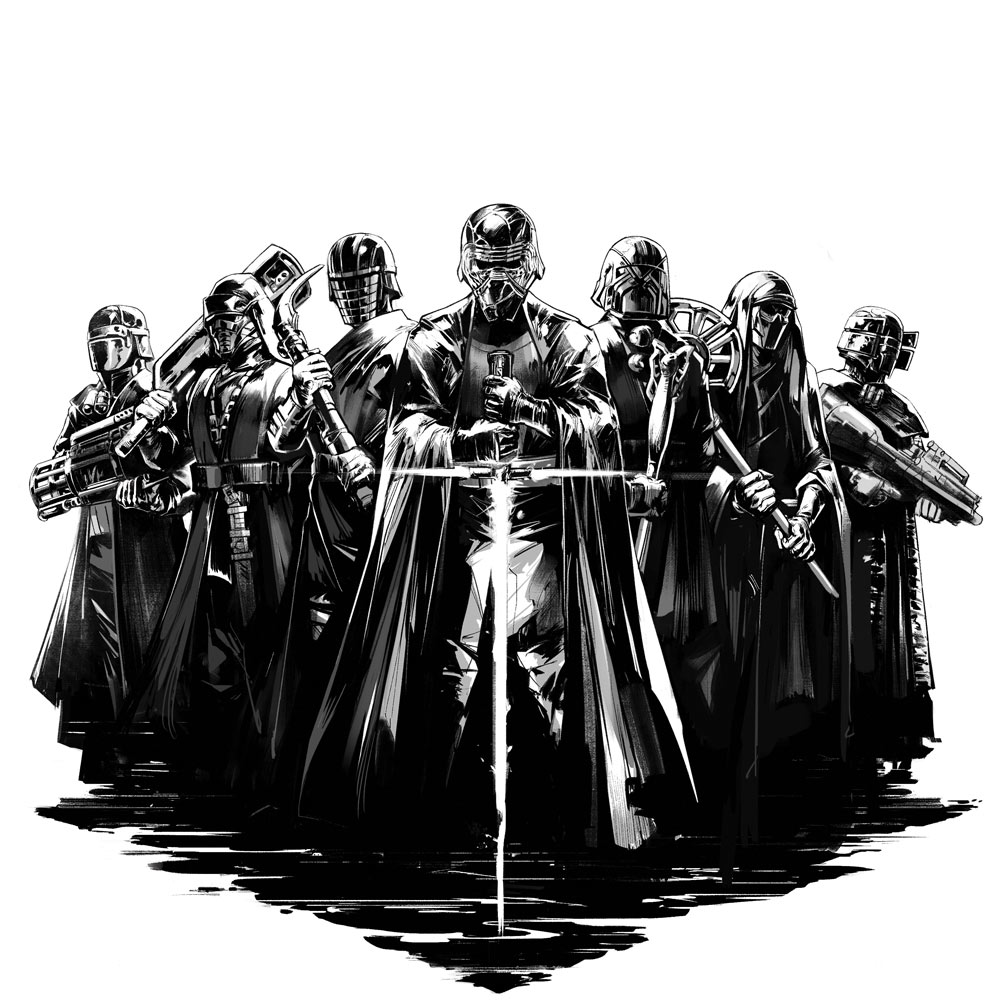
The ability to wield the dark side was a prerequisite for joining the Knights of Ren. As a condition, however, a potential recruit had to willingly kill someone as a form of sacrifice.
The Knights of Ren comprised seven elite warriors—Ap'lek, Cardo, Kuruk, Ren, Trudgen, Ushar, and Vicrul—who roamed the galaxy as marauders, particularly the Unknown Regions, where they preyed upon isolated communities on sparsely populated worlds. Although members of the Knights of Ren were Force-sensitive, they did not adhere to any Force-based religion. Nevertheless, the Knights' source of power was the dark side of the Force, which was referred to as the "shadow" by their leader,
As dark-side wielders who thrived in a lawless environment, the Knights of Ren held beliefs that were diametrically opposed to the traditions of the Jedi Order. According to Supreme Leader Snoke of the First Order, the Knights' disregard for rules granted them flexibility and the freedom to act as they pleased, whereas the Jedi, in Snoke's view, were rigid due to their code. Despite Snoke's perception of the Knights' strength, Jedi Master Luke Skywalker observed that they lacked discipline and proper training, and possessed only the most basic skills of the dark side.
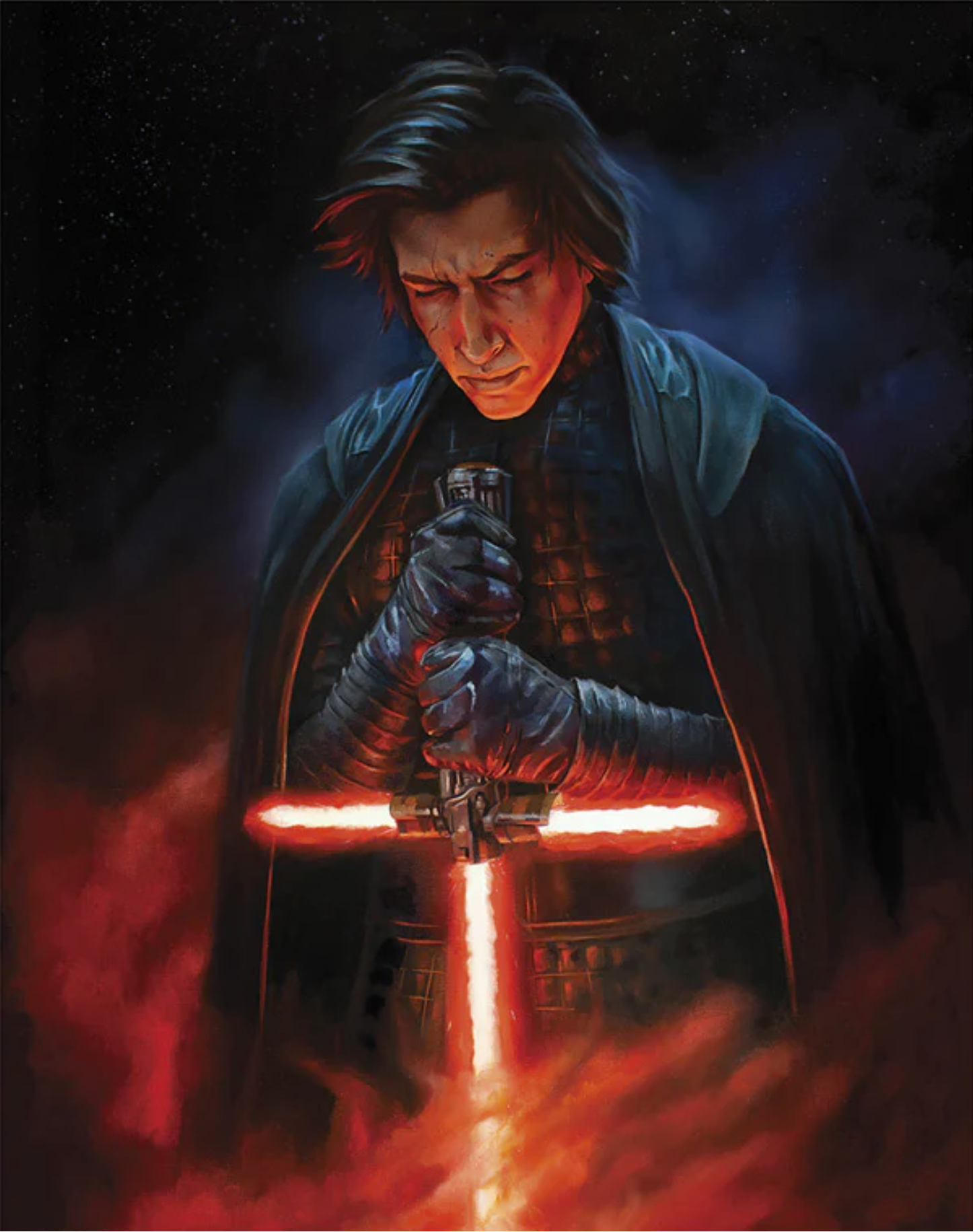
Ben Solo, the grandson of Anakin Skywalker and the nephew of Luke Skywalker, eventually chose to align himself with the Knights of Ren after the Jedi Temple of his uncle was destroyed. Ren detected Solo's connection to the dark side during their initial meeting on Elphrona; the dark warrior encouraged Skywalker's apprentice to explore the dark side by joining the Knights of Ren. Solo, intrigued by the Knights' philosophy and its emphasis on power and overwhelmed by Ren's murder of his friend Tai, succumbed to the dark side, killed Ren during a fight, and assumed the title of Kylo Ren, thereby becoming the Master of the Knights of Ren. Kylo's understanding of the Force was influenced by both Jedi and Sith teachings, although he was neither a Jedi nor a Sith himself.
However, Kylo Ren experienced a persistent pull toward the light side. During the Battle of Starkiller Base, he attempted to overcome his regrets and fully embrace the dark side by murdering his father, Han Solo, an act that only deepened his internal conflict. Despite this emotional turmoil, Ren attempted again to solidify his commitment to the dark side by killing Snoke and declaring himself Supreme Leader. The sacrifice of his mother, Leia Skywalker Organa Solo, during the mission to Kef Bir, was pivotal in finally turning Ren back to the light. Following a conversation with what he perceived to be a memory of his father, the redeemed Ben Solo assisted in the overthrow of the resurrected Sidious during the Battle of Exegol.
Other groups
The Sorcerers of Tund considered members of their order who embraced the dark side as apostates. Because of their unique term for the Force, the Sorcerers referred to the dark side as the "dark side of the Unity." Given the importance of the moon of Jedha to numerous Force-based religions, the Sorcerers, Jedi, and other groups maintained representation on the Convocation of the Force, although dark side faiths were excluded. Most members of the Dank Graks criminal organization were formerly associated with dark side cults. The Path of the Open Hand cult held all Force users in contempt, believing that any utilization of the Force could result in an equal amount of harm elsewhere in the universe. Consequently, the Children of the Path endeavored to liberate Force artifacts, including those created by adherents of the dark side, and secure them to prevent their application. The Final Occultation was a dark side cult that, in contrast to the "order" championed by the Sith, advocated for the introduction of chaos throughout the galaxy.
Behind the scenes
In the second and third drafts of the screenplay for A New Hope, the dark side of the Force was originally named "the Bogan". Star Wars Rebels: Steps Into Shadow established "the Bogan" as an official name for the dark side within canon.
George Lucas repeatedly explained that the dark side embodied greed, selfishness, fear, anger, hate, bitterness, possessiveness, and the inability to let go—thus, it stood in opposition to the light side of the Force, which encompassed compassion, caring for others, love, fairness, charity, and hope. He emphasized that neither the dark nor light sides were inherently malevolent or benevolent; maintaining balance within the Force and acting ethically required remaining on the light side.