Reproduction
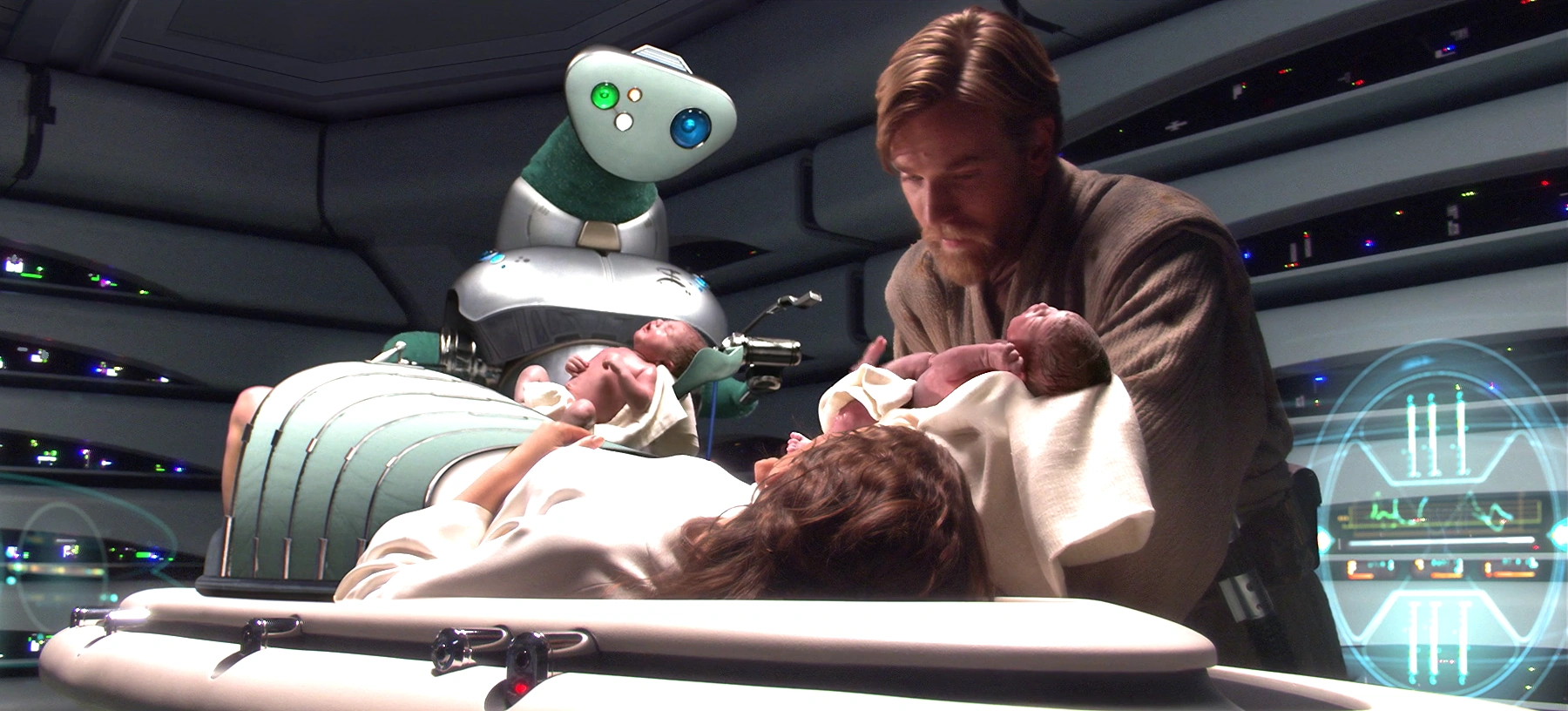 Padmé Amidala gives birth to twins, Luke and Leia
Procreation, a fundamental aspect of life, involved the creation of new organisms by existing ones. Certain species engaged in sexual reproduction, a process where biological parents transmitted their genetic information through fertilization. This resulted in either a parent giving birth after gestation within a womb or the external hatching of eggs. However, sexual activity also occurred for enjoyment. Asexual reproduction, through methods like cloning and magick, also facilitated the creation of new life. Notably, the woman Shmi Skywalker conceived and delivered Anakin Skywalker without a partner, an unusual occurrence for humans. Anakin possessed extraordinary potential for connecting with the Force, the mystical energy field permeating the galaxy.
Padmé Amidala gives birth to twins, Luke and Leia
Procreation, a fundamental aspect of life, involved the creation of new organisms by existing ones. Certain species engaged in sexual reproduction, a process where biological parents transmitted their genetic information through fertilization. This resulted in either a parent giving birth after gestation within a womb or the external hatching of eggs. However, sexual activity also occurred for enjoyment. Asexual reproduction, through methods like cloning and magick, also facilitated the creation of new life. Notably, the woman Shmi Skywalker conceived and delivered Anakin Skywalker without a partner, an unusual occurrence for humans. Anakin possessed extraordinary potential for connecting with the Force, the mystical energy field permeating the galaxy.


Methods of Procreation
Conception and Childbirth
In some species, such as humans, procreation commonly involved two individuals, the biological parents, conceiving a child. One parent assumed the role of the mother, carrying and delivering the child, while the other was the father. For example, Lyra and Galen Erso, as lovers and spouses, conceived Jyn, with Lyra giving birth on the planet Vallt. During the Clone Wars, Senator Padmé Amidala of Naboo became pregnant with Jedi Knight Anakin Skywalker, her husband, as the father. She subsequently gave birth to twins, Luke Skywalker and Leia Organa. Later, Organa conceived with her own husband, Han Solo. Early in their marriage, a sublight journey, initially marked by arguments, led to "far more enjoyable pursuits," leading Organa to believe their son Ben was conceived during that trip. During her pregnancy, Organa collaborated with a doctor to maintain her health, who advised incorporating jogan fruit into her diet.
Beings could also choose to have a child without a sexual partner; Amidala's sister, Sola Naberrie, for instance, gave birth to a daughter, Ryoo Naberrie.
Certain humanoid species could produce hybrid offspring with other species. Shaeeah Lawquane, Jek Lawquane, and Jacen Syndulla all had human fathers and Twi'lek mothers. Humans could also reproduce with Theelins, Mirialans, and Espirions, with the latter resulting in the Alder-Espirions hybrid species on Alderaan. Hybrids could also result from pairings between Quarrens and Mon Calamari.
Conception did not ensure a successful pregnancy. On the barren planet Parnassos, atmospheric contamination or inadequate nutrition among the Scyre warrior clan led to fewer conceptions, with most pregnancies failing to reach term. Similarly, limited resources restricted childbearing in the city Arratu Station.
During pregnancy, humans could feel their unborn child's movements within the womb.
Midwives or midwife droids, sentient beings, assisted with births, which could occur in maternity wards or birthing chambers. By the Clone Wars era, a rumor circulated on Vallt that Coruscant's human women no longer carried or delivered their own children, hiring others to do so. However, during his imprisonment and interrogation, Coruscant resident Galen Erso disputed this claim when questioned about being Lyra's child's father.
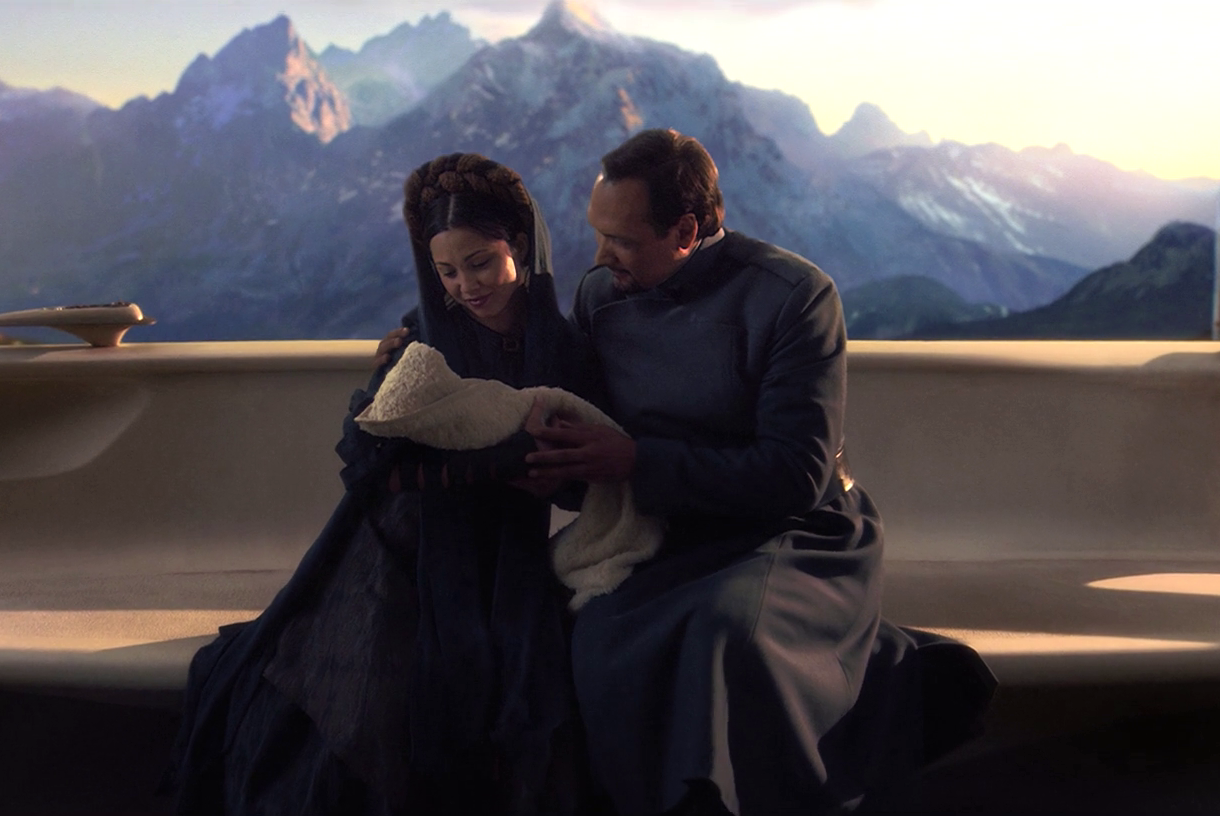
Death could occur during childbirth. Queen Breha and Senator Bail Organa of Alderaan adopted Leia Organa shortly after her birth, partly because Breha's replaced heart and lungs (pulmonodes) prevented her from safely carrying a pregnancy. Bail and Breha informed Leia that her biological parents had both died, her father in the Clone Wars' final battles and her mother shortly after her birth due to injuries; however, only the latter was accurate. The other twin, Luke, was adopted by Owen Lars and Beru Whitesun Lars.
Mon Calamari spawned numerous offspring, producing far more than humans. The Orishen species reproduced through two parents; each parent birthed one of their two children, and then the parents died, ensuring that the number of Orishen never grew. Some species, like the Neimoidians, were born as grubs and competed for limited food. Others, like the Geonosians, hatched from eggs laid by a single hive queen. Vintian species members entered mating smelts several years apart.
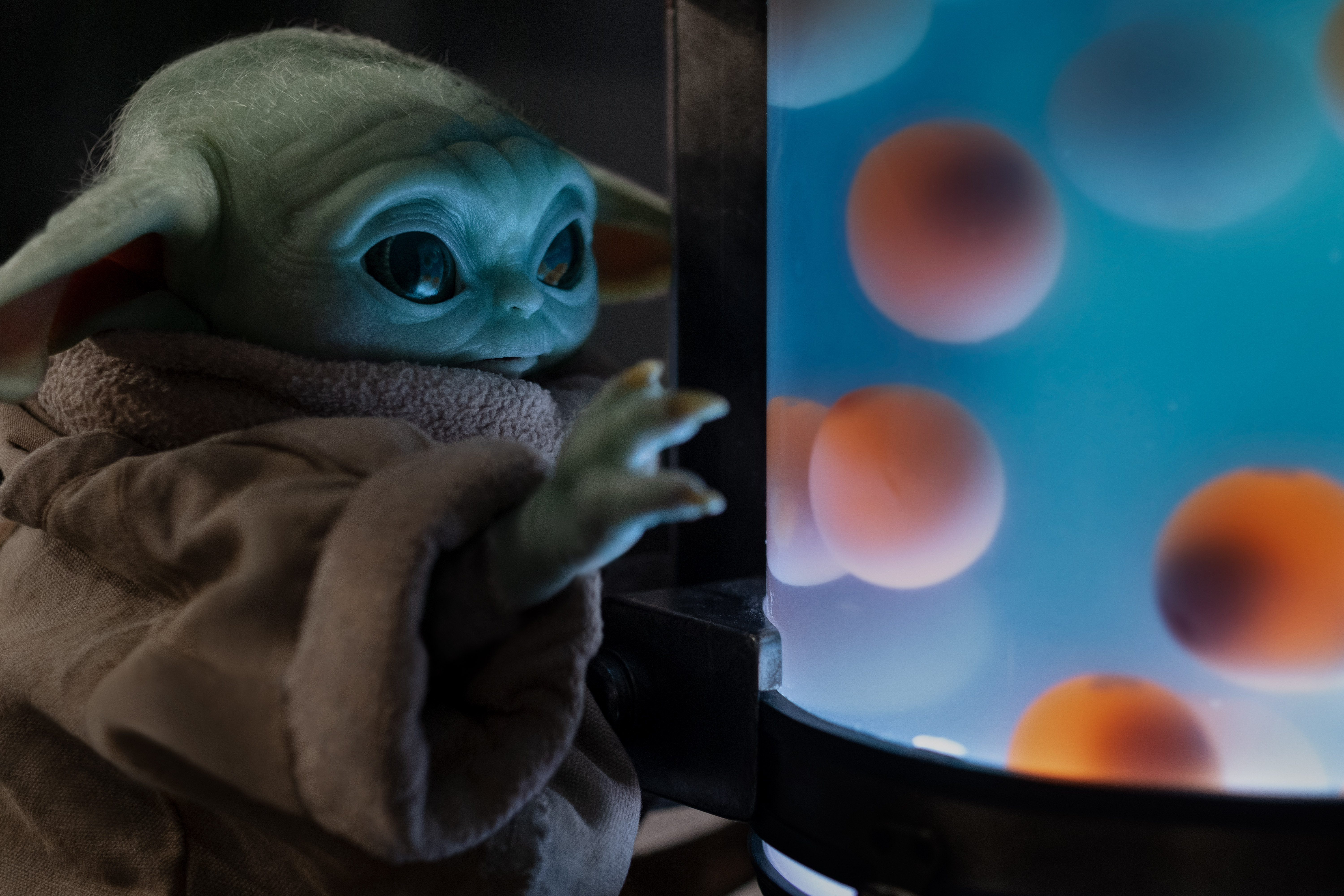
The Querm Rybet species, to which "Frog Lady" belonged, reproduced through external fertilization, where one member laid eggs that needed fertilization by another. Tadpoles then emerged from the eggs after hatching.
Creatures such as the sea life on Zohakka XVII and the tibidees of the mountainous Stygeon Prime used mating calls to attract partners, while a leviathan on Ahch-To used mating songs. After copulation, female blurrg consumed their male partners. Tauntauns often ran while in labor and struggled when confined during childbirth.
Alternative Methods of Life Creation
The Force
The human twin children Mae-ho and Verosha Aniseya were fatherless; they were created by Aniseya, leader of a coven of witches, using a potent Force vergence on Brendok. Aniseya's partner, Koril, carried them until birth, and both raised the sisters as their mothers.
Shmi Skywalker bore Anakin Skywalker without a biological father, and she was unsure how she conceived him. Jedi Master Qui-Gon Jinn speculated that midi-chlorians, connecting all life to the Force, might have been involved in Anakin's conception. Darth Sidious later told Anakin that a Dark Lord of the Sith, Darth Plagueis, could manipulate midi-chlorians using the dark side to create life or prevent death.
Cloning
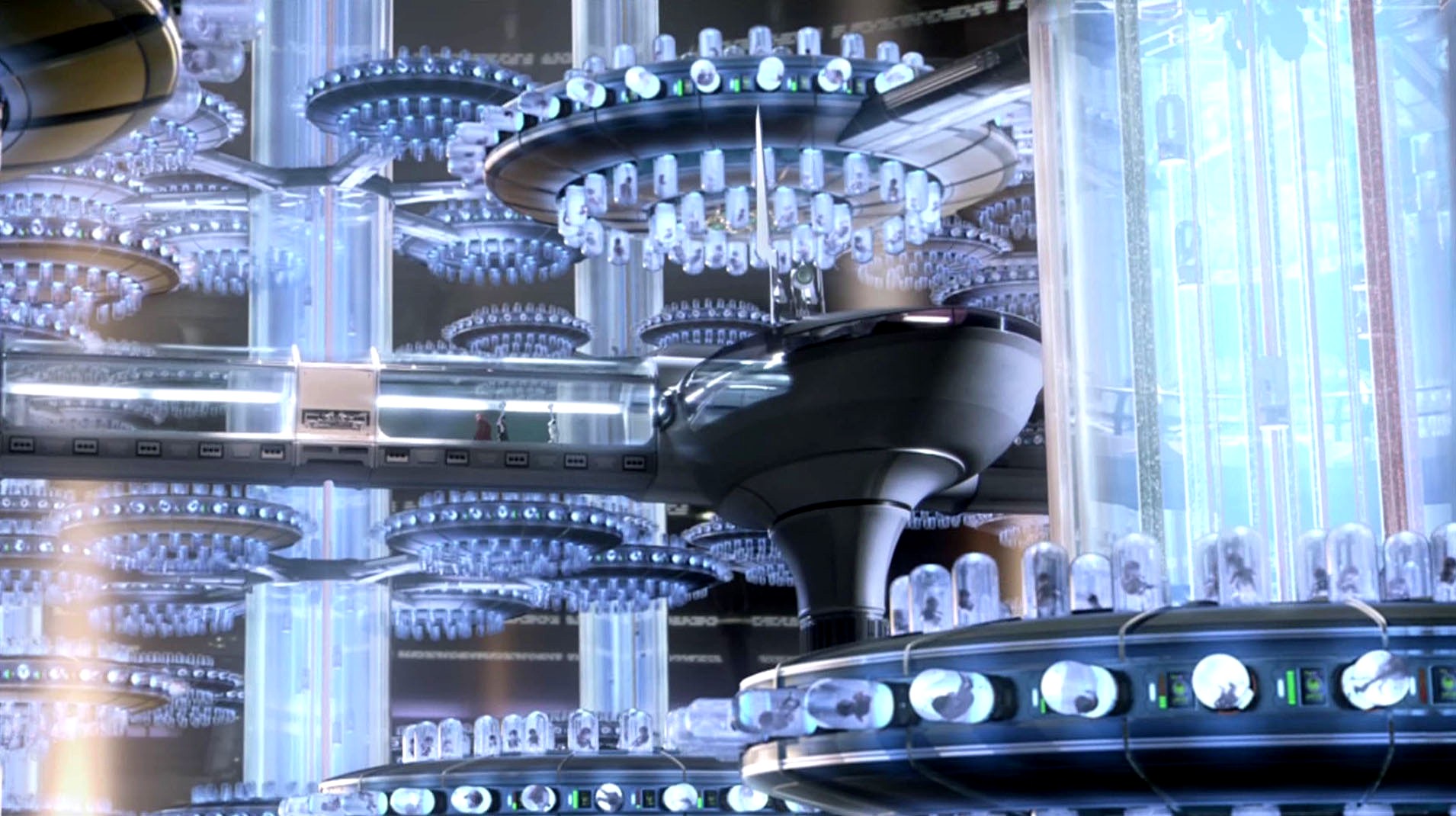
Cloning involved replicating the DNA of an organism to create genetically identical copies. Before the Invasion of Naboo, the Kaminoans cloned the human bounty hunter Jango Fett, leading to the creation of the Grand Army for the Republic. The clones were cultivated in hatcheries on Kamino and genetically modified to accelerate growth and enhance obedience. To further ensure compliance with Order 66, their brains were implanted with a behavioral modification biochip.
Magick
On Dathomir, the Dathomirian witch Falta used magick to create her daughter, Yenna, within a pod that served as the opposite of a burial pod. Falta kept the secrets of Yenna's creation from Mother Talzin, the leader of the Nightsisters.
Sexual Relationships

Sentient beings exhibited diverse preferences for sexual or romantic relationships, including attraction to a different gender, multiple genders, or the same gender. Some had no interest in sex or romance. Preferences also varied across species, with some humanoids only finding other humanoids attractive. Some individuals, such as the pilot Leox Gyasi, lacked sexual desires but engaged in sexual activity despite this.
The Jedi Order forbade its members from marrying and encouraged celibacy due to the commitment required and the need to avoid attachments. However, interpretations of the Jedi Code differed on the permissibility of casual sex without attachments. During the High Republic Era, relationships involving Jedi were less unusual, especially among Padawans. This included relationships between Jedi, such as the relationship between Avar Kriss and Elzar Mann. While commonly limited to Padawans, some Jedi would continue having relationships as they grew older, this was notably seen with Elzar Mann's relationship with the coordinator of the Republic Fair, Samera Ra-oon. Rael Averross was a notable exception, known for engaging in casual sex with women before the Clone Wars.

Within the Galactic Empire's military, cadets in the Imperial Academy system were prohibited from forming romantic or sexual relationships, as stipulated by their oath of loyalty. Later in their careers, decorum manuals emphasized discretion in sexual activities, and the Empire promoted family initiatives that discouraged non-reproductive pairings. Loyalty officers like Sinjir Rath Velus identified their subjects' sexual partners to improve interrogation effectiveness. The phrase "off-base, recreation" served as a euphemism for Imperial officers seeking sexual partners in cantinas or visiting extramarital lovers. Popular locations included the Octagon in Lessu, Ryloth's capital, and the underworld of Coruscant.
Individuals who engaged in sexual activity for payment were known as prostitutes, and the establishments where they worked were called brothels.
Genetics
Children could inherit physical traits from their biological parents. Leia Organa bore a striking resemblance to her mother, Padmé Amidala, as a teenager. When she wore Amidala's jubilation dress, it greatly surprised Quarsh Panaka, a friend of Amidala's. Despite knowing she was adopted, Leia would look in the mirror as a child to see if she shared any traits with her adoptive parents such as Breha Organa's wisdom and beauty or the kindness in Bail Organa's eyes. Organa's son, Ben Solo, inherited his father's prominent nose and lopsided smile, along with his mother's piercing brown eyes, a trait Organa believed she inherited from her own mother.
Other characteristics could also be passed on: Force-sensitive Leia Organa was described as wise, discerning, and kindhearted, like her mother, and passionate, fearless, and forthright, like her father, Anakin Skywalker. Beru Lars remarked to Owen that "Luke's just not a farmer, Owen. He has too much of his father in him," to which Owen replied, "That's what I'm afraid of." Ben Solo's Force abilities came from his mother, while his reflexes and piloting skills came from his father. He also came from a family of expert pilots that included his father and maternal grandfather. Snoke also claimed that Solo had 'too much' of his 'father's heart in him which was why he was unable to fully commit to the dark side of the Force.
The saying "the jogan doesn't roll far from the vine" described children resembling their parents.
Behind the Scenes
Despite the 2002 film Star Wars: Episode II Attack of the Clones establishing that Jedi Order members could not marry or have children, Star Wars creator George Lucas clarified that Jedi were permitted to have sexual intercourse as long as they did not form attachments or possessive relationships, despite their monastic culture.