TIE series
The TIE series, also referred to as the TIE line or TIE fighter series, encompassed a range of starships, primarily starfighters, crafted by Sienar Fleet Systems, and subsequently Sienar-Jaemus Fleet Systems. These vessels were uniquely characterized by their twin ion engines alongside solar collector panels. Numerous distinct models existed, most notably utilized by the forces of the Galactic Empire.
History
Background
The initial phases of the TIE line's development commenced in the latter part of the Republic Era, spurred by advancements in ion propulsion made by the Sienar Advanced Projects Laboratory. Among the Laboratory's classified projects was the Scimitar, a significantly modified and customized Star Courier. This craft employed experimental, high-temperature ion engines to attain exceptional speeds. To address the substantial energy demands of these engines, Raith Sienar innovated a system featuring twin, folding radiator panels integrated into the ship's wings. This system supplied the necessary power while maintaining the ship's aerodynamic profile.
As the Clone Wars drew to a close, Republic Sienar Systems, the parent company of Advanced Projects, faced bankruptcy. Consequently, ownership was transferred to the InterGalactic Banking Clan. Following the Clan's downfall after the Invasion of Scipio, its assets, including RSS, were passed to the Office of the Chancellor. After the war's conclusion and the formation of the Galactic Empire, Emperor Sheev Palpatine, having learned of Sienar's aptitude from the APL's designs uncovered during the conflict, decided to award Sienar the contract for the design and manufacture of the first Imperial-made starfighter to bolster the ranks of the newly established Imperial Navy. Before this, the Imperial Starfighter Corps consisted of a diverse array of Republic-era and privately-manufactured ships, such as the Alpha-3 Nimbus-class V-wing starfighters, ARC-170 and ARC-40b Scout-Reconnaissance Fighters, Alpha-class Xg-1 Star Wings and M3-A Scyk interceptors.
Development
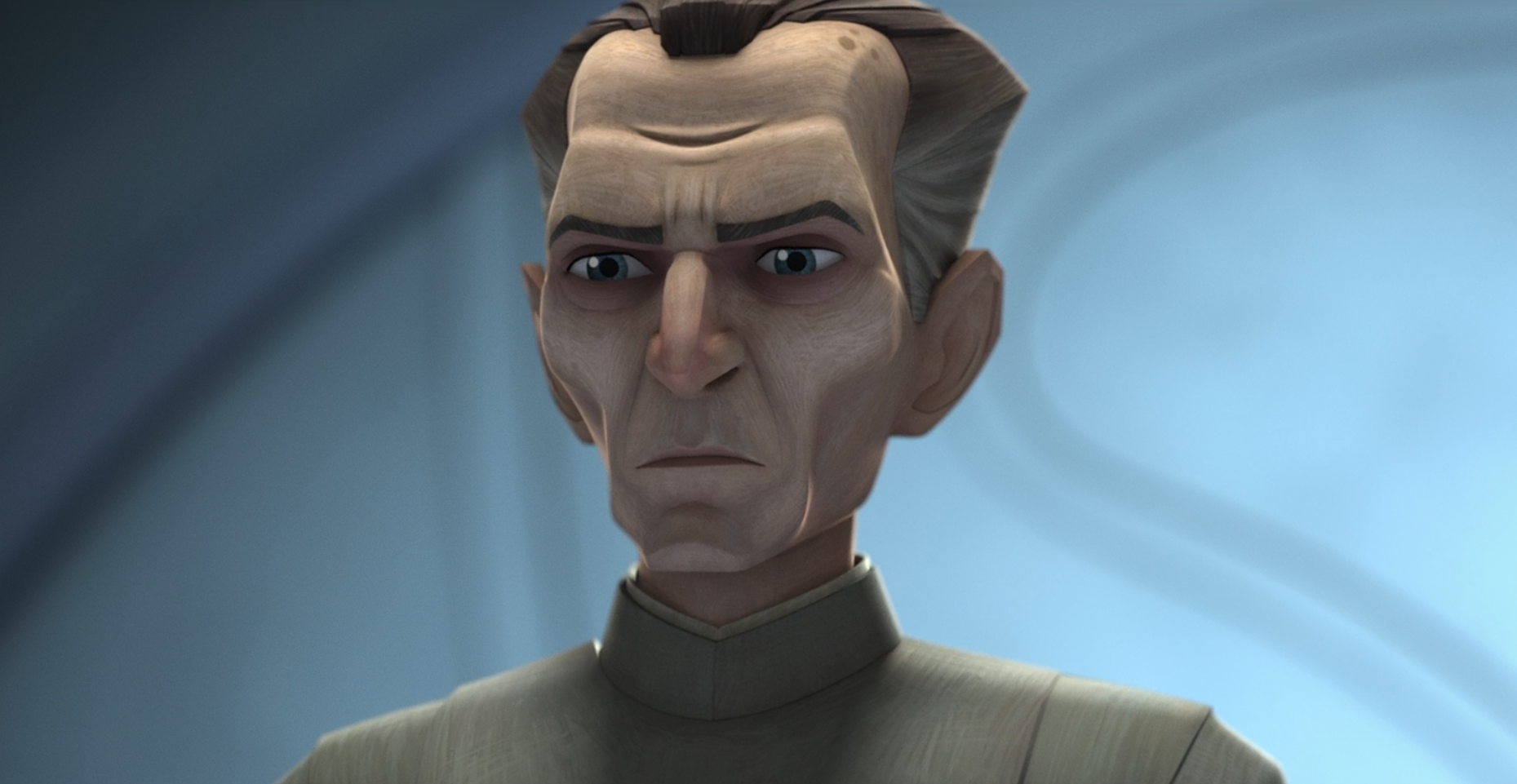
Moff Wilhuff Tarkin, who was later appointed by the Emperor as governor of all Outer Rim Territories with the title of Grand Moff, personally tasked Raith Sienar with the design project that would evolve into the TIE line. This assignment came in the form of a memorandum outlining the core principles of his doctrine, which emphasized strength through fear. This ideology would later be known as the "Tarkin Doctrine" in the media. Tarkin also specified the fundamental requirements for the project: the starfighter needed to be cost-effective, easily manufactured, and suitable for mass production. Simultaneously, it should instill fear in enemies and ensure the pilots were dedicated and obedient to Navy command. According to Tarkin, the starfighter's sound should be unique, distinguishing it from generic designs and serving as its signature during combat.
Upon receiving the memorandum, the Imperial Admiralty formally detailed their requirements and budget for the new starfighter, based on Tarkin's outline, enabling Sienar to commence work on a prototype. Additional features requested included limited range and ground control systems, the absence of landing gear and a hyperdrive, and restricted life support. These measures were intended to minimize pilot independence from the fleet and reduce the likelihood of defection. Furthermore, Tarkin insisted that the craft lack even basic deflector shielding, a standard feature on all spaceborne vessels to protect pilots from space debris and stellar radiation. Despite objections from other naval officers, Palpatine himself supported the proposal, arguing that it would encourage pilots to complete missions swiftly to return to the safety of their hangars.
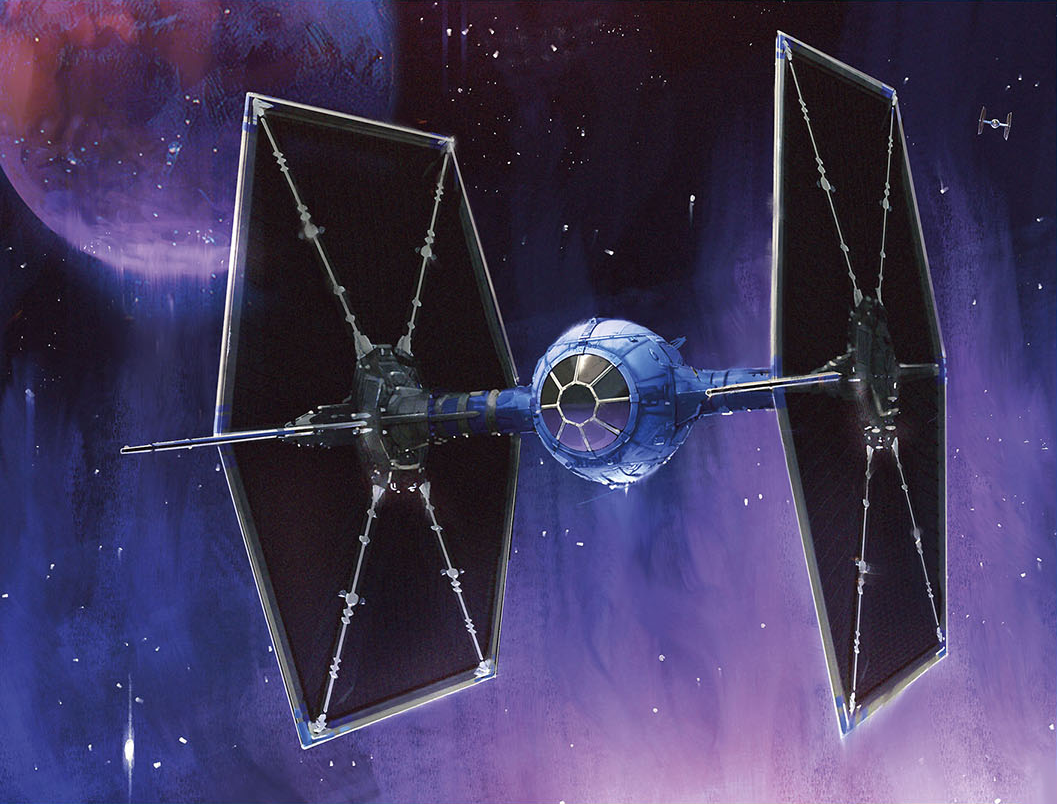
Sienar eventually began the design process, drawing inspiration from his own designs and those of Kuat Drive Yards (RSS's primary competitor), including his prototype Star Courier and the Nimbus- and Actis-class ships already in use by the Navy. These influences included the Star Courier's solar collector wings and the Actis-class's spherical pressurized cockpit and twin ion engines. Sienar extensively tested and experimented with the latter, ultimately developing a high-performance prototype that improved upon previous models, called the P-s3. Sienar incorporated these elements into the plans for the first TIE fighter prototype, which was designed to be exclusively spaceborne, according to Imperial mandates. However, when presenting the plans to the Navy, Sienar surprised them with an additional design for a slightly more expensive vessel capable of operating in a planetary atmosphere and landing on its wings. Naval command authorized Sienar to proceed with the assembly of prototypes for both designs, the latter being slightly larger with stronger pylons and reinforced spars connecting the wings to the cockpit. This design proved more effective than the original, and in 18 BBY, the newly established Sienar Fleet Systems received the green light to begin mass production of the first exclusively Imperial starfighter, known as the Twin Ion Engine Line edition starfighter, or simply TIE/ln.
Introduction to the Navy and bent-wing advancements
Spread of the TIE

The TIE/ln was integrated into the Navy's starfighter forces that same year and saw action during the Invasion of Mon Cala, one of the earliest overt conflicts waged by the Galactic Empire to assert its dominance. At the time of the invasion, the fighters were new. Forces such as the Imperial I-class Star Destroyer Sovereign's group, which participated in the invasion, adopted some of the new SFS-produced models. Simultaneously, as part of the five-year plan for the Outer Rim's industrialization, factory worlds like Lothal were tasked with producing even more TIE/ln fighters to eventually replace all Republic-era starfighters in the Navy. This objective was largely achieved within the same decade; by 5 BBY, bases such as the Alkenzi Air Base and the Lothal Imperial airfield were entirely equipped with TIE/ln fighters.
TIE Advanced v1

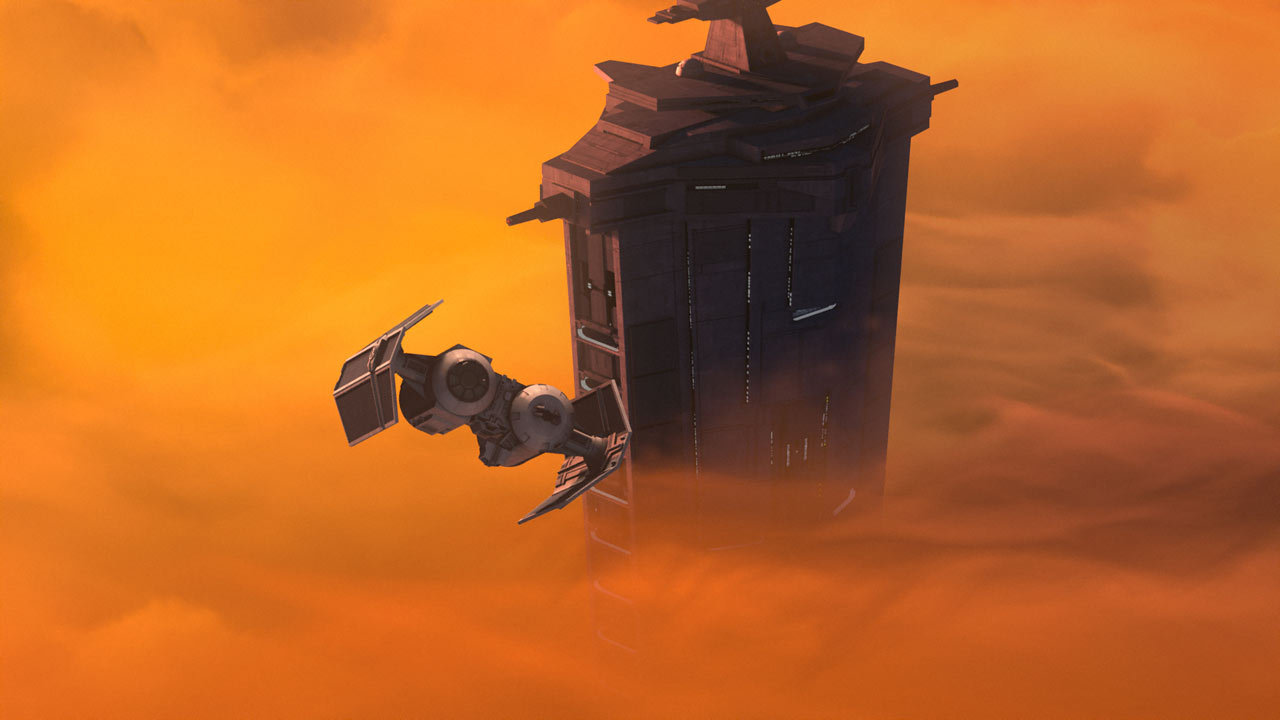
Despite the TIE/ln's capabilities in eliminating pirate and mercenary threats when used in conjunction with Imperial capital ships and generally meeting the Navy's requirements, Raith Sienar continued to experiment with the craft and his own Star Courier design to develop an even more advanced starfighter. By incorporating the folding, bent-shape wings of the Scimitar with the TIE/ln's solar ionization reactor and twin ion engines, Sienar created a working prototype called the TIE Advanced v1. This ship was delivered to the Empire, with at least four being produced and assigned to the Inquisitorius for their Jedi hunts. The Navy retained the prototype and tasked ace flying baron Valen Rudor with conducting early testing of the model for potential fleet integration. However, the ship was destroyed by the Phoenix Cell during a bombing at the Empire Day parade on Lothal. Limited testing by the Inquisitors continued, yielding promising results in both atmospheric and orbital combat performance. At least one TIE/ad v1 was used by captain Lindon Javes of Helix Squadron. Nevertheless, several shortcomings, including the limited power supply of the wings which forced the craft to use fuel instead of the reactor, and the loss of many prototypes to the rebels, prevented the model from being approved for mass production.
TIE Advanced x1
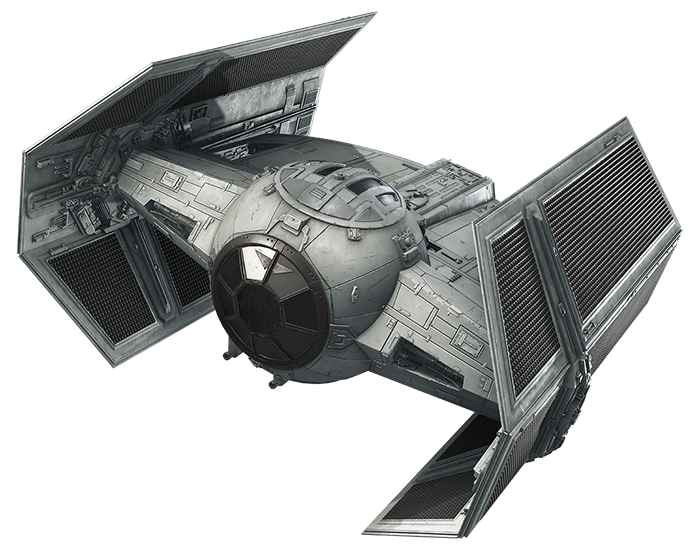
Despite its limitations, the v1 was widely regarded within the Navy as a groundbreaking and impressive design. Sometime before 4 BBY, Darth Vader, the Emperor's enforcer and de facto Commander-in-Chief of the Imperial High Command, approached Sienar with schematics for an advanced starfighter based on the v1 to serve as his personal vessel. Sienar began work on the vessel, which, in keeping with the v1's legacy, was named the TIE Advanced x1. By 4 BBY, the starfighter was completed and delivered to the Dark Lord of the Sith. Following his specific requirements, the x1 was equipped with longer, bent wings than the v1, capable of meeting the increased energy demands of the TIE's added deflector shields and hyperdrive. These wings were also shorter in height than the v1's, making it a smaller, more streamlined target capable of extreme maneuvers, including sustained recoverable rolling and flying backwards. The craft was heavier in weight and firepower than both the /ln and the v1, featuring an enlarged durasteel superstructure behind the cockpit to house the hyperdrive and shield projector, and a cluster missile launcher with 20 projectiles.
Darth Vader utilized the x1 on numerous occasions with highly positive results, including destroying the Phoenix Cell's flagship Phoenix Home and nearly single-handedly determining the outcome of the Battle of Yavin in 0 BBY. Although heavily damaged during the latter, the ship was recovered and repaired, leading to a debate within the Navy about whether it should be formally integrated into the fleet. TIE Advanced prototypes, still considered a new design at that time, were available to Imperial forces based on Tatooine during the Empire-Rebel struggle for the world. In fact, the Tatooine rebel cell managed to acquire some x1s for its operations against the Empire. Ultimately, the proposal to formally introduce the x1 into the Imperial Navy was rejected due to the starfighter's high cost of 160,000 credits compared to the TIE/ln's 60,000.
A select few squadrons were equipped with the x1 before the project was discontinued. Despite its limited production, the TIE Advanced became a favorite among elite pilots. Indeed, an Ace of Storm Squadron flew the starfighter at one point. Despite the formal end of the project, Vader continued to fly his x1. A TIE fighter with the central design of a regular TIE fighter but wings akin to those of an x1 was part of the Hunter Fleet and fought in the Battle at Elessia.
Production of specialized variants
TIE bomber
While Sienar experimented with the TIE Advanced line, the Imperial Navy began encountering initial issues with the TIE/ln. The vessel was designed for short-range operations, but mission requirements increasingly forced pilots to operate further from their capital ships, stretching the TIE's capabilities. Moreover, the TIE/ln was not adequately equipped for ground attack operations, requiring the Navy to use Star Destroyers, whose weapons proved excessively powerful and imprecise for targeted bombing. After unsuccessfully attempting to resolve the problem with a modification to the TIE/ln called the TIE/gt, the Navy ultimately tasked Sienar with producing a dedicated bomber. Sienar Fleet Systems responded with the TIE Surface Assault Bomber, codenamed the TIE/sa.
The new model featured the elongated, bent-wing design previously tested with the TIE/x1 and was properly equipped for independent, long-range operations, although it still lacked a hyperdrive. It was designed with a twin-pod configuration, with the starboard-side pod housing the pilot and flight computers, and the port-side pod carrying heavy ammunition, including concussion missiles, proton torpedoes, thermal detonators, proton bombs, and space mines. Sienar also equipped the TIE/sa with a 398X bomb sight and a T-s7b targeting computer developed specifically for precision bombing in orbital and atmospheric conditions. The new bomber was well-received by the fleet, and by 11 BBY it was actively used in anti-capital ship operations, independent and squadron-based low and high atmospheric attacks, and surgical sabotage strikes.
TIE Interceptor
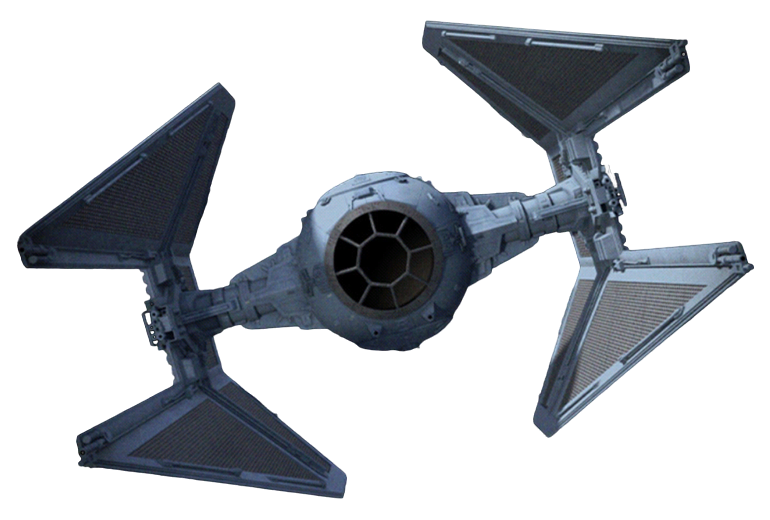
While the Navy's TIE/ln and TIE/sa proved capable of handling the insurgents and pirates that plagued the Empire during its early years, the emerging rebellion began to slowly shift the balance of orbital combat with shielded, faster, and more maneuverable starfighters, including the BTL-A4 Y-wing starfighter salvaged from the Republic's reserves and, most notably, the extremely fast RZ-1 A-wing interceptor. Eventually, the Naval leadership considered the introduction of an improved starfighter model capable of matching their rebel adversaries. Once again, the engineers of Sienar Fleet Systems met the Navy's request with the TIE/IN interceptor, the next TIE design Sienar tackled after the x1.
The TIE/IN was essentially a stripped-down version of the TIE/x1, lacking the hyperdrive, shielding, and extended reinforced superstructure of the original prototype. However, it retained many of the x1's best qualities, including the improved engines, solar collector cells, and the same bent-wing design, which was further enhanced by opening a horizontal slot in the middle of the wings to improve pilot visibility. The dagger-shaped craft was powered by an improved I-a3a solar ionization reactor connected to an autothruster, allowing the TIE/IN to perform tight maneuvers impossible in most other craft. Its firepower was also increased with four all-new L-s9.3 laser cannons on the wingtips, making it more than a match for rebel starfighters. Continuing the tradition of Inquisitorius pilots being the first to test new vessels, the Imperial Navy assigned a prototype of the TIE/IN to the Second Sister, who conducted extensive trial runs and used it to investigate reports of a Jedi on Bracca. The trials' positive results encouraged the Imperial leadership, and the TIE/IN soon entered production as the Navy's third mass-produced starfighter after the TIE/ln and TIE/sa.
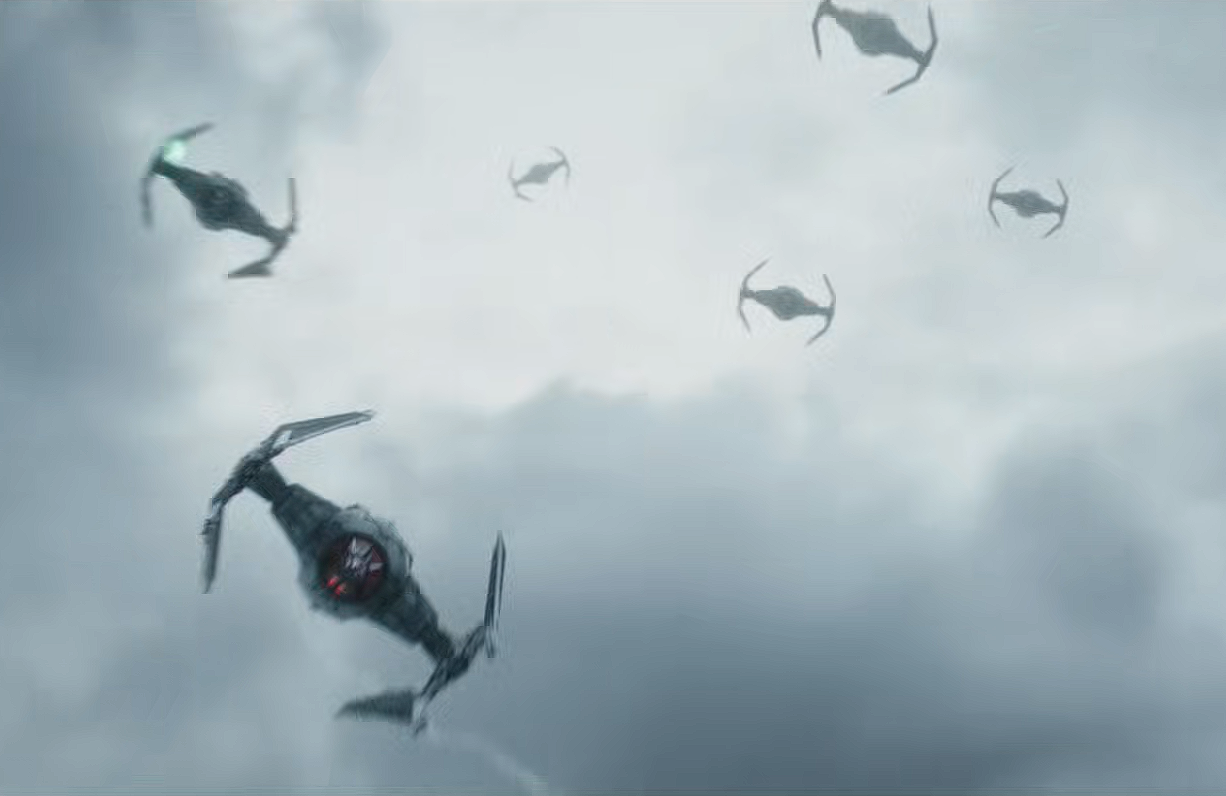
The TIE/IN officially entered service with the Imperial Navy in 3 BBY, while the x1 was still being developed as a prototype. The interceptor was first deployed within elite units, such as the 128th Fighter Group and the 181st Imperial Fighter Wing, and to TIE/ln squadron commanders for combat testing. The new fighters proved to be extremely effective. By the time of the Battle of Hoth in 3 ABY, they began to gradually replace TIE/ln fighters as the preferred starfighter-to-starfighter combat craft, with TIE/IN fighters making up one-fifth of the Imperial starfighter fleet by 4 ABY.
TIE Defender Project
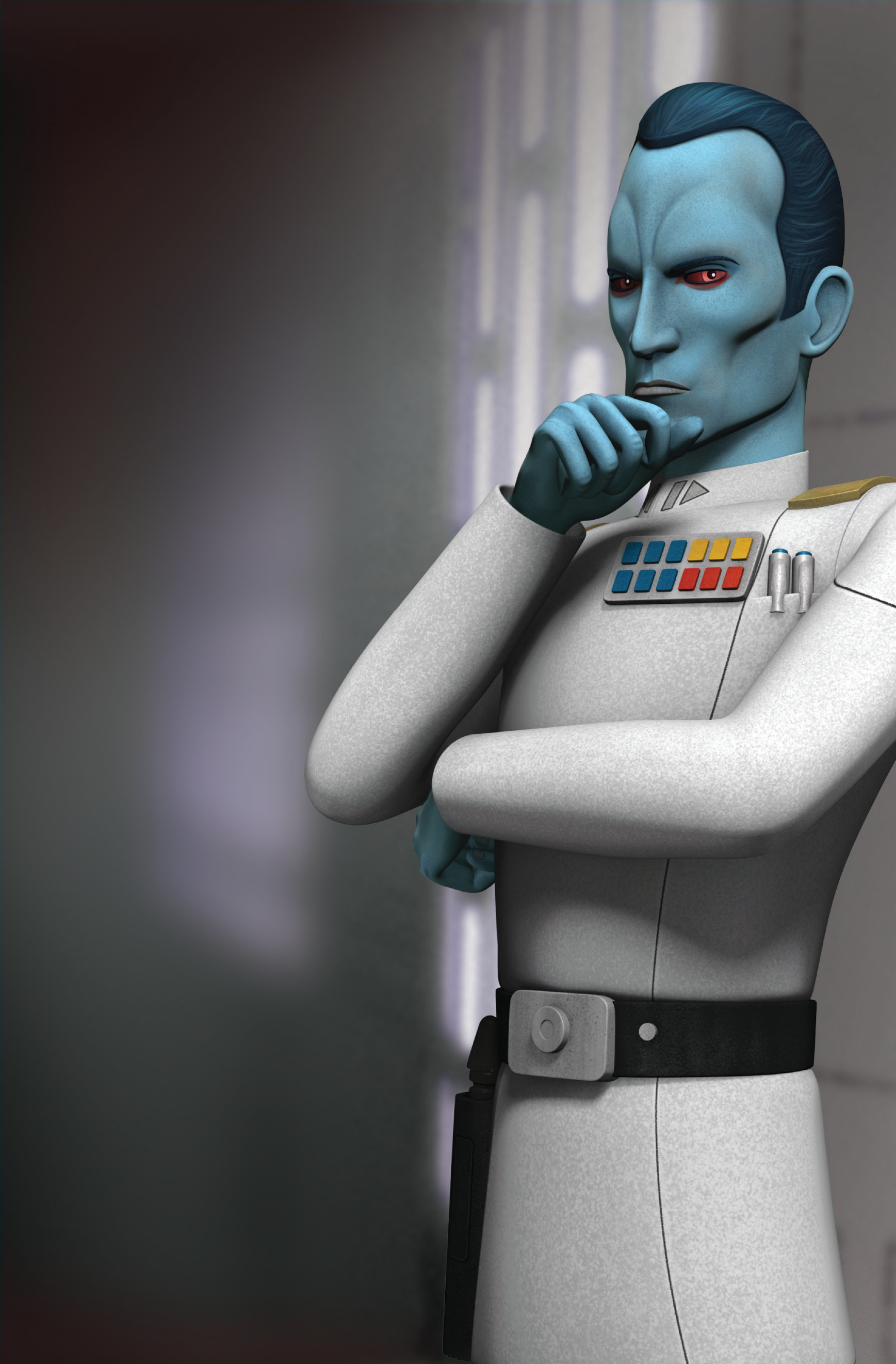
By 2 BBY, it became clear to the Imperial High Command that the newly introduced T-65B X-wing starfighter and the formation of a coherent and organized Alliance to Restore the Republic had led to a rapidly evolving orbital combat environment. While the Emperor seemed to favor the Imperial Military Department of Advanced Weapons Research's continued development of the DS-1 battle station as a solution to the rebel threat, Grand Admiral Thrawn began investigating the Imperial Security Bureau's interrogations of attempted defectors from the Imperial Starfighter Pilot corps to identify common ground. He discovered that nearly all defectors reported a growing reluctance to pilot unshielded, poorly defended, and fleet-dependent craft like the standard TIE/ln.
In response, the Grand Admiral spearheaded an initiative to develop a well-defended and armed, hyperdrive-equipped, shielded fighter capable of operating independently from the fleet and striking behind enemy lines, mirroring the Rebels' tactics to the Empire's advantage. Furthermore, in an official report submitted to Grand Moff Tarkin, Thrawn outlined that the project would not only be advantageous against rebel pilots but also increase the loyalty of Imperial pilots. Development of the classified project began in the Sienar Systems Advanced Projects Laboratory on Lothal in 2 BBY, where Thrawn submitted very specific design aspects for the starfighter, including a tri-wing design incorporating three sets of inverted TIE/IN wings mounted further away from the cockpit to increase visibility. Thrawn based his design on a prototype high-powered starfighter submitted years ago by industrialist Morgan Elsbeth and, at the time, rejected by Moff Isdain, taking note of the design's unique layout of emphasis on starfighter warfare. Reports from several SFS engineers suggested that Thrawn even displayed a rare Kamino saberdart to demonstrate the wings' orientation and its effectiveness. Computer simulations of the proposed design confirmed the speed and maneuverability advantages of the layout, and an experimental prototype was assembled for flight tests and dubbed the TIE/d "Defender" Multi-Role Starfighter.
The prototype was combat-tested by veteran flight instructor Vult Skerris of the Skystrike Academy during Operation Handoff, where it was able to reach a rebel convoy carrying rebel leader Mon Mothma via its hyperdrive and then outgun the escorting Gold Squadron's Y-wings, destroying two of them. Although it was heavily damaged by the Archeon Nebula's gases, it was later also flown by Darth Vader during the Imperial–Grysk conflict, with the Dark Lord admiring its effectiveness himself. Vader personally reported on the project to the Emperor, expressing his support, and suggested a number of improvements, including heavier weapons and simplified controls, which the SFS engineers quickly implemented.
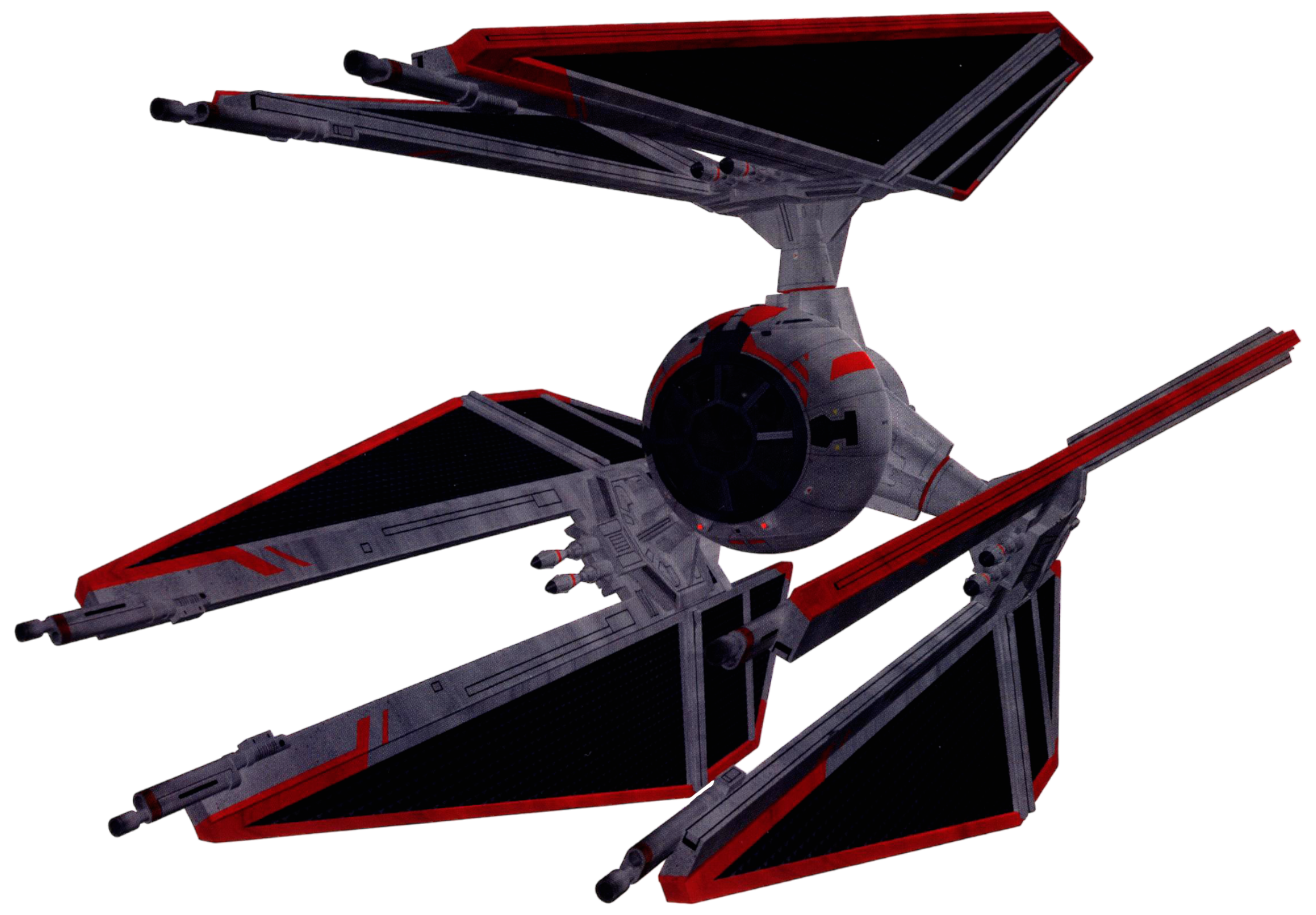
With the Emperor and key figures from High Command, including Tarkin and Admiral Balanhai Savit, backing the project while expressing disapproval of the DS-1 development division, known as Project Stardust, due to its expensive delays, a renewed effort began on the Defender project. A refined prototype, incorporating Vader's suggestions, was completed by 1 BBY and given the designation TIE/D Defender Elite. This model, envisioned as the Imperial Navy's next-generation solution to the Rebel threat, boasted eight TIE/IN L-s9.3 heavy laser cannons, a warhead launcher loaded with six missiles, a tractor beam projector, cutting-edge P-sz9.7 twin ion engines, and a specialized CRX-9 targeting computer, all purpose-built for this prototype.
Extensive simulations using flight simulators pitted the design against nearly every fighter in the Rebel arsenal, revealing its superior performance. Official flight tests, scheduled for the same year using the initial prototype, were to be observed by Lothal's Governor Arihnda Pryce and Grand Admiral Thrawn, with Vult Skerris as the pilot. However, the local resistance group, under the leadership of former governor Ryder Azadi, successfully stole the original TIE/D prototype's technical schematics and alerted Alliance High Command about the project's progress. Following analysis by Alliance officers, including Hera Syndulla, it was determined that mass production of this fighter would swiftly overwhelm their starfighter forces, leaving them defenseless against its advanced capabilities. Consequently, the project's destruction became a high priority. Phoenix cell operatives Ezra Bridger and Sabine Wren infiltrated the first official flight test site and absconded with the TIE/D Elite prototype before Skerris could board.
Thrawn capitalized on this theft as an unscheduled live-fire exercise, deploying three of the airfield's best TIE/IN pilots in pursuit. Despite his lack of training, Bridger managed to down all three using the Elite's sophisticated weaponry. Pryce then remotely disabled the prototype, causing it to crash. Thrawn, however, deemed the test a success, noting that the craft's advanced design allowed even an inexperienced pilot like Bridger to defeat seasoned Imperial aviators.
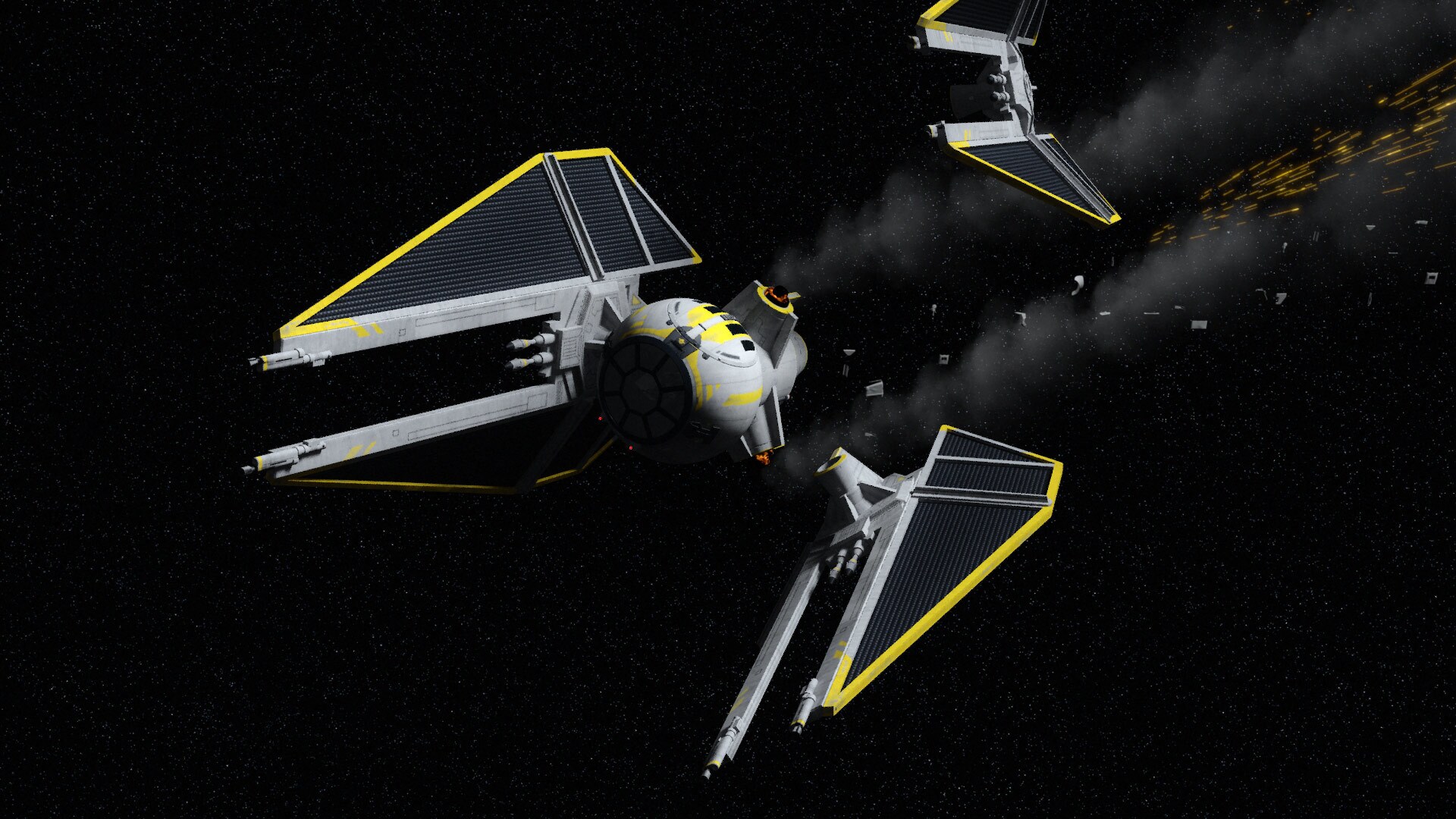
Despite the Defender Elite's impressive showing, another elite prototype met its end during a large-scale rebel attack on Lothal, aimed at dismantling the project's factories and preventing its launch. While Thrawn's blockade effectively intercepted and destroyed the attacking X-wings, the TIE/D was inadvertently caught in friendly fire from the Chimaera and crashed. Simultaneously, significant portions of the ground-based assembly lines were bombed and rendered inoperable. As Orson Krennic pushed for Project Stardust to supersede the now-exposed Defender project, Tarkin advised Thrawn to personally appeal to the Emperor to ensure the project's survival. With the Grand Admiral and his forces absent from Lothal, the Phoenix cell launched a final assault on the planet's Capital City, during which Governor Pryce deliberately detonated the Lothal City fuel depot in an attempt to capture them. This miscalculation deprived the remaining Defender Elite factories of essential resources, leading to the project's cancellation and the redirection of all funding towards Project Stardust.
Tarkin affirmed that the Defender would be next in line for production once the superweapon was completed. However, Thrawn's disappearance during the Liberation of Lothal and Tarkin's demise in the Battle of Yavin left the project without leadership. The entire Defender program was shut down, though some Defenders continued to see limited action throughout the Galactic Civil War. Further advancements did occur, including the development of a new model called the TIE Advanced x7. Nevertheless, it remained in the prototype phase, as all six examples were destroyed in the Battle of Hoth. Additionally, the Dark Squadron, under the command of Beilert Valance, operated five TIE Defenders around the same period.
Variants
Galactic Empire
Starfighters & bombers
In addition to the TIE/ln, Imperial pilots utilized flight simulators and TIE training drones for training purposes. One TIE variant was the TIE/rb heavy starfighter, a reinforced version of the TIE/ln featuring heavier armor and a secondary pod equipped with heavy laser cannons.
Another early TIE variant was the TIE/gt, which ultimately evolved into the more prevalent TIE/sa tactical bomber, characterized by inward-bent wings and a second pod for carrying ordnance. A heavier variant was the TIE/ca "Punisher" Starfighter, which could carry four times the payload of the TIE bomber. The TIE/fc, TIE/sr, TIE/rc, and TIE scout were models employed for reconnaissance missions. While resembling a TIE/ln, the TIE scout was equipped with a hyperdrive for long-range travel.
Shuttles & transports
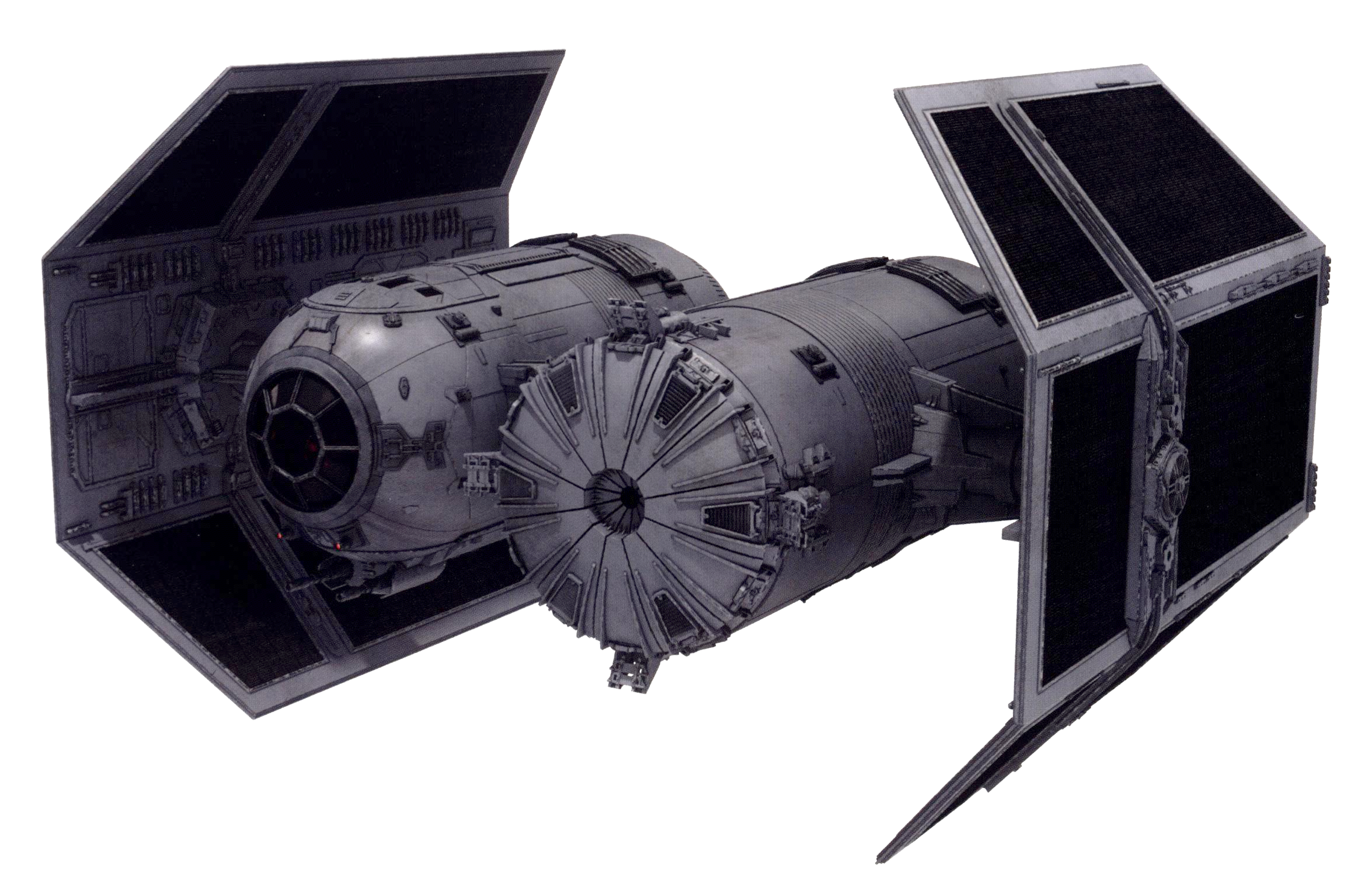
The TIE/sh shuttle was a derivative of the TIE bomber, retaining its two-pod configuration, with the second pod designed to transport passengers between capital ships. It was identifiable by its distinctive outward-bent wings. Another TIE shuttle variant was the TIE Boarding Craft, which more closely resembled the TIE bomber and was used to transport and deploy up to two squads of stormtroopers. Along with the TIE shuttle, it was one of the few TIE variants equipped with deflector shields.
The TIE lander was a triple-hulled TIE variant capable of transporting an entire company of troops. A more unique model was the TIE/rp Reaper attack lander, a shuttle used to transport elite troops to specific points on a battlefield. It featured two pointed, forward-facing wings.
Advanced & experimental models
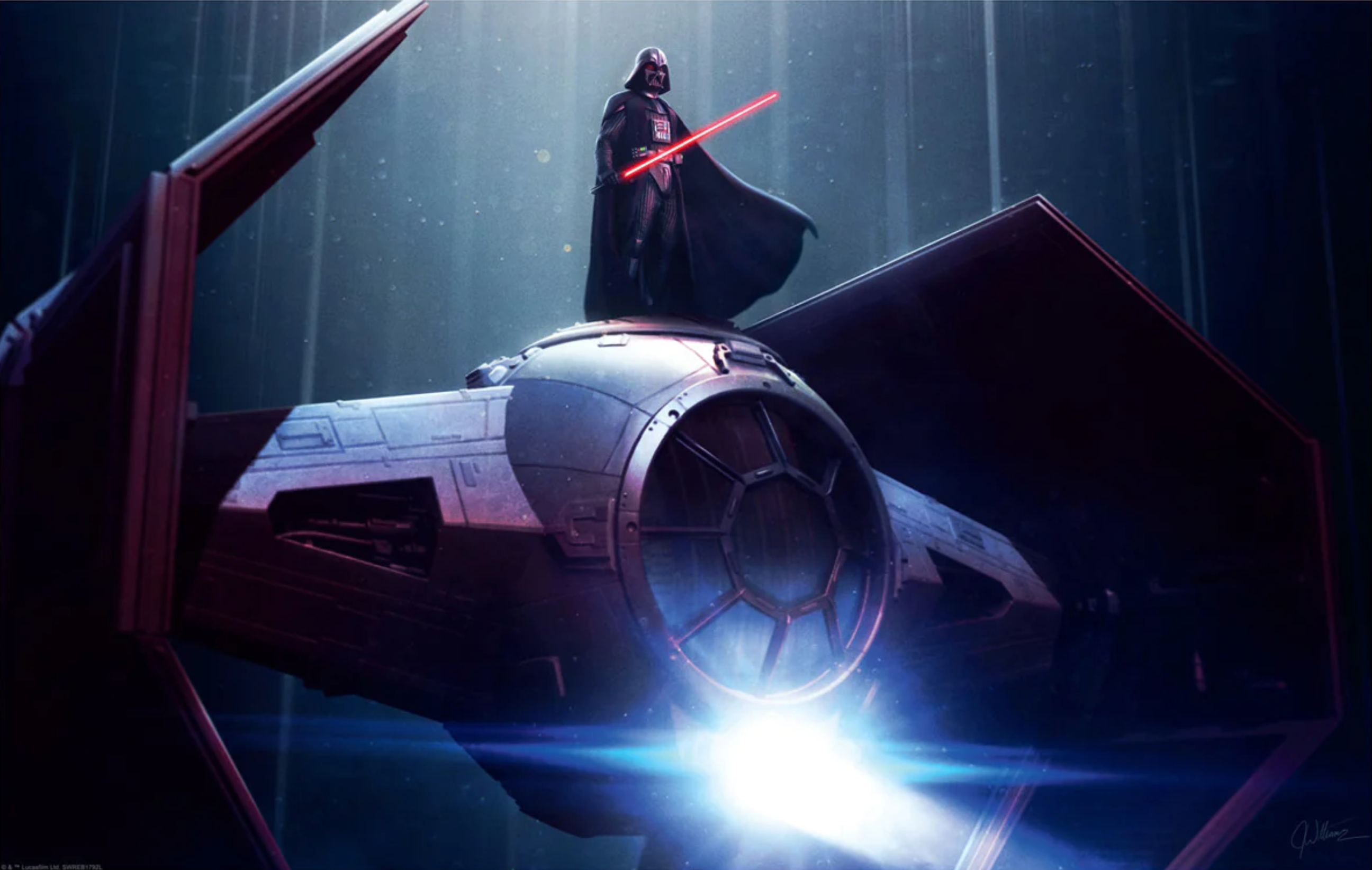
The TIE Advanced v1 was an advanced starfighter prototype equipped with a hyperdrive, shields, and curved folding wings with extra armor. It was commonly used by members of the Inquisitorius. The TIE Advanced x1 was another advanced fighter with similar features, but was smaller and featured bent wings similar to the TIE bomber. One such model served as Darth Vader's personal starfighter. However, the TIE Advanced x1 was too expensive to mass-produce, so the TIE/IN interceptor was created as its successor. While it lacked a hyperdrive and shields, it featured extra laser cannons mounted on its pointed wingtips. The TIE Avenger was also inspired by the TIE Advanced.
Grand Admiral Thrawn's fighter initiative on Lothal led to the development of the elite TIE/d "Defender" Multi-Role Starfighter, which was equipped with heavy cannons, shields, and a hyperdrive. Its characteristic three wings resembled inverted versions of those on the TIE Interceptor, and the fighter proved to be a formidable opponent against Rebel starfighters. An even more powerful variant called the TIE/D Defender Elite was developed, but the entire project was halted by the destruction of the Lothal City fuel depot.
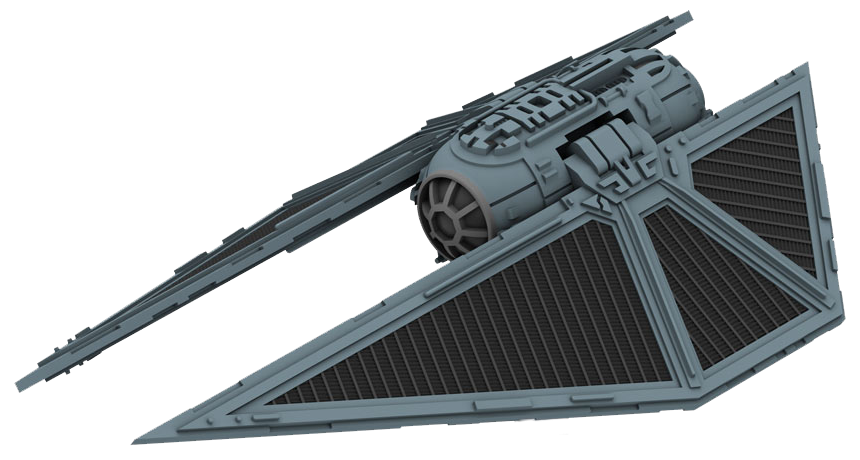
Other experimental TIE models included the TIE/ag "Aggressor" Starfighter, a medium attack craft with a rear-mounted turret, the TIE/ph "Phantom" Multi-Role Stealth Starfighter, a stealth fighter with cloaking abilities that saw extremely limited use, the TIE/sk x1 experimental air superiority fighter, a fighter designed for optimal atmospheric flight and base defense, and the TIE crawler, a tank that resembled a TIE cockpit with tank treads replacing its wings.
Mining Guild

The Mining Guild's association with the Empire allowed it access to certain Imperial resources, including TIE models, which the Guild modified into the TIE/mg Mining Guild starfighter.
Imperial remnants
Imperial remnants continued to utilize TIE fighters following the Empire's collapse. Moff Gideon's Imperial remnant employed several Outland TIE fighters, which resembled a TIE/ln but featured wings that folded outwards upon landing. Commodore Visler Korda's Imperial remnant also produced the auto-fighter, a drone TIE fighter, during its time on Rekkana.
First Order
The First Order Navy continued to operate TIE fighters based on designs from the Empire. The new TIE models, manufactured by Sienar-Jaemus Fleet Systems, featured significant improvements over Imperial technology. The successor to the TIE/ln was the TIE/fo space superiority fighter, which, unlike most Imperial TIE models, was equipped with basic shielding to protect the pilot.
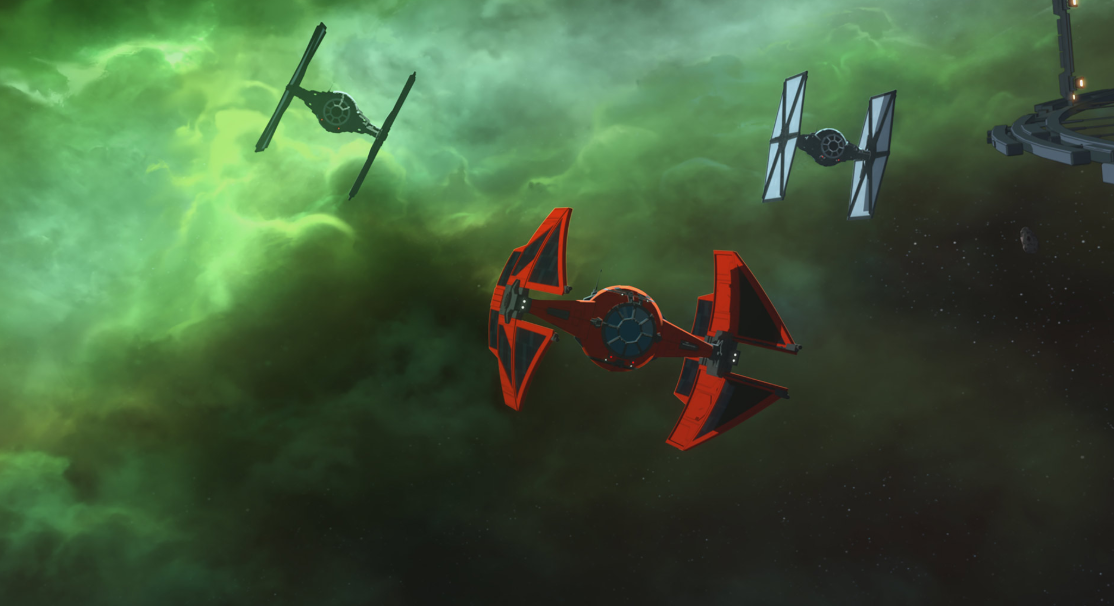
The First Order Special Forces operated the TIE/sf space superiority fighter, another advanced model equipped with a hyperdrive and shields, as well as a gunner-operated turret on the underside of the cockpit. The fighter's hull featured red markings to indicate its affiliation with Special Forces. Also in use were the First Order's TIE/se Bombers, a transport called the TIE/es assault shuttle, and a stealth fighter known as the TIE/wi Interceptor.
More elite pilots, such as Major Elrik Vonreg, flew the TIE/ba Baron Space Superiority Interceptor, an all-red TIE Interceptor. Inspired by the TIE Defender, First Order technicians aimed to restore heavy weapons capabilities and developed the TIE/vn space superiority fighter, which was tested only by the most skilled pilots, including Kylo Ren. Ren later used a TIE/wi modified interceptor during his time as Supreme Leader.
Sith Eternal
The Sith Eternal's fleet, the Final Order, utilized the TIE/dg starfighter, identifiable by its triangular wings.
Behind the scenes
The TIE line made its debut in the first Star Wars film, Episode IV A New Hope of the Original trilogy, in 1977. Within Star Wars canon, its first identification occurred in the 2015 reference book Ultimate Star Wars. Star Wars: Rogue One: The Ultimate Visual Guide provided the alternate title of "TIE-series," but the 2019 novel Thrawn: Treason would later render this name as "TIE series."