Yuuzhan Vong
The Yuuzhan Vong, known as "Children of Yun-Yuuzhan" or the Chosen Race, were called the Far Outsiders by the Chiss and Ferroans. Their name was sometimes, though incorrectly, shortened to Vong, which was an insult implying familial and divine abandonment. This nomadic, extra-galactic sentient species almost destroyed the New Republic and caused the deaths of over 300 trillion beings when they invaded the galaxy.
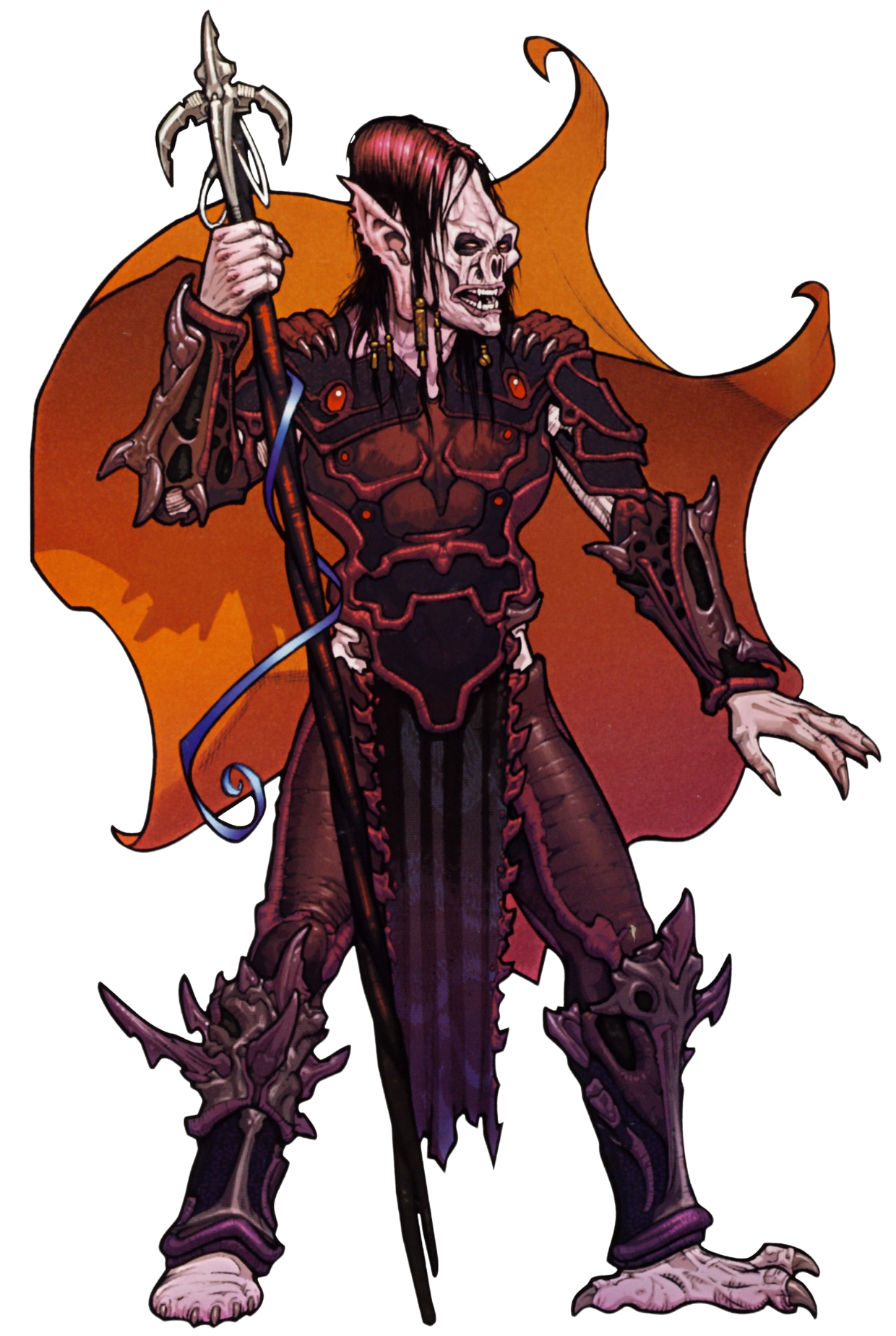
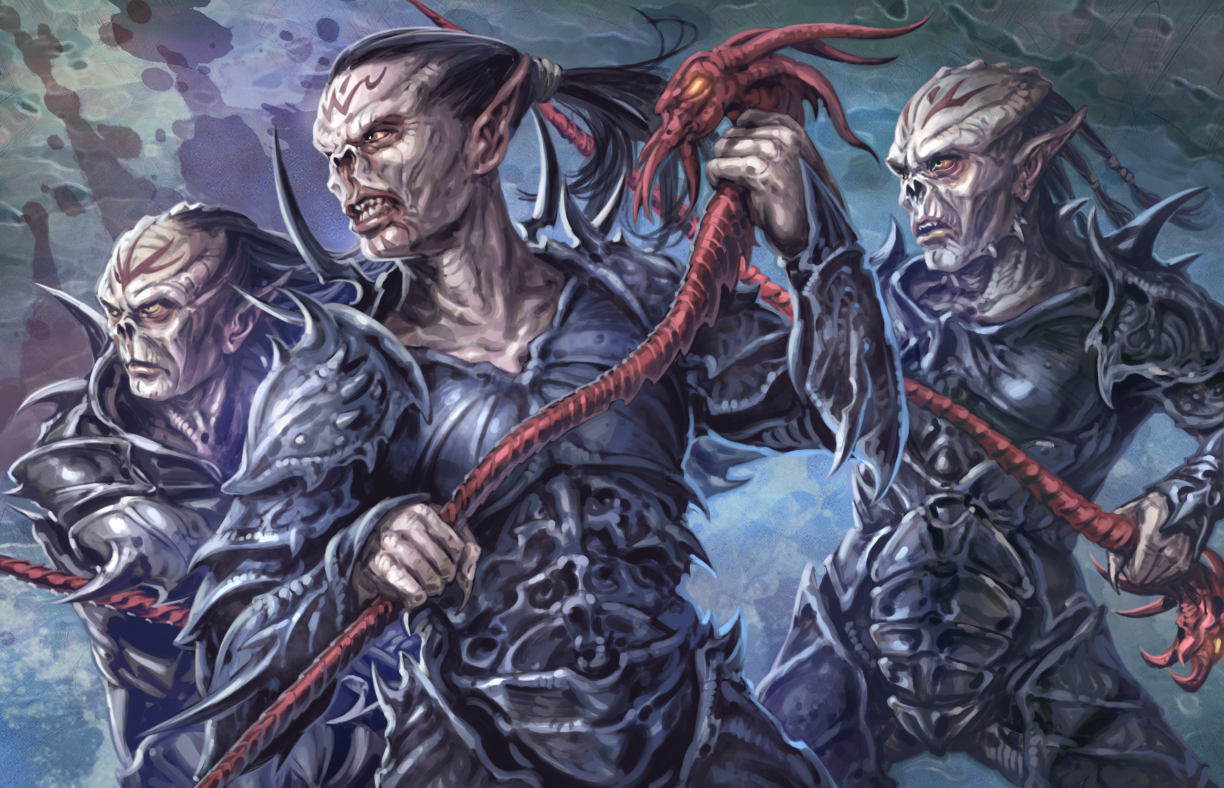
Originating from an ancestral species on the planet Yuuzhan'tar in a distant galaxy, the Yuuzhan Vong typically resembled Humans. However, they were generally taller and heavier, with less hair. As religious zealots, they considered mechanical technology blasphemy, instead utilizing purely organic, genetically engineered innovations. Furthermore, the Yuuzhan Vong revered pain, practicing sadomasochism and enhancing themselves through organ grafting, a practice that signified status within their society.
A defining characteristic of the Yuuzhan Vong was their inability to be sensed through the Force, which baffled the Jedi upon their initial encounters. Despite this, they remained vulnerable to certain Force-based attacks.
Biology and appearance
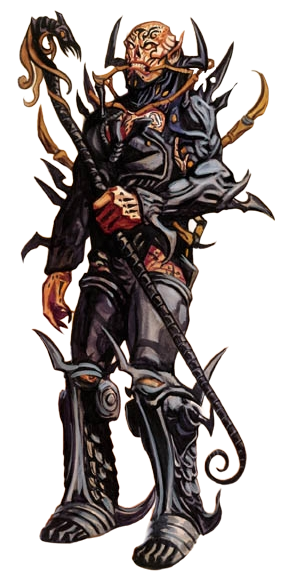
The Yuuzhan Vong were a humanoid species, leading some to initially believe they were a Human offshoot. However, differences existed, such as the typical absence of kidneys in Yuuzhan Vong. Their taller stature and heavier builds compared to average Humans, potentially a result of selective breeding, were also notable. With an average lifespan of 76 standard years, their maximum lifespan could reach two to three times that of a Human. Genetically, they shared similarities with Humans, an anomaly for an extragalactic species, but a unique element in their genetic structure was present in all their biotechnology.
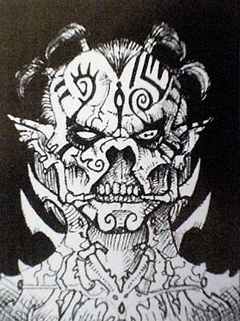
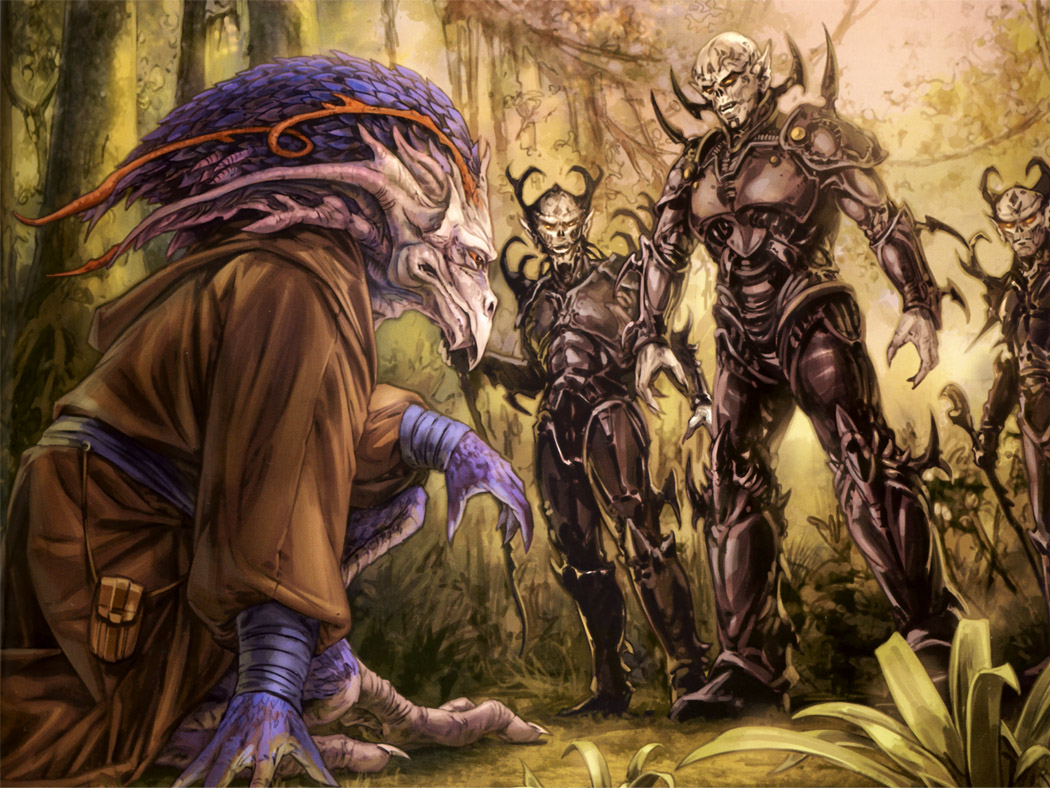
Yuuzhan Vong possessed sloping, ridge-like foreheads. Some exhibited pointed ears, while others did not; whether this was due to ritual mutilation or genetic variation remains unclear. Their short, stub-like noses gave their faces a skull-like appearance. While usually having black hair, they had less of it than Humans and often wore it longer, or were completely bald. Small blue sacks under their eyes, considered a mark of beauty, expanded and contracted to express mood, compensating for their lack of Human-like facial expressions. These sacks indicated delight or rage. Gray was the most common skin tone, followed by yellow, and their blood was notably jet black.
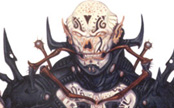
Their nervous system was highly conductive, seemingly designed for experiencing pain, and differed significantly from that of Humans. Similarly, their tissue composition varied, complicating the use of Yuuzhan Vong Qah cells in Humans due to eventual rejection by the brain.
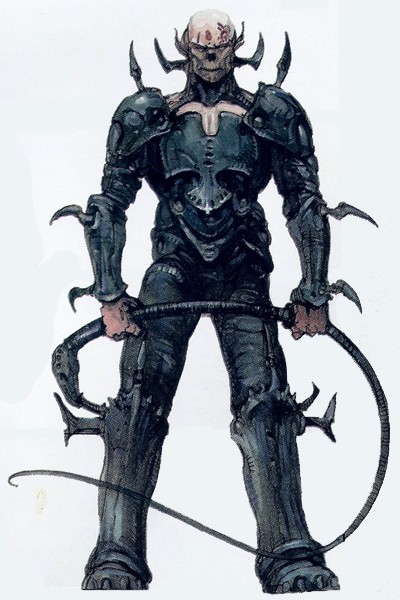
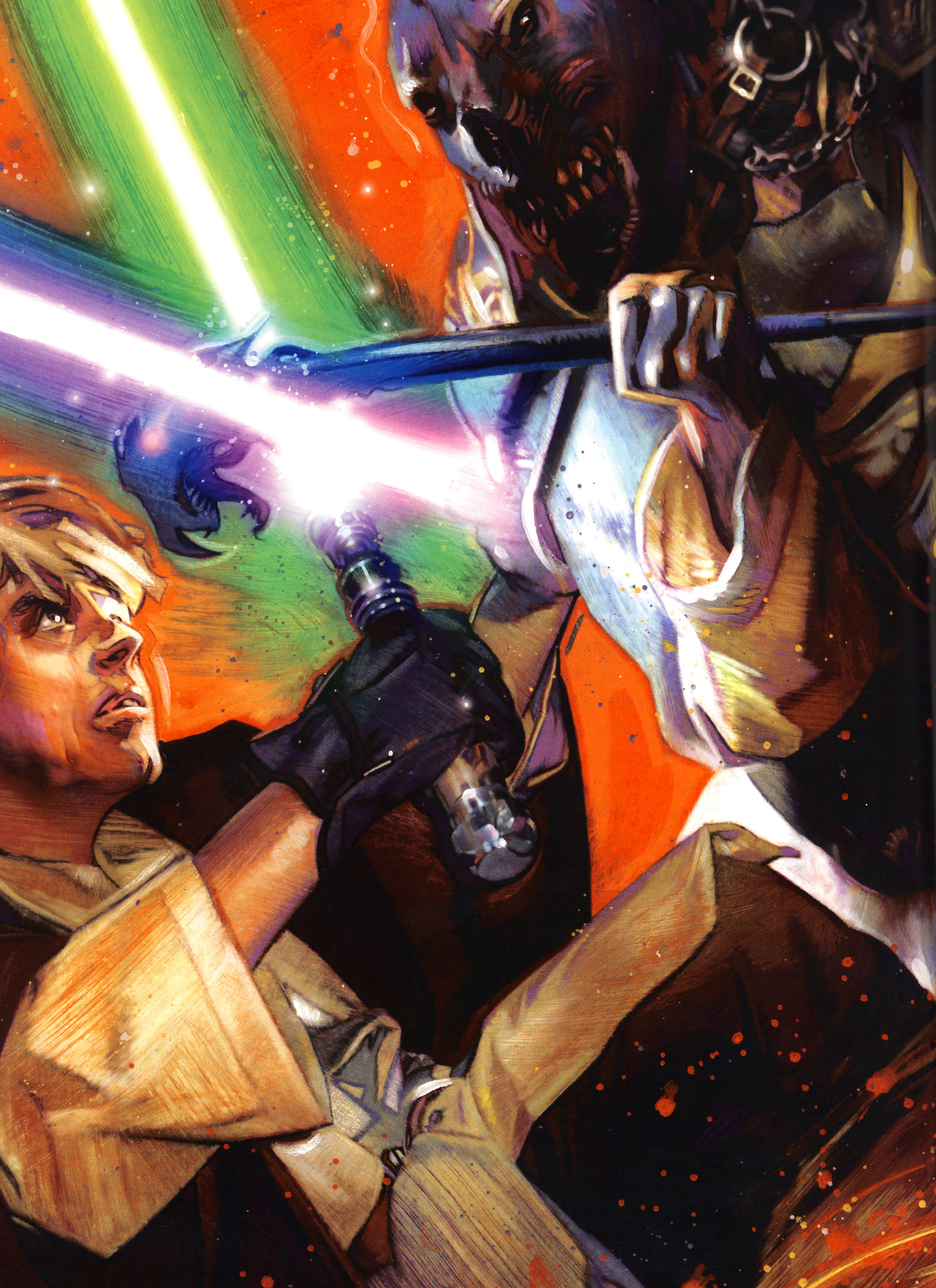
Perhaps the most unsettling trait for Jedi and others was their disconnection from the Force. They lacked a Force presence and were largely immune to direct Force powers. This made it impossible to sense their intentions or predict their actions, though their absence in the Force could be detected. Even powerful telekinetic blasts had minimal effect, causing only stumbling or temporary imbalance. While direct Force manipulation was difficult, indirect methods could be used, such as telekinetically throwing objects or manipulating air pressure to crush them. The only known Force techniques that seemed to bypass this limitation were variations of Force lightning/Emerald lightning, the dark side technique Force net, Dark Transfer, and, to some extent, Shatterpoint.
A few Jedi developed Vongsense, an ability similar to the Force in its detection and telepathic aspects, but specific to the Yuuzhan Vong and their biots.
Culture
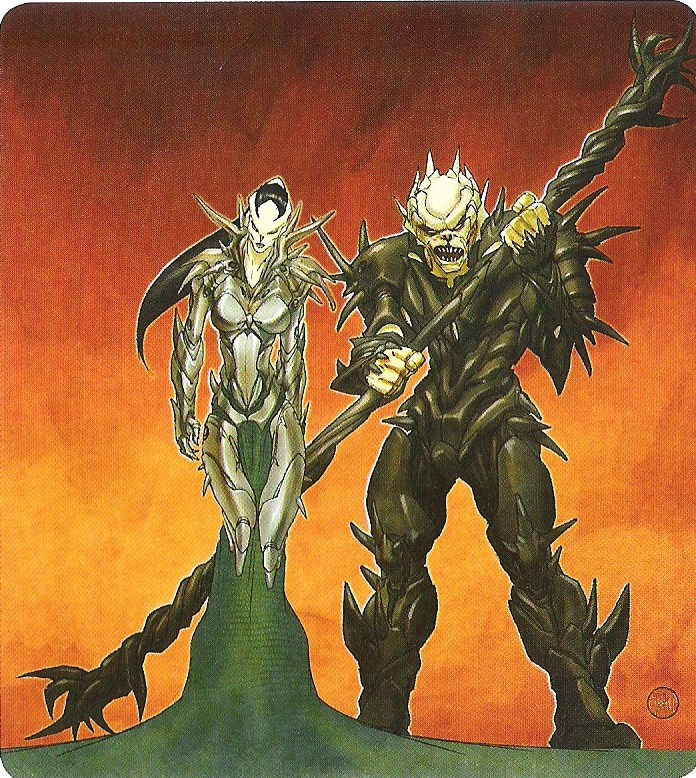
Centered on sacrifice and their gods, Yuuzhan Vong culture, particularly among warriors, glorified pain as a state of being. They believed that sacrificing parts of their bodies brought them closer to their deities, who had sacrificed themselves to create the galaxy. This led to body modification, but never to the point of permanent functional impairment, resulting in mottling, scarring, and tattoos. Elite individuals grafted organs from other creatures into their bodies. Devotional practices involved bloodletting during prayer, and Shamed Ones were excluded from religious ceremonies.
Success led to the sacrifice and replacement of body parts with organs from other creatures during the Escalatier Ceremony. An engineered organism, related to an Implanter, made incisions and placed implants. Successful integration led to promotion, while failure resulted in death or becoming a Shamed One, attributed to the gods or the Shaper's failure.
Family was a strong element, with members associated with Domains. Some Domains were more powerful than others. A caste system existed, including warriors, shapers, priests, intendants, and workers, with inter-caste relationships forbidden. Domain loyalties were strong, and ritual statements were required from lower to higher ranks. However, members of one caste were not obligated to salute superiors from another, such as intendants to warrior caste members.
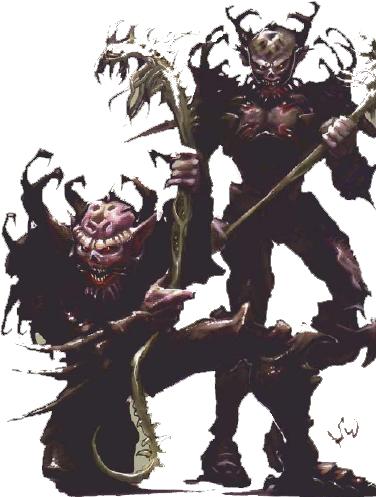
Yuuzhan Vong children were raised in caste-specific crèches by caretakers, likely not knowing their biological parents until older. Crèche parents named them. Deformed children were killed at birth, unless the deformity was mild, as with Ona Shai. Paranoia was a useful survival trait in this harsh environment. Twin births were rare, considered portents of great events, with one twin typically killing the other. Funeral processions did not preserve the dead, and mortuaries involved mourners and priests who removed body parts for dedication to the gods.
An Imperial officer noted similarities between the Empire and the Yuuzhan Vong, including strict discipline and obedience. However, their goals differed, with the Yuuzhan Vong seeking to change the galaxy's way of life by eliminating manufactured technology, a key strength of the Imperial Remnant. Subordinates never contradicted leaders, though they could subvert their will. Skilled warriors, they never retreated, fearing insult to their gods, though some acted cowardly and became Shamed Ones.
Yuuzhan Vong beliefs influenced their actions and personality. Their religion saw life as suffering and death as release. They believed nothing could be learned without pain and willingly embraced death, with some, like Domain Shai, enjoying self-inflicted pain to gain favor from their deities. Death in battle was considered the greatest glory, though dying in the void was disgraceful. This led to fighting to the death and limited opportunities to explore their organic warships. Priests claimed to sacrifice their own as well as "infidels" to their deities, who sacrificed themselves to create existence.
The species greatly valued honor, with a Yuuzhan Vong's word being highly regarded, even under interrogation. A Yuuzhan Vong commander once agreed to a duel for a planet's fate, but his subordinates subverted this. Denying honorable combat was disrespectful. Warriors respected worthy opponents, and a concept similar to the Wookiee Life debt, known as Us-hrok, signified eternal gratitude and loyalty. They had little interest in food, except when it involved events like slaying a great beast during a ritual.
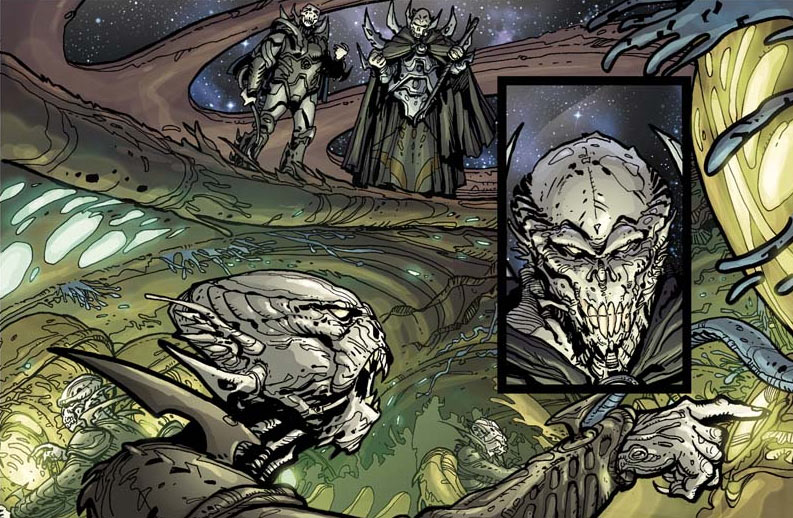
Their wartime psychology revolved around aggressive attack, making them dangerous but sometimes predictable. They were encouraged by resistance and saw worthy foes as worthy of fighting. Competition was seen as a means of breeding strength, but it led to internal feuds between Domains and castes. The Invasion was meant to provide an external enemy, but divisions reappeared. They deeply believed in revenge and readily used aggressive emotions, engaging in suicide attacks or ritual suicides to attain glory. This warlike nature meant they lacked concepts of peace or remorse. In their language, peace meant submission to a conqueror. Profanities could lead to blood challenges, and insults could justify killing. An attack on pride was grounds for demanding satisfaction, seen as a sacrifice to their gods.
The Yuuzhan Vong fanatically hated machines, seeing them as abominations. They believed combustion was the first abomination because machines did not die and could replace organic life, which they would never allow.
They had a saying, "Let the enemy fight," and often arranged ambushes. Their interdiction forces remained outside designated routes to trap targets. Another saying was "A fleet that fights two battles loses twice." Their earlier relations with other races were based on domination, with those who impressed them receiving a clean death and others being enslaved.
Despite their barbaric aspects, the Yuuzhan Vong revered life. Among the few favored "infidel" races, they preferred the Ho'Din, who disliked advanced technology. Some primitive races willingly allied with them, believing they respected life, while others saw them as twisting things to suit their needs. They believed they had to prove themselves worthy creations, or be destroyed and replaced, a cycle they believed had happened three times before.
In the post-War period, the Yuuzhan Vong became deeply spiritual and introspective. Many felt they could never mend relations due to the Yuuzhan Vong War, but some believed they needed to evolve to survive and that the journey was worth the effort. They still retained their unique form of honor, with custom and ritual remaining important.
Society description
Supreme Overlord
The Supreme Overlord held the highest caste, controlling all others.
Priest caste
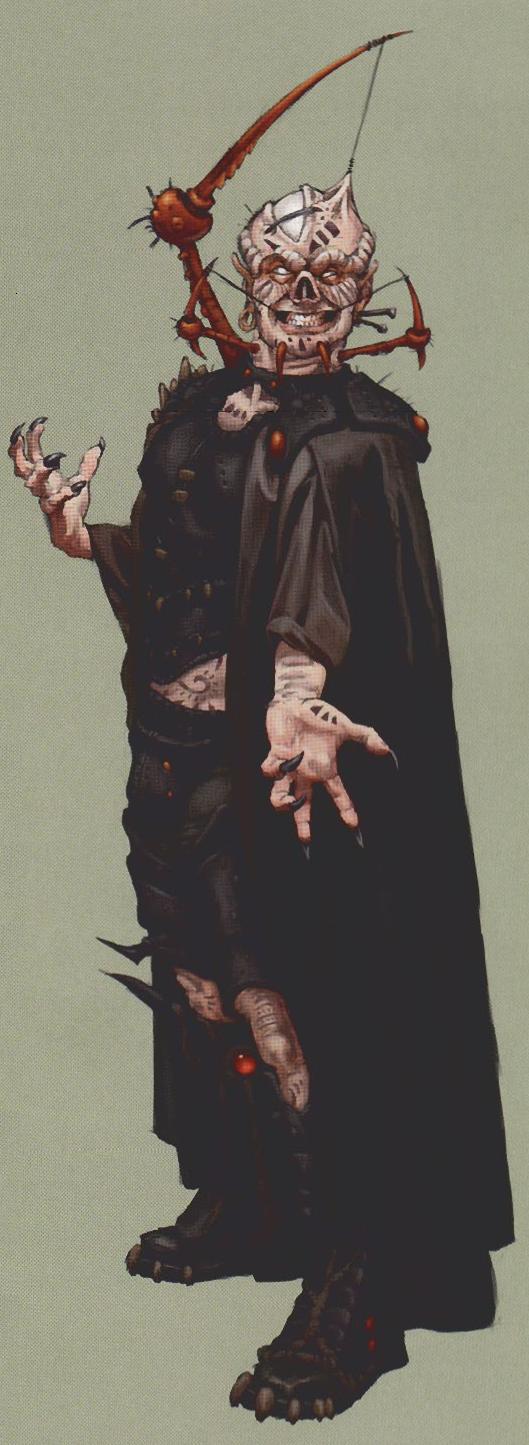
The priest caste was powerful in the theocratic society, serving the many lesser deities. Several sects existed, each worshipping a different deity. Ranks included Mosthigh priest, High Priest(ess), Priest(ess), and Seer.
Warrior caste
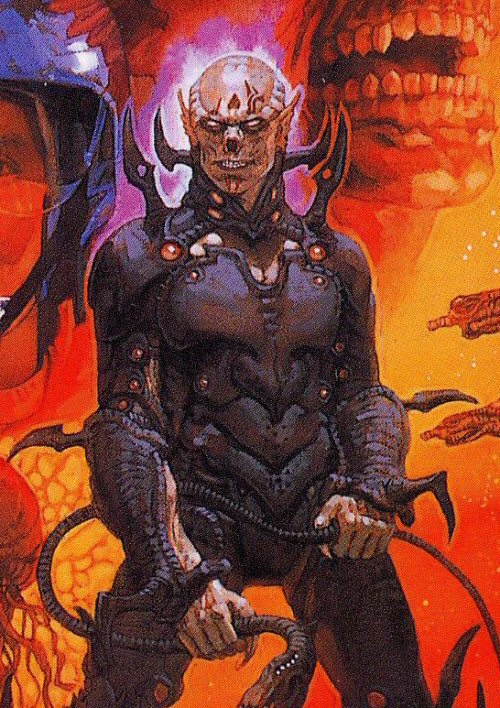
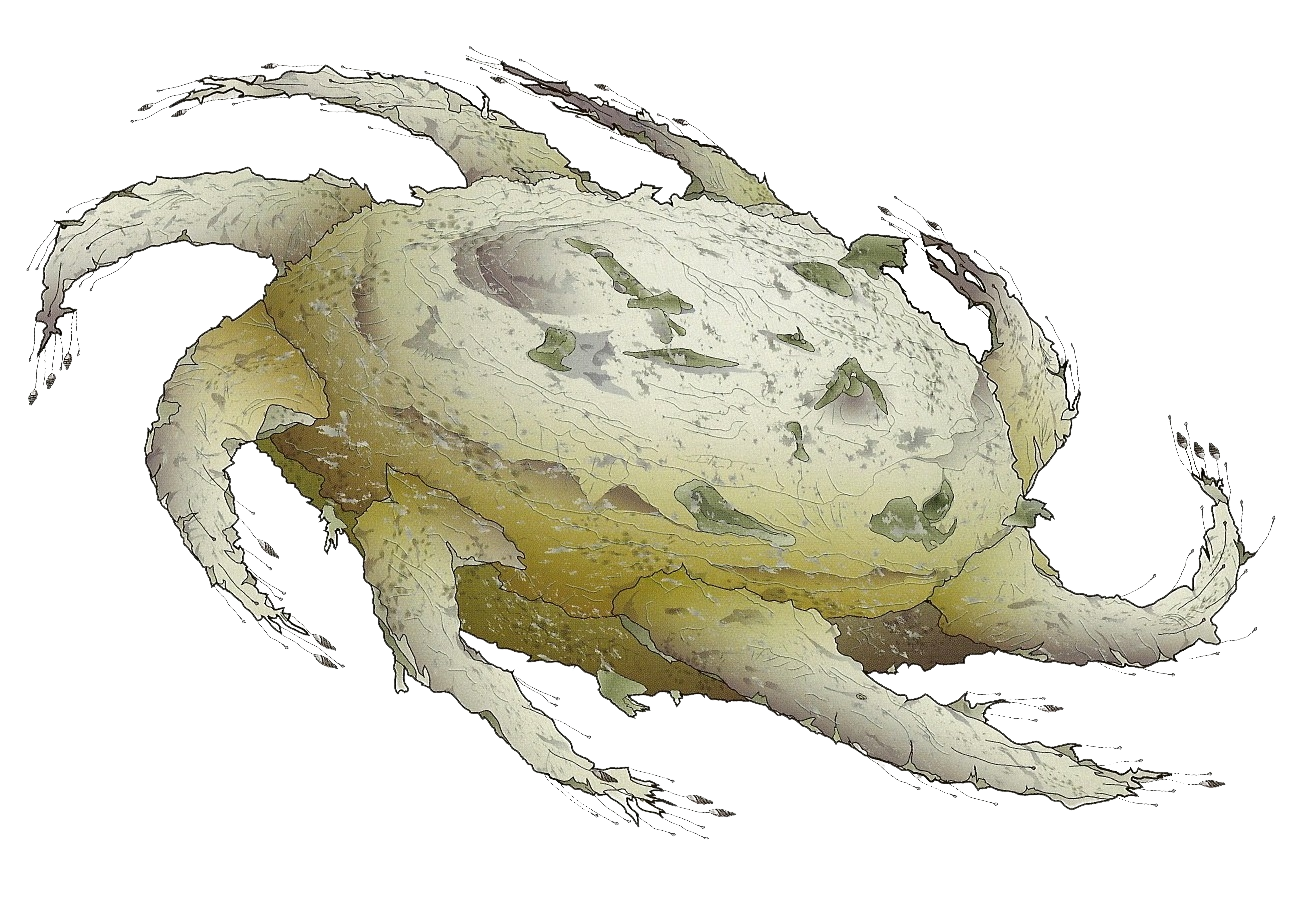
The warrior caste served as the armies, trained from an early age to excel in combat. They were more aggressive than other Yuuzhan Vong. Notable members included Tsavong Lah and Nas Choka, who both became Warmaster. Their chief weapon was the amphistaff, and they wore the living vonduun crab armor, which had weak points at the armpits and inner hips.
Ranks included Warmaster, Supreme Commander, Commander, Subaltern, and Warrior.
Intendant caste
The Intendant caste maintained Yuuzhan Vong society, managing the economy, commerce, bureaucracy, trade, and slave workforce. They were the smallest caste, lacking a patron deity or war cry. Notable Intendants included Nom Anor. Shimrra Jamaane was formerly an Intendant before becoming Supreme Overlord. They were the government and politicians and favored Yun-Harla.
Ranks included High Prefect, Prefect, Consul, Executor, and Attendant.
Worker caste
The worker caste was the largest and lowest, serving as servants, slaves, and laborers. It included Shamed Ones, those born into the caste, those who failed in other castes, and conquered species like the Chazrach. Slaves and Shamed Ones were treated with contempt, though Yuuzhan Vong born into the worker caste were descended from Shamed Ones.
Deities
The Yuuzhan Vong religion, called the True Way, was central to their lives. They were devout and had many gods, believing it was their duty to appease them through conquest and genocide.
Yun-Yuuzhan
Yun-Yuuzhan, the creator, was the most powerful deity. He sacrificed himself to create the lesser deities and the Yuuzhan Vong galaxy. Only the Supreme Overlord had direct contact with him.
Yun-Harla
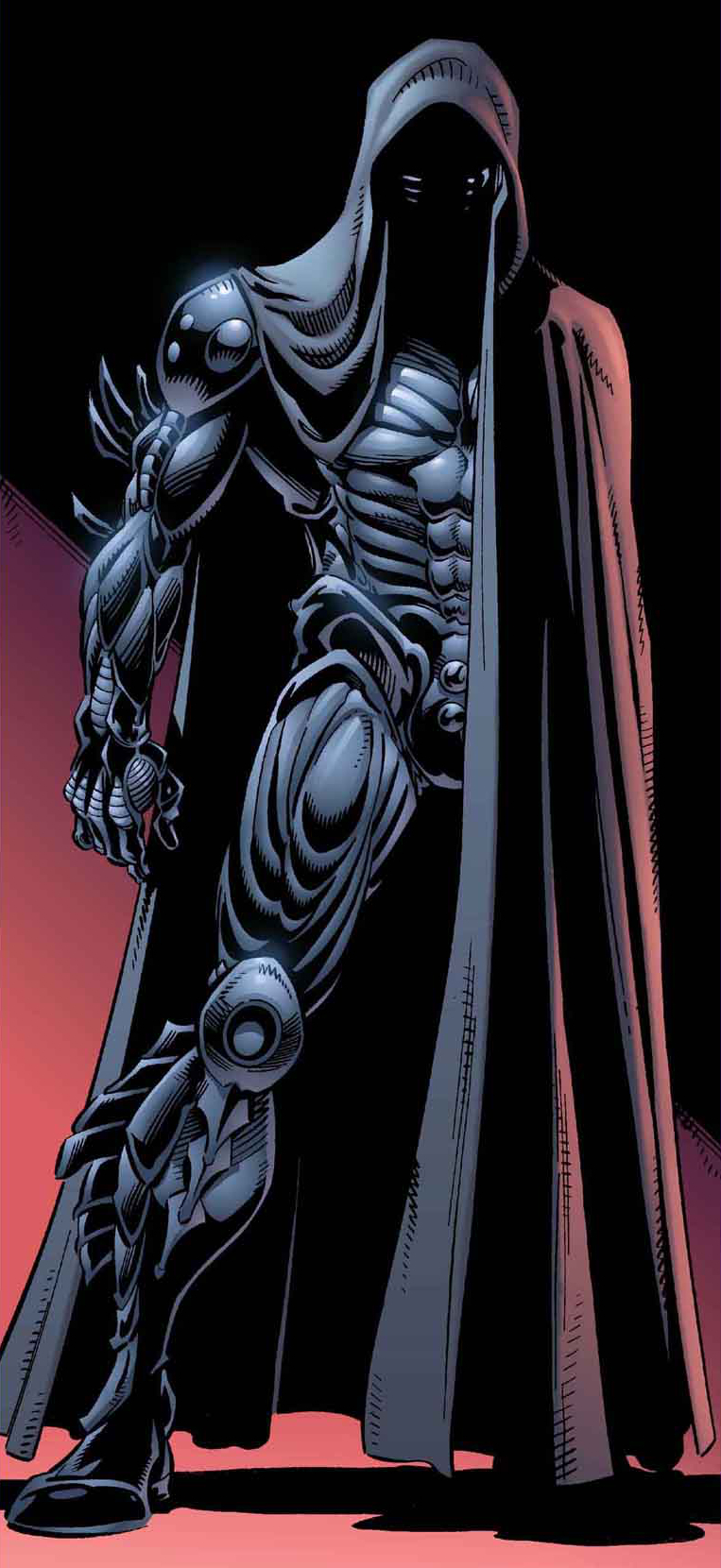
Yun-Harla was the Trickster, the Cloaked Goddess, and goddess of deception and aggression. She represented the political caste. The New Republic military used Jaina Solo's codenames "Trickster" and "Goddess" as psychological warfare against the Yuuzhan Vong.
Yun-Yammka
Yun-Yammka was the Slayer, the god of war, and the inspiration for the yammosk. He was primarily worshipped by the warrior caste and was created by the priest caste when the Yuuzhan Vong turned to war.
Yun-Ne'Shel
Yun-Ne'Shel was the Modeler, overseeing natural life cycles and worshipped by the shaper caste.
Yun-Txiin and Yun-Q'aah (The Lover Gods)
Yun-Txiin and Yun-Q'aah were the Lover Gods and twins. Relationships outside one's caste were forbidden, leading to sacrifice to the Lover Gods.
Yun-Shuno
Yun-Shuno was the Pardoner, watching over the Shamed Ones, who were shunned by other deities. She was the only deity they were allowed to worship.
History
Early history
The Yuuzhan Vong were a group that sought refuge, originating from a galaxy far removed from the known one. Their original planet of origin, Yuuzhan'tar, was a tropical world encircled by a substantial asteroid belt. This planet met its end millennia before their invasion of the galaxy at large.
Within the Yuuzhan Vong language, the name Yuuzhan'tar translates to "Crèche of the gods," and this living planet served as the archetype for the Yuuzhan Vong's pantheon. It is plausible that Yuuzhan'tar was the inspiration for Yun-Yuuzhan, the Yuuzhan Vong's deity of creation.
While their early history remains largely obscure, it is believed that the Yuuzhan Vong once existed in a symbiotic relationship with their planet and possessed sensitivity to the Force. Their technological advancements were primarily organic in nature. At some point in their past, the Yuuzhan Vong found themselves embroiled in a cataclysmic galactic war between two droid factions—thought to be the Silentium and the Abominor—which cemented their intense aversion to mechanical technology and their xenophobic tendencies toward other sentient species.
The Yuuzhan Vong's sentient homeworld bolstered their war efforts by granting them the knowledge to craft living weaponry. However, as the conflict persisted, the Yuuzhan Vong as a species became increasingly inclined towards violence and warfare. Ultimately, they triumphed over their adversaries, compelling both droid powers to flee their galaxy.
In the aftermath of the war, the Yuuzhan Vong embarked on a mission to purge their galaxy of all forms of mechanical technology. They subjugated vast portions of their galaxy, either annihilating or enslaving the species they conquered. Among these subjugated species were the reptilian Chazrach, who were forced into service as slave soldiers for the Yuuzhan Vong.
With control over much of the galaxy, the various Domains (akin to clans or families within Yuuzhan Vong society) descended into infighting, leading to the devastating Cremlevian War. This conflict resulted in widespread destruction throughout the Yuuzhan Vong's galaxy, including the obliteration of their homeworld, Yuuzhan'tar. The precise circumstances surrounding the planet's destruction have been lost to time. Nevertheless, Yuuzhan'tar produced a seed that eventually evolved into Zonama Sekot, later colonized by the Langhesi and Ferroans.
Having lost their symbiotic connection with their homeworld, the Yuuzhan Vong were severed from the Force and experienced immense suffering. Consequently, they came to view pain as the sole means of restoring that symbiosis and engaged in extensive body modifications. Replacing their homeworld, the Yuuzhan Vong adopted a belief in various deities, who subsequently governed nearly every facet of their civilization.
As the war drew to a close, Steng rose to prominence as the first Warmaster. A rival Warmaster, Yo'gand, conceived the Yo'gand's Core tactic, which he employed to annihilate the planet Ygziir and its moon. The destruction of Ygziir led to Steng's demise and the war's conclusion. Eventually, Yo'gand unified the Domains into a single socio-political entity and became the first Supreme Overlord of the Yuuzhan Vong.
With their galaxy largely ruined, the Yuuzhan Vong embarked on a lengthy journey to another galaxy in search of a new home. For an extended period, possibly spanning centuries, the species was compelled to traverse the Intergalactic Void aboard massive worldships. During this time, the Yuuzhan Vong teetered on the brink of self-destruction. Violence and competition had become ingrained in their society, and lacking an external target, they turned their aggression inward. While wars of the same magnitude as the Cremlevian War did not erupt, the Domains continued to vie for the favor of the Supreme Overlords.
Pre-invasion
The duration of the Yuuzhan Vong's voyage upon leaving their galaxy, or whether they even had a specific destination in mind, remains unknown. Some accounts suggest that their journey spanned several millennia; however, by 26 ABY, one of the oldest worldships (deemed 'ancient' and nearing its end) was less than 1000 years old. It appears that by 3997 BBY, sometime after Exar Kun assumed the title of Dark Lord of the Sith, the Praetorite Vong's slivilith probe creatures had arrived, and as of 3963 BBY, at least one scout had reached the Wild Space region of the known galaxy. In that year, a group of Mandalorian Neo-Crusaders under the leadership of Canderous Ordo encountered what would later be identified as a Yorik-stronha, disguised as an asteroid in the Crispin system, while pursuing a group of pirates in the system's asteroid belt. When Ordo employed a thermal generator to melt the frozen methane covering the "asteroid," the Yorik-Stronha, in Ordo's words, "awoke." The asteroid began to rotate rapidly and subsequently fired plasma at the Mandalorians. The extragalactic weaponry effortlessly pierced the Mandalorian's armor "like wax." This attack on the Mandalorians marked the "first contact" with the Known Galaxy. The probe swiftly fled after the brief engagement with Ordo's Mandalorians. Ordo gave chase, but was unable to keep pace with the probe. The Mandalorians managed to track the probe's hyperspace wake to the edge of the galaxy, where the Neo-Crusaders abandoned the pursuit, seemingly believing that the mysterious ship was embarking on a suicide mission into the vast void beyond the galaxy. Around the same time, a female Shaper arrived in the galaxy in suspended animation, crash-landing on Lorrd and surviving there for several decades, interacting with locals who mistook her for a demon.
Between 229 and 89 BBY, the living planet Zonama Sekot—a seed originating from Yuuzhan'tar—arrived in the Gardaji Rift. In 33 BBY, a Yuuzhan Vong was captured and confined to Cog Hive Seven, a prison colony where deadly gladiatorial contests were commonplace among inmates. The Yuuzhan Vong, who had already killed two fellow inmates during transit to the colony, quickly established themselves as the station's newest champion. For six months, the warrior systematically defeated every opponent they faced, until they were matched against Sith Lord Darth Maul, who was on an undercover mission on Cog Hive Seven. After a brutal battle (where the Sith was under orders to not use the Force and, of course, could not passively sense anything of his foe's planned moves), Maul killed the warrior. As the Yuuzhan Vong had only communicated in their native tongue, the colony's systems failed to identify its species, origin, or even gender, although some guards suspected that the individual was female.
In 32 BBY, during the Invasion of Naboo, an advance force of Yuuzhan Vong—referred to as "Far Outsiders" by the planet's inhabitants—discovered Zonama, and recognizing its resemblance to Yuuzhan'tar (though not making the connection), attempted to colonize it. However, when the Yuuzhan Vong attempted to settle, Zonama Sekot's biosphere eradicated the Yuuzhan Vong flora and fauna, provoking them. Despite Sekot's attempts to negotiate, they launched an assault upon the planet. After two years of costly fighting, the assault was called off with the arrival of the Jedi Knight Vergere, who convinced the Yuuzhan Vong to depart on the condition that she would accompany them. The Galactic Republic received only fragmented reports of the attack; even after Jedi Knight Obi-Wan Kenobi and his Padawan Anakin Skywalker investigated Vergere's disappearance, all they discovered was that an unknown race of biotech-based aliens from a distant place and armed with weapons that the planet's inhabitants had never seen before had attacked the world.
In 29 BBY, after learning of Zonama Sekot, Supreme Overlord Quoreal's determination to invade began to wane. The Yuuzhan Vong soon learned that Zonama Sekot was no longer in its original system, and there was no evidence that it had been destroyed. Worried about the threat presented by the powerful planetary entity, he announced to his people that it would be best to move on to another galaxy. However, Shimrra Jamaane, under the influence of Onimi and with the support of some of the more aggressive domains, launched a coup, murdered Quoreal and took his place, ensuring that the invasion would go forth as planned. But it would still be some time before they were ready.
Information regarding Yuuzhan Vong activity within the galaxy over the next few decades is sparse. It is known that, by 27 BBY, at the start of the Outbound Flight Project, Palpatine had somehow acquired knowledge of the approaching Yuuzhan Vong fleet, though he intended to withhold it from the Republic until after his New Order was established. At least one of his subordinates, Kinman Doriana, was informed, however. The distant threat of invasion also factored into Palpatine's decision to order the destruction of Outbound Flight to prevent its occupants from falling into the hands of the Yuuzhan Vong (and also to eliminate six Jedi Masters and twelve Jedi Knights). Following the end of the Clone Wars, Emperor Palpatine let out hints of the Yuuzhan Vong to the public. One of his official justifications for maintaining the Imperial Navy even after the war had ended was to ward off the threat of extra-galactic invasion.
It was also around this time that another small reconnaissance force of Yuuzhan Vong engaged the Chiss Defense Fleet, on the edge of the Chiss Ascendancy. Although the Chiss Admiral Ar'alani managed to defeat them, the Yuuzhan Vong fought much better than the Chiss had believed such a small fleet was capable of. The appearance of the Outbound Flight shortly afterwards led the CEDF high command to wonder for a short time if the invaders and the Republic were allies.
Sometime between 27 BBY and 22 ABY, it was speculated by some Chiss that the Yuuzhan Vong had made a pact with the Vagaari against the Chiss.
Yuuzhan Vong scouts returned dozens of kidnapped sentients to the fleet from the galaxy. Among them were Humans, Verpine, and Talz. They were interrogated and experimented upon, with many dying and others being sacrificed. Those who survived (such as Vergere) were awarded as familiars. Around 25 BBY, three years before the Clone Wars, the Yuuzhan Vong also established a small outpost on the planet Bimmiel. After the formation of the Galactic Empire, Imperial scientists established a base on the same planet, suggesting that Palpatine might have had direct contact with the invaders. However, the remains of the Yuuzhan Vong occupying the outpost went undisturbed until their discovery shortly into the Yuuzhan Vong invasion. It is also known that Yuuzhan Vong scouts were active in the galaxy during the Clone Wars.
The Yuuzhan Vong advance scouts themselves shared that sentiment. After the formation of the Imperial Interim Council in 11 ABY, following the final death of the reborn Emperor Palpatine, Yuuzhan Vong executor Nom Anor was tasked to infiltrate the Council. He did so and manipulated its leader, Xandel Carivus, arranging the deaths of many Councilors and furthering the internal strife between the leaders of the fracturing Empire.
Meanwhile, the Yuuzhan Vong also began meddling in the high politics of the Ssi-ruuvi Imperium. They installed one of their own agents, E'thinaa, in a high-ranking military position, and manipulated the rise to power of the Keeramak, with the goal of eventually using the Ssi-ruuvi to create confusion and disorder during the Yuuzhan Vong invasion.
In 24 ABY, Yuuzhan Vong agent Yomin Carr infiltrated the ExGal Society, stationing himself at the ExGal-4 base on Belkadan located along Vector Prime.
In 25 ABY, Yuuzhan Vong executor Nom Anor struck a deal with Boba Fett to have him and a select group of Mandalorian aid the invasion force. Fett realized that openly resisting the Yuuzhan Vong would result in the enslaving of Mandalore and so he agreed. He secretly carried out a plan to aid the New Republic by allowing New Republic personnel to escape with information from doomed worlds. This resulted in the escape of the Jedi Knight Kubariet on the world of New Holgha.
Invasion of the galaxy
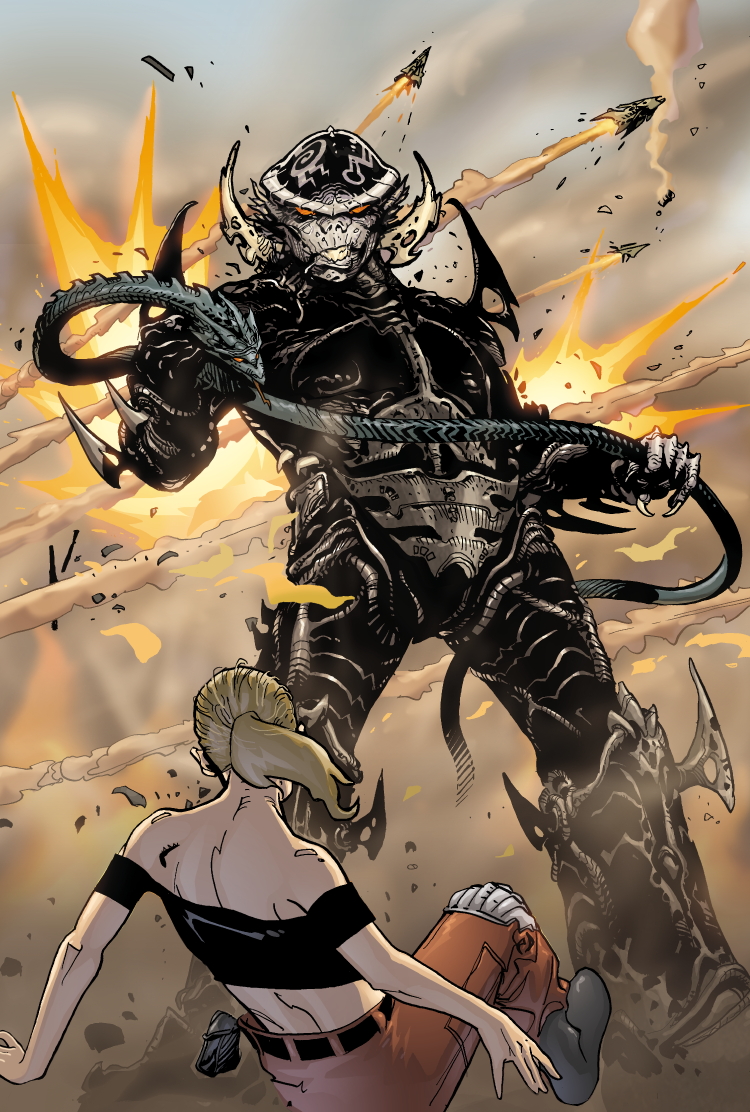
On the world of Rhommamool, Yuuzhan Vong executor Nom Anor, disguised as the leader of the Red Knights of Life, stirred up a war between Rhommamool and its neighboring planet, Osarian. He was also responsible for infecting Mara Jade Skywalker and a hundred other diplomats with a deadly Yuuzhan Vong disease. As a result the New Republic did not take notice when the first of the invasion force, the Praetorite Vong, made planetfall on the distant world of Helska IV and also brought down Sernpidal's moon upon the planet, killing millions of beings including the famous Wookiee Chewbacca, and leaving the planet itself in pieces. The Yuuzhan Vong also encountered the Jedi, whom they started to consider the worst of a galaxy full of infidels, due in no small part to the Jedi's ability to control a supernatural force that Yuuzhan Vong had been denied. The Praetorite Vong were eventually defeated by galactic heroes Luke Skywalker, Han Solo, Leia Organa Solo and Lando Calrissian.
The main Yuuzhan Vong fleet arrived soon after though, and had in short order conquered many of the worlds in their invasion corridor. Bimmiel, Dantooine, Dubrillion and Obroa-skai were among the many worlds captured while Ithor was consumed by firestorms and rendered uninhabitable. Sheltering the refugees from planets in the invasion corridor quickly became such a problem that the New Republic government could no longer ignore the threat of the Yuuzhan Vong. The political leadership was ineffectual in countering the invaders though, and initially tried to blame the Jedi for starting the conflict with the aliens. The Yuuzhan Vong, considering the Jedi their worst enemies, capitalized on this by luring natives of the galaxy into turning in Jedi with the promise that they would be spared from the invasion. The Peace Brigade appeared as an organization of such individuals.
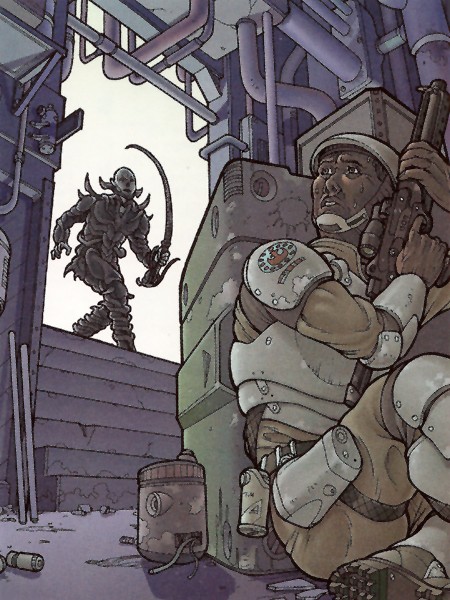
The Yuuzhan Vong also struck a deal with the Hutts that allowed them to pass through Hutt Space unmolested. But the Hutts secretly played both sides by passing information on Yuuzhan Vong fleet movements on to the New Republic. In return the Yuuzhan Vong ruthlessly conquered their worlds. In any case, moving through Hutt Space allowed the invaders to launch an attack against Fondor on the far side of the galactic core. However, they suffered heavy losses in the Battle of Fondor when Han Solo's cousin, Thrackan Sal-Solo, fired Centerpoint Station against them, destroying much of the defending Hapan fleet too.
Following the conquest of Duro, Warmaster Tsavong Lah offered the New Republic a cease fire if they turned over every single Jedi in the galaxy. The Jedi became hated as never before, with several planetary governments collaborating with the Yuuzhan Vong in hunting them down, and even resulting in the New Republic temporarily issuing an arrest warrant for Jedi Masters Luke and Mara Jade Skywalker.
The Peace Brigade also launched an attack on the Jedi Academy on Yavin 4 in an unsuccessful attempt to capture the children being trained there. The Yuuzhan Vong themselves arrived shortly after though, complicating the situation for the few Jedi remaining on the moon. The Yuuzhan Vong captured the Jedi trainee Tahiri Veila and started shaping her like the rest of their biological creations. However, before the experiment was completed, she was rescued by her best friend, Anakin Solo, with the help of the shamed Yuuzhan Vong, Vua Rapuung, redeeming the Shamed One in the process. As a result, a heretical movement that worshiped the Jedi as saviors gained popularity among the Shamed Ones (later led by Nom Anor), despite the efforts of the ruling castes to exterminate it. A short while later, the Yuuzhan Vong broke the cease fire by launching a surprise attack on Yag'Dhul.
Two years into the war, the Yuuzhan Vong unleashed a new biological creation, the voxyn, for the purpose of hunting down the Jedi. In response, Anakin Solo formed an all-Jedi strike with the intent of hunting down the Voxyn Queen from which the Yuuzhan Vong cloned all the other voxyn. The mission was a success, but came at the cost of the lives of nearly half the team, including Anakin Solo himself, and also left his brother, Jacen Solo, captured by the Yuuzhan Vong. Meanwhile the Yuuzhan Vong launched an immense attack on Coruscant, conquering the capital of the New Republic and killing Chief of State Borsk Fey'lya. Following that, they renamed the planet Yuuzhan'tar, and started Vongforming the planet in the image of their long lost homeworld. The Vongforming of Coruscant was sabotaged by Jacen Solo before he escaped from captivity with the aid of Vergere. The Yuuzhan Vong began to also suffer from internal problems, as the stresses of maintaining an Empire began to tax their resources.
The New Republic, having moved its capital to Dac, elected Cal Omas to replace Fey'lya, who also created the High Council, which would coordinate the Jedi's role in the war. At the same time the Jedi also found out about the NRI's secret project to create Alpha Red, a biological weapon that would wipe out the Yuuzhan Vong and all of their creations. The Jedi were unable to convince Cal Omas to ignore the weapon as a viable option for countering the invaders, but the rogue Jedi Knight Vergere saved them the trouble by destroying the project herself. However, the incident strained the relationship between the Jedi and the New Republic.
Forced to pursue conventional warfare while the Alpha Red team started from scratch, the New Republic hatched a plan to lure the Yuuzhan Vong into a trap in the Deep Core, centered around the moon, Ebaq 9. Using Jedi Knight Jaina Solo as bait, the trap was successfully sprung on the Yuuzhan Vong fleet, destroying it. On Ebaq 9, Warmaster Tsavong Lah himself was slain by Jaina Solo and Vergere sacrificed herself to eliminate the rest of the Yuuzhan Vong troops that had landed on the moon. Omas, using the political clout and fearing that the Senate would try to hijack control of the war, drafted a new constitution which stripped the Senate of executive power, turning the New Republic into the [Galactic Federation of Free Alliances](/article/galactic_federation_of_Free Alliances) (Galactic Alliance or GFFA for short).
Originating from a far-off galaxy, the Yuuzhan Vong sought a new haven. Yuuzhan'tar, their world of origin, was a tropical sphere surrounded by a large belt of asteroids. This planet was destroyed long before the invasion of the galaxy, thousands of standard years prior.
In the Yuuzhan Vong language, Yuuzhan'tar's name means "Crèche of the gods," and the living planet served as the basis for the Yuuzhan Vong's deities. The creator god of the Yuuzhan Vong, Yun-Yuuzhan, may have been inspired by Yuuzhan'tar.
Their early history remains largely unknown, but the Yuuzhan Vong are believed to have once lived symbiotically with their homeworld and were sensitive to the Force. Their technology was also primarily organic. The Yuuzhan Vong were caught in a devastating galactic conflict between two droid civilizations, thought to be the Silentium and the Abominor, which solidified their hatred of mechanical technology and xenophobia towards other sentient lifeforms.
Their living homeworld aided the Yuuzhan Vong in the war by giving them the knowledge to create living weapons. However, as the war continued, the Yuuzhan Vong as a species became increasingly violent and warlike. Eventually, they defeated their enemies and forced both droid powers to flee their galaxy.
Following the war, the Yuuzhan Vong launched a crusade to rid their galaxy of all mechanical technology. They conquered much of their galaxy and either exterminated or enslaved conquered species. The reptilian Chazrach were among the species they conquered, becoming slave soldiers for the Yuuzhan Vong.
With control over much of the galaxy, the various Domains (Yuuzhan Vong clans or families) fractured and turned against each other, leading to the devastating Cremlevian War. Much of the Yuuzhan Vong's galaxy was destroyed during the conflict, including their homeworld, Yuuzhan'tar. The exact details of the planet's destruction have been lost to time. However, Yuuzhan'tar produced a seed that eventually became Zonama Sekot, which was later colonized by the Langhesi and Ferroans.
Separated from their original symbiosis with their homeworld, the Yuuzhan Vong were stripped from the Force and experienced great pain. As a result, the species viewed pain as the only way to return to that symbiosis and practiced body modifications on themselves. In place of their homeworld, the Yuuzhan Vong began to believe in several deities, which subsequently governed nearly every aspect of their civilization.
Towards the end of the war, Steng became the first Warmaster. A rival Warmaster, Yo'gand, invented the Yo'gand's Core tactic, which he used to destroy the planet Ygziir and its moon. Steng died and the war ended as a result of the destruction of Ygziir. Yo'gand eventually united the Domains into a single socio-political entity and became the first Supreme Overlord of the Yuuzhan Vong.
With much of their galaxy ruined, the Yuuzhan Vong began a long journey to another galaxy in search of a new home. The species was forced to travel through the Intergalactic Void in massive worldships for a long time, perhaps centuries. The Yuuzhan Vong nearly destroyed themselves during this period. Violence and competition were inevitably built into their society, and without an external target, they focused their aggression against each other. Although there were no all-out wars on the scale of the Cremlevian War, the Domains continued to fight each other for the favor of the Supreme Overlords.
Pre-invasion
It is unknown how long the Yuuzhan Vong's voyage took when they left their galaxy, or if they even knew what their destination would be. One account stated that their journey took at least several millennia; however, by 26 ABY, one of the oldest worldships (old enough to be dying and considered 'ancient') was less than 1000 years old. It appears that by 3997 BBY, sometime after Exar Kun became the new Dark Lord of the Sith, the Praetorite Vong's slivilith probe creatures had arrived. As of 3963 BBY, at least one scout had reached the Wild Space region of the known galaxy. In that year, a group of Mandalorian Neo-Crusaders under the command of Canderous Ordo encountered what would later be known as a Yorik-stronha, disguised as an asteroid in the Crispin system, while chasing a group of pirates in the system's asteroid belt. Ordo used a thermal generator to melt the frozen methane covering the "asteroid," and the Yorik-Stronha "woke up," according
After achieving victory, Luke Skywalker assembled a team to investigate the information Vergere provided concerning the living planet known as Zonama Sekot. They embarked on a journey into the Unknown Regions, where they received assistance from both the Imperial Remnant and the Chiss Ascendancy, but only after fulfilling a prior obligation. Ultimately, they located the sentient world and initiated discussions, aiming to persuade it to contribute to ending the ongoing conflict.
In a parallel narrative, Executor Nom Anor, who had fallen from grace due to his involvement in the Ebaq 9 catastrophe, adopted the guise of the prophet Yu'Shaa and instigated subversive activities on Yuuzhan'tar (formerly Coruscant). Upon learning about Zonama Sekot, he successfully organized an expedition to the living planet, which included himself (still disguised), the Shaper Nen Yim, the Yuuzhan Vong priest Harrar, and the Jedi Knights Tahiri Veila and Corran Horn. The group reached Zonama Sekot, where Nom Anor revealed his true intentions, murdering Nen Yim and pushing Harrar off a cliff before attempting to sabotage the planet's hyperdrive. Although the two Jedi were unable to thwart his sabotage or prevent his escape, Zonama Sekot seemed to possess its own plan, initiating a hyperspace jump and positioning itself in orbit around the same star as Yuuzhan'tar, the galaxy's former capital.
Concurrently, the Galactic Alliance was preparing a major offensive to reclaim Yuuzhan'tar, with the objective of diminishing the Yuuzhan Vong's capacity for warfare by eliminating the Supreme Overlord. As it turned out, Supreme Overlord Shimrra was merely a figurehead controlled by the true leader of the Yuuzhan Vong, the Force-sensitive Shamed One Onimi. Luke Skywalker killed Shimrra, and Jacen Solo later eliminated Onimi during the second battle of Coruscant. Nas Choka, who succeeded Lah as Warmaster, assumed the role of de facto Supreme Overlord and commanded the remaining Yuuzhan Vong warriors to surrender.
The Aftermath of the Invasion
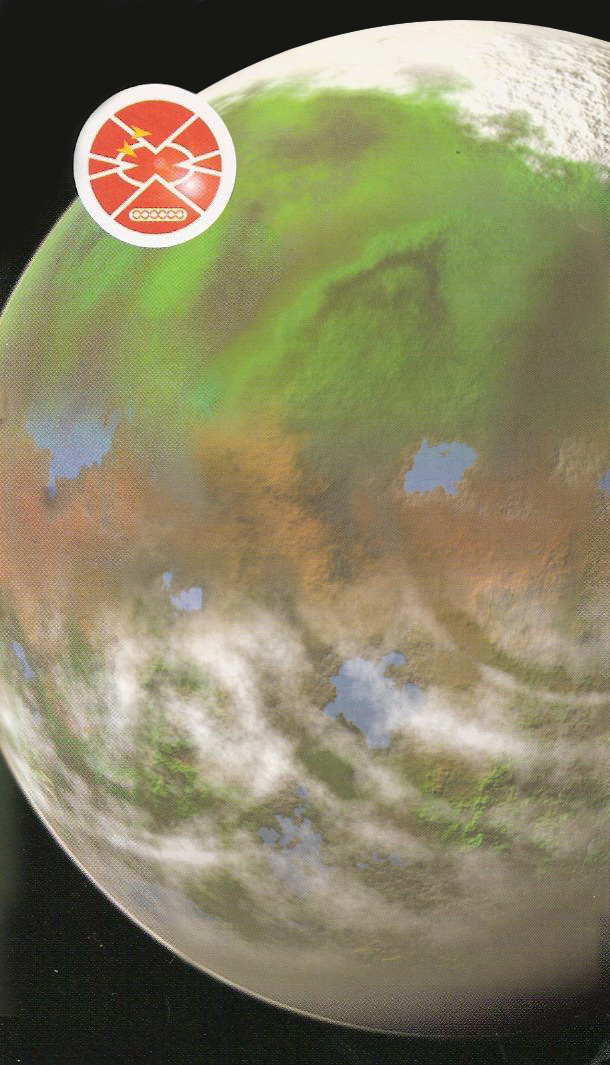
Among the conditions of the Yuuzhan Vong's capitulation was their commitment to assisting in the reconstruction of Coruscant to render it suitable as the Galactic Alliance's capital. The Galactic Alliance temporarily relocated to Denon while the restoration was underway, eventually returning to Coruscant upon completion of the rebuilding efforts.
Zonama Sekot also revealed itself to be the seed of the original Yuuzhan Vong homeworld, which had long been destroyed. Following the war's conclusion, the remaining Yuuzhan Vong were summoned from across the galaxy to Zonama Sekot to be contained there (with the exception of designated Vong tasked with repairing the damage inflicted by their people; those who refused exile were to be executed). Zonama Sekot, now populated by the Yuuzhan Vong, vanished back into the Unknown Regions, allowing the Yuuzhan Vong to live peacefully and reestablish their connection with Sekot. Their plans included abolishing their caste system and having already eliminated the positions of Warmaster and Supreme Overlord (although Choka appeared to remain the de facto leader of the species).
The Bothans, however, harbored unrelenting resentment for the death of Fey'lya and persisted in their declared state of ar'krai (genocide) against the Yuuzhan Vong, dispatching ships into the Unknown Regions to locate Zonama Sekot. By 36 ABY, their efforts had been partially thwarted by the Galactic Alliance, which had seized the vessel intended for the expedition.
The Yuuzhan Vong War represented arguably the most catastrophic crisis the galaxy had ever encountered. The loss of life was immense; estimates placed the number of fatalities across the known galaxy at approximately 300 trillion sentient beings.
The Fel Empire and the One Sith
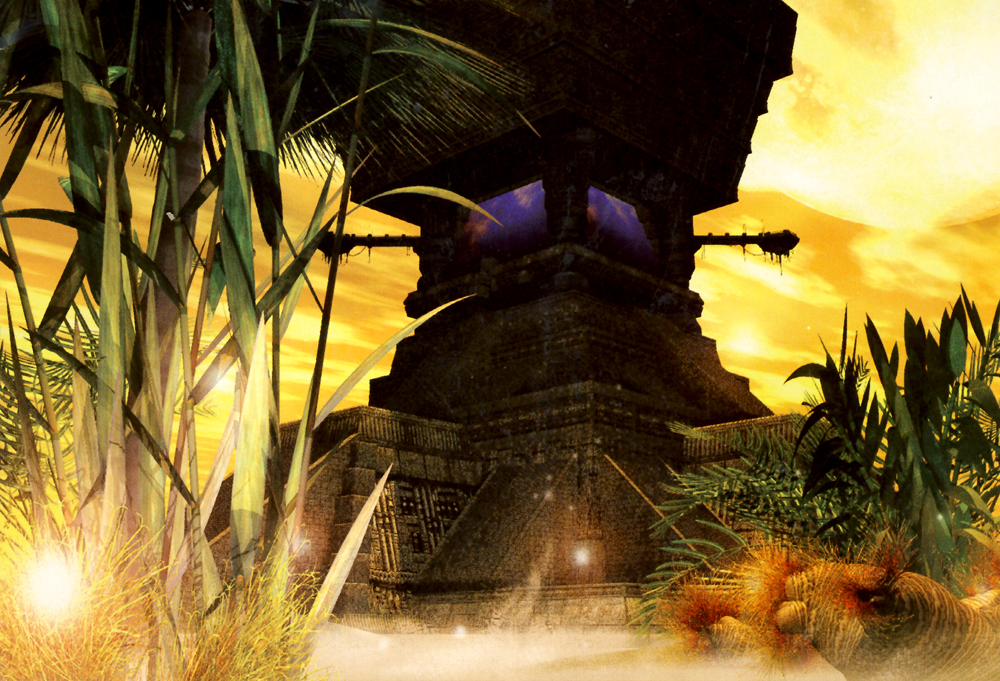
The Galactic Alliance gradually completed its reconstruction in the years that followed, but it never fully recovered to its pre-invasion state as the New Republic. Sometime after 41 ABY, as part of an initiative to foster improved relations between the Yuuzhan Vong and the rest of the galaxy, the Galactic Alliance's New Jedi Order permitted Yuuzhan Vong Shapers, led by Master Shaper Nei Rin, to utilize a desolate area of Ossus, one of the order's most ancient strongholds, as a testing ground.
The intention of those who advocated for the project—including Jedi Master Kol Skywalker, a prominent member of the Jedi Council—was to determine whether Vong terraforming methods, such as those that had once transformed Coruscant into the species' temporary homeworld of Yuuzhan'tar (27-29 ABY), could revitalize the barren and devastated world. Although most of the species had departed for the Unknown Regions on Zonama Sekot, a sufficient number of shapers remained to initiate a pilot program on Ossus. The experiment appeared successful, restoring vibrant life to the planet, and when the Jedi shared the results with the wider galaxy, other worlds competed for the opportunity to restore planets ravaged by the Yuuzhan Vong War.
Ultimately, one hundred planets were selected for terraforming. Yuuzhan Vong Shapers, accompanied by Jedi, commenced their work, and initially, the results were remarkable. However, no one had anticipated interference from the One Sith. Under the direction of the cult's leader, Darth Krayt, the Sith secretly sabotaged the terraforming process on these worlds. Plants grew deformed, and agonizing bony growths, reminiscent of those seen when the Vong forcibly enslaved populations, erupted from the skin of the inhabitants, resulting in millions of deaths.
The Jedi suspected sabotage but could not identify the perpetrator. Across the galaxy, blame fell upon the Yuuzhan Vong. The lingering animosity against the former invaders was too strong for many to believe they had genuinely abandoned their ambitions of conquest. The Jedi, however, were convinced of the Yuuzhan Vong's innocence and persuaded the Galactic Alliance to support the Yuuzhan Vong against domestic criticism.
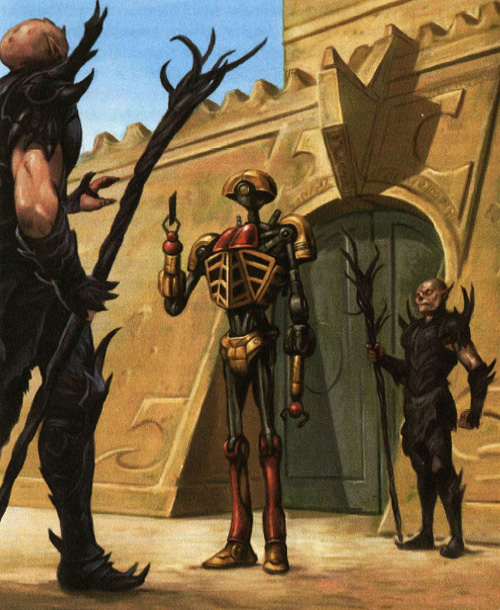
This proved to be the breaking point for the Empire. The signing of the Pellaeon–Gavrisom Treaty (19 ABY) had established peace between the Imperial Remnant and the New Republic, and the war against the Yuuzhan Vong had largely united the former adversaries. However, the Moff Council still contained numerous hardliners who sought to restore the Empire to its position as the dominant galactic power. Invoking the Treaty of Anaxes and demanding retribution, they declared war on the Galactic Alliance. The peace for which so many had fought and died in previous decades was undone in an instant, precisely as the Sith had planned.
Anticipating the potential consequences, the Jedi High Council ordered the construction of the Hidden Temple at the outset of hostilities, with Nat Skywalker selecting its location to provide the Jedi with a sanctuary.
From the beginning, the Alliance faced a disadvantage. Its defense of the Yuuzhan Vong had alienated numerous member worlds, whose populations still harbored bitter memories of the Vong invasion, and many refused to support the GA. The Alliance suddenly found itself confronting both a secessionist movement and a full-scale war. The Empire exploited this situation, enticing some of these disgruntled worlds into the Imperial camp and weakening the GA government. Other worlds, such as Hapes, declared neutrality. Consequently, the war began with the Empire holding all the advantages, except for one: Despite this, Emperor Roan Fel himself displayed a lack of enthusiasm; he had reluctantly declared war and never fully committed his support, even preventing his Imperial Knights from participating.
During this period, the Fel Empire encountered difficulties: despite the Alliance's handicap, the Jedi were more than compensating. Furthermore, because Roan Fel refused to allow the Imperial Knights to engage in the war, the Empire lacked the necessary strength to counter the Jedi. Soon, the Sith intervened in the conflict, offering to fill the void in Force users that plagued Imperial warfare. Through Moff Nyna Calixte, the ambitious and ruthless Director of Imperial Intelligence, the Sith approached the Empire and forged an alliance with the Imperial cause. When the Sith openly declared their presence, the Jedi quickly realized that they were responsible for sabotaging the Yuuzhan Vong terraforming projects, although the Order was never able to definitively prove it. As events unfolded, even members of the Imperial regime—including Emperor Fel himself—recognized the truth: they had been manipulated as pawns in the One Sith's scheme for galactic domination. Unfortunately, by the time the Sith's true motivations became clear to Emperor Fel, it was too late to reverse the plans already in motion. Upon learning the truth, the Yuuzhan Vong, initially relieved that it was not the work of their gods, resolved to undo the damage caused by the sabotage. Shaper Nei Rin traveled from Ossus to investigate the Sith's method of sabotage, hoping that this knowledge could help discredit the Sith and end the war.
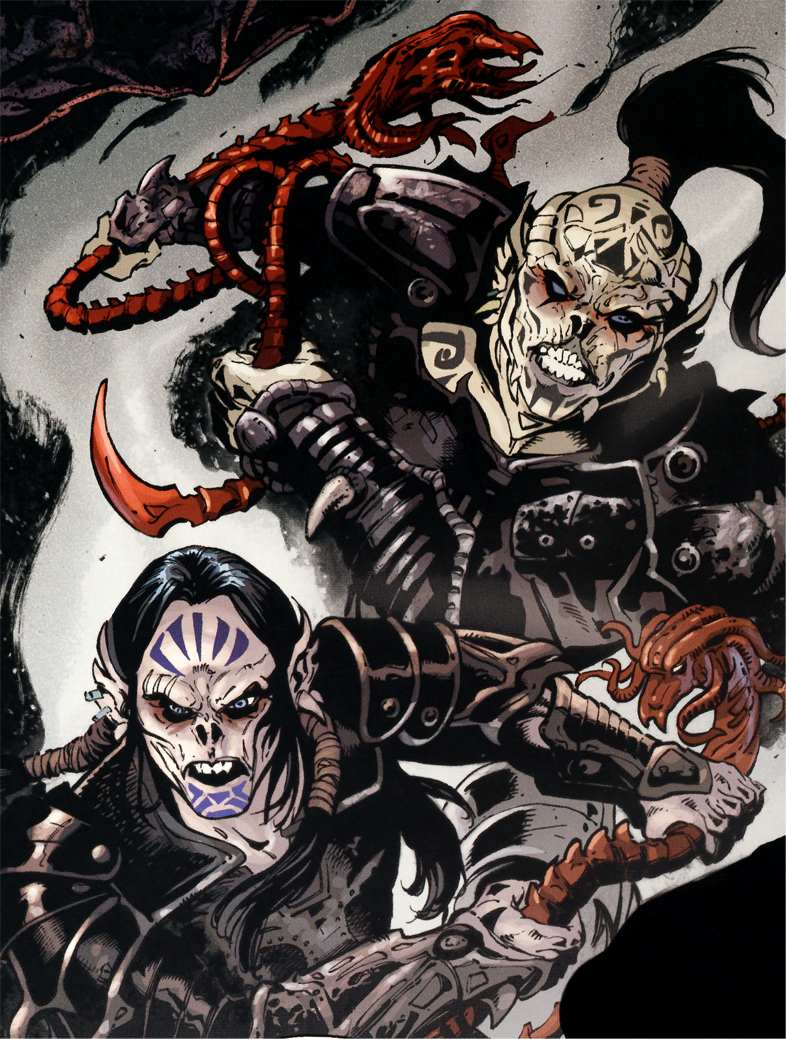
After three years of brutal warfare, the Galactic Alliance was depleted, while the Sith grew in power and strength, even independently manufacturing and deploying their own starfighters. Imperial forces had even retaken Coruscant after more than a century. The Alliance ultimately surrendered, and its territory was absorbed into the Empire. It remains unknown whether the Empire made any attempts to exterminate the Yuuzhan Vong. The Emperor summoned the Jedi Order to surrender and submit to the will of the Empire. Some complied, becoming the Imperial Knights. However, the rest, remaining true to the Force, refused to align themselves with the Sith and withdrew from Coruscant to their temple on Ossus. The Sith eventually pursued the Jedi there. Darth Nihl, a former Nagai warlord turned Sith, led a devastating attack on Ossus, supported by Imperial forces under the command of Moff Rulf Yage. The Massacre at Ossus scattered the Jedi across the galaxy, although the order was not completely destroyed. Nei Rin returned to Ossus the following day with proof that the Sith had orchestrated the projects sabotage, but it was too late to prevent either the war or the massacre.
Shortly thereafter, the Sith, determined to rule the galaxy themselves, turned against Emperor Roan Fel and his Imperial Knights. After killing what he later determined to have been a double of the Emperor, Darth Krayt seized the Imperial throne, restoring, for the first time in over a century, the rule of a Sith as Emperor and becoming the first Sith Lord since Darth Caedus to govern most of the galaxy.
Although most of the Yuuzhan Vong who accompanied the Jedi in the Ossus Project were killed, three survived, remaining beneath the Jedi Temple to guard the remains of the fallen Jedi out of respect for the Jedi Order. Master Shaper Nei Rin had been off-world investigating the project's failure, but she returned to Ossus with her findings too late to prevent the War or the massacre. Shortly afterward, Rin, her guards, and a few Jedi who had returned to the world were hiding from an Imperial patrol under the temple when the patrol's Sith commander ordered the Academy destroyed from orbit. Fortunately, thanks to Jedi Master K'Kruhk, the occupants managed to survive.
Later, it was revealed that a fanatical Yuuzhan Vong named Zenoc Quah had survived the war and had hidden on Wayland for over a century before allying with the One Sith to sabotage the Ossus Project. Seven years later, he participated in Darth Maladi's plot to overthrow Darth Wyyrlok from the rule of the Empire and install a new, more powerful Dark Lord at the helm. Quah and Maladi collaborated to create a new weapon that would secure their control over the galaxy against dissident Sith. To this end, Maladi and Quah set up a trap to capture Cade Skywalker as their test subject.
Technology
The Yuuzhan Vong's beliefs led them to oppose technology, from simple machines to droids, which they considered a polluting influence. Consequently, all their technology consisted of living biots: organisms specifically bred for their designated tasks. They favored these creatures over lifeless machines, which they believed lacked a spirit. All Yuuzhan Vong technology, whether starships, weapons, or everyday objects, was entirely biological. They detested droids, machines, electronics, and anything manufactured. Shapers coaxed this biotechnology into growth, and it appeared to be more resilient compared to conventional technology.
Notable examples of their technology included the dreaded yammosks, referred to as war coordinators because they functioned as a biotic Battle Analysis Computer and could coordinate Yuuzhan Vong forces with frightening efficiency. Through their villips, they developed a communication system that rivaled the galactic HoloNet. Different breeds of these organisms could also produce living light holograms, which the Yuuzhan Vong had mastered for centuries. Their collision avoidance systems were known to be as effective as those used by other galactic inhabitants. Furthermore, their equivalent of an antenna consisted of spiral fibers embedded in a yorik coral hull, which were highly sensitive to receiving communications. They also utilized nutrient feeds for various biots, serving a similar purpose to power lines in technological systems. Similar to navigation computers, Yuuzhan Vong vessels possessed navibrains required for plotting hyperspace jumps. Their vessels also needed to rearm themselves after combat, a process considered marginally superior to that of technologically advanced species in the galaxy.
Yuuzhan Vong personal weaponry included living serpentine creatures called amphistaffs, which could alter their form, allowing users to wield them as spears or whips. They wore Vonduun Skerr Kyrric armor, which protected them from weapon fire and lightsaber strikes. Their larger coral-shaped craft employed Yaret-Kor plasma weapons that could melt through enemy ship hulls, while shielding was provided by gravity-manipulating dovin basals that generated singularities to protect the craft from enemy weapon fire and strip enemy vessels of their shields. These organisms were grown separately and then grafted onto other organisms in an imperfect symbiosis. Additionally, they generated powerful gravitic fields that could create interdiction fields, rendering living occupants unconscious after being pulled from hyperspace. Larger, more sinister weapons included biological plagues capable of devastating entire worlds, some of which left planetary systems barren and unable to support agriculture.
The primary construction method the Yuuzhan Vong used to create their living vessels involved yorik coral. This coral-like substance formed the hull and internal structure of their ships. While several other races had mastered bioengineering, the Yuuzhan Vong were among the few who had developed a mass production method for creating such organisms. They could grow coralskippers in less than a month, matching the production rate of the Incom Corporation X-wing, but without generating any waste material from normal industrial processes. The outer "skin" of these craft, despite being alive, did not feel anything in the vacuum of space because the nerves were not exposed to the extreme cold. They were designed without nerve endings in such locations. Although the outer hull lacked nerve endings, the inner hull possessed them, and any breach triggered alarms, alerting the Yuuzhan Vong to intruders. It was less known that the nerves near the dovin basals were compromised due to the creatures' gravitic nature. Because the dovin basals were grown independently, they were nurtured separately and later grafted onto their host vessels. However, the symbiosis was imperfect, and the gravitic distortion created by the dovin basals desensitized the adjacent nerve clusters. In warships or other vessels, the Yuuzhan Vong compensated for this problem by implanting special nerve biots around the dovin basal to create a comprehensive tactile net unaffected by the gravitic anomaly. However, certain low-priority ships lacked this feature, creating blind spots for breaching actions. Inside these ships, many systems had technological equivalents, such as a central biotic computer like the targeting brain. However, sensor systems differed significantly; instead of externally mounted observatory sensors, the Yuuzhan Vong sensed gravitational distortions of distant objects to scan their surroundings.
A crucial interface element within Yuuzhan Vong biots that linked them to their organic ships and technology were cognition hoods. These organic helmets simply slid onto an individual's head and were connected to the ship via an organic cord. Through this connection, a pilot could directly interface with the ship and communicate with it. This applied to both organic pilots and droids, which could process the data transmitted to the hood. Onboard larger carrier ships, a central cognition hood was used by the ship's commander to issue commands to the vessel. However, if this hood was severed, secondary cognition hoods located on smaller craft, such as coralskippers, could send commands from the fighter to the carrier, providing some level of control. By wearing the hood, a pilot could experience the memories of the ship they were linked to, becoming part of the vessel. Yuuzhan Vong ships communicated in the Yuuzhan Vong language, creating a language barrier between foreign pilots and the vessel. However, it was possible to transmit images and thoughts through the hood to the ship, enabling control. A larger and more powerful version of these biots was the cognition throne.
Some of their more renowned technologies included the amphistaff, the yorik-et, the dovin basal, the gnullith, the grashal, the ooglith cloaker, the ooglith masquer, the villip, and the yammosk.
Long-Range Weaponry
- Blast bug (thrown)
- Magma pebble (thrown)
- Nang hul (thrown)
- Plaeryin bol
- Plasma Eel (thrown)
- Razor bug (thrown)
- Snap bug (thrown)
- Yaret-Kor
Melee Weaponry
- Amphistaff (mid-range)
- Claws (short range)
- Coufee (short range, common Chazrach weapon)
- Tsaisi (mid-range)
Yuuzhan Vong in the Galaxy
- Nom Anor , an Intendant Caste member whose responsibilities encompassed intelligence gathering. He bore responsibility for a significant portion of the Yuuzhan Vong's assault on the galaxy and stood as one of the New Jedi Order 's most formidable adversaries. He inflicted a near-fatal illness upon Mara Jade Skywalker. His life concluded during the Liberation of Coruscant.
- Quoreal , held the position of Supreme Overlord for the Yuuzhan Vong before the invasion commenced. Shimrra brought about his demise.
- Shimrra Jamaane , served as the Supreme Overlord of the Yuuzhan Vong throughout the invasion, until Luke Skywalker ended his reign.
- Onimi , functioned as Shimrra's jester and belonged to the Shamed Ones. Formerly a Master Shaper, Onimi augmented his brain with yammosk tissue, granting him power but also the stigma of being "shamed." Perceiving an opportunity for redemption, Onimi manipulated Shimrra, an Intendant, turning him into a puppet while Onimi ruled from the shadows. Jacen Solo ultimately killed him.
- Nen Yim , a Shaper by profession. Alongside Jedi Master Corran Horn , Tahiri Veila , Nom Anor disguised as the Prophet Yu'shaa , and the Yuuzhan Vong priest Harrar , she journeyed to the living world Zonama Sekot . There, she discovered that Zonama Sekot, a peaceful living world, originated as a seed of the original Yuuzhan'tar , revealing the grave deviation her species had undergone. Nom Anor ended her life.
- Shedao Shai , engaged in combat with Corran Horn for dominion over Ithor , ultimately losing despite the planet's subsequent destruction.
- Tsavong Lah , held the title of Warmaster within the Yuuzhan Vong ranks. Tsavong Lah was yet another highly dangerous enemy of the New Jedi Order . He even proposed ceasing the invasion if the New Republic surrendered the Jedi. His appearance was grotesque, marked by numerous organic implants. Tsavong Lah met his end during the Battle of Ebaq , in a duel against Jaina Solo
- Harrar , a Priest devoted to Yun-Harla . Recognizing the early threat posed by the Jedi, he consistently advocated for their elimination. His journey to Zonama Sekot with Nen Yim deeply impacted him with the planet's beauty. He stood as the first to disavow his species' violent tendencies, instead favoring an end to the War.
- Nas Choka , held the position of Supreme Commander within the Yuuzhan Vong fleet and succeeded Lah as Warmaster. Following the deaths of Shimrra and Onimi, Choka commanded the Yuuzhan Vong to surrender, thus concluding the war. He took over the Yuuzhan Vong leadership from Shimrra and Onimi.
- Nei Rin , a Master Shaper of the Shaper Caste and an ally of the Jedi before, during, and after the Sith–Imperial War .
- Zenoc Quah , a Shaper Caste member who collaborated with the One Sith .
- Viull Gorsat , was a member of Garik Loran 's revamped Wraith Squadron in 44 ABY. Gorsat, known as Scut, differed from other Vong due to his upbringing within a human family.
Early Proposal
Initially, the editors at Lucasfilm and Del Rey considered less extraordinary adversaries for the New Jedi Order, specifically villains who harnessed the dark side of the Force. George Lucas vetoed this concept, pointing out that dark side users would struggle to function cohesively due to their insatiable desire for power. In his critique of the story overview, Lucas prohibited the story team from pursuing this direction, urging them to "be more original" and avoid making the villains dark side users. This feedback ultimately led to the creation of the Yuuzhan Vong as unique antagonists for the series.
Origins of "Yuuzhan Vong"
The name "Yuuzhan Vong" originated at a French-Thai restaurant in New York City called Vong, frequented by several Del Rey employees. While Shelly Shapiro was perusing a menu that listed teas from the Yunnan region, the phrase "Yunnan Vong" emerged as the initial iteration of the name eventually bestowed upon the intergalactic invaders.
R. A. Salvatore conceived the idea of the Yuuzhan Vong's exclusive use of biotechnology, and their penchant for pain, initially limited to Domain Shai, was later extended to the entire species, partly due to their religious beliefs and relationship with Yun-Yuuzhan, as outlined in the story bible.
Yuuzhan Vong and the Force
The Jedi discovered during the war with the Yuuzhan Vong that they appeared to be "absent" from the Force. James Luceno provides the explanation in his book, The New Jedi Order: The Unifying Force. The Yuuzhan Vong are not "absent" from the Force; rather, their entire species has been severed from it. The novel suggests that the intelligence of their homeworld, the seed of which would eventually become Zonama Sekot, implemented this disconnection due to their warmongering and hostile conquest of other species.
Real world inspirations
Mesoamerican cultures significantly influenced Yuuzhan Vong culture and religion. James Luceno had recently returned from a Mayan expedition to Guatemala just before the Skywalker Ranch meeting in 1998, and he had a longstanding interest in Mesoamerican societies. Del Rey editor Steve Saffel built upon this interest by suggesting inspiration from the eventual fates of Mayan and Aztec indigenous cultures ("cultures of inherent tragedy") and prompted Luceno with the notion, leading to Luceno informing the rest of the story team on Mayan and Aztec cosmology and history. Luceno proposed portraying the Yuuzhan Vong as "tragic wanderers rather than hateful invaders," with the concept of an invading people being a wandering tribe in search of their "promised land," directly inspired by the Aztec search for Aztlán. The story team embraced the concept, with Michael Stackpole commenting, "I specifically remember Jim Luceno saying, using the Aztecs, or the cosmology as a model, that that would work out pretty cool... And man, I concurred."
Luceno continued to draw further inspiration from, and parallels to, Mesoamerican cultures as he worked on writing the story bible, specifically basing the mythology of the god Yun-Yuuzhan on that of the Aztec god Tlaltecuhtli. The Yuuzhan Vong's practice of sacrificing elements of themselves or others as offerings for the gods was directly inspired by Aztec and Mayan practices and beliefs, stemming from the belief in a creator god who sacrificed themselves to create the universe. Mesoamerican ritual tattooing and body modifications also served as direct inspirations for the Vong. Additionally, Luceno drew inspiration from the Mayan mythology of the Hero Twins, Hunahpu and Xbalanque, for the roles of Anakin, Jacen, and Jaina Solo and the Yuuzhan Vong's mythological relationship to them.
The notion of the invading force initially dispatching those using deception and disguise, arriving as merchants, traders, or other professions, to infiltrate, spy, and instigate trouble, as characters like Yomin Carr and Nom Anor do throughout the series, was directly inspired by the pochteca of Aztec society, who performed that function for the expansion of the Aztec Empire into surrounding lands. Furthermore, aspects of the Yuuzhan Vong culture, such as the Shamed Ones and the caste system in general, were inspired by the Dalit people of India, commonly known as the "untouchables," as well as the caste system of Mayan society.
Author Greg Keyes' anthropological background, in which he had previously explored the oral traditions and beliefs of the Choctaw people, informed the development of the shaper caste. Keyes drew upon his experiences in Malaysia, where he was exposed to elements of the indigenous culture, for the shapers in particular; in developing the shapers, Keyes looked to the ancient Austronesians for inspiration, as well as to their descendants, including the various Melanesian and Polynesian peoples. Some of the naming conventions of the shapers in his novels were drawn from names and mythologies of Pacific origin, such as for Mezhan Kwaad. Elements of these cultures also informed the look of characters like Nen Yim and Vua Rapuung, with Greg Keyes advising artist Terese Nielsen on how to depict them.
Similarities to other EU species

The Yuuzhan Vong share several characteristics with other species introduced in the novels. They exhibit a fanaticism akin to the Yevetha, possess a caste system similar to the [Ssi-ruu],/article/ssi-ruu) and exclusively utilize biotechnology like the Charon.
The Clone Wars
Dave Filoni and Pablo Hidalgo revealed at their The Untold Clone Wars panel at Celebration Anaheim in 2015 that there were plans for the Yuuzhan Vong to potentially appear in the Star Wars: The Clone Wars television series before the show's cancellation. Filoni's sketches of the species for the show were displayed at the panel. The Vong were intended to be featured in a The X-files_-_esque episode in which the Yuuzhan Vong aboard their scout ship would perform an abduction to assess the Galactic Republic's strength and the Jedi's capabilities. However, according to Hidalgo, the story would have only hinted at the Yuuzhan Vong's origins, and they would not have been immune to the Force.
Similar canon species
While the Yuuzhan Vong are no longer considered part of the Star Wars canon and are now classified as Star Wars Legends, a similar species known as the Grysk made their debut in Timothy Zahn's 2018 canon novel Thrawn: Alliances. Like the Yuuzhan Vong, they posed a threat to the Chiss Ascendancy and an invasion to the galaxy would be imminent, mirroring the Yuuzhan Vong War from The New Jedi Order book series. However, the Grysk did not employ biotechnology, were not immune to the Force, and originated in the Unknown Regions instead of an extra-galactic location.