Slavery
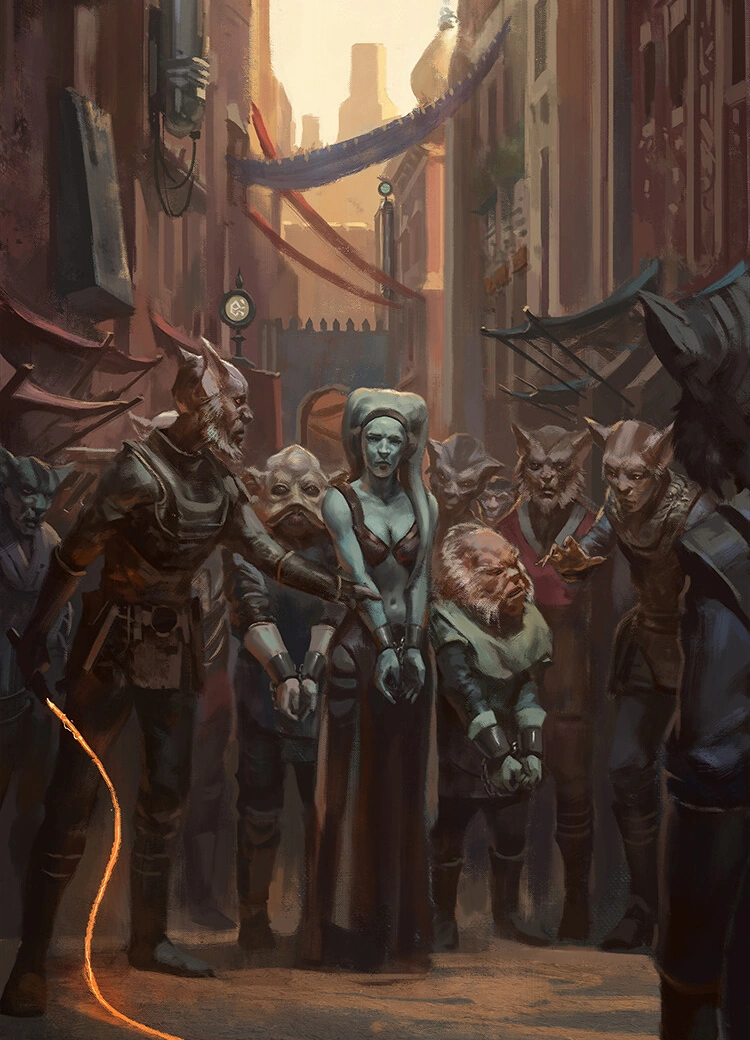 The Royal Slave Auction on Zygerria
The practice of slavery involved treating sentient beings as possessions, enabling their purchase, sale, and ownership. Those who were enslaved, frequently called slaves, were compelled to labor for their enslavers, also known as "masters" or "owners." This included individuals who captured others with the intention of "selling" them into slavery. The Judicial Forces of the Old Republic, in conjunction with the Jedi, endeavored to dismantle the Zygerrian slave trade. Despite the outlawing of slavery within the democratic Republic, criminal organizations like the Hutt Clan persisted in the practice beyond the Republic's jurisdiction on Outer Rim planets such as Tatooine. Although the Alliance to Restore the Republic proclaimed in their Declaration of Rebellion that all beings in the galaxy were "born free under the auspices of nature," the Galactic Empire, an authoritarian regime, secretly targeted non-human species like the Wookiees for enslavement as forced laborers. The Empire also collaborated with criminal groups like the Pykes at the spice mines of Kessel, where enslaved organic beings were shackled, and droids were fitted with restraining bolts, forcing them to risk their lives harvesting materials for the perilous spice trade. The Rebellion successfully established the New Republic, but its influence did not extend to criminal havens such as Kijimi City by the time of the First Order's rise. Even the criminals of that anarchic city did not welcome enslavers, offering them no sanctuary.
The Royal Slave Auction on Zygerria
The practice of slavery involved treating sentient beings as possessions, enabling their purchase, sale, and ownership. Those who were enslaved, frequently called slaves, were compelled to labor for their enslavers, also known as "masters" or "owners." This included individuals who captured others with the intention of "selling" them into slavery. The Judicial Forces of the Old Republic, in conjunction with the Jedi, endeavored to dismantle the Zygerrian slave trade. Despite the outlawing of slavery within the democratic Republic, criminal organizations like the Hutt Clan persisted in the practice beyond the Republic's jurisdiction on Outer Rim planets such as Tatooine. Although the Alliance to Restore the Republic proclaimed in their Declaration of Rebellion that all beings in the galaxy were "born free under the auspices of nature," the Galactic Empire, an authoritarian regime, secretly targeted non-human species like the Wookiees for enslavement as forced laborers. The Empire also collaborated with criminal groups like the Pykes at the spice mines of Kessel, where enslaved organic beings were shackled, and droids were fitted with restraining bolts, forcing them to risk their lives harvesting materials for the perilous spice trade. The Rebellion successfully established the New Republic, but its influence did not extend to criminal havens such as Kijimi City by the time of the First Order's rise. Even the criminals of that anarchic city did not welcome enslavers, offering them no sanctuary.


Indentured servitude, while ostensibly a separate arrangement, involved individuals working for a predetermined duration or until a debt was settled, after which they gained freedom. However, in reality, indentured servitude often equated to slavery. Those under this system were known as indentured servants, a term often used as a polite substitute for "slave." Another such euphemism was "sentient property," employed by the Czerka Corporation in official documents to lend an air of legitimacy to their enslavement practices.
Characteristics

Slavery frequently functioned as a labor source. The Galactic Empire exploited the Wookiees due to their physical strength and capacity for prolonged work under harsh conditions. Certain Hutt crime lords would enslave female humanoids, compelling them to wear revealing dancing-girl costumes as entertainers. Twi'leks were particularly coveted by slavers, generally regarded as beautiful.
Children born to enslaved (or indentured) parents were automatically considered slaves (or indentured servants) of the same master. Owners possessed the authority to free their slaves at any moment, and even marry them, although marriage between an owner and a former slave was exceedingly rare. Notably, Cliegg Lars purchased, freed, and subsequently married Shmi Skywalker, the mother of Anakin Skywalker, who became a Jedi Knight. The death of an owner could sometimes lead to the liberation of their slaves. Leia Organa gained her freedom by killing her captor, Jabba the Hutt, an act that also resulted in the freedom of several other slaves held by the gangster.
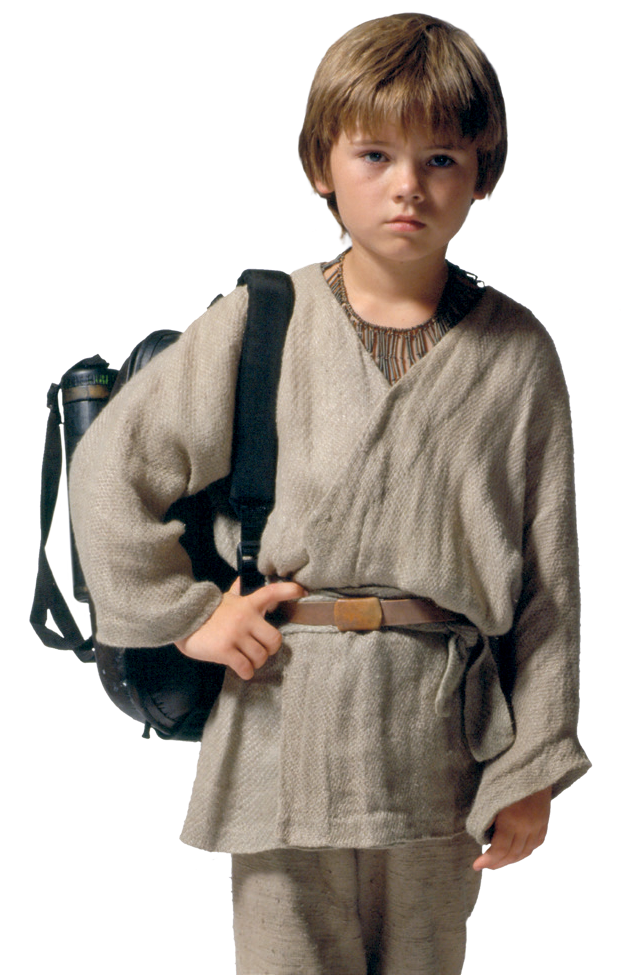
Various methods were employed to prevent enslaved individuals from escaping or resisting their masters. Some slaves had transmitter chips implanted in their bodies, designed to explode upon any escape attempt. Others were fitted with restrictive collars around their necks. Certain collars were linked to chains held by the slave's master. The Zygerrians frequently used shock collars, employing electric shocks to force slaves into submission.
In numerous instances, individuals not officially enslaved still lived in conditions akin to slavery, enduring backbreaking labor to barely survive while often facing corrupt Imperial officials. Identity contracts, commonly known as "ident pads," served to identify individuals as indentured servants or slaves. Both indentured servants and enslaved individuals could be tried for acts of rebellion against their masters.
History
Slavery in the Old Republic
Historically, ancient empires ruled by the Sith depended on enslaved populations for labor. During the era of the Old Republic, Zygerria commanded a formidable Slave Empire spanning numerous sectors, bringing wealth and power to the planet. The Zygerrians and their clientele profited from slavery for millennia, but the Jedi Order eventually fought and destroyed the Zygerrian slave trade. Following the outlawing of slavery within Republic territories, the Jedi Knights liberated countless beings, pushing the trade into the shadows.
Despite a significant reduction in their influence, the Zygerrians continued their involvement in the slave trade through the Zygerrian Alliance, ostensibly a legitimate business guild. After the alliance supported a coup on the planet Aaloth, Lourna Dee, the heir to the title of Keeper of Aaloth, was sold into slavery and taken to a Zygerrian camp. However, Jedi Master Oppo Rancisis later led a raid on the camp, freeing those held captive. Dee eventually joined the Nihil marauders and assisted in seizing control of Aaloth, placing it under Nihil control. Despite that conflict, the Nihil forged relations with the Zygerrians and engaged in the sale of slaves to them.
Fall of the Republic
Even though the Galactic Republic had officially outlawed slavery, it persisted in regions beyond its jurisdiction. The Outer Rim planet of Tatooine maintained an enslaved population residing in Mos Espa, with slaves implanted with transmitter chips designed to explode upon any escape attempt. By 40 BBY, Hosnian Prime was known for housing a factory complex operated by the arms manufacturer Czerka Arms, whose activities included the use of slavery, forcefully taking all the workers they desired. Furthermore, the Neimoidians employed indentured worker drones whose growth was intentionally stunted. These drones were even utilized by the Trade Federation's senatorial delegation within the Republic's very own Senate Building. In 32 BBY, individuals such as Anakin Skywalker, Shmi Skywalker, Wald, Kitster Banai, and Erdan were enslaved in Mos Espa.
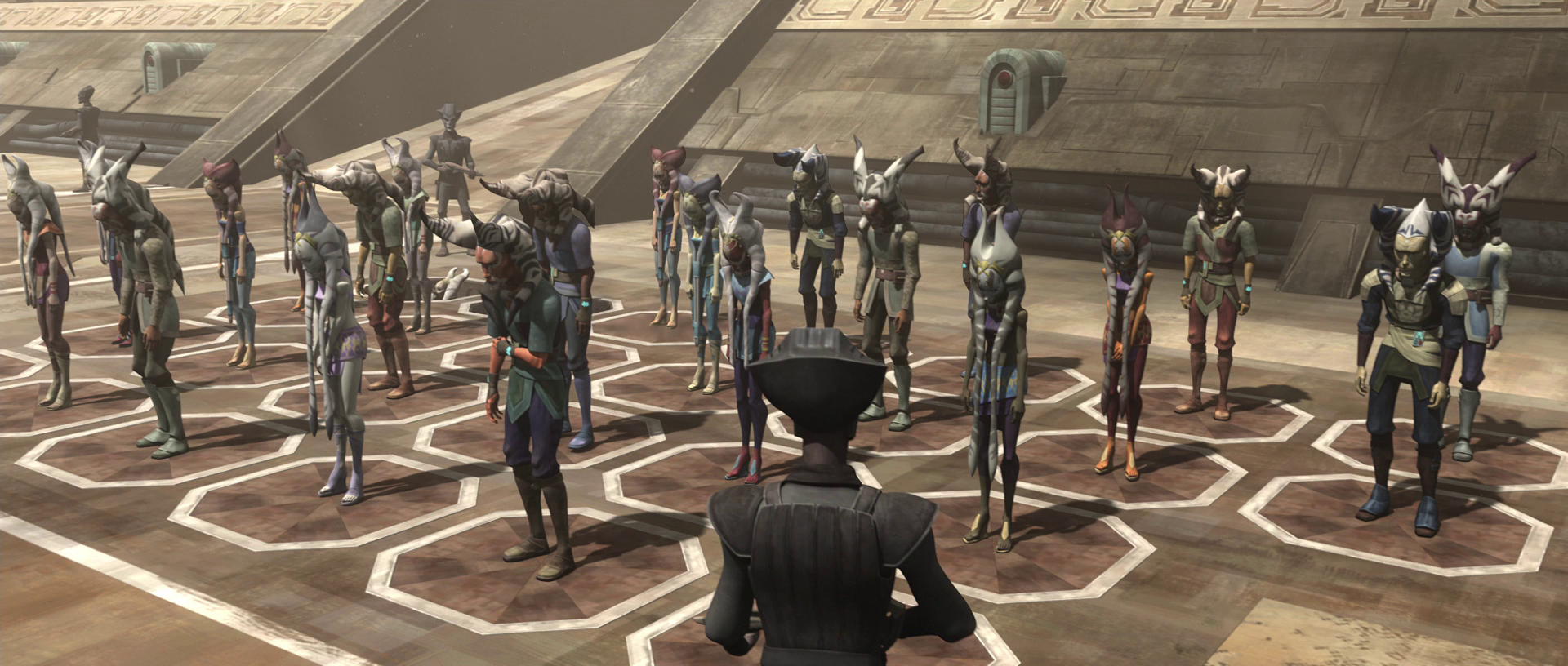
During the Clone Wars, a conflict between the Republic and the Confederacy of Independent Systems, the Grand Army of the Republic consisted of loyal clone troopers. However, Clone Sergeant "Slick" came to the conclusion that the clones were enslaved by the Jedi Order, although he was taken into custody during the Battle of Christophsis. By 20 BBY, Queen Miraj Scintel exploited the ongoing conflict to revive Zygerria's ancient slave empire. After reaching an agreement with Separatist leader Count Dooku, Zygerrian forces under Commander Darts D'Nar enslaved the Togruta colonists on the Expansion Region world of Kiros. As a response, the Jedi Obi-Wan Kenobi, Anakin Skywalker, Ahsoka Tano, and Clone Captain "Rex" embarked on an undercover mission to Zygerria to investigate the Zygerrians and liberate the Togruta colonists.
However, they were captured by Queen Scintel, who intended to enslave her Jedi captives. Since this ran counter to the Sith's planned Great Jedi Purge, Scintel was assassinated by Count Dooku. Subsequently, Jedi and Republic forces successfully rescued a portion of the enslaved Togruta from the slave processing facility on Kadavo. Furthermore, Republic forces destroyed the Kadavo slaving facility.
Age of the Empire

During the early years of the Galactic Empire, Zygerrian raiders launched an attack on Syngia Station in the Sertar sector, enslaving many of its inhabitants. Penn Zarang, who later became an Imperial cadet at the Arkanis Academy, survived the raid by hiding in a maintenance conduit. The murder of his father and the death of his mother while being transported to Zygerria motivated Penn to become an Imperial cadet. The raid occurred during a period when the Imperial Military had not yet extended its reach into the Outer Rim.
During the Age of the Empire, slavery once again became widespread, especially among alien species considered inferior by the human-centric Galactic Empire. With the rise of the Empire, the gradual weakening and eventual repeal of laws prohibiting slavery resulted in the classification of certain species, such as the Wookiees, as non-sentient. Consequently, Wookiees were forced into slavery to construct much of the Imperial war machine or to serve in the notorious spice mines of Kessel following the Empire's conquest of their homeworld of Kashyyyk. Another instance involved the reptilian Bodach'i species, who were enslaved and made to work in the spice mines of Kerev Doi as "reparations" for their homeworld's repeated defiance of Imperial decrees. Additionally, the Empire utilized slaves from various alien species to maintain the operation of Weapons Factory Alpha, the largest weapons factory in [the galaxy](/article/the_galaxy], on Cymoon 1 around the clock. Around 18 BBY, followers of the Kilji way of order and enlightenment were slaves of their Kilji masters, lacking the ability to move or think without their permission.
After assuming command of the Imperial-class Star Destroyer Chimaera, Commodore Thrawn discovered the Empire's involvement in Wookiee slave trafficking after responding to a distress signal from the troop transport Sempre. The slaves had been freed by an attack force consisting of the frigate Castilus and two squadrons of V-19 Torrent starfighters. Subsequently, the insurgents launched an attack on Baklek Base. Thrawn led a successful military operation to neutralize the insurgents, forcing their surrender. When Lieutenant Commander Eli Vanto expressed his discomfort with slavery, Thrawn attempted to justify the Empire's actions.
Slavery under the Grysk Hegemony
During the Grysk conquests in the Unknown Regions and the subsequent Imperial–Grysk conflict, the Grysk Hegemony maintained a large enslaved population to advance their conquests and even fight their battles. The Grysks often enslaved entire species by identifying their weaknesses and breaking their spirits. The Grysks aimed to conquer the Chiss Ascendancy by enslaving and torturing the Chiss' revered ozyly-esehembo navigators. Among the species enslaved by the Grysks were the Darshi and the Scratchlings.
Following the rescue of navigator Un'hee, who had been enslaved by the Grysks, by Imperial forces, her fellow navigator Vah'nya contacted her mind through Second Sight. Vah'nya informed Lieutenant Eli Vanto that she had witnessed the Grysks probing Un'hee's mind and soul, twisting and corrupting the young girl's deepest desires and fears to force her to obey their commands. She convinced Vanto that such enslavement was a fate worse than death and requested that Vanto kill her and any other ozyly-esehembo should they fall into Grysk captivity. Killing a Chiss navigator was a capital offense in the Chiss Ascendancy, so deeply ingrained in Chiss society that no Chiss could even imagine killing a Chiss navigator. Vanto pledged that, if necessary, he would kill captured ozyly-esehembo to spare them the agony of Grysk slavery, doing so in a manner that would eliminate as many Grysks as possible alongside the navigators.
Galactic Civil War
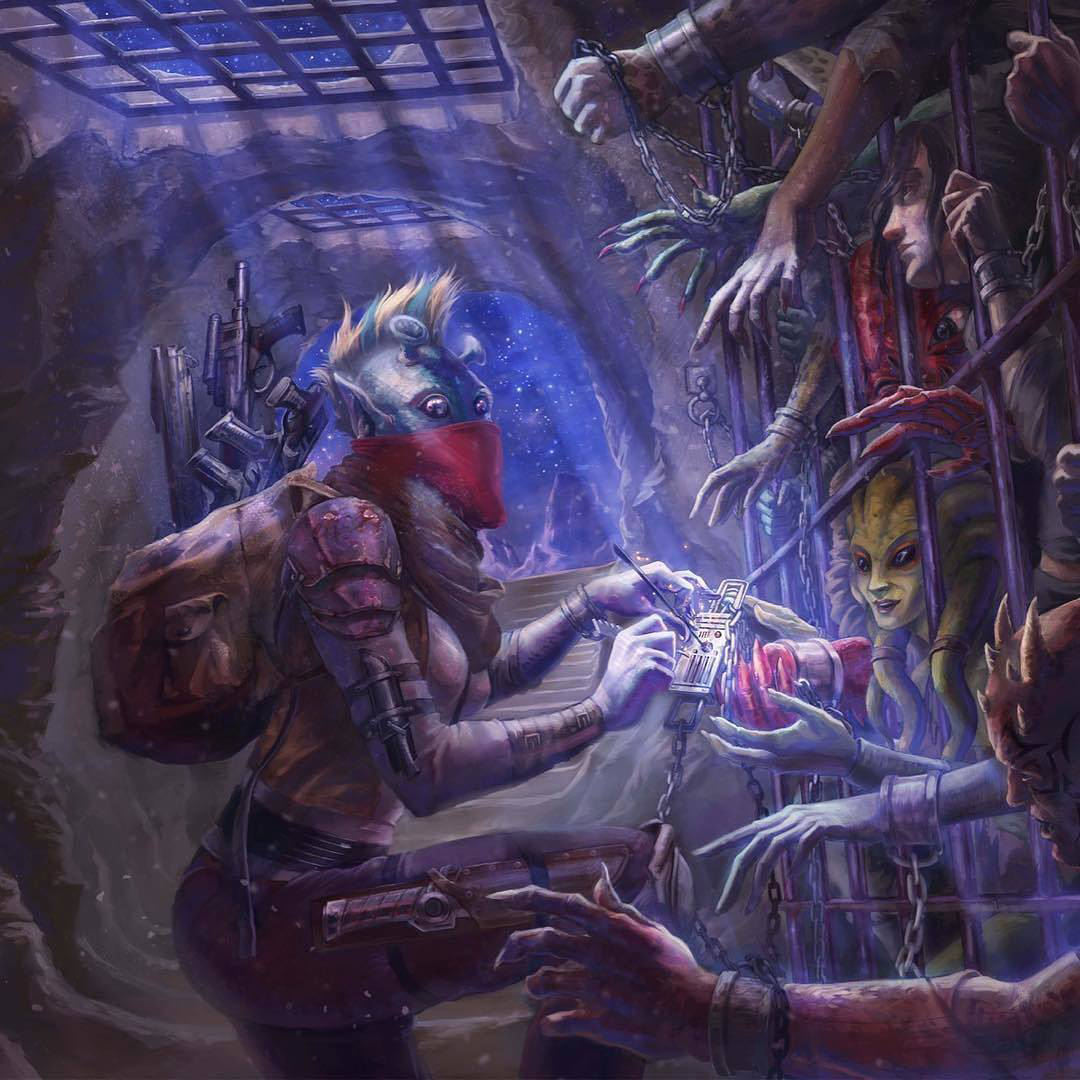
In 4 ABY, Princess Leia Organa was captured and enslaved by Jabba the Hutt during her attempt to rescue Han Solo. However, Organa liberated herself by killing the gangster, thereby freeing many of Jabba's other slaves. As a result, she earned the admiration of the Niktos, a species frequently enslaved by the Hutts. Jabba's death also had a significant impact on the criminal underworld, weakening the Hutt clan and creating a power vacuum on Tatooine and the Kessel spice trade routes.
Following the Battle of Endor, the New Republic's provisional Galactic Senate on Chandrila allocated substantial resources to compensate alien species that had been enslaved by the Galactic Empire. In 5 ABY, Han Solo and Chewbacca led a successful Wookiee uprising on Kashyyyk against Grand Moff Lozen Tolruck, the leader of Imperial territory G5-623. One of Tolruck's subordinates, Commandant Theodane Sardo, considered the possibility of farming enslaved Wookiees for their meat. As part of the plan, the former Imperial loyalty officer Sinjir Rath Velus disabled the inhibitor chips controlling the enslaved Wookiees using a hyperspace transceiver spike. Following a battle on the ground and in space above Kashyyyk, the planet was liberated by New Republic forces led by Admiral Ackbar and Leia Organa. Wookiee and New Republic forces later freed more Wookiee slaves, including Chewbacca's son Lumpawaroo, in follow-up operations against Imperial holdouts on Kashyyyk.
Post-Galactic Civil War
Despite the New Republic's prohibition of slavery, disreputable locations like Chrome Citadel continued to export enslaved individuals to Nal Hutta under the guise of "live cargo." Additionally, individuals were still known to be indentured as servants. During an undercover mission to Sibensko, Senator Leia Organa assumed the identity of a recently freed indentured servant.
During the search for the explorer Lor San Tekka, Agent Terex of the First Order's Security Bureau owned several enslaved beings from various species, including an Abednedo and a Rodian. He justified his actions by arguing that each of these aliens served a specific purpose and that the Empire had practiced slavery, citing the enslavement of the Wookiees as an example. Captain Phasma disapproved of his ownership of slaves, viewing the First Order as superior and more virtuous than the Empire.
Behind the scenes
Slavery made its initial appearance in the 1983 film Star Wars: Episode VI Return of the Jedi, the concluding installment of the Star Wars original trilogy. In early drafts of Return of the Jedi, the second Death Star was planned to be constructed in orbit around Kashyyyk, with Wookiee slave labor performing the construction. George Lucas later decided to relocate the Death Star's construction to the forest moon of Endor, replacing the Wookiees with Ewoks.
During the drafting of the young-adult novel Queen's Shadow, released on March 5, 2019, author E. K. Johnston collaborated with an editor to ensure that the novel's portrayal of enslavement used active wording rather than passive terms, specifically using "enslaved" instead of "a slave." With the support of the Lucasfilm Story Group, she hired an additional editor to review the novel's script and chose to use "souls" when referring to enslaved individuals to emphasize their humanity.
The novel Master & Apprentice by Claudia Gray, published on April 16 of the same year, also featured slavery as a central theme. She aimed to include Jedi Master Qui-Gon Jinn's encounter with enslavement on Pijal—meeting Rahara Wick—to provide context for his actions in the prequel trilogy film Star Wars: Episode I The Phantom Menace. Gray also expressed her preference for using the term "enslavement" to describe an individual's freedom status unless the enslaved individual referred to themselves as a "slave" or "former slave" in context, to maintain sensitivity to the issue. In the instances where she used "slave" in Master & Apprentice, Gray noted that she included them to avoid softening the concept too much, suggesting that evil individuals would not hesitate to objectify others and would therefore use derogatory terms to refer to those working for them.