Imperial Security Bureau
The Imperial Security Bureau (ISB), which also went by names like the Imperial Security Office or the Imperial Secret Service, functioned as the Galactic Empire's internal security and intelligence service. Its primary responsibility was to safeguard the Empire from internal security threats and to ensure the unwavering loyalty of its citizenry. Furthermore, it was one of several organizations operating under the umbrella of the Commission for the Preservation of the New Order (COMPNOR), and it had a larger scope than its sister organization, Imperial Intelligence. The ISB high command was in charge of operations, and the ISB Board supervised particular sectors.
Organization
Command hierarchy and administration

The Imperial Security Bureau was a rival agency and sister to Imperial Intelligence. The Bureau worked closely with Emperor Palpatine, being led five years into his reign by a Bureau Chief, who had a Deputy Director named Harus Ison under him. Ison collaborated with the Joint Chiefs as a member of that board. Colonel Wullf Yularen, who also served as the liaison between the ISB and Imperial Intelligence, connecting the two agencies of the Security branch, worked alongside Ison and joined him as an ISB representative on the Joint Chiefs. Yularen eventually rose to the position of ISB director. This position, combined with his rank of colonel, was related to the level of authority he held as a Fleet Admiral during the Clone Wars. The ISB was occasionally assigned to various fleets in the field, occasionally coming under the Navy's command and working alongside Naval intelligence. ISB members worked out of the ISB Central Office as part of the Federal District on Coruscant, and agents in the field regularly sent intelligence updates to headquarters.
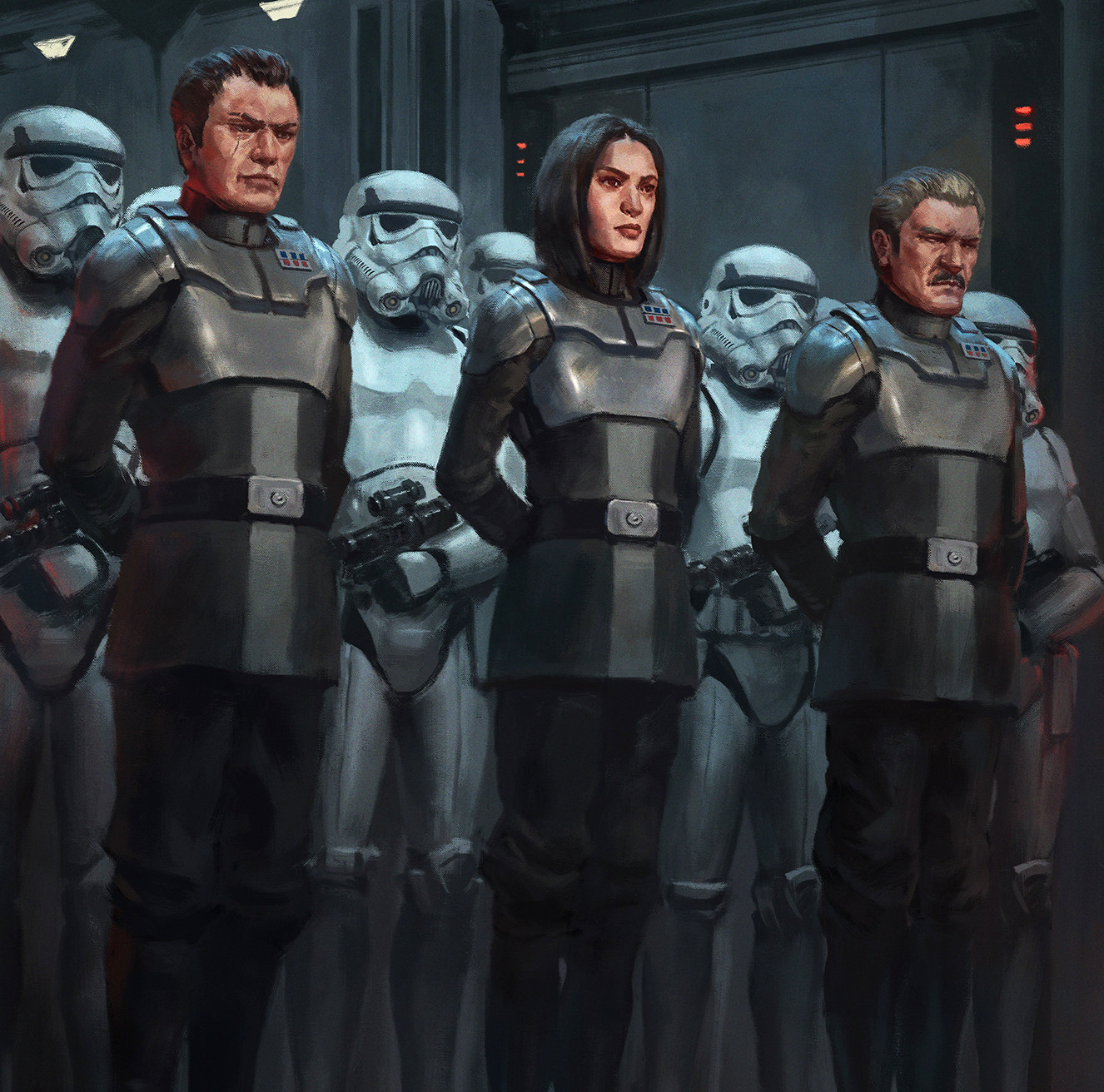
The ISB's ranks were structured in a martial manner. These ranks, in ascending order, included ensign, lieutenant, flag lieutenant, captain, commander, senior commander, major, colonel, general, and admiral. Chief Investigator, chief supervisor, ISB Supervisor, ISB Attendant, loyalty officer, Inspector General, deputy director, director, intelligence officer, and minister were among the ISB's positions. The ISB was governed by the ISB high command, while Major Lio Partagaz led the ISB Board, which coordinated intelligence operations by sector. The group and its power were feared by many military officers.
Personnel
Potential ISB personnel were chosen from the Imperial Academy system and given training at the ISB Academy and Offices complex, which was situated in Coruscant's Verity District. The training program for members included learning xenophobic propaganda, and they were taught using the ISB Loyalty Manual. ISB members were taught a specialized vocabulary to keep outsiders from understanding their conversations. The term "auditing" was used to indicate that suspects were aware that they were being looked into. The act of inciting a suspect to commit a crime was known as "crustbusting," and the practice of questioning a supposedly innocent person in the hopes that they would act suspiciously was known as "scattering." "Jabba" referred to the practice of framing a wanted suspect for a crime in order to ensure their arrest.
ISB members may have perceived themselves as an ideologically pure branch of the Empire, as evidenced by the ISB Central Office on Coruscant's gleaming white exterior. Following completion of the Academy, recruits joined one of the organization's many branches, including Surveillance, Interrogation, and Re-Education.
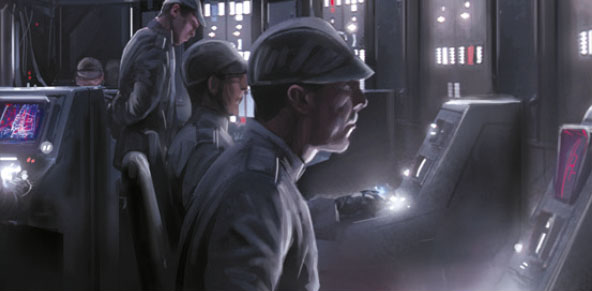
High-ranking ISB agents had the authority to command stormtrooper squads, disregard orders from civilian and military authorities, replace questionable officers, and seize Imperial military hardware, including Star Destroyers. Loyalty officers in the ISB were responsible for ensuring that regular troops and officers followed orders and adhered to Imperial ideology, and they were treated with great fear and respect. Such officers had unprecedented access to the lives of regular servicemen due to impromptu inspections, covert surveillance, and seemingly limitless authority, which fostered a culture of fear to deter any tenuous connections within the chain of command. Although the majority of ISB agents were human, Barrisk Favvin, a Gotal, worked as an ISB agent in the Kupohan city of Tonekh.
Enforcement

The ISB's Enforcement branch served as a backup for field agents, receiving specialized training to offer assistance when needed.
Interrogation
Interrogation, the ISB's second-largest branch, was dedicated to extracting information from various lifeforms in order to obtain valuable intelligence. It asserted a 95% success rate in retrieving useful data from subjects who had been questioned. The ISB notably employed IT-O Interrogation Units created by the Imperial Department of Military Research for this purpose.
Re-Education
The Re-Education division concentrated on what some referred to as "brainwashing" its subjects to support the Galactic Empire and its activities throughout the galaxy. Project Unity involved psychologically manipulating and pharmaceutically conditioning elements of society that opposed the New Order in order to re-educate them.
Imperial Military Department of Advanced Weapons Research
The agency in charge of specialized research and development of classified weapons, both before and during the Galactic Civil War, was known as Advanced Weapons Research. Although weapons development was under the purview of Imperial Intelligence rather than being officially a part of the Imperial Security Bureau, it nevertheless protected the agency's secrets.
Internal Affairs
The Internal Affairs division kept order by looking into potential cases of insubordination within the Empire. Before becoming Deputy Director of the Naval Intelligence Agency, Yularen briefly oversaw a division dedicated to exposing sedition within the Imperial Senate. Furthermore, to look into any indications of sedition among the crew, one Internal Affairs officer was stationed aboard every Star Destroyer.
Investigations
Those working in Investigations used previously gathered information to put down rebel activity. The ISB Supervisors, who convened as a governing body known as the ISB Board on Coruscant, were among its members.
Special Operations
The Special Operations Division was in charge of a variety of tasks within the Bureau, including the establishment of Project Hidden Eye during the Galactic Civil War.
Surveillance
The Surveillance branch had by far the most operatives, who concentrated on deciphering encrypted data and analyzing data to look for any potential threats to the New Order.
Zerek Besh
Zerek Besh, a criminal syndicate active in the galaxy, was secretly an arm of the ISB used to infiltrate the criminal underworld in search of members of the Alliance to Restore the Republic and to gather information from the galaxy's syndicates. Zerek Besh, founded around 3 ABY by Director Sliro Barsha, engaged in criminal activity as one of the underworld's most powerful syndicates but was regarded by Barsha as an intelligence gathering network. Barsha, who was devoted to the Empire even though Zerek Besh operated as his own personal crime family, thought Zerek Besh would aid in the Rebel Alliance's defeat and bring about Imperial victory in the Galactic Civil War. However, his own goals would clash with those of his brother, Jaylen Vrax, which would result in both of their deaths. Zerek Besh would nevertheless live on and come under the control of a new leader.
History
Early growth
The Imperial Security Bureau was established by Galactic Emperor Palpatine as a covert law enforcement organization committed to eradicating enemies of the New Order and the Galactic Empire and preserving stability throughout Imperial territories soon after the proclamation of the New Order. The organization grew from a small number of agents to an organization twice the size of Imperial Intelligence in fourteen years.
The agency assisted in overseeing the dismantling of Confederate warships and martial supplies following the Clone Wars. Concurrent loyalty purges resulted in the destruction, rescission, and withholding of vast quantities of Separatist propaganda. Only a small number of propaganda posters, such as Ansibella Dellu's Count Dooku: Words of Truth, were spared from the purges. ISB agents were called in to make problematic artists disappear when Art Group agents discovered egregious violations of its artistic tenets.
Five years into the Emperor's reign, Imperial Intelligence agents discovered a cache of communications devices on the remote world of Murkhana and turned the case over to the ISB, who brought it before the Emperor and his Imperial Ruling Council. Despite the ISB's desire to have complete oversight of the investigation from Imperial Intelligence and the Naval Intelligence Agency, it was ultimately decided to dispatch Moff Wilhuff Tarkin and Darth Vader to look into the cache, which was actually set up by a small rebel cell.
During that same year, the ISB maintained an active operation on the planet Zeffo, a world that was of interest to the Emperor's Project Auger. Signs posted by the Bureau on Imperial equipment warned residents of a local village that looters of the project would be shot on sight.
Hunt for the Jedi Cal Kestis
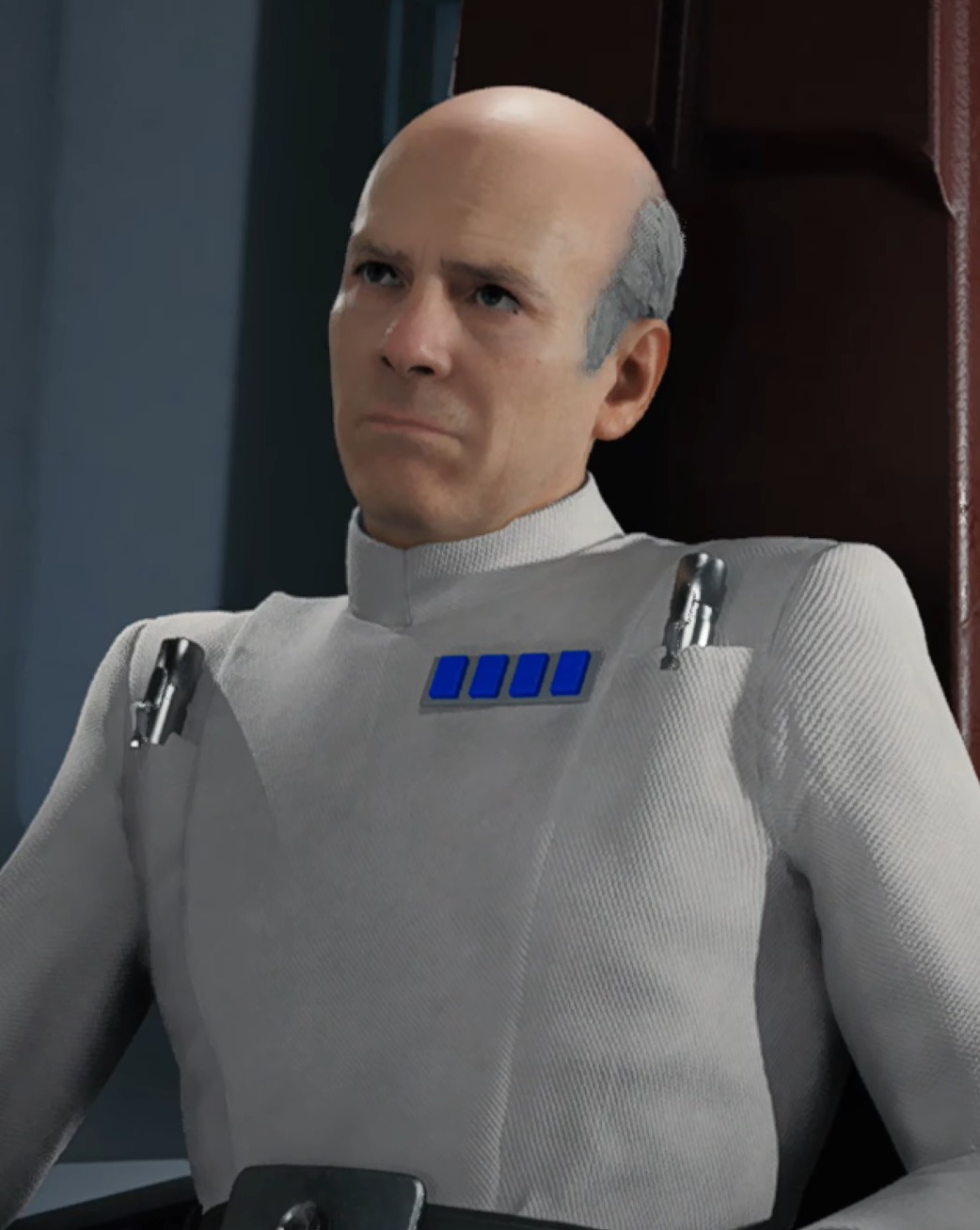
In 9 BBY, ISB member Lank Denvik launched an operation to apprehend Jedi Knight Cal Kestis, a person of great interest to the Empire. Denvik dispatched his spy, Bode Akuna, to infiltrate Kestis' team. Akuna was a former Jedi who had survived the Purge that destroyed the Jedi Order. The two made a deal after meeting Denvik during the Clone Wars. If Akuna worked for him, Denvik would keep Akuna hidden from the rest of the Empire, particularly the Inquisitorius, an organization dedicated to eradicating surviving Jedi, which Denvik despised. Akuna's daughter, Kata, was a component of the agreement. Denvik also targeted Cere Junda, an ally of Kestis who was conducting an operation on the moon Jedha, in addition to Kestis.
Akuna, however, made the decision to leave the ISB and accompany his daughter to Tanalorr, a planet out of the Empire's reach. Akuna stole the compass that would lead to Tanalorr from Kestis and lured him to Denvik's station in the Nova Garon system in order to use Kestis' invasion as a diversion to flee with his daughter. Akuna and his daughter fled, and Kestis confronted and defeated Denvik. Because Akuna's actions on Jedha had drawn Darth Vader's attention, Denvik instructed Kestis to kill him because he thought it would be preferable to being killed by Vader. Despite Kestis' strong desire to kill Denvik for sending Akuna and causing Junda's death, he spared the ISB member. Denvik's worst fear came true when Vader arrived at the station and put him to death. Denvik was strangled by the Force.
Hunt for Andor
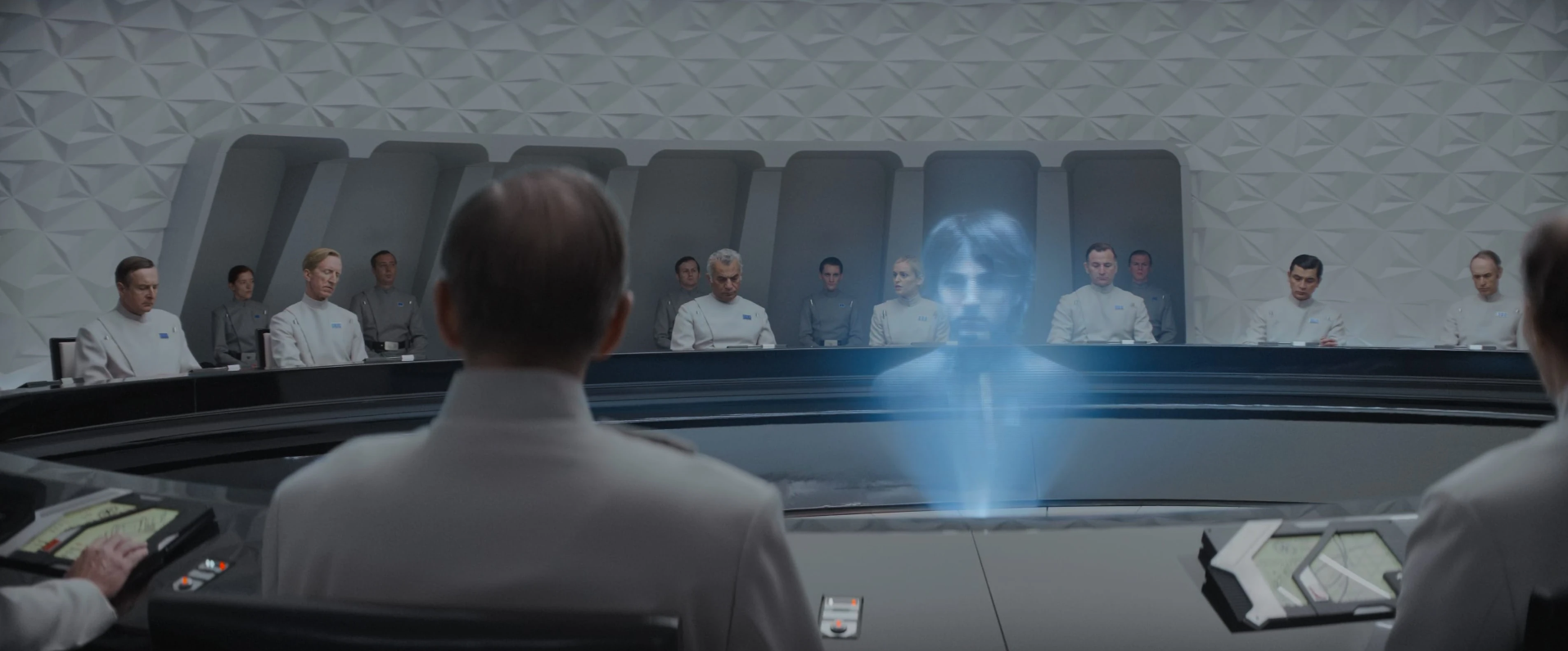
The ISB's Investigations branch had established a "war room" at its Central Office in Coruscant by 5 BBY, at which point Colonel Wullf Yularen was serving as ISB director. ISB agents were given oversight of various sectors of the galaxy and routinely reported to Major Lio Partagaz. Some ISB agents, like Lieutenant Blevin, were fiercely protective of their sectors and resented other colleagues, like Lieutenant Dedra Meero, for conducting investigations on their territory. Following the ambush on Ferrix, Blevin took over the planet from Preox-Morlana's corporate tactical forces because they were incompetent in arresting Cassian Jeron Andor, a suspected local insurgent.
After that, the ISB took over the local Hotel Rix to serve as the new Imperial headquarters on Ferrix. Meero and ISB Attendant [Heert] (/article/heert) discovered evidence, despite Blevin's obstruction, that the recovery of a stolen Starpath Unit on Ferrix was connected to the thefts of Imperial military equipment and technology from various locations throughout the galaxy.
Major Partagaz summoned several ISB agents and ordered them to develop punitive Star Sector and Planetary Emergency plans in response to the insurgent heist at an Imperial dam on Aldhani. In response, Yularen met with Emperor Palpatine and persuaded him to grant the Bureau a number of significant concessions, including access to Imperial Military resources, new laws granting the Bureau unprecedented authority to search, monitor, and seize property, and a new Public Order Resentencing Directive that increased prison terms and fines. The ISB also levied a punitive tax on sectors harboring insurgent activity and detained 134 Aldhani residents on suspicion of aiding the insurgents.
Lieutenant Meero used the ISB's new powers to expedite her investigation into the stolen Starpath unit and other Imperial equipment. Meero successfully persuaded Partagaz that the Rebellion was disregarding his artificial sectorial boundaries and theorized that there was an organized rebel effort to obtain Imperial military components across different sectors when Blevin accused her of interfering in his sector. Partagaz was impressed and reassigned Ferrix and the Morlana sector to Meero.
Meero continued her investigation by questioning Syril Karn, the former Preox-Morlana Deputy Inspector, who told her about the fugitive Andor. Based on this information, Meero hypothesized that Andor was attempting to sell the Starpath Unit to a shadowy insurgent figure code named "Axis." She persuaded Partagaz to provide her investigation with expensive surveillance equipment, local agent funding, and a Code Droid. As a result, Imperial forces on Ferrix were able to intercept Bix Caleen's radio transmission to Axis. Local Imperial forces then apprehended Caleen and Salman Paak, the transmitter's owner. Meero then traveled to Ferrix to personally interrogate Caleen.
Meero permitted Dr. Gorst to torture Caleen with recordings of the screams of doomed Dizonites in response to Caleen's defiance. Meero also persuaded Prefect Vanis Tigo, the local Imperial garrison commander, to spare Meero because she was the only one who could identify Axis. She did, however, permit him to execute Paak as a warning to the local populace. Meero later briefed Major Partagaz on Caleen's interrogation. While Caleen provided no information about Axis, she correctly concluded that Andor was involved in both the Ferrix and Aldhani incidents because Caleen and Imperial Army witnesses had identified the suspect as clean-shaven. Meero also informed Partagaz that she was using Maarva Andor, Andor's adoptive mother, as bait.
After Imperial forces captured a rebel pilot using a stolen Imperial masking unit and learned that Anto Kreegyr's group was planning to raid a power station at Spellhaus, Meero persuaded her ISB colleagues to kill the pilot and stage an accident in order to lure Kreegyr's group into a trap on Spellhaus. Partagaz approved of Meero's plan and scheduled a meeting with Military Intelligence to discuss countering the planned insurgent raid.
According to Meero's plan, Kreegyr's insurgents found the dead pilot and their ship close to Kafrene. They accepted the Kafrene authorities' fabricated account that the pilot had died while exiting hyperspace due to a hydraulic failure. Supervisor Lonni Jung, a secret double agent working for Axis (the antique dealer Luthen Rael), warned Rael that the ISB was aware of Kreegyr's upcoming raid on Spellhaus and that Meero posed a threat to the rebel network. Rael, however, chose to sacrifice Kreegyr's faction in order to mislead the ISB into believing they had the advantage. Meanwhile, Corv, the ISB Attendant, spied on Cinta Kaz, Rael's operative, as she kept an eye on the ailing Maarva's home.
Following Maarva's passing, Meero persuaded Prefect Tigo to permit the locals to hold a funeral procession in the hopes of luring her adoptive son Andor out of hiding. In addition, Attendant Corv continued to monitor Kaz and Andor's friends Brasso and B2EMO. Corv later questioned Caleen as to whether Kreegyr was the elusive "Axis."
Meero's plan to lure Kreegyr's group into a trap on Spellhaus was successful. Every insurgent who took part in the raid was killed. Meero was upset that the Imperial authorities had taken no prisoners who could have aided in the search for Axis, even though Partagaz was ecstatic and closed the case. Despite the Imperial victory, Rael was able to persuade Saw Gerrera, the leader of the Partisans, not to participate in Kreegyr's raid and not to warn Kreegyr, leading Partagaz to believe that the Bureau was winning the struggle.
Meero then proceeded with her plan to trap Andor during Maarva's funeral procession. Meero was so confident that her plan would succeed that she rejected Merzin Keysax, an Imperial Military Lieutenant, suggestion that they deploy snipers and containment units for the operation. Meero, however, failed to foresee that the late Maarva would use her funeral to deliver a posthumous speech urging the people of Ferrix to oppose Imperial rule. During the ensuing riot, Wilmon Paak, Paak's son, hurled a bomb that killed and injured a number of Imperial personnel and damaged the local Imperial headquarters. As a result, Andor was able to flee and later reestablish contact with Rael, who enlisted him in the Rebellion for a second time. Furthermore, Caleen, Brasso, Wilmon, and B2EMO fled offworld. Corv was killed by Kaz during the chaos. Karn, who shared her desire to hunt down Andor, saved Meero from being killed by the rioters.
The Lothal issue

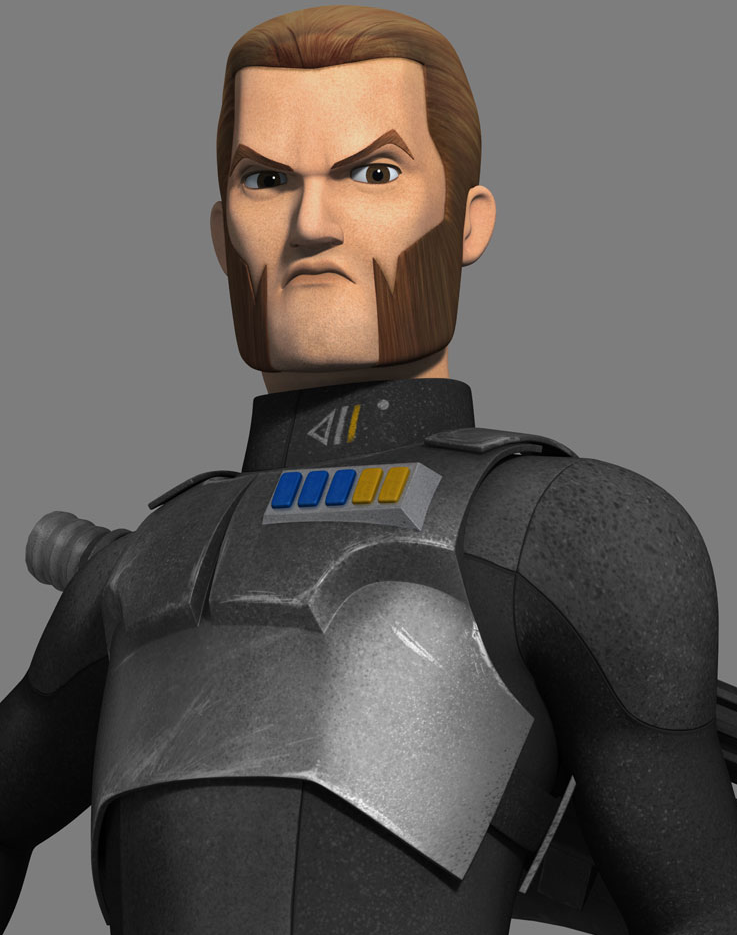
A prominent figure within the ISB was Agent Kallus. He operated across the Investigation, Internal Affairs, and Enforcement divisions, actively seeking out indications of treachery or burgeoning rebellions. His central objective was preventing such activities from escalating into a widespread revolt against the Empire. Around 5 BBY, after the enactment of the PORD, the Bureau took particular interest in the Spectres operating from Lothal. Their attacks on Imperial installations highlighted the dangers of dissent and served as early warning signs of a potential uprising. Kallus became a consistent adversary of the Spectres, but he later formed an unexpected bond with the Lasat Spectre, Garazeb Orrelios, which prompted him to question his loyalty to the Empire. Subsequently, Kallus adopted the identity of Fulcrum, a rebel informant who provided crucial intelligence to both the Phoenix Cell and the Spectres.
Later on, Kallus aided the Spectres in the theft of the blueprints for Thrawn's TIE/d "Defender" Multi-Role Starfighter from the Imperial Armory Complex on Lothal. This incident alerted Thrawn to the presence of a mole within the Imperial structure. With Yularen's assistance, Thrawn initiated a screening process within the local Imperial sector command to identify the spy. To divert suspicion, Kallus implicated Lieutenant Yogar Lyste. Despite his efforts, Thrawn discerned Kallus's true role as the spy but allowed him to continue his operations to uncover the location of Phoenix Squadron's rebel base. Thrawn then manipulated Kallus into revealing the location of Chopper Base by leaking information about the Rebel Alliance's plans to attack the Imperial Armory Complex. However, Kallus successfully escaped during the Battle of Atollon and formally joined the Alliance.
Nightswan's campaign
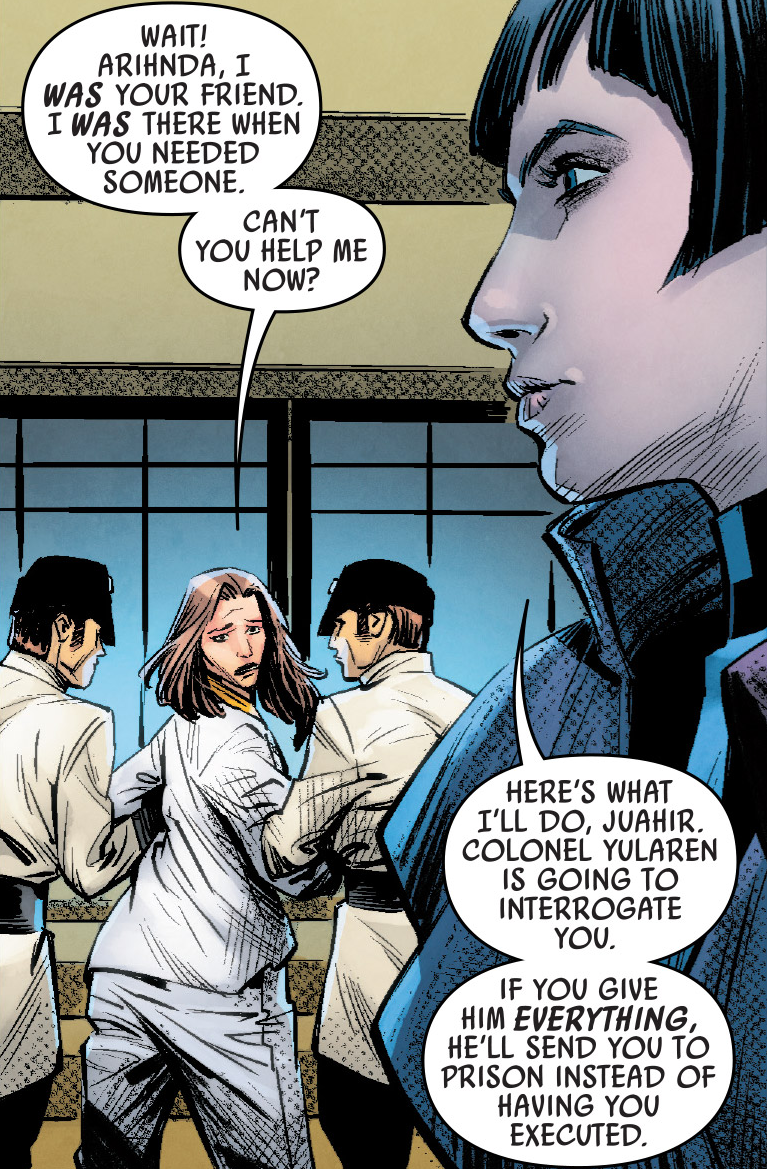
During Nightswan's campaign, Colonel Yularen dedicated his attention to investigating Nightswan, a mysterious insurgent leader and pirate. He had assistance from Imperial Navy officers Thrawn and Eli Vanto, along with Arihnda Pryce, who would later become the Governor of Lothal. Together, they exposed Nightswan's Coruscant spy ring, which included the Higher Skies Advocacy Group and elements of the Yinchom Dojo.
During the siege of the Creekpath Mining and Refining complex on Batonn, Pryce persuaded Yularen to allow her to accompany Agent Gudry on a mission aimed to disable the Batonn insurgents' deflector shield generator. After Pryce murdered Gudry for his refusal to evacuate her parents before Thrawn's attack, Pryce detonated the mine's cache of explosives to conceal Gudry's killing. This act resulted in significant civilian casualties on Batonn, which horrified both Yularen and Thrawn.
Tracking Mon Mothma
By 5 BBY, Senator Mon Mothma, known for her outspoken views, became aware that the ISB was tracking her due to her public opposition to the Emperor's policies within the Imperial Senate. Concerned about her security, she replaced her driver with Kloris, whom she suspected of being an Imperial spy. Kleya Marki, an associate of Luthen Rael, who was an antique dealer, shared Mothma's suspicions and distracted Kloris during Mothma's visit to Galactic Antiquities and Objects of Interest by showing him some items in the store's gallery.
Later on, Kloris overheard an argument between Mothma and her husband, Perrin Fertha, inside their airspeeder. Mothma reprimanded Fertha for squandering their money and accused him of gambling. In reality, the argument was a facade designed to conceal Mothma's financial transactions in support of Rael's rebel network. Deceived by this ruse, Kloris shared a recording of the conversation with his ISB handler, Blevin, at the ISB's Central Office the following day. Based on this misinformation, Blevin concluded that they could exploit Fertha's supposed gambling problems as leverage against the Senator, while Kloris remained convinced that Fertha indeed had a gambling problem.
After Mothma resigned from the Imperial Senate and publicly condemned Palpatine for his actions during the Ghorman Massacre, the ISB issued an alert for Mothma in an attempt to apprehend her. ISB agents also visited Cantham House on Coruscant, the location of the Cantham House meetings, acting on their suspicions, and questioned Leia Organa and several others present.
Treachery on Virkoi
Another ISB operative was Sinjir Rath Velus, a loyalty officer recruited by ISB officer Sid Uddra. Following a rigorous training period on the ocean planet of Virkoi, Velus personally interrogated Alster Grove, a treacherous Imperial Navy officer who was part of a conspiracy aimed at assassinating Darth Vader. During the interrogation, Grove revealed the identities of his fellow conspirators. While Vader executed the other conspirators, Uddra threw Grove to his death in Virkoi's oceans.
Galactic Civil War
In the aftermath of the destruction of the first Death Star, the ISB intensified its operations to suppress the growing rebellion, reaching unprecedented levels of activity. These operations included a scheme to influence Drusil Bephorin, a mathematical genius, to support the Empire by keeping her in a form of luxurious imprisonment on Denon. Project Hidden Eye aimed to deploy sleeper operatives throughout the galaxy to disseminate propaganda and secretly monitor citizens. However, the project was prematurely terminated due to the intervention of Commander Luke Skywalker, a prominent figure in the Rebel Alliance.

The destruction of the Death Star also appeared to signal a decline in the ISB's involvement in Imperial military operations against the Rebel Alliance, with fewer ISB personnel encountered by Rebel soldiers on the battlefield. These shifts seemed to stem from the ISB's operations being integrated into other entities within COMPNOR and the broader Imperial framework. Beaumont Kin, a historian, later speculated in his book, The Rise and Fall of the Galactic Empire, that these developments might have been caused by factors such as the ISB being held primarily accountable for the Death Star's destruction, the death of Director Wulff Yularen's on the Death Star, and a strategic shift towards combating the Rebel Alliance, which granted more authority to the Imperial Military, who preferred to avoid interference from a "political" organization like the ISB, now known for its failures.
During the Great Purge of Mandalore, Moff Gideon was an ISB member and took part in the Purge. After the Night of a Thousand Tears, most of Mandalore's forces were defeated. The ISB contacted Bo-Katan Kryze to discuss a ceasefire. Gideon informed Kryze that all Mandalorian lives, along with the remaining cities, would be spared if she agreed to submit to the Empire and disarm. Aware of the disgrace such an act would bring but prioritizing the survival of her people, Kryze surrendered the Darksaber to Gideon as a token of surrender. However, Gideon betrayed Kryze, continuing the purge while claiming the Darksaber for himself, leading to the planet's devastation and abandonment.
The creation of the secret Zerek Besh intelligence network
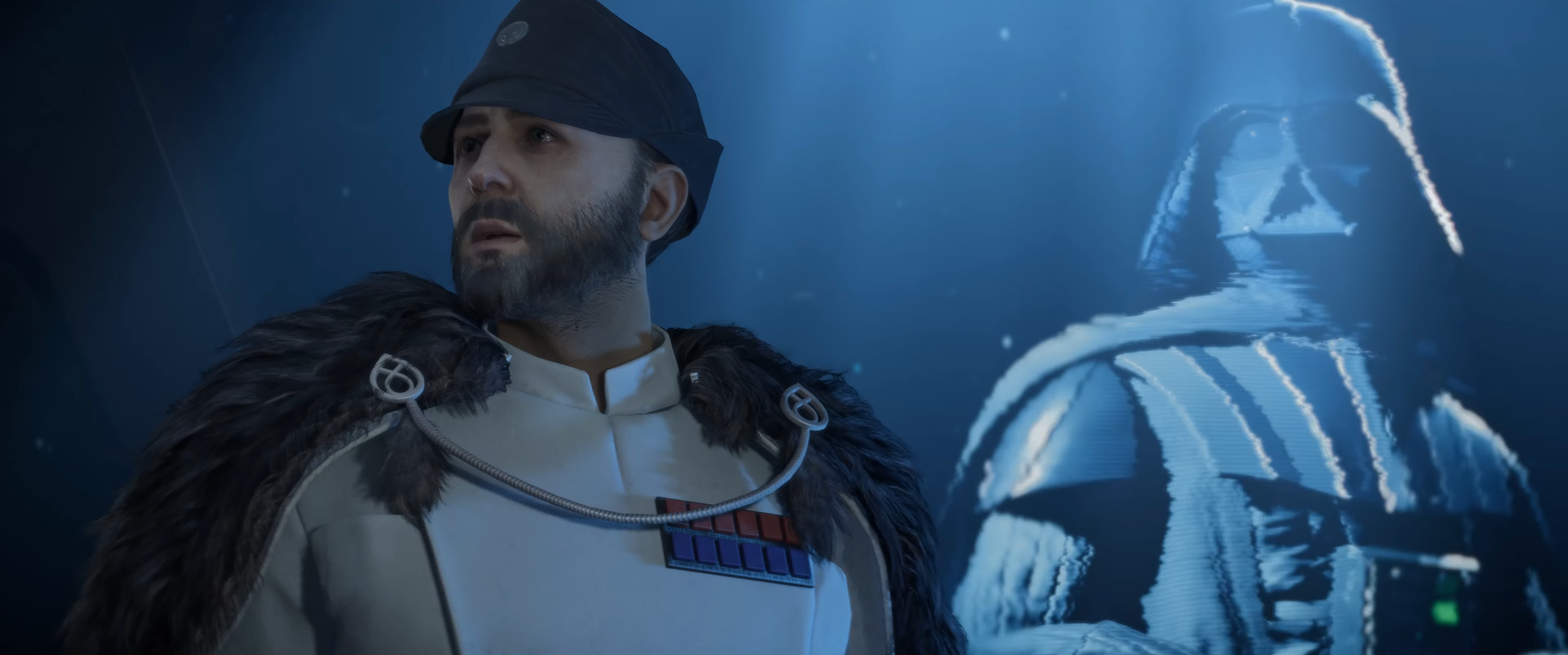
Around 3 ABY, Director Sliro Barsha of the ISB established the Zerek Besh, a fictitious criminal organization designed to gather intelligence from the galaxy's crime syndicates for use against the Rebel Alliance. With Imperial support, the Zerek Besh rapidly gained influence and recognition as a dominant syndicate in the galaxy. Barsha believed that the Zerek Besh would enable the ISB to spearhead the Galactic Empire's victory in the Galactic Civil War. However, a conflict with his brother, Jaylen Vrax, who sought revenge against Sliro, resulted in the loss of the Zerek Besh's leadership, as both Barsha and Vrax, who had assumed control of the syndicate, were killed. Despite their deaths, Zerek Besh continued with a new leader.
The war continues
Following the scourge of the droids, ISB officer Melchior Votto, who had connections with the bounty hunter Raslin Grace, contracted Grace to hunt for Chelli Lona Aphra, much to Grace's excitement.
Post-Endor fragmentation
Similar to most governmental bodies following the Empire's defeat at the Battle of Endor, the ISB was left fragmented as the New Republic launched attacks on remote ISB outposts and incited unrest. Twenty days after the Battle of Endor, the ISB stored information about the Emperor's posthumous contingency plan at one of its Black Sites, the Wretch of Tayron. However, the base was taken by General Han Solo of the Rebel Alliance and his elite Pathfinders. The base commander failed to initiate a data purge, allowing the Alliance to obtain information on Operation: Cinder, which disrupted its implementation for over three months.

In the months after Endor, the ISB was granted complete oversight of security on Coruscant, the Imperial throneworld, after the Imperial Navy declined to provide ships to defend the planet, with Fleet Admiral Gallius Rax considering it a symbol of idleness and decay. As a result, control of Imperial forces was delegated to Grand Vizier Mas Amedda, the Empire's chief administrator. While the ISB lacked the naval power to effectively resist a New Republic naval assault, ISB-loyal stormtroopers and personnel were deeply entrenched on the planet's surface, which was already embroiled in a civil war between the ISB and New Republic–backed resistance movements.
Velus joined a team of Imperial hunters led by Norra Wexley, a starfighter pilot from the New Republic, after defecting. After Romwell Krass Junior lost his family during a New Republic attack on the Hyborean Moon, he deserted his post and journeyed through the galaxy to mourn his loss. During the Battle of Jakku, Commander Brisney served as the ISB officer aboard the Imperial Star Destroyer Inflictor.
Legacy
As late as around five years following the Imperial defeat at Endor, Imperial remnant facilities, such as the refinery operated by remnants based on Morak, were managed by former ISB agents.
By 28 ABY, Arliz Hadrassian, a former ISB officer who had become a small-time businesswoman, led the Amaxine warriors, a paramilitary group that acted as a front for the First Order, a remnant of the Old Empire based in the Unknown Regions.
During a meeting with Ransolm Casterfo, a Centrist senator, Hadrassian spent hours recounting stories about her career in the Imperial Military and the ISB, unaware that he was involved in Senator Leia Organa's investigation of the Amaxine warriors. Furthermore, the First Order itself maintained its own version of the ISB, known as the First Order Security Bureau.
Behind the scenes
During the initial stages of developing what would become Rogue One: A Star Wars Story, John Knoll's original story concept, intended as an episode of the never-produced Star Wars: Underworld live-action TV series, depicted Orson Callan Krennic as a double agent within Jyn Erso's Rogue One team, reporting their activities to the Imperial Security Bureau, specifically to Willix Cree, his superior and a key member of the agency. However, this idea was removed when writer Gary Whitta revised Knoll's treatment.
Inconsistencies
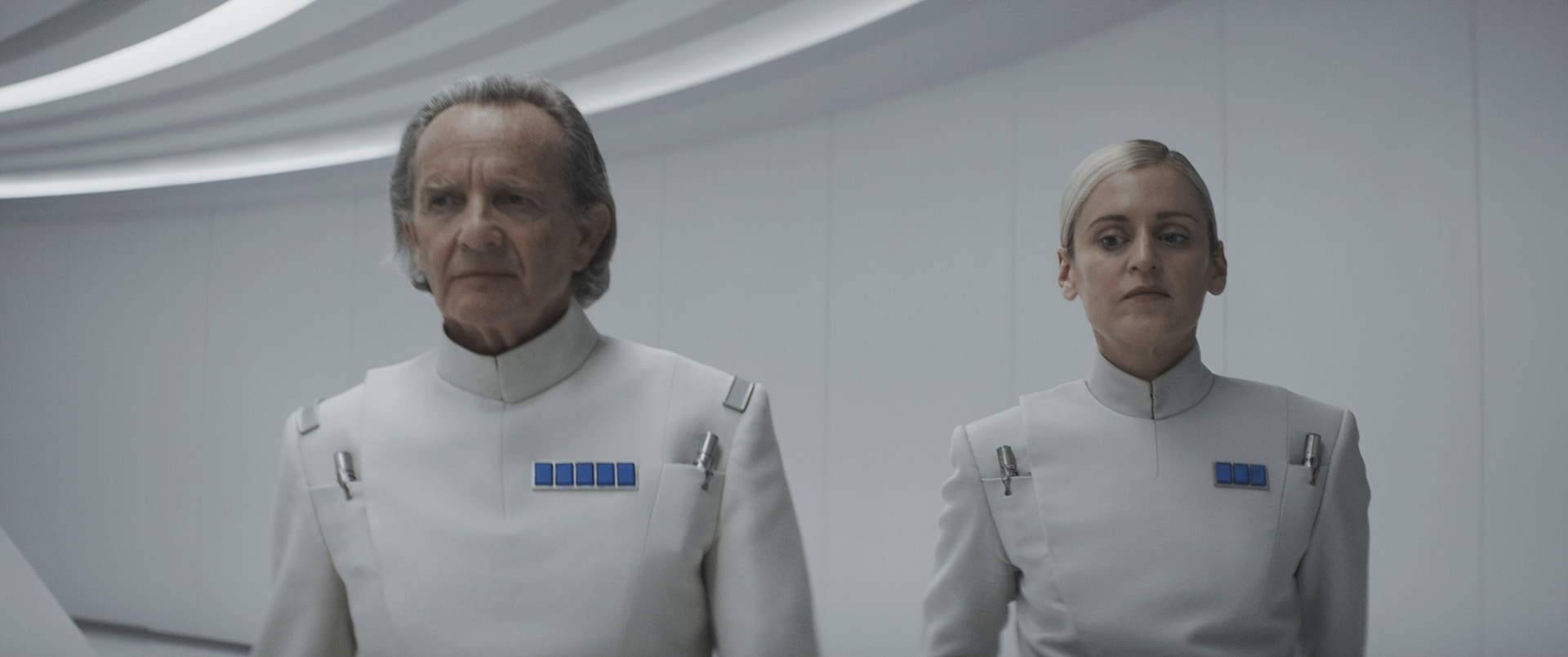
The 2023 canon reference book Star Wars: Dawn of Rebellion: The Visual Guide features a catalog of the rank insignia plaques used by ISB officers; the rank of major is represented by a plaque with four blue tiles. However, Lio Partagaz, identified in the book as a major, is shown in Andor Season One wearing a plaque with five blue tiles.