Clone trooper
Clone troopers, also referred to as Republic troopers, Republic troops, Republic soldiers, Regs, and affectionately known as the "Boys in White," were exceptionally skilled soldiers within the Republic Military. As the embodiment of future galactic combat, clones were engineered to surpass battle droids significantly. During the final years of the Galactic Republic, the clones constituted the primary fighting force of the Grand Army of the Republic, engaging in warfare against the droid armies belonging to the Confederacy of Independent Systems. The Clone Wars derive their name from the Republic's clone army, which became emblematic of the widespread conflict across the galaxy following a millennium of peace.
On the planet of Kamino, clone troopers were cultivated at the behest of Jedi Master Sifo-Dyas, who tasked the Kaminoans with creating an army for the Republic. Following Sifo Dyas' death, the Sith assumed control of the project. A human template, specifically the Mandalorian bounty hunter Jango Fett, served as the basis for the clones, although alterations were made to their genetic structure to diminish their independence and enhance their obedience compared to their progenitor. Additionally, their aging process was accelerated to twice the rate of natural humans, expediting their development and preparing them for combat within a decade's time. As the Separatist Crisis escalated into open conflict, the Galactic Senate authorized Supreme Chancellor Sheev Palpatine to deploy the clone troopers, marking their initial engagement on the battlefield of Geonosis. For a duration of three years, the clones engaged the Separatist droids across various fronts throughout the galaxy. They maintained unwavering loyalty to their Jedi Generals and the Supreme Chancellor; while some clones questioned their purpose, resulting in isolated incidents of desertion and treason, the majority proudly served the Republic, as it represented their only known existence.
A concealed behavioral modification biochip implanted in each clone indelibly altered galactic history, forming a crucial element of the Sith's scheme to eradicate the Jedi. Chancellor Palpatine, uncovered by the Jedi as the Sith Lord Darth Sidious, and identified as the orchestrator of the Clone Wars, denounced the Jedi as enemies of the state and issued Order 66, mandating the annihilation of the Jedi Order. Across the galaxy, the clones turned against their generals, executing them and storming the Jedi Temple on Coruscant under the leadership of the Sith Lord Darth Vader. Subsequently, Sidious seized absolute power as the self-proclaimed Emperor of the Galactic Empire. Initially, clones served as Imperial stormtroopers within the New Order, but they were eventually replaced by human recruits and conscripts. Their armor, weaponry, and training served as inspiration for subsequent generations of white-armored warriors, notably the First Order stormtroopers, who also underwent training from early childhood to become super-soldiers.
History
Origin
Years prior to the Invasion of Naboo, Jedi Master Sifo-Dyas developed a conviction that the galaxy would soon be consumed by warfare. Consequently, he advocated for the establishment of an army to ensure the defense of the Galactic Republic, but his proposals were ultimately dismissed by his peers, leading to his expulsion from the Jedi High Council. Undeterred by the lack of support from fellow Jedi, Sifo-Dyas secretly engaged with the Kaminoans—a species renowned for their expertise in cloning and native to the planet Kamino—commissioning them to create an army of clone soldiers for the Republic without obtaining authorization from either the High Council or the Galactic Senate. Dyas personally engaged with the Kaminoan Prime Minister, Lama Su. However, the Sith Lord Darth Sidious acquired knowledge of Dyas's directive through undisclosed means.
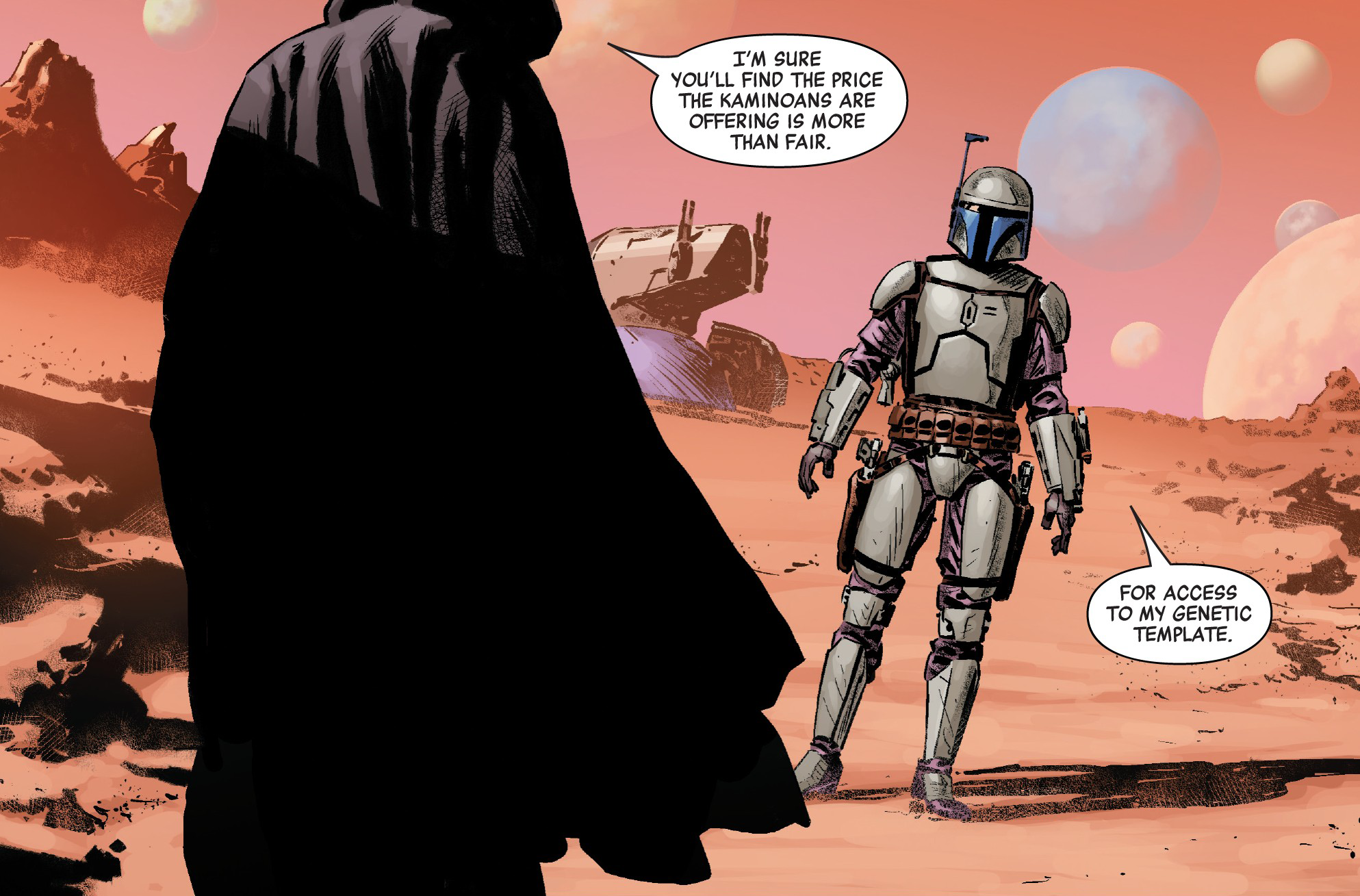
Darth Tyranus, the Sith apprentice who was previously Jedi Master Dooku and a friend of Sifo Dyas, later asserted that Dyas had collaborated with him in the creation of the clone army. Shortly thereafter, Sifo-Dyas was killed by the Pyke Syndicate at the instigation of the Sith, resulting in the Sith's appropriation of the clone trooper initiative. Tyranus betrayed and orchestrated the death of Sifo Dyas, subsequently enlisting Jango Fett, a Mandalorian bounty hunter, to serve as the genetic template for the clone army. Alterations were implemented to the Fett genome to accelerate the clones' growth and enhance their susceptibility to directives. Hyper-aggressive and unstable tendencies were modified; the Kaminoans resorted to accelerated growth to produce mature clones in half the time it took a human to reach adulthood. Further modifications were made to Fett's genetic structure to diminish the clones' independence and enhance their docility relative to their template. Nevertheless, the clones were also engineered to possess creative thinking capabilities, rendering them far superior to battle droids. Following their creation on Kamino, select clones were secretly nurtured on Coruscant to become the shock troopers of the Coruscant Guard. Fett attained a near-mythical status among his clones, who revered him as a paternal figure. Fett, however, did not experience a sense of pride in his clones, instead regarding them as "livestock" destined to be "cannon fodder." Consequently, he regarded them as creations of the Kaminoans rather than his own.
Fett received substantial credits as compensation for permitting the Kaminoans to utilize his genetic material as the template for the clone army; his sole additional stipulation was the creation of an unaltered clone of himself, which the Kaminoans found peculiar but nonetheless accommodated. While the clone army underwent genetic modification to accelerate growth and enhance docility, Alpha exemplified "pure genetic replication" and thus possessed "pure, first-generation Fett DNA." The only other clone akin to Alpha was an adolescent female known as Omega. Fett assumed custody of Alpha, raising him as his son and renaming him "Boba Fett." Omega remained in the care of the Kaminoans, serving as an aide to Doctor Nala Se, the Chief Medical Scientist, by the conclusion of the Clone Wars. Like the other Fett clones, they were regarded as Kaminoan property by Lama Su.
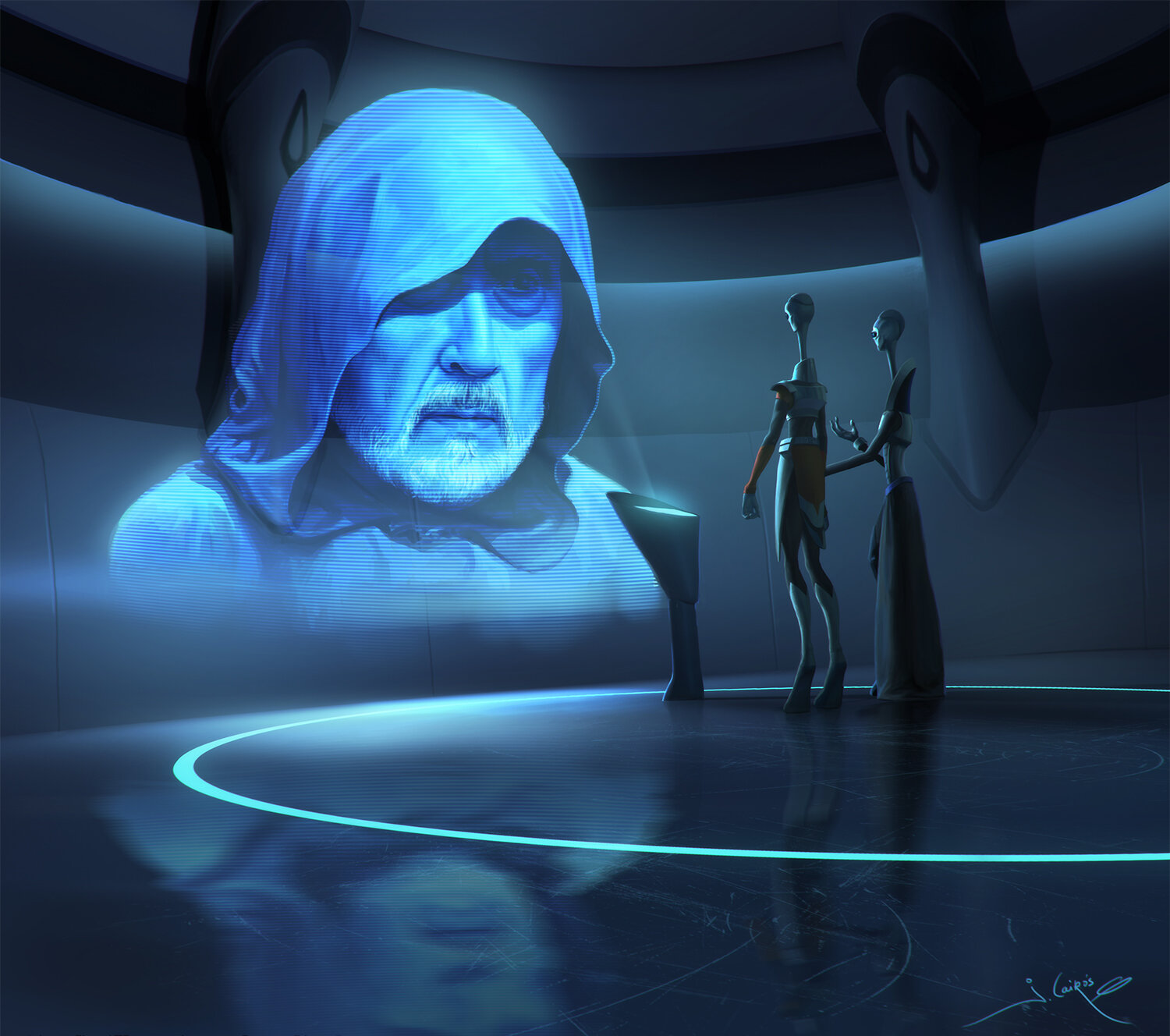
Despite the Kaminoans' belief that the army was intended to serve the Republic, the Sith intended to employ the clone troopers as a clandestine weapon against the Jedi Order. The clone army's ultimate objective was to exterminate the Jedi, and to that end, an organic inhibitor chip was implanted into the brain of each clone trooper during the third stage of their development. Sifo-Dyas, who initially conceived of the chip, envisioned it as a safeguard against rogue Jedi, but following his demise, Sidious and Tyranus repurposed the chip to ensure the Jedi's annihilation. Upon activation of the repurposed chip, the clones would be brainwashed into believing that the Jedi were traitors to the Republic, compelling the clones to execute them. Tyranus, posing as a Jedi, deceived the Kaminoans into believing Sifo Dyas's intention. One chip malfunctioned in the case of Tup, causing him to betray and murder a Jedi before the order was issued. Officially, the chips were intended to render the clones less aggressive and independent than Jango Fett. The significance of the inhibitor chip was underscored by the assertion that a clone would become mentally unstable and pose a threat to those around him if his chip was damaged or surgically removed. In reality, the chips were designed to compel the clone troopers to execute Order 66—a secret protocol authorizing the destruction of the Jedi Order.
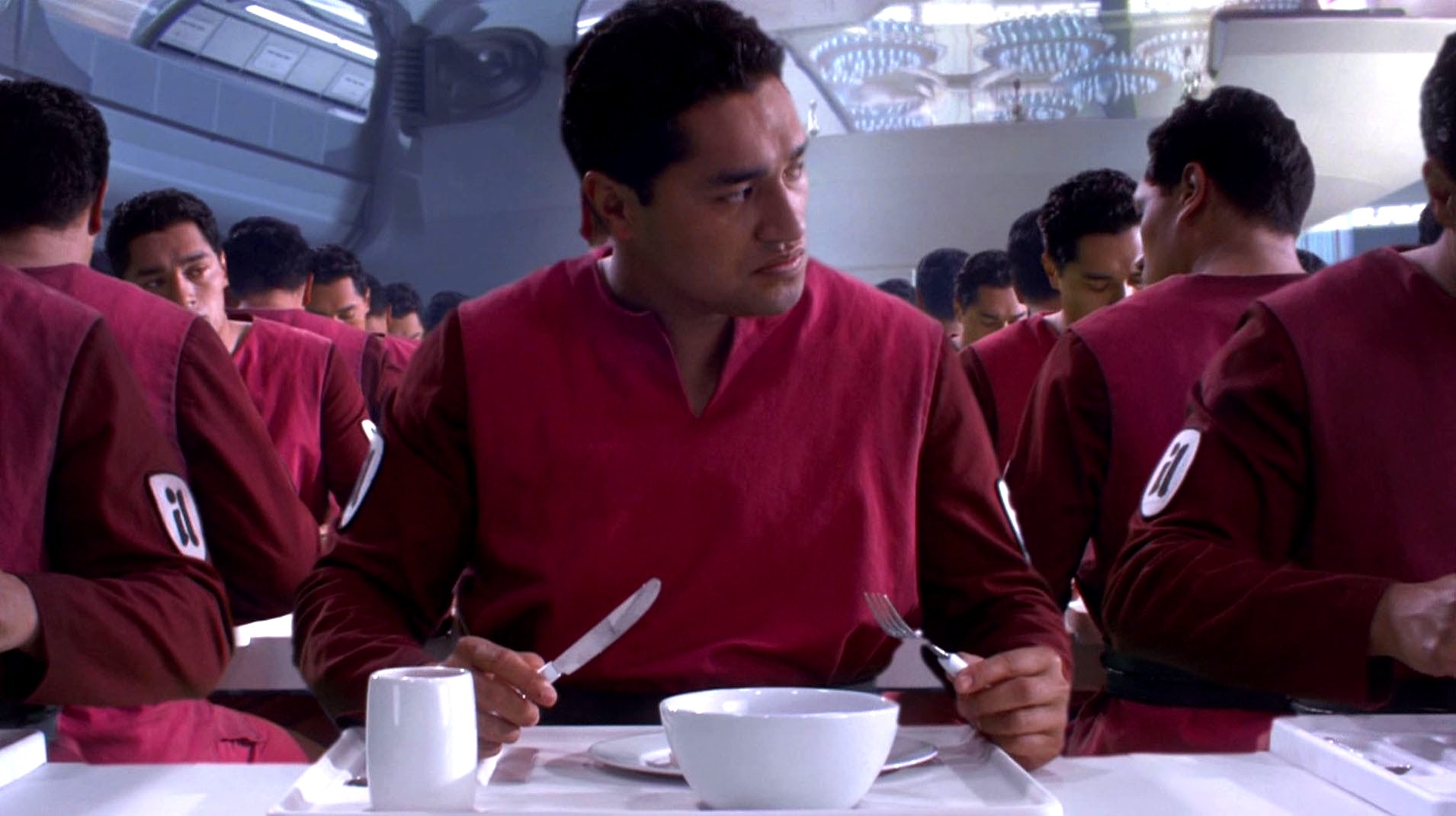
Each clone trooper possessed an identifying code embedded in his left wrist. During the Clone Wars, these codes were linked to the file of each individual trooper within the Republic's military database. These files, accessible to an astromech droid via scanning of a clone's identifying code, contained the clones' designation, rank, overall service record, specialized training, and affiliated units. The majority of clones also shared their template's dark-brown eyes, black hair, and olive skin. While some genetic variations existed, most of these clones were confined to Kamino, deemed embarrassing or subjects for case studies. Only five clone anomalies remained by the war's end, including Nala Se's assistant Omega, an enhanced female clone. The other four clones comprised the original lineup of Clone Force 99. Hunter, Tech, Wrecker, and Crosshair were genetically enhanced clones with unique combat skills, distinguishing them from standard "reg" clone troopers and each other.
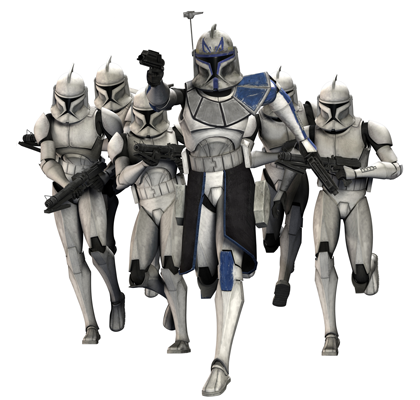
The term "generation one" denoted the initial group of clones derived from the Jango Fett genotype, encompassing Rex, the Clone Captain of the 501st Legion, and Slick, a Clone Sergeant. Rex's service during the Clone Wars elevated him to legendary status among the troopers, with the captain ultimately regarded as the hero of the clone army. The initial two hundred thousand units were prepared a decade after Sifo-Dyas commissioned the creation of the clone army. In addition to these initial units, a million clones were undergoing development in facilities across Kamino at the time of Obi-Wan Kenobi's arrival as a Jedi Knight.
Kenobi uncovered the clone project on Kamino and promptly informed the Jedi High Council. By this point, the galaxy teetered on the brink of civil war between the Republic and a secessionist movement that ultimately coalesced into the Confederacy of Independent Systems. Given the Jedi's insufficient manpower to safeguard the entire Republic, the Senate resolved to grant emergency powers to the executive branch. Consequently, the clone troopers were formally integrated into the Grand Army of the Republic by Sheev Palpatine, the Supreme Chancellor who was also the public persona of Darth Sidious, Dark Lord of the Sith. With war looming, Yoda, the Grand Master, journeyed to Kamino to personally assess the clone army, while Mace Windu, a Jedi Master, led the vanguard against the Separatists on Geonosis.
Clone Wars
Soldiers of the Republic
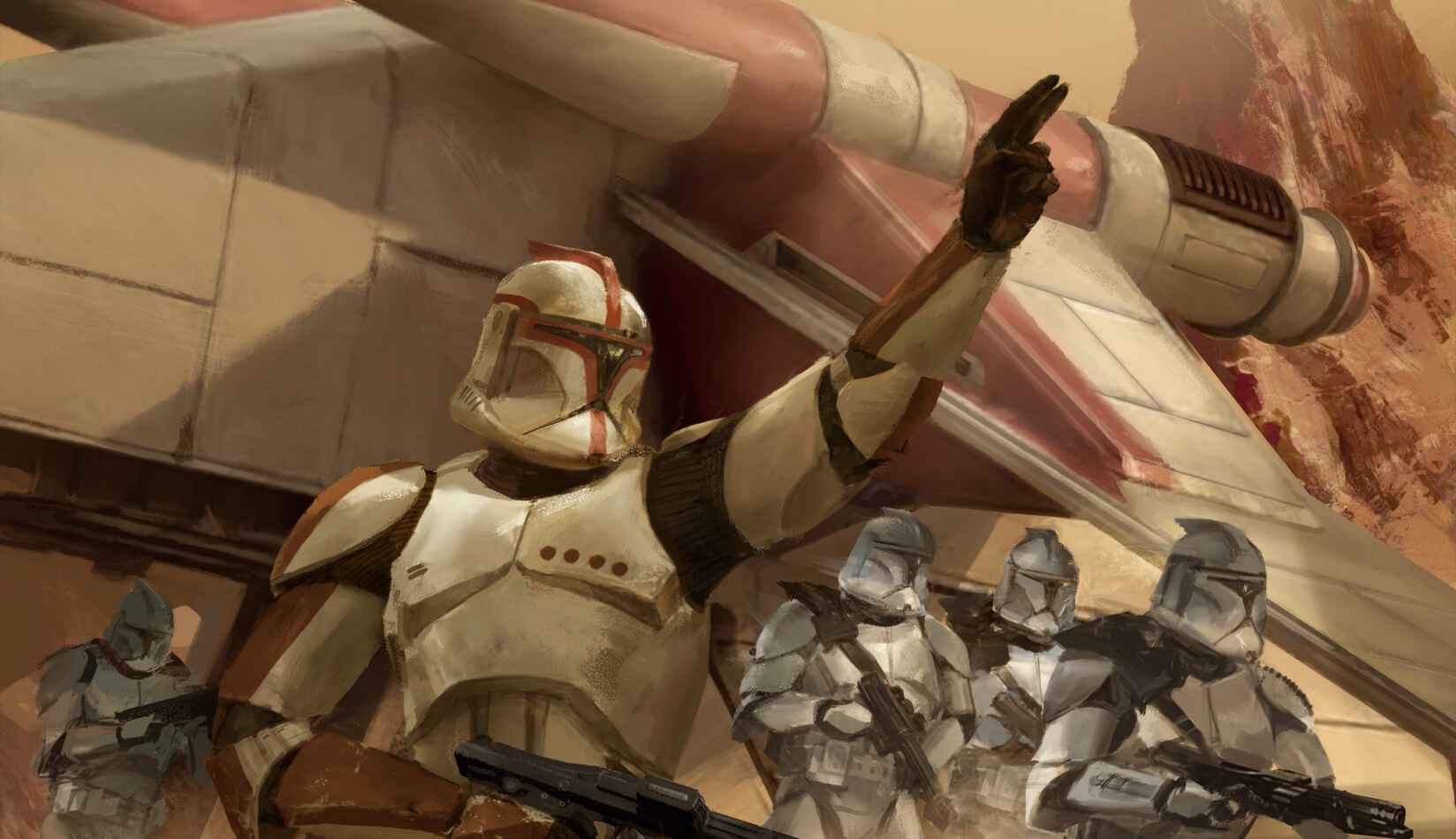
Clone troopers were first deployed into combat on Geonosis, where twelve Acclamator-class assault ships supplied by Kamino carried two battle armies, totaling 192,000 troops. Under Jedi leadership, the Grand Army of the Republic forced the Separatist Droid Army into full retreat, securing victory in the first battle of the Clone Wars. Clone production continued on Kamino throughout the war to meet the Republic's growing need for soldiers. Following the Republic's victory on Geonosis, Count Dooku—Darth Tyranus's alter ego—rallied an increasing number of dissenting worlds to the Separatist cause, further dividing the Republic and compelling clone troopers to fight on all fronts across the galaxy.
Throughout the conflict, clone troopers consistently exhibited unwavering loyalty to the Galactic Republic, particularly to their Jedi Generals and the Supreme Chancellor. The clones rapidly developed individuality, displaying unique personalities within the first weeks of the conflict. Despite Kaminoan claims that it would hinder their effectiveness, Plo Koon, a Jedi General, recognized that clones functioned more effectively as a unit when allowed to express their individuality. Clones were expected to adhere to the chain of command by their brethren, believing that compliance reflected their commitment to the Republic. Fives, an Advanced Recon Commando, supported the system and was driven by his sense of duty as a loyal Republic soldier.
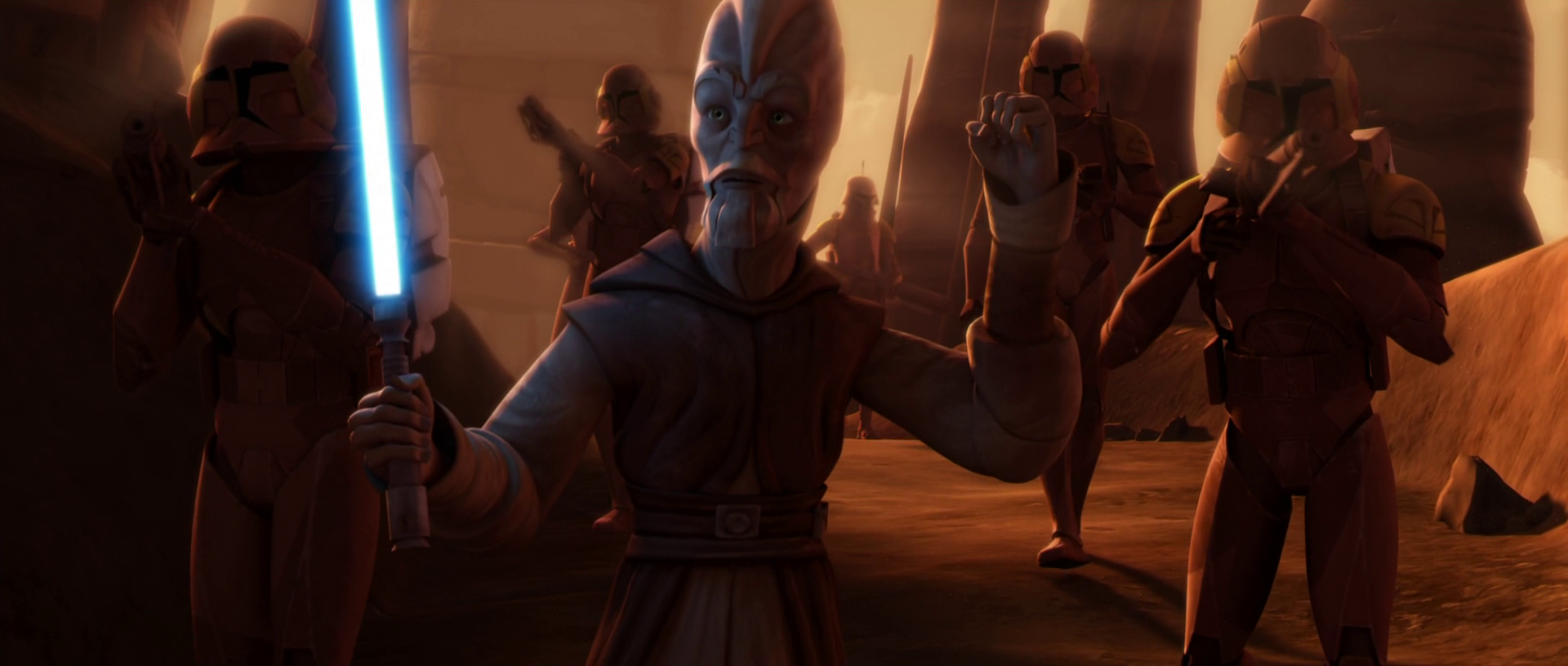
Fives also believed that clone troopers were not expendable "numbers" and opposed complying with orders he deemed incorrect. Captain Rex, however, maintained that a soldier should obey his commanding officer if he supported the system for which they fought. By the conclusion of the bloody Umbara Campaign, Rex conceded to Fives's perspective, acknowledging that clones sometimes needed to disobey orders to do what was right. While clones were conditioned for absolute obedience, each developed a unique identity. Insufficient or rushed field care resulted in deep, physical scars for some clone veterans. These soldiers wore their scars with pride, refusing rehabilitative treatment to remove them.
The distinctions among clones ranged from loyal units like Cody, a Clone Commander, and Captain Rex, to a minority of clones who proved disloyal or uncommitted to the Republic's cause, such as Slick, a Sergeant. Viewing service as slavery, Slick betrayed the Republic by accepting bribes from the Separatists and was subsequently arrested as a traitor by the Grand Army.
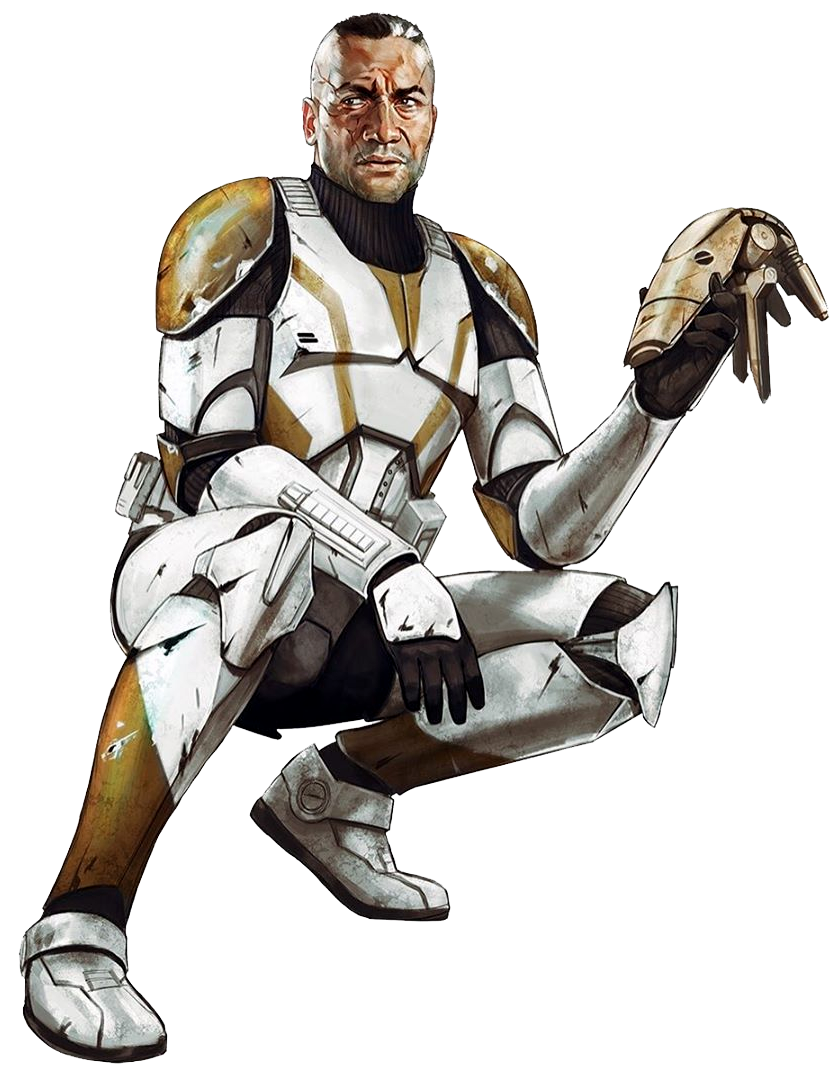
Another clone trooper exhibited aberrant behavior by deserting the Grand Army and becoming a farmer under the name Cut Lawquane, joining a family on Saleucami. Another clone deserter, Muzzle, became the head of the Aurodium Sword mercenary group. Through it, the clone continued to work with the Republic in a way, as the Aurodium Sword often took jobs as a security deal for Republic-aligned corporate personnel. Another clone deserted the military and took up a life that led them to a forest, where they wielded a rifle. For the most part, however, the clones found pride in their purpose as soldiers, and many continued to sacrifice their lives for the Republic as the war wore on.
Many of the clones that remained loyal throughout their service looked down on their brothers that had deserted, thinking them to be cowards or traitors. However, there were clones that were able to redeem themselves and willingly re-enter the ranks alongside their brothers. When a squad of deserters were given the opportunity to leave the army after completing one last mission together, the group came together and decided to remain in the army with their brothers. Alternatively, Rex decided against bringing Lawquane back to the Republic when they met face-to-face during the Battle of Saleucami in 21 BBY. While he admitted it was supposed to be his duty to bring Lawquane in, he had fought beside the deserter and realized he was no coward, instead realizing that Lawquane was a man driven by a devotion to his family instead of the Republic. As such, Rex kept the secret of Lawquane's desertion to himself for the entire war.
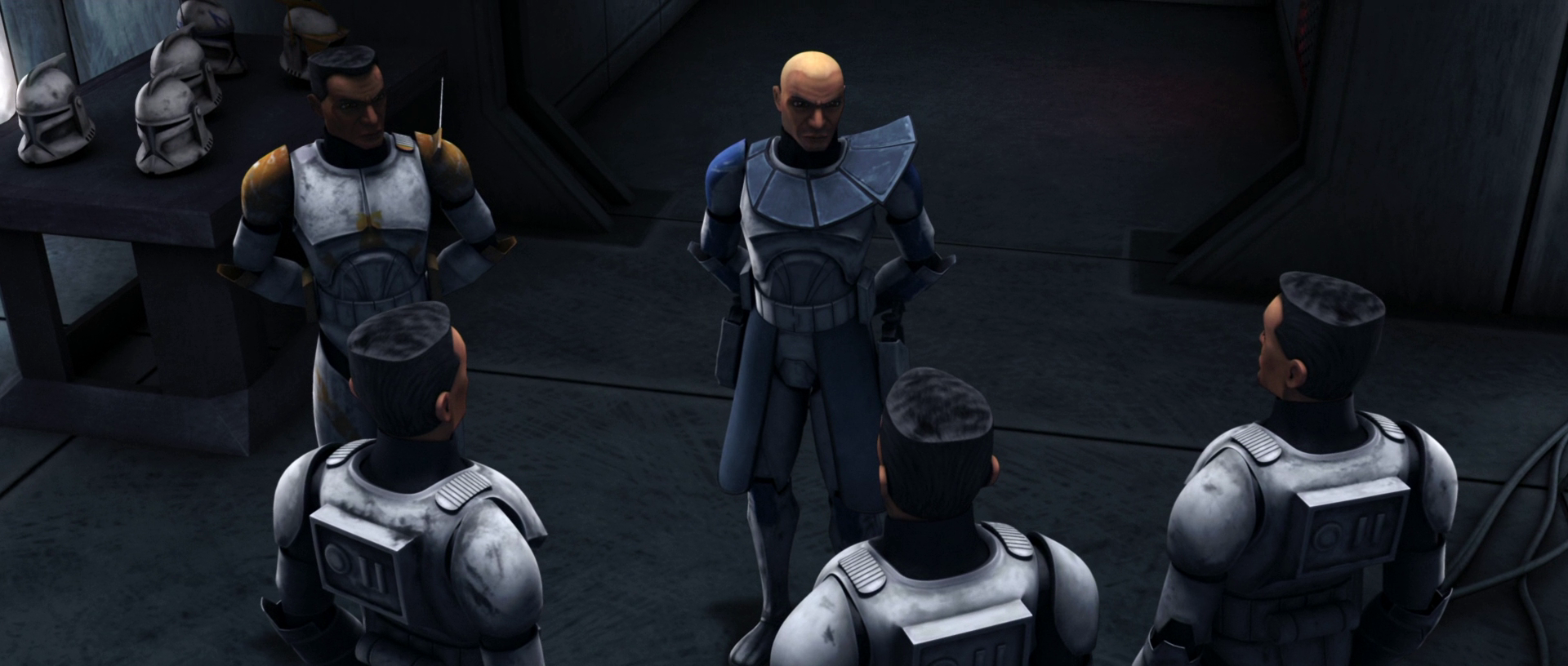
In addition to fighting alongside the Jedi and each other, the clone troopers viewed each other as brothers. While admirable, this quality could keep them from seeing the bigger picture and make them willfully ignorant of the Republic's politics, but such a feeling also made the clones family to each other, with troopers even using the word when talking to a fellow clone they had never met before. To show her that she belonged among them, the clones who served alongside a trans female clone gave her the name Sister. Troopers also tended to see their barracks or starships as places of work. In addition, the clones viewed Kamino as their homeworld. During the Battle of Kamino, the clones fought bravely to prevent the Separatists from destroying the clone hatcheries as well as the remaining supply of their donor's genetic material. Their efforts resulted in a Republic victory, ensuring the continued production of clone troopers for the duration of the Clone Wars.
As the Clone Wars dragged on, the stress of combat and high casualties caused cracks and strains among the ranks of the clone soldiers. Personality quirks, once considered harmless or even essential to their mental development, began to express themselves in extreme and polarizing ways. Each unit created their own rituals, small ways to identify squad mates, those from the same company, and veterans of specific campaigns. A soldier that talked about "cracking that crystal" identified themselves as a veteran of Christophsis and the assault on Crystal City, while an officer calling targets "bugs" revealed he fought in the hives on Geonosis. While many clones respected a soldier with a different background, some felt separated by time, space, and the unique aspects of their struggle.
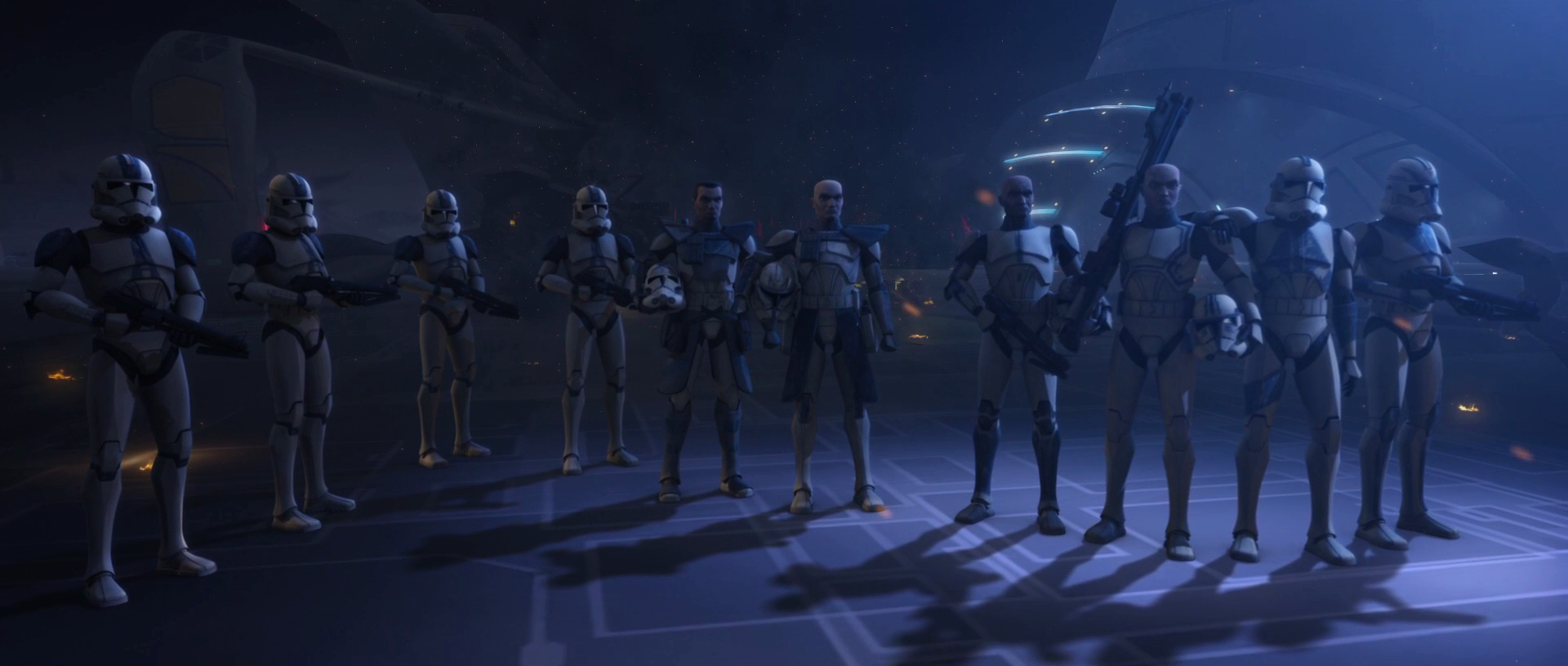
Although the vast majority of clones remained loyal to the Republic over the course of the three-year conflict, as time progressed a small number began to question their strict obedience. Naïve new clones found themselves fighting alongside veterans with years of combat experience that included the deaths of comrades, objectives gained and failed, and the often-ineffectual civilian Republic leadership. Consequently, some veterans developed a skepticism of Republic bureaucracy that shocked even the most cynical of rookie clones. Unlike most natural species where youth questioned their elders, it was the older clones of the Grand Army of the Republic who found themselves questioning their values and traditions. These clones still found comfort in the company of their brothers, but life no longer seemed as cut and dried to them.
Many clones realized that they were not held in high regard among the Republic and were treated as expendable soldiers who did not have personal feelings. This would help clones grow closer to each other and those who went against this convention, notably Jedi Generals Plo Koon and Obi-Wan Kenobi. Although a divide of sorts existed between clones and Jedi, which was widened in the aftermath of General Pong Krell's massacre of clone troopers during the Umbara Campaign, clones remained very loyal to their leaders and generally considered them to be among their closest friends. Indeed, the troops were known to form friendships with their Jedi officers, especially those that demonstrated loyalty back to them. Among the Jedi who were highly respected was Ahsoka Tano, who believed all clones sounded different despite their genetic sameness; Yoda told her that was because she took the time needed to actually listen to them. Yoda also saw the clones as individuals, seeing that every trooper was different in the Force.
Public image
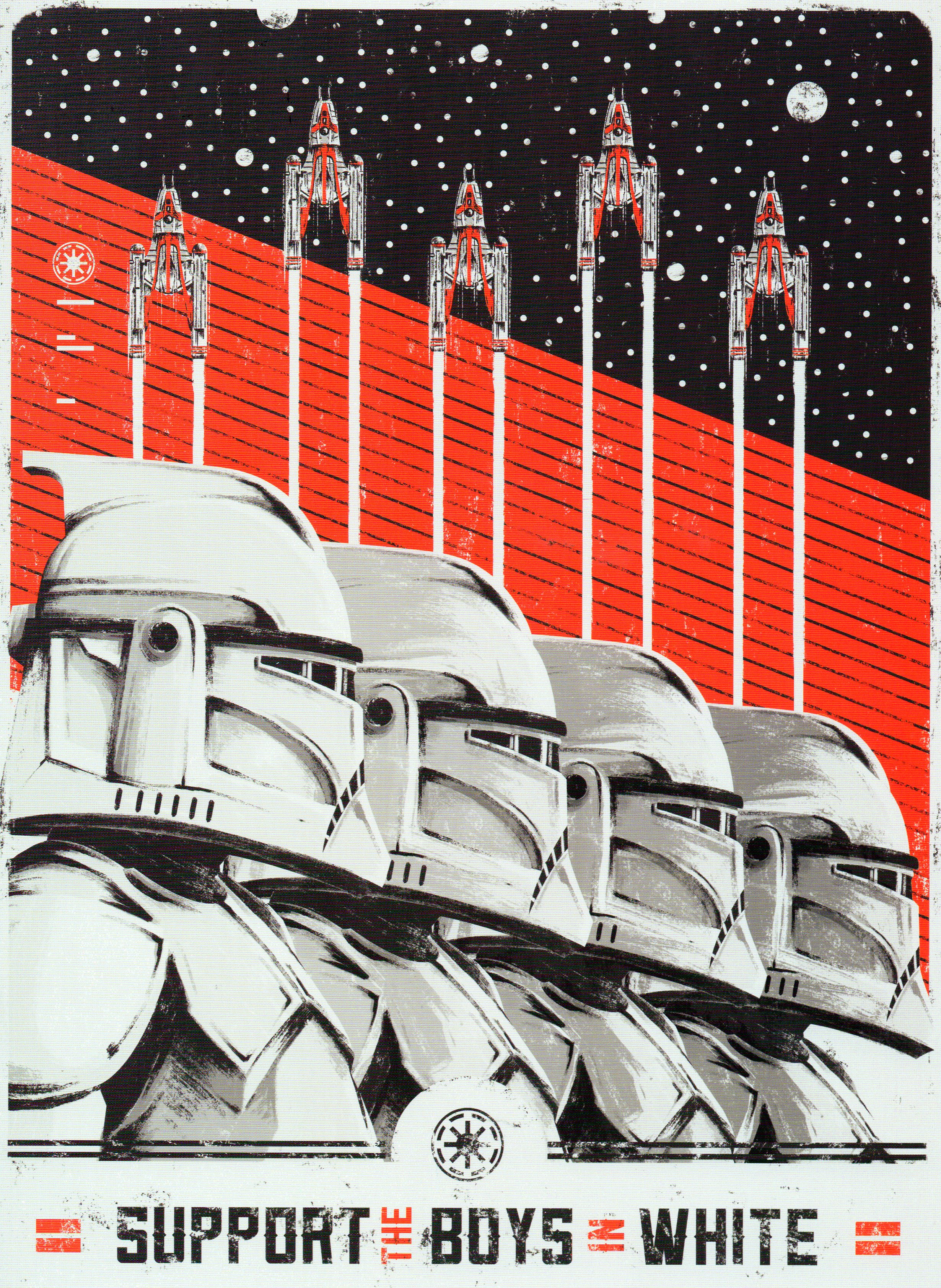
Throughout the Clone Wars, both the Republic and Separatist media heavily used clone troopers in their propaganda efforts. The Commission for the Protection of the Republic (COMPOR), a popular organization, made clones the symbol of the Republic's wartime endeavors, leading to the creation of patriotic art like Unite and Support the Boys in White. These posters aimed to instill a sense of patriotism and civic duty in the Republic's population. As a key part of a broad public relations strategy, clone troopers became the primary symbol of the war effort, largely overshadowing the Jedi who had previously held that position. By projecting an image of strength and unity, they reminded citizens that their sacrifices were contributing to peace through military power. Clone action figures were marketed and sold to children.
Given the considerable public debate surrounding the ethics of deploying living beings against an army of droids at the conflict's outset, COMPOR's messaging aimed to establish the clone trooper as a courageous soldier risking everything for the sake of freedom, democracy, and the Republic. This was particularly ironic because the clones themselves had very few individual rights. Although COMPOR also considered using the Jedi Order for propaganda purposes, Chancellor Palpatine advised against it, citing sympathy for the Jedi's reluctance to embrace their new wartime role. Consequently, there are very few examples of pro-Jedi propaganda, as COMPOR focused its efforts on promoting support for the clone troopers and loyalty to the Republic, especially Chancellor Palpatine.

Conversely, the Confederacy of Independent Systems denounced the clone army as a biological monstrosity—an inhumane practice where weaponized embryos were artificially matured and transformed into expendable killing machines. The Separatist cause was thus presented as the more "humane" option due to its reliance on battle droids. This dehumanizing perspective was, to some degree, also present within the Republic. Under Republic law, clone troopers were considered property of the Galactic Republic. However, Nala Se argued that the clones belonged to Kamino, as they were created in Kaminoan laboratories. Senator Christo of the Galactic Senate deemed the clones expendable, advocated for increased cloning production, and justified their deaths as the fulfillment of their purpose. Anti-clone sentiment persisted even after the war and into the Imperial Era.
Furthermore, galactic citizens might not have been aware of the bonds of friendship that could develop between clones and Jedi; farmer Kaeden Larte believed clones only followed Jedi like Ahsoka Tano because they were superior officers, unaware of how Jedi like Tano had truly earned the troopers' respect. As the war dragged on, more Republic citizens grew disillusioned with the seemingly endless conflict, allowing Separatist and antiwar propaganda to gain traction within Republic territory. Widespread dissatisfaction began to damage the clones' public image despite COMPOR's efforts; even their civilian-coined nickname "Boys in White" backfired as antiwar activists pointed out that the clones were barely thirteen years old by the third year of the Clone Wars.
Order 66
Sith conspiracy
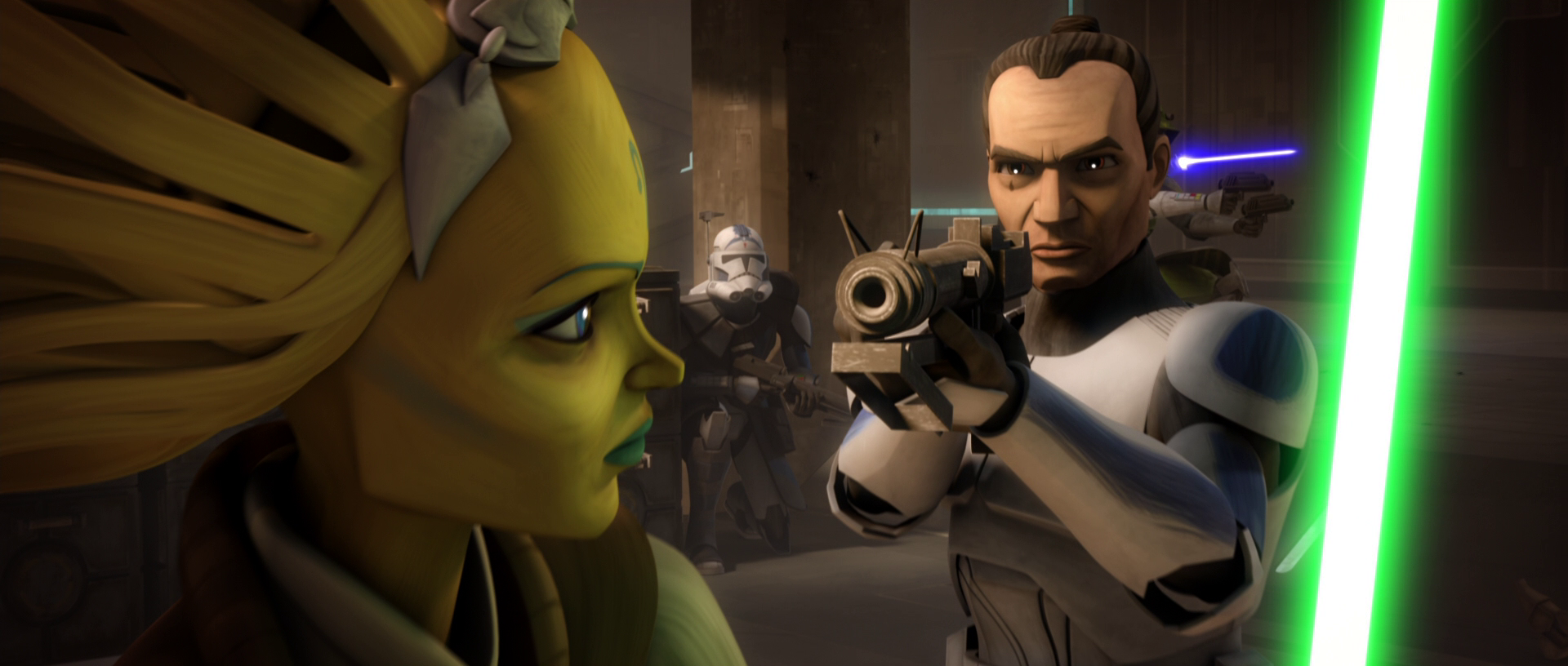
As the war neared its end, the Jedi almost uncovered Order 66. A clone trooper named Tup, serving in the 501st Legion, experienced a mental breakdown when his inhibitor chip malfunctioned during the Battle of Ringo Vinda, causing him to betray and murder Jedi General Tiplar. This premature activation of Order 66 triggered an investigation involving the Republic, the Jedi, and the Kaminoans. The Sith also took an interest; Count Dooku—known to Lama Su and Nala Se only as "Tyranus," their secret benefactor—instructed the Kaminoans to prevent the Jedi from discovering the true purpose of the inhibitor chips. Tyranus was also concerned by the degree of individuality the clones exhibited despite their psychological conditioning; Nala Se believed the Jedi were responsible for encouraging greater creative thinking in the clones. Nevertheless, she was confident that, except for Tup's faulty chip, the remaining chips would function as intended.
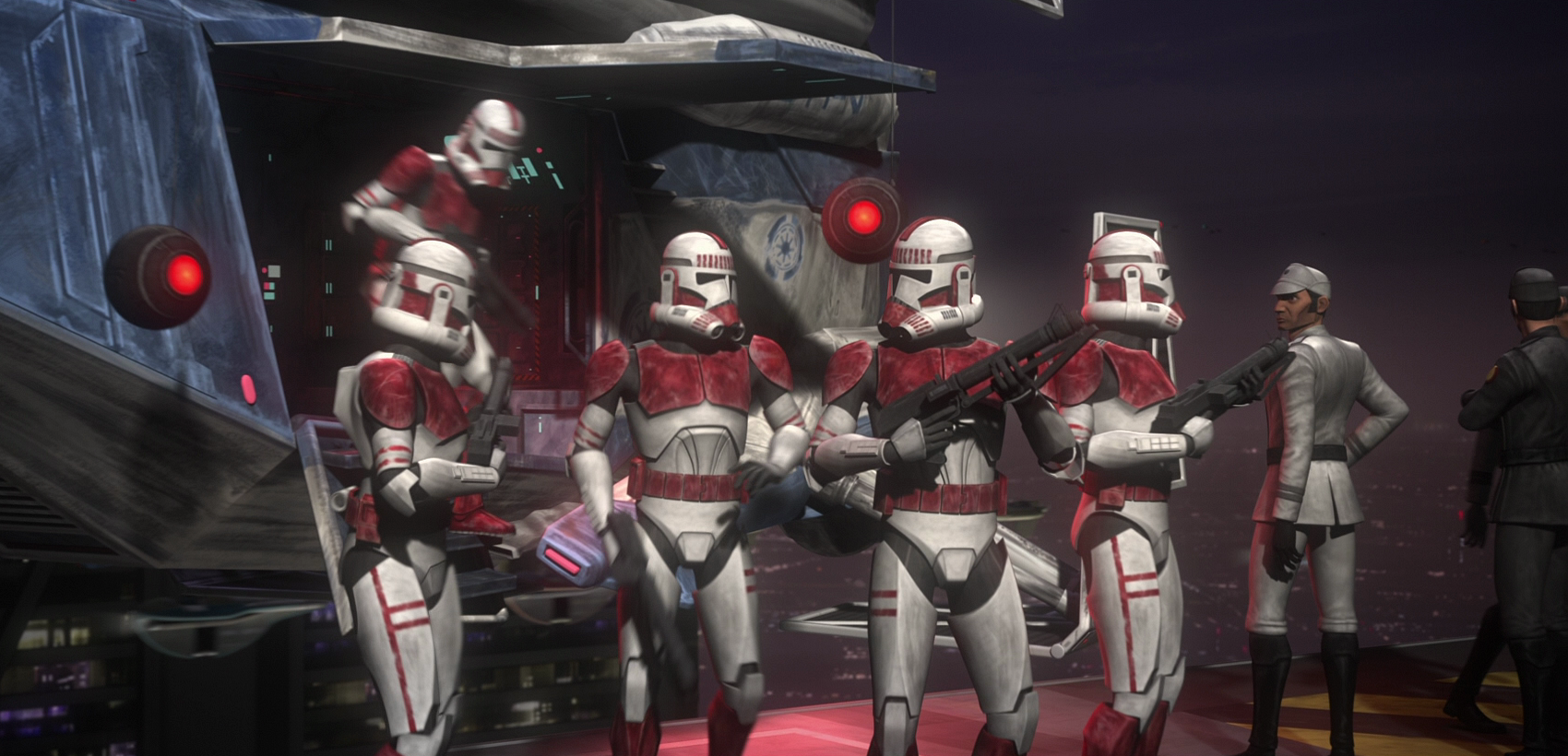
During the investigation, ARC trooper Fives became increasingly convinced that the inhibitor chip was part of a conspiracy against both the Republic and the Jedi. Against Nala Se's advice, he was permitted to present his case to Chancellor Palpatine. However, this meeting led the ARC trooper to suspect the Chancellor's involvement in the conspiracy, although he did not know the full extent. Jedi Master Shaak Ti witnessed Fives' attempt to assassinate the Chancellor and intervened to prevent it. Although Fives escaped from the Grand Republic Medical Facility, he was confronted by a squad of Coruscant shock troopers, led by Clone Commander Fox, as he tried to warn Jedi General Anakin Skywalker and Captain Rex. After Fox killed Fives, Palpatine convinced the Jedi that a rare parasite from Ringo Vinda caused the malfunction in Tup and Fives, and that the clone troopers needed inoculation to prevent their inhibitor chips from malfunctioning.
Shortly before their deaths, Tup and Fives—both of whom had their chips removed—described Order 66 as a mission they repeatedly experienced in their nightmares. With their deaths and the suppression of any evidence that might alert the Jedi to Order 66, the Chancellor convinced the Jedi Council that the clone troopers did require their inhibitor chips. Still, Rex, who held Fives as he died, submitted a grievance report stating the inhibitor chips could have an alternate purpose. While he was unsure if he believed it and knew the report would be ignored, Rex believed he owed it to Fives to record what he had learned.
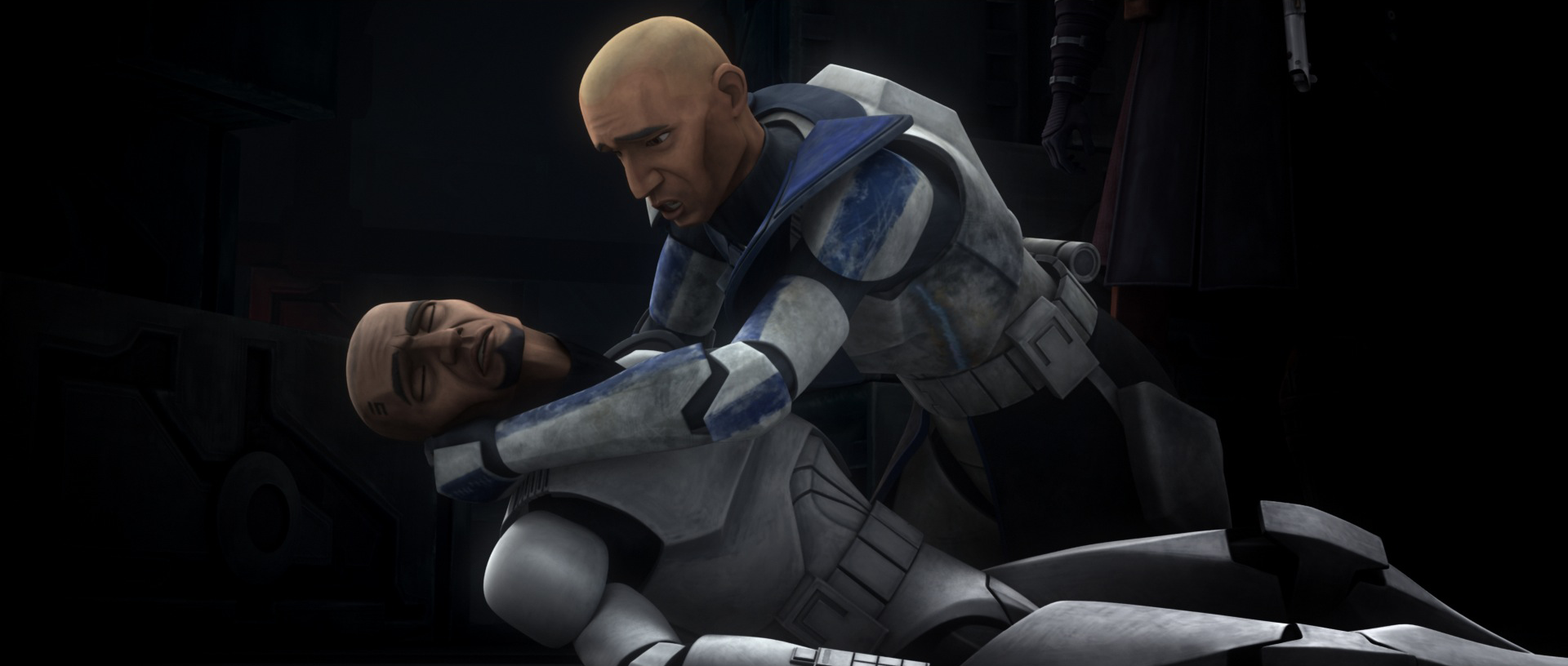
However, Fives' death did not completely guarantee the secrecy of Order 66. The Jedi Council began investigating the specific circumstances surrounding the mysterious death of Sifo-Dyas, the individual who commissioned the clone army. Alarmed by the Jedi's interest, Darth Sidious tasked his apprentice with eliminating any remaining loose ends that could link the Sith to the creation of the clones. Darth Tyranus traveled to the planet Oba Diah and killed Minister Lom Pyke of the Pyke Syndicate, but not before Pyke revealed to the Jedi that Tyranus and Dooku were the same person.
The Jedi Council was troubled by the revelation of the Sith Order's involvement in the clones' creation. Despite their suspicions about why the Sith would provide the Jedi with an army, the Council ultimately decided to conceal their findings from the public and the government, fearing that such a discovery would undermine public confidence in the war. Grand Master Yoda insisted that their priority remained ending the war as quickly as possible before the Sith's plans could be realized. Moreover, the Grand Master believed that the clones were genuinely loyal to their Jedi leaders, having saved them on numerous occasions throughout the war.
Fall of the Jedi
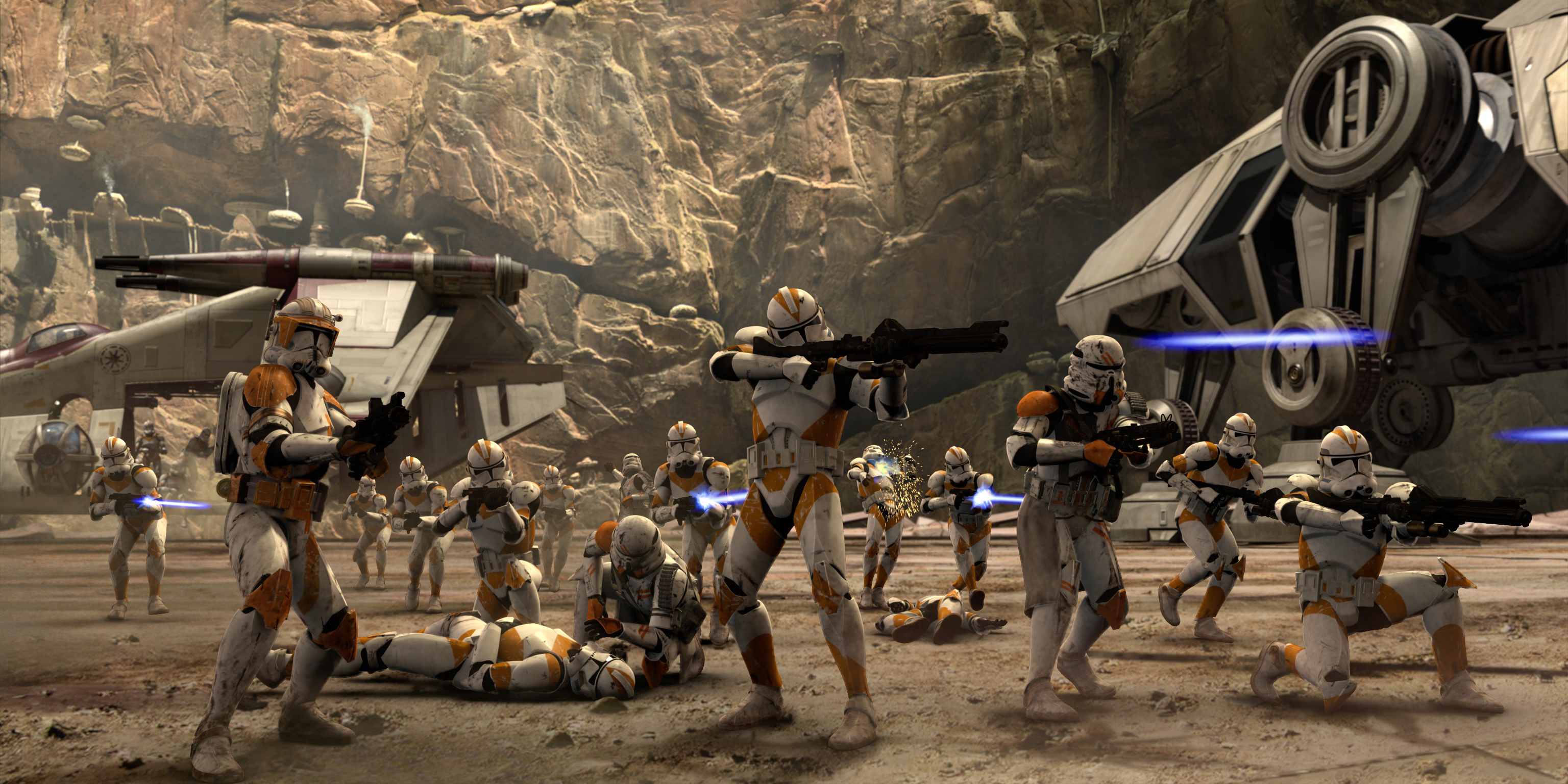
After three years of relentless warfare, the Separatist forces attacked the Republic [capital](/article/capital] world of Coruscant and succeeded in kidnapping Chancellor Palpatine, a scheme orchestrated by Sidious to lure Anakin to the dark side and make him his apprentice. By the time of the battle, a third of the original clone deployment had been killed in action. The surviving clones wore armor that was scarred and weathered from constant combat. The clone troopers rallied to defend Coruscant while the Jedi Knights Obi-Wan Kenobi and Anakin Skywalker rescued the Chancellor. During the battle, Darth Tyranus was betrayed by Sidious, who manipulated Skywalker into killing him. With Dooku's death, the Republic was closer to winning the Clone Wars. The Jedi Council sought to capitalize on the momentum gained from Tyranus's death in hopes of ending the war.
The Grand Army continued to fight on various worlds across the galaxy, including Mygeeto, Felucia, Cato Neimoidia, and Saleucami. New fronts opened as clone troopers were deployed to Kashyyyk and Utapau, as well as other planets, as part of the Outer Rim Sieges. Gree and the 41st Elite Corps fought alongside the Wookiees in the Battle of Kashyyyk, under Yoda's command, while Kenobi and Cody oversaw the Battle of Utapau between the 212th Attack Battalion and General Grievous's droid army. By this time, the 332nd Division had been formed from Skywalker's 501st Legion to participate in the Siege of Mandalore. The new division was placed under the command of Rex, who was promoted to Clone Commander, while Skywalker's former Padawan, the Force-Sensitive Outcast Tano, accompanied the 332nd as an advisor.
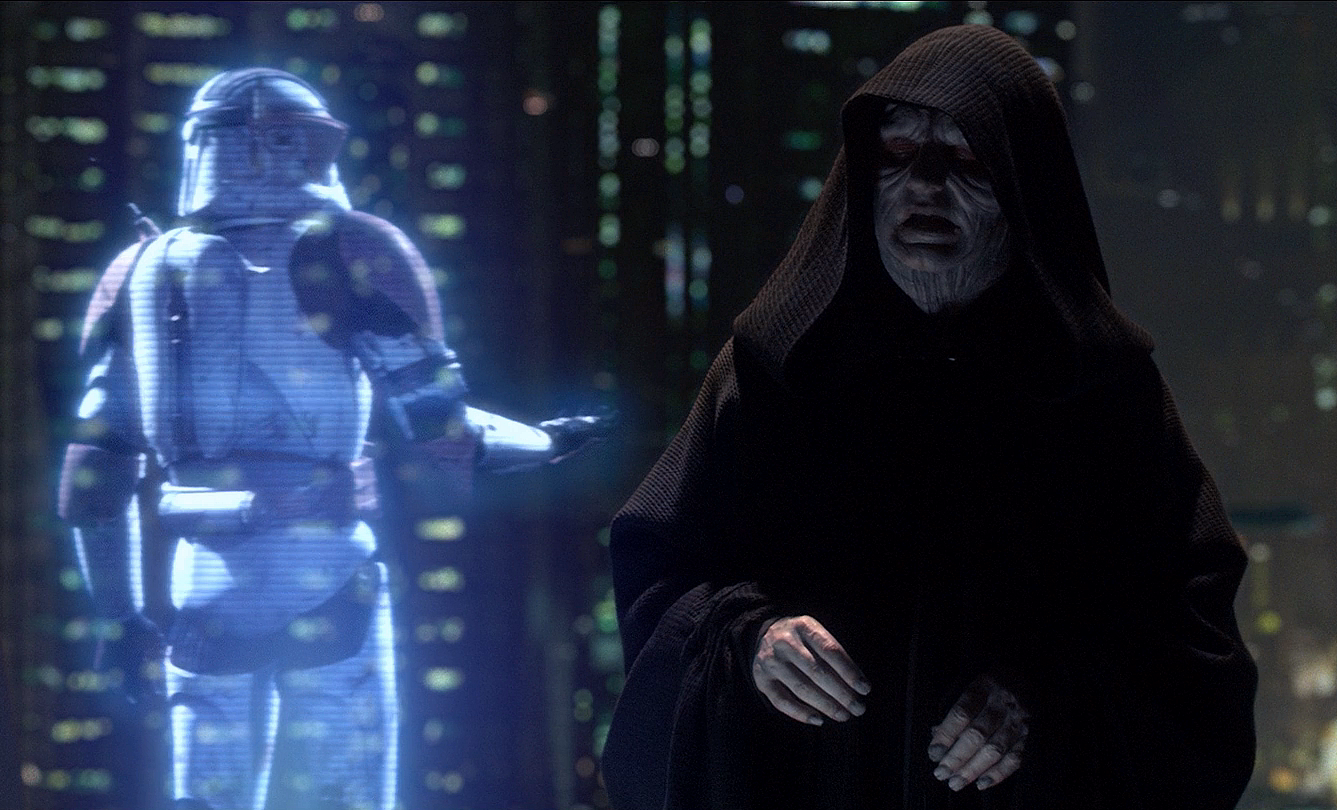
As the Republic moved closer to total victory in the Clone Wars, Chancellor Palpatine revealed his true identity as Darth Sidious to the Jedi, triggering an immediate response from the Jedi Council. The subsequent confrontation between the Council and the Dark Lord resulted in the deaths of several Jedi Masters, including Mace Windu, and Skywalker's fall to the dark side of the Force. Now known as the Sith Lord Darth Vader, Sidious's new apprentice participated in the 501st Legion's assault on the Jedi Temple. Under the influence of Order 66, the 501st clone troopers stormed the Temple and exterminated all the Jedi within, including the younglings.
Around the same time, Darth Sidious issued Order 66 to clone troopers throughout the galaxy—designating every Jedi an enemy of the Republic. Order 66 activated the hidden chips within the clones, overriding their loyalty to the Jedi and brainwashing them into believing that the Jedi were traitors who deserved execution. Losing their free will and identities with the mere activation of a chip through a voice command, the vast majority of the clones turned on their unsuspecting allies. Caught off guard by their own troops' betrayal, the Jedi across numerous worlds were largely slaughtered by their clone troopers. However, a few clones resisted the command by removing their biochips. The members of Clone Force 99, excluding Crosshair, did not obey the command as well, as their genetic enhancements made them immune to their chips. With only a few exceptions, the Jedi were nearly extinct following the initial execution of Order 66. Furthermore, the protocol extended beyond the Jedi Order, as clone troopers who failed to comply with the order were also to be killed.
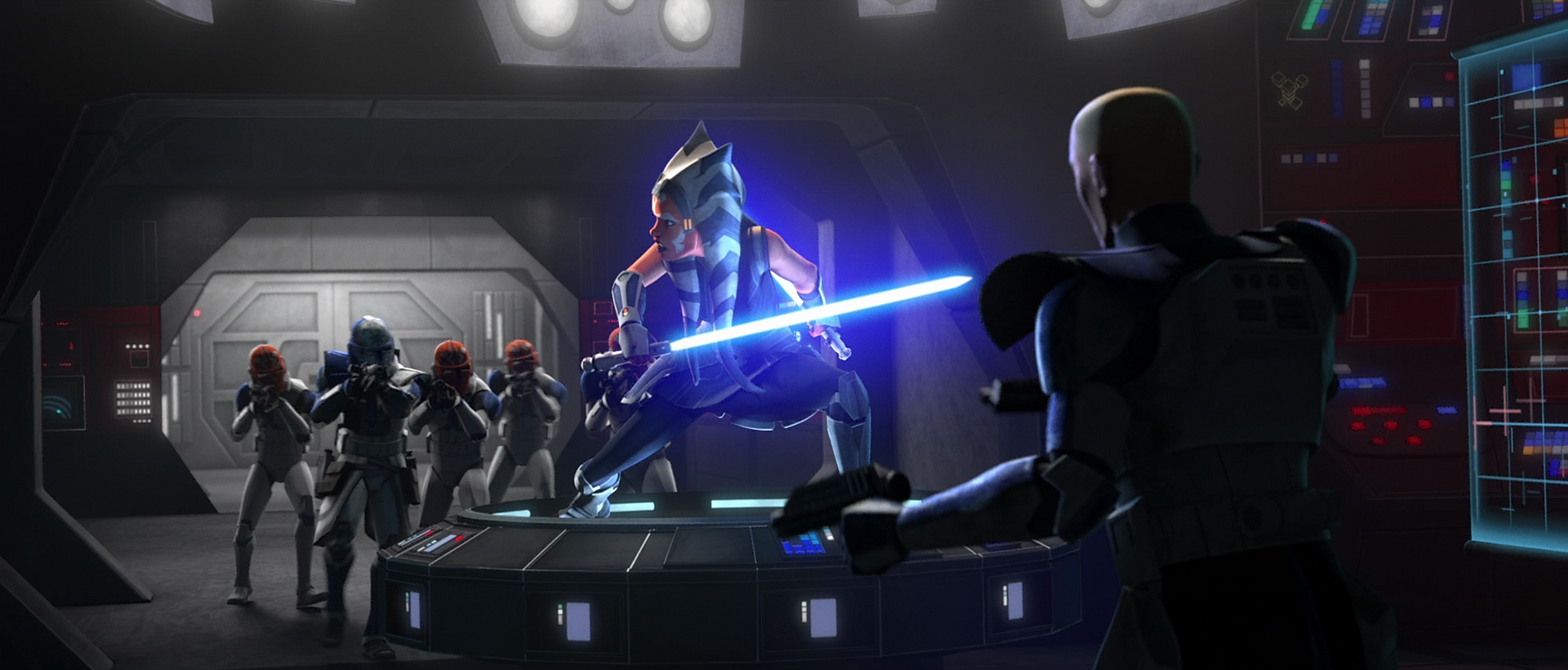
Aboard the Venator-class Star Destroyer Tribunal, Tano and the rogue Sith Lord Darth Maul were also targeted by the clones of the 332nd Division shortly after their victory on Mandalore. Commander Rex managed to resist his chip's control long enough to tell Tano to find Fives. When Rex finally succumbed to its control, Tano escaped the troopers and released Maul from captivity, intending to use him as a distraction. Tano then investigated Fives, finding Rex's grievance report on the chips. With the help of astromech droids R7-A7, CH-33P, and RG-G1, Tano incapacitated Rex to remove his chip, restoring his loyalty to Ahsoka.
Freed from the control chip's influence, Rex informed Tano that the entire Grand Army had turned against the Jedi. The former Jedi, the Clone Commander, and the astromech droids planned to steal a shuttle from the Venator's main hangar; Rex complied with Tano's wishes to only stun the clones in their path, despite knowing that his brethren fully intended to execute them as traitors to the state. Elsewhere, Maul continued to move through the warship, eventually entering and destroying the hyperdrive room. This pulled the Star Destroyer out of hyperspace and into the gravitational field of a moon, but the 332nd remained determined to kill Tano, even if it meant their own deaths. Even though the clone troopers blocked their path to a Nu-class attack/transport shuttle, Tano did not want to harm the soldiers, but Rex, who shed a tear, informed her that the clones were willing to die executing Order 66.
Tano was still unwilling to take their lives and devised a plan to stall the troops; while R7 prepared to drop parts of the floor, Rex distracted Clone Lieutenant Jesse, and the other clones by bringing Tano at gunpoint before them. He argued that while Order 66 called for the execution of all Jedi, Tano had not been a Jedi for some time. Jesse was not dissuaded from his task, however, stating to Rex that they were under direct orders from Darth Sidious to kill the former Jedi as well as any clone who refused to comply with their protocol. When Rex made a final plea to Jesse, the ARC trooper accused his former friend as a traitor to the Republic, and subsequently demoted him in rank from Commander, and sentenced him to die alongside Tano via firing squad in accordance with Order 66.
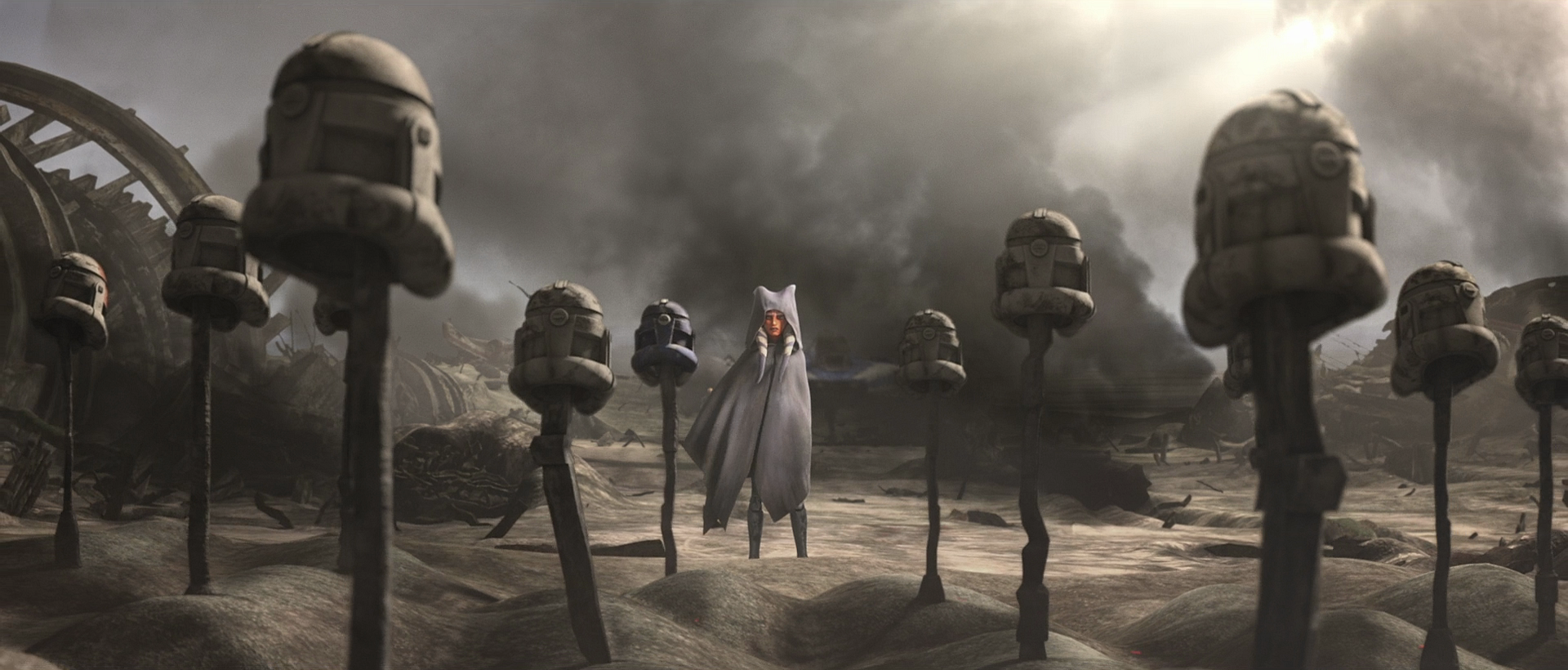
The clone troopers destroyed the astromechs in the ensuing firefight, which Maul used as a distraction to escape from the doomed Star Destroyer. Jesse and the remaining clones were killed when their warship crashed into the moon, while Tano and Rex escaped using a BTL-B Y-wing starfighter/bomber before the Tribunal entered the atmosphere. They recovered the clones' bodies and buried them at the crash site, using their helmets to mark each clone's grave. Tano then abandoned her lightsabers at the gravesite and eventually parted ways with Rex, both agreeing to leave for the Outer Rim Territories.
The first stormtroopers
The future of clone trooper program
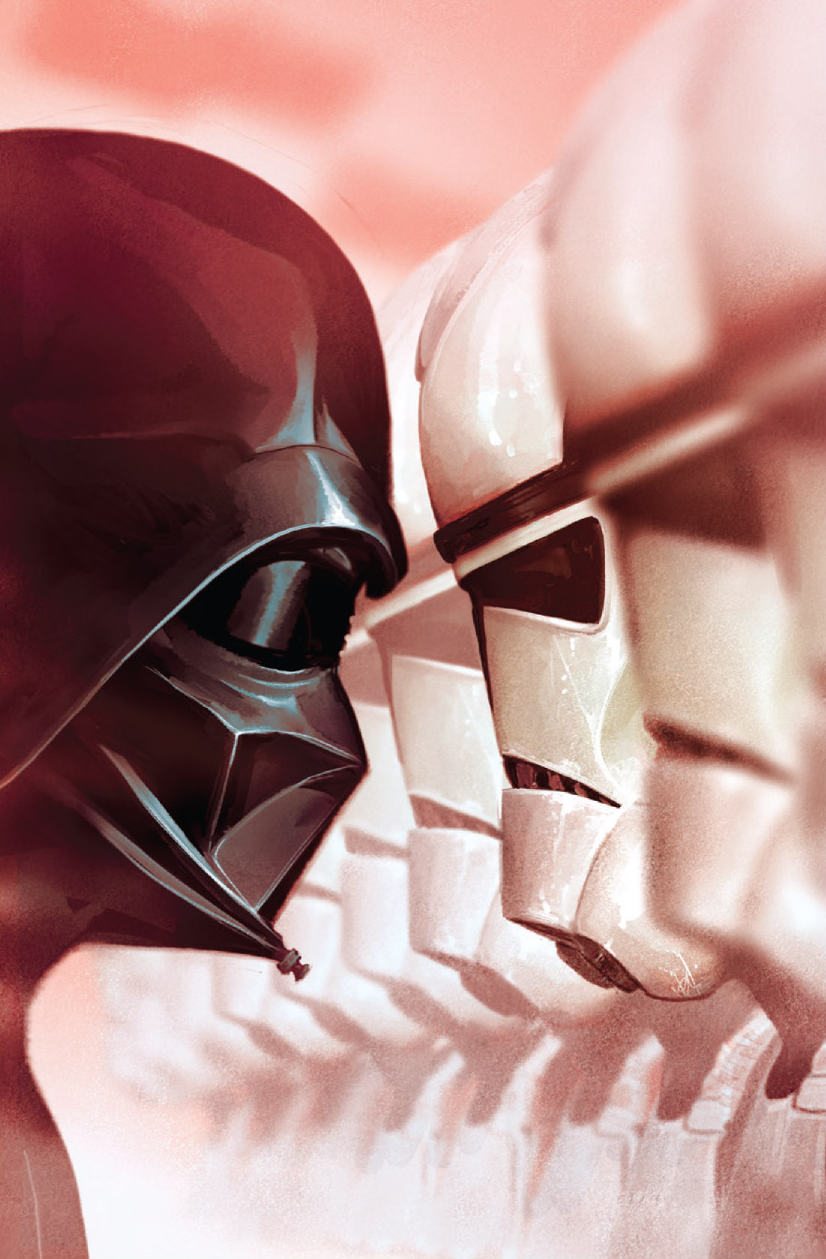
The destruction of the Jedi Order enabled the Sith to regain control of the galaxy through Sidious, who had secretly used the clone troopers as their weapon. With control over the government and the military, Sidious reorganized the Republic into the First Galactic Empire and took the title of Galactic Emperor. This was followed by significant changes that distinguished the New Order from the old system. When the conflict ended, the clone troopers who had survived the Clone Wars became the first generation of Imperial stormtroopers under the Emperor's orders. They formed the backbone of the Imperial Army during the early years of the Imperial Era.
As elite shock troops, clones were tasked with enforcing the Emperor's will across the galaxy and eliminating threats to his rule. Without the Jedi, who had encouraged independent thought, the clone troopers became fully obedient due to the programming enforced by their control chips. Changing their armor to a basic, blank white, the clones became cold and impersonal, focused solely on protocol and orders. While the clones retained some individuality, such as a sense of humor, when off-duty, the troopers largely adopted uniformity, symbolized by the lack of personalization on their armor, and were forced to despise their former Jedi friends.
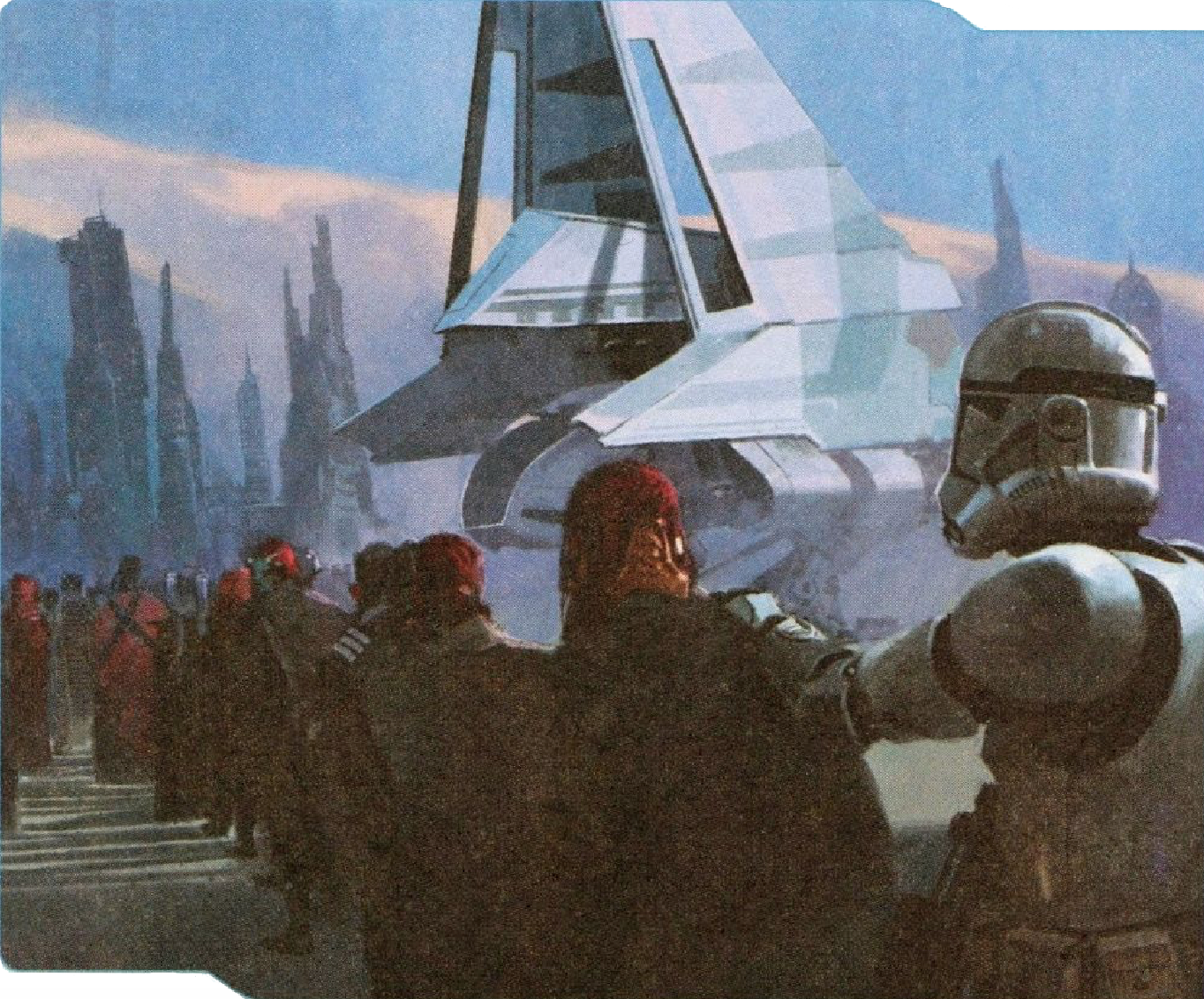
Under Imperial orders, clones carried out the Senatorial arrests and were deployed to clear out former Jedi bases. They also enforced order by arresting civilians for minor offenses, such as engaging in fights, which confused the smuggler Has Obitt; Obitt noted that during the war, clones would have started bar fights, but now they were breaking them up. Despite their role in establishing and enforcing the early Empire, the value of all clone troopers was questioned by officials like Governor Wilhuff Tarkin and Vice Admiral Edmon Rampart, Imperial officers who considered a service conscription and recruitment force more affordable and reliable than the cloning operation on Kamino.
Furthermore, the clones were originally bred to be soldiers of the Republic, not the Empire. To many high-ranking Imperials, clone troopers were a reminder of the past and, like that past, needed to be erased. While the activation of their control chips ensured the clones' loyalty to the new regime, the founders of War-Mantle knew recruited soldiers would be able to swear loyalty to the new Empire alone and do so of their own free will. Tarkin also disliked the level of individuality the clones had developed under the Jedi's leadership. Tarkin visited Kamino after Order 66 to inspect the clones and determine if the Empire had any further use for them.
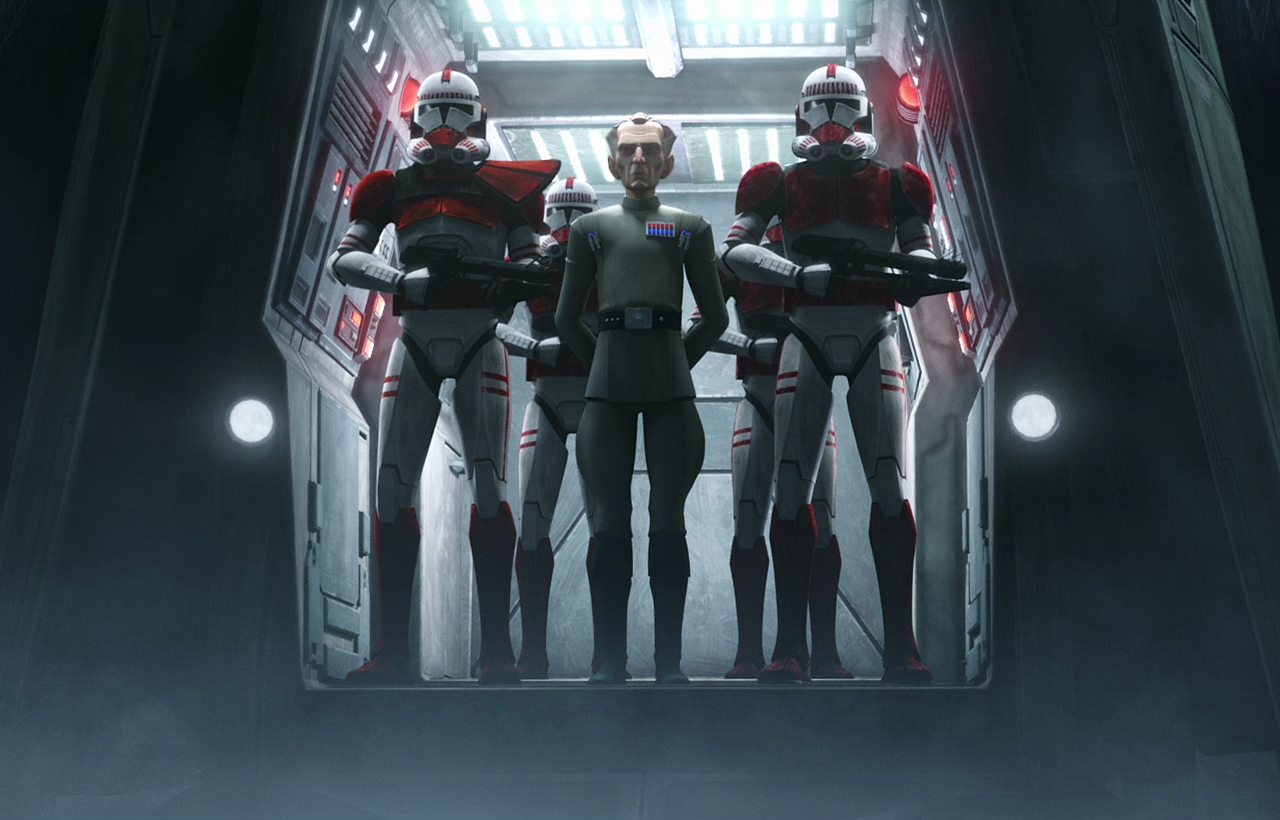
Prime Minister Lama Su was surprised by the admiral's visit, having long relied on Chancellor Palpatine's support. Tarkin informed the Kaminoan politician that Palpatine's priorities had changed after the end of the Clone Wars and his ascension to Emperor. Lama Su opposed shutting down the cloning facilities, citing the Kaminoans' contracts stipulating continued clone trooper production. The Admiral countered that this agreement was between Kamino and the Empire's predecessor, the Republic, which no longer existed. While he agreed with the Prime Minister that the newly established Empire needed more soldiers to maintain order, Tarkin believed this could be achieved through a service conscription force.
The Prime Minister dismissed replacing clone soldiers with recruits, whom he considered inferior to his creations, but Tarkin was concerned that the clone trooper program was too expensive. He considered conscription and recruitment a cost-effective solution to the Empire's need for increased manpower. Although cloning operations would continue briefly, rumors spread among the clone ranks during the early Imperial Era that the Empire had already halted the Kamino operations, causing clones like Ding and Kicker to contemplate the Empire's future and the fate of their kind. Knowing the clone army had only one generation left, older clones dreaded retirement and sought ways to remain on active duty, such as joining the Emperor's Royal Guard.
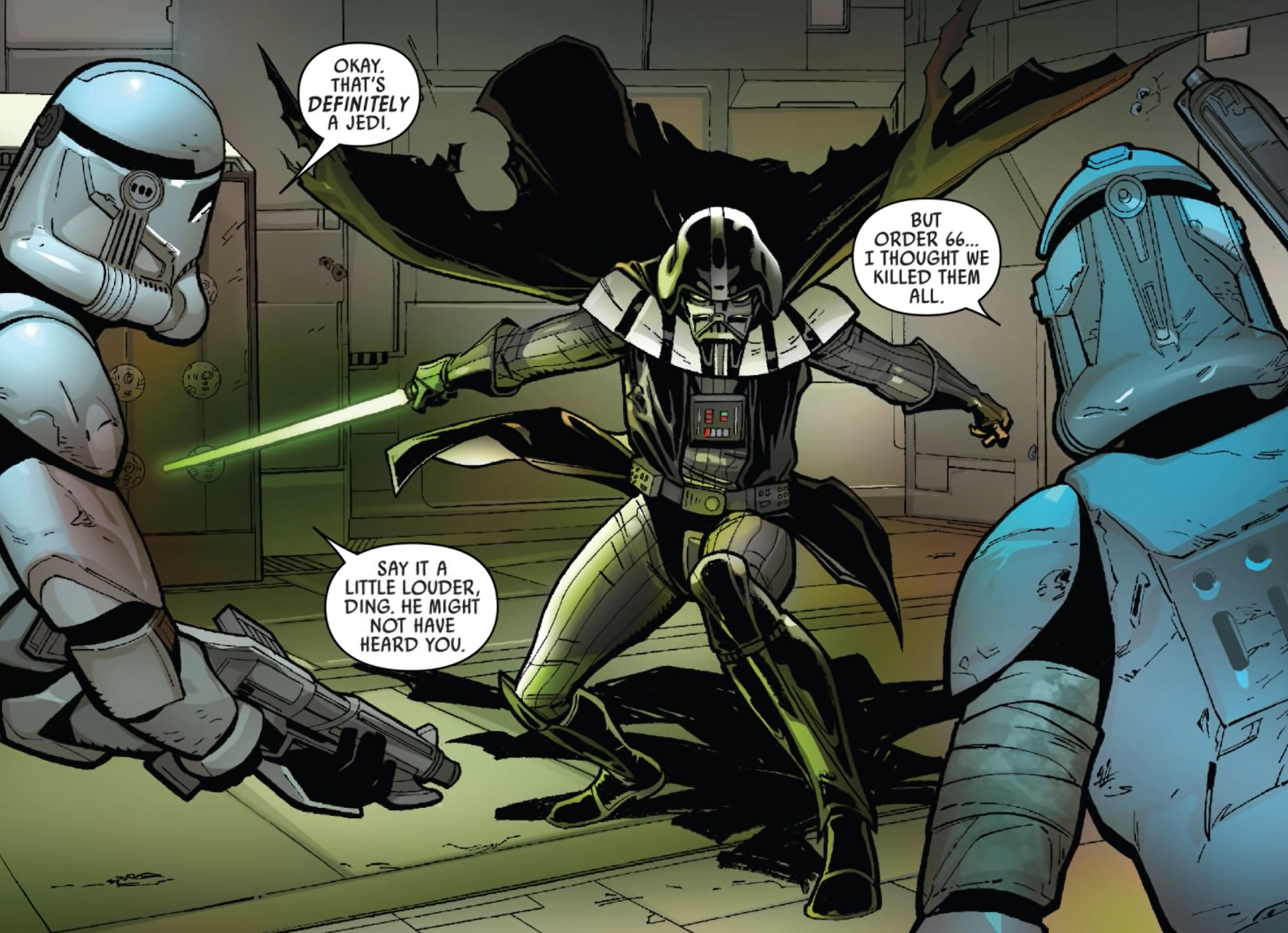
As clones began to be dispatched to secure Jedi sites instead of active combat, Ding and Kicker were part of the clone force sent to a Mid Rim way station called the Brighthome, which the former trooper feared represented the overall future of their kind; while new soldiers would be able to fight the enemies of the Empire, he feared the clones would be reduced to clean up operations. Nevertheless, they believed they had a chance to prove themselves when someone believed to be a surviving Jedi attacked the station. In reality, the intruder was Darth Vader, who chose not to send his clearance codes to fight the clones aboard. Vader slaughtered most of the troops who confronted him, and although Ding and Kicker briefly gained an advantage, Vader killed both with a Force choke, allowing him to leave for the moon of Al'doleem.
With the exception of Crosshair, the defective clones of Clone Force 99 remained largely unaffected by their inhibitor biochips. Sent back to Kamino to hear Palpatine's proclamation of the Empire, they also met the young female clone Omega, who was still kept on Kamino should the Kaminoans need a backup of Jango Fett's genetic information. While Tarkin was interested in welcoming Clone Force 99 into the Imperial Army for their skills, he was concerned by their individuality and willingness to disobey orders. Dispatched on a mission to eliminate supposed Separatist insurgents as a test, Clone Force 99 instead encountered civilians being protected by former Republic fighter Saw Gerrera, convincing most of the squad to abandon the Empire. With the squad returning to Kamino to rescue Omega, Crosshair was welcomed into the Empire after his chip was amplified. Crosshair led the effort to kill his former squadmates as they escaped, failing when Se secretly overrode the hangar door controls to give Omega a chance to escape with Clone Force 99.
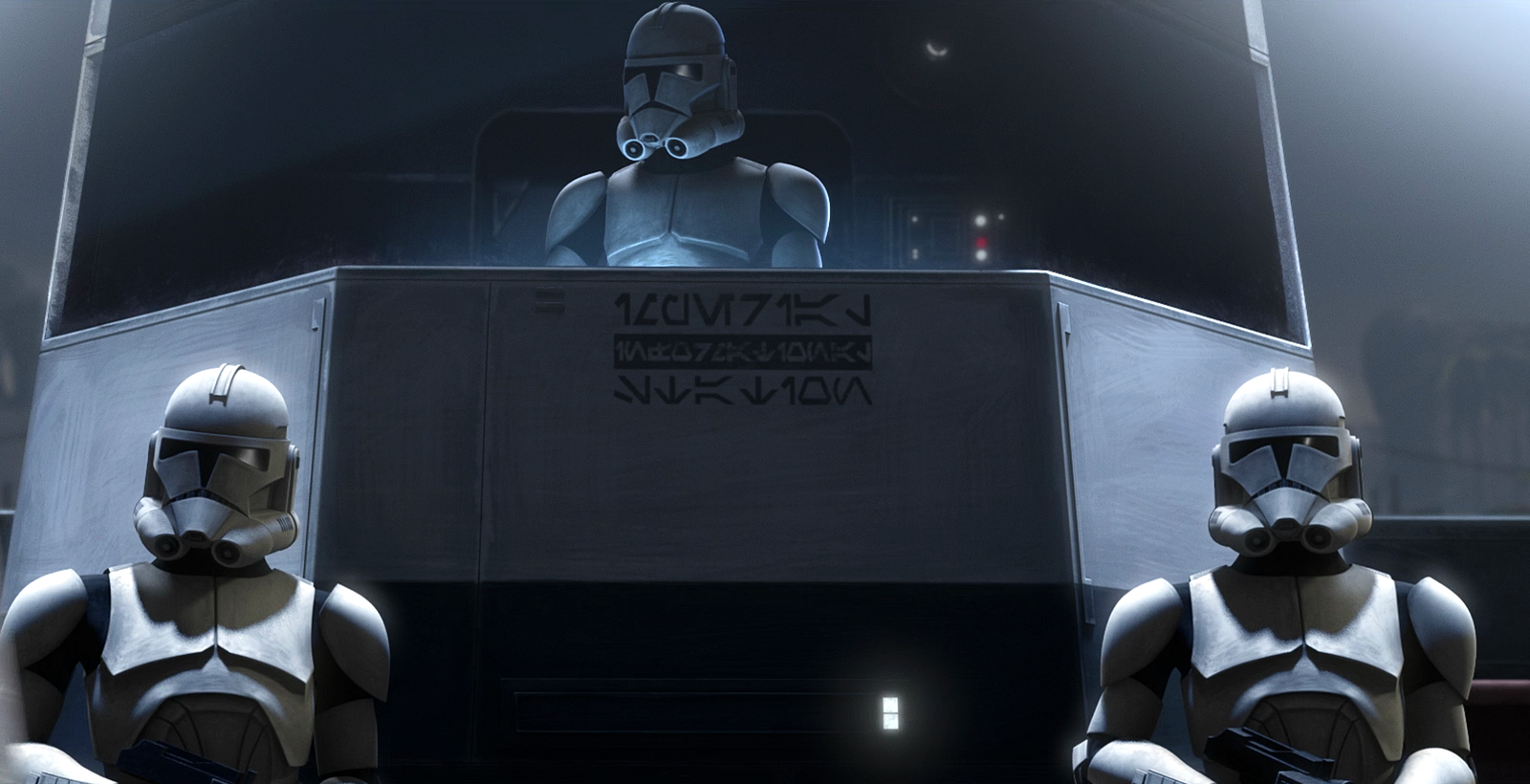
As the Empire expanded its reach, clone stormtroopers played a key role in the occupation and control of worlds formerly aligned with the Separatists, as well as those devastated by the Clone Wars. Meanwhile, Rex made the decision to oppose the growing Imperial regime, fighting for the ideals of the Republic. Believed to be dead by the Empire, he operated covertly, undermining Imperial operations and aiding clone brothers who had evaded Imperial control. His initial action involved traveling to Saleucami to warn Cut Lawquane, a clone deserter, about the Empire's rising power, departing just a day before Force 99 and Omega arrived to meet with Lawquane. Concurrently, clone stormtroopers were responsible for enforcing the early Empire's implementation of the chain code, a system containing the biometric data and criminal records of Imperial citizens. Force 99 assisted Lawquane and his family in their escape from Imperial-occupied Saleucami before leaving themselves.
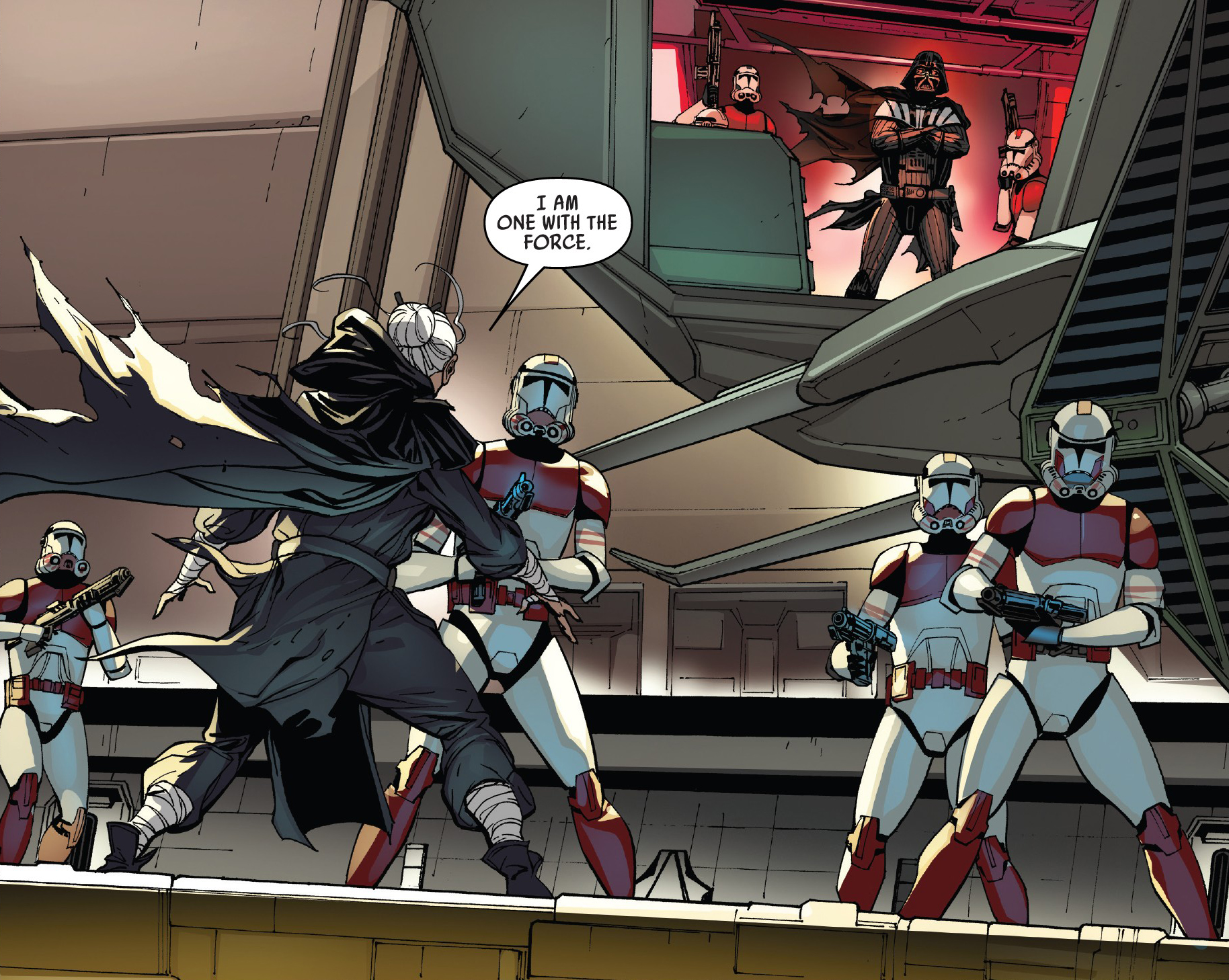
During the early years of the Empire, clone shock troopers maintained their patrols in the upper levels of Coruscant and even aided Darth Vader in his mission to capture Jedi Master Jocasta Nu, the Chief Librarian of the Jedi Archives. In 19 BBY, Cassian Jeron Andor witnessed clone stormtroopers occupying his home world of Ferrix, where they were met with rocks thrown by protesting civilians. In response, an Imperial officer commanded a line of clones to aim their weapons at the protestors. This incident resulted in the public hanging of Cassian's adoptive father, Clem Andor, despite his attempts to calm the situation.
Initiating the termination of the clone program
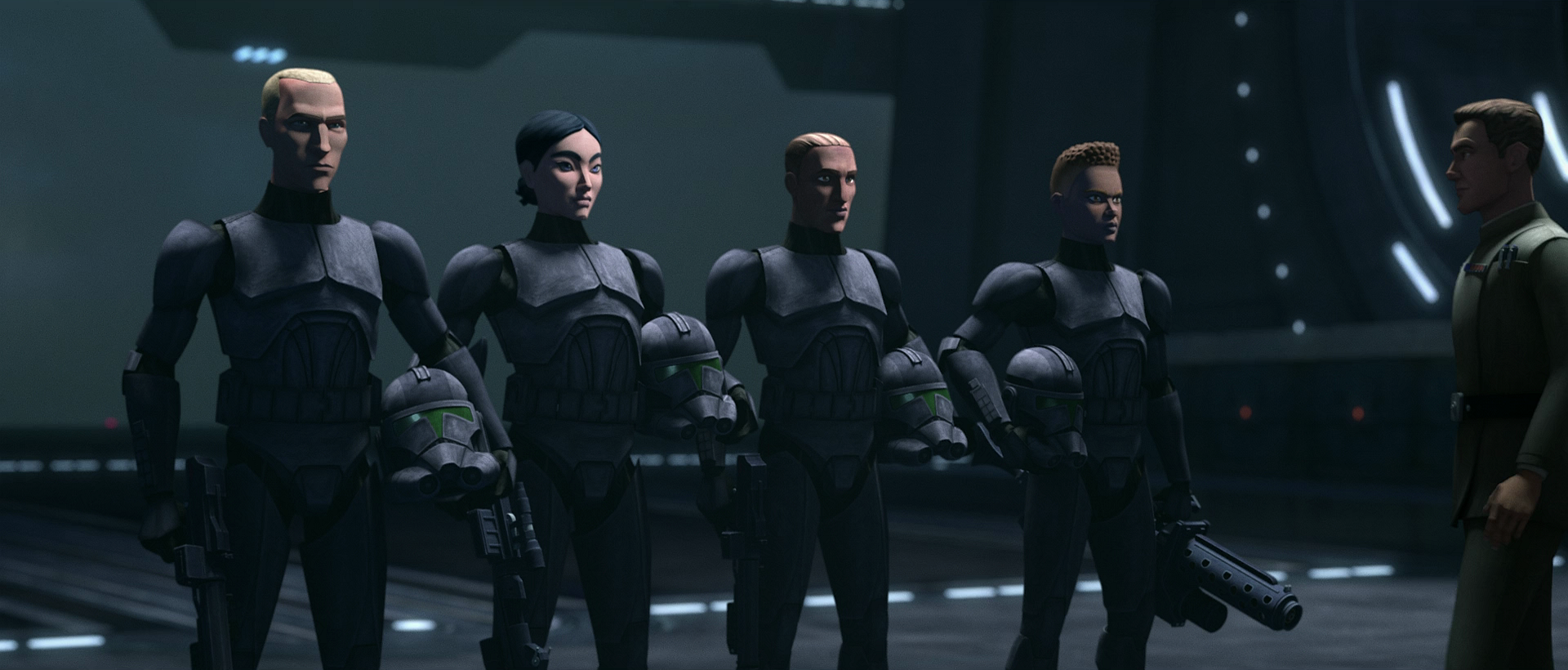
Despite Lama Su's continued assertions regarding the superior skills of clone troopers due to their intensive training, Tarkin still viewed the Kaminoan cloning operation as a financially burdensome undertaking. While Tarkin was focused on the cost-effectiveness of clones, Rampart was more concerned with the unwavering loyalty of recruits who willingly enlisted in the Imperial Military. Tarkin authorized the creation of a unit of Elite Squad Troopers; this team consisted of four non-clone volunteers from across the galaxy, all under the command of Crosshair, who remained loyal to the Empire. Rampart was convinced that Crosshair's Elite Squad could achieve the same level of effectiveness as the clone troopers of the Republic, provided they received proper training from experienced clones. Their initial mission involved confronting Gerrera's fighters, a task Clone Force 99 had refused, and served as an opportunity to demonstrate the project's value to Tarkin.
Following the elimination of a group of insurgents and civilians on Onderon, the Elite Squad returned to Kamino. Despite the death of ES-01, who was executed for disobeying the order to kill unarmed prisoners, Tarkin considered the mission a success for both the Empire and Project War-Mantle. The Imperial officers' commitment to replacing clones with volunteer and conscripted soldiers caused Lama Su to worry about the future of Kamino and its cloning facilities. Their concerns were further amplified by the degradation of Jango Fett's last remaining genetic samples; as a result, Lama Su instructed Nala Se to persist with her experiments in the hopes of producing a superior clone. He believed that the Kaminoans' relationship with the Empire depended on the fate of the clone trooper program. At some point, Crosshair also had his inhibitor chip removed, but he continued to serve the Empire, firmly believing in its cause.
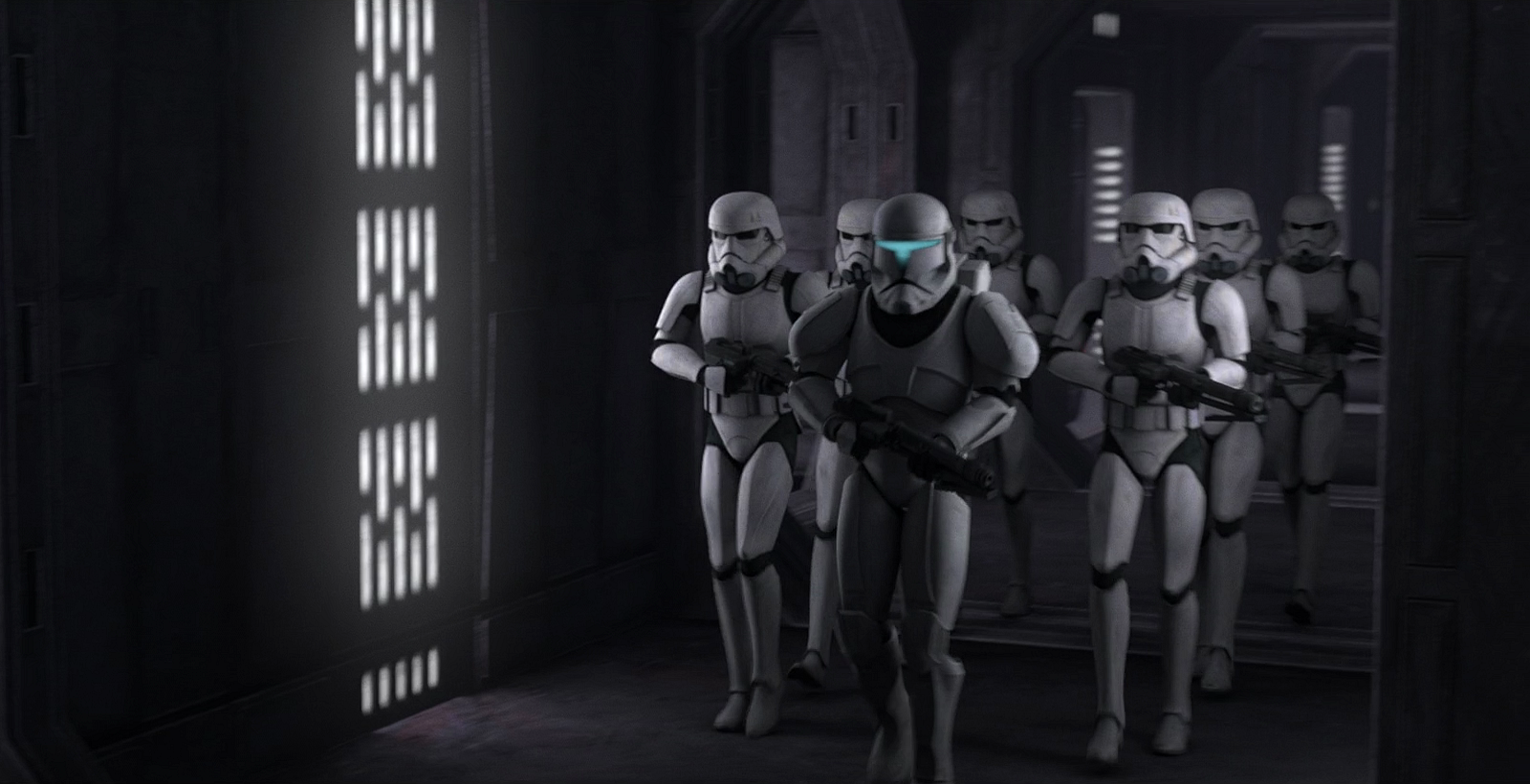
With the success of Project War-Mantle demonstrated by the victory on Onderon, an Imperial training facility was established on the planet Daro. This facility housed a thousand non-clone "TK stormtroopers," recruited from across the galaxy and trained by elite clone commandos like commando Gregor. Gregor later remarked that while the TK troopers might not match the skill of their predecessors, their sheer numbers were significant, suggesting that clones were being removed from the Imperial Military because they were created to serve the Republic, not the newly formed Empire. Aware of Tarkin's promise to soon terminate Kamino's cloning contracts, Kaminoans Lama Su and Nala Se sought to create a superior clone template to secure their business relationship with the Empire. However, the ongoing deterioration of Jango Fett's remaining DNA samples led Su to focus their efforts on capturing Omega. Se hired the skilled bounty hunter Fennec Shand to hunt Omega, secretly instructing her to protect Omega from Su rather than returning her to Kamino.
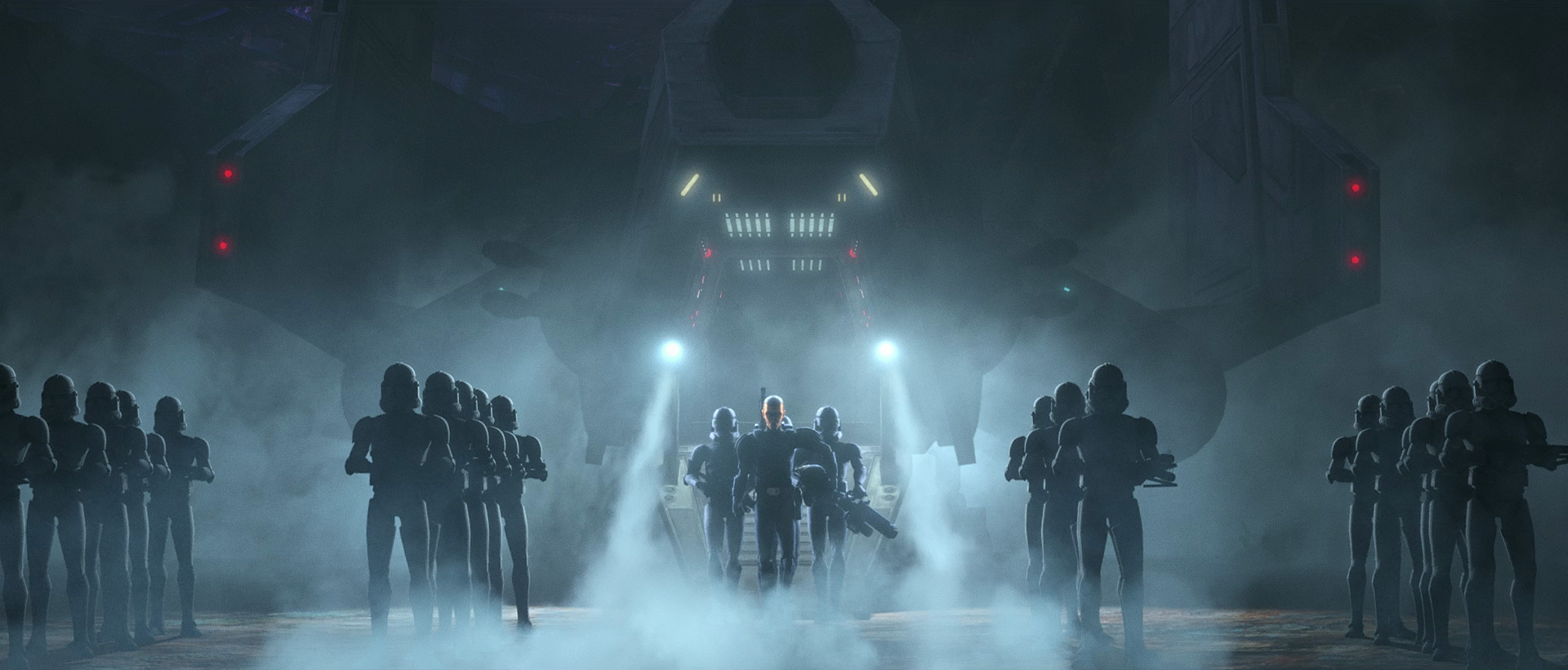
As Project War-Mantle progressed, clone stormtroopers and Elite Squad Troopers began serving together on various missions. When Rex reunited with Clone Force 99 and brought them to the junkyard world of Bracca to remove their behavioral modification biochips, members of the Scrapper Guild spotted the rogue clones and reported them to the Empire, which had labeled Clone Force 99 as enemies of the state for their defection. Ignoring Su's suggestion to capture Clone Force 99 alive due to their unique skills, Rampart authorized Crosshair to hunt down his former squad using a combined force of clone troopers and his Elite Squad. Arriving after Rex's departure, the joint clone and Elite Trooper force nearly defeated the Bad Batch, but they managed to escape. However, still believing Se's hunter was working to return Omega to Kamino, Su grew impatient and hired the notorious bounty hunter Cad Bane to capture her. Followed by both Shand and Clone Force 99, Bane lost custody of Omega after arriving at the Kaminoans' abandoned cloning facility in the Lido system.
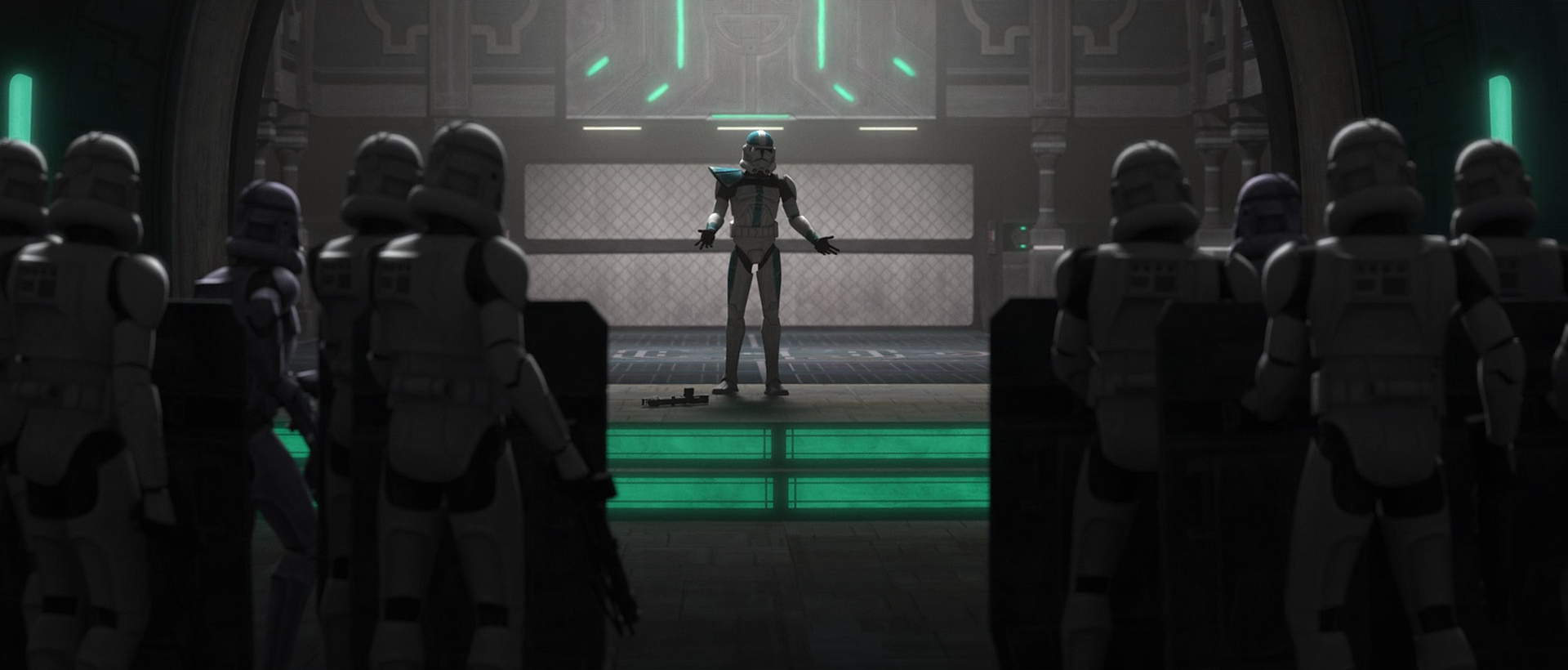
After escaping Bane and Shand, Omega rejoined Clone Force 99. As the group resumed their mercenary work in the Imperial-controlled galaxy, they began using stun shots against clone stormtroopers, as their experience with Rex had shown them that the control chips within their brothers forced them to obey the Empire against their will. Meanwhile, Crosshair and his Elite Squad joined a clone battalion on the former battleground of Ryloth to enforce Imperial control, only to have Clone Force 99 destroy an entire Imperial refinery and liberate political prisoner Cham Syndulla. Convinced that Clone Force 99 posed a significant threat, Rampart once again authorized Crosshair to hunt down his former squad.
The Program's Decommissioning
Eventually, commando Gregor chose to desert from the Imperial ranks rather than continue training the clones' replacements on Daro. Directed to the facility by Rex, Clone Force 99 infiltrated the base to rescue Gregor. Hunter, the leader of Clone Force 99, was surprised by the TK soldiers' competence, given that their instructors were clone commandos. Gregor admitted to withholding some of his knowledge from the TK troopers, considering it a wise decision to limit their training. While he acknowledged that TK troopers would not be as skilled as clones, Gregor also noted that they made up for their deficiencies with their greater numbers; many galactic citizens willingly joined the Empire, believing it had saved them from the Clone Wars. However, Hunter argued that numbers alone would not be sufficient in every situation a soldier faced.
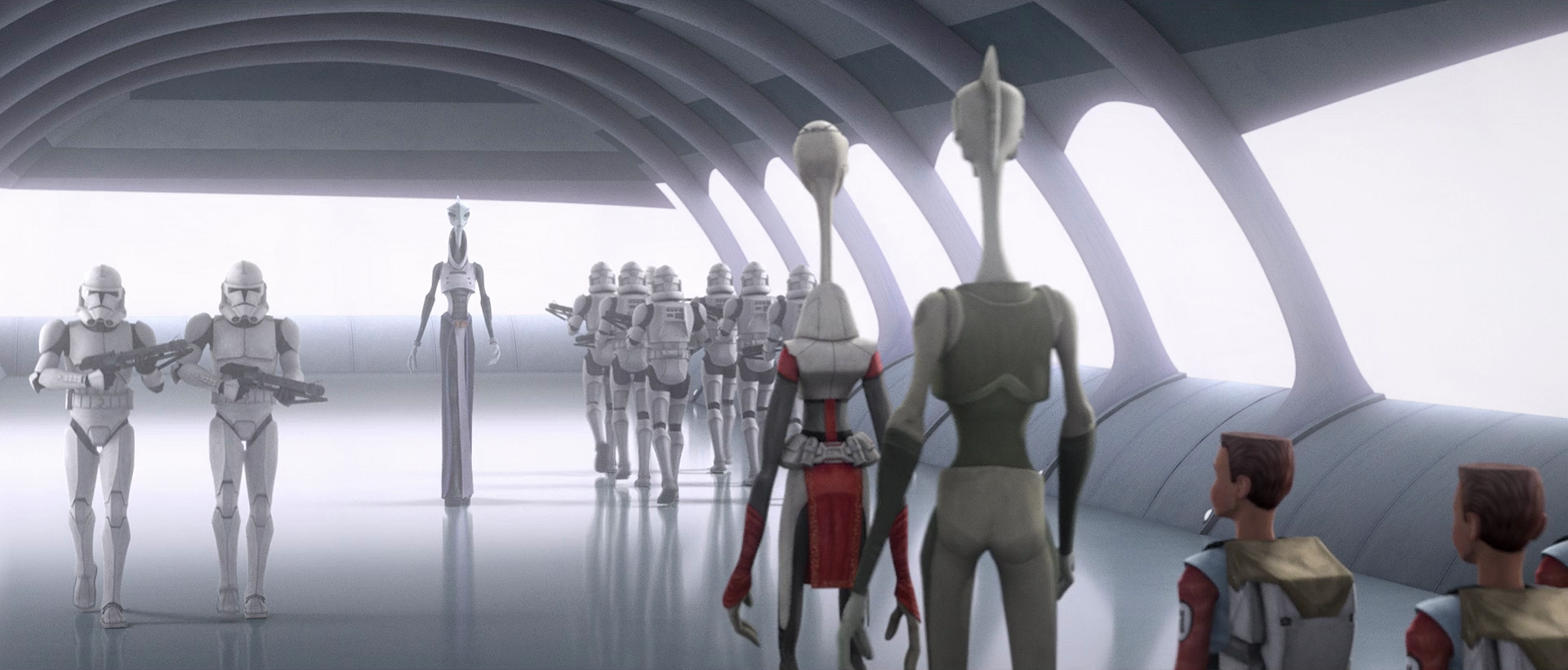
Simultaneously with the events on Daro, the Empire canceled its contracts with Kamino. Rampart oversaw the operation to remove all essential personnel and equipment from Tipoca City, including every viable clone developed by the Kaminoans. Nala Se assured a group of clone cadets that they would still serve their purpose by becoming soldiers, despite their removal from the cloning facility. While Nala Se assumed that the Kaminoan government would secure new clients given their success with the clone army, which was known throughout the galaxy, Lama Su reflected on the differences between the Republic and the Empire. He concluded that the Kaminoan operation could not survive under the New Order, convinced that the Empire would destroy the Kaminoans rather than allowing them to continue their work without Imperial supervision. The Prime Minister planned his own evacuation from Kamino along with its most skilled scientists in the hopes of ensuring their survival and the continuation of their program, but Rampart discovered his plan.
Although the Vice Admiral was not particularly impressed by Nala Se's creations, he recognized her as a talented scientist whose skills made her a valuable asset to the Empire. As a result, Se was taken into Imperial custody, while Su was left to the mercy of the Elite Squad Troopers when Rampart declared that the Empire no longer needed the politician. Tipoca City was largely abandoned by the time Hunter, who had been captured on Daro, was brought back to Kamino by Crosshair. Noticing the presence of TK troopers carrying out the final stages of the withdrawal instead of clones, Hunter realized that the cloning facility was being decommissioned, and he warned Crosshair that their brethren would eventually be phased out of service as well. Aware of the Empire's plans, Crosshair remained confident that only the "regs" would be replaced, while the elite units would continue to serve the Empire as soldiers.
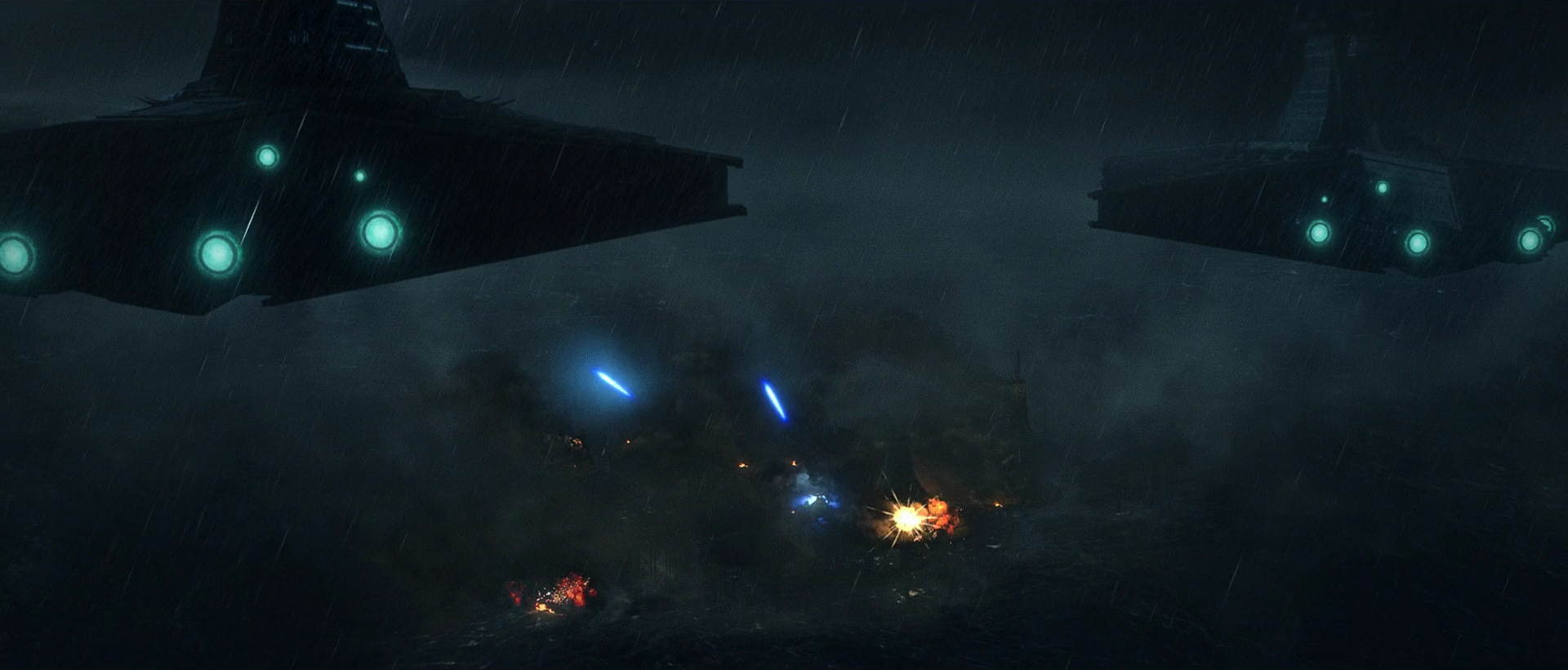
The other members of Clone Force 99 also returned to Kamino in an attempt to rescue their commanding officer, leading to their confrontation with Crosshair. During the firefight, Tarkin authorized the bombardment of the Kaminoan capital after Rampart reported that the cloning technology was firmly under Imperial control. His Venator-class Star Destroyers, still operated by clone personnel, opened fire on the abandoned facility, resulting in the destruction of Tipoca City. All other Kaminoan facilities across the planet were targeted as well, resulting in the complete annihilation of the Kaminoan cloning enterprise, just as Su had predicted. A clone stormtrooper aboard Rampart's Venator reported the success of the eradication; despite the control chips within the clones compelling them to obey Imperial orders, the admission that the clones had destroyed their homes audibly hurt for the trooper to admit.
Clone Force 99 escaped the devastation of Kamino alive, but they again parted ways with Crosshair when their brother declared he would remain with the Empire, with or without his control chip. Nala Se was escorted from Kamino by an elite detachment of clone commandos known as the Imperial royal guard, who were distinct from the Emperor's red guard that some clones hoped to join to escape decommissioning. Se was taken to the facility of Mount Tantiss on the planet Wayland, where the Empire intended to use her cloning expertise for future projects. Despite the destruction of Kamino and the ongoing arrangements within the Empire for their eventual replacement, clone stormtroopers continued to serve the Imperial regime.
The Imperial Defense Recruitment Bill

Months after the destruction of the Kaminoan facilities, which was publicly attributed to a severe storm, the Imperial Senate began voting on the Imperial Defense Recruitment Bill, a measure designed to formalize the Imperial Military's shift from a clone army to a volunteer-based force. While many senators, including Gani Riduli of the InterGalactic Banking Clan, strongly supported the bill, it faced significant opposition from others. Senator Riyo Chuchi spearheaded the opposition, arguing that the clones deserved better than to be discarded after their years of dedicated military service. Although Admiral Rampart assured Chuchi that the clones would receive compensation and pensions upon retirement, the senator remained unconvinced.
Alongside the rogue Clone Captain Rex and Clone Force 99, Chuchi began working to expose Rampart's involvement in the destruction of the Kaminoan facilities in an attempt to prevent the bill from passing. While the Bad Batch infiltrated Rampart's personal Venator, docked at the Coruscant Imperial Shipyards for maintenance and repairs, to retrieve the vessel's command log, Chuchi attempted to stall for time in the Senate Building. After the squad successfully extracted the command log and delivered it to the Senate Building, Chuchi presented footage of Rampart's fleet bombarding Kamino.
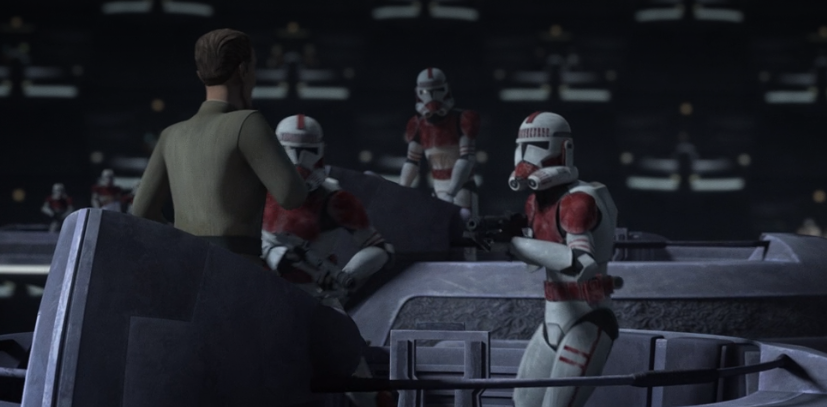
As the Senate descended into chaos, Emperor Palpatine appeared to condemn Rampart's actions and ordered his public arrest. Despite denouncing Rampart before the Senate, Palpatine also expressed concern over the actions of the clones under his command, who blindly followed orders without question. Palpatine further declared that the Empire should enter a new era under the protection of non-clone Imperial stormtroopers. Following a resounding applause, the Senate approved the recruitment bill. While clone troopers continued to serve in the Imperial Military for a time, the bill's passage led to an increasing number of clones being forcibly decommissioned. These actions were presented as clones entering "retirement," a term that masked the grim reality that awaited them. Having dedicated their lives to military service, some clones found themselves destitute after being abruptly discharged. Other clones were secretly subjected to experiments by the Empire's Advanced Science Division after being forced out of service.
Continued Service and Eventual Retirement
The decrease in casualties following the end of the war and the passage of the Defense Recruitment Bill allowed the Empire to halt clone production without causing a major disruption in manpower, as new, non-clone recruits would eventually assume their roles. Nevertheless, the Empire continued to utilize clones throughout its early years, gradually phasing them out of service, with some units joining the ranks of the Emperor's bodyguards.
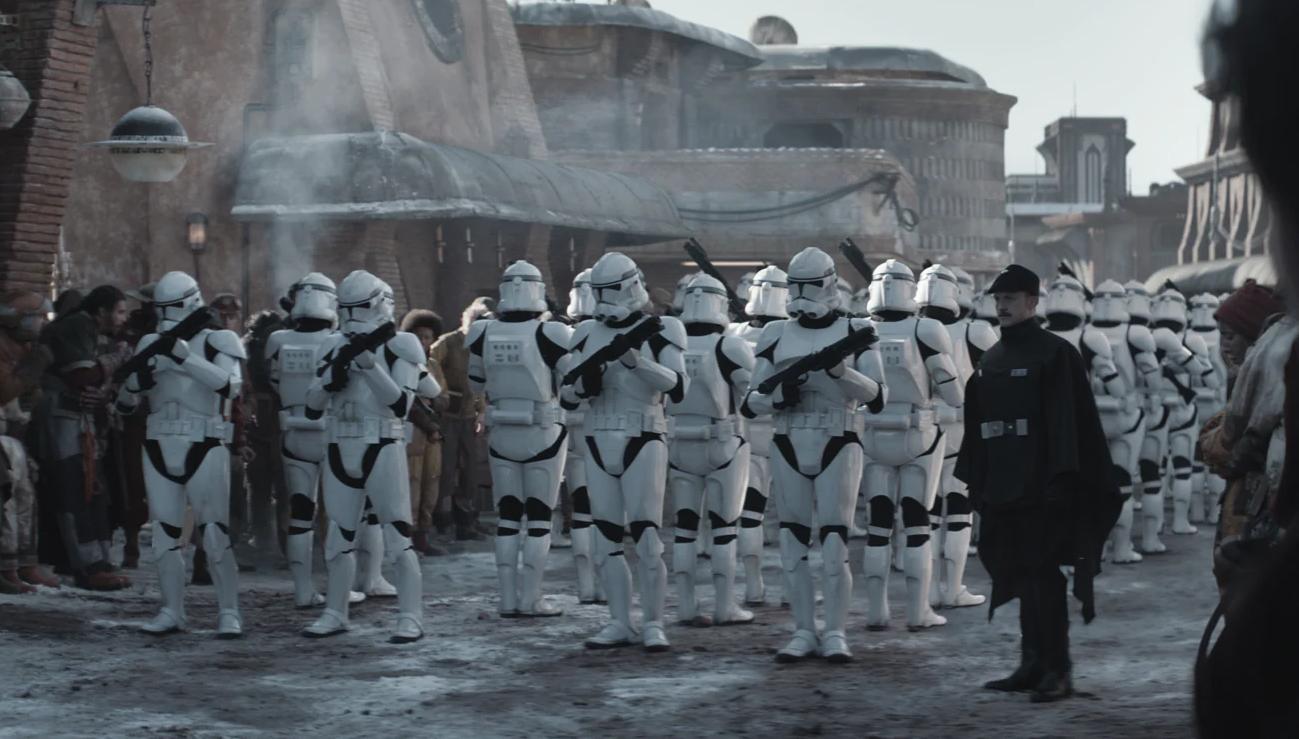
Approximately a year into the Imperial Era, the Empire had already begun deploying natural-born conscripts and volunteers into the Stormtrooper Corps, but former Jedi Ahsoka Tano believed that clones would still be part of its ranks. Around the same time, a small force of clones stationed on Barton IV was replaced by enlisted stormtroopers after their numbers were reduced by insurgent attacks. The Imperial Advanced Science Division continued to rely heavily on clone commandos, who formed the clandestine organization's elite royal guard and protected its assets and facilities. The division also trained and deployed clone X troopers, who served as highly fanatical assassins for the Empire.
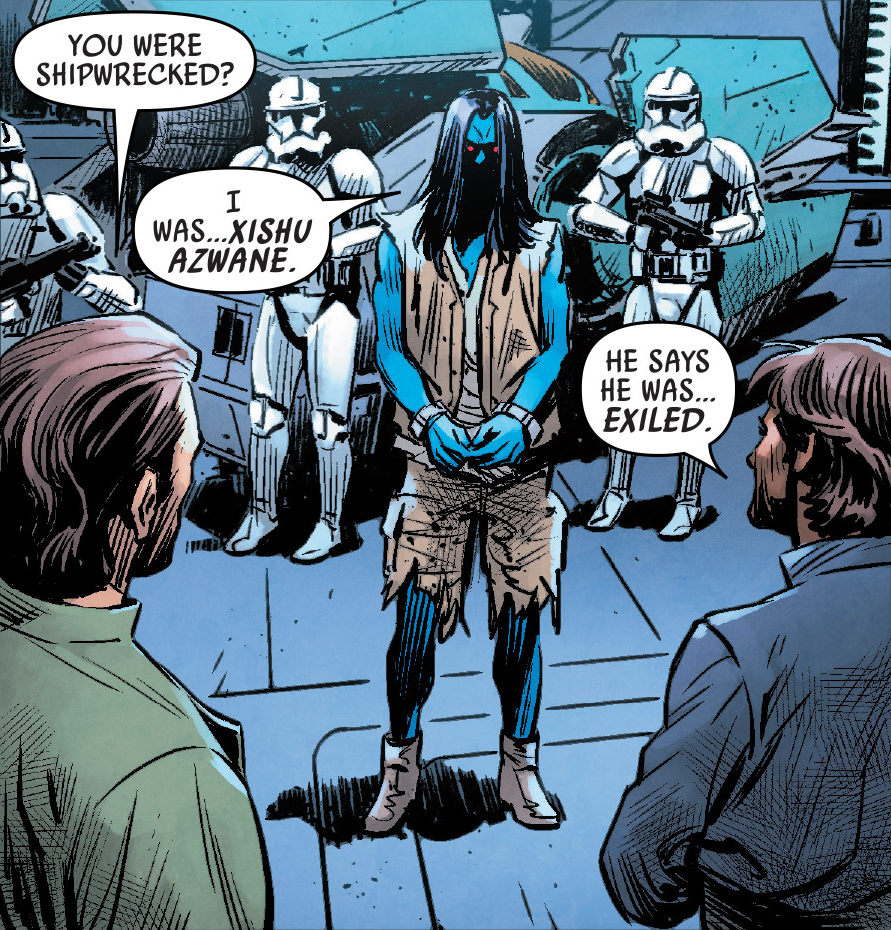
Around 15 BBY, several squads of clone stormtroopers were deployed on an unidentified planet during an operation in Wild Space, far from the Core Worlds. The clones still wore their Phase II clone trooper armor but were now equipped with E-11 medium blaster rifles and worked alongside non-clone Imperial Navy Troopers. Nevertheless, as the years went by, the remaining clones were gradually removed from military service due to their accelerated aging. Furthermore, Imperial propaganda generated a surge of non-clone recruits in the Imperial Military, accelerating the replacement of clones. The clones, having fulfilled their primary purpose for which they were created and trained, were no longer needed by the Emperor. Consequently, most clones quietly retired as they aged, but their legacy lived on through the soldiers who replaced them. No longer using fresh clones to replenish the army due to the closure of the cloning facilities on Kamino, the Imperial military transitioned from a clone army to a volunteer and conscription-based force.
The clone stormtrooper known as Sergeant Crest was still serving the Empire in 14 BBY, but Darth Vader initially deemed the clone too old for active duty due to his accelerated aging. However, Vader later promoted Crest to the rank of lieutenant. Imperial clone shock troopers continued to patrol the streets of Coruscant at least until 14 BBY, where they assisted Vader in hunting down two rogue Inquisitors.
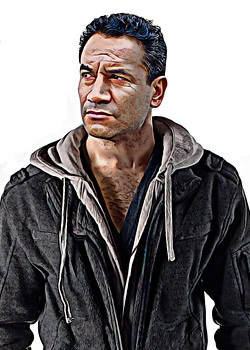
By 4 BBY, most clones had been decommissioned and were considered obsolete. A small number of clones remained in Imperial service, working as training instructors for the next generation of stormtroopers, but this position did not guarantee the clones would like their cadets; clone trooper Lassar resented enlisted recruits despite becoming an instructor. Another clone was Torrent, operating under the designation TX-828; as one of the last clones in the Stormtrooper Corps, he was a rare sight by the time of the Battle of Yavin. At that time, he was nearing the age of forty due to his accelerated growth, with streaks of gray appearing in his black hair. By then, the rarity of Torrent's kind was such that ISB Senior Commander Alecia Beck was surprised to encounter a stormtrooper from the original Kaminoan production line.
An Imperial clone stormtrooper known as Crag remained in military service well into the Empire's reign, despite his advanced age. The old clone had a strong sense of duty, believing he was maintaining order in the galaxy. However, his personality irritated a fellow trooper, Sardis Ramsin, who considered Crag a "relic." Crag was serving as a sandtrooper of Foot Patrol 7 when his team deployed to Mos Eisley on Tatooine, shortly before the Battle of Yavin in 0 BBY. They were sent to capture two droids belonging to the Rebellion, C-3PO and R2-D2, but fell under the influence of a Jedi mind trick performed by an old hermit. Unbeknownst to Crag and his team, the old man with the droids was the Jedi fugitive Obi-Wan Kenobi, who used the Force to dominate the weak-minded troopers in order to move the droids into the city unopposed.
Legacy
Life After Retirement
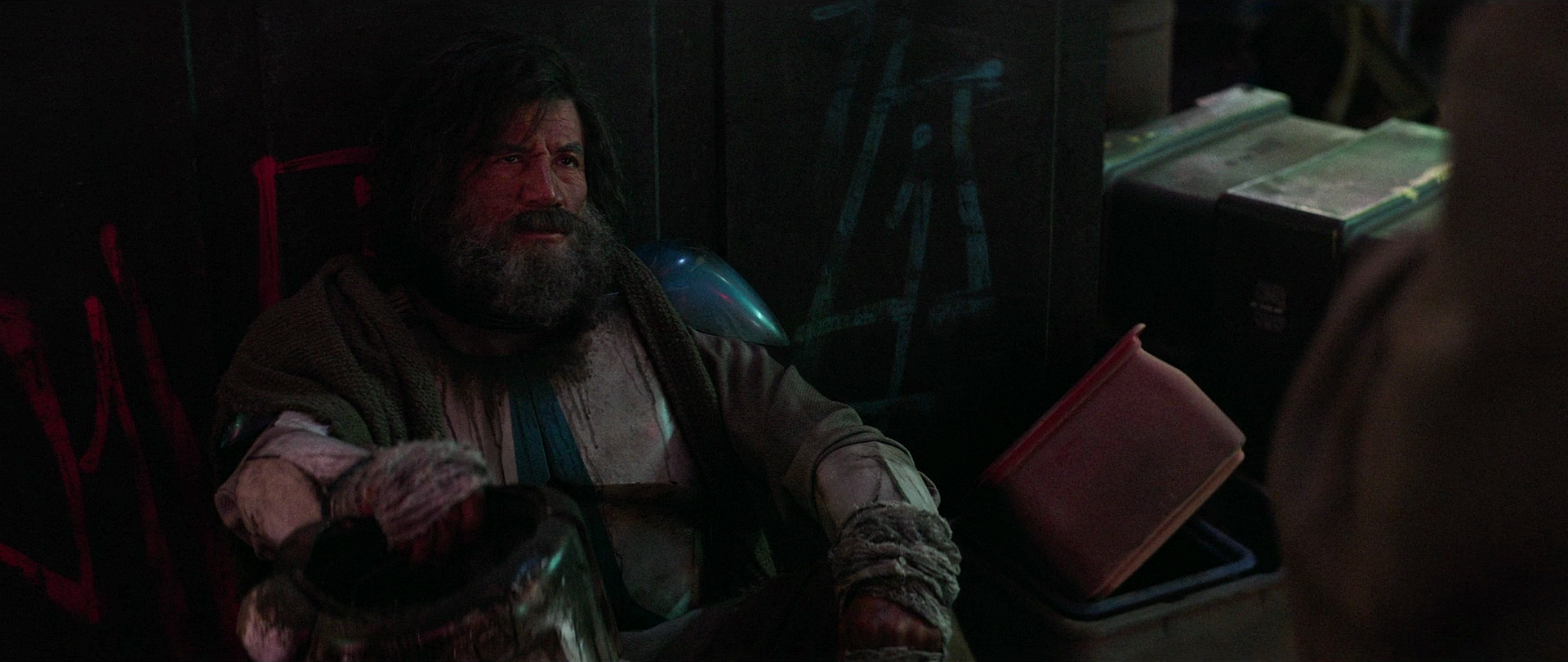
During the final years of the Clone Wars, many clones discussed retirement as a reward for their service, but few understood what it truly meant. The Republic intended to retire the clones, but neither the government nor the clones knew what that entailed. If a soldier brought up the topic, their commander would typically shut down the conversation. A few forward-thinking clones considered careers in corporate security or consulting with local militaries, given their lack of civilian job skills, and their accelerated aging reduced their chances of learning and mastering such skills before they died. However, strong loyalties to the former Republic created a moral dilemma when it came to security work, as retired clones might end up fighting some of their former comrades. Before the Republic's collapse, politicians had approached certain officers about remaining in a formalized and permanent Republic military to maintain peace. A few exceptional clones had even been considered for political office.
Having demonstrated their loyalty to the Republic, and with the civilian population admiring military heroes, many clones would have been ideal candidates, had it not been for their general aversion to politics. Before her death at the end of the war, Senator Padmé Amidala had drafted several bills concerning and advocating for clone personhood. These bills were among the works she hoped would be part of her legacy and included measures for recognizing personhood both during and after the war. However, the drafts were effectively abandoned after her death, although her loyal handmaiden Sabé had copies of the works. The "retirement" offered by the Empire ultimately left some of the already-few surviving clones impoverished. A number of veterans of the Clone Wars faced hardship, with the Empire failing to maintain the Crispus Commons housing project on the planet Gorse, while one 501st trooper was left homeless on the world of Daiyu, begging for credits in a city. A bounty hunter named CT-720 was active during the Imperial Era.
Psychological Impact of Order 66
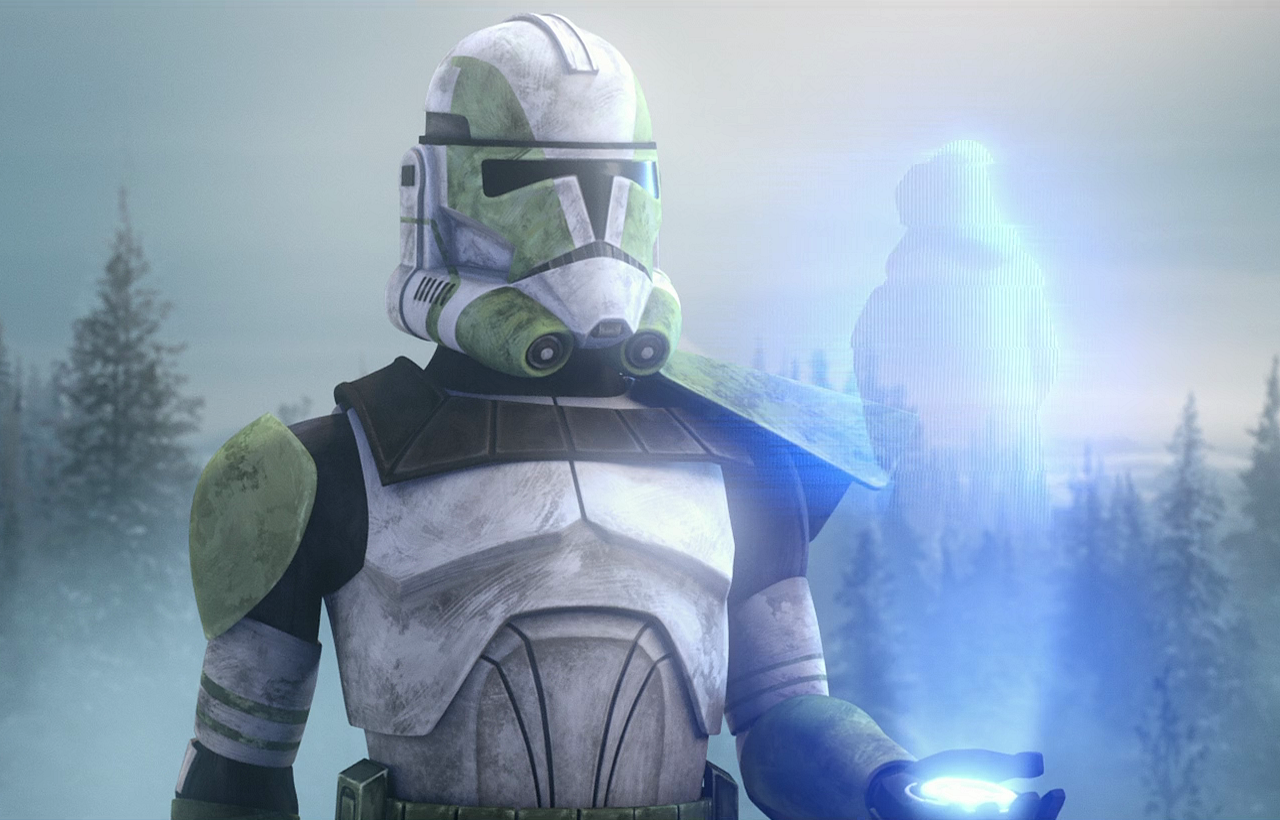
Despite the Kaminoan's best efforts to immunize the clone troopers against the psychological strains of war, some still developed post-traumatic stress disorder. In addition to the trauma of combat and the loss of their comrades, certain clones were deeply affected by the repercussions of Order 66, resulting in feelings of bitterness and horror regarding their own actions. For example, Grey expressed profound regret over his unthinking execution of Order 66, describing the experience as a trance-like state where he lacked control over his behavior. However, Captain Styles did not share his commander's moral reservations about Order 66. Seeking redemption for his role in the Jedi Purge, Grey ultimately gave his life to protect Caleb Dume, the Padawan of Jedi Master Depa Billaba whom Grey had killed while under the influence of Order 66. Cody was another clone who voiced remorse for his actions, admitting to Crosshair that he struggled to live with the choices he had made. Later, Crosshair is informed by Rampart that Cody has gone missing.
Following Order 66 and the removal of Rex's control chip, Wolffe and Gregor also underwent the chip removal procedure. After the Clone Wars concluded, Rex and his two fellow clone veterans chose to retire on Seelos, where they converted a modified All Terrain Tactical Enforcer into their home. Despite the accelerated aging process they experienced, these aging clones resolved to resist the Empire by enlisting in the burgeoning rebellion, a movement dedicated to restoring the Republic that they had previously defended. Regarding their perspective on stormtroopers, Rex generally held a low opinion of the human soldiers who had replaced his clone brothers.
Galactic Empire
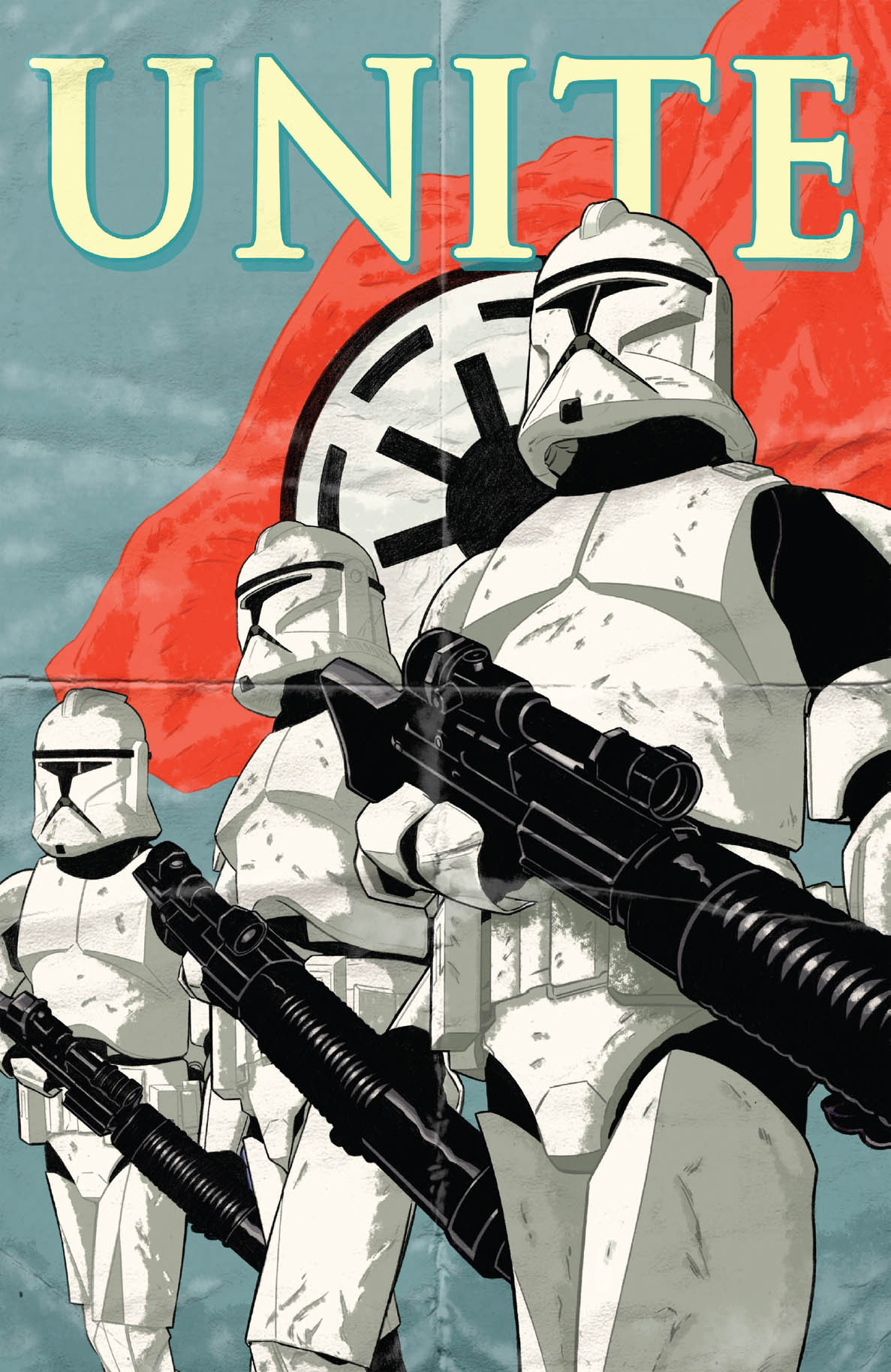
Even though the clone trooper program was discontinued under the Empire, their service during the Clone Wars served as an inspiration for a generation of naturally born humans, both during the conflict and in the years that followed. At the time, the Grand Army of the Republic was exclusively composed of clones derived from a single genetic template, with the exception of the Jedi Generals who led them. Nevertheless, loyal citizens of the Republic desired to contribute to the war effort, and they were encouraged by COMPOR propaganda to purchase war bonds or report acts of sedition to the authorities.
Building upon the carefully crafted symbols and messages of its COMPOR predecessor, the Commission for the Preservation of the New Order (COMPNOR) facilitated the rapid expansion of the military as mandated by Emperor Palpatine. Despite COMPOR's extensive efforts to mythologize the clone troopers and portray them as valiant heroes of the Republic through a constant stream of propaganda, they remained an abstract concept in the minds of the general public. However, while the Grand Army was exclusively comprised of clones, COMPNOR encouraged the galactic populace to serve the state in ways beyond simply buying bonds, reporting treason, or rationing supplies. With the cloning operation on Kamino shut down, ordinary citizens volunteered for military service, aspiring to don the armor of the Imperial stormtrooper and emulate the heroic deeds of the clone soldiers they admired.
The first generation of Dark Trooper created under the Empire's Dark Trooper project consisted of clones who underwent cybernetic enhancements, with over seventy percent of their bodies being replaced by robotic components. As the Galactic Empire progressed, the clone troopers and the Grand Army of the Republic were largely forgotten, becoming a lost generation of underappreciated veterans despite their courageous service. By the end of the war, clones had saved billions of lives throughout the galaxy, and their vehicles and equipment served as the basis for new weaponry, such as the E-11 medium blaster rifle, which was inspired by the DC-15, a common clone weapon.
Clones in the Rebellion
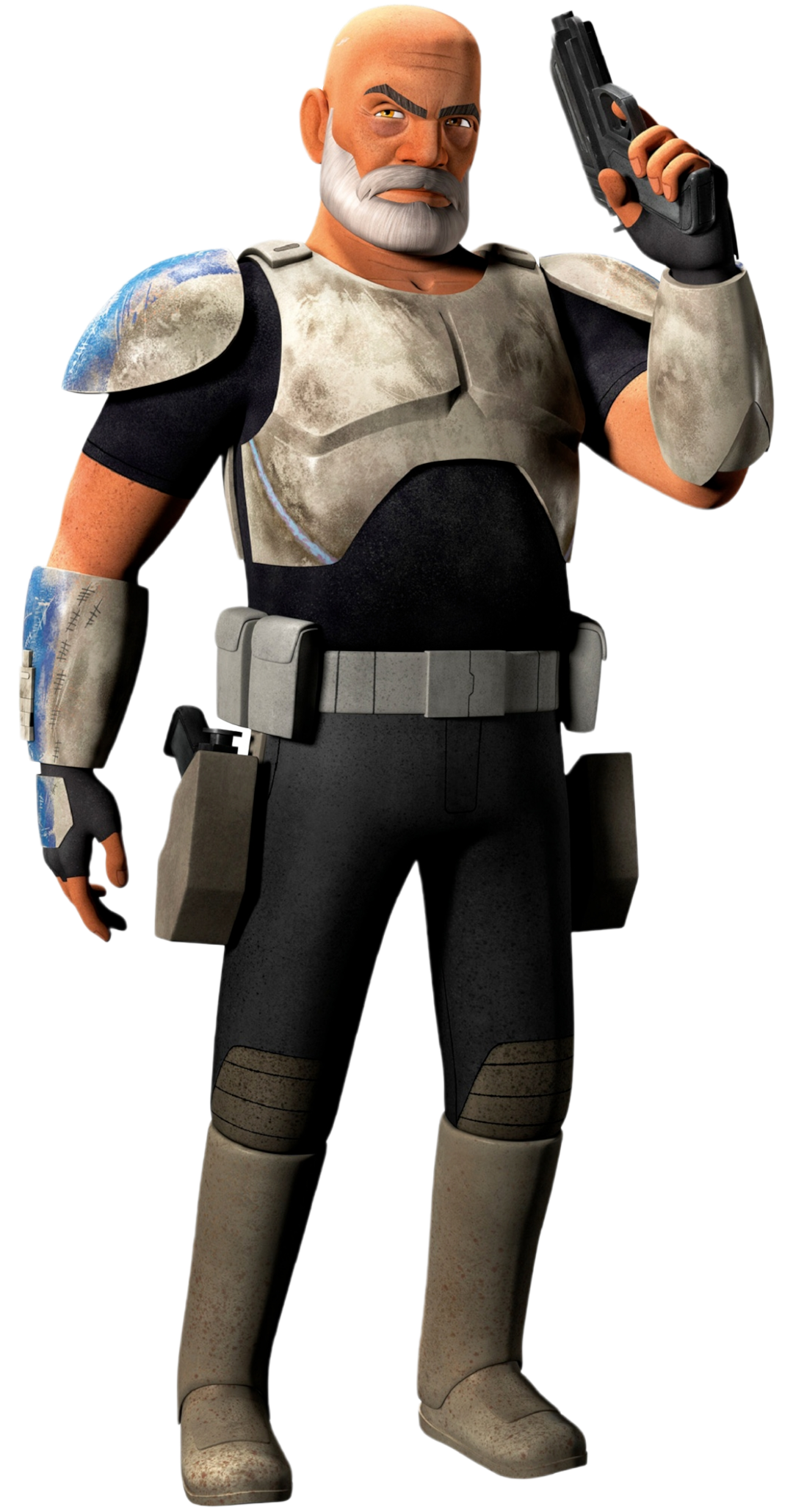
Although most clone troopers remained loyal to the Empire due to their training, ingrained sense of duty, and pre-programmed directives, a small number managed to break free from or resist their programming. Of this select group, even fewer chose to actively rebel against the Empire, often due to their advancing age or particular circumstances. These rebellious clones brought their combat skills and experience to the various resistance groups they joined, and they also possessed valuable knowledge of Imperial strategy and military protocols. While these clones typically operated independently, there were instances where several clones collaborated.
At least one Jedi survivor harbored resentment toward the clones. Kanan Jarrus was deeply traumatized by the events of Order 66, particularly the sudden betrayal and murder of his Master, Depa Billaba, by their own clone troopers. This experience instilled in him a strong sense of animosity toward the clones. Nevertheless, Jarrus and his apprentice Ezra Bridger assisted Rex, Wolffe, and Gregor in achieving victory over Imperial forces on Seelos after Ahsoka Tano encouraged them to recruit Rex into the rebellion. Their victory on Seelos served as definitive proof that the clone troopers were superior soldiers to those who had replaced them. However, even after Rex joined the rebellion, Jarrus initially maintained his grudge, but he eventually came to respect and regard Rex as a friend after the Captain risked his life to save him. After the mission, Jarrus even saluted the clone, which surprised Rex, but he quickly returned the gesture. Following the Rebellion's formal establishment as the Alliance to Restore the Republic, Rex continued to serve, and he was later joined by Gregor and Wolffe for the Liberation of Lothal.
Furthermore, Wildfire, one of Wolffe's former troopers, also joined the rebels and later discovered that his former officer was part of the organization. Upon learning of Wolffe's involvement with the Rebellion, Wildfire participated in a mission to Seelos. During the Liberation of Lothal, Gregor was fatally wounded by an Imperial weapons technician. As he lay dying, he thanked Rex for the opportunity to fight for a cause they had chosen to believe in. Although saddened by Gregor's death, Rex continued to fight for the Rebels and was eventually promoted to the rank of commander within the organization. He participated in the Battle of Endor, which proved to be a major defeat for the Empire due to the deaths of Emperor Palpatine and Darth Vader.
New Republic Era
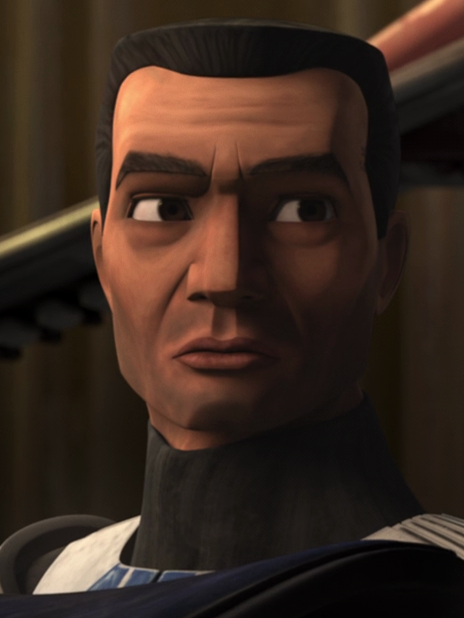
By the time of the New Republic Era, the clones of Jango Fett were believed to be extinct. Although Boba Fett was unique among the Jango Fett clones as an unmodified clone, he was still physically identical to them. His voice revealed his clone origins to Bo-Katan Kryze, who recognized Boba's vocal inflections and tone as those of his genetic template, having heard the late Jango through countless clone troopers.
Reportedly, at least one clone trooper fathered a child before perishing in the Clone Wars. According to his mother, Sconto was the son of that clone. Unlike his clone father, Sconto aged at a normal rate and worked as a merchant in Utapau's Pau City—the location of one of the final battles of the Clone Wars—approximately thirty years after the Battle of Yavin. Sconto was proud of his heritage and consequently harbored resentment toward the Jedi, whom he blamed for his father's death.
Kix, a clone trooper of the 501st Legion, was discovered by the pirate Sidon Ithano more than fifty years after the Clone Wars concluded. Ithano came across a downed Separatist vessel and decided to salvage it, hoping to find valuable kyber crystals that had once belonged to Count Dooku. Instead, he found Kix, who had been in stasis since the late Clone Wars after discovering Order 66. Upon learning about the fall of the Republic and the loss of his brothers, the clone medic was deeply saddened and ultimately joined Ithano's crew due to his expertise in Clone Wars-era technology and his knowledge of former military locations.
First Order

The clones were remembered for their effectiveness within military circles. Determined to revive the Imperial legacy, the First Order initiated a clandestine project focused on conscripting human children into its forces. Through live-fire exercises and First Order propaganda, they were trained and programmed to become the new generation of stormtroopers. As the latest iteration of a prominent symbol of military power in the galaxy, First Order stormtroopers wore stark white armor derived from that of their Imperial predecessors and the Republic clone troopers before them.
While General Armitage Hux had complete faith in his soldiers, believing they were well-trained and programmed, his rival Kylo Ren questioned their loyalty to the First Order and Supreme Leader Snoke. During the Cold War with the New Republic, Ren accused Hux's stormtroopers of being potentially treasonous after FN-2187 betrayed the First Order. The dark warrior suggested that a clone army would be more reliable, citing the rogue trooper as an example of a flaw that could be inherent in the stormtrooper program. In response to Ren's criticism, the general assured him that the stormtroopers were exceptionally reliable in their combat skills and allegiance to the First Order.

During the height of the First Order-Resistance War, the Sith Eternal cult prepared an army of elite soldiers to bolster the First Order's final push for galactic domination. Although named after a revived dark side sect, Sith troopers represented the culmination of decades of Imperial efforts to eliminate individuality from its soldiers. The process of molding individuals into fervently loyal extensions of the Emperor's will involved significant experimentation and refinement since the Clone Wars. Darth Sidious was dismayed to discover that clone troopers exhibited disconcerting levels of free will despite their genetically engineered origins and numerous modifications. While the Sith troopers were not clones, they underwent flash-imprinting and loyalty conditioning that built upon and surpassed the Kaminoan procedures of earlier generations. Consequently, they were far more loyal and machine-like than the First Order's stormtroopers, who were trained from childhood.
Training
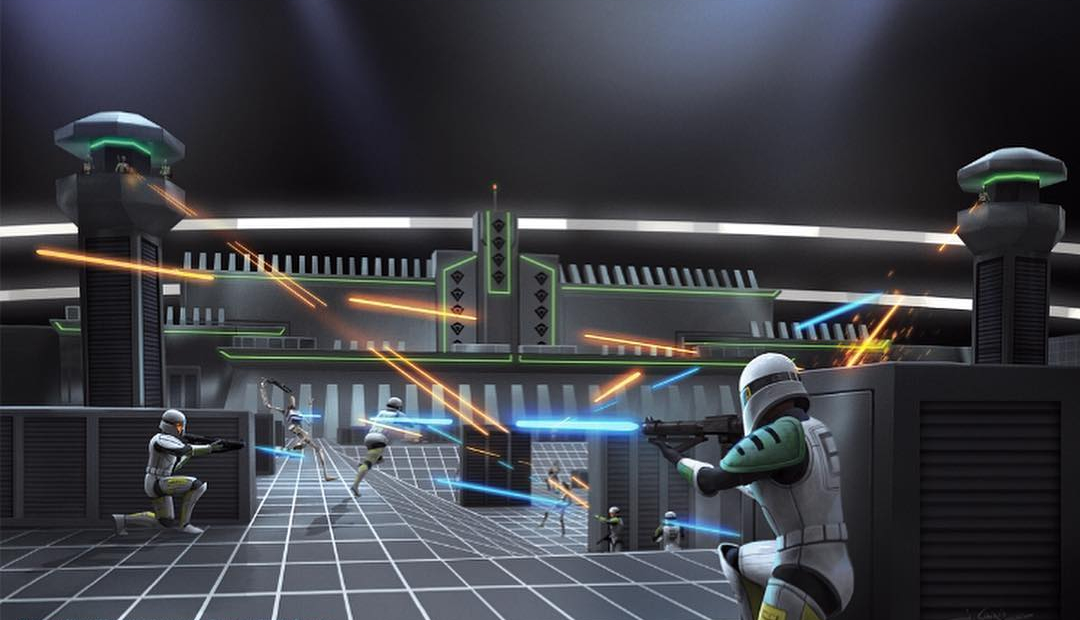
To rapidly generate a large army, the clones were subjected to an accelerated training and aging program. Before reaching maturity, all clones endured painful accelerated growth while undergoing constant training, simulations, and testing. Clones were assigned letter and number identifications to eliminate any sense of individuality, as the cloners and trainers on Kamino viewed them as components of a machine rather than individuals. The clones' "recreation" consisted of endless mental and physical drills that resembled battle situations. Any instances of anger or rebellion were addressed by placing clones in retraining pods, which were essentially isolation tanks. Throughout their time on Kamino, the engineers subtly threatened clones with "disposal" if they failed their tests. As the war progressed, the Jedi intervened to curb the more egregious attitudes, but the Kaminoan engineers continued to view the clones as mere products.
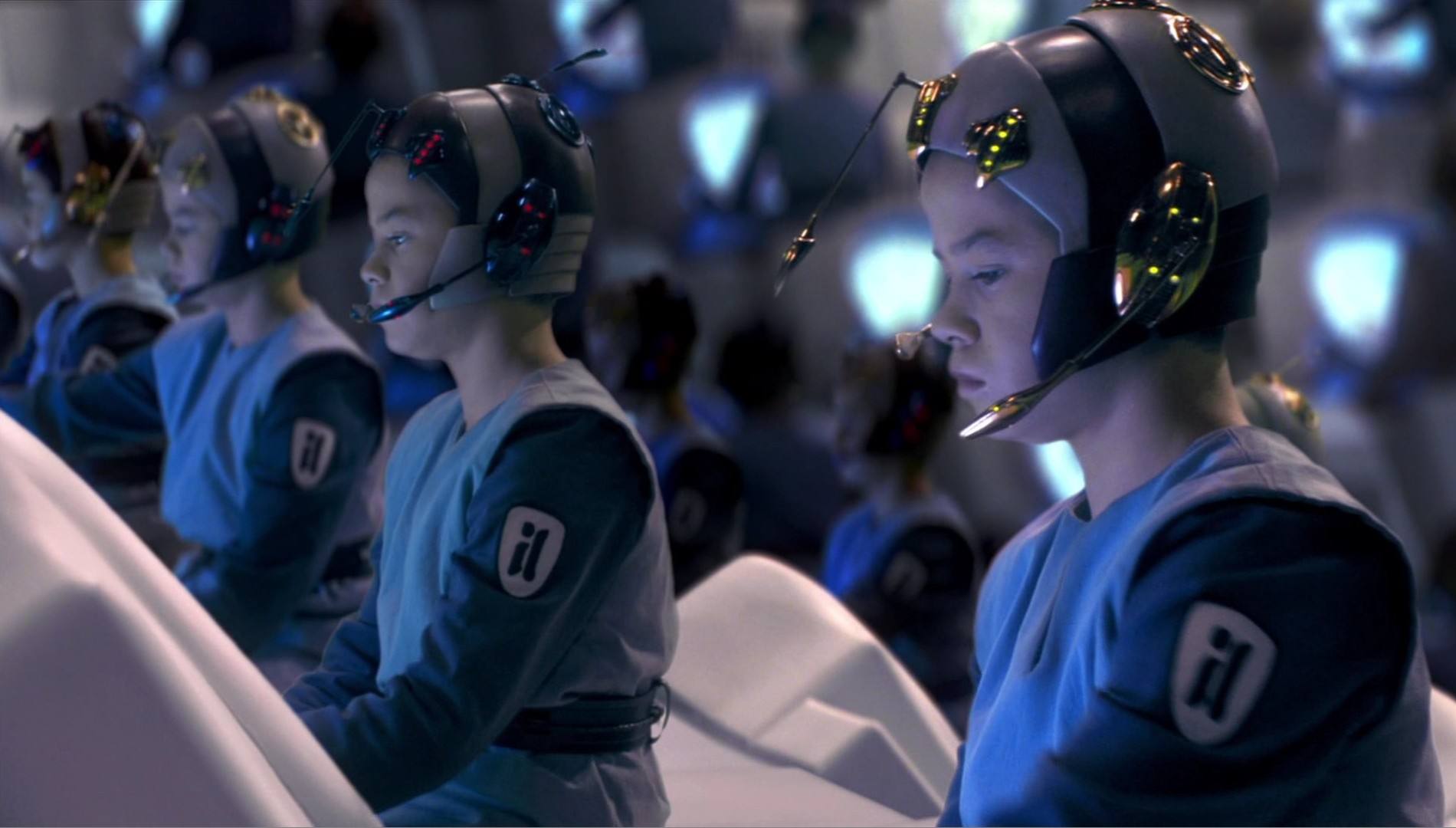
Clone education was highly accelerated, consisting of intense classes that utilized screens and focus-enhancing helmets to aid clones in memorizing information that might prove useful on the battlefield. Young clones were assigned to wear either an "odd-class" or "even-class" helmet to promote teamwork and competition. Helmets with gold fittings were designated as "odd-class," while those with black fittings were "even-class."
As trainees, clones held the rank of clone cadet and were organized into multiple squads to foster cooperation and teamwork. Cadets had various instructors; younger clones were supervised by full-grown clone sergeants, and bounty hunters were hired to oversee the older clones. Clones who failed to complete training could be assigned to maintenance duty. During the Clone Wars, Jedi Master Shaak Ti personally oversaw the training of new generations of clone troopers. ARC troopers were also assigned to evaluate the progress of future troopers. Clones who demonstrated exceptional abilities compared to the average trooper received specialized training to become elite soldiers, such as clone commandos or ARC troopers.
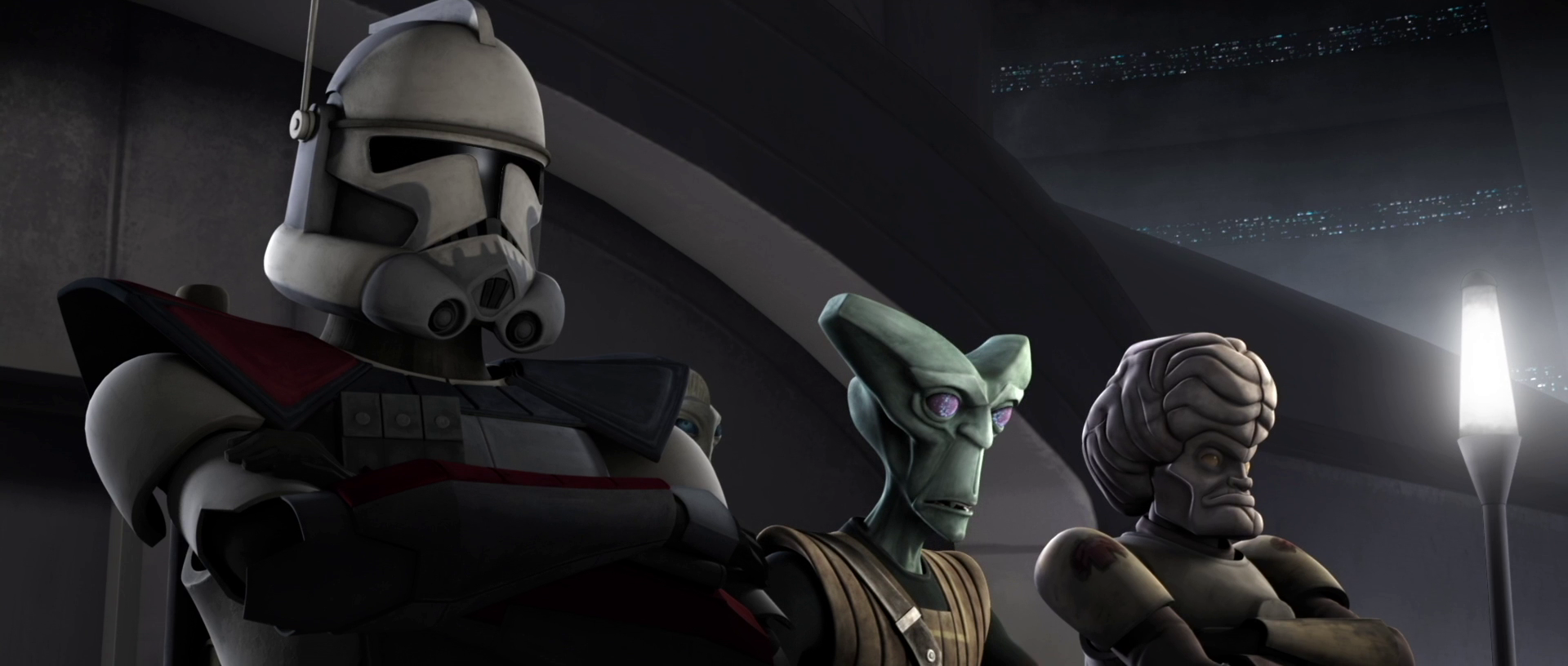
During the war, Shaak Ti observed that some cadets, such as Domino Squad, struggled to complete their training. Lama Su, who considered the Domino clones to be substandard units, attributed their shortcomings to the Kaminoans' need to stretch their remaining supply of Jango Fett's DNA due to the template's untimely death on Geonosis. The prime minister also suggested that a new genotype would be needed to produce more combat-ready clones.
Throughout their time as cadets, the clones lived and trained in Tipoca City, the capital city of Kamino. Consequently, clones came to regard Kamino as their homeworld, as reflected in official records. Training and studying under the soft white lights of the clone facilities, most never experienced rain, oceans, clouds, or the sky until they departed for combat. Nevertheless, from the moment of their birth, the clones were encouraged by their trainers and genetic engineers to leave Kamino and become soldiers among the stars.
As part of the Clone Youth Brigade, at least two clone squads were given a tour of the Venator-class Star Destroyer Endurance during the Clone Wars. This on-site training exercise aimed to assess the cadets' knowledge of the functions and layout of a Star Destroyer. It was also intended to prepare the cadets for their future roles as fully trained clone troopers.
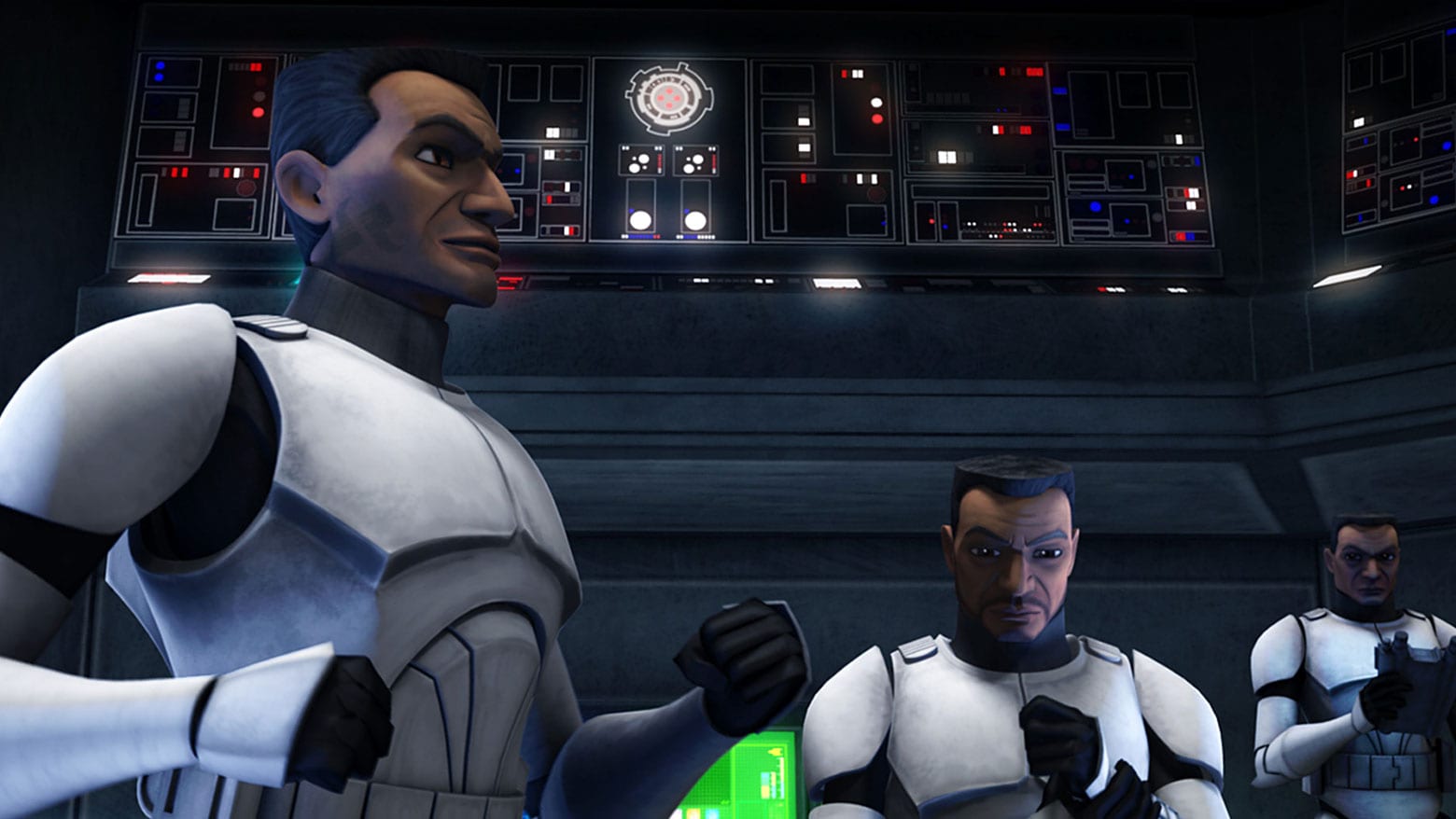
Clones who failed to complete their training were deemed ineligible for military service. Instead, they were assigned janitorial and menial tasks, such as 99. Cadets who successfully completed their trials were promoted to active duty. Despite their trooper status, novice clone troopers were considered rookies or "shiny" by older, more experienced clones. A clone who survived his first battle was no longer considered a shiny but rather a fully qualified soldier of the Republic.
Ahsoka Tano believed that the clones possessed an innate understanding of battle, while trooper Fives once stated that a clone's training was in his blood. Clones were taught Galactic Basic Standard, the language of the Galactic Republic. Clones stationed on a specific planet for extended periods could adopt a patois of the local language. Clones often used jargon and slang—such as "clankers" for droids—that was incomprehensible to civilians or Jedi unfamiliar with military culture.
As the war continued, command permitted clones to pursue hobbies within specific parameters to supplement their off-duty training and improve their mental well-being. This boosted morale and facilitated recovery; however, it also provided clones with insights into the "other side" and civilian life.
Equipment
Phase I clone trooper armor was the initial iteration in the clone trooper armor series. It was issued to clone troopers on Kamino before the Clone Wars and remained in service until it was rendered obsolete by Phase II around the time of the Battle of Mon Cala. Both versions of clone trooper armor could be enhanced with various attachments, such as jetpacks and macrobinoculars. To improve ground movement tracking and coordinate attacks, all clone troopers had a tracking device within their helmets that enabled controllers on Acclamator-class transgalactic military assault ships to better monitor the combat zone.
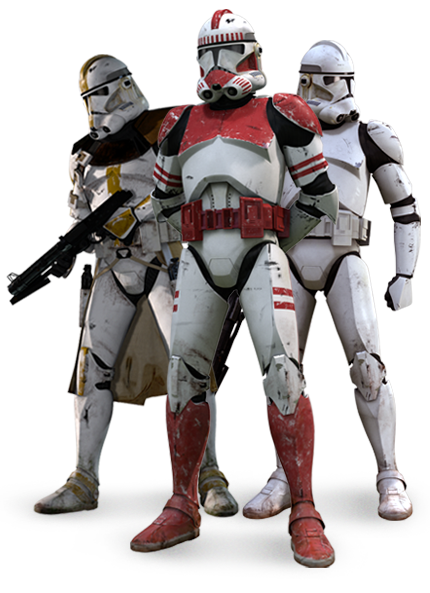
Initially, Phase I armor used color to differentiate clones trained for leadership roles, such as captains and commanders, from standard troopers in the Grand Army of the Republic. As the Clone Wars progressed, color was increasingly used for armor customization and unit identification. This trend continued during the service of Phase II armor but was ultimately abandoned with the creation of stormtrooper armor after the Clone Wars. The distinctive white armor of both phases symbolized honorable defense; however, the creation of the stormtrooper distorted this symbolism into a faceless icon of conformity.
Clone troopers were armed with the DC-15A blaster rifle and DC-15A blaster for long-range combat, as well as blaster pistols for standard-range engagements. They also carried various types of grenades, including Electro Magnetic Pulse grenades and thermal detonators.
With the exception of the Coruscant Guard's red-armored shock troopers, the clone troopers who served the Galactic Empire restored their Phase II armor to its standard white appearance. Under the Jedi's leadership, color was used to distinguish the various units within the Grand Army of the Republic, allowing clones to express their individuality with the Jedi's encouragement. Returning to a force of white-armored soldiers symbolized the loss of Jedi influence and the clones' individuality, replaced by programmed conformity.
Specialized clone troopers
To meet the demands of the diverse situations encountered during wartime, various clone troopers received additional or specialized training. The Clone Wars saw battles fought in numerous environments, leading to the need for specialized equipment.
- Advanced Recon Commandos — Also known as ARC troopers, elite clone troopers who excelled and received further training. [153]
- Advanced Recon Force Scout Troopers — Also known as ARF troopers, clone troopers specializing in stealth, trained to pilot the All Terrain Reconnaissance Transport, and equipped with light armor. [153]
- Biker Advanced Recon Commandos — Also known as BARC troopers, clone troopers equipped to use BARC speeders. [153]
- Clone artillery troopers — Clone troopers forming three-man teams to operate mortars. [15]
- Clone cold assault troopers — Clone troopers equipped with cold-weather gear for operations in frigid environments. [153]
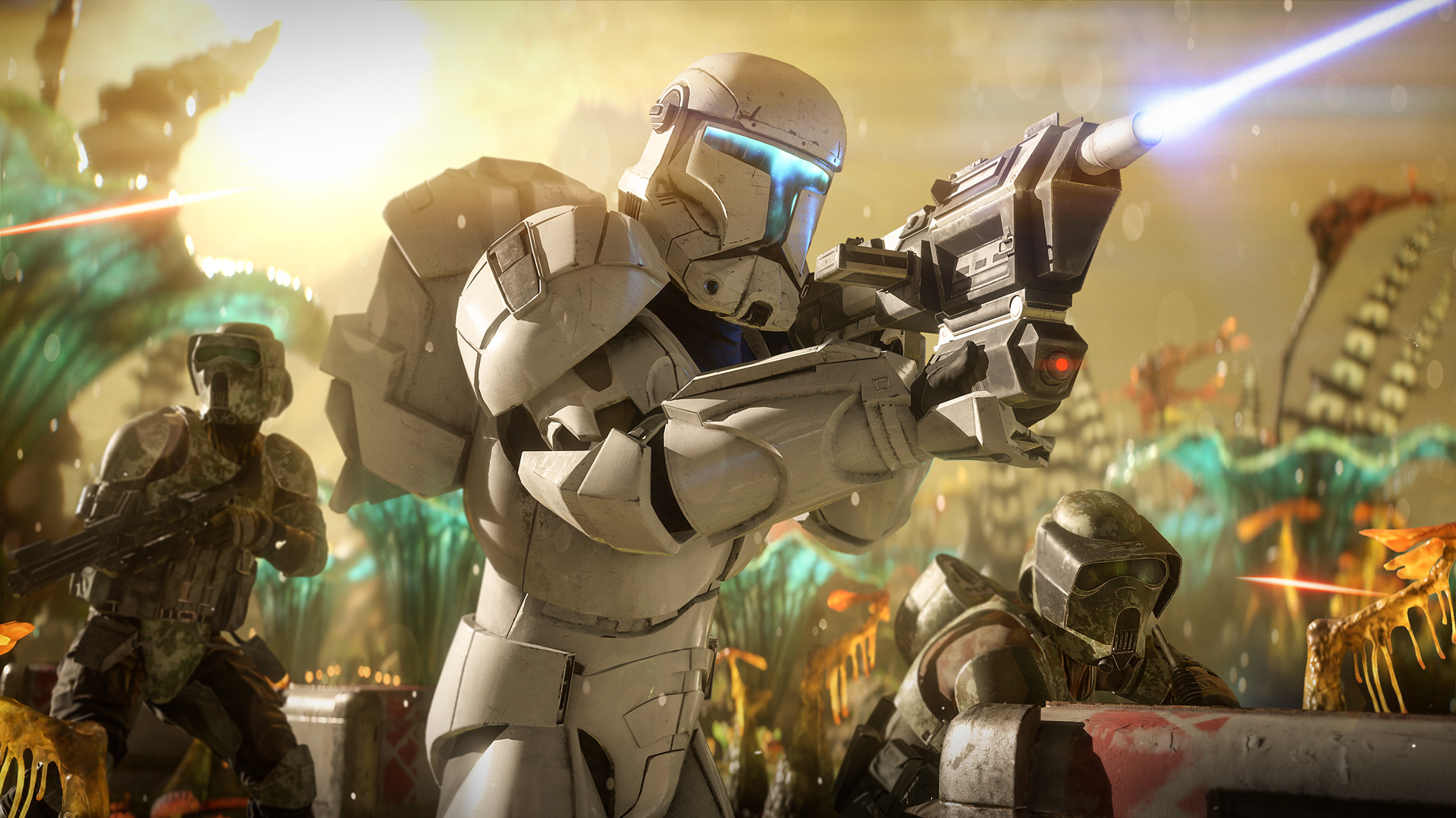
-
Clone commandos — Clone troopers specially bred by the Kaminoans to serve as the elite force of the Grand Army; they received specialized training and equipment. [153]
-
Clone Comms Technicians — Specialized clones equipped with communications equipment, responsible for ensuring proper communication within military units. [154]
-
Clone Engineers — Specialized clone troopers who served as engineers and maintained vehicles in optimal condition. [154]
-
Clone flametroopers — Specialized clone troopers with fire-resistant armor and flamethrowers. [153]
-
Clone gunners — Clone troopers equipped to operate AV-7 Anti-vehicle Artillery Cannons [153] and other artillery pieces, including those aboard starships. [142]
-
Clone jetpack troopers — Clone troopers equipped with a jetpack and missile launcher. [136]
-
Clone trooper officers — Clone troopers serving as officers. [155] Clone medical officers — Clone trooper officers with specialized medical roles.[156] Clone navigation officers — Clone trooper officers assisting in crewing starships in the Republic Navy.[33]
-
Clone medics — Clone troopers serving as medics. [39]
Bomb disposal was a specialty of the clone ordnance specialist.
-
Clone ordnance specialists — These clone troopers underwent specialized training to equip and disarm explosive devices. [153]
-
Clone paratroopers — These clone troopers received training specifically for conducting airborne assaults. [153]
-
Clone riot troopers — These clone troopers were specially trained in the tactics of riot control. [157]
-
Clone scout troopers — These clone troopers were equipped with lighter armor and trained in the art of reconnaissance. [153]
-
Clone SCUBA troopers — These clone troopers utilized specialized aquatic armor and weaponry for underwater combat. [153]
-
Clone shadow troopers — These clone troopers served as the forerunners to the later Imperial shadow troopers. [158]
-
Clone sharpshooters — These clone troopers were specifically trained as expert snipers. [159]
-
Clone shock troopers — These clone troopers were purpose-bred to serve within the ranks of the Coruscant Guard. [160]
-
Clone trooper flight crews — These clone troopers received specialized instruction in the crucial area of ship maintenance. [161]
-
Clone trooper pilots — Bred to expertly pilot starfighters and other vehicles, these clone troopers were equipped with specialized armor. [153] AT-TE Drivers — Clone pilots who controlled All Terrain Tactical Enforcers.[162]
-
Clone X troopers — During the Imperial Era, these clones were highly specialized [163] commando warriors. [164]
-
Dark Troopers — As the original version of the Dark Trooper, these cyborg clone troopers had a significant portion (over 70%) of their bodies replaced with mechanical augmentations. [119]
-
Heavy weapons clone troopers — These clone troopers were equipped with enhanced armor and the formidable Z-6 rotary blaster cannons. [165]
-
Heavy weapons clone troopers — These clone troopers provided vital anti-vehicle support to infantry units. [166]
-
Maintenance duty clones — Due to their inability to engage in frontline combat, these clones were assigned to perform essential maintenance tasks. [140]
-
Special ops clone troopers — These clone troopers were trained in the art of stealth and equipped with advanced technological gear. [153]
-
Stealth clone pilots — These clone troopers were trained to expertly pilot stealth-capable ships and were equipped with specialized protective armor. [161]
Behind the scenes
The clone troopers seen in the Prequel trilogy were brought to life using computer-generated imagery. In Star Wars: Episode II Attack of the Clones, Daniel Logan portrayed the clones as children, Bodie Taylor played them as young adults, and Temuera Morrison embodied the mature versions. Morrison also lent his voice to all of the adult clone troopers. During the production of Star Wars: Episode III Revenge of the Sith, both Morrison and Taylor donned blue bodysuits while portraying clone troopers with visible faces, including characters like Cody, Odd Ball, Jag, and three members of the 212th Attack Battalion who were present during Obi-Wan Kenobi's briefing (Morrison played two in a close-up of Kenobi and Cody talking, while Taylor played the other). Later, their bodysuits were digitally replaced with computer-generated clone armor. Furthermore, a stock image featuring Bodie Taylor as a helmetless Phase I clone pilot, rather than using a new photo of Taylor, was created by digitally cutting Taylor's head from a pre-existing young adult clone stock image and placing it onto the computer-generated pilot body for use in several encyclopedias.
Dee Bradley Baker provided the voice acting for all clone troopers in both Star Wars: The Clone Wars and Star Wars Rebels. Daniel Logan returned to voice the clone cadets in The Clone Wars episodes "Death Trap" and "ARC Troopers." For The Clone Wars, composer Kevin Kiner created the clone fanfare, which served as the theme music for the clone troopers.
A clone trooper named Rattle was initially planned to appear in the novel Servants of the Empire: Edge of the Galaxy by Jason Fry. Fry envisioned the character as a mentor figure to the series' protagonist, Zare Leonis. However, Fry was instructed to remove the character due to its similarity to a plot element in the then-forthcoming Star Wars Rebels Season Two. Within the Rebels series, Rex was reintroduced and assumed the role of mentor to the show's main character, Ezra Bridger.
The 2019 sourcebook Collapse of the Republic from Fantasy Flight Games asserts that clone troopers, during their training on Kamino, lacked the time to develop friendships beyond the bonds expected between soldiers. However, the The Clone Wars episode "Clone Cadets," which portrays Domino Squad during their training on the water world, demonstrates that clones already perceive each other as brothers during this period, with cadets Fives and Echo even going so far as to request a transfer to remain together and support each other. Given that Collapse of the Republic is merely a roleplaying sourcebook, this article presumes that "Clone Cadets" presents the accurate depiction. Another FFG sourcebook from 2019, Rise of the Separatists, claimed that clones tended to regard their fellow soldiers as family, fallen comrades as ancestors, and new recruits as descendants. Nevertheless, various other sources instead establish that all clones view each other as siblings, irrespective of age differences. Consequently, this article assumes that Rise of the Separatists is inaccurate in this regard.