Mandalorian
The Mandalorians, known as the Mando'ade which translates to "Children of Mandalore" in Mando'a, were a culture structured around clans. Its members came from various species and were united by a shared creed, language, and code. They were renowned as skilled mercenaries and bounty hunters. Throughout the history of the galaxy, the Mandalorians, as a socio-cultural group, have significantly impacted the galaxy as legendary warriors and conquerors at different times.
The Mandalorians originated around 9991 BBY on the planet Mandalore, located in the Outer Rim Territories of the galaxy. Their way of life was centered on war and honor. They were ruled by a single leader, the Mand'alor, whose Protectors ensured peace and unity among the warrior clans of their people. Due to their warrior culture, the Mandalorians initiated a number of wars of expansion during the Old Republic-era, colonizing nearby planets like Krownest, Ordo, and Concord Dawn. Consequently, the sector around their homeworld became known as Mandalorian Space.
Over the course of their history, several notable groups of Mandalorian warriors emerged, including Mandalorian crusaders, rally masters, and Mandalorian Neo-Crusaders, all of whom engaged in warfare on the Galactic Republic and the Jedi Order. Legends say that many of these conflicts involved a Mand'alor known as Mandalore the Great.
Despite this, the relationship between the Mandalorians and the Jedi was not always one of hostility. Tarre Vizsla, a human Mandalorian, was inducted into the Jedi Order as a child, creating a unique lightsaber called the Darksaber around the year 1050 BBY. Eventually, Tarre established House Vizsla and claimed the title of Mand'alor. The Darksaber became a symbol of leadership for House Vizsla and the Mandalorian people in general.
However, after Vizsla's death, members of his house attacked the Jedi Temple during the fall of the Old Republic, stealing the Darksaber. They used it to reunify the Mandalorian people and once again wage war against the Jedi Order. Unfortunately, the final battle between the Mandalorian warlords and the Jedi on Mandalore resulted in a cataclysm that transformed much of the planet's surface into a desolate white desert, making it uninhabitable except within sealed dome cities. Following their defeat, the Mandalorians remained isolated in their sector until the High Republic Era, refraining from initiating further wars against the Jedi or the Republic, with whom they coexisted through treaties. Nevertheless, the Mandalorians' warrior culture and desire for conquest persisted, eventually leading to internal conflicts and civil wars.
Even though Mandalore remained under the control of traditional Mandalorian warriors, a large portion of the planet's population had embraced a pacifist movement known as the New Mandalorians, led by the young Duchess Satine Kryze of House Kryze. The traditionalist warriors were compelled to use violence to maintain their hold on power. Eventually, around 42 BBY, a civil war erupted between the pacifist New Mandalorian movement and the martial traditionalists, who were determined to preserve their warrior heritage. The Mandalorian Civil War led to the destruction of Mandalore's capital, Keldabe, and many deaths, including Duke Adonai Kryze, Satine's father. Satine herself required protection from the Jedi Order, as the traditionalists dispatched bounty hunters to target her. However, the traditionalist minority on Mandalore was ultimately defeated in the war and exiled to Mandalore's moon, Concordia. While the Death Watch, a traditionalist group led by Mand'alor Pre Vizsla, sought to reclaim their homeworld, the Old Mandalorians dispersed across the galaxy as mercenaries.
During the Clone Wars, members of the warrior culture aligned themselves with both sides of the conflict, which was secretly orchestrated by the Sith Order. They hired the Mandalorian bounty hunter Jango Fett to serve as the clone template for the Grand Army of the Republic, with Fett's clones being trained by the Mandalorian Protectors. Meanwhile, the Death Watch briefly joined the Confederacy of Independent Systems in an attempt to reclaim Mandalore. Under the New Mandalorian government, Mandalore maintained its neutrality and played a leading role in the Council of Neutral Systems. However, with the backing of the criminal organization known as the Shadow Collective, Death Watch managed to overthrow the ruling New Mandalorian regime. However, Maul, the leader of the Collective, instigated another civil war within the Death Watch, dividing it into the Collective-backed Mandalorian super commandos and the Mandalore resistance, which received support from the Republic. The conflict culminated in the occupation of Mandalore by the Galactic Republic and its subsequent government, the Galactic Empire, while Concord Dawn, the headquarters of the Protectors, was transformed into a protectorate.
Following the rise of the Empire, Bo-Katan Kryze was appointed as Regent of Mandalore, but she refused to obey Emperor Sheev Palpatine. Consequently, she was replaced by Gar Saxon, a former Mandalorian super commando, who was installed as Viceroy over Mandalore, with his rule enforced by the Imperial Super Commandos. Like many other planets in the galaxy, Mandalore suffered under Imperial rule, with weapons like the Arc Pulse Generator being developed to subdue and control the warlike civilization. The Mandalorian Protectors, under Fenn Rau, were forced to serve the Empire on Concord Dawn. However, during the Galactic Civil War, the Empire's control over Mandalore was challenged by the Mandalorian resistance, which was supported by the Alliance to Restore the Republic. Fenn Rau also joined the resistance after the destruction of the Protectors. Following the deaths of Gar Saxon and his brother and successor, Governor Tiber Saxon, Bo-Katan Kryze, after receiving the Darksaber from Sabine Wren of Clan Wren, claimed the title of Mand'alor. Kryze united the Mandalorian resistance as another civil war broke out on Mandalore, as part of the galaxy-wide struggle against Imperial rule. However, Kryze's reign as Mand'alor was short-lived, and the Empire initiated the Great Purge of Mandalore, resulting in the deaths of millions of Mandalorians during the Night of a Thousand Tears. Kryze also lost the Darksaber to Moff Gideon.
After the fall of the Empire and the rise of the New Republic, and following the Empire's Great Purge of Mandalore, the surviving Mandalorians went into hiding. One such group, the Tribe, concealed itself in a covert on Nevarro. The Tribe, secretly part of the Children of the Watch, adhered to the Way of the Mandalore, an ancient religion that had become marginalized in mainstream Mandalorian society. However, the Tribe was forced to relocate after its members exposed themselves to protect one of their own, the bounty hunter Din Djarin, from an Imperial remnant, which subsequently eliminated most of the Tribe's members. Djarin, tasked with returning the Force-sensitive foundling Grogu to the Jedi Order, received assistance from several notable individuals, including Bo-Katan Kryze, the former ruler of Mandalore, and Boba Fett, the son of Mandalorian bounty hunter Jango Fett.
Once the search for Grogu concluded, Djarin attempted to rejoin the Tribe, which had relocated to the Glavis Ringworld, only to be expelled by its members upon discovering that he had removed his helmet, violating the Way of the Mandalore. Djarin and Fett once again joined forces, leading Fett's gotra in its war against the Pyke Syndicate. During this conflict, he was reunited with Grogu, who had chosen to rejoin him. Fett and Djarin ultimately defeated the Pykes, enabling Fett to establish himself as Tatooine's dominant crime lord, while Djarin and Grogu departed from the planet. Later, Djarin was readmitted into the Tribe after traveling to Mandalore and cleansing his transgression by bathing in the Living Waters. In this same adventure, Bo-Katan also bathed and therefore was also unexpectedly welcomed as a member of the Tribe. However, the development allowed Kryze to walk both the path of the Way and unorthodox Mandalorian society, paving the way for her to reclaim the Darksaber and lead a united Mandalorian people in the reconquest of Mandalore.
Society and culture
The Mandalorian people
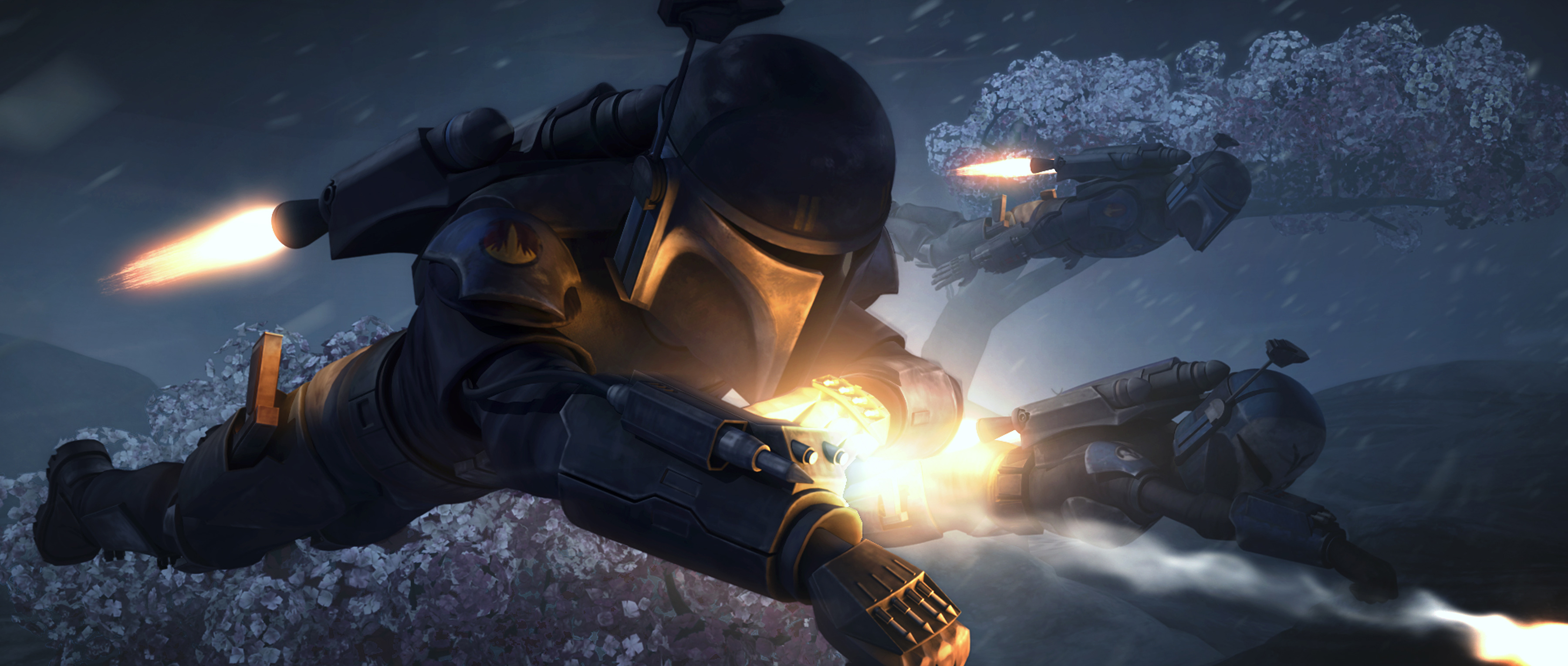
The Mandalorians were among the galaxy's most formidable warriors. As proud warriors, they viewed combat as central to their culture, individual identity, and spirit. Mandalorians adhered to a strict code of honor, which could be invoked to resolve disputes through one-on-one combat, typically resulting in the death of one participant. This inclination and tradition for single combat extended beyond matters of justice, as Mandalorians also sought single combat for the honor of battling a worthy opponent, such as a Jedi Knight, and even used it to settle leadership disputes. However, some members of House Vizsla refused to accept non-Mandalorians like Maul from ever becoming ruler of Mandalore via such traditions. Maul himself had Prime Minister Almec deceive the Mandalorian people by falsely claiming that Satine Kryze had killed Pre Vizsla, Maul's predecessor.
House Vizsla adopted the Darksaber as a symbol of authority and leadership to unite the Mandalorians. This revered weapon was passed down to new leaders who defeated the previous leader in combat, with any other means of claiming it considered illegitimate. In addition to Galactic Basic Standard, Mandalorians spoke Mando'a, and its written form was known as Mandalorian.
The Mandalorian clan structure was hierarchical, with the Mand'alor at the top and the Mandalorian Protectors enforcing their rule. Below them were the political factions known as houses, composed of family clans. House Vizsla, for example, included Clan Vizsla and Clan Wren. During the Clone Wars, under the leadership of Duchess Satine Kryze and the New Mandalorian government, the Mandalorians largely rejected their martial traditions but maintained a police force and secret service equipped with electropoles and shields.
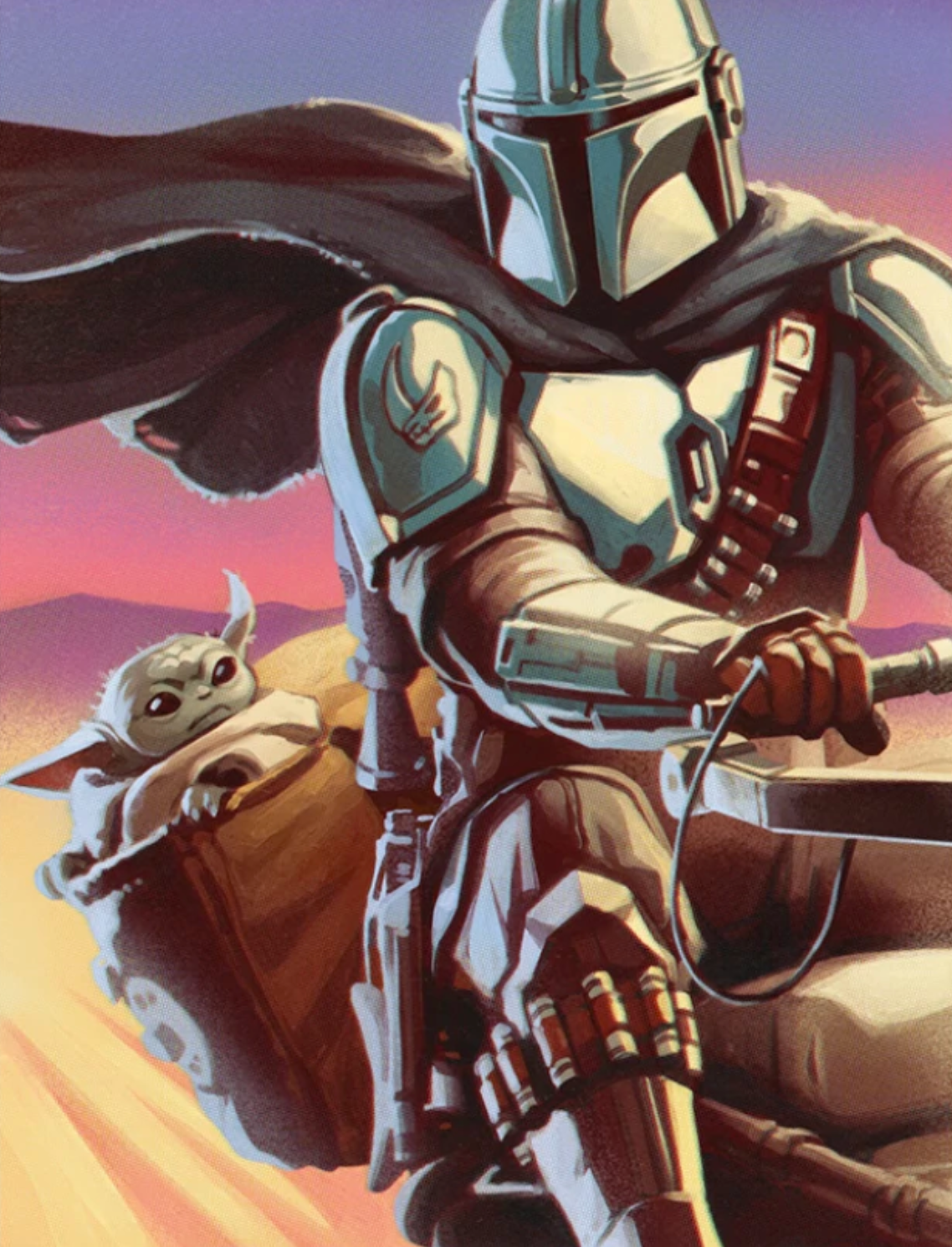
While Mandalorians were typically human, being human was not a requirement for becoming one. Instead, adherence to the Mandalorian Creed was essential. Therefore, individuals, including non-humans, could be adopted into the Mandalorian creed as foundlings, children raised to become Mandalorian warriors. Followers of the Creed considered foundlings as the future, and any Mandalorian caring for a foundling was obligated to either reunite it with its kind or raise it as their own child. When a foundling reached adulthood, if they had not been reunited with their kind, they could choose to leave or join the Mandalorians, becoming an apprentice. According to the Creed, saving a foundling was the highest honor. Although Mandalorians who had been foundlings were treated equally to other Mandalorians, with the right to bear their armor and form their own clans, discrimination against foundlings was observed within Mandalorian organizations, including members of the Nite Owls, who claimed that former foundlings lacked Mandalorian blood.
Notable foundlings included Grogu and Din Djarin, both of Clan Mudhorn, as well as the renowned Mandalorian bounty hunter Jango Fett. Orthodox Mandalorians, such as the Children of the Watch, followed ancient religions like the Way of the Mandalore. Mandalorians who followed the Way did not consider others as true Mandalorians, while mainstream Mandalorians viewed the Children of the Watch as religious zealots. Pog soup was a traditional Mandalorian dish, yet Din Djarin, a Child of the Watch, had never tasted it before meeting Bo-Katan Kryze, which amused her.
Gear, combat, and art
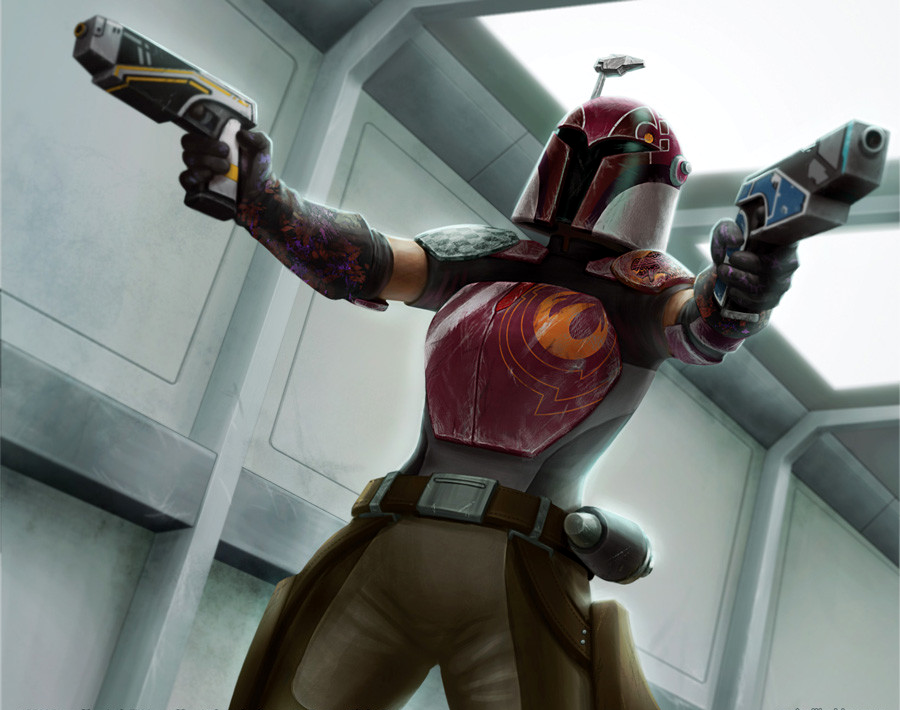
Mandalorian Din Djarin often stated that weapons were integral to a Mandalorian's religion. Jedi Kanan Jarrus once complained that Mandalorians seemed to resolve problems only by shooting. Sabine Wren, a young Mandalorian and friend of Jarrus, once warned against standing between "a Mandalorian and a weapons package."
Mandalorian armor had a legendary reputation, inspiring fear throughout the galaxy. It was visually distinct with its honeycomb plate patterns and menacing T-shaped visors. The armor was crafted from beskar, an exceptionally durable and malleable metal. The mining and tempering of beskar was a key Mandalorian innovation. This metal was exclusively found on Mandalorian worlds. Forging beskar into armor was an ancient tradition and a vital aspect of Mandalorian culture, carried out by Mandalorian Armorers, who could also forge beskar into other equipment like whistling birds. Beskar was also used to create weapons like crushgaunts and beskads.
In addition to their renowned armor, Mandalorian warriors were equipped with anti-Jedi tools, including jetpacks, magnetized boots, heads-up displays, and vambraces that featured weaponry and tools designed to counter the Force abilities of the Jedi. Some of this weaponry not only aided in combat but also mimicked Jedi abilities, such as wrist-mounted sonic repulsors that knocked objects away like a Force push. By the Imperial Era, the WESTAR-35 blaster pistols produced by Concordian Crescent Technologies were a popular weapon among Mandalorians. Other weapons used by Mandalorians included the MT-97 pistols produced by Mandalore Technologies and the GALAAR-15 blaster carbine. The JT-12 jetpack and Z-6 jetpack, both capable of launching missiles, were also used by the Mandalorians. The Rising Phoenix was a training program Mandalorians undertook to enhance their jetpack skills. The archetypal Mandalorian starfighter design was the Kom'rk-class fighter/transport.
The Mandalorians were fiercely protective of their armor and beskar, claiming exclusive ownership and refusing to give it to anyone outside their warrior culture. The Mandalorian warrior Din Djarin only allowed Boba Fett to reclaim his familial Mandalorian armor after learning of Fett's Mandalorian heritage. However, despite the Mandalorians' claims of exclusive ownership, several non-Mandalorians, such as crime lord Dryden Vos, Trandoshan big game hunter Garnac, and Tempest Runner Lourna Dee, possessed Mandalorian armor. Furthermore, Boba Fett's notoriety led many bounty hunters to imitate the skilled mercenary by wearing imitation Mandalorian armor, which was readily available in the bounty hunter profession.
Additionally, some non-Mandalorian individuals also sported beskar equipment, such as Enfys Nest, who had beskar vambraces, and a unidentified Arcona bounty hunter, who wore a set of beskar armor. Despite not wearing a full set of Mandalorian armor, bounty hunter Carib Diss possessed a vambrace equipped with whistling birds. During her alliance with Mandalorians, Ahsoka Tano was given beskar equipment.
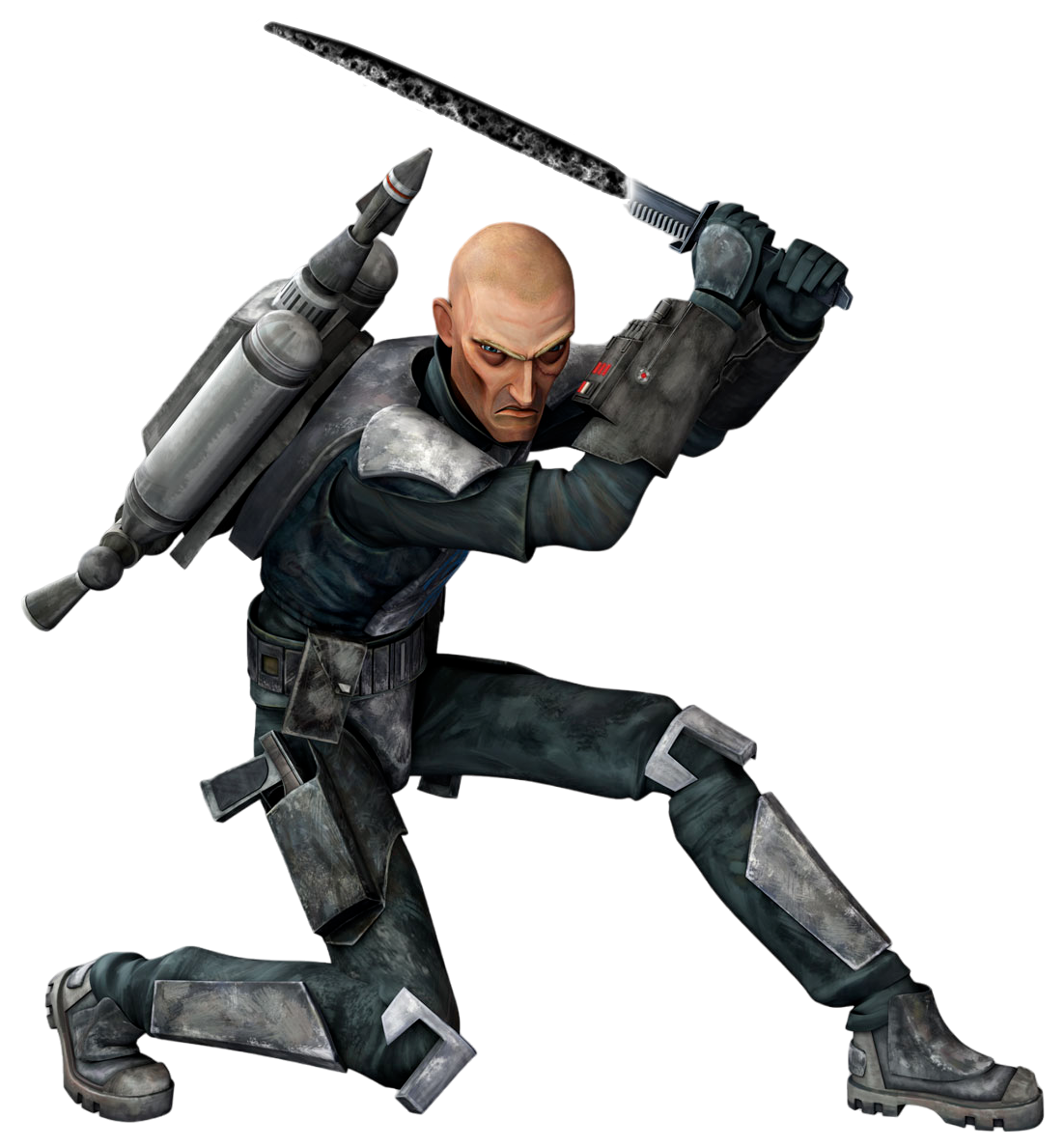
Mandalorian warriors had advanced combat training from their numerous wars predating the Republic. However, their signature combat style developed during conflicts with the Jedi. This style involved a mix of melee, ranged, and hand-to-hand techniques, incorporating vambrace technology to surprise Jedi Knights in combat, allowing the Mandalorian to defeat them. Mandalorian warriors continued to use this combat style against the Jedi and other opponents. They were also known for performing headbutts called Keldabe kisses, a term named after Mandalore's former capital, Keldabe.
The Darksaber became a feared weapon during the Old Republic era as Mandalorian warriors of House Vizsla used it to slay many Jedi. When the Jedi claimed the weapon and stored it in the Jedi Temple, Mandalorian warriors would raid the Temple to reclaim the weapon, which had become a symbol of their warrior culture. During the Clone Wars, the weapon also symbolized leadership of Death Watch and House Vizsla.
Cubism was a popular Mandalorian art movement during the Clone Wars. After the war, paintings depicting the horrors of war were repurposed to glorify it. Mandalorians typically favored strong angled and hexagonal lines, such as diamond and honeycomb shapes, in their architecture, vehicles, clothing, and even haircuts. The Darksaber notably reflected this style, with an angular pommel, hand guard, and blade emitter. Sabine Wren, a Mandalorian and member of the Spectres, was a talented graffiti artist who personalized and painted her armor. A statue of Tarre Vizsla was erected on Mandalore, symbolizing hope and Mandalorian history. When the Empire built an outpost on the statue, some Mandalorians considered it offensive and destroyed the outpost to restore the statue's appearance. Several Mandalorians decorated their beskar armor with their clan symbols. In addition, some Mandalorian armor bore the mythosaur skull emblem, a traditional symbol in Mandalorian iconography.
History
The Mandalorian crusades and early expansion
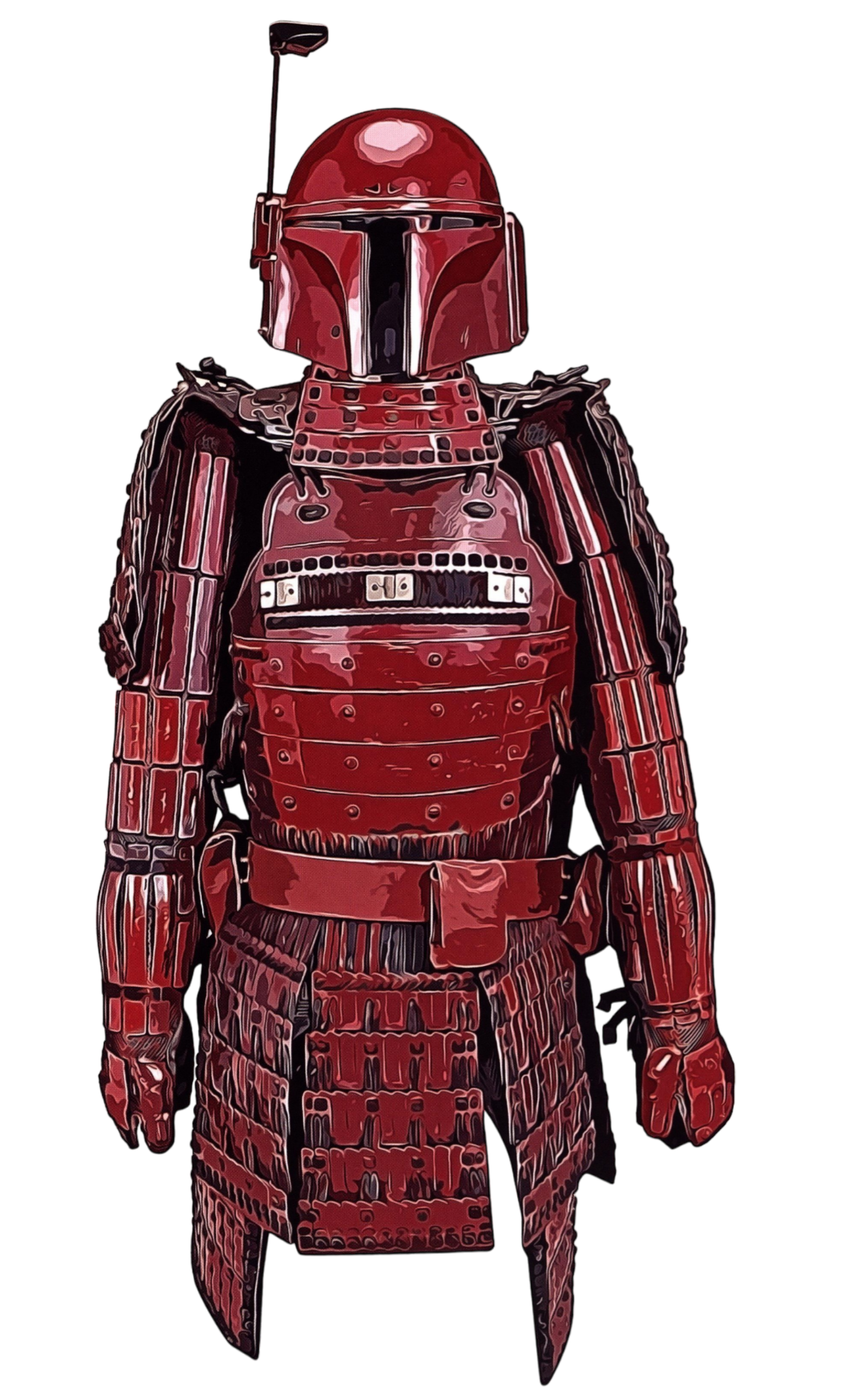
Emerging from the planet Mandalore situated in the Outer Rim, around 9991 BBY, the history of the Mandalorians tells of a people of warriors who became feared throughout the galaxy, well-known as mercenaries, bounty hunters, and formidable warriors. In ages past, they famously rode mythosaurs, and the skull of the mythosaur became a traditional symbol in Mandalorian iconography. However, these creatures were thought to have become extinct long before the Mandalorian cataclysm. Even before the dawn of the modern Galactic Republic, their existence was defined by war, and their exploits led to the widespread belief that the Mandalorians were the galaxy's most skilled warriors. Their interactions with the galaxy at large cemented the Mandalorians as a legendary people, who would play a significant role in multiple eras of galactic history.
A specific group of Mandalorian warriors, known as the Mandalorian crusaders, initiated wars against numerous other groups with the aim of conquering their worlds. These armored warriors, armed with swords, were notorious for their willingness to devastate entire planets during their crusades. The crusaders successfully conquered planets such as Krownest and Concord Dawn, the latter of which suffered extensive damage, including the fracturing of almost a third of its planetary mass into space debris. During the Old Republic-era, Mandalorian rally masters, identifiable by their distinctive red armor, functioned as battlefield commanders throughout the Mandalorian wars of expansion.
Ultimately, the crusaders extended their reach into the Inner Rim, where they devastated the planet Ubduria because of their disdain for the native Ubdurians, whom they considered dishonorable cowards. In days of old, the Mandalorian Neo-Crusaders were a notable group of Mandalorian warriors. The Qel-Droma Epics recount how the Mandalorian Crusaders at one time served under the command of the fallen Jedi Knight Ulic Qel-Droma from the Iron Citadel on Empress Teta, and rode Basilisk war droids in battle. Throughout the history of Mandalore, a unified Mandalore proved unbeatable by any external force. However, internal divisions and the resulting conflicts invariably led to their ruin.
War against the Jedi
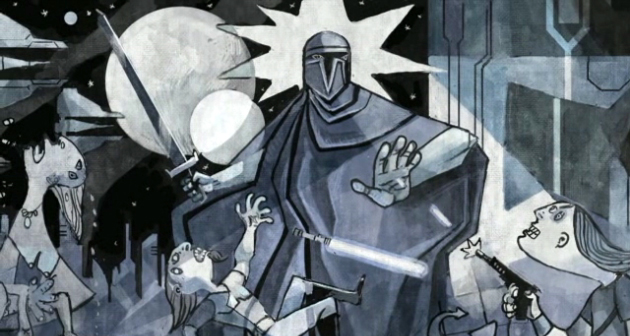
The crusades of the Mandalorians eventually brought them into conflict with the Jedi Order and the Republic that they protected. Ancient songs tell of Mandalore the Great, who held the title of Mand'alor, being involved in the conflict. The Mandalorians were initially taken aback by their first encounters with the Jedi Knights: their employment of the Force and the powers it granted presented an unprecedented challenge. However, the Mandalorians' inherent pride prevented them from accepting this disadvantage, and they started developing methods to overcome the Jedi's abilities. This resulted in significant advancements in Mandalorian technology, especially in their weaponry and iconic armor. They also created a fighting style that integrated all of their skills and equipment to effectively counter the Jedi's supernatural abilities. With these new technologies, the Mandalorians began to secure victories in their confrontations with the Jedi, and their warriors gained a reputation for being able to confront and defeat Jedi Knights. This long-lasting conflict spanned generations, creating an enduring animosity that persisted through multiple wars and was still remembered by the wider galaxy millennia later during the Clone Wars. These battles between the Mandalorians and the Jedi Order were immortalized in cubist murals displayed in Mandalore's capital city, Sundari, as well as on the moon Concordia.
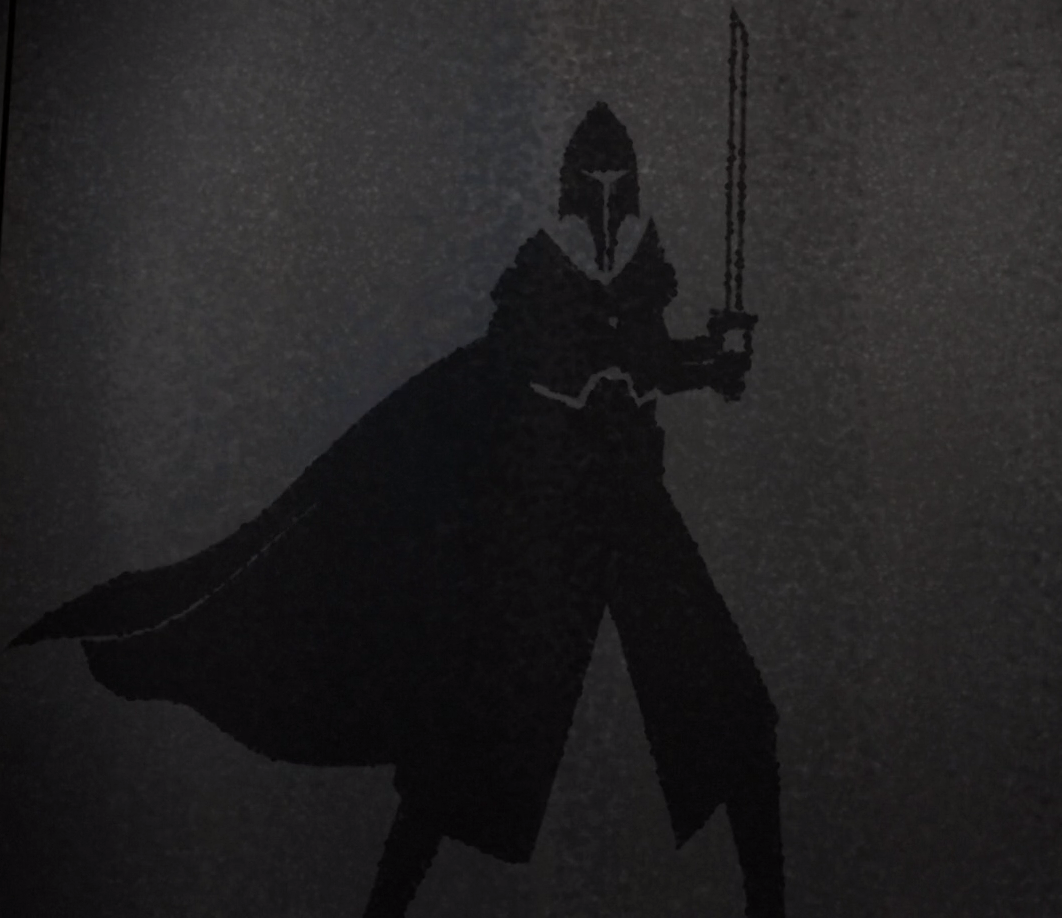
Despite their frequent conflicts, the Mandalorians and the Jedi did not always clash. The most notable instance of cooperation was when Tarre Vizsla, a Mandalorian by birth and the founder of the influential House Vizsla, was accepted into the Jedi Order as a child. True to his Mandalorian heritage, Vizsla distinguished himself from his fellow Jedi by crafting a unique lightsaber known as the Darksaber. At some point, Tarre Vizsla became the Mand'alor, the sole ruler of Mandalore and an esteemed figure among his people. After his death, the Jedi recovered the Darksaber and returned it to the Jedi Temple on Coruscant. The Mandalorians later honored Vizsla by erecting a large statue in his likeness on Mandalore to solidify his legacy.
During the final centuries of the Old Republic, the Mandalorians launched an attack on the very core of their enemies' power: members of House Vizsla infiltrated the Jedi Temple on Coruscant and stole Tarre Vizsla's Darksaber. They then utilized the saber to conquer all of Mandalore, uniting the various houses and clans across their territory.
Decline
The devastation of Mandalore
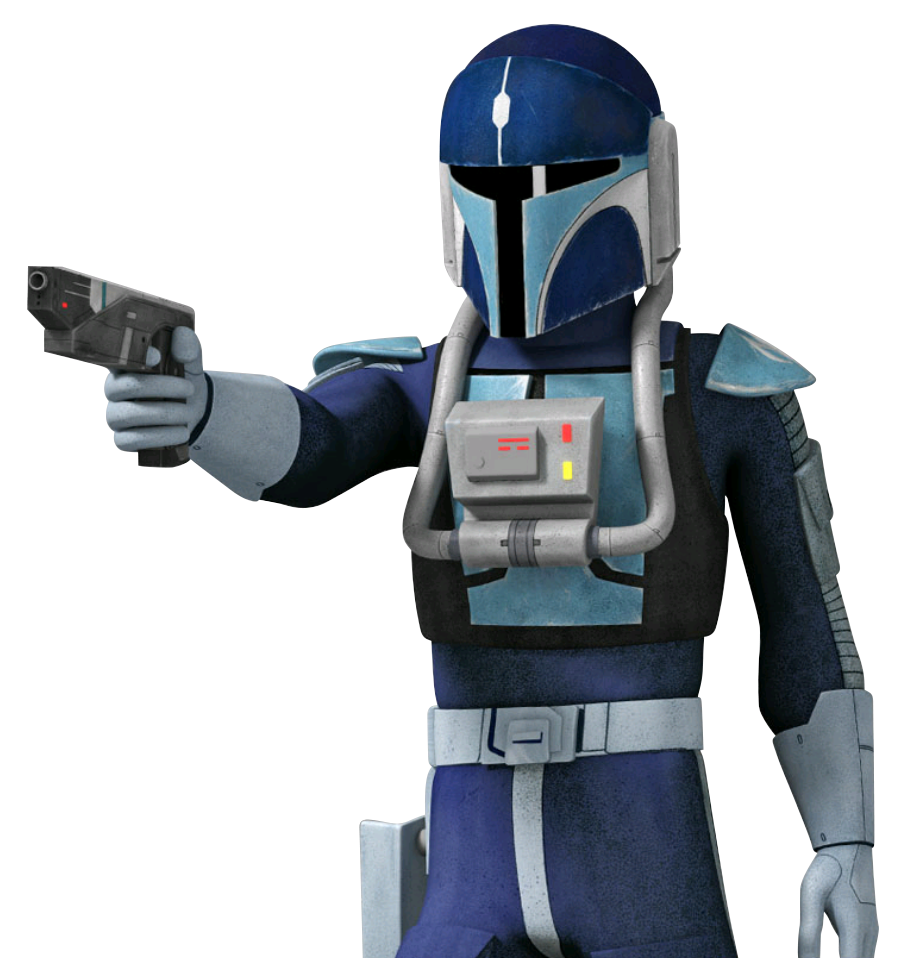
Despite the unification achieved by House Vizsla, the Mandalorians' inherent warrior nature prevented it from lasting. Continuous warfare and relentless campaigns of conquest devastated Mandalore. Warlords from different clans arose, battling both the Jedi and each other. The last significant conflict between the Mandalorian warlords and the Jedi took place on Mandalore itself, resulting in a cataclysmic event that ravaged the planet, turning much of its surface into a barren, white desert.
This event brought an end to the war between the Mandalorians and the Jedi, as well as the Mandalorians' dreams of expansion. The devastation of their homeworld led to a temporary focus on reconstruction; the uninhabitable conditions on Mandalore's surface forced them to adapt, much like they had adapted to the Jedi's use of the Force. Rather than abandoning Mandalore, they built sealed dome cities, such as Sundari, the capital. Other Mandalorian clans opted to settle on planets within the Mandalore sector, like Clan Wren on the icy planet of Krownest, while the Mandalorian Protectors established a base on the third moon of Concord Dawn.
Following the emergence of the new Galactic Republic as the dominant galactic government after the Jedi Order and Republic's final victory over the Sith in the last Jedi-Sith War, the Mandalorians remained relatively peaceful, although their warrior culture and desire for conquest persisted. As the High Republic Era progressed, the Mandalorians did not cause any problems for the Republic. During the Battle of Kur in the High Republic Era, Admiral Pevel Kronara of the Republic Defense Coalition noted that the Mandalorians had been relatively peaceful since before he was born.
Pacifism
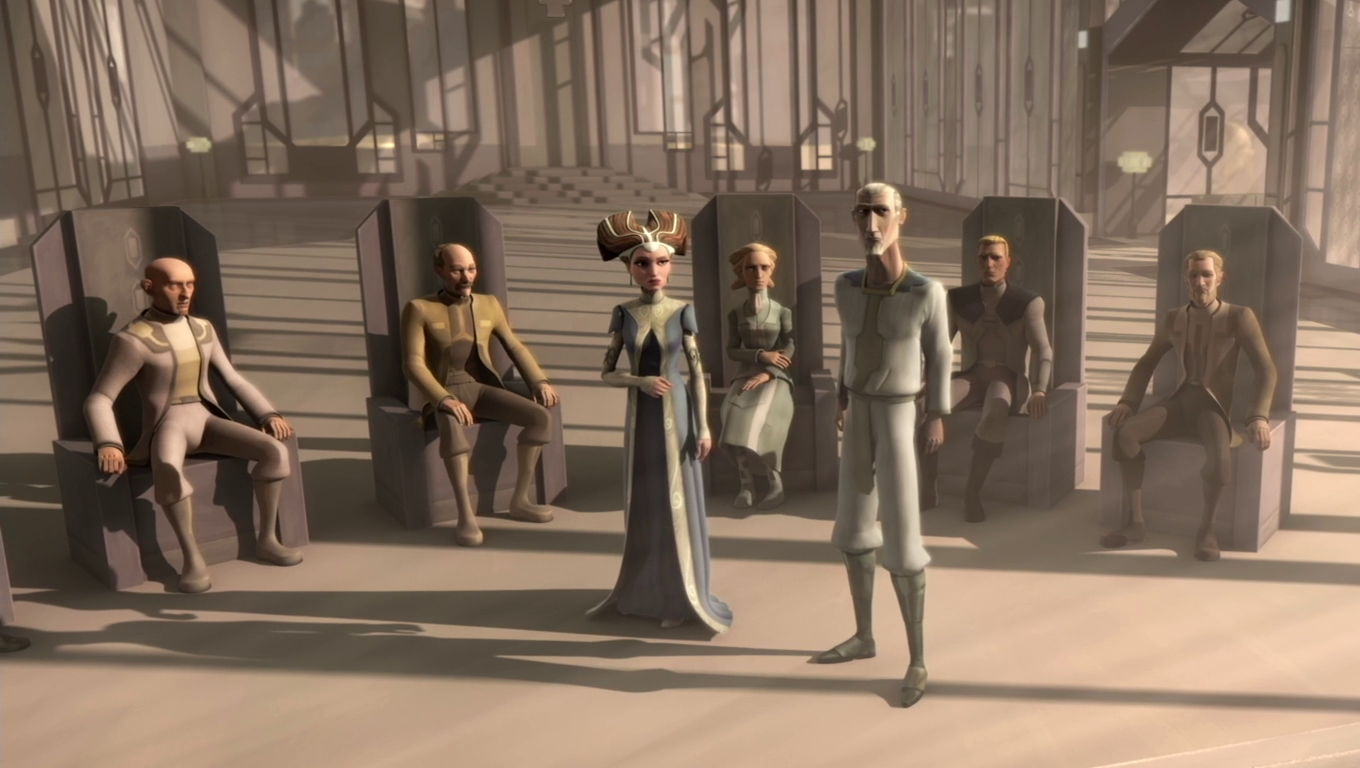
In the years leading up to the Invasion of Naboo, a new conflict erupted among the Mandalorian people: the Great Clan Wars. This civil war was fought over competing ideologies within Mandalorian society, including traditionalists who supported Mandalore's warrior past and the New Mandalorians, led by Satine Kryze. The New Mandalorians rejected the warrior past, and instead embraced pacifism. The Mandalorian Protectors of Concord Dawn, an elite group of warriors dedicated to defending the Concord Dawn system, were also involved. At the conclusion of the civil war, Satine Kryze became the Duchess of Mandalore, and the warrior clans were exiled to Concordia. Some of these clans evolved into Death Watch, plotting a coup against the new regime, while others left Concordia and resettled elsewhere in the galaxy, becoming the Old Mandalorians. These Old Mandalorians became private mercenaries, with no desire for revenge.
At some point before 32 BBY, a series of conflicts known as the Mandalorian Civil Wars took place, in which the Mandalorian commando and foundling Jango Fett participated. It was during these wars that the skilled warrior acquired his distinctive Mandalorian armor. While her ideals faced violent opposition from some Mandalorians, such as Death Watch, Satine gradually rebuilt from the damages of the war. The extensive loss of life instilled in Satine a deep hatred of violence, leading her to become a staunch pacifist. She reformed the Mandalorian way of life, and established a Mandalorian Government Council comprised of several ministers, a cabinet led by a Prime Minister. By the time of the Clone Wars, Almec held this position. Under her leadership, Mandalore flourished and evolved into a modern, peaceful society. This new government eventually joined the Galactic Republic.
Advent of the Clone Wars

In the Republic's final years, Jango Fett was regarded as the most skilled bounty hunter in the galaxy. His reputation attracted the attention of the Sith Order, who offered him the role of clone template for the Grand Army of the Republic on Kamino. Fett accepted the offer, and the Kaminoan cloners used his genetic material to create genetically modified clone troopers, as well as two unaltered clones, Omega and Alpha, the latter of whom Jango adopted as his son, naming him Boba Fett and teaching him their family's profession. The Mandalorian armor Fett wore inspired that of the clone troopers. Furthermore, the Mandalorian Protectors assisted the Republic in training the clone troopers, with at least one of Fett's clones, Bacara, being trained by an ex-Journeyman Protector.
Fett's clones served as the Republic's main military force during its war against the Confederacy of Independent Systems, a galaxy-wide conflict known as the Clone Wars. As the Clone Wars began, Satine Kryze ensured that Mandalore and the New Mandalorians remained neutral and continued to prosper. She then became leader of the Council of Neutral Systems, a Galactic Senate conglomerate of 1,500 star systems that wished to avoid the conflict. Despite this, both the Republic and CIS exerted considerable pressure on the Duchess to try and convince her to join their respective sides.
Resurrection
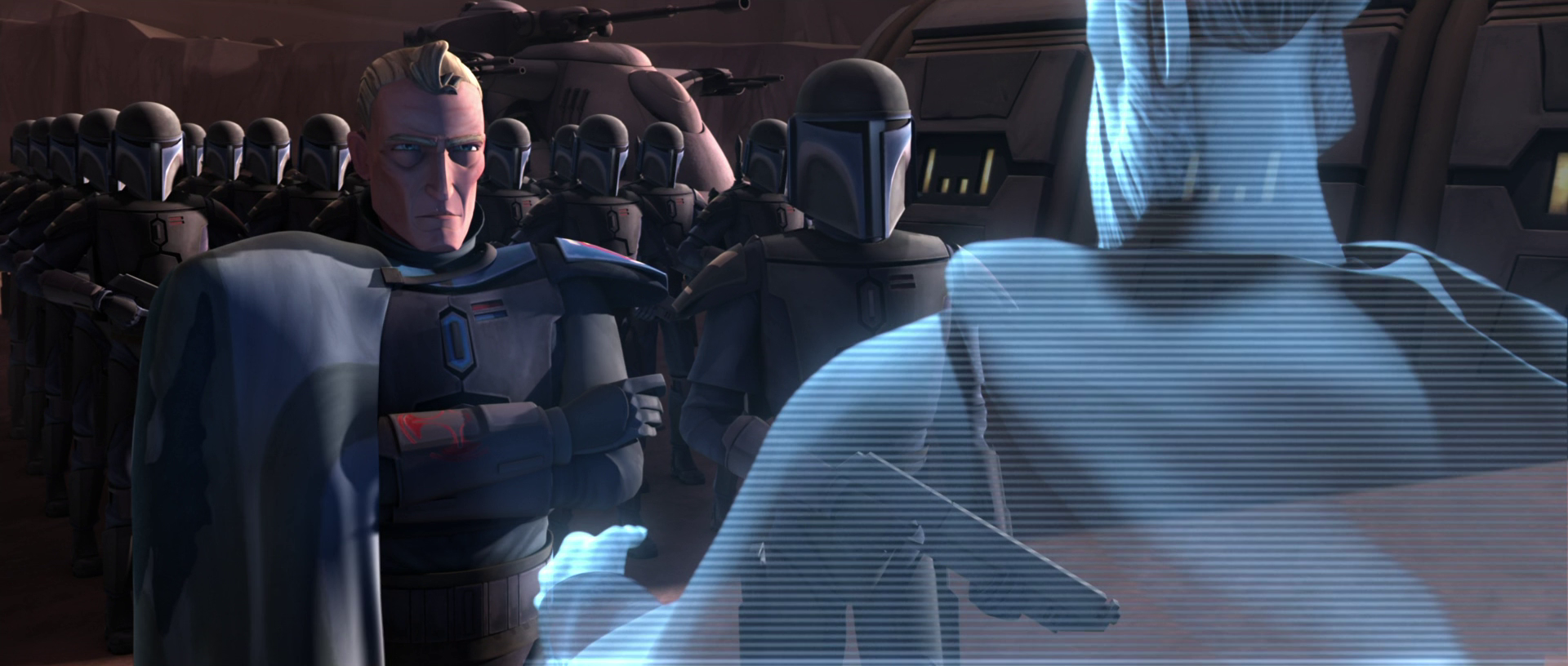
Unbeknownst to the New Mandalorians, Pre Vizsla, the governor of Concordia, resurrected the Mandalorian warrior culture through the Death Watch. Among the group's leaders was Duchess Satine's sister, Bo-Katan Kryze, who headed the Nite Owls, an elite group of female warriors. Death Watch began committing terrorist acts against the pacifist regime, including attacks on Mandalore, a Republic cruiser, and Kalevala, a planet in the Mandalore sector colonized by Mandalorians. Vizsla sought to restore the warrior heritage of the Mandalorians, and conspired with Count Dooku of the Confederacy of Independent Systems, Vizsla hoped the Republic would believe an intervention was necessary, so Death Watch could fight their invasion and be hailed by the Mandalorians as heroes. However, the plot failed, and the Galactic Senate rejected the Mandalore Defense Resolution.
The outcasts of Death Watch fled to become mercenaries, establishing a base on Carlac. The group began plotting revenge, first allying with Separatist senator Lux Bonteri to plot Dooku's downfall, and then with the renegade Sith Lord Maul's Shadow Collective to win back the support of Mandalore's people. However, after Vizsla betrayed Maul, Maul killed him and became Death Watch's leader, prompting Bo-Katan Kryze to rebel against him and form the Mandalore resistance.
New civil war
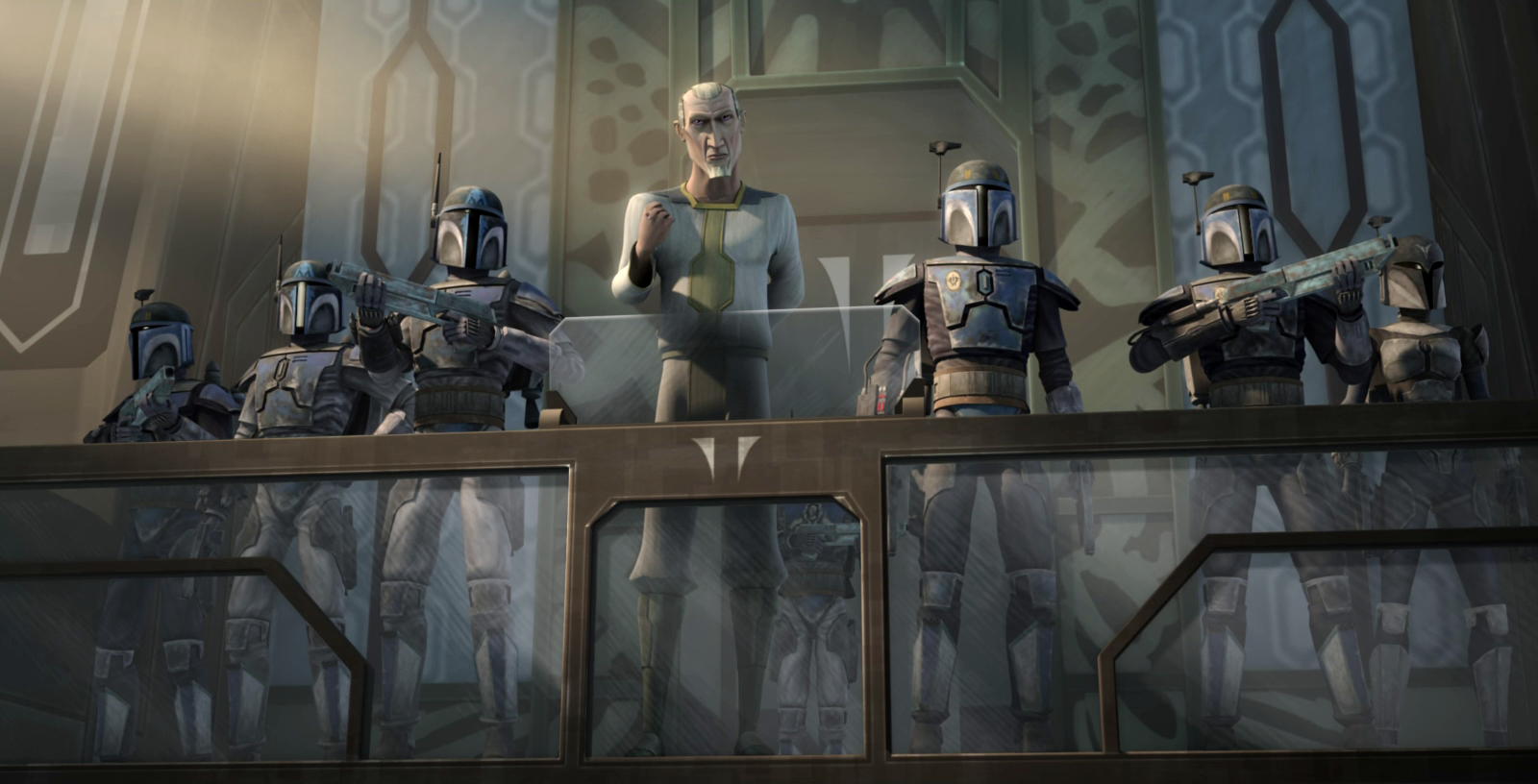
Jedi Master Obi-Wan Kenobi investigated the coup, but was captured, and Maul killed Satine to spite him. Kenobi escaped and returned to inform the Galactic Republic; meanwhile, Supreme Chancellor Sheev Palpatine, secretly the Dark Lord of the Sith Darth Sidious, captured Maul and imprisoned him in the Spire on Stygeon Prime. While Maul's Mandalorian super commandos proved loyal and freed him, his execution of Kryze motivated many other Mandalorians to unite in an effort to overthrow Maul and return Mandalore to Mandalorian control.
Following the Siege of Mandalore, Bo-Katan was named Regent of Mandalore, causing Maul's control over Mandalore to collapse. Eventually, Kryze was ousted by Clan Saxon when she refused to follow Emperor Palpatine, and the planet was ultimately occupied by the Galactic Empire. Meanwhile, the Protectors, who considered Death Watch traitors, not only assisted the Grand Army of the Republic in training clone troopers, but also aided the Republic during the war. Skull Squadron, a squadron of Protectors led by Fenn Rau, assisted the Republic by training clone trooper pilots and fought in the Third Battle of Mygeeto.
Age of the Empire
Under Imperial Rule

Following the Imperial occupation of Mandalore, Rau's Protectors established a base on the third moon of Concord Dawn, receiving payment from the Empire to protect their system on their behalf, while other Mandalorians came under the leadership of Gar Saxon, with some joining the Imperial Military as Imperial Super Commandos. Saxon, appointed Viceroy of Mandalore by the Emperor, served as the latter's Hand on the Mandalorian homeworld, enforcing the Empire's will alongside his fellow Imperial Super Commandos, including his brother, Tiber Saxon.
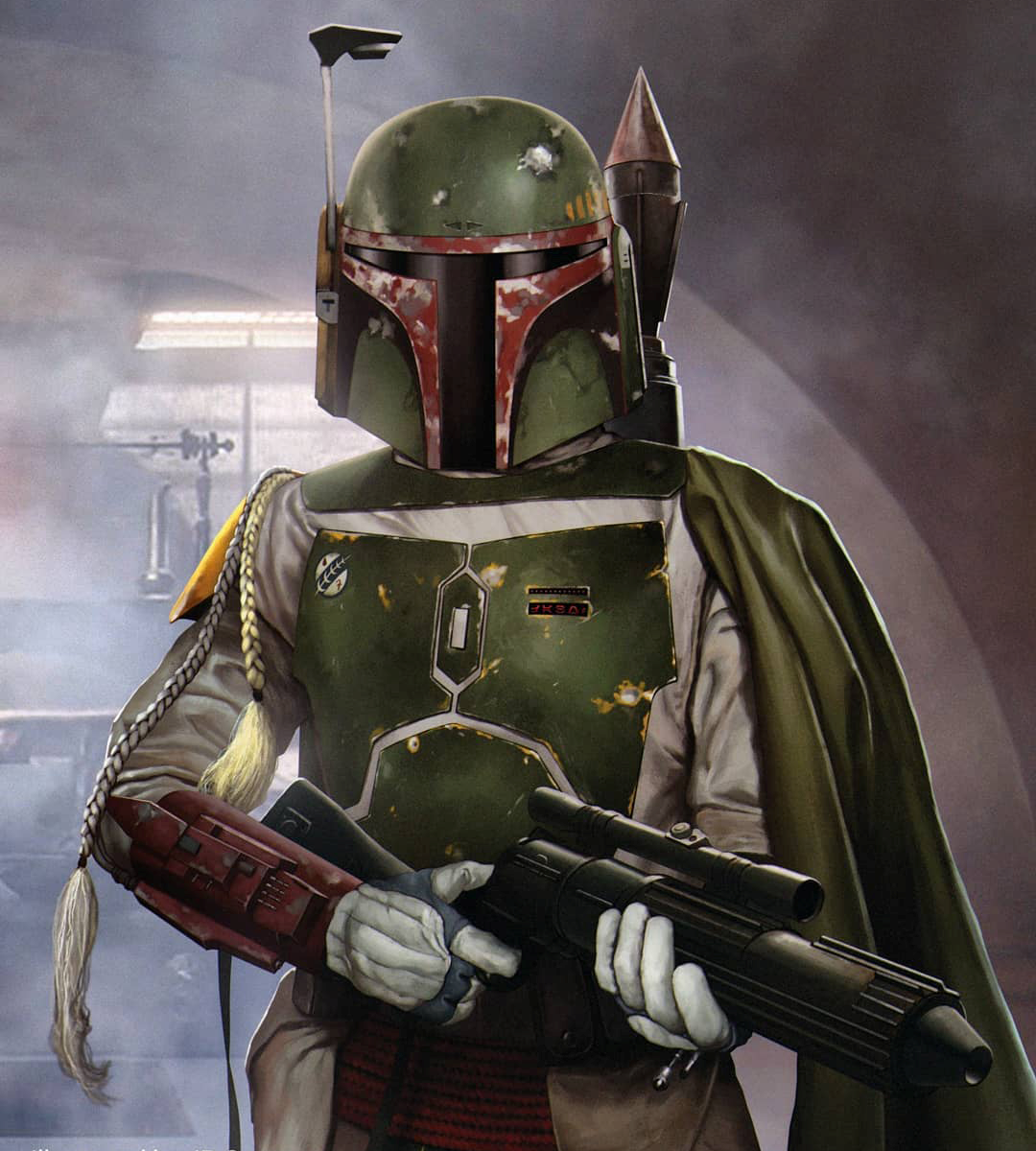
During the Imperial Era, the Quarren criminal Lallani hired a group of Mandalorians as mercenaries and guards. Meanwhile, Boba Fett, the clone son of the renowned Mandalorian bounty hunter Jango Fett, followed in his father's footsteps and became known as the galaxy's best bounty hunter, keeping the Mandalorian legacy alive by wearing his father's distinctive Mandalorian armor. Fett was eventually defeated by the Heroes of Yavin and fell into the Great Pit of Carkoon, although he survived.
Additionally, Sabine Wren, a member of Clan Wren, worked as a bounty hunter for a period, alongside fellow Mandalorian Ketsu Onyo. However, Sabine later joined a small rebel cell on the Outer Rim planet Lothal, known as the Spectres, who regularly raided the Imperials for supplies to distribute to the needy, and later became part of a larger rebellion, the Alliance to Restore the Republic. Years later, the Alliance allied itself with several Mandalorian clans during its war against the Empire. Meanwhile, Ketsu continued her bounty hunter career, joining the Black Sun crime syndicate.
Galactic Civil War
In 2 BBY, Gar Saxon and his Imperial Super Commandos eliminated the Mandalorian Protectors; as a result, Rau decided to join the rebellion. Later that year, Sabine Wren discovered the Darksaber on Dathomir after she, Kanan Jarrus, and Ezra Bridger fought a battle there against Maul. Urged by Fenn and the rebel leaders Hera Syndulla and Jarrus, Sabine agreed to begin training with the Darksaber to reunify her people and rally them to support the rebellion.
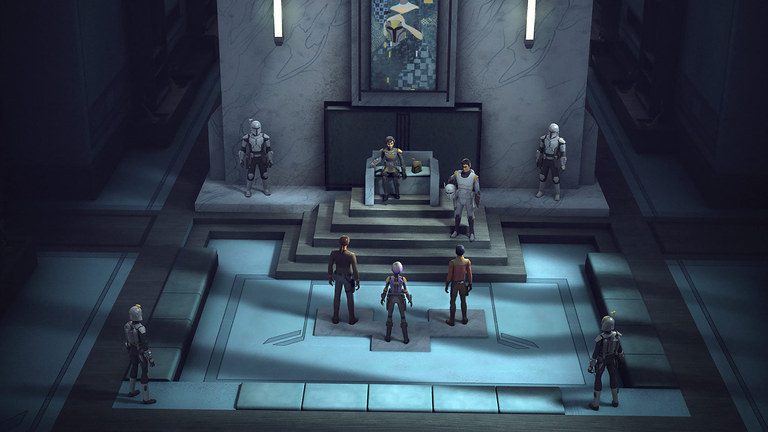
Following Sabine's training, she, Rau, Jarrus, and Bridger returned to Krownest to Clan Wren's Stronghold. There, Sabine attempted to convince the clan's leader and her mother, Countess Ursa Wren, to join the rebellion. Initially, Ursa decided to surrender the Jedi to Viceroy Saxon and his Imperial Super Commandos in exchange for the Darksaber and sparing her daughter. When Saxon branded her and Clan Wren enemies of the Empire, Ursa and her son Tristan fought Saxon and commandos alongside Rau and the Jedi. When Saxon tried to kill Ursa with the Darksaber, Sabine took Bridger's lightsaber and fought Saxon. Sabine was then able to reclaim the Darksaber and subdue Saxon. When Saxon tried to shoot Sabine, he was killed by Ursa. His death created a power vacuum among the Mandalorians. Sabine then decided to stay behind and help her mother, clan, and Rau find Mandalore's true leader, to whom she would give the Darksaber.
Soon afterward, Bridger returned to Krownest, having escaped from the Battle of Atollon, to request help from Clan Wren for the rebels against Grand Admiral Thrawn, who was attacking the rebel base on Atollon. Although unable to send a full force, due to their current struggles against Clan Saxon, Ursa agreed to allow Sabine, Tristan, and Rau to lead several Mandalorian volunteers and ships to accompany Ezra and Chopper back to Atollon. The Gauntlet and several Fang fighters traveled back to Atollon, where they destroyed the Interdictor vessel that was preventing the rebels from escaping. Able to escape, the remaining rebels fled the system, while the Mandalorians returned to Krownest.
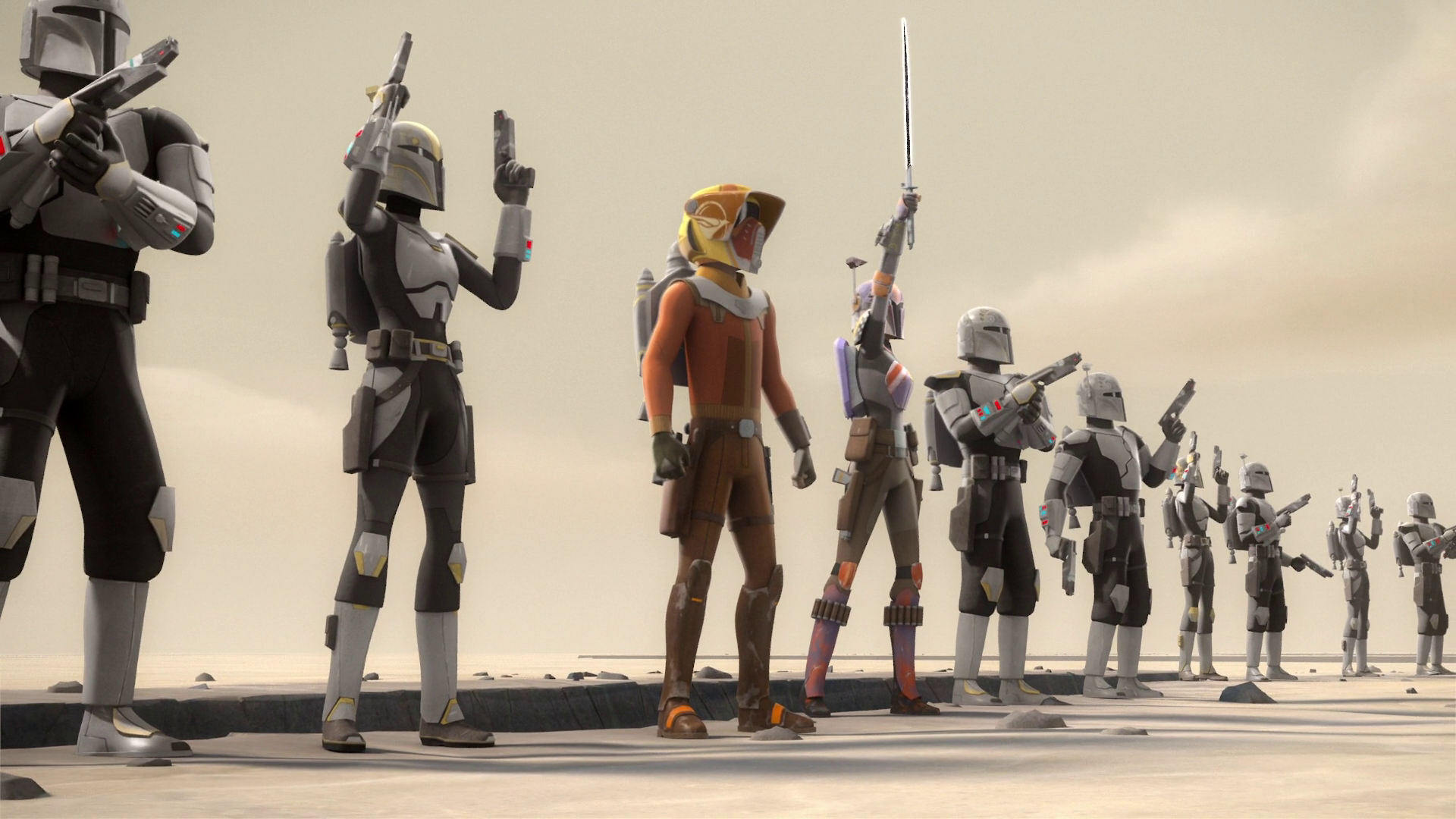
In the year 1 BBY, Clan Wren, under the joint command of Ursa and Sabine, engaged in combat on Mandalore against both Clan Saxon and the forces of the Empire. During the Mandalorian civil conflict, Sabine, along with her brother Tristan, journeyed to the statue of Tarre Vizsla only to find an Imperial outpost constructed upon it. Together, Sabine and Tristan dismantled the outpost, restoring the statue to its prior condition. Clan Wren received reinforcements from various factions and clans, including the lone Journeyman Protector Rau, Lady Bo-Katan's Clan Kryze, Clan Vizsla, Clan Rook, and Clan Eldar. Furthermore, Sabine, accompanied by the Rebel Alliance's Spectres, Kanan Jarrus and Ezra Bridger, launched an assault on an Imperial detention facility in hopes of locating Alrich Wren, who had already been transferred.
Subsequently, Sabine presented the Darksaber to Kryze, who declined the offer, acknowledging her inadequacy as a leader compared to her late sister, Satine. Collaboratively, they mounted an attack on a convoy protected by super commandos. This action led to the successful rescue of Alrich. However, the commandos, backed by the Empire, deployed an AT-DP equipped with the "the Duchess" weapon prototype, which caused the disintegration of numerous warriors from Clans Wren and Kryze, leaving Tristan and Ursa as the only survivors. Following this devastating event, the remaining members regrouped. Sabine and Bo-Katan then devised a strategy to neutralize the weapon by infiltrating Governor Tiber Saxon's Star Destroyer stationed near Sundari, aiming to atone for Sabine's involvement in its creation.
The allied Mandalorian and rebel forces successfully breached Saxon's Star Destroyer. After a fierce engagement, they obliterated both the Duchess and Saxon's warship. In the aftermath of the battle, Lady Bo-Katan accepted the Darksaber and assumed leadership of the Mandalorian clans. The Vizslas, Wrens, Kryzes, Rooks, Eldars, and the sole remaining Protector, Fenn Rau, all pledged their loyalty to the newly appointed Mand'alor. The renegade Children of the Watch expressed their dismay at Kryze's acceptance of the Darksaber as a gift rather than winning it through combat, believing this act had cursed their world, leading to its downfall.
At a certain juncture, the Rebel Alliance was aided by the Old Mandalorian faction; a battalion originating from Vlemoth Port provided assistance to Rebel forces against an Imperial task force commanded by Ralchio Nervi during the Battle of Xorrn. Similar to Fenn Rau, Mandalorians Bodica Venj and Dirk Ullodin aligned themselves with the rebels. Venj, a fierce Mandalorian warrior, once piloted a Fang fighter towards the Wren Stronghold on Krownest while serving the rebels. Ullodin, aspiring to become a commando, participated in a space battle during his rebel service, piloting a Fang fighter and successfully destroying a TIE fighter.
The Great Purge of Mandalore
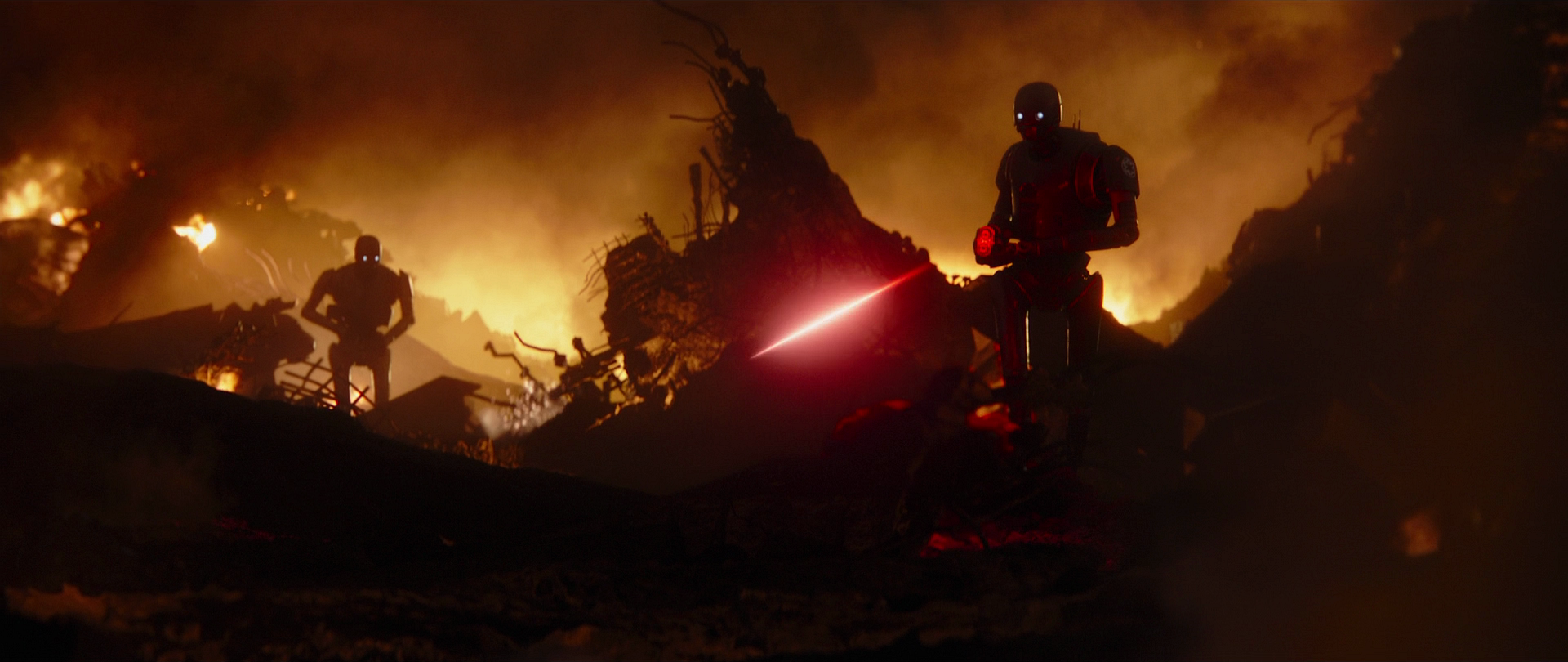
Kryze's time as Mand'alor was not long. Realizing their inability to exert control over Mandalore and determined to prevent any other faction from doing so, the Empire initiated the Great Purge of Mandalore, resulting in the deaths of millions of Mandalorians. During this purge, Mandalore endured extensive bombardment during the Night of a Thousand Tears. The Children of the Watch were spared from the Purge due to their seclusion on Concordia.
Facing the decimation of the majority of her forces during the Night, Kryze reluctantly agreed to ceasefire negotiations proposed by the Imperial Security Bureau, believing that surrender was the only path to survival for her people. Despite her distrust, Kryze engaged in a meeting with an ISB officer named Gideon and surrendered the Darksaber, further consenting to disarm her people and submit to the Empire in exchange for an end to the conflict. However, Gideon betrayed her trust. The Empire persisted in the Purge against the defenseless Mandalore, nearly annihilating the Mandalorian population.
New Republic Era
The Search for Grogu
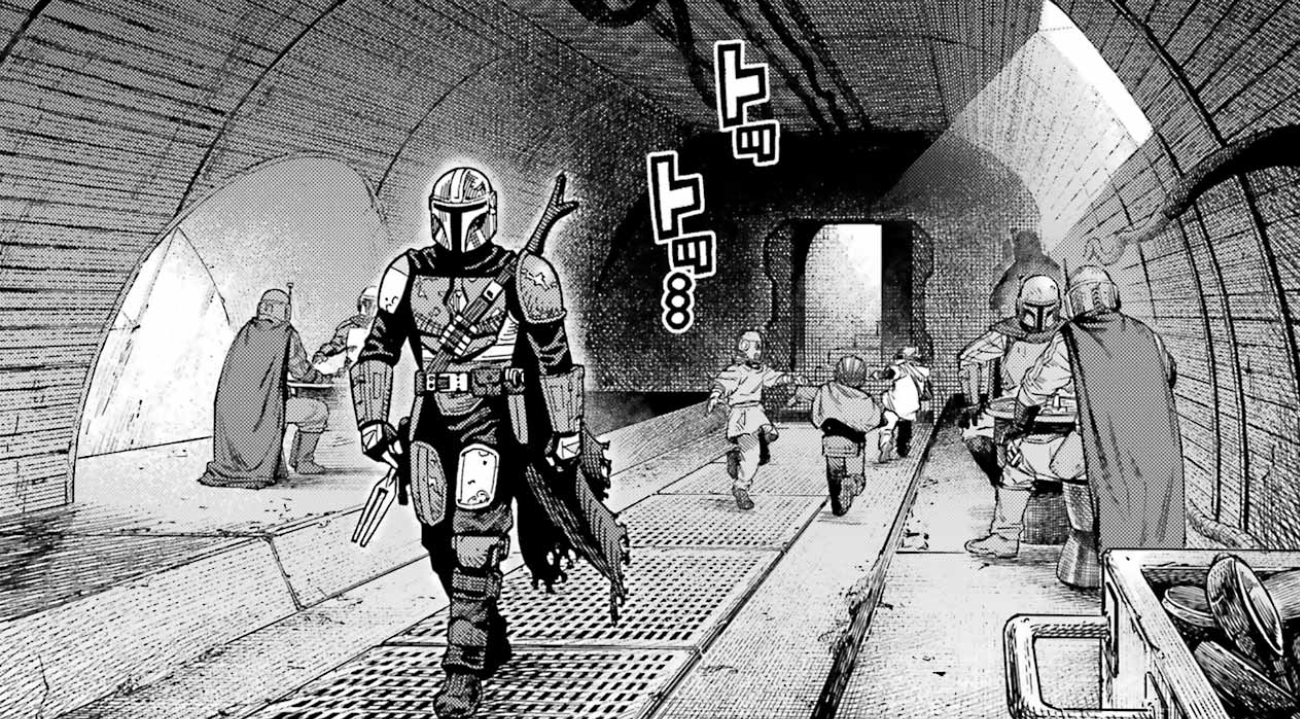
In the wake of the Great Purge, the surviving Mandalorians sought refuge in secrecy, leading to the widespread belief that the Mandalorian people had been completely eradicated. In the years following the fall of the Empire, the once-formidable warriors dwindled in number, and beskar became increasingly scarce.
Around 9 ABY, a Mandalorian group associated with the Children of the Watch concealed themselves within a covert on Nevarro, a remote world situated in the galaxy's outer reaches. Among its members was the bounty hunter Din Djarin, also known as "the Mandalorian." Djarin's dealings with an Imperial remnant created unrest within the covert, prompting Paz Vizsla of Clan Vizsla to accuse Djarin of cowardice for engaging with the Imperials.
Shortly after the altercation and a conversation with a Mandalorian known as "the Armorer," Djarin resolved to defy the remnant and rescue Grogu, a young member of Yoda's species whom he had previously captured and handed over to the Imperial remnant. Following the rescue, Djarin was confronted by the Bounty Hunters' Guild, who sought to maintain amicable relations with the local Imperials. Subsequently, Mandalorians from the covert emerged from their hiding places and engaged in combat against the Bounty Hunters' Guild, defending one of their own. Djarin successfully escaped, but the Tribe was compelled to relocate the covert as a consequence of their open conflict.
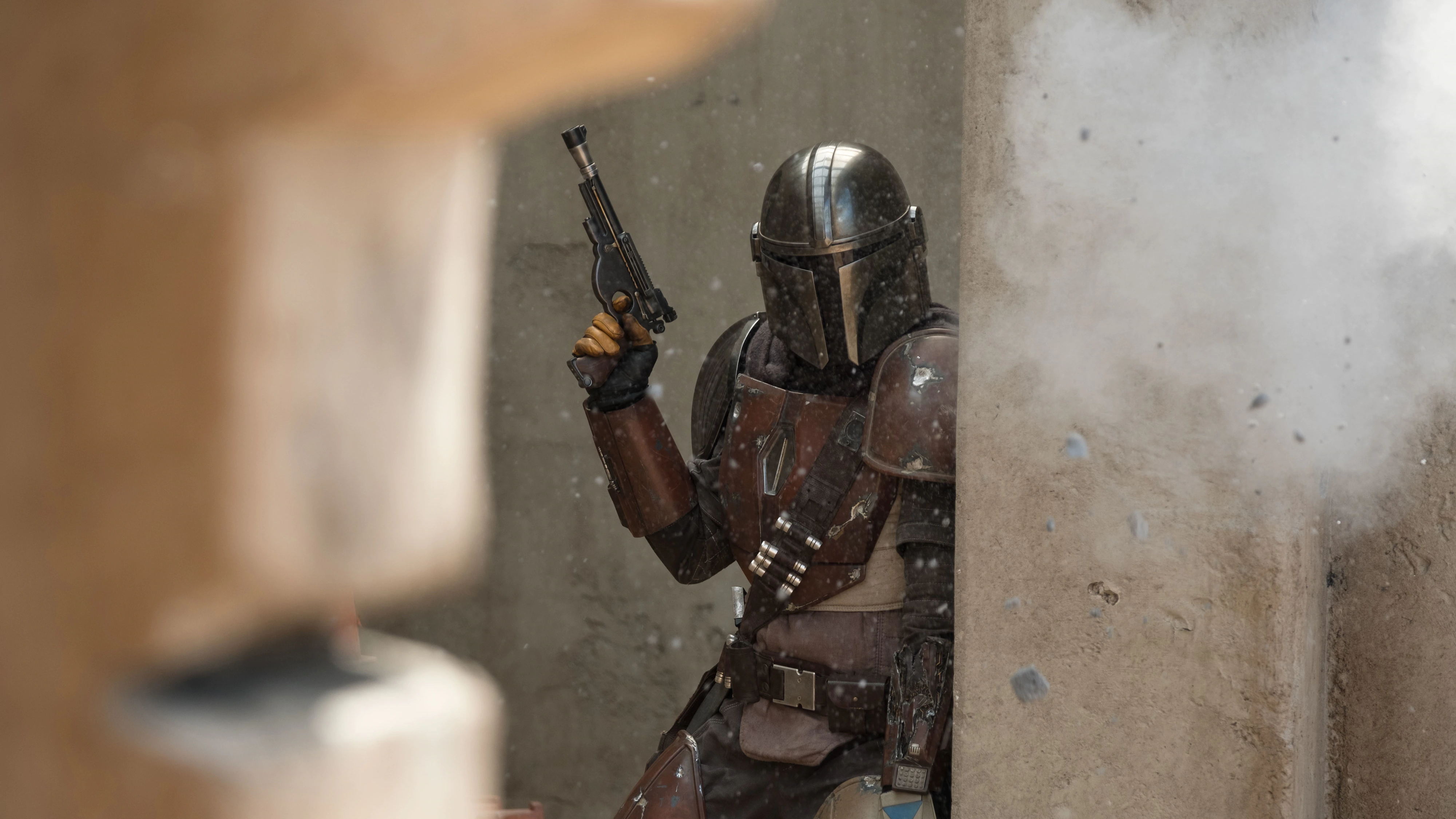
Despite the Tribe's efforts to relocate the covert, the majority of its members were killed by Moff Gideon's Imperial remnant. The Armorer was among the survivors, and speculation arose that others had managed to escape Nevarro. Upon Djarin's return to Nevarro, the Armorer established "Clan Mudhorn" as Din Djarin's clan, consisting of Djarin and Grogu. Djarin was then assigned the task of reuniting Grogu with the Jedi Order. Vizsla also survived the attack.
During this period, Lady Kryze, along with two of her companions, Koska Reeves and Axe Woves, were intercepting Imperial shipments on Trask. Their objective was to utilize these shipments to reclaim Mandalore and reinstate Kryze as the Mand'alor. Kryze also sought Djarin's assistance in exchange for locating a surviving Jedi—Ahsoka Tano. With Djarin's support, Kryze and her followers successfully seized the cruiser and its cargo. Regrettably, the cruiser's captain refused to disclose the location of the Darksaber and took his own life.
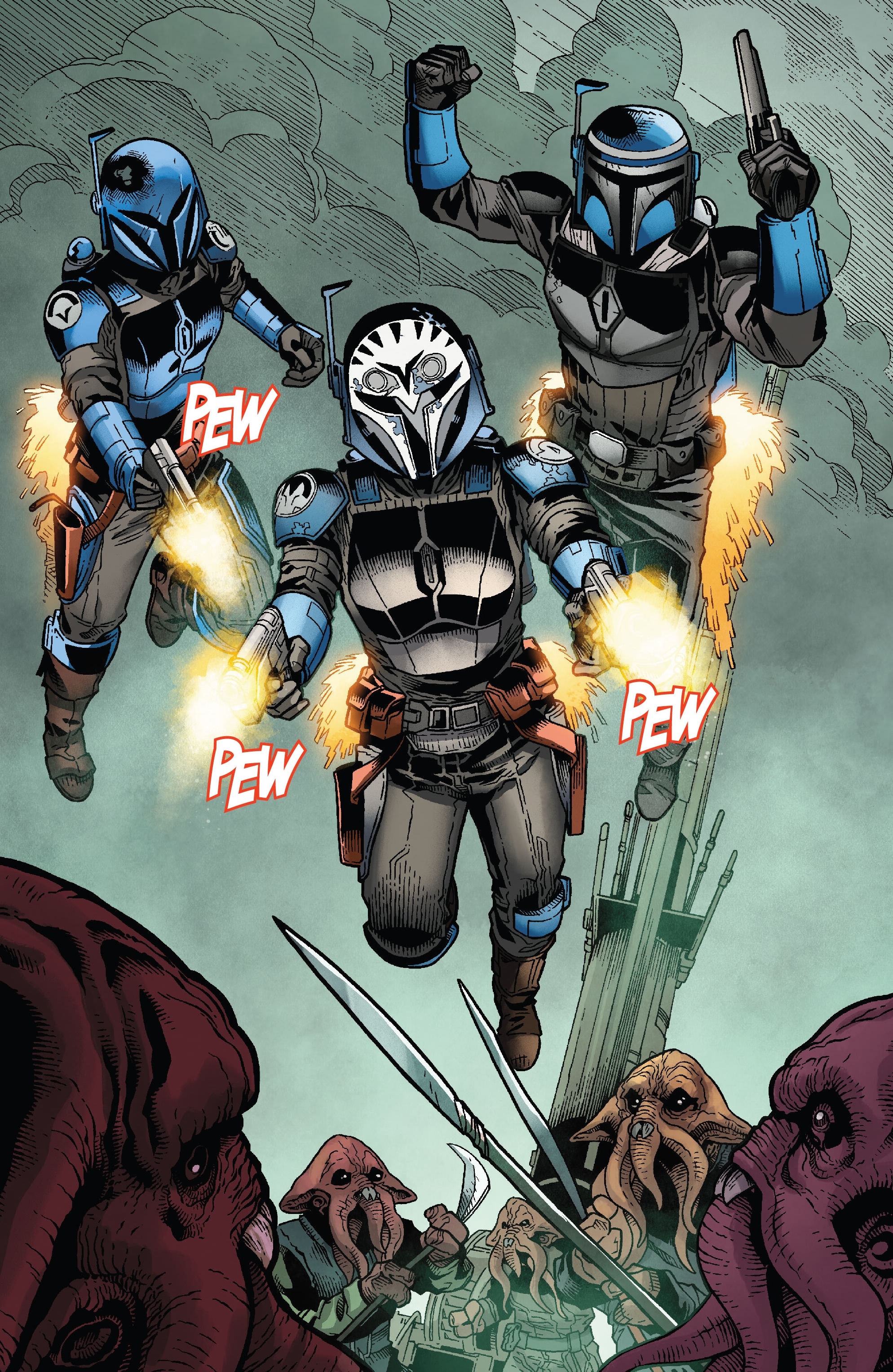
After aiding Kryze, Djarin resumed his mission to return Grogu to the Jedi Order, protecting his foundling from numerous bounty hunters who were hunting the youngling, as well as from Gideon's Imperial remnant. Despite Djarin's efforts, Gideon eventually succeeded in capturing Grogu, compelling Djarin to enlist the help of his allies to rescue Grogu. Djarin assembled a team comprising New Republic Marshal Cara Dune, Master Assassin Fennec Shand, and Boba Fett. Djarin and Fett also met with Kryze and Reeves on the desert planet of Lafete, seeking the assistance of the Nite Owls in boarding Gideon's light cruiser. Following a brief skirmish between Reeves and Fett, the latter feeling offended by the Nite Owls' remarks about his clone origin, Kryze agreed to assist Djarin, as she desired to retrieve the Darksaber from Gideon.
With the Nite Owls' assistance, Djarin's team managed to gain control of the cruiser. However, Djarin had acquired the Darksaber from Gideon but was unable to freely relinquish it to Kryze. The forces Kryze had gathered, including Reeves, rejected her upon her return without the Darksaber and dispersed under Woves' leadership to become mercenaries for hire.
The War for Tatooine
Following the rescue of Grogu and his reunion with the Jedi Order, Djarin resumed his career as a bounty hunter, while Boba Fett journeyed to Tatooine to establish his own gotra, leading to conflict with the Pyke Syndicate, a dominant faction within the Spice Cartel.
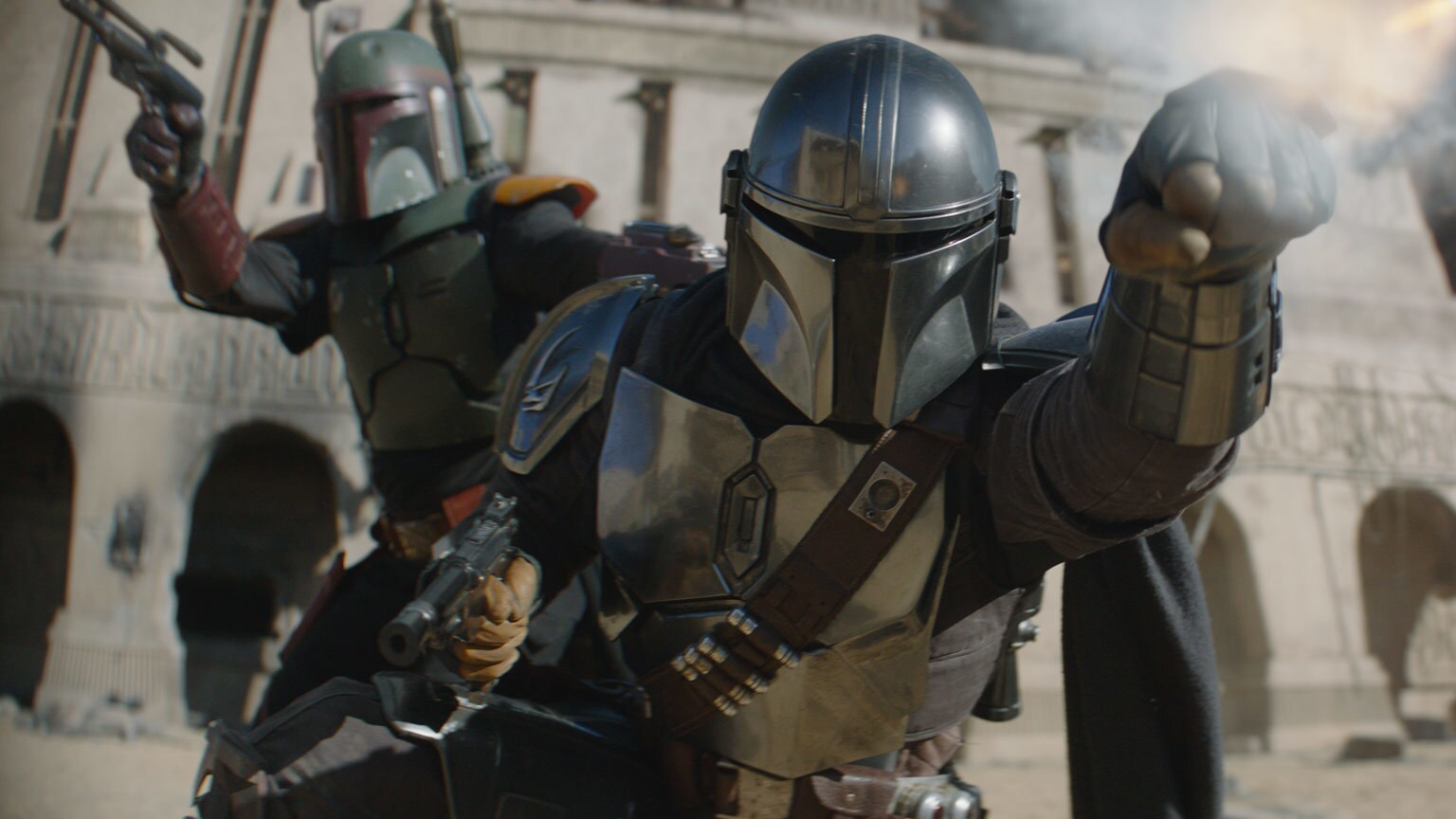
After completing a mission on Glavis Ringworld, Djarin rejoined the survivors of his tribe at a new covert, where the Armorer recounted the Purge and reforged his beskar spear into armor for Grogu. Djarin was challenged and fought Paz Vizsla, a descendant of Tarre Vizsla, for possession of the Darksaber, ultimately defeating his rival. However, he was expelled from the Tribe for removing his helmet, which violated the Way of the Mandalore, the tribe's code of conduct. According to Creed, his only path to redemption lay in the Living Waters beneath the Mines of Mandalore, which he believed to be destroyed. Subsequently, Djarin traveled to Tatooine, where he was hired by Boba Fett to assist him in his war against the Pykes.
Fett and Djarin fought alongside each other against the Pyke forces during the Battle of Mos Espa, and it was during this battle that Djarin was reunited with his foundling Grogu, who had chosen to return to Djarin rather than continue his Jedi training. Ultimately, the Pykes were defeated by the Fett gotra, securing their position as the leading criminal organization on Tatooine, while Djarin and Grogu departed from the planet.
All Roads Lead to Mandalore
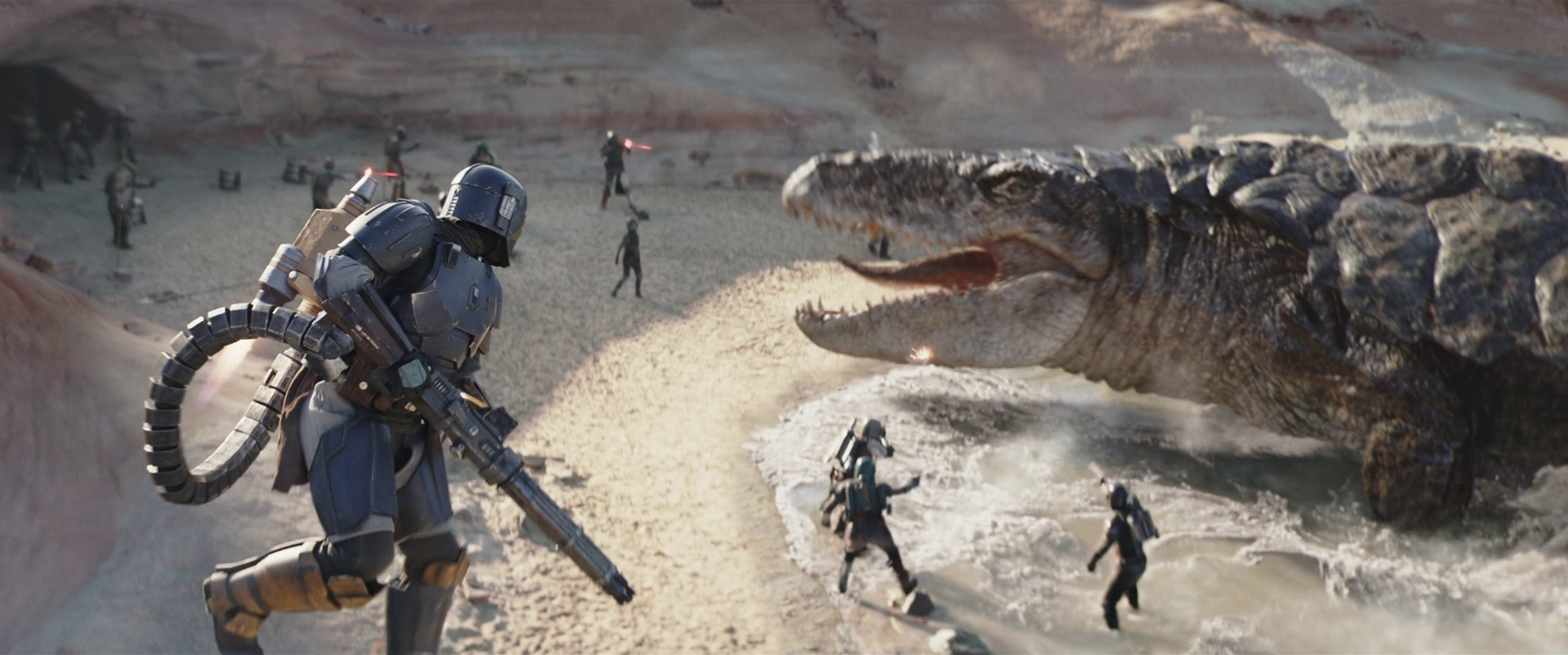
Despite Vizsla's apprehension that he, Djarin, and the Armorer were the sole survivors of their clan, other members of the Tribe would resurface. The Armorer's tribe managed to re-establish itself as a covert at a new location on a planet, once again under the leadership of the Armorer. Vizsla and his foundling son Ragnar were among the group. During Ragnar's initiation ritual, the covert was attacked by a lake monster. The turtle devoured several Mandalorians until Djarin killed it with his N-1 starfighter. Djarin, despite being an apostate, discussed with the Armorer the possibility of traveling to Mandalore to locate the mines and redeem himself. The Armorer agreed to permit him to embark on this quest. Following an encounter with pirates belonging to Pirate King Gorian Shard's gang of the Pirate Nation, Djarin journeyed to Kalevala. There, he consulted with Kryze about returning to Mandalore. However, she declined, as she refused to accept the Darksaber from Djarin and had been abandoned by her forces to become mercenaries for hire. She chose to remain in exile at Kryze Castle.
Djarin, Grogu, and R5-D4 traveled to Mandalore. Upon arrival, they ventured into the ruins of Sundari, where they encountered trouble from Alamites. Djarin was captured by a cyborg scavenger and its Spider Tank. Grogu managed to escape and return to Djarin's starfighter, piloted by R5. Grogu convinced Kryze to assist in rescuing Djarin. Together, they bypassed the Alamites and used the Darksaber to defeat the cyborg and its tank.
Kryze then escorted Djarin to the Mines and the Living Waters, where Djarin was able to redeem himself. However, he stumbled and fell deep into the water. Kryze jumped in after him. In the waters, Kryze discovered a mythosaur. After filling a flask with some of the Living Waters, Djarin, Kryze, and Grogu departed. Kryze and Djarin traveled to Kalevala to retrieve his fighter. However, Kryze came under attack by several TIE/IN interceptors. Djarin and Kryze destroyed several interceptors. However, another group of TIE/sa bombers destroyed Kryze Castle. Kryze, distraught, pursued the bombers. However, a dozen more interceptors appeared. Djarin convinced her to retreat and follow him to his covert's planet.
Upon their arrival at the covert, Djarin and Kryze were regarded as apostates until the Armorer confirmed their presence in the Living Waters of Mandalore. Djarin was accepted, and Kryze, despite not adhering to the Children of the Watch's beliefs, was welcomed into their covert. During the covert's training of its children, Ragnar was abducted by a shriek-hawk. Kryze led Djarin, Vizsla, and others to rescue Ragnar. They succeeded and captured the shriek-hawk's offspring. During this time, the Armorer forged new armor for Grogu and a new pauldron for Kryze to commemorate her discovery of a mythosaur.
The covert was then approached by Adelphi Rangers' Captain Carson Teva of the New Republic. Their location had been revealed by Djarin's astromech, R5. Initially, Djarin and his covert were reluctant to listen to the captain until he informed them of High Magistrate Karga's and Nevarro's attack by Pirate King Shard's gang. Following Captain Teva's departure, Djarin and Kryze discussed with the covert's members the possibility of assisting Nevarro. Despite having fought several of Karga's guild hunters, which led to the relocation of the covert, Vizsla and the others agreed to support Djarin in combating Shard's pirates.
Using Kryze's Gauntlet starfighter and Djarin's starfighter, the Mandalorians successfully fought the pirates and drove them away from the city and Nevarro. In gratitude for their actions, High Magistrate Karga granted the Tribe lands they could call their own for the first time in years. Shortly thereafter, Kryze was summoned by the Armorer at the covert's former workshop. The Armorer permitted Kryze to remove her helmet, stating that, due to her sighting of a mythosaur, the time had come for all Mandalorians to reunite and reclaim Mandalore. Consequently, Kryze, Djarin, Grogu, and R5 embarked on a journey to locate Kryze's fleet and reunite both Mandalorian tribes.
During this period, Woves and other Mandalorians were utilizing Gideon's light cruiser to conduct mercenary work in the Mid Rim territories. One mission involved Woves' Mandalorians capturing Captain Shuggoth's lover in order to return him to his parent, a Mon Calamari Viceroy.
Woves and his fellow privateers also accepted a job to protect the pacifist planet of Plazir-15, governed by the Duchess and her husband, Captain Bombardier. Kryze and Djarin arrived and assisted the Duchess and Captain in preventing a former Separatist, Commissioner Helgait, from reactivating Plazir's droid workforce as battle droids. Djarin and Kryze encountered Woves and his Mandalorians in an attempt to reclaim her leadership position. Following a brief skirmish between Kryze and Woves, Djarin returned the Darksaber to Kryze, citing her rescue of him from a cyborg on Mandalore, which rendered him unworthy to wield the saber according to the Mandalorian code. Woves and his fellow Mandalorians subsequently accepted Kryze as their leader once more.
The Reconquest of Mandalore
After uniting Kryze's unit and Djarin's tribe, the Mandalorian fleet traveled to Mandalore. A small scouting team led by Kryze and Djarin was dispatched to survey the ground. On the planet's surface, they encountered Mandalorians who had survived independently since the Great Purge of Mandalore. This group of survivors guided the scouting team to the Great Forge. Upon reaching the forge, they were ambushed by Gideon's armored commandos and led into a trap within a hidden Imperial base, where Gideon, clad in Mandalorian-style beskar armor, attempted to force the Mandalorians to surrender. However, they managed to escape, with Vizsla remaining behind to facilitate their escape, resulting in his death at the hands of three Imperial Praetorian Guards shortly thereafter.
Woves entered orbit and alerted the fleet about the approaching TIE interceptors and bombers. He instructed all Mandalorians aboard their Imperial light cruiser to evacuate. Woves then piloted the light cruiser as bait for the Imperials while the rest reinforced their brethren on the ground. While the Mandalorians and the Imperial commandos engaged in aerial combat, Djarin, Kryze, and Grogu confronted Gideon. During the battle, Gideon destroyed the Darksaber using his armor's mechanized strength. However, through their combined efforts, Gideon and his forces were defeated just before their former light cruiser crashed into the base, killing Gideon and his remaining forces, with Grogu using the Force to shield Djarin and Kryze from the blast. Soon after the battle, Mandalorians gathered at the Living Waters to witness Ragnar Vizla and Grogu becoming Mandalorian apprentices. A ceremony was subsequently held to reignite the Great Forge, symbolizing the reclamation of their homeworld as a unified people.
Mandalorians Throughout the Galaxy
Galactic Impact
Mandalorian armor instilled fear in many throughout the galaxy. During the Clone Wars, the Trandoshan big game hunter Garnac possessed a Mandalorian Neo-Crusader helmet as a trophy. Boba Fett, a human male bounty hunter of Mandalorian descent, donned armor inherited from his father Jango Fett, a renowned Mandalorian bounty hunter raised as a foundling, preserving the memory of the Mandalorians well into the Galactic Civil War. Jango's armor served as inspiration for those worn by the soldiers cloned from him, initiating a design lineage that extended to the stormtroopers of the First Order.
After the Great Purge
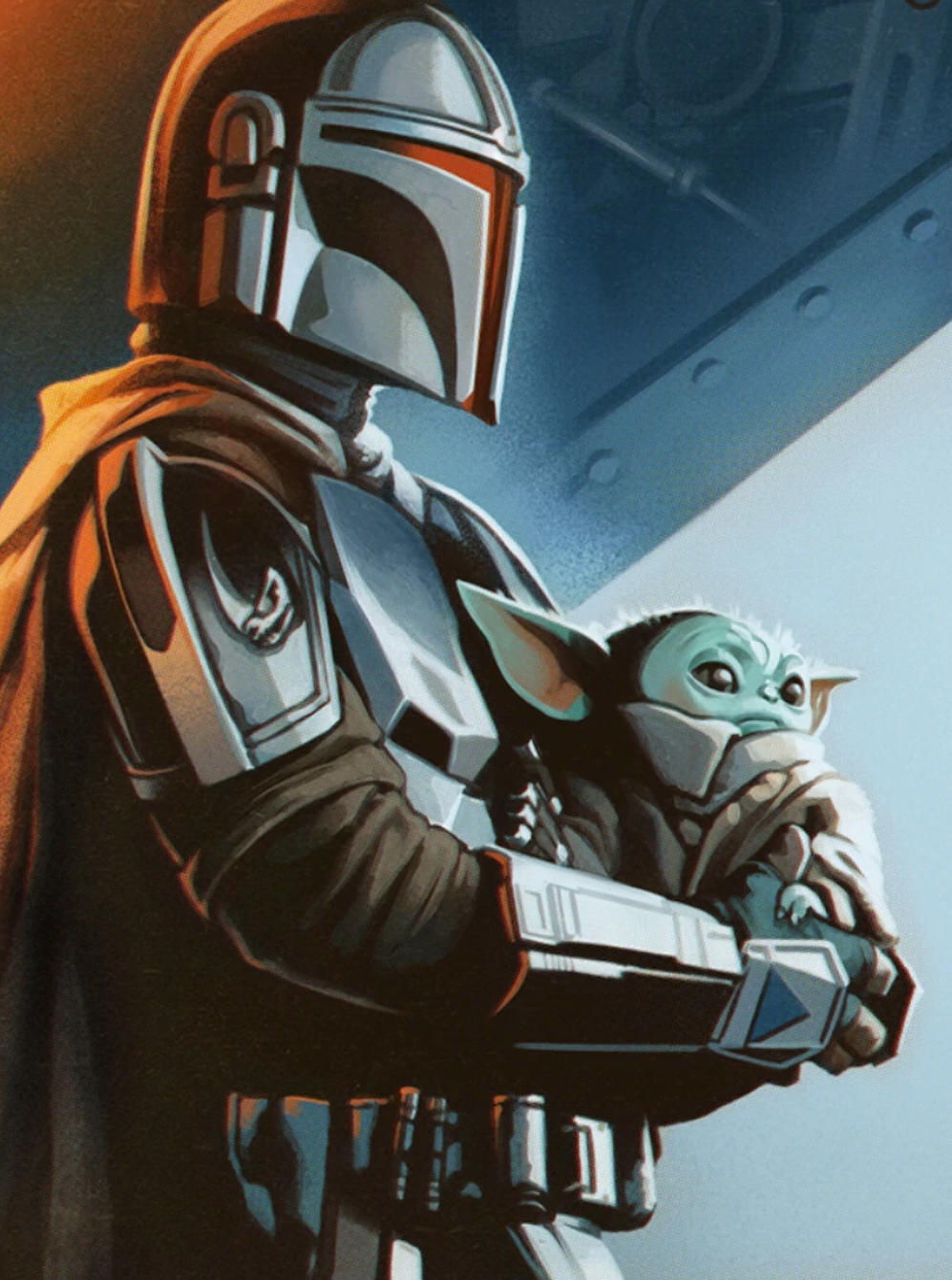
Following the Great Purge, the majority of Mandalorians were killed, rendering them a rare sight in the galaxy. A group known as "the Tribe" survived and sought refuge on Nevarro, but many were exterminated by an Imperial remnant. Subsequently, Din Djarin was tasked with traversing the galaxy in search of Grogu's species as their own clan. The Armorer and Paz Vizsla managed to regroup on Glavis Ringworld and eventually rejoined other survivors of the Tribe on a planet, where they were later joined by Djarin, Grogu, and Bo-Katan Kryze. The assembled Mandalorian tribe would later relocate to Nevarro once more and, uniting with Kryze's former followers, participated in the reconquest and resettlement of Mandalore.
As the last of Clan Tal after his fellow Mandalorians were wiped out in the Great Purge, the Mandalorian Aran Tal competed in the Hunters of the Outer Rim competition. He declared that, with the loss of Mandalore and his clan, it was his duty to uphold the traditions of all his fellow Mandalorians. Several Mandalorian war banners adorned the entrance of Maz Kanata's castle on the planet Takodana.
Behind the Scenes
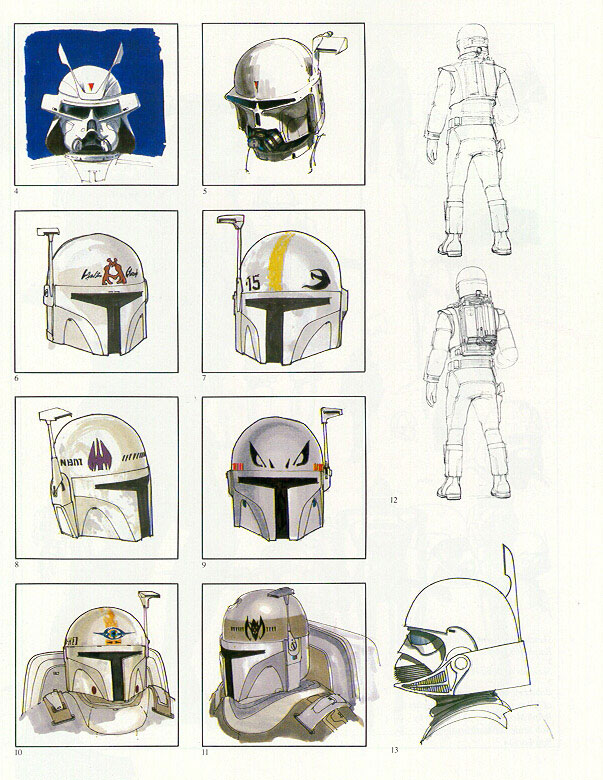
When the movie The Empire Strikes Back was being planned, one concept involved a team of "supercommandos" originating from the Mandalore system, equipped with integrated weaponry in their white suits. This costume design was later repurposed for Boba Fett, and the Mandalorian concept was subtly acknowledged in The Empire Strikes Back novelization written by Donald F. Glut. The novelization portrayed the Mandalorians as "a group of evil warriors defeated by the Jedi Knights during the Clone Wars."
Later, when George Lucas and Dave Filoni decided to introduce the Mandalorians in season two of The Clone Wars, they reviewed the Expanded Universe's depiction of Mandalore and opted to retain the core elements of their history. Filoni aimed to imbue the Mandalorian people's visual design with a "Nordic flavor." The art department for The Clone Wars drew inspiration from Fett's armor, incorporating its angles, especially the diamond shape on the breastplate, into the overall Mandalorian aesthetic. Lucas and Filoni believed it was important to establish that the ancient Mandalorians were an army, rather than a disorganized group of warriors with personalized armor, which led to the uniform appearance of Death Watch. (This decision also helped maintain the uniqueness of Boba Fett's armor.) Filoni expressed a desire to eventually illustrate how the Mandalorians evolved into mercenaries who provided Fett with his distinctive armor. When Death Watch reappeared in season four's episode "A Friend in Need," the characters were given a wider array of equipment, giving them what Lucas described as a "biker gang feel."
The Clone Wars was originally intended to feature the Siege of Mandalore before its cancellation. According to writer Henry Gilroy, Mandalore was likely under Republic occupation before transitioning into the Empire. He suggested that Mandalore's strategic importance likely resulted in a "soft occupation," with a new Mandalorian leader installed as a puppet ruler. Star Wars Rebels has since confirmed that Bo-Katan Kryze, a Mandalorian, became Regent of Mandalore after the Siege, only to be overthrown by Emperor Palpatine following the Republic's demise. The Siege was subsequently depicted in The Clone Wars revival available on Disney+.