Confederacy of Independent Systems Navy
The Navy of the Confederacy of Independent Systems (CIS Navy) functioned as the naval arm of the Confederacy of Independent Systems' military during the period known as the Clone Wars. This navy, also known as the Confederacy navy or the Confederacy fleet, came into existence sometime after 24 BBY during the Separatist Crisis, and its primary role was to engage in combat against the naval forces of the Galactic Republic. The Confederacy navy utilized various classes of warships of differing sizes and was instrumental in transporting the Separatist Droid Army to targeted planets, as well as participating in direct ship-to-ship engagements with the Republic Navy.
With the onset of the Clone Wars, the Confederacy navy's vessels, including both starships and starfighters, adopted a new color scheme. Specific sections of these vessels were painted with blue markings, and the Confederacy's hex emblem was prominently displayed on the port and starboard hulls of warships to clearly indicate their allegiance. These starships within the navy were produced by a range of contracted manufacturing firms, including Pammant Docks and Free Dac Volunteers Engineering Corps, which specialized in constructing vessels such as the Providence-class Dreadnoughts, Recusant-class light destroyers, and Subjugator-class heavy cruisers. Furthermore, due to their established connections with the Trade Federation, the Confederacy gained access to the Federation fleet's Lucrehulk-class LH-3210 cargo freighters, which were subsequently modified into Lucrehulk-class Battleships for use in wartime.
Throughout its active service, the Separatist armada participated in numerous crucial battles and campaigns against the Republic during the Clone Wars. Notable engagements included the Battle of Christophsis, the Malevolence campaign, the Battle of Ryloth, and the Battle of Sullust. The navy also played a role in the blockade of the Quellor sector, the destruction of the Nightsisters on the planet Dathomir, the Outer Rim Sieges, and the pivotal Battle of Coruscant, during which a third of the deployed ships were lost.
Following the conclusion of the war, which resulted in the dissolution of both the Confederacy and its navy, as well as the transformation of the Republic into the Galactic Empire, many Separatist warships, including the Providence and Lucrehulk-classes, were dispatched to the planet Bracca for dismantling. However, some elements of the Confederacy navy managed to survive the war and subsequent disassembly efforts, and were acquired by various rebel factions. These included the resistance group led by Berch Teller, who utilized a makeshift Providence-class Dreadnought, and the Alliance to Restore the Republic, which incorporated former Separatist dreadnoughts, destroyers, and communication frigates into their fleets.
Organization
Administration
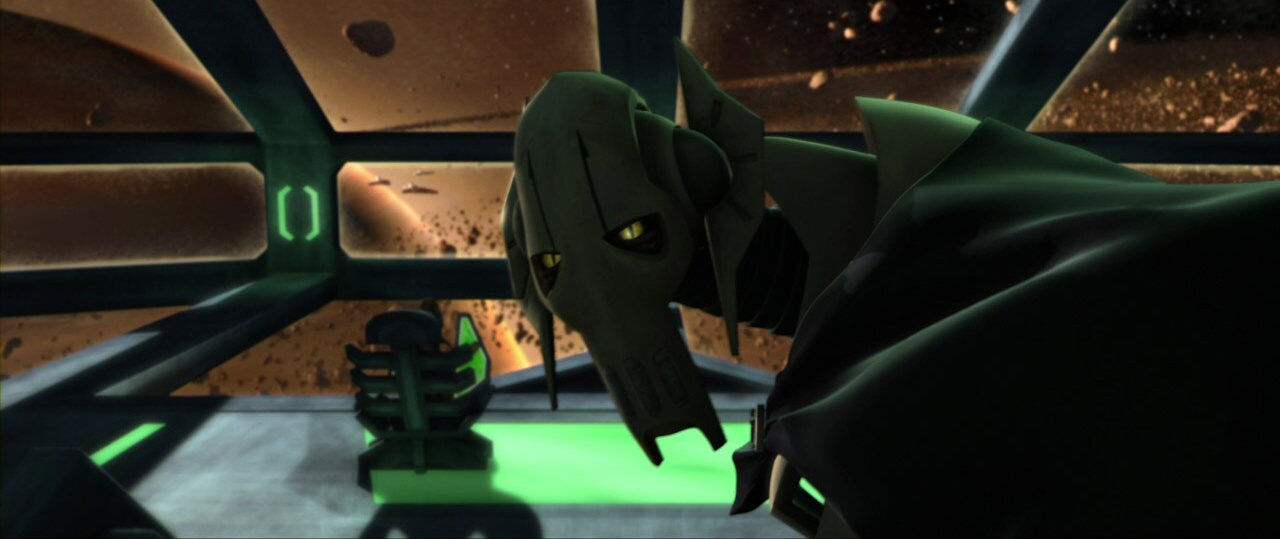
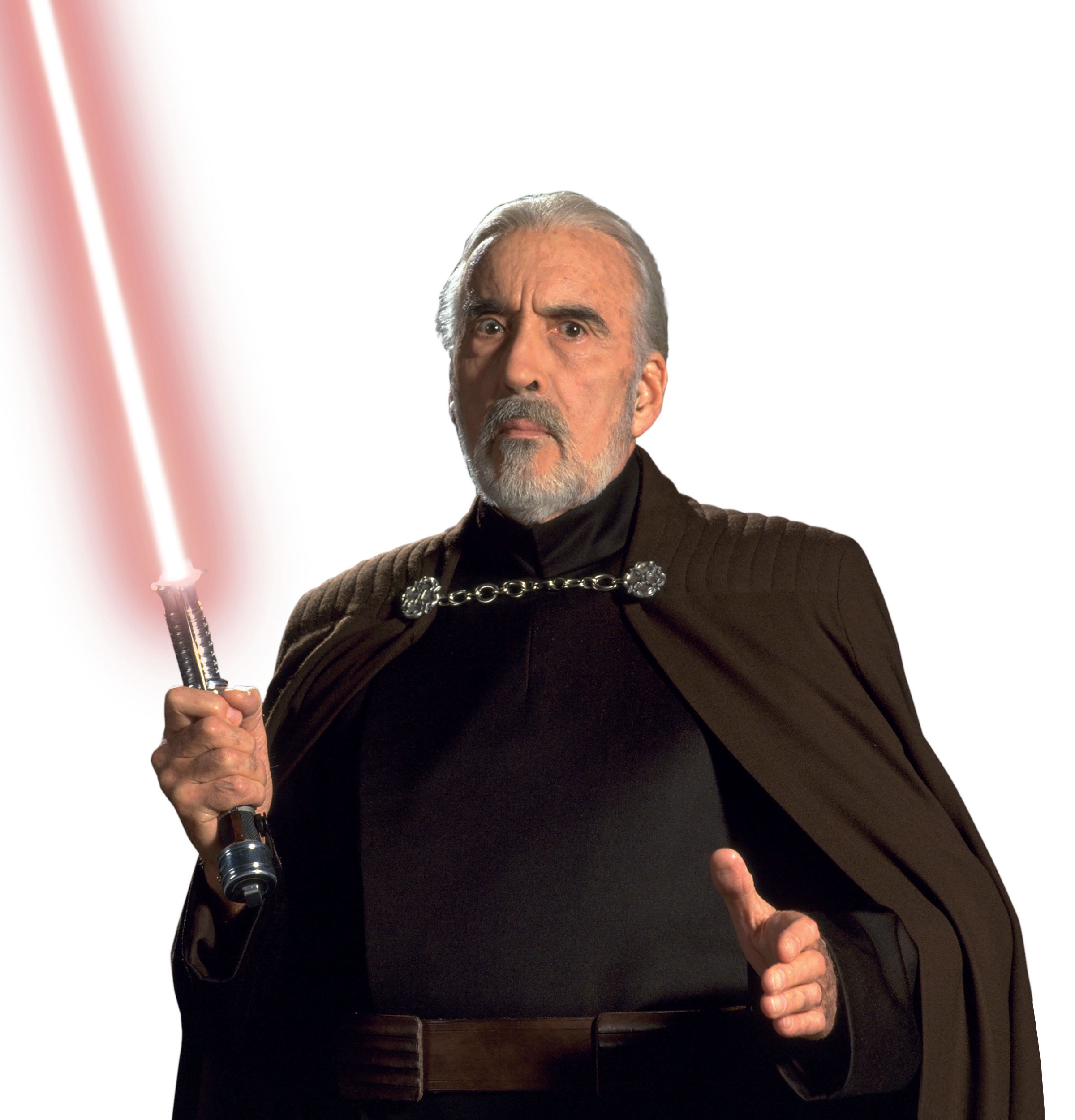
The Confederacy of Independent Systems Navy was under the command of the Confederate Head of State, Count Dooku, who was responsible for overseeing the daily operations of the entire Confederacy military, including the navy. In addition, the navy was also directed by the Supreme Martial Commander of the Separatist Droid Armies, General Grievous, along with a select group of officers drawn from the ranks of the government's members. These officers included Harch Admiral Trench, Sullustan Admiral Dua Ningo, Muun Admiral Pors Tonith, and Neimoidian Captain Mar Tuuk, all of whom served under the command of General Grievous. Furthermore, the Executive Separatist Council, the legislative body of the Confederacy, also played a leadership role in overseeing the government's navy throughout the duration of the war.
Order of Battle
Overview
The Confederacy's naval forces, which initially consisted of heavily armed bulk transports, entered into contracts with various manufacturing companies to develop a formidable fleet of capital ships and starfighters. These companies included Pammant Docks, Free Dac Volunteers Engineering Corps, and Hoersch-Kessel Drive Inc., which were responsible for constructing the navy's Providence-class Dreadnoughts, Recusant-class light destroyers, Lucrehulk-class Battleships, Munificent-class star frigates, and Subjugator-class heavy cruisers. The navy also received a significant portion of its forces from the private merchant fleets of organizations such as the Trade Federation, Techno Union, InterGalactic Banking Clan, Commerce Guild, and Corporate Alliance.
Naval structure
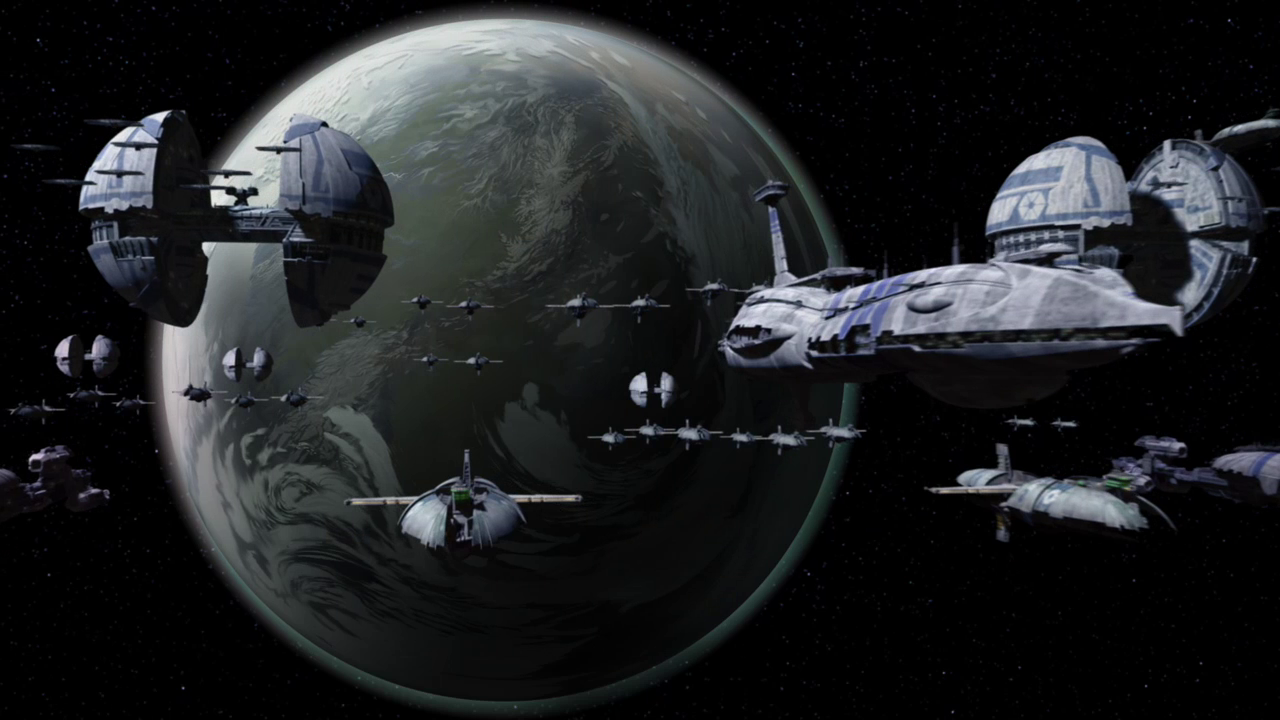
While operating under the Confederacy banner, the planets aligned with the government bore the responsibility of defending themselves. The conglomerates that played a role in the Confederacy's formation were the best equipped entities within the government to handle these responsibilities. Several of these corporations were known to provide defense to vulnerable worlds lacking native defense fleets in exchange for access to their planet's resources. Furthermore, the Separatist navy made the strategic decision to forgo the construction and deployment of corvettes and traditionally sized frigates within their fleets, opting instead to focus on assembling and utilizing larger vessels.
Although the Confederacy's individual member worlds possessed the capability to provide their own spatial defense forces, utilizing a diverse range of ships and platforms, the Confederacy navy primarily employed a limited number of starship designs. Additionally, areas within starships that were initially intended as cargo holds were repurposed as hangar bays for starfighters or staging areas for battle droids and landing craft.
Pirates and privateers
In addition to supporting the Confederacy's overall objectives, the government's leader, Count Dooku, was known to actively encourage both piracy and privateering as a means of disrupting the supply lines used by the Galactic Republic. The Confederacy and its navy were known to collaborate with various pirate groups, including the Kalarba pirates, Merson pirates, Nuala Marauders, and Nuro pirates. The Confederacy's support for piracy was largely treated as a sensitive and confidential matter, as many of the government's member worlds had suffered from pirate raids for centuries.
Regardless of his alliances, Dooku made the decision to deprioritize both the eradication and capture of pirate groups that primarily targeted the Republic or the Hutt Clan, and he was known to acquire materials stolen from the Republic. The Confederacy also openly issued letters of marque to pirates willing to become privateers, thereby formalizing their alignment with the Separatist cause. Furthermore, other pirate groups, such as the Delmaasi pirates, Iridium Pirates, and Red Fury Brotherhood, entered into agreements with Dooku to exclusively target Republic forces.
Various other groups were known to conduct sorties on behalf of the Confederacy. These included Tofen's Raiders, who utilized elite Tempest Zero starfighters throughout the northern territories of Separatist space, and the Nebula Raiders, who posed a persistent challenge to the Republic by raiding their supply convoys using gun tugs and Z-95 Headhunters. Additionally, Sabaoth Squadron, a mercenary group of fighter pilots with their own support ships, played a crucial role in the Confederacy's initial efforts that ultimately led to the outbreak of the war.
Naval formations
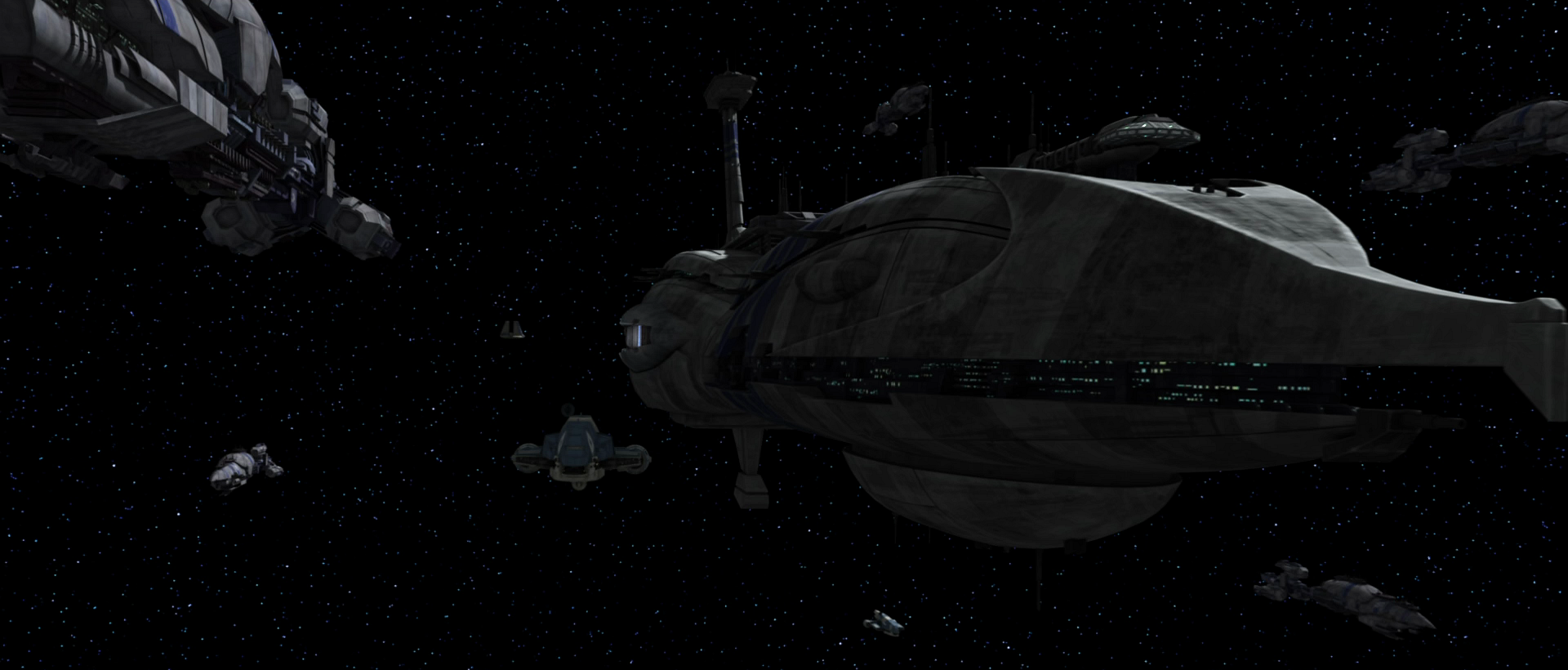
Throughout the duration of the Clone Wars against the Republic, the Confederacy navy was composed of numerous fleets that engaged in combat across the galaxy, ranging from planetary defense fleets to orbital blockades. In orbit around the planet Serenno, the Confederacy deployed a fleet consisting of a variety of warships to protect Dooku's home planet. Furthermore, recognizing its strategic importance, the Confederacy navy deployed an armada of dreadnoughts, battleships, destroyers, and frigates to form a blockade above its capital world of Raxus Secundus. Another fleet, under the command of the ST-series super tactical droid Aut-O, was stationed deep within Separatist territory and tasked with safeguarding a critical encryption module key to a major Separatist operation during the war.
Above the sulfurous, fractured surface of the planet Lola Sayu, the Confederacy navy established a defense fleet in orbit to protect the planet. This fleet was commanded by the T-series tactical droid, Commander K2-B4, from the Lucrehulk-class Battleship, and included a single Providence-class Dreadnought flanked by four Munificent-class star frigates.
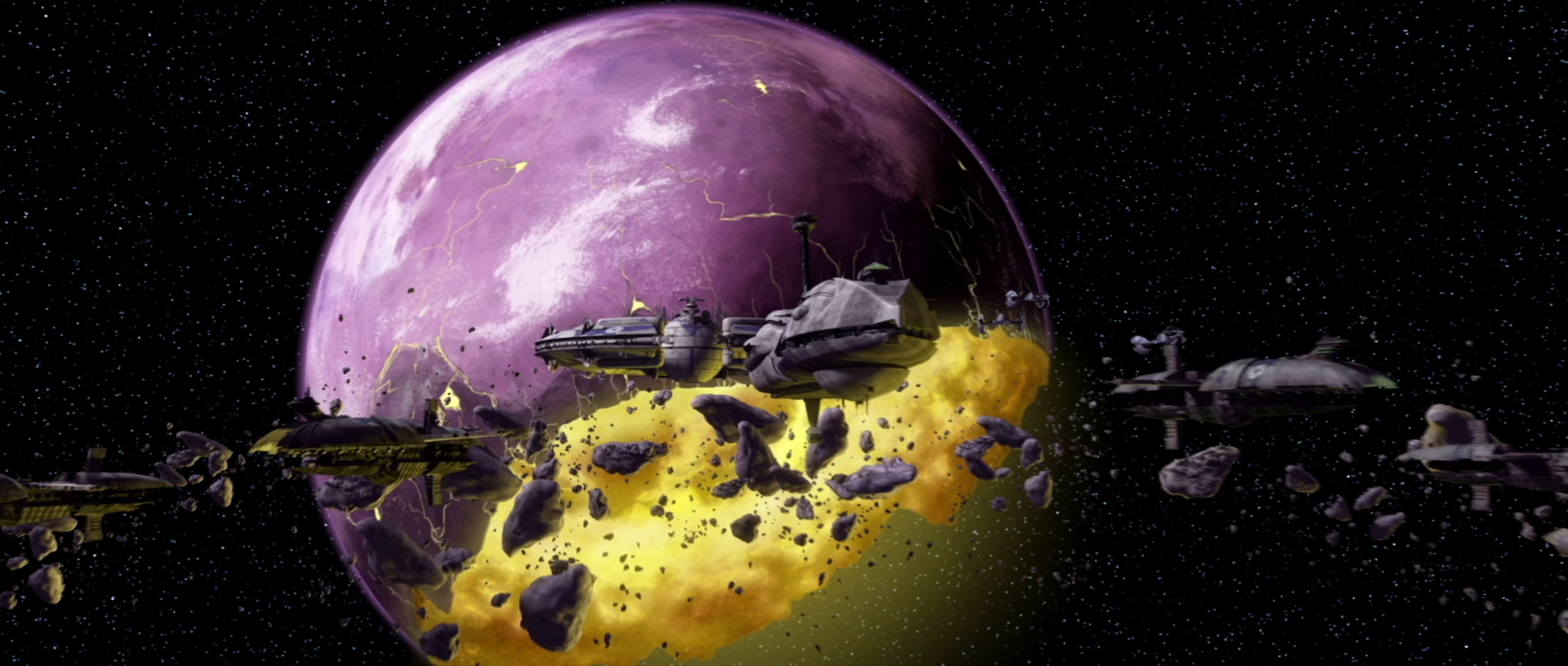
The Confederacy navy also maintained a substantial fleet under the control of the Trade Federation Home Defense Legions within the Quellor sector, as well as another fleet under the command of Dark Acolyte Asajj Ventress. Additionally, a group of Separatist warships served as the personal flotilla of the Head of State, Dooku, which he utilized on various occasions when away from Serenno. Furthermore, the Confederacy navy maintained a flotilla of Bulwark-class battle cruisers, the secret construction of which was overseen by Admiral Dua Ningo of the Sullustan Home Guard, which also served within the navy. The completion of the Bulwark flotilla was anticipated by the second year of the Clone Wars.
Moreover, the navy also maintained several orbital blockades as part of its forces. These included the Christophsis blockade over the planet Christophsis, commanded by Admiral Trench, the Ryloth blockade above the planet Ryloth, commanded by Captain Mar Tuuk, the Felucia blockade over the planet Felucia, and the Umbara blockade over the planet Umbara.
Starfighter structure
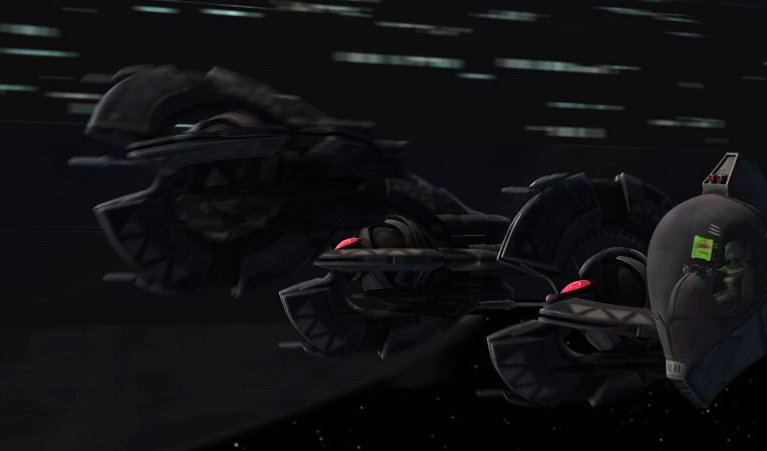
In addition to its fleets, the Confederacy navy also utilized starfighter squadrons. Stationed aboard the modified core ship-turned-listening post Skytop Station was the 88th Flight, a unit comprised of Vulture-class droid starfighters. During the Battle of Sullust, the Dark Acolyte Asajj Ventress was placed in command of two groups of droid tri-fighters that served within the navy.
Other formations
The Confederacy navy also included other units within its forces. These included the Grievous Legion, a Separatist battle group that utilized vulture droids, and an unidentified droid contingent of vulture droids stationed in the Corvair sector.
Personnel
Command
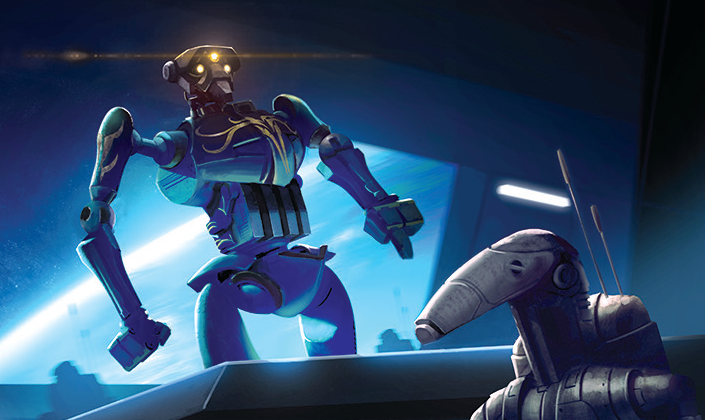
While the navy frequently employed ST-series super tactical droids, T-series tactical droids, and OOM command battle droids, all of which were capable of commanding their star fleets, the Confederacy also utilized organic commanders. These commanders included the experienced Sullustan Admiral Dua Ningo of the Sullustan Home Guard, a steadfast Separatist who was tasked with overseeing the construction of a secret flotilla of battlecruisers, and the financier-turned-admiral Pors Tonith, an arrogant yet well-established Muun who maintained strong connections with the InterGalactic Banking Clan. Another commander who joined the Confederacy navy was the Harch Admiral Trench, a legendary officer who was once presumed dead at the Battle of Malastare Narrows and who initially provided secret assistance to the Separatists.
Crew
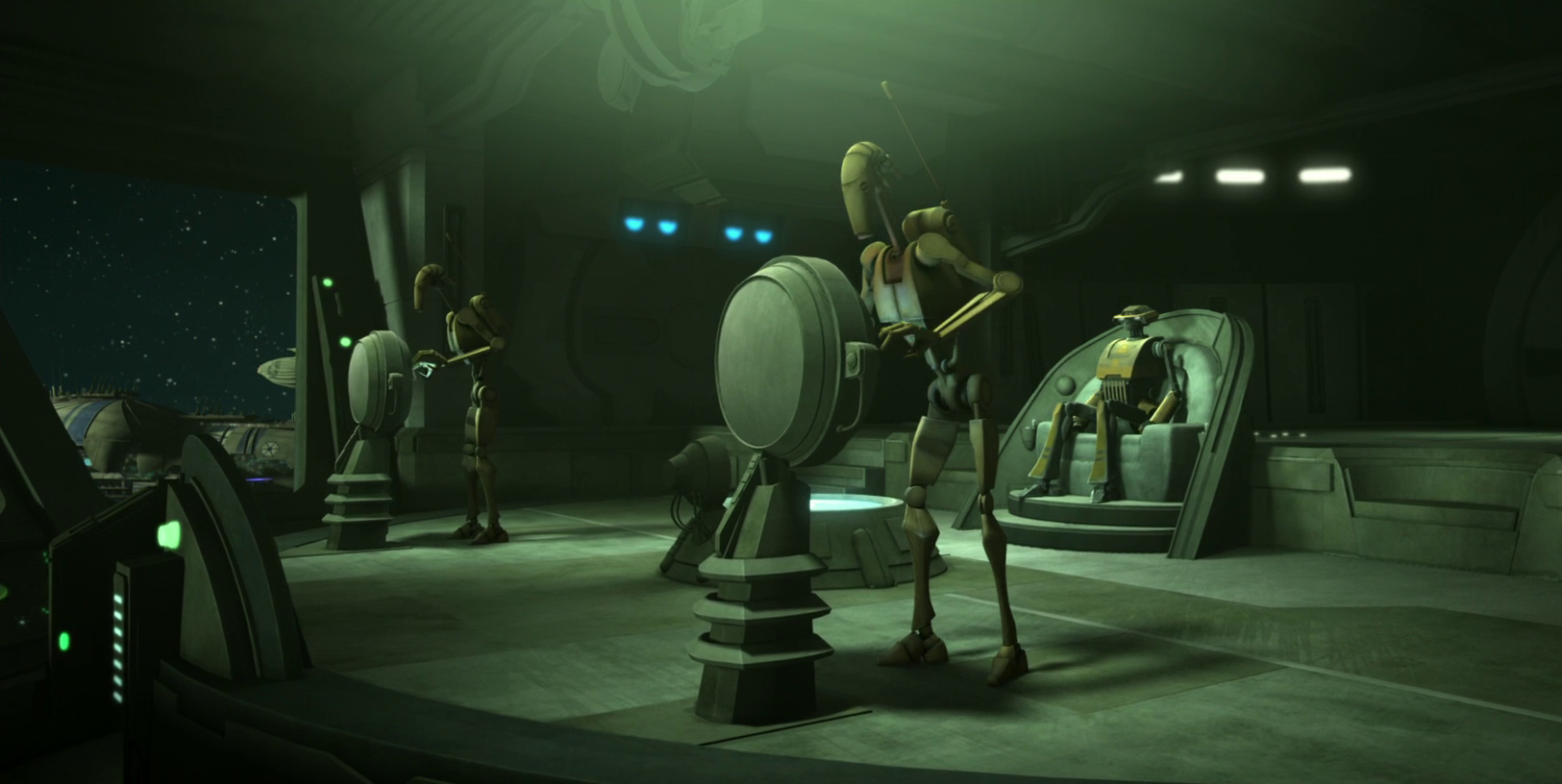
Due to the widespread use of droid crews in the Separatist fleet, the need for space to accommodate foodstuffs, water, breathable air, and quarters for organic crews was largely eliminated, freeing up design options. These droid crews could be rapidly assembled and assigned to a designated starship.
These droid crews were typically composed of B1-series battle droids and OOM pilot battle droids stationed on the command bridge of a starship. OOM-series security droids were also stationed aboard Separatist warships to maintain security. Within the starships, the Confederacy utilized firefighter battle droids equipped with enhanced heat shielding to extinguish any fires that occurred on board the vessel. However, despite the prevalent use of droids, the Confederacy was known to employ organic crews, sometimes consisting of Neimoidians.
Equipment
The Confederacy navy adopted a range of equipment for those serving within its ranks. Battle droids, such as B1-series battle droids and OOM pilot droids, were often armed with E-5 blaster rifles and carried comlink booster packs, while Separatist commanders wore white and grey uniforms and were provided with a single blaster pistol for protection. B1-series rocket battle droids within the navy were equipped with fusioncutters and rocket packs.
Ranks
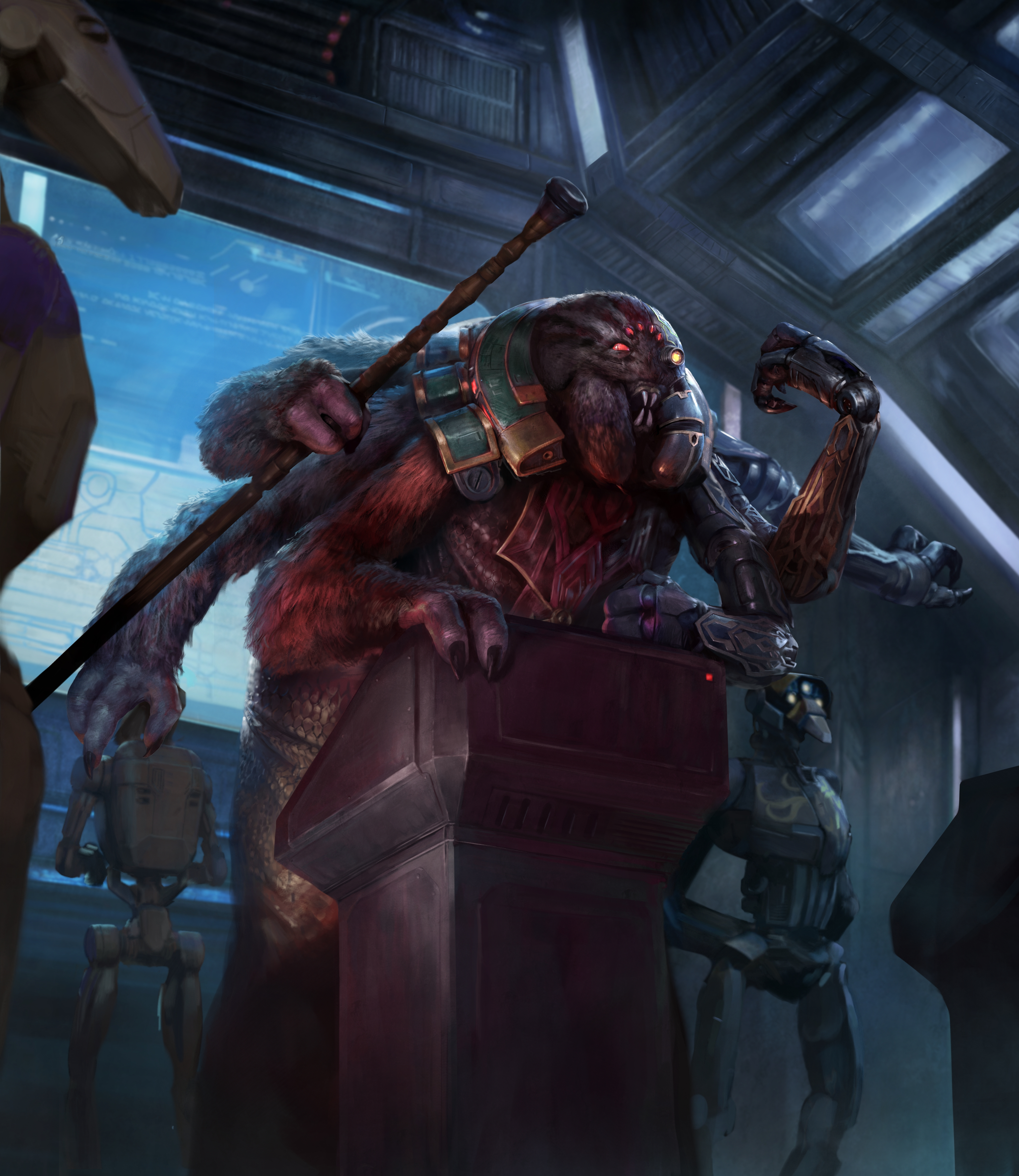
The Confederacy navy maintained its own rank hierarchy. The rank of Admiral was used for individuals placed in command of entire fleet groups. Additionally, the Confederacy navy incorporated the rank of Commander, the holders of which were tasked with fulfilling multiple roles, including fleet and troop command, overseeing tactical squads, and coordinating surgical strikes, while also managing logistics and the politics of the Confederacy. These commanders were required to adapt to both their enemies and allies. The navy also included the rank of Captain.
Training
Despite the use of battle droids and droid starfighters within its forces, the Confederacy navy frequently employed organic fighter pilots. These fighter pilots often originated from planets such as Valahari, which was renowned for its native starfighter aces and engineers.
Starships of the Confederacy of Independent Systems Navy
Space stations and gun platforms
Throughout the course of the war, the Confederacy navy utilized various space stations within its forces. These stations included the automated vulture droid deployment station, which was used to automatically deploy groups of six Vulture-class droid starfighters to engage incoming enemies, and the InterGalactic Banking Clan gun platform. Additionally, the navy also utilized battlespheres, a variant of the Trade Federation core ship. One such battlesphere was Skytop Station, a modified battlesphere equipped with large antennae and used as a listening post to monitor Republic Navy operations and transmissions.
Capital ships
Dreadnoughts, heavy cruisers, battleships, and battle cruisers
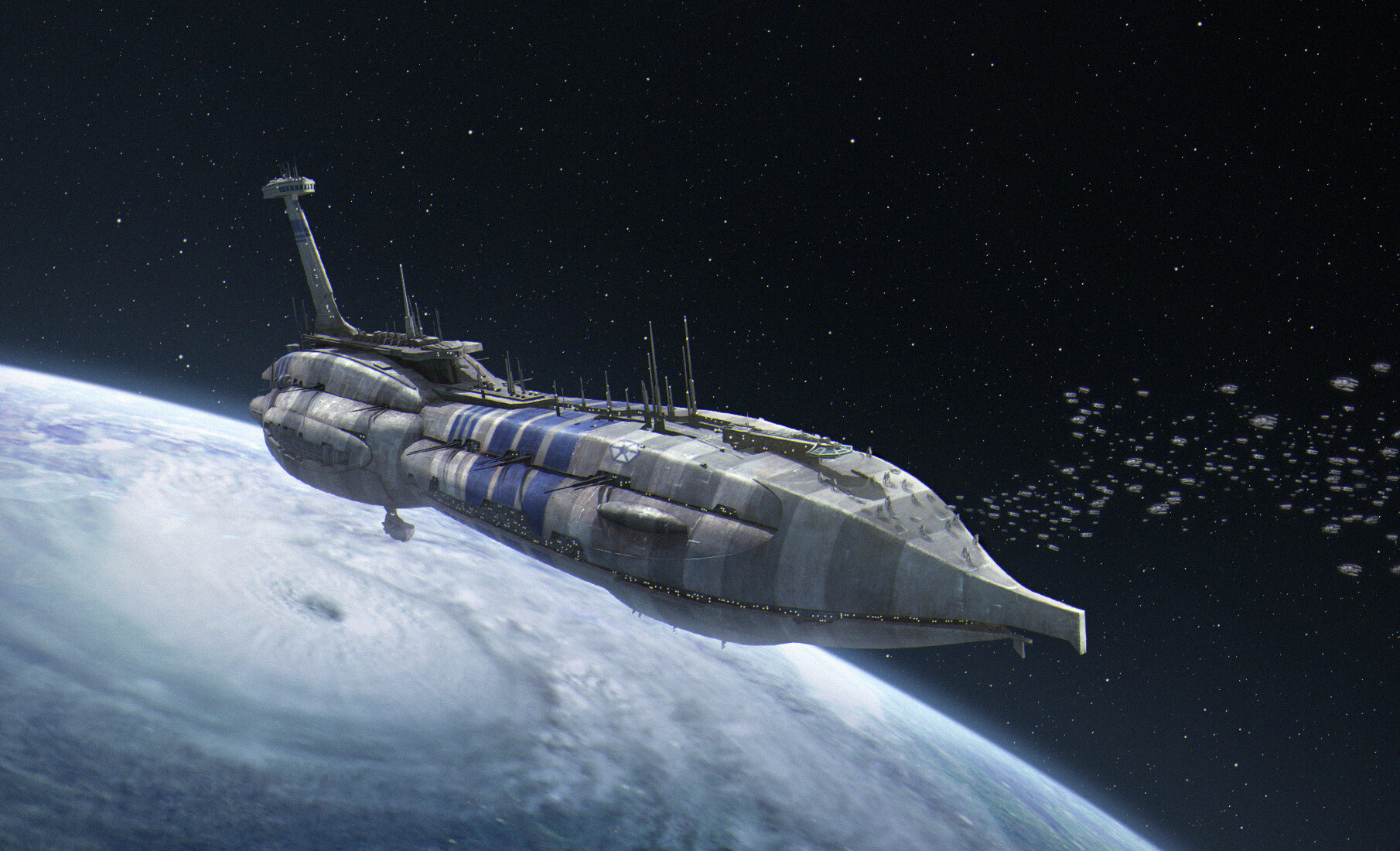
Throughout its history, the Confederacy navy employed a diverse range of capital ships. Dreadnoughts such as the Providence-class Dreadnoughts were among the three most common capital ship classes used within the navy, but were deployed sparingly by the Separatist admiralty due to their importance and high operating costs. One variant was the Providence-class Carrier.
The navy also employed heavy cruisers, including the Subjugator-class heavy cruiser, which was also classified as a Star Dreadnought due to its size. During the war, the navy maintained a limited number of Subjugators, including the Malevolence, which served as the initial testbed and lead ship of the class. These heavy cruisers were the navy's largest warships, exceeding the size of most of the Republic's fielded starships, and were capable of destroying entire fleets.
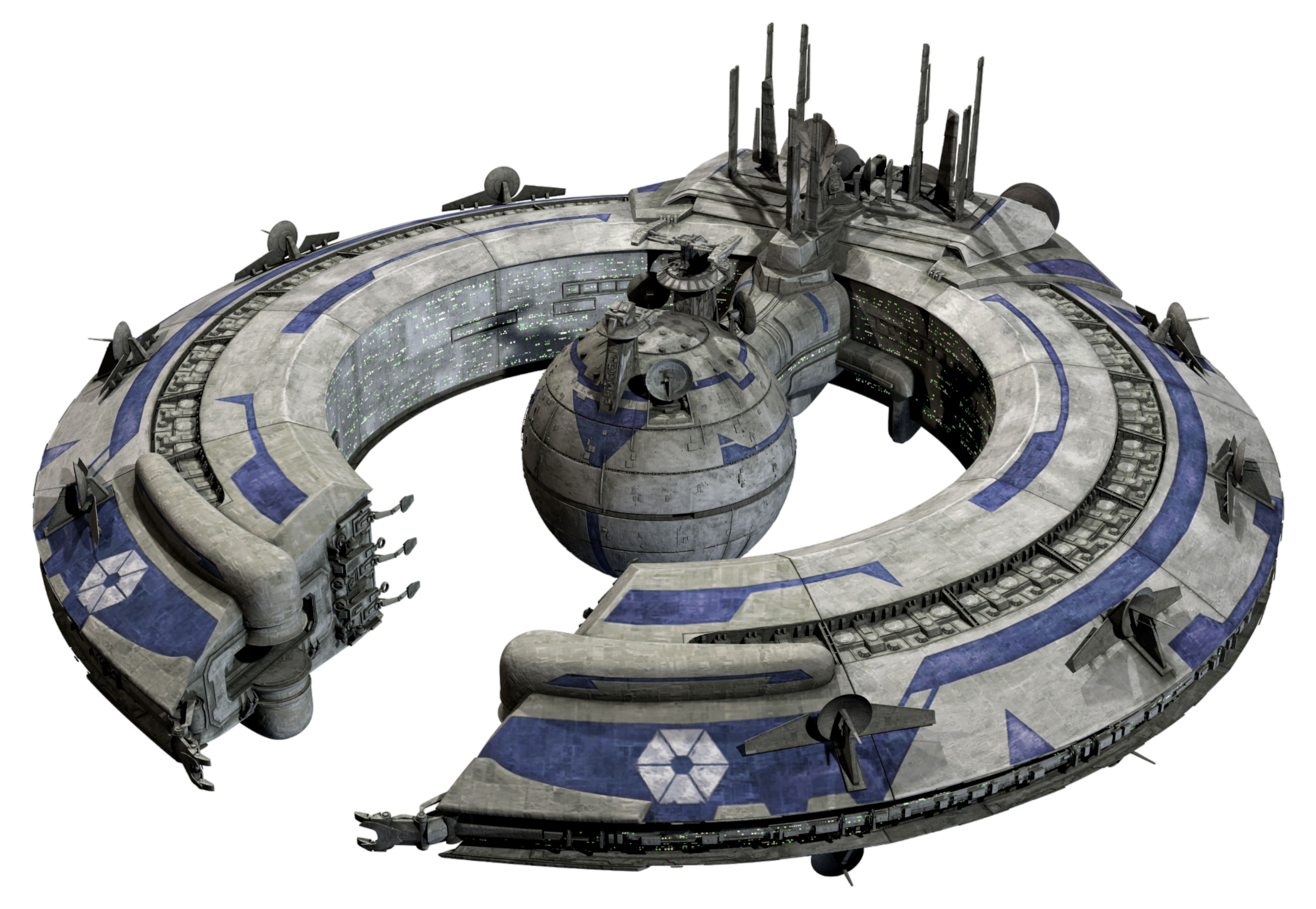
In addition, the Confederacy navy fielded Lucrehulk-class Battleships, which were modified Lucrehulk-class LH-3210 cargo freighters provided by the Trade Federation fleet, and served as the primary capital ship of the Separatist fleet. Furthermore, the navy employed Bulwark-class battle cruisers, a class of battlecruiser that was manufactured and deployed by the fleet during the war. Core ships, detached modules of Lucrehulk vessels, were also deployed by the navy and were capable of landing on surfaces to serve as ground bases. Moreover, Dual Hemisphere-Omni Support Vessels manufactured by Hoersch-Kessel Drive Inc. from salvaged Federation core ships were used to ferry spare parts and weaponry to fleet as needed.
Destroyers, cruisers, and frigates
The Separatist armada also deployed other classes of capital ships throughout the war. These classes included the Recusant-class light destroyer, another of the most common ships used within the navy. Another type of destroyer used by the Separatists' naval forces was the Fantail-class destroyer. Additionally, a cruiser within the navy was the Diamond-class cruiser, which was provided by the Corporate Alliance.
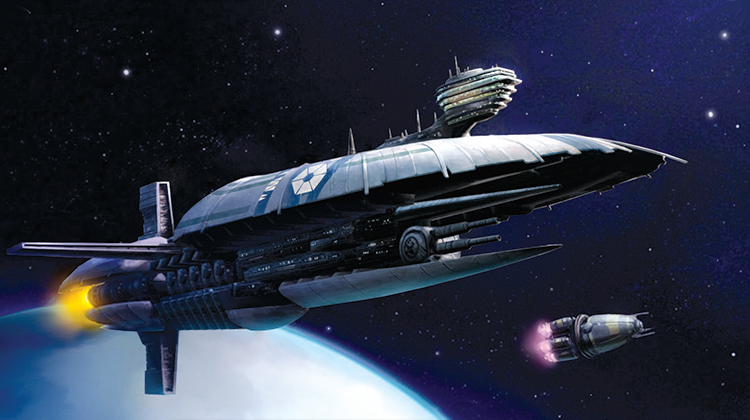
In addition to these, the Munificent-class star frigate, while designated as a frigate, was frequently employed and known as a "pocket cruiser." A related vessel, the Munificent-class C3 Frigate, served a similar purpose, specializing in command, control, and communications. The Umbaran Militia provided Umbaran support ships to the Separatist cause. Furthermore, the Separatists resorted to theft and piracy, acquiring Venator-class Star Destroyers and the Charger c70 retrofitted Consular-class cruiser through such means.
Sub-capital ships
The Confederate navy also made extensive use of sub-capital ships. Notably, the Trident-class assault ship saw specialized deployment, functioning as both a warship and an aquatic gunship. As the war neared its conclusion, the Separatist navy began incorporating modified Gozanti-class cruisers into their operational fleets, alongside C-ROC Gozanti-class cruisers for use by privateering groups.
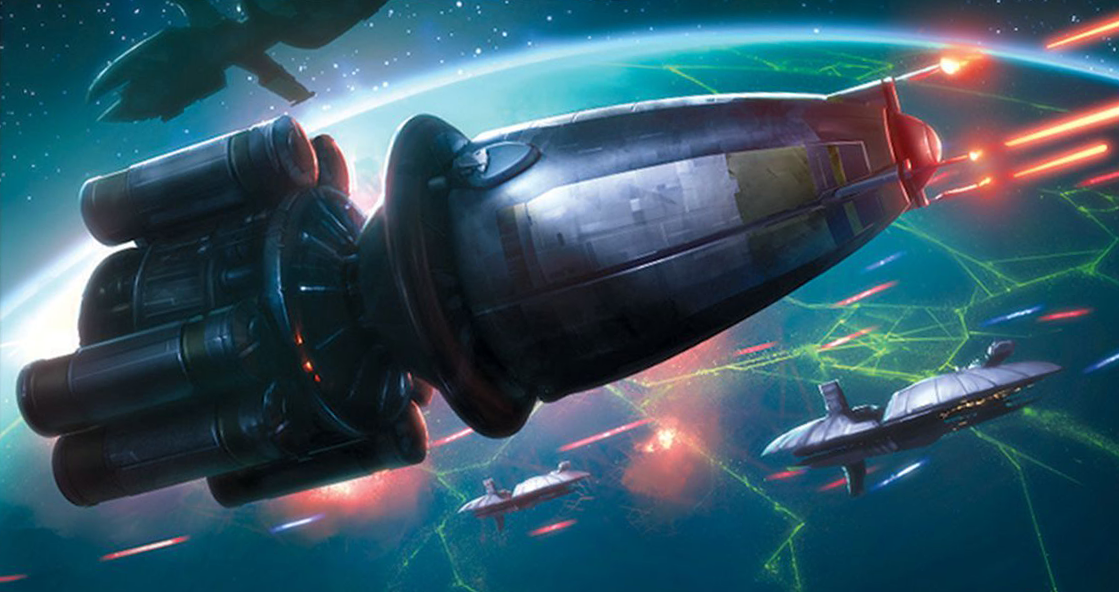
Moreover, the Confederacy's naval forces utilized Hardcell-class interstellar transports as impromptu corvettes, alongside the battle refit variant. These "corvettes" bolstered the Confederacy's existing fleet of Commerce Guild corvettes. Furthermore, C-9979 landing craft played a crucial role in transporting the Separatist Droid Army to planetary surfaces.
Light craft
The Separatist fleet also included a variety of lighter vessels such as freighters, shuttles, transports, and gunships, all of which saw widespread use throughout the conflict. Records show that at least one YV-865 Aurore-class freighter was actively employed by the Confederacy during the war, while bulk transports constituted a significant portion of the Separatist navy in its early stages.
The Separatists employed a diverse array of shuttles and transports. The navy also utilized HMP droid gunships, Settie-class drop ships, Separatist drop ships, Shekelesh-class freight gunships Droch-class boarding ships, H-2 executive shuttles, Maxillipede shuttles, Separatist command shuttles, Sheathipede-class transport shuttles, and Sheathipede-class Type B shuttles. The Rho-class transport shuttle was stolen by the Separatists.
Starfighters
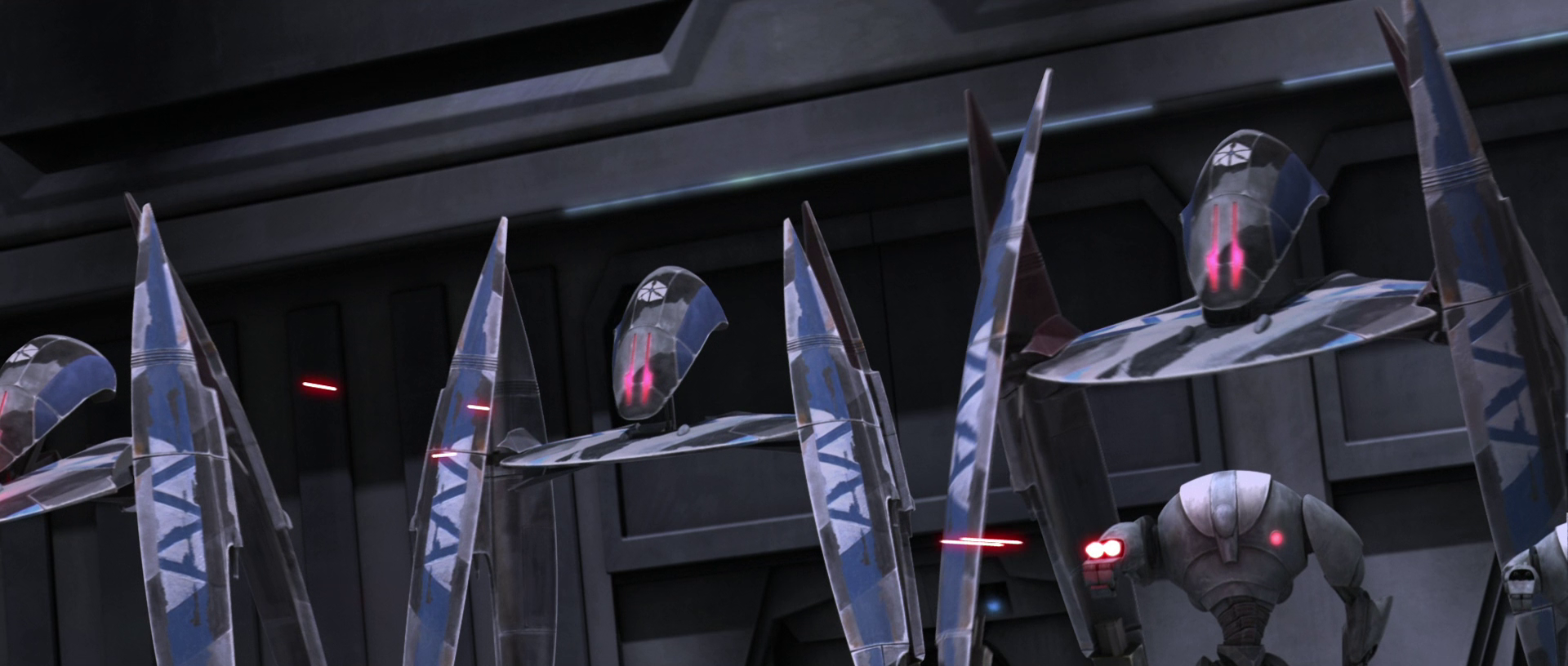
The Separatist navy also deployed various starfighter and bomber models within its fleets. The Variable Geometry Self-Propelled Battle Droid, Mark I, more commonly known as the Vulture-class droid starfighter, was a favorite, serving as both a starfighter and an infantry support walker. The Hyena-class Droid Bomber, sharing a similar design aesthetic with the vulture droid, was engineered to engage capital ships and heavily defended installations. Furthermore, the Separatist fleet included droid tri-fighters, experimental droid starfighters equipped with homing missiles and Pistoeka sabotage droids. The droid tri-fighter was intended to replace the Vulture-class and pose a greater threat to Jedi pilots.
The Confederate navy further employed Belbullab-22 heavy starfighters, Rogue-class Porax-38 starfighters, Ginivex-class fanblade starfighters, and NovaSwords, expensive fighters reserved for the Confederacy's elite pilots. Some of the Confederacy's top pilots flew personalized craft. The Nantex-class territorial starfighter, Zenuas 33 Umbaran starfighters, Scarab-class starfighter, the Tempest Zero starfighter, and at least one Star Courier, the Scimitar, also saw action in the Separatist navy.
History
Origins
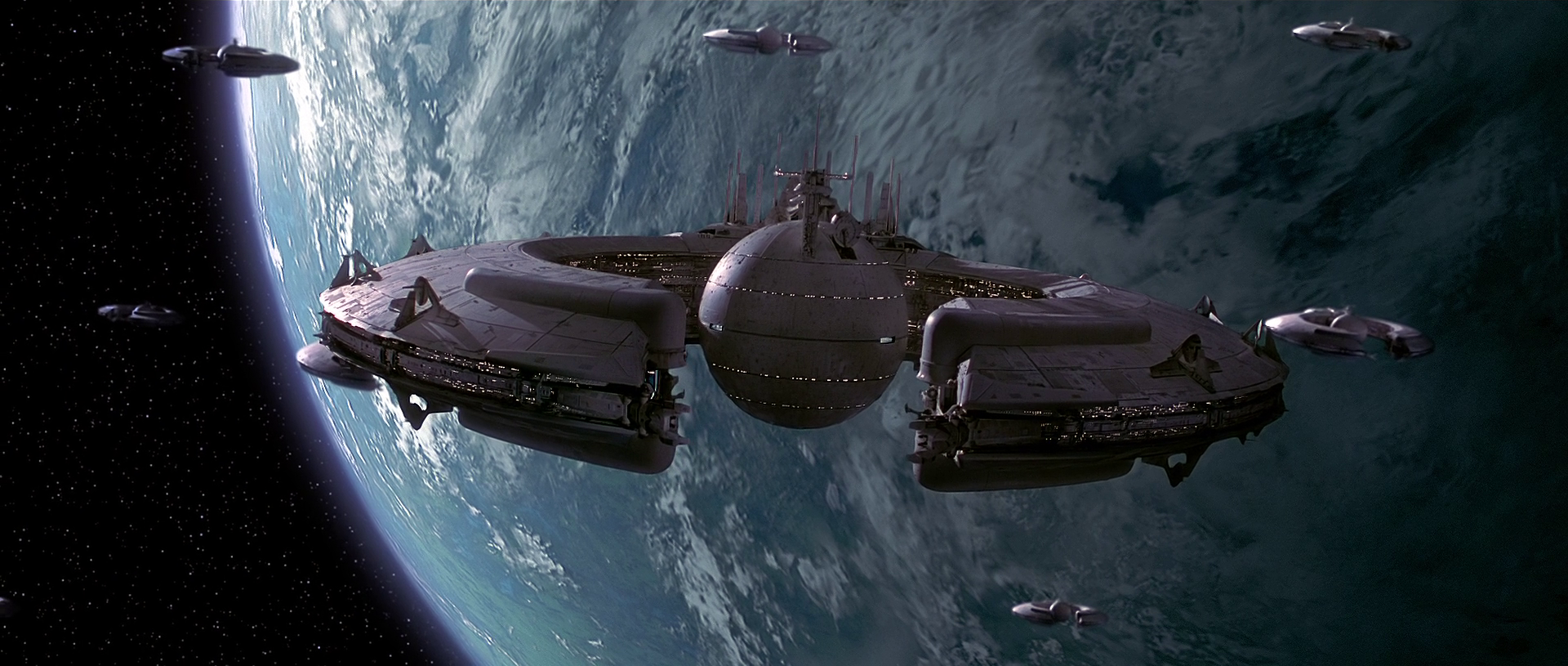
By 22 BBY, widespread dissatisfaction with the perceived corruption within the Galactic Republic fueled unrest within the Galactic Senate, leading to the secession of thousands of star systems from the Republic. This resulted in the rise of a secessionist movement under the leadership of former Jedi Master Count Dooku. Following assassination attempts on Senator Padmé Amidala, Jedi Knight Obi-Wan Kenobi discovered that Dooku's Confederacy of Independent Systems was secretly assembling a Droid Army on the planet Geonosis while investigating the bounty hunter, Jango Fett. While on Geonosis, Kenobi also found a significant and unusual concentration of Trade Federation core ships that had detached from a fleet of Lucrehulk-class Battleships in orbit.
Initially, the Confederacy navy was largely composed of heavily armed bulk transports provided by member corporations such as the Commerce Guild, Corporate Alliance, InterGalactic Banking Clan, Techno Union, and the Trade Federation, used to transport their goods across the galaxy. However, after the Clone Wars erupted on Geonosis, the Separatists contracted with shipbuilding corporations, including Pammant Docks and other allies, to construct capital ships and create a credible fleet. These starships included various starfighters and were manned by B1-series battle droids.
22 BBY
Blockading Christophsis and Ryloth
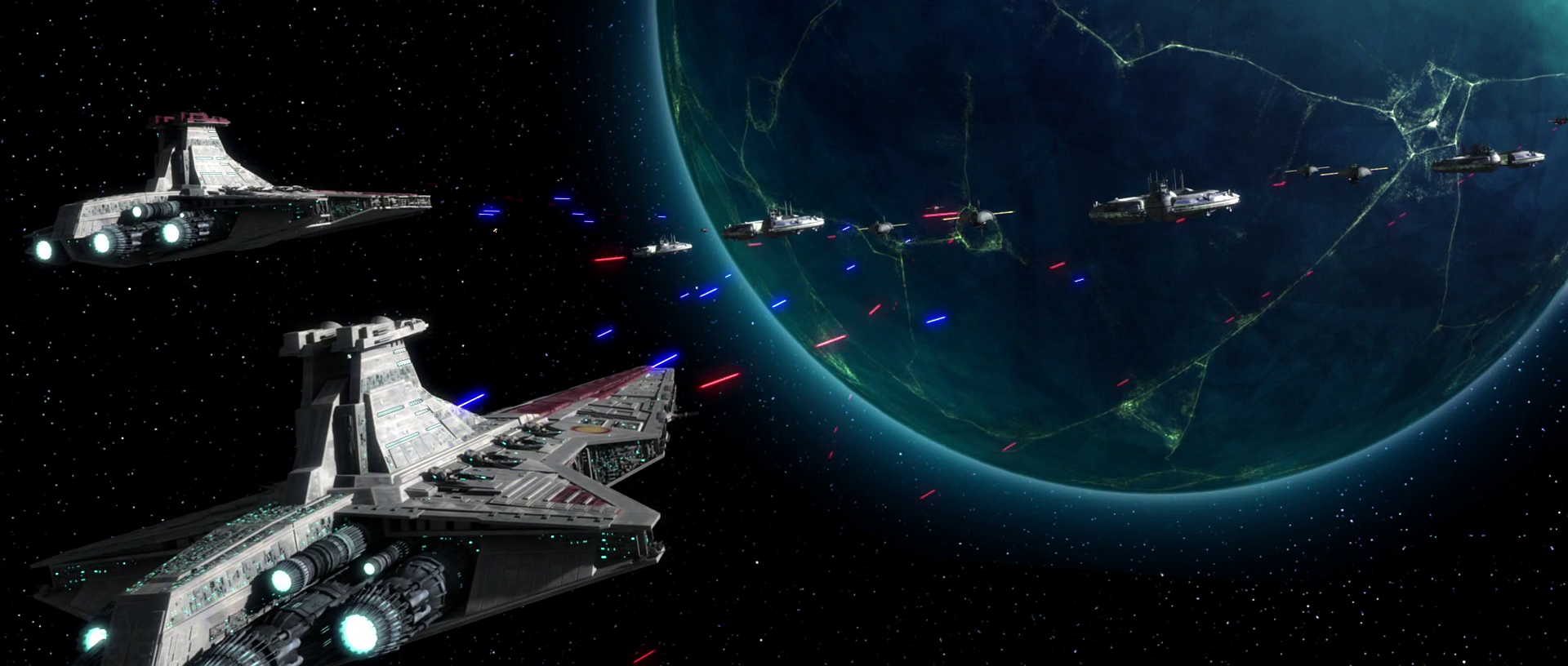
Early in the war, the Confederacy invaded Christophsis to seize its resources and its strategic location along the Corellian Run hyperspace route. Consequently, a blockade of thirty warships, commanded by Admiral Trench, was established in the planet's orbit. The Republic responded by dispatching a task force led by Jedi General Anakin Skywalker to break the blockade and deliver supplies to the clone forces of Senator Bail Organa, who were trapped on the planet's surface due to the blockade.
However, Jedi General Kenobi ordered the Republic fleet to retreat behind the planet's moon to regroup. Despite orders to continue the relief mission, Skywalker bypassed the blockade in a prototype stealth ship. When Trench ordered a bombing run on Organa on the surface, Skywalker defied orders and engaged the blockade, destroying the Providence-class Dreadnought Invincible, the command ship. Although the blockade was temporarily broken, the Separatist fleet returned and forced the Republic warships out of the system until reinforcements arrived from the fleet of Republic Admiral Wurtz.
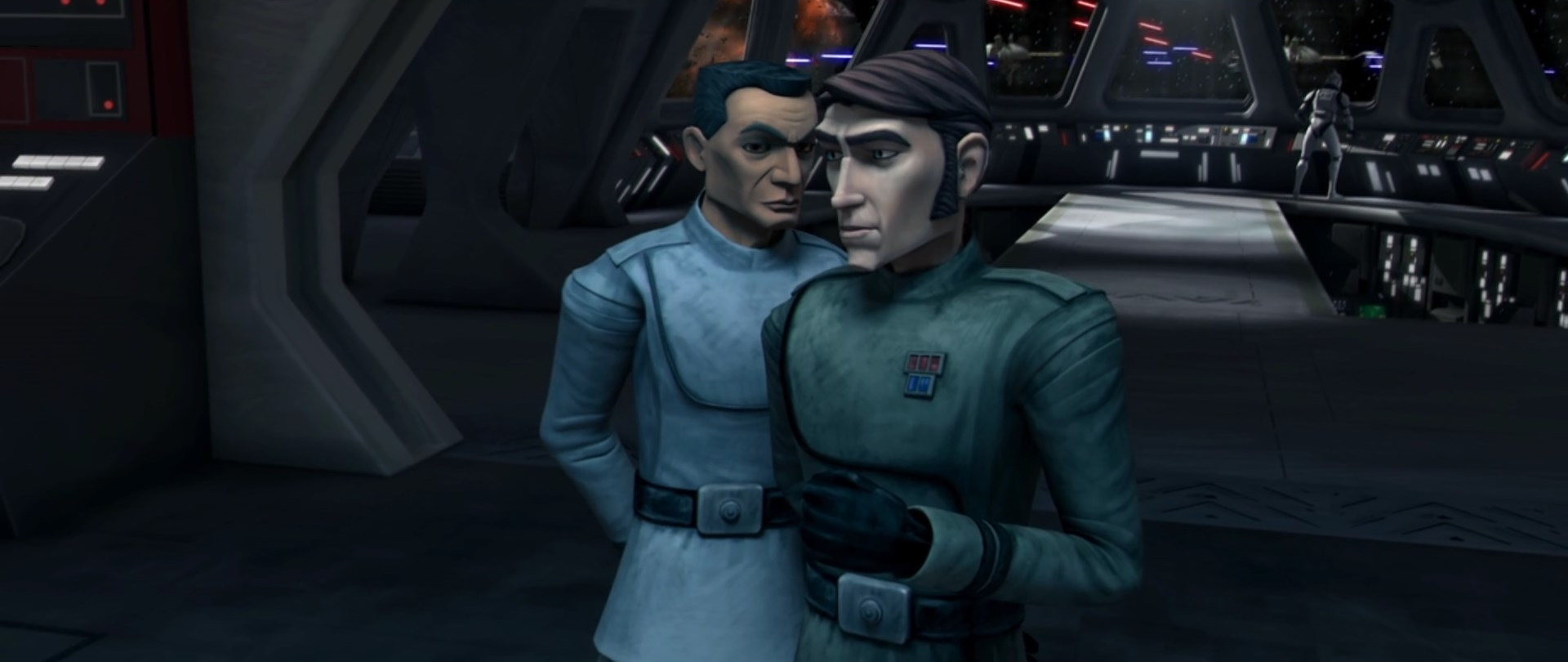
Later, a Separatist fleet blockaded the Twi'lek homeworld of Ryloth, cutting off support for the dwindling Republic fleet under Admiral Dao and the starving Twi'lek population. The Republic then tasked Senator Organa and Junior Representative Jar Jar Binks with convincing the Toydarian King, Katuunko, on Toydaria to allow the Republic to use the Toydarian homeworld as a staging area for relief supplies to Ryloth.
The Malevolence
As the war progressed, the Confederacy deployed its first Subjugator-class heavy cruiser, the Malevolence, a dreadnought equipped with two powerful mega-ion cannons capable of disabling entire fleets. Designed by starship engineer Ruggle Schmong, the Malevolence, under General Grievous, used its ring-shaped ion cannons to devastate numerous Republic fleets, leaving no survivors. Jedi General Plo Koon dispatched a task force of three Venator-class Star Destroyers to locate and destroy the vessel before it could strike again. However, while traversing the galaxy's Phu system, the task force was ambushed and destroyed by the Malevolence.
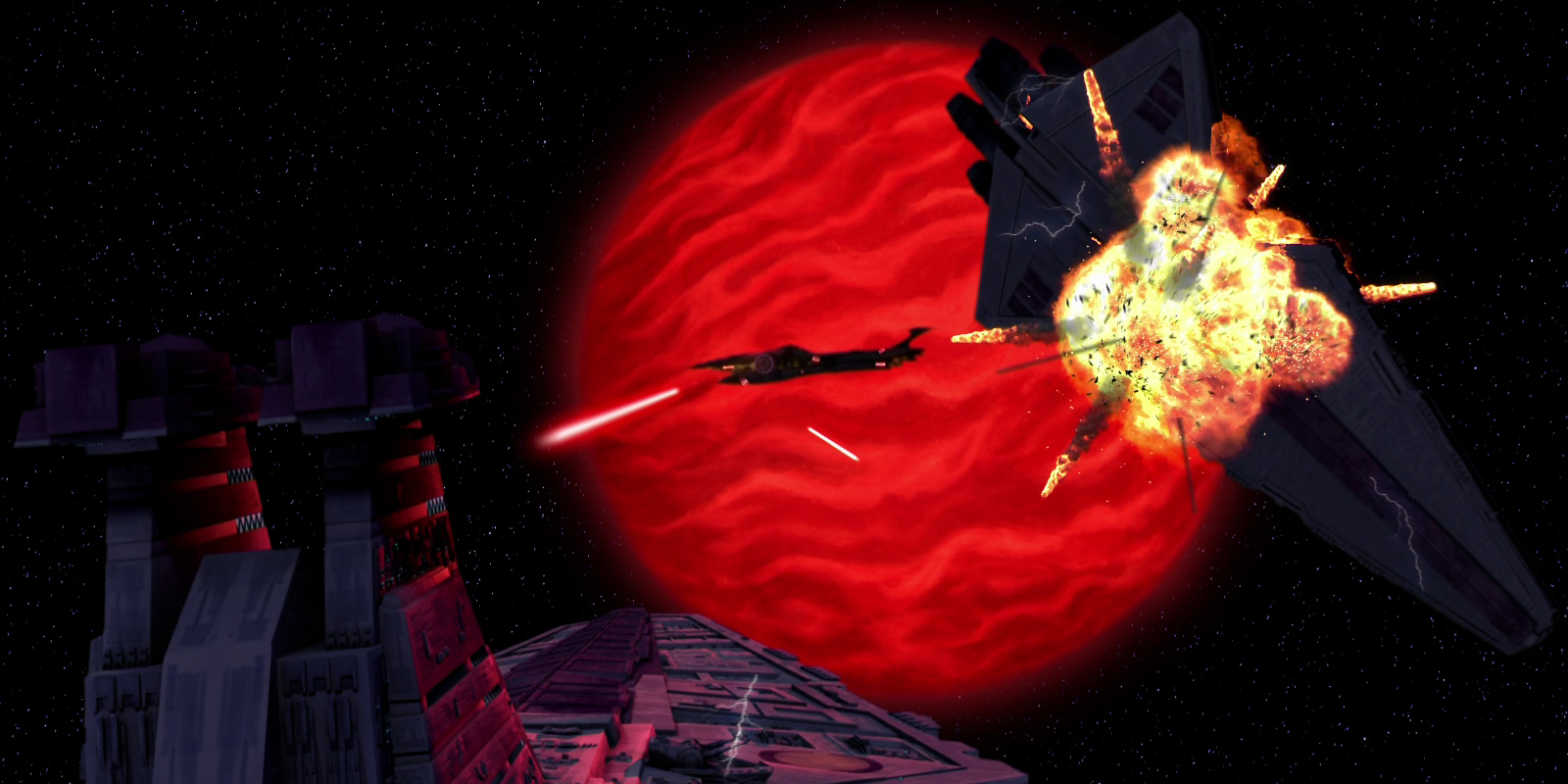
Following the Phu system attack, Koon and his fleet tracked the dreadnought to the Abregado system. Aboard his Venator-class Star Destroyer, the Triumphant, Koon attempted to request Republic reinforcements, but the Malevolence jammed their communications before firing its ion cannon, disabling all three Star Destroyers. Subsequently, the dreadnought unleashed a barrage of turbolaser fire, destroying Koon's fleet. Koon survived the destruction and the Separatist hunt for survivors thanks to General Skywalker and his Padawan, Ahsoka Tano, allowing the Republic to learn about the Malevolence.
Despite the Republic's knowledge, the Malevolence continued its attacks on Republic fleets. One such attack occurred in the Ryndellia system, where it ambushed a Republic medical convoy of three Pelta-class frigates escorted by a single Venator-class Star Destroyer. After destroying the convoy, Dooku tasked Grievous with destroying the Republic's secret Outer Rim medical station, which housed 60,000 wounded clone troopers. General Skywalker and his Padawan Tano defended the station from the dreadnought using BTL-B Y-wing starfighter/bombers from Shadow Squadron. Despite heavy casualties from the dreadnought's turbolasers and ion cannon, Shadow Squadron inflicted significant damage to the Malevolence by striking its mega-ion cannon with proton torpedoes. After this damage, Republic ships entered the system and opened fire on the Malevolence as it retreated to Separatist space.
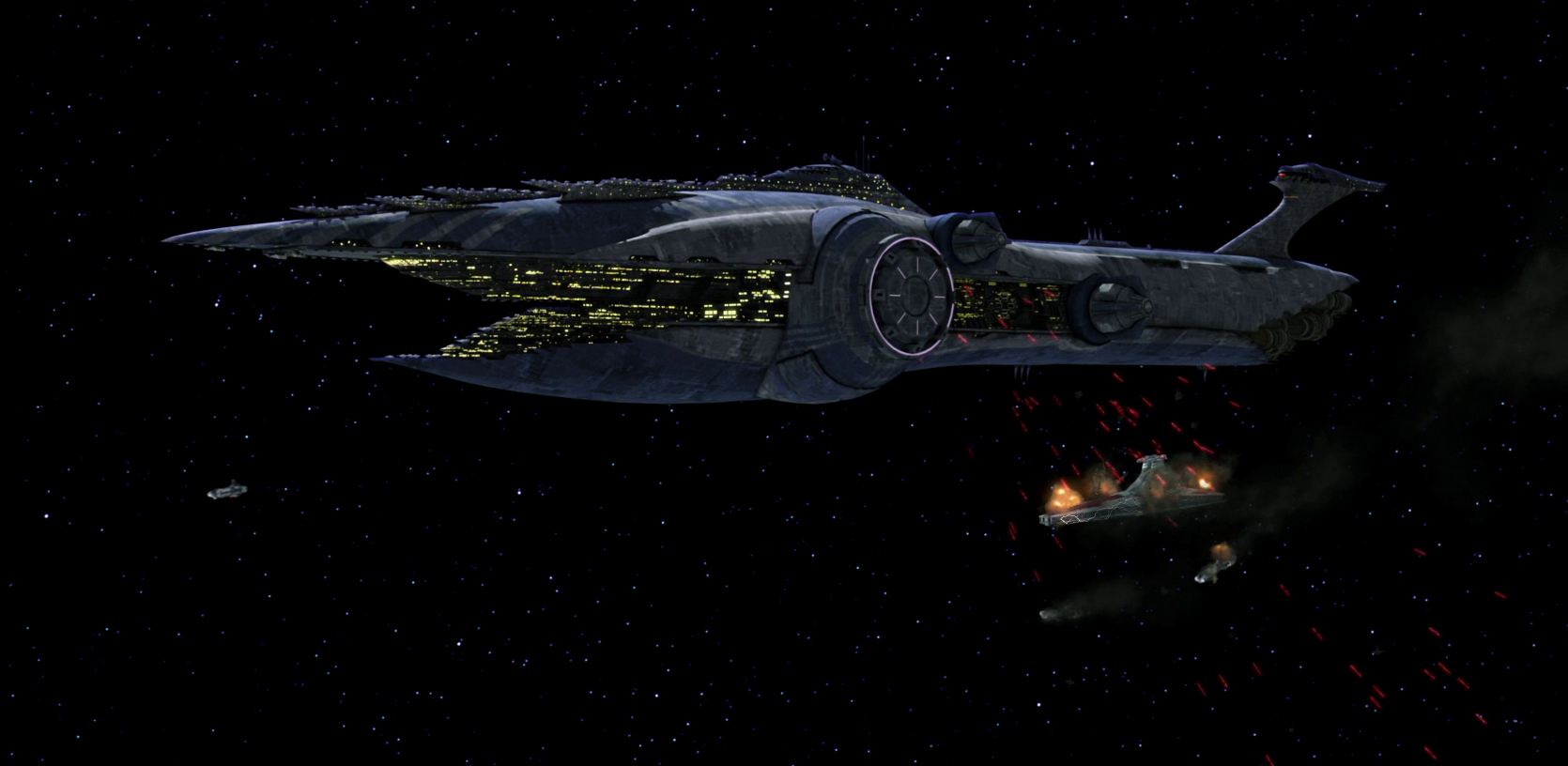
As the Republic pursued the Malevolence, Dooku and Darth Sidious orchestrated a trap for Senator Amidala, who believed she was meeting with Banking Clan representatives. Upon Amidala's arrival, Grievous attempted to take her and C-3PO hostage, but they evaded capture and hid within the ship. Responding to Amidala's capture, Skywalker, Kenobi, and R2-D2 launched a rescue mission and infiltrated the Malevolence. Skywalker rigged the dreadnought's navigation computer to crash the warship into the Dead Moon of Antar. The destruction of the Malevolence damaged Grievous's reputation and eroded Dooku's confidence in his leadership as Supreme Martial Commander of the Separatist Droid Armies. Furthermore, forces led by Jedi General Luminara Unduli intercepted a Separatist fleet sent to reinforce the Malevolence before its destruction.
Later battles
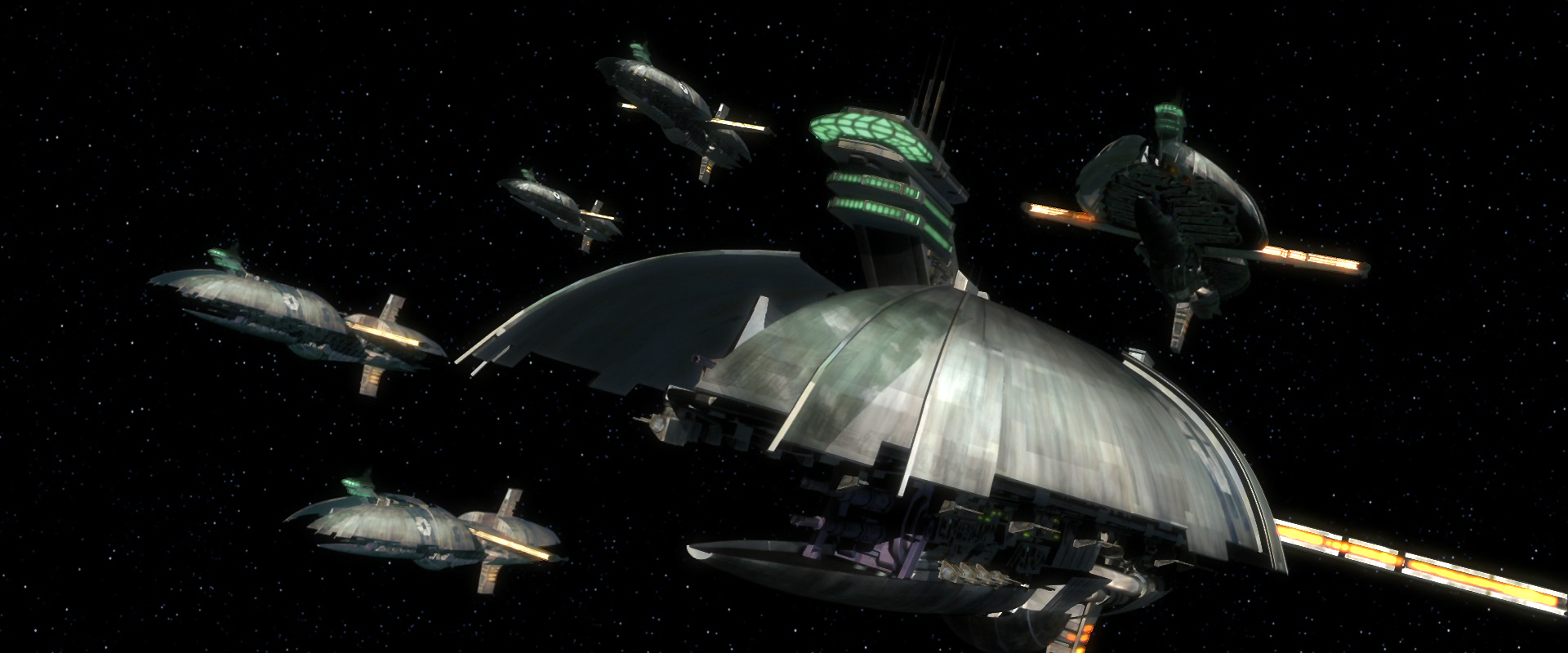
Later in the war, Confederate droid forces attempted to infiltrate and seize control of the Republic's listening outpost on the Rishi Moon to sabotage its all-clear signal. This would have allowed a Separatist fleet of Munificent-class star frigates and Lucrehulk-class Battleships under Grievous to launch a surprise attack on Kamino and destroy the cloning facilities of Tipoca City. However, the detachment stationed at the base destroyed the station, deactivating the hijacked all-clear signal and alerting a Republic fleet to the Rishi system, forcing Grievous to withdraw and abandon the plan.
Subsequently, Grievous used a fleet of five Munificents to launch a series of attacks against Republic forces, leading him to the planet Bothawui. Upon arriving at Bothawui, the Separatist fleet, alerted to the presence of a Republic fleet led by General Skywalker beyond the planet's asteroid field, advanced through the field. Within range of the Republic warships, Grievous ordered his frigates to open fire, disabling one of the warships and forcing Skywalker to engage. Grievous's fleet was destroyed by Skywalker's Gold Squadron and All Terrain Tactical Enforcers in the asteroid field, forcing Grievous to retreat.
A fleet of Separatist Munificent-class star frigates under the command of the T-series military strategic analysis and tactics droid TF-1726 later clashed with a fleet of three Venator-class Star Destroyers under Jedi General Aayla Secura above the planet Quell. Republic reinforcements under General Skywalker rescued General Secura from her damaged Star Destroyer and escaped to the planet Maridun, where they encountered a Lurmen village.
21 BBY
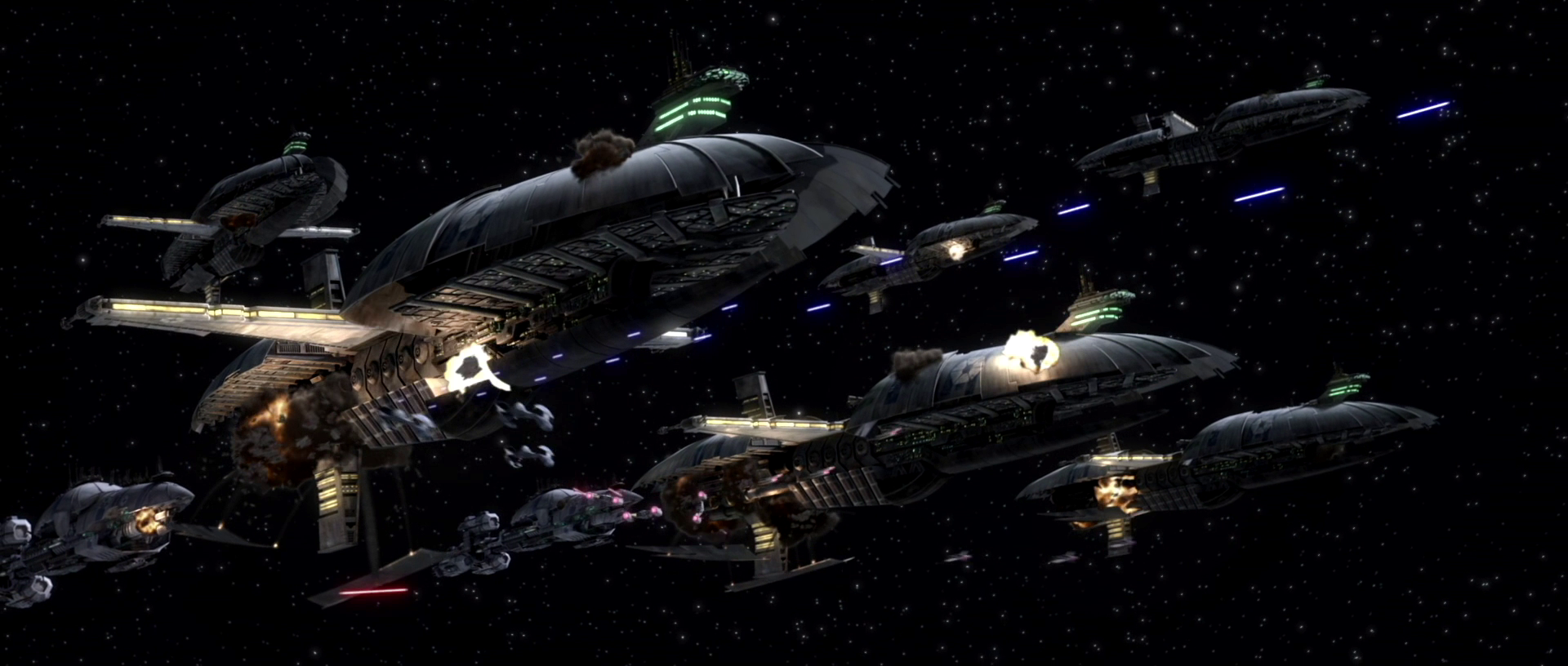
In 21 BBY, the Separatist navy blockaded the planet Felucia during the First Battle of Felucia, trapping Republic forces led by Jedi Generals Kenobi and Skywalker. Republic reinforcements under Jedi General Plo Koon broke through the blockade and evacuated Republic forces on Felucia. After stealing a holocron from the Jedi Temple on Coruscant, the Separatist-aligned bounty hunter Cad Bane's fleet of Munificent-class star frigates attacked the Republic outpost on Devaron, capturing Jedi Master Bolla Ropal. Bane intended to use Ropal to unlock the holocron and access its secrets. Republic reinforcements under General Skywalker and Admiral Yularen boarded Bane's flagship and destroyed his fleet, but Bane escaped with the holocron and a kyber memory crystal containing a list of all Force-sensitive children in the galaxy.
Later, a fleet led by General Grievous attacked Jedi Master Eeth Koth's Venator-class Star Destroyer and captured him. Jedi Generals Kenobi and Adi Gallia led a fleet of Republic warships that destroyed most of Grievous's fleet. Republic and Jedi forces then pursued Grievous on Saleucami, but he escaped off-world.
General Grievous later commanded a Separatist fleet during an assault on Kamino, the homeworld of the clone troopers and their place of creation. During the battle, Grievous employed a strategy of sacrificing the fleet's transports to protect his flagship, as the transports secretly contained components for Asajj Ventress to assemble Trident-class assault ships. Upon landing, Aqua droids reassembled the ships, which were then used to attack the clone factories on Tipoca City. Ventress attempted to steal a DNA sample of Jango Fett but was thwarted by Skywalker. The clone troopers successfully repelled the Separatist invaders.
20 BBY
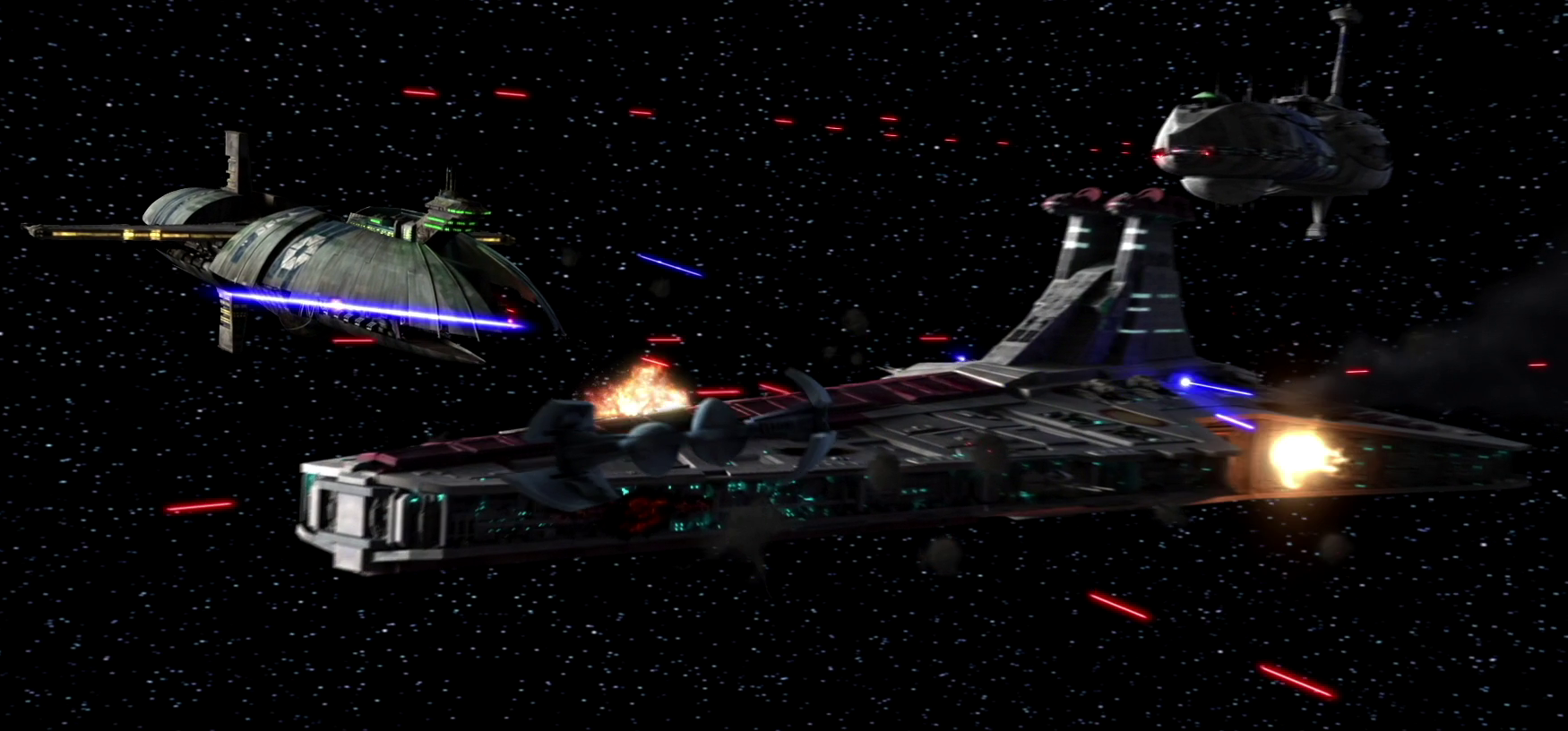
A Separatist naval force, under the joint command of Asajj Ventress and the tactical droid designated TJ-912, engaged a Republic fleet. This Republic fleet was under the command of Generals Kenobi and Skywalker, and Admiral Yularen, and the confrontation occurred above the world of Sullust. During this engagement, droid tri-fighter squadrons, identified as Trident group one and Trident group two, successfully destroyed the Venator-class Star Destroyer known as the Resolute. As the battle raged, Darth Sidious communicated with Count Dooku, issuing an order for the elimination of Ventress. Sidious believed Dooku was training Ventress as a Sith apprentice. To demonstrate his loyalty, Dooku complied, instructing TJ-912 to bombard Ventress' Providence-class Dreadnought. Despite this assault, Ventress survived, later becoming a significant adversary of the Sith. Following this, Dooku commanded TJ-912 to withdraw from Sullust.
At a later time, Separatist forces executed an ambush against the Venator-class Star Destroyer of Jedi General Even Piell along the Nexus Route. This route was strategically located, bisecting both Separatist and Republic controlled territories. As a direct result of Piell's capture, the Jedi Order, with the support of the Republic, launched a mission aimed at rescuing him from the Citadel prison located on Lola Sayu.
Subsequently, Separatist warships, under the command of General Grievous, ambushed Jedi General Adi Gallia and the 91st Mobile Reconnaissance Corps's Venator-class Star Destroyer near the planet Patitite Pattuna. Grievous' forces boarded Gallia's Star Destroyer, successfully capturing the Jedi Master. Gallia was later rescued from Grievous' flagship by a Republic fleet commanded by Koon and Wolffe.
During the Battle of Umbara, a Separatist fleet provided support to the Umbaran Militia in their conflict against Republic forces. The Umbarans were receiving supplies from a DH-Omni Support Vessel, which was under the protection of the Separatist fleet. Clone troopers Fives, Jesse, and Hardcase played a crucial role by destroying the Separatist supply ship using stolen Zenuas 33 Umbaran starfighters. This action significantly shifted the momentum of the battle in favor of the Republic. During the Battle of Dathomir, a Separatist fleet transported Separatist droid forces, led by Count Dooku and General Grievous, to the planet Dathomir, which served as the homeworld of the Nightsisters. Tragically, all Nightsisters, with the exception of Ventress and Mother Talzin, were killed during the Separatist assault.
At a later point, Separatist warships, again under the command of General Grievous, attacked General Kenobi's fleet, inflicting substantial casualties. General Kenobi, in a desperate move, activated the self-destruct mechanism on the Venator-class Star Destroyer Negotiator. The resulting explosion eliminated Grievous' landing party and at least one Munificent-class star frigate. The Republic Colonel Meebur Gascon and the droid team D-Squad, which included R2-D2, subsequently carried out a successful mission to acquire an encryption module from the tactical droid Aut-O's flagship located within Separatist territory.
During a particular mission, Skywalker deliberately piloted the T-6 shuttle, carrying himself, Senator Amidala, and Tano, directly into the path of an oncoming Separatist fleet. Following a brief but intense skirmish, the trio successfully escaped, owing to Skywalker's exceptional piloting skills combined with Amidala and Tano's effective operation of the shuttle's cannons.
19 BBY
War of attrition

In the final phases of the Clone Wars, the planet Cato Neimoidia, which served as the headquarters for the Trade Federation, was subjected to an invasion by a Separatist fleet. Despite the planet's strong affiliations with the Separatists, the Galactic Republic sanctioned a defense of the Neimoidian Purse World and deployed reinforcements under the command of General Skywalker and Commander Tano. While the Separatist fleet engaged Republic warships in orbit, Skywalker and Tano confronted Separatist droid tri-fighters before receiving orders to return to Coruscant to investigate the Bombing of the Jedi Temple hangar. Clashes between Republic and Separatist forces persisted until the very end of the Clone Wars.
Later on, Separatist naval forces, under the leadership of Admiral Trench, defended a space station positioned above the planet Ringo Vinda against Jedi and Republic forces commanded by General Skywalker, and Masters Tiplar and Tiplee. During this battle, the inhibitor chip within Clone trooper Tup malfunctioned, leading him to kill Master Tiplar. Upon viewing footage of Tup's actions, Trench attempted to abduct the Clone trooper, but Skywalker and Clone troopers Rex and Fives successfully evacuated Tup to Kamino for medical evaluation.
After Rush Clovis took control of the InterGalactic Banking Clan, Count Dooku exerted pressure on him to increase interest rates on the Republic's loans in order to stabilize the bank's financial situation. Shortly thereafter, a Separatist fleet attacked the Banking Clan's headquarters located on the planet Scipio, eliminating a small Republic contingent led by Commander Thorn that had been assigned to protect Senator Amidala. In response, the Galactic Republic dispatched a fleet to assume control of the financial sector. Following the events on Scipio, the banks were placed under the direct authority of Supreme Chancellor Palpatine. Unbeknownst to all except Sidious' apprentice Count Dooku, the events that unfolded on Scipio were part of a larger Sith scheme orchestrated by Palpatine's alter ego, Darth Sidious, to solidify his control over the galaxy.
Following a mission to Utapau with the purpose of excavating a substantial kyber crystal, a Separatist fleet provided escort for the Separatist supply ship tasked with transporting the kyber crystal back to Serenno. However, Generals Kenobi and Skywalker successfully infiltrated the Separatist supply ship and destroyed the kyber crystal, resulting in an explosion that decimated a significant portion of the Separatist fleet above Utapau. The Jedi managed to escape aboard a Neimoidian shuttle, while Grievous fled in his Belbullab-22 heavy starfighter known as Soulless One.
Separatist space and ground forces, under the command of Admiral Trench, subsequently besieged the Republic world of Anaxes, which housed a main production facility vital to the Republic Navy. Trench received assistance from the captured, unconscious Republic ARC trooper Echo, whom Techno Union Foreman Wat Tambor exploited to transmit Rex's battle strategy algorithm to the Separatist commander. This allowed Separatist forces to make significant advances against the Republic defenders. After General Skywalker, Rex, and Clone Force 99 rescued Echo from Wat Tambor, the clones infiltrated Trench's flagship and disabled the droid army, while General Skywalker eliminated Admiral Trench. Upon escaping, clone commando Wrecker destroyed Trench's flagship and the adjacent Separatist fleet using a remote detonator, thereby shifting the momentum of the Anaxes campaign in favor of the Republic.
Tools of the Sith
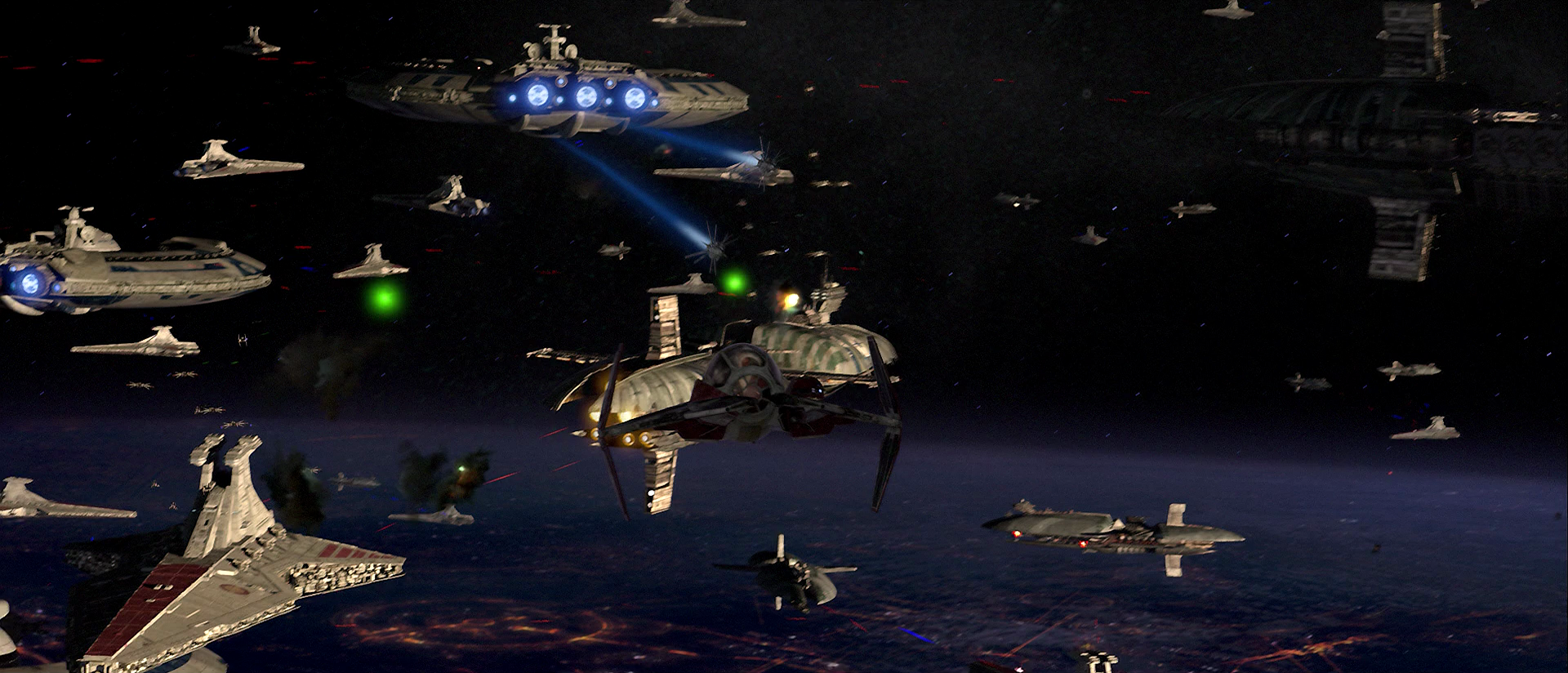
Later on, Separatist forces commanded by Count Dooku attacked the Mahran homeworld of Mahranee, overwhelming Republic reinforcements led by Jedi General Chubor. Separatist and Republic warships engaged in combat in space. As a punitive measure against the Mahranee for their alliance with the Republic, Dooku ordered his fleet to bombard General Chubor's Republic frigate as well as several ships transporting Mahran refugees. Furthermore, the Separatist leader initiated a campaign of genocide against the Mahran species. Dooku's actions prompted the Jedi High Council to dispatch Master Quinlan Vos and the former Sith assassin on a mission to assassinate the Separatist leader. However, Dooku proved too formidable for the two assassins, leading to Vos's capture.
After the Death Watch rescued Darth Maul from the Spire prison located on Stygeon Prime, General Grievous led a Separatist fleet in pursuit of Maul, eventually tracking him to the planet Zanbar. During the battle above and on [Ord Mantell]'s surface, Maul's Shadow Collective forces ambushed the Separatist fleet, capturing both Dooku and General Grievous. However, Dooku and Grievous managed to escape Maul's captivity due to the intervention of Darth Sidious. Grievous killed Maul's mentor Mother Talzin. Maul managed to escape but his Shadow Collective forces were scattered and eliminated as a threat to Sidious' plans for galactic domination.
Following a period of prolonged torture, Dooku successfully turned Quinlan to the dark side of the Force by revealing that Ventress had murdered his late Master Tholme. Over the subsequent months, Vos became Dooku's new right-hand man within the Separatist hierarchy, earning the moniker "Admiral" Enigma. The Jedi Order sought Ventress' assistance in rescuing Quinlan in exchange for a pardon for her past crimes against the Jedi and the Republic. However, Vos had secretly become a Separatist double agent as part of his mission to uncover the identity of Dooku's Sith master, Darth Sidious. Despite the combined efforts of Vos and Ventress, Dooku escaped from Christophsis without revealing Sidious' identity, thereby allowing the Sith Lord's plans for galactic domination to proceed unhindered.
During the Outer Rim Sieges, the Separatists had been forced back to the Outer Rim, but this prolonged the war, keeping the Republic tied down in battles across the outer spirals. With the Jedi and Republic military forces dispersed across the galaxy on various fronts, a substantial Separatist fleet led by General Grievous and Count Dooku assaulted the Republic capital of Coruscant and kidnapped Supreme Chancellor Palpatine. The Separatist fleet engaged the Republic's Open Circle Fleet in battle. Palpatine was imprisoned aboard the Separatist flagship, the Providence-class dreadnought Invisible Hand, but was rescued by Jedi Generals Skywalker and Kenobi with the assistance of R2-D2. At Palpatine's urging, Skywalker killed Count Dooku, drawing the young Jedi closer to the dark side. However, Grievous escaped to Utapau to hide with the Separatist Council aboard a core ship. The Battle of Coruscant resulted in the destruction of a third of the Separatist fleet involved in the attack.
Dissolution and legacy
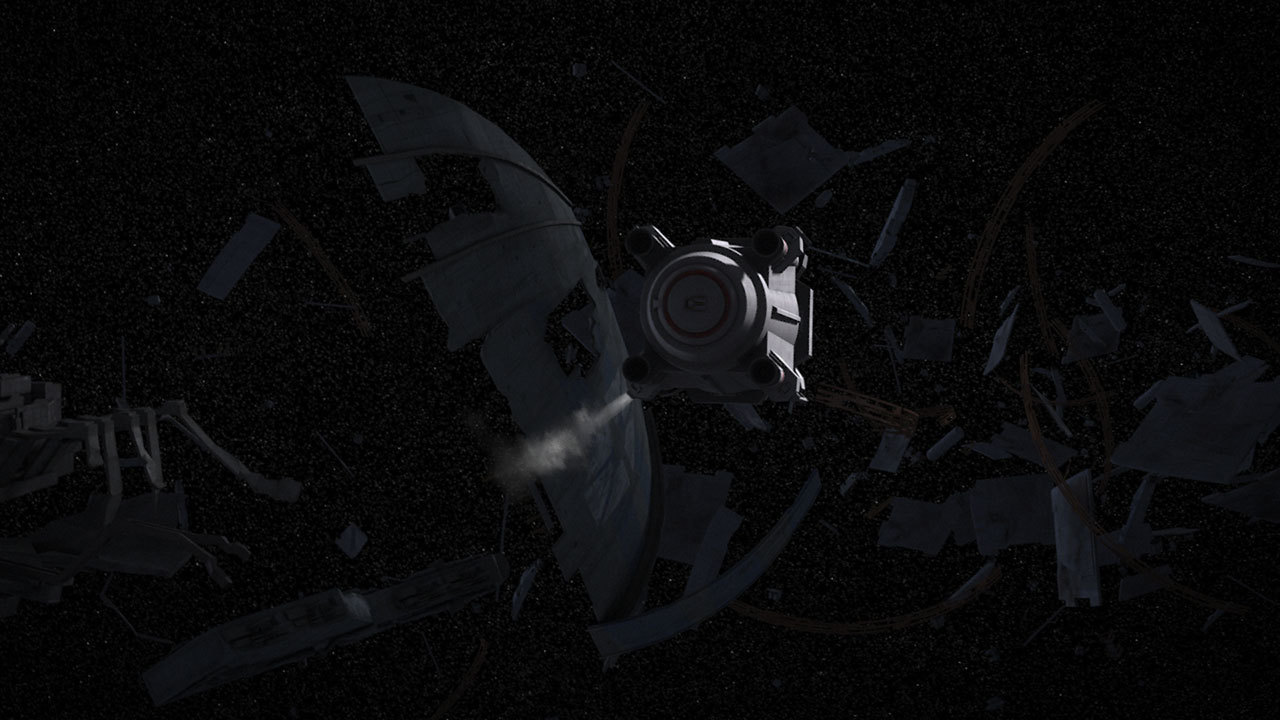
Following the execution of the Separatist Council by Anakin Skywalker, who had fully embraced the identity of Darth Vader, the Separatist navy, along with the Separatist Droid Army, was presumably deactivated and demobilized. The Galactic Republic underwent a transformation into the Galactic Empire under the rule of the self-proclaimed Emperor Palpatine. With the demise of the Separatist leadership, Imperial forces seized control of numerous former Separatist worlds, including Antar 4, Raxus Secundus, Kooriva, and Murkhana.
Many former Separatist warships, including the Providence-class Dreadnought Lucid Voice, were dismantled at shipyards such as the Bilbringi shipyards. Despite this, remnants of former Separatist warships and weaponry occasionally resurfaced. In 14 BBY, the former Republic Intelligence Agent Berch Teller's rebel cell made use of a modified Providence-class Dreadnought along with numerous Vulture droids and droid tri-fighters. In an attempt to undermine his rival Moff Wilhuff Tarkin, Vice Admiral Dodd Rancit, exploiting his position as Director of the Naval Intelligence Agency and his underworld connections, supplied Teller's insurgents with former Separatist weapons and equipment. Tarkin and Darth Vader ultimately defeated Teller's insurgents following a brief campaign and exposed Rancit's duplicity. Other insurgent groups, such as Cham Syndulla's Free Ryloth Movement and Nightswan, also employed former Separatist vulture droids and buzz droids.
As late as 2 BBY, the wreckage of Separatist ships could still be discovered in the vast expanse of deep space. While awaiting a rendezvous with former Senator Mon Mothma, the Spectres concealed their starship, the Ghost, near the debris of a Recusant-class light destroyer and a Munificent-class star frigate.
During the Galactic Civil War, a former Trade Federation Lucrehulk-class Battleship—Lucrehulk Prime—was utilized by the Rebel Alliance, under the command of the Twi'lek general Hera Syndulla. Sometime after the destruction of the first Death Star, however, it participated in the Hivebase-1 infiltration in 0 ABY.
The Alliance Navy would also use a heavily mortified Recusant-class light destroyer and a Providence-class Dreadnought alongside other Mon Cala cruisers to battle the Imperial Navy in outer space.
Behind the scenes
The Separatist navy made its initial appearance in the 2002 episodic film, Star Wars: Episode II Attack of the Clones, and was officially identified as the Separatist navy in the reference publication, Ultimate Star Wars.