Galactic Republic
The Galactic Republic, alternatively known as the Grand Republic or simply the Republic, was a democratic federal union that stretched across vast distances of outer space. The terms Old Republic and first Galactic Republic were applied to the Republic before its modern form, existing until 1032 BBY. The Old Republic designation also encompassed the modern Republic before it was replaced by the Galactic Empire in 19 BBY. Furthermore, the High Republic signified the period when the Republic was at its strongest, spanning from approximately 500 BBY to around 100 BBY. Established many thousands of years before the Battle of Yavin, around 25,000 BBY, the Republic's founding was roughly contemporary with the Jedi Order. The Republic was governed by the Galactic Senate under the Galactic Constitution, which included thousands of senators representing the Republic's various member worlds. The head of the Republic was the Supreme Chancellor, chosen from the Senate to lead the government from Coruscant. This planet entirely covered by a city, an ecumenopolis known as Galactic City, served as the Republic's capital and, consequently, the location of the Senate.
Spanning multiple star systems and sharing sovereignty, the Galactic Republic encompassed numerous worlds, from the Core Worlds to the Outer Rim Territories. It united diverse sentient species, both human and alien, under a single flag. As its influence expanded, the Republic engaged in numerous conflicts against adversaries like the Mandalorians, the Zygerrian Slave Empire, the Nihil, and various Sith Empires. The Jedi Order, a religious organization of individuals sensitive to the Force and devoted to the light side of the Force, pledged their service to the Senate. Accordingly, the Jedi Knights were revered as guardians of peace and justice within the Republic. Centuries of conflict culminated in the demise of the Old Republic. The final war between the ancient Jedi and Sith led to the restoration and rise of the modern Galactic Republic, ushering in the Republic Era, an age of peace that endured for a thousand years. The Republic's historical record was officially reset, and the periods preceding this event were collectively known as the Old Republic-era.
Following centuries of growth and prosperity, the Republic began to decline. With the aid of the resurgent Sith Lords, the Separatist Crisis caused a division in the galaxy between Republic supporters and the Confederacy of Independent Systems. The Grand Army of the Republic was formed under the command of Jedi Generals, who led the Republic Military against the Separatist Droid Army during the Clone Wars. However, this conflict was engineered to enable Supreme Chancellor Sheev Palpatine—secretly Darth Sidious, the Dark Lord of the Sith—to manipulate and control the Republic in a tyrannical manner. As the war concluded, Sidious initiated the Great Jedi Purge through Order 66 and transformed the Republic into the Galactic Empire by proclaiming himself Galactic Emperor. The Imperial Senate remained as the last vestige of the Old Republic until the Emperor dissolved it during the height of the Imperial Era. In the aftermath of the Galactic Civil War, the Alliance to Restore the Republic was completely reorganized into the New Republic, which restored the Galactic Republic after a generation of Imperial control.
History
Genesis of Freedom
Around 25,000 BBY, the original Galactic Republic emerged, gaining power through expansion across the galaxy, with Alderaan and Chandrila among its founding planets. The Thisspiasian Blood Monarchy became part of the Galactic Republic during its early stages around 20,019 BBY. Throughout its long history, the Republic existed in various forms; historians have termed this pre-modern phase as the "Old Republic," although the government's official designation was the Galactic Republic. The capital of the Old Republic was situated on Coruscant, an ecumenopolis, and it remained there for millennia.
Troithe, another city world, once rivaled Coruscant as the Republic's cosmopolitan hub, boasting a population in the billions. A significant portion of these inhabitants belonged to influential merchant and noble families. However, Coruscant eventually surpassed Troithe in industrial development, leading to Troithe's decline over time. At least five millennia before the Galactic Civil War began, a renegade group of Jedi separated from the Jedi Order, believing that the dark side of the Force could enhance Jedi power. This division sparked the Hundred-Year Darkness, resulting in the creation of the Sith. They even managed to erect a dark shrine on Coruscant. This rogue faction was ultimately defeated and banished from the Old Republic into uncharted territories.
The Jedi Temple was later built over the Sith shrine to contain its dark energy. After establishing itself on Coruscant, the Jedi Order became closely associated with the Old Republic, serving as guardians of peace and justice for over a thousand generations. Unbeknownst to the Jedi, the Sith had regrouped on the planet Moraband.
Centuries before the Imperial Era, the Corellian royalty sponsored exploration and colonization efforts that helped expand the Old Republic's frontiers. Hyperspace travel proved crucial for the Republic's expansion beyond the Core Worlds.
A Cosmic Confrontation of Fates
As the Old Republic extended its influence across the galaxy, it encountered various other powers, including the Zygerrian Slave Empire. Since the Old Republic had outlawed slavery and expected other civilizations to do the same, it adopted an aggressive stance against the Zygerrians. The Zygerrian Empire, which relied on slavery, refused to comply, leading to intervention by the Old Republic and the Jedi. After joining forces, the Old Republic and Jedi Order deployed their armies against the empire following the Zygerrians' refusal. The Old Republic emerged victorious, driving the practice of slave trading into the shadows, dismantling the empire, and confining its remaining government to Zygerria, the civilization's homeworld. Another power was the rogue Predori empire.
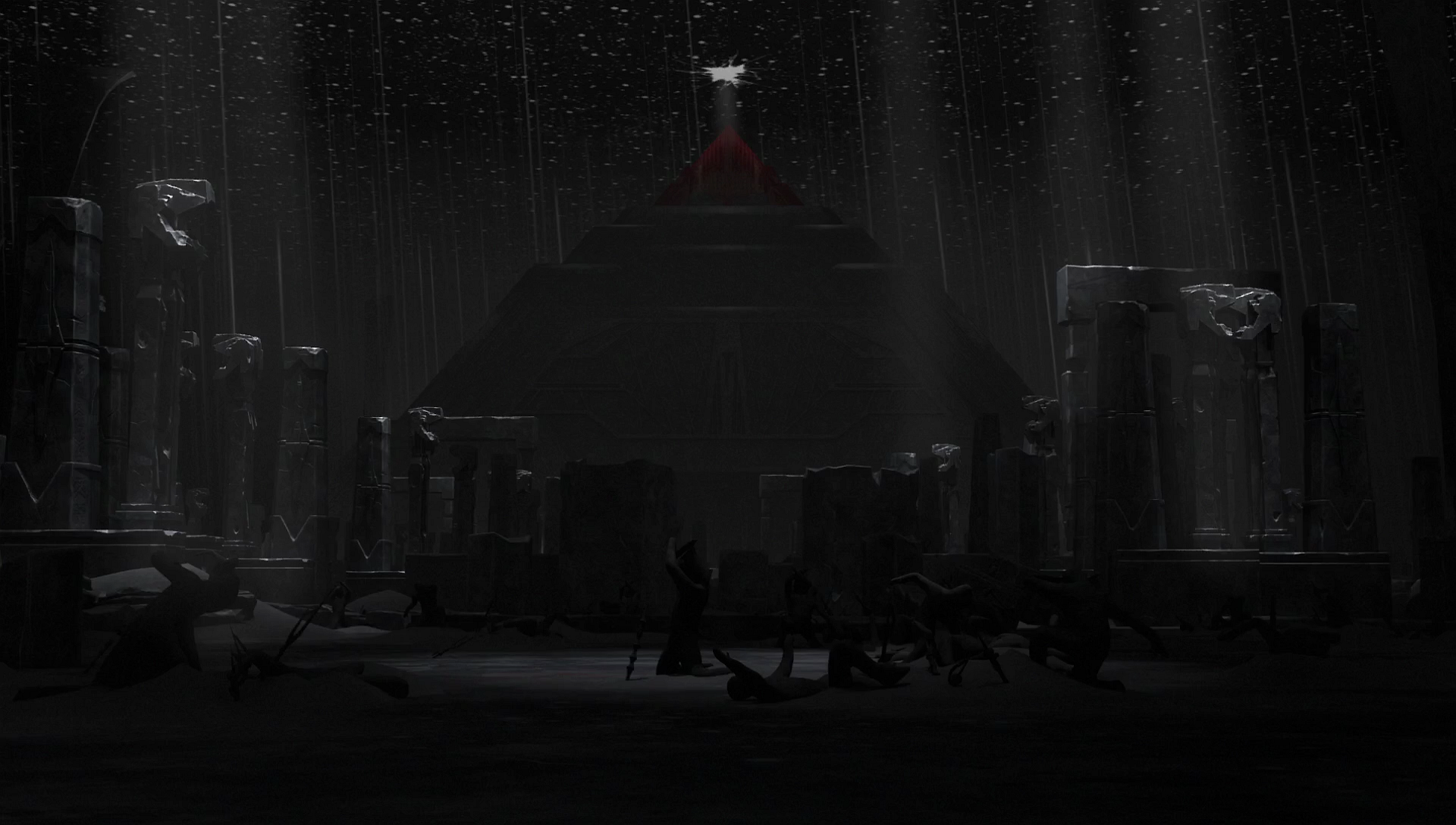
Eventually, the Sith returned with renewed strength, invading the Old Republic and engaging the Jedi in battle. This marked the beginning of a series of conflicts that would last for millennia, ultimately leading to the Old Republic's downfall. During one of these wars, the Jedi fought the Sith Empire on Malachor, resulting in one of the most devastating battles in the Order's history.
At some point, the Old Republic encountered the Mandalorian people. This warrior civilization initiated a series of unprovoked military campaigns against the Old Republic. As full-scale war broke out, the Jedi intervened to defend the Republic. Meanwhile, Republic and Jedi forces continued to fight against the expanding Sith Empire. During these conflicts, both sides developed massive superweapons powered by large kyber crystals capable of causing widespread destruction.
The Middle Era of the Old Republic represents one period in galactic history. The Galactic Republic also participated in the Sith Wars, a series of conflicts against the Sith Empire that involved the Chiss Ascendancy. The Ascendancy encountered various aliens before retreating to their borders.
The Old Republic's Demise
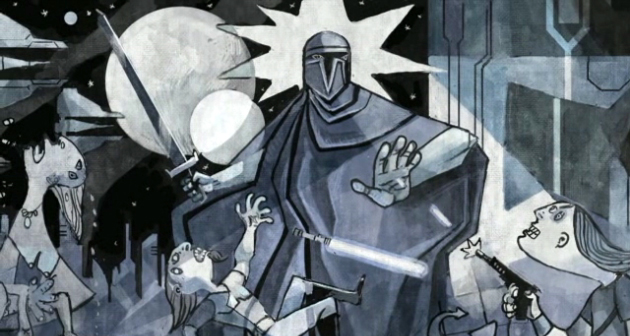
The Jedi Order, faced with the Sith civilization, the Mandalorian warrior culture, and their dedication to constant warfare, continued to mobilize its forces to prevent enemy incursions into Old Republic territory, in stark contrast to the Jedi's mandate to protect the weak.
During the fall of the Old Republic, the Sith Empire's power grew, eventually achieving near-total dominance across the galaxy. It was also during this period that an ancestor of Pre Vizsla, the leader of the Mandalorian group Death Watch during the Clone Wars, managed to steal the Darksaber from the Jedi Temple.
At some point, the galaxy entered a period known as the Dark Age, during which the Jedi-Sith War erupted. Early in the conflict, the Sith seized control of Coruscant, the Old Republic's capital, during the Battle of Coruscant. Later in the war, the Jedi drove the Sith off the planet during the Liberation of Coruscant.
Sparks of Hope
After reclaiming its capital, the Old Republic regained some of its strength, enabling it to launch offensives. The Jedi were strong enough to finally end their ancient war against the Mandalorian clans. A battle on Mandalore left the planet devastated and lifeless. It was also during this time that the Sith were finally defeated in 1032 BBY. The armies of the Old Republic and Jedi Knights defeated the remaining Sith on the Mid Rim Territories planet Ruusan, exploiting infighting within the Order to achieve their victory. The Sith abandoned their traditional homeworld of Moraband, scarred by numerous wars, and went into hiding. Only a few Sith remained, and they ultimately destroyed themselves. Darth Bane, the sole surviving Sith Lord, reinvented the Sith by establishing the Rule of Two, limiting their ranks to a Sith Master and a Sith apprentice.
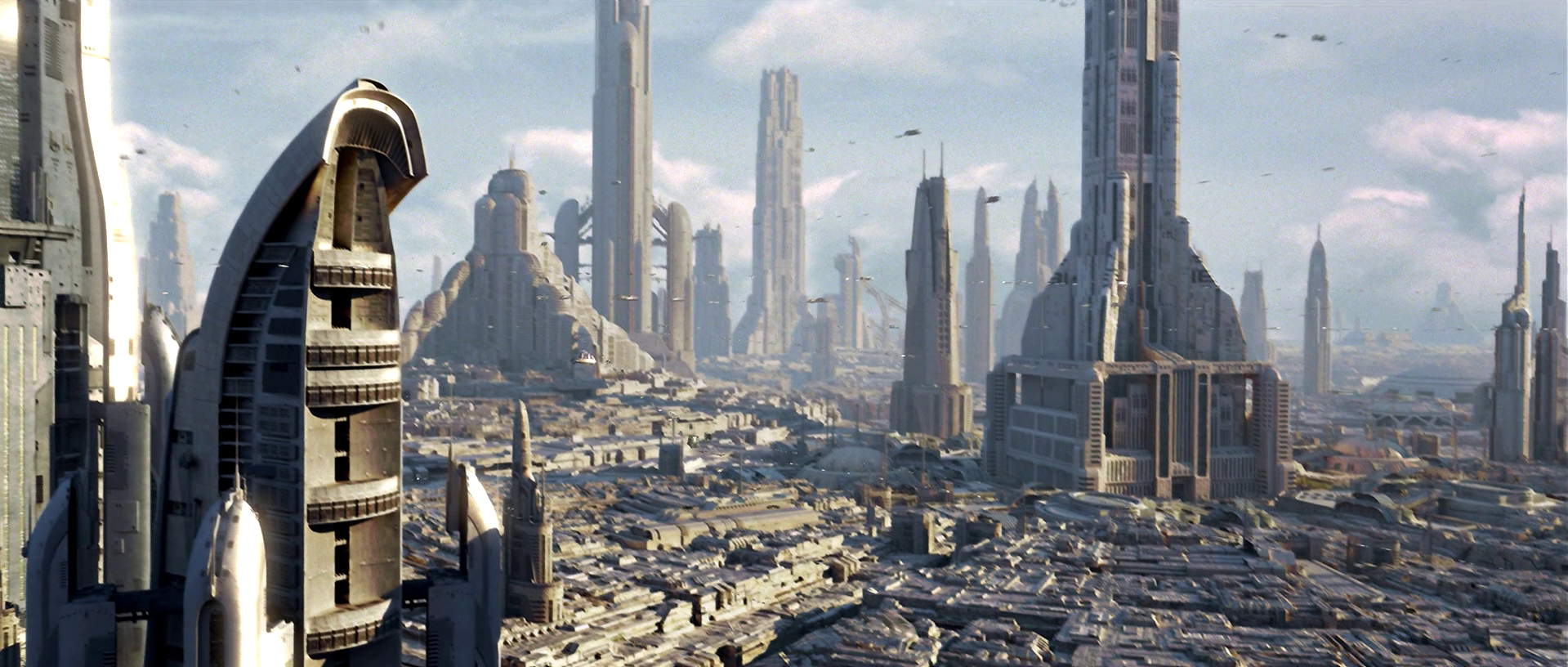
As the Old Republic crumbled due to continuous wars, the Jedi Order believed they had finally won their conflict with the Sith, whom they thought were completely destroyed. With peace restored, the shattered Old Republic reorganized into the modern Galactic Republic, ushering in over a thousand years of stability known as the Great Peace. The tale of Old Republic Regent Hylemane Lightbringer and his supposed immortality would be remembered in history books, along with Old Republic music like the Sestina of Imperator Vex, which continued to be sung even in the months following the Battle of Endor.
The Rise of Democracy
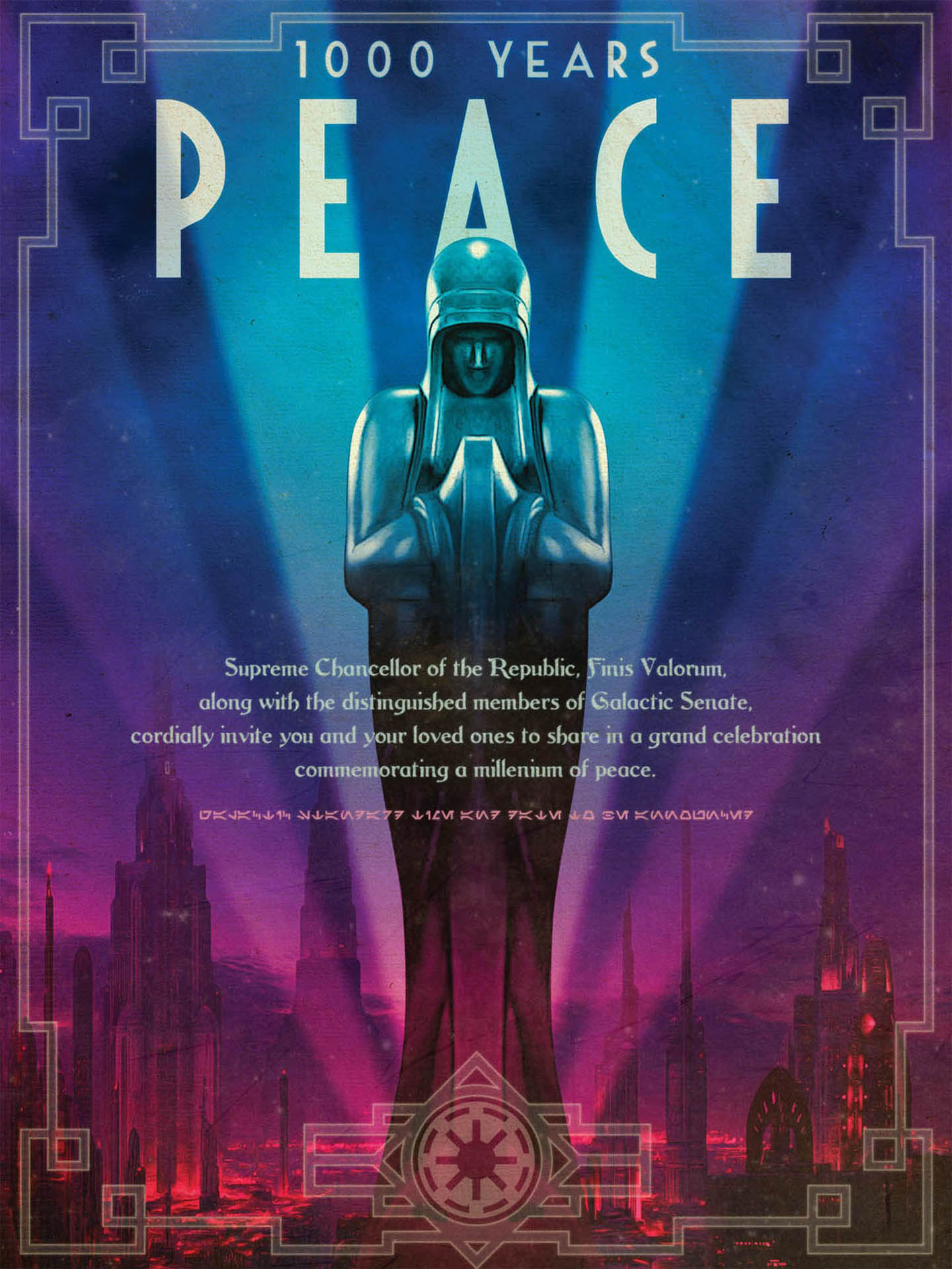
In 1032 BBY, the Old Republic was re-established as the modern Galactic Republic. Following this reformation, the Zygerrians harbored resentment towards the Republic and the Jedi Order for the destruction of their slave empire.
The modern Republic was a democratic union comprising multiple star systems spread throughout the galaxy. With the exception of minor conflicts handled by the Jedi, the Republic Era was a time of peace and stability lasting over a millennium. This version of the Republic remained demilitarized for most of its existence, relying on the Jedi Knights to uphold their role as guardians of peace and justice.
The Four Sages of Dwartii significantly influenced some of its earliest laws. The newly reorganized government established the Galactic Senate as its governing body, with members elected to represent their systems. Coruscant served as the galactic center of power under the Republic, as it had for thousands of years before its rebirth.
The Supreme Chancellor, the Republic's head of state, was elected by and from the senators. Tarsus Valorum of House Valorum was the first in a long line of Chancellors. The elite Senate Guard, who patrolled the Senate District, protected the new democracy and became symbols of strength and unity, especially given the disbandment of the military. Over time, the Jedi Order, a noble order of protectors with the ability to tap into the Force, came to serve the Republic as guardians of peace and justice. Due to the absence of a standing army, the Republic depended on its peacekeeping Judicial Forces, led by the Judicial Department, as the de facto [law enforcement](/article/law_enforcement_agency] branch of the government. Members of the Judicial Forces, known as Judicials, trained at the Judicial Academy and served in both ground and space forces, often led by Jedi Commanders to maintain peace throughout the galaxy.
The High Republic Era
A Flourishing Period
During the High Republic Era, which lasted from around 500 BBY to around 100 BBY, the Galactic Republic reached its zenith, extending its influence to the most distant and unsettled regions of the galaxy. The Republic worked to expand into the Outer Rim, particularly a region known as the Galactic Frontier. The Jedi Order also played a more active role in galactic affairs, supporting the Republic's efforts. An Office of the Frontier was established. The Republic's expansion triggered the Great Hyperspace Rush to discover and map undiscovered hyperspace routes, with Republic Pathfinders serving directly for the government as Outer Rim Exploration Teams. Private groups also joined the search for new hyperspace routes, with the San Tekka clan and Graf family capitalizing on the rush. The San Tekka clan's success in finding new routes and gaining wealth from these discoveries was secretly due to Mari San Tekka, a Force-sensitive individual with the unique ability to locate and map the routes.
Beyond discovering and charting new hyperlanes, Republic Pathfinders were tasked with exploring, assisting those they encountered, and establishing a functional communications network throughout the Outer Rim. While creating the network, Pathfinder teams often collaborated with comms teams to maintain contact with the Republic. However, the Pathfinders needed to establish the network one node at a time. While the Pathfinders knew the long-term effort would one day result in communications being as fast in the Rim as it was in the Core, Grint Rupar of Outer Rim Expedition Eight-Zero-Seven suspected the work would take generations. Nevertheless, Jedi Porter Engle deemed it a noble effort that would improve lives. Members of the Jedi Order worked alongside Pathfinders, traveling with them and assisting in the Republic's efforts. One Pathfinder team, while charting hyperlanes near Sullust, discovered the volcanic planet Tunguray and evacuated its people to safety on Coruscant.
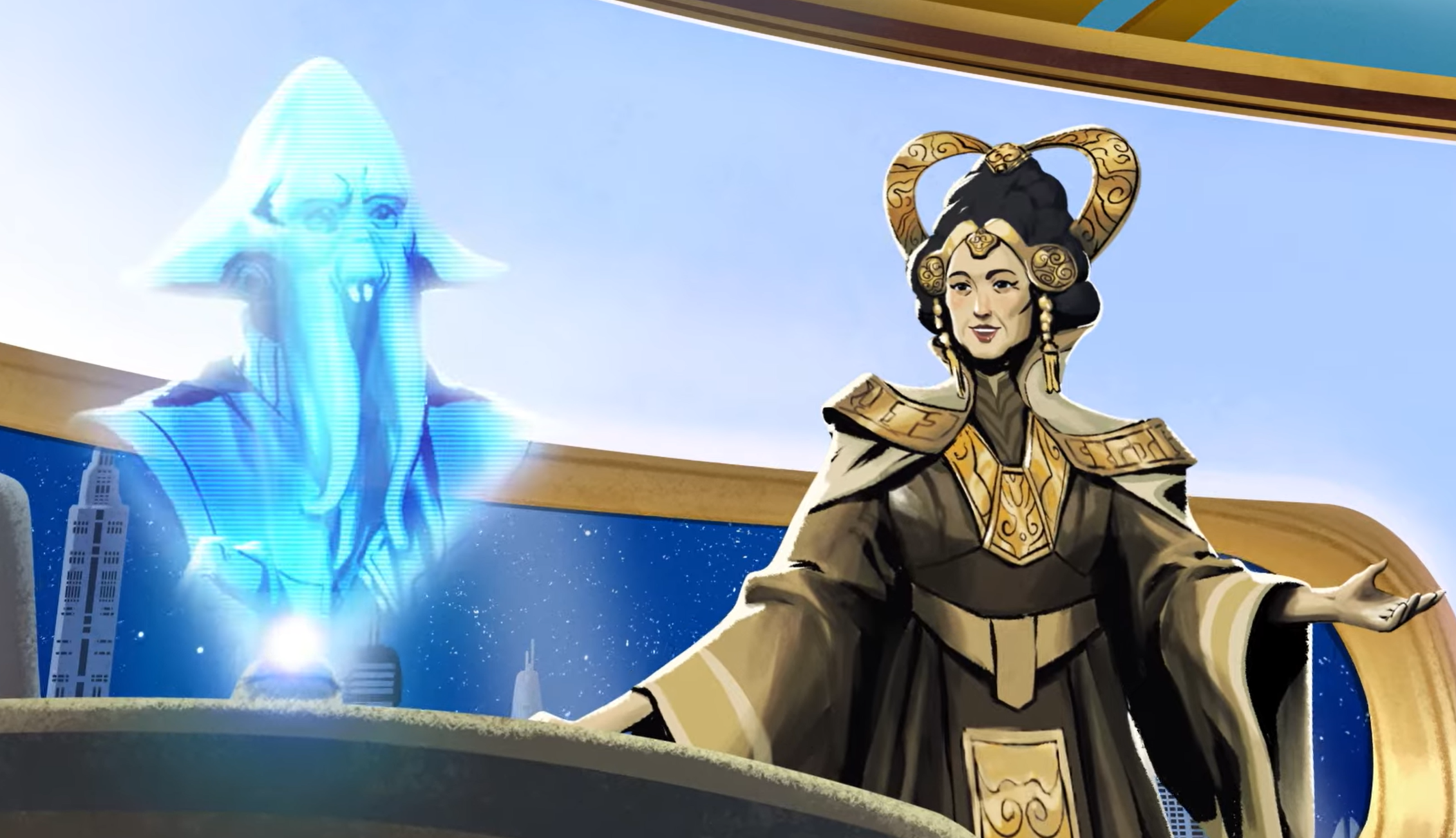
Around 382 BBY, the Republic's leadership was divided between two chancellors, Orlen Mollo and Kyong Greylark. Elected and re-elected together, their joint leadership as Co-Chancellors aided the Republic's outreach. While the more formal Greylark remained on Coruscant with the Senate, Mollo traveled across the Outer Rim with his aides and crew aboard the Alif-class Longbeam Paxion, adopting a hands-on approach to governance to facilitate expansion and resolve issues. Having experienced conflict on Mon Cala, Mollo believed he better understood the Outer Rim but trusted his Co-Chancellor, who he believed saw the promise in the Outer Rim but not the finer details he could, all the same due to their shared vision: a truly united galaxy.
Ambassador ships like the Paxion were equipped with top-of-the-line protocol droids, with the Paxion receiving unit AR-K4. With the Republic assisted by the Jedi, the Republic and Togrutas engaged in a conflict in Togruta space, creating tensions between them. While Greylark believed the star system was not ready for their intervention, Mollo traveled to the planets of Eiram and E'ronoh, hoping to end a war between them. Simultaneously, a team of Jedi—Master Char-Ryl-Roy, Master Creighton Sun, Knight Gella Nattai, and Padawan [Enya Keen](/article/enya_keen]—traveled to the system aboard the Valiant to aid Eiram, only to collide with the Paxion during a skirmish secretly orchestrated by the Path of the Open Hand cult under the control of "the Mother." Despite the initial difficulties, Mollo and the Jedi began the peace process between the worlds' royal families aboard the Paxion, with progress accelerating when E'ronohi princess Xiri A'lbaran proposed to Eirami prince Phan-tu Zenn, setting the stage for a marriage alliance and an unlikely love story.
Back on Coruscant, Greylark feared Mollo was aiming for a solo chancellery ahead of the campaign season. In reality, Mollo simply wanted to bring peace to the system due to his own war-torn past. Greylark trusted her fellow Chancellor deep down but sent her controversial son Axel Greylark to represent her office in the peace proceedings and report back to her. Axel's dealings with the Path of the Open Hand nearly derailed the peace process after cult leader Elecia Zeveron demanded he bring her a toxin developed on Eiram. Amid the successful Wedding of Phan-tu Zenn and Xiri A'lbaran officiated by Mollo, Axel's desperation to prevent Zeveron from securing the toxin led to him destroying the deflector shields around Eiram's capital of Erasmus. After Axel's arrest, the royals agreed to destroy the toxin, and the formal peace process began, Mollo reminded his fellow Chancellor to trust him, to which Greylark admitted she did and she had simply wanted to trust her son as well.
Conflict with the Path
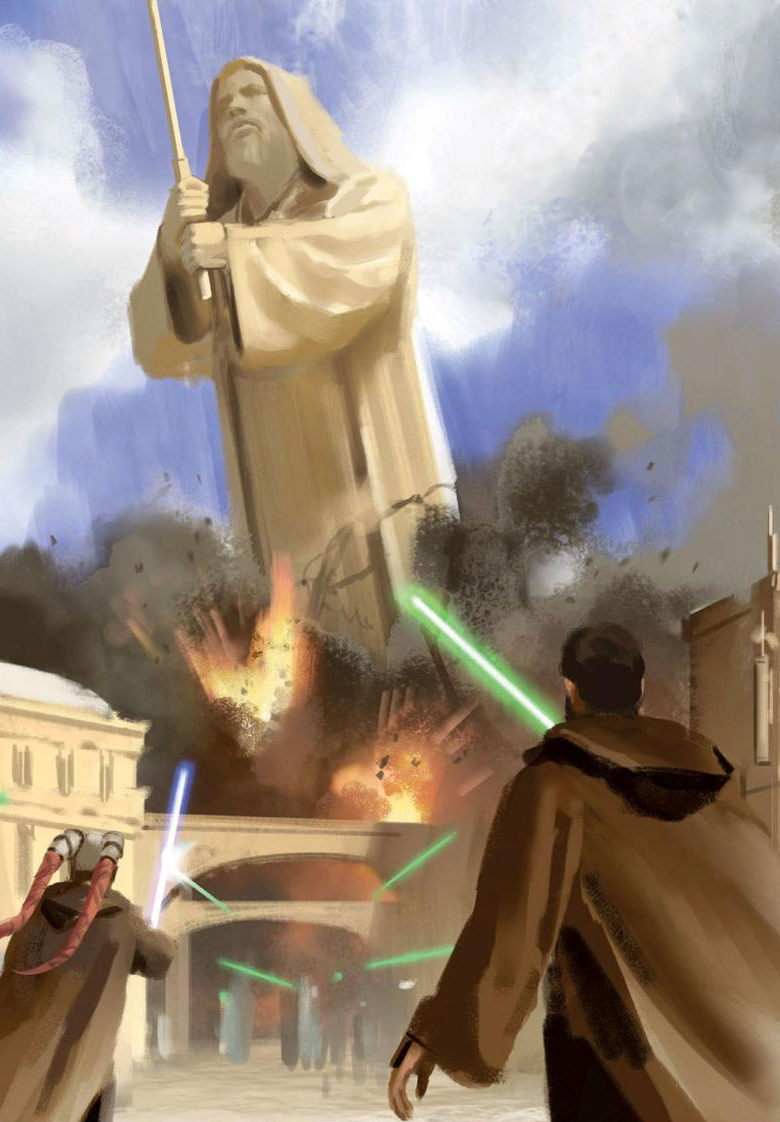
With the agreement that representatives from the Eirami and E'roni would convene on the neutral world of Jedha to forge a formal treaty, Chancellor Mollo authorized Morton San Tekka to preside over the discussions as an impartial mediator, deeming this preferable to dispatching an official from the Republic. However, the intervention of Tilson, a member of both the Path and the Graf family, ignited the Battle of Jedha, thereby destroying any prospect of a lasting accord between Eiram and E'ronoh. Prompted by a transmission from Sun concerning the failure of the peace talks, a contingent of Jedi and a platoon of Republic peacekeeping troops hastened to Jedha and quelled the conflict. Suspicion correctly fell upon the Path as the instigator of the carnage, but the Mother publicly attributed the blame to rogue acolytes and sought to rehabilitate her order's reputation by pledging a minimum of one million Zukkels toward the reconstruction of Jedha City. While the donation was accepted, the revelation that an organization like the Path possessed such substantial funds prompted the Republic to launch a discreet investigation, which swiftly uncovered the Mother's connections to affluent individuals whom she had persuaded to finance her cult.
Following the Jedha conflict, the Path of the Open Hand secured Axel's release from imprisonment and transported him to their Path compound situated on the planet Dalna. There, he was welcomed by the Mother, who intended to exploit Axel's relationship with Chancellor Greylark to exert influence over the galaxy. As part of the Mother's scheme, Mollo was slated to perish in a staged accident during his travels across the Rim. Concurrently, the Mother mobilized her adherents against the Republic in anticipation of the impending Battle of Dalna, falsely claiming that the Jedi held sway over the government and galactic media. After Axel dispatched a message to his mother, at the Mother's behest, requesting her presence on Dalna, Greylark concluded that she had a parental obligation to support her son and recognized that her arrival as Chancellor would jeopardize the galaxy. Consequently, she resigned from her position as Chancellor, leaving Mollo as the sole leader of the Republic, much to his surprise.
With the justification of investigating the Path, Jedi, supported by the Republic, arrived on Dalna; the Republic approved of the action and dispatched guards Priv Ittik and Lu Sweet to assist the Jedi. As the situation escalated into a battle, the Jedi received assistance from anti-Path Dalnans, but they also encountered Force-consuming entities known as the Nameless. Ultimately, Greylark arrived on Dalna to aid her son, and the combined military forces of Eiram and E'ronoh arrived to defeat the Path after its efforts to sow discord between them were exposed. Although the reinforcements brought an end to the fighting, the heavy casualties sustained during the battle, which culminated in the Path destroying its own caverns, led to it being remembered as a massacre known as the Night of Sorrow. From a certain perspective, the massacre was a consequence of the partnership between the Jedi and the Republic; however, the Jedi and the Republic's victory in the battle was seen as proof that partnership between both organizations made the galaxy stronger.
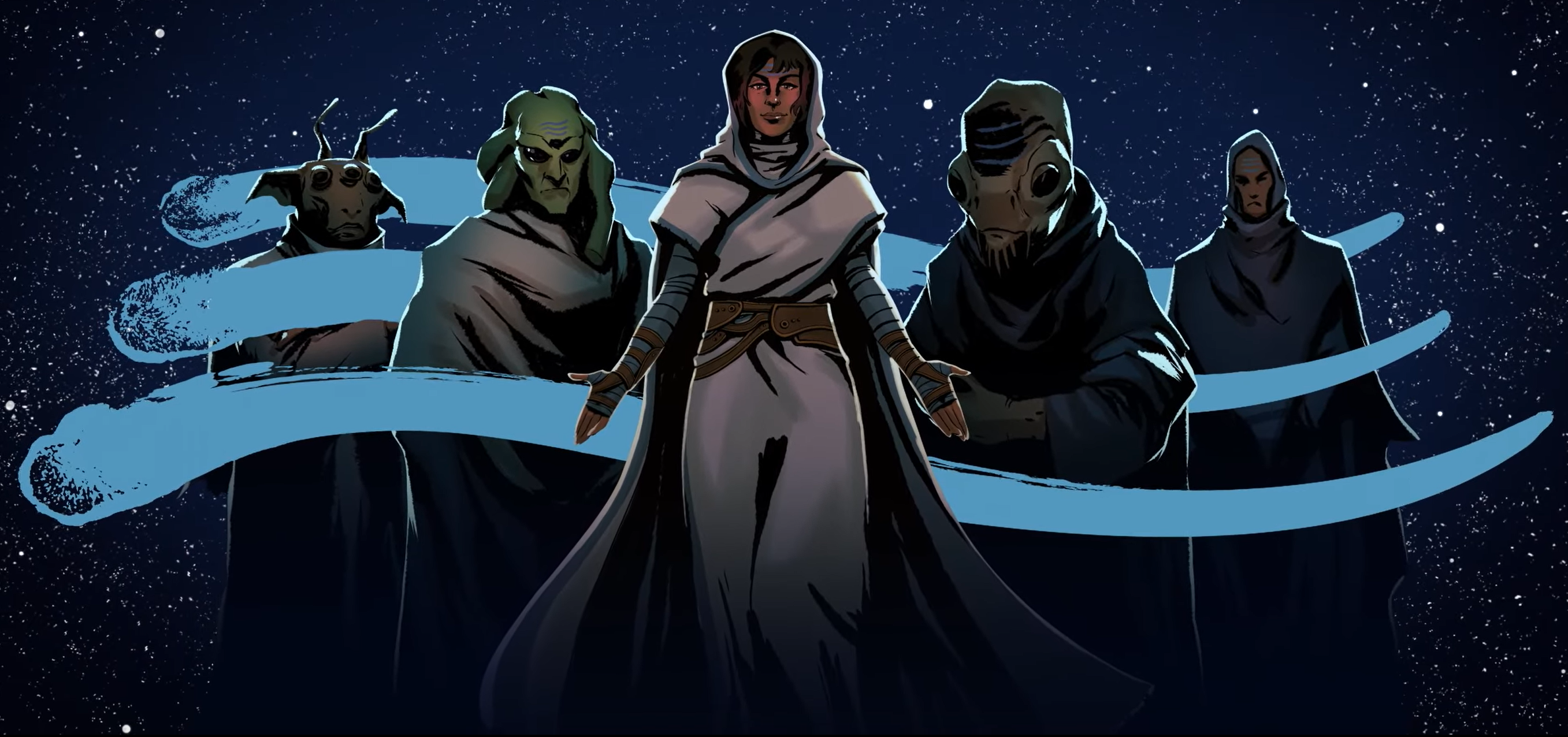
Following the conclusion of the battle, Axel consented to serve his prison sentence and disclosed his knowledge of the Path's inner workings, despite the fact that the cult's membership had been decimated and scattered across the galaxy. One of its principal leaders, Guide of the Closed Fist Marda Ro, evaded the destruction and embarked on a new scheme of vengeance by establishing the Nihil, a plan that was perpetuated by subsequent generations of the Ro family. Jedi Masters Crieghton Sun and Yoda also agreed to suppress all information pertaining to the Nameless until further details could be ascertained. Simultaneously, a new treaty was scheduled to be signed by the now-cooperating peoples of Eiram and E'ronoh. Two weeks after the battle, a ceremony celebrating the union of Eiram and E'ronoh and the inauguration of a new hyperlane was conducted on their shared moon by Mollo. At some point, the San Tekka clan lost Mari San Tekka to the Ro family, who used her to locate hyperspace Paths for their own revenge scheme.
The Starlight Beacon program
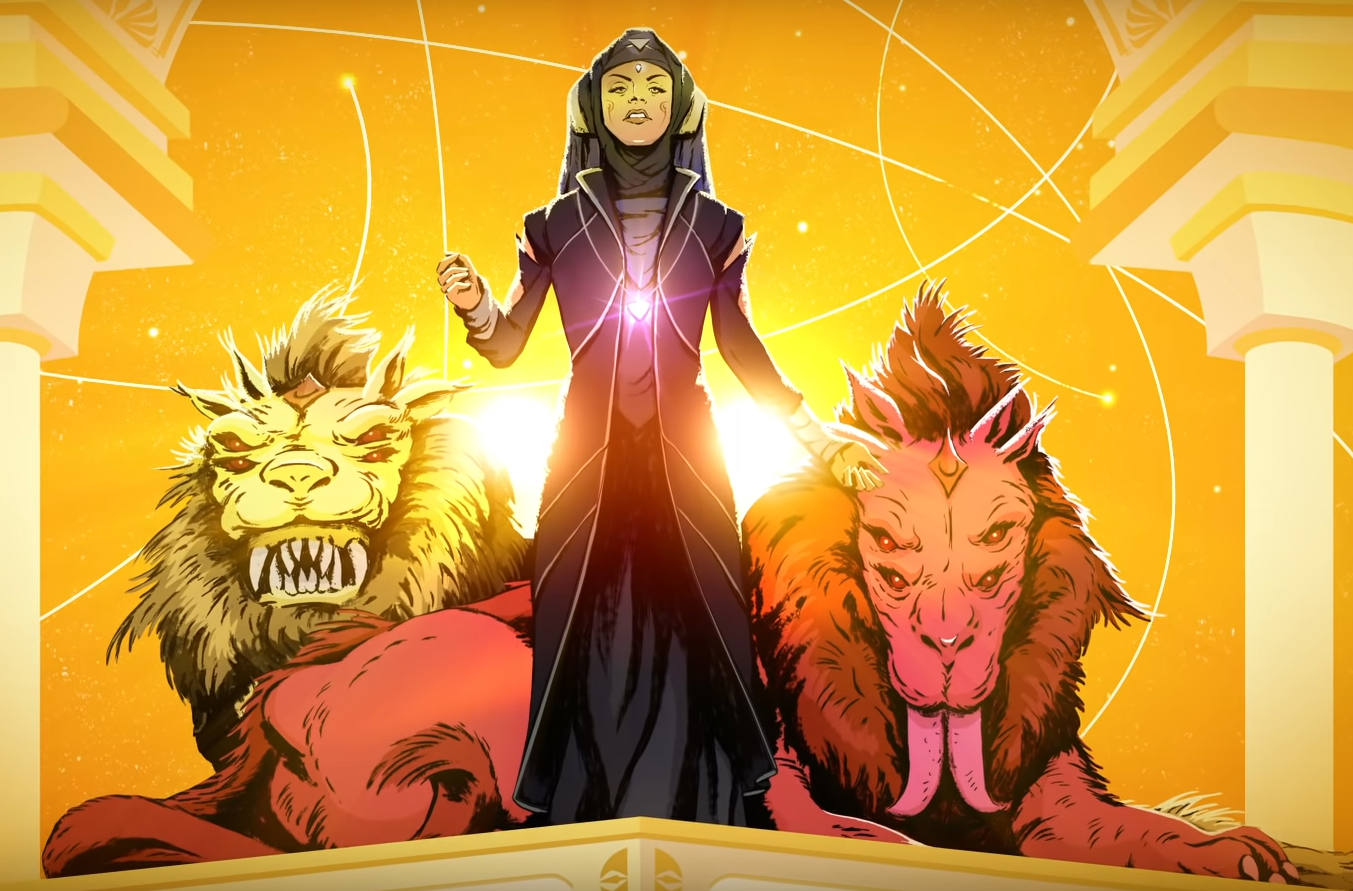
In the year 232 BBY, the Galactic Republic was governed by Supreme Chancellor Lina Soh and Vice Chancellor Larep Reza, who was a rising figure in the Senate and widely regarded as Soh's likely successor upon the expiration of her term. To demonstrate its commitment to all species within its borders, the government adopted the motto "We are all the Republic." Under Soh's leadership, the Republic even initiated measures to curtail its tendency to engage in excessive bureaucracy when decisive action was required; although the problem persisted in a diminished form, the Republic made significant strides in overcoming it. At some point, the Republic intervened in the Soikan civil war to finally bring an end to the seemingly endless conflict.
In conjunction with its outreach program, the Republic was experiencing an era characterized by inclusivity, where all voices were heard, fostering governance through consensus and a society defined by culture, inclusion, ambition, and Soh's numerous Great Works. Among the earliest of these works—encompassing a wide range of endeavors from infrastructure projects to cultural initiatives—was the Panacea, a Salvation-class Republic medical frigate deployed to provide assistance to citizens in the aftermath of various crises; consequently, the frigate became an emblem of the Republic's commitment to serving its citizens. Other planned Great Works included a new treaty between the Mon Calamari and Quarren, the Republic Fair, various communication relays, solidifying the understanding of how to cultivate Bacta, and various innovations in fields like technology. Nevertheless, the most significant of these works was Starlight Beacon, envisioned as the first in a network of Beacons capable of extending the Republic's influence beyond the Core.
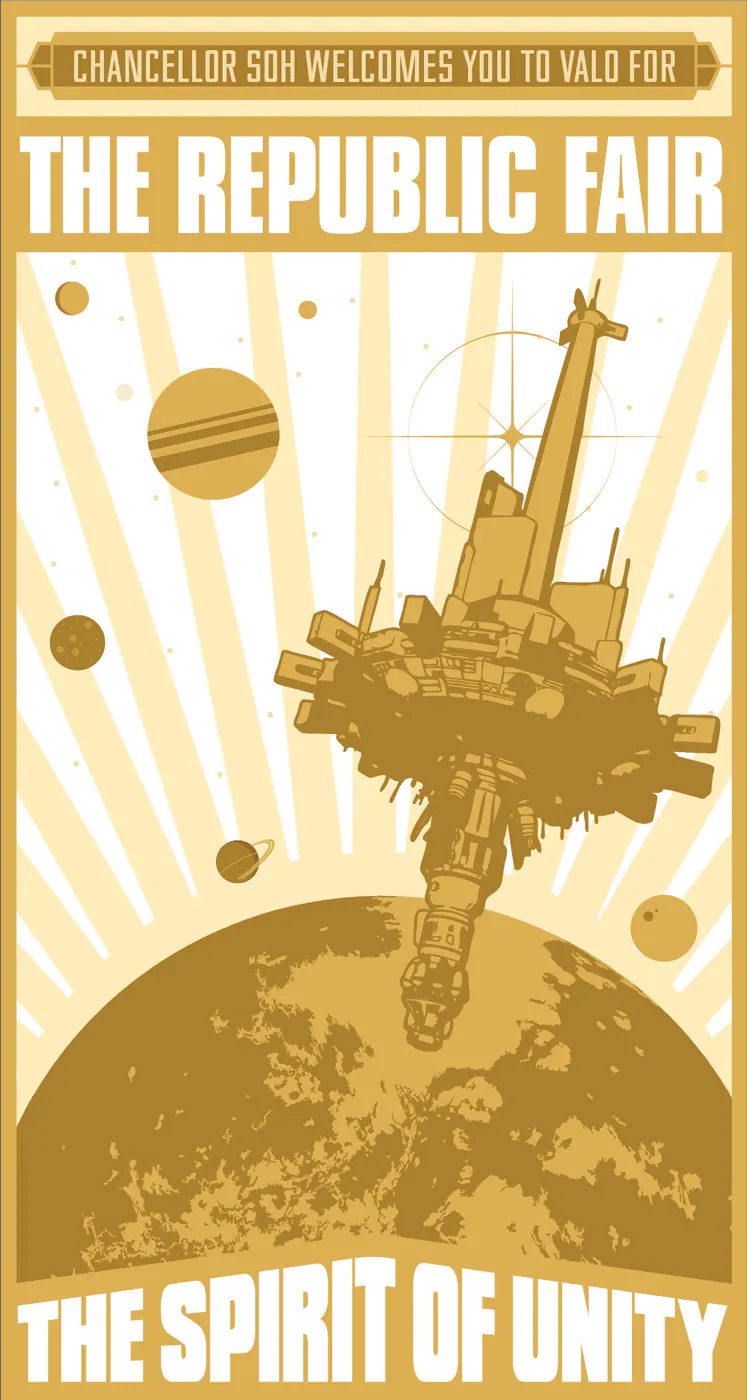
Constructed, along with other way stations, at significant cost and with considerable effort over an extended period, Starlight Beacon was intended to extend the Republic's reach into the uncharted "dark zones" of the Outer Rim Territories because Soh pledged to bring that region into the Republic's embrace, hoping the government could actually help the Outer Rim instead of simply flying through it or using it as another place to collect taxes. In addition to utilizing its beacon to guide travelers and its relay to amplify local transmissions tenfold, the Beacon served as a Republic embassy within the Galactic Frontier, fulfilling multiple roles such as a fortress to deter piracy, a venue for cultural exhibitions, a cutting-edge medical facility, and, in part, a massive Jedi temple. The Jedi provided support to the Republic and its projects. The Jedi established outposts on many Outer Rim worlds, ensuring they could explore and protect those who lived without much of a Republic presence.
Despite the challenges of navigating and residing in the Outer Rim, numerous impoverished settlers migrated to the region, leaving behind the overpopulated Core Worlds and Colonies in pursuit of better lives. These aspirations for improved circumstances were supported by the Republic, which—although imperfect like all governments—encouraged the hopes of its citizens, whether those hopes be large or small. Additionally, Soh wanted the people of the Republic to know that they all were part of the government, and the Republic began construction of Starlight Beacon to help with its expansion into the Outer Rim. The beacon was the symbol of everything Soh wanted for the Republic, being able to ensure it could truly expand from the Core to be a galactic government. Others in the government preferred the status quo, wanting to save credits in case of future issues, but Soh, having proved to her people the positive effect of coming together, pushed on with her works to bring the Republic into the Rim. Every Senator knew the success of Starlight would bring forth Soh's hopes that future generations could live in prosperity, while its failure would be massive.
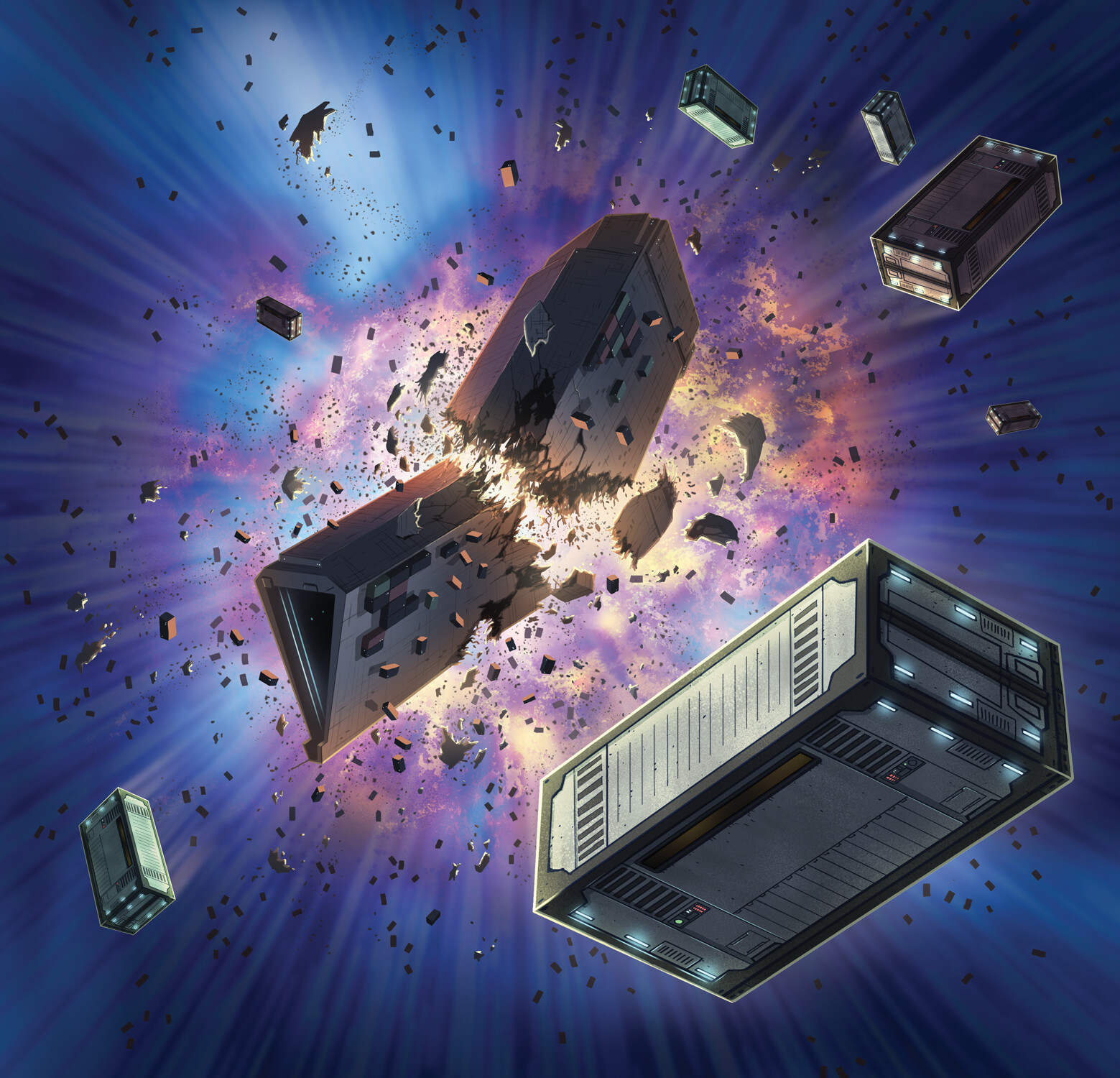
Lacking a formal military due to the galaxy's peace, the Republic relied on a small peacekeeping force known as the Republic Defense Coalition, with assistance from the Jedi Order. Despite the large-scale partnership between them and Republic during the era, there came to be some Jedi who doubted whether it was truly the will of the Force for them to act so closely with the government. Indeed, Jedi Master Cohmac Vitus believed it was a Republic and Jedi partnership that had led to the massacre on Dalna from over a century prior. The partnership between the two parties would only increase when the Nihil conflict began; the conflict began when starships were abruptly knocked out of hyperspace in a galaxy-wide event known as the Great Hyperspace Disaster caused by the Eye of the Nihil Marchion Ro, a member of the Ro family who had destroyed the transport Legacy Run in hyperspace, which made its remains come out of hyperspace in the Hetzal system, causing a sudden crisis as they rained upon the system. Beyond wanting revenge on the Jedi for secretive, family reasons, Ro had made his move to ensure the Nihil raiders could grow beyond what they were currently. With the Republic expanding into the Outer Rim, he knew they would need to change themselves to survive, launching his plot to ensure he could secure leadership over the raiders.
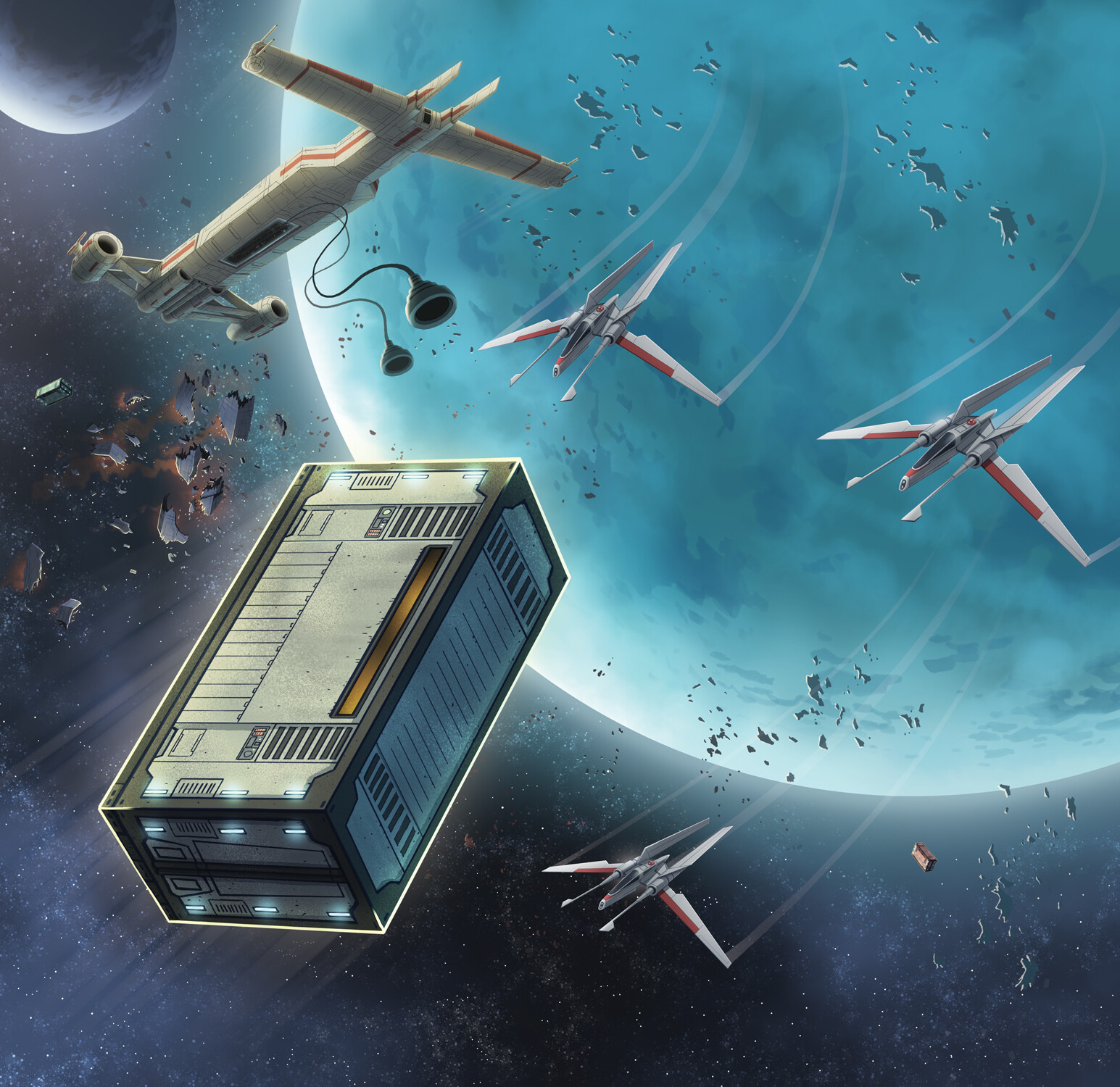
The RDC dispatched the Emissary-class Republic Cruiser Third Horizon to the Hetzal system in response to the Hetzalian government's distress signal. Aboard the ship, Jedi Master Avar Kriss was overseeing the effort, learning through her Force network that some of the fragments raining upon the system contained living beings. She helped lead the effort to rescue the system's refugees and everyone aboard the fragments until she detected a large container of liquid tibanna threatening the system's R-class star. Kriss and the other Jedi used their combined focus to move the container with the Force, while the RDC continued to focus on evacuating the remaining refugees. The Jedi's effort to move the container was broadcast across the Outer Rim and into the inner Republic worlds by technician Keven Tarr; while he had at first only sent the signal to Chancellor Soh, he did not want his star system to be destroyed without being acknowledged, so the people of the Republic watched the Jedi effort. At first, the Force users failed, but their second attempt moved the container, saving Hetzal and resulting in cheers across the Republic.
Although the Republic was able to learn the destruction of the Legacy Run had been the cause of the disaster, the government remained unaware of why it was destroyed, making Soh fear another disaster could happen in hyperspace. Additionally, the Republic was faced with the Emergences; these were when remaining fragments of the Legacy Run, which were all continuing to travel throughout hyperspace, exited in an Outer Rim system, resulting in pieces raining down and destroying whatever they hit. The First Emergence was at the Ab Dalis system, which was further along the same hyperspace route the Run had been traveling on, and these Emergences continued to spread. Thus, Soh feared the Republic could have to cease hyperspace travel, which would separate worlds and effectively end the galactic government. Additionally, the Nihil took advantage of the First Emergence, launching a raid on a convoy of ships carrying refugees. Nevertheless, because he had caused it, only Ro understood that they were directly responsible for the Great Disaster and its aftershocks.
Conflict with the Nihil
Although it was a larger mobilization effort than anything done for sometime, Soh established an RDC blockade of various Outer Rim hyperspace routes, intending to protect starships from being destroyed in hyperspace by stopping that travel altogether. The blockade would ultimately be forced to grow as more systems were effected by the Emergences. As predicted by Senator Izzet Noor, who served as the spokesperson in the Senate for the majority of the Outer Rim, the blockade brought strife, as many Rim worlds were not self-sufficient and depended on hyperspace for trade. During a meeting on Coruscant fifteen Emergences into the crisis, Soh had pledged to send supply ships into hyperspace if a food crisis grew too dire, although the halting of the trade still had major negative effects for the Rim. During that same meeting, she established that the hyperlanes would remain closed, minus limited transport of essential goods, until they knew more about the crisis before noting she was unwilling to postpone the dedication of the Starlight Beacon; it was nearly finished, and she wanted to use the event to showcase a triumph over adversity.
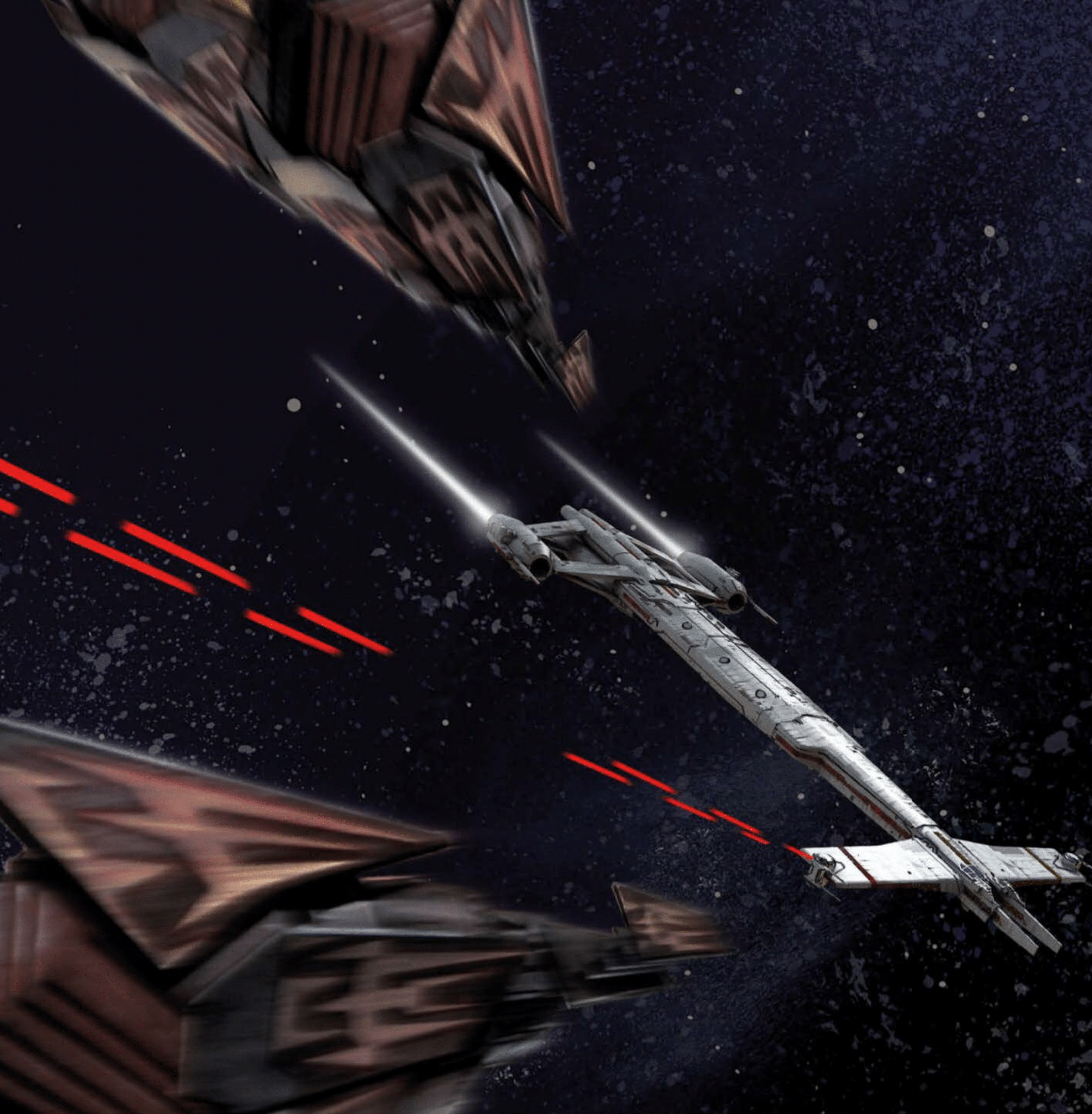
Survivors of the first Emergence and Great Hyperspace Disaster were taken to the yet-to-officially open Starlight for medical treatment. With Starlight due to open in thirty days, Soh gave that as the timeline to solve the Emergence crisis; she did not want to open the way station while the blockade was still ongoing, knowing it would appear as if the Republic could not protect its own people. Due to the blockade, the Nihil's craft became the only ships traveling at lightspeed, making Ro suggest they slow down operations—stating they could attract the attention of the Jedi or RDC—while also sowing the seeds for his takeover, approving the raid on Elphrona to ensure a Jedi would be captured. Meanwhile with the Republic, technician Tarr, having tracked the previous Emergences to form a pattern, began to construct a system of thousands of navigation droids, hoping it could be used to predict where future Emergences would be and find the Legacy Run's black box. Assigned to learn more about the Emergences, Jedi Avar Kriss and Elzar Mann were also directed to meet with the San Tekka Clan on Naboo by Noor, yet Patriarchs Vellis and Marlowe San Tekka did not disclose any information about Mari, despite realizing her abilities could have caused the crisis and giving the Republic effort other aid.
The Republic rescue fleet was dispatched to the planet Trymant IV in the wake of an Emergence and Nihil attack. The Republic effectively assumed the Nihil were destroyed in the Battle of Kur, but the marauders survived and began to launch their raids on a galaxy-wide scale, instead of remaining in the Outer Rim. The Nihil attack on Valo was a major blow to the Republic, although it did give a chance for the Republic and Torgrutas to heal their relations. In the aftermath of the Battle of Grizal, Republic forces rallied under Jedi Master Emerick Caphtor to clear out a Nihil base on Vrant Tarnum. Following the end of the Drengir crisis, the Republic and Jedi were able to focus their efforts on defeating the Nihil through Operation: Counterstrike, in which the Republic and Jedi moved to wipe out all known Nihil bases. However, the conflict also resulted in the Republic and Jedi growing closer together, with Chancellor Soh and her aides coming to insert themselves into even the Jedi Council's normally private meetings. In secret, the Nihil had also infiltrated the Galactic Senate via Senator Ghirra Starros and Jeni Wataro, aide to Senator Noor. In 200 BBY, Jedi Padawan Sean remembered that the Nihil had launched an invasion of the Republic.
Expansion and stagnation
For centuries, the Galactic Republic's expansion was achieved not through military force, but through the subtle yet powerful attraction it exerted on neighboring systems. The prospect of engaging in trade with the markets of the Core World held considerable appeal for many systems, gradually drawing non-member worlds into closer collaboration with the governing body. Despite this, the Republic was slow to invite new systems into its fold, as the addition of new territories diminished the political power of existing senators. New member states invariably aligned themselves with local galactic power blocs, while most senators who gave the invitations represented systems in the Core. Consequently, the Galactic Center served as the Republic's economic and political heart, consistently drawing wealth and influence from the surrounding regions, with most senators dismaying at the extension of services and protection to outlying worlds. Consequently, many useful star systems were left waiting—some for centuries—for the body politic to admit their world as a member of the Congress, even though it came at the cost of the body's overall power.
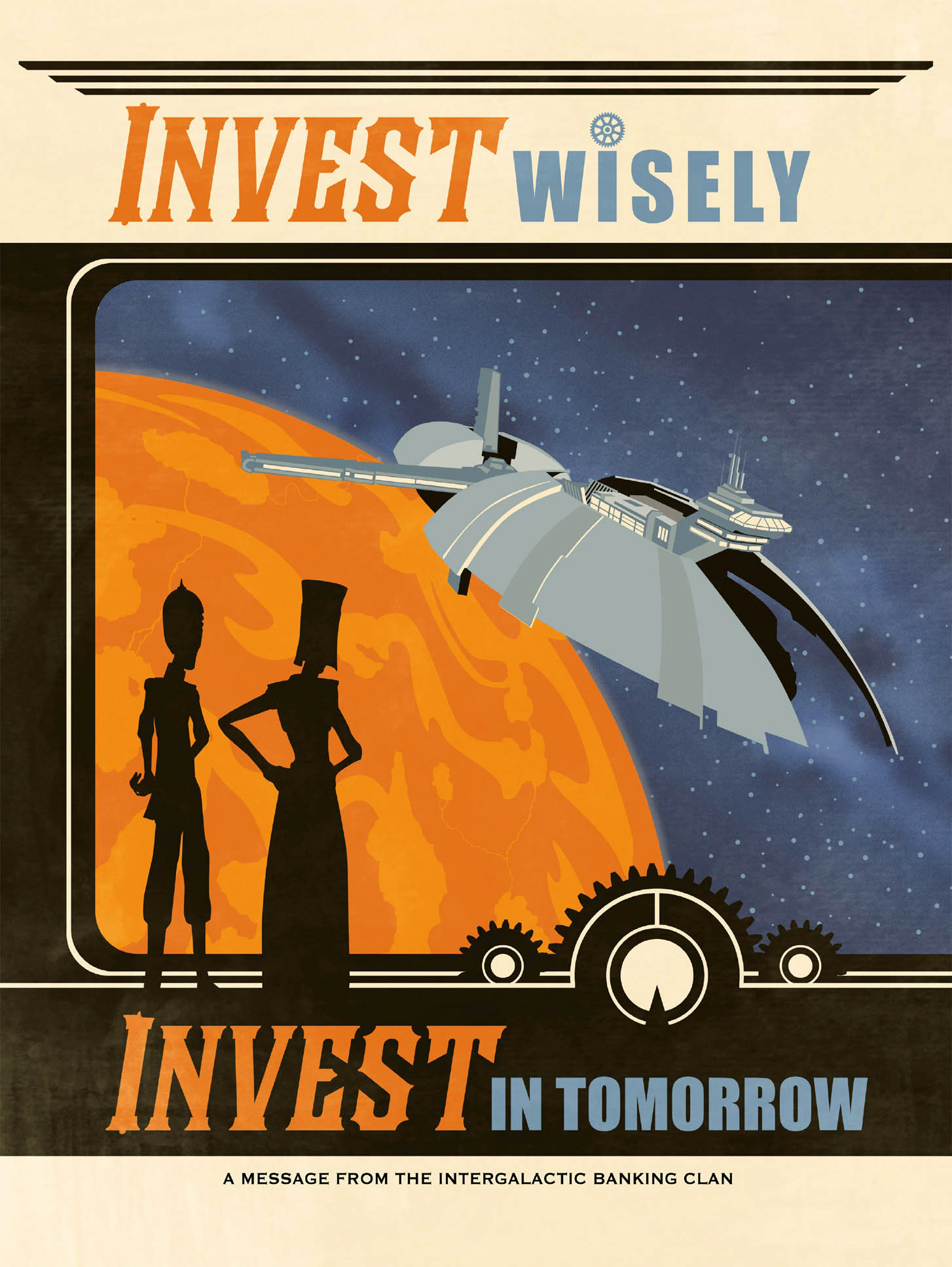
Over time, the Republic remained steadfast, growing in strength. As a result, the galaxy was largely spared from large-scale conflicts for centuries. However, many of the bureaucrats and senators that ran the government continued to work for their own profit rather than the common good. Greed, corruption and internal strife slowly began destroying the government from within. The Core, revitalized from the destructive conflicts of the past and ravenous for new resources to exploit, embarked on an aggressive colonization policy, exploring, mapping, and settling untouched planets within the Outer Systems, striking deals with or simply overrunning the indigenous populations that stood in their path. Adventurous pioneers found themselves granted permission by Coruscant to settle new territories and establish trading colonies to feed the Core with the goods and raw materials for its continual self-enrichment. Many new systems, finding themselves lacking the funds to mine, process, and ship their products to market, were forced to secure high-interest loans from the InterGalactic Banking Clan, whereupon many, unable to repay their debts, found themselves as mere client worlds to the Muun bankers. As time progressed, the laborious task of astrogating by hyperwave beacons—which required numerous reversions to realspace—became simplified with the founding of new hyperlanes, such as the Hydian Way. Many systems, eager to benefit from the opportunities offered by charting hyperlanes through their system, sought to influence the Republic Senate to put themselves on the galactic map.
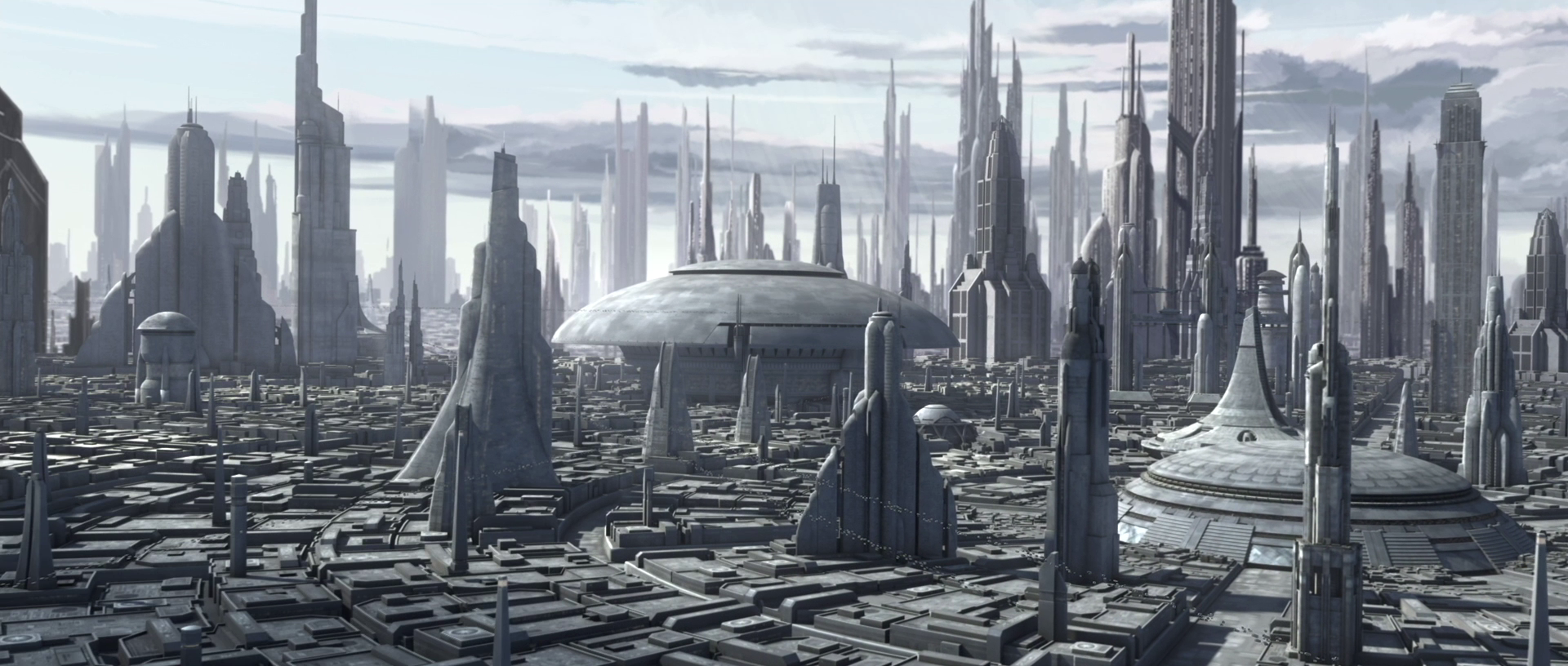
Culturally, Coruscanti fashion, art, drama and literature saw receptive audiences across the galaxy. Seeking to impress visitors from the Core, many worlds sought to build lavish mansions that imitated the architectural style of the Inner Core. Despite this, many Coruscanti looked with disdain on what was in reality nothing more than a gaudy impersonation. To them, these lifeforms on the galaxy's fringes appeared barbaric, with most worlds still lacking weather control or struggling with geological disturbances and food shortages. Additionally, many outlying worlds, lacking the protection of a federal military found themselves continually harassed by numerous pirates and criminal organizations, further ingraining the long-held view that those from the galaxy's outlying settlements lacked cultural refinement and basic civility.
A deep-rooted hatred and distrust grew over the centuries between the galaxy's outer fringes and the cosmopolitan Core, with those in the hinterlands gradually coming to believe themselves the victims of social and economic injustices. As a result of the perceived inability of the Judicial Forces in protecting outlying territories, who were often withheld in intervening after many far-flung worlds refused to provide the Core Worlds with profitable deals, the Outer Rim world of Eriadu—one of the most politically, culturally and economically developed worlds—formed the Outland Regions Security Force for the protection of the Seswenna sector. Comprising an amalgam of ships, it was funded primarily by off-world loans and supplied with laser and ion cannons acquired from arms merchants who had for centuries been ignoring a Republic ban on the sale of weaponry to member worlds. While the Outland Regions Security Force at first lacked success, it soon came to be renowned for its efficiency at dealing with raiders, especially after Wilhuff Tarkin was accepted into Outland's anti-piracy task force, in which he was known for outsmarting and outmaneuvering his opponents.
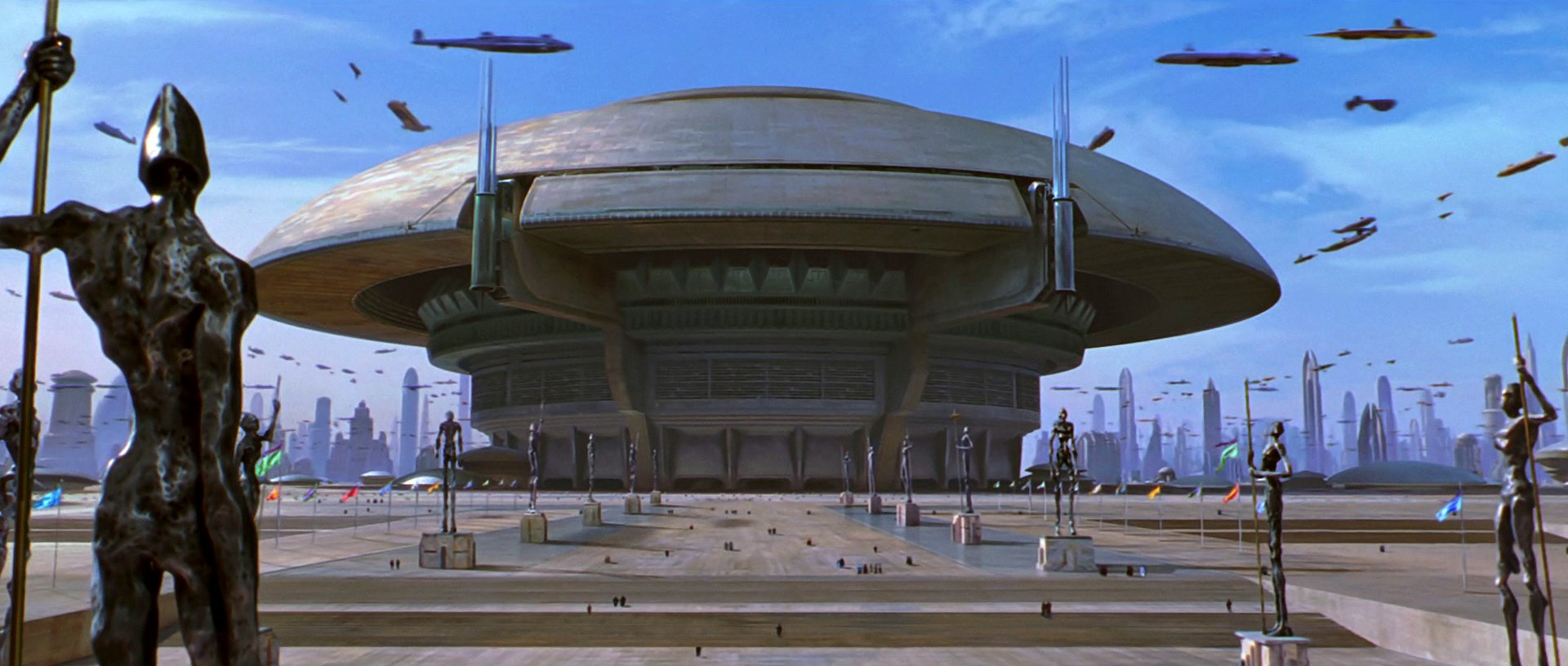
A faction known as the Militarists emerged in the Senate with hopes of establishing a formal Republic Military. Despite Outland's best efforts, the Outer Rim Territories continued to fall victim to increasing corporate interests from the Core, with the monolithic Trade Federation expanding its reach a year before the Invasion of Naboo in both the Outer Rim and the Galactic Senate by utilizing loopholes in existing free-trade legislation. Shortly before the Invasion of Naboo, a trade summit was held on the Outer Rim planet of Eriadu in which Supreme Chancellor Finis Valorum was turned away by Wilhuff Tarkin, who was hoping to reduce the influence of the Chancellor who some already expected to lose the next election in order to support Senator Sheev Palpatine, who had earlier helped Tarkin gain entrance into the Judicial Academy and supported his ascension as Governor of Eriadu.
Invasion of Naboo
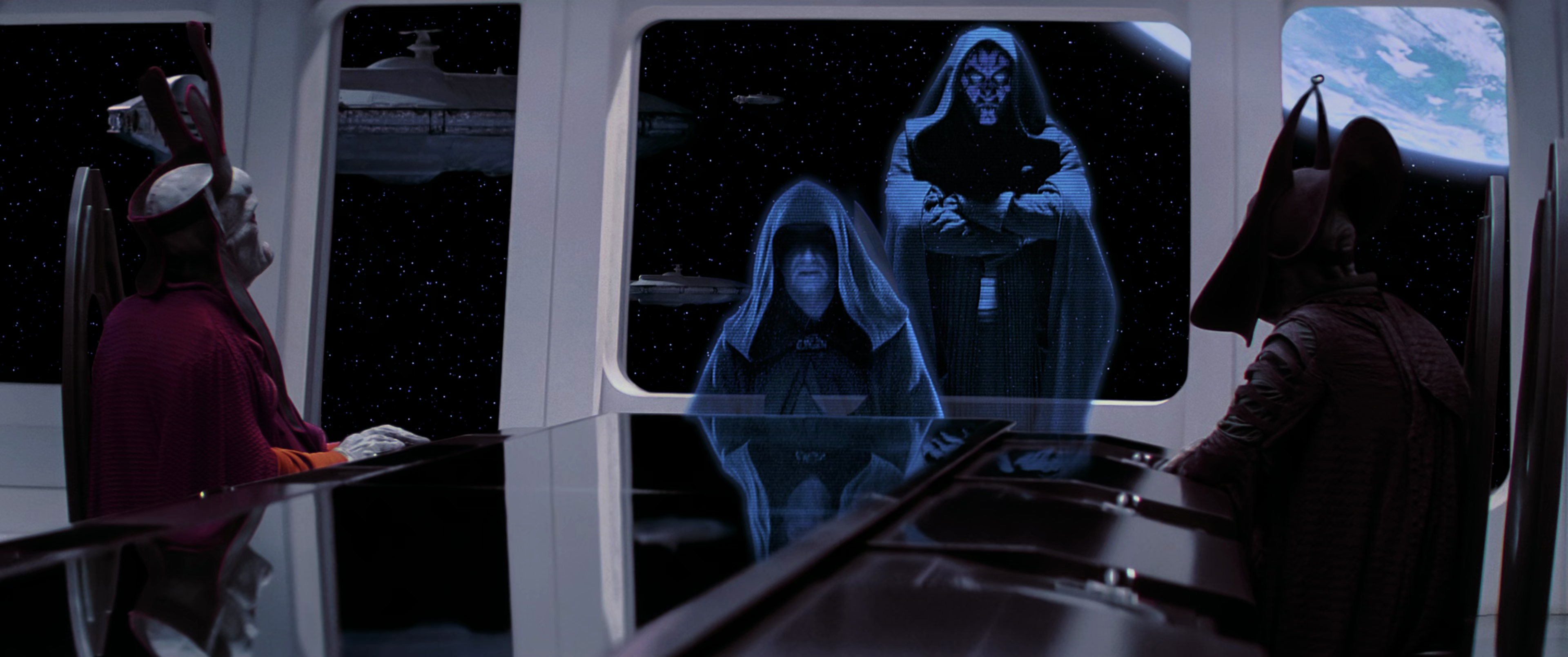
Despite the best intentions of Chancellor Valorum, the Trade Federation initiated a blockade of Naboo due to disagreements regarding the export of plasma. A Judicial delegation transported Jedi Master Qui-Gon Jinn and his Padawan, Obi-Wan Kenobi, aboard the Saak'ak, a Trade Federation Lucrehulk-class LH-3210 cargo freighter, aiming to negotiate a peaceful resolution to the burgeoning crisis. However, Darth Sidious, the Dark Lord of the Sith, commanded Viceroy Nute Gunray to commence the invasion of Naboo prematurely and to eliminate the Chancellor's Jedi ambassadors. Consequently, Theed, Naboo's capital city, was swiftly seized by the Trade Federation Droid Army. The Jedi, having miraculously survived the Federation's assassination attempts, escaped to Naboo, where they successfully rescued Queen Padmé Amidala and her retinue.
To present her homeworld's plight before the Senate, Amidala embarked on a voyage to Coruscant. However, damage to the Naboo Royal Starship's T-14 hyperdrive generator necessitated an unscheduled stop on the remote desert planet of Tatooine for essential repairs. Acting on Gunray's intelligence, Sidious instructed his Sith apprentice, Darth Maul, to locate and recapture the queen, as her signature was crucial for legitimizing the Federation's occupation of Naboo. Despite Maul's pursuit to Tatooine, he was unable to prevent the Jedi from escaping with Amidala aboard her repaired starship. Furthermore, Jinn took into his care a freed slave boy, Anakin Skywalker, who he discovered possessed an extraordinary connection to the Force. Convinced that he had discovered the prophesied Chosen One, Jinn transported Skywalker to Coruscant to initiate his Jedi training.
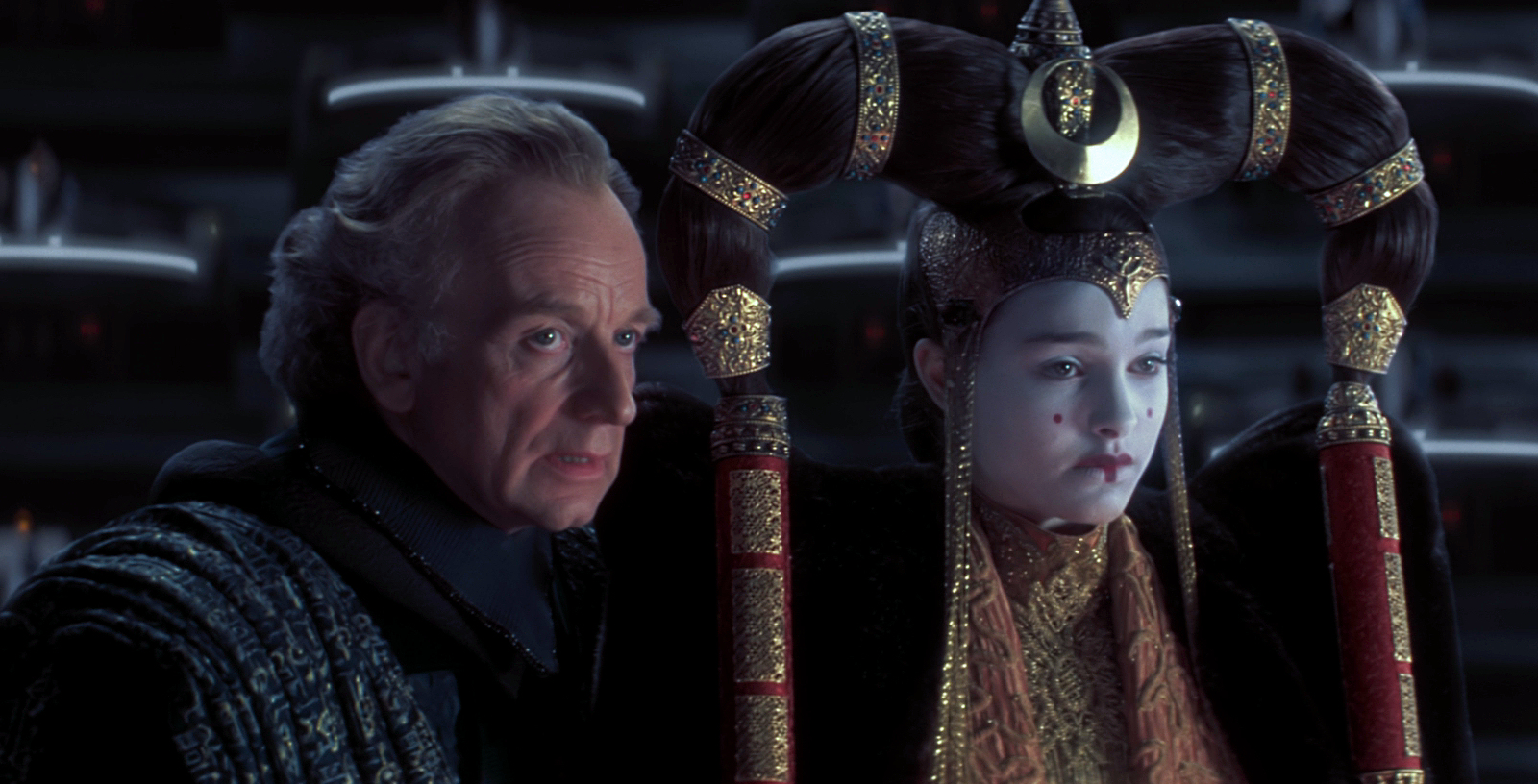
Upon her arrival in the capital, Senator Palpatine and Chancellor Valorum extended their greetings to Amidala. While Valorum assured her of the Senate's concern regarding the situation, Palpatine cautioned her that intervention from either the Senate or the Chancellor was unlikely without a change in leadership. As Naboo's representative in the galactic forum, Palpatine served as Amidala's advisor and confidant, asserting that the Senate was rife with corruption and the Chancellor merely a figurehead controlled by bureaucrats. When the Trade Federation's delegates compelled Valorum to adhere to bureaucratic protocols, Amidala responded by calling for a Vote of No Confidence in him, heeding Palpatine's counsel despite her initial hesitation to denounce a staunch supporter of her world.
Convinced that the Republic had strayed from its foundational principles, Amidala resolved to return to her planet to liberate the people of Naboo independently, without relying on the Senate's assistance. Before departing Coruscant, Palpatine informed her of his nomination to succeed Valorum. His rivals included Senator Bail Antilles of Alderaan and Senator Ainlee Teem of Malastare, but Palpatine assured Amidala of his impending victory in the election due to widespread sympathy for Naboo's predicament. He pledged to dedicate his term to eradicating corruption, and Amidala implored him to restore compassion to the Senate.
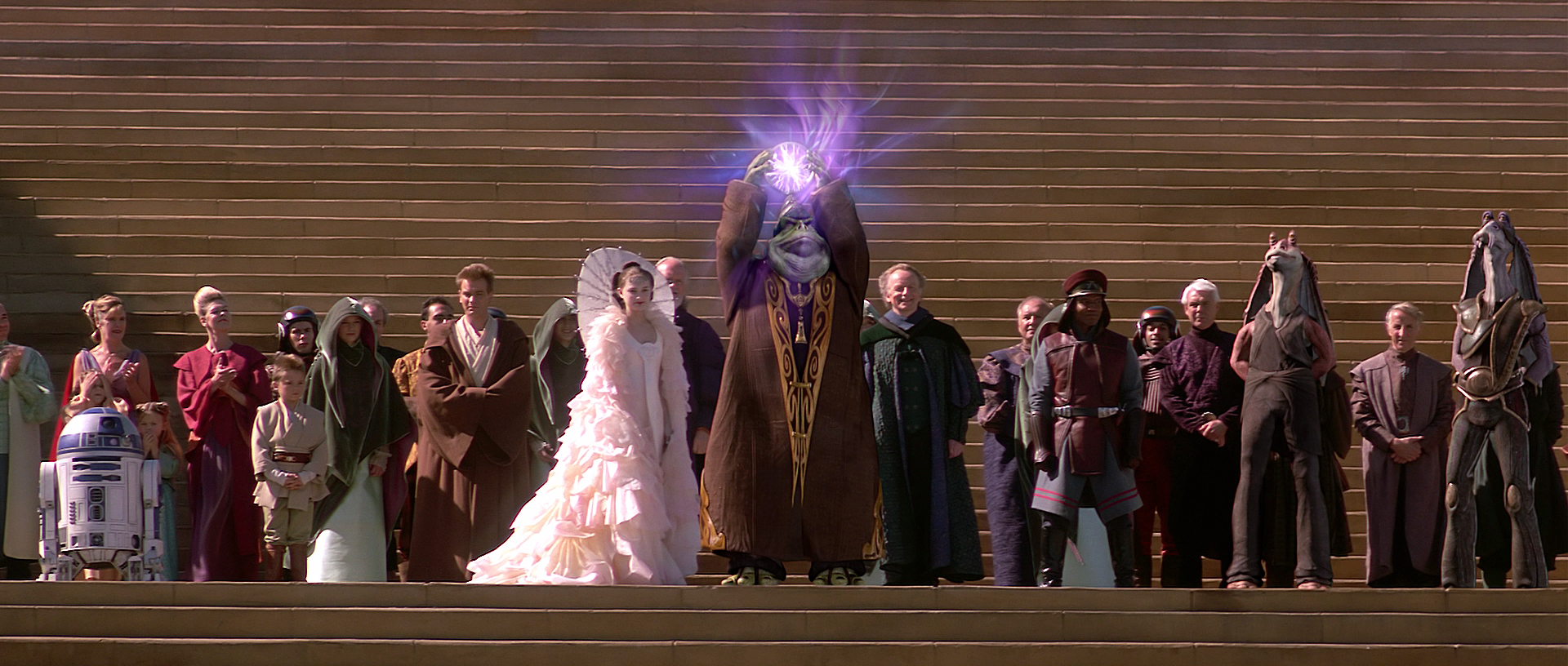
Unable to rely on Republic assistance, Amidala turned to Naboo's indigenous Gungan population. Despite the historical animosity between their segregated societies, the shared occupation of their planet allowed Amidala to foster reconciliation through diplomatic efforts. The Gungan Grand Army confronted the Trade Federation's battle droids while the Naboo Royal Space Fighter Corps launched an assault on the Saak'ak in orbit. The Gungans were compelled to surrender following the collapse of their defenses, and numerous Naboo Fighter Pilots perished in the space battle. However, Amidala's team infiltrated the Theed Royal Palace, capturing Gunray, and with Skywalker's destruction of the Saak'ak, the droids were deactivated. In the aftermath of the Battle of Naboo, Gunray was taken into Republic custody, and the newly elected Supreme Chancellor Sheev Palpatine arrived in Theed, where he and the queen exchanged congratulations on their recent successes. The new Chancellor affirmed their commitment to collaborating to bring peace and prosperity to the Republic.
Separatist Crisis
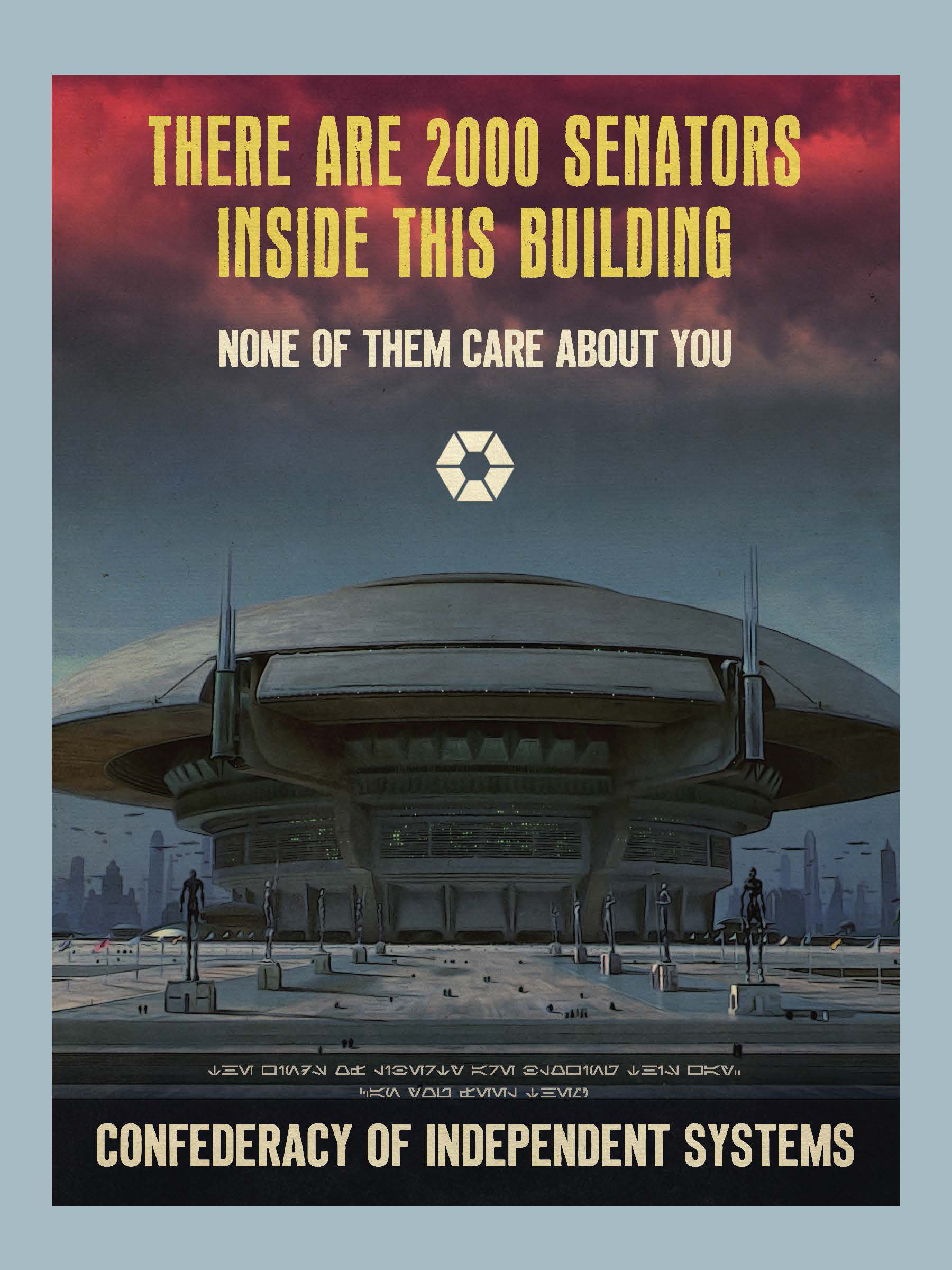
In the wake of the Naboo Crisis, the Trade Federation's monopoly in the Outer Rim was dismantled, while Supreme Chancellor Finis Valorum's political standing suffered due to the crisis and other scandals. Subsequently, Palpatine ascended to the position of Supreme Chancellor, cultivating an image of himself as a humble servant of the common good, despite his hidden agenda. However, escalating tensions between the Core and Outer Rim worlds gradually intensified to the point where many anticipated an imminent war. Foreseeing this conflict years before the Invasion of Naboo, Jedi Master Sifo-Dyas advocated for the creation of a new Republic army, only to be rebuffed by the Jedi High Council, who deemed his ideas too extreme. Undeterred, Sifo-Dyas contacted the Kaminoans, renowned for their clone hatcheries, and secretly commissioned them to create a clone army, falsely claiming to represent the Galactic Senate. Unbeknownst to Sifo-Dyas, Darth Sidious had previously contacted Prime Minister Lama Su, persuading him to implant a behavioral modification biochip into the clones during their third stage of development, enabling them to turn against the Jedi with a single command.
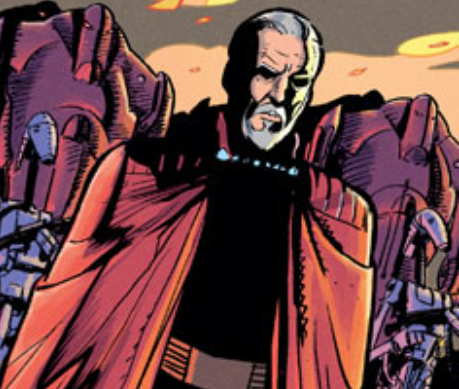
The charismatic swordsman and political visionary Jedi Master Count Dooku, who had taken an eight-year leave of absence from the Jedi Order and was now secretly Darth Sidious' apprentice, known as Darth Tyranus, contracted the Pyke Syndicate to assassinate Sifo-Dyas over the planet of Oba Diah. Sifo-Dyas, initially en route to the planet to mediate a dispute that threatened to escalate into a full-scale gang war on Coruscant, was abruptly rerouted to Felucia when his shuttle was unexpectedly shot down over the planet. Transporting his body to Felucia, where it was cremated by tribal inhabitants, Dooku successfully deceived the Jedi Council into believing that Sifo-Dyas had been killed by the Felucians, while simultaneously erasing the existence of Kamino from the Jedi Archives.
In the decade following the Invasion of Naboo, Count Dooku's whereabouts remained largely unknown, with many speculating that he merely sought to establish a splinter faction of the Jedi Order. In reality, Dooku manipulated galactic events to instigate political unrest on various worlds, including Kashyyyk, Sullust, and Onderon. In an effort to establish a southern Separatist sphere of influence by aligning Yag'Dhul and Sluis Van with his cause, Dooku sought to persuade the prosperous world of Eriadu to join the Separatists. However, Wilhuff Tarkin was compelled to declare his allegiance, particularly after Dooku commandeered a HoloNet station in the Raxus system and denounced the Galactic Republic, effectively setting the stage for the Separatist Crisis. Ultimately, Tarkin sided with the Galactic Republic, firmly believing that an inefficient yet unified galaxy was preferable to a fragmented one.
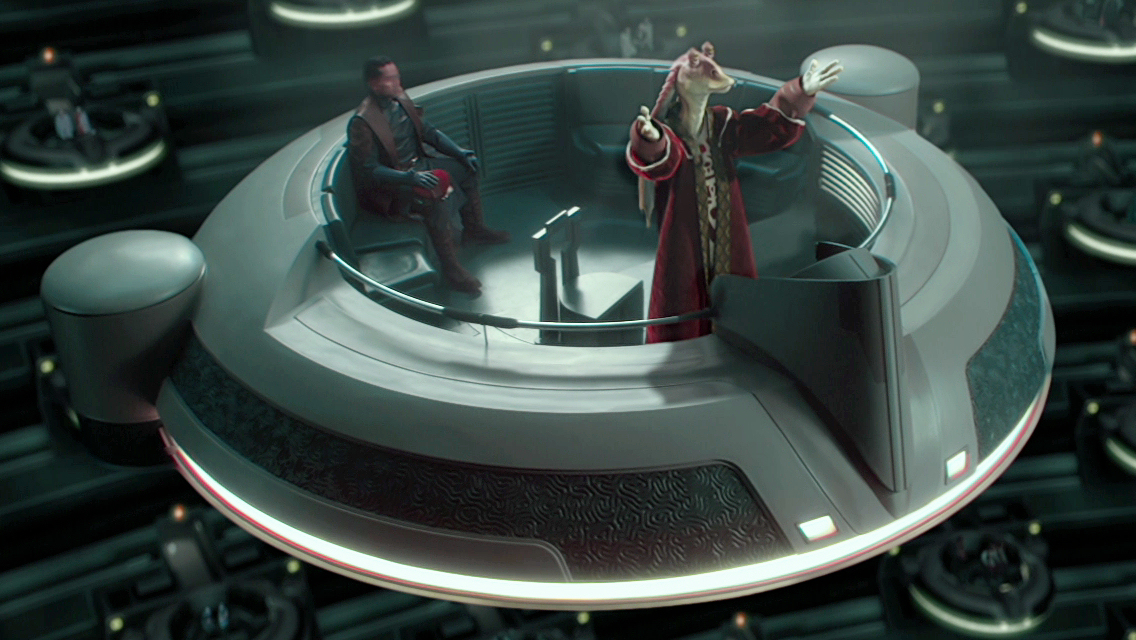
Chancellor Palpatine's negotiations with the Separatists proved unsuccessful, prompting the Galactic Senate to consider the Military Creation Act. Senator Amidala spearheaded the opposition against the bill, believing it would inevitably lead to war between the Republic and the Separatists. Following an assassination attempt on Amidala, the chancellor ordered her to return to Naboo while the Jedi investigated the plot against her. Junior Representative Jar Jar Binks assumed her responsibilities on Coruscant during Amidala's absence. The Jedi's subsequent discovery of two secret armies—the clones and the battle droids—influenced the Senate's subsequent actions. The Loyalists concurred that the Republic required the clone army but feared that the Senate would fail to pass the Military Creation Act before the Separatists launched an attack on the Republic with their droid forces. When Vice Chair Mas Amedda proposed resolving the crisis by bestowing emergency powers upon Chancellor Palpatine, Representative Binks proposed the same to the Senate, who passed his bill, enabling Palpatine to officially recognize the clone army as the Grand Army of the Republic. As a self-proclaimed proponent of democracy and a Republic patriot, Palpatine assured the senators that he intended to relinquish the powers they had granted him once the crisis had subsided.
The Clone Wars
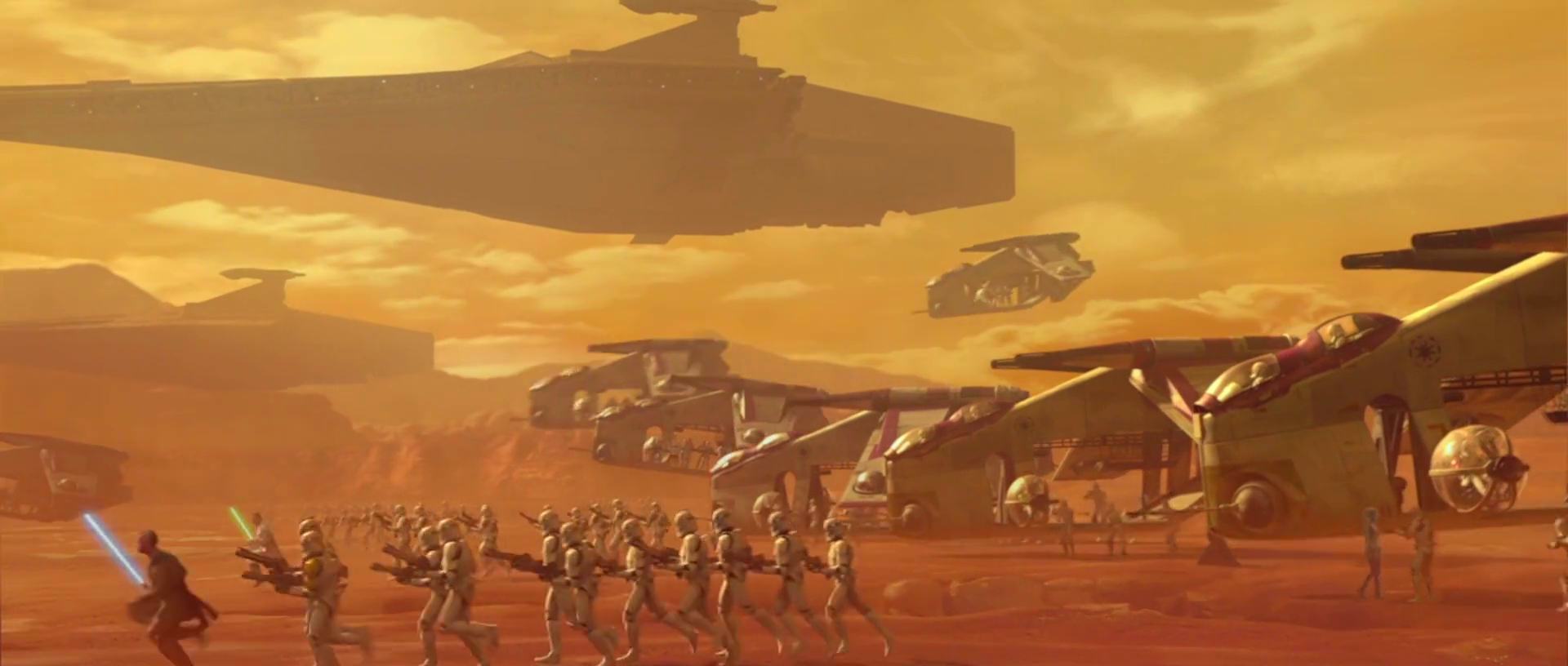
The Clone Wars commenced with the First Battle of Geonosis. Supported by the Republic Navy, the Grand Army of the Republic engaged the Separatist Droid Army on the open battlefield. The Jedi also participated in the battle, serving as de facto generals for the clone troopers. Concurrently, Poggle the Lesser's schematics for the Ultimate Weapon were transferred to Dooku, who escaped the battle after dueling Skywalker, Kenobi, and Grand Master Yoda. Simultaneously, the various members of the newly formed Confederacy of Independent Systems evacuated the planet as Republic clone troopers gradually forced the droid army into full retreat. The battle was celebrated as a Republic victory, although Yoda held a contrary view, recognizing that war would engulf the galaxy. Count Dooku traveled to an industrial sector on Coruscant to inform his master that the war had commenced as planned, while the Jedi High Council contemplated Dooku's warning that the Dark Lord of the Sith controlled the Senate.
In the aftermath of the Battle of Geonosis, the devastating three-year conflict that plunged the galaxy into chaos officially began. Despite harboring suspicions regarding Dooku's claim that the Senate was under the Sith's influence, the Jedi continued to serve the Republic. The military rank of Jedi General was established, enabling the Jedi to lead the Grand Army of the Republic in an official capacity. Early in the war, Sidious discovered a splinter faction within the Trade Federation led by the Neimoidian Oje N'deeb, who sought to supplant Gunray and offer the Outer Rim a chance for a new future. Initially outraged and contemplating crushing the rebellion outright to ensure that the Federation and its legacy remained true to his plans, Sidious soon realized that he could exploit the upstart to his advantage. By manipulating N'deeb's operation to serve his own ends, the Outer Rim would be strengthened by N'deeb's faction, but that work would only serve to prolong the war. Furthermore, Sidious understood that crushing the "chance" N'deeb offered the Rim would only intensify its people's bitterness towards the Republic.
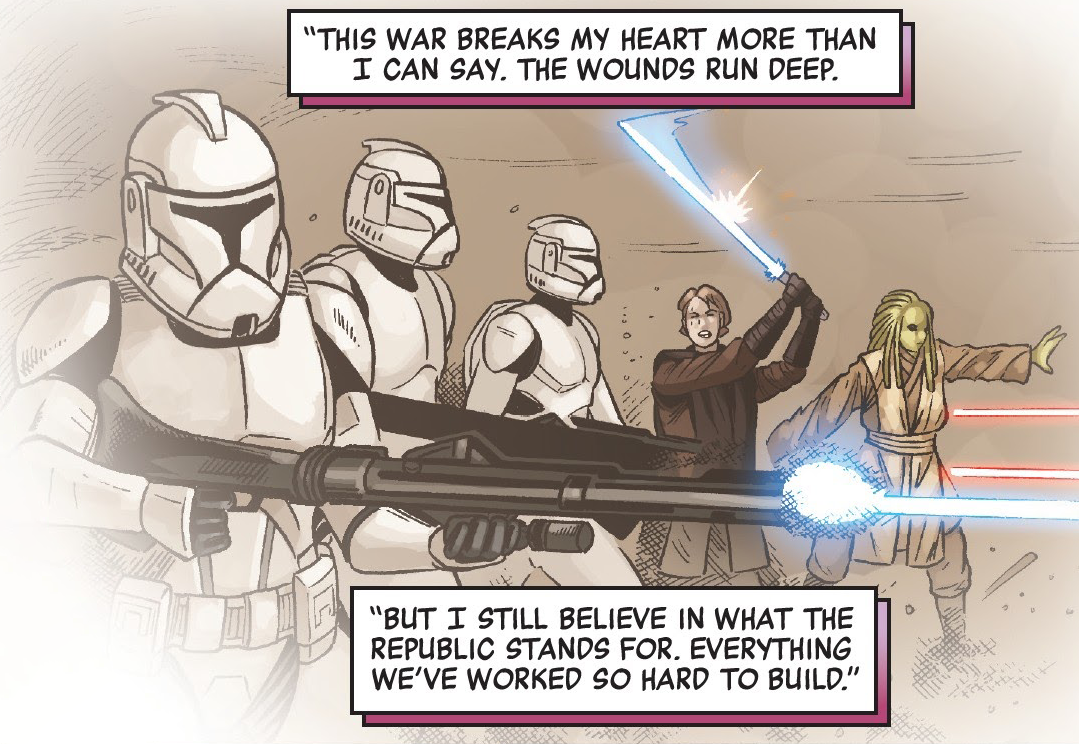
The worlds caught in the crossfire of the conflict were compelled to choose sides between the Galactic Republic and its clone army or the ever-expanding Confederacy of Independent Systems and its droid army. As the war progressed, numerous diplomatic envoys engaged in various attempts to sway local worlds to join the Galactic Republic, with Jedi Master Yoda seeking to secure the support of the Toydarian King Katuunko, while Sith assassin Asajj Ventress sought to disrupt the meeting and instead persuade the king to join the Confederacy. The Republic also provided military aid and support to factions in need, such as Cham Syndulla's Twi'lek Resistance on Ryloth, or to the Dugs of Malastare, whose lucrative fuel reserves were a significant asset to the Republic Navy. Numerous worlds, such as Mandalore, also attempted to maintain their neutrality, although they often were forced to seek aid from third parties in times of need.
Throughout the Clone Wars, numerous attempts were made on Supreme Chancellor Palpatine's life, including a kidnapping attempt on Naboo orchestrated by Count Dooku, as well as the hostage-taking of members of the Galactic Senate by notorious bounty hunter Cad Bane. However, political intrigue fueled not only the conflict but also advancements in weaponry and the development of equipment to enhance existing armed forces. Attempts to create biological weapons were launched by Separatist scientist Nuvo Vindi, who attempted to recreate the ancient Blue Shadow Virus, capable of killing millions across the galaxy, while the Republic developed the experimental electro-proton bomb, which could emit an electric pulse upon detonation, capable of deactivating an entire droid army.
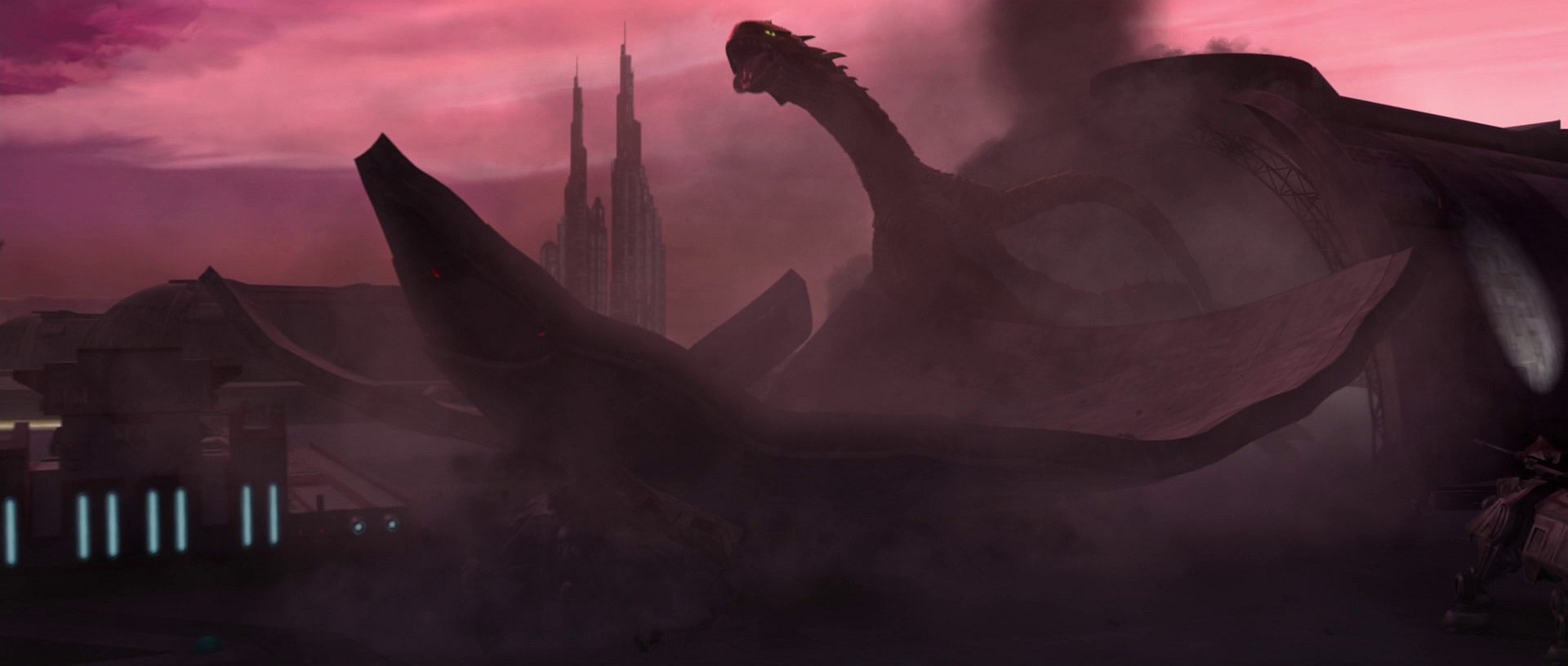
Following the Battle of Malastare, the Republic also attempted to create an impenetrable armor by unlocking the biological secrets of the Zillo Beast, an ancient creature from the Mid Rim, only to have the attempt end in failure, resulting in the beast going on a rampage across Coruscant. After its death at the hands of a Jedi task force, the beast was secretly cloned by orders from the Supreme Chancellor himself. In the meantime, the Republic developed a stealth ship capable of cloaking itself, as well as upgrading its standard Phase I clone trooper armor to the more sophisticated Phase II clone trooper armor prior to the Battle of Mon Cala.

The Republic adopted the clone army to defeat the Separatists, but the clone troopers were also at the disposal of the Senate. The Coruscant Guard was formed by clone shock troopers stationed on the Republic capital; senatorial delegates were accompanied by clone bodyguards; and the clones became involved in the Republic's internal disputes by acting as enforcers of the Senate. The Senate Guard still accompanied dignitaries on off-world missions, but as the war continued, the Coruscant Guard became increasingly responsible for the security of the Supreme Chancellor and the delegates of the Senate.
On one occasion, the Republic deployed a Jedi-led force of clone troopers to Orto Plutonia at the behest of one of its members, the Pantoran Assembly. The government of Pantora claimed sovereignty over the planet, which resulted in open conflict between the Pantorans and the native Talz. Although the clones served under the Jedi, they were also beholden to the authority of the Pantoran leader, Chairman Chi Cho, and the Pantoran senator Riyo Chuchi.
Fall of the Republic
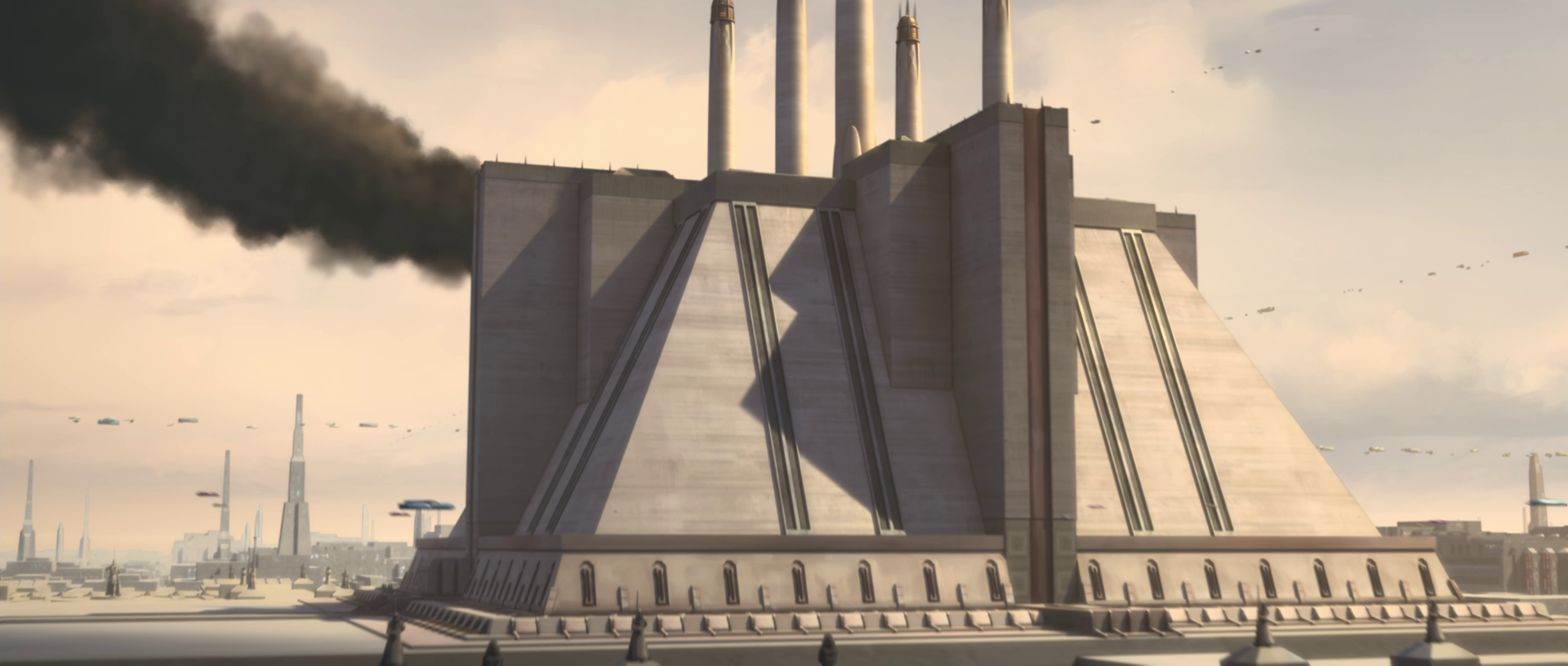
Throughout the Clone Wars, Jedi Generals led the Grand Army of the Republic. While the Jedi and the troopers under their command performed many heroic deeds, inspiring the public with tales of bravery, war weariness only continued to increase as the years passed. The Republic citizenry began to believe that the Jedi had abandoned their role as peacekeepers, leading to massive protests outside the Jedi Temple. Despite their diminishing influence in the galaxy, the Jedi continued to lead the Republic's forces, sustaining numerous casualties in the process. Their role in the conflict was opposed not only by civilians but also by Republic officer Wilhuff Tarkin, who sought to revoke the Order's military authority, convinced that the Jedi Code hindered the Republic's war effort.
Padawan Barriss Offee also disagreed with the Order's involvement in the Clone Wars and staged a bombing in the Jedi Temple as a form of protest, while framing Ahsoka Tano for committing the act before being captured herself. The Separatist Shadowfeed operation, an attempt by Count Dooku to disseminate information on Republic defeats, making it appear as though a Separatist victory was inevitable, fueled public anxiety and consequently accelerated the militarization of the Republic over the course of the war.
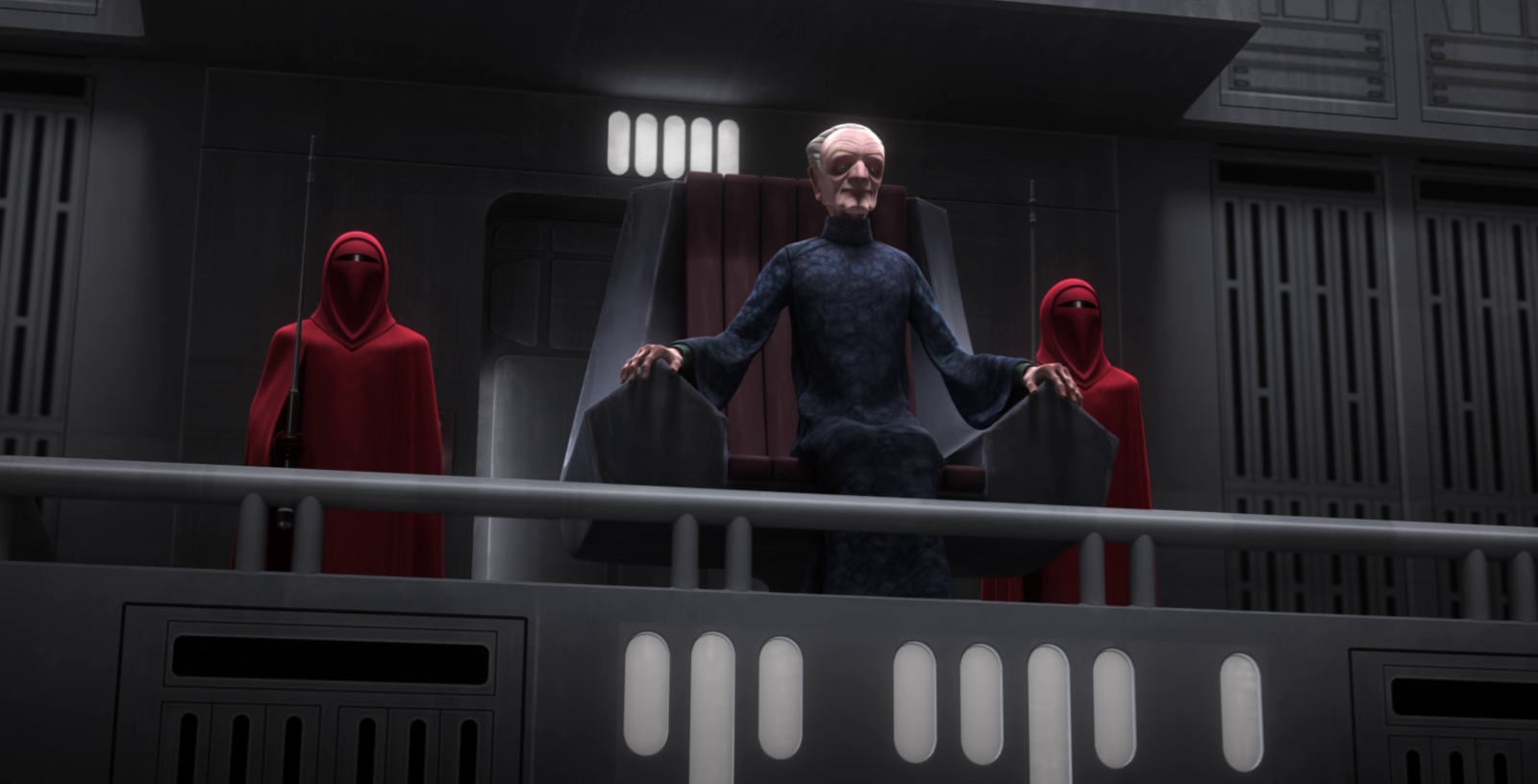
The war also provided Sheev Palpatine with a means to amass more emergency powers, solidifying his position as Supreme Chancellor far beyond what was technically permissible, while continuing to centralize political and military authority within the Office of the Chancellor, which included placing the InterGalactic Banking Clan under the Chancellor's oversight. By acquiring wartime powers, Chancellor Palpatine effectively became a dictator.
Palpatine justified his repeated amendments to the Galactic Constitution by citing the war, using these changes to entrench greater power within his office. He became the most powerful chancellor since before the Ruusan Reformations. Under the Reflex Amendment, he secured near-total control over the military. The Sector Governance Decree, passed towards the end of the war, granted governors appointed by Palpatine authority over neighboring star systems, all in the name of the war effort.
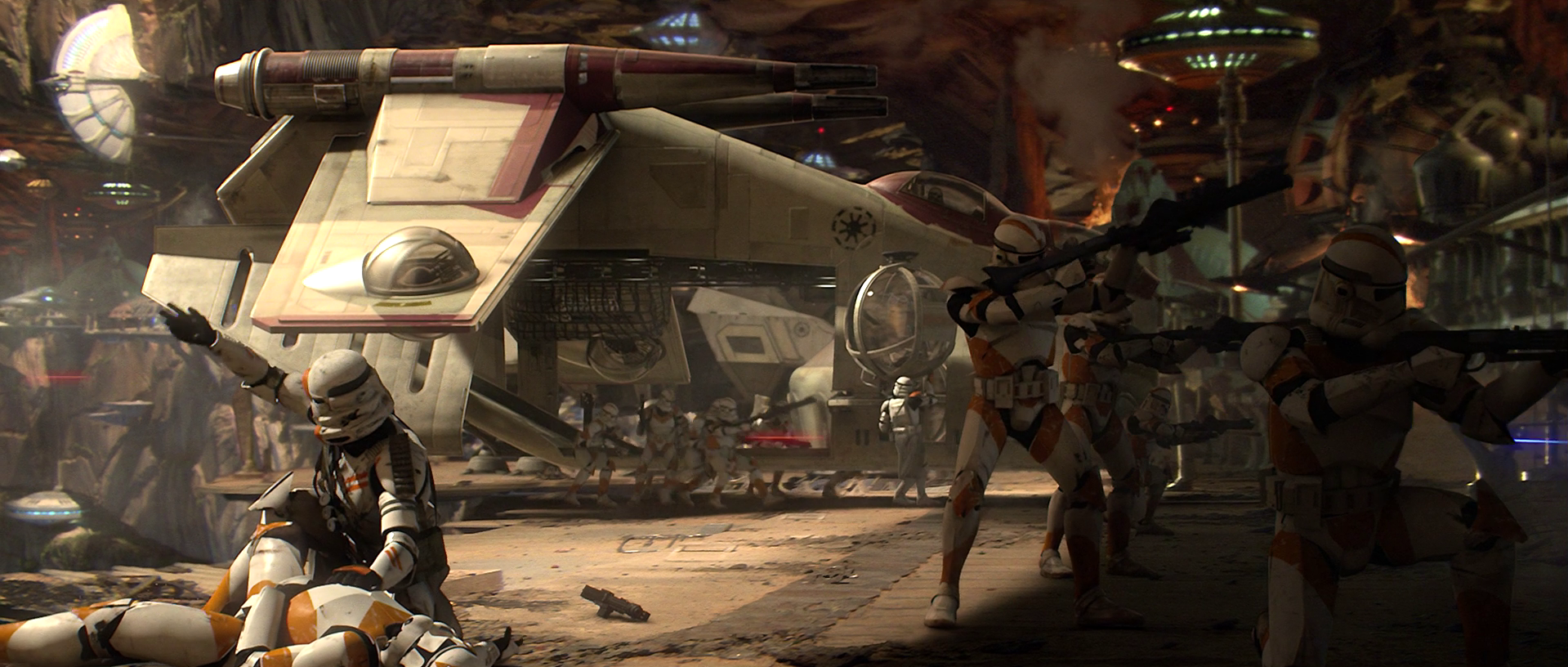
After nearly three years of continuous warfare, the conflict reached its zenith during the Battle of Coruscant, where both factions engaged in a massive naval and ground battle over the Republic's capital world. The confrontation ultimately resulted in the Republic inflicting a severe blow on the Confederacy, with the loss of a portion of its fleet, as well as its head of state, Count Dooku, at the hands of Anakin Skywalker. Shortly thereafter, General Grievous met his demise at the hands of Obi-Wan Kenobi during the Battle of Utapau. Yet, even as the Republic pressed on with the Outer Rim Sieges, determined to bring an end to the civil war, the Jedi High Council grew increasingly wary of Palpatine.
Over the course of the Clone Wars, the Chancellor's wartime authority reached unprecedented levels at the expense of the Senate, some of whom also became concerned about the future of the Republic. Consequently, members of the Council and the Senate began to consider their options for preserving democracy. The Delegation of 2,000 emerged and sought to petition the Chancellor to relinquish his emergency powers, while the Council contemplated the possibility of removing him by force and seizing control of the Senate to ensure a peaceful transition of power.
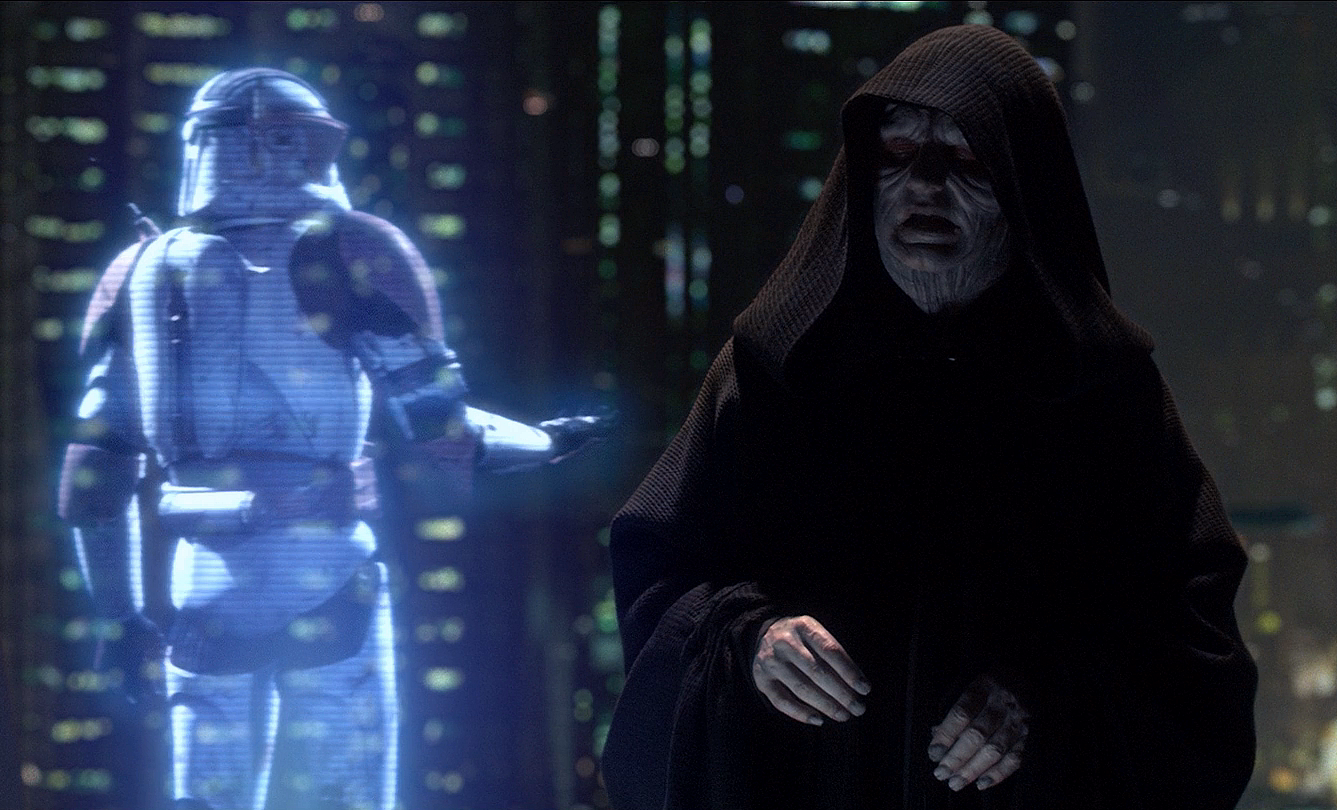
Ultimately, the Chancellor's true nature was revealed when Skywalker discovered the shocking truth: Sheev Palpatine and Darth Sidious, the Sith Lord orchestrating the Clone Wars, were the same person, thus validating their suspicions. Realizing the extent of the Chancellor's deception, the Jedi Council moved to apprehend the Sith Lord before his schemes could materialize, resulting in a deadly lightsaber battle where Sidious eliminated Agen Kolar, Saesee Tiin, and Kit Fisto before Mace Windu managed to disarm him. Considering the Chancellor's influence over the Senate and the judicial system, Windu concluded that Sidious was too dangerous to be allowed to live. However, Skywalker, despite having previously carried out an execution himself, voiced his disagreement, asserting that such an action was contrary to the Jedi code, an argument influenced by his personal feelings for Amidala, believing Sidious possessed the means to save her life.
In a desperate act, Skywalker intervened by disarming Windu, enabling Sidious to unleash a surge of Force lightning and kill the Jedi Order's champion. Having embraced the dark side, the fallen Jedi Knight transformed into Darth Vader and spearheaded the attack on the Jedi Temple, while Sidious issued Order 66 to the Grand Army, compelling the clone soldiers who had been brainwashed to turn against and execute their Jedi commanders throughout the galaxy. The implementation of Order 66 signaled the inevitable demise of the Republic, although Maul argued that the Republic had already collapsed and the Jedi had simply failed to recognize it.
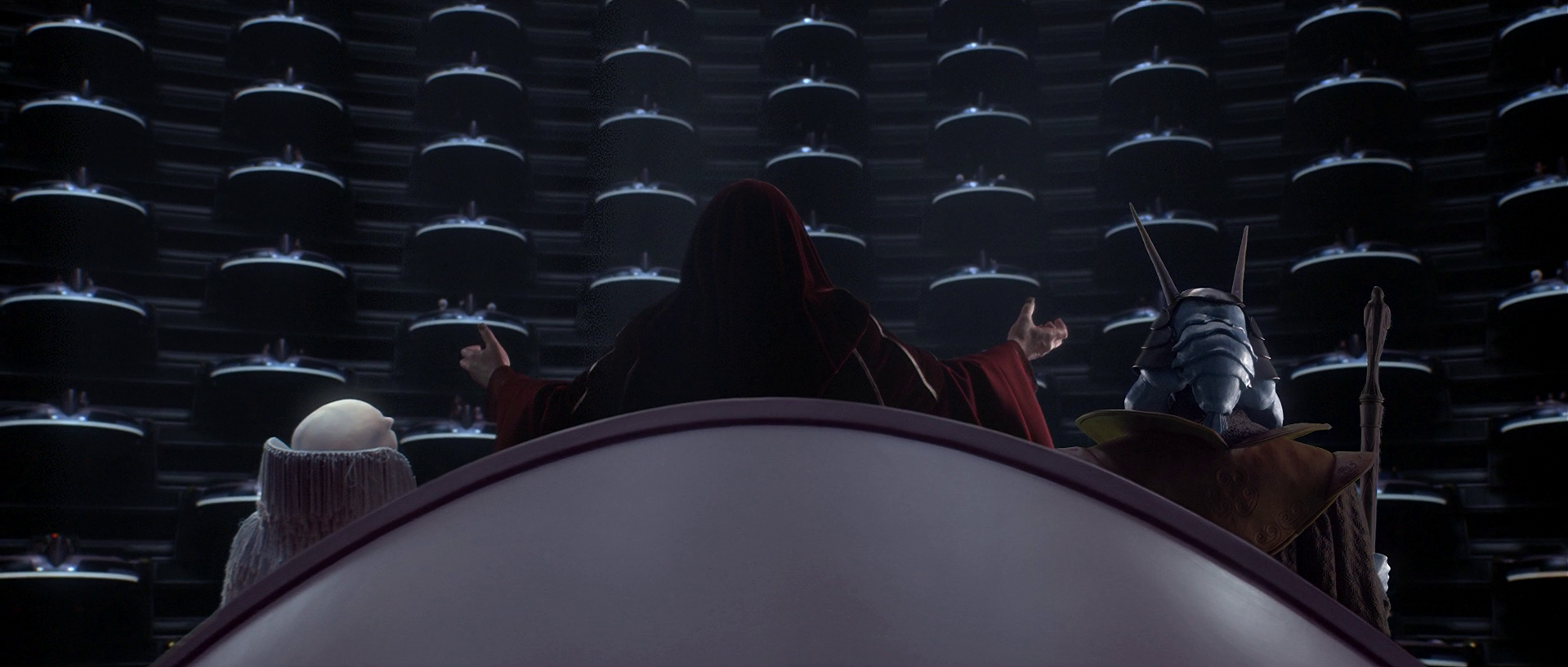
At the Chancellor's request, the Senate convened an emergency session. Sidious publicly condemned the Jedi Order, accusing them of plotting his assassination to seize control of the Senate and, consequently, the Republic. Simultaneously, Vader embarked on a mission to Mustafar where he personally eliminated the Separatist Council on Sidious's orders, as they were no longer needed and had become a liability. With the Great Jedi Purge underway and the Separatists eliminated, Sidious declared himself Galactic Emperor. The Galactic Republic was officially transformed into the Galactic Empire, replacing democracy with the fascist New Order. While many senators celebrated the birth of the Empire, Amidala and Organa silently mourned the Republic's demise. Vader deactivated the droid army shortly after assassinating the Separatist leaders on Mustafar. The Clone Wars came to an end, marking the beginning of the Imperial Era.
Legacy
Empire and rebirth
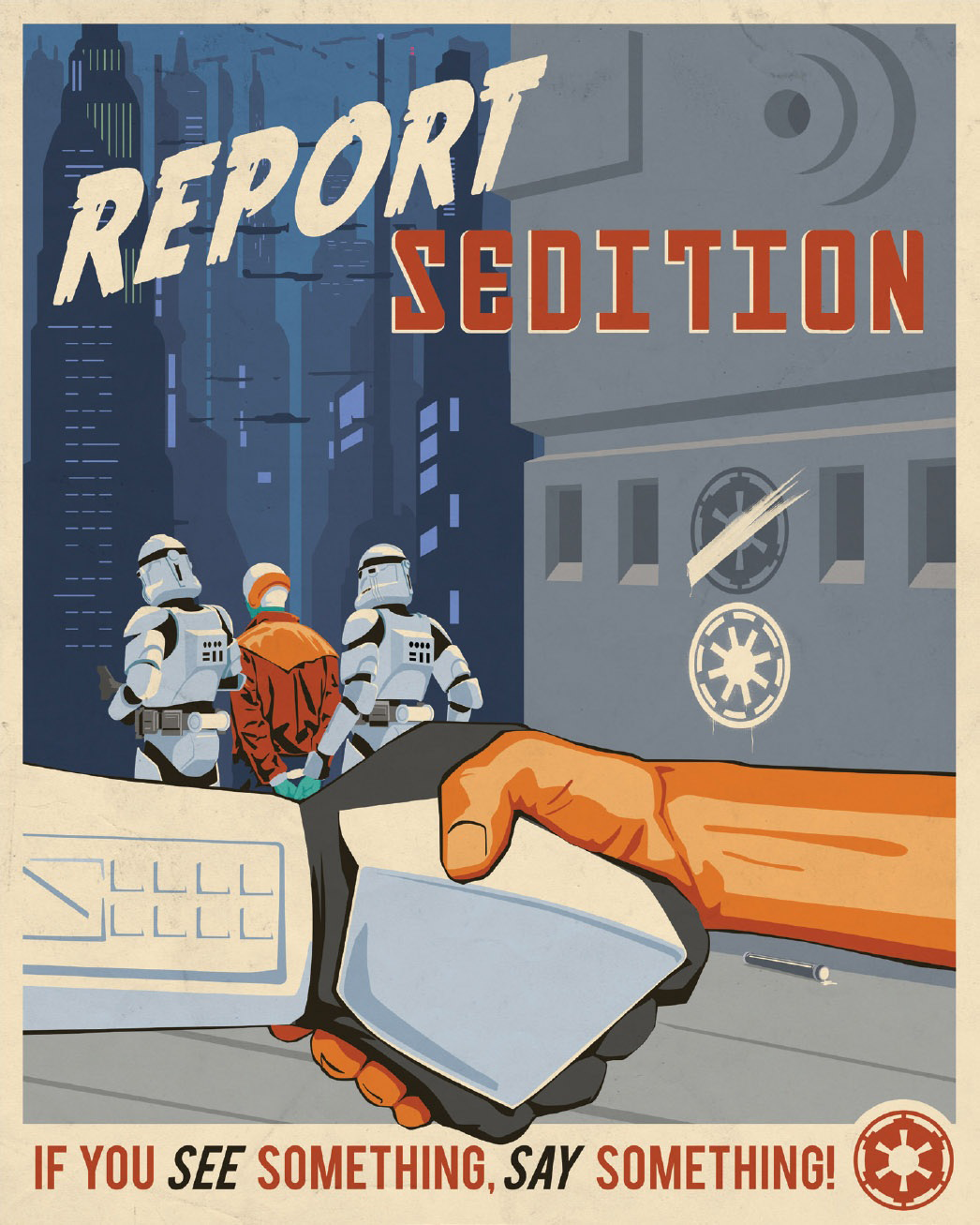
In the decades following the demise of the Galactic Republic, many individuals continued to cherish the memory of the former Republic and its legendary Jedi warriors, while others who had known the Jedi personally refused to accept the Emperor's narrative of a "Jedi Rebellion." The Jedi Order that had served the Republic would continue its legacy and survive throughout the Great Jedi Purge. Having his control chip removed by former Jedi Ahsoka Tano during the conflict aboard the Venator-class Star Destroyer Tribunal, the former Clone Captain Rex committed to fighting against the Empire in the name of the Republic, even assuring former Clone Sergeant Hunter that they and their clone brothers were living proof that the Republic still existed.
However, the majority of galactic citizens eventually embraced and actively supported the pro-Imperial perspective, believing that the Republic had become weak and corrupt, thus necessitating Palpatine's rise to power. To erase the memory of the previous government, any visible reminders of the Old Republic were swiftly removed, with numerous organizational changes altering the names of various locations and institutions, while architecture adopted a more austere and somber style. With the renowned Galactic Senate being renamed the Imperial Senate and the Senate Plaza becoming Imperial Plaza, complete with a massive statue of the Emperor, it became easy to forget that the Republic had ever existed.
Nevertheless, the memory of the Republic as a symbol of freedom and justice could never be completely extinguished as long as those who still believed in it remained alive, sparking numerous resistance movements throughout the Empire's reign, such as the Free Ryloth Movement and Berch Teller's rebel cell. These acts of resistance eventually united to form the Alliance to Restore the Republic prior to the Battle of Yavin, where the Death Star was destroyed. Subsequent battles included the Battle of Endor, which resulted in the destruction of the second Death Star and the deaths of Sidious and Vader, with the latter achieving redemption as Anakin Skywalker. Following their victory at Endor, the Alliance declared itself the New Republic as a tribute to the Old Republic.
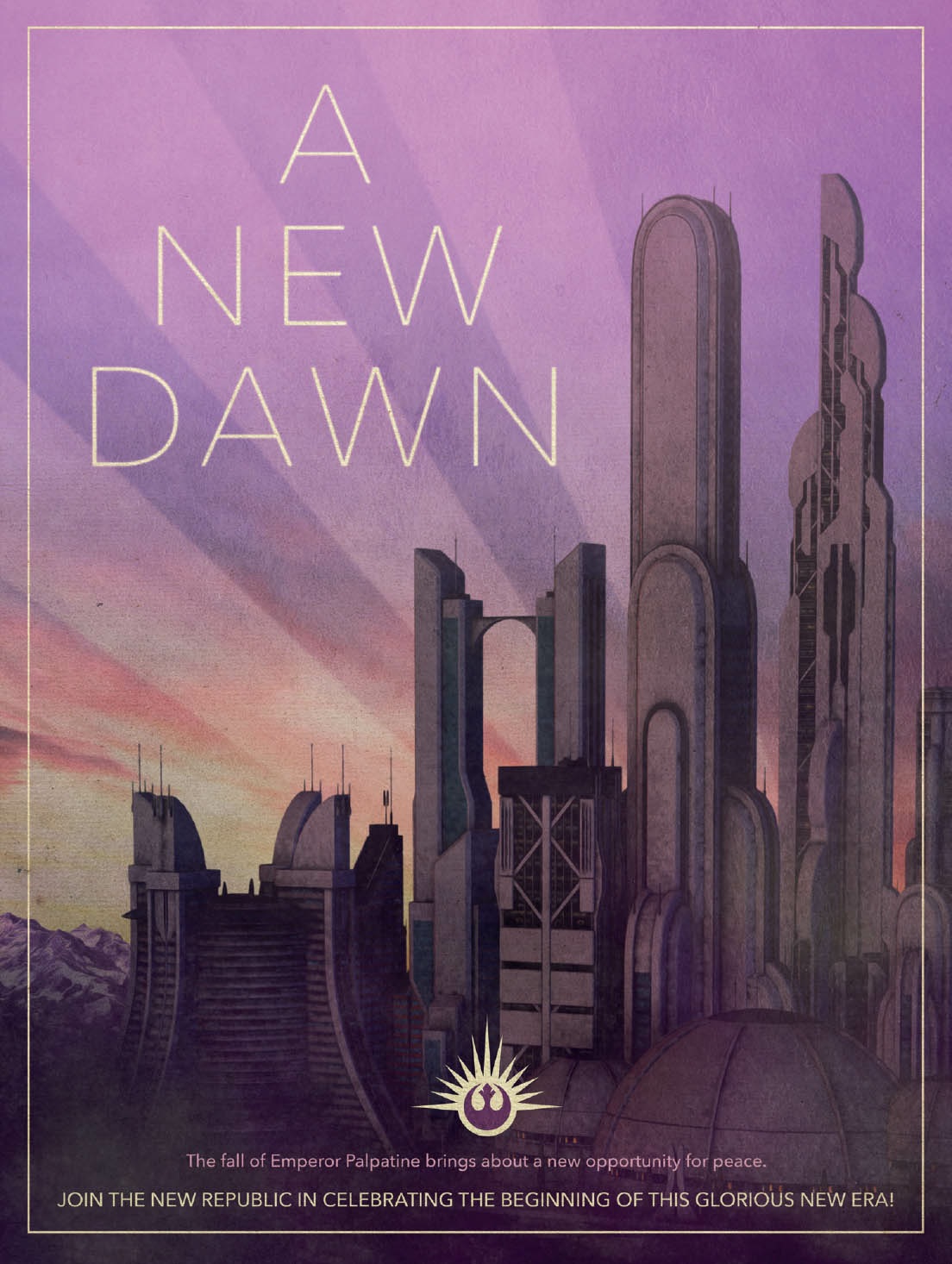
However, the New Republic rejected certain aspects of the Old Republic, particularly the legacy of its final years under Sheev Palpatine's chancellorship. The word "Supreme" was removed from the title of Chancellor; Coruscant was deprived of its traditional status as the galactic capital, allowing other worlds to host the restored Galactic Senate on a rotating basis; and the Military Disarmament Act reduced the New Republic Defense Force in the aftermath of the Galactic Civil War. These efforts successfully persuaded former Separatist worlds to support the New Republic, but also led to political divisions within the Senate, where Populists championed the sovereignty of member worlds, while Centrists advocated for increased central government power and military spending. Ultimately, the Centrist worlds seceded from the New Republic and joined the First Order, a successor to the Galactic Empire, leading to the Cold War between the two galactic powers.
The tale of Old Republic Regent Hylemane Lightbringer and his supposed immortality would be preserved in historical texts, alongside Old Republic musical pieces such as the Sestina of Imperator Vex, which continued to be sung even in the months following the Battle of Endor.
Posterity's judgment
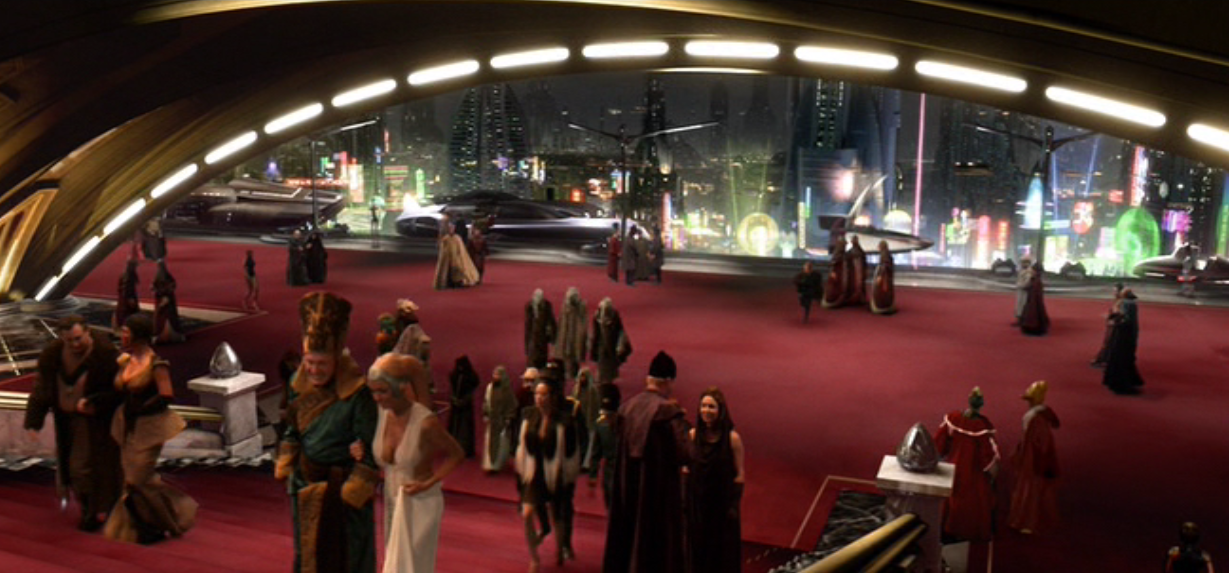
The Galactic Republic, celebrated as one of the greatest political achievements in galactic history, was described by the historian Janyor as "the Republic of legend, transcending distance and time." While earlier iterations existed in the distant past, collectively known as the "Old Republic," posterity credited the modern Republic with rescuing the galaxy from an age of darkness and, with the assistance of the Jedi Order, ushering in an era of peace that lasted for a millennium until the outbreak of the Clone Wars. Historians romanticized the Age of the Republic, referring to it as the "last era of peace"—despite isolated conflicts, which were notably infrequent and swiftly resolved by Jedi mediators—before the emergence of massive warships and planet-destroying superweapons.
However, the Republic's final years were remembered with less affection. Historians viewed the people of that era as a generation characterized by apathy and complacency, where galactic senators prioritized power and luxury over representing their constituents or addressing the perceived inefficiencies of the government. The civilian population was also seen as contributing to the Republic's downfall, with Core Worlders more interested in podracing events in the remote Outer Rim Territories than the political issues that fueled dissatisfaction and led to the Separatist Crisis. Ultimately, historians condemned this generation, holding it accountable for the collapse of the "comfortable civilization" that defined the modern Galactic Republic.
Organization
Politics
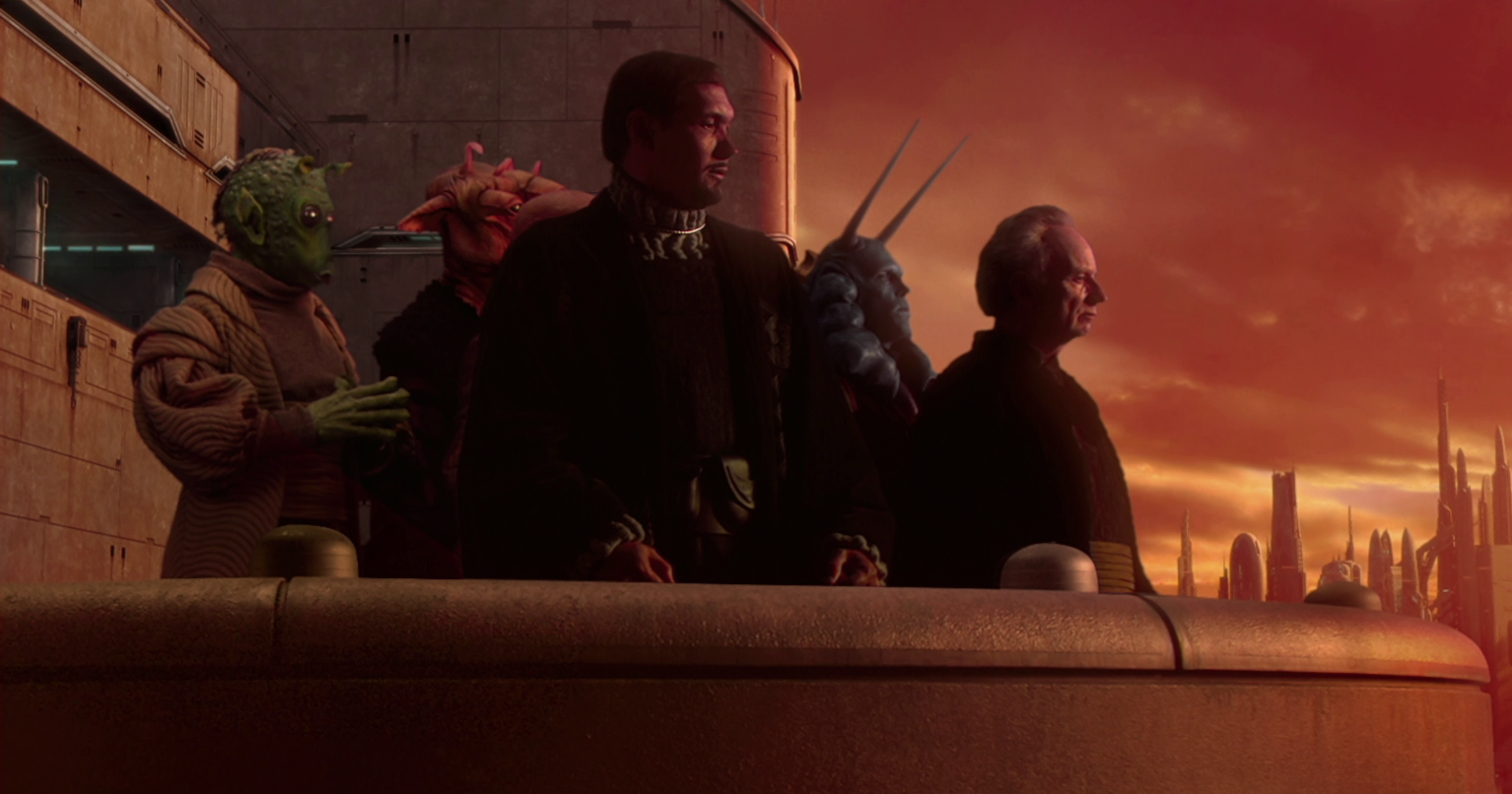
The Galactic Republic's institutions comprised the Office of the Chancellor, the Galactic Senate, and the Judicial Department. Executive authority was vested in the Supreme Chancellor, although this office was largely ineffective and hindered by bureaucratic procedures, particularly during Finis Valorum's chancellorship. Nevertheless, the Chancellor possessed the power to issue executive orders summoning the Senate to emergency sessions or dispatching senators from Coruscant for security reasons.
Sheev Palpatine's chancellorship shifted the balance of power in favor of the Chancellor's office, a consequence of the wartime powers granted to the leader by the Senate on the eve of the Clone Wars. As the conflict spread across the galaxy, Palpatine's chancellorship gradually evolved into a dictatorship, gaining control over both the Senate and the Republic courts. Near the end of the war, Palpatine appointed Anakin Skywalker as his personal representative to the Jedi High Council, a move that the Jedi considered an overreach of the Chancellor's authority. By this point, Palpatine had managed to remain in power beyond his term limits, an action supported by the Senate.
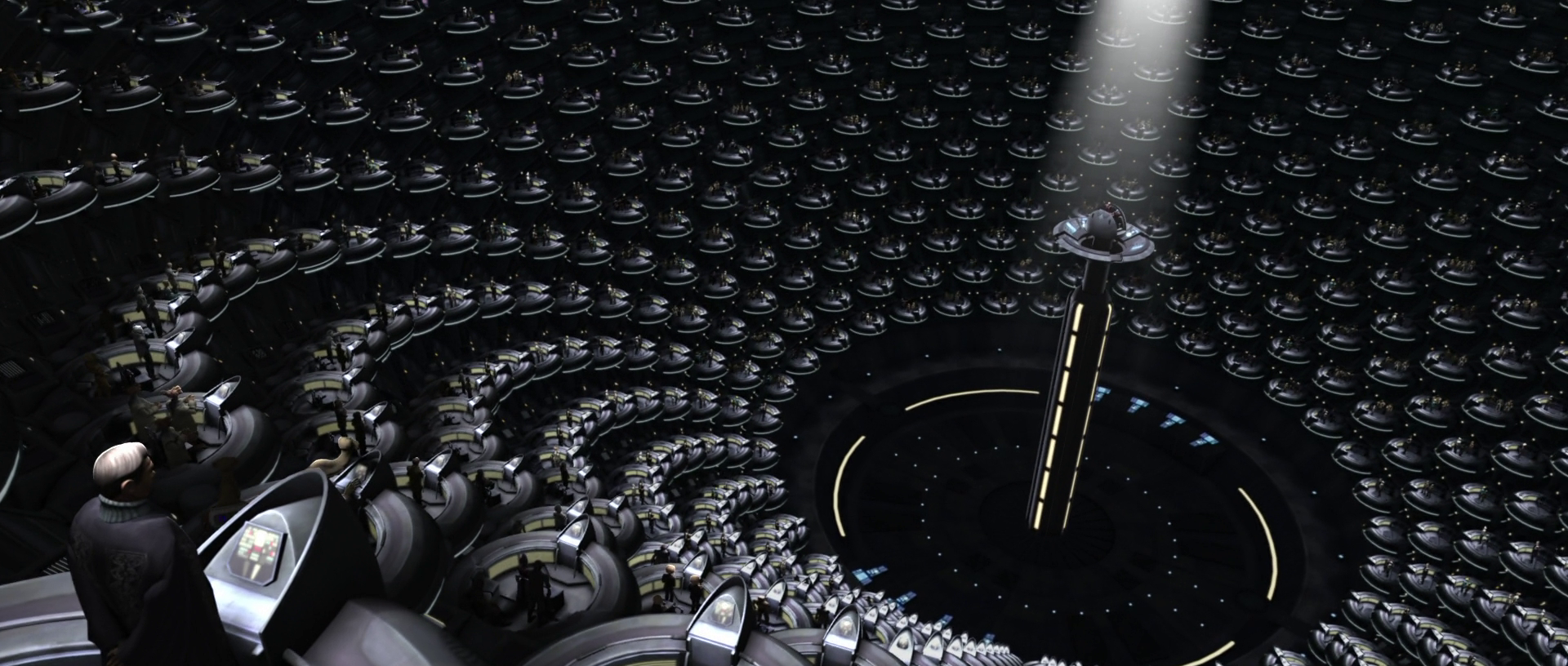
Before Palpatine's rise to power, the Galactic Senate served as the legislative body of the Republic. Numerous member worlds across the galaxy were represented in the Senate, which was headquartered on Coruscant, the Republic's capital. At its peak, the Senate's power surpassed that of the Supreme Chancellor, but it had also become stagnant due to rampant corruption and layers of bureaucracy. As more politicians became enamored with the comforts of their office, prioritizing power and wealth over their constituents' needs, ordinary citizens questioned whether the Republic and its high taxes were worth their membership. The Jedi had also grown distrustful of senators, viewing their motives with skepticism, despite the Order's allegiance to the Senate as a whole.
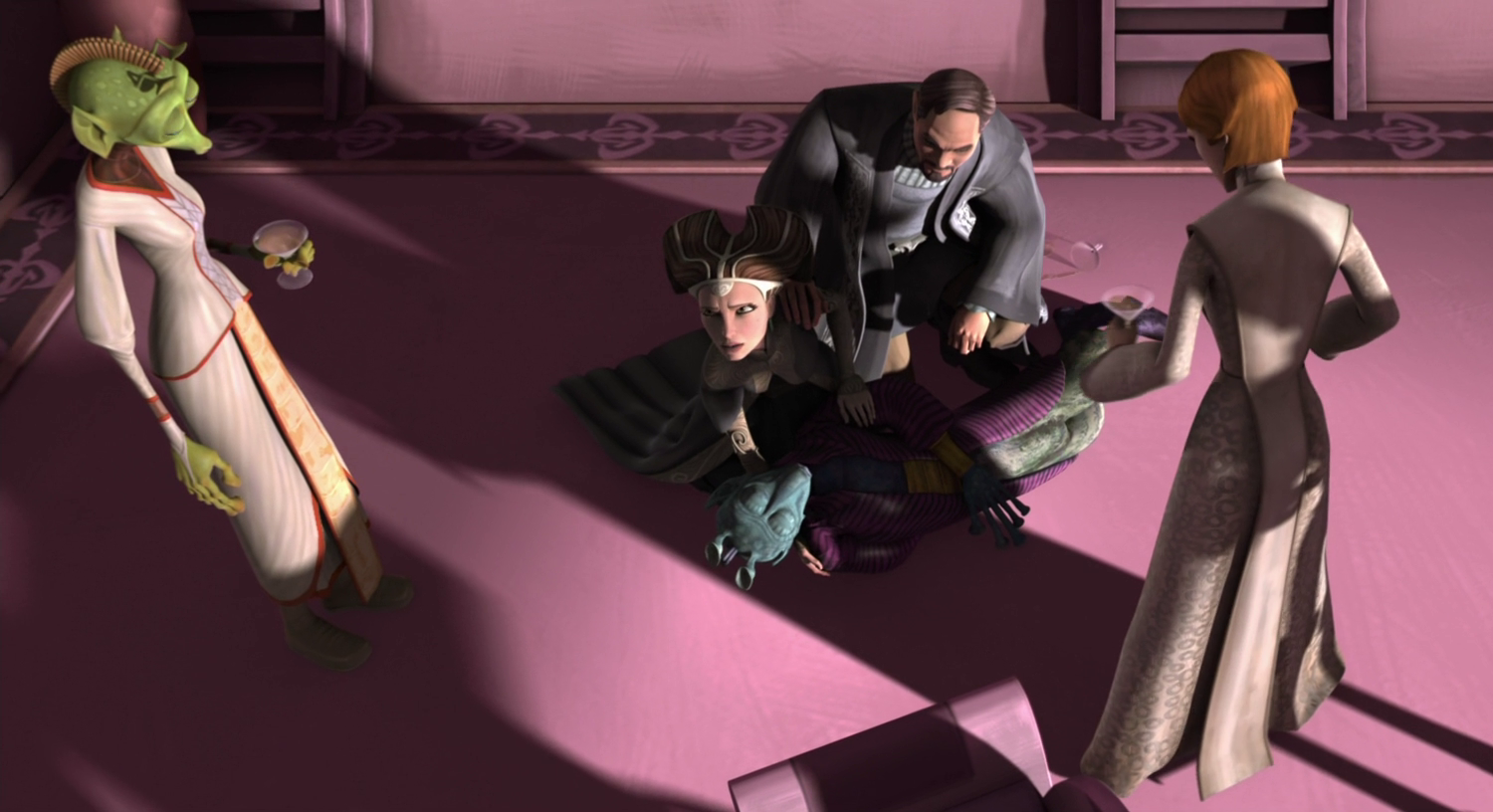
Hampered by political infighting and strict adherence to protocol, the Senate failed to swiftly resolve either the Invasion of Naboo or the Separatist Crisis. Instead of pursuing a diplomatic solution, the Senate rallied under Chancellor Palpatine's leadership. However, the decision to grant him emergency powers eroded their authority, enabling Palpatine to amass even more power at the Senate's expense. During the Clone Wars, the Senate was divided between supporters of the war effort and pacifists who sought a peaceful resolution to the conflict.
The Judicial Department oversaw the Republic courts, including the Supreme Court, the highest court of law in the Republic. Its authority also extended to the Judicial Forces and the Republic Office of Criminal Investigations. Like its legislative counterpart, however, the courts were plagued by stagnant bureaucracy and were known to be even more indecisive than the Senate. Despite Nute Gunray's arrest, multiple trials in the Supreme Court failed to remove him as leader of the Trade Federation, much to the dismay of the Naboo government.
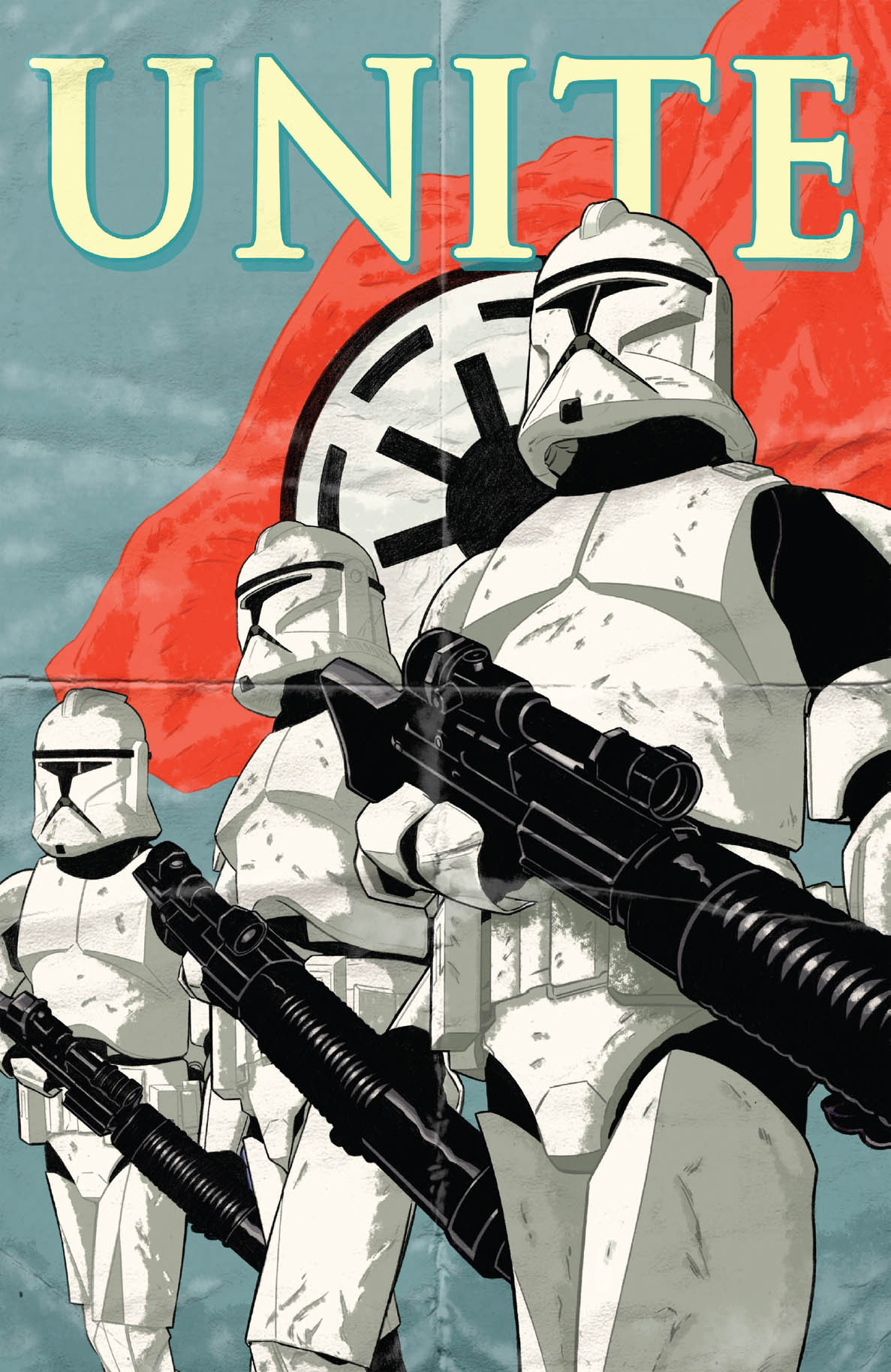
Propaganda in the Galactic Republic had long been employed to influence public opinion in favor of Republic policies, from expanding into the Outer Rim Territories to waging a galaxy-wide war against the Separatists. One such propaganda tool was the Commission for the Protection of the Republic (COMPOR). Established in the early stages of the Clone Wars, COMPOR served as a pro-Republic populist movement. The organization's mission was twofold: to promote patriotism within the Republic and to portray the Separatists as traitors. This was achieved through the artwork of Donclode Onstruss, Hamma Elad, and other artists associated with COMPOR.
Throughout the conflict, COMPOR propagandists sought to sustain the war effort by maintaining public support for the Republic's military forces and their commander-in-chief, namely the clone army and Supreme Chancellor Sheev Palpatine. Following an initial attempt to utilize the Jedi Order as a propaganda tool, COMPOR increasingly focused on the Grand Army of the Republic, depicting clone troopers as a symbol of unity that citizens were encouraged to support. Regarding the Separatists, COMPOR portrayed their leaders as icons of "evil," particularly General Grievous and Count Dooku. By exploiting loyalty to the Republic and fear of the Separatists, COMPOR lobbied the Galactic Senate to grant more emergency powers to Chancellor Palpatine, whom they supported as a wartime leader.
The Galactic Republic also established the Apprentice Legislature, also known as the Junior Senate, for politically inclined youth seeking future careers in politics. The Apprentice Legislature was assigned several real issues to address, although they were minor and did not involve security concerns. Padmé Amidala, the last Republic senator of Naboo, was an Apprentice Legislator at the age of eight. The Apprentice Legislature continued to exist under the Republic's successor, the Galactic Empire, although by 3 BBY only forty worlds still sent representatives to the Legislature.
Political divisions
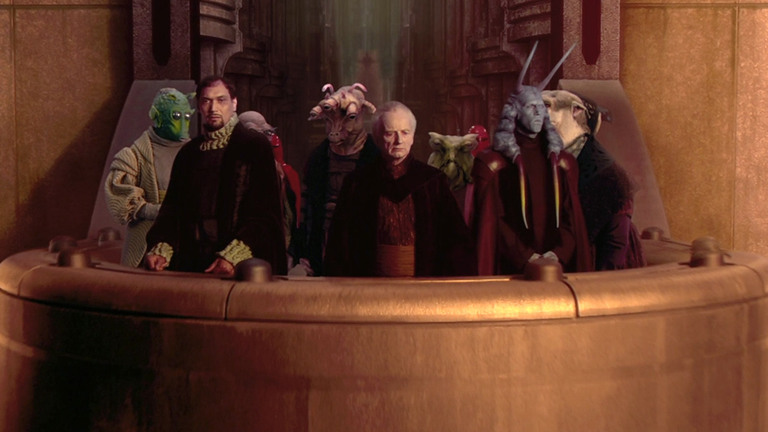
All political entities within the Galactic Republic possessed full sovereignty, thus sharing in the privileges and responsibilities associated with being part of the Republic. Corporations and guilds were also permitted to join the Republic, each sending democratically elected representatives on behalf of their governments or trade organizations from across the galaxy to the Galactic Senate.
A series of treaties between various entities governed the existence of the Republic Defense Coalition during the High Republic Era. These treaties included defense provisions that required Republic members, such as Chandrila and Alderaan, to loan military assets, including starships and personnel, for as long as they were needed, after which they would be returned to their homeworlds.
As a consequence of the Military Creation Act, the Corellia system, one of the founding systems of the Galactic Republic, was able to close its borders without withdrawing from the Republic during the Separatist Crisis.
Foreign policy
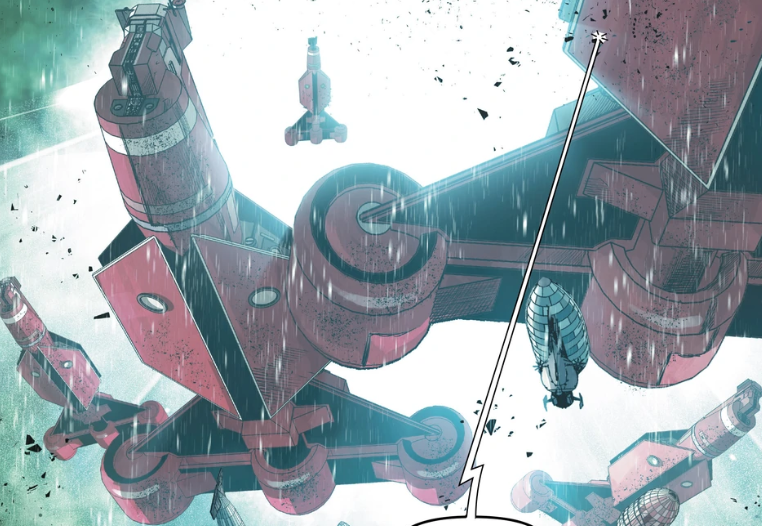
The Senate refrained from intervening in the Open-Closed war on Carnelion IV because the planet was not a member of the Galactic Republic. Carnelion IV had not joined the Republic because the Senate had limited economic interest in the planet. The Republic's diplomatic fleet subsequently forced a ceasefire to the Open-Closed war after Kenobi falsely claimed that the planet possessed high concentrations of tibanna gas in its atmosphere in order to end the long-running conflict.
During the Clone Wars, the Republic tolerated the political stance of neutral governments, including the New Mandalorians. Their leader, Duchess Satine Kryze, was a staunch pacifist who sought to keep her homeworld and its allies out of the conflict in her capacity as head of the Council of Neutral Systems. The Republic and Mandalore had coexisted through treaties over a century old by the time of the Clone Wars, although the Senate had sanctioned a plan to invade Mandalore, believing that Kryze's pacifist government could not protect the Mandalorian people from the Death Watch movement. However, the invasion was called off due to evidence that the Senate's pretext for war—the testimony of Deputy Minister Jerec—had been fabricated.
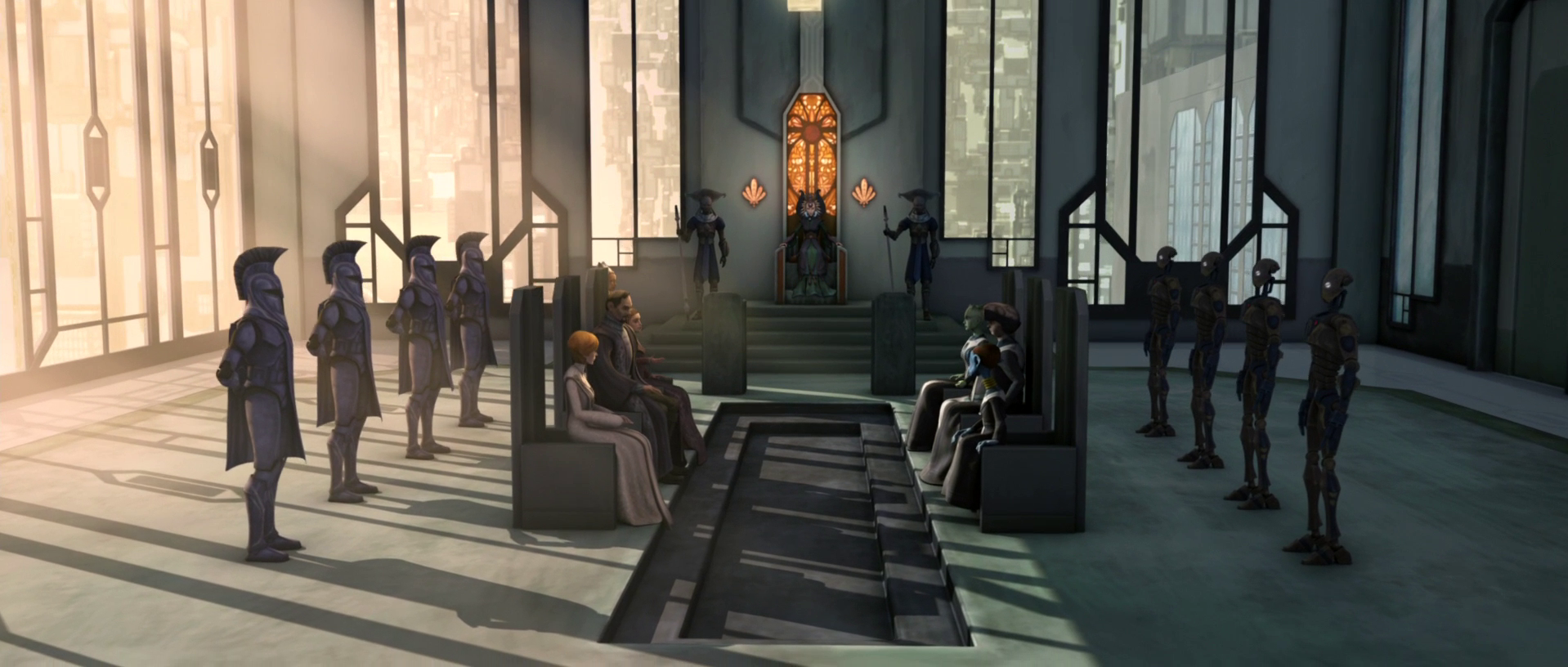
Mandalore served as the location for attempted peace negotiations between the Galactic Republic and the Confederacy of Independent Systems, with Duchess Satine overseeing the conference. Both governments dispatched their delegates to the neutral world, along with Republic Senate Commandos and Separatist BX-series droid commandos. However, negotiations failed, allowing the war to continue unabated.
During the war, although Supreme Chancellor Sheev Palpatine asserted that the Republic was willing to assist neutral star systems in times of crisis, the Senate and the Republic as a whole almost always declined to provide aid, particularly military aid, to neutral governments as a matter of policy. If a government violated its neutrality by siding with the Separatist Alliance, it risked becoming an enemy of the Republic. When the InterGalactic Banking Clan began favoring the Separatists at the Republic's expense, the Republic retaliated by deploying an invasion force to occupy the planet Scipio.

Despite Mandalore's neutrality, Ahsoka Tano and Bo-Katan Kryze requested the Grand Army's support to depose the Shadow Collective that had overthrown Satine Kryze's regime. Although the Jedi were concerned about being drawn into the Mandalorian civil war while in the midst of the ongoing Clone Wars, especially when the world in question was still officially neutral, they authorized a division of the 501st Legion to support the Mandalore resistance in the Siege of Mandalore.
During the Clone Wars, the Republic made indirect contact with the Chiss Ascendancy through Jedi General Anakin Skywalker's encounter with Senior Captain Mitth'raw'nuruodo "Thrawn," an officer of the Chiss Expansionary Defense Fleet. Thrawn had been tasked with exploring the Outer Rim by the Ascendancy, which, having discovered a mysterious threat in the Unknown Regions, sought to evaluate the Galactic Republic as a potential ally. Thrawn gathered intelligence on the Clone Wars through his interaction with Skywalker, who, in turn, enlisted the Chiss officer's help in rescuing Senator Padmé Amidala. Skywalker was impressed by Thrawn during their collaboration, which he later reported to Chancellor Palpatine. Thrawn, however, was unimpressed by the Republic, considering democracy an inefficient form of government.
Defense
Republic Defense Coalition

The Republic Defense Coalition, also known as the RDC, was organized as a small peacekeeping fleet that defended the Galactic Republic's interests during the High Republic Era. The RDC was bound together as an organization through defense treaties signed by the Republic's member worlds, including Alderaan and Chandrila. The treaties that created the RDC gave it the ability to allocate starships and personnel from the signatory worlds in times of emergency. These resources would remain under the RDC's control until the threat was neutralized, after which they would be returned to their homeworlds. The Republic also maintained formations of Republic peacekeeping troops, who were deployed to quell conflicts in Republic territory.
The fleet consisted of several starship types, such as Emissary-class cruisers, Pacifier-class sector patrol cruisers, Longbeam cruisers, and Z-28 Skywing starfighters. Despite the existence of the RDC, the Republic was at the height of an era of peace that had lasted for centuries, with neither the Hutts nor the Mandalorians posing a threat. As a result, the Emissary-class resembled a work of art, its crenellations and spires designed to be symbolic of the Republic in a state of tranquility. The RDC operated alongside the Jedi Order as well, allowing the peacekeepers to store their personalized starfighters, the Jedi Vectors, in the hangars of its Emissary-class cruisers. The Republic rescue fleet was also maintained at the time of the High Republic.
Judicial Forces
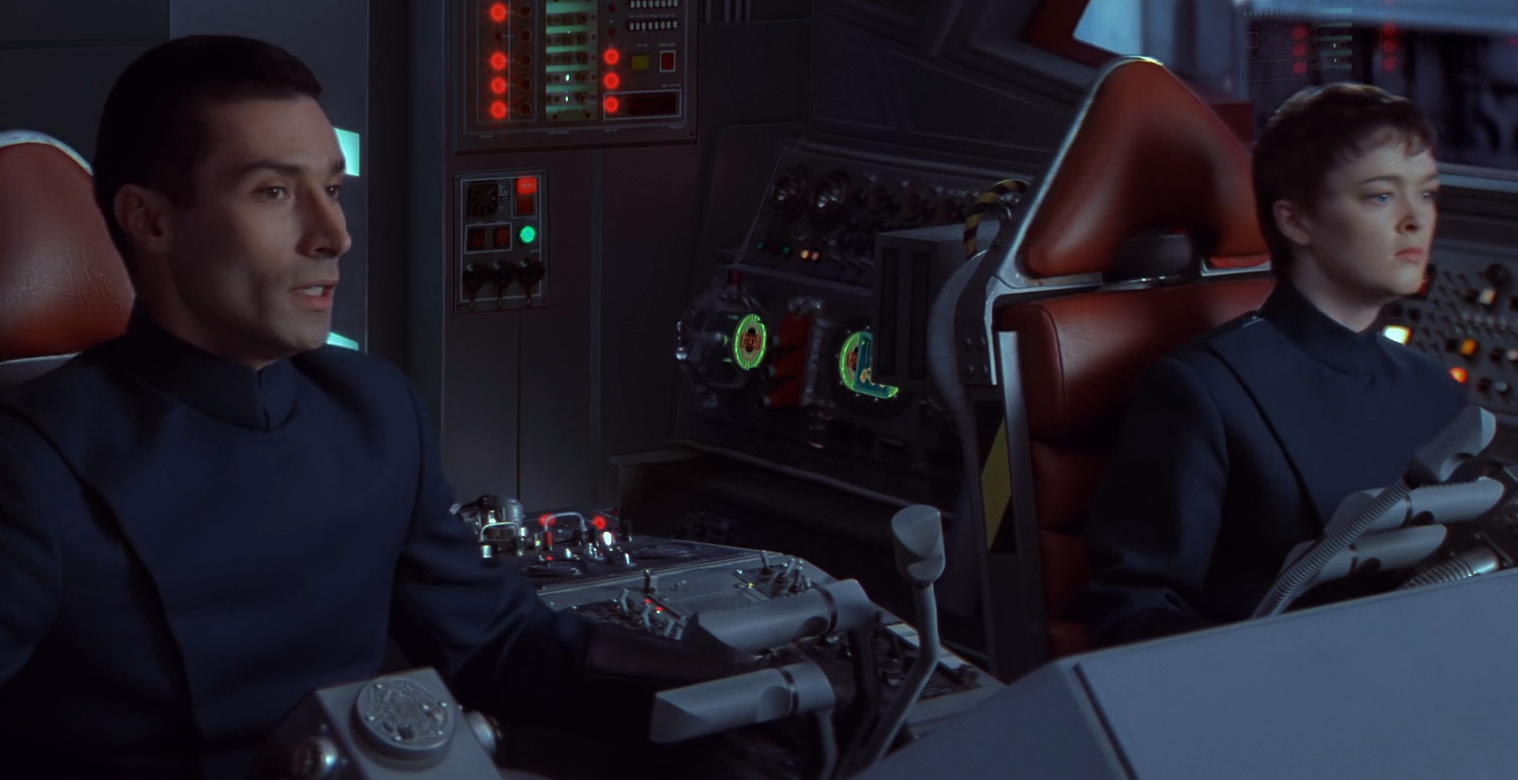
The Judicial Forces were the armed peacekeeping forces of the Galactic Republic Judicial Department. While the Jedi helped to maintain order and peace under the authority of the Galactic Senate, they were not considered a standing military. As officers of the government, Judicials had access to Consular-class space cruisers. The distinctive design and color of Republic cruisers identified them as diplomatic vessels, often used by delegates of the Galactic Senate, agents of the Supreme Chancellor, or members of the Jedi Order.
In the last decades of the Republic, the Jedi effectively supplanted the Judicial Forces as arbiters of the Senate. Judicials therefore acted in a supporting capacity, escorting Jedi ambassadors on their offworld missions.
Republic Military
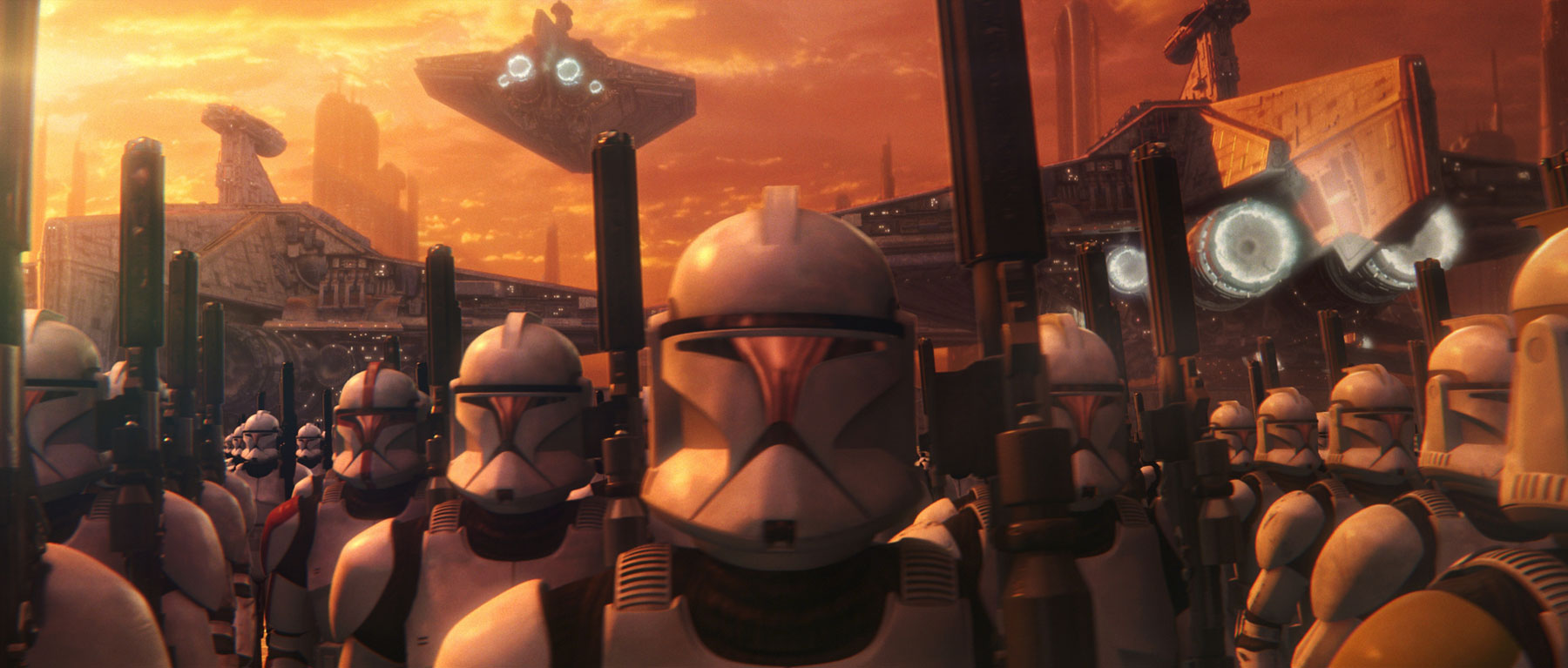
As the Separatist Crisis neared its conclusion, the Galactic Senate voted to pass the Military Creation Act, which in turn established the Grand Army of the Republic as well as the Republic Navy. The clone troopers, equipped with armor, weaponry, and various equipment, formed the core of the Republic Military. These clones, bred specifically for unwavering loyalty and combat effectiveness, came to represent the future of galactic conflict during the Clone Wars, a war named after the clone ranks. Their rigorous training transformed the clone troopers into a highly effective fighting force, and their capacity for creative thinking, despite their limited independence, made them superior soldiers when compared to their droid counterparts. The Grand Army demonstrated a level of military prowess previously unseen in galactic history when they engaged the Separatist Droid Army for the first time.
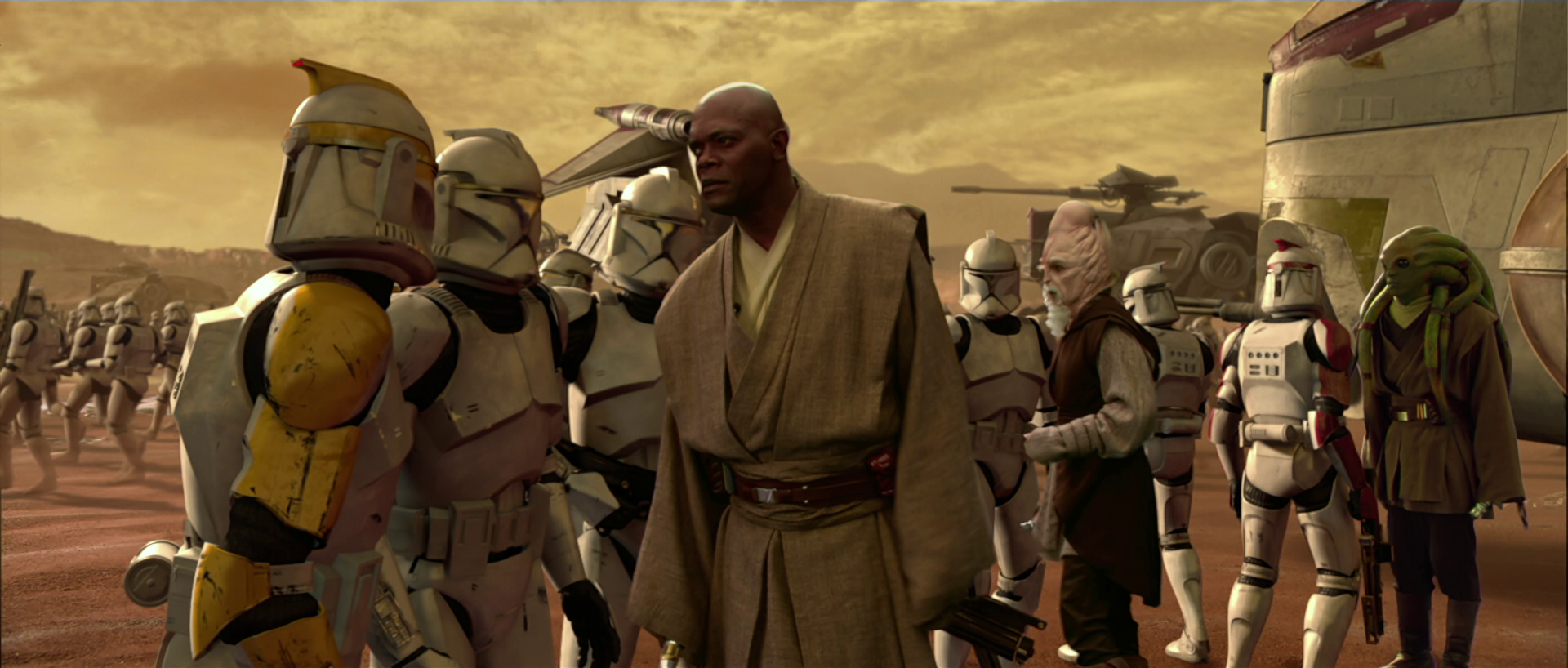
Generally, the clones were proud to be soldiers fighting for the Galactic Republic. While a small number committed acts of betrayal, such as deserting or spying for the Separatists, the vast majority remained dedicated to the Republic, with many giving their lives in its service. They were loyal to the Supreme Chancellor, and also to the Jedi who acted as generals within the Grand Army of the Republic. The Jedi generals and clone commanders developed a strong bond of trust over the course of the Clone Wars' extended campaigns.
Several clone soldier types stood apart from the standard troopers. The Advanced Recon Commandos, for instance, were renowned for their elite status and ability to think independently. Another specialized category was the clone commando, elite operatives trained to handle missions that were too complex for ordinary soldiers.
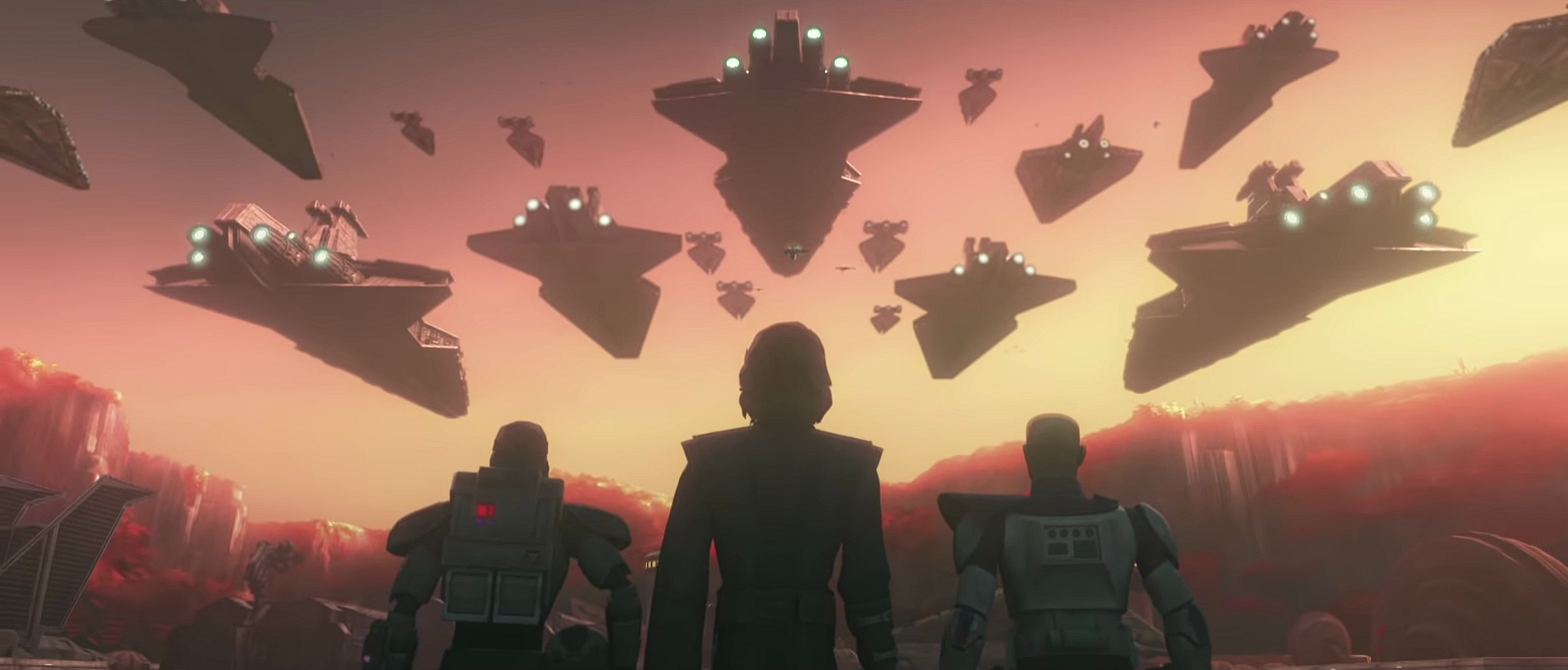
The Venator-class Star Destroyer, alongside the Acclamator-class transgalactic military assault ship and other support ships, became the principal warship utilized by the Republic Navy. The Venator, designed as both a cargo transport and troop carrier, was also engineered for ship-to-ship engagements. Notably, the Venator included a sizable hangar for housing the Republic's advanced starfighters.
Throughout the war, the Republic Navy employed a variety of vessels. The V-19 Torrent starfighter and the Clone Z-95 Headhunter were among the early models. As the war drew to a close, new fighters joined the Navy. The Aggressive ReConnaissance-170 starfighter represented the latest advancements in starfighter technology, while the Alpha-3 Nimbus-class V-wing starfighters incorporated design improvements from the ARC-170 and the older V-19.
Jedi Order
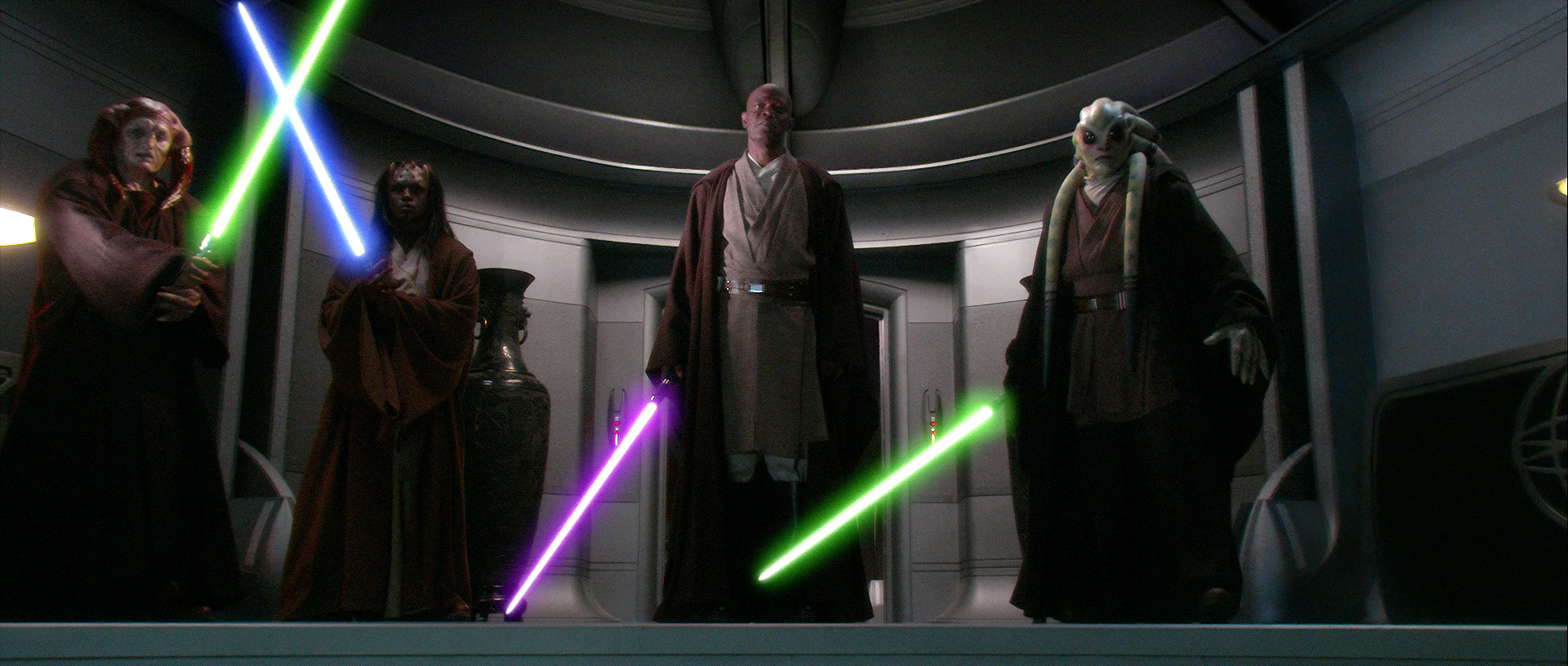
The Galactic Republic placed complete faith and trust in the Jedi Order, relying on its Jedi Knights to protect peace and uphold justice throughout the galaxy. With the Order's help, the Galactic Senate successfully governed for a millennium. The Senate held the Order's allegiance, although as the Republic's final years approached, the Jedi viewed politicians with increasing skepticism, considering them untrustworthy. Nevertheless, the Order maintained a close relationship with the Republic to fulfill its role as peacekeepers.
The Order possessed the ability to identify Force-sensitive individuals shortly after birth, provided they were born within the Republic. Offering a Force-sensitive child to the Order was considered a great honor and a personal sacrifice by most of the Republic's population. The Order became the true family for every child brought into its ranks, and Jedi doctrine prohibited them from knowing their birth families. Therefore, familial attachments were surrendered in service to the Order.
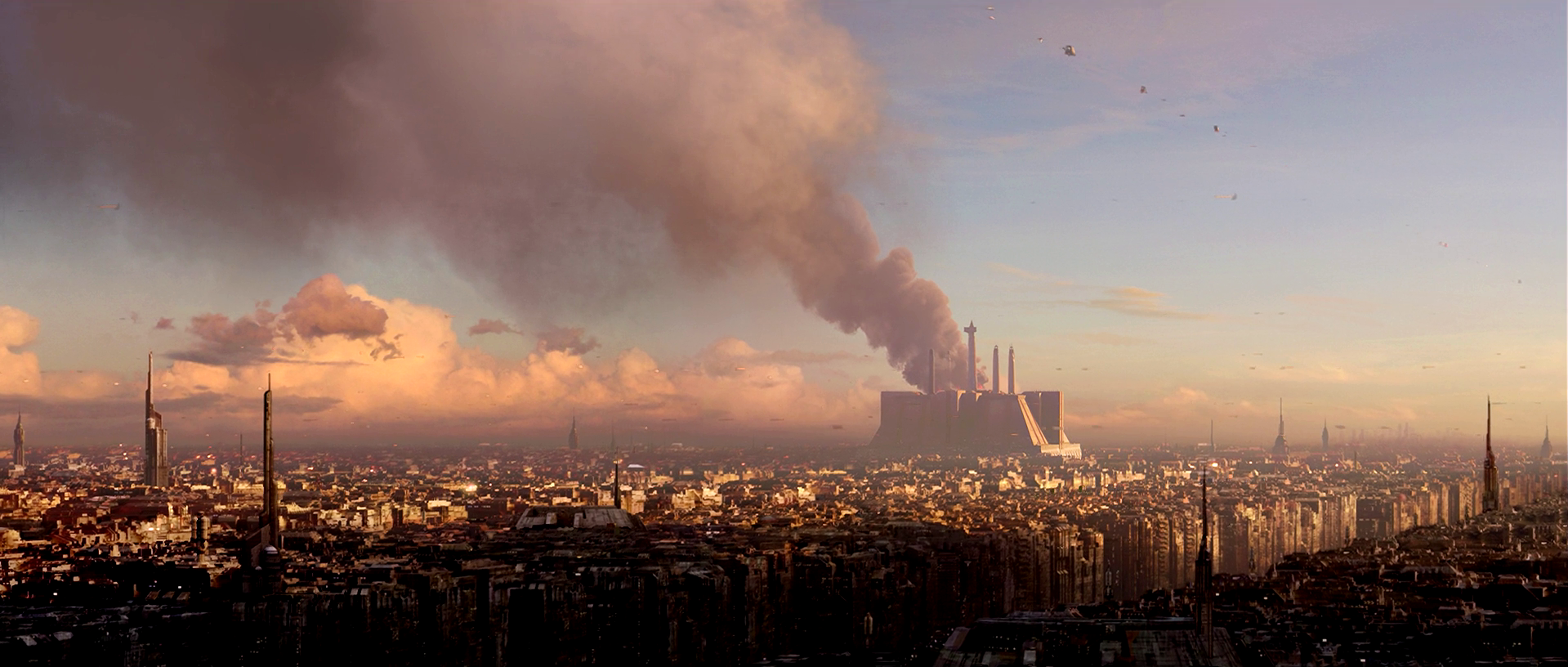
Although the Order boasted ten thousand members at the height of the Clone Wars, their numbers were insufficient to defend the Republic. Consequently, the Jedi were forced to lead the clone army with the goal of swiftly ending the conflict between the Republic and the Separatists. However, with no end to the war in sight, anti-war protests erupted on Coruscant, where Republic citizens denounced their leaders and the Jedi alike. When the Clone Wars concluded, Darth Sidious accused the Order of planning a rebellion to overthrow the Senate and its chancellor. The Senate supported the chancellor's actions, which included purging the Order and reorganizing the Republic into the Galactic Empire.
Economy
The Republic credit served as the Galactic Republic's currency. However, outside Republic territory, credits held no value on frontier worlds like Tatooine.
The Republic wielded immense economic influence, having maintained peace throughout the known galaxy for nearly a millennium, thanks to the Jedi Knights. This peace, in turn, fostered trade. Under the Republic's protection, Naboo and other culturally rich worlds were able to benefit from profitable tourism.
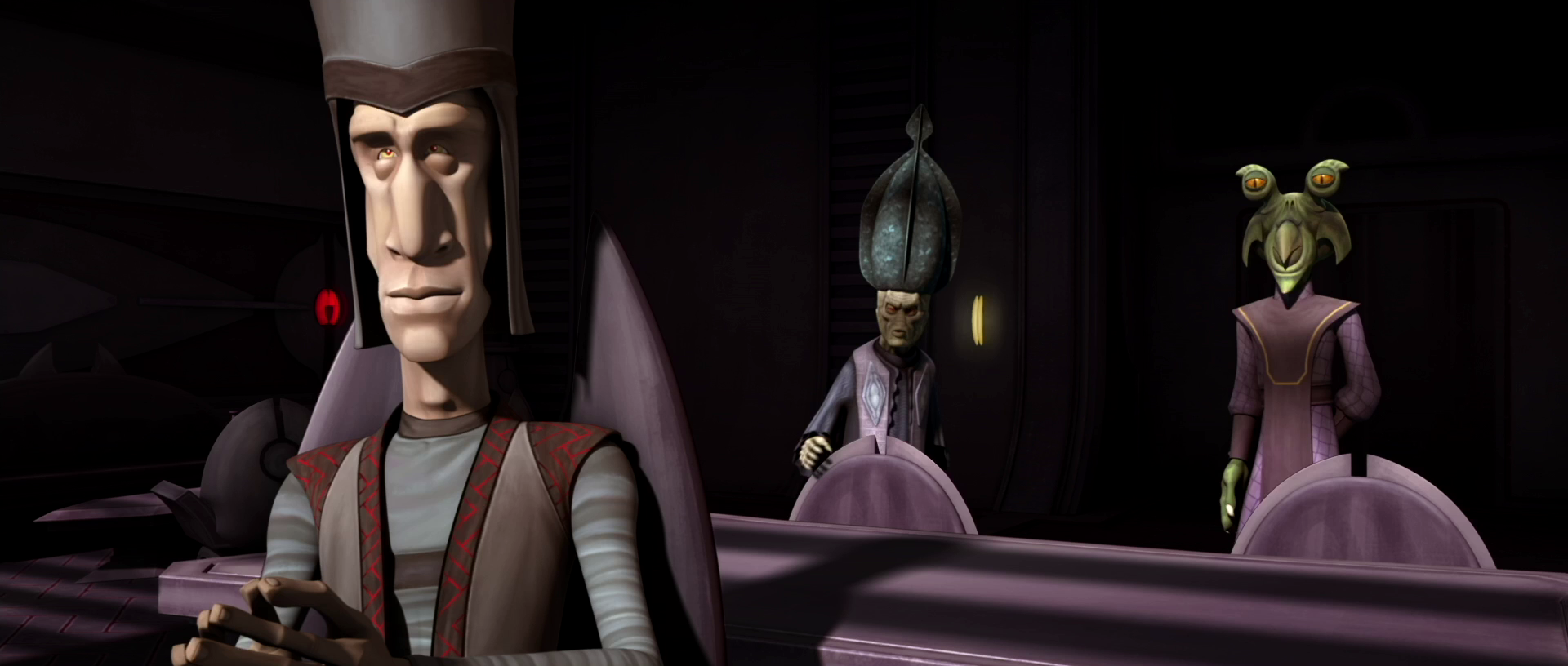
The business sector experienced rapid growth in wealth and influence due to widespread commercialism, with large corporations investing heavily in advertising their essential services throughout the galaxy. This extensive "brand-building" initiative generated consistent profits for major enterprises such as the Trade Federation.
The Republic's expansion into the Outer Rim Territories proved beneficial to both the galactic government and the private sector. Eleven Star Marketing, a subsidiary of the Trade Federation, collaborated with the Republic Ministry of Economic Development to propagandize the exploration and colonization of the Outer Rim, persuading lower-class citizens of the Inner Rim to view the galactic frontier as a chance for profit. This arrangement entangled Republic politicians with corporate lobbyists, both of whom profited from the settlers who had to pay tariffs and registration fees to reach the Outer Rim via the Federation's hyperspace routes.

The Separatist Crisis significantly impacted the Republic's economy, with key worlds like Serenno, Raxus, and Onderon seceding from the galactic union. As a result, the Republic lost access to the resources and tax revenue of these Separatist worlds. This decline in tax revenue exacerbated the Republic's debt, plunging the Senate into a crisis that ultimately led to open conflict between the Republic and the Separatist Alliance.
The Clone Wars disrupted the galactic economy as the Senate exhausted its options to finance the Grand Army of the Republic while attempting to avoid bankruptcy. The government encouraged its citizens to purchase war bonds, using propaganda to convince them that financially supporting the war effort was their patriotic duty. Additionally, the Republic sought to maintain its war chest by imposing higher taxes on civilian skylanes, an unprecedented move on cosmopolitan worlds like Coruscant.
The Senate also had to balance the need for more clone troopers with the cost of growing additional units to replenish the Grand Army's ranks. Funding the military had nearly emptied the Republic treasury, which in turn forced the shutdown of some essential services that the Republic had traditionally provided to civilians living in the lower levels of Coruscant.
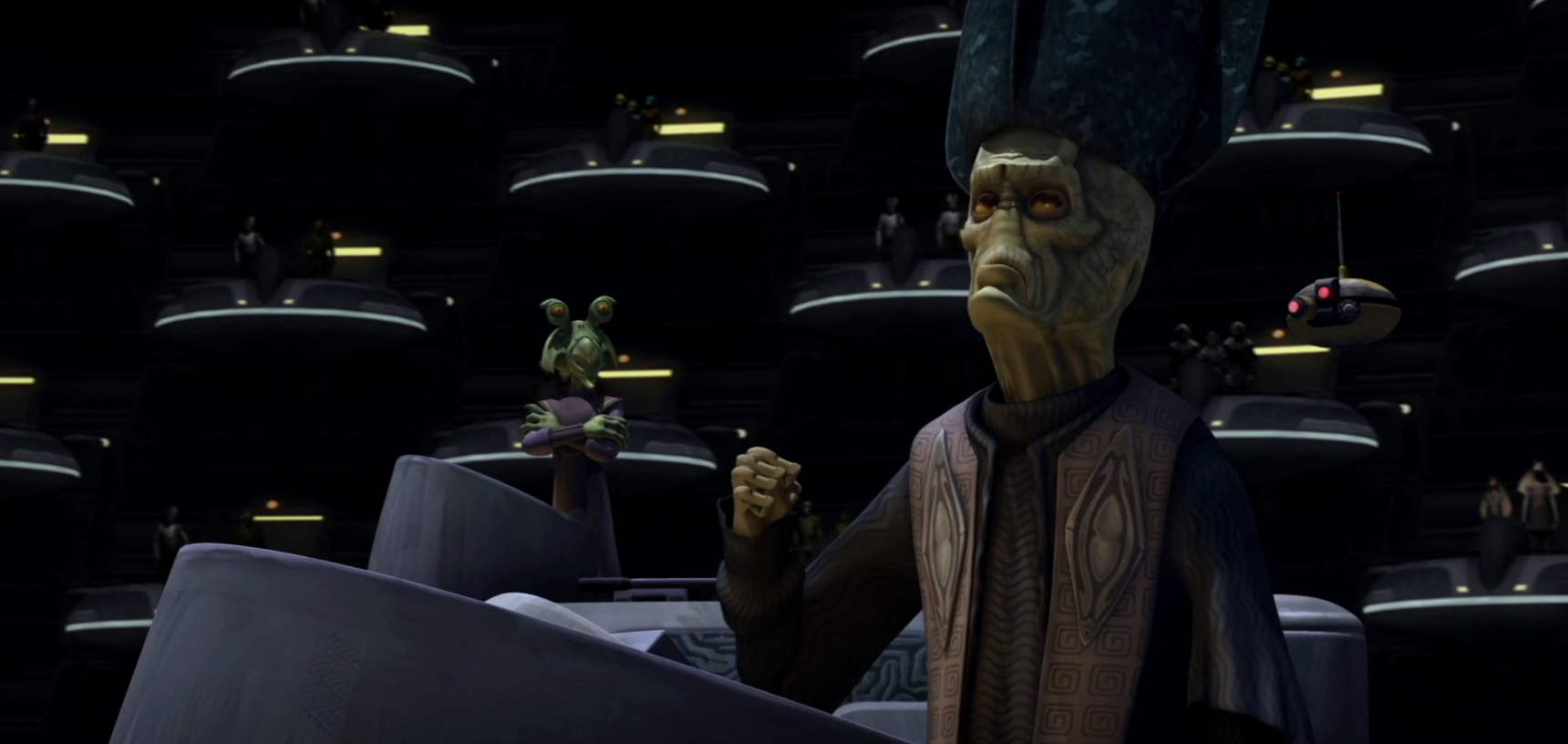
Prior to the Clone Wars, the Republic had regulations in place for the banking industry, but the war's increasing costs prompted the Senate to consider deregulating the banks to gain access to new credit lines. After extensive debate, the Senate passed the Republic financial reform bill. The banks were deregulated, and the Republic applied for further loans to support the production of more clone units.
Following the Republic invasion of Scipio, the InterGalactic Banking Clan ceded its financial assets to Supreme Chancellor Sheev Palpatine's office. This gave the Republic direct control over one of the galaxy's most influential commercial organizations.
Despite the heavy toll the Clone Wars took on the Republic treasury, the Republic remained a significant economic power in the galaxy. The Separatist Alliance, though backed by the resources of corporate leaders, was ultimately defeated by the Republic's economic and military strength.
Science and technology
The Galactic Republic invested in aesthetics and technological advancements within the starship industry. Starships during the Republic era were designed to be visually appealing, catering to customer demand for "style and elegance" in their vessels. However, craftsmanship gave way to practicality as the Republic transitioned into the Galactic Empire, resulting in a shift away from sleek designs in favor of stark uniformity, mass production, and sheer size.
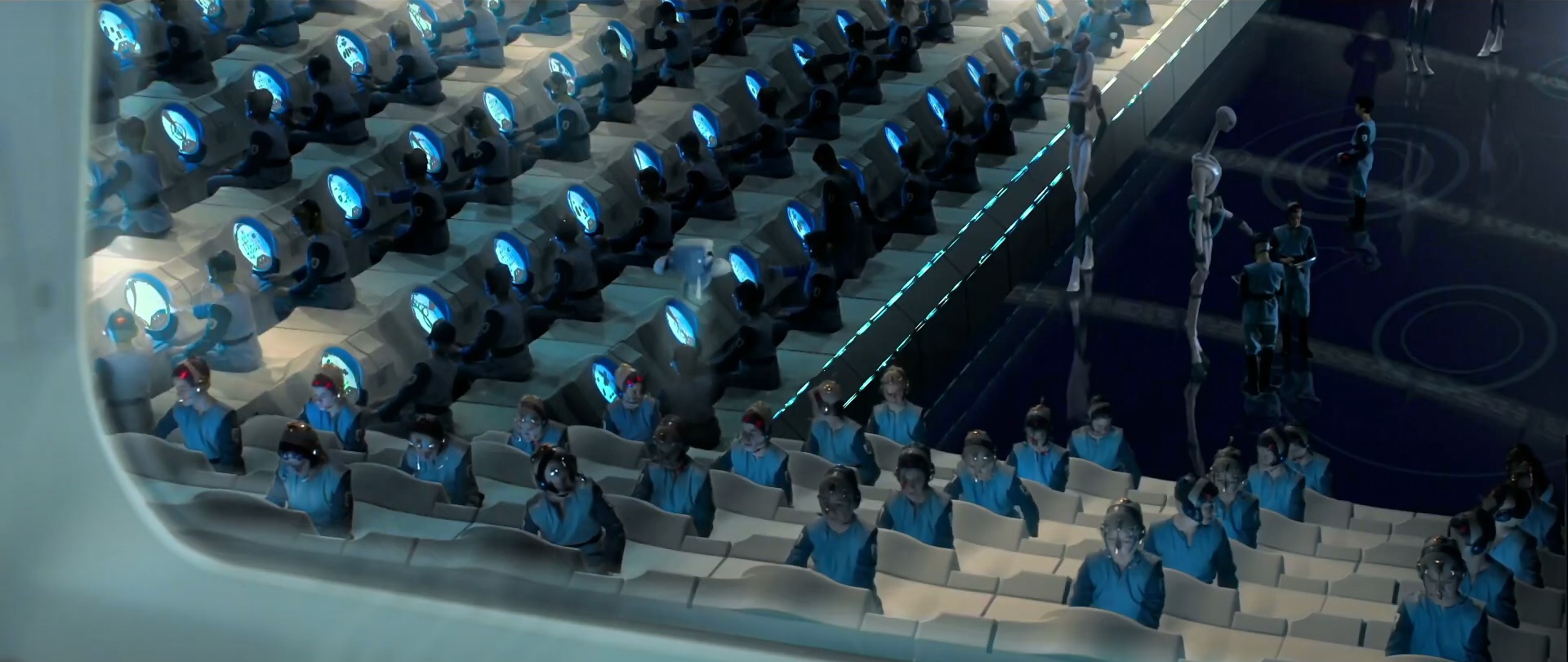
Cloning involved "genetically duplicating an organism into one or more identical copies." Although neither the Senate nor the Jedi were aware of the clone army's development before the Clone Wars, the Republic became heavily involved in the field of genetics during its conflict with the Separatists. The Kaminoans used their skills to transform cloning into a lucrative business, mass-producing clone troopers in the millions. Their expertise nearly perfected the art of genetic duplication. However, cloning humans remained a flawed science that occasionally produced aberrations. Nevertheless, the Kaminoans' cloning methods allowed for genetic alterations to clones, making them more docile and causing them to age twice as fast as naturally born humans. They were also capable of engineering clones for pure genetic replication, without growth acceleration or behavioral modifications for greater docility.
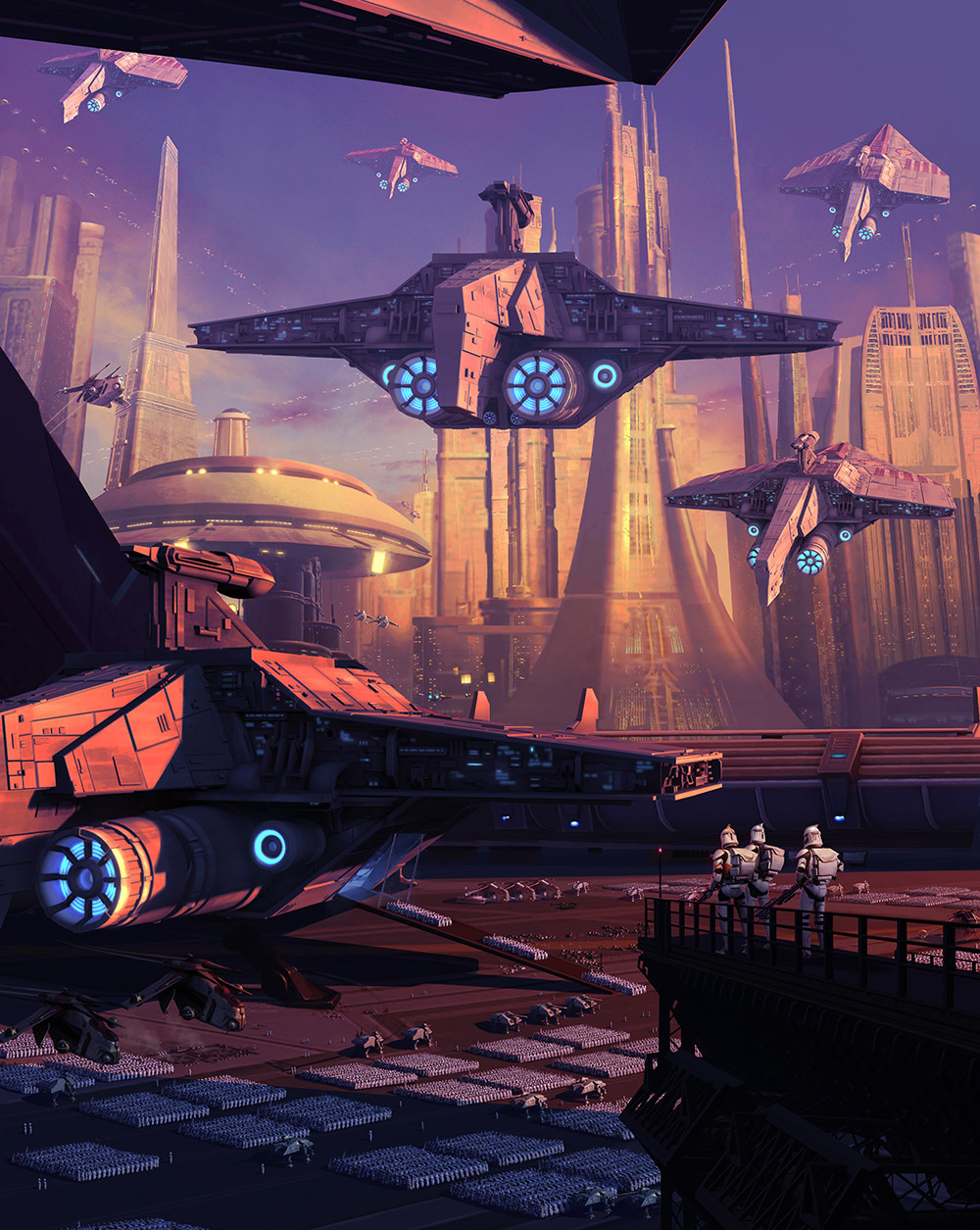
The Clone Wars motivated the Republic to pioneer technological innovations in spacecraft and terrestrial transportation for military purposes. This resulted in a lasting legacy that significantly influenced the science and technology industry. The Star Destroyer, a prominent symbol of modern military capital ships, originated from the Republic Navy's development of the Venator-class Star Destroyer. The X-wing starfighter evolved from the Z-95 Headhunter; the BTL Y-wing starfighter was developed during the Clone Wars and remained relevant long after the Republic's era. The Republic developed all-terrain walkers, including the six-legged All Terrain Tactical Enforcer, in response to the Separatist Armored Assault Tank and other droid battle tanks. This, in turn, influenced the design of larger vehicles, such as the Imperial All Terrain Armored Transport and the First Order's All Terrain MegaCaliber Six, which surpassed the capabilities of what the Republic deployed during the Clone Wars.
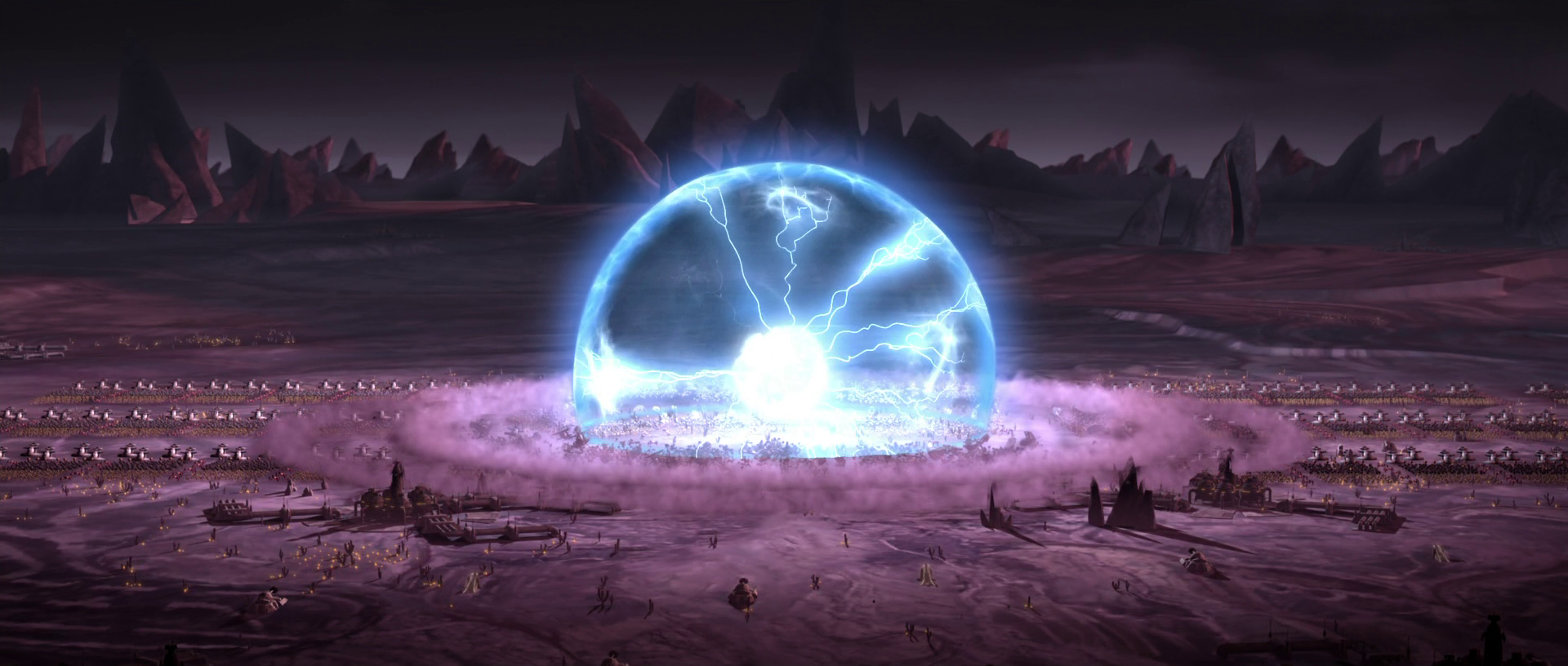
The Republic employed brilliant scientists, such as Doctor Sionver Boll and Doctor Nala Se, who contributed their expertise to the war effort against the Separatists. Boll developed the electro-proton bomb, an experimental explosive device capable of generating a massive burst of electromagnetic pulse energy to disable battle droids and other technology. Nala Se, the leading scientist in cloning, oversaw the development of the Republic's clone army, while Boll also possessed cloning knowledge, as Chancellor Palpatine tasked her with cloning a deceased Zillo Beast.
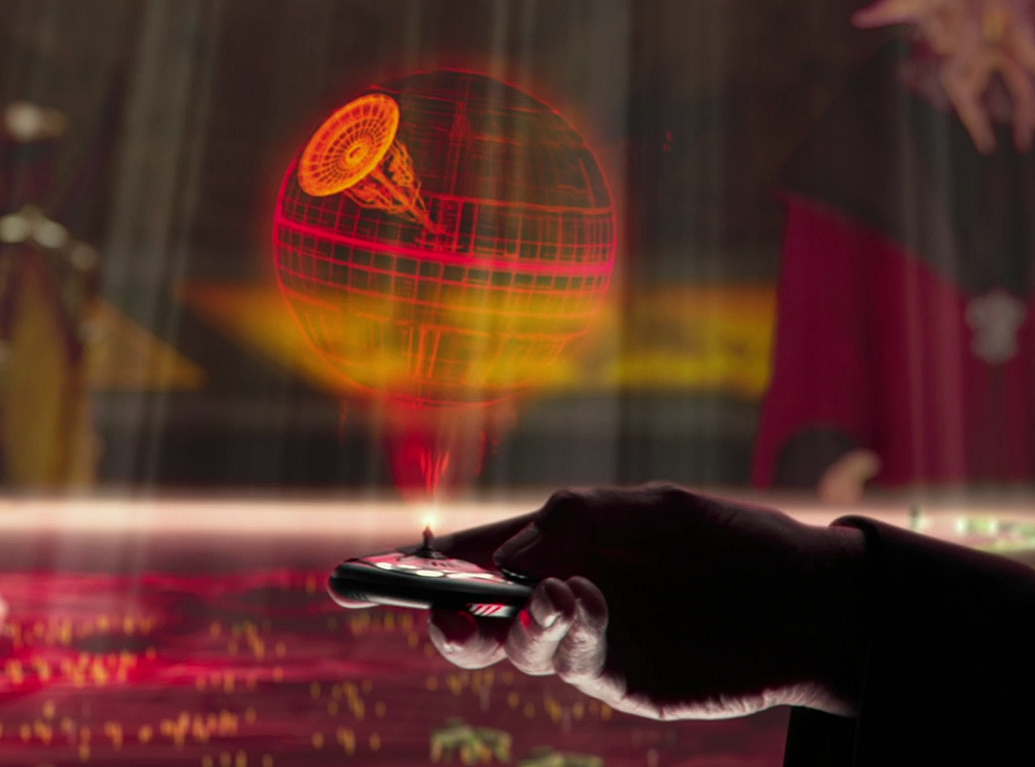
The Republic Special Weapons Group was established to oversee the development of military technology that was more advanced than conventional weaponry. This group, comprised of technologists like Wilhuff Tarkin and Orson Callan Krennic, utilized the Geonosians' schematics for a moon-sized battle station to begin implementing plans for constructing the ultimate weapon. Their work continued after the Republic's fall, and after years of delays, the Empire made the DS-1 Death Star Mobile Battle Station operational. Its size and power inspired the creation of more advanced weapons with the capacity to destroy planets, ranging from the Imperial DS-2 Death Star II Mobile Battle Station to the First Order's Starkiller Base and the axial superlaser cannons of the Final Order's Xyston-class Star Destroyers.
According to Peli Motto, a technician residing on Tatooine, technology from the Galactic Republic era was rare by the time of the New Republic Era. Nevertheless, Motto sought to acquire the necessary parts to rebuild a derelict N-1 starfighter for her client, the Mandalorian Din Djarin. As a starfighter from the Galactic Republic era, the N-1 was constructed with pre-Empire handmade components, not manufactured by droids. One such component was a turbonic venturi power assimilator that Motto obtained from a group of Jawas.
Society and culture
Civilization

The Galactic Republic governed the galaxy as a democratic union, and therefore, it encompassed a diverse society of humans and various alien species. Coruscant, in particular, exemplified Republic society with its diverse population and culture, making the Republic capital the "vibrant heart" of the galaxy. As a galactic government, trillions of beings lived under the Republic's rule, each with their own thoughts and opinions on current issues. Complete consensus was impossible, yet successful Chancellors like Lina Soh demonstrated that effective, galactic governance was achievable. Soh, for example, emphasized the benefits of unity in improving life for everyone. Others failed to achieve the same unity by making unrealistic promises, issuing threats, or abusing their power.
The Core Worlds, where Coruscant was located, contained the Republic's most developed systems. Several Core planets served as capitals for galactic governments, including the Old Republic, the Empire, and the New Republic. The Core's prosperity made its worlds the wealthiest and most prestigious members of the Republic, but it also created tension between the Core and the more distant regions of the galaxy. Those living outside the Core often viewed "Core Worlders" as arrogant, entitled, and indifferent to the needs and well-being of other regions. A common criticism of Republic politics was that the system disproportionately favored the Core Worlds, neglecting the rest of the galaxy.
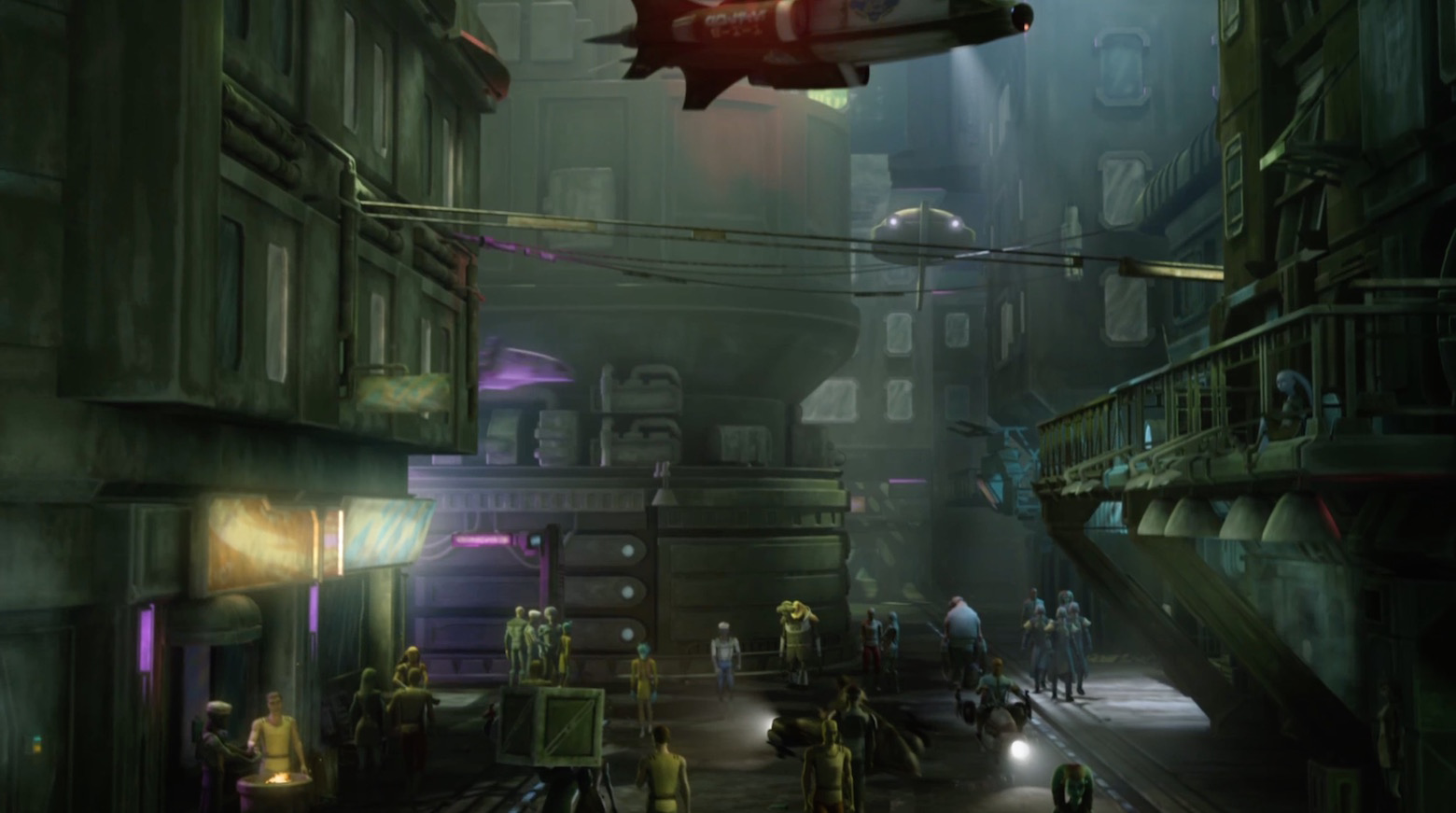
Coruscant was seen as perpetuating the Core Worlds' reputation for extreme wealth and privilege. Despite its unique status as the galactic capital, the entire planet was covered by a city of levels built upon levels throughout galactic history. The tallest skyscrapers rose over five thousand levels above the planet's natural surface, and only those who could afford to live in the upper city had access to the comfortable and luxurious lifestyle for which Coruscant was known. The disparity was such that the lower levels were notorious for widespread crime, poverty, and a lack of natural sunlight.
Republic architecture, characterized by sweeping lines, was prominently featured on Coruscant. However, during the Clone Wars, the Republic gradually adopted a brutalist or bold architectural style. Introduced by military architects like Orson Krennic, this style eventually replaced the Republic style as the dominant architectural form of the Galactic Empire.
Galactic Basic Standard was the most common language in the Republic, primarily spoken by humans and the Pantorans. The Gungans of Naboo spoke a heavily accented dialect of Basic with significant differences in grammar and vocabulary. The translation of the Sith language, known as ur-Kittât, was prohibited under Galactic Republic law. Consequently, protocol droids were programmed not to translate the language of the Sith. Darth Sidious believed that the Republic outlawed ur-Kittât out of fear of the Sith Order and its knowledge.

The Republic's peaceful era allowed its citizens to engage in leisure activities, some of which gained galactic-level recognition. The Boonta Eve Classic, though based on the independent Outer Rim world of Tatooine, beyond the Republic's frontier, received coverage and attention as far as the Core Worlds. As the Republic's twilight years approached before the Clone Wars, an era of escapism emerged as citizens of all classes sought entertaining distractions from their daily lives. Professional podrace circuits and other circuses diverted attention from the growing corruption within the Galactic Senate. Nevertheless, the public's fascination with various forms of entertainment stemmed from an inherent desire for stories about good versus evil and escalating danger.
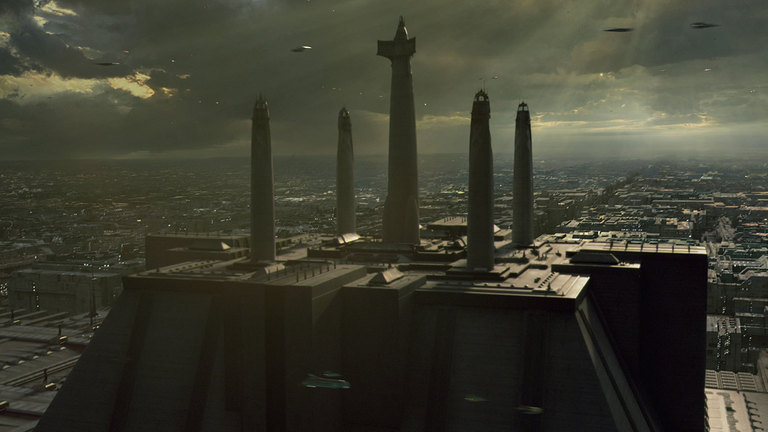
While the Republic evolved over centuries, the Jedi Order remained rooted in its ancient traditions, effectively placing the Jedi Code at odds with a galactic society that strongly favored the future over the past. The inhabitants of the Core Worlds became fixated on fame and fashion, showing little interest in Jedi principles like faith and tradition. The Order maintained its position in the Republic by relying on historical precedent, serving as keepers of peace and justice. Unlike corporate institutions that marketed their services throughout the galaxy, the Order showed little interest in promoting itself through image-building. Aside from those who witnessed the Jedi's heroics and were awed by their Force powers, the Order and its ways remained mysterious to most Republic citizens. The Jedi were seen by the public as an order of mystics at best, and at worst, as a zealous sect of warmongers.
As a result of territorial expansion, the Republic developed a sense of manifest destiny. Republic propagandists cultivated this cultural belief to foster civic pride among the populace, encouraging them to support the Republic's expansion from rim to rim. Republic patriotism grew exponentially due to the Clone Wars and the accompanying propaganda promoting loyalty to the state. Patriotic messages inspired an entire generation to action, although they could not enlist in the Grand Army, which was exclusive to clone troopers. Nevertheless, Republic citizens felt compelled to contribute by purchasing war bonds, reporting acts of treason, and making sacrifices to support the war effort. The Republic crest, symbolizing a united galaxy under the Force, was prominently displayed on military war machines and heraldry.
Although the Republic expanded into the Outer Rim Territories, the region was too underdeveloped to achieve the same stability as the Core Worlds. As the galaxy's largest region, the Outer Rim featured a myriad of diversity through its various planets and species. The Republic government had limited oversight over the Outer Rim due to its distance from the Core, and as such, the Outer Rim remained known for its lawless, sparsely populated, and primitive worlds. Republic law was virtually non-existent in the Outer Rim, allowing bounty hunters, outlaws, and smugglers to operate with impunity, and slavery continued despite the Republic's anti-slavery laws.
Xenophobia
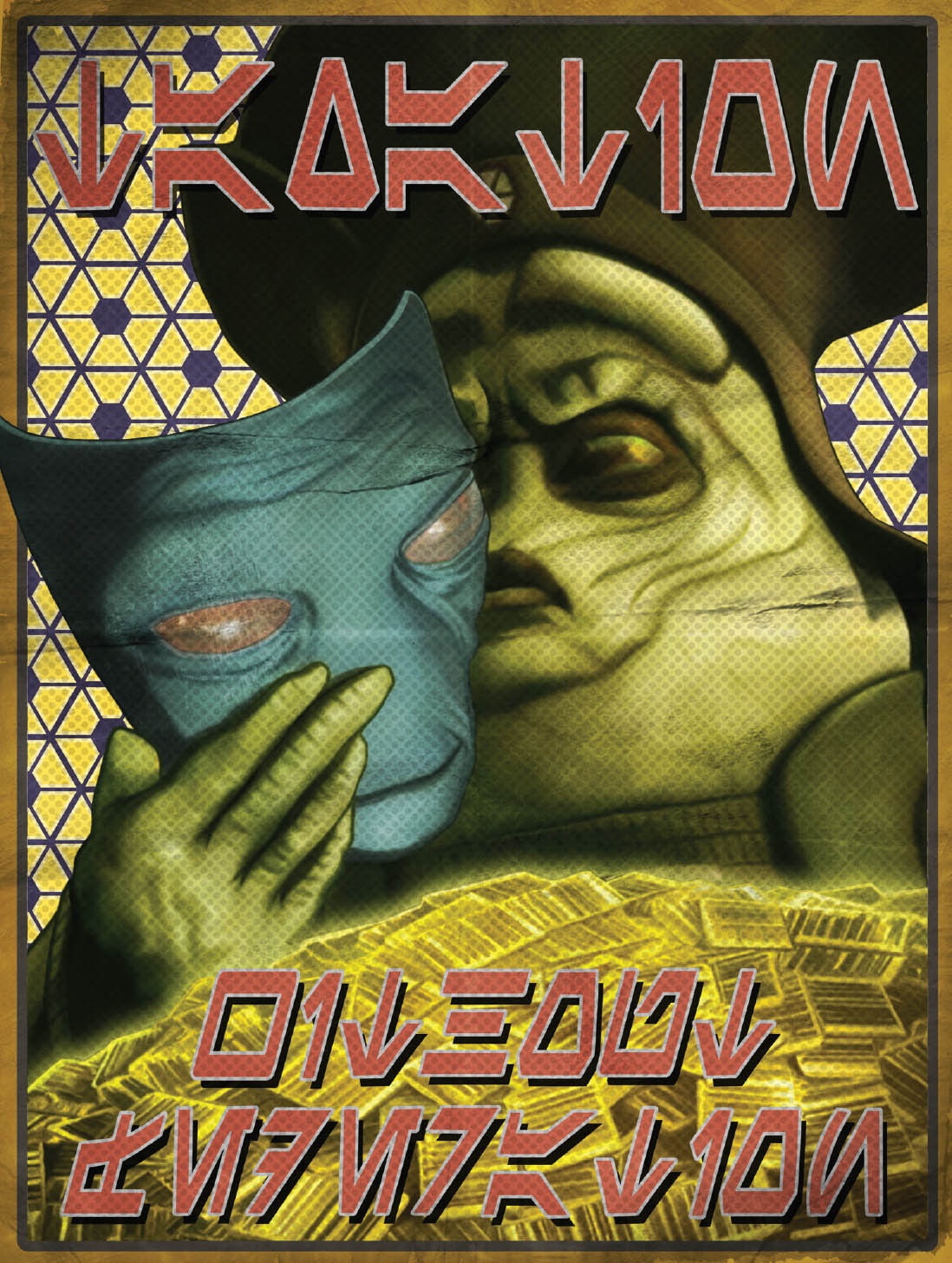
During the High Republic Era, Chancellor Soh sought to promote unity among the Republic's various species, using the phrase "We are all the Republic" to emphasize their shared membership in the system. However, xenophobia remained a problem in the Republic's diverse society. Although the Republic officially promoted unity among its member worlds and outlawed the enslavement of sentient species, some people faced racial stereotypes. Neimoidians, for example, were often viewed as obese, duplicitous, and avaricious, particularly by those with anti-corporate sentiments. This perception stemmed from Neimoidian culture, which fostered a "survival of the fittest" mentality among Neimoidian younglings.
The Trade Federation used xenophobic sentiments to silence its critics, suggesting that those who sought to curtail the Federation's massive influence were prejudiced against its Neimoidian leaders. The Muuns also faced an image problem due to their monopoly in the InterGalactic Banking Clan. In general, Muuns saw little need to build relationships of stability and trust with the galaxy, assuming that their role was to continue dominating galactic finances. Their cultural standards influenced their business practices, leading to Muun-sponsored advertisements being viewed as "distant and disconnected."
During the Clone Wars, anti-alien prejudice increased due to the non-human races within the Confederacy of Independent Systems. Vice Chancellor Mas Amedda sought to promote the Republic's multicultural aspect, noting the attention given to human citizens by the Republic media. However, instead of reporting on Amedda's efforts to showcase Republic diversity, HoloNet News outlets focused on his self-inclusion as the only Chagrian in a gathering of various aliens. The populace criticized Amedda's message of strength and unity, viewing him as an egocentric narcissist.
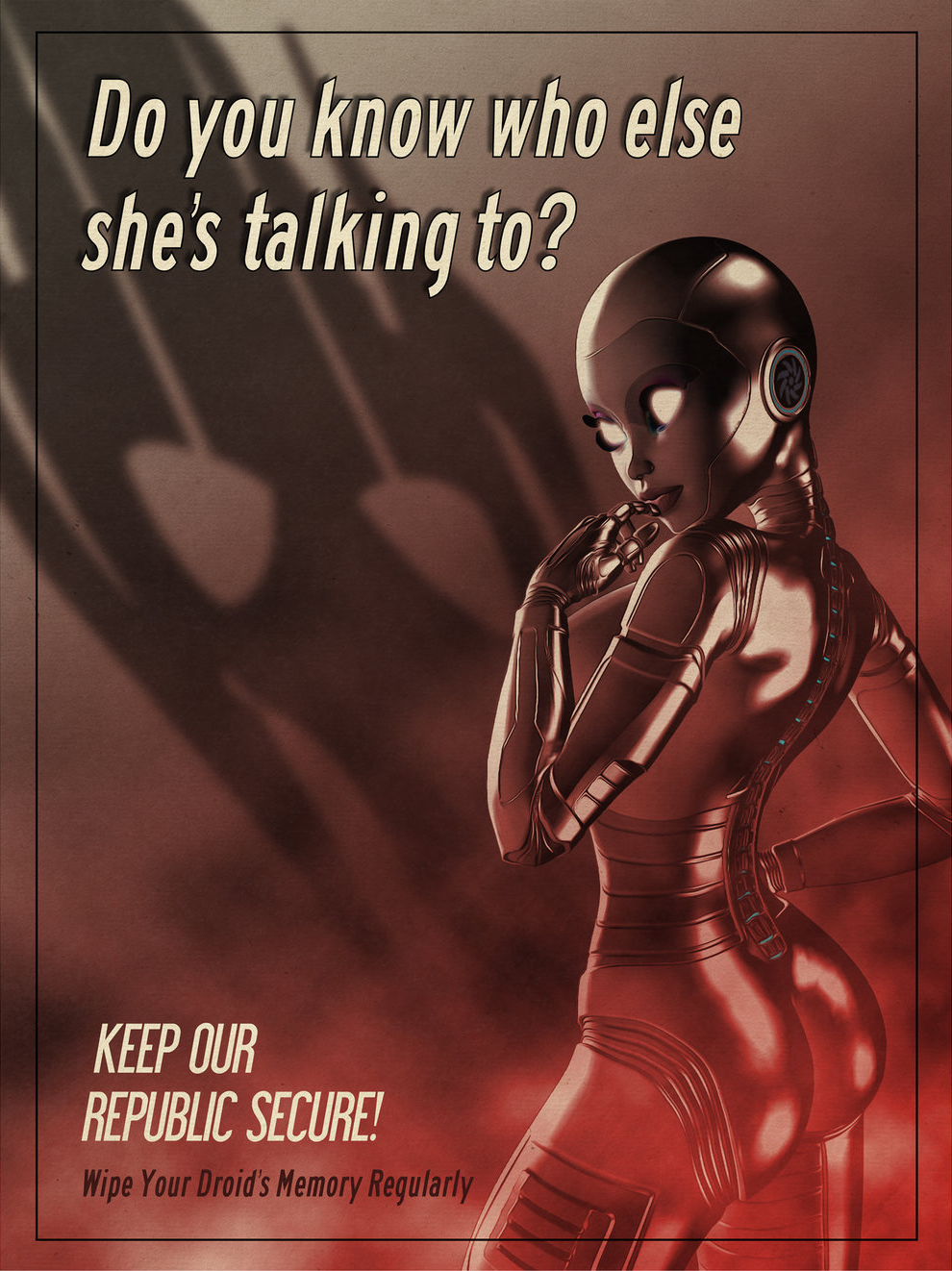
The Separatists' heavy use of battle droids significantly amplified existing anti-droid sentiment among the populace during the Clone Wars. Although droids had become a common sight in galactic life, the war solidified the belief that they posed a grave danger to organic beings, despite the fact that machines were historically owned by organics. The Republic exploited this feeling, employing propaganda to depict droids as heartless and hazardous instruments of destruction. While the idea of "droid terror" was personified by battlefield automatons like the B1-series battle droid, the B2-series super battle droid, and the droideka, even administrative aide droids were perceived as a unique "droid threat" to the Republic's safety. Among the Core's wealthy inhabitants, there was a growing concern that personal assistant droids belonging to business leaders and government officials could be compromised via spyware and subsequently used for Separatist espionage.
Despite the Jedi Order's long history of service to the Republic spanning millennia, the Clone Wars led to widespread anti-Jedi sentiment. The Sith conspired to damage the bond between the Republic's citizens and their Jedi protectors, leveraging the Clone Wars to erode the Republic's trust in the Order. The Order tirelessly worked to quickly bring the conflict to a close, but many citizens came to view the Jedi as instigators of war. This viewpoint was able to flourish partly because the Jedi were reluctant to accept praise or embrace the fame associated with their status. The Order preferred to serve quietly without engaging with the public; consequently, the public's negative views of the Jedi stemmed from the Order's lack of cultural presence rather than a genuine rejection of their principles.
Astrography

The Galactic Republic's expansion was shaped by pioneering hyperspace routes, with Coruscant—the original home of humanity—acting as its central hub. To enable colonists from the Core Worlds to seek opportunities and a better life in the Outer Rim, survey teams put in place navigational beacons in remote areas like the Tertiary Usaita system.
Spanning from the Core Worlds to the Outer Rim Territories, the Galactic Republic encompassed the known galaxy. The Core Worlds formed the Republic's core, featuring sophisticated planets such as Coruscant and Hosnian Prime, in addition to Alderaan, one of the Republic's oldest and most esteemed planets. The Republic's expansionist policies eventually led to the incorporation of new member worlds. Naboo, a planet in the Mid Rim, was integrated into the Republic in 867 BBY.
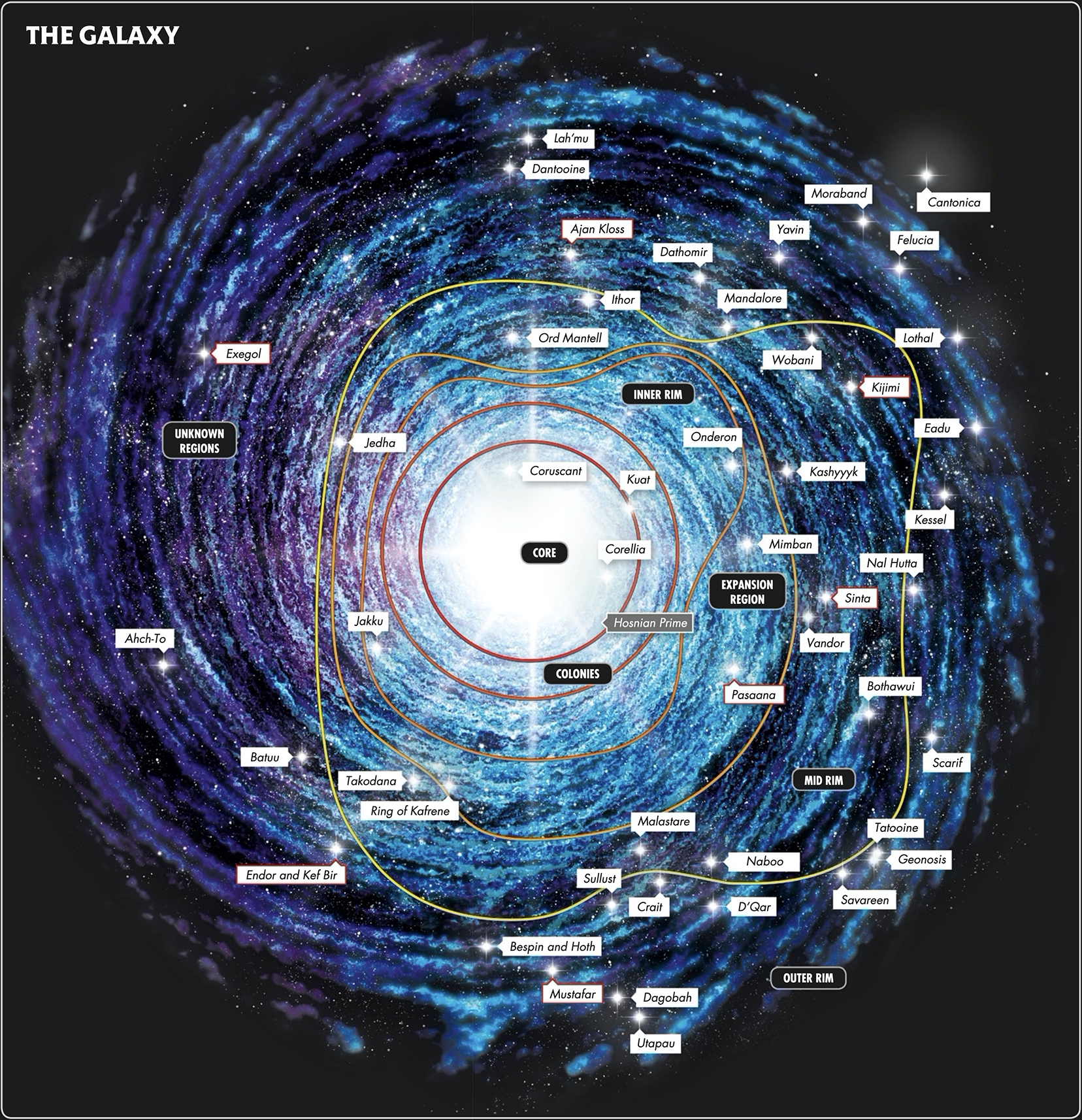
During the High Republic Era, Chancellor Orlen Mollo pondered the paradox of Republic expansion, noting that each new hyperlane both expanded the Republic and shrank the galactic community, as the Republic aggressively pursued new hyperspace routes and member worlds in the Outer Rim. This made it simpler for the galaxy's planets to connect with one another. In addition to exploring new hyperspace routes, the Republic was actively building a functional communications network in the Rim, seeking to strengthen alliances and resolve emerging conflicts. The Republic's influence was strongest from the Core Worlds to the Mid Rim's borders, leading corporations to engage in questionable practices in regions where the Republic had little authority, despite efforts to integrate those worlds into the galactic community during the High Republic Era.

The Republic, grappling with issues like overpopulation and poverty among its lower classes, shifted its focus to the Outer Rim, implementing a policy of expansion into the uncharted areas of the known galaxy's farthest reaches. The congested worlds of the galactic core sent out political and corporate messages beckoning those who lived there to a life of adventure and mystery in deep space. This call to new horizons was evident during the High Republic Era, when families and brave citizens from the overpopulated Core and Colonies worlds relocated to the Outer Rim via the few well-charted hyperspace routes into the Rim. The Outer Rim, however, presented dangers like the Nihil, who exploited the lack of Republic law and fought the Republic for venturing into their territory. Even into the late Republic Era, the Outer Rim remained a region where the Republic's authority was limited, despite the efforts made during the High Republic period.
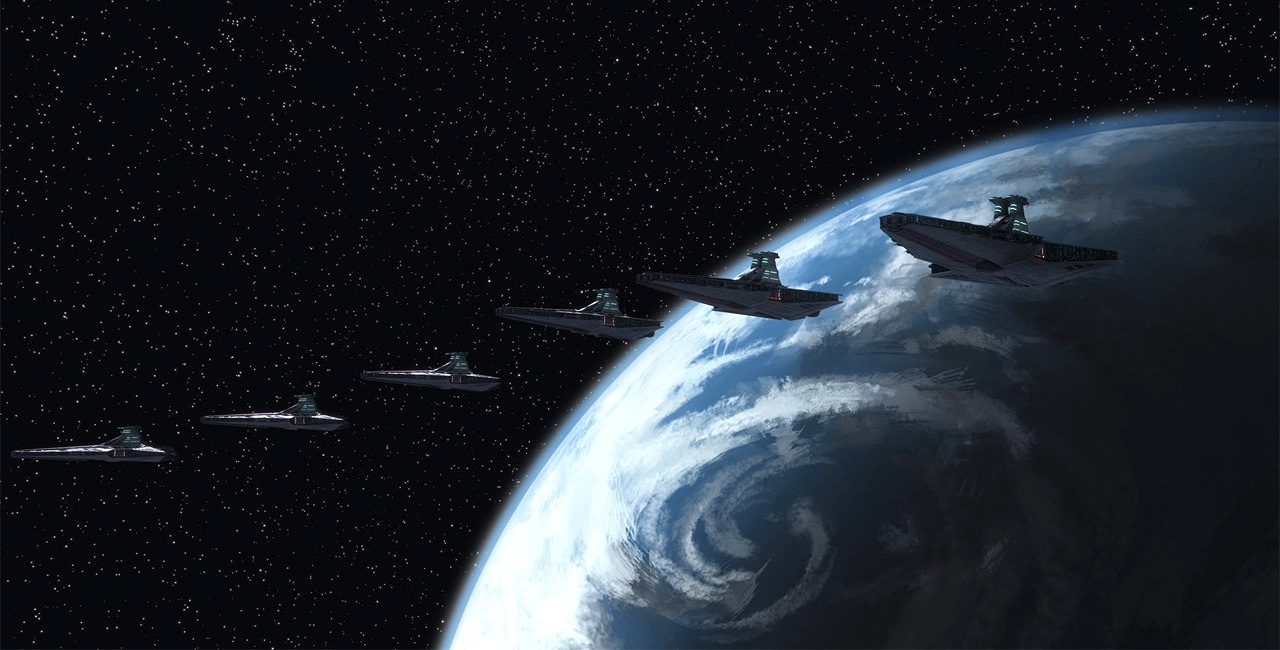
While the Republic opposed secession, it essentially lost control of the territories that formed the Separatist Alliance. The Grand Army of the Republic repeatedly gained and lost worlds over the Clone Wars, causing its territorial reach to fluctuate. The Republic, however, also obtained new territory as a result of the conflict. Geonosis, where the Separatist Droid Army was secretly manufactured, was located outside the Republic's boundaries. Following the First Battle of Geonosis, the Republic Military occupied the Geonosian homeworld, and later returned to reconquer the planet after it reverted to Separatist control. The Kaminoan government formally joined the Republic, granting Kamino—an extragalactic planet—full representation in the Galactic Senate as the supplier of its clone army.
Behind the scenes
The "Old Republic" was the initial mention of the Galactic Republic in the new Star Wars canon, appearing in the 1977 film Star Wars: Episode IV A New Hope, directed by George Lucas. The entity first appeared and was identified as the "Galactic Republic" in the 1999 film Star Wars: Episode I The Phantom Menace, also directed by Lucas.