Mandalorian
The Mandalorians, known as the Mando'ade ("Children of Mandalore") in Mando'a, were a wandering, clan-centered people. They comprised numerous species, all united by a shared cultural identity.
Initially, Mandalorian society was structured around combat. War was a source of prestige and honor for their people. The Mandalorian leader was called the Mand'alor, meaning "Sole Ruler" (rendered as "Mandalore" in Basic). Throughout their history, the Mandalorians often allied themselves with the Sith, most notably the Sith Lord Exar Kun, and generally held a distrust and dislike for the Jedi Order. However, they would cooperate with the Jedi if it served their interests. Over time, the Mandalorians shifted away from constant warfare and conquest. Many transitioned into bounty hunters and mercenaries, offering their services to various factions and individuals throughout the galaxy. However, the Mandalorian Protectors took the side of the Alliance to Restore the Republic around 3 ABY and continued their service to the Alliance of Free Planets, the New Republic, and ultimately, the Galactic Alliance.
Years after Boba Fett claimed the title of Mandalore, the Yuuzhan Vong, a powerful extragalactic empire, approached them with an offer to employ them as mercenaries. The offer was accepted (primarily to avoid the enslavement of Mandalore), but Boba secretly provided information to the New Republic. While the Mandalorians initially fought for the Vong during the early stages of the Yuuzhan Vong War, they eventually betrayed them and joined the forces defending the galaxy. Following the war, the Second Galactic Civil War erupted. Jaina Solo, the daughter of Han and Leia, sought out Fett to be trained, recognizing the Mandalorians' reputation as formidable warriors against the Jedi. Ironically, the Mandalorians fought alongside their former enemies, the New Jedi Order, and the Alliance-in-exile in this conflict. Through training from Fett and others, Jaina ultimately killed her brother Darth Caedus, bringing the war to an end. Over the course of more than four millennia, the Mandalorians gradually evolved from the feared Mandalorian Crusaders of the Sith Empires to the elite soldiers of the Jedi Coalition and the reorganized Galactic Alliance, fighting for a cause rather than solely for profit and destruction.
Mandalorians were recognized by their distinctive battle armor, including helmets with T-shaped visors that fully concealed their faces. These helmets became strongly associated with the Mandalorian identity and even inspired the helmets of the Republic's clone troopers.
History
Early history
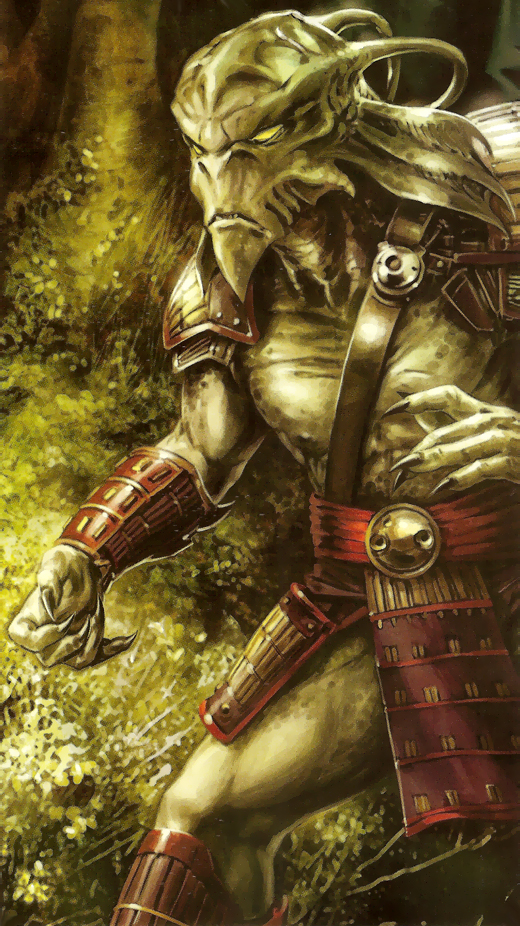
The Mandalorian story began with the humanoid Taung species originating from the planet Coruscant. Millennia before the Republic, they engaged in intense conflict with the thirteen Human nations of Coruscant, known as the Battalions of Zhell. After a massive volcanic eruption nearly decimated the human population and darkened the skies above Coruscant, the Taung adopted the name Dha Werda Verda, meaning "Warriors of the Shadow." Despite the volcano's devastation, the Taung were eventually forced off Coruscant, seeking refuge on the world of Roon. Under the leadership of the warlord Mandalore the First, they conquered a planet in the Outer Rim around 7000 BBY, renaming it Mandalore in honor of their leader. The Taung embraced the name Mandalorians and gained renown as some of the most skilled warriors in the galaxy, excelling in combat. These Mandalorian Crusaders were known for utilizing advanced weaponry, adhering to a strict code of honor, and wearing distinctive armor called "Crusader Armor," which varied from soldier to soldier.
For millennia, the new inhabitants of Mandalore remained largely within the Mandalore sector, undertaking a series of conquests to seize the worlds of Ordo, Gargon, and Shogun. However, when the Mandalorians targeted the nearby world of Mandallia, the Mandallian Giant natives not only repelled the invasion but also impressed the Mandalorians with their strength and skill, leading many to join Mandalorian culture. Approximately three thousand years after the conquest of Mandalore, before 4000 BBY, the Mandalorians extended their ongoing crusade outward, engaging the Nevoota species in a conflict that resulted in the Nevoota's extinction and the deification of war within Mandalorian culture, embodied by the destroyer god Kad Ha'rangir. Shortly before 4000 BBY, the Mandalorians were led by a new Mand'alor, Mandalore the Indomitable. As part of their continued expansion, the Mand'alor launched a raid on the planet Iskadrell. There, the Mandalorians liberated the slaves of the Iskalloni, incorporating many of them into their culture, including a young Antos Wyrick. Another planet targeted by the Mandalorian crusade was Basilisk. As the Mandalorians invaded, the Galactic Republic dispatched a relief force under the command of Jedi Master Sidrona Diath to aid the Basiliskans. Despite Republic support, the Basiliskans were overwhelmed by the more numerous Mandalorians. Realizing their impending defeat, the Basiliskans poisoned their own planet to prevent its use by the conquerors. Basilisk fell, but the Mandalorians abandoned the world due to its destruction, though not before seizing a significant number of Basilisk war droids for future use. The Mandalorians also captured many of the reptilian Basiliskans, who, through centuries of warfare, were reduced to war mounts and beasts of burden, becoming known as "Lagartoz War Dragons."
The Great Sith War
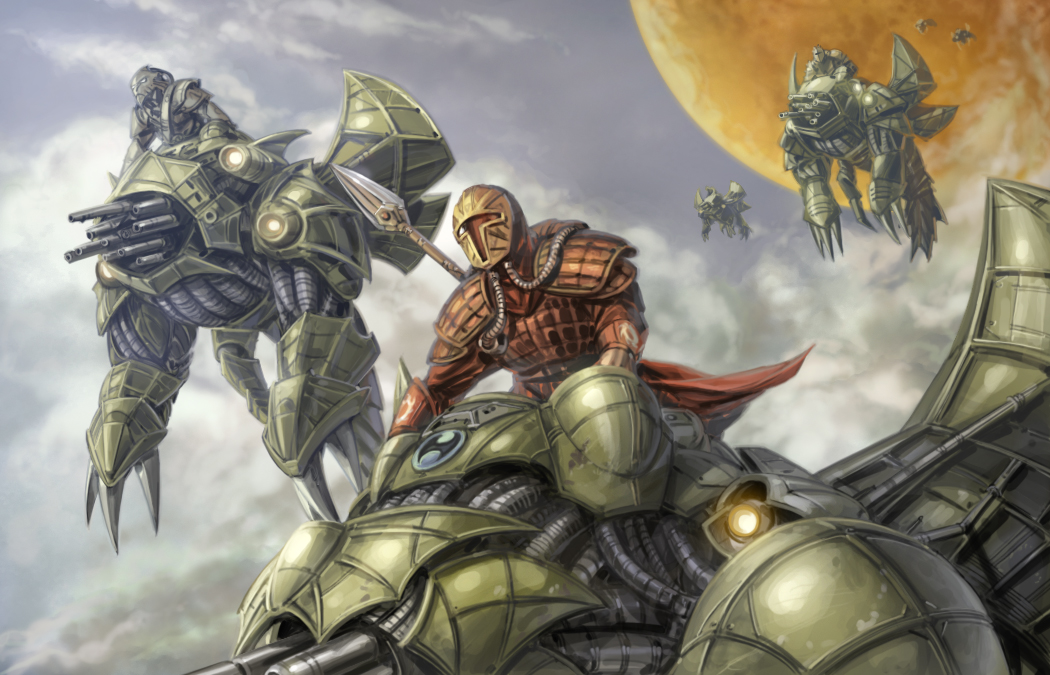
Seeking new challenges, the Mandalorian Crusaders ventured into the Deep Core. Targeting the Empress Teta system, the Mandalorians conquered the rocky world of Kuar, using its ruined underground cities as a staging area for their assault on Empress Teta. The destruction of a carbonite smelting station by the Mandalorians drew the attention of Ulic Qel-Droma, a fallen Jedi Knight who had become a Sith Lord and seized control of the Krath forces commanding Empress Teta. Challenged to a duel by the Mand'alor, Qel-Droma traveled to Kuar and faced off against Mandalore the Indomitable on the plains of Harkul. Despite using his Basilisk war droid, the Mand'alor was defeated and swore allegiance to Qel-Droma and his Sith Master, Exar Kun. This marked the beginning of the first Mandalorian-Sith alliance. While Mand'alor accepted his defeat, some of his supporters, including the Zeltron Antos Wyrick, did not. Mand'alor's defeat by the former Jedi motivated Wyrick to unlock the mysteries of the Jedi's power and the secrets of the Force.
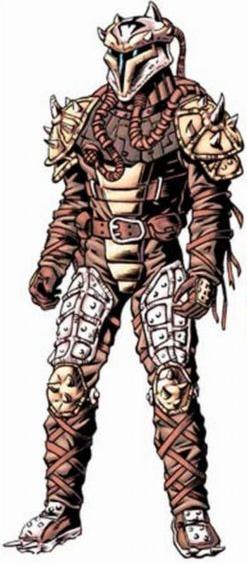
Now allied with the Sith and Krath, the Mandalorian Crusaders participated in an attack on the Republic shipyards orbiting Foerost. Mandalore the Indomitable led his warriors through the command station's corridors, eliminating all resistance. With the coordinated efforts of the space forces and the Mandalorians, Qel-Droma swiftly captured the Foerost shipyards and the three hundred Republic starships docked there. Using their newly acquired flotilla and diverting the Republic fleet to the jump station at Kemplex Nine, Qel-Droma and the Mandalorians invaded Coruscant. Basilisk war droids rained down on the planet from space, and the Mandalorian Crusaders poured into Galactic City. Qel-Droma was betrayed by the Krath witch Aleema Keto, who ordered a retreat, abandoning Qel-Droma to the Jedi. Claiming the Sith Lord was dead, Keto convinced Mandalore the Indomitable to pledge loyalty to her. Upon discovering Keto's betrayal, the Mand'alor feigned loyalty and sent his Crusaders with her latest attack force while he traveled to Yavin 4 aboard his shuttle to seek Exar Kun's assistance. Arriving at the jungle moon, Mandalore explained Keto's actions to Kun and requested aid in rescuing Ulic from execution. Although Kun had warned Ulic against attacking Coruscant, he agreed to help Mandalore rescue his apprentice. Storming the Senate Building with Kun, Mand'alor rescued Qel-Droma and warned him of Keto's treachery.
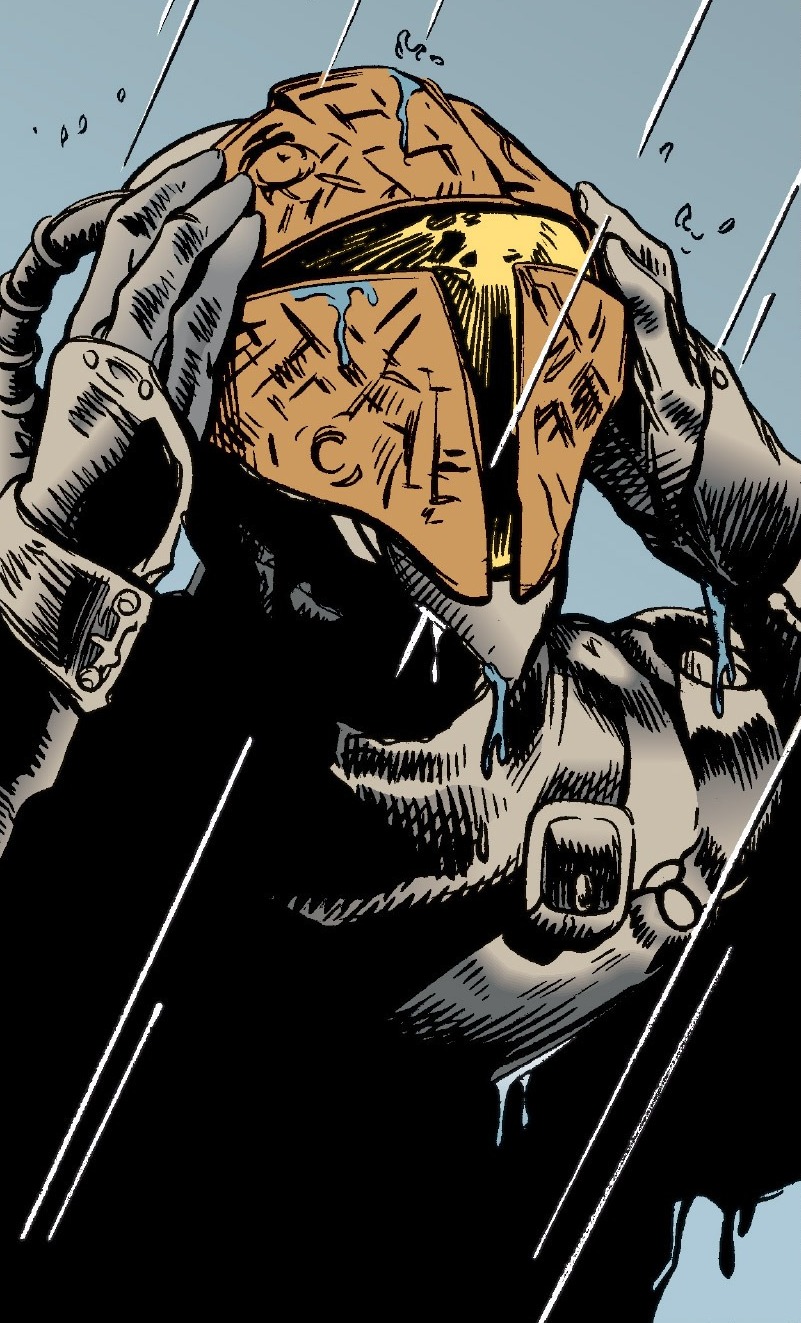
After Qel-Droma dealt with Keto, Mandalore the Indomitable was tasked with capturing the Iziz Royal Palace on Onderon for the Sith. Ordering his fleet carriers to maintain orbit, the Mandalorian Crusaders descended on their war droids toward the city of Iziz. A fierce aerial battle erupted as the Crusaders and their Basilisks clashed with the Onderonian Beast Riders and their flying Drexls. During the battle, the Beast Riders contacted the Republic, reporting the Mandalorian attack and requesting immediate assistance. Soon, a Republic fleet, led by Fleet Captain Orley Vanicus, arrived to engage the Crusader attack. Witnessing the destruction of his orbiting fleet carriers, Mand'alor realized the battle was lost but sought to lead his Crusaders to safety. He ordered a retreat from Onderon to the moon of Dxun, whose atmosphere was currently touching Onderon's, planning to evade pursuit in the moon's dense jungle. During the retreat, Mand'alor's personal Basilisk war droid was struck by enemy fire, crashing on Dxun's surface and separating him from the other Crusaders. Emerging from the wreckage, the Mand'alor was surrounded by dangerous beasts native to Dxun's jungles. Despite his efforts, Mandalore the Indomitable was eventually overwhelmed and killed by the creatures. While searching the jungles for their downed leader, a Mandalorian Crusader discovered the Mand'alor's mask and, following Mandalorian tradition, claimed it as his own, becoming the new Mand'alor.
The Mandalorian Wars
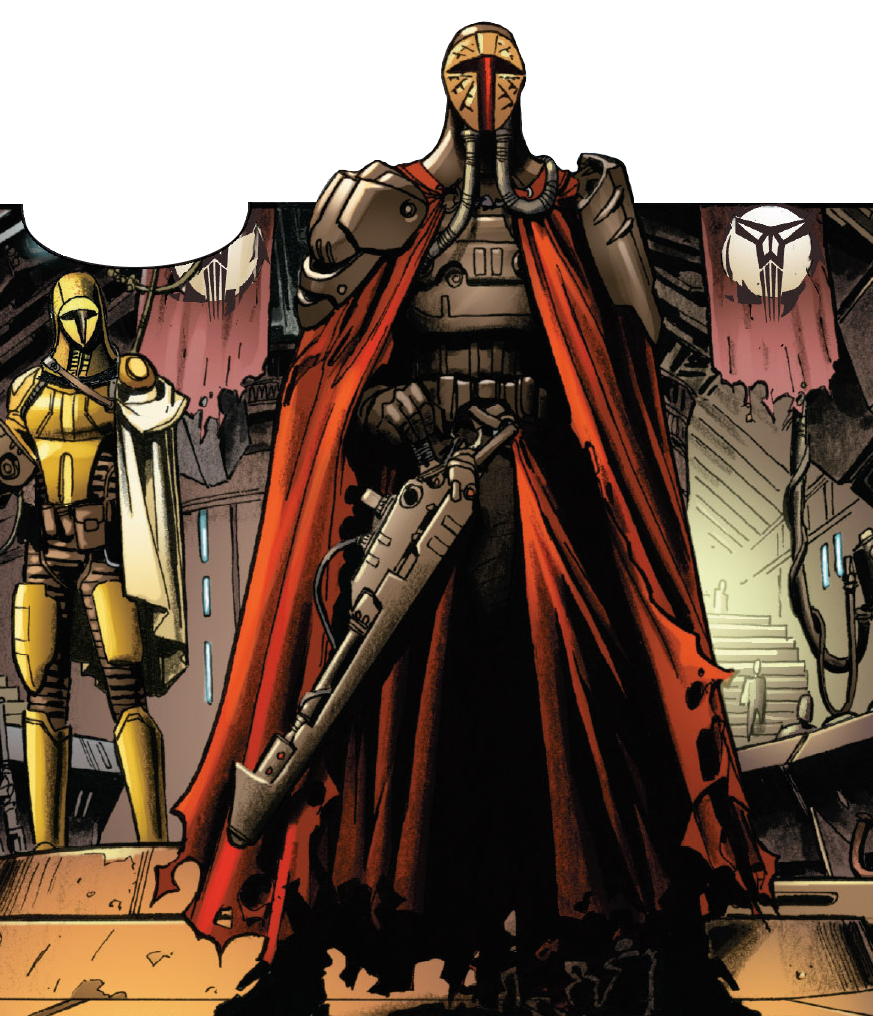
For the next two decades, peace prevailed as the galaxy recovered from the war's devastation, entering a period of rebuilding and renewal known as the Restoration Period. The new Mand'alor, known as "Mandalore the Ultimate," focused on rebuilding the Mandalorian clans, which had been significantly weakened during the war. With the original Mandalorian species, the Taung, largely decimated, Mandalore the Ultimate aggressively expanded recruitment, welcoming members of all alien species into Mandalorian culture. To achieve this, the Mandalorians established bases such as Unity, built beneath the surface of Caillte. Primarily intended as a forward supply post, it also became a recruitment center under Feruun Lern, inviting individuals to learn the Mandalorian ways and become warriors. As a result, the Mandalorian ranks swelled with warriors from countless worlds. To foster cohesion and maintain order among the diverse ranks, a new generation of more uniform armor was implemented at the suggestion of Cassus Fett, the Mand'alor's closest advisor, creating a powerful new generation of warriors known as the Neo-Crusaders. However, as the Mandalorians rebuilt, ten years after the Great Sith War, dozens were unjustly arrested and executed after Jigger Wraith, a psychotic bounty hunter, used rare Mandalorian weaponry to prey on innocents. Meanwhile, Antos Wyrick continued his research into the Jedi and the Force, establishing the New Generation Academy on Osadia to create a sect of Force-using Mandalorians called the Mandalorian Knights. In a deal with the Crucible, a slave-trading organization, Wyrick traded his own daughter for more test subjects. While Wyrick was away, the Crucible raided the school, capturing its students and ruining his experiments. Wyrick rejoined the Mandalorians under the pseudonym "Doctor Demagol."
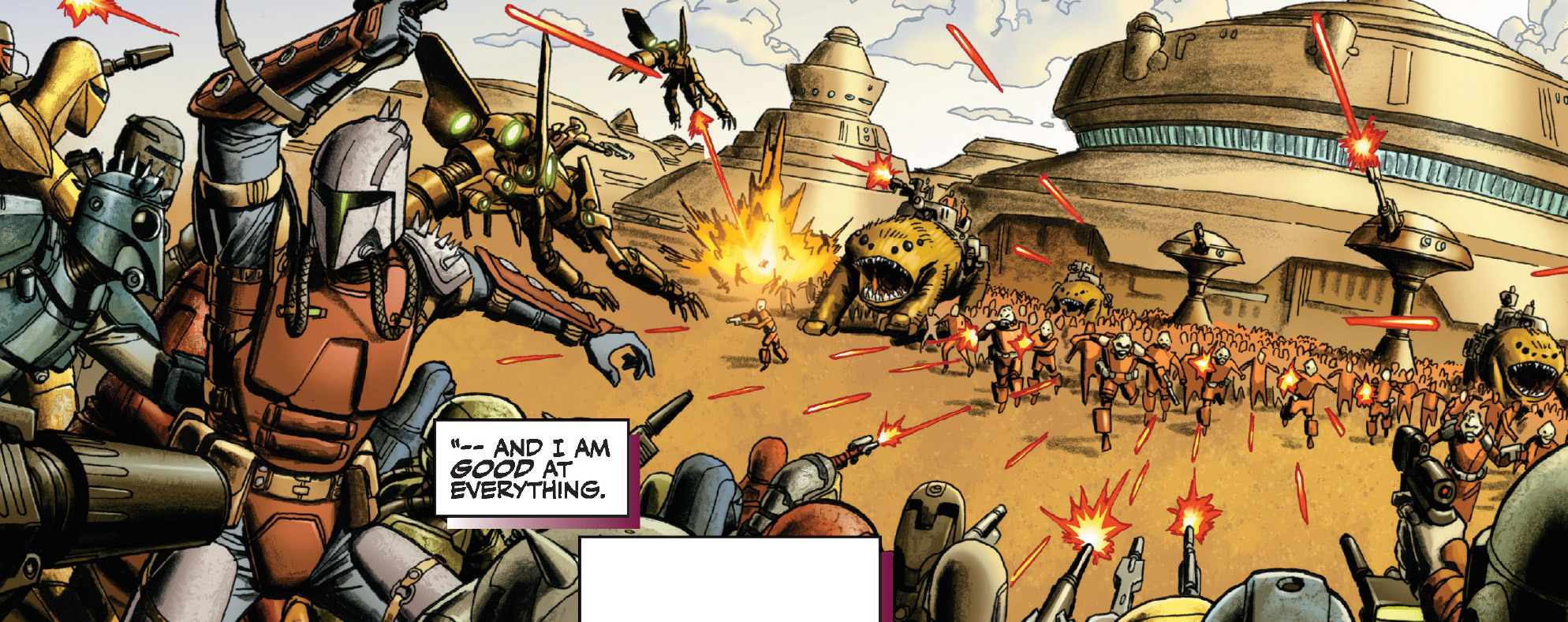
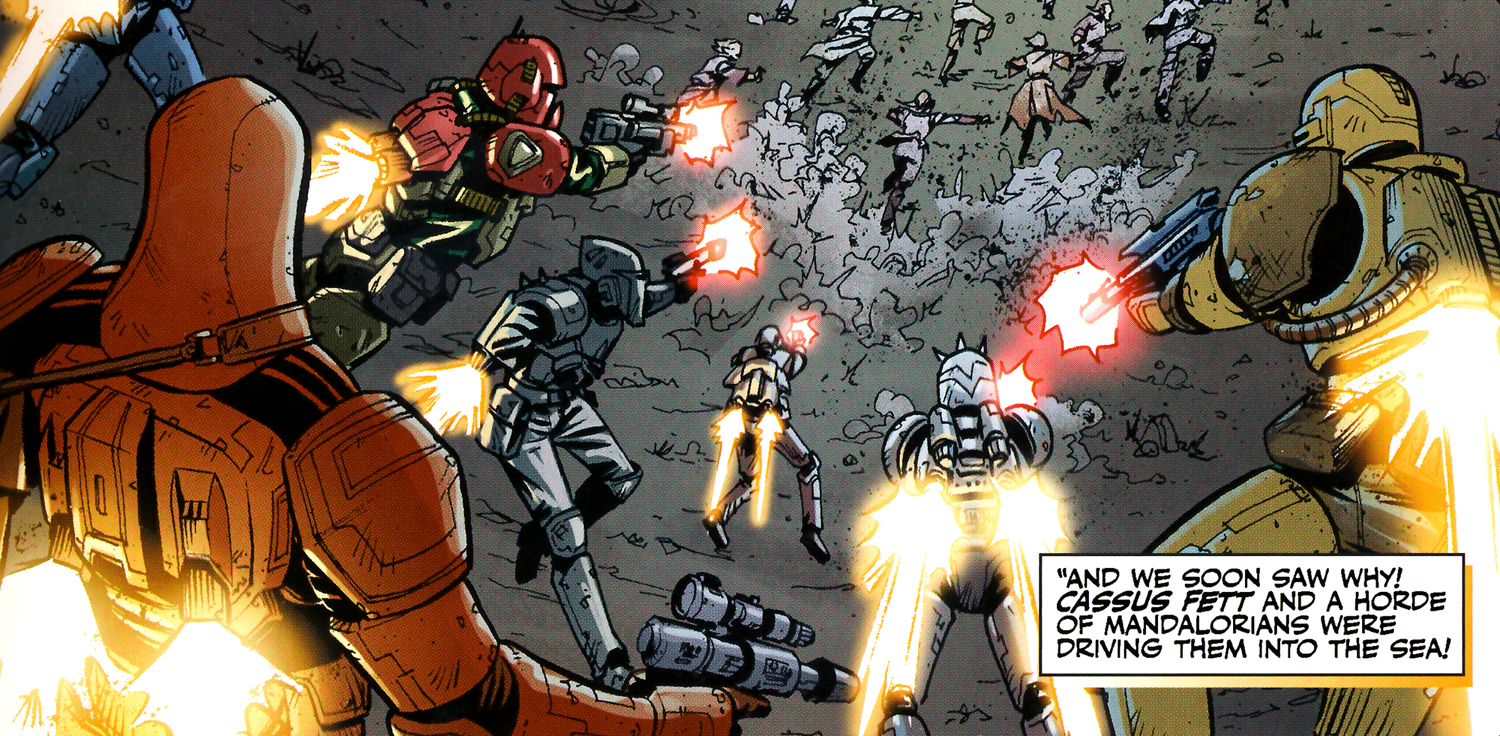
In the decades following their defeat in the Great Sith War, many Mandalorians became convinced that their prophesied "Great Last Battle" was imminent. Encouraged by elements of the hidden "True Sith," Mandalore the Ultimate launched a campaign into the Outer Rim, bordering Republic space. Conquering independent planets outside the Republic's interests, the Mandalorian Neo-Crusaders amassed a territory larger than that ruled by the Hutts within a decade. During this aggressive expansion, the Neo-Crusaders conquered Cathar in an operation led by Cassus Fett. Despite their defeat, Fett herded the remaining Cathar species into the sea and, despite the protest of a single Mandalorian female, ordered their extermination, along with the Mandalorian traitor, as retribution for past actions against the Mandalorians. In the end, the Mandalorians wiped out over ninety percent of the species. As the Republic remained uninvolved, wary of another war, the Mandalorians plundered resources from conquered worlds to fuel their campaign. With each victory in these proxy wars and border skirmishes, the Mandalorian clans grew stronger, conscripting conquered species into their ranks as they tested the Republic's military strength and resolve. Just as the Neo-Crusaders' appetite for conquest seemed satisfied, with no populated system conquered for over a year by 3964 BBY, the Mandalorians launched a full-scale assault against the Republic. Striking swiftly from their outpost on Dxun, Onderon quickly fell to the Mandalorians, followed by Vanquo and Taris. The victory on Suurja resulted in the capture of several Jedi prisoners, who were taken to a research station on Flashpoint for experimentation by Demagol. The Jedi were freed, but Demagol escaped disguised as the renegade Mandalorian Rohlan Dyre, leaving Dyre behind to be captured.
On Serroco, the Republic military mistakenly placed defensive fortifications within the cities of the native Stereb, believing the Mandalorians would not attack bases amidst a civilian population. The Mandalorians quickly disproved this notion. Disgusted by what he considered a "defense without honor," Mandalore the Ultimate ordered a full-scale bombardment with nuclear weapons, destroying twenty-seven population centers. Duro and Eres III fared no better against the Mandalorian onslaught. Lord Arkoh Adasca of Arkania and the head of Adascorp offered to sell devastating bioweapon in the form of enormous exogorths to the Mandalorians, in exchange for sparing Arkania and making Adascorp their primary weapon supplier. Before the Mand'alor could finalize the deal, Gorman Vandrayk lured the exogorths into Wild Space, preventing both the Mandalorians and the Republic from using them. Targeting Alderaan for their next conquest, the Mandalorians amassed their forces on the recently conquered planet of Jebble. Simultaneously, Demagol's former assistant, Pulsipher, acquired the ancient Sith amulet known as the Muur Talisman. Unknowingly, Pulsipher unleashed the Rakghoul plague across their base, transforming Neo-Crusaders into the monstrous Rakghouls. To prevent the plague's spread, Cassus Fett ordered the destruction of the base on Jebble, initiating a nuclear bombardment similar to the one on Serroco.
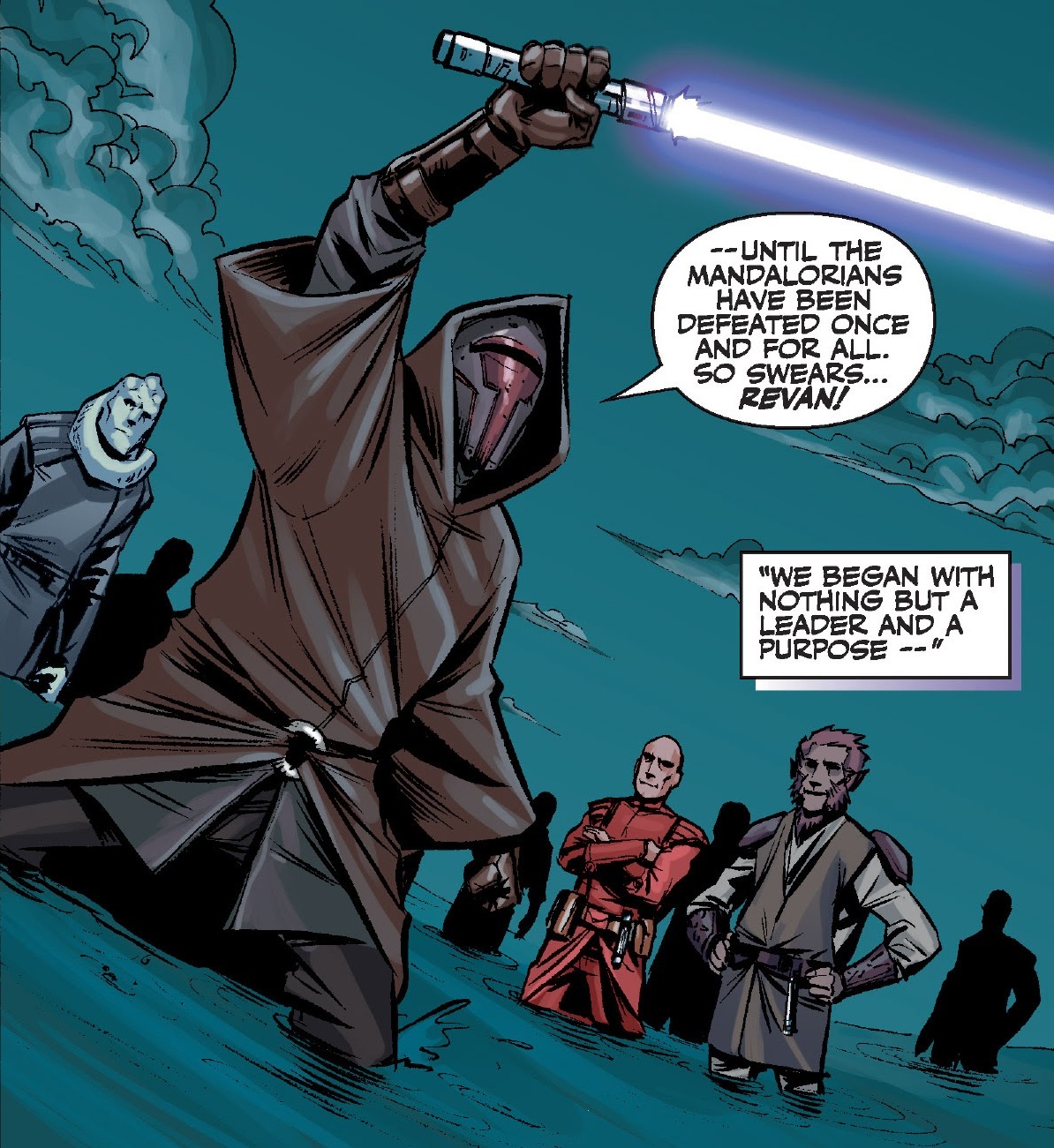
The Republic forces were no match for the Mandalorians' intense combat strategies, and it appeared that the Mandalorians were about to achieve victory. However, after the Jedi Revanchists revealed the horrifying truth of the Cathar genocide through a disturbing vision, hundreds of Jedi, unable to remain idle, joined Knights Revan and Malak in their fight against the Mandalorians. Revan quickly proved himself to be a highly skilled commander, orchestrating a series of successful military campaigns. He rapidly ascended through the ranks of the Republic Military, using his newfound authority to revitalize the nearly defeated Republic Navy and drive back the Mandalorians. The Mandalorians were soon expelled from Taris and forced to retreat from Dxun. Even Cassus Fett's triumph at Jaga's Cluster could not stop the Republic's increasing momentum. In 3960 BBY, the Mandalorian Wars reached their climax as Revan initiated a battle with the Mandalorians in orbit around Malachor V. Drawing strength from the dark side energies of Malachor, Revan engaged Mandalore the Ultimate in a one-on-one duel, ultimately killing the Mand'alor. Subsequently, one of Revan's Jedi Generals activated the experimental superweapon known as the Mass Shadow Generator, which destroyed the Mandalorian fleet but also inflicted significant damage on the Republic fleet. With their fleet destroyed and their leader dead, the Mandalorians surrendered unconditionally.
The Dark Wars
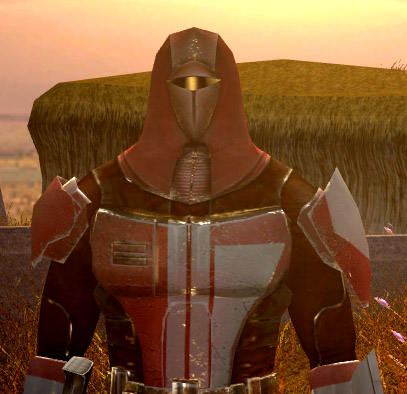
After their defeat in the Mandalorian Wars, Revan disarmed the Mandalorians by stripping them of their armor, destroying their weapon stockpiles, and dismantling their war droids. He also seized the mask of Mand'alor, a significant artifact passed down through generations of Mand'alors, without which a new leader could not be appointed. The Mandalorian clans, now without a Mand'alor, fractured and dispersed throughout the Outer Rim. Defeated and bitter, many Mandalorians turned to bounty hunting and mercenary work to survive. These Mandalorians, known informally as Mandalorian Mercs, offered their services to the highest bidder, often prioritizing credits over morality. Some, such as Gorse Bendak, became gladiators on planets like Taris and Geonosis. Others resorted to piracy and banditry, causing trouble for settlers on worlds like Dantooine.
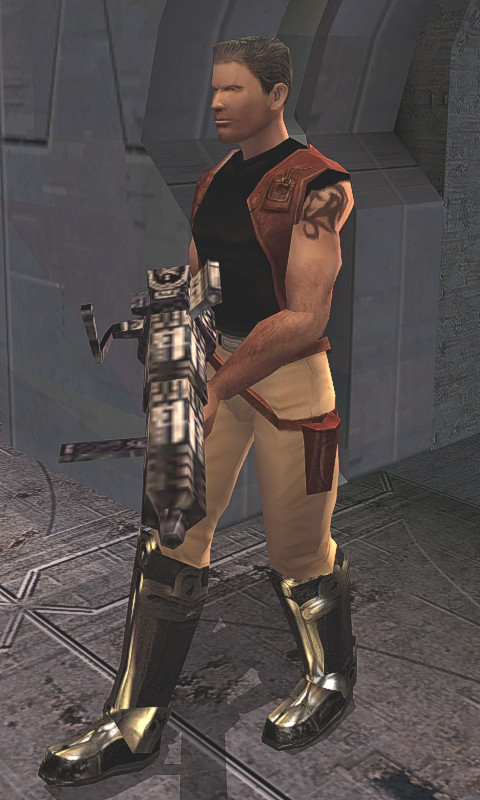
Not long after, the galaxy was once again embroiled in another war, this time with Revan returning as a newly converted Sith Lord, accompanied by his apprentice, Darth Malak. Now known as "Darth Revan," he plunged the galaxy into chaos in an attempt to seize the power of the Rakatan artifact called the Star Forge. Although the scattered Mandalorian diaspora could not play a major role in the war, some Mandalorian groups targeted isolated Sith elements, seeking vengeance against Revan by attacking his forces on planets such as Taris. However, Revan was captured by the Jedi, who erased his memories of his time as a Sith. During his travels as a redeemed Revan, he encountered a Mandalorian warrior named Canderous Ordo. Ordo, a former Mandalorian Crusader who had survived the Great Sith War, joined the Neo-Crusaders as a battle tactician, and later became a mercenary after the Mandalorian Wars. Dissatisfied with his mercenary life on Taris, Ordo joined Revan on his quest to stop Darth Malak and his Sith Empire, seeking a worthy battle. During their journey, Ordo encountered Sherruk and his band of Mandalorian warriors, who had become bandits and were harassing settlers on Dantooine. Sherruk and his companions were defeated by Revan, but not without a fierce fight. They also encountered Mandalorian poachers on Kashyyyk, who were preying on Wookiees in the Shadowlands, and a small Mandalorian contingent on Lehon. Revan eventually defeated Darth Malak, destroying the Star Forge and ending the war. However, Revan then disappeared from the galaxy, seeking the "True Sith" believed to be lurking in the Unknown Regions. Before leaving, Revan, now remembering his past, gave the mask of Mand'alor to Ordo, instructing him to reunite the scattered Mandalorian clans. Revan also revealed to Ordo that the Sith had manipulated Mandalore the Ultimate into starting the war with the Republic.
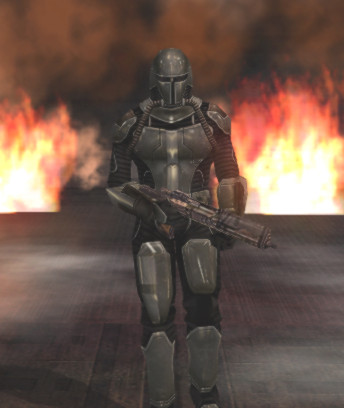
With the Mand'alor's mask back in Mandalorian hands, Canderous Ordo became the new Mand'alor, adopting the name "Mandalore the Preserver." While trying to bring the clans back together, Ordo found what might have been one of the last Taung left. This Taung, who was dying when Ordo found him, said that Mandalore the Ultimate had taken the title of Mand'alor with help from the Sith and that he was the real heir of Mandalore the Indomitable. Before he died, this Taung warrior gave his armor and clan to Ordo, asking him to keep their traditions alive. Ordo wore the armor and put the mask of Mand'alor on the Taung's helmet. As Mand'alor, Ordo called the Mandalorians to the old Neo-Crusader base on Dxun, planning to rebuild their forces there under the banner of Clan Ordo. However, not everyone listened to the Mand'alor's call. Esok, the leader of a Mandalorian clan living on Dantooine at the time, tried to overthrow Ordo to become Mand'alor himself, but he failed and died at Ordo's hand. After the battle, the rest of Esok's clan agreed to follow Ordo, joining warriors like Kelborn, Bralor, and [Xarga] (/article/xarga) on Onderon's jungle moon. Ordo and his Mandalorians gave shelter to a former Jedi General of Revan's, known as the Jedi Exile, after her ship had to land on Dxun because it was attacked over Onderon. Ordo agreed to help the Exile get to Onderon and later joined her in her fight against the Sith Triumvirate to stop them from interfering with his efforts to unite the Mandalorians. The Mandalorians joined the Onderon Civil War during the Second Battle of Onderon, siding with Queen Talia's forces and defeating the rogue general, Vaklu, and his troops. They also took control of Freedon Nadd's tomb from the Sith forces sent by Darth Nihilus to support Vaklu's coup. The Mandalorians and Mand'alor Ordo helped the Republic again during the Battle of Telos IV, fighting the Sith fleet alongside Admiral Carth Onasi. The Mandalorians boarded Darth Nihilus' flagship, the Ravager, and Ordo fought the Sith Lord with the Jedi Exile. After Nihilus was dead, the Mandalorians set off proton charges they had planted, destroying the ship.
The Great Galactic War
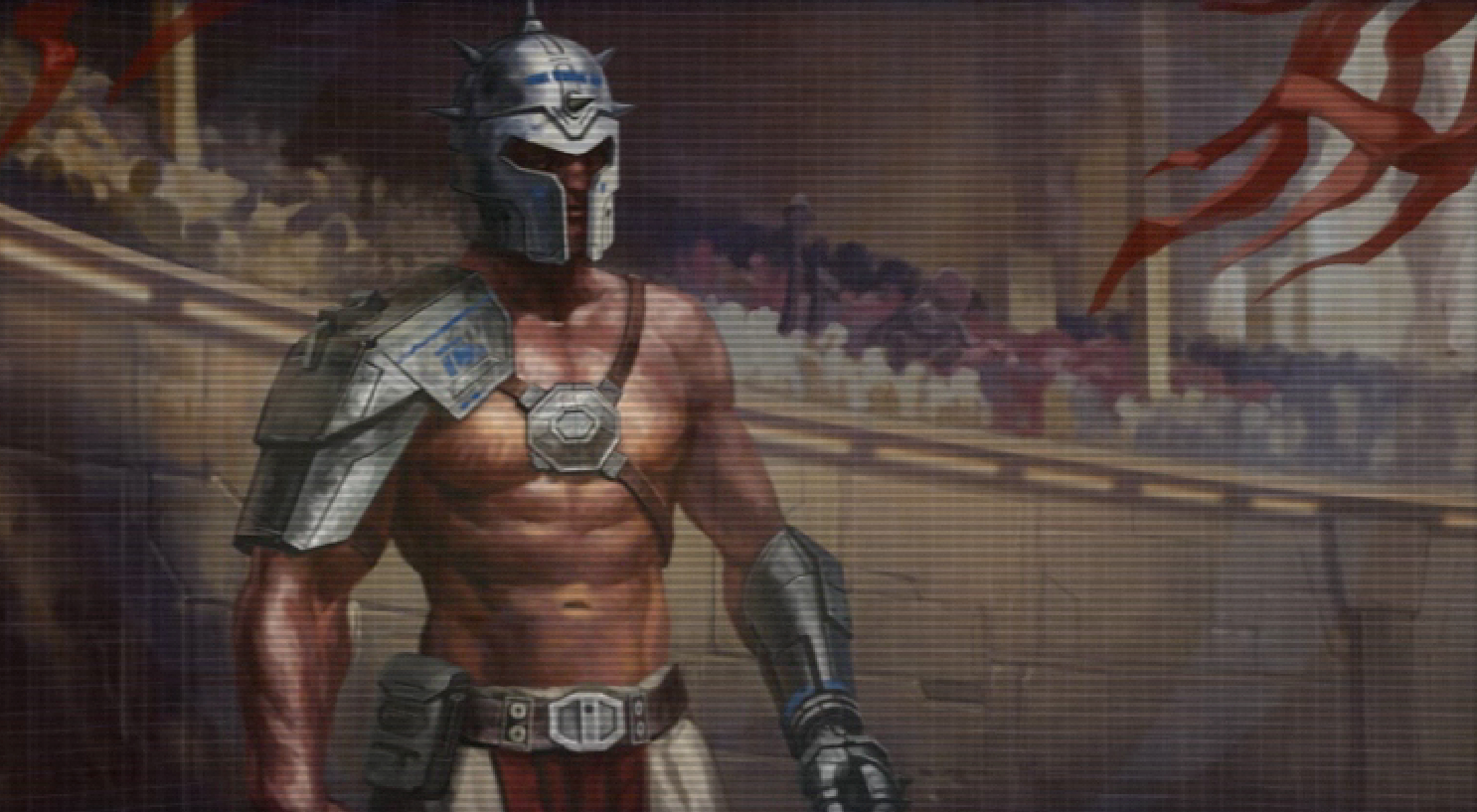
Even though Canderous Ordo tried to bring the scattered clans together while he was Mand'alor, the Mandalorians were still divided for almost three centuries. Mandalore the Infernal, who had the title before the conflict, asked for designs for missiles that used thermonuclear fusion. This changed in the year 3661 BBY, when the reformed Sith Empire came back to the galaxy. In their war against the Republic, the Sith asked the Mandalorians for help, trying to get the galaxy's most famous mercenaries and bounty hunters to join them. However, when most of them refused, the Sith Empire decided to do something different. On Geonosis, Imperial Intelligence agents chose a successful young Mandalorian gladiator as someone they could use. They made the crowds cheer for "Mandalore" and drugged his opponents, making sure that their chosen warrior won every fight until he was given the title of Mand'alor. When the new Mand'alor called, many of the Mandalorians who were living in different places joined him, as their culture said they should, and followed him in his fight against the Jedi Order. But even though the Mandalorians gathered to serve their new leader, he was still serving the Sith Empire. They ordered him to lead a Mandalorian blockade of the Hydian Way. The Hydian Way was a very important supply route for the Republic. When it was blocked, the Republic could not give military support to its forces in the Outer Rim or bring raw materials to the Core Worlds. The Jedi responded to the Mandalorians' challenge by attacking the blockade, but the Mandalorian cruisers easily defeated the Jedi forces and continued to block the Republic until a large smuggling operation led by Hylo Visz finally broke the blockade and delivered goods to Coruscant.
After the blockade was broken, the new Mand'alor, who was later called "Mandalore the Lesser," tried to regain support among the clans by announcing a galaxy-wide competition for glory called the Great Hunt. The champion of the Hunt, a Mandalorian warrior named Artus, challenged the Mand'alor to a duel, where he shot and killed the Imperial puppet. Artus then took his place as Mand'alor, calling himself "Mandalore the Vindicated." While consolidating his power, Mand'alor stopped an uprising by a group of Mandalorians led by Jicoln Cadera, who thought that the Mandalorians should follow Mandalore the Preserver's example and support the Republic instead of the Sith Empire. Under Mandalore the Vindicated, the Mandalorians continued to be the well-paid but cautious allies of the Sith.
Cold War and the Galactic War
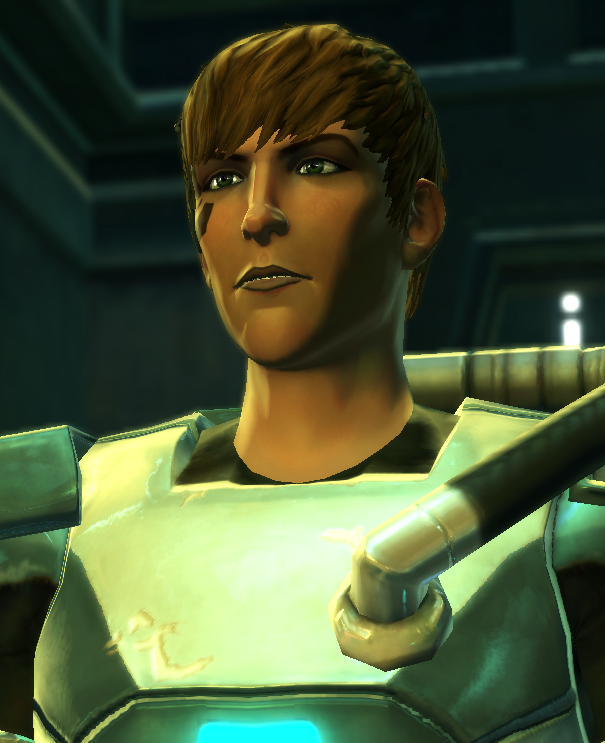
Despite this formal alliance, some Mandalorians and even entire Clans still chose to fight against the Sith Empire during both the Cold War and the Galactic War.
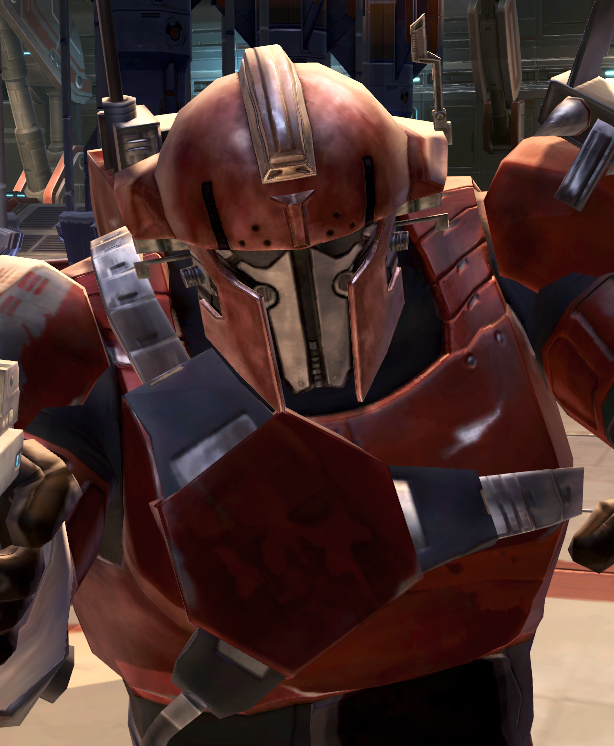
The notoriously violent Mandalorian clan known as Clan Varad separated themselves from Mandalore the Vindicated's leadership. They declared Akaan'gaan, the pursuit of battle, and stole the prototype Allusis from the Republic Fonder shipyards. They proceeded to attack both Republic and Sith worlds, demanding tribute as they continued their raids and looting. Ultimately, they were confronted by joint task forces from both the Empire and the Republic who assaulted the Allusis, battling through Varad's clan warriors, Tech Commandos, Fire Commandos, Shield Commandos, and eliminating their champions such as Braxx the Bloodhound and his war-beasts, Battle Team Royal, and Gil. Finally, they faced Mavrix Varad, who had been awaiting them. He was eventually killed, considering it a worthy death and proclaiming that he would see the team in hell as his final words before passing.
The surviving members of Clan Varad aboard the ship were captured and relegated to the lowest ranks of the other Clans as punishment for their dishonorable betrayal. Despite this, Clan Varad continued to exist in some form, later being led by Tyrus Brokenblade. They also changed the colors of their armor from red and gray to purple and yellow.
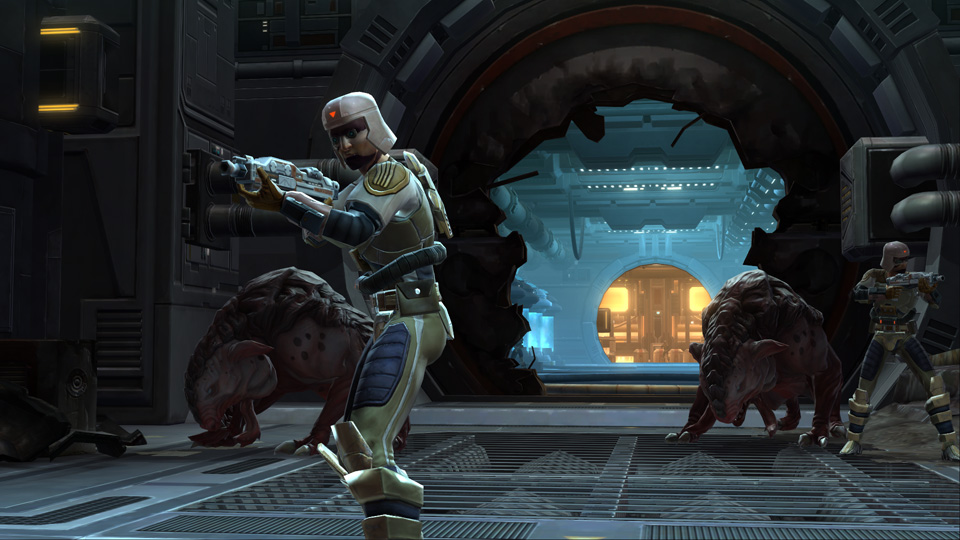
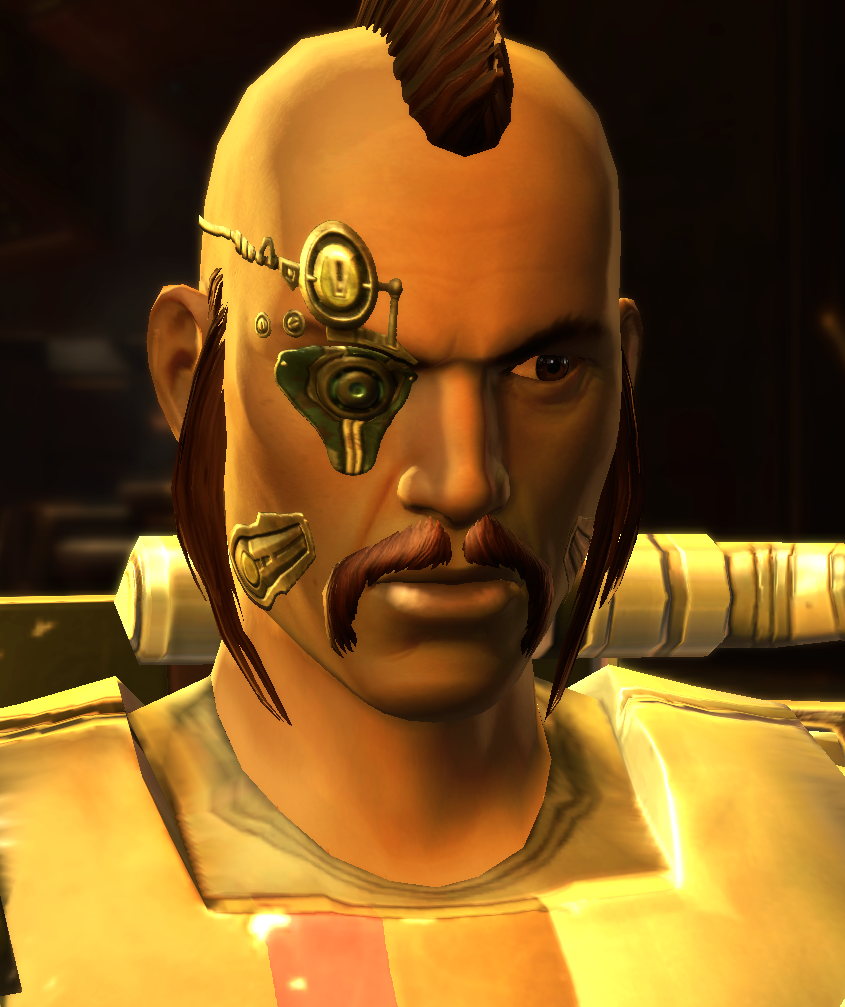
Tarro Blood, having been previously humiliated in the Great Hunt, was determined to achieve victory in the new competition. He abandoned all the principles of honor that his mentor, the renowned Great Hunt champion Hedarr Soongh, had instilled in him. Instead, he focused on sabotaging his rivals, bribing fellow Mandalorians with promises of glory and wealth, which attracted followers like Sedyn Kyne, who saw Tarro as their path to fame, thus dishonoring the core values of a Mandalorian. Their act of killing a rival team on Nal Hutta ultimately led to their downfall, as the Hunter and his partner Mako vowed to avenge the murders of Braden and Jory, relentlessly pursuing Tarro Blood and his followers, regardless of their attempts at sabotage during the Great Hunt.
Sedyn and Blood's followers met their demise when they were lured into a trap on Nar Shaddaa by the Hunter and Mako, with the help of Hedarr Soongh, who was now disgusted by his former student's actions. He arranged a Taung blood duel between Sedyn and the Hunter, which resulted in the deaths of Sedyn and Rellu and the Hunter's victory. However, Tarro's followers refused to honor the duel: the Mandalorian lieutenant affirmed their loyalty to Tarro Blood and, without warning, shot Hedarr in the chest, fatally wounding the elder Mandalorian, who denounced the followers as No Mandalorians. The Hunter then eliminated them all and listened to Hedarr Soongh's final words, urging the Hunter to prevent Tarro from winning the Great Hunt and to preserve the Resol'nare and the Mandalorian code among the Mandalorians, lest Tarro's example lead more astray from the path of honor. He offered parting words before succumbing to his injuries. Tarro Blood was the first to reach the final target, Kellian Jarro, who was infamous for killing over one hundred battle-hardened Mandalorian commandos during the Sacking of Coruscant. Tarro was quickly subdued by a mind trick and held for questioning, where he claimed the Hunter was his accomplice in an attempt to ensure his rival's death. This plan failed when the Hunter boarded the Aurora, confronting Tarro with only a force field separating them. He provoked the Hunter to release him for a final confrontation, but Mako argued that Tarro didn't deserve a warrior's death and should be left to die in his cell. Ultimately, Tarro Blood met his end as the Aurora fell apart. The Hunter successfully killed Kellian Jarro and returned to Dromunad Kass to be crowned the new Great Hunt champion, later being adopted into Mandalore's Clan Lok.
The Terror Brigade, a group of former Mandalorian thrill seekers, captured Imperial Moff Yoren and offered him to the Republic if they could survive a series of challenges. They succeeded, even outperforming their Force-sensitive member Geden, greatly impressing the Fight Master with their performance, and fulfilled their promise by handing Yoren over to the Republic.
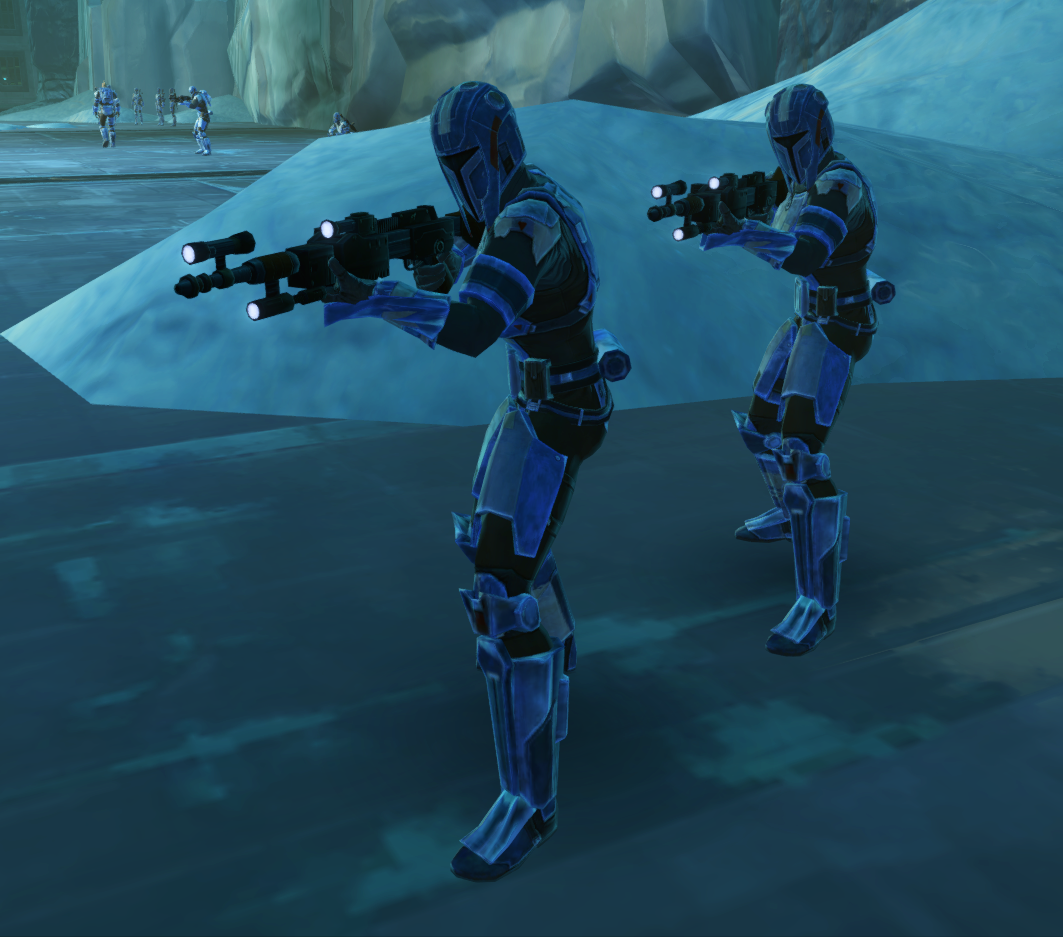
A group of Mandalorian mercenaries established a camp on Arkanis, prompting an investigation into their intentions on the planet.
A Mandalorian Clan maintained a settlement on the world of Kabray. Eventually, a spacer was tasked with persuading the Ministry of Logistics to appoint a new liaison from the Mandalorian Enclave.
A Mandalorian warlord named Varek Tarn stole the plans for the Sovereign Forge and attempted to sell them to the Republic, but was killed by Imperials before he could complete the transaction. His actions were emulated by fellow Mandalorian warlord Rimark, who tried to steal the construction plans for the Void Anvil to sell them to the Empire. However, like Varek, Rimark was tracked down and killed in the Thanium sector.
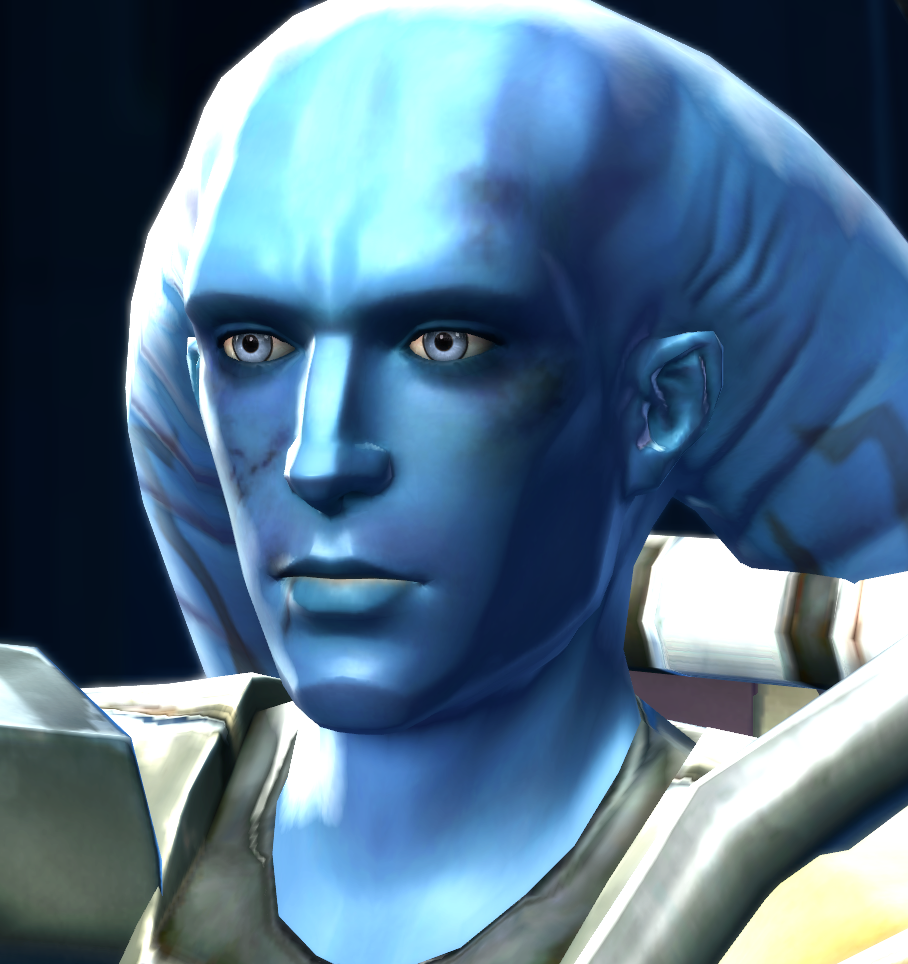
Some Chiss Officials, who were Mandalorian dissidents, secretly protested the alliance with the Sith Empire. However, their leader was captured and, under interrogation, revealed the names of other members.
A rogue Mandalorian Clan raided a village on an unknown world. After an investigating spacer assisted the survivors, the planetary government pledged to commit resources to defend against future threats.
During the Cold War, Mandalorian armor and weapons ended up in the hands of Outer Rim pirates, leading to an investigation into their source. It was discovered that the pirates had acquired the armor and weapons from a Clan of renegades exiled for dishonor, and their mark and allies were identified.
Mandalorian mercenaries played a significant role in the Empire's efforts to thwart the Taris Resettlement Initiative and the Battle of Balmorra during the Cold War. Commander Vorten Fett led thousands of Mandalorian mercenaries contracted by the Empire to eliminate threats such as the Cathar settlers and the Nikto, including even the feared Morgukai warriors. However, General Farvin dismissed their efforts as sloppy and believed they lacked respect for a clean victory.
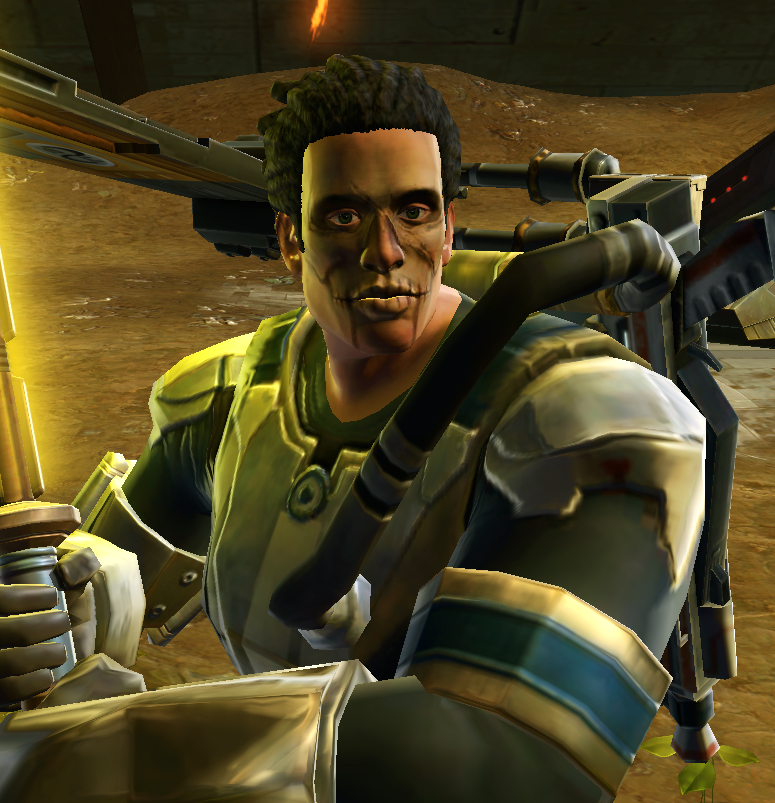
The Mandalorian Raider known as Duran Gorr and his band of Mandalorian raiders were killed by a Republic task force while attempting to steal a shipment of Republic warheads. Jicoln Cadera remained alive on Taris during the Cold War until his son, Torian Cadera, with the help of the Great Hunt champion, sought him out to restore Clan Cadera's honor. As a result, Jicoln issued them the Geroya be Haran challenge, and the two tracked his accomplishments across Taris, with Jicoln always staying one step ahead. Eventually, they confronted and defeated him in combat. He requested a final word with his son, after which the Hunter delivered his body to Mand'alor, and Torian Cadera learned the truth about his father's reasons for starting the Crusader's schism, thus restoring his honor.
Jekiah Ordo gained recognition for his operations on Balmorra, where he fought to revive Mandalore the Preserver's legacy. He succeeded in removing the stigma from himself and his two younger siblings, although fellow clanmate Corridan Ordo was already a respected alor'ad within the Mandalorian community.
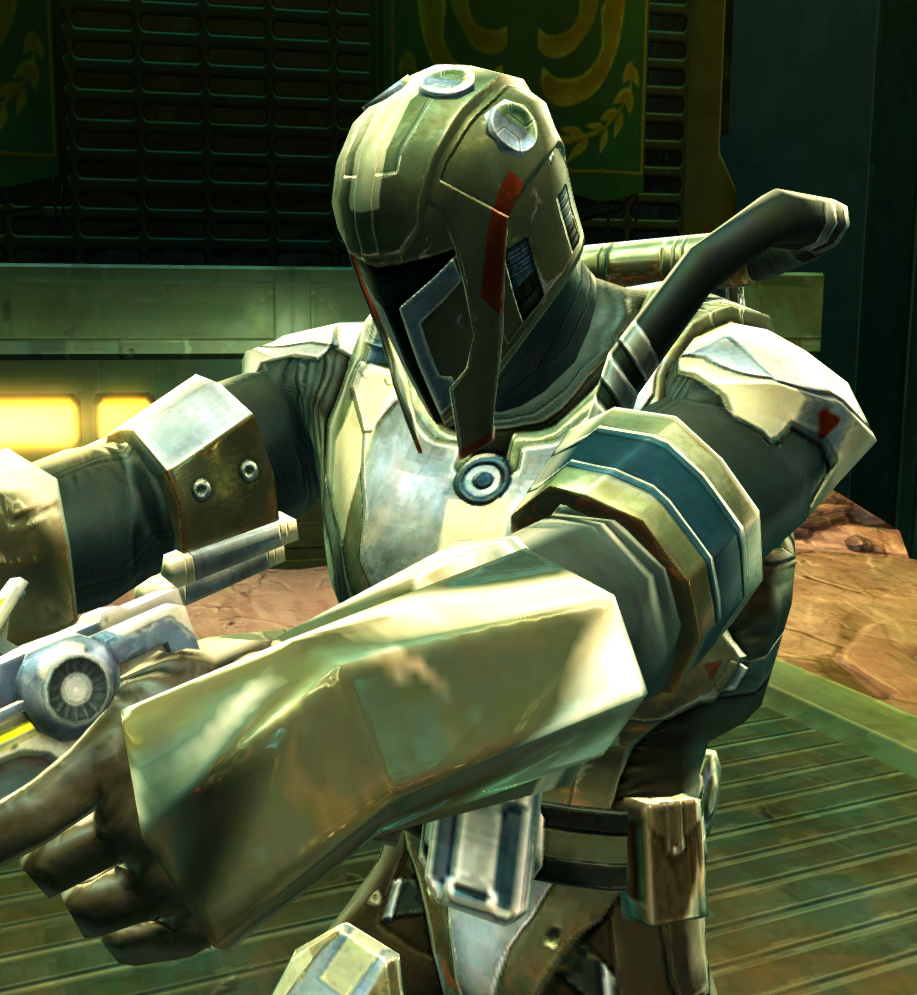
Monta Drai, a Mandalorian who worked as a slaver for the Empire, made use of his illicit activities to benefit the Empire by seizing Balmorran civilians. These captives were then prepared to be sold into slavery. Alya Selray, the ambassador, sought to free these villagers and hired a Republic spacer. This spacer infiltrated the Mandalorian stronghold, battling through mercenaries, overseers, and combat droids before finally facing Monta Drai, who was subsequently killed by the spacer, resulting in the villagers' liberation.
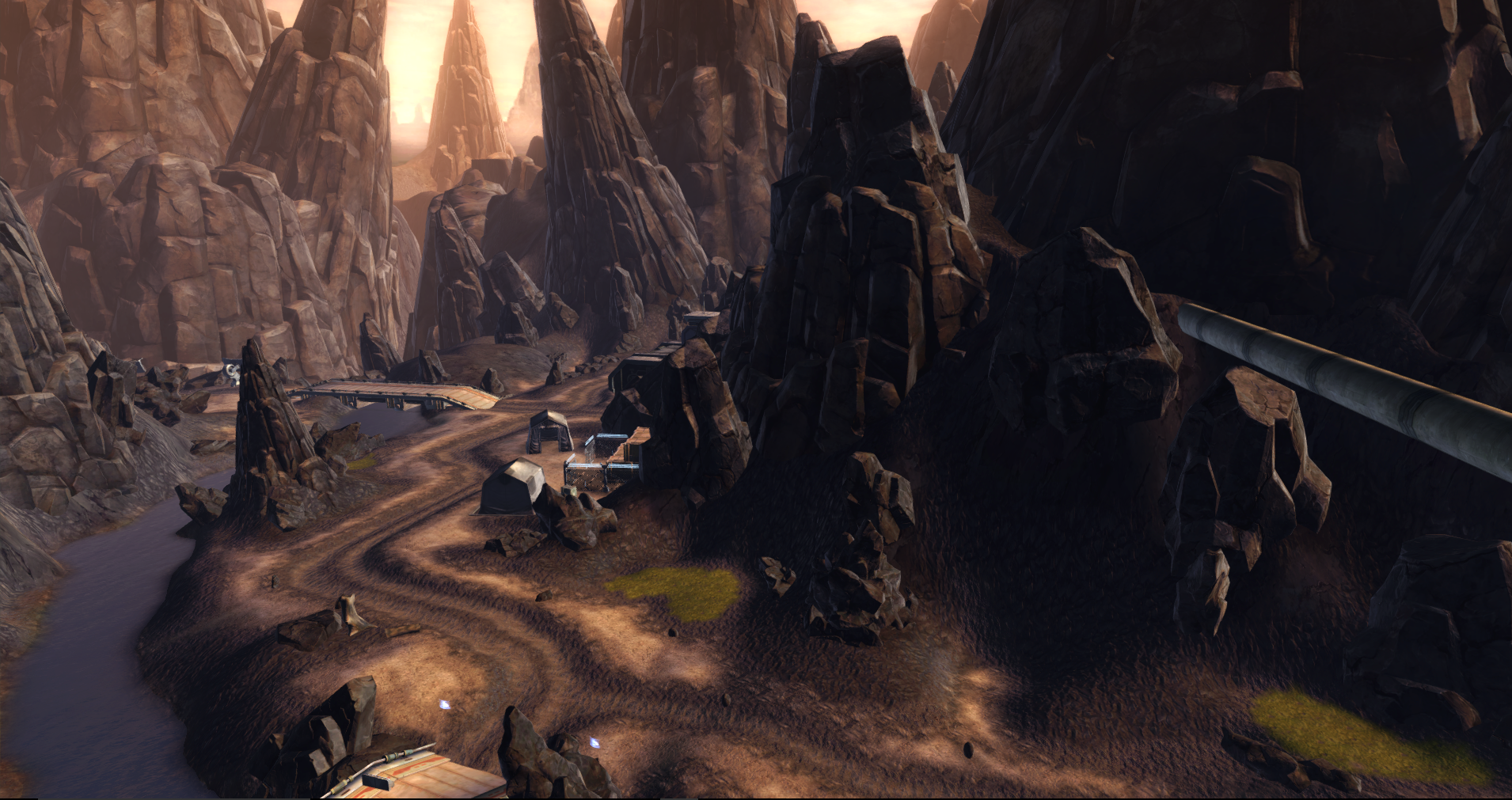
In another area, the Empire contracted Mandalorian mercenaries to suppress the Balmorran resistance. These mercenaries secured the resistance's sensor arrays used for communication, thwarting efforts to reclaim and repair them. While Republic assistance eventually forced the Mandalorians from the arrays, they maintained a presence in the territory.
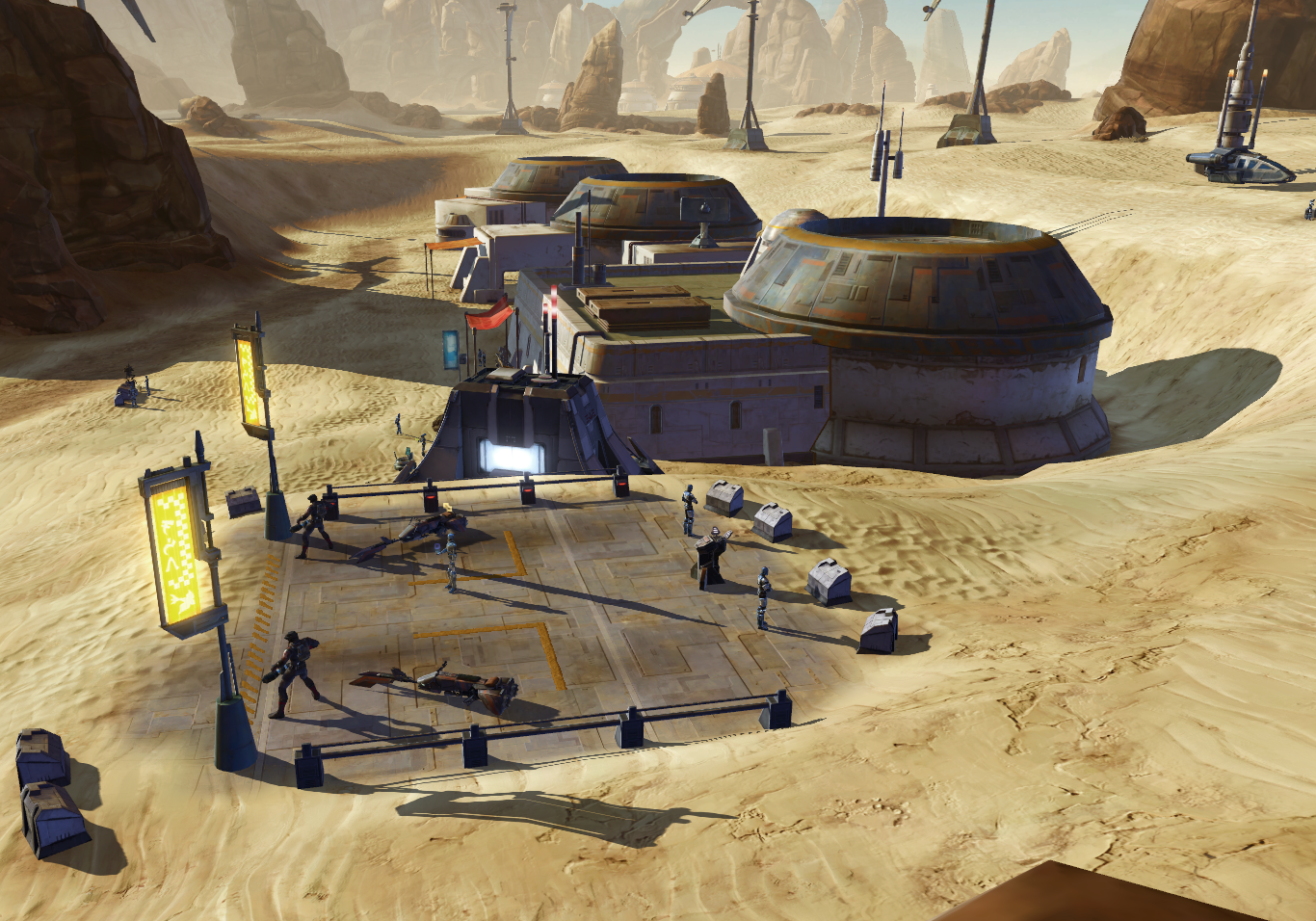
On the desert planet Tatooine, Mandalorians established a significant presence with numerous Clans scattered throughout its regions. The Clan of Outpost Rennar maintained a fragile alliance with the Empire, constantly strained by Imperial actions. The Clan also faced ongoing conflict with Tusken Raider tribes, with some of their recruits/untried warriors perishing during trials or challenges at their hands. This reached a critical point when the formidable chieftain Bloodgouge, actively at war with the Mandalorians, mobilized his people to assault and destroy Outpost Rennar, but he was eliminated by an Imperial team before the attack could take place.
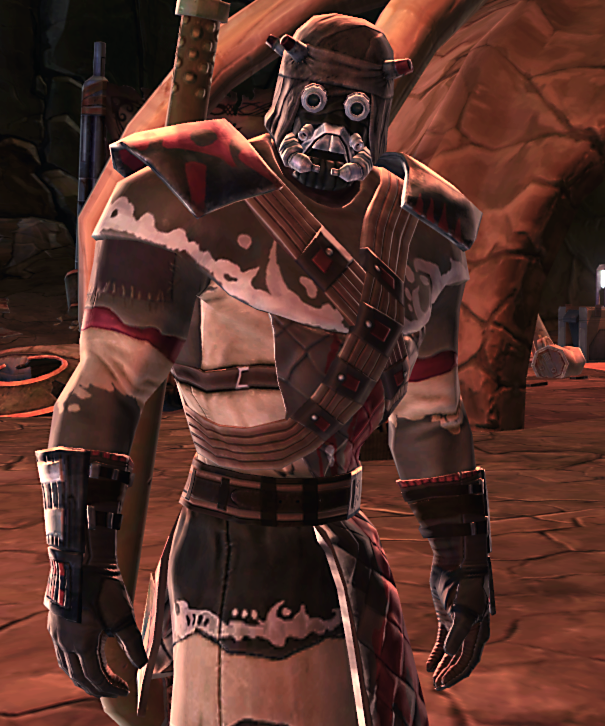
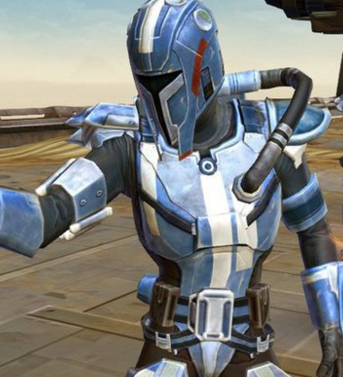
In a separate incident, an unidentified Mandalorian leader planned a preemptive strike against the Republic Outpost Thorazan, but their efforts were thwarted by a Republic team hired by Security Chief Barret. However, not all Mandalorians were compliant or willing to collaborate with the Empire. A local warlord strongly objected to Imperial troops traversing his territory, directing his cannons against their forces and deploying Mandalorian troops to guard the emplacements. While one mercenary team hired by Commander Vames failed to destroy these emplacements, a subsequent team successfully marked them for bombardment, leading to their destruction. Commander Vames expressed his frustration upon discovering Mandalorian involvement, lamenting the difficulty of tracking the numerous Mandalorian Clans.
A War-Master named Rhigoth, notorious for hunting Trandoshans, rancors, and even Jedi, acted without honor by having his Mandalorian mercenaries/raiders extort merchants in Anchorhead. When local magistrate Ledo Melnic attempted to expel them from the town, three security officers were crippled. Melnic then hired external assistance to storm their bunker, resulting in Rhigoth's death.
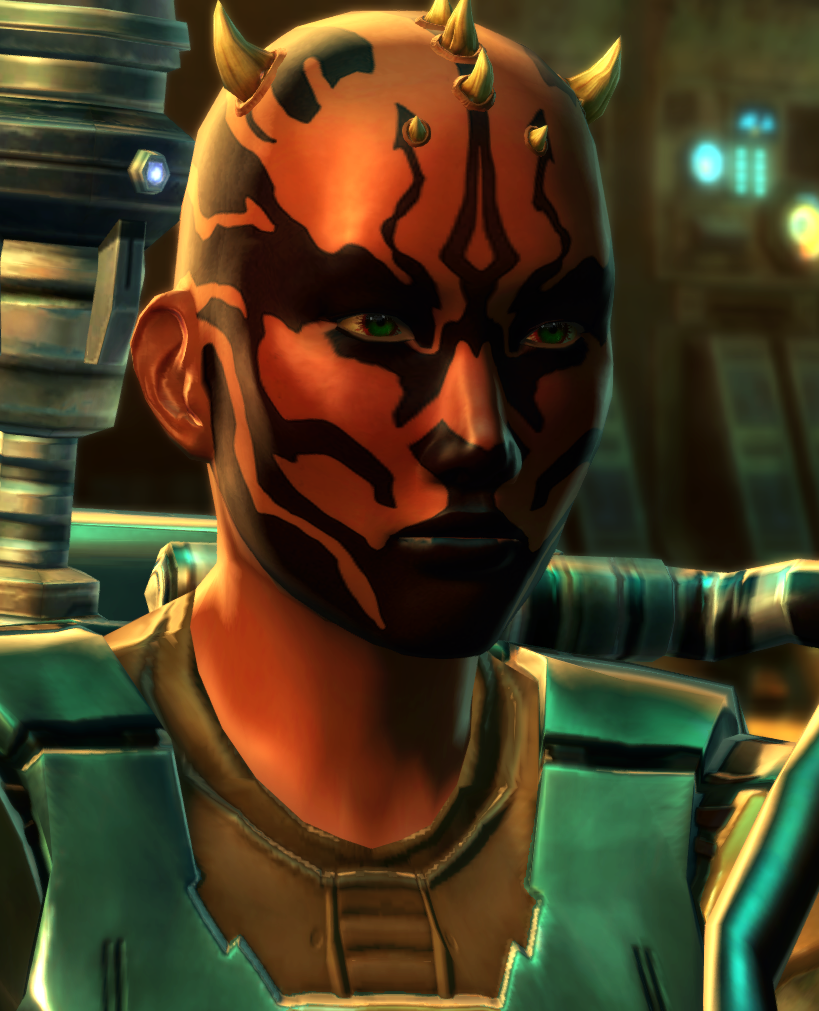
Akaavi Spar, a Zabrak Mandalorian warrior, joined forces with the Republic privateer known as the Voidhound after her entire clan was falsely accused by the Mandalorian pretender Tayari Rook to secure a lucrative contract with the Empire. Rook falsely claimed they failed to destroy a cargo ship carrying Jedi Padawans. To avoid a bloody conflict, the Empire gassed Clan Spar and captured them while they were unconscious, later executing them. Devastated by the loss of her family, Akaavi Spar attempted to rally her husband's Clan to support her, but they refused. Disgusted, Akaavi abandoned them and her husband, wandering the galaxy for five years, becoming a Mandalorian outcast while still adhering to the Resol'nare. She eventually avenged her clan's death by tracking down those responsible for their framing.
Clan Rook, composed of slavers and pirates, were not genuine Mandalorians and exploited the reputation for personal gain, eliminating or dishonoring anyone who attempted to expose them. Adding to the disgrace, Clan Lone, ostracized by the Mandalorian community for failing to aid Clan Spar, joined Clan Rook's ranks. However, Akaavi Spar discovered their location and attacked their encampment. Those who didn't escape were killed, including their leader Tayari, who confessed his crimes to Akaavi before his death. Their destruction brought her solace, and she found peace as a member of the Voidhound's crew.
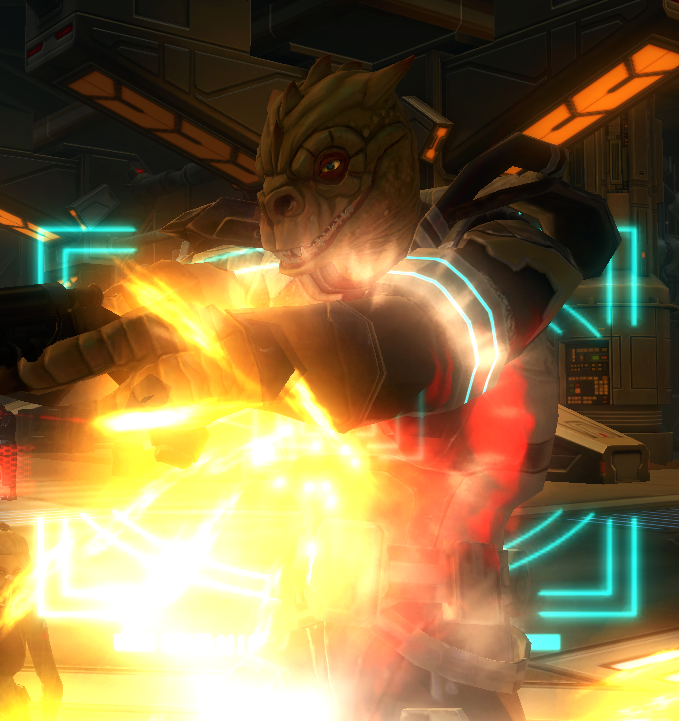
Around the same period, an unidentified Mandalorian invited scientists from across the galaxy to study the bones of several mythosaurs, hoping to revive the extinct species.
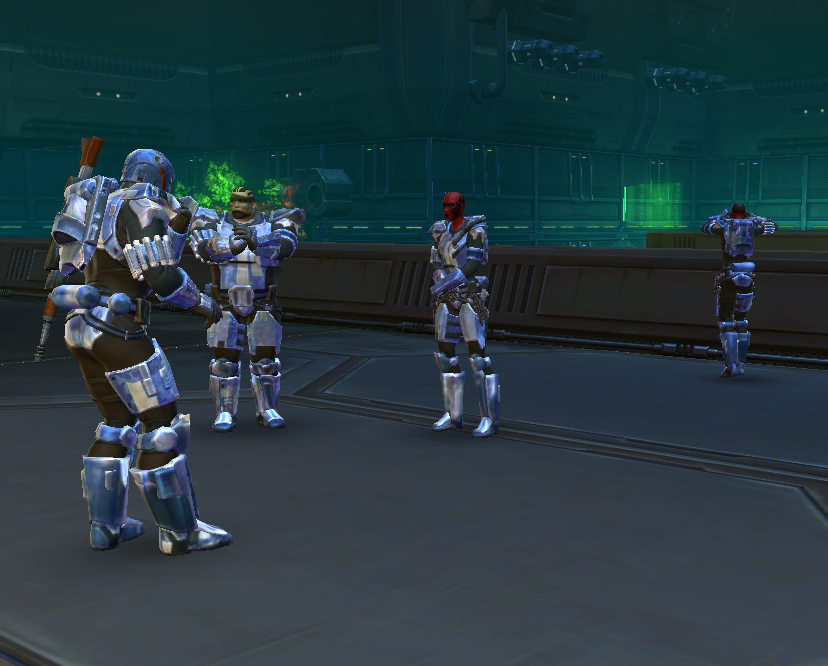
On Nar Shaddaa, the multi-species Mandalorian clan Sharratt tested a new Imperial combat adrenal and challenged the Galactic Republic's embassy. They declared that if the embassy's defenders couldn't defeat or face them, they would randomly destroy Republic property. However, they were defeated, their leader Kassor Quade killed, and the enclave destroyed.
The Mandalorians, within their stronghold on Geonosis, sought new challenges and hired individuals to bring them dangerous beasts to satisfy their craving for combat in the gladiator arenas and fighting pits.
Ceta Farr led Clan Farr as part of the secretive Order of Revan, aiming to honor and preserve Revan's legacy out of respect for Revan's victory over her ancestors during the Mandalorian Wars.
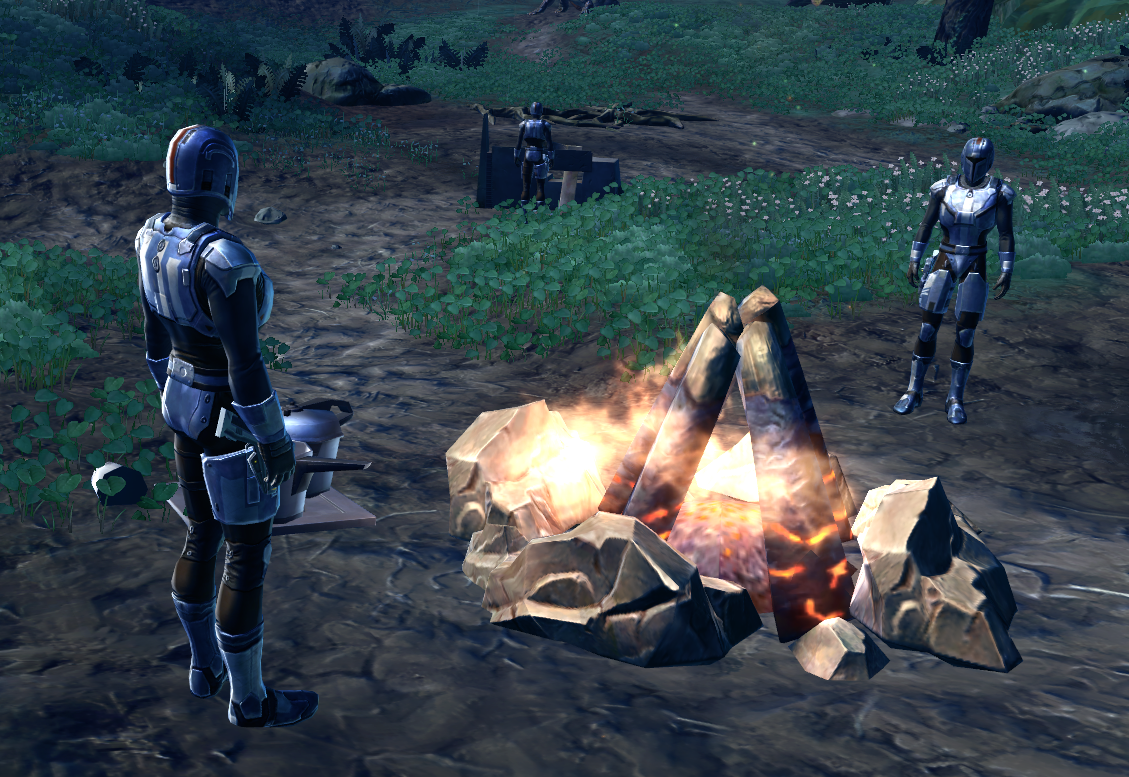
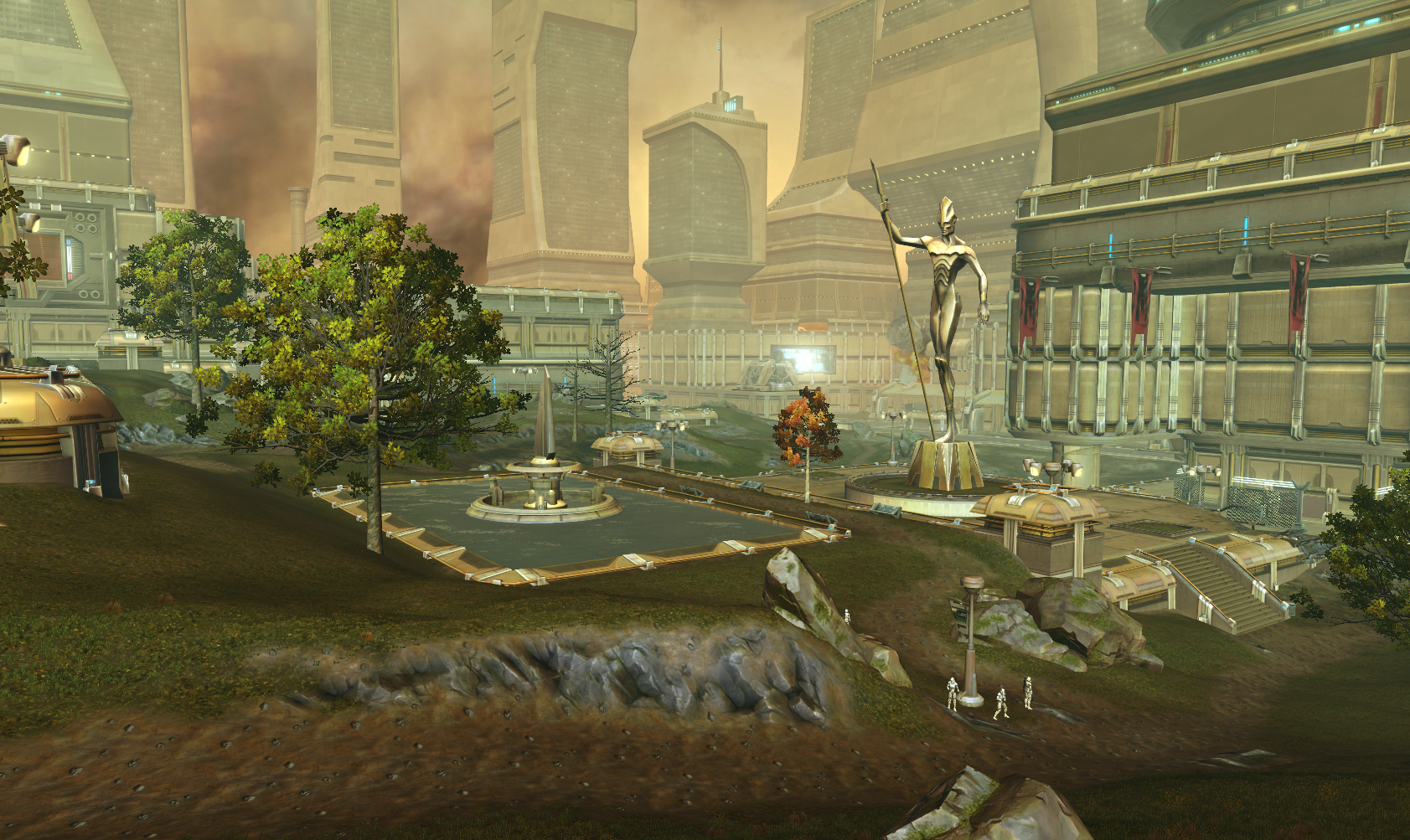
During the Galactic War, the Sith Empire employed Mandalorians to aid in the Battle of Corellia, primarily engaging in combat within Axial Park or hunting Jedi. An elite Mandalorian rocket trooper squad disrupted Republic efforts in Axial Park, utilizing their jetpacks to outmaneuver Republic soldiers and demoralize the garrison by capturing and disabling the Republic memorial statues dedicated to Revan and the Ebon Hawk crew from the Jedi Civil War. However, they were eventually driven out, and the memorial statues were reactivated.
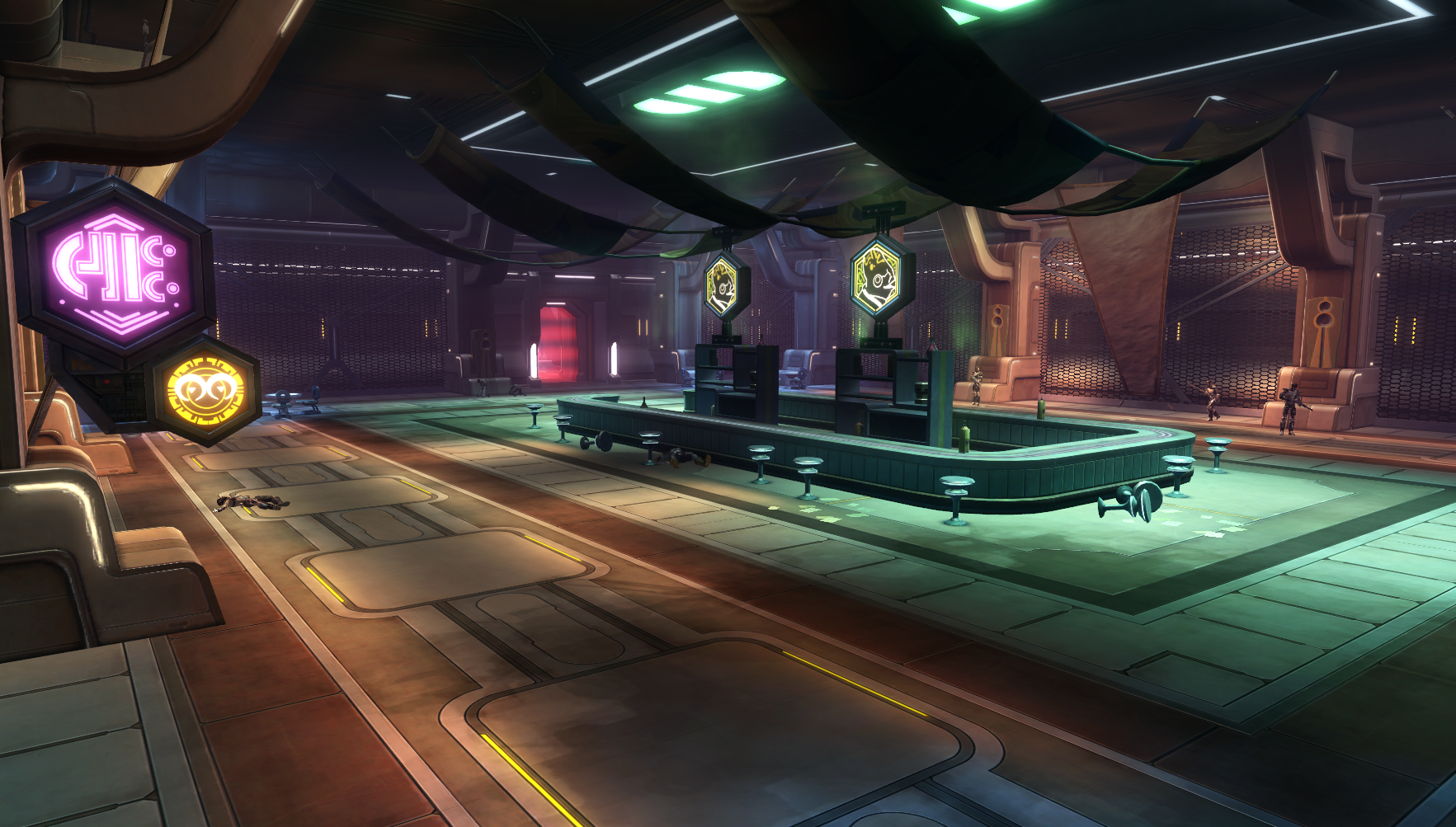
Mandalorians also participated in the fighting within the Blastfield Shipyards. A group of them seized control of the Rusty Freighter Cantina in an attempt to trap the Nautolan Jedi Bengel Morr, but they failed and were defeated. Ultimately, the Mandalorian efforts in the battle proved futile as the Republic secured victory, forcing the Empire to withdraw from Corellia.
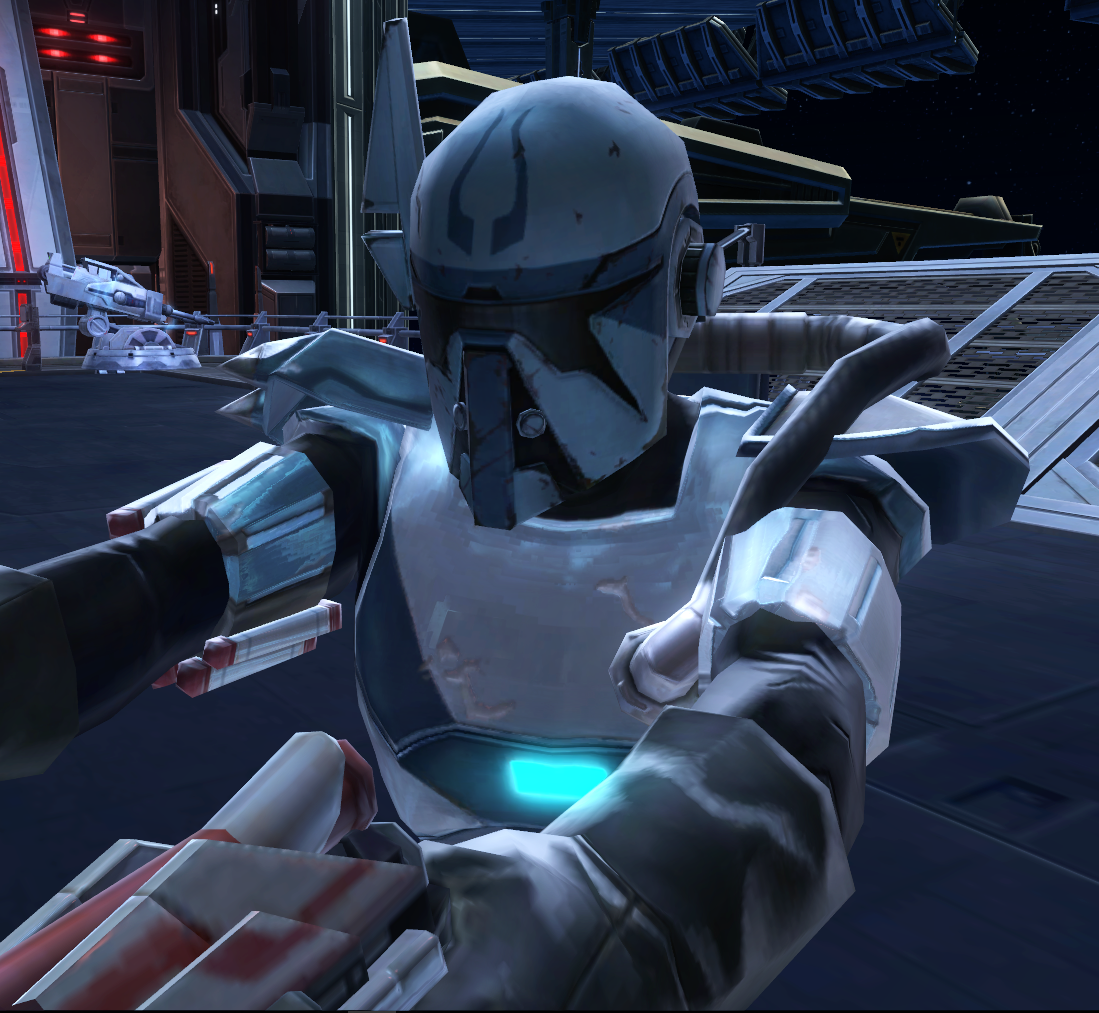
Jindo Krey, a Mandalorian, was among the first to align himself with Darth Malgus's New Sith Empire, leading his own Mandalorian army and engaging in combat against both the Republic and the Sith Empire during the Battle of Ilum.
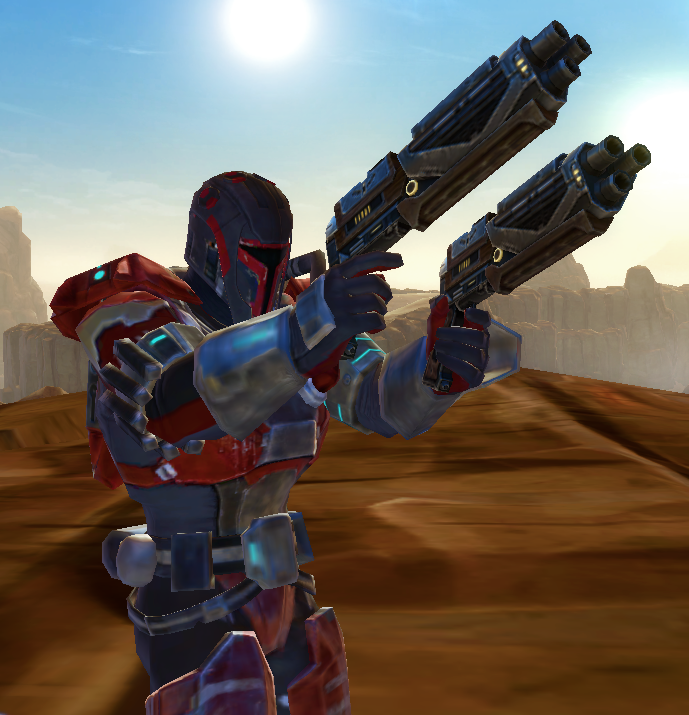
Kreegan Ramar, a Mandalorian Kingpin/mercenary, initiated a reign of terror on Tatooine, with his followers consistently raiding the Jawa Meerko Clan, thereby tarnishing the Mandalorian reputation. Consequently, Meerko contracted the Bounty Brokers Association to dispatch someone to eliminate the rogue Mandalorian. Kreegan Ramar sent a message to the hired help, questioning their motives for assisting Meerko and threatening to visit the Jawa's Clan after dealing with the spacer.
A renowned Mandalorian warrior sought assistance in identifying a masked adversary he had fought to a standstill on the planet Circarpous V, hoping to confront this unidentified opponent once more.
Revolt against the Eternal Empire
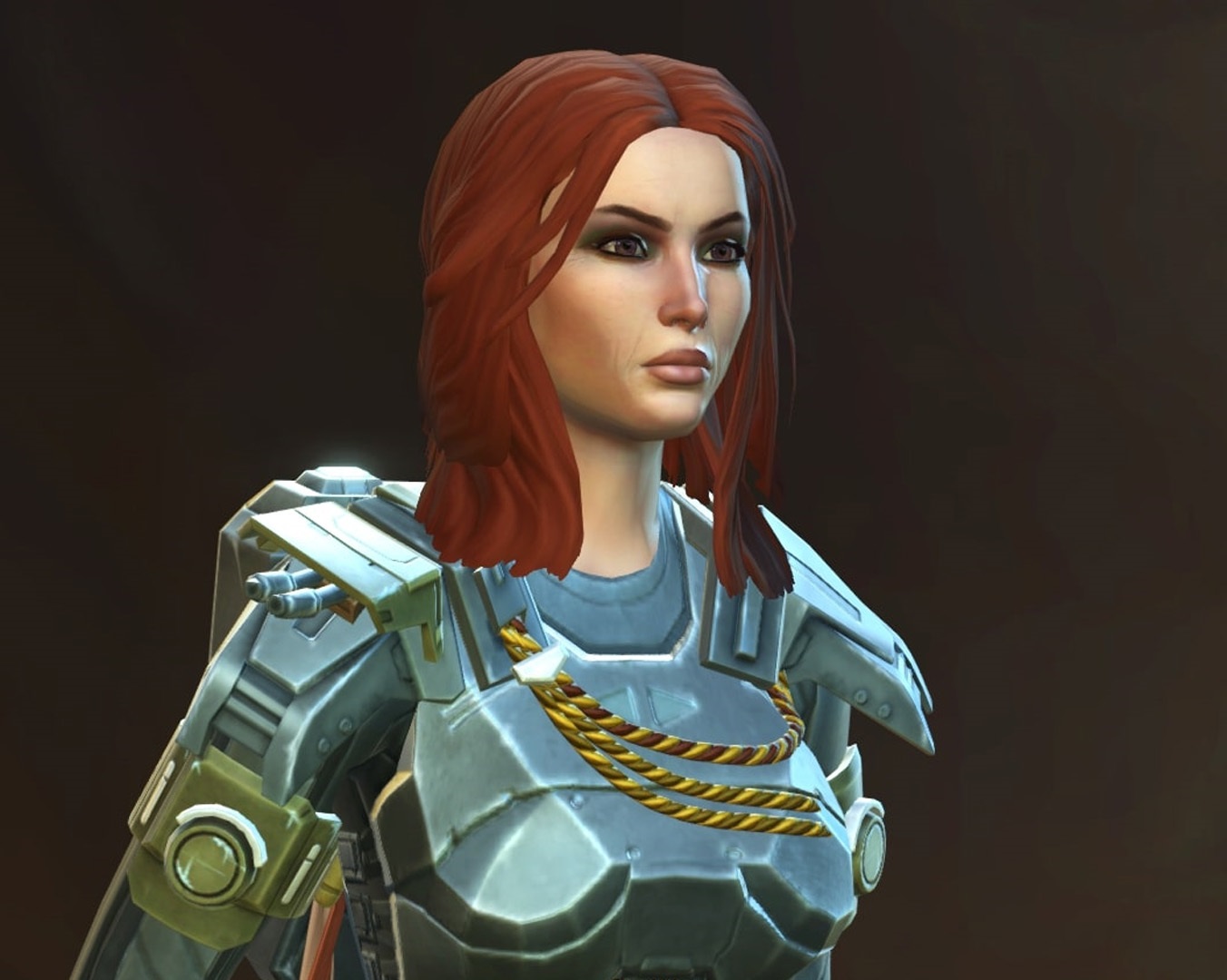
During the Eternal Empire conquest, the Mandalorians confronted them directly, refusing to yield to the invaders. Despite their valiant efforts, they ultimately found themselves on the defensive. Mand'alor the Vindicated was killed when clan members of Lok witnessed him being overwhelmed by skytroopers. This resulted in heightened animosity towards droids, to the point where being defeated by a droid was considered somewhat dishonorable.
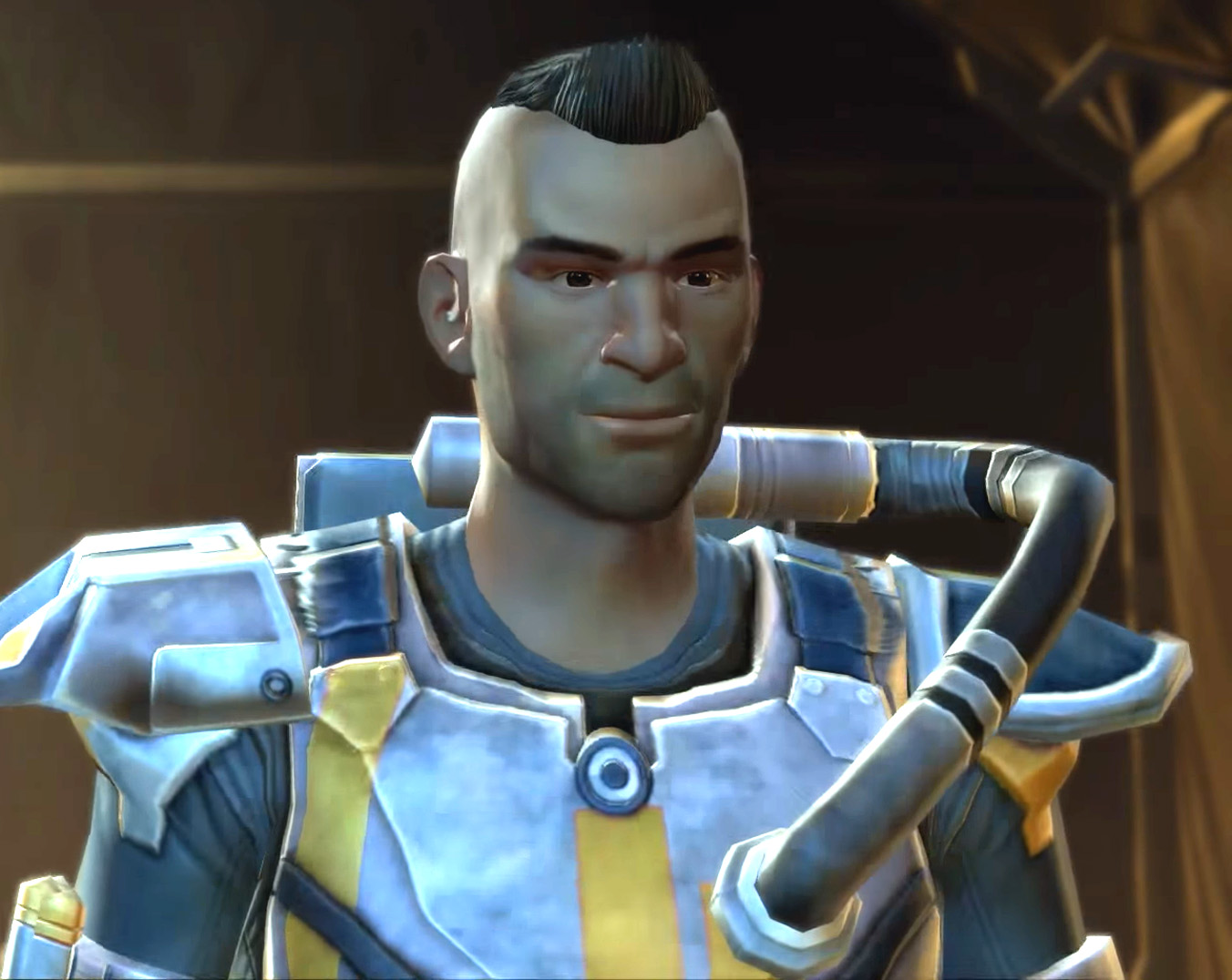
Although the Mandalorian veteran Khomo Fett was a potential candidate to become the new Mand'alor, he declined, preferring combat to strategic planning. Shae Vizla, the celebrated Mandalorian bounty hunter, assumed the title, despite limited experience in leading groups beyond a clan, let alone an entire culture. Shae proved to be the leader the Mandalorians needed during wartime; her inaugural battle as Mandalore the Avenger marked the clans' first victory in six months of conflict.
Torian Cadera, a young Mandalorian warrior, finally had the opportunity to prove his worth to his fellow Mandalorians—once again—during this new war. Following the disappearance of the Grand Hunt Champion, Torian returned to his people at Mandalore's call, leaving his partner Mako on Carratos. Torian volunteered for the most perilous missions against the Eternal Fleet, successfully leading infiltration and surveillance operations.
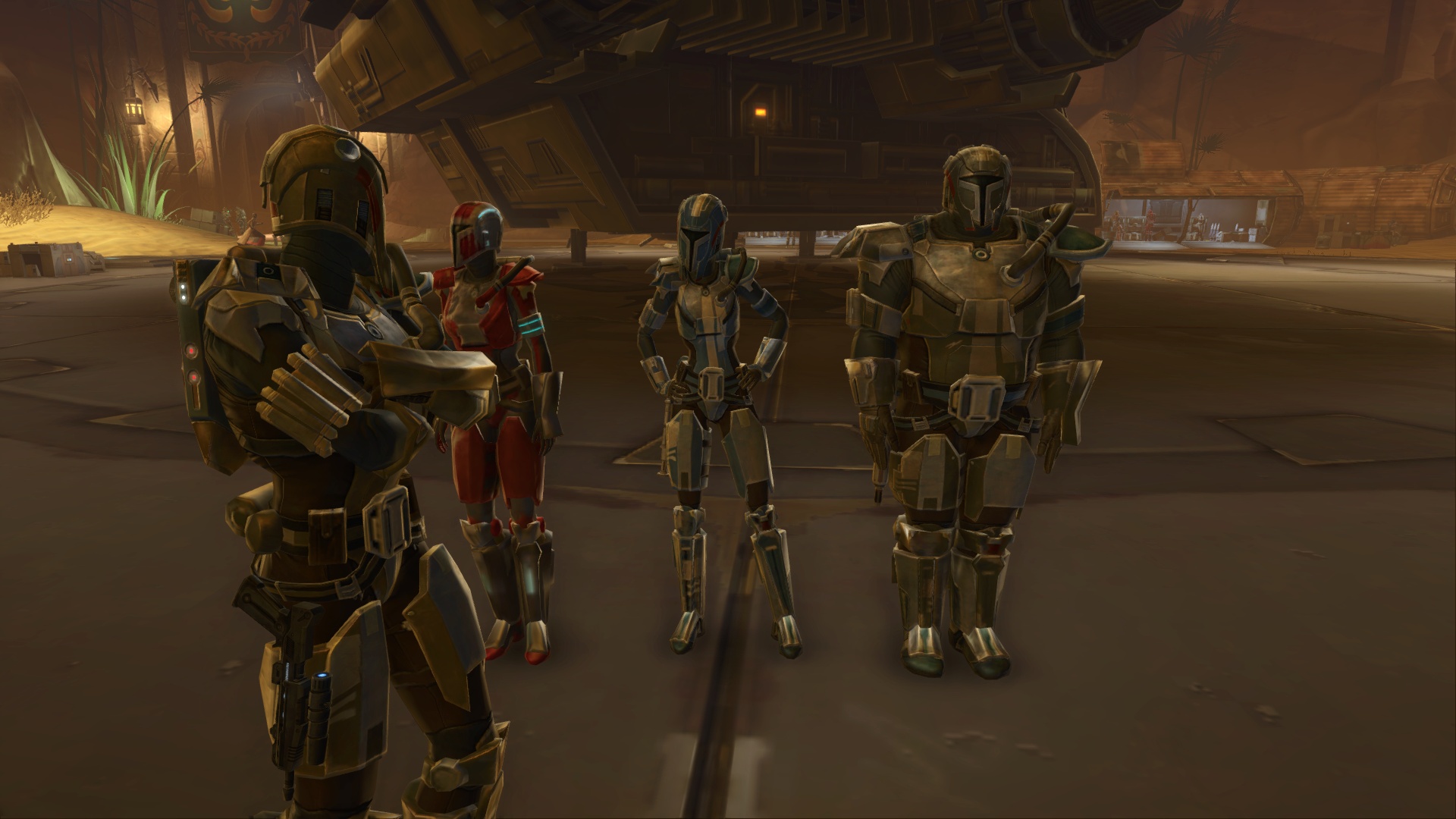
Due to his skill and dedication to his people, Torian was appointed the new chieftain of Clan Cadera and became Mandalore's right-hand man, alongside Khomo Fett. Mako subsequently partnered with the Mandalorian outcast Akaavi Spar, forming a formidable bounty-hunting duo.
When in need of an army to assist in capturing GEMINI Prime, Theron Shan contacted the new Mand'alor, offering her an opportunity to retaliate against the Eternal Throne and seize the spoils of the Zakuul droid factory on Darvannis. Mandalore the Avenger accepted and brought her loyal clans to Darvannis, where she fought alongside the Outlander.
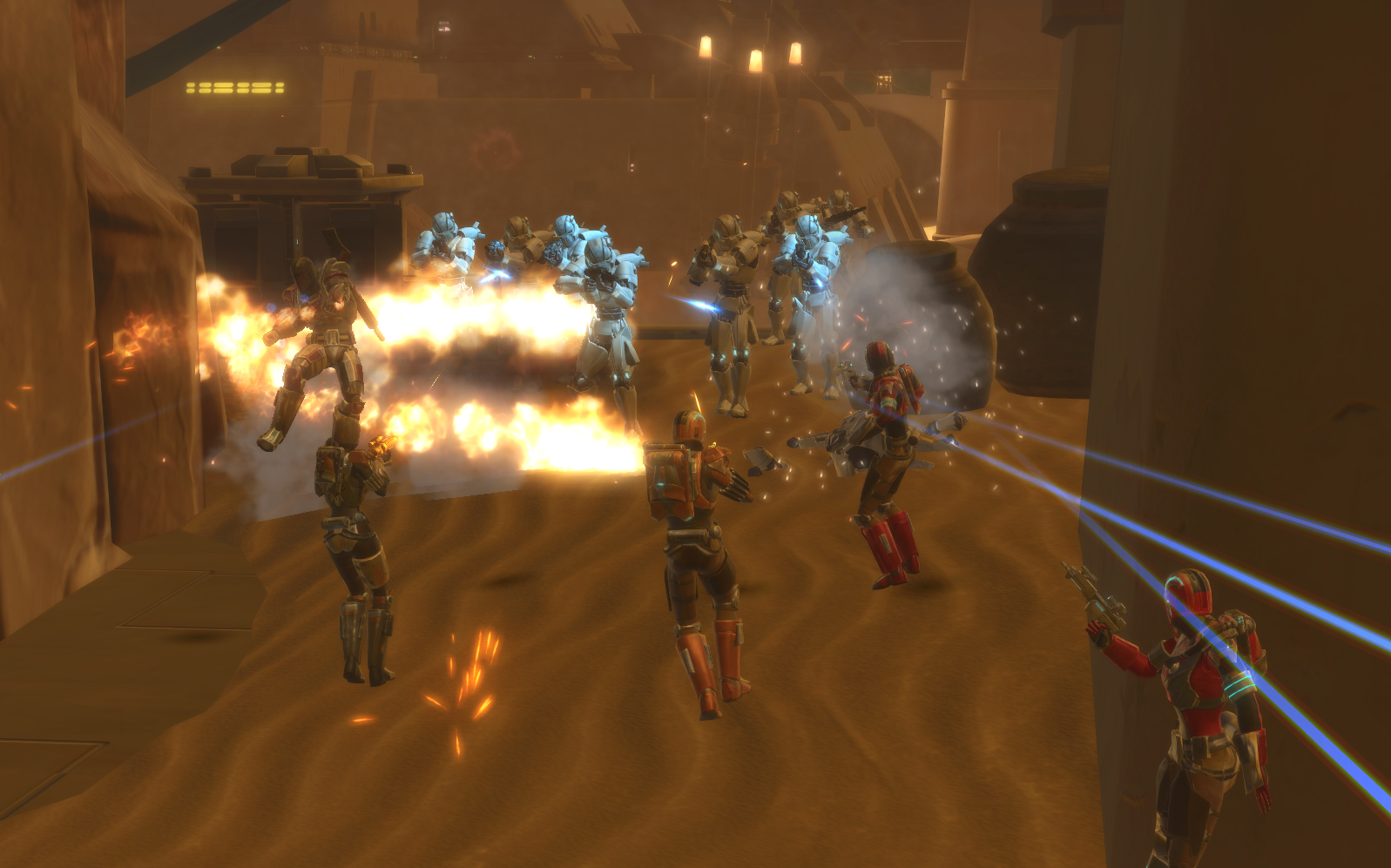
Lana Beniko, the former Sith Intelligence Minister, expressed her concerns about the Mandalorians rearming themselves and suggested the Outlander ensure they suffer significant losses. As a Sith, Lana's thinking aligned with the Sith Empire's preferred methods of control, which she demonstrated by allowing Theron to be captured by the Order of Revan on Rishi.
Regardless, the raid was successful, and the clans were prepared for war against the Eternal Empire. To safeguard Mandalorian interests, Mandalore the Avenger granted Torian's request to join the Eternal Alliance, a decision the Outlander approved after witnessing his bravery and skill in battle.
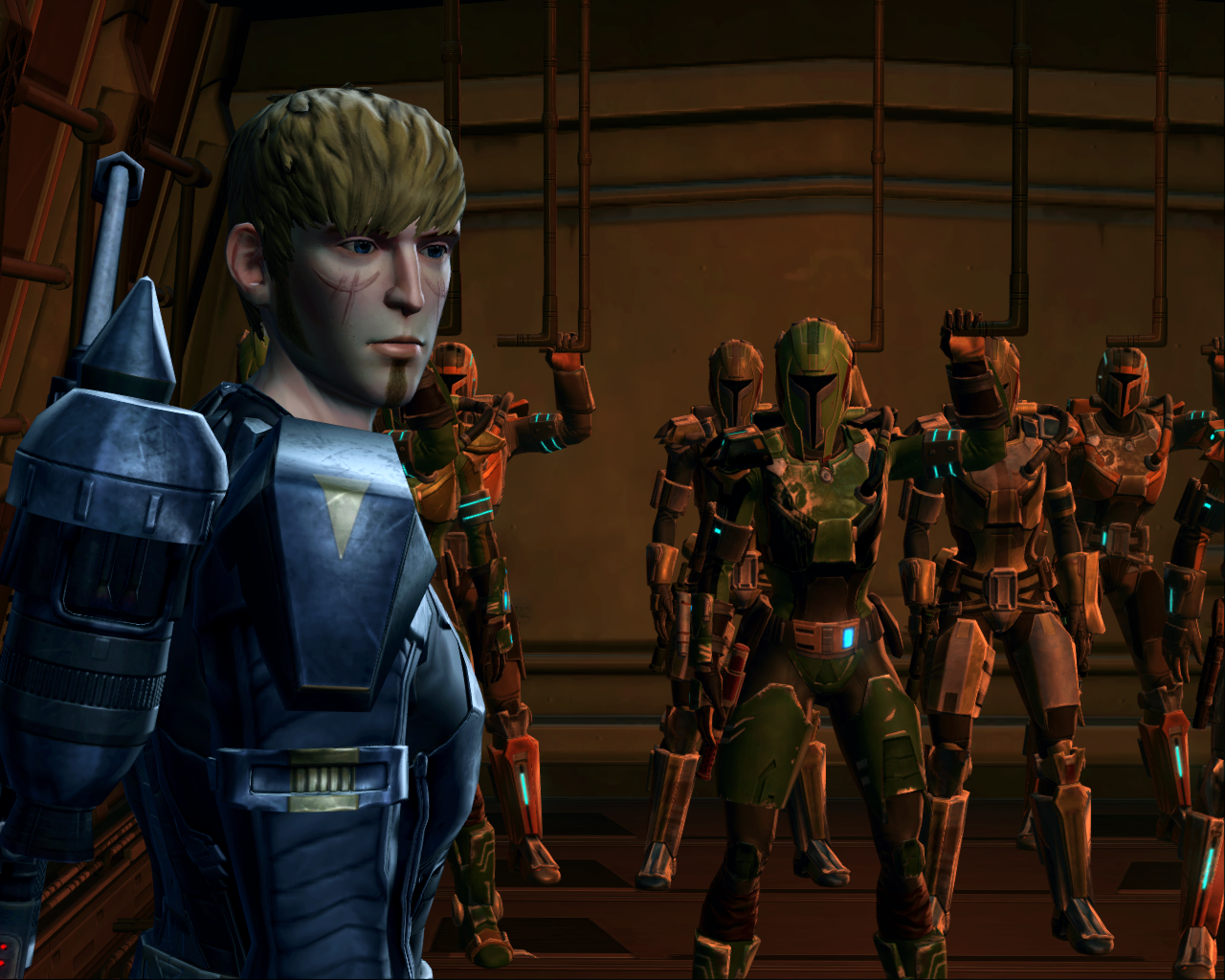
Mandalore the Avenger eventually joined the Alliance, and the Mandalorian Clans loyal to her followed suit, assisting the Alliance in battles against the Eternal Empire, including Empress Vaylin's Invasion of Voss, where Vaylin intended to assassinate her brother and mother, who were hiding on the world. Mandalorian warriors, led by Torian Cadera, supported the Outlander and Lana Beniko against Skytroopers and Zakuul Knights on the ground.
The Third Galactic War
Following the war, Mandalore continued to support the Alliance in rebuilding the galaxy, leading the clans to collaborate with Hylo Visz, a former adversary of the Mandalorians who had breached their blockade decades earlier, which was an ironic twist. Together, they helped secure supply runs from pirates or other greedy factions during the resource crisis that began to plague the galaxy. However, during this period, with the Republic and Empire now engaged in the third Galactic War, Shae Vizla faced challenges to her leadership. Before the raid on Darvannis, surviving members of Clan Lok and other like-minded Mandalorians defected from the Avenger's command.
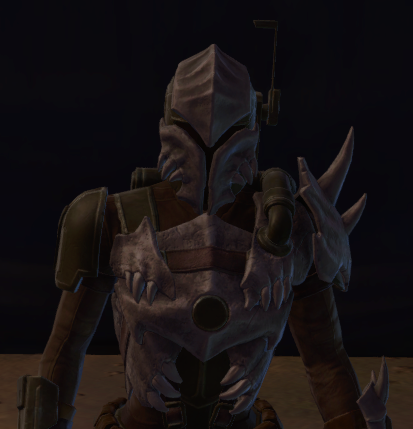
Under the leadership of Mirli Lok, they journeyed to Onderon and established the Ash'ad, seeking honor and glory while securing an agreement with Regalun Petryph, the current King of Onderon. However, Mand'alor soon discovered their location. Establishing her forces in the city of Iziz, Shae Vizla tasked the Outlander with locating them and stripping them of their armor to cleanse the stain on the honor of the previous Mand'alor.
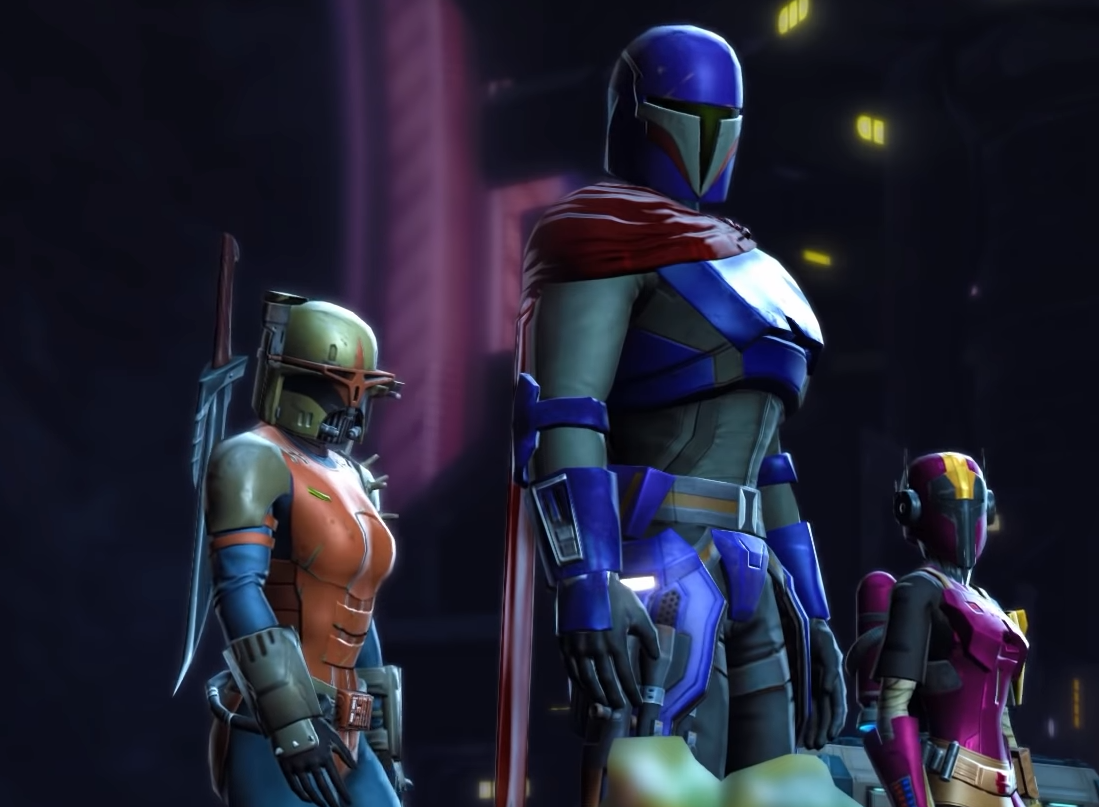
Elsewhere, on the mining station of Mek-Sha, a group of former Mandalorians identifying themselves as Dar'manda, led by the enigmatic and ruthless Indigo, established a feared reputation throughout the station. Unlike the Ash'ad, who still considered themselves Mandalorians despite violating one of the Resol'nare tenets, the Dar'manda completely disavowed the culture, wearing their Mandalorian armor in mocking pride. Whatever their reasons for exile, they faced strong animosity from Mandalorians such as Torian Cadera, Mand'alor herself, and even Akaavi Spar, despite her own outcast status following the destruction of her clan by Clan Rook and her opposition to the Sith Empire.
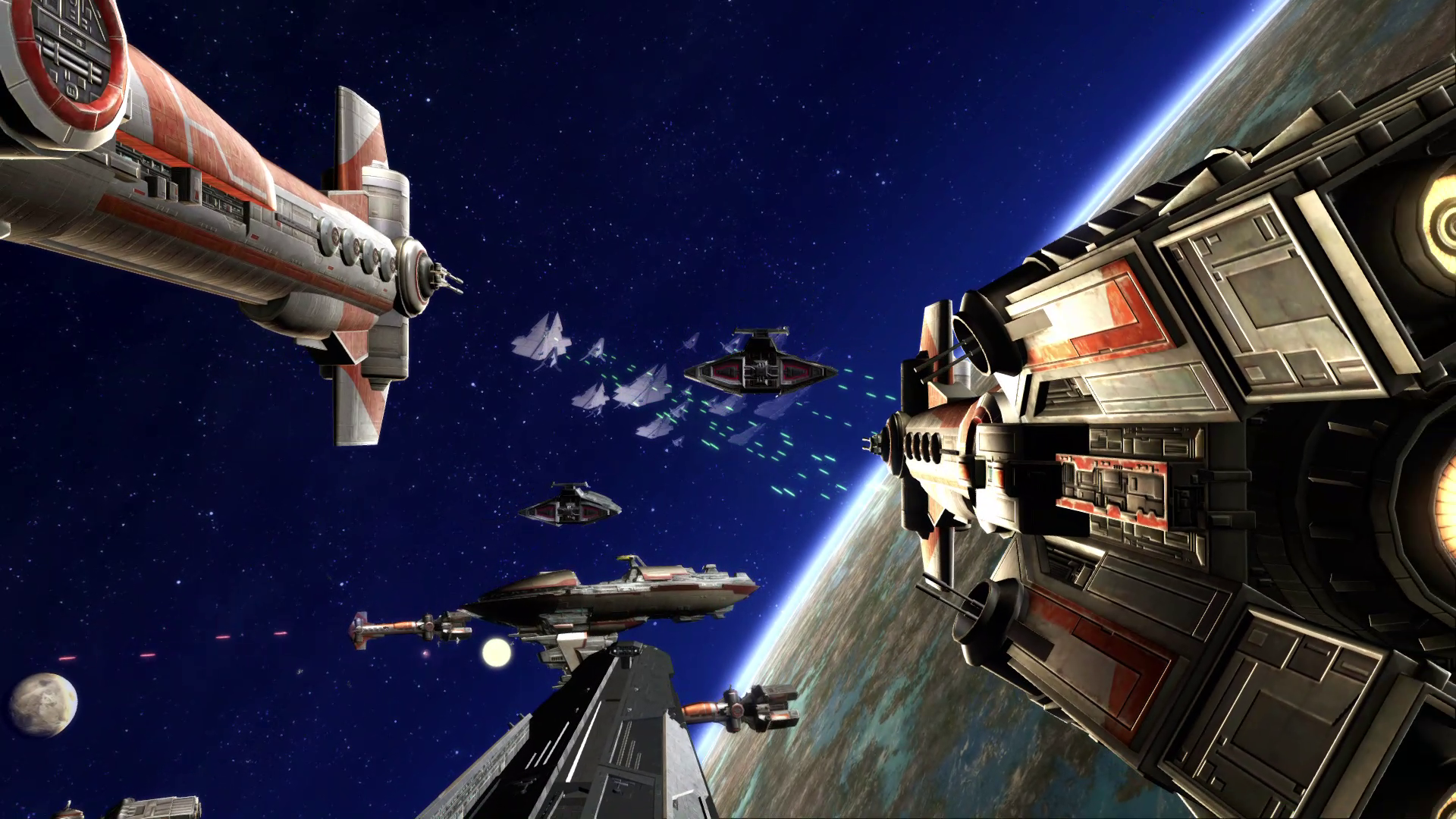
However, Mand'alor's actions during the Meridian Complex assault were particularly noteworthy, demonstrating her people's stance in the new conflict. Although some Mandalorians continued to engage in contracted work with the Empire, Shae Vizla chose to support the Galactic Republic during the Empire's assault on Corellia with her Mandalorians. She assisted Admiral Aygo with the fleet during the space battle, leading Mandalorians to board the last Imperial Iso-5 Dreadnought that had regrouped with the Imperial fleet. The battle concluded with a Republic victory.
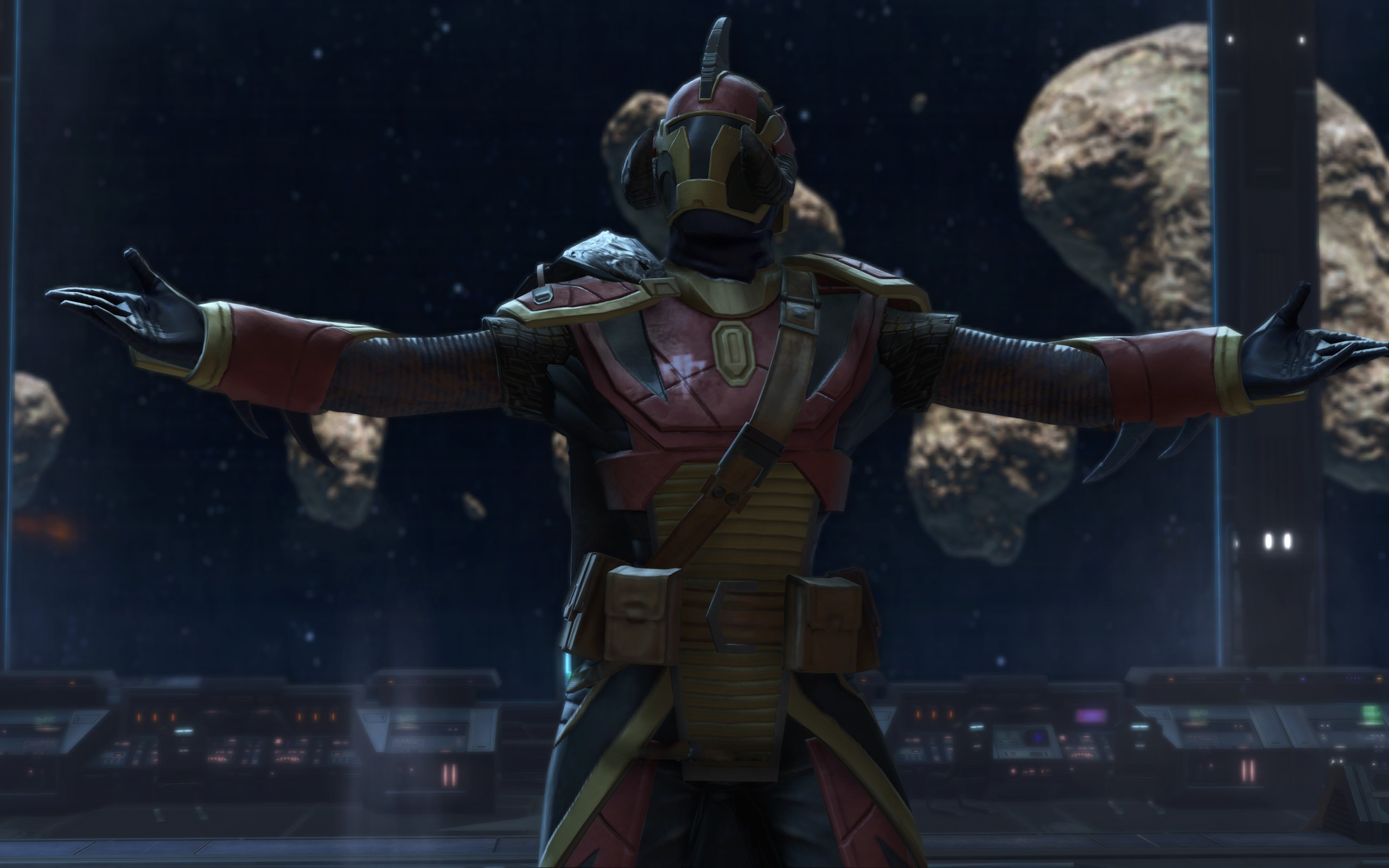
A fresh Mandalorian Civil War erupted when the Dar'manda, Clan Varad, and the Ash'ad united within the clandestine organization referred to as the Hidden Chain, spearheaded by Field Marshal Heta Kol. Kol was convinced that the Mandalorians had strayed from their cultural values and code of honor during the reign of Mandalore the Avenger, who persisted in aiding the Alliance in its efforts to bring stability to the galaxy. Their initial actions involved assaults on Mandalorian freighters, which garnered the attention of Shae Vizla and her advisor, Jekiah Ordo. Their true intentions remained concealed until they launched a raid on the Spirit of Vengeance II, aiming to pilfer invaluable artifacts.
The assault, however, met with failure when Mand'alor, supported by the Outlander and Rass Ordo, launched a counter-offensive, boarding the Hidden Chain's vessels: Varad's Champion's Glory, the Dar'manda's Fortune's Folly, and the Ash'ad's Seeker's Vigil. Their objective was to liberate the Spirit of Vengeance from the grip of their ADH. Despite the setback, the Hidden Chain achieved their primary goal: acquiring Clan Cadera's banner. Shortly thereafter, Heta Kol withdrew, subsequently convening a gathering of the Mandalorian exile factions. During this meeting, she reaffirmed her unwavering dedication to her cause, serving as a reminder of their shared purpose.
Mandalore the Avenger appointed Jekiah Ordo as Arbiter, and the Clans that remained loyal to the current Mand'alor braced themselves for the impending conflict. Shae Vizla eventually descended upon Mek-Sha, decimating half of the Dar'manda stationed there. Subsequently, she engaged in negotiations with their leader, Indigo, discovering that he was unaware of Bask's involvement with the Hidden Chain, leading to an agreement for his continued existence. Despite her less-than-flattering remark, labeling him a "grumbingly mynock," Shae departed with the crucial information she sought.
With the support of the Alliance, Shae pressed on with her pursuit of Heta Kol, while Akaavi Spar was entrusted with the task of probing Heta's supply networks. Her Mandalorian heritage proved invaluable in gaining the necessary proximity to acquire intelligence for the Commander. Meanwhile, on Geonosis, Jekiah was left to manage a looming dispute between the Clans.
As time passed, a growing number of clans seceded from Shae's leadership, including Clan Bralor, Clan Farr, Clan Sharratt, Clan Werda, and Clan Rodarch. These clans clashed with the Alliance Commander and Rass Ordo on Port Nowhere.
Ultimately, Shae concluded that the most effective approach to resolving the conflict—and rediscovering Heta Kol's location—was to release her former employer, Darth Malgus, from captivity.
Clan Nerak, a relatively recent addition to the Mandalorian hierarchy, experienced a surge in prominence following the demise of its previous leader at the hands of the impetuous Ballag. Driven by a desire to bolster his reputation and address his insecurities, Ballag instigated conflict with the esteemed Clan Shale, resulting in the cold-blooded murders of its members. To prevent widespread chaos, Jekiah intervened, however, the two leaders agreed to a duel that would settle their dispute but added heavy pentalty to the loser's Clan as they would be destroyed in result. The duel, carrying the grave consequence of the loser's Clan's annihilation, commenced between Arla Shale and Ballag.
Despite nearly securing victory, Ballag was ultimately defeated when Arla rallied, turning the tide of the battle until he was at her mercy. Clan Nerak was spared from destruction as Arla deemed Ballag's defeat sufficient. He was subsequently killed by his own clansmen, leading to Clan Nerak's disintegration, while Clan Shale reaffirmed its unwavering loyalty to Mand'alor's rule.
The Sith Wars of the New Era
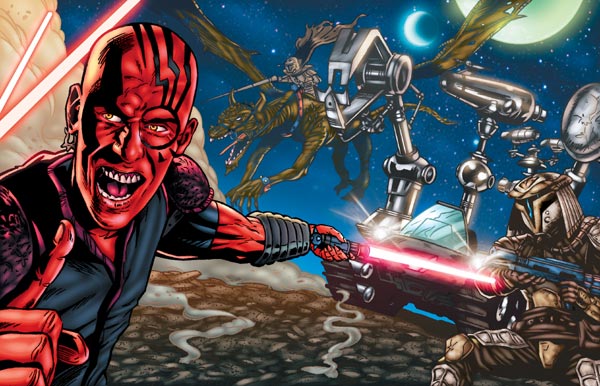
During the period known as the New Sith Wars, the Mandalorians deviated from what was widely considered a long-standing alliance and engaged in warfare against the Sith. In the early stages of the New Sith Wars, a Mandalorian faction was approached by Jedi Master Murrtaggh. Murrtaggh proposed a substantial sum of credits in exchange for the Mandalorians' assistance in an assault on the encampment of the enigmatic Dark Lord of the Sith, known as the Dark Underlord. The Mandalorians attacked the Sith stronghold on Malrev IV, deploying Lagartoz War Dragons and numerous soldiers equipped with Mandalorian battle harnesses. Their actions drew the attention of the Dark Underlord's general, allowing Master Murrtaggh to infiltrate the Underlord's fortress. There, he vanquished the Sith Lord in combat but succumbed to the dark side in the process.
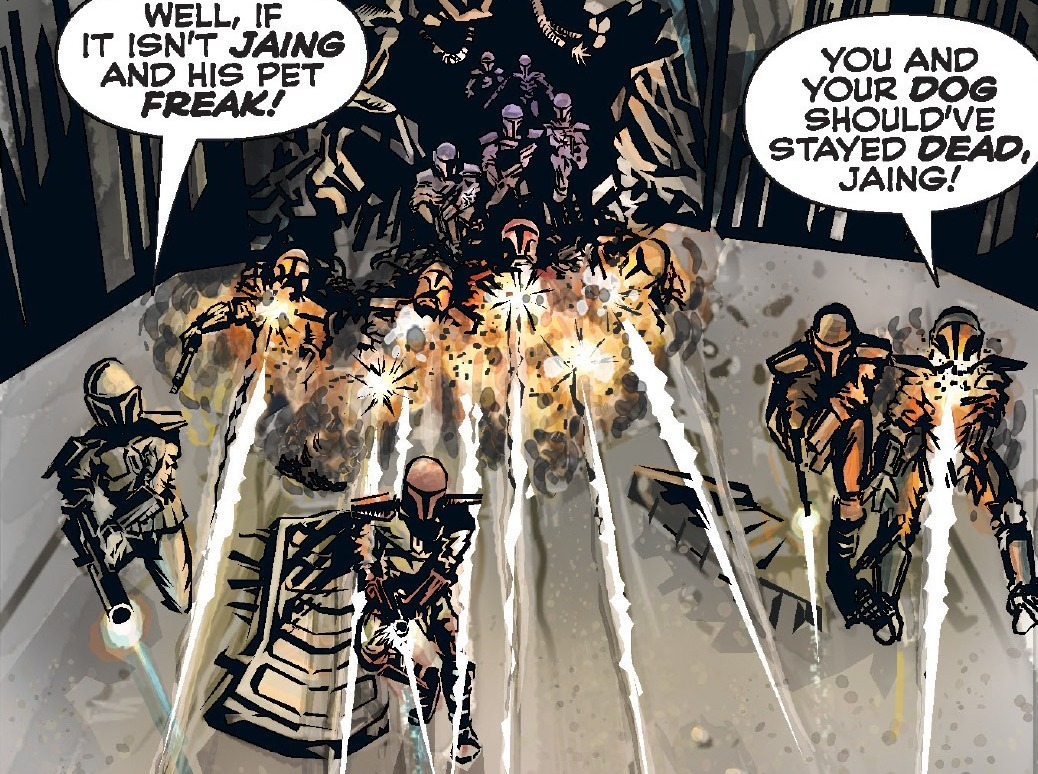
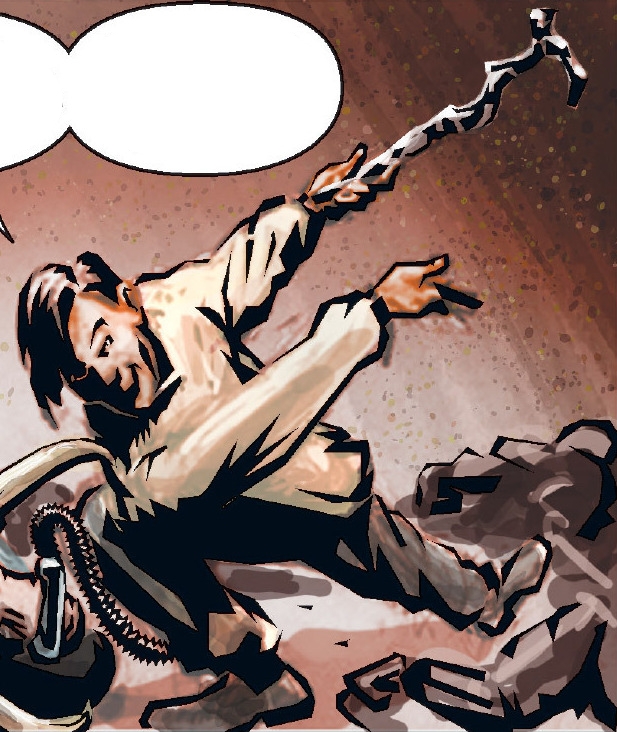
At some juncture during or preceding the New Sith Wars, Jaing, a Mandalorian training master and former Neo-Crusader Shock Trooper from the Mandalorian Wars, encountered a young Gen'Dai named Durge. Jaing took Durge under his wing, mentoring him in the Mandalorian ways. Later, after Jaing's disillusionment with the Mandalorians due to what he perceived as a decline in honor, Jaing and Durge encountered a cyberneticist who offered to augment them with advanced cybernetics. This procedure restored Jaing's youthful vigor and enhanced Durge's already remarkable physical abilities. The operation proved successful for both warriors, transforming them into formidable cyborgs. In return, the doctor who performed the surgery requested protection from a clan of Mandalorian mercenaries loyal to Ung Kusp, who were in the service of a Sith faction seeking to reclaim the Sith artifact that the doctor had pilfered from them. These Mandalorians launched an assault on the doctor's laboratory shortly thereafter, resulting in the death of the doctor's assistant. Jaing was mortally wounded by a thermal detonator. Before the Mandalorian leading the assault could deliver the final blow, Durge retaliated, brutally massacring the Mandalorians responsible for nearly killing his mentor, even pursuing them as they retreated. As Jaing lay dying, the doctor revealed that they had orchestrated a conflict between the Mandalorians and the Sith.
Near the conclusion of the New Sith Wars, the Mandalorian society was in disarray. By 1058 BBY, the Candorian Plague had decimated their population, and their vessels were compelled to form convoys to safeguard against raiders operating in adjacent sectors. Witnessing the plight of his people, Aga Awaud, a mercenary, proclaimed himself Mandalore the Uniter and initiated a movement known as the Return, urging dispersed Mandalorians throughout the galaxy to return to their homeworld. Under his leadership, Mandalorian space flourished, emerging as a regional power in the Outer Rim.
Transformation of Culture
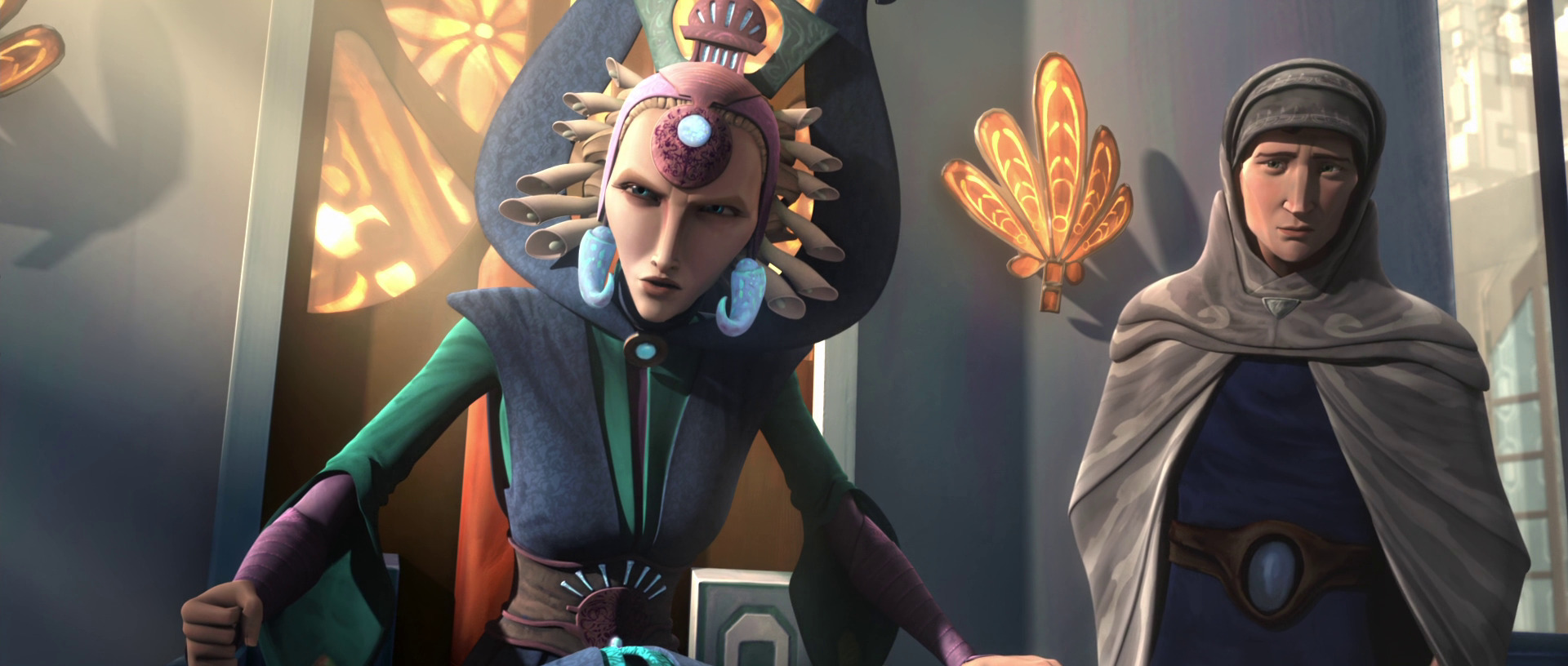
In 738 BBY, prompted by a surge in Mandalorian militancy that alarmed the Republic and its Jedi protectors, a brief and targeted conflict erupted between the Republic and the Mandalorians. This conflict brought devastation to the Mandalore sector despite the Mandalorians involvement in defending the galaxy against both Eternal Empire and the New Sith. Portions of Mandalore were reduced to desolate white-sand deserts. As the warrior clans dispersed, the New Mandalorian faction emerged from the aftermath. Rejecting many of the traditional warrior codes that had historically governed Mandalorian behavior, the New Mandalorians championed the notion that the path to Mandalorian survival and prosperity lay in peacefulness, neutrality, and tolerance. Adhering steadfastly to this belief in pacifism, nonviolence became a cornerstone of their society. The New Mandalorians constructed grand cube cities in the desert wastelands, leveraging their skills as inventors and builders. Upon implementing these changes, any Mandalorians within their society who resisted the reform and insisted on adhering to their warrior traditions were exiled to Mandalore's moon, Concordia. Traditional Mandalorian armor became a rare sight in the New Mandalorian capital city of Sundari, and on the neighboring world of Kalevala, a known stronghold for the New Mandalorians.
While many Mandalorians embraced the New Mandalorian movement, other clans persisted in their age-old traditions. These ancient customs endured in Mandalore's countryside, with the traditionalist Mandalorians identifying as the Aka'liit ("Faithful" in Mando'a). The title of Mand'alor subsequently passed to members of the Aka'liit. Following a 200 BBY war, the Mandalorian warrior clans were responsible for the genocide of the Ithullan race. Consequently, the ruling Mandalore of the time was overthrown by an alliance of a rogue group of Jedi and the Bounty Hunters' Guild, and assassinated by the Gen'Dai bounty hunter Durge, who sought vengeance against the Mandalorians for the death of his mentor, Jaing. In retaliation, the Mandalorians captured and subjected Durge to torture, pushing him to the brink of insanity. The bounty hunter managed to escape his Mandalorian captors but required nearly a century to recover from his injuries. Around this time, Ranah Teh Naast became Mand'alor, known as "Mandalore the Destroyer." She led a siege of Luon, offering the Consul of Luon a final opportunity to surrender before launching an attack. It was also likely during this period that a group of Mandalorians murdered the family of a Wookiee named Ryyk.
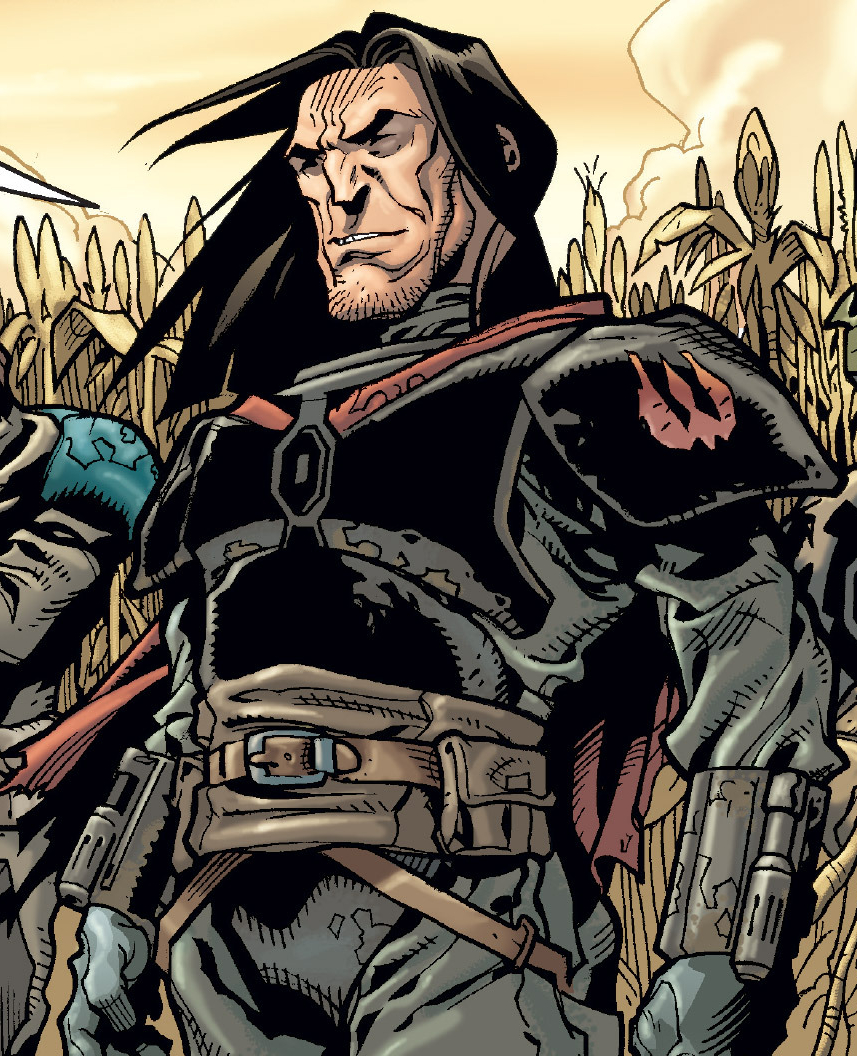
In 60 BBY, a charismatic Mandalorian warrior named Jaster Mereel ascended to the position of Mand'alor. In this capacity, he initiated a cultural reform that had been advocated for since the Ithullan genocide nearly a century and a half earlier, ultimately establishing a new framework for Mandalorian conduct known as the Supercommando Codex. He asserted that Mandalorians who desired to fight should operate as highly compensated soldiers and conduct themselves as honorable mercenaries. However, not all concurred with the Codex or Mereel's reforms. He faced opposition from the followers of the barbaric Tor Vizsla, who yearned for a return to unrestrained savagery and the instigation of another galactic war of conquest. Skilled but undisciplined, these soldiers rallied behind Vizsla and formed a splinter group that became known as the Death Watch, while those supercommandos who remained loyal to Mereel rebranded themselves as the "True Mandalorians." While Death Watch's objectives stood in stark contrast to those of the New Mandalorians, they could not endorse Mereel's faction either, as any act of Mandalorian violence was fundamentally at odds with the New Mandalorians' principles. Remaining neutral and detached from the conflict, the Aka'liit fractured, and the True Mandalorians and the Death Watch became embroiled in a bitter civil war.
The Mandalorian Civil War

The Mandalorian Civil War, as it became known, engulfed Mandalore's standing army and several prominent clans, but the two factions were relatively small in comparison to the overall Mandalorian population. Mandalorians living away from Mandalore were scarcely affected, even those in the Mandalore sector. However, the ideological differences between Tor Vizsla and Jaster Mereel were central to the war and the path the Mandalorians would take for the foreseeable future. In 58 BBY, the Mandalorian Civil War spilled onto the agricultural world of Concord Dawn. During the fighting, Jaster Mereel and his soldiers were compelled to retreat and seek refuge from the Death Watch on the farm of a local Journeyman Protector named Fett. Upon discovering that Fett had concealed their enemies, Vizsla subjected him to brutal interrogation in front of his young son, Jango. Before Vizsla could execute the farmer, who refused to betray Mereel and his men, Fett's wife opened fire on the Death Watch with a blaster rifle. Amidst the ensuing chaos, both Fett and his wife were killed, although Mereel rescued young Jango from the Death Watch. As the True Mandalorians fled into the fields, Vizsla ordered them to be set ablaze in an attempt to kill Mereel as he ran. Jango guided the Mandalorians to a large irrigation pipe that allowed them to escape the inferno, while Vizsla and his men ransacked Fett's home and kidnapped Jango's sister, Arla. Believing their enemies dead, the Death Watch moved into a nearby town for a celebratory raid before moving on to their next target. Unfortunately for them, the True Mandalorians had regrouped in the town and sprang an ambush on the unsuspecting Death Watch. Striking from protected alleyways and second-story windows, the True Mandalorians struck down nearly every Death Watch soldier there. However, Vizsla survived an attack on his armored speeder and escaped Concord Dawn. With his parents deceased, Jango Fett was taken in by Jaster Mereel, joining the Mandalorians as Mereel's adopted son.
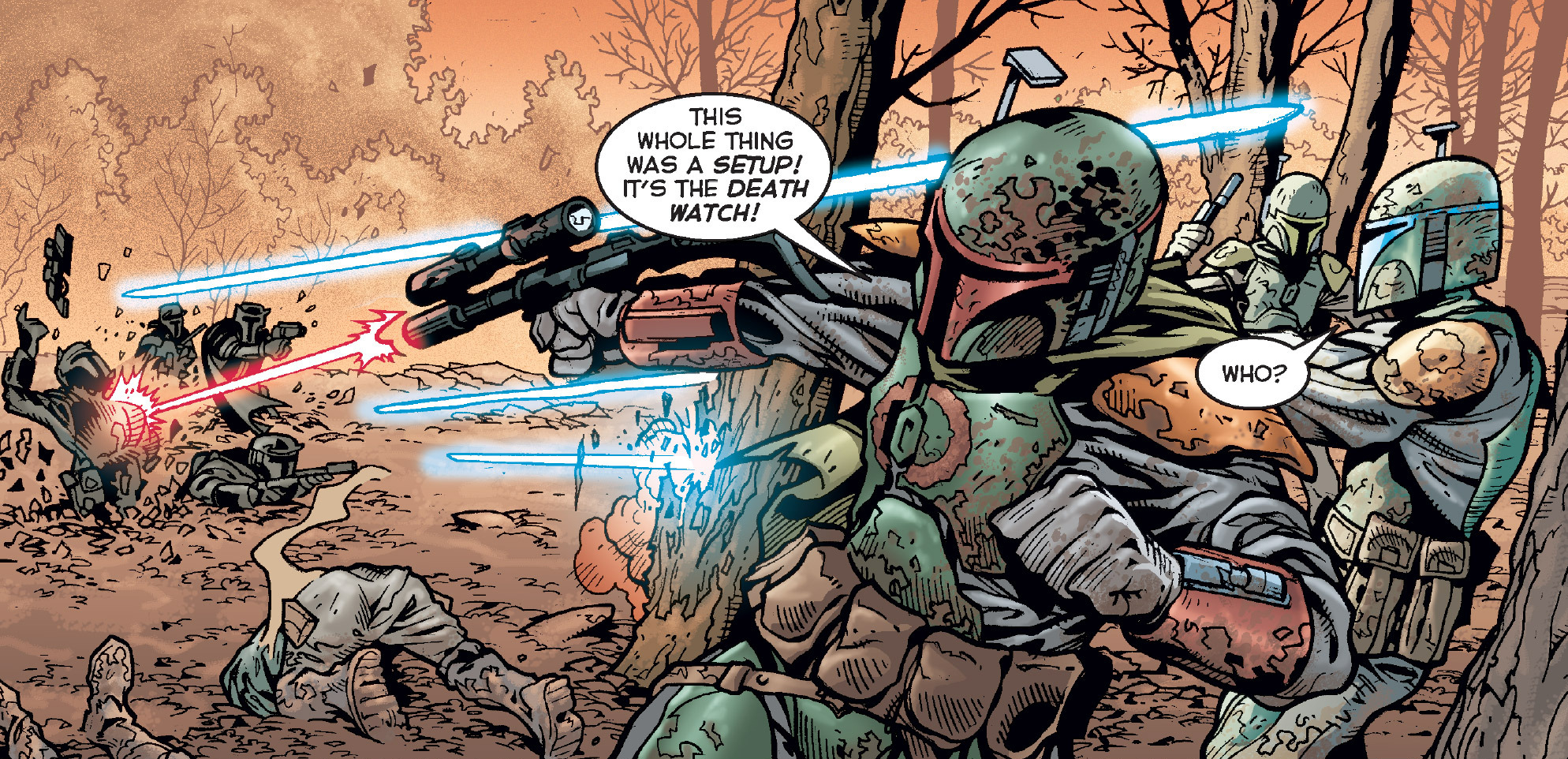
Six years later, in 52 BBY, the True Mandalorians believed the threat of the Death Watch to be over and returned their focus to acting as a mercenary army. Contracted by the Korda Defense Force, the True Mandalorians journeyed to Korda Six to extract a team of rookie security personnel pinned down under fire by a group of local hostiles, supposedly poorly armed and with no formal army. Unfortunately, the intelligence reports were grossly inaccurate: when the Mandalorians landed, they came under heavy fire from the Kordan natives and in the resulting battle, took heavy casualties. Jaster Mereel ordered a retreat, but his second-in-command, Montross, refused and insisted they press on. When he was injured in a grenade strike, it was up to Mereel to provide rescue, killing no less than three enemy Kordan in the process. At the same time, Jango had used Montross' ill-guided attack as a diversion in order to move on the location of their original objective, the Kordan security team. But when he and his squad reached the site, they instead found a Death Watch ambush awaiting them. As Jango's troops fought back the Death Watch, Mereel and Montross came under attack from Vizsla himself. Mereel was wounded in a grenade blast that Montross used his jetpack to avoid, but when the injured Mand'alor called to him for an air lift, Montross turned his back on Mereel and left him to die on the battlefield, stating that he no longer wished to take orders from Mereel. Betrayed and abandoned, Mereel was helpless to defend himself and perished as Vizsla rained down laser cannon fire from his four-wheeled tank, killing his hated rival. At the Mandalorians' landing zone, Montross now urged the Mandalorians to heed Mereel's final orders and pull out, claiming that Mereel was dead and that Jango had perished trying to save him. However, Fett returned to the landing zone carrying with him Mereel's body, exposing Montross as a liar and a traitor. When Montross insisted that Mereel would have wanted him to take command, the other Mandalorians denounced Montross at blaster point and declared that they would only follow Fett, Jaster Mereel's chosen heir. Montross was grudgingly allowed to leave, slipping off into exile, while Jango became the new Mand'alor and leader of the True Mandalorians.
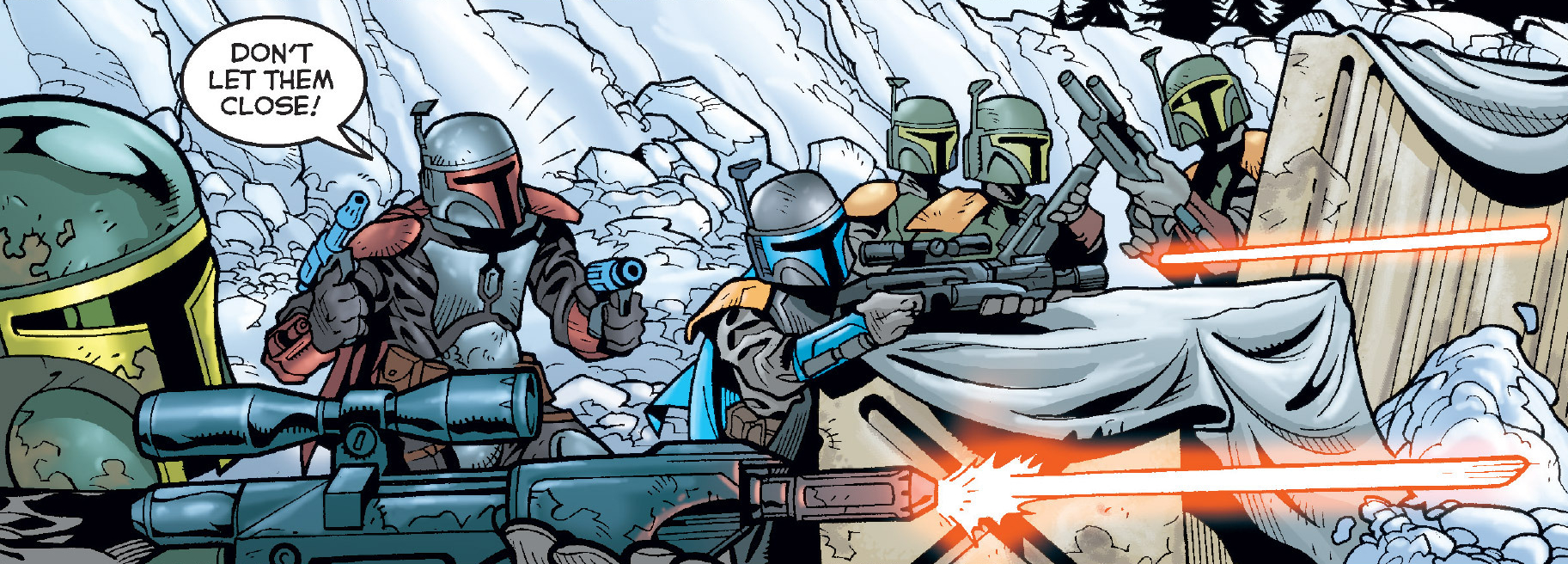
Under Fett's leadership, the True Mandalorians scored a significant victory against the Death Watch in the years leading up to 44 BBY, that left the Death Watch severely crippled. But rather than concede defeat, Vizsla turned to the Governor of Galidraan for refuge and his assistance in rebuilding the Death Watch. As per Vizsla's plan, the governor contracted the True Mandalorians to put down a local insurrection. The True Mandalorians traveled to Galidraan where they dealt with the rebels, and upon completion of their task, Fett went to the governor's estate to collect their payment; by that time, however, the governor had already contacted the Jedi Council with a request for aid, claiming that the Mandalorians were murdering "political activists" along with innocent women and children. In response to the governor's concerns over the lack of evidence, Vizsla assured him that his own men would supply the necessary body count. Fett had become aware of the governor's involvement with the Death Watch and while there, demanded to know the whereabouts of Vizsla. At that moment, Vizsla revealed himself there in the castle and attacked Fett with a cadre of Death Watch soldiers, forcing him to flee. Fett rushed to make it back to base camp, trying unsuccessfully to comm his second-in-command, Myles, and warn him of the inbound Jedi ships he'd spotted, but he arrived at the same time as a Jedi strike team led by Jedi Master Dooku. Demanding that the Mandalorians stand down on charges of suspected murder, the innocent Mandalorians indignantly opened fire on the Jedi. In the ensuing shootout, eleven Jedi were killed—six of whom were felled by Fett himself, following the death of Myles—along with every other True Mandalorian there, save for Fett.
In the battle's aftermath, the Jedi delivered the subdued Fett into the custody of Galidraan's governor, who in turn sold Fett into slavery. Though it seemed the Death Watch had won the war—manipulating the Jedi into destroying their enemy for them—after several years spent aboard a spice transport in bound servitude, Fett escaped, recovered his armor from the Governor of Galidraan, and tracked Vizsla's ship to Corellia, where he killed Vizsla after a lengthy fight, avenging the True Mandalorians and dealing the final blow of the war. The remaining Death Watch members scattered, vanishing from the galaxy at large under the Mandalorian principle of ba'slan shev'la, or "strategic disappearance." Fett, scarred by the loss of his True Mandalorian compatriots and his years as a slave, grew distant from the rest of his people and his role as Mand'alor, turning instead toward the solitary life of a bounty hunter. As such, Mandalore's post-war reconstruction fell largely upon the New Mandalorian government, now under the leadership of Kalevala native Duchess Satine Kryze. The Mandalorians who retained their traditional lifestyles, but also rejected the Death Watch's ideals, came to be known as Old Mandalorians. Some of the Old Mandalorians chose to leave the Mandalore sector to Vlemoth Port, under leadership of Nam Beroya.
The Wars of the Clones
The Grand Army of the Republic
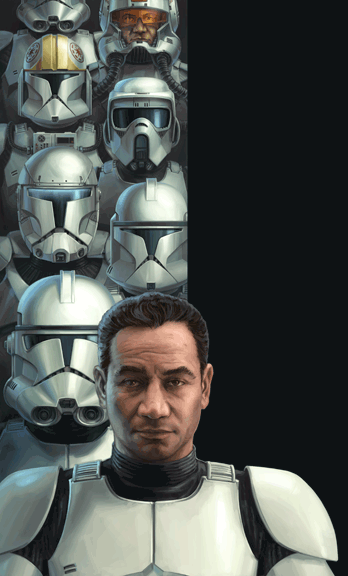
In 32 BBY, Darth Tyranus, secretly the former Jedi Master Dooku who was now a Sith Lord and a Count of Serenno, enlisted Jango Fett. Fett's role was to be the genetic blueprint for a clone army being cultivated on Kamino for the Republic. Beyond just providing his genetic code, Fett remained with the Kaminoans as a military advisor for the Grand Army of the Republic. He imparted numerous facets of Mandalorian culture to his clones, aiding in the design of the armor that the clone troopers wore. This is apparent in the resemblances between their armor and Fett's, notably the unique T-visor on their helmets. Fett also contributed to the creation of the flash training methods used to educate the young clones, incorporating the traditional Mandalorian song Vode An as a means to instill a sense of purpose. He slightly altered the song to give it meaning for soldiers serving the Republic. While Fett personally trained the Alpha-class ARC troopers, he recruited a team of one hundred training sergeants, known collectively as the Cuy'val Dar. Seventy-five of these sergeants were other Mandalorians, tasked with training the Grand Army's clone commandos. These Mandalorian sergeants, figures such as Walon Vau, Kal Skirata, and Rav Bralor, significantly infused Mandalorian culture into the clone ranks. Some clones adopted Mandalorian names, while others embraced Mandalorian slang and curses. Still others adopted Mandalorian songs and chants, such as the Dha Werda Verda, to boost morale. Kal Skirata emphasized teaching his clones about their Mandalorian heritage, and even adopted the six Null ARC troopers and several commandos as his sons, following Mandalorian customs. However, some clones rejected their Mandalorian heritage, even resenting it after Mandalore aligned with the Confederacy of Independent Systems and began fighting the Republic and its clone army. In addition to the clones produced for the Grand Army, Jango Fett also commissioned a single clone for himself, without the genetic modifications of the standard clone troopers. This clone, Boba, was intended to be his son and heir, and he would later have a profound impact on Mandalorian history.
The Mandalorian influence within the Grand Army diminished with the production of Supreme Chancellor Palpatine's second clone army. These troopers, created on Coruscant and its moon, Centax-2, using Spaarti cloning cylinders, matured within a year and underwent a shortened flash-training program. This resulted in the loss of their Mandalorian heritage and reduced proficiency in key areas, such as marksmanship. During the era of the Galactic Empire, the clones' Mandalorian heritage was gradually eliminated as future clones were grown from various other genetic sources. However, after the Clone Wars, many clones deserted and sought refuge on Mandalore, where Kal Skirata had established a safe haven for clones wishing to leave Republic/Imperial service for a new life.
Mandalorian peace under fire
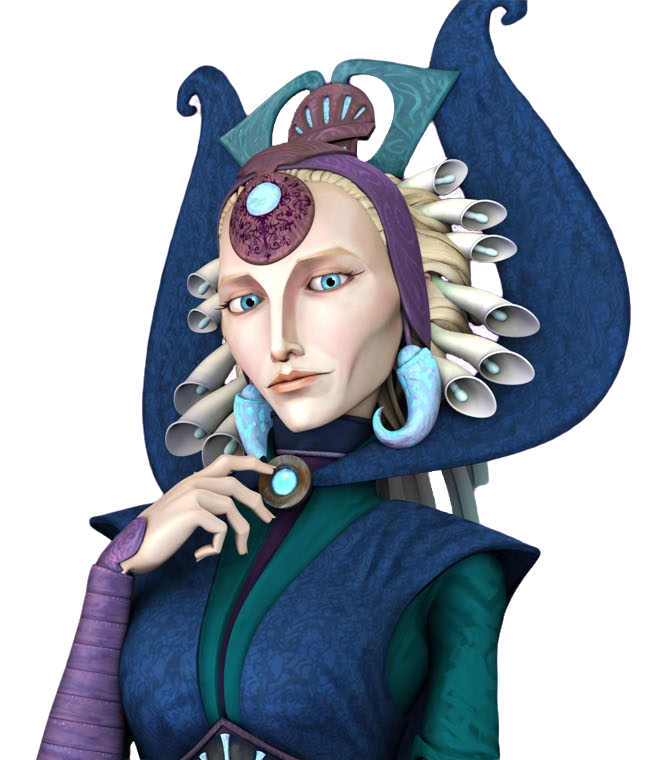
By 22 BBY, the Republic had recognized the peaceful New Mandalorian government as the leading Mandalorian faction. Mandalore was welcomed as a Republic member world, represented in the Senate by Senator Tal Merrik. Under the New Mandalorian government, many areas of Mandalore, including the capital of Sundari, thrived. However, some neglected provinces remained impoverished and in dire need of funds. When the Clone Wars erupted between the Galactic Republic and the Confederacy of Independent Systems, Duchess Satine Kryze, the leader of the New Mandalorians, declared Mandalore's neutrality. More than ten years after the loss of their leader and the subsequent fragmentation at the end of the Mandalorian Civil War, the Death Watch resurfaced on the galactic stage. Unlike the other clans who simply distanced themselves from the New Mandalorians, the Death Watch vehemently opposed the peace-loving government established by the New Mandalorians. They viewed it as weak and Kryze as a disgrace to all Mandalorians due to her pacifist beliefs. They allied with Count Dooku, who now led the Confederacy of Independent Systems, to gain the resources needed to remove the New Mandalorians from power. The Death Watch dispatched an operative to launch an attack on a Republic cruiser, while spreading rumors that the New Mandalorians were secretly building an army to fight for the Separatists. When these rumors reached the Republic, the Jedi Council sent Jedi Master Obi-Wan Kenobi to Mandalore to investigate the validity of these claims. Upon arriving in Sundari, Kenobi met with Duchess Kryze and the New Mandalorians' Prime Minister, Almec, to discuss Mandalore's position in the war.
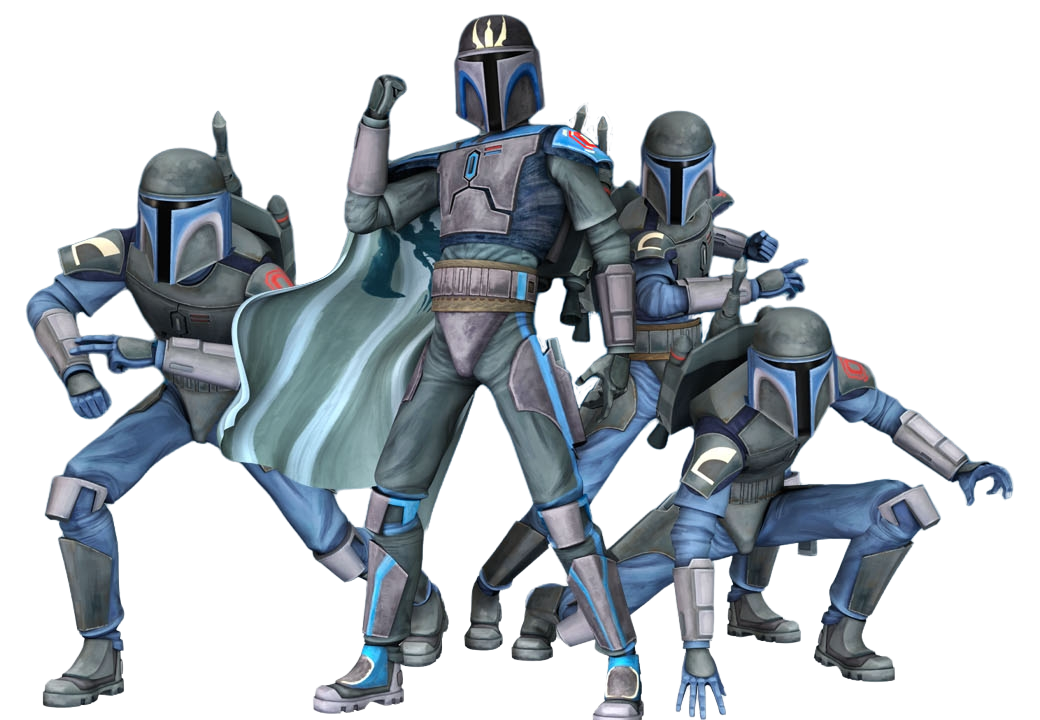
Kenobi and Kryze shared a long-standing friendship, having met years prior when Kenobi and his master were sent to Mandalore in the months following the Mandalorian Civil War to protect the Duchess from remaining Death Watch insurgents and bounty hunters. During his investigation, Kenobi witnessed the Death Watch's bombing of the memorial shrine in the heart of Sundari. When he attempted to capture the perpetrator, the man committed suicide by jumping from a balcony Kenobi had cornered him on. As he was dying, Kryze comforted him and listened to his last words, which were spoken in the Concordian dialect. This led Kenobi to shift his investigation to Mandalore's moon, Concordia. While welcomed by Concordia's governor, Pre Vizsla, Kenobi arranged for Kryze to distract Vizsla while he investigated the moon's abandoned mines. There, he discovered that the mines were not abandoned but were actively producing helmets, jetpacks, and Mandalorian armor for the Death Watch. Kenobi was attacked by a pair of Death Watch soldiers and knocked unconscious. Although Kryze rescued Kenobi, they inadvertently stumbled upon the Death Watch's hideout, where Governor Vizsla revealed himself as the leader of the Death Watch. A battle ensued between Kenobi and Vizsla, ending with Kenobi and Kryze's retreat when Vizsla's troops intervened to attack the Jedi Master.
With the Death Watch's plot exposed, the Republic Senate began drafting a defense initiative to send a contingent of the Republic's Grand Army to occupy Mandalore as a peacekeeping force. The New Mandalorian government strongly opposed this idea, wishing to maintain its neutral status and avoid becoming a military target in the war. Kryze traveled to Coruscant aboard her private starship with Senator Merrik and a group of sympathetic senators, along with an escort consisting of Kenobi, his former Padawan Anakin Skywalker, and a detail of clone troopers, to argue before the Senate that the Death Watch was a rogue element and did not represent the entire population of Mandalore. During the trip, Merrik revealed himself as a traitor to the New Mandalorian cause and an ally of Pre Vizsla when he attempted to have Kryze assassinated. However, this plan was thwarted by her protectors, and Merrik was killed by Skywalker.
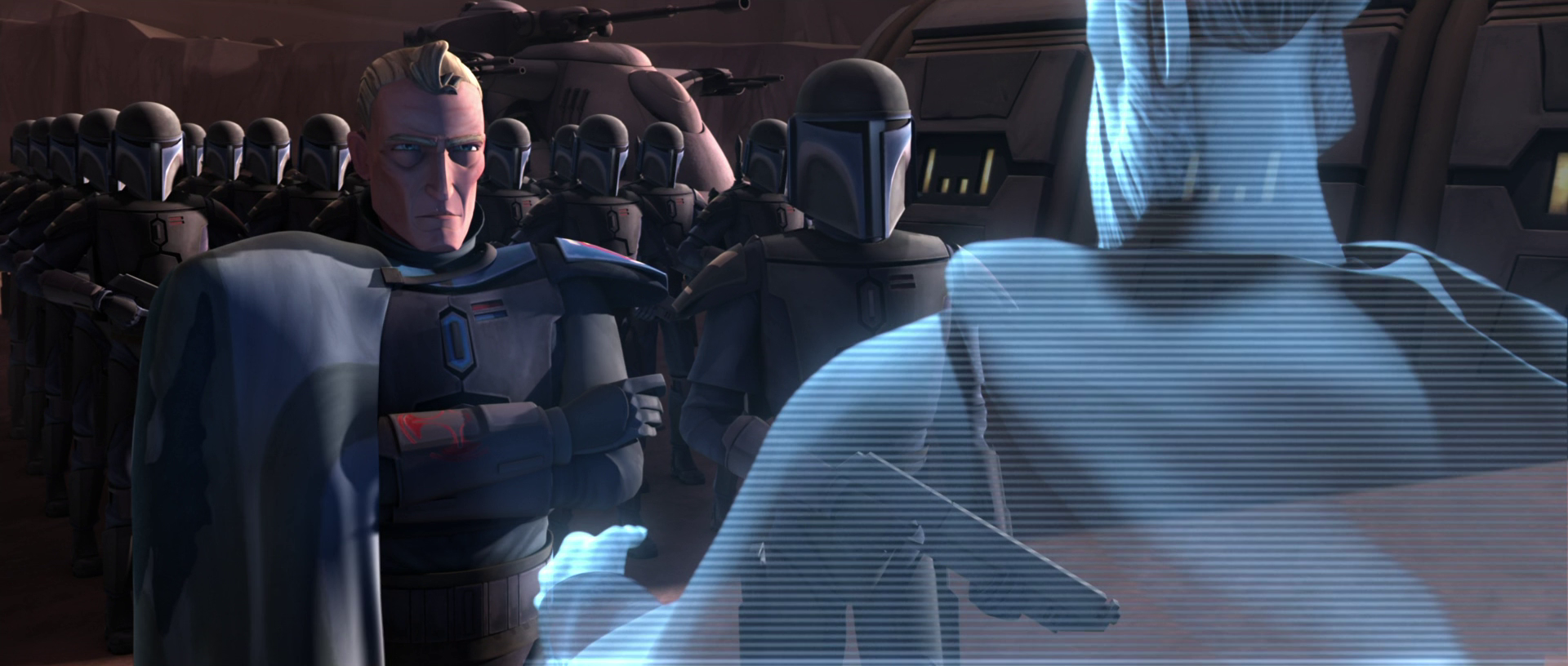
On Concordia, Death Watch soldiers, both new and old, gathered under Pre Vizsla. In collaboration with Confederacy forces provided by Count Dooku, they formed an army ready to "defend" Mandalore against the Republic's occupation, believing that the Republic's unwanted presence would sway the population to support the Death Watch. On Coruscant, Kryze faced a dire situation as false testimony from New Mandalorian Deputy Prime Minister Jerec turned the Senate against her, and a Death Watch assassin repeatedly attempted to take her life. However, when Jerec's genuine testimony, revealing the truth about the situation on Mandalore, was discovered and presented to the Senate, the occupation initiative was overturned, and Mandalore was allowed to remain an independent and neutral world. Upon receiving this news, Pre Vizsla prepared to launch an attack despite these events, intending to overthrow the New Mandalorian government. However, Dooku convinced him to wait, knowing that an attack then would result in another devastating defeat for the Death Watch.
New Mandalorian corruption
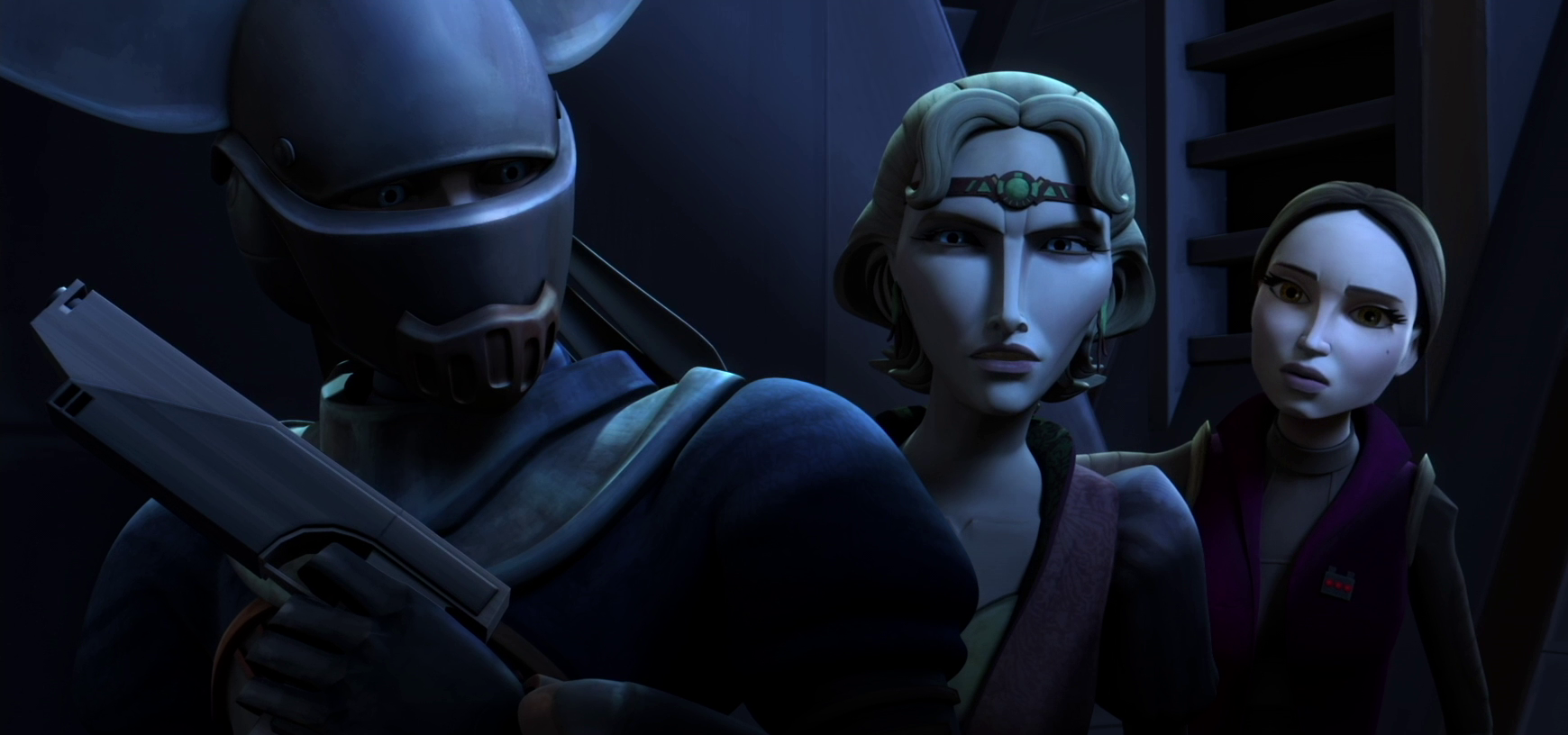
Despite their victory in the Senate, neutrality came at a cost for the New Mandalorians. Having distanced themselves from the Republic, much of the Republic's leadership now viewed Mandalore as outside of their concerns. Republic trade routes to Mandalore were largely cut off, forcing the New Mandalorian people to rely on a black-market trade network established by their own Prime Minister Almec to obtain essential supplies. However, the illegal nature of these imports brought the threat of corruption, which infiltrated the government and spread among its police force and officials. Moogan smugglers were allowed to import tea laced with the dangerous chemical slabin into Sundari, the New Mandalorians' capital city, as long as the customs officer in charge received sufficient bribes. When Duchess Satine Kryze invited Senator Padmé Amidala to Mandalore for assistance in addressing the issue, the two politicians discovered the poisoned tea being distributed to Sundari schools, resulting in hundreds of New Mandalorian children being hospitalized in the hospital. Together, Kryze and Amidala, with the help of the New Mandalorian police force, shut down the smuggling operation and distributed the antidote to the poisoned children. Kryze confronted Prime Minister Almec at the end of her investigation, although she was not yet aware of his involvement. In response, he was prompted to form a committee to investigate the corruption within the New Mandalorian government.
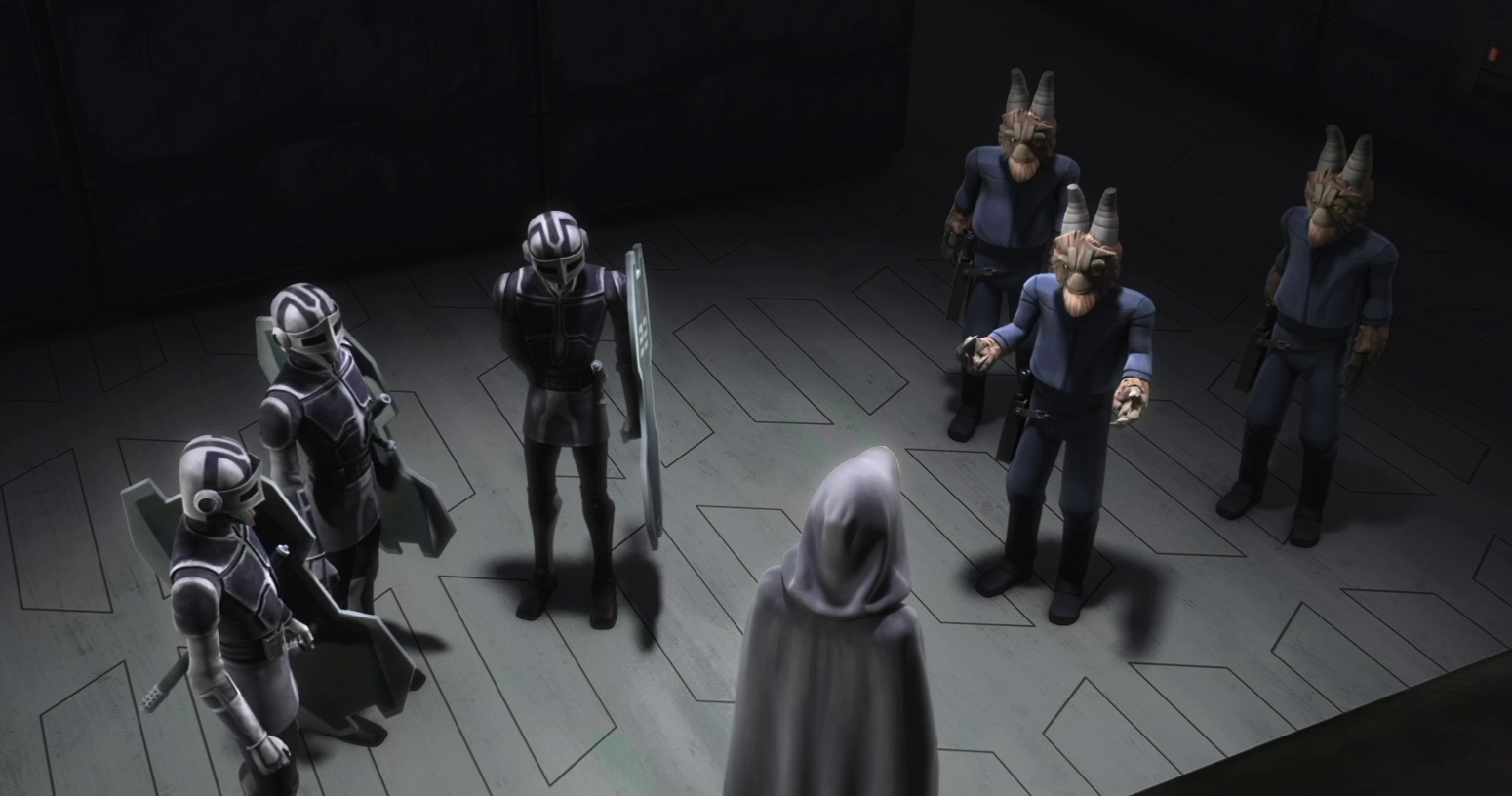
After Amidala's departure, she requested that the Jedi Council send a Jedi agent to assist in investigating the New Mandalorian government's corruption. The Council dispatched Padawan Ahsoka Tano to Mandalore. Upon arriving in Sundari, Tano lectured at the New Mandalorian Royal Academy of Government on the dangers of corruption, instructing aspiring cadets in lawful and public-serving conduct. Inspired by the young Jedi, cadets Amis, Lagos, Soniee, and Korkie, Duchess Kryze's nephew, investigated a food shortage at a government warehouse in the Sundari warehouse district. After infiltrating the facility, the four New Mandalorian youths discovered a secret meeting between a group of New Mandalorian officers, several Gotal smugglers, and an unidentified figure cloaked in concealing garments. They informed Duchess Kryze of the meeting they had witnessed, but she cautioned them to be careful. Instead, the cadets approached Prime Minister Almec with their discovery, unaware that he was the cloaked man from the warehouse. Threatened with exposure, Almec used the New Mandalorian Secret Service to arrest the cadets, as well as their Jedi ally, Padawan Tano, and even the Duchess herself upon learning that she had been informed of his involvement. He attempted to force the Duchess to sign a confession of conspiracy, but when she refused, Almec used a shock collar to persuade her. When Kryze remained defiant, he turned his attention to her nephew, Korkie. Tano and the cadets fought back, overpowering Almec and his guards until he was fitted with a shock collar himself, forcing the Prime Minister to surrender. Almec and his accomplices were arrested and imprisoned, effectively dismantling the black-market trade network.
In 20 BBY, Lux Bonteri, a former Onderonian Separatist, sought the assistance of Pre Vizsla and his Death Watch, who were camped on the planet Carlac. The Death Watch soldiers had previously raided a local Ming Po town and kidnapped several local women, including Chieftain Pieter's daughter Tryla, to serve as servants. When Pieter demanded that the Mandalorians leave, Pre Vizsla and his followers destroyed the village and killed the inhabitants. This brought them into conflict with Jedi Padawan Ahsoka Tano and the astromech droid R2-D2, who convinced the Death Watch's droids to rebel against their masters. Disillusioned by the Death Watch's violence, Lux abandoned his plan to join them and escaped offworld with Ahsoka and R2-D2.
New Mandalorian defeat
The New Mandalorian regime was once again attacked when the Death Watch, under Pre Vizsla, allied with Darth Maul and the Shadow Collective, successfully staging a coup to overthrow Duchess Kryze. To discredit Kryze's rule, Maul and Vizsla hired several criminal organizations, including the Black Sun, Hutt Cartel, and the Pyke Syndicate, to wreak havoc on Mandalore. The Death Watch then gained the Mandalorian people's support by apprehending the criminals. Pre Vizsla imprisoned Kryze and declared himself the Prime Minister of Mandalore. However, he was soon killed in a duel with Maul, and Almec was released from prison and reinstated as a puppet ruler for Maul.
Obi-Wan Kenobi later traveled to Sundari, hoping to rescue Kryze from the grasp of the Death Watch. He freed Kryze from the Sundari prison, but Maul's forces intercepted them during their escape. Maul murdered Kryze and imprisoned Kenobi. He was rescued by Bo-Katan Kryze and the Nite Owls, a Death Watch faction that refused to submit to Maul. This sparked a battle between the Nite Owls and those in the Death Watch who had become loyal to Maul, known as the Mandalorian super commandos. Kenobi assisted Bo-Katan in the battle before leaving to return to the Republic and inform the Galactic Senate about the situation on Mandalore. During the battle, Darth Sidious arrived in Sundari and confronted Darth Maul and Savage Opress as rivals. He engaged them in a lightsaber duel in the Sundari Royal Palace, killing Opress and forcing Maul into submission.
Resurrection
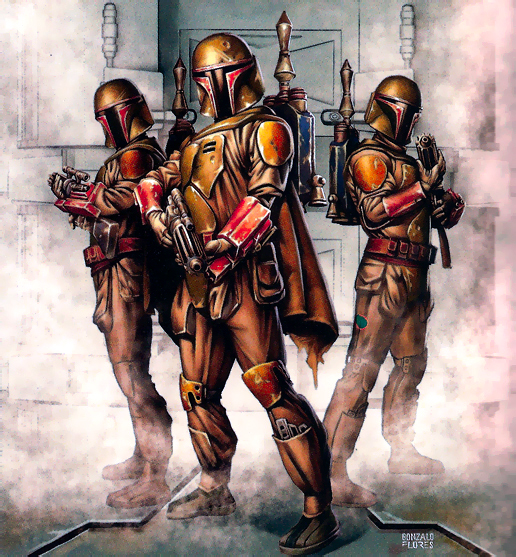
In the years preceding the Republic's first deployment of its clone army at the Battle of Geonosis, an elite ARC trooper known as Alpha-Ø2 began experiencing headaches, backaches, and, most remarkably, memories of Jango Fett's life, or so he claimed. Regardless of whether he actually possessed Fett's memories, the ARC trooper, nicknamed "Spar," developed a friendship with Doctor Mij Gilamar after repeated visits to his Tipoca City offices. Gilamar, a medic and one of the Mandalorian Cuy'val Dar training sergeants who also cared for the clones, learned of Spar's desire to desert the Grand Army and leave Kamino. To facilitate this, he called in a favor owed to him by Fett, and Spar was smuggled off-world in the cargo hold of Fett's ship, Slave I. Initially taking on odd jobs as he traveled the galaxy, specializing in capturing live bounties, Spar journeyed to Mandalore after Jango Fett's death at Geonosis. There, he encountered Fenn Shysa, a local constable and clan chieftain. Shysa, who viewed Jango Fett as a symbol of Mandalorian strength due to his notorious reputation as a bounty hunter and Jedi killer, persuaded Spar to act as Fett's heir, a claim bolstered by Spar's status as a clone, which Shysa publicized across Mandalore. Overcoming the New Mandalorian faction, Spar became the new Mand'alor in 20 BBY, adopting the title "Mandalore the Resurrector." Spar reversed the New Mandalorians' policy of neutrality for Mandalore, instead aligning with the Confederacy of Independent Systems to oppose a Republic he considered oppressive and the Jedi Order, whom he blamed for their role in destroying the True Mandalorians at Galidraan and their willingness to lead the Grand Army. The New Mandalorians never regained their lost dominance, and under Spar, their power diminished as the other clans and Jaster Mereel's Supercommando Codex returned to prominence on Mandalore.
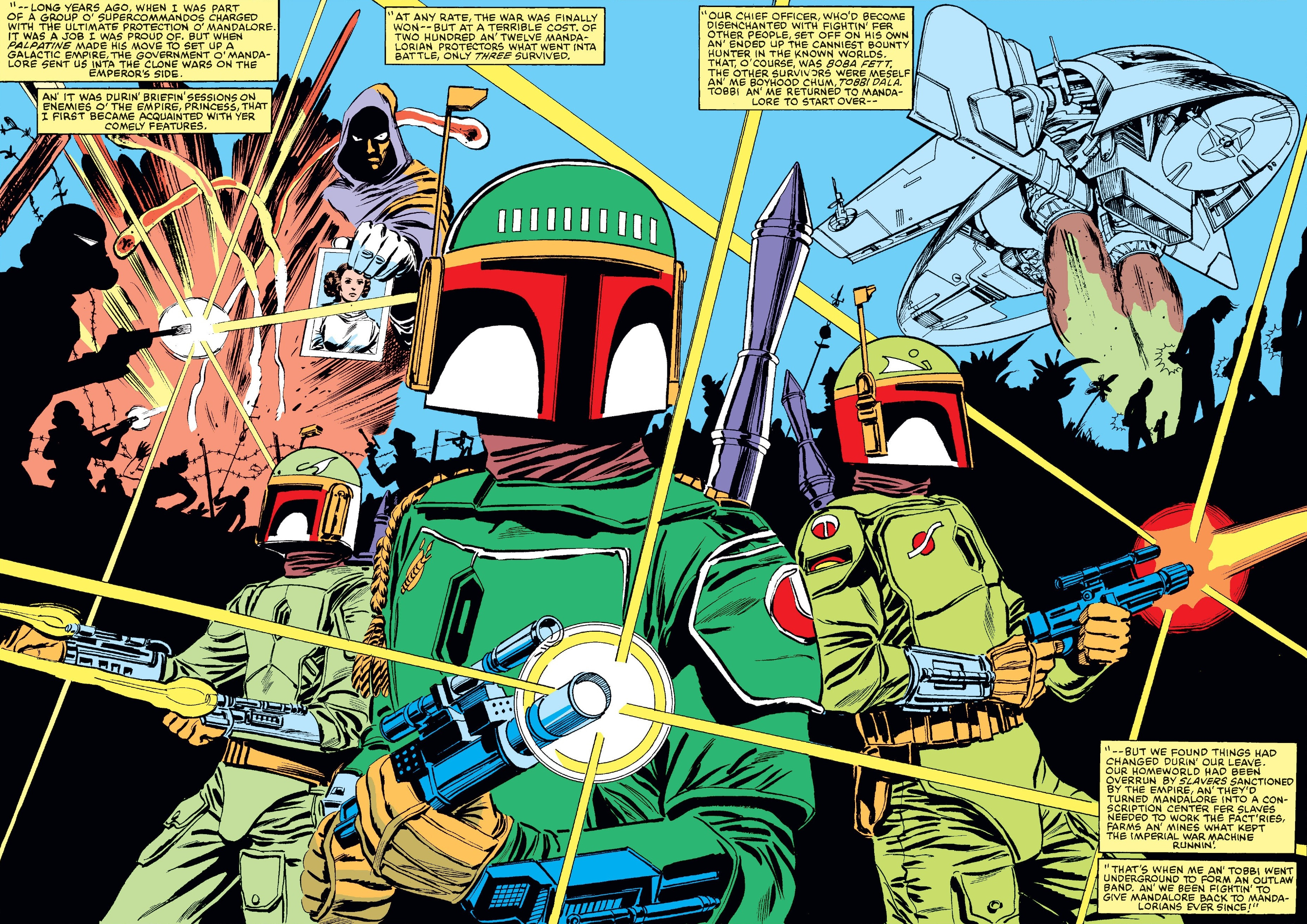
As Mand'alor, Spar embraced the teachings of the Supercommando Codex and formed a new army of supercommandos in the image of the fallen True Mandalorians, which he named the "Mandalorian Protectors." Comprising 212 members in total, the Protector army included recruits from the local police forces, including Shysa and Shya's lifelong friend, Tobbi Dala, and even a dozen former members of the Death Watch. Spar and his Protectors seized the facilities of the MandalMotors company in Keldabe, the Mandalorian capital city, for the Separatists, and integrated the Pursuer-class enforcement ship into his forces. In remembrance of the Mandallian Giants used by the Mandalorians on the front lines of the New Sith Wars, as well as Fenn Shysa's encounter with the droid C-3PX, Spar commissioned the Separatist droid foundries to produce a batch of one thousand BL-series Battle Legionnaire droids to augment his army. Spar and the Mandalorian Protectors clashed with the Republic on several worlds. On New Holstice, the Protectors fought against the Grand Army's 327th Star Corps, and although they were forced to retreat, they reduced the 327th to 60 percent strength. They also fought on the planet Null, where they achieved a decisive victory over the Republic, and on the snow-covered world of Zaadja. When a prominent Separatist commander was killed, the Mandalorians and their Battle Legionnaire droids retaliated at New Bornalex and launched an attack on Kamino that severely damaged a portion of the cloning facilities.
Their deadly campaign ended when the Protectors were selected for a special mission. Darth Sidious, the secret leader of the Confederacy, ordered the Protectors on a mission to the planet Norval II. The group's objective was to capture Senator Padmé Amidala of Naboo, but upon arrival, they were ambushed by Republic forces as part of an elaborate deception orchestrated by Republic Supreme Chancellor Palpatine, the public identity of Darth Sidious. The Mandalorians were almost completely annihilated, including nearly all of their Battle Legionnaire droids. Of their entire force, only three Mandalorians survived the massacre: Shysa, Dala, and Spar. Shysa and the others returned to Mandalore, where a traumatized and psychologically scarred Spar relinquished his position as Mand'alor, despite Shysa's repeated attempts to persuade him to reclaim the title. Shysa believed that without a proper Mand'alor, the Mandalorians would appear weak to the galaxy, and he did not want to create another opportunity for the Death Watch to exploit. However, he was unable to sway Spar.
The Dark Times
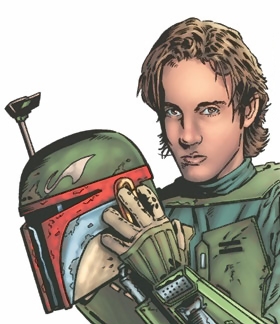
As the Republic underwent its transformation into the Galactic Empire and the Great Jedi Purge commenced, Emperor Palpatine, newly crowned, directed his attention toward Mandalore. In what appeared to be an act of forgiveness for the Mandalorians' actions during the Clone Wars, the Empire presented them with the opportunity for mercenary work. Furthermore, a substantial sum of credits was offered in exchange for leasing land to establish an Imperial base, complete with a garrison, on the planet. Despite reservations held by some, such as Kal Skirata—who, having witnessed Palpatine's manipulative prowess during his service to the Republic's Grand Army, pointed to the Jedi's calculated destruction as evidence that "Palpatine never did anything temporary in his life"—the Mandalorian clan leaders convened and ultimately decided to lease the land to the Empire. However, with the arrival of Imperial forces, Fenn Shysa reluctantly stepped into the role of Mand'alor, a position vacant since Spar's departure. Shysa, a popular choice among the Mandalorian people for the leadership role, was motivated by his reservations about the Empire. He opposed the Imperial garrison, fearing that rejecting the Empire's offer would result in the loss of crucial credits, and that the Empire might invade Mandalore under less favorable conditions regardless.
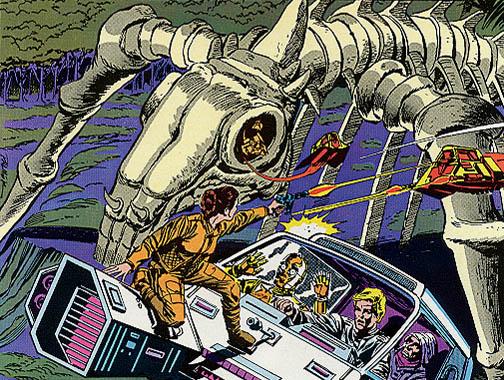
Before the Empire's arrival, an enterprising Mandalorian saw the potential for adventure tourism on Mandalore. To realize this vision, he constructed a large mythosaur skeleton replica near Keldabe, planning to develop an amusement park around it. The park, which became known as the "City of Bone," never opened. However, the brother of the park's creator, Hayar, along with his friend Jarkyc, convinced the Imperial commander in charge of the Mandalore operation—a human male from Kemla—that the failed amusement park was actually an ancient Mandalorian temple of great spiritual significance. Seeking to assert dominance over the Mandalorian population, the Imperial commander acquired the structure and established the garrison within the Mandalorian "temple." While the Mandalorians who profited from the exchange found the situation amusing, the Empire secured its base and began deploying the garrison. Former Cuy'val Dar members Dred Priest and Isabet Reau aided in this effort. Priest and Reau, long-time proponents of Mandalorian supremacy and the need to restore their martial strength through conquest, found a place for their radical views within the ranks of the Death Watch, now employed by the Empire and making a return. As Reau and Priest assisted the Imperials in securing their base outside Keldabe, MandalMotors received an offer of eight hundred million credits from the Empire for exclusive mining rights in the Tokursh region, rich in beskar ore. Additionally, the Empire sought to acquire prison ships with beskar enhancements, refurbish older model prison ships, and obtain special beskar equipment, including beskar manacles and cages, for the ongoing Jedi Purge. Shortly after his Death Watch ties became public, Priest was murdered; fellow ex-Cuy'val Dar Mij Gilamar stabbed him to death and dumped his body in the Kelita River, believing that the Death Watch could not be allowed to return to Mandalore.
Around this time, the Empire displayed its true nature as a threat during a conflict with the planet Gibad. Gibad, which had sided with the Separatists during the Clone Wars, refused to acknowledge the new Empire. In response, Emperor Palpatine authorized the use of the FG36 nanovirus. This virus, created by Gibadan native Doctor Ovolot Qail Uthan while working with the Separatists, was designed to target the Fett genome and the rapid-maturation gene of the Republic's clone troopers. Captured by a Republic commando squad during the Clone Wars, Palpatine had kept the virus as a safeguard should he ever need to eliminate the Grand Army. However, he discovered that in its unfinished state, the virus could be unleashed on a world, killing all sentient beings while leaving its infrastructure intact—Gibad's ultimate fate. To prevent Mandalore from suffering the same fate, the Mandalorians of Clan Skirata—who were already holding Doctor Uthan for her help in reversing the rapid aging of clones who had deserted to Mandalore and joined the clan—developed an immunogen for the virus. This immunogen, communicable through the air, was spread throughout Keldabe and eventually across Mandalore with the Mand'alor's approval.
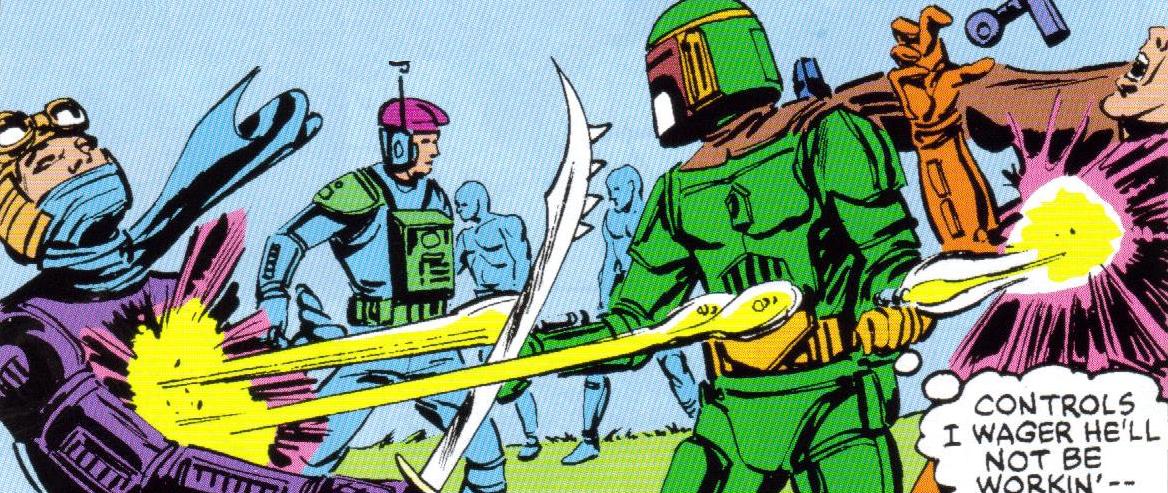
As the Empire gradually solidified its control over Mandalore, Shysa secretly organized a resistance force to retaliate if the Imperial presence became hostile. His fears were realized when the Empire's presence on Mandalore transformed into an oppressive occupation. The Imperials strip-mined the planet's beskar deposits and enslaved a large portion of the Mandalorian population to perform the work. Shysa's resistance, a revived sect of Mandalorian Protectors including the first-generation Protector, Tobbi Dala, fought the Imperial occupation for nearly twenty years, drawing the Empire's anger. The Shimholt known as the Suprema replaced the Imperial commander from Kemla, and under his leadership, the Empire's control over Mandalore intensified. During the Galactic Civil War between the Empire and the Rebel Alliance, Mandalore was targeted by pirate raids from the Zann Consortium, who hijacked the Venator-class Star Destroyer of Mandalore's Supreme Strategist, fought Mandalorian clan chieftains for control of the planet, and extorted ships from Mandal Hypernautics. Around 3 ABY, Tobbi Dala launched a mission to infiltrate the City of Bone, where many of his enslaved kinsmen were held, with the goal of rescuing them. However, the mission failed, and Dala was captured by the Imperials. Despite his comrade's capture, Shysa continued the fight, employing hit-and-run tactics against the slavers. A bounty was placed on Shysa's head, attracting the bounty hunter Dengar to Mandalore. Dengar failed to capture Shysa and was captured by the Protectors. To retrieve Dala, Shysa offered Dengar to the Imperials in exchange for his friend's release. The slavers agreed, but before the exchange could occur, Princess Leia Organa, a prominent leader of the Rebel Alliance, arrived on Mandalore, pursuing rumors that Dengar had assisted Boba Fett in capturing Han Solo, another Alliance leader. She landed on the planet and was immediately caught in a firefight between the Mandalorians and Imperial slavers. After initially mistaking Shysa for Fett, Organa learned his true identity and purpose on Mandalore. Shysa, in turn, mistook Organa for her mother, Padmé Amidala, whom he had been sent to capture during the war, though this misunderstanding was quickly resolved.
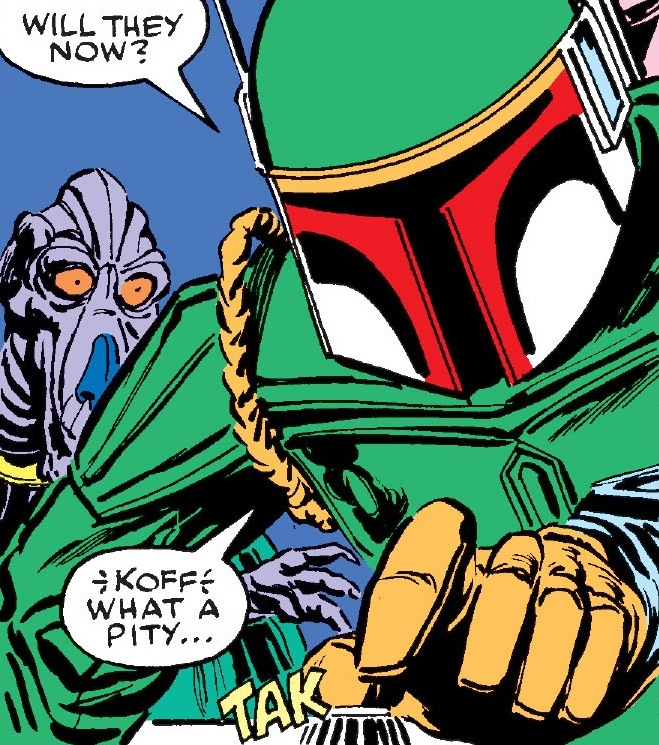
After providing Organa with a fabricated account of his actions during the Clone Wars, claiming that Boba Fett had been his commander instead of Spar, Shysa brought Organa and her droid, C-3PO, to his base camp, hidden deep within the Mandalorian forest. Upon discovering Dengar as their prisoner, Organa sought to bring the bounty hunter back to the Alliance for questioning, but Shysa refused, determined to retrieve his friend from the Imperials. Taking Shysa for a walk away from the camp, Organa incapacitated him with a kiss followed by a knockout blow. With Shysa unconscious, Organa released Dengar, hoping for information about Fett in return. However, the bounty hunter betrayed her, turning her over to the Imperials for the bounty on her head. As the princess was imprisoned in the City of Bone, Shysa killed one of the perimeter guards and assumed his identity, donning his stormtrooper armor to infiltrate the base. Shysa freed Organa from her cell and offered a deal: if she helped him free Dala, he would help recapture Dengar and allow her to take the bounty hunter back to the Alliance. After Organa agreed, they freed Dala, and Shysa ordered his troops to attack. Mandalorian slaves revolted, attacking their Imperial captors as stormtroopers rushed to defend the base. During a confrontation with the Suprema, Dala was mortally wounded. Shysa attacked the Suprema, but Organa convinced the Mand'alor that they might still need him. Dala, beyond saving, instructed his friend to leave him and ensured that Shysa and Organa escaped the base in a stolen airspeeder. As the Imperial forces pursued them, Dala closed the hangar doors. Unable to stop in time, the Imperials crashed into the blast doors, causing a massive explosion that ignited nearby fuel and ammunition, engulfing the city in flames and killing all the Imperials, the Suprema, and Dala himself. While Shysa mourned Dala's loss, the Mandalorians celebrated their regained freedom, and many former slaves joined the ranks of the Mandalorian Protectors. With the Suprema dead and their numbers increased, the Protectors turned their attention to Imperial Grand Admiral Miltin Takel, who had been placed in charge of the Mandalore sector, and drove him from Mandalorian space.
After the Empire
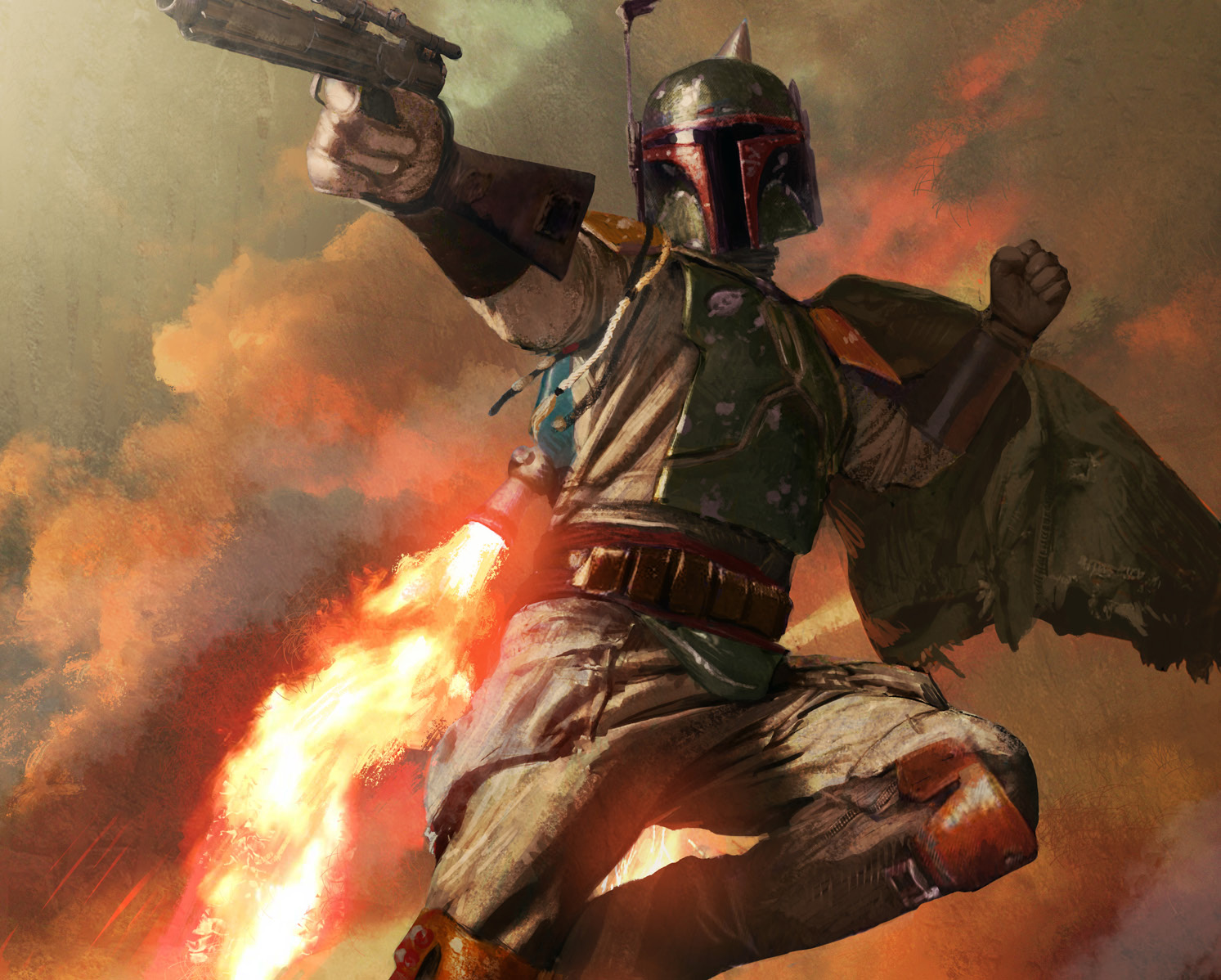
Following the destruction of the second Death Star at the Battle of Endor in 4 ABY, a year after Mandalore's liberation, the Alliance to Restore the Republic formally became the Alliance of Free Planets, a transitional government leading to a new Republic. As Mand'alor, Shysa led the Mandalorians as an ally of the Alliance of Free Planets during the Nagai invasion of the galaxy, which followed several battles in the Mandalore system. When it became clear that the Nagai were seeking to escape the oppression of the barbaric Tof, the Mandalorian Protectors agreed to help the Nagai liberate their homeworld, Nagi. Although Mandalore did not join the New Republic that was soon established, the Mandalorian Protectors and Fenn Shysa offered their assistance again during the Battle of Mindor against Lord Shadowspawn. Shysa's tenure as Mand'alor concluded in 21 ABY. When an aging Boba Fett returned to Kamino to obtain a cloned replacement for a near-cancerous leg, the Kaminoan named Taun We attempted to enlist Fett in her revenge against the last living Mandalorian Protector responsible for the attack on her world during the Clone Wars: Shysa. Fett tracked Shysa to the planet Shogun, but before Fett could kill Shysa, they were surrounded by Sevvets. Shysa, still believing that a member of the Fetts would make the best Mand'alor, saved Fett's life but was severely wounded. Rather than allow Shysa to die a "rotten death" at the hands of the Sevvets, Fett killed Shysa out of mercy, but only after agreeing to Shysa's dying wish that Fett succeed him as Mand'alor. Having been taught from a young age by his father, Jango, that his word was his bond, Fett returned to Mandalore with Shysa's helmet and assumed leadership. Under Fett, the Mandalorian Protectors transitioned from a home defense force to a mercenary army, and Shysa was memorialized in the Keldabe suburb of Bralsin.
Nearly thirty years after the Battle of Yavin, the Mandalorians were among the first to become aware of the extra-galactic invaders known as the Yuuzhan Vong. This occurred in 24 ABY, when the Mandalorian bounty hunter Goran Beviin met with an individual named Udelen at Bar Jaraniz on Nar Shaddaa regarding a job. Udelen was a Yuuzhan Vong spy, disguising his true appearance and seeking to use the bounty hunter's skills to destabilize the government on Ter Abbes by assassinating the politician Tholote B'Leph. Although Beviin typically avoided political assassinations and focused on arresting criminals, financial difficulties at his farm led him to accept the job. Beviin was well-compensated for his success, but his actions drew the Yuuzhan Vong's attention to the Mandalorians. Nom Anor offered work to other Mandalorian mercenaries and even spoke with Boba Fett on at least one occasion. A year later, Nom Anor, still using the alias "Udelen," traveled to Mandalore to meet with Boba Fett in person. Arriving in Keldabe, Fett and Nom Anor arranged a meeting in the Outer Rim. Although Fett disliked Nom Anor's secrecy and subtle threats, he acknowledged the Mandalorians' need for credits and agreed to Nom Anor's request. Arriving at the rendezvous point with six of his supercommandos including Beviin, Tiroc Vhon, Cham and his brother Suvar Detta, and Briika with daughter Dinua Jeban, Fett and his forces witnessed the arrival of the massive Yuuzhan Vong fleet. Invited aboard one of the miid ro'ik warships, Fett and Beviin learned that "Udelen" was actually Nom Anor, a Vong Intendant. Nom Anor revealed the Yuuzhan Vong's plans for the galaxy and brutally demonstrated the fate of those who opposed them. Recognizing that the Mandalorians could not defeat the Vong in a direct confrontation, Fett made a deal with Nom Anor. Using careful wording to avoid violating his moral code, Fett agreed to continue Mandalorian service in exchange for sparing the Mandalore sector, while secretly planning to sabotage the Vong at every opportunity and buy Mandalore time for the Vong's inevitable betrayal.

After acquiring samples from the living walls of the miid ro'ik ship and recording everything they could with recorders in their helmets, Fett and Beviin planned to contact the New Republic. Aware that the Vong could disguise themselves as humans, they proceeded cautiously. One week after the fall of Helska IV and the start of the Yuuzhan Vong War, Fett and his commandos traveled to Birgis, the Vong's next target for the Mandalorians. Armed with data on the Vong ship and information on their next two assignments, the Mandalorians attacked a spaceport, causing enough damage to appear convincing while searching for someone to relay the information to the New Republic. They subdued a female pilot and gave her the information to pass on to her superiors. When asked which side the Mandalorians were on, Briika Jeban stated that they were on their own side, offering the data to the New Republic because no one would benefit from a galaxy under Vong control. Although the pilot escaped Birgis and delivered the data to her superiors, the New Republic dismissed the information provided by the Mandalorians, and New Holgha fell to the Vong. However, another opportunity arose when, while on New Holgha, Fett was contacted by the Vong subaltern Bur'lorr, who was pursuing a Jedi. Knowing the Jedi's Force senses would reveal the truth of the Mandalorians' intentions, Fett told the Vong to leave the Jedi to them. Beviin was ordered to stall the subaltern, while the others tracked and incapacitated the injured Jedi with a stun dart. The Jedi accused Fett of giving misinformation to the New Republic, but the Mand'alor explained that he was trying to save his people and had to make the Vong believe he was on their side. The Jedi, who identified himself as Kubariet, believed Fett's claims and was rushed to his vessel with the data. As soon as Kubariet departed, Subaltern Bur'lorr arrived, suspicious of the Mandalorians. With no other choice, Beviin attacked, destroying the subaltern's villip and plunging his beskad saber into the Vong's jaw. Beviin then jumped on the Vong, crushing its throat with his illegal Mandalorian crushgaunts. During the struggle, Briika was pierced in the chest by a spike on the Vong's armor, and despite the Mandalorians' efforts, she died on Fett's ship, Slave I. Her orphaned daughter, Dinua, was immediately adopted by Beviin.
Two weeks later, Fett met with Kubariet on Vorpa'ya. There, they formalized their impromptu partnership, with the Mandalorians continuing to act as enemies of the New Republic, and the New Republic responding in kind. Fett handed over available information and bio-samples, asking only for recognition that a Mandalorian had died to save a New Republic citizen. To secretly strengthen Mandalore's forces against the Vong, Fett established a Mandalorian training ground on Raxus Prime for the Mandalorian Protectors. A few months into the war, Han Solo came to Raxus Prime to investigate a rumor and was shot down by a Mandalorian. Fett sent his new recruits, initially mistaken for Fett by Solo, after the New Republic hero to test them, allowing Solo to eliminate the weaker ones. Eventually, Solo was confronted by the real Fett, who told Solo to return to Coruscant and tell his wife that the Mandalorians were working for the highest bidder, the Yuuzhan Vong, further solidifying their cover. But the deception would not last forever. When the Vong discovered the Mandalorians' betrayal, they unleashed their vengeance on Mandalore, devastating the world: bombarding the planet, destroying its forests, poisoning its soil, and killing a third of its population. Many Mandalorians sought refuge in the planet's underground tunnels, surviving the initial Vong attack and eventually fighting back. With the ruse exposed, Fett led the Mandalorians to strike directly at the Vong, liberating Tholatin and crushing the Vong forces on Gyndine. The Mandalorians also helped to defend Caluula, establishing their headquarters on the orbiting Caluula Station. After a month of Vong attacks, Han Solo and Leia Organa Solo arrived on the station aboard the Millennium Falcon. The Solos' arrival intensified Vong interest in the planet, and they heavily attacked Caluula Station. The Mandalorian Protectors fought back, with Fett even saving Solo, his former enemy and rival, from the Vong. Some Mandalorians scalped the Vong they killed, while the Vong sent alerts that the Mandalorians were warriors worthy of captivity, focusing their attention on Fett and his soldiers. Two Mandalorians fell as the rest were cornered in a hold. Fett used his jetpack to reach the ceiling, firing on the Vong below, before an amphistaff knocked him down against a bulkhead. As the Vong closed in, Han Solo saved Fett. With reinforcements arriving, the Mandalorians blew a hole in a bulkhead and retreated, followed by the Solos and Caluula's soldiers, although the Mandalorians soon separated. Fett eventually reached Slave I, and along with four Mandalorians in Gladiator-class assault fighters, he rescued the Solos again, destroying a Vong coralskipper pursuing the Falcon. Fett and Han exchanged jibes over the comlink before parting ways. Although Caluula was ultimately lost to the Vong, the Mandalorians and the new Galactic Alliance emerged victorious in the Yuuzhan Vong War.
Restoration
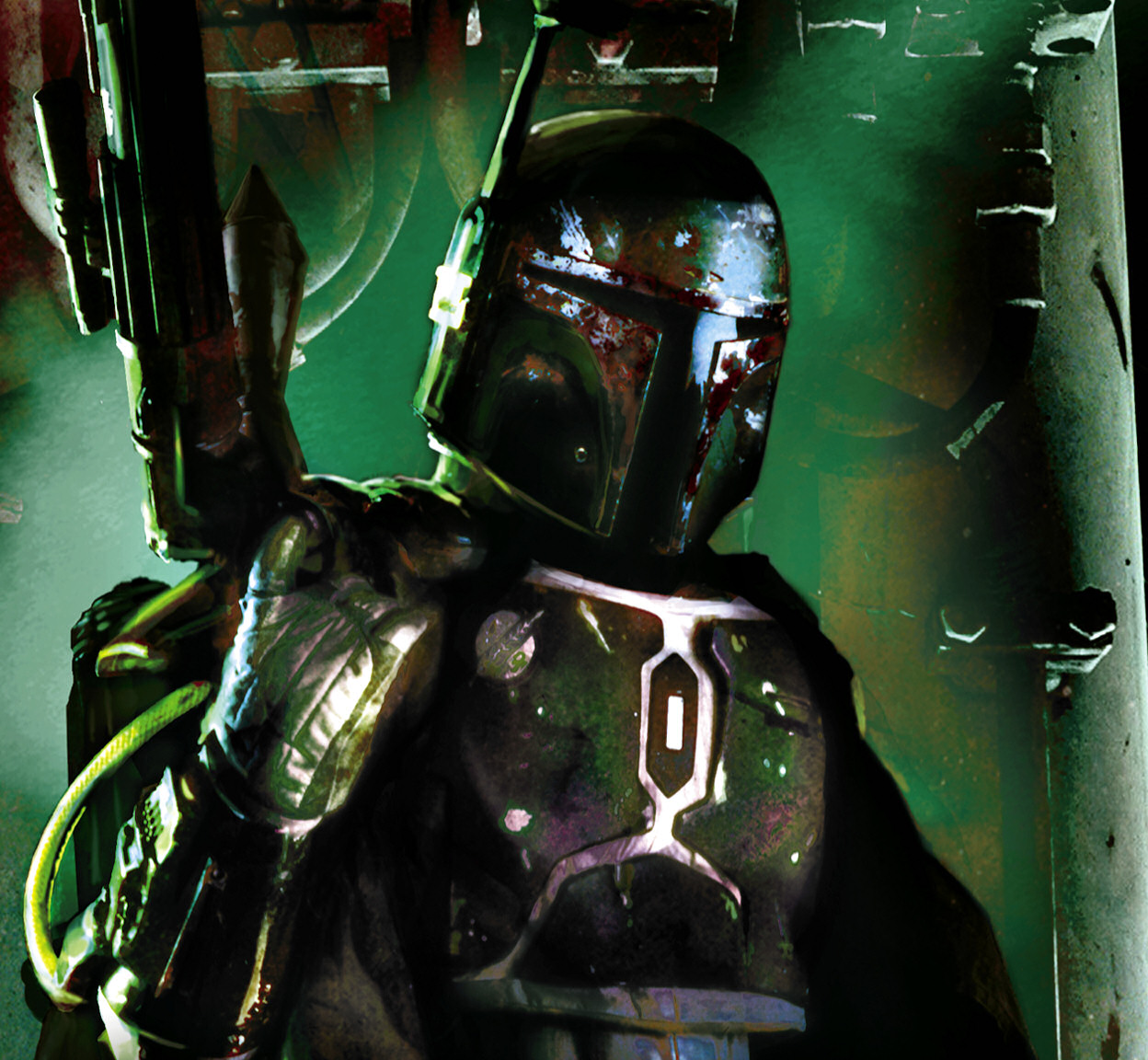
A decade following the Yuuzhan Vong War, Mandalore was still struggling to recover from the devastation inflicted by the vengeful Vong. A significant number of their elite warriors had perished during the Vong invasion, and even after a decade, much of Mandalore's terrain was still contaminated, and its infrastructure remained in ruins. Concurrently, Boba Fett, who was still serving as the Mand'alor but residing on Taris, discovered he was succumbing to a terminal illness: the tumors in his aged leg, a consequence of his experience within the Sarlacc and exacerbated by his nature as a clone, had begun to metastasize. His physician, known as Beluine, estimated he had only a year or two left to live, potentially less if he exerted himself excessively. Determined to face death head-on, Fett embarked on a quest to locate the long-lost Kaminoan scientist, Ko Sai, and her research, hoping to find a cure for his rapidly spreading tumors. With the assistance of Goran Beviin—who had essentially become Fett's unofficial right-hand man—the Mand'alor uncovered rumors that Ko Sai was deceased, but her data had never been found. Redirecting his efforts, Fett devised a plan to find another Kaminoan, his childhood acquaintance, Taun We. However, before he could depart Taris, Fett was confronted by a young woman named Mirta Gev, who possessed the heart-of-fire gemstone that Fett had gifted to his deceased former wife, Sintas Vel, upon their marriage. Similar to Fett, Mirta was a bounty hunter who claimed to have acquired the stone for Fett's estranged daughter, Ailyn Vel, and offered to lead him to her for a fee. Accepting the proposition, Fett brought Mirta along as he pursued Taun We to Arkanian Microtechnologies on Vohai; during their journey, Mirta revealed that she had recently encountered another clone, one who had seemingly managed to halt his accelerated aging. With renewed hope that Ko Sai's research might still exist, Fett now had a third objective: to find a Mandalorian clone wearing gray leather gloves. After infiltrating Arkanian Micro's headquarters, Fett met with Taun We and pilfered a copy of her data, threatening to sell it unless she provided information about Ko Sai. Taun We revealed that Ko Sai had been killed by Kal Skirata and the Null ARCs during the Clone Wars, a revelation that aligned with Mirta's information that the clone she had met bore the Skirata clan name. As Fett prepared to continue his search with this new lead, he was contacted by Corellian President Thrackan Sal-Solo.
Sal-Solo informed Fett of his desire to enlist the Mandalorians' assistance in defending Centerpoint Station during its reconstruction. Fett instructed Beviin to gather as many supercommandos as possible to meet him on Drall. Although many were unable to leave their farms due to the harvest season on Mandalore, when Fett arrived at Zerria's Bar on Drall, he was joined by six Mandalorians: Ram Zerimar, Briike, Novoc Vevut and his son Ghes Orade, Isko Talgal, and Beviin. The general sentiment among the commandos was against taking up arms for Corellia in the growing tensions between Corellia and the Galactic Alliance, expressing that they were more concerned with tending to their farms than earning credits. In a private conversation with Beviin, Fett learned that a Mandalorian known as "Kad'ika" was promoting the idea that Mandalorians should cease fighting in outsiders' wars and instead focus on strengthening themselves, although he did not seek to replace Fett as Mand'alor. Despite the Mandalorians' overall lack of interest in the potential Corellian contract, Fett had ulterior motives for traveling to Corellia: Sal-Solo had placed a bounty on his cousin, Han Solo, and Fett's daughter Ailyn had accepted the job, tracking Solo to Corellia. The Mandalorians, piloting their Gladiator-class assault fighters, would create a diversion for the Alliance blockade around Corellia, allowing Fett to land on the planet and meet with President Sal-Solo. While the two failed to reach an agreement—Fett demanding more money for his commandos than Sal-Solo was willing to offer—on his way out, Fett was approached by Dur Gejjen with a proposition to assassinate Sal-Solo. Fett accepted the job, and with the assistance of a vengeful Han Solo and Mirta Gev, he killed Sal-Solo and escaped the presidential offices to await Ailyn's arrival. Tragically, Ailyn had been killed by Solo's son, Jacen, a revelation that came after the arrival of Solo's wife, Leia, and one that prompted Mirta to reveal herself as Fett's granddaughter before attempting to avenge her now-deceased mother. Leia intervened, preventing her attack, and Mirta relinquished her desire to kill her grandfather after Fett demanded the return of Ailyn's body. The two forged an uneasy truce as they brought Ailyn to be buried on Mandalore, with Fett making a brief stop on Geonosis to retrieve his father's remains as well.
Shortly after Fett's return to Mandalore, a gathering of the clans was convened at MandalMotors Hall, a stone communal building donated by MandalMotors CEO, Jir Yomaget. There, the clan leaders looked to Fett, as Mand'alor, to determine whether the Mandalorians would participate in the escalating war, and if so, which side they would support. After extensive deliberation, Fett decided on a compromise: while Mandalore would remain officially neutral, individuals who wished to offer their services as private mercenaries were free to fight for whichever side they chose. This idea was criticized by the Mandalorian known as Graad, a proponent of kadikla—the "Mandalore-first" movement being promoted by Kad'ika—who believed that a scenario where Mandalorians fought each other on opposing sides was the last thing Mandalore needed. Baltan Carid opposed this view, strongly supporting Fett's idea and arguing that kadikla was too contrary to the Mandalorians' nomadic traditions. However, when Graad suggested that Mandalorians scattered throughout the galaxy be called back to help rebuild Mandalore, Fett embraced the idea and made it policy, requesting two million Mandalorians to return to Mandalore to restore the population to pre–Yuuzhan Vong War levels. To address the economic strain caused by the need to import food, Jir Yomaget pledged half of MandalMotors' profits to the restoration effort, and Fett contributed an additional multimillion-credit offering from his personal wealth. As the meeting concluded, Fett designated Goran Beviin as acting Mand'alor during his absence, as he resumed his search for the gray-gloved clone named Skirata. Fett eventually located this clone—who turned out to be the former Null ARC Jaing Skirata—on Kuat, following a brief confrontation at the Tekshar Falls Casino in Kuat City. Skirata agreed to assist the ailing Mand'alor on the condition that he heed Kad'ika's advice and transform Mandalore into a stronger, more stable nation, as Shysa had done before him. During Fett's absence from Mandalore, a significant deposit of beskar ore was discovered north of Enceri by two off-world Mandalorians, a geologist and a minerals engineer, who had returned to Mandalore at Fett's request. By the time Fett returned to the planet, drilling had already commenced under site foreman Herik Vorad, and samples were being collected. As the beskar was found on unclaimed land, Fett declared that the lode would be a resource for all of Mandalore.
Soon after the discovery of the beskar lode, MandalMotors began developing a prototype starfighter that initially went by the name Kyr'galaar, but would eventually become the Bes'uliik assault fighter, with plans to incorporate the new beskar into the airframe and armor of the powerful vessel. When Jir Yomaget presented the prototype to Fett, he received full approval to commence production, with fifty percent of the fighters being downgraded in performance and weaponry for export, while the remaining fifty percent would be built to the highest specifications for the Mandalorians themselves. Fett also decided that the fighters would be sold to the emerging Confederation or the Galactic Alliance, or any other party willing to pay. When news of the Mandalorians' newfound beskar supply spread, the Verpine speaker for Roche, Sass Sikili, contacted the Mand'alor to inquire about acquiring a shipment of the metal and to assess whether the revitalized Mandalorian economy might lead to aggressive expansion. Recognizing an opportunity, Fett proposed a pact between the Mandalorians and the Verpine: exclusive Verpine weaponry in exchange for exclusive beskar shipments, and access to Verpine facilities in exchange for military assistance when needed. Sikili agreed to the pact on behalf of the Roche hive, and a Mandalorian–Verpine alliance was established. Simultaneously, Fett's granddaughter Mirta had entered into a romantic relationship with Ghes Orade. By this point, Mirta and Fett had developed a more conventional, albeit strained, relationship, with Mirta even attempting to help Fett reconnect with his Mandalorian heritage, from which he had been estranged for most of his life. As Mandalore's economy flourished, Jaing Skirata felt that Fett had fulfilled his part of their agreement and sent a cure for Fett's condition, to be delivered by Skirata's nephew, Venku Skirata, who was in fact none other than Kad'ika and the son of a clone deserter from the Clone Wars, making him Fett's nephew in a sense. Fett was treated by a local veterinarian, and during his recovery, the government of Bothawui offered the Mandalorians twenty million credits per month to provide an assault fleet and infantry force, in addition to offering a premium price for exclusive purchasing rights to the new Bes'uliik fighters. Shortly after Fett had regained his strength, he led a Mandalorian assault on the factory complexes on Murkhana as part of their agreement with the Verpine, safeguarding the copyrights established by Roche.
In 41 ABY, Jedi Knight Jaina Solo visited Mandalore, seeking Boba Fett's assistance in capturing her brother, Jacen, who had succumbed to the dark side and become Darth Caedus. Fett agreed to Jaina's request and began training her in bounty hunting and anti-Jedi combat techniques. Thousands of Mandalorians were also arriving on Mandalore, answering the Mand'alor's call. Baltan Carid's clan was tasked with allocating unused farmland to any returning Mandalorians who wished to farm it. Meanwhile, Mirta Gev had located her grandmother and Fett's former wife, Sintas Vel, who was not dead, as previously believed, but frozen in carbonite. After recovering Vel, Mirta and Fett brought her back to Mandalore, where they freed her from her carbonite prison, and at Jaina's suggestion, enlisted the help of the former Jedi turned Mandalorian, Gotab, to heal her carbonite-induced blindness and repair her damaged memory. Concurrently, MandalMotors continued mass-producing the Bes'uliik fighters and introduced a considerably more low-tech vehicle known as the Tra'kad—or the "Star Saber," a veritable flying tank that could be operated entirely by manual controls—a decision that perplexed Mandalore's new Verpine allies. While returning from inspecting one of these vehicles at MandalMotors headquarters, Fett received a transmission from Admiral Natasi Daala, who offered Fett and his commandos mercenary work: with Admiral Gilad Pellaeon's forces moving to Fondor to support Darth Caedus' campaign there, Daala wanted Fett and the Mandalorian supercommandos to serve as a standby team should Pellaeon require assistance. Fett agreed, and within twenty-four hours, the Mandalorians Fett had selected, along with Mirta, Jaina Solo, and himself, were stationed near the Tapani sector, awaiting word from Daala. However, events would unfold differently than planned, as Caedus' Sith apprentice, Tahiri Veila, murdered Pellaeon aboard his vessel, Bloodfin, during the Second Battle of Fondor. Daala then re-tasked the Mandalorians with retaking the Bloodfin from the onboard coup of Moffs and Imperial officers loyal to Caedus. They assaulted the Star Destroyer, breaching the hull and eliminating every stormtrooper and officer who opposed them until they reached the Moffs at the ship's inner sanctum. During the commando raid, Mirta and Jaina confronted Tahiri Veila as she attempted to flee the besieged Star Destroyer, in a skirmish that resulted in Tahiri retreating while bleeding profusely from a severed femoral artery after Mirta stabbed her in the leg. Caedus managed to rescue his severely wounded apprentice, but not before being intercepted by Baltan Carid and Novoc Nevut; Carid crushed Caedus' ankle with a Mandalorian crushgaunt before shooting the Sith Lord in the knee, releasing Caedus only because of Fett's orders. Fett believed that Caedus should be dealt with by his sister, Jaina, alone, despite his own hatred for Caedus stemming from the loss of his daughter. With Caedus and Tahiri's escape, the Mandalorians completed their mission and returned to Mandalore following a brief discussion between Admiral Daala and Fett regarding galactic politics and the involvement of Force-users.
A week later, Mirta and Ghes Orade were married, and a celebratory feast was held in Keldabe, with several dozen guests attending to congratulate the young couple. Jaina Solo continued her training under Fett, even accompanying him to Roche when the Mandalorians once again took up arms for the Verpine as Galactic Alliance forces loyal to Darth Caedus moved to conquer the Verpine. Mandalorian casualties were significant, including the deaths of Vatok Tawr and Roegr, and the capture of Mirta by Caedus. During the fighting, Jaina faced off against Caedus aboard the Anakin Solo, utilizing her training under Fett to defeat and kill her Sith brother. Mirta was soon rescued, but before Caedus' death, he had ordered the release of a nanovirus designed to kill Fett and anyone sharing his genes on Mandalore. While it appeared that Fett and Mirta would never be able to return to Mandalore, the fact that the nanovirus was derived from the FG36 nanovirus developed years earlier cast doubt on this, as Clan Skirata had secretly spread an immunization across Mandalore during the early days of the Galactic Empire. When Natasi Daala was appointed as the new Galactic Alliance Chief of State, her past alliances and working relationships with Boba Fett proved beneficial for the Mandalorians, as they were granted a significantly expanded role in government and galactic affairs as elite security and intelligence operatives. Daala also employed them as Galactic Alliance forces against rogue Jedi, such as Seff Hellin in 43 ABY, much to the concern of Grand Master Luke Skywalker and the Jedi Order.
Sith–Imperial War
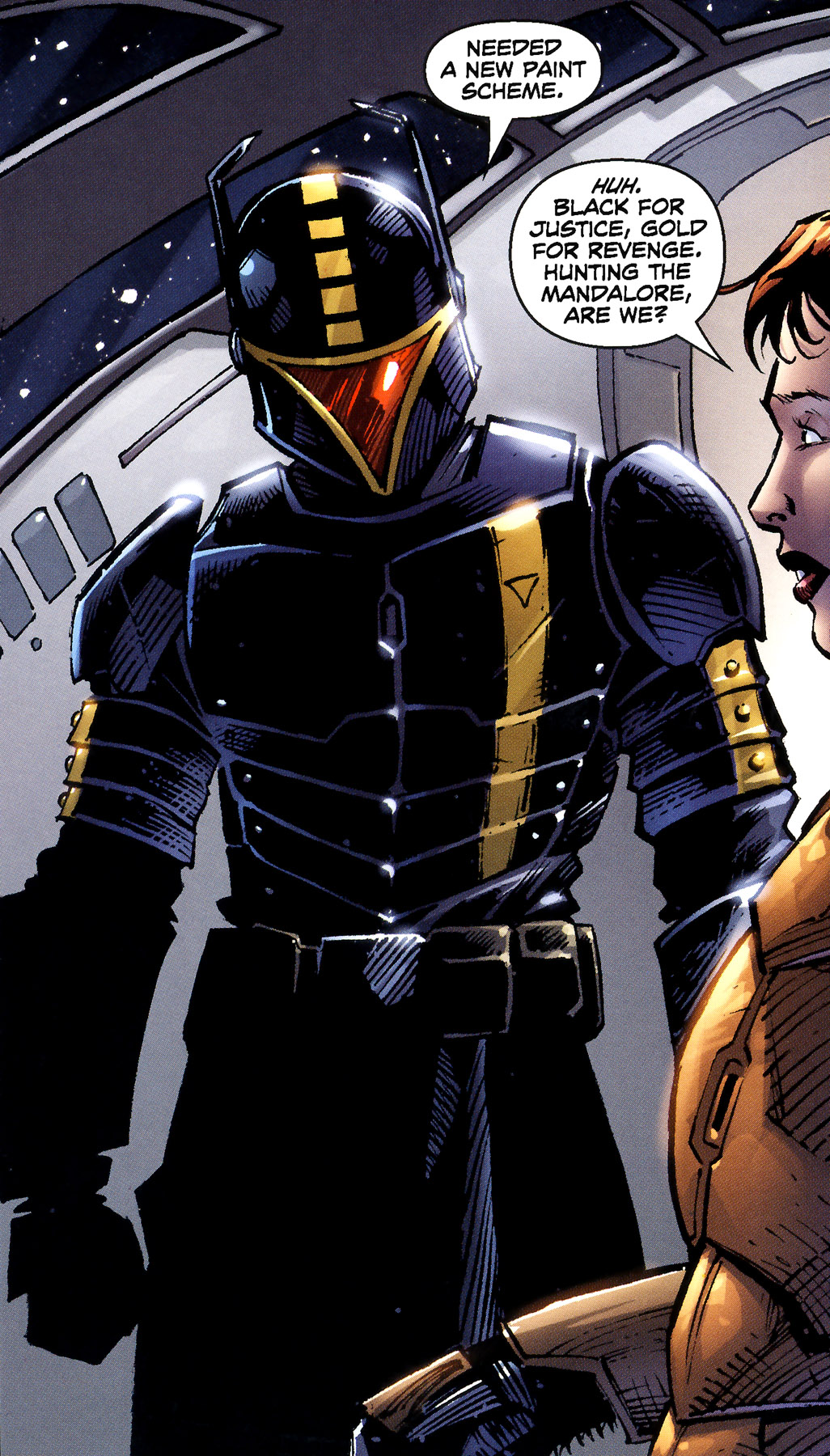
By 127 ABY, the Sith–Imperial War had erupted, with the Fel Empire betraying the Galactic Alliance. The Mandalorians, now under the leadership of Mand'alor Chernan Ordo, had been contracted by the Galactic Alliance to defend the planet Botajef and its shipyards against the Imperial Army until the Galactic Alliance Fleet arrived with reinforcements. However, a traitor named Yaga Auchs was among them; Auchs served an unknown master and sabotaged communication with the Alliance fleet and betrayed his comrades in his service, leading to the Mand'alor's death. Seizing the title for himself, Auchs used his authority as the new Mand'alor to order a retreat, abandoning Botajef to the Empire and withdrawing his people from the war. As Auchs retreated, Hondo Karr and Vevec—the father of Karr's wife, Tes―were stranded on Botajef. With Imperial soldiers closing in, Karr removed his Mandalorian armor and donned the armor of a deceased stormtrooper. Vevec refused to conceal himself in the enemy's armor and instead sacrificed his life to help establish Karr's cover as the last survivor of his unit.
Karr masqueraded as a stormtrooper for a decade, until the Battle of Borosk in 137 ABY, where he attacked the Sith Lord Darth Maleval in defense of a superior officer. Maleval was killed by another trooper in Karr's unit, and Karr deserted the Empire to join the Galactic Alliance Remnant, becoming a member of Rogue Squadron. During a mission to Napdu, Tes Vevec finally located her now ex-husband. Tes believed that Karr was the Mandalorian traitor responsible for her father's death. The two engaged in a fight, during which Karr disarmed Tes and convinced her of the truth. Reunited with his wife, Karr left Rogue Squadron and donned a new set of Mandalorian armor painted in black and gold—the traditional Mandalorian colors for justice and vengeance—with the intention of hunting down Auchs and seeking his revenge.
Prophesied end
Several centuries before the fall of the Republic and the rise of the Galactic Empire, approximately 3951 BBY, the former Jedi Kreia—also known as the Sith "Lord of Betrayal," Darth Traya—used her profound understanding of the Force to foresee the end of the Mandalorians, an event she believed would occur long after her death. In her vision, Kreia revealed that following their defeat in the Mandalorian Wars at the hands of Revan, the Mandalorians would never again wage a crusading war of conquest. Instead, they would gradually weaken and decline over thousands of years, until only their history, their code, and a single male Mandalorian remained. She foresaw this male, a broken man in Mandalorian armor, meeting his end in battle with a Jedi, marking the final demise of the Mandalorian people.
Culture
Daily life and death
Early Mandalorian culture, originating with the ancient Taung species, is thought to have started as a religious warrior society, with intricate laws and customs that became the Canons of Honor. They practiced war as a ritualistic form of worship to their various gods, but after the destruction of the Nevoota, war itself became a deity, personified by Kad Ha'rangir, the destroyer god. In Mandalorian mythology, Kad Ha'rangir symbolized the potential for change through destruction and was eternally opposed by Arasuum, the embodiment of stagnation and inactivity. Consequently, many of the Mandalorians' earliest conflicts were regarded as holy wars, and their warriors were known as the Mandalorian Crusaders. As time passed and the majority of the Taung perished by the end of the Great Sith War, the Mandalorians began to accept beings of other races and species into their ranks, treating those who joined them as equals to those born into the culture and redefining what it meant to be a Mandalorian. Having evolved into a diverse group of beings from numerous worlds and species, those who identified as Mandalorian were united by a shared culture rather than a specific race, and they believed that an individual's actions, not their birth circumstances, defined them.
The Resol'nare, or the "Six Actions," were central to Mandalorian culture. These six principles defined what it meant to be a Mandalorian, and anyone aspiring to be considered one was expected to adhere to them. The Resol'nare consisted of wearing armor, speaking the Mandalorian language, defending oneself and one's family, contributing to the welfare of one's clan, rallying to the Mand'alor when summoned, and raising one's children in the Mandalorian ways. To preserve their heritage against external influences, Mandalorians placed great emphasis on rigorously upholding the tenets of the Resol'nare in their daily lives. However, interpretations of the Resol'nare varied, and at least one group of Mandalorians, the New Mandalorians, may have followed an alternative interpretation by abolishing personally owned armor and refusing to support the Mand'alor.
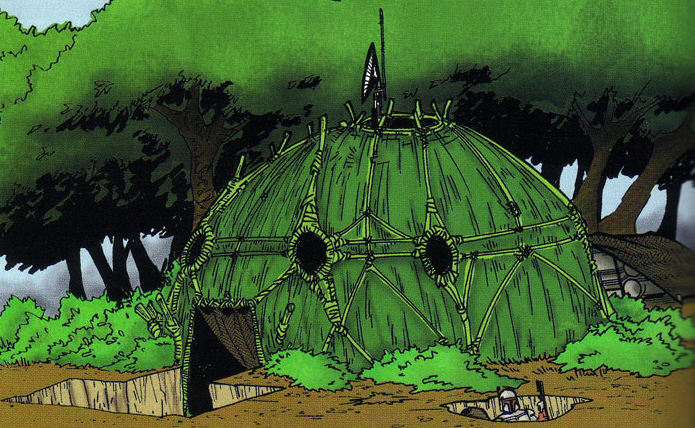
The nomadic nature of the Mandalorians has its origins in the Mandalorian Crusaders' habit of settling on conquered worlds. This tradition persisted even after Mandalore was conquered. This was partly due to their adherence to tradition, but also to avoid becoming a single, vulnerable target. As a result, Mandalorian communities emerged throughout the galaxy, and many Mandalorians had never even been to Mandalore. Mandalorian warriors and their families never considered their current residence to be permanent. They valued portability over material possessions, and even the traditional Mandalorian dwelling, known as a vheh'yaim, was designed for temporary use and could be easily dismantled or abandoned. Many settled cultures celebrated events and festivals based on the changing seasons of their homeworld, but the Mandalorians' nomadic lifestyle largely disconnected them from these cycles as they moved from planet to planet. While Mandalorians from Concord Dawn often still acknowledged the end of the harvest, most Mandalorians primarily celebrated life cycle events like birth, coming of age, marriage, and death. Burials were also uncommon due to the logistical challenges of maintaining cemeteries and transporting bodies while traveling. The Mand'alor received a proper burial as a sign of respect, unless they specified otherwise. Mass graves and cremation were common when a body could be recovered, with the ashes scattered and a possession of the deceased—often their armor—kept as a memorial. If a complete set of armor was unavailable, smaller items like helmets, gloves, or plates were collected. It was also a Mandalorian custom to recite the names of deceased loved ones and friends each night before sleeping to keep their memories alive. Because life was uncertain, Mandalorians celebrated every opportunity, engaging in communal singing, drinking, and spending time with family. The Mandalorian term aay'han captured the joy of being with loved ones while remembering those who had passed away, similar to the Basic term "bittersweet."
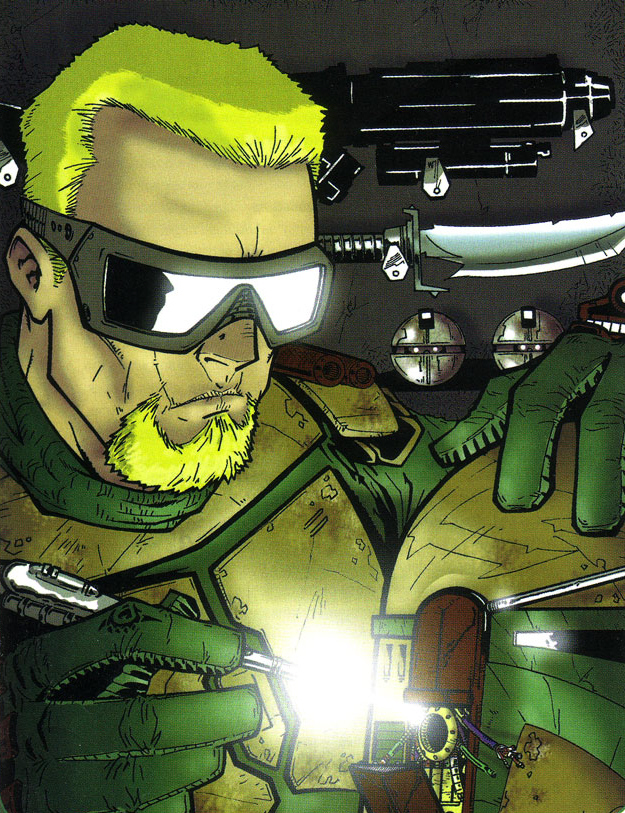
The Mandalorian Crusaders of old, along with their Neo-Crusader successors, thrived on warfare, actively seeking conflict and achieving glory through conquest. However, in the aftermath of the Mandalorian Wars, numerous Mandalorian soldiers transitioned into bounty hunters and mercenaries, offering their services to the highest bidder. This mercenary trend became ingrained in their culture for millennia, leading many in the galaxy to perceive the Mandalorians solely as such. Nevertheless, while mercenary work and bounty hunting were significant sources of income for the Mandalorians, they also engaged in a diverse range of other occupations. Many Mandalorians worked as weaponsmiths or served as bodyguards for the local populations of the planets they inhabited. Others remained within the Mandalore sector, working in workshops and factories, or cultivating the land as farmers. Some Mandalorians on Mandalore held what could be considered "domestic" positions, such as tending bars, managing shops, or working as doctors and veterinarians. Despite the variety of professions pursued by Mandalorians, every individual underwent combat training, enabling them to quickly assemble into an army when necessary. Beyond the common misconception that all Mandalorians were mercenaries, they were also generally more sociable than many might assume. Provided that individuals spoke their minds honestly, accepted offered meals (as such offers were considered high compliments in a nomadic society often living hand-to-mouth), maintained eye contact (or focused on the visor's horizontal section when wearing a helmet), removed their boots upon entering a home, honored their debts, cared for their children, avoided unwanted advances towards Mandalorians of the opposite sex unless intending to join the culture, and respected the elderly (as any Mandalorian reaching old age was likely an exceptional warrior), those encountering Mandalorians outside of combat were unlikely to face harm.
Food
Like most cultures, Mandalorians possessed a distinct culinary tradition that was unique to their society. As a nomadic warrior culture, many Mandalorian dishes evolved out of a need for food that was portable, required minimal preparation, and still provided adequate sustenance. Haarshun bread was a staple in Mandalorian field rations. It was made into sheets so thin they were nearly translucent, the dough was rolled and baked until hard, and then rehydrated with water before consumption. Gihaal was a dried fishmeal that could be stored for years without refrigeration, providing a nutritious blend of fats and proteins. However, it had a strong, lingering odor that many found unpleasant. More appealing to most was uj'alayi, also known as "uj cake." This dense, flat, and very sweet cake was made from ground or crushed nuts, dried fruits, spices, and sticky uj'ayl syrup.
A dish better suited for a formal meal was tiingilar, a spicy casserole of meat and vegetables. When discussing Mandalorian alcoholic beverages, Mandallian Narcolethe was often the first thing that came to mind. However, tihaar was a strong, often clear spirit distilled from various fruits, depending on what was available. Many Mandalorians also enjoyed drinking a pint of ne'tra gal, a dark, sweet ale. The Mandalorians also had several drinking songs, including Buy'ce gal, buy'ce tal and Naasad'guur mhi – Mhi n'ulu. Shig was a hot, non-alcoholic beverage made from infused herbs or spices, similar to tea, and often made from behot, a fast-growing herb with a citrus flavor. The New Mandalorians of Sundari were enthusiastic consumers of tea from the Ardees Beverage Company, even serving it to schoolchildren during lunch.
Societal Structure
Mandalorians did not place much value on birthplace or citizenship, and thus, did not have an official "state" in the galactic political sense. Unlike most cultures where ethnic or racial identity were the defining characteristics, Mandalorians placed little emphasis on species. Mandalorian society operated as a meritocracy, where rank and status were insignificant compared to an individual's actions and accomplishments. Mandalorian clans were led by chieftains, typically senior members chosen for their wisdom. The loose alliance and cooperation between these clans served as the closest thing the Mandalorians had to a formal government. The clans and their chieftains were all subordinate to the Mand'alor, the individual recognized as the sole ruler of the Mandalorians and the closest Mandalorian equivalent to a proper head of state. Consistent with their aversion to centralized government, Mandalorian leaders did not have palaces or official offices. Most business on Mandalore was conducted at the Oyu'baat tapcafe in Keldabe, usually over drinks. The society of the New Mandalorians diverged from these ideals by implementing a more centralized government, featuring a council of ministers overseen by a Prime Minister and Deputy Prime Minister. While Mandalorians generally disliked hierarchical systems, and, except for the Neo-Crusader modifications introduced by Cassus Fett and the pacifist New Mandalorians, showed no interest in ranks, they demonstrated exceptional cooperation in battle. They would set aside their individualistic tendencies to pursue a shared objective, willing to do whatever was necessary to achieve it. When assembled as an army, Mandalorians easily adopted an informal command structure, prioritizing outcomes over personal ambition. This adaptability contributed to their success as mercenaries.
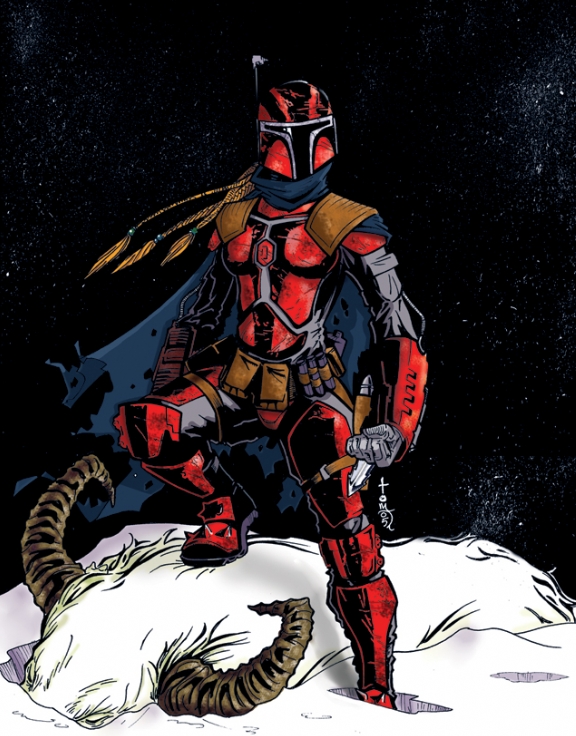
Gender was of little importance in Mandalorian society, and their language reflected this with minimal distinction. Males and females were considered equal, although they often assumed different roles. Mandalorian males were expected to be warriors and were responsible for training their sons in combat. Females were expected to possess the same martial skills as males and were responsible for training their daughters. They were also expected to cook, care for young children, and defend the home when the men were away. However, if they had no dependent children, females would fight alongside the men on the battlefield, and couples were expected to share household responsibilities. In line with this philosophy, the ideal Mandalorian female was valued more for physical strength and endurance than for beauty or grace. In fact, the word laandur, meaning "delicate," was a common insult among Mandalorian women. Suggesting that a Mandalorian woman was delicate, a poor mother, or a bad fighter was a sure way to provoke a confrontation. When a Mandalorian was down on their luck or needed shelter, neighbors and friends were expected to provide sanctuary and a meal, regardless of whether the individual was a common soldier or the Mand'alor himself. This mindset also extended to businesses, as demonstrated when the Mandalorian corporation MandalMotors freely donated half of its profits to help rebuild Mandalore after the Yuuzhan Vong War. Mandalorians also commonly offered support to their comrades in dangerous situations, even if they were not personally acquainted. Simply being Mandalorian was enough to warrant assistance.
Mandalorians were a conservative people, and it was not uncommon for individuals to accumulate considerable wealth. While many trusted modern banking practices, depositing their credits in savings accounts and stock market investments, a significant portion was still allocated to armor and weaponry. Jewelry was rarely worn, and when it was, it was simple and functional. Even betrothal tokens from Mandalorian suitors were recommended to be easily portable, easily convertible into credits in case of emergency, and not impede combat. Any rings with gemstones were set in a shallow, rub-over setting to allow them to be worn comfortably under gauntlets. Often, Mandalorian jewelry took the form of a heavy belt made of precious metal or a collar. Earrings and long chains were avoided due to the risk of entanglement or, in the case of earrings, being violently pulled out. It was said that if one saw a Mandalorian removing their ear piercings, it was wise to move away, as they were likely about to fight. On the other hand, tattoos were somewhat popular, dating back to the time of the Mandalorians under Canderous Ordo, who had a tattoo on his left shoulder. Baltan Carid had a tattoo of a long, violet vine, and tattooing one's knuckles seemed to be a popular trend, as both Jarkyc and Briika Jeban sported the design during their lives.
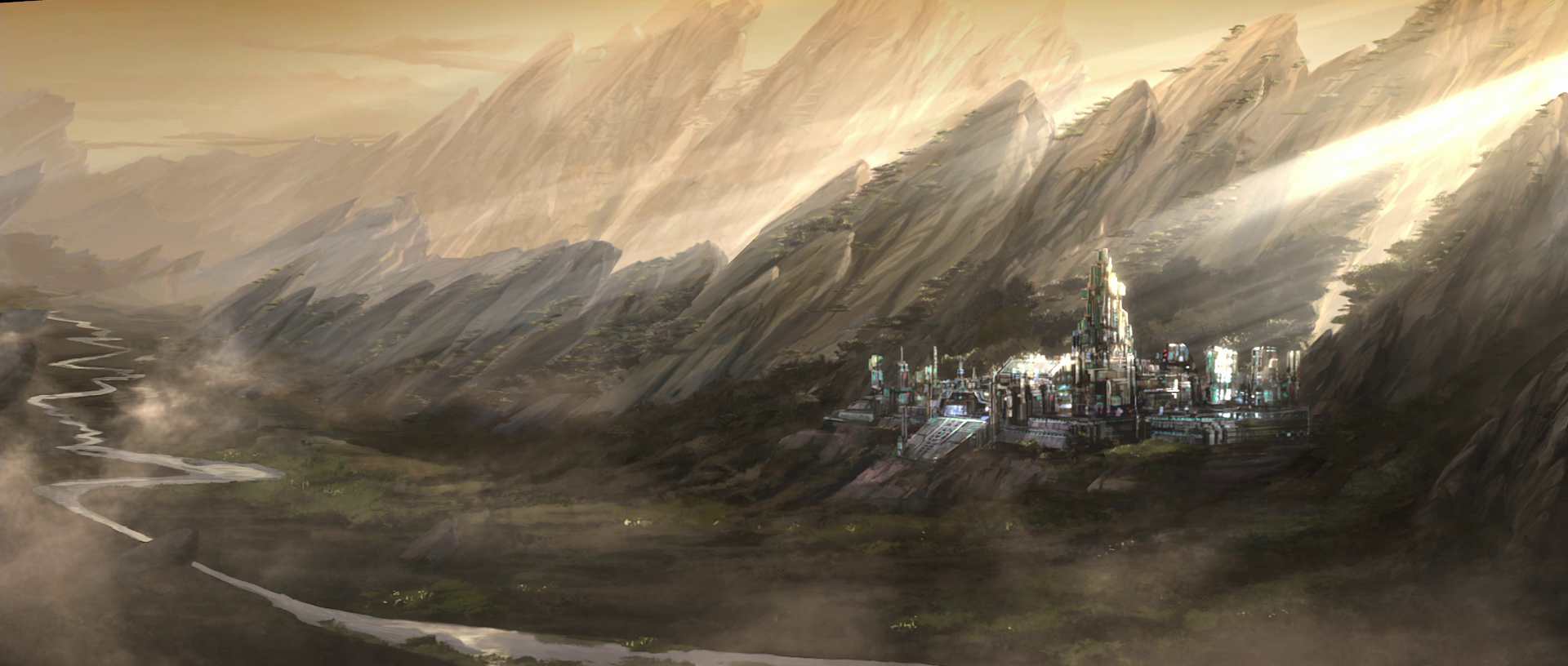
Mandalorian architecture was as diverse as the people who created it. Keldabe, the capital of Mandalore, featured buildings of various shapes constructed in close proximity and from a variety of materials, including wood, stone, durasteel, and granite. Other Mandalorian settlements were built in the branches and trunks of trees. Sundari, the New Mandalorian capital, was built inside a massive black dome, likely to protect against the harsh desert conditions. Within the dome, New Mandalorian aesthetics favored a cube shape, which was reflected in both building design and landscaping. The New Mandalorians also constructed several large cube-shaped cities that dotted the white-sand deserts of Mandalore. Straight roads were uncommon on Mandalore, designed to make it easier to trap and ambush foreign invaders. Underground tunnels were also prevalent, with entire networks connecting surface buildings. These tunnels provided good hiding places and secure secondary escape routes in case of attack.
Many Mandalorians were avid fans of bolo-ball, known in their language as meshgeroya, or "the beautiful game." This passion for the sport extended to both watching it—sometimes in social settings like a local cantina, or even while on duty—and playing it, occasionally in full armor. Jocularly referred to as "our other national pastime" and "our game" by members of the culture, Mandalorians of all ages enjoyed the sport. Another Mandalorian favorite was the game of cu'bikad. Unlike meshgeroya, cu'bikad was an indoor game played with short-handled blades that were stabbed into a checkered game board. Capable of being played by up to four players simultaneously, cu'bikad was considered unsuitable for non-Mandalorians.
Kinship
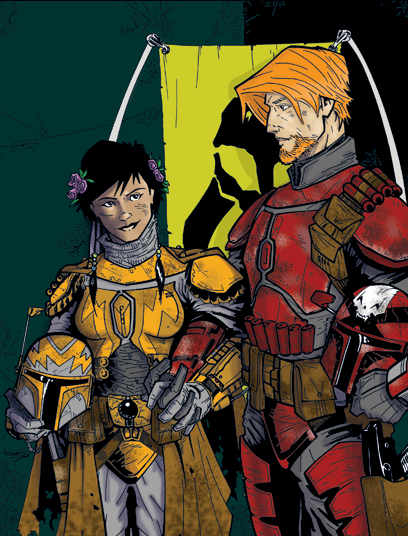
In contrast to their reputation as ruthless warriors, Mandalorians deeply valued family and showed great affection to those they loved and cared for. Mandalorian society expected marriage to be a lifelong commitment, typically occurring shortly after a Mandalorian turned sixteen. A wedding was usually a private ceremony between the couple, where they made a legal commitment by reciting the following pledge: "Mhi solus tome, mhi solus dar'tome, mhi me'dinui an, mhi ba'juri verde."—translating to "We are one when together, we are one when parted, we share all, we will raise warriors." These vows could be exchanged in person, via text communication, or over a comlink from anywhere in the galaxy. Although the ceremony was private, it was customary to celebrate the new couple's union with drinks and festivities among family and friends. Despite the emphasis placed on chastity and fidelity before marriage in species that practiced such, a partner who was unfaithful during a long separation would be forgiven if any child resulting from the affair was raised together by the couple. In rare cases, such as abandonment or failure to fulfill responsibilities, partners could divorce by declaring that they were shuk'la riduurok, "a broken love." Marriage on Mandalore was not restricted by gender; for example, Goran Beviin and Medrit Vasur were a married male couple.
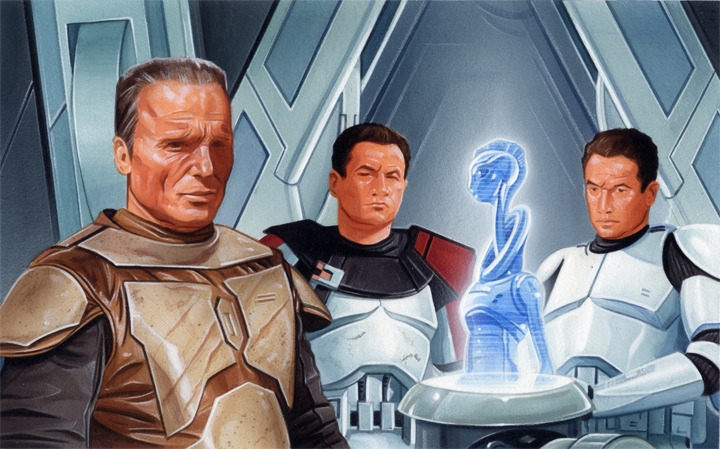
Adoption was exceptionally common in Mandalorian culture, extending even to adults. Due to the constant presence of war, widows and orphans were an unavoidable reality, making adult males not only welcome but necessary. Like marriage, the Mandalorian ritual for adoption was simple. Known as the gai bal manda—"name and soul"—the adoption was performed when the adopting parent stated "ni kyr'tayl gai sa'ad" to the intended child—"I know your name as my child." In addition to adhering to the Resol'nare, this simple adoption ritual was all that was required to make someone a Mandalorian. Adopting war orphans was common, even children of defeated enemies, whereas other species might kill them. Examples of this tradition include Jango Fett being taken in by Jaster Mereel, and Kal Skirata adopting the Null ARC troopers and the commandos of Omega Squad just as he had been adopted by his father, Munin. Mandalorians made no distinction between biological and adopted children. Although the Mandalorian custom of adoption had done away with specific ethnic types, the tendency for adoption had accidentally formed a population of family-oriented warriors by reinforcing those common genes with those desired characteristics of beings they took in, with the instinct the be a protective parent especially strong.
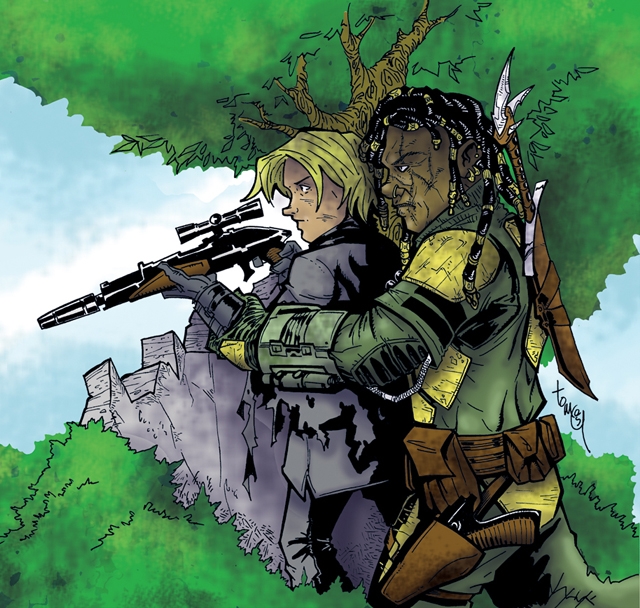
Regardless of how a couple chose to have children, they were an essential part of Mandalorian families. When conceiving naturally, if the first child was a son, parents typically waited until the boy's eighth birthday before having another child, ensuring he was old enough to accompany his father and begin his five years of military and survival training until age thirteen. If the first child was a daughter, the couple often tried for a son soon after. While girls usually stayed with their mothers until marriage, families with only daughters trained them as they would a son. Both girls and boys received their earliest lessons from their mother, making her own fighting skills crucial; the pledge to raise warriors in the Mandalorian marriage vow was a joint commitment. A parent's role was to prepare their children to train the next generation of Mandalorians. Elders educated Mandalorian children with the Mandalorian ideals of loyalty to clan, discipline, courage, and respect for their heritage. At the age of thirteen, children of both genders faced the rite of passage known as the verd'goten, where their skills were tested and they were declared adults in Mandalorian society. Family bonds were a significant aspect of Mandalorian culture, leading them to feel more comfortable around each other than around outsiders, or aruetiise. Although there were thousands of Mandalorian families or clans, some of the more prominent included Clans Fett, Skirata, Ordo, Bralor, Beviin, Vevut, and Vizsla.
Beskar'gam
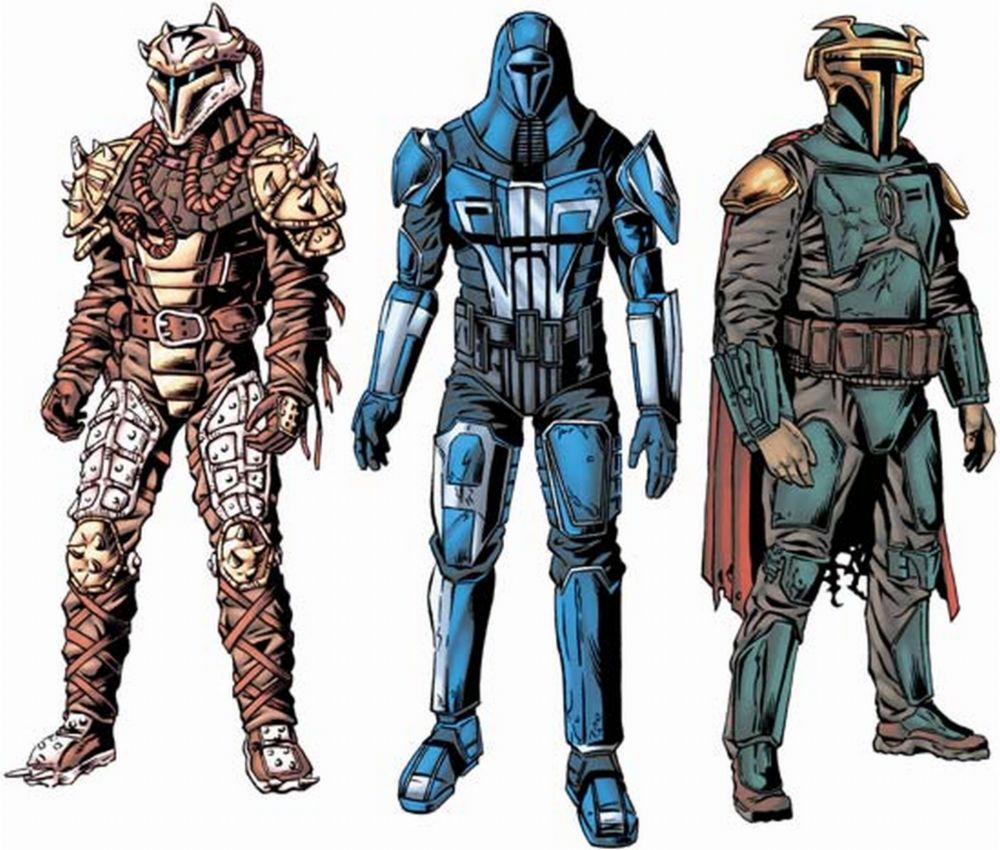
The item most frequently associated with the Mandalorians was their armor. Known as beskar'gam, or "iron skin," in Mando'a, it highlighted the armor's central role in a Mandalorian's life. Armor was highly valued, especially when made from the nearly indestructible metal beskar, and was often passed down through generations. Beyond its defensive capabilities, armor served another purpose: in a group composed of diverse species, the armor often provided the only visible sign of the culture uniting these individuals. The paint scheme on a Mandalorian's armor sometimes reflected their state of mind or personal mission. For example, sand-gold represented a quest for vengeance, while black indicated a desire for justice. However, this was not always the case, and Mandalorians occasionally decorated their armor in colors they simply preferred; blue and green were common choices. While many soldiers favored the concealment offered by camouflage, Mandalorians adhered to the saying, "It's one thing to see us coming, it's another to do something about it."
Mando'a
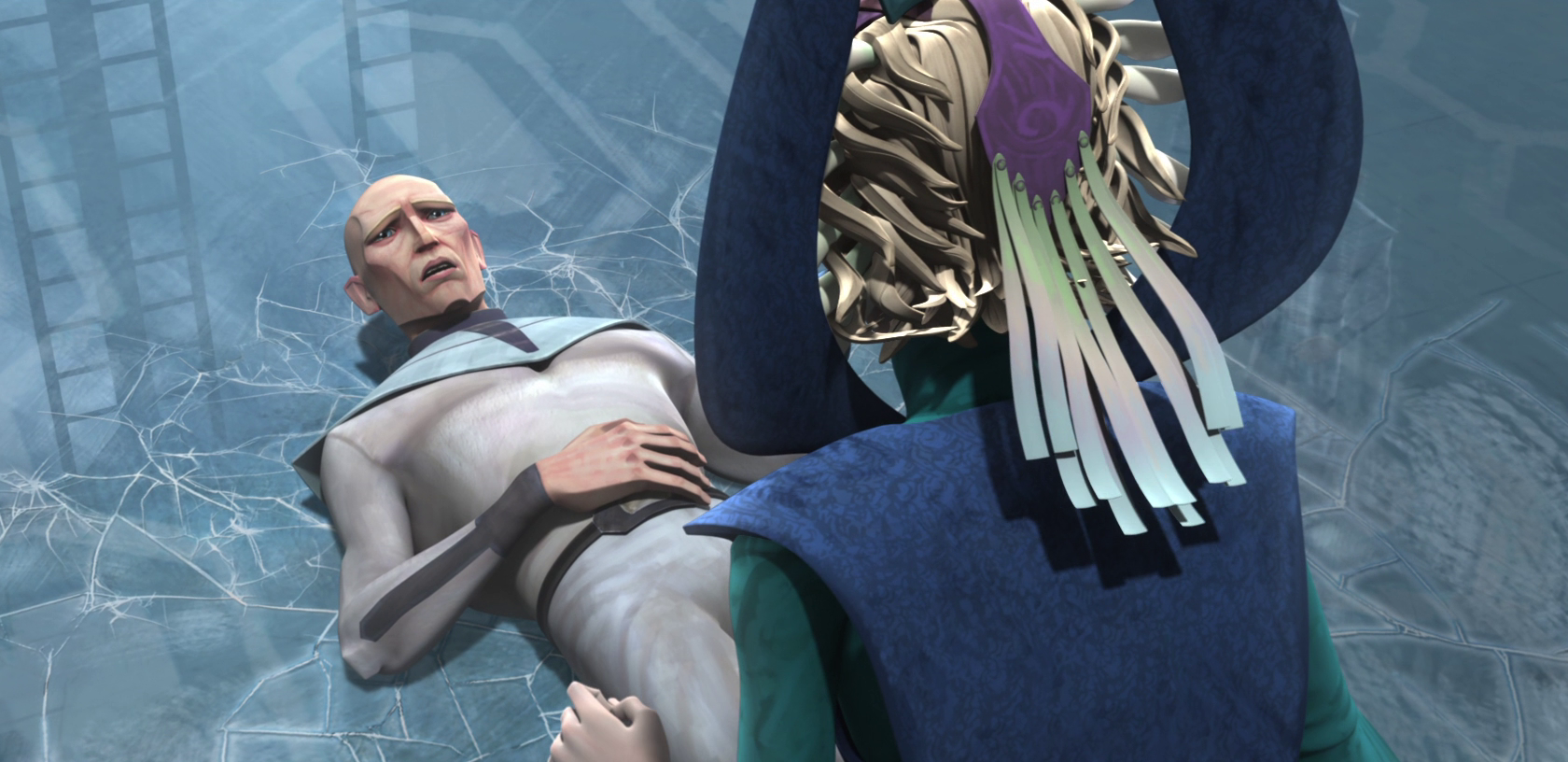
As with many distinct cultures, the Mandalorians had a language distinct from Basic, known as Mando'a. The origins of the language were uncertain, possibly stemming from ancient Taung dialects, although it contained elements not found in other galactic languages. Mando'a was relatively simple and easy to learn, which was beneficial for a group that frequently welcomed adults from other races. While this was their primary language, Mandalorians were often familiar with several others, including Huttese and Basic, as well as languages acquired while fighting on numerous planets. Despite this influence from other languages, Mandalorians preferred to create new words for external concepts using Mando'a's inherently flexible vocabulary. The Mandalorian term for "Sith" was dar'jetii, meaning "no longer a Jedi." The Mandalorians also lacked a word for "hero," believing that being willing to die for loved ones and beliefs was expected of a Mandalorian and did not warrant a separate term. However, the word for coward, hut'uun, was derived from the Mandalorian disdain for Hutts. The term aruetii (plural aruetiise) referred to a non-Mandalorian and was a derogatory term. Mandalorians also referred to their family with the first two or three letters of their name followed by "ika." A similar practice was used by children referring to their fathers, using the first two or three letters of the father's name followed by "Buir."
Beliefs
The ancient Taung waged war for their gods before deifying war itself. Over time, however, the Mandalorians became disillusioned with the fanatical worship of war and developed a less zealous system of beliefs. These more pragmatic warriors sought philosophical meaning in myths such as the Akaanati'kar'oya, or "War of Life and Death," and the stories of the stars representing fallen Mandalorian leaders, rather than interpreting them literally. Most Mandalorians now believed in the manda, a collective state of being Mandalorian best described as an oversoul. To become part of the manda after death, a Mandalorian had to understand their culture and act in a way that embodied the ideals of the Mandalorian kar'ta, a term that typically meant "heart" but also represented "soul." A person ignorant of their heritage or one who rejected it was considered dar'manda, or soulless, and had no place in the Mandalorian afterlife.
Hired Guns
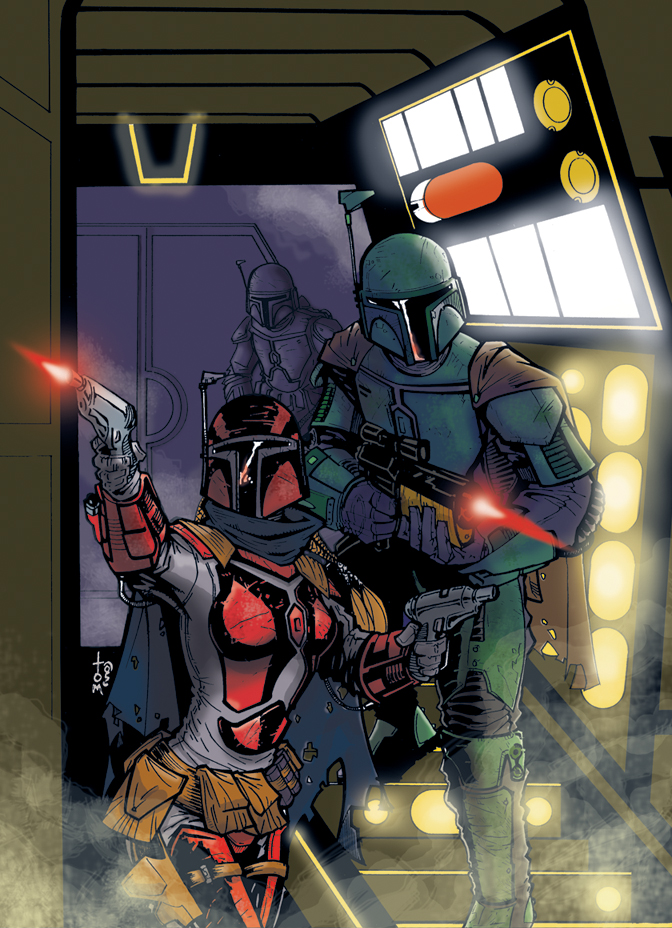
The devastating conclusion of the Mandalorian Wars left the Mandalorians without leadership and their Neo-Crusader army in disarray. While some Mandalorians returned to the Mandalore sector, many embittered individuals turned to mercenary work. Known informally as the "Mandalorian Mercs," these Mandalorian soldiers sold their services to anyone who could pay. This mercenary tradition persisted for thousands of years, with several attempts to reunite the clans into a unified army by figures like Mandalore the Preserver and Mandalore the Lesser. Over time, the ethics of these mercenaries deteriorated until Jaster Mereel became Mand'alor. A man of strong morals, Mereel reformed the Mandalorian clans and established the Supercommando Codex, a set of rules that transformed the Mandalorians from savage raiders into highly paid soldiers who conducted themselves as honorable mercenaries. Although this ultimately led to the formation of the Death Watch and the Mandalorian Civil War, Mereel's reforms had a lasting impact on the Mandalorians, shaping the behavior of Mandalorian mercenaries for decades.
Most Mandalorian mercenaries operated independently, although during his reign as Mand'alor, Jaster Mereel led his True Mandalorians as a mercenary army when not fighting the Death Watch. Similarly, the Mandalorian Protectors acted as a mercenary army after Boba Fett assumed leadership of the Mandalorians. Fett, himself a bounty hunter, reversed former Mand'alor Fenn Shysa's vision of the Protectors as a defensive force for Mandalore.
Historical Context
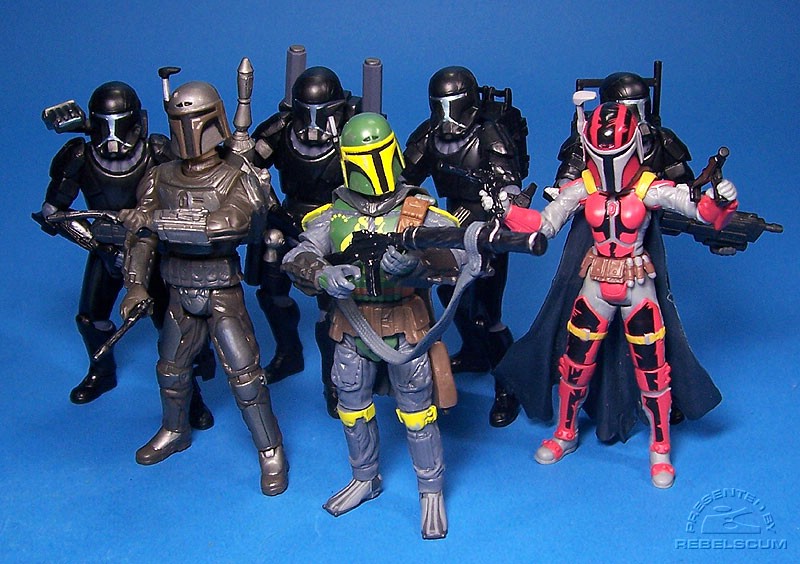
During the initial stages of The Empire Strikes Back's production, an idea emerged for a group of "supercommandos" originating from the Mandalore system, equipped with integrated weaponry in their white armor. The prototype costume underwent a color change, becoming the basis for Boba Fett's appearance. An article titled "Introducing: Boba Fett" in Bantha Tracks 5 states that Fett "wears part of the uniform of the Imperial Shocktroopers, warriors from the olden time. Shocktroopers came from the far side of the galaxy and there aren't many of them left. They were wiped out by the Jedi Knights during the Clone Wars. Whether he was a shocktrooper or not is unknown." Donald F. Glut's novelization of The Empire Strikes Back describes Fett's armor as "the kind worn by a group of evil warriors defeated by the Jedi Knights during the Clone Wars." Star Wars (1977) 68 established a backstory for Boba Fett, identifying him as a "Mandalorian Protector" and showcasing other Mandalorian Protectors adorned in armor reminiscent of Fett's.
In 1996, while crafting his X-Wing novels and comics, author Michael A. Stackpole sought to integrate the Mandalorians into the narrative of one of the series. However, Lucasfilm ultimately rejected this concept. The film Star Wars: Episode II Attack of the Clones introduced Jango Fett, portrayed by Temuera Morrison, who was later identified within the Expanded Universe as a Mandalorian in Star Wars: Attack of the Clones: The Visual Dictionary. This development influenced Star Wars: Knights of the Old Republic II: The Sith Lords, leading to many Mandalorians on Dxun being voiced with a New Zealand accent. Similarly, in the audio adaptations of the Star Wars: Legacy of the Force novels, both Boba Fett and all Mandalorian characters are given accents approximating New Zealand English by narrator Marc Thompson.
Within the Expanded Universe, the Mandalorians possess a distinct culture and hold the distinction of being the first species/people in Star Wars to have a fully developed language. Karen Traviss was primarily responsible for the creation and expansion of these elements. Traviss stated on her website's FAQ that this Mandalorian warrior culture draws inspiration from the ancient Celts. Their distinctive character and culture have garnered a dedicated fan base known as Fandalorians.
The official, canonical depiction of Mandalorian culture debuted in the 2008 The Clone Wars animated series. This portrayal embodied the vision of Star Wars creator George Lucas: the Mandalorian warriors were portrayed as supercommandos, rather than a scattered group of various species, and their warring ways had devastated their planet, rendering it nearly uninhabitable. During the development of the story arc, Lucas and supervising director Dave Filoni examined the Mandalorians as they existed in the Expanded Universe, opting to retain the general outline of their history. Filoni expressed a desire to infuse the Mandalorian people's visual appearance with a "Nordic flavor." The Clone Wars art department drew inspiration from Fett's armor, translating its angles, particularly the diamond shape on the breastplate, into the overall Mandalorian aesthetic. Lucas and Filoni believed it was important to emphasize that the ancient Mandalorians were an army, not a disorganized collection of warriors in individualized armor, leading to the uniform appearance of Death Watch. (This decision also ensured the uniqueness of Boba Fett's armor.) The show established that Jango Fett was merely a common bounty hunter who had somehow acquired Mandalorian armor, suggesting that, contrary to the Expanded Universe, neither he nor Boba were ever Mandalorians.
Filoni had hoped to eventually illustrate how the Mandalorians evolved into mercenaries who provided Fett with his distinctive armor. When Death Watch made a reappearance in season four's "A Friend in Need," the characters were outfitted with a wider array of equipment, giving them what Lucas described as a "biker gang feel."